
LEAD ANALYST
Utkarsh Khirodkar is a Lead Market Research Analyst at MetaStat Insight, specializing in market intelligence, technology sector assessments, and competitive strategy.

Global Industrial Internet of Things Market Size, Share, By Component (Hardware, Software, Connectivity Services, Implementation and Managed Services), By Connectivity Technology (Wired, Short-Range Wireless, Cellular, Non-Cellular LPWAN and Others), By Application (Predictive Maintenance and Condition Monitoring, Production Monitoring and Process Optimization, Asset Tracking and Inventory Management, Energy and Resource Management, Quality Monitoring and Inspection and Others), By End-Use Industry (Discrete Manufacturing, Process Manufacturing, Energy and Utilities, Oil and Gas, Transportation and Logistics, Mining and Quarrying, Agriculture and Others), Industry Analysis, Growth, Trends, and Forecast, 2026-2033
Report ID
MSI-5827
Published
November, 2026
Pages
263 Pages
Format
Historical
Base year
Forecast
Forecast period
Report Details
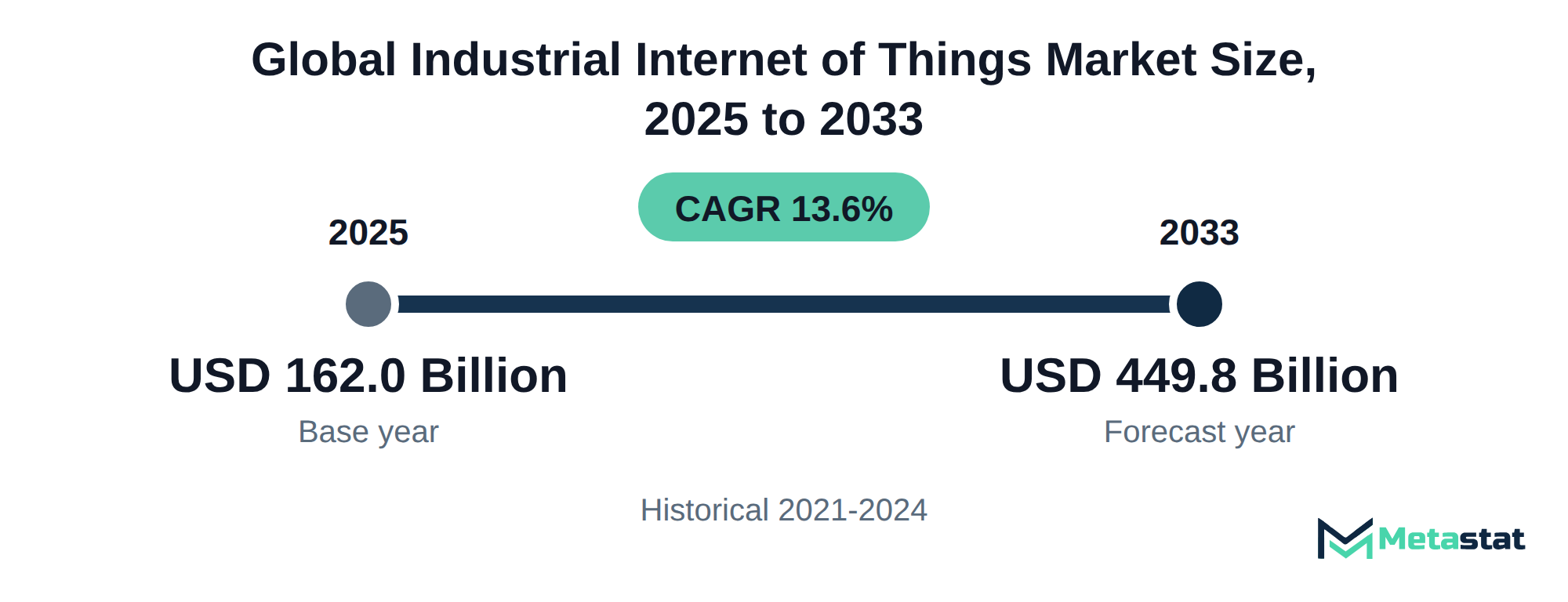
Market Valuation: Valued at $162 Billion in 2025, projected to reach $449.8 Billion by 2033 at a 13.6% CAGR.
Dominant Segment: The software segment leads the market, projected to reach USD 169.4 billion by 2033, driven by the increasing need for real-time data insights and automation in various industries.
Geographic Lead: North America is the leading region in the Industrial Internet of Things market, holding 28.6% of the market in 2025, supported by substantial investments in smart manufacturing and infrastructure development.
What's Inside: The report provides a comprehensive analysis of the competitive landscape, covering various components, connectivity technologies, applications, and end-use industries, along with growth forecasts from 2026 to 2033.
Growth Opportunities: Predictive maintenance is identified as a key growth area, with significant investments expected as industries seek to optimize asset performance and reduce downtime through advanced IoT solutions.
Connectivity Trends: Non-Cellular LPWAN is projected to grow at the highest CAGR of 17.3%, highlighting the increasing demand for low-power connectivity solutions in diverse applications.
Choose Your License
Global Industrial Internet of Things Market
The global Industrial Internet of Things market was valued at USD 162 billion in 2025 and is projected to reach USD 449.8 billion by 2033, growing at a CAGR of 13.6% over the forecast period.
The Industrial Internet of Things market encompasses technologies and services that improve operational efficiency and support data-driven decision-making across industries. Buyers invest in this market to use advanced analytics, improve asset utilization, and drive innovation. This investment is critical for businesses aiming to maintain a competitive edge in a changing technological environment.
Industrial Internet of Things market growth is driven primarily by increasing demand for automation and real-time data insights. The software segment stands out with the most significant value, reflecting a shift toward integrated solutions that enable effective communication among devices. North America holds 28.6% of the market in 2025, with the US leading in 2026. This region benefits from substantial investments in smart manufacturing and infrastructure development.
Advancements in connectivity technologies, including wired and wireless solutions, significantly contribute to market dynamics. These technologies support the deployment of IoT applications that enhance productivity and reduce operational costs. The demand for predictive maintenance and condition monitoring applications further highlights the importance of integrating IoT capabilities within existing systems, driving sustained growth in the market.
The Industrial Internet of Things market encompasses components and services that facilitate connectivity, data collection, and management across industrial processes. Organizations invest in these technologies to enhance productivity, reduce operational costs, and improve decision-making. The growing emphasis on automation, real-time analytics, and predictive maintenance drives spending, enabling businesses to gain insights that lead to operational improvements and competitive advantages.
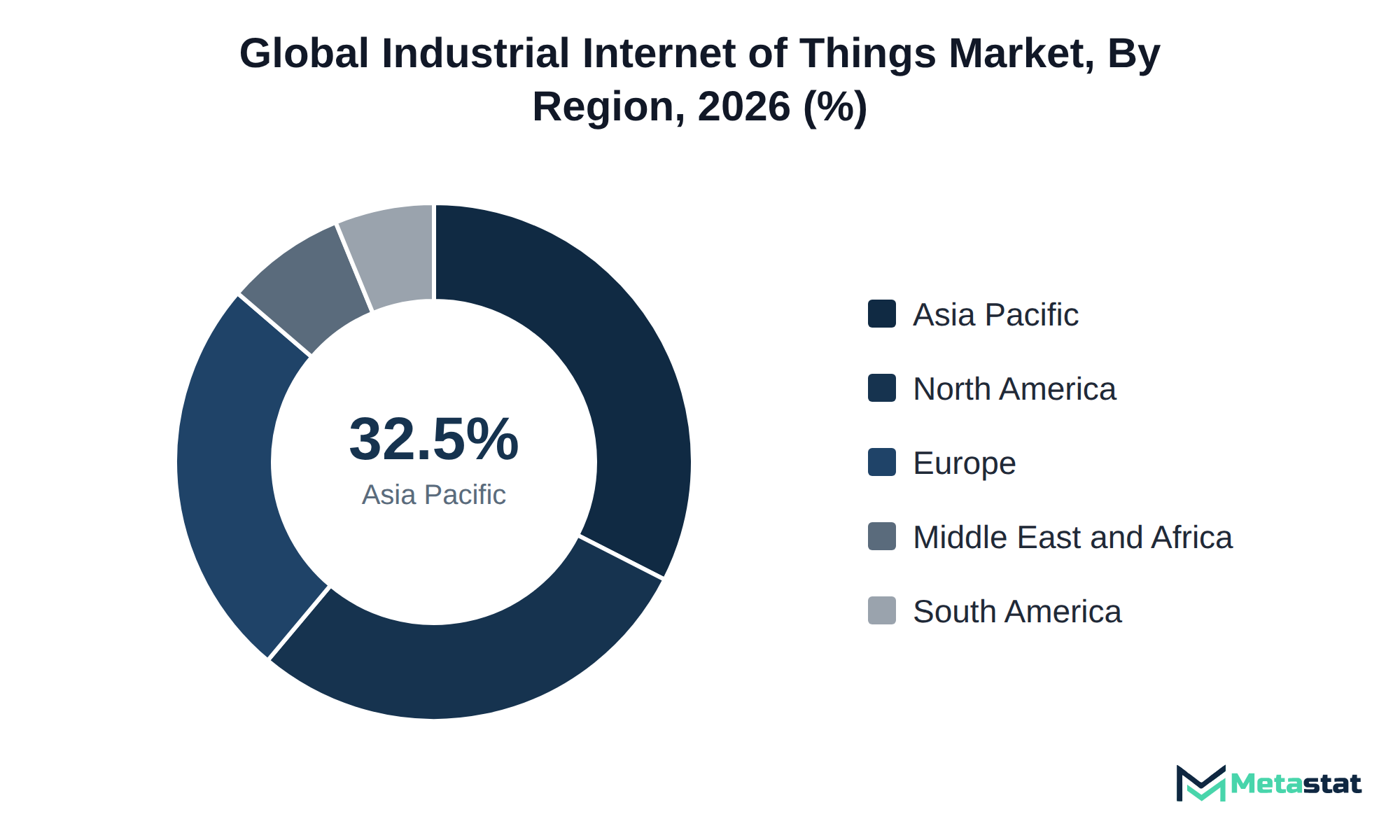
Growth in the market is propelled by the increasing adoption of connected devices and advanced analytics. The software segment stands out, reflecting significant investment as industries seek to use data for efficiency and performance optimization. North America accounts for a significant share of the market in 2025, driven by its strong infrastructure and technological advancements. This region's substantial market position contrasts with Europe at 25.2% and Asia Pacific at 32.5%.
The demand for enhanced operational efficiency continues to influence market dynamics. Predictive maintenance and condition monitoring applications emerge as key growth areas, allowing companies to minimize downtime and maximize asset performance. Industries increasingly recognize the value of these capabilities, driving market expansion and attracting further investments and innovations.
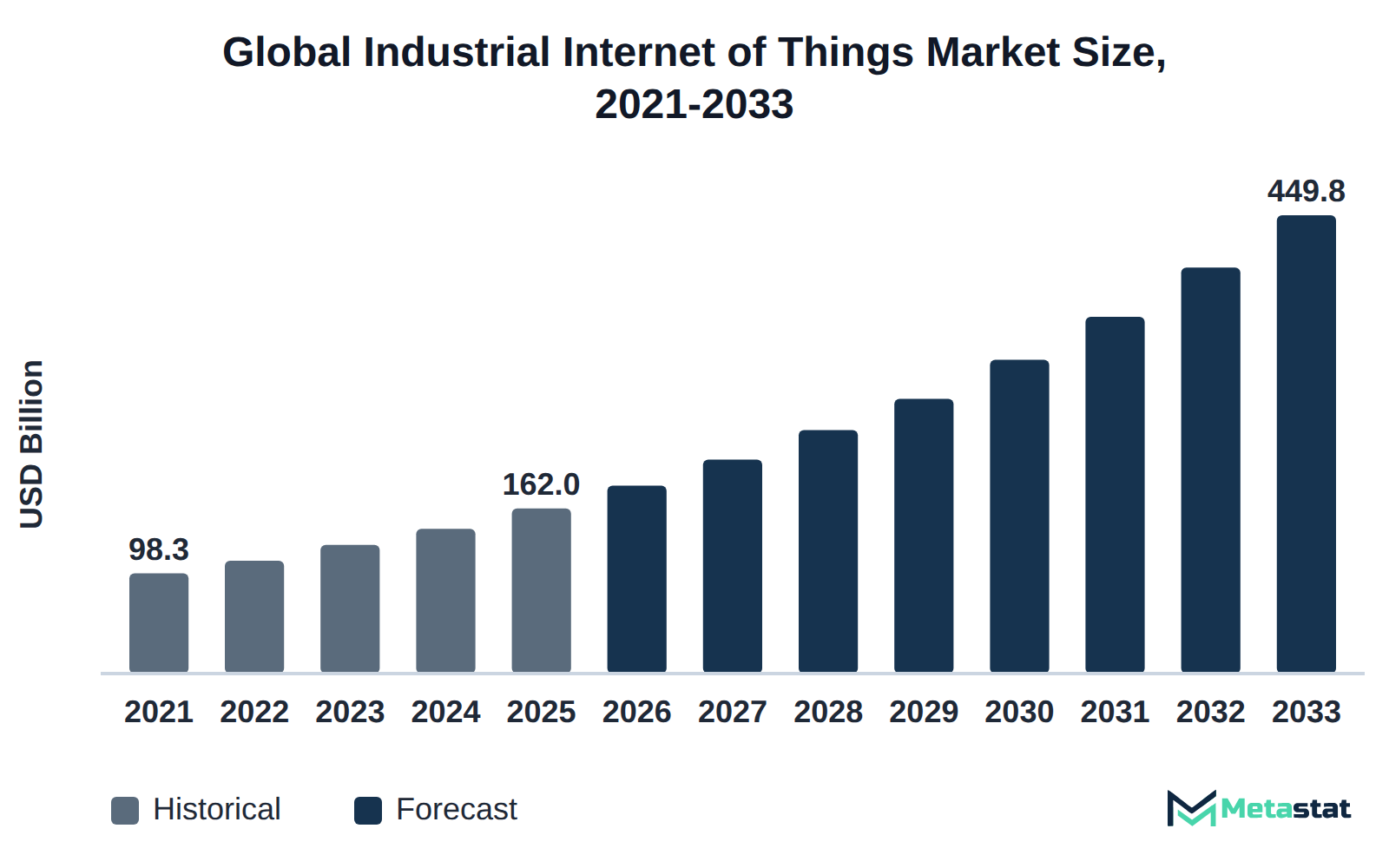
IIoT gateways for brownfield machine connectivity represent a significant shift in the Industrial Internet of Things market, facilitating the integration of legacy machinery into modern digital ecosystems. These gateways serve as critical interfaces that bridge traditional equipment with advanced digital solutions, enabling real-time data exchange and process optimization. In 2026, the hardware component of the IIoT is projected to reach USD 68.6 billion, growing to USD 147.2 billion by 2033, driven by increasing demand for reliable connectivity and improved operational efficiency.
Manufacturers in industries including discrete and process manufacturing benefit significantly from deploying IIoT gateways. These devices allow for enhanced predictive maintenance, resulting in reduced downtime and more efficient resource management. Applying IIoT gateways in brownfield settings preserves existing investments in machinery and accelerates digital transformation efforts. By facilitating data-driven decision-making, these gateways contribute to substantial operational savings and competitive advantages in the market.
The capabilities of IIoT gateways directly impact overall productivity and efficiency. Organizations increasingly adopt IIoT technologies, and the need for reliable industrial communication with legacy systems becomes critical. This trend positions IIoT gateways as essential components of successful digital integration in the Industrial Internet of Things market.
IIoT tank telemetry for bulk inventory replenishment involves sophisticated pricing models tailored to the needs of buyers. Various contract models exist, ranging from subscription-based services to one-time purchase agreements. Subscription models provide continuous software updates and support, appealing to buyers focused on long-term operational efficiency. The Industrial Internet of Things market is projected to reach USD 449.8 billion by 2033, with software components expected to achieve a value of USD 169.4 billion within the same period.
Buyers prioritize flexibility and scalability in their purchasing decisions, driven by the need to adapt to changing operational requirements. Implementation and managed services are essential, with a growth rate of 14.7% anticipated, reflecting the increasing demand for comprehensive support solutions. Many companies prefer to engage in long-term contracts that ensure consistent service delivery and cost predictability. This trend enhances buyer confidence in their investment, contributing to overall growth in the market.
Understanding the financial implications of various purchasing models is vital for buyers. A well-structured contract streamlines costs associated with inventory management and enhances responsiveness to market fluctuations. The focus on tank telemetry solutions helps manufacturers optimize their inventory levels, ultimately driving productivity and profitability. With a clearer grasp of pricing strategies, businesses within the Industrial Internet of Things market position themselves for improved financial performance and competitive advantage.
Edge analytics represents a significant approach in the Industrial Internet of Things market, particularly for condition monitoring applications. This technology allows for data processing at the source of data generation, significantly reducing latency and improving real-time insights. Predictive maintenance and condition monitoring is projected to grow from USD 49.5 billion in 2026 to USD 128.7 billion by 2033, reflecting a compound annual growth rate of 14.6%. This growth highlights the increasing demand for more efficient data handling and analysis methods within various industries.
Manufacturers, energy providers, and utility companies express distinct needs for enhanced monitoring capabilities. These buyers prioritize timely data analysis to prevent equipment failures and optimize operational efficiency. By implementing edge analytics, organizations achieve this goal while minimizing bandwidth use and cloud storage costs. The integration of this technology into existing systems creates a streamlined workflow that enhances overall productivity. Investment in edge analytics solutions is essential for organizations aiming to maintain a competitive edge in the market.
Connecting remote assets to the cloud enhances operational efficiency and data accessibility across various industries. A critical component of this connectivity is the use of cellular technology, projected to reach USD 118.6 billion by 2033 within the Industrial Internet of Things market. Cellular networks offer reliable communication channels, enabling real-time data transmission from remote locations to cloud-based platforms.
The integration of cloud services allows businesses to analyze data generated by connected assets, leading to improved decision-making processes and predictive maintenance strategies. This capability proves essential for industries including energy and utilities, where timely data insights optimize resource management and reduce operational costs.
Investing in IIoT solutions that use cloud connectivity improves asset monitoring and drives competitive advantage. Companies that effectively implement this technology position themselves to capitalize on emerging opportunities in the market, resulting in enhanced efficiency and potential revenue growth.
Investment in the Industrial Internet of Things market reflects a significant shift toward enhanced operational efficiency among manufacturers. Companies recognize the value of implementing IIoT solutions to optimize processes, reduce downtime, and increase productivity. This shift is particularly evident among discrete manufacturing firms, which have initiated upgrades to their existing systems to leverage smart technologies. The demand for predictive maintenance and condition monitoring applications is experiencing strong growth, driven by this transition. This trend highlights the increasing necessity for manufacturers to adopt advanced solutions that enhance operational capabilities and improve overall competitiveness in the market.
Automation in manufacturing processes significantly influences the growth of the Industrial Internet of Things market. By integrating automated systems, companies achieve improved efficiency in operations, reducing labor costs and minimizing errors. Industries including discrete manufacturing and process manufacturing find this shift particularly beneficial, lowering overall production expenses while enhancing output quality. The implementation of automated solutions streamlines workflows, allowing for faster turnaround times and greater flexibility in production schedules. This automation trend creates a competitive advantage for firms, driving demand for advanced IIoT technologies and services.
Investment in automation technologies supports the expansion of connectivity solutions required for comprehensive data management. Enhanced data collection and analysis optimize operations and inform strategic decisions. The increasing focus on automation within industrial sectors positions the market favorably for sustained growth, with projections indicating robust demand through the forecast period. Overall, the pursuit of cost reduction through automation drives growth in the Industrial Internet of Things market.
The high costs associated with implementing Industrial Internet of Things solutions act as a significant restraint for several buyer groups, including small and medium enterprises (SMEs). Initial investments in necessary hardware, software, and connectivity technologies prove burdensome, resulting in slower adoption rates among these businesses. Consequently, SMEs often opt for smaller orders or delayed upgrades of existing systems, limiting overall market growth. This trend particularly affects industries that rely on cost-sensitive operations, including discrete manufacturing and energy utilities. Higher operational expenses constrain budget allocations for digital transformation projects. The market’s evolution relies heavily on reducing these implementation costs to attract a broader range of clients, including those previously hesitant due to financial barriers. Addressing these challenges will be vital for achieving growth in the Industrial Internet of Things market over the coming years.
Surging talent costs present a significant challenge for suppliers within the Industrial Internet of Things market. High demand for skilled professionals and engineers in this sector results in increased salary expectations, impacting overall project budgets. This situation affects both product developers and service providers, who face pressure to maintain competitive pricing while ensuring quality delivery. In response, suppliers invest in employee training and development programs to enhance workforce capabilities, aiming to increase productivity and reduce reliance on external contractors. Several companies adopt technology-driven solutions to automate processes, further alleviating labor pressures. Despite these efforts, the ongoing increase in talent costs continues to strain profit margins, influencing suppliers' pricing strategies and operational approaches throughout the market.
Significant growth opportunities arise within the predictive maintenance segment of the Industrial Internet of Things market. Industries increasingly recognize the value of predictive maintenance solutions for optimizing asset performance and reducing downtime. The integration of IoT sensors and advanced analytics enables manufacturers to proactively monitor equipment health, thus minimizing unexpected failures and maintenance costs. Companies in sectors including manufacturing and energy prioritize investments in these solutions, driven by the demand for operational efficiency.
By addressing the needs of these industries, providers of predictive maintenance solutions stand to capture substantial market share. Investments in these technologies facilitate improved decision-making while enhancing reliability and productivity. The growing emphasis on minimizing operational disruptions further supports the adoption of predictive maintenance across various applications, reinforcing its role as a critical driver within the Industrial Internet of Things market.
The Global Industrial Internet of Things market is segmented based on Component, Connectivity Technology, Application, and End-Use Industry.
This segment provides the physical components necessary for the functionality of Industrial Internet of Things (IIoT) systems, including industrial sensors, actuators, and controllers. Industries including manufacturing and energy use these hardware solutions to enhance operational efficiency and facilitate automation. A key driver of growth in this segment stems from increasing demand for advanced manufacturing technologies, which require robust hardware to support complex data processing and connectivity. Compared to other components like software, which exhibits a higher CAGR of 14.8%, hardware adoption faces different challenges, particularly regarding cost and integration with existing systems. Nonetheless, hardware remains foundational to the successful deployment of IIoT solutions.
The software segment is estimated to reach USD 169.4 billion by 2033, at a CAGR of 14.8% during the forecast period. This segment is essential for various industrial applications, providing crucial functionalities including data analytics, process optimization, and asset management. Companies across discrete and process manufacturing sectors apply software solutions to enhance operational efficiency and improve decision-making capabilities. The demand for software is driven by the increasing need for real-time data insights and automation, which support productivity and reduce operational costs. Compared to other components, software experiences faster growth due to its adaptability and the ongoing digital transformation across industries. The CAGR of 14.8% distinguishes it from hardware, which has a CAGR of 11.5%. This growth highlights the importance of software in the Industrial Internet of Things market.
Connectivity Services segment is expected to reach USD 45.8 billion by 2033. This segment encompasses services essential for connecting devices and systems across various industrial applications, enabling reliable data transmission and communication. Industries including manufacturing, energy, and logistics rely on these services to enhance operational efficiency and support real-time monitoring. Demand for Connectivity Services is driven by the increasing importance of effective communication in complex industrial environments. Compared to other components, this segment exhibits slower growth, influenced by the need for robust infrastructure and investment in advanced technologies. With a CAGR of 14.7%, it presents opportunities for suppliers focused on enhancing connectivity solutions, addressing the evolving requirements of diverse industries. The need for effective connectivity remains a key factor driving advancements in the Industrial Internet of Things market.
Implementation and Managed Services segment is projected to grow at a CAGR of 14.7% during the forecast period. This segment focuses on delivering expert guidance and support for the deployment and management of Industrial Internet of Things solutions, catering to organizations seeking to enhance operational efficiency. Industries including manufacturing, energy, and healthcare employ these services to streamline processes and optimize resource allocation. Growth in this segment is driven by increasing demand for comprehensive management of IIoT systems and the complexity of integrating various technologies. Compared to other components, including Hardware and Software, which experience growth rates of 11.5% and 14.8% respectively, the Implementation and Managed Services segment stands out with a higher growth trajectory, indicating a strong market preference for expert assistance in navigating IIoT challenges. This trend highlights the importance of specialized support in the overall strategy for leveraging Industrial Internet of Things solutions.
Wired connectivity is valued at USD 82.4 billion in 2026 and is projected to reach USD 174.2 billion by 2033, at a CAGR of 11.3% during the forecast period. This segment serves various industries by providing reliable and high-speed data transmission, essential for applications like predictive maintenance and process optimization. Demand for wired connectivity is driven by the increasing need for secure and stable connections in critical operations, particularly in manufacturing environments. This segment differs from short-range wireless technologies, which typically exhibit higher growth rates due to their flexibility and ease of implementation. The pricing structure of wired solutions tends to be higher, reflecting the infrastructure investment required for installation, which acts as a barrier for several enterprises seeking to adopt these technologies. The ability to support large-scale operations with minimal latency positions wired connectivity as a crucial component of the Industrial Internet of Things market.
Short-Range Wireless segment is estimated to reach USD 95 billion by 2033, at a CAGR of 13.4% during the forecast period. Commonly used in applications requiring immediate data transfer, this segment finds significant use in smart manufacturing, logistics, and healthcare, allowing devices to communicate over short distances efficiently. The surge in demand for real-time data analytics and monitoring has propelled growth in this segment, which outpaces the wired connectivity option featuring a CAGR of 11.3%. Higher flexibility and ease of installation contribute to its appeal, particularly among small and medium enterprises. Several buyers appreciate the lower upfront costs associated with short-range wireless solutions compared to their wired counterparts. Technological advancements in wireless standards create an environment conducive to innovation, driving further adoption across various sectors. The Industrial Internet of Things market benefits from these developments, enhancing overall connectivity and operational capabilities.
Cellular segment is expected to reach USD 118.6 billion by 2033. This connectivity technology facilitates communication between devices in various industries, including transportation, logistics, and energy management. Adoption of cellular technology is driven by increasing demand for real-time data analytics and remote monitoring capabilities. Companies employ cellular networks for asset tracking, predictive maintenance, and process optimization, enhancing overall operational efficiency. Compared to other connectivity options, including wired and short-range wireless technologies, the cellular segment demonstrates a higher growth trajectory, supported by a robust CAGR of 13.4%. This growth is fueled by advancements in 5G IoT technology, which provide higher data transfer rates and improved reliability. In contrast to wired connectivity, which has limitations in terms of mobility and scalability, cellular solutions offer greater flexibility for applications that require extensive geographic coverage and mobility.
Non-Cellular LPWAN segment is projected to grow at a CAGR of 17.3% during the forecast period. This segment focuses on providing low-power connectivity solutions for various applications, including smart metering, agricultural monitoring, and environmental sensing. Industries including agriculture and utilities leverage this technology due to its capability to cover long distances while consuming minimal energy. Substantial demand in these sectors stems from the growing need for efficient data transmission in remote locations. Compared to other connectivity technologies, Non-Cellular LPWAN offers faster growth due to its affordability and suitability for wide-area applications, making it an attractive choice for diverse buyers. The segment's unique advantages differentiate it from alternatives like traditional cellular networks, which typically incur higher costs and do not offer the same energy efficiency. Increasing adoption of smart devices and IoT applications drives significant momentum in the market.
This segment encompasses satellite connectivity and proprietary wide-area radio technologies. These technologies facilitate communication between remote assets and central systems, benefiting industries that require reliable data exchange over large areas. Industries including oil and gas, logistics, and agriculture leverage these solutions for applications including asset tracking and environmental monitoring. The increasing demand for real-time data across various sectors drives adoption. Unlike other connectivity technologies, which focus on short-range or wired solutions, satellite and proprietary wide-area radio offer unique advantages in remote and rural settings. This aspect distinguishes it, catering to specific industries with unique connectivity requirements.
Predictive maintenance and condition monitoring track equipment and machinery to predict failures before they occur, significantly enhancing operational efficiency. Manufacturers and industrial operators apply these solutions to minimize downtime and reduce maintenance costs. The growing demand for enhanced asset reliability drives investments in this segment. Compared to other applications, Predictive Maintenance and Condition Monitoring exhibits a faster growth rate, supported by increasing awareness of the cost benefits associated with advanced analytics. While other applications focus on broader operational aspects, this segment specifically aims to improve the longevity and performance of critical assets in various industries, including manufacturing and energy.
Production Monitoring and Process Optimization segment is estimated to reach USD 110.2 billion by 2033, at a CAGR of 13.7% during the forecast period. This segment facilitates efficient production processes and optimizes operations, serving industries that prioritize real-time monitoring and data-driven decision-making. Key players, including discrete and process manufacturers, leverage this segment to enhance productivity and minimize downtime. Rapid technological advancements drive demand, particularly the integration of artificial intelligence and machine learning in monitoring systems. Compared to other application segments, this segment experiences faster growth due to its direct impact on operational efficiency, positioning it as a priority for manufacturers seeking to optimize performance and reduce costs. The market demonstrates significant potential as organizations increasingly invest in digital solutions to achieve greater visibility and control over production processes.
Asset Tracking and Inventory Management segment is expected to reach USD 91.2 billion by 2033. This segment focuses on monitoring and managing physical assets and inventory throughout their lifecycle, providing critical insights to companies in logistics, retail, and manufacturing. Key drivers stimulating this segment's growth include increased demand for supply chain visibility and advancements in IoT technologies. Compared to other application segments, Asset Tracking and Inventory Management exhibits a CAGR of 14.6%, indicating robust expansion. The segment's focus on real-time tracking and resource optimization offers distinct advantages over slower-growing segments, enabling businesses to reduce operational costs and improve efficiency. Rising competitive pressures prompt organizations to prioritize asset management solutions, driving investment and adoption in this segment.
The Energy and Resource Management segment is projected to grow at a CAGR of 14.1% during the forecast period. This segment focuses on optimizing the use of energy and natural resources through advanced monitoring and management technologies. Industries including utilities, manufacturing, and transportation adopt these technologies to enhance efficiency and reduce operational costs. Growth drivers include increasing regulatory pressure toward sustainability and rising costs associated with energy procurement. This segment experiences higher growth due to the urgent need for energy efficiency. The market embraces innovative technologies to address these challenges, leading to more sustainable practices across various sectors.
Quality Monitoring and Inspection involves assessing product quality and ensuring compliance with standards throughout manufacturing processes. This application supports industries including automotive, pharmaceuticals, and consumer goods, where maintaining quality standards is critical for operational success. Increasing regulatory pressures and consumer demand for high-quality products drive significant growth in this segment. Advanced technologies, including artificial intelligence and machine learning, enhance the ability to detect defects and improve inspection accuracy, differentiating this segment from others within the Application category. Compared to predictive maintenance or production monitoring, Quality Monitoring and Inspection focuses specifically on real-time quality assessment rather than predictive analytics or process efficiency. Consequently, this segment reflects unique buyer needs, emphasizing precision and compliance over broader operational metrics, highlighting its vital role in the Industrial Internet of Things market.
This segment encompasses worker safety monitoring and environmental compliance monitoring solutions. These applications serve various industries, including manufacturing, construction, and energy, to enhance safety protocols and ensure adherence to regulatory requirements. Increasing focus on workplace safety and stringent regulations drives demand for these solutions, prompting organizations to invest in technologies that monitor compliance and mitigate risks effectively. The segment distinguishes itself from others by addressing specific regulatory and safety concerns unique to certain industries, resulting in a higher cost per implementation compared to broader applications. This increasing emphasis on safety and compliance reflects a growing awareness and commitment to creating safer work environments, influencing organizations to invest significantly in these monitoring technologies and propelling growth in the Industrial Internet of Things market.
Discrete Manufacturing segment is valued at USD 38.4 billion in 2026 and is projected to reach USD 96.2 billion by 2033, at a CAGR of 14% during the forecast period. This segment encompasses manufacturing processes that produce distinct items, often involving assembly lines or discrete processes. Industries including automotive, electronics, and consumer goods apply these technologies to improve operational efficiency and product quality. Increasing demand for automation and data-driven decision-making drives growth in this segment, setting it apart from others like Process Manufacturing, which is projected to grow at a CAGR of 14.3%. The focus on predictive maintenance and production monitoring further differentiates Discrete Manufacturing, with companies aiming to minimize downtime and enhance productivity. The Industrial Internet of Things market enables manufacturers to access real-time data analytics to optimize processes, ultimately driving competitive advantages and market expansion.
Process Manufacturing segment is estimated to reach USD 93.7 billion by 2033, at a CAGR of 14.3% during the forecast period. This segment focuses on the production processes used in industries including chemicals, food and beverage, and pharmaceuticals. Companies in these sectors apply Industrial Internet of Things technologies for process optimization and efficiency improvements. A significant driver for this segment involves regulatory pressures, which prompt firms to adopt IoT solutions to enhance compliance and reduce waste. Compared to other segments, Process Manufacturing exhibits a higher growth rate, reflecting increased investment in automation and real-time monitoring technologies, which differ from sectors like discrete manufacturing that typically involve more variable production processes. Accelerating demand for efficiency and sustainability highlights the growing importance of IoT in enhancing operational excellence in the market.
The Energy and Utilities segment is expected to reach USD 72.7 billion by 2033. This segment serves a variety of applications, including monitoring and managing energy consumption and optimizing utility operations. Key participants include energy providers and utility companies seeking to enhance efficiency and reduce operational costs. A significant driver for this segment is the increasing focus on sustainability and regulatory pressures urging companies to adopt greener practices. Growth patterns in this segment differ from others in the group. It shows a relatively moderate CAGR compared to faster-growing applications, reflecting established technology adoption rates. The Energy and Utilities segment aligns closely with broader trends in the Industrial Internet of Things market, where efficiency and reliability are critical for companies aiming to remain competitive.
Oil and Gas segment is projected to grow at a CAGR of 12.5% during the forecast period. This segment serves primarily operators in oil extraction, refining, and distribution, focusing on enhancing operational efficiency and safety. Adoption is driven by increasing demand for real-time monitoring and predictive analytics to minimize risks and optimize resources. This sector faces unique challenges including regulatory compliance and significant capital investment. While several segments experience higher growth rates, Oil and Gas maintains a steady trajectory, distinguished by its focus on large-scale, capital-intensive projects. Integration of IoT solutions facilitates advanced data analytics, allowing for improved decision-making and operational excellence. The Industrial Internet of Things market sees significant engagement from major players seeking to capture this evolving demand.
Transportation and Logistics involves the management of the flow of goods and services, using advanced technologies to enhance operational efficiency. This segment serves various industries, including retail, manufacturing, and distribution, focusing on optimizing route planning, inventory management, and real-time tracking of shipments. Growing demand for improved supply chain efficiency and reduced operational costs influences this segment. Integration of Internet of Things technologies facilitates predictive analytics and automation, leading to enhanced decision-making capabilities. Compared to other segments in the market, this area emphasizes real-time data and analytics to streamline operations. The Transportation and Logistics segment differentiates itself with unique challenges, including the need for reliable connectivity and compliance with varying regulations across regions. This market aspect significantly influences broader adoption of Industrial Internet of Things solutions, improving overall efficiency and customer satisfaction.
Mining and Quarrying involves the extraction of minerals and resources from the earth, serving industries including construction and energy. This segment employs advanced technologies for monitoring equipment health, optimizing resource extraction, and ensuring compliance with safety regulations. Key drivers include rising demand for minerals driven by global infrastructure projects and increasing importance of operational efficiency to reduce costs. Compared to other segments, Mining and Quarrying faces unique challenges, including regulatory pressures that influence technology adoption. Investment in IoT solutions tends to be lower than in sectors like Energy and Utilities, resulting in a different pace of growth. The Industrial Internet of Things market addresses distinct needs through tailored applications, enhancing productivity and safety in this critical sector.
Agriculture contributes significantly to the adoption of Industrial Internet of Things technologies, focusing on enhancing operational efficiency and optimizing resource management. Farmers and agribusinesses implement these solutions to monitor crop health, manage irrigation systems, and streamline supply chain processes. Key drivers for this segment include the increasing demand for food production and the need for sustainable farming practices. The integration of IoT solutions helps address challenges including resource scarcity and climate change impacts. Compared to other segments, agriculture experiences slower growth due to factors including high initial investment costs and varying degrees of technology adoption across regions. Ongoing advancements in precision farming technologies position it to capture significant market interest, promoting further innovation and investment opportunities in the market.
This segment encompasses various applications related to construction and industrial waste services, enhancing operational efficiency and sustainability. Companies within the construction industry implement IoT solutions to monitor equipment and ensure compliance with safety regulations. In the area of industrial waste services, IoT technologies facilitate the tracking and management of waste disposal processes, promoting environmental responsibility among businesses. The increasing emphasis on sustainability drives demand for innovative monitoring solutions that streamline operations and reduce costs. Unlike other segments, this sub-segment focuses primarily on environmental impact, reflecting a growing trend toward sustainable practices. While the market experiences an overall upward trajectory, this segment’s unique attributes cater to specialized buyers committed to environmental stewardship and compliance.
Based on geography, the Global Industrial Internet of Things market is divided into North America, Europe, Asia-Pacific, South America, Middle East, and Africa.
Strong growth in the Industrial Internet of Things market in North America stems from investments in smart manufacturing and digital transformation initiatives across various sectors. The United States, Canada, and Mexico exhibit significant demand from industries including discrete manufacturing and energy and utilities, driven by the pursuit of operational efficiency and cost reduction. A robust technological infrastructure, combined with government initiatives promoting advanced manufacturing, enhances the region's appeal for IoT solutions. By 2033, North America is projected to reach USD 125.1 billion, representing a 28.6% share of the global market in 2025. The adoption of connectivity technologies and software solutions plays an important role in advancing integration and analytics capabilities within enterprises, positioning the region for sustained growth in the market.
Germany, France, the UK, Italy, Spain, and Russia represent key markets in Europe, driving significant demand for the Industrial Internet of Things market. The adoption of advanced manufacturing technologies in these countries fuels growth in various sectors, including discrete and process manufacturing. Infrastructure investments focused on digitalization and automation enhance operational efficiencies, contributing to market expansion. Europe holds a critical position for IoT innovation and deployment. A strong emphasis on regulatory standards in manufacturing and energy sectors encourages businesses to integrate IoT solutions, further enhancing the market position in Europe. Ongoing digital transformation initiatives support increasing adoption of IoT technologies across diverse industries.
In the Asia Pacific region, significant growth in the Industrial Internet of Things market stems from rapid digital transformation across various industries. Countries like China and India drive demand through large-scale manufacturing and technology adoption. Japan stands out with its focus on automation and robotics, enhancing production efficiency. South Korea benefits from advanced infrastructure, supporting connectivity solutions. Increasing emphasis on smart cities and energy management initiatives across Southeast Asia further stimulates the market. With a projected share of 32.5% of the global market in 2025, the region is expected to demonstrate strong potential for future expansion.
Growth in the Industrial Internet of Things market within South America is driven by advancements in manufacturing and energy sectors. Brazil and Argentina lead adoption due to their investments in smart grid technologies and automated manufacturing processes aimed at improving efficiency and productivity. The region's unique challenges, including infrastructural limitations and variable regulatory environments, significantly influence market dynamics. Local companies increasingly seek digital solutions to enhance operational capabilities, positioning themselves effectively in the global marketplace. The market share in South America is expected to reach 6.2% in 2025, reflecting growing interest and investment in IIoT technologies.
In the Middle East and Africa region, the Industrial Internet of Things market experiences growth driven by investments in smart infrastructure and digital transformation initiatives within various sectors. Saudi Arabia and the UAE stand out due to their strong focus on enhancing technology adoption across industries, particularly within energy and utilities. In South Africa, increasing demand for automation and efficiency improvements in mining and manufacturing sectors contributes to market expansion. The region holds a 7.5% share of the global market in 2025, reflecting the growing recognition of the benefits of connectivity and data analytics within industrial applications. Continued advancements in telecommunications and increased internet penetration support the adoption of innovative solutions in this area.
In the Industrial Internet of Things market, companies employ diverse strategies to capture market share. Many firms focus on providing integrated solutions that combine hardware, software, and connectivity services. This approach enables them to offer comprehensive packages that appeal to buyers seeking efficiency and ease of implementation.
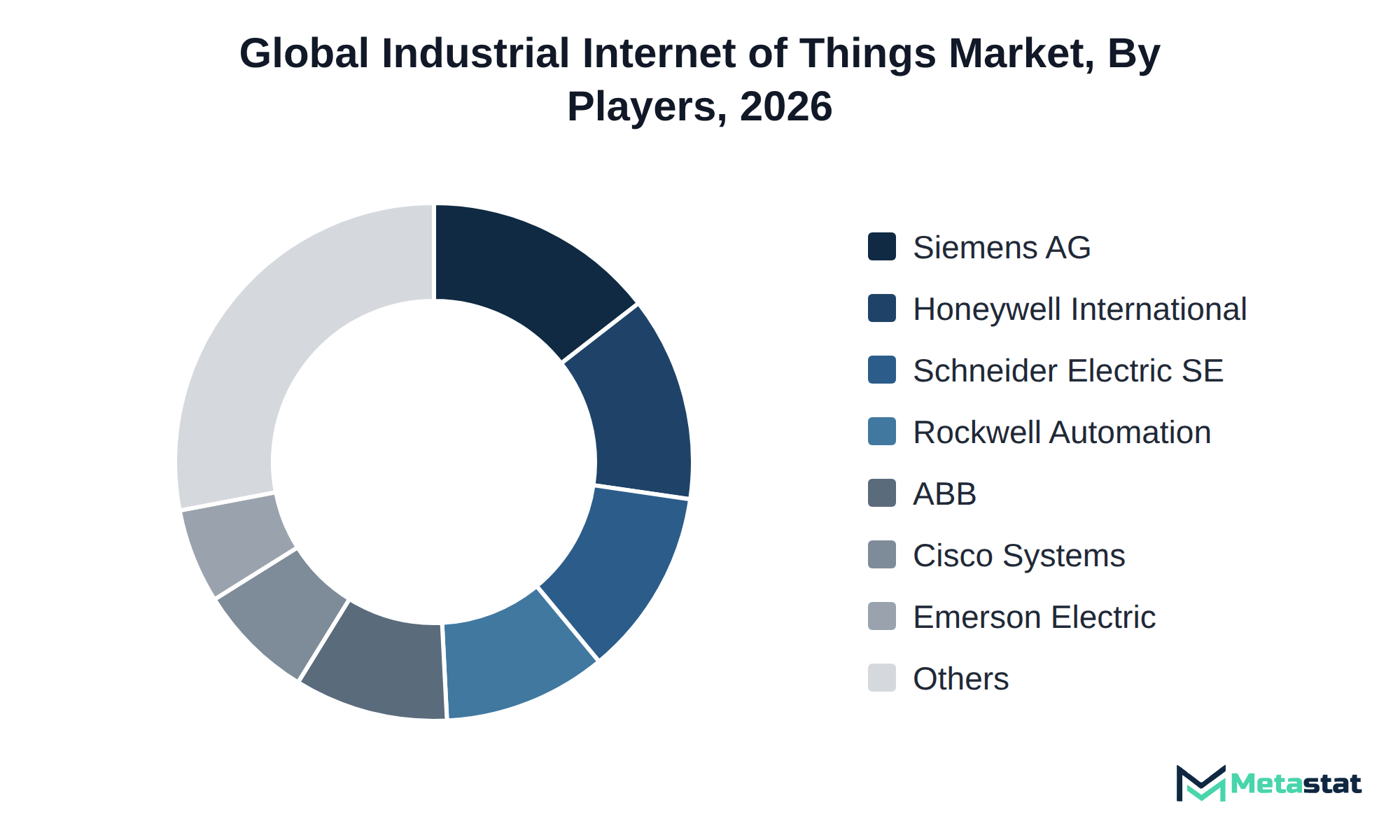
Buyers prioritize factors including price, customization, service quality, and the strength of the ecosystem when making purchasing decisions. Companies like Siemens AG and Schneider Electric SE excel in providing strong ecosystems, drawing on their extensive expertise in automation and energy management. Rockwell Automation, Inc. emphasizes its advanced software solutions for predictive maintenance and process optimization, appealing to industries prioritizing operational efficiency.
Companies including Honeywell International Inc. and Emerson Electric Co. focus on delivering specialized services tailored to specific industries, enhancing their value propositions. These strategic positions illustrate the competitive dynamics within the market, where differentiation proves essential in attracting customers.
Industrial Internet of Things market growth relies on several key developments across segments and regions. First, expanding adoption of software solutions, projected to reach USD 169.4 billion by 2033, will drive demand in diverse industries, including manufacturing and energy. Enhancements in connectivity technology, particularly in wired systems, are expected to support increased network capabilities, with values estimated to rise from USD 82.4 billion in 2026 to USD 174.2 billion by 2033. Predictive maintenance and condition monitoring applications are expected to see considerable growth, moving from USD 49.5 billion in 2026 to USD 128.7 billion by 2033, benefiting sectors including discrete and process manufacturing.
However, potential risks including supply chain disruptions could hinder progress. Challenges in securing reliable hardware components and managing implementation costs slow down adoption rates. If these risks materialize, achieving the forecasted growth in the Industrial Internet of Things market faces significant challenges, impacting overall market potential.
By Component: Hardware, Software, Connectivity Services, Implementation and Managed Services
By Connectivity Technology: Wired, Short-Range Wireless, Cellular, Non-Cellular LPWAN, Others (Satellite, Proprietary Wide-Area Radio)
By Application: Predictive Maintenance and Condition Monitoring, Production Monitoring and Process Optimization, Asset Tracking and Inventory Management, Energy and Resource Management, Quality Monitoring and Inspection, Others (Worker Safety Monitoring, Environmental Compliance Monitoring)
By End-Use Industry: Discrete Manufacturing, Process Manufacturing, Energy and Utilities, Oil and Gas, Transportation and Logistics, Mining and Quarrying, Agriculture, Others (Construction, Industrial Waste Services)
The report strategically identifies and profiles the key market players and analyses their core competencies in each sub-segment of the Industrial Internet of Things market.
Report Attributes | Details |
Study Period | 2021-2033 |
Base Year | 2025 |
Estimated Year | 2026 |
Forecast Period | 2026-2033 |
Historical Period | 2021-2025 |
Growth Rate | CAGR 13.6% from 2026 to 2033 |
Revenue Unit | USD billion |
Segmentation | By Component, Connectivity Technology, Application, End-Use Industry, and Region |
By Region | North America (By Component, Connectivity Technology, Application, End-Use Industry, and Country)
|
Europe (By Component, Connectivity Technology, Application, End-Use Industry, and Country)
| |
Asia Pacific (By Component, Connectivity Technology, Application, End-Use Industry, and Country)
| |
South America (By Component, Connectivity Technology, Application, End-Use Industry, and Country)
| |
Middle East and Africa (By Component, Connectivity Technology, Application, End-Use Industry, and Country)
|
Find answers to common questions about this report
The Industrial Internet of Things market size was valued at USD 162 billion in 2025.
The market is projected to grow at a CAGR of 13.6% during the forecast period from 2026 to 2033.
The North America Industrial Internet of Things market size is estimated to reach USD 125.1 billion by 2033.
Software leads the Industrial Internet of Things market with a projected value of USD 169.4 billion by 2033. This segment surpasses others in growth potential, driven by increasing demand for advanced analytics and automation solutions.
Key drivers for the Industrial Internet of Things market include the growing demand for automation technologies, which enhances operational efficiency and reduces costs. the increasing focus on predictive maintenance solutions supports asset performance optimization and minimizes downtime across various industries.
High costs associated with implementing Industrial Internet of Things solutions act as a significant restraint for several buyer groups, particularly small and medium enterprises. Surging talent costs present challenges for suppliers, impacting overall project budgets and influencing pricing strategies throughout the market.
Several factors favor adoption in the Industrial Internet of Things market. The increasing emphasis on predictive maintenance solutions enhances asset performance and reduces unexpected failures. the integration of automation technologies streamlines operations, driving demand for advanced IIoT solutions across various industries.
The Industrial Internet of Things market is estimated to reach a valuation of USD 449.8 billion by 2033.
Key players operating in the Industrial Internet of Things market include Siemens AG, Schneider Electric SE, Rockwell Automation, Inc., ABB Ltd., Honeywell International Inc., Emerson Electric Co., Cisco Systems, Inc., and Microsoft Corporation.
Revenue from the predictive maintenance segment is projected to rise from USD 49.5 billion in 2026 to USD 128.7 billion by 2033, reflecting a compound annual growth rate of 14.6 percent.
The analysts below cover Information & Technology research at Metastat Insights.
LEAD ANALYST
Utkarsh Khirodkar is a Lead Market Research Analyst at MetaStat Insight, specializing in market intelligence, technology sector assessments, and competitive strategy.

PRINCIPAL CONSULTANT - ENTERPRISE AI & EMERGING TECHNOLOGIES
Banking & Finance · Electronics and Semiconductor · Energy and Power · Healthcare IT · Information & Technology · Professional Services
Vijay Gunti is a Principal Consultant at MetaStat Insight, bringing over two decades of experience across enterprise digital transformation, technology strategy, and intelligent systems.

LEAD CONSULTANT - COMMUNICATION, TELECOM, AND IT
Electronics and Semiconductor · Information & Technology · Machinery & Equipment · Professional Services
Ravindra Sathe Consultants for Communication, Telecom, and IT at MetaStat Insight. He leads the firm's industry research initiatives across telecommunications infrastructure, digital connectivity, enterprise networking, and emerging information technology domains.
Analyzing the transition from natural gas to green hydrogen in iron ore reduction requires realistic infrastructure timelines. Meta stat insight supplied a detailed regional assessment of DRI plant conversion costs and scrap metal availability in North America and Western Europe. Their report carefully examined pellet quality specs and electrical grid access constraints without making oversimplified market assumptions. The research material served as a practical reference during internal technology roadmap discussions.
Integrating zero-trust access controls across legacy electronic health record systems involves complex compliance overhead. Team produced an analysis that clearly separated identity governance and administration tools from privileged access management platforms. Their evaluation of HIPAA and GDPR compliance features across cloud native solutions gave our architecture group clear baseline criteria. The custom data request regarding biometric authentication adoption in hospital networks was returned promptly with clear documentation.
Evaluating calorific value requirements and air permit compliance across municipal waste facilities requires localized data. Metastat Insight structured their analysis around operational throughput capacity and feedstock composition variations in Latin America and Eastern Europe. Their competitive mapping of sorting equipment vendors helped clarify technology differences between optical separators and heavy media systems. The study provided an objective baseline during our capital expenditure reviews.
Explore related market intelligence reports worth reading alongside this one.