
LEAD ANALYST
Utkarsh Khirodkar is a Lead Market Research Analyst at MetaStat Insight, specializing in market intelligence, technology sector assessments, and competitive strategy.

India Digital Advertising Market Size, Share, By Advertising Format (Search Advertising, Social Media Advertising, Display Advertising, Online Video Advertising, Influencer Advertising, Native Advertising, In-App Advertising, Digital Audio Advertising, Retail Media Advertising and Others (Rich Media and Interactive Advertising)), By Device Type (Mobile, Desktop and Laptop, Connected TV (CTV) and Others (Tablet)), By Advertising Channel (Search Engines, Social Networks, Publisher and Content Networks, Online Video and OTT Platforms, E-Commerce and Retail Media Platforms, Mobile Applications and Gaming Platforms, Creator Platforms and Email), By Industry Vertical (Retail and E-Commerce, FMCG, BFSI, Media and Entertainment, Automotive, Telecommunications, Travel and Hospitality, Healthcare and Pharmaceuticals, Education and Others (Real Estate, Government, B2B Services)), Industry Analysis, Growth, Trends, and Forecast, 2026-2033
Report ID
MSI-5841
Published
November, 2026
Pages
302 Pages
Format
Historical
Base year
Forecast
Forecast period
Report Details
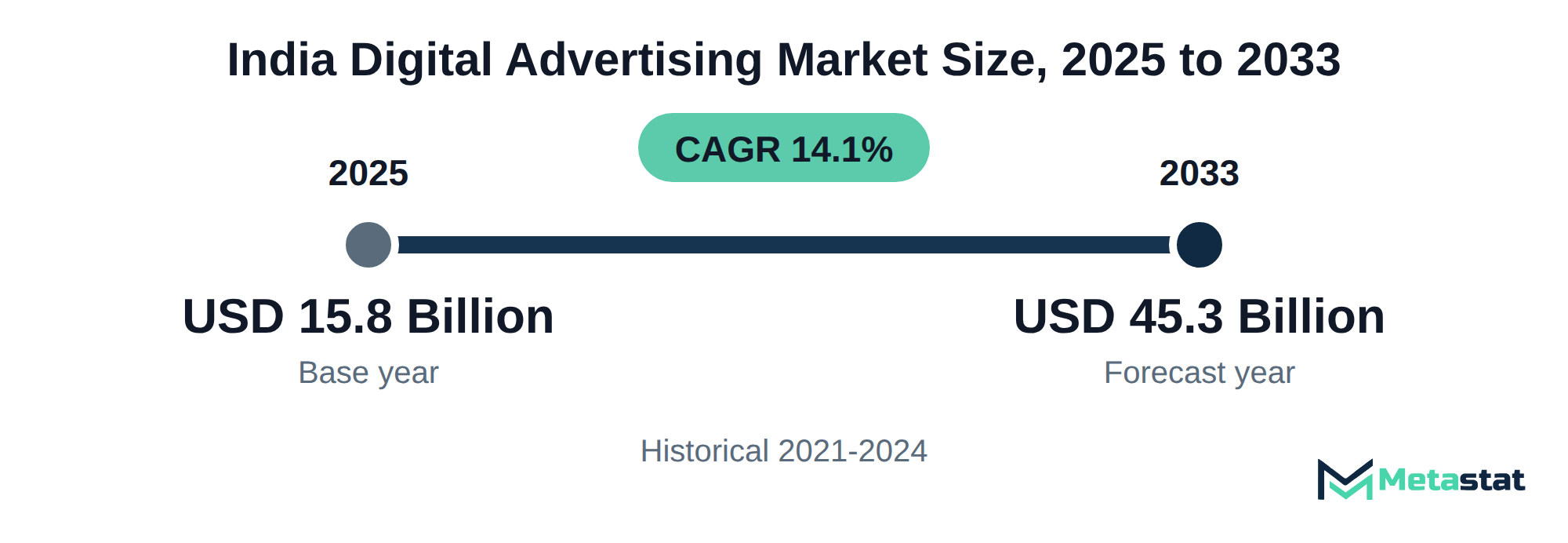
Market Valuation: Valued at $15.8 Billion in 2025, projected to reach $45.3 Billion by 2033 at a 14.1% CAGR.
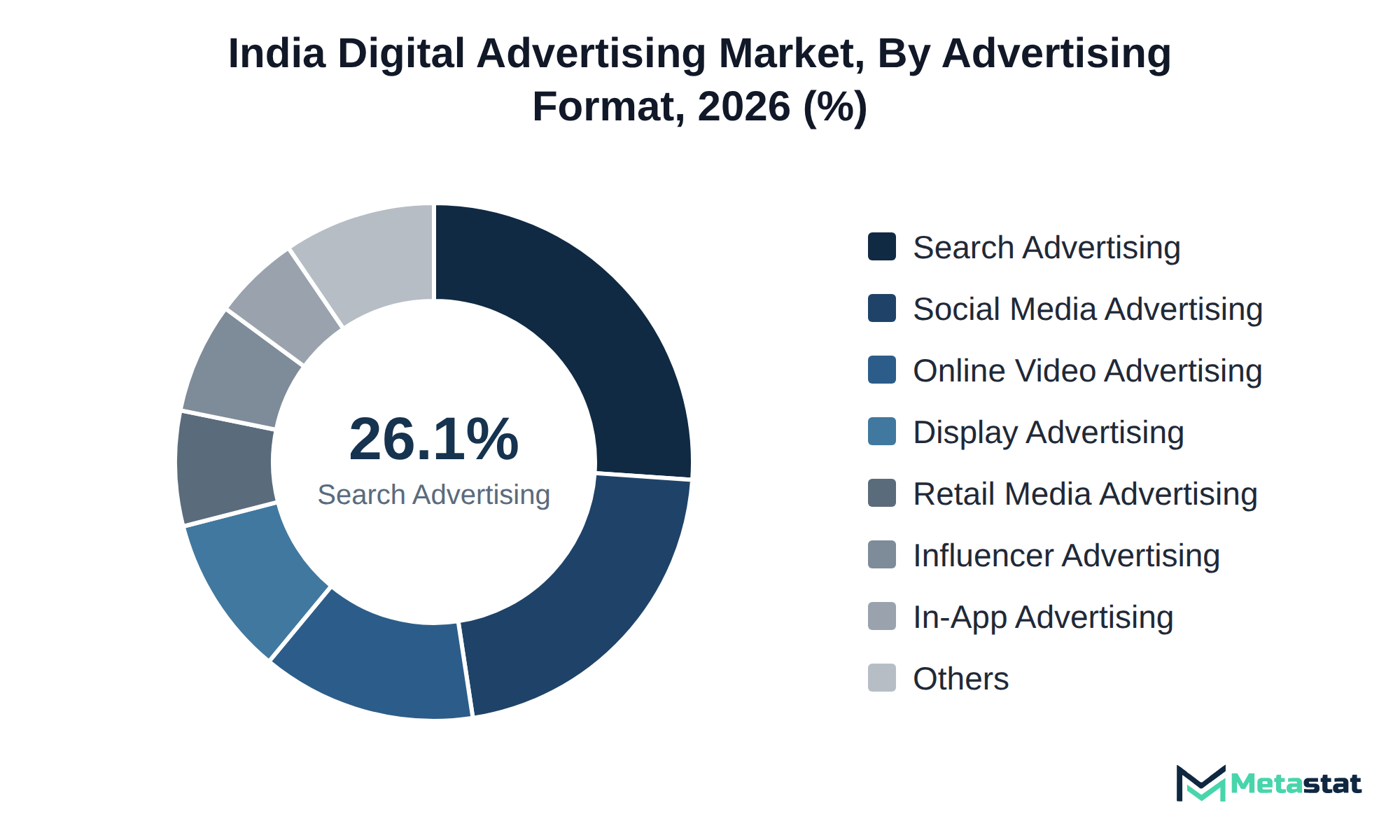
Dominant Segment: Search Advertising leads the India Digital Advertising market, driven by its effectiveness in capturing consumer intent during critical decision-making moments.
Geographic Lead: Urban areas in India are experiencing the fastest growth in digital advertising, fueled by higher digital engagement and increasing internet penetration.
What's Inside: The report provides a comprehensive analysis of the India Digital Advertising market, covering various advertising formats, device types, channels, and industry verticals, along with competitive insights and forecasts through 2033.
Retail Media Advertising Potential: Retail media and e-commerce advertising are projected to grow significantly, reflecting a shift in consumer purchasing behavior and the integration of advertising solutions within e-commerce platforms.
AI-Driven Programmatic Buying: The adoption of AI-driven programmatic buying is transforming advertising strategies, optimizing campaign performance through data analysis and enhancing targeting capabilities.
Choose Your License
India Digital Advertising Market
The India Digital Advertising market was valued at USD 15.8 billion in 2025 and is projected to reach USD 45.3 billion by 2033, growing at a CAGR of 14.1% over the forecast period.
The India Digital Advertising market encompasses various formats, device types, channels, and industry verticals that facilitate the delivery of targeted advertisements. Buyers invest in this market to enhance brand visibility, engage consumers, and drive sales through digital platforms. This investment reflects the growing importance of online presence among businesses seeking to reach specific audiences effectively.
Growth in the market arises from several factors, with increasing internet penetration and mobile device usage driving demand. The mobile segment represents the largest share of the market, significantly influencing advertising strategies. Among the various segments, search advertising holds the most value, capturing substantial revenue within the digital advertising landscape.
Regions across India exhibit varied characteristics, contributing to overall market dynamics. While several emerging markets show strong growth potential, the overall focus remains on urban areas with higher digital engagement. This urbanization trend encourages advertisers to allocate budgets toward innovative advertising formats and channels, ultimately leading to increased competition and investment across the sector.
The growth of the India Digital Advertising market stems from several factors that influence buyer behavior. Advertisers invest in digital formats to reach targeted audiences effectively, leveraging data-driven strategies that enhance engagement and conversion rates. The rise of mobile device usage significantly influences advertising strategies, prompting businesses to allocate budgets toward mobile-centric campaigns that connect with consumers. This shift reflects the increasing reliance on digital platforms for brand visibility and customer interaction.
Among the various segments, Search Advertising represents the largest share, driven by its effectiveness in capturing consumer intent at critical decision-making moments. The market's expansion is significantly supported by the increasing adoption of social media platforms, which facilitate targeted advertising and enable direct interactions between brands and customers. This dynamic environment encourages advertisers to explore innovative approaches to maximize their reach and impact.
In terms of regional dynamics, the market's growth is particularly pronounced in urban areas, where digital penetration is highest. This urban concentration of digital activity enhances competition among advertisers, pushing them to refine their strategies continually. The demand for personalized advertising solutions escalates, compelling businesses to invest heavily in advanced analytics and content creation, ultimately driving the overall growth trajectory of the India Digital Advertising market.
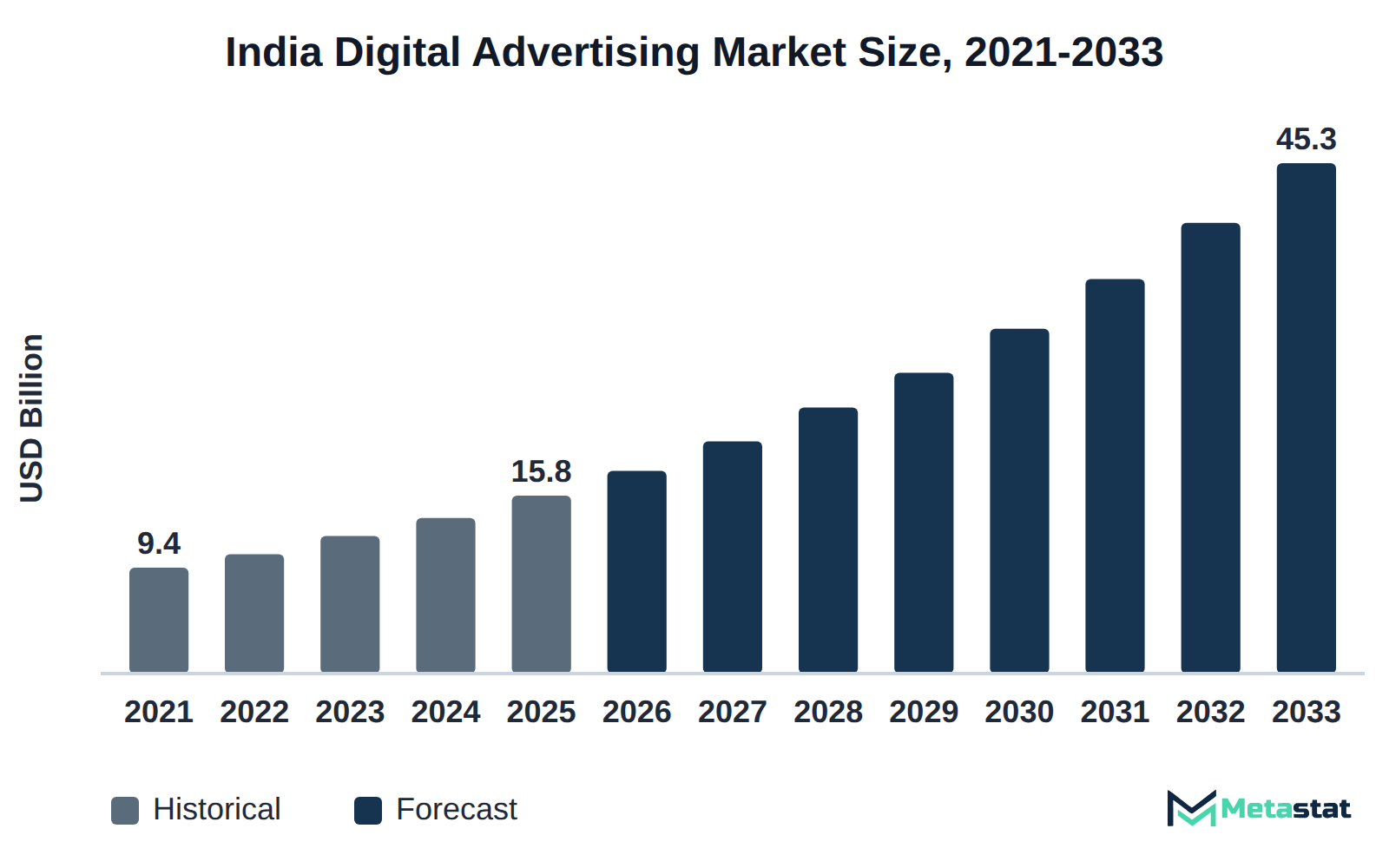
Retail media and e-commerce advertising play a significant role in shaping the dynamics of the India Digital Advertising market. The increasing integration of advertising within e-commerce platforms drives significant shifts in spending strategies. In 2026, retail and e-commerce advertising is expected to generate USD 3.4 billion, projecting to reach USD 9.4 billion by 2033, resulting in a compound annual growth rate (CAGR) of 15.6%. This growth reflects a substantial transformation in consumer purchasing behavior, where digital platforms facilitate effective shopping experiences.
With an expanding online consumer base, brands actively leverage targeted advertising to enhance visibility and customer engagement. Retail media allows businesses to directly reach potential customers at critical moments, thereby impacting purchasing decisions. The expected increase in digital ad spending within the retail and e-commerce sectors highlights an evolution in marketing strategies, where traditional methods gradually yield to more integrated digital approaches.
This transformation signifies an opportunity for advertisers and brands to capitalize on the growing trend of online shopping in India. By investing in these emerging advertising formats, companies better align marketing efforts with consumer preferences, ultimately leading to improved sales performance. The strategic focus on retail media and e-commerce advertising contributes meaningfully to the overall growth trajectory of the market.
AI-driven programmatic buying is transforming the purchasing landscape within the India Digital Advertising market. This method leverages algorithms to automate the buying of ad space, optimizing campaign performance through data analysis. The market's growth reflects a shift towards more efficient and targeted advertising strategies. For instance, spending on mobile advertising is projected to rise from USD 11.5 billion in 2026 to USD 28.1 billion by 2033, highlighting a significant trend in buyers' preferences for dynamic digital solutions.
Regional language advertising is gaining traction, enabling brands to connect with a wider audience across diverse linguistic backgrounds. Advertisers increasingly recognize the value of delivering personalized content in local languages, which enhances engagement and conversion rates. This focus aligns with the forecasted growth across various advertising formats, including social media advertising, which is expected to reach USD 10.2 billion by 2033. This shift broadens market reach and creates deeper connections with consumers, driving brand loyalty and increasing overall market value.
Connected TV (CTV) and Over-The-Top (OTT) platforms significantly influence brand advertising strategies, particularly in the context of the India Digital Advertising market. The rapid increase in viewership on these platforms highlights a unique opportunity for brands to engage with consumers in innovative ways. By 2033, CTV advertising in India is projected to reach USD 5.6 billion, reflecting substantial growth as advertisers shift focus towards platforms where audiences increasingly consume content.
This transition is driven by changing consumer behaviors, with viewers preferring personalized and on-demand content. Brands now tailor advertising strategies to leverage short-form video content, which offers high engagement rates and the potential for viral marketing. Advertisers targeting younger demographics, including millennials and Gen Z, prioritize platforms featuring CTV and OTT content to maximize reach and effectiveness.
The integration of CTV and OTT in advertising strategies enables brands to gather valuable consumer insights, enhancing targeting precision and improving marketing ROI. This evolution in advertising drives revenue for media platforms and transforms how brands connect with their target audiences in the competitive environment of the market.
The shift toward mobile-first and performance-based advertising in the India Digital Advertising market is largely driven by increasing mobile device penetration. A significant portion of the population relies on mobile devices for internet access, which influences advertising strategies across various sectors. This shift reflects the growing preference for mobile advertising, particularly among businesses adapting to changing consumer behaviors that prioritize convenience and accessibility.
In 2026, mobile advertising revenue is projected to reach USD 11.5 billion, escalating to USD 28.1 billion by 2033, reflecting a compound annual growth rate (CAGR) of 13.6%. These figures illustrate the rapid growth within the mobile segment, highlighting its essential role in the overall market. Advertisers recognize that mobile platforms deliver effective engagement and targeted outreach, leading to higher conversion rates.
The rising importance of performance-based advertising models complements this transition. These models prioritize measurable outcomes, enabling advertisers to allocate resources more efficiently and optimize campaigns based on real-time data. This approach maximizes return on investment and establishes deeper connections with consumers, particularly younger demographics who prefer interactive and mobile-optimized experiences.
Consequently, businesses focusing on mobile-first strategies enhance their competitive advantage within the market, adapting to evolving consumer expectations and technological advancements. The convergence of mobile accessibility and performance-driven advertising aligns with the broader trends observed in the India Digital Advertising market, promoting sustained growth and innovation.
The growth in mobile device penetration significantly influences spending patterns among advertisers. Businesses in sectors including retail, e-commerce, and fast-moving consumer goods (FMCG) increasingly allocate budgets toward mobile advertising due to higher user engagement on mobile platforms. This shift responds to changing consumer behaviors, with a notable rise in users accessing content via smartphones. Such dynamics contribute positively to the overall growth trajectory of the market. The strategic focus on mobile advertising aligns with evolving consumer preferences, driving increased demand and investment in mobile advertising channels.
Growing demand for online video content drives significant investment in digital advertising formats. Advertisers increasingly recognize the effectiveness of video in engaging audiences and conveying messages, leading to heightened competition among brands. This trend reflects a broader shift toward immersive and visually appealing content that captures consumer attention. Businesses across various sectors, including retail and entertainment, prioritize video advertising to enhance brand visibility and connect with customers more effectively.
With online video advertising projected to experience a compound annual growth rate of 15.2% through 2033, stakeholders in the India Digital Advertising market actively allocate resources to develop high-quality video campaigns. Marketers leverage platforms including social media and online video streaming services to distribute their content, targeting specific demographics and maximizing reach. This strategic focus on engaging video content results in increased advertising expenditures and contributes to overall market growth. The evolving landscape of consumer behavior highlights the importance of adapting advertising strategies to meet the preferences of digital audiences.
Regulatory challenges within the India Digital Advertising market restrict adoption, particularly among small and medium-sized enterprises (SMEs). Compliance requirements associated with data privacy and online advertising standards necessitate significant investments in technology and expertise, which many SMEs find burdensome. This situation leads to slower uptake of digital advertising among these businesses, resulting in reduced campaign effectiveness and smaller advertising budgets. Larger enterprises often possess the resources to navigate these hurdles, thus widening the gap between them and smaller players in the market. The inability of SMEs to effectively engage with digital advertising limits overall market growth potential and inhibits competitive dynamics, contributing to a situation where innovation lags. This constraint reinforces existing disparities between enterprises of varying sizes, highlighting an ongoing challenge for the market.
The India Digital Advertising market faces significant margin pressure, driven by rising competition and increasing costs related to talent acquisition and retention. Suppliers encounter challenges in maintaining profitability while delivering high-quality services. The influx of new entrants intensifies competition, leading to pricing pressures that affect revenue. Advertising technology costs continue to rise, impacting operational budgets for many players in the market. In response, suppliers focus on enhancing efficiency through automation and apply advanced analytics to optimize ad targeting and campaign performance. Many firms prioritize strategic partnerships to streamline operations and share resources, enabling them to remain competitive without compromising service quality. Continuous investment in employee training and development supports the ongoing need for skilled personnel, addressing talent shortages affecting the sector. This proactive approach positions companies to navigate financial challenges while pursuing growth opportunities in the evolving digital advertising landscape.
The segment of retail and e-commerce advertising shows significant growth potential within the India Digital Advertising market. E-commerce platforms increasingly integrate advertising solutions, offering retailers unique opportunities to reach their target audiences effectively. By applying personalized marketing strategies and leveraging consumer data, retailers enhance their advertising effectiveness. This growth reflects the broader shift toward performance-based advertising, enabling brands to optimize their spending and improve return on investment.
The increased focus on retail media advertising highlights a substantial opportunity for brands to engage consumers at various touchpoints during their purchasing journey. This transition toward integrating advertising within retail platforms represents a strategic shift, providing advertisers with the capability to drive targeted campaigns that connect with consumers. While the market continues to evolve, investments in retail media will likely play a critical role in shaping the future of digital advertising in India.
The India Digital Advertising market is segmented based on Advertising Format, Device Type, Advertising Channel, and Industry Vertical.
Search Advertising segment is valued at USD 4.6 billion in 2026 and is projected to reach USD 10.5 billion by 2033, at a CAGR of 12.4% during the forecast period. This segment primarily facilitates targeted advertising on search engine platforms, allowing businesses to connect with potential customers based on their search queries. Advertisers, particularly in retail and e-commerce, leverage this format to drive traffic and conversions. The growth of Search Advertising is fueled by increasing reliance on digital platforms for product discovery and customer engagement. Compared to other segments, including Social Media Advertising, which has a higher projected CAGR of 14.7%, Search Advertising grows at a moderate pace. The focus on intent-driven marketing in this segment differentiates it from display and video advertising, making it a critical component for businesses aiming to optimize advertising spend in the India Digital Advertising market.
Social Media Advertising segment is estimated to reach USD 10.2 billion by 2033, at a CAGR of 14.7% during the forecast period. This segment significantly contributes to brand visibility and audience engagement, appealing to businesses looking to connect with consumers through platforms like Facebook, Instagram, and Twitter. The rise in smartphone usage and social media penetration drives demand for this advertising format, particularly among the retail and e-commerce sectors, which rely heavily on targeted ads to capture consumer interest. Compared to other advertising formats, Social Media Advertising experiences faster growth, fueled by evolving content consumption patterns and the increasing importance of influencer marketing. This segment offers higher engagement rates compared to traditional media, which further enhances its appeal among advertisers aiming to maximize return on investment.
Display Advertising segment is expected to reach USD 4.1 billion by 2033. This format enables advertisers to visually communicate brand messages through graphics, images, or videos displayed on websites and applications. Organizations across various industries, including retail, FMCG, and media, use this format to enhance brand visibility and attract potential customers. The segment experiences growth driven by increasing digital adoption and the rising effectiveness of visual content in engaging consumers. Compared to other segments, including Social Media Advertising, which is projected to grow at a CAGR of 14.7%, Display Advertising demonstrates a slower pace with a CAGR of 12.4%. The potential for technological advancements, including improved targeting capabilities and enhanced analytics, will further influence the segment's appeal, strengthening its position within the India Digital Advertising market.
Online Video Advertising segment is projected to grow at a CAGR of 15.2% during the forecast period. This segment attracts significant investment from advertisers seeking to engage audiences through dynamic and visually appealing content. Brands across various sectors, including retail and media, use online video advertising to enhance customer interaction and brand visibility. The rapid consumption of video content on platforms including social media and streaming services drives this growth, highlighting a shift in consumer behavior toward video formats. Unlike other segments, including Display Advertising, which is projected to reach USD 4.1 billion by 2033, Online Video Advertising emphasizes higher engagement rates and commands premium pricing due to its effectiveness in capturing viewer attention. The increasing popularity of short-form videos and user-generated content contributes to the segment's strong performance compared to other segments in the advertising format category.
Influencer Advertising focuses on leveraging social media personalities and content creators to promote products and services. Brands engage influencers to reach target audiences in a more authentic manner, enhancing consumer trust and engagement. This form of advertising attracts companies across industries, particularly retail, FMCG, and technology, where direct engagement with potential customers occurs. The segment experiences substantial growth driven by the increasing reliance on social media platforms for brand awareness. Compared to other advertising formats, influencer advertising often commands higher rates due to its personalized approach, attracting brands willing to invest more for perceived credibility. While influencer advertising expands, challenges persist, including managing ROI and navigating regulatory landscapes that impact campaign effectiveness.
Native advertising integrates promotional content into platforms, enabling brands to reach audiences in a non-disruptive manner. This format appeals to marketers aiming to enhance user engagement while maintaining authenticity. Advertisers leverage native ads for storytelling and brand messaging, targeting audiences across various digital channels, including social media and websites. A significant driver for this segment involves the evolving consumer preference for content that feels organic rather than overtly promotional. Advertisers increasingly recognize the effectiveness of this approach, differentiating it from traditional display formats, which generate lower engagement rates. Compared to other formats, native advertising often commands higher pricing due to its capacity to deliver more personalized and relevant advertising experiences, creating deeper connections between brands and consumers. While the market continues to evolve, native advertising is projected to gain traction among brands seeking innovative ways to connect with their audiences.
In-App Advertising refers to advertisements embedded within mobile applications, targeting users during their app usage. This format serves various industries, particularly gaming, lifestyle, and e-commerce, by engaging users in a straightforward manner while they interact with content. The surge in mobile app downloads and usage among consumers drives demand for this segment, prompting brands to integrate ads that enhance user experience instead of disrupting it. In contrast to traditional display advertising, which often competes for attention on websites, In-App Advertising maintains a higher engagement rate due to its contextual relevance. This segment stands out for its effectiveness in reaching a younger demographic that prefers mobile experiences, establishing a unique value proposition in the competitive market. With advancements in technology, advertisers increasingly leverage data analytics to optimize their campaigns, ensuring better targeting and higher conversion rates.
Digital Audio Advertising involves delivering promotional content through audio formats, including streaming services, podcasts, and internet radio. Advertisers engage this format to reach listeners within environments where visual attention is limited. Brands targeting younger demographics frequently turn to digital audio platforms, with users increasingly consuming audio content during commutes or exercise routines. This segment benefits from rising audio consumption trends and evolving advertising technologies. Demand for personalized audio ads encourages advertisers to invest in data-driven campaigns, enhancing message relevance. Compared to other segments, Digital Audio Advertising typically features lower costs, allowing several brands with smaller budgets to participate effectively. This segment is projected for growth, driven by the increasing adoption of smart speakers and the ongoing popularity of podcasts, both contributing to a diverse advertising ecosystem in the India Digital Advertising market.
Retail Media Advertising focuses on placing promotional content within retail environments, enhancing visibility for brands directly at the point of sale. This segment appeals primarily to retailers and brands seeking to optimize their advertising spend by targeting consumers when they are most likely to make purchases. The rise in e-commerce and digital shopping experiences drives demand for this advertising format, allowing brands to engage customers more effectively. Unlike traditional advertising, Retail Media Advertising provides measurable results and often yields higher returns on investment. Its growth trajectory reflects increasing consumer interactions with digital retail platforms, positioning it as an essential component of the advertising mix for brands aiming to capitalize on online shopping trends. This segment differentiates itself from others in the market by its capacity to reach potential buyers during critical decision-making moments, significantly influencing purchasing behavior.
Rich Media and Interactive Advertising encompasses dynamic and engaging formats that go beyond traditional static ads. This segment primarily attracts advertisers aiming to create immersive experiences for users, incorporating elements like animations, interactive content, and advanced graphics to enhance user engagement. Brands in sectors including retail, entertainment, and technology leverage these formats to captivate audiences and drive conversion rates. The evolution of technology supporting interactive formats fuels growth, allowing for more effective storytelling and brand experiences.
Consumer demand for innovative advertising experiences drives this segment forward, with brands increasingly seeking to differentiate themselves in a competitive landscape. In comparison to other advertising formats, Rich Media and Interactive Advertising offers unique engagement potential, often leading to higher conversion rates. While Social Media Advertising caters to broad audiences through targeted outreach, Rich Media excels in creating memorable brand interactions, establishing a distinct position in the India Digital Advertising market.
This segment targets consumers who rely heavily on mobile devices for their daily activities, including shopping and social media interactions. Increasing smartphone penetration and improvements in mobile internet access drive demand for mobile advertising, particularly among retail and e-commerce brands. Unlike the desktop and laptop segment, which is expected to reach USD 9.2 billion by 2033, the mobile segment grows at a faster rate. This rapid expansion reflects the shift in consumer behavior toward mobile-first experiences, prompting advertisers to allocate a larger portion of their budgets to mobile platforms in the India Digital Advertising market.
Desktop and Laptop segment is estimated to reach USD 9.2 billion by 2033, at a CAGR of 12.8% during the forecast period. This segment primarily serves businesses targeting professionals and consumers using computers for work, entertainment, and online shopping. The growing preference for larger screens and enhanced user experiences drives demand in this area. A notable factor influencing this segment is the increasing integration of digital advertising on desktop platforms, which presents advertisers with opportunities to deliver detailed, engaging content. Compared to mobile advertising, the Desktop and Laptop segment captures a higher share of the market due to its ability to accommodate richer media formats. Investment in this segment reflects strong commitment from advertisers to reach audiences effectively, contributing significantly to the overall growth of the market.
Connected TV (CTV) segment is expected to reach USD 5.6 billion by 2033. This segment serves primarily to deliver video advertising content via internet-connected televisions, enabling brands to engage viewers in a more immersive manner. Increasing consumer adoption of CTVs, along with the growing preference for on-demand content, drives demand within this segment, attracting advertisers from various industries seeking to enhance their reach. The CTV segment outpaces traditional formats, offering advertisers the benefit of targeted advertising and enhanced viewer engagement. Compared to other device types, CTV advertising demonstrates a higher growth trajectory, with a notable emphasis on video content that connects with audiences. The rise of streaming services further increases investment in this segment, reflecting a shift in consumer behavior and advertising strategies. In the market, CTV advertising promises innovative approaches that align with evolving viewer preferences.
Others (Tablet) segment is projected to grow at a CAGR of 14.2% during the forecast period. Tablets serve a diverse range of users, including students, professionals, and casual consumers, who use these devices for browsing, streaming, and other digital experiences. The growing demand for portable and user-friendly devices drives growth in this segment. Increasing access to high-speed internet enhances user engagement, leading to more advertising opportunities. Compared to other device types, the Others (Tablet) segment exhibits a unique position due to its versatile usage patterns and distinct consumer demographic. Both mobile and desktop segments are expected to grow significantly, but tablets cater specifically to users seeking a balance between functionality and portability, contributing to its expected expansion in the India Digital Advertising market.
The Search Engines segment is valued at USD 4.5 billion in 2026 and is projected to reach USD 10.3 billion by 2033, at a CAGR of 12.6% during the forecast period. This segment serves businesses aiming to capture consumer attention through targeted advertisements in search engine results. The primary drivers include the increasing prevalence of online searches, leading to higher demand from e-commerce and service-oriented companies seeking to enhance their visibility. Compared to other advertising channels, the Search Engines segment exhibits a more gradual growth rate, reflecting a mature landscape where established players dominate. In contrast, segments including Social Media Advertising experience higher growth rates due to evolving digital engagement trends, highlighting the distinct dynamics that influence their respective trajectories in the India Digital Advertising market.
Social Networks segment is estimated to reach USD 10.4 billion by 2033, at a CAGR of 14.3% during the forecast period. This segment involves advertising across platforms that facilitate social interaction, enabling brands to connect directly with consumers. Users include businesses seeking to engage potential customers through targeted advertising that leverages user data and preferences. Increased smartphone penetration and the growing trend of digital engagement drive demand within this segment. Compared to others, including Search Advertising, which is projected to reach USD 10.5 billion by 2033 at a CAGR of 12.4%, Social Networks exhibit faster growth. The ability of social networks to capitalize on user-generated content positions them as crucial for advertisers aiming for high engagement and brand loyalty. This distinct growth trajectory highlights the segment's significance within the India Digital Advertising market.
Publisher and Content Networks segment is projected to reach USD 5 billion by 2033. This segment serves a vital channel for advertisers aiming to distribute content across various platforms, enabling brands to engage audiences effectively. Companies in the retail, media, and entertainment sectors use this channel to enhance visibility and drive conversions. A significant force influencing this segment is the rising demand for integrated marketing solutions, which has led to increased investment in content-driven strategies. This sub-segment experiences strong growth, with a CAGR of 14.3%, distinguishing itself from others by its focus on content distribution rather than direct sales. The India Digital Advertising market reflects a growing preference for strategies prioritizing engaging and relevant content, supporting further expansion in the coming years.
Online Video and OTT Platforms segment is projected to grow at a CAGR of 16% during the forecast period. This segment captures the attention of consumers who increasingly prefer video content over traditional media. Advertisers leverage this channel to engage audiences through dynamic storytelling and visually appealing formats. Key drivers include the rise in internet penetration and the growing popularity of streaming services, which encourage advertisers to allocate larger budgets to online video campaigns. Compared to other segments, including Search Engines and Social Networks, this segment experiences faster growth due to increasing consumption of video content, which enhances viewer engagement. The differentiated approach of online video advertising enables brands to create immersive experiences that connect with consumers, reinforcing brand loyalty and driving sales in the India Digital Advertising market.
E-Commerce and Retail Media Platforms target consumers during their shopping journeys. This segment serves brands and retailers by delivering tailored advertising directly on e-commerce sites and applications, influencing purchasing decisions at critical moments. The rapid growth of online shopping drives demand for this segment, with businesses continuously seeking effective ways to engage consumers. Enhanced targeting capabilities and data analytics support the effectiveness of campaigns, allowing for personalized advertising that connects with users. Compared to other segments, E-Commerce and Retail Media Platforms often achieve higher engagement rates, reflecting their ability to connect brands and consumers in real-time. This dynamic environment positions the India Digital Advertising market for significant expansion, with ongoing technological advancements and shifting consumer behaviors shaping future strategies.
Mobile Applications and Gaming Platforms involve delivering promotional content through mobile apps and gaming environments, targeting users actively engaged in these platforms. This segment serves businesses looking to enhance user engagement and drive conversions through interactive and immersive advertising experiences. Key demand drivers include the rising number of mobile users and the growing popularity of mobile gaming, which attract advertisers seeking to capture audience attention in innovative ways. Compared to other segments, this area experiences rapid growth due to increasing smartphone penetration and the ongoing evolution of app functionalities. While other channels focus on static advertisements, Mobile Applications and Gaming Platforms prioritize dynamic and interactive formats, appealing to a tech-savvy audience that values immersive experiences. This distinct approach positions the segment favorably within the India Digital Advertising market, catering to brands prioritizing engagement and user interaction.
Creator Platforms serve spaces where content creators display their work and engage with audiences, creating community interactions. Brands leverage these platforms to connect with users through influencer marketing and partnerships, driving promotional efforts effectively. The segment experiences significant momentum due to the increasing number of content creators and the growing popularity of user-generated content, resulting in heightened audience engagement. This segment distinguishes itself from others through its unique approach to digital advertising, relying on authentic connections rather than traditional ad placements. Unlike Search Engines and Social Networks, where advertising relies on algorithms and broad targeting, Creator Platforms emphasize personal relationships and trust, providing opportunities for brands to reach highly engaged niche markets. This shift influences how advertisers allocate budgets, favoring platforms that yield stronger connections and return on investment. The India Digital Advertising market reflects a broader movement toward personalized marketing strategies, benefiting from this trend.
Email advertising involves delivering promotional content directly to consumers via their email inboxes. Businesses use this channel to communicate with potential customers, promote products, and build relationships. The effectiveness of email advertising relies heavily on targeted messaging and segmentation, allowing marketers to engage users based on their preferences and behaviors. Increased personalization drives higher engagement rates, distinguishing this channel from others in the market. Competing channels, including social media, grow rapidly, while email maintains a steady pace due to its established nature and low cost. Email advertising typically yields a higher return on investment compared to many other digital marketing channels. The India Digital Advertising market continues to evolve, incorporating advanced technologies that facilitate targeted campaigns and improve user experience.
This segment serves retailers and e-commerce platforms looking to enhance customer engagement and drive sales through targeted advertising. Key forces affecting this segment include the increasing shift towards online shopping and the growing emphasis on personalized marketing strategies. Compared to other segments, Retail and E-Commerce demonstrates faster growth, driven by increasing demand for a digital presence among businesses. The rise of mobile commerce and social media advertising contributes to this dynamic, positioning Retail and E-Commerce as a significant driver within the India Digital Advertising market.
FMCG segment is estimated to reach USD 6.3 billion by 2033, at a CAGR of 13.8% during the forecast period. This segment encompasses products that are fast-moving and frequently purchased, including food, beverages, personal care items, and household goods. Brands within this sector engage in digital advertising to connect with consumers effectively, aiming for increased brand awareness and loyalty. The primary forces driving growth in this segment include rising adoption of digital platforms by consumers and increasing focus on personalized marketing strategies. FMCG experiences a faster growth rate driven by the need for immediate consumer engagement and retention strategies in an evolving marketplace. This sector’s dynamics reflect strong demand for targeted advertising, setting it apart from segments like BFSI, which grows at a slower pace.
This segment services the banking, financial services, and insurance industries, focusing on customer acquisition, retention, and brand awareness. Increased competition among financial institutions drives demand for targeted digital marketing strategies. Firms invest in digital advertising to enhance customer engagement and improve service offerings, leveraging data analytics to tailor content. Compared to other segments, BFSI experiences a higher CAGR of 13.8%, demonstrating its growth potential amid evolving consumer preferences. Regulatory changes and advancements in financial technologies further influence advertising strategies within this segment, prompting organizations to adapt quickly to market demands. The BFSI segment highlights its significance in optimizing marketing efforts and achieving measurable returns on investment.
Media and Entertainment segment is projected to grow at a CAGR of 14.5% during the forecast period. This segment represents a significant avenue for marketers to reach audiences through various platforms, including streaming services, social media, and digital content channels. Rising demand for engaging content drives investment from advertisers looking to capture viewer attention, with key players in this space actively leveraging innovative advertising solutions. Compared to other industry verticals, Media and Entertainment experiences strong growth, reflecting a shift in consumer behavior towards digital consumption of entertainment. The total addressable market for this segment is expected to expand, fueled by the increasing prevalence of high-speed internet and mobile device usage, enabling broader access to streaming services and interactive content. The current forecast positions this segment for substantial revenue growth, with anticipated shifts in advertising strategies targeting younger demographics, further enhancing its market position.
Automotive represents a significant sector focused on promoting vehicles and related services through digital platforms. This segment targets a diverse audience, including individual consumers and businesses seeking to enhance brand awareness and stimulate sales. Increased competition among automotive manufacturers drives demand for innovative advertising strategies, particularly in a market where consumers increasingly rely on digital channels for information and purchasing decisions. The automotive segment distinguishes itself by emphasizing dynamic visual content, including video advertisements, which deviate from traditional advertising approaches used in other industry verticals. Advertisers in this sector prioritize reaching specific demographics, leveraging data analytics to tailor campaigns for maximum effectiveness. The need for engaging content that connects with potential buyers remains crucial, reflecting a broader trend driven by personalization in the India Digital Advertising market.
Telecommunications represents a critical sector engaged in providing communication services and technologies. Advertisers connect with consumers through digital platforms, often targeting mobile users with high engagement levels. The sector experiences significant growth driven by increasing demand for mobile data and proliferation of digital services. Enhanced 5G technology adoption enables more effective advertising strategies, positioning telecommunications as a key player in the digital advertising space. Compared to other industry verticals, this segment features a unique blend of high-tech innovations and competitive pricing strategies, appealing to a diverse consumer base. The focus on personalized advertising experiences through customer data analytics distinguishes telecommunications from other segments, creating deeper connections between brands and consumers.
The Travel and Hospitality segment encompasses various advertising strategies aimed at promoting travel services, accommodation options, and related experiences. This segment primarily targets consumers seeking travel arrangements, leisure activities, and hospitality services. Increasing consumer interest in travel experiences and the rise of online booking platforms drive demand in this segment. The market sees heightened engagement through digital channels, with companies in the travel and hospitality industry leveraging targeted advertising to reach potential customers effectively. Compared to other segments, this sector experiences unique dynamics, including seasonality, which affects advertising strategies and timing. Advertising in this segment often focuses on immersive content that presents destinations, influencing consumer decisions through visual storytelling. By prioritizing digital engagement, businesses in travel and hospitality aim to enhance customer experiences and build brand loyalty.
Healthcare and Pharmaceuticals focus on promoting medical products and services to consumers and healthcare professionals through various digital channels. This segment primarily serves pharmaceutical companies, healthcare providers, and wellness brands seeking to engage with patients and healthcare practitioners. Key drivers of demand include the growing emphasis on health awareness and advancements in digital communication technologies. Compared to other segments, this area exhibits relatively slower growth due to stringent regulations governing pharmaceutical advertising and varying consumer perceptions of health-related promotions. The sector's advertising strategies often prioritize accuracy and compliance over speed, creating unique challenges not prevalent in other industries. Growth within the India Digital Advertising market is expected to reflect the increasing shift towards digital platforms, enhancing outreach and engagement within the medical community and among consumers.
Education plays a significant role in the digital advertising ecosystem, targeting institutions and educational service providers to reach prospective students and parents. This segment focuses on promoting courses, programs, and educational resources through various digital channels, including social media and search engines. The demand for education-related advertising sees significant momentum driven by the growing preference for online learning platforms and increasing competition among educational institutions. Unlike other segments, Education relies heavily on targeted campaigns that address specific audiences, including high school graduates or adult learners seeking skill enhancement. The segment's growth often hinges on trends in technology adoption within educational environments, influencing how institutions present their offerings to potential students. Strategic use of digital channels distinguishes this segment, creating a unique approach to engaging prospective learners in the competitive landscape of the India Digital Advertising market.
This segment caters to the diverse advertising needs within the realms of real estate, government, and B2B services. It serves various entities aiming to promote properties, public services, and business offerings through targeted digital approaches. Demand in this segment is influenced by the increasing digital presence of businesses and the growing need for effective communication strategies in government and real estate sectors. Unlike consumer-oriented segments including Retail and E-Commerce, which experience rapid growth driven by direct consumer engagement, this segment typically navigates a more complex decision-making process. Consequently, advertising strategies involve longer sales cycles and higher investment in tailored content to effectively reach target audiences. The India Digital Advertising market reflects a transformation in how these sectors connect with stakeholders, highlighting the importance of specialized digital strategies in a competitive environment.
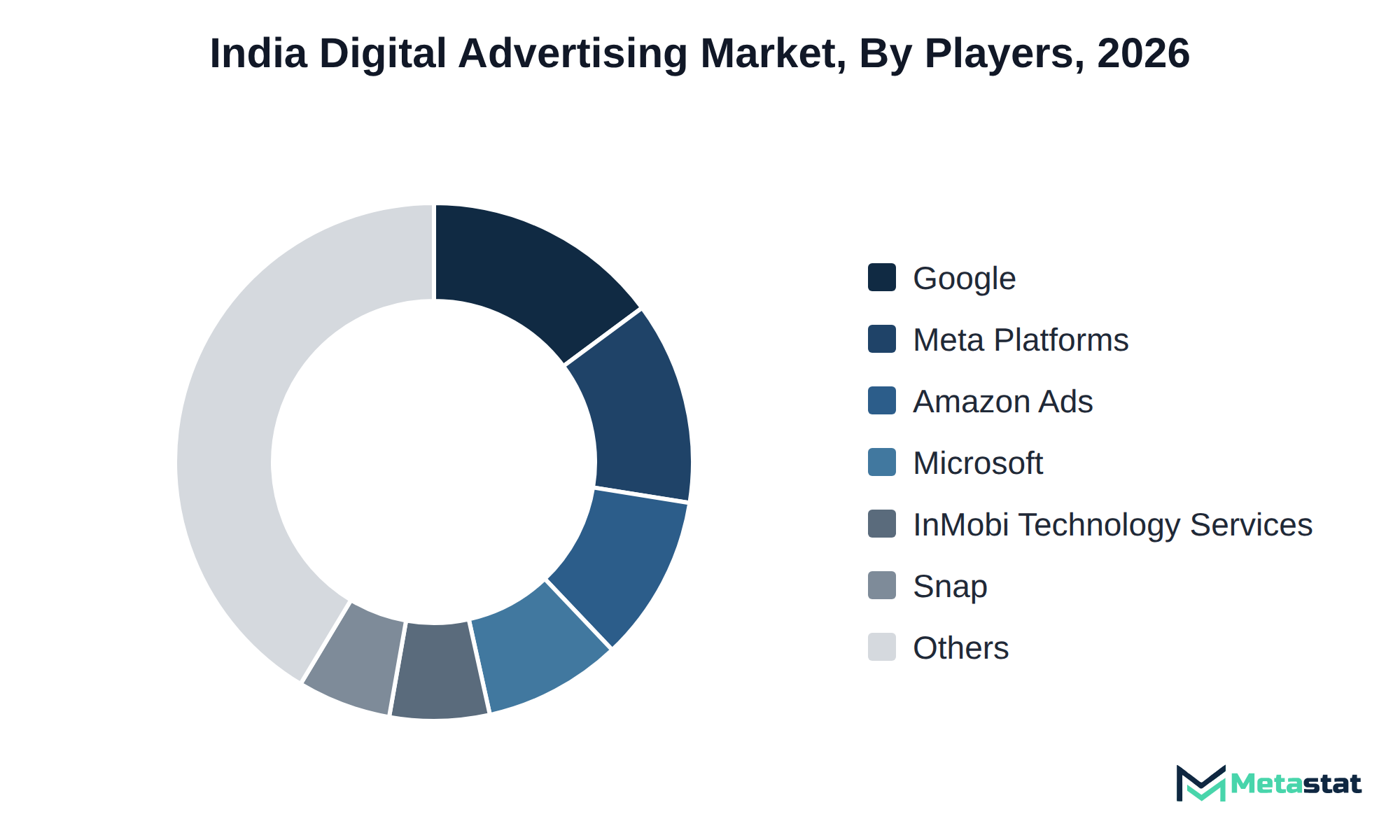
Competition in the India Digital Advertising market involves companies employing various strategies to differentiate themselves. Players including Google LLC and Meta Platforms, Inc. focus on an extensive suite of advertising products that facilitate wide-reaching consumer engagement. Companies like Amazon Ads and Microsoft Corporation leverage their established platforms to offer integrated advertising solutions that attract businesses seeking diverse promotional avenues.
Buyers prioritize factors including price, service quality, and customization when selecting digital advertising solutions. For instance, InMobi Technology Services Private Limited emphasizes mobile advertising capabilities tailored to local markets, while The Trade Desk, Inc. focuses on data-driven advertising solutions that enhance targeting efficiency. These strategies illustrate how companies navigate competitive pressures while addressing specific buyer needs within the market.
The growth of the India Digital Advertising market hinges on several key developments. First, the expansion of mobile advertising will drive market growth, with mobile segments expected to increase from USD 11.5 billion in 2026 to USD 28.1 billion by 2033, reflecting a robust adoption rate. Second, the rise of social media advertising, projected to reach USD 10.2 billion by 2033, highlights a shift toward more engaging and targeted advertising formats. Lastly, growth in online video advertising experiences a 15.2% CAGR, capturing increased attention from brands aiming to leverage video content for consumer engagement. Risks including regulatory changes affecting data privacy and ad targeting could hinder market progress. These regulatory shifts impact strategies for both advertisers and platforms, particularly in social networks and online video channels. Navigating these challenges is essential for sustained growth in the competitive environment of the India Digital Advertising market.
By Advertising Format: Search Advertising, Social Media Advertising, Display Advertising, Online Video Advertising, Influencer Advertising, Native Advertising, In-App Advertising, Digital Audio Advertising, Retail Media Advertising, Others (Rich Media and Interactive Advertising)
By Device Type: Mobile, Desktop and Laptop, Connected TV (CTV), Others (Tablet)
By Advertising Channel: Search Engines, Social Networks, Publisher and Content Networks, Online Video and OTT Platforms, E-Commerce and Retail Media Platforms, Mobile Applications and Gaming Platforms, Creator Platforms, Email
By Industry Vertical: Retail and E-Commerce, FMCG, BFSI, Media and Entertainment, Automotive, Telecommunications, Travel and Hospitality, Healthcare and Pharmaceuticals, Education, Others (Real Estate, Government, B2B Services)
The report strategically identifies and profiles the key market players and analyses their core competencies in each sub-segment of the Digital Advertising market.
Report Attributes | Details |
Study Period | 2021-2033 |
Base Year | 2025 |
Estimated Year | 2026 |
Forecast Period | 2026-2033 |
Historical Period | 2021-2025 |
Growth Rate | CAGR 14.1% from 2026 to 2033 |
Revenue Unit | USD billion |
Segmentation | By Advertising Format, Device Type, Advertising Channel, Industry Vertical, and Region |
Find answers to common questions about this report
The Digital Advertising market size was valued at USD 15.8 billion in 2025.
The market is projected to grow at a CAGR of 14.1% during the forecast period from 2026 to 2033.
Social Media Advertising leads the Digital Advertising market with a projected value of USD 10.2 billion by 2033. This segment outpaces others in growth potential, reflecting a compound annual growth rate of 14.7%.
The growth in mobile device penetration significantly influences spending patterns among advertisers, driving increased budgets toward mobile advertising. Growing demand for online video content leads to heightened competition among brands, as advertisers prioritize video advertising to enhance brand visibility and connect with customers effectively.
Regulatory challenges restrict adoption, particularly among small and medium-sized enterprises, leading to slower uptake of digital advertising. Margin pressure due to rising competition and increasing operational costs affects profitability for suppliers in the market.
The significant growth potential in retail and e-commerce advertising, driven by increasing online shopping trends, supports adoption within the India Digital Advertising market. This sector's projected expansion reflects a shift toward performance-based advertising, enabling brands to optimize spending and enhance return on investment.
The Digital Advertising market is estimated to reach a valuation of USD 45.3 billion by 2033.
Key players operating in the Digital Advertising market include Google LLC, Meta Platforms, Inc., Amazon Ads, Microsoft Corporation, Snap Inc., X Corp., InMobi Technology Services Private Limited, and The Trade Desk, Inc.
Mobile advertising is projected to grow from USD 11.5 billion in 2026 to USD 28.1 billion by 2033, reflecting a compound annual growth rate of 13.6%.
Online video advertising is anticipated to grow at a compound annual growth rate of 15.2% through 2033, driven by increasing demand for engaging video content.
The analysts below cover Information & Technology research at Metastat Insights.
LEAD ANALYST
Utkarsh Khirodkar is a Lead Market Research Analyst at MetaStat Insight, specializing in market intelligence, technology sector assessments, and competitive strategy.

PRINCIPAL CONSULTANT - ENTERPRISE AI & EMERGING TECHNOLOGIES
Banking & Finance · Electronics and Semiconductor · Energy and Power · Healthcare IT · Information & Technology · Professional Services
Vijay Gunti is a Principal Consultant at MetaStat Insight, bringing over two decades of experience across enterprise digital transformation, technology strategy, and intelligent systems.

LEAD CONSULTANT - COMMUNICATION, TELECOM, AND IT
Electronics and Semiconductor · Information & Technology · Machinery & Equipment · Professional Services
Ravindra Sathe Consultants for Communication, Telecom, and IT at MetaStat Insight. He leads the firm's industry research initiatives across telecommunications infrastructure, digital connectivity, enterprise networking, and emerging information technology domains.
Assessing commercial microgrid software adoption requires looking past top-level installation numbers and examining utility interconnection queues. The research provided verifiable data on average permitting timelines, tariff structures, and battery storage integration costs across regional utility territories. That grounded perspective was valuable for our team when building five-year demand projections for industrial microgrid controllers.
Ambulatory surgical centers have very different purchasing cycles for robotic-assisted surgery platforms than major hospital networks. The MetaStat Insight study focused squarely on capital expenditure depreciation, procedural reimbursement pathways, and surgeon training overhead. That operational clarity made it much simpler to validate multi-year procedure growth forecasts against actual ambulatory center adoption patterns.
When planning edge sensor rollouts across refinery environments, generic IoT reports typically miss the harsh-environment certification bottlenecks. MetaStat Insight gave an objective evaluation of ATEX and Class 1 Division 2 hardware availability, along with realistic five-year maintenance cycle cost projections. The comparison of wireless mesh versus private cellular backhaul helped our team pressure-test network reliability models for remote processing facilities.
Explore related market intelligence reports worth reading alongside this one.