
LEAD ANALYST
Utkarsh Khirodkar is a Lead Market Research Analyst at MetaStat Insight, specializing in market intelligence, technology sector assessments, and competitive strategy.

Global Data Center Power Market Size, Share, By Product Type (Uninterruptible Power Supply Systems, Generator Sets, Power Distribution Units and Remote Power Panels, Switchgear and Switchboards, Busway Systems, Transfer Switches, Transformers, Standalone Power Conversion Systems, Standalone Battery Energy Storage Systems, Others (Power Monitoring and Management Systems)), By Service (Installation and Commissioning, Maintenance and Repair, Monitoring and Remote Management, Retrofit and Upgrade Services, Others (Testing and Inspection)), By Data Center Type (Enterprise Data Centers, Colocation Data Centers, Hyperscale Data Centers, Edge Data Centers), By End-Use Industry (Information Technology and Telecommunications, Banking, Financial Services and Insurance, Government and Public Sector, Healthcare and Life Sciences, Retail and E-commerce, Manufacturing and Industrial, Media and Entertainment, Energy and Utilities, Others (Education and Research)), Industry Analysis, Growth, Trends, and Forecast, 2026-2033
Report ID
MSI-4280
Published
October, 2026
Pages
253 Pages
Format
Historical
Base year
Forecast
Forecast period
Report Details
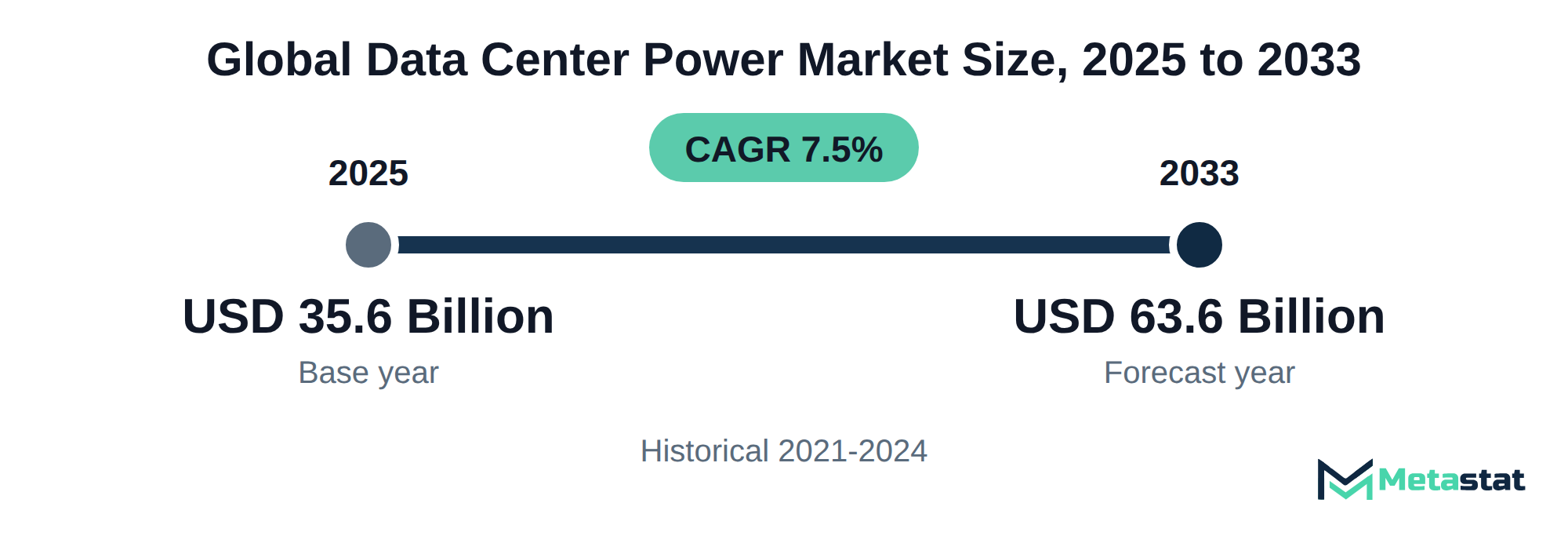
Market Valuation: Valued at $35.6 Billion in 2025, projected to reach $63.6 Billion by 2033 at a 7.5% CAGR.
Dominant Segment: The enterprise data centers segment leads the market, driven by significant investments in infrastructure to support growing computing needs.
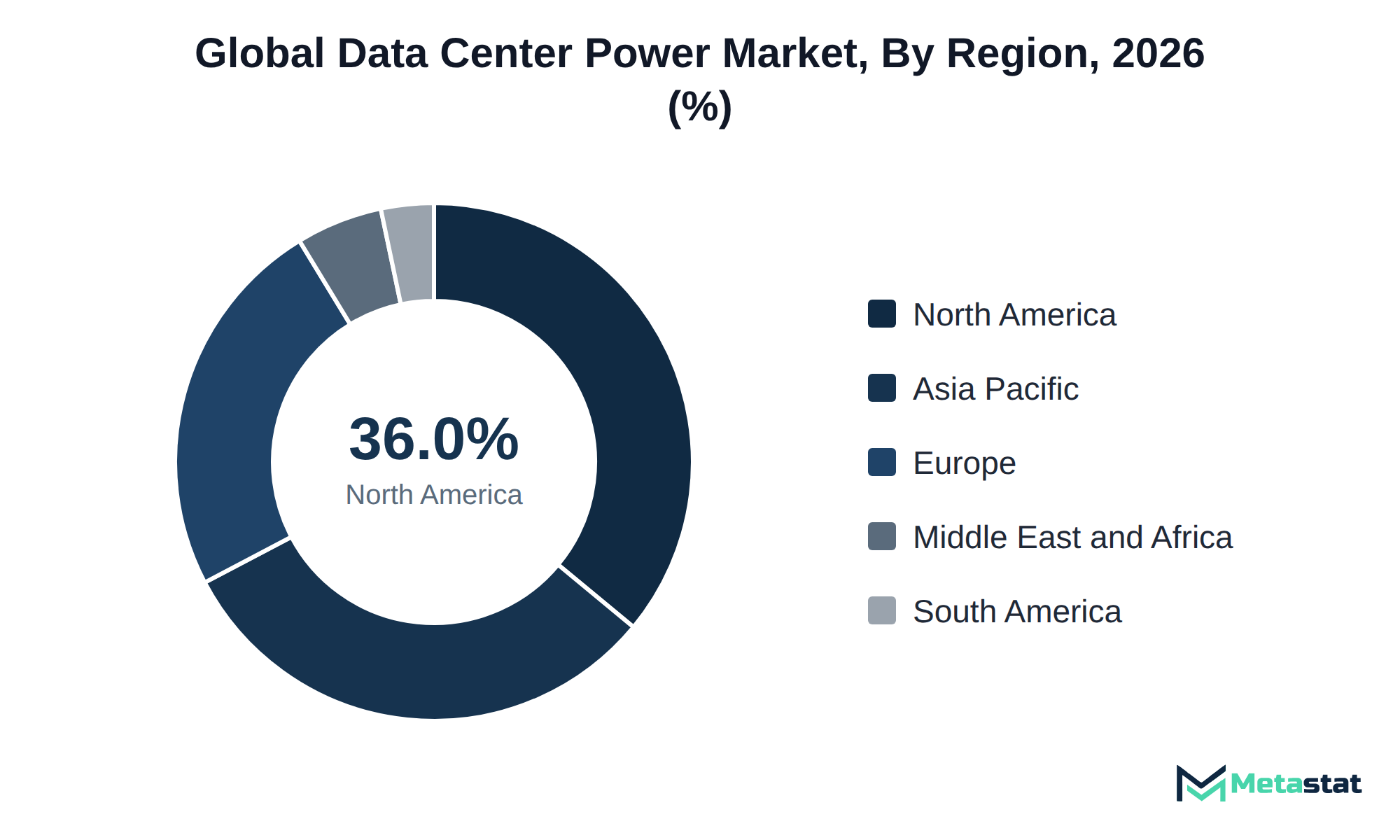
Geographic Lead: North America holds the largest market share at 36.0% in 2025, with the US expected to maintain its lead due to strong infrastructure and investment.
What's Inside: The report provides comprehensive competitive coverage, detailed analyses of market dynamics, and forecasts spanning from 2026 to 2033.
Emerging Trends: High-density AI workloads and the shift toward 800V DC architectures are transforming the market, necessitating advanced power solutions.
Investment Opportunities: There is a growing interest in modular UPS and battery energy storage systems, reflecting the demand for reliable and efficient power solutions.
Choose Your License
Global Data Center Power Market
The global Data Center Power market was valued at USD 35.6 billion in 2025 and is projected to reach USD 63.6 billion by 2033, growing at a CAGR of 7.5% over the forecast period.
The Data Center Power market encompasses various products and services essential for maintaining power reliability and efficiency in data centers. Buyers invest in this market to ensure uninterrupted power supply, optimize energy consumption, and enhance operational resilience. The primary user segments include information technology firms, telecommunications providers, and enterprises with demanding data management requirements.
Growth in the market is driven by increasing demand for data processing and storage fueled by digital transformation across multiple industries. North America holds 36.0% of the market in 2025, with the US leading in 2026. The enterprise data centers segment represents the largest value within the market, reflecting significant investment in infrastructure to support growing computing needs.
Technological advancements in power management systems and rising emphasis on energy efficiency contribute to market expansion. Sustainability initiatives push organizations to seek innovative power solutions, driving adoption rates. The Data Center Power market is growing substantially, in line with broader trends in digitalization and data-centric operations.
The Data Center Power market spans a range of components and services crucial for ensuring uninterrupted power supply and efficient energy management in data centers. Buyers invest in these solutions to enhance operational performance, reduce downtime, and meet the increasing demand for computing power. Industries including information technology, telecommunications, and financial services prioritize these investments to maintain competitive advantages in a digital economy.
Growth in the market is driven by the rising adoption of cloud computing and data-driven applications, leading to increased demand for reliable power solutions. Among the various segments, Uninterruptible Power Supply Systems represent the largest share, reflecting their significance in maintaining continuous operations. North America holds 36.0% of the market in 2025, with the US leading in 2026, highlighting the region's strong infrastructure and investment in data center capabilities.
Ongoing advancements in energy-efficient technologies and increasing regulatory pressure for sustainable practices further influence market dynamics. The necessity to optimize energy consumption and reduce operational costs encourages data center operators to adopt innovative power solutions. This trend reinforces growth potential within the Data Center Power market, aligning with broader shifts toward sustainability and efficiency.
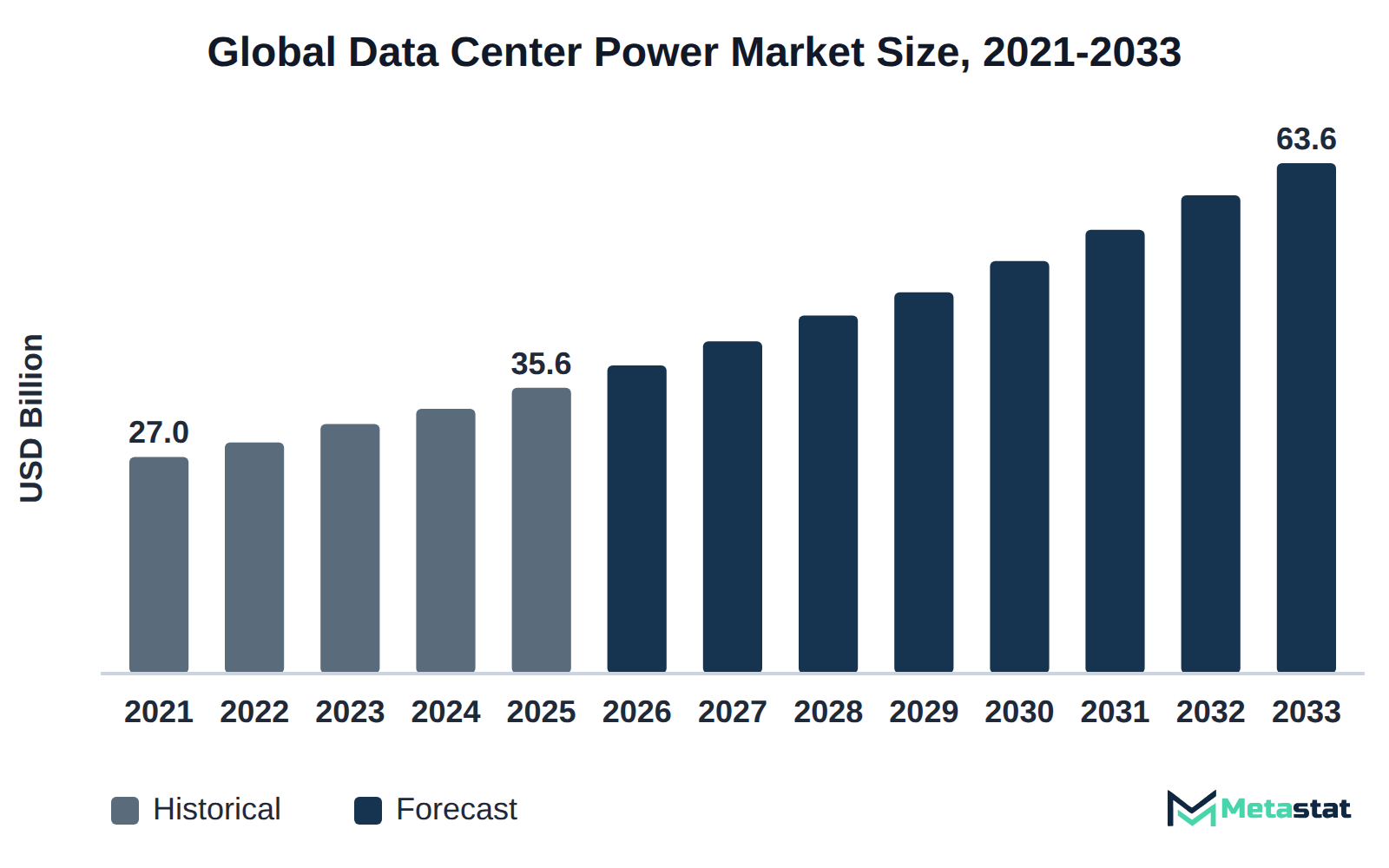
High-density AI workloads drive significant transformation in the Data Center Power market. The increasing demand for computing power required by AI applications necessitates advanced power solutions to support these high-capacity systems. By 2033, the market is expected to reach USD 63.6 billion, reflecting a compound annual growth rate (CAGR) of 7.5%. This growth highlights the necessity for infrastructure that efficiently manages increased power loads while maintaining reliability and performance.
The rise in AI workloads compels data centers to implement innovative technologies, particularly uninterruptible power supply (UPS) systems and power distribution units (PDUs), which are essential for safeguarding critical applications. For instance, the UPS systems segment is projected to grow from USD 10.4 billion in 2026 to USD 16.1 billion by 2033, driven by the need for uninterrupted power supply to AI-driven processes. This shift towards advanced power solutions enhances operational efficiency and minimizes downtime risks, which proves essential for organizations relying on AI technologies.
The commercial consequence of adopting advanced power infrastructure manifests in improved service reliability and operational cost reductions. Companies investing in these technologies gain competitive advantages, positioning themselves effectively to meet the evolving demands of AI workloads. This technological shift strengthens the role of the Data Center Power market in supporting future AI applications.
The Data Center Power market increasingly adopts 800V DC architectures and high-efficiency power distribution systems, driven by demand for improved energy efficiency and reduced operational costs. The market anticipates a compound annual growth rate of 7.5% from the base year of 2025 through 2033, reflecting a significant shift in buyer preferences toward innovative power solutions.
Buyers pursue flexible contract models and pricing structures that align with operational needs and financial strategies. Long-term agreements with service providers provide cost predictability and stability, vital for managing large-scale data center operations. For instance, maintenance and repair services within the market are projected to reach USD 17.4 billion by 2033, highlighting the importance of ongoing support in the procurement process.
This strategic shift improves data center efficiency and influences investment decisions, reflecting a broader trend toward advanced technologies that promise significant savings and optimized performance.
The Data Center Power market experiences significant interest in modular uninterruptible power supply (UPS) systems and battery energy storage solutions. Enterprises increasingly prioritize reliability and efficiency in their operations. This priority leads to a projected value of USD 16.1 billion for modular UPS systems by 2033, up from USD 10.4 billion in 2026, reflecting a CAGR of 6.4%. This investment trend stems from rising demand for uninterrupted power in sectors including information technology and telecommunications.
Organizations recognize the necessity of grid-independent backup power to mitigate risks associated with power outages and interruptions. This heightened awareness drives investments in battery energy storage systems, which provide flexible energy management and backup capabilities. The market for these solutions supports businesses in enhancing operational resilience and maintaining service continuity, which is critical for competitive advantage.
The integration of advanced technologies in modular UPS systems and battery storage enables improved efficiency and scalability. Companies that invest in these technologies position themselves favorably within the evolving Data Center Power market, capturing a larger share while the need for reliable power solutions intensifies across various industries.
Hyperscale and colocation data centers significantly influence power capacity and infrastructure requirements in the Data Center Power market. These data centers require reliable power solutions to support extensive server operations and high-density computing environments. By 2033, hyperscale data centers are expected to account for USD 27.4 billion in revenue, reflecting growing demand for efficient power systems.
The shift towards these large-scale facilities stems from the increasing need for scalable computing resources driven by cloud computing and data processing demands. Enterprises expand their digital footprint, leading to a rising reliance on colocation data centers and changes in power infrastructure. For instance, colocation data centers are projected to reach USD 17.8 billion by 2033, highlighting their important role in the market.
These developments prompt stakeholders to enhance their power distribution and backup systems, ensuring uninterrupted service delivery. Investments in uninterruptible power supply systems and advanced power management technology become critical for maintaining operational resilience. The transformation in infrastructure aligns with the evolving requirements of hyperscale and colocation data centers and positions suppliers to capitalize on expanding opportunities within the Data Center Power market.
Organizations across various industries increasingly invest in digital transformation initiatives, significantly boosting demand for data center power solutions. The shift towards cloud-based services, big data analytics, and artificial intelligence applications drives this trend. Companies in sectors including information technology and telecommunications prioritize upgrading their infrastructure to accommodate growing data processing needs. This transformation enhances the volume of power required for efficient operations, propelling market growth. Increased adoption of advanced technologies directly correlates with a rising demand for reliable power supply systems, influencing the overall dynamics of the data center power market.
Changing consumer behavior and higher expectations for digital services result in a stronger focus on energy efficiency and sustainability. Organizations seek solutions that not only support operational demands but align with their environmental goals. Consequently, these factors collectively drive substantial investment in data center power infrastructure, ensuring that power supply meets the evolving needs of modern businesses.
Emerging technologies in the data center power sector drive significant advancements in efficiency and reliability. Adoption of advanced power management systems supports enhanced energy distribution and monitoring capabilities. Innovations including modular power systems and intelligent battery energy storage optimize power usage while minimizing operational costs.
Increased focus on sustainability and energy efficiency influences the development of more sophisticated power solutions. Organizations strive to reduce carbon footprints, leading to rising demand for green power technologies. These innovations appeal to industries prioritizing sustainability, enabling the market to attract a broader customer base.
Investment in advanced technologies, including smart grid solutions and AI-driven management systems, enhances operational performance. The market benefits from these offerings, which facilitate real-time power management and predictive maintenance, effectively lowering downtime and improving overall efficiency.
Technological advancements contribute significantly to market growth, driving competition among providers and creating opportunities for investment in new solutions. The adoption of innovative technologies positions the data center power market for continued expansion in the coming years.
Pricing pressures represent a significant constraint within the Data Center Power market, affecting buyers across multiple segments, particularly in enterprise data centers. The high cost of advanced power solutions, including uninterruptible power supply systems and generator sets, results in slower uptake among organizations looking to enhance their data center capabilities. Budget constraints lead to smaller orders, prompting several enterprises to postpone essential upgrades and maintenance. This trend is evident in the decisions made by information technology and telecommunications companies, where the emphasis on cost reduction often overshadows the necessity for reliable power infrastructure. Achieving optimal performance in data centers becomes challenging, potentially stalling growth and innovation in the market. Buyers prioritize cost-efficiency over advanced solutions, impacting overall market dynamics and limiting the expansion of critical power technologies.
In the Data Center Power market, rising input costs present a challenge for suppliers aiming to maintain profitability. Increased prices for raw materials, including metals and electronics, significantly impact manufacturing expenses. Suppliers face heightened competition in a price-sensitive environment, compelling them to seek cost-effective production methods without compromising quality. Many are investing in advanced manufacturing technologies to enhance efficiency and reduce operational costs.
Suppliers pursue strategic partnerships to secure more favorable terms with raw material providers. This approach enables suppliers to mitigate the effects of rising costs and maintain competitive pricing structures. The need for efficiency drives innovation in service delivery, emphasizing resource optimization and waste minimization. Suppliers who address these challenges successfully position themselves for greater resilience and sustained growth in the market.
Edge data centers represent a significant growth opportunity within the market, driven by increasing demand for low-latency applications and real-time data processing. This segment is projected to experience a compound annual growth rate (CAGR) of 11.1%, highlighting its potential for rapid expansion. Organizations across diverse industries, particularly in telecommunications and IoT, prioritize the deployment of edge data centers to enhance operational efficiency and improve service delivery. The need for localized computing resources aligns with the trends of digital transformation and smart city initiatives, further propelling investments in this sector. Product offerings including uninterruptible power supply systems and power distribution units specifically tailored for edge applications address the unique requirements of these facilities. Overall, strong demand for edge data centers indicates a promising trajectory for growth within the Data Center Power market, cementing its role in digital infrastructure.
The Global Data Center Power market is segmented based on Product Type, Service, Data Center Type, and End-Use Industry.
These systems serve critical functions by providing backup power to data centers, ensuring operational continuity during power outages. End-users include IT and telecommunications companies that rely heavily on a consistent power supply for their operations. Growth in this segment is driven by increasing investments in data center infrastructure, particularly in hyperscale and colocation facilities, which seek robust power solutions to support extensive operations. Compared to other segments, Uninterruptible Power Supply Systems exhibit faster growth, attributed to rising demand for reliable power solutions in an increasingly digital economy. This segment's focus on uninterrupted power differentiates it from generator sets and power distribution units, which cater to broader applications but experience slower growth rates.
Generator Sets segment is estimated to reach USD 13.5 billion by 2033, at a CAGR of 7.7% during the forecast period. Generator sets provide backup power solutions essential for data centers, ensuring operational continuity during power outages. Various industries, particularly those requiring high reliability, employ these systems for their critical infrastructure. Factors influencing this segment include the increasing focus on energy security and the growing reliance on hybrid power systems. Compared to other product types, including Uninterruptible Power Supply Systems, which experience a CAGR of 6.4%, the Generator Sets segment exhibits a stronger growth trajectory, driven by escalating demand for resilient power solutions. The distinct advantage of generator sets lies in their ability to provide substantial power output for extended periods, making them a preferred choice for large-scale data operations.
Power Distribution Units and Remote Power Panels segment is expected to reach USD 7.7 billion by 2033. This segment distributes electrical power efficiently and reliably throughout data centers. Users include enterprise data centers, colocation facilities, and hyperscale operators, all of which require stable power management to support their operations. The segment experiences growth driven by increasing demand for energy-efficient solutions and the need for robust power management systems due to rising data center workloads. Growth in this segment trends slower than that of Generator Sets. Generator Sets are projected to see a compound annual growth rate (CAGR) of 7.7% through 2033, compared to the more moderate pace expected for Power Distribution Units and Remote Power Panels. Investment in advanced technologies including smart monitoring and automation further distinguishes this sub-segment, enhancing its capability to meet the evolving needs of the market.
Switchgear and Switchboards segment is projected to grow at a CAGR of 6.9% during the forecast period. This segment includes devices that manage and protect electrical equipment in data centers, ensuring reliable power distribution. Industries using switchgear and switchboards range from telecommunications to healthcare, where power reliability is critical. Demand for this segment rises due to increasing energy efficiency requirements and the shift towards automation in data centers. Compared to other segments within the product type, switchgear and switchboards experience moderate growth, driven by technological advancements and regulatory changes. The market benefits from rising investments in infrastructure and energy-efficient technologies, leading to an enhanced adoption rate among enterprises focused on optimizing power management.
Busway Systems offer a flexible and efficient method for distributing electrical power within data centers. The segment serves various industries, particularly large-scale data centers where space optimization and power efficiency are critical. Demand for Busway Systems is driven by the growing need for high-capacity power distribution solutions that support increasing energy requirements. This segment differentiates itself from others, including Uninterruptible Power Supply Systems and Generator Sets, by focusing on streamlined power delivery and ease of installation. The growing emphasis on energy efficiency and sustainability further enhances adoption, reinforcing the importance of Busway Systems in modern data center infrastructure. In this context, the Data Center Power market evolves, reflecting the shifting priorities of end users and stakeholders.
Transfer switches serve a critical function in data centers, ensuring that power remains available during outages or disturbances. These devices automatically switch the power supply from a primary source to a backup source, typically generator sets, which is essential for maintaining uptime in mission-critical operations. Various industries including information technology, telecommunications, and healthcare apply transfer switches to enhance reliability. The push for higher efficiency and faster switching times drives advancements in this segment, which often sees different pricing structures compared to other products in the market. With increasing regulatory focus on energy efficiency and sustainability, the demand for advanced transfer switches aligns with broader industry trends, positioning this segment for consistent growth in an evolving environment.
Transformers play a significant role in electrical distribution systems, converting voltage levels to ensure compatibility with various equipment in data centers. Organizations employ data center transformers for efficient power management and to enhance system reliability. The adoption of energy-efficient transformers is driven by the increasing focus on sustainability and regulatory compliance, which encourages the implementation of greener technologies. This segment faces competition from other power distribution solutions, including power distribution units and remote power panels, which often offer integrated functionality at potentially lower costs. However, transformers provide specific advantages in terms of voltage regulation and capacity management, appealing to larger data center operators seeking to optimize their infrastructure. The differing application focus between transformers and other segments influences purchasing decisions, with buyers prioritizing equipment that best meets their operational requirements.
Standalone Power Conversion Systems play a critical role in ensuring efficient energy transformation within data centers. These systems convert electrical power to different voltage levels, catering to specific operational requirements. Typical users include hyperscale data centers and colocation facilities, which demand reliable power conversion for their extensive IT infrastructure. Key market dynamics influencing this segment include technological advancements aimed at enhancing conversion efficiency and rising adoption of renewable energy sources. Compared to other segments, including Uninterruptible Power Supply Systems, this segment appeals primarily to buyers focused on optimizing energy use rather than backup solutions. This focus on efficiency distinguishes it from traditional power solutions, supporting the broader trend toward sustainability in the Data Center Power market.
Standalone Battery Energy Storage Systems provide essential backup power solutions, enabling data centers to maintain operations during outages or fluctuations in electrical supply. These systems find application across various sectors, particularly in Information Technology and Telecommunications, where uninterrupted service is critical. Key market drivers include the increasing reliance on renewable energy sources and the growing focus on sustainability initiatives. Compared to other product types, including Uninterruptible Power Supply Systems and Generator Sets, the adoption of Standalone Battery Energy Storage Systems is expected to accelerate at a faster pace, reflecting a shift towards more efficient energy management solutions. This segment supports the overall reliability and resilience of data centers, aligning with trends in energy efficiency and environmental responsibility.
Others (Power Monitoring and Management Systems) focus on optimizing the performance of data center power systems. These systems enable organizations to monitor energy consumption, track power quality, and manage resources efficiently. Key users include large enterprises and service providers that demand high reliability and efficiency in their operations. The increasing emphasis on energy efficiency and cost reduction drives adoption, particularly as organizations seek to minimize operational expenses. This segment typically experiences steady growth, differing from other segments like Uninterruptible Power Supply Systems, which exhibit more rapid expansion. The market benefits from ongoing advancements in monitoring technologies, facilitating enhanced visibility and control over energy usage and supporting strategic decision-making processes in data centers.
Installation and Commissioning segment is valued at USD 11.9 billion in 2026 and is projected to reach USD 18.5 billion by 2033, at a CAGR of 6.5% during the forecast period. This segment focuses on setting up power systems and ensuring they operate effectively from the outset. It caters to various industries, including Information Technology and Telecommunications, where reliable power supply is crucial for operational continuity. Increasing investments in data center infrastructure and efficiency improvements drive demand for these services. Unlike other segments, Installation and Commissioning features a more stable growth trajectory compared to Maintenance and Repair, which experiences fluctuating demand based on equipment lifecycles. The broader trend toward digital transformation continues to stimulate growth in this segment, contributing to the overall expansion of the market.
Maintenance and Repair segment is estimated to reach USD 17.4 billion by 2033, at a CAGR of 6.7% during the forecast period. This segment focuses on ensuring the operational efficiency and longevity of power systems within data centers. Organizations rely on these services to address unexpected failures and perform routine servicing, resulting in reduced downtime and improved reliability. The growing complexity of data center operations drives demand for specialized maintenance and repair services, particularly in large-scale environments. Compared to other segments, this segment experiences steady growth, reflecting the continuous need for maintenance in existing infrastructure rather than the acquisition of new systems. The emphasis on operational continuity highlights the critical role of maintenance and repair services in safeguarding investments and enhancing overall performance.
Monitoring and Remote Management segment is expected to reach USD 10.9 billion by 2033. This segment focuses on overseeing and controlling data center power systems remotely, providing organizations with enhanced operational efficiency and reduced downtime. Primarily employed by IT and facilities management teams, effective monitoring helps in predictive maintenance and performance optimization. Increasing reliance on digital infrastructure drives demand for these services, particularly within the Information Technology and Telecommunications sector, which is projected to grow at a CAGR of 8.1% from 2026 to 2033. Unlike Installation and Commissioning services, which experience a CAGR of 6.5%, Monitoring and Remote Management services provide distinct value through continuous oversight rather than initial setup, highlighting their critical role in enhancing overall system reliability and performance in the market.
Retrofit and Upgrade Services segment is projected to grow at a CAGR of 8.5% during the forecast period. This segment focuses on enhancing existing data center infrastructures by updating or replacing outdated components, which is essential for maintaining operational efficiency and adapting to evolving technological standards. Enterprises rely on these services to ensure their systems remain competitive and capable of handling increasing workloads. The growth of this segment is influenced by rising demand for energy efficiency and sustainability, prompting clients to invest in upgrades for older systems. Compared to other service segments, Retrofit and Upgrade Services exhibit a more rapid growth trajectory due to heightened awareness surrounding energy consumption and the need for compliance with new regulations, distinguishing it from Installation and Commissioning services, which grow at a CAGR of 6.5%.
Testing and Inspection services help ensure the reliability and performance of data center power systems. Operators of data centers employ these services to verify that power systems meet specific standards and operational requirements. The segment benefits from increasing regulations emphasizing compliance and safety, driving demand for rigorous testing protocols. Advancements in testing technologies enhance the accuracy and efficiency of inspections, further encouraging adoption. Compared to other service segments, Testing and Inspection services attract different buyers focused on compliance and risk management, rather than solely on operational efficiency. This distinct focus influences pricing strategies and growth patterns, positioning this segment as essential for mitigating operational risks within the evolving regulatory landscape.
Enterprise Data Centers segment is valued at USD 9 billion in 2026 and is projected to reach USD 11.9 billion by 2033, at a CAGR of 4.1% during the forecast period. This segment caters primarily to organizations requiring dedicated facilities for data storage and processing, including those in sectors including information technology and telecommunications. A significant factor driving growth in this segment involves increasing data demands fueled by the rise of cloud computing and digital transformation initiatives. Compared to other data center types, including Colocation and Hyperscale Data Centers, this segment experiences slower growth due to higher operational costs and the need for specialized infrastructure. The trend toward digital services continues to influence investment in Enterprise Data Centers, contributing to their anticipated expansion.
Colocation Data Centers segment is estimated to reach USD 17.8 billion by 2033, at a CAGR of 7.2% during the forecast period. These centers provide shared data storage and processing capabilities for multiple clients, allowing smaller businesses and enterprises to access advanced infrastructure without the need for significant capital investment. Colocation Data Centers attract demand from organizations seeking scalable solutions, particularly in the Information Technology and Telecommunications industry. Growth in data traffic and cloud computing requirements drives this segment, with clients looking for reliable, secure, and efficient solutions. Compared to other data center types, Colocation Data Centers experience faster growth due to their flexibility and lower cost structures, making them appealing for a wider range of businesses. The market is poised for expansion, fueled by ongoing digital transformation across industries.
Hyperscale Data Centers segment is expected to reach USD 27.4 billion by 2033. These data centers cater primarily to large-scale cloud service providers and internet companies, focusing on maximizing operational efficiency and scalability. Growth in this segment is driven by increasing demand for cloud computing and big data analytics, which require significant processing power and storage capacity. The CAGR for hyperscale data centers is projected at 11.1%, reflecting robust growth compared to other data center types. Such facilities differ from enterprise and colocation data centers, which typically exhibit slower growth rates and more limited scale. Investment in these data centers results in greater energy efficiency and lower operational costs, positioning them as a favorable option in the Data Center Power market.
Edge Data Centers segment is projected to grow at a CAGR of 11.1% during the forecast period. These facilities address the rising demand for low-latency services, supporting applications including IoT, artificial intelligence, and real-time data processing. Companies in sectors including telecommunications and technology employ edge data centers to enhance service delivery and improve customer experience. Increasing data generation drives the need for localized processing, differentiating this segment from others that do not focus on immediate data processing needs. The growth of the segment is further propelled by advancements in network infrastructure and the proliferation of connected devices. With an emphasis on rapid deployment and scalability, edge data centers offer distinct advantages, resulting in a higher growth trajectory compared to traditional data center types. This segment is anticipated to occupy a critical position within the market as demand for edge computing continues to escalate.
The Information Technology and Telecommunications segment is valued at USD 16.9 billion in 2026 and is projected to reach USD 29.1 billion by 2033, at a CAGR of 8.1% during the forecast period. This segment supplies critical power solutions to businesses operating data centers, particularly those involved in cloud computing, digital services, and telecommunications. The increasing demand for data processing and storage drives substantial investment in power systems, particularly Uninterruptible Power Supply Systems and Generator Sets, which are essential for maintaining uptime and reliability. In comparison to other segments, this segment experiences a faster growth rate, reflecting heightened reliance on technology and digital infrastructure. The shift towards advanced data analytics and the Internet of Things influences power requirements in this sector, necessitating robust and scalable power solutions to accommodate growing operational demands.
Banking, Financial Services and Insurance segment is estimated to reach USD 8.3 billion by 2033, at a CAGR of 6.3% during the forecast period. This segment serves institutions focused on financial transactions, investment management, and insurance services, requiring robust power solutions for critical operations. Demand from this segment is driven by increasing digital banking initiatives and the need for enhanced data security measures. Compared to other segments, this area shows moderate growth, supported by ongoing investments in technology infrastructure. The Banking, Financial Services and Insurance segment differs from the Information Technology and Telecommunications segment, which exhibits a higher CAGR of 8.1%. However, both segments reflect a strong reliance on dependable power systems to maintain operational continuity, ensuring that services remain uninterrupted and secure.
The Government and Public Sector segment is expected to reach USD 5.9 billion by 2033. Primarily used by governmental agencies and public institutions, this segment supports various initiatives, including infrastructure development and public services. Increased investment in technology and digital transformation drives growth in data center power solutions. Unique to this segment, regulatory compliance and stringent security requirements play significant roles in shaping demand. Compared to other sub-segments, the Government and Public Sector segment exhibits slower growth, with a CAGR reflecting the need for careful evaluation of budgets and long-term planning. The market anticipates steady development with public sector entities increasingly relying on data centers to enhance operational efficiency and service delivery.
Healthcare and Life Sciences segment is projected to grow at a CAGR of 7.9% during the forecast period. This segment finds application in hospitals, research institutions, and pharmaceutical companies, relying on efficient power solutions to support critical operations. The increasing emphasis on data management and patient care drives demand for advanced data center power systems. The essential nature of compliance and regulation in this sector adds a layer of complexity, prompting organizations to invest in robust power solutions. Compared to other segments, the Healthcare and Life Sciences segment experiences relatively high growth due to rising investments in healthcare technologies. The market sees distinct competition, with suppliers focusing on specialized products tailored for strict regulatory environments, which sets it apart from segments including Banking, Financial Services and Insurance, which exhibit slower growth dynamics.
Retail and E-commerce represent a significant aspect of data center operations, focusing on enhancing the online shopping experience through reliable and efficient data processing. Companies within this sector manage data centers to handle vast amounts of consumer data, process transactions, and provide effective shopping experiences across multiple platforms. Demand for robust data center power solutions is driven by increasing reliance on digital transactions and the need for uninterrupted service. The transition towards cloud-based services and the growth of mobile commerce further influence this segment. Compared to other end-use industries, Retail and E-commerce typically exhibit more rapid growth, reflecting the dynamic nature of consumer demands and technological advancements. This sector distinguishes itself with unique power requirements to support high traffic volumes and ensure optimal performance.
Manufacturing and Industrial focuses on delivering power solutions tailored for production facilities and industrial operations. This segment supports critical equipment and processes, ensuring uninterrupted power supply for manufacturing lines, machinery, and data processing activities. The growth of this segment stems from increasing automation in production processes and the rising demand for efficient energy management systems. Factors including scalability and adaptability of power solutions contribute to its appeal among manufacturers. Compared to other segments, including Information Technology and Telecommunications, Manufacturing and Industrial typically experiences steady growth, driven by the need for reliable power in continuous operation environments. The market faces challenges related to fluctuating energy costs and regulatory requirements influencing operational expenditures.
Media and Entertainment is a critical component for digital content delivery, requiring robust data center support to manage high volumes of data and ensure efficient streaming experiences. This segment primarily caters to businesses focused on content creation, broadcasting, and digital services, which rely heavily on efficient power systems to maintain uptime and performance. The growth in this sector is driven by increasing demand for high-definition content and real-time services, compelling players to enhance their data center capabilities. Unlike other segments, Media and Entertainment exhibits unique challenges, including the need for advanced power management solutions to handle peak loads during content releases. This segment's focus on high-quality service delivery distinguishes it from others, resulting in higher investment priorities to ensure reliable infrastructure.
Energy and Utilities ensure the efficiency and reliability of power supply systems essential for operations. This segment caters to utility companies and energy providers that require robust data center solutions to manage their critical infrastructure. Growing energy demands and the transition towards renewable sources drive the adoption of advanced power management solutions. Strict regulations related to energy efficiency and carbon emissions particularly influence this segment, prompting utility companies to seek innovative solutions. Compared to other segments in the end-use industry, Energy and Utilities exhibit slower growth rates, driven by the need for significant capital investments in infrastructure and technology. The focus within this segment prioritizes the integration of sustainable practices and advanced monitoring systems, distinguishing it from sectors including Information Technology and Telecommunications, which experience higher growth rates.
This sub-segment encompasses educational institutions and research organizations that rely on advanced data center power solutions to support their operations. Such facilities typically require robust power systems to manage extensive data processing, storage, and networking needs. Key driving forces for this segment include the increasing adoption of digital learning tools and the need for data storage solutions in research. Compared to other sub-segments, this segment experiences slower growth, focusing on reliability and operational efficiency rather than rapid scalability. Educational and research entities prioritize cost-effective solutions while demanding high performance. This approach distinguishes them from industries including Information Technology and Telecommunications, which command higher prices and growth rates. Overall, the Data Center Power market recognizes the unique requirements of the education and research sector, shaping the development of tailored power solutions.
Based on geography, the Global Data Center Power market is divided into North America, Europe, Asia-Pacific, South America, Middle East, and Africa.
In North America, the Data Center Power market experiences growth driven by increasing demand from key industries, including Information Technology and Telecommunications and Healthcare and Life Sciences. The presence of advanced infrastructure and significant investment in data center development supports this expansion. By 2033, North America is projected to reach USD 21.3 billion, representing 36.0% of the global market share in 2025. Countries including the United States, Canada, and Mexico play vital roles in shaping market dynamics through their technological advancements and growing data consumption rates. The regulatory environment, focusing on energy efficiency and sustainability, influences investment decisions. Strong demand is anticipated in the coming years, fueled by ongoing digital transformation and the need for reliable data center power solutions.
European countries exhibit a strong demand for data center power solutions, driven primarily by the Information Technology and Telecommunications industry, which is anticipated to reach USD 29.1 billion by 2033. Germany, France, the UK, Italy, and Spain are significant contributors to this growth, supported by increasing investments in data center infrastructure and a surge in cloud computing services. The region's regulatory environment encourages sustainable energy practices, enhancing operational efficiency while addressing growing energy consumption challenges. Russia and the Rest of Europe contribute to market dynamics through emerging data center developments that focus on modernization and energy efficiency. With a projected market share of 24% in 2025, the Data Center Power market in Europe reflects substantial potential for expansion, aligning with global trends in digital transformation and advanced technology adoption.
The Asia-Pacific region contributes significantly to the Data Center Power market, with a projected share of 31.3% in 2025. Countries including China, Japan, and India drive demand, particularly from the Information Technology and Telecommunications sector, reflecting a growing digital economy. The emergence of hyperscale and edge data centers in these countries aligns with increasing data consumption and cloud computing trends. Infrastructure development, particularly in urban areas, enhances connectivity and power reliability, directly influencing operational efficiency. The market's growth reflects the region's commitment to investing in advanced technologies and sustainable energy solutions, creating a competitive landscape that attracts both local and international players. Regional investment in renewable energy sources addresses energy demands in data centers, ensuring compliance with evolving environmental regulations.
Demand within the Data Center Power market in South America relies heavily on the growth of Information Technology and Telecommunications, driven by the increasing adoption of cloud computing and digital services. Brazil and Argentina represent key markets, focusing on enhancing data center capabilities to support emerging technologies. The region faces unique challenges due to varying infrastructure maturity, which affects investment levels in power solutions. With a market share of 3.3% in 2025, expansion opportunities remain significant, particularly in the development of colocation facilities and hyperscale data centers. The market is projected to grow steadily while local players enhance their service offerings and international investments increase.
Saudi Arabia, the UAE, and South Africa represent key markets within the region, generating substantial demand for data center power solutions. Rapid digital transformation initiatives, alongside substantial investments in technology infrastructure, drive growth in these countries. The increasing reliance on cloud computing and data analytics highlights the urgency for reliable power sources, with enterprises focusing on uninterruptible power supply systems and generator sets. The region’s share of the global market in 2025 stands at 5.4%. Ongoing urbanization and economic diversification strategies contribute to the rising demand for power solutions tailored for data centers. This market is anticipated to expand due to the compelling need for efficient and sustainable energy systems across various sectors, including telecommunications and government services.
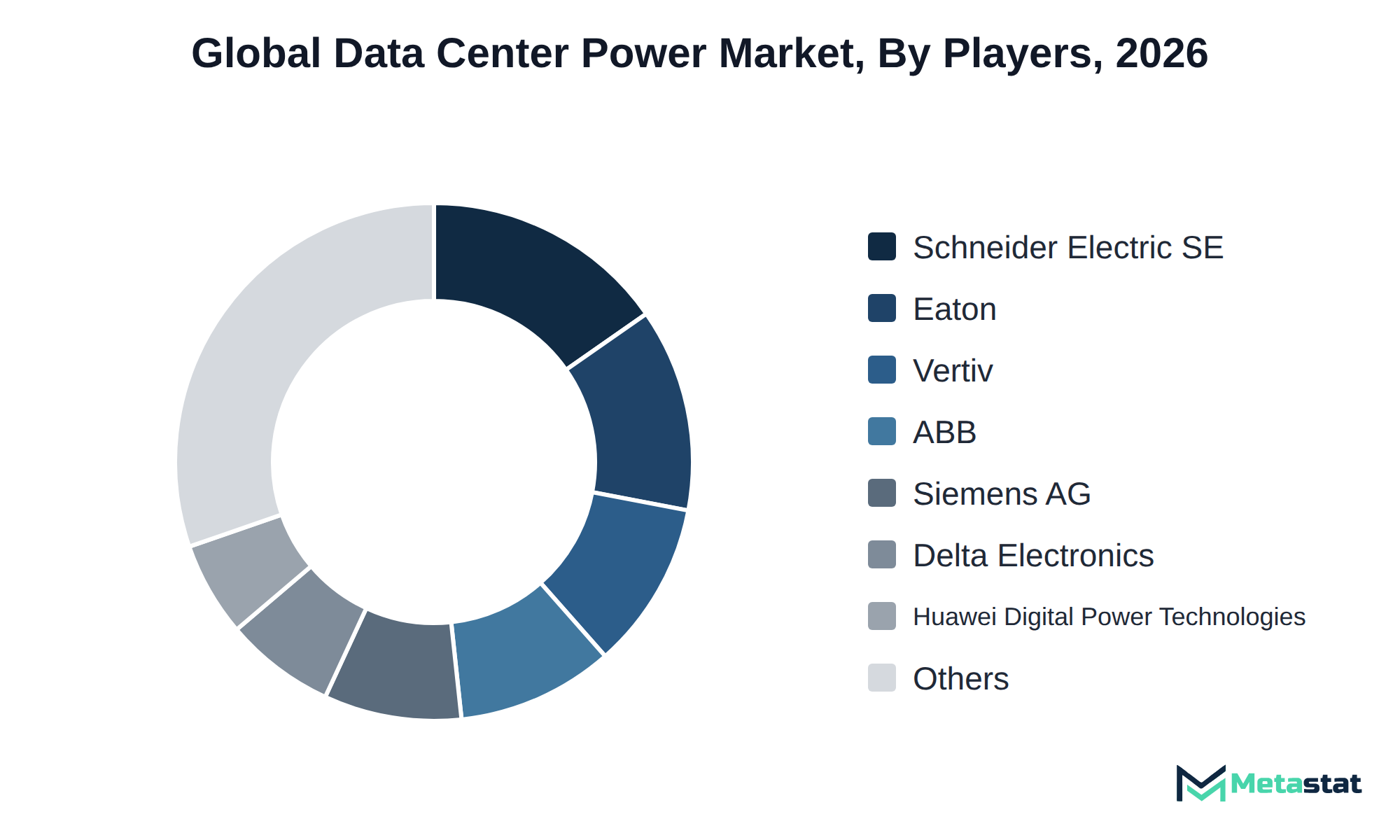
The Data Center Power market features companies that compete on product offerings, service types, and customer engagement strategies. Key players operate in specific segments including uninterruptible power supply systems, generator sets, and installation services, catering to the distinct needs of data center operators.
Buyers prioritize factors including price, customization, and service quality when selecting providers. Schneider Electric SE emphasizes sustainable solutions, while Vertiv Holdings Co. focuses on enhancing operational efficiency. Eaton Corporation plc promotes reliable power management systems, ensuring customers receive tailored solutions that align with their specific requirements.
This growth relies on several developments within the market. Firstly, an increase in demand for Uninterruptible Power Supply Systems, projected to expand from USD 10.4 billion in 2026 to USD 16.1 billion by 2033 at a CAGR of 6.4%, will drive overall market performance. Secondly, the growth of Colocation Data Centers, expected to reach USD 17.8 billion by 2033, will significantly contribute to revenue, supported by a CAGR of 7.2%. Thirdly, the Information Technology and Telecommunications sector, anticipated to grow from USD 16.9 billion in 2026 to USD 29.1 billion by 2033 at an 8.1% CAGR, significantly influences demand for data center power solutions.
However, risks exist that could hinder this growth trajectory. Economic fluctuations or disruptions in supply chains challenge the ability of key segments to meet rising demand. The uncertainty surrounding regulatory environments in various regions, particularly in Asia Pacific, further complicates investments in data center infrastructure. These factors highlight the need for careful monitoring to ensure market potential is realized.
By Product Type: Uninterruptible Power Supply Systems, Generator Sets, Power Distribution Units and Remote Power Panels, Switchgear and Switchboards, Busway Systems, Transfer Switches, Transformers, Standalone Power Conversion Systems, Standalone Battery Energy Storage Systems, Others (Power Monitoring and Management Systems)
By Service: Installation and Commissioning, Maintenance and Repair, Monitoring and Remote Management, Retrofit and Upgrade Services, Others (Testing and Inspection)
By Data Center Type: Enterprise Data Centers, Colocation Data Centers, Hyperscale Data Centers, Edge Data Centers
By End-Use Industry: Information Technology and Telecommunications, Banking, Financial Services and Insurance, Government and Public Sector, Healthcare and Life Sciences, Retail and E-commerce, Manufacturing and Industrial, Media and Entertainment, Energy and Utilities, Others (Education and Research)
The report strategically identifies and profiles the key market players and analyses their core competencies in each sub-segment of the Data Center Power market.
|
Report Attributes |
Details |
|
Study Period |
2021-2033 |
|
Base Year |
2025 |
|
Estimated Year |
2026 |
|
Forecast Period |
2026-2033 |
|
Historical Period |
2021-2025 |
|
Growth Rate |
CAGR 7.5% from 2026 to 2033 |
|
Revenue Unit |
USD billion |
|
Segmentation |
By Product Type, Service, Data Center Type, End-Use Industry, and Region |
|
By Region |
North America (By Product Type, Service, Data Center Type, End-Use Industry, and Country)
|
|
Europe (By Product Type, Service, Data Center Type, End-Use Industry, and Country)
|
|
|
Asia Pacific (By Product Type, Service, Data Center Type, End-Use Industry, and Country)
|
|
|
South America (By Product Type, Service, Data Center Type, End-Use Industry, and Country)
|
|
|
Middle East and Africa (By Product Type, Service, Data Center Type, End-Use Industry, and Country)
|
Find answers to common questions about this report
The Data Center Power market size was valued at USD 35.6 billion in 2025.
The market is projected to grow at a CAGR of 7.5% during the forecast period from 2026 to 2033.
The North America Data Center Power market size is estimated to reach USD 21.3 billion by 2033.
The leading segment in the Data Center Power market is the Uninterruptible Power Supply Systems, with a projected value of USD 16.1 billion by 2033. This segment demonstrates significant growth potential, driven by increasing demand for reliable power solutions.
Organizations increasingly invest in digital transformation initiatives, significantly boosting demand for data center power solutions. The rising focus on energy efficiency and sustainability drives substantial investment in infrastructure to meet evolving operational needs.
North America holds the dominant share of the Data Center Power market, with a value of USD 21.3 billion projected for 2033, representing 36 percent of the total market.
Pricing pressures and rising input costs represent significant factors restraining growth in the Data Center Power market. These challenges affect buyers across multiple segments, leading to smaller orders and postponed upgrades, while suppliers struggle to maintain profitability amid increased manufacturing expenses.
Factors favoring adoption in the data center power industry include the increasing demand for low-latency applications and real-time data processing. The projected rapid expansion of edge data centers highlights the need for localized computing resources, particularly in telecommunications and IoT sectors, enhancing operational efficiency.
The Data Center Power market is estimated to reach a valuation of USD 63.6 billion by 2033.
Key players operating in the Data Center Power market include Schneider Electric SE, Vertiv Holdings Co., Eaton Corporation plc, ABB Ltd., Siemens AG, and Delta Electronics, Inc.
The analysts below cover Energy and Power research at Metastat Insights.
LEAD ANALYST
Utkarsh Khirodkar is a Lead Market Research Analyst at MetaStat Insight, specializing in market intelligence, technology sector assessments, and competitive strategy.

PRINCIPAL CONSULTANT - ENTERPRISE AI & EMERGING TECHNOLOGIES
Banking & Finance · Electronics and Semiconductor · Energy and Power · Healthcare IT · Information & Technology · Professional Services
Vijay Gunti is a Principal Consultant at MetaStat Insight, bringing over two decades of experience across enterprise digital transformation, technology strategy, and intelligent systems.

ENERGY & INFRASTRUCTURE INDUSTRY CONSULTANT
Automotive and Transportation · Electronics and Semiconductor · Energy and Power · Machinery & Equipment
Saurabh Vasant Ganvir consults for Energy & Infrastructure Industry at MetaStat Insight, specializing in renewable energy, solar EPC, and electric vehicle (EV) infrastructure markets.
Assessing 200mm wafer transition schedules and substrate supply bottlenecks requires precise technical intelligence. MetaStat Insight supplied an actionable breakdown comparing planar and trench MOSFET architectures across automotive and industrial drive markets. The regional capacity estimates for Asia-Pacific foundries helped clarify lead-time uncertainties during our strategic planning session. When we needed additional clarification on high-purity raw material sourcing, their analyst team responded with helpful context within twenty-four hours.
Tracking maintenance cycle demand for secondary flight display units and terrain collision avoidance systems across regional jet fleets involves complex aftermarket dynamics. MetaStat Insight provided practical analysis separating airline retrofit programs from OEM forward-fit production schedules in North America and Southeast Asia. The supplier matrix highlighted component obsolescence timelines without resorting to vague generalizations. The dataset served as a dependable reference during our annual program review meetings.
Evaluating secondary resin quality across post-consumer packaging streams requires reliable technical segmentation. MetaStat Insight delivered an objective assessment that distinguished between extrusion-grade flake pricing and optical sorting throughput limitations across Western Europe. The competitive positioning breakdown for licensed depolymerization technology providers answered several questions during our feedstock feasibility audit. Their team clarified regional trade restrictions on mixed plastic scrap quickly when our team submitted follow-up requests.
Explore related market intelligence reports worth reading alongside this one.