
LEAD ANALYST
Utkarsh Khirodkar is a Lead Market Research Analyst at MetaStat Insight, specializing in market intelligence, technology sector assessments, and competitive strategy.

East Africa Residential Solar and Backup Power Market Size, Share, By Offering Type (Home Energy Backup Systems, Mini Solar Power Kits, Battery-Free Solar Installation and Portable Power Stations), By Vendor Role (Manufacturer or Brand Owner, Distributor or Retailer, Installer or System Integrator and Integrated Energy-Access Operator), By Payment Model (Outright Purchase and Pay-as-You-Go (PAYGo)), By Country (Kenya, Tanzania, Uganda, Rwanda, Burundi and South Sudan), Industry Analysis, Growth, Trends, and Forecast, 2026-2033
Report ID
MSI-5782
Published
November, 2026
Pages
297 Pages
Format
Historical
Base year
Forecast
Forecast period
Report Details
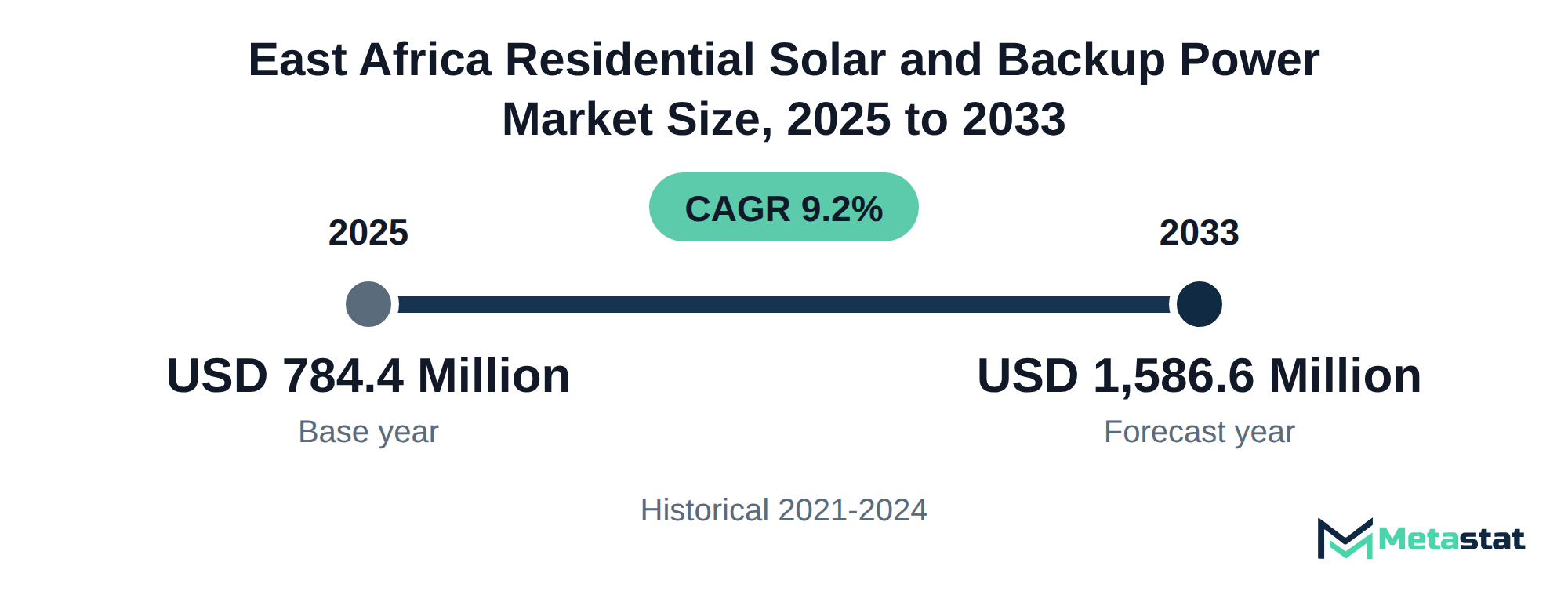
Market Valuation: Valued at $784.4 Million in 2025, projected to reach $1,586.6 Million by 2033 at a 9.2% CAGR.
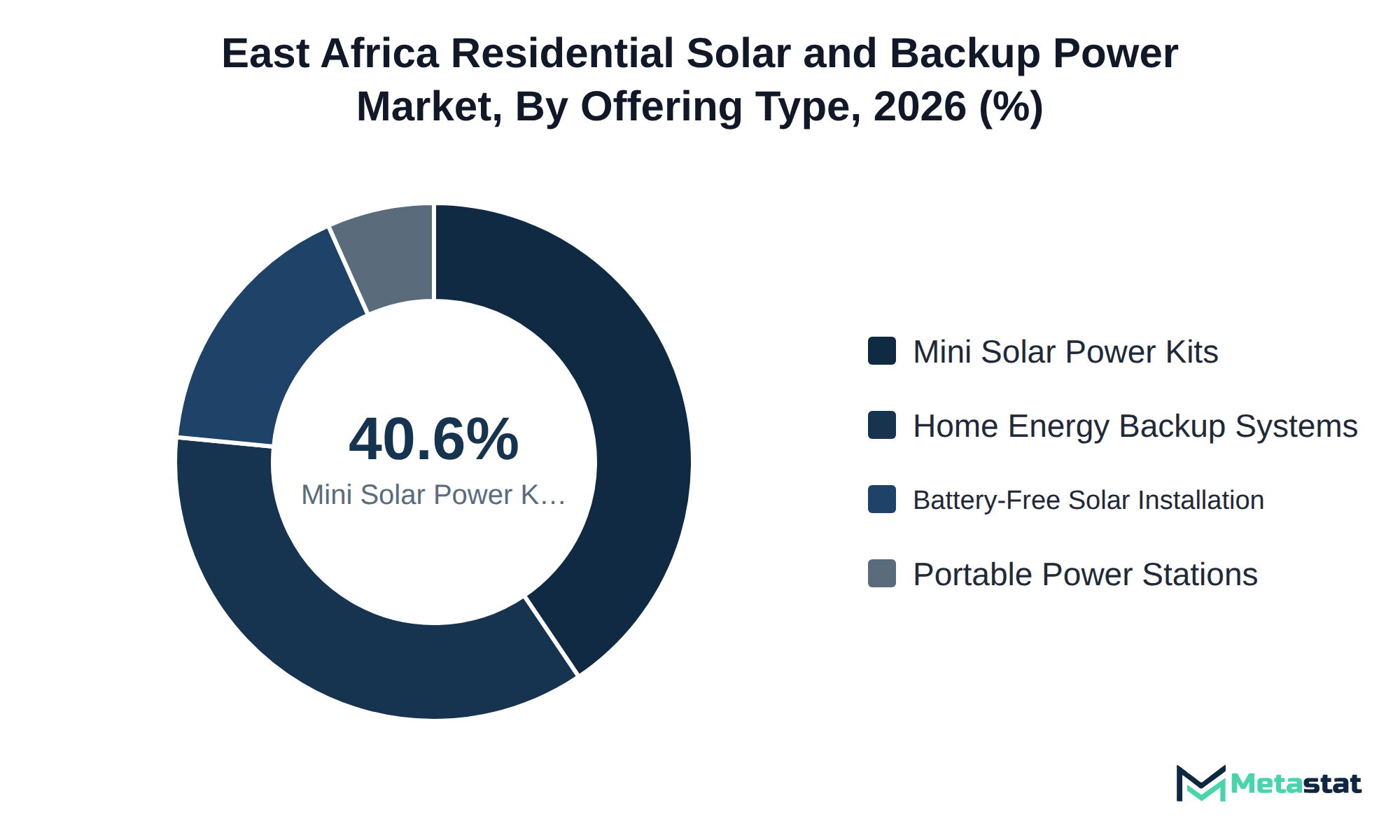
Dominant Segment: Home energy backup systems lead the market, driven by the increasing need for reliable power solutions amidst frequent grid outages.
Geographic Lead: Kenya is the largest market, supported by progressive policies and growing investments in solar energy infrastructure.
What's Inside: The report provides detailed competitive coverage, market segmentation, and a forecast window from 2026 to 2033, focusing on various offering types and payment models.
Growing Payment Models: The Pay-as-You-Go (PAYGo) model is rapidly gaining traction, projected to grow at a CAGR of 10.8%, making solar solutions more accessible to lower-income households.
Technological Advancements: Innovations in solar technology enhance product offerings, improving efficiency and reducing costs, thus attracting a broader consumer base.
Choose Your License
East Africa Residential Solar and Backup Power Market
The East Africa Residential Solar and Backup Power market was valued at USD 784.4 million in 2025 and is projected to reach USD 1,586.6 million by 2033, growing at a CAGR of 9.2% over the forecast period.
The East Africa Residential Solar and Backup Power market covers home energy backup systems, mini solar power kits, and portable power stations. Buyers invest in these technologies primarily to enhance energy security, reduce reliance on unreliable grid systems, and lower energy costs. Growing awareness of environmental sustainability drives consumer interest, encouraging the adoption of renewable energy sources across the region.
Strong growth in this market is fueled by increasing electricity demand, particularly in rural and underserved areas. Home energy backup systems represent the segment with the highest value, highlighting the growing preference for reliable power solutions. Among the various countries in the region, Kenya stands out with the largest market share, supported by its progressive policies and increasing investments in solar energy infrastructure.
The market is growing at a compound annual growth rate (CAGR) of 9.2%, reflecting a favorable environment for investment and innovation. One main growth driver is the rising adoption of pay-as-you-go financing models, which make solar energy solutions more accessible to a broader customer base. This financing approach facilitates the transition toward clean energy by allowing consumers to pay for systems incrementally, addressing upfront cost barriers.
The East Africa Residential Solar and Backup Power market attracts investment due to increasing demand for reliable energy solutions. Buyers primarily include households seeking to supplement or replace traditional energy sources, driven by factors including energy insecurity and rising electricity costs. The growing focus on sustainable energy solutions further encourages spending, with buyers looking for systems that provide both efficiency and affordability.
Growth in the market is supported by technological advancements and rising adoption of solar energy solutions. The home energy backup systems segment holds the largest market value, driven by the need for consistent power supply in regions experiencing frequent outages. Kenya emerges as the region with the largest market share, reflecting its proactive approach to renewable energy integration and investment in solar infrastructure.
One significant growth driver is the increasing popularity of the Pay-as-You-Go (PAYGo) financing model. This model enhances accessibility for low-income households, enabling them to invest in solar solutions without the burden of upfront costs. Offering flexible payment options, the market accommodates a broader range of consumers, driving overall adoption and investment in residential solar power across East Africa.
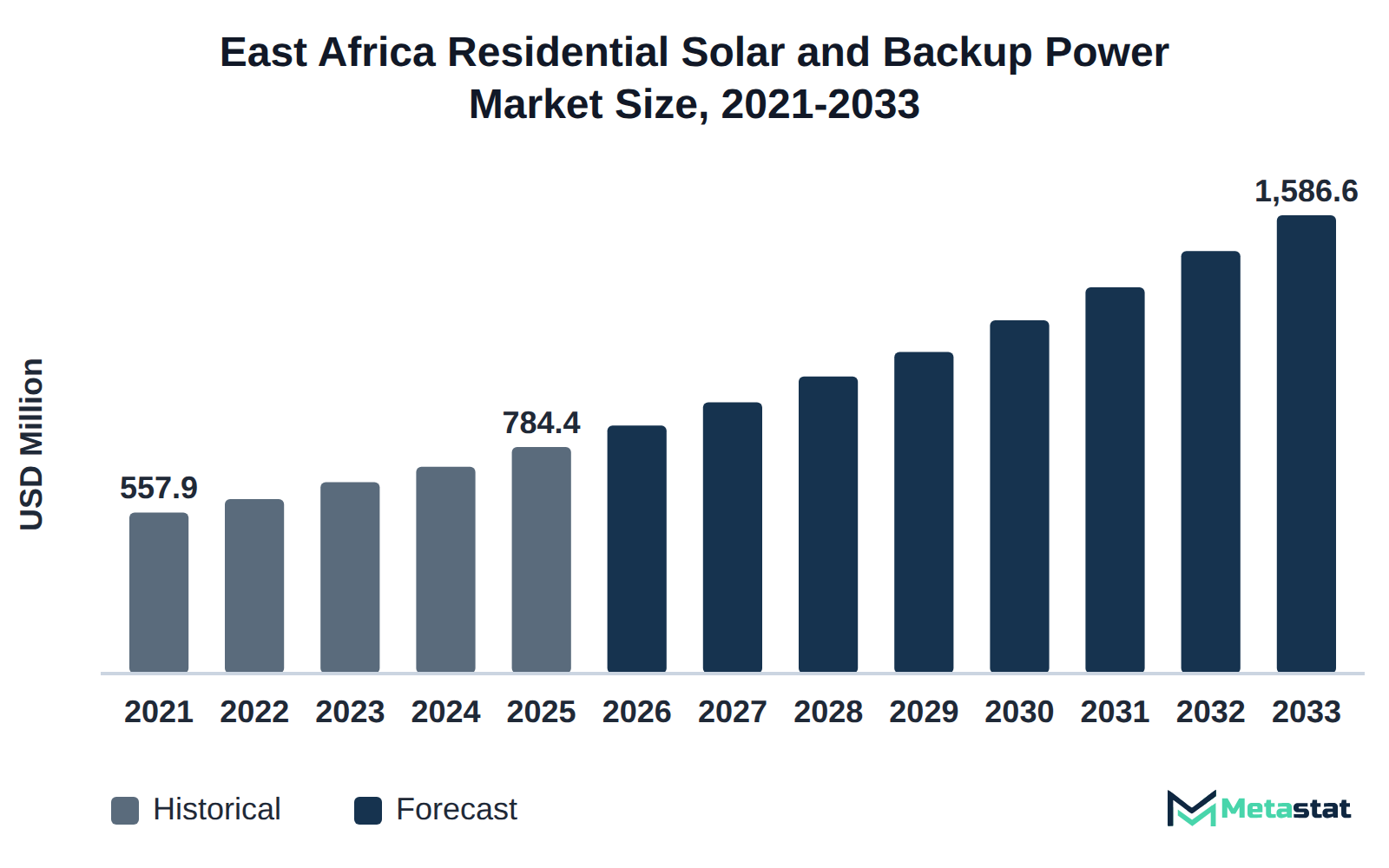
Home energy backup systems limit the adverse effects of grid outages in East Africa. The growing frequency and duration of power interruptions heighten the demand for reliable backup solutions among consumers. This demand is reflected in the forecast for home energy backup systems, which is projected to increase from USD 313.4 million in 2026 to USD 621.6 million by 2033, representing a compound annual growth rate (CAGR) of 10.3%. Such growth indicates a significant shift toward ensuring uninterrupted power supply in residential settings. Battery storage is central to these systems, and the East Africa small-scale LFP energy storage batteries market examines that component in more detail.
The adoption of advanced battery technologies and more efficient battery energy management systems facilitates enhanced performance and reliability for these backup solutions. Innovations in storage capacity and power output are critical for meeting the diverse energy needs of households during outages. Modern technologies that provide flexible and efficient energy management options therefore influence user purchasing decisions in the East Africa Residential Solar and Backup Power market.
Competition intensifies among manufacturers and service providers, making the offering of advanced home backup systems essential for companies aiming to capture a larger share of the market. This trend is likely to increase investment in research and development and further improve product performance and customer satisfaction.
The adoption of Pay-as-You-Go (PAYGo) models in rural households significantly influences the purchasing dynamics of mini solar kits within the East Africa Residential Solar and Backup Power market. This payment model lowers the upfront costs typically associated with solar installations, making renewable energy more accessible to lower-income households. For instance, the PAYGo segment is projected to reach USD 696.7 million by 2033, reflecting a compound annual growth rate (CAGR) of 10.8%. This growth results from increased awareness of solar power benefits and reliability in energy supply.
In rural areas, where access to traditional financing options often remains limited, PAYGo provides a viable solution. Households pay smaller amounts over time, aligning payment schedules with income patterns, which enhances affordability. This model encourages a shift toward renewable energy adoption among families that previously relied on costly and polluting energy sources. PAYGo financial flexibility widens the reach of the market. It lets underserved communities invest in sustainable energy solutions that improve their quality of life and reduce energy poverty.
Portable power stations serve a distinct segment of the East Africa Residential Solar and Backup Power market. These products cater to individuals seeking reliable energy solutions for off-grid situations, particularly in rural areas where traditional energy sources are unavailable or unreliable. The appeal of portable power stations lies in their versatility and convenience, enabling users to power essential devices including lights, mobile phones, and small appliances. Lighting is one of the essential uses these products support, and the Africa LED lighting market examines that end use in more detail.
The market for portable power stations is projected to grow, driven by increasing consumer demand for portable energy solutions. The segment is expected to grow at a compound annual growth rate (CAGR) of 14.6%. This growth reflects a broader trend among consumers who prioritize energy independence and seek innovative solutions to meet their power needs. Urbanization increases while rural electrification remains a challenge, making portable power stations an attractive option for many households.
Investment in the portable power station market presents opportunities for manufacturers and suppliers looking to address the specific needs of off-grid consumers. Understanding the unique requirements of this buyer group leads to tailored solutions that enhance user satisfaction and drive further growth within the East Africa Residential Solar and Backup Power market.
Battery-free solar installations provide a viable energy solution for numerous households in East Africa, especially those located in off-grid areas. These systems deliver reliable electricity without the added complexities and costs associated with batteries. In 2025, the battery-free solar installation segment is projected to generate significant revenue, contributing to the overall growth of the market.
The battery-free solar installation segment is anticipated to reach USD 257.7 million by 2033. This growth stems from increased demand for affordable and accessible energy solutions. Households with limited access to traditional power sources benefit significantly from these systems, allowing them to power essential appliances, enhance living standards, and support economic activities. The adoption of battery-free solar technology offers a cost-effective alternative that aligns with the needs of consumers seeking sustainable energy solutions.
Successful integration of battery-free solar solutions supports market expansion and greater energy accessibility. As the market grows, battery-free solar installers help meet energy demand and enable households to engage in productive activities. This evolving landscape indicates the potential for further growth and investment opportunities within the sector.
The growing interest in home energy backup systems has driven significant spending among households in East Africa. This change results from rising demand for reliable energy solutions due to frequent grid outages and power shortages. The expanding middle class and increasing urbanization contribute to this shift, with more consumers seeking dependable power sources to support daily activities. In 2026, the market anticipates a value of USD 858.9 million for home energy backup systems, reflecting a compound annual growth rate of 10.3% through 2033. This uptick in investment highlights evolving preferences of buyers who prioritize energy security, influencing overall market dynamics.
The market experiences heightened competition among suppliers aiming to capture the attention of these buyers. Manufacturers and service providers distinguish themselves through innovative technologies and financing options. A focus on affordability and accessibility further supports growth, encouraging broader adoption among diverse consumer segments. While this trend continues, the market is projected to expand, driven by sustained customer interest in home energy backup solutions.
Advancements in solar technology significantly enhance the appeal of offerings in the East Africa Residential Solar and Backup Power market. The introduction of more efficient solar photovoltaic panels and integrated energy storage solutions reduces overall system costs and improves energy reliability for consumers. Enhanced technologies including smart inverters and advanced battery systems enable better energy management, catering to the diverse needs of residential users.
The growing accessibility of these technologies benefits various customer segments, including urban households seeking reliable energy sources and rural communities aiming for off-grid solutions. Increased competition among manufacturers and service providers drives rapid innovation, leading to more options for consumers. This competitive environment supports price reductions and stimulates demand for residential solar installations.
Technological advancements continue, and the market is projected to expand, driven by consumer preferences for sustainable and efficient energy solutions. The integration of innovative technologies creates new opportunities for growth, enhancing the overall attractiveness of the market to investors and stakeholders.
High product costs present a significant restraint on adoption within the East Africa Residential Solar and Backup Power market. Many households, particularly in rural regions, face financial constraints, leading to slower uptake of available solutions. Price sensitivity among buyers, especially in lower-income brackets, results in smaller orders and delayed investments in home energy systems. This financial barrier particularly affects the adoption of Mini Solar Power Kits and Home Energy Backup Systems, which often require substantial upfront payments. Consequently, reliance on the Pay-as-You-Go (PAYGo) model becomes more pronounced, yet it does not fully alleviate the challenge of affordability for all potential buyers. Overall market growth is limited, which affects manufacturers and suppliers aiming to expand their customer base for solar products in the region.
Increasing material costs present a challenge for suppliers within the East Africa Residential Solar and Backup Power market. The global rise in commodity prices, particularly for solar components and batteries, significantly impacts profit margins. Suppliers face pressures to maintain competitive pricing while managing increased operational expenses. This situation pushes many to seek cost-effective alternatives or innovate in production processes.
In response, suppliers actively explore partnerships with local manufacturers to reduce reliance on imported materials, which mitigates costs. Several firms invest in research and development to enhance product efficiency, decreasing the quantity of materials needed for production. This strategic shift improves profit margins and aligns with sustainability trends in the energy sector.
Long-term, these adaptations aim to enhance resilience against ongoing price volatility and support sustained growth in the market. Supplier agility in addressing input cost pressures will shape the competitive dynamics of the East Africa Residential Solar and Backup Power market.
The Pay-as-You-Go (PAYGo) model stands out within the East Africa Residential Solar and Backup Power market, particularly for its capacity to drive adoption among underserved consumer segments. This financing approach enables households to access solar solutions without significant upfront costs, appealing to lower-income demographics. The PAYGo model is projected to achieve a compound annual growth rate (CAGR) of 10.8% through 2033, indicating robust demand for flexible payment options that enhance accessibility to energy solutions. This trend aligns with growing awareness of sustainable energy alternatives among consumers across the region.
Urbanization continues to attract attention, and the PAYGo model addresses the increasing energy needs of urban and peri-urban populations. Households seek reliable alternatives to traditional energy sources, leading to a shift toward solar technologies. The expansion of this financing approach not only contributes to individual household savings but supports broader energy access initiatives, positively impacting local economies.
The East Africa Residential Solar and Backup Power market is segmented based on Offering Type, Vendor Role, Payment Model, and Country.
Home energy backup systems provide households with reliable energy during power outages, appealing particularly to consumers in regions with inconsistent grid access. The increasing frequency of power interruptions drives demand for these systems, compelling households to invest in alternative power solutions. Compared to other segments, including Mini Solar Power Kits, which have a CAGR of 7.1%, Home Energy Backup Systems exhibit a faster growth trajectory. This segment serves a diverse range of customers, including urban households and rural communities, who prioritize energy independence and reliability. The competitive landscape in this segment includes various manufacturers and installers focusing on enhancing system efficiency and affordability to capture market share. The East Africa Residential Solar and Backup Power market reflects a trend toward sustainable and resilient energy solutions.
Mini Solar Power Kits segment is estimated to reach USD 550.7 million by 2033, at a CAGR of 7.1% during the forecast period. This offering provides compact solar solutions ideal for households lacking reliable electricity access, particularly in rural and off-grid areas. Demand for these kits stems from an increasing number of households seeking affordable and sustainable energy alternatives. Rising electricity prices and unreliability of grid power fuel interest in decentralized energy solutions. Compared to other segments, including Home Energy Backup Systems, which have a higher growth rate of 10.3%, Mini Solar Power Kits exhibit a slower growth trajectory, highlighting a distinct product appeal among cost-sensitive consumers. While this segment evolves, innovations in battery technology and solar panel efficiency are expected to further enhance its attractiveness to buyers.
Battery-free solar installation caters primarily to households seeking sustainable energy solutions without the additional cost of battery storage. End users typically include consumers in rural and off-grid areas, where traditional energy access remains limited. A significant demand driver for this segment is the increasing awareness of solar energy's environmental benefits, coupled with the rising need for affordable energy alternatives. In comparison to other offerings, including Home Energy Backup Systems, which have a compound annual growth rate of 10.3%, Battery-Free Solar Installations exhibit lower growth at a CAGR of 7.1%. This slower growth is attributed to competition from more integrated systems that offer energy storage options, providing greater reliability and versatility for users. The East Africa Residential Solar and Backup Power market reflects a diverse range of solutions, contributing to its overall expansion.
Portable power stations segment is projected to grow at a CAGR of 14.6% during the forecast period. These portable units cater to consumers seeking flexible and mobile energy solutions, allowing them to charge devices or power small appliances in various settings. This segment experiences heightened interest from outdoor enthusiasts and households in regions with unreliable grid power. The increasing reliance on portable power stations drives demand, with consumers attracted to their convenience and ease of use. In comparison to other segments within the market, this segment experiences faster growth due to rising consumer awareness and technological innovations. The appeal of portable power stations differs significantly from home energy backup systems and mini solar power kits, which serve more stationary needs and present different price points and functionalities.
Valued at USD 139.6 million in 2026, this segment is projected to reach USD 242.4 million by 2033, at a CAGR of 8.2% during the forecast period. Manufacturers or brand owners supply essential products that enable households to achieve energy independence and reliability. Typically, buyers include residential consumers, especially in off-grid or unreliable grid areas, driven by increasing demand for sustainable energy solutions. Factors including improving technology and decreasing production costs fuel growth in this segment. Compared to other vendor roles, this segment expects a higher growth rate, with a CAGR of 8.2%, indicating a stronger market position. This contrasts with retailers and distributors, which operate with a CAGR of 8.0%, reflecting slightly different dynamics in their operational models. The need for stable energy sources, along with ongoing innovations, continues to shape demand patterns in the market.
Distributor or Retailer segment is estimated to reach USD 351.6 million by 2033, at a CAGR of 8% during the forecast period. This segment primarily serves customers seeking access to residential solar and backup power solutions, allowing households to purchase renewable energy products that enhance energy reliability. The growth of this segment is driven by increasing consumer awareness about energy independence and the advantages of using solar technology. Compared to other segments, the Distributor or Retailer segment experiences steady growth, supported by effective inventory management and customer engagement strategies. Installer or System Integrator roles exhibit higher growth rates, projecting a notable difference in market dynamics, aligning with local deployment needs and installation services. The evolving regulatory environment encourages energy-efficient practices, driving demand for innovative products distributed through retailers.
Installer or System Integrator segment is expected to reach USD 509.9 million by 2033. This segment caters to the installation and integration of residential solar and backup power systems, primarily serving households seeking reliable energy solutions. Demand growth stems from the increasing need for energy access, particularly in underserved regions, which drives customer engagement with installers. This segment experiences a compound annual growth rate (CAGR) of 9.1%, indicating robust expansion compared to related segments. While other segments, including Manufacturers or Brand Owners, focus on production, installers directly interact with consumers, ensuring tailored systems for specific needs. Servicing installed systems over their lifetime also falls within the solar PV operation and maintenance industry. The Installer or System Integrator segment's unique position enhances its influence in shaping the market, responding to localized demands and preferences that differ from broader product offerings.
Integrated Energy-Access Operators provide affordable energy solutions across East Africa, benefiting households and small businesses. This segment is projected to grow at a CAGR of 9.1% during the forecast period. Adoption of these operators addresses energy access challenges, particularly in underserved areas, where traditional energy infrastructure is limited. Increasing demand for sustainable energy sources drives this segment, with growing awareness of the environmental impact of conventional energy sources. Unlike other vendor roles, Integrated Energy-Access Operators typically offer a combination of services, including financing options, which distinguishes them from manufacturers and distributors. Their focus on local needs results in tailored solutions that capture a unique buyer demographic, leading to a differentiated growth trajectory within the market.
Outright Purchase segment is valued at USD 454.9 million in 2026 and is projected to reach USD 756.5 million by 2033, at a CAGR of 7.5% during the forecast period. This segment allows consumers to purchase solar and backup power products outright, appealing to those who prefer ownership over financing options. The primary buyers include residential homeowners seeking energy independence and cost savings on electricity bills. A significant factor driving this segment is the increasing demand for reliable energy solutions, particularly in regions with unstable grid access. Compared to Pay-as-You-Go (PAYGo) models, the Outright Purchase segment attracts more affluent consumers who afford the upfront costs, while PAYGo serves lower-income households. Growth in this segment reflects a broader trend of investing in long-term energy solutions, aligning with the overall expansion of the East Africa Residential Solar and Backup Power market.
The Pay-as-You-Go (PAYGo) model primarily serves households requiring flexible payment solutions for solar energy systems. Users benefit from reduced upfront costs, making solar technology more accessible to low-income communities. Adoption is driven by increasing demand for affordable energy solutions and addressing energy access challenges in East Africa. Compared to other payment models, PAYGo exhibits a faster growth trajectory due to its ability to attract a broader customer base. This segment's growth contrasts with the Outright Purchase model, which faces higher barriers to entry for consumers due to significant initial costs. Market dynamics favor PAYGo, indicating strong potential for expansion in the region, particularly among underserved populations.
Other Financing segment is expected to reach USD 133.4 million by 2033. This payment model focuses on providing flexible financial solutions to consumers seeking solar and backup power systems without making a large upfront payment. Typically, low-income households and small businesses access this financing option, which allows them to obtain energy solutions that enhance their daily operations. Demand for these financial alternatives is driven by increasing electricity costs and the desire for sustainable energy sources. Compared to the Pay-as-You-Go (PAYGo) model, which shows a CAGR of 10.8%, Other Financing exhibits a slower growth rate, reflecting a more cautious adoption among buyers. This cautiousness arises from the complex nature of financing agreements, which deter potential customers from committing to long-term financial obligations when purchasing residential solar products. The East Africa Residential Solar and Backup Power market continues to evolve, with financing models adapting to consumer needs and preferences.
Kenya segment is valued at USD 376.4 million in 2026 and is projected to reach USD 648.4 million by 2033, at a CAGR of 8.1% during the forecast period. This segment primarily serves households and small businesses seeking reliable energy solutions. The increasing demand for affordable energy options acts as a significant force driving growth in this segment. Compared to other segments, Kenya's market exhibits a moderate growth rate due to established infrastructure and a growing middle class willing to invest in solar technology. The Pay-as-You-Go (PAYGo) model enhances accessibility, particularly for low-income consumers, further supporting adoption. This segment stands out with its focus on cost-effective solutions that cater to the needs of diverse customer segments. Overall, the Kenya segment plays an essential role in supporting the expansion of the East Africa Residential Solar and Backup Power market.
Tanzania is estimated to reach USD 377 million by 2033, at a CAGR of 9.8% during the forecast period. This segment focuses on providing solar and backup power solutions to residential users, significantly benefiting households lacking reliable access to electricity. Demand in this area originates from the increasing necessity for affordable and sustainable energy options among the population. Rising energy costs and a growing awareness of renewable energy benefits drive market interest. Compared to other segments, this segment demonstrates a strong growth rate, reflecting a shift toward energy independence among Tanzanian consumers. The market's growth potential places it in a favorable position, attracting investment and technological advancements aimed at improving product accessibility and affordability.
Uganda segment is projected to reach USD 284.6 million by 2033. This segment serves households seeking reliable electricity solutions, addressing the energy needs of rural and off-grid communities. A significant driver of adoption includes increasing awareness of solar energy benefits, which encourages investments in solar technologies. Compared to other segments, Uganda's growth is influenced by unique regulatory incentives promoting renewable energy usage. While the region shares a similar trajectory with its neighbors, specific investments in energy access initiatives create a unique market dynamic. The market continues to experience a gradual transition toward innovative financing models, enhancing affordability and accessibility for consumers.
Rwanda is projected to grow at a CAGR of 10.1% during the forecast period. This segment primarily serves households seeking reliable energy solutions, particularly in rural areas where grid access remains limited. Demand for solar energy in Rwanda is driven by the government's commitment to enhancing energy access and reducing dependence on fossil fuels. The segment distinguishes itself from others by emphasizing affordability and accessibility, which aligns with the country's socio-economic conditions. Unlike Kenya, which has a more established solar market, Rwanda presents unique growth opportunities through the adoption of innovative financing models. Public and private sector investments further contribute to the segment's expansion, with stakeholders recognizing the importance of sustainable energy solutions. The market's trajectory indicates a favorable environment for both consumers and suppliers seeking to capitalize on the increasing interest in renewable energy sources.
Burundi is positioned within the East Africa Residential Solar and Backup Power market as a vital area for solar energy solutions. The segment caters primarily to households and small businesses seeking reliable power sources, particularly in regions with limited grid access. Demand for solar solutions in Burundi is driven by increasing energy costs and the need for sustainable alternatives. This segment differs from its peers by presenting unique challenges related to financing and infrastructure, which slow growth compared to faster-growing segments like Kenya. Limited investment in local solar infrastructures hinders adoption rates, impacting overall market dynamics. The market highlights the potential for growth, particularly as innovative financing solutions emerge to facilitate access to solar technologies.
South Sudan features a unique market landscape for residential solar and backup power solutions. This segment primarily caters to households and small enterprises seeking reliable energy access in a country where traditional grid infrastructure remains underdeveloped. Demand for these products is driven by the increasing necessity for sustainable energy sources and the expanding availability of financing options. Despite these drivers, the adoption of solar technology faces challenges, including limited awareness and high upfront costs. Compared to its regional counterparts, South Sudan's market grows at a slower pace due to these barriers. The East Africa Residential Solar and Backup Power market underscores the importance of enhancing consumer education and financial support to boost market penetration and improve energy access for underserved populations.
Solar energy solutions in Somalia provide essential power to households and small businesses, addressing electricity access challenges. Adoption of these systems is driven by increasing demand for reliable energy sources due to ongoing energy instability in the region. Consumers seek alternatives to traditional fossil fuels, further propelling interest in solar technology. Unique socio-economic conditions in Somalia lead to a different pace of growth compared to neighboring markets. While other segments, including Kenya, exhibit more rapid expansion, the focus on affordable and accessible energy solutions in Somalia sets it apart. The market remains vital for enhancing energy access, enabling local communities to leverage renewable energy.
The East Africa Residential Solar and Backup Power market exhibits promising growth potential driven by increasing energy access demands. Current trends indicate a rising interest in sustainable energy solutions, particularly in regions with limited electricity infrastructure. This market benefits from advancements in solar technology and consumer awareness regarding the advantages of renewable energy sources.
Adoption rates for residential solar systems rise, influenced by factors including affordability and improved financing options. The shift toward energy independence encourages households to invest in solar technology, reducing reliance on traditional energy sources. The market experiences a dynamic transformation, with various segments contributing to overall growth.
Investment in residential solar initiatives aligns with broader sustainability goals, reflecting a regional commitment to clean energy. Stakeholders, including manufacturers and installers, play an essential role in shaping market dynamics and driving innovations in product offerings. The East Africa Residential Solar and Backup Power market represents a significant opportunity for enhancing energy security and facilitating economic development in the region.
The East Africa Residential Solar and Backup Power market reflects growing interest in sustainable energy solutions across the region, driven by increasing energy demands and the need for reliable power sources. Technological advancements in solar power and backup systems enhance the appeal of these solutions, making them more accessible to consumers. Market players explore innovative financing options, enabling households and small businesses to invest in solar technologies without significant upfront costs.
Engagement from various stakeholders, including manufacturers, distributors, and installers, supports the expansion of the market. This collaborative approach facilitates the development of tailored solutions that address local energy challenges. Increasing adoption of solar energy systems contributes to energy security, benefiting communities while reducing reliance on traditional energy sources.
Investment in the East Africa Residential Solar and Backup Power market highlights the commitment of industry players to meet growing consumer needs. Enhanced energy access promotes economic development and creates a more sustainable future for the region. The ongoing evolution of the market reflects its potential to transform energy landscapes across East Africa.
The East Africa Residential Solar and Backup Power market presents significant growth opportunities driven by increasing energy demands and the urgent need for reliable electricity access. This market is characterized by a diverse range of offerings, including Home Energy Backup Systems and Mini Solar Power Kits, which cater to households seeking sustainable power solutions.
Growth in this market reflects a shift towards more affordable and accessible energy options. Adoption of innovative payment models, including Pay-as-You-Go, enables consumers to invest in solar technologies without the burden of high upfront costs. The emergence of these models contributes to broadening market participation, enhancing energy access, and supporting economic development within the region.
A focus on improving energy access aligns with local and regional development goals, emphasizing the importance of sustainable energy solutions.
The market for residential solar and backup power in East Africa experiences varied dynamics driven by local market conditions and energy access challenges. Demand for solar solutions arises from the need for sustainable energy sources, especially in areas lacking reliable grid connections. Key players in the market focus on developing affordable and efficient solar technologies to cater to consumer needs, enhancing energy security in the region.
Investment in solar infrastructure supports the expansion of energy access initiatives, promoting economic growth and improving living standards. The East Africa Residential Solar and Backup Power market faces opportunities for innovation driven by consumer preferences shifting towards more sustainable and self-sufficient energy solutions. Strong market competition drives technological advancements, which further enhance the market potential for growth and adaptation in response to evolving customer demands.
The East Africa Residential Solar and Backup Power market experiences significant growth opportunities driven by increasing demand for sustainable energy solutions. This growth reflects the ongoing shift towards renewable energy and rising energy access requirements. The market benefits from various players focusing on innovative solutions tailored to meet local needs, enhancing energy security across the region.
Investment in solar technology remains a key factor influencing the development of residential energy systems. The integration of more accessible financing models, including Pay-as-You-Go, supports broader adoption among consumers. This shift allows households to invest in solar solutions without significant upfront costs, making energy more affordable.
Competition within the market intensifies as new entrants and established companies expand their offerings, driving innovations in product design and functionality. This dynamic environment encourages the development of energy solutions suitable for diverse customer segments, enhancing overall market penetration. The East Africa Residential Solar and Backup Power market evolves continuously, reflecting changing consumer preferences and technological advancements.
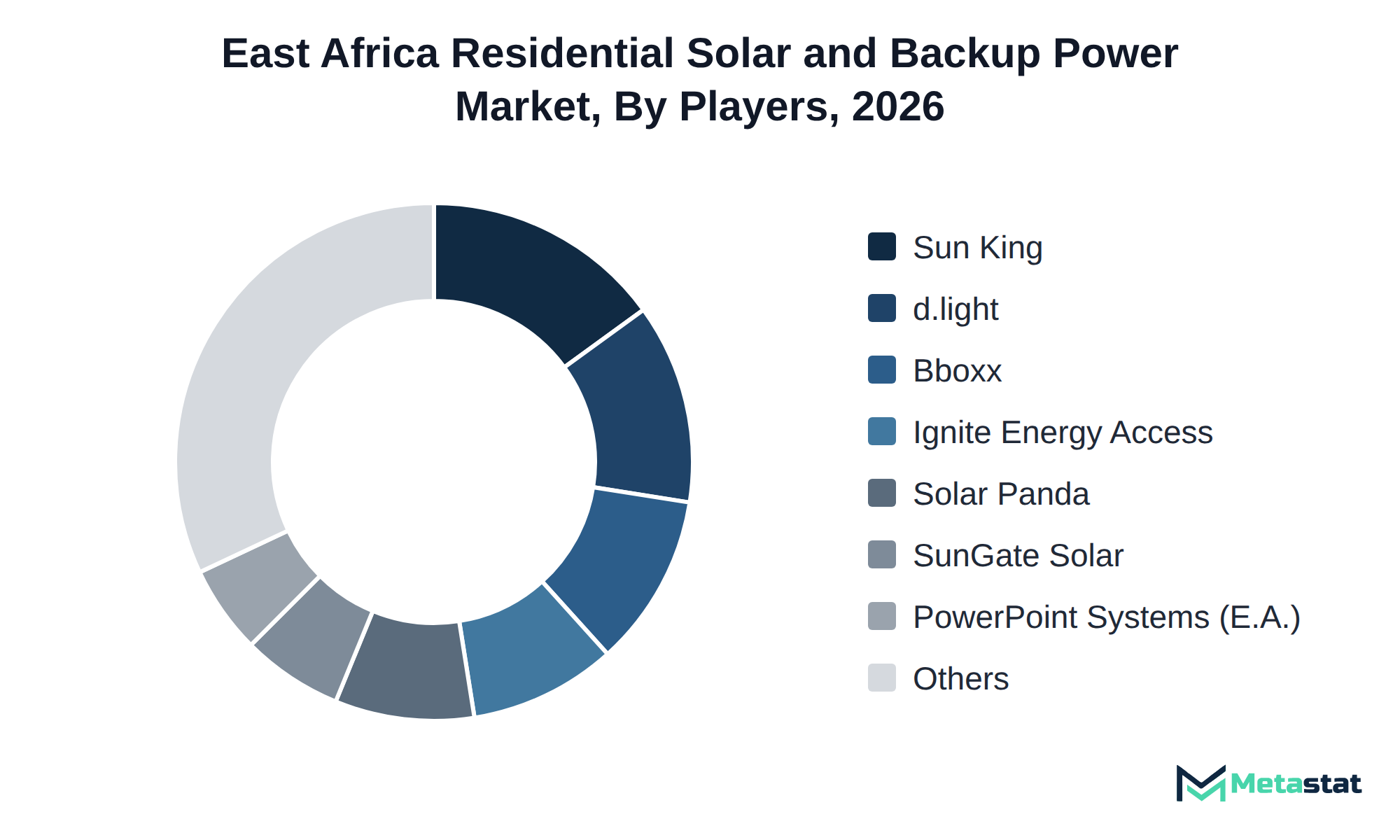
Competition within the East Africa Residential Solar and Backup Power market reflects diverse strategies among key players. Companies segment across various business models, including manufacturers, distributors, and installers. This segmentation influences buyer decisions on factors including pricing, service quality, and product ecosystems.
Sun King and d.light focus on offering comprehensive solutions, ensuring customers receive not only products but reliable service and support. Ignite Energy Access positions itself by emphasizing affordability and accessibility, appealing to budget-conscious consumers. Meanwhile, Bboxx highlights technological innovation in its energy solutions, providing advanced features that attract tech-savvy buyers.
Price sensitivity remains a crucial factor in the market, with customers often comparing offerings from various suppliers. Solar Panda and SunGate Solar Ltd prioritize competitive pricing and financing options, enhancing their appeal to a wider audience. Companies like PowerPoint Systems (E.A.) Ltd and Inara Africa Limited capitalize on localized solutions tailored to specific market needs, strengthening their competitive edge.
To achieve this growth, several developments will drive progress. Second, the rise of the Pay-as-You-Go (PAYGo) payment model is expected to enhance affordability, with projections indicating an increase to USD 696.7 million by 2033, driven by customers in regions with limited access to upfront capital. Third, the growth of mini solar power kits will contribute, reaching USD 550.7 million by 2033, appealing to customers requiring compact and flexible energy solutions. However, risks exist that could impede this market trajectory. Regulatory challenges and infrastructure limitations in specific countries, including Uganda and Tanzania, could restrict access to solar products and services, ultimately hindering growth potential. The East Africa Residential Solar and Backup Power market requires strategic advancements to overcome these risks and capitalize on emerging opportunities.
By Offering Type: Home Energy Backup Systems, Mini Solar Power Kits, Battery-Free Solar Installation, Portable Power Stations
By Vendor Role: Manufacturer or Brand Owner, Distributor or Retailer, Installer or System Integrator, Integrated Energy-Access Operator
By Payment Model: Outright Purchase, Pay-as-You-Go (PAYGo), Other Financing
By Country: Kenya, Tanzania, Uganda, Rwanda, Burundi, South Sudan, Somalia
By Region: North America, Europe, Asia-Pacific, South America, Middle East and Africa
The report strategically identifies and profiles the key market players and analyses their core competencies in each sub-segment of the Residential Solar and Backup Power market.
Report Attributes | Details |
Study Period | 2021-2033 |
Base Year | 2025 |
Estimated Year | 2026 |
Forecast Period | 2026-2033 |
Historical Period | 2021-2025 |
Growth Rate | CAGR 9.2% from 2026 to 2033 |
Revenue Unit | USD million |
Segmentation | By Offering Type, Vendor Role, Payment Model, Country, and Region |
Find answers to common questions about this report
The Residential Solar and Backup Power market size was valued at USD 784.4 million in 2025.
The market is projected to grow at a CAGR of 9.2% during the forecast period from 2026 to 2033.
Home Energy Backup Systems lead the Residential Solar and Backup Power market with a projected value of USD 621.6 million by 2033, reflecting the highest growth potential among the segments.
Rising demand for reliable energy solutions due to frequent grid outages and power shortages drives market growth. The expanding middle class and increasing urbanization contribute to consumers seeking dependable power sources for their daily activities.
High product costs significantly restrain growth in the Residential Solar and Backup Power market, particularly affecting households in rural regions facing financial constraints. Increased material costs challenge suppliers, impacting profit margins and competitive pricing.
Several factors favor adoption in the East Africa Residential Solar and Backup Power market. The increasing demand for reliable energy solutions amid frequent grid outages drives interest in home energy backup systems. The Pay-as-You-Go model enhances accessibility for lower-income demographics, supporting broader energy access initiatives.
The Residential Solar and Backup Power market is estimated to reach a valuation of USD 1,586.6 million by 2033.
Key players operating in the Residential Solar and Backup Power market include Sun King, d.light, Ignite Energy Access, Bboxx, Solar Panda, SunGate Solar Ltd, ReNewGen AS Burundi, and PowerPoint Systems (E.A.) Ltd.
The market for Home Energy Backup Systems is projected to reach USD 621.6 million by 2033, with a compound annual growth rate of 10.3% from 2026.
The Mini Solar Power Kits segment is expected to achieve a value of USD 550.7 million by 2033, reflecting a growing demand for portable energy solutions.
The analysts below cover Energy and Power research at Metastat Insights.
LEAD ANALYST
Utkarsh Khirodkar is a Lead Market Research Analyst at MetaStat Insight, specializing in market intelligence, technology sector assessments, and competitive strategy.

PRINCIPAL CONSULTANT - ENTERPRISE AI & EMERGING TECHNOLOGIES
Banking & Finance · Electronics and Semiconductor · Energy and Power · Healthcare IT · Information & Technology · Professional Services
Vijay Gunti is a Principal Consultant at MetaStat Insight, bringing over two decades of experience across enterprise digital transformation, technology strategy, and intelligent systems.

ENERGY & INFRASTRUCTURE INDUSTRY CONSULTANT
Automotive and Transportation · Electronics and Semiconductor · Energy and Power · Machinery & Equipment
Saurabh Vasant Ganvir consults for Energy & Infrastructure Industry at MetaStat Insight, specializing in renewable energy, solar EPC, and electric vehicle (EV) infrastructure markets.
Tracking maintenance cycle demand for secondary flight display units and terrain collision avoidance systems across regional jet fleets involves complex aftermarket dynamics. MetaStat Insight provided practical analysis separating airline retrofit programs from OEM forward-fit production schedules in North America and Southeast Asia. The supplier matrix highlighted component obsolescence timelines without resorting to vague generalizations. The dataset served as a dependable reference during our annual program review meetings.
Evaluating secondary resin quality across post-consumer packaging streams requires reliable technical segmentation. MetaStat Insight delivered an objective assessment that distinguished between extrusion-grade flake pricing and optical sorting throughput limitations across Western Europe. The competitive positioning breakdown for licensed depolymerization technology providers answered several questions during our feedstock feasibility audit. Their team clarified regional trade restrictions on mixed plastic scrap quickly when our team submitted follow-up requests.
Evaluating sovereign cloud deployments for core banking platforms demands a clear view of data residency regulations and migration exit strategies. MetaStat Insight delivered an exhaustive review of regional latency tolerances, mainframe decommission milestones, and third-party vendor concentration risk. The regulatory compliance mapping across European and Asian financial jurisdictions gave our team a dependable baseline for multi-cloud infrastructure discussions.
Explore related market intelligence reports worth reading alongside this one.
Starting from
$2950