
LEAD ANALYST
Utkarsh Khirodkar is a Lead Market Research Analyst at MetaStat Insight, specializing in market intelligence, technology sector assessments, and competitive strategy.

East Africa Small-Scale LFP Energy Storage Batteries Market Size, Share, By Application (Solar Battery Kits, Home Backup, Light Electric Mobility, Portable Power Stations and Others), By Battery Condition (New LFP Batteries, Refurbished LFP Batteries, Repurposed Second-Life LFP Batteries, Used LFP Batteries Sold as-Is and Others), By Battery Capacity (Up to 100 Wh, 101 Wh to 500 Wh, 501 Wh to 2 kWh, Above 2 kWh to 5 kWh, Above 5 kWh to 10 kWh, Above 10 kWh to 20 kWh and Others), By Region (Kenya, Tanzania, Uganda, Ethiopia, Rwanda, Democratic Republic of the Congo and Others), Industry Analysis, Growth, Trends, and Forecast, 2026-2033
Report ID
MSI-5692
Published
November, 2026
Pages
273 Pages
Format
Historical
Base year
Forecast
Forecast period
Report Details
Market Valuation: Valued at $323 Million in 2025, projected to reach $1,254.7 Million by 2033 at a 18.4% CAGR.
Dominant Segment: Home backup systems lead the market, driven by the increasing need for energy security and reliability amid frequent power outages.
Geographic Lead: Kenya stands out as the largest market, benefiting from government support and a growing middle class focused on sustainable energy solutions.
What's Inside: The report includes detailed competitive coverage, market analyses, and forecasts spanning from 2026 to 2033, providing insights into various applications and battery conditions.
Growing Applications: Solar battery kits are projected to grow significantly, reflecting their crucial role in enhancing energy independence and capturing solar energy for storage.
Rising Financing Models: PAYGo financing is accelerating the adoption of small-scale batteries, making renewable energy solutions more accessible to low-income households.
Choose Your License
East Africa Small-Scale LFP Energy Storage Batteries Market
The East Africa Small-Scale LFP Energy Storage Batteries market was valued at USD 323 million in 2025 and is projected to reach USD 1,254.7 million by 2033, growing at a CAGR of 18.4% over the forecast period.
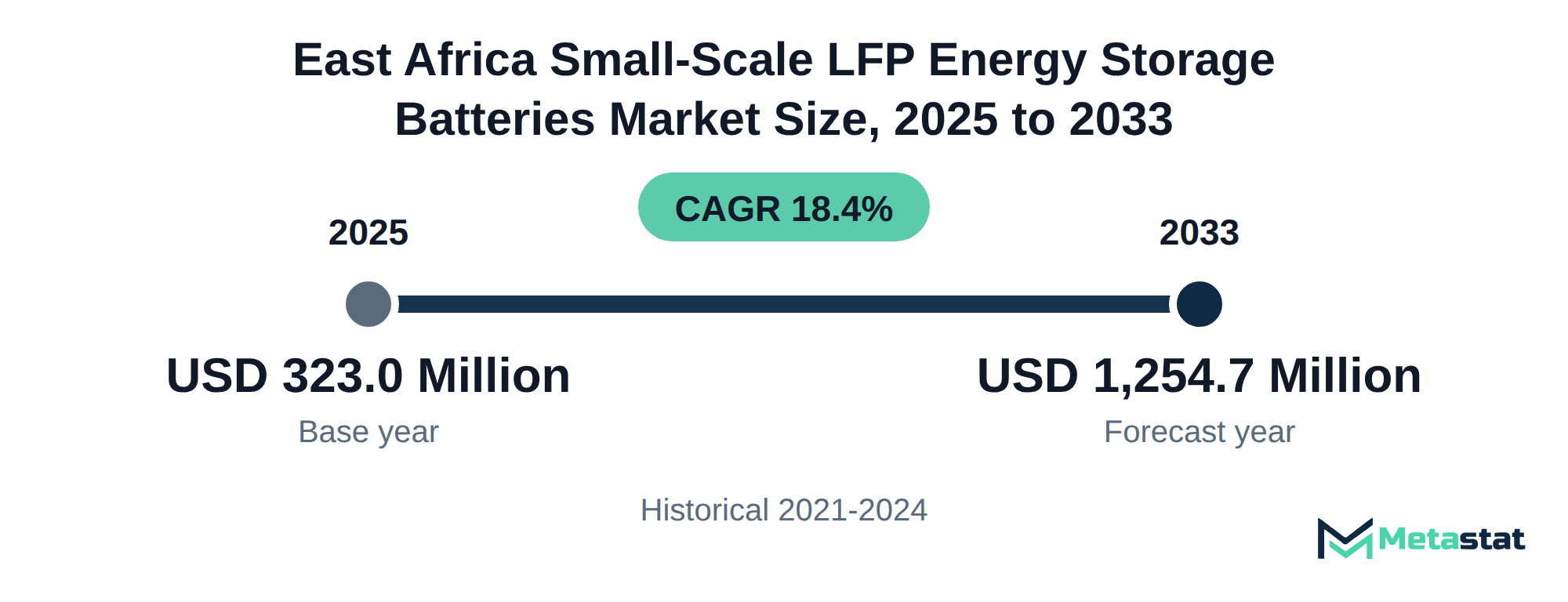
The East Africa Small-Scale LFP Energy Storage Batteries market encompasses a variety of applications, including solar battery kits, home backup systems, and portable power stations. Buyers invest in these solutions to enhance energy access, especially in regions with limited grid infrastructure. The growing demand for reliable and sustainable energy storage options highlights the importance of these batteries for residential, commercial, and mobility applications.
Significant growth in the market arises from the increasing adoption of renewable energy sources across the region. Among the various segments, home backup systems represent the highest revenue potential, driven by the growing need for energy security and reliability. Kenya stands out as the largest market share holder, benefiting from a combination of government support, a strong middle class, and a push towards sustainable energy solutions.
Rising costs of traditional energy sources further intensify the demand for energy storage solutions, encouraging investments in small-scale LFP batteries. This trend aligns with the global shift towards sustainable energy practices, significantly impacting overall market dynamics. The East Africa Small-Scale LFP Energy Storage Batteries market is expected to experience growth, supported by ongoing technological advancements and increasing consumer awareness.
Significant expenditure on East Africa Small-Scale LFP Energy Storage Batteries stems from increasing demand for reliable energy solutions across various sectors. Key buyers include households seeking energy independence, businesses aiming to reduce operational costs, and electric mobility providers looking for efficient power sources. These diverse applications drive investment in battery technologies, reflecting growing awareness of sustainable energy practices and the importance of energy resilience in the region.
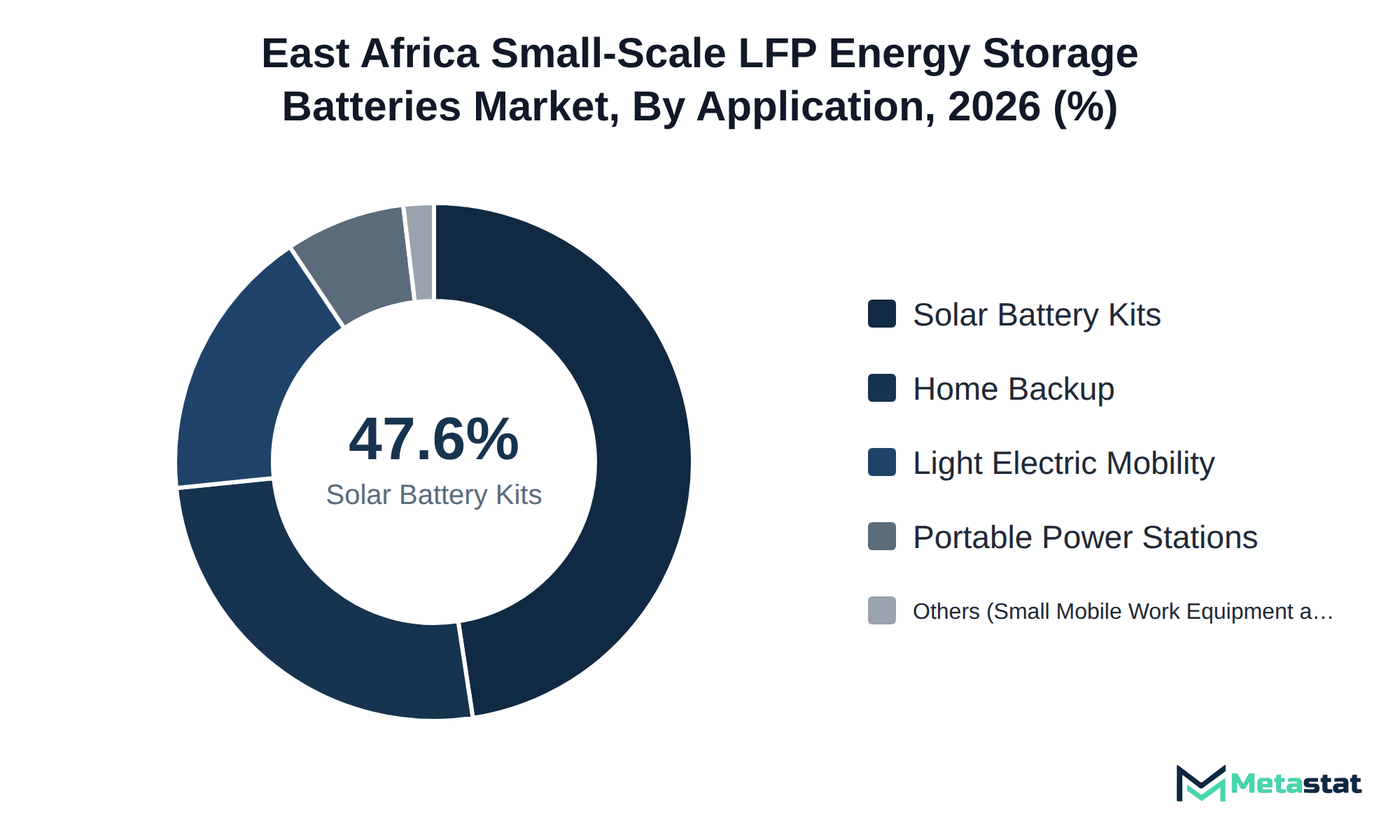
Growth in the market is fueled by rising adoption of renewable energy sources, particularly solar power. Among the segments, solar battery kits represent the most valuable category, reflecting their crucial role in capturing solar energy for storage and use. Kenya stands out with the largest market share, benefiting from robust solar infrastructure and supportive government policies promoting renewable energy usage. The focus on solar solutions aligns with the region's efforts to increase energy access while lowering reliance on fossil fuels.
In addition to solar battery kits, the home backup segment shows a strong growth trajectory, driven by increasing power outages and the need for uninterrupted energy supply. The market's expansion is supported by technological advancements that enhance battery performance, making energy storage more accessible and affordable. This trend contributes to overall growth of the East Africa Small-Scale LFP Energy Storage Batteries market, reinforcing its position within the broader energy ecosystem.
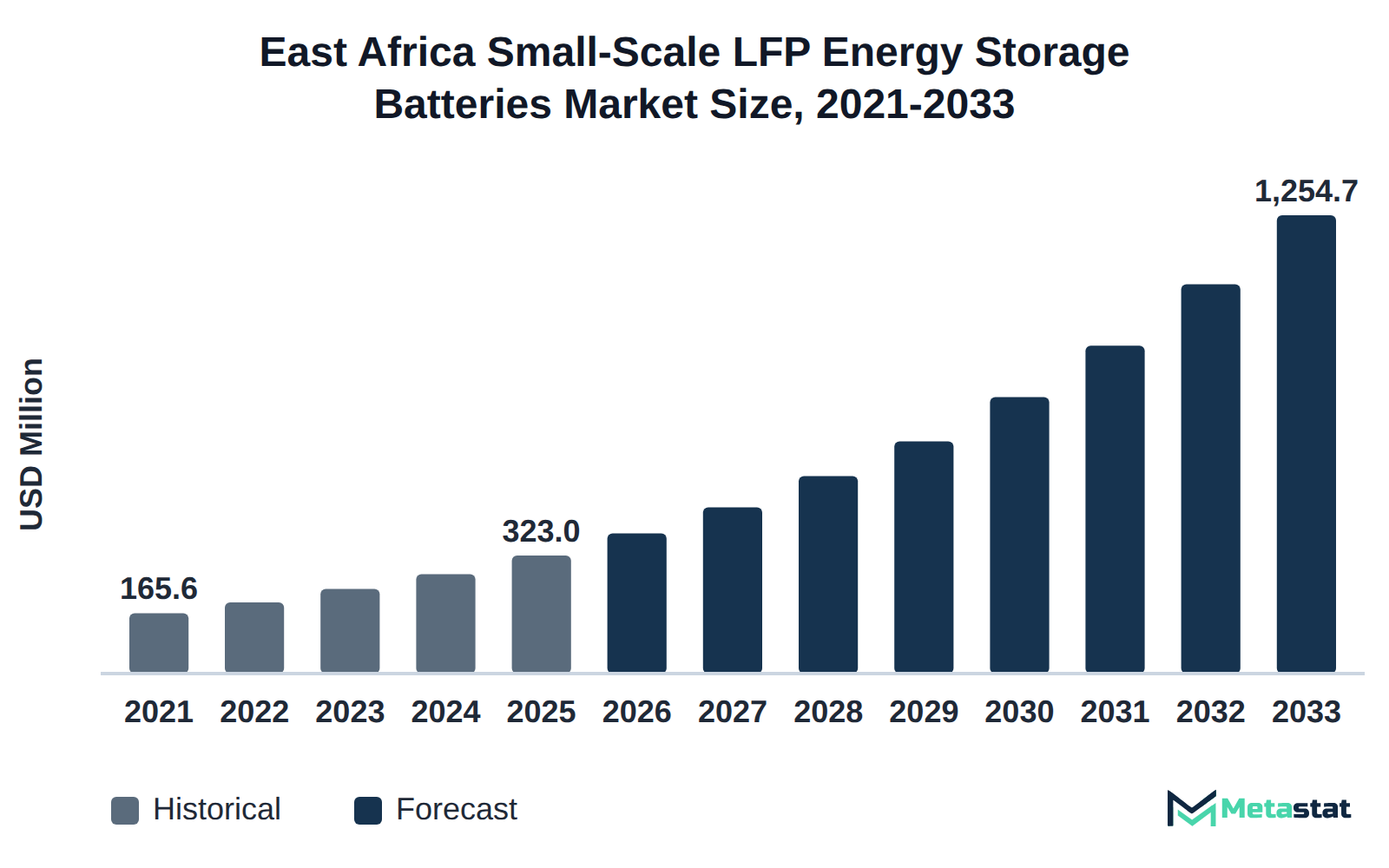
LFP home backup systems and solar battery kits strengthen household energy resilience in East Africa. The market for solar battery kits is projected to grow from USD 178.9 million in 2026 to USD 489.8 million by 2033, reflecting a compound annual growth rate (CAGR) of 15.5%. This growth is driven by increasing demand for reliable and sustainable energy solutions, particularly in regions with inconsistent grid access.
LFP technology, known for its safety and longevity, aligns with the needs of households seeking dependable energy sources. Users benefit from reduced dependency on unreliable grid power and heightened energy security. With the pressing need for clean energy alternatives, these solutions respond to both economic and environmental challenges. The East Africa Small-Scale LFP Energy Storage Batteries market reshapes energy consumption patterns, enabling households to use renewable energy more efficiently.
This shift carries substantial commercial implications. Enhanced energy resilience boosts consumer confidence in solar technologies, driving further investments in renewable energy infrastructure. By integrating LFP home backup systems and solar kits, households improve their energy independence, laying the groundwork for sustainable growth in the East Africa Small-Scale LFP Energy Storage Batteries market.
PAYGo financing has become a major driver of small-scale LFP energy storage battery adoption across East African households. This financing model allows consumers to access renewable energy solutions without the burden of upfront costs. By offering affordable payment plans, providers facilitate the purchase of solar battery kits, which are projected to grow from USD 178.9 million in 2026 to USD 489.8 million by 2033, highlighting the increasing accessibility of these technologies.
The integration of PAYGo financing aligns with the needs of low-income households, which often lack the financial resources for outright purchases. This method of payment mitigates the financial barriers faced by consumers, enabling them to invest in energy storage solutions that improve their quality of life. By adopting this financing structure, firms increase their customer base while enhancing market penetration in an evolving market.
The East Africa Small-Scale LFP Energy Storage Batteries market is expected to experience significant growth driven by innovative financing options. The accessibility of affordable energy solutions through PAYGo financing supports household energy needs and promotes sustainable development across the region.
Second-life lithium iron phosphate (LFP) batteries gain traction in the East Africa Small-Scale LFP Energy Storage Batteries market, driven by growing demand for affordable energy solutions. These batteries, repurposed from previous uses, provide a cost-effective alternative for backup power systems and light electric mobility applications. The price advantage of second-life batteries supports adoption among customers seeking reliable energy storage options without substantial capital investment.
In the market, the segment for refurbished LFP batteries is projected to reach USD 64.2 million by 2033, reflecting a compound annual growth rate (CAGR) of 23.8%. This notable growth indicates robust interest among various stakeholders, including households and small businesses that require dependable energy solutions for everyday use. The ability to offer lower-cost options without compromising performance allows these products to appeal to a broader audience, enhancing market penetration.
Investors and manufacturers focusing on the development of second-life batteries capture significant revenue streams, driven by increasing emphasis on sustainability and cost savings. Capturing consumer interest in eco-friendly and affordable energy storage solutions offers growth and innovation opportunities in the East Africa Small-Scale LFP Energy Storage Batteries market.
Portable power stations and swappable batteries significantly enhance energy access in East Africa, addressing the region's persistent electricity challenges. These solutions enable users to utilize renewable energy sources, particularly solar power, ensuring a reliable energy supply for various applications. For instance, the segment for Portable Power Stations is anticipated to grow at a compound annual growth rate (CAGR) of 22.2%, indicating strong demand within this area.
This trend reflects a shift toward more flexible energy solutions that adapt to the needs of consumers and businesses alike. By integrating portable power stations, users in off-grid areas benefit from a consistent electricity source for essential devices, promoting economic activities and improving quality of life. Swappable batteries further facilitate this transition, allowing users to exchange depleted batteries for charged ones quickly, reducing downtime and increasing efficiency.
While the East Africa Small-Scale LFP Energy Storage Batteries market continues to evolve, investments in these technologies drive growth and improve energy resilience across the region. Enhanced energy access through portable power stations and swappable batteries creates new opportunities for entrepreneurs and households, contributing to overall economic development.
The growing demand for reliable energy solutions among households drives significant spending in the East Africa Small-Scale LFP Energy Storage Batteries market. A surge in electricity outages, coupled with a rising preference for energy independence, pushes consumers towards home backup systems. This trend is prevalent in regions where grid instability affects daily life. Consequently, households invest in LFP energy storage batteries to ensure uninterrupted power supply, enhancing resilience against fluctuations in energy availability.
By 2033, spending on home backup systems is projected to reach USD 360.9 million, reflecting a compound annual growth rate of 20.1%. Growth stems from a demographic shift toward more energy-conscious consumers who prioritize sustainable and reliable energy solutions. Increased investments in these systems highlight a broader commitment to enhancing energy security in East Africa. This shift toward home backup solutions contributes significantly to overall market growth. Increased demand for portable power stations
Investments in portable power stations reflect a notable shift in consumer behavior within the East Africa Small-Scale LFP Energy Storage Batteries market. Rising interest in outdoor recreational activities and mobile work environments drives demand for portable power solutions. Users value the convenience and flexibility offered by these systems, making them essential for various applications, from camping to emergency power supply.
By 2033, the segment for portable power stations is projected to expand rapidly, fueled by an increased emphasis on portable energy solutions. This aligns with broader trends in mobility and flexibility in energy consumption, ensuring consumers have the power they need, whenever and wherever required. The increasing acceptance of these systems illustrates a significant opportunity for growth within the market.
Recent innovations in battery technology significantly enhance the performance of small-scale energy storage systems. Improved energy density and charging rates result from advancements in lithium iron phosphate (LFP) battery designs, allowing for higher capacity in smaller units. This evolution attracts interest from various industries, including renewable energy, electric mobility, and emergency backup applications. The growing emphasis on sustainable energy sources further accelerates demand for these efficient LFP batteries within the East Africa Small-Scale LFP Energy Storage Batteries market.
The decreasing cost of LFP battery production enables market accessibility. Cost reductions arise from advancements in manufacturing processes and materials, enabling suppliers to offer competitive pricing. This trend is particularly beneficial for consumers in emerging markets, where affordability drives adoption rates. The combination of enhanced technology and lower costs positions the market for significant growth through 2033.
Infrastructure limitations present significant barriers in the East Africa Small-Scale LFP Energy Storage Batteries market, particularly affecting the deployment of charging stations and power distribution networks. Limited access to reliable electricity sources hampers the integration of energy storage solutions in off-grid areas, resulting in slower uptake among consumers, especially in rural regions. This constraint leads to diminished order sizes and delayed replacement of older battery systems, impacting the overall growth potential of the market.
Households and small businesses in regions with inadequate infrastructure experience challenges in investing in energy storage systems. Unreliable power supply diminishes the perceived value of these technologies. Insufficient grid development results in higher operational costs for energy suppliers and limits investment opportunities in battery technologies. The combination of these factors contributes to restrained market expansion, necessitating targeted investments in infrastructure development to enhance the adoption of energy storage solutions.
Increased costs for raw materials present significant challenges for suppliers in the East Africa Small-Scale LFP Energy Storage Batteries market. Fluctuations in the pricing of lithium and other essential components affect profitability, prompting manufacturers to seek methods to mitigate these expenses. Strategic partnerships with local suppliers and investments in alternative sourcing strategies have emerged as common responses. Suppliers focus on enhancing production efficiency, implementing economies of scale, and optimizing supply chain logistics to reduce input costs. Companies increasingly explore the refurbishment and repurposing of existing battery systems, allowing them to expand their offerings while managing costs effectively. This shift in approach not only addresses profitability concerns but aligns with growing sustainability considerations in the market. Adapting to these financial pressures remains crucial for maintaining competitive positioning and meeting rising demand for energy storage solutions in the region.
The segment of home backup systems demonstrates significant potential within the East Africa Small-Scale LFP Energy Storage Batteries market. This area is projected to experience a compound annual growth rate of 20.1% through 2033. Increasing demand for reliable energy solutions, driven by frequent power outages and the need for energy security, positions home backup systems as a priority for consumers in Kenya. The anticipated growth of this segment aligns with rising energy costs and an expanding population requiring consistent power access.
Investments in home backup systems provide opportunities for suppliers to enhance their product offerings, catering to the evolving needs of households. Market dynamics indicate a shift toward more innovative energy solutions, emphasizing the importance of effective battery technology. This shift attracts increased attention from various stakeholders, including manufacturers and investors, who recognize the potential for high returns in this rapidly expanding segment.
The East Africa Small-Scale LFP Energy Storage Batteries market is segmented based on Application, Battery Condition, Battery Capacity, and Region.
This segment primarily serves households and small businesses looking for sustainable energy solutions. Increasing awareness of renewable energy benefits drives demand for solar battery kits, enhancing energy independence in regions facing power supply challenges. Compared to other segments, including Home Backup, which has a higher growth rate of 20.1%, the Solar Battery Kits segment experiences moderate growth. The pricing structure remains competitive, catering to budget-conscious consumers. Adoption continues to rise due to favorable regulatory environments promoting clean energy technologies, positioning the segment favorably in the East Africa Small-Scale LFP Energy Storage Batteries market.
This segment serves households seeking reliable energy solutions during power outages or disruptions. Increased urbanization and a growing population significantly contribute to the rising demand for home backup systems. Households, particularly in regions with frequent power shortages, prioritize these systems for their ability to provide uninterrupted power supply. Compared to other segments, including Solar Battery Kits, which grows at a CAGR of 15.5%, the Home Backup segment demonstrates faster growth driven by the urgency for energy reliability. Price sensitivity among buyers influences the adoption rate, making affordability a key factor that differentiates this segment from others targeting varied applications. This segment illustrates a dynamic response to consumers' increasing energy security needs.
Light Electric Mobility segment is expected to reach USD 255.2 million by 2033. This segment primarily serves electric two-wheelers, e-bikes, and various light electric vehicles, enabling efficient and sustainable transportation solutions. Increasing urbanization and a growing emphasis on reducing carbon emissions among consumers drive demand for electric mobility solutions in East Africa. Higher awareness of the environmental benefits associated with electric vehicles compared to conventional fuel-powered options contributes to market growth. Unlike other segments, including home backup systems, the Light Electric Mobility segment experiences a unique demand trajectory, appealing to environmentally conscious consumers. The segment benefits from a Compound Annual Growth Rate (CAGR) of 22.2%, reflecting more rapid expansion compared to other applications. In addition, the segment's focus on innovation and technological advancements in battery performance sets it apart from traditional energy storage applications.
Portable power stations comprise an essential category in the East Africa Small-Scale LFP Energy Storage Batteries market, with a projected growth rate of 22.2% during the forecast period. These systems provide portable energy solutions for various applications, including outdoor activities, emergency backup for homes, and mobile energy needs for businesses. The growing demand for reliable off-grid power sources among consumers, particularly in rural areas, drives growth in this segment. Unlike other applications, including home backup systems, which focus on stationary energy storage, portable power stations cater to consumers requiring mobility and convenience. Increased interest in outdoor recreation and the need for reliable power supply during emergencies further enhance their appeal, contributing to a significant market position. The development of lightweight and efficient battery technologies plays a critical role in advancing this segment, making portable power stations an attractive option for both consumers and businesses.
Others (Small Mobile Work Equipment and Recreational Storage) includes energy storage solutions designed for various portable and recreational applications. These products serve sectors including outdoor activities, mobile work environments, and emergency power needs. Factors influencing this sub-segment include the rising interest in recreational activities and the increasing reliance on portable equipment for work. This segment experiences differing growth dynamics compared to others, including Home Backup systems, which focus predominantly on domestic power solutions. Adoption hinges on user preferences for convenience and the versatility of energy storage systems tailored for small-scale applications, driving interest among recreational users and professionals who require mobility and reliability in their energy sources.
New LFP Batteries segment is valued at USD 347.5 million in 2026 and is projected to reach USD 1,046.7 million by 2033, at a CAGR of 17.1% during the forecast period. These batteries serve essential roles in applications requiring reliable and efficient energy storage, catering primarily to residential users and small businesses. A notable driver for this segment stems from the increasing reliance on renewable energy sources, prompting households to adopt energy storage solutions that complement solar installations. Compared to other battery condition segments, New LFP Batteries exhibit a moderate growth rate, positioned between the high growth of refurbished LFP batteries, projected at a CAGR of 23.8%, and the slower expansion of used batteries sold as-is. The focus on performance and longevity in new batteries attracts buyers who prioritize quality, significantly influencing their purchasing decisions.
This segment appeals to consumers seeking cost-effective energy storage solutions, especially in regions facing financial constraints. Applications include backup power for homes and small businesses, allowing users to make the most of existing battery assets while minimizing waste. Strong demand for refurbished batteries arises from growing environmental awareness and the desire to reduce costs. Compared to other segments, this segment exhibits a higher growth rate, driven by an increasing focus on sustainability and affordability. The forecast CAGR of 23.8% reflects significant interest among buyers seeking reliable alternatives to new batteries, which are often more expensive. In the East Africa Small-Scale LFP Energy Storage Batteries market, the refurbishment trend highlights a shift toward sustainable practices, where both economic and environmental factors shape buyer preferences.
Repurposed Second-Life LFP Batteries segment is expected to reach USD 95.9 million by 2033. These batteries serve various applications, particularly in home energy systems and portable power solutions, appealing to consumers seeking cost-effective and sustainable energy storage options. The growing focus on environmental sustainability drives demand for repurposed batteries, which provide an eco-friendly alternative to new batteries while maintaining adequate performance. Unlike new LFP batteries, projected to reach USD 1,046.7 million by 2033, the growth rate of repurposed batteries does not match the rapid expansion observed in other segments. By leveraging advancements in recycling and repurposing technologies, the market presents opportunities for innovative firms to enhance the adoption of these energy solutions.
Used LFP Batteries Sold as-Is segment is projected to grow at a CAGR of 23.6% during the forecast period. This segment typically finds use in various applications where low-cost energy storage solutions are essential, appealing to budget-conscious consumers and small businesses. Demand for these batteries arises from the need for affordable energy solutions, particularly in regions with limited access to new battery products. Compared to other segments, this category offers a lower price point, attracting a different buyer demographic that prioritizes cost over performance. While segments like New LFP Batteries exhibit higher growth rates, the Used LFP Batteries Sold as-Is segment attracts steady interest due to its affordability and immediate availability, positioning it as a practical choice in the evolving energy landscape of the East Africa Small-Scale LFP Energy Storage Batteries market.
Rebuilt packs with mixed-source cells consist of a combination of different battery cells assembled into a single unit, aimed at providing an economical energy storage solution. These packs appeal primarily to budget-conscious consumers and small businesses seeking reliable yet affordable energy options. Demand for rebuilt packs is driven by the increasing need for flexible energy storage solutions capable of supporting various applications, including backup power for homes and small-scale commercial use. Compared to other battery conditions, this sub-segment typically offers lower prices, attracting a different buyer demographic. Growth patterns for rebuilt packs differ from those of new and refurbished batteries, which tend to show higher growth rates due to advanced technology and efficiency gains. This dynamic highlights the importance of addressing diverse consumer needs within the broader East Africa Small-Scale LFP Energy Storage Batteries market.
Valued at USD 99.2 million in 2026, this segment is projected to reach USD 252.6 million by 2033, at a CAGR of 14.3% during the forecast period. Solutions in this capacity range cater primarily to residential users and mobile applications, including powering small electronics and providing backup power for essential devices. Increasing reliance on renewable energy sources drives demand in this segment, particularly among households seeking sustainable energy solutions. The growth trajectory of this segment is slower compared to others, including the Home Backup segment, which has a CAGR of 20.1%. With this more gradual expansion, price sensitivity remains a critical factor influencing purchase decisions, attracting budget-conscious consumers seeking affordable energy storage options. The East Africa Small-Scale LFP Energy Storage Batteries market is expected to experience diverse growth patterns across its various segments, fueled by distinct consumer needs and technological advancements.
101 Wh to 500 Wh segment is estimated to reach USD 281.6 million by 2033, at a CAGR of 17.3% during the forecast period. This capacity range primarily serves residential users and small businesses that require reliable energy solutions for day-to-day operations. Demand for this segment is driven by increasing reliance on renewable energy systems, particularly solar energy, which requires efficient storage solutions. Compared to other capacity segments, this range experiences steady growth, influenced by the affordability and accessibility of LFP batteries. The pricing of units in this segment generally positions them as a cost-effective alternative, making them attractive to budget-conscious consumers. The growth trajectory for this segment contrasts with larger capacity options, which target higher-end applications, resulting in different buyer demographics within the market.
The 501 Wh to 2 kWh segment is expected to reach USD 271.3 million by 2033. This segment primarily serves applications requiring mid-range energy storage solutions, appealing to residential users and small commercial operations. Growth in this segment is driven by increasing demand for reliable power sources, especially in areas facing inconsistent grid electricity. Compared to other battery capacity segments, this segment demonstrates a moderate growth rate, supported by rising interest in energy resilience. The CAGR for this segment is 17.3%, positioning it in a competitive space when compared to segments with higher projected growth rates, including portable power stations. The market's evolution reflects a shift towards more robust energy solutions that align with sustainable practices, attracting various stakeholders and enhancing overall market dynamics.
The Above 2 kWh to 5 kWh segment is projected to grow at a CAGR of 20.8% during the forecast period. This capacity range is essential for various applications where higher energy storage is required, including off-grid solar installations and backup systems for larger residential or commercial settings. Buyers for this segment typically include small businesses and households seeking reliable energy solutions. Factors driving growth in this segment include increasing energy demands and the expansion of renewable energy installations in East Africa. Compared to other capacity segments, this range captures a specific niche targeting users needing more robust energy solutions, highlighted by its higher growth rate compared to the Up to 100 Wh and 101 Wh to 500 Wh segments, which show lower CAGRs of 14.3% and 17.3%, respectively. Demand within this capacity range reflects a growing preference for sustainable and reliable energy options in the region.
Above 5 kWh to 10 kWh serves applications requiring higher energy storage capacity, catering to users with significant energy demands. This segment finds utility in larger residential setups and commercial installations, where consistent power supply is crucial. Growth within this segment is propelled by the increasing adoption of renewable energy solutions and rising awareness of energy security among consumers. Compared to other capacity segments, this category attracts a different buyer demographic, focusing on commercial enterprises and households investing in substantial energy independence. Its pricing structure varies significantly, reflecting the investment in more advanced battery technologies, which distinguishes it from lower capacity segments. Overall, this segment aligns with broader trends in the East Africa Small-Scale LFP Energy Storage Batteries market, responding to the shifting landscape toward sustainable energy solutions.
Above 10 kWh to 20 kWh encompasses energy storage solutions tailored for larger applications, where higher energy demands necessitate robust performance. Users in sectors including commercial energy management and industrial applications increasingly adopt this capacity to enhance operational efficiency. The segment distinguishes itself through higher pricing compared to others, reflecting the advanced technology and materials involved. Fast-growing sectors including renewable energy integration drive demand, highlighting the necessity for substantial energy reserves. While competition intensifies, operators including Sun King and d.light focus on innovative product offerings to capture market share. The East Africa Small-Scale LFP Energy Storage Batteries market benefits from this segment's contributions, emphasizing the importance of energy storage solutions that cater to specific needs.
More than 20 kWh for Small-Scale Installations encompasses energy storage solutions tailored for substantial energy demands, particularly in off-grid scenarios and large residential setups. This segment finds application among commercial entities and residential users seeking reliable energy sources for extended usage, including electric vehicle charging or heavy-duty appliances. Demand for this segment is driven by the growing adoption of renewable energy sources, coupled with increasing awareness of energy independence. Compared to other battery capacity segments, this category typically features higher price points, reflecting its advanced technology and storage capabilities. The segment's growth trajectory differs from smaller capacity alternatives, with larger systems catering to users with significant energy needs, resulting in a distinct buyer profile and purchasing considerations.
Valued at USD 140.4 million in 2026, this segment is projected to reach USD 403.4 million by 2033, at a CAGR of 16.3% during the forecast period. Energy storage solutions in Kenya primarily serve residential applications, where consumers use them for backup power and energy management. The increasing penetration of renewable energy sources drives demand, particularly solar installations, which benefit from reliable storage options. In comparison to other segments, the market in Kenya exhibits a moderate growth rate, influenced by factors including infrastructure developments and regulatory incentives supporting clean energy. The segment's growth is supported by rising interest in sustainable energy solutions among households, distinguishing it from faster-growing segments including Home Backup.
Tanzania segment is estimated to reach USD 210.8 million by 2033, at a CAGR of 18.5% during the forecast period. This segment primarily serves residential and rural consumers seeking reliable energy solutions, particularly in areas where grid access remains limited. Factors driving growth include increasing demand for renewable energy sources and the need for energy independence among households. Compared to other segments, Tanzania’s growth rate is strong, reflecting higher adoption of small-scale energy storage systems driven by technological advancements and decreasing costs. While consumers seek affordable and sustainable energy options, the market benefits from a diverse range of product offerings that cater to various energy storage needs.
Valued at USD 195.1 million by 2033, this segment addresses energy storage needs in Uganda. Users include residential households and small businesses looking to enhance energy reliability and reduce reliance on the national grid. Key factors driving growth within this segment involve increasing demand for home backup solutions and a rise in renewable energy adoption, particularly solar energy. The Home Backup segment, projected to reach USD 360.9 million by 2033 with a CAGR of 20.1%, demonstrates a faster growth trajectory compared to Uganda, highlighting varying customer needs and investment patterns. In contrast to other segments, Uganda focuses more on affordable energy access, positioning it uniquely in the East Africa Small-Scale LFP Energy Storage Batteries market.
Projected to grow at a CAGR of 20.9% during the forecast period, Ethiopia's segment plays a significant role in energy storage solutions. This segment serves various applications including off-grid energy systems, enabling users in rural areas to access reliable electricity. Demand is driven by increasing awareness of renewable energy sources and the need for sustainable energy solutions. Compared to other segments, this one exhibits higher growth potential due to significant investments in renewable energy infrastructure. The unique socio-economic landscape in Ethiopia presents both opportunities and challenges, influencing buyer behavior and market dynamics. Overall, this segment reflects the broader trends seen in the East Africa Small-Scale LFP Energy Storage Batteries market, highlighting the region's commitment to expanding energy access through innovative solutions.
Rwanda is an emerging area for small-scale energy storage applications, driven by increasing demand for reliable power solutions. Consumers employ energy storage systems for home backup and renewable energy integration, particularly solar. The segment experiences growth due to rising electricity costs and the push for sustainable energy solutions. Compared to other regions like Kenya and Tanzania, Rwanda's market development progresses at a different pace due to varying energy policies and infrastructure readiness. The East Africa Small-Scale LFP Energy Storage Batteries market sees Rwanda focusing on innovative solutions that address local energy challenges, positioning it uniquely among neighboring countries.
In the Democratic Republic of the Congo, the segment focuses on the adoption and implementation of small-scale LFP energy storage solutions. These batteries serve various applications, including renewable energy integration and off-grid power supply, appealing to consumers and businesses in need of reliable energy storage. Demand rises due to increasing electrification efforts and the necessity for backup power solutions in rural areas. This segment experiences slower growth compared to others due to infrastructure challenges and limited access to financing for energy projects. However, global attention shifts toward sustainable energy solutions, and investments in this segment are expected to enhance its potential in the East Africa Small-Scale LFP Energy Storage Batteries market.
This segment encompasses regions including Burundi, South Sudan, and Somalia, focusing on localized energy storage solutions that meet unique demands. Applications in these areas typically involve off-grid energy systems, portable power needs, and community energy projects. The underdevelopment of energy infrastructure in these countries creates significant opportunities for small-scale energy solutions, driving interest among local consumers and businesses. Growth within this segment reflects the economic and infrastructural challenges faced in these regions. Unlike established markets, where demand comes from larger players, this segment primarily serves individual consumers and small enterprises seeking reliable energy options. The market's attention to these underserved areas highlights the potential for growth in energy access, emphasizing a strategic focus on enhancing energy independence and sustainability.
The East Africa Small-Scale LFP Energy Storage Batteries market shows significant potential for growth driven by various factors specific to the region. Increased reliance on renewable energy sources, particularly solar power, creates a strong demand for energy storage solutions across multiple applications. Customers in sectors including home backup and portable power stations play a crucial role in shaping market dynamics. This expansion aligns with regional efforts to enhance energy access and reliability, influencing investment and innovation in the sector.
Emerging technologies and solutions tailored to local conditions enhance the attractiveness of energy storage options. Rising consumer awareness regarding energy efficiency and sustainability contributes to expanding market opportunities. Ongoing collaboration between stakeholders, including governments and private enterprises, supports advancements in energy storage technologies. Overall, the East Africa Small-Scale LFP Energy Storage Batteries market is expected to experience growth, reflecting the increasing demand for innovative energy solutions.
The East Africa Small-Scale LFP Energy Storage Batteries market experiences diverse dynamics influenced by regional factors. The market encompasses unique applications tailored to different energy needs, with growth driven by advancements in technology and increasing energy demands across various sectors. The absence of specific data regarding share figures necessitates a qualitative assessment of the market’s trajectory.
Investments in renewable energy and infrastructure development fuel the demand for small-scale energy storage solutions. This trend reflects a broader commitment to sustainability and energy efficiency. Manufacturers focus on enhancing product capabilities, contributing to the overall expansion of the market.
Battery technology innovations expand the range of applications and make small-scale energy storage systems more appealing. The market for portable power stations and solar battery kits experiences strong growth, propelled by consumer preferences for energy independence and reliability.
The East Africa Small-Scale LFP Energy Storage Batteries market offers stakeholders opportunities to act on emerging trends, driven by growing awareness of energy conservation and sustainability practices.
The East Africa Small-Scale LFP Energy Storage Batteries market shows significant potential for growth driven by increasing energy demands and the need for reliable power solutions. Adoption of small-scale energy storage technology facilitates improved energy access in off-grid areas, appealing to several customer segments.
Regulatory frameworks and supportive policies promote investments in renewable energy, enhancing the market's attractiveness. Technological advancements in lithium iron phosphate (LFP) battery systems contribute to performance improvements and cost reductions, further stimulating interest among consumers.
With a focus on sustainability, businesses and households seek innovative energy storage solutions to manage energy consumption effectively. This shift influences competitive dynamics within the market, leading to the emergence of new players and the expansion of existing companies.
The demand for energy storage solutions grows, and the East Africa Small-Scale LFP Energy Storage Batteries market evolves, creating opportunities for investment and innovation across various applications and sectors.
The East Africa Small-Scale LFP Energy Storage Batteries market presents unique opportunities shaped by local energy needs and consumption patterns. This region experiences significant interest in small-scale energy storage solutions, driven by increasing demand for reliable power sources. Efforts to enhance energy accessibility and sustainability are apparent, with various stakeholders focusing on innovative storage technologies. The market's growth is influenced by a shift towards renewable energy sources, which necessitates efficient storage solutions to manage intermittent supply. Local companies and international players explore strategies to position themselves in this evolving landscape, further stimulating market expansion.
Investment in energy storage technologies reflects a broader trend towards electrification in rural areas, where access to stable power remains a challenge. The market benefits from partnerships between local utilities and technology providers, aiming to deliver tailored solutions that cater to specific regional requirements. Expanding infrastructure for renewable energy generation complements the demand for small-scale LFP energy storage systems, ensuring that the market captures evolving energy trends. This dynamic encourages competition among existing firms while inviting new entrants to explore untapped segments.
The East Africa Small-Scale LFP Energy Storage Batteries market benefits from increasing interest in decentralized energy solutions. Growing power reliability concerns coupled with the expansion of renewable energy sources drive the demand for small-scale energy storage systems across multiple applications.
Market development focuses on enhancing energy independence for households and businesses, addressing energy security issues prevalent in the region. Companies prioritize the provision of affordable and efficient energy storage solutions to meet the diverse requirements of users.
Increased investment in off-grid and microgrid systems emphasizes the importance of flexible energy storage options. Innovation in battery technologies ensures the market aligns with the evolving energy landscape.
Potential growth opportunities arise from the rising adoption of solar energy systems, with consumers seeking complementary storage solutions to enhance their energy management capabilities. The market anticipates further advancements in battery technologies, leading to improved performance and cost-effectiveness.
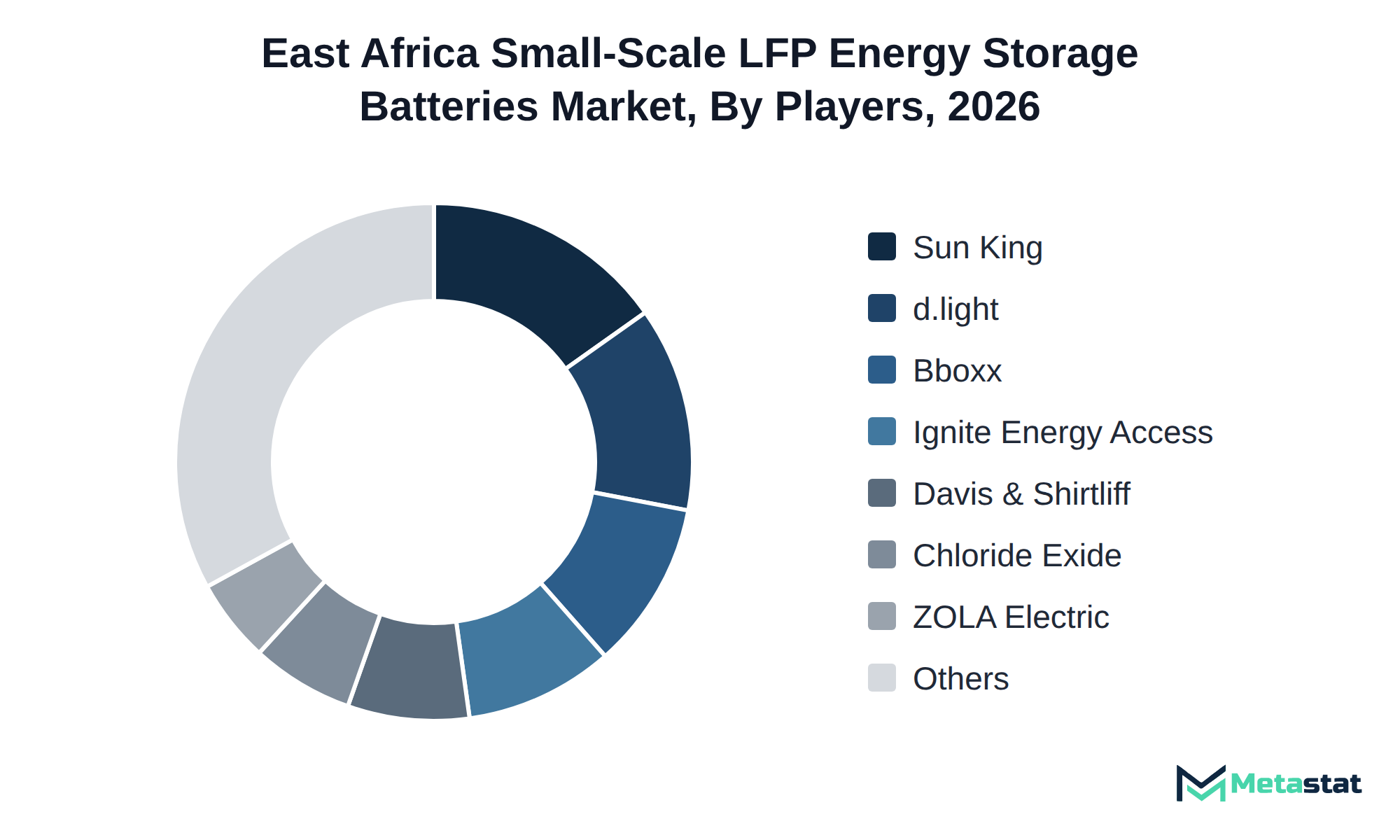
Competition in the East Africa Small-Scale LFP Energy Storage Batteries market occurs across various strategic dimensions. Companies focus on different applications, battery conditions, and capacities to cater to evolving consumer preferences. For example, Sun King and d.light target home backup solutions, emphasizing reliable products for households in need of energy security. Bboxx and Ignite Energy Access concentrate on solar battery kits, appealing to off-grid customers seeking sustainable energy solutions.
Buyers select products based on several criteria, including price, certification, customization, and service offerings. Companies including ZOLA Electric and Growatt New Energy prioritize eco-friendly certifications and product reliability to enhance customer confidence. In addition, firms like Jackery and BLUETTI offer customizable energy storage solutions, appealing to niche markets focused on specific energy needs. This competitive environment drives innovation and growth within the market.
Achieving this growth relies on several key developments in the East Africa Small-Scale LFP Energy Storage Batteries market. A significant increase in demand for home backup applications, driven by rising energy costs and the need for reliable power, will drive the market. Potential risks could impede growth. Supply chain disruptions or fluctuations in raw material prices impact production costs and availability, affecting adoption rates across segments. Regional differences in infrastructure, particularly in countries like Uganda and Tanzania, could further influence market dynamics. Addressing these challenges while pursuing emerging opportunities will be critical for the market to reach its forecasted value.
By Application: Solar Battery Kits, Home Backup, Light Electric Mobility, Portable Power Stations, Others (Small Mobile Work Equipment and Recreational Storage)
By Battery Condition: New LFP Batteries, Refurbished LFP Batteries, Repurposed Second-Life LFP Batteries, Used LFP Batteries Sold as-Is, Others (Rebuilt Packs with Mixed-Source Cells)
By Battery Capacity: Up to 100 Wh, 101 Wh to 500 Wh, 501 Wh to 2 kWh, Above 2 kWh to 5 kWh, Above 5 kWh to 10 kWh, Above 10 kWh to 20 kWh, Others (More than 20 kWh for Small-Scale Installations)
By Region: Kenya, Tanzania, Uganda, Ethiopia, Rwanda, Democratic Republic of the Congo, Others (Burundi, South Sudan, Somalia)
By Region: North America, Europe, Asia-Pacific, South America, Middle East and Africa
The report strategically identifies and profiles the key market players and analyses their core competencies in each sub-segment of the Small-Scale LFP Energy Storage Batteries market.
Report Attributes | Details |
Study Period | 2021-2033 |
Base Year | 2025 |
Estimated Year | 2026 |
Forecast Period | 2026-2033 |
Historical Period | 2021-2025 |
Growth Rate | CAGR 18.4% from 2026 to 2033 |
Revenue Unit | USD million |
Segmentation | By Application, Battery Condition, Battery Capacity, Region, and Region |
Find answers to common questions about this report
The Small-Scale LFP Energy Storage Batteries market size was valued at USD 323 million in 2025.
The market is projected to grow at a CAGR of 18.4% during the forecast period from 2026 to 2033.
The leading segment in the Small-Scale LFP Energy Storage Batteries market is Home Backup, with a projected value of USD 360.9 million by 2033. This segment demonstrates the highest growth potential compared to others in the market.
The growing demand for reliable energy solutions among households drives significant spending in the market. Increased investments in portable power stations reflect a notable shift in consumer behavior, fueled by rising interest in outdoor recreational activities and mobile work environments.
Infrastructure limitations significantly restrain the growth of the Small-Scale LFP Energy Storage Batteries market. Challenges in deploying charging stations and power distribution networks hinder the integration of energy storage solutions, particularly in off-grid areas. Increased costs for raw materials, including lithium, further impact suppliers' profitability, prompting manufacturers to seek cost mitigation strategies.
Increasing demand for reliable energy solutions, driven by frequent power outages and the need for energy security, supports the adoption of home backup systems. advancements in battery technology and decreasing production costs enhance market accessibility, encouraging consumer investment in energy storage solutions.
The Small-Scale LFP Energy Storage Batteries market is estimated to reach a valuation of USD 1,254.7 million by 2033.
Key players operating in the Small-Scale LFP Energy Storage Batteries market include Sun King, d.light, Bboxx, Ignite Energy Access, ZOLA Electric, and WAGA Tanzania.
The home backup systems segment is projected to grow at a compound annual growth rate of 20.1% through 2033, driven by rising demand for reliable energy solutions.
The portable power stations segment is anticipated to expand rapidly, reflecting increased interest in mobile energy solutions for outdoor activities and emergency power supply.
The analysts below cover Energy and Power research at Metastat Insights.
LEAD ANALYST
Utkarsh Khirodkar is a Lead Market Research Analyst at MetaStat Insight, specializing in market intelligence, technology sector assessments, and competitive strategy.

PRINCIPAL CONSULTANT - ENTERPRISE AI & EMERGING TECHNOLOGIES
Banking & Finance · Electronics and Semiconductor · Energy and Power · Healthcare IT · Information & Technology · Professional Services
Vijay Gunti is a Principal Consultant at MetaStat Insight, bringing over two decades of experience across enterprise digital transformation, technology strategy, and intelligent systems.

ENERGY & INFRASTRUCTURE INDUSTRY CONSULTANT
Automotive and Transportation · Electronics and Semiconductor · Energy and Power · Machinery & Equipment
Saurabh Vasant Ganvir consults for Energy & Infrastructure Industry at MetaStat Insight, specializing in renewable energy, solar EPC, and electric vehicle (EV) infrastructure markets.
Analyzing the transition from natural gas to green hydrogen in iron ore reduction requires realistic infrastructure timelines. Meta stat insight supplied a detailed regional assessment of DRI plant conversion costs and scrap metal availability in North America and Western Europe. Their report carefully examined pellet quality specs and electrical grid access constraints without making oversimplified market assumptions. The research material served as a practical reference during internal technology roadmap discussions.
Integrating zero-trust access controls across legacy electronic health record systems involves complex compliance overhead. Team produced an analysis that clearly separated identity governance and administration tools from privileged access management platforms. Their evaluation of HIPAA and GDPR compliance features across cloud native solutions gave our architecture group clear baseline criteria. The custom data request regarding biometric authentication adoption in hospital networks was returned promptly with clear documentation.
Evaluating calorific value requirements and air permit compliance across municipal waste facilities requires localized data. Metastat Insight structured their analysis around operational throughput capacity and feedstock composition variations in Latin America and Eastern Europe. Their competitive mapping of sorting equipment vendors helped clarify technology differences between optical separators and heavy media systems. The study provided an objective baseline during our capital expenditure reviews.
Explore related market intelligence reports worth reading alongside this one.