
LEAD ANALYST
Utkarsh Khirodkar is a Lead Market Research Analyst at MetaStat Insight, specializing in market intelligence, technology sector assessments, and competitive strategy.

Global Lithium Market Size, Share, By Product Type (Lithium Carbonate, Lithium Hydroxide, Spodumene Concentrate, Lithium Chloride, Lithium Metal and Other Lithium Compounds), By Feedstock (Hard-Rock Lithium Ores, Conventional Brines, Sedimentary Lithium Deposits, Geothermal Lithium Brines, Recycled Battery Materials and Other Lithium-Bearing Resources), By Application (Electric Vehicle Batteries, Energy Storage Systems, Consumer Electronics Batteries, Industrial Greases and Lubricants, Glass and Ceramics, Metallurgy and Aluminum Production, Pharmaceuticals and Healthcare, Specialty Chemicals and Other Industrial Applications), By Value Chain Stage (Lithium Mining and Extraction, Lithium Concentrate Production, Lithium Chemical Conversion, Lithium Refining and Purification and Lithium Battery Recycling and Recovery), Industry Analysis, Growth, Trends, and Forecast, 2026-2033
Report ID
MSI-5225
Published
September, 2026
Pages
280 Pages
Format
Historical
Base year
Forecast
Forecast period
Report Details
Market Valuation: Valued at $11.8 Billion in 2025, projected to reach $35.8 Billion by 2033 at a 14.9% CAGR.
Dominant Segment: The Electric Vehicle Batteries segment leads the market, driven by the rising adoption of electric vehicles, which significantly boosts demand for lithium-based technologies.
Geographic Lead: The Asia Pacific region is experiencing the fastest growth, fueled by increasing electric vehicle production and advancements in energy storage solutions.
What's Inside: The report provides a comprehensive analysis of the global lithium market, including detailed competitive coverage, market segmentation, and a forecast window from 2026 to 2033.
Emerging Trends: Investment in sustainable technology is reshaping the market, with a strong focus on reducing carbon footprints and enhancing energy efficiency across industries.
Regulatory Challenges: Increasing regulatory challenges are hindering market growth, as companies face compliance hurdles and rising operational costs due to stringent environmental regulations.
Choose Your License
Global Lithium Market
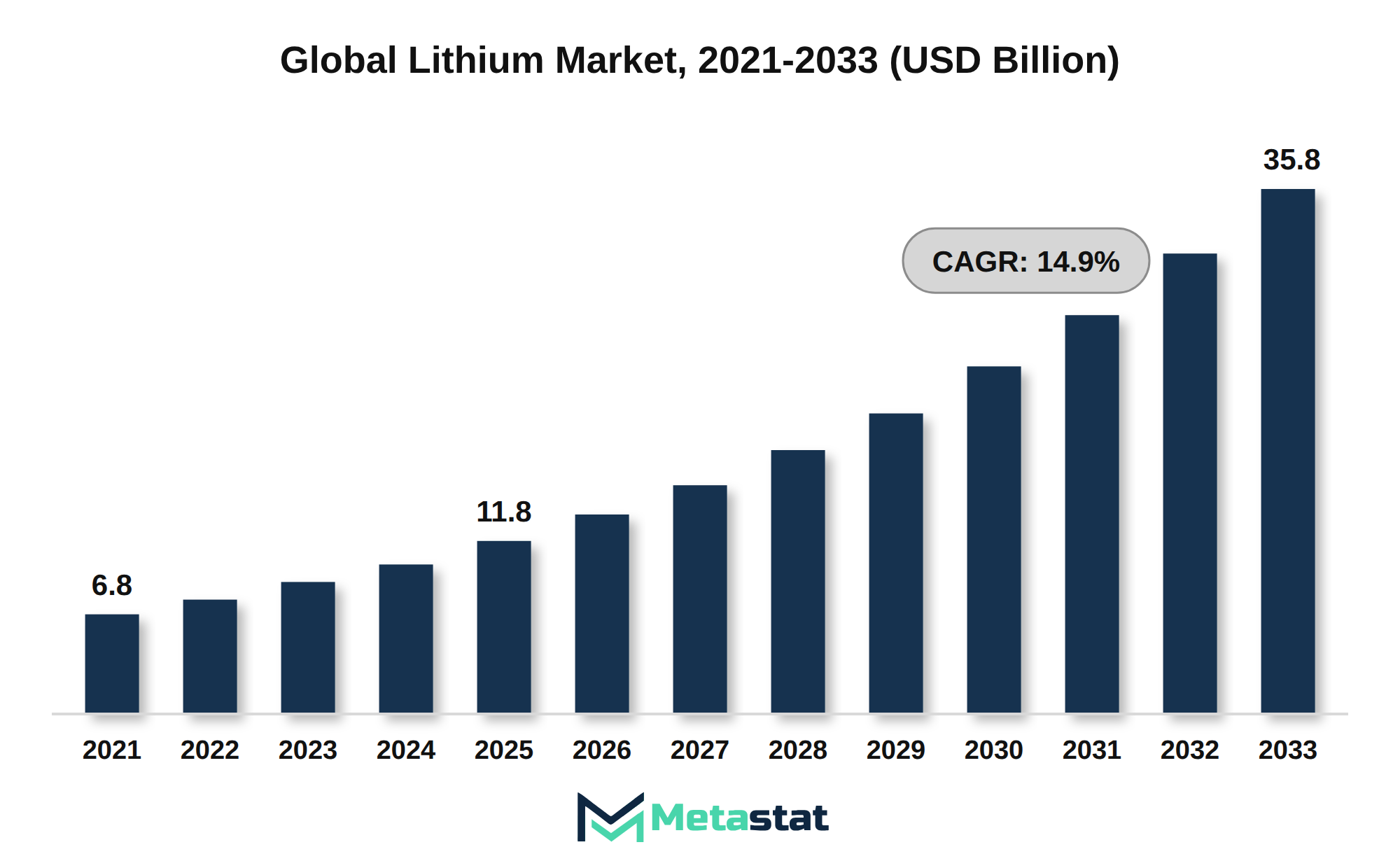
The global Lithium market was valued at USD 11.8 billion in 2025 and is projected to reach USD 35.8 billion by 2033, growing at a CAGR of 14.9% over the forecast period.
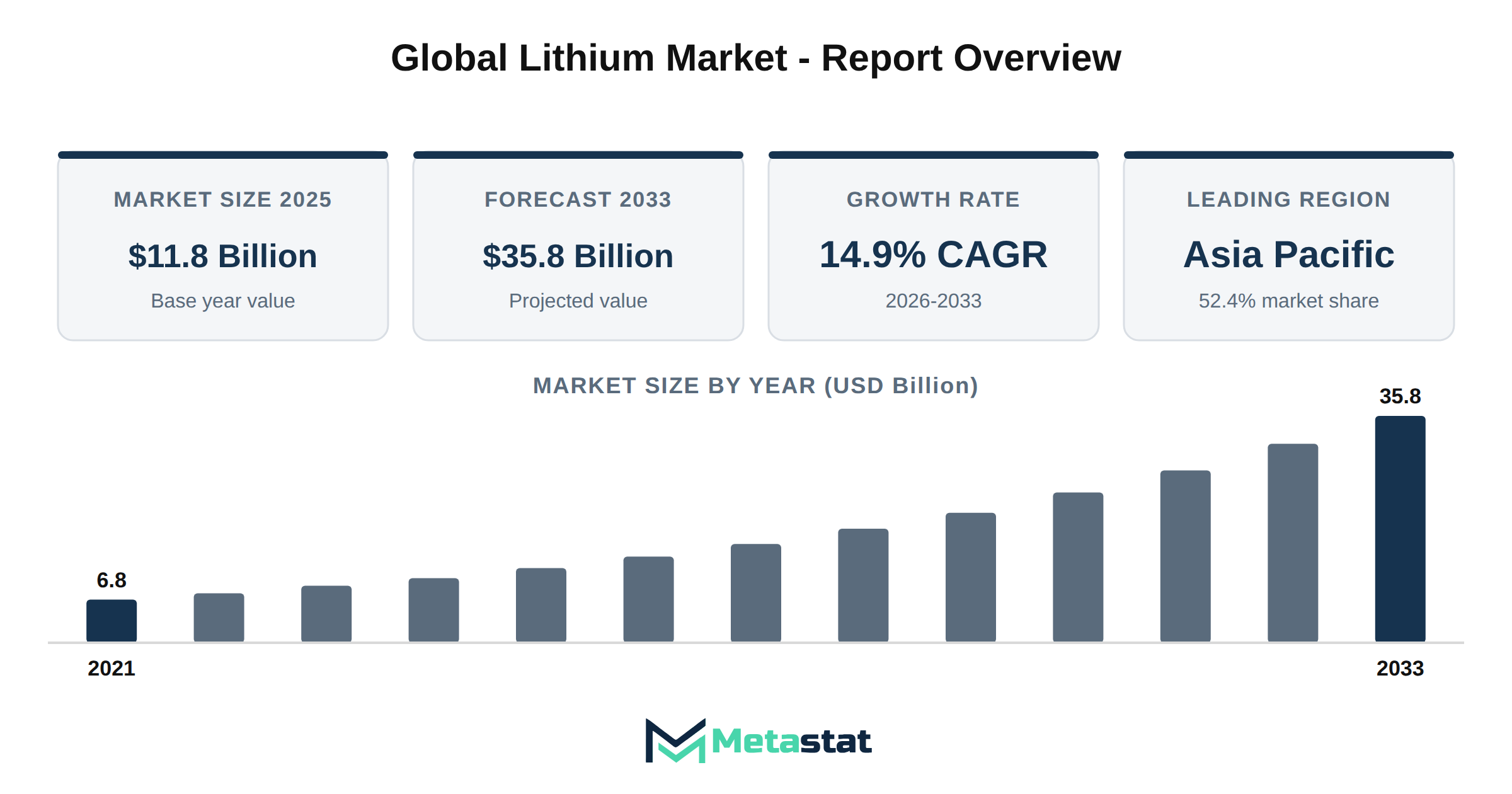
The Lithium market has experienced significant growth, with a base value of USD 11.8 billion in 2025, anticipated to expand to USD 35.8 billion by 2033. This growth represents a compound annual growth rate (CAGR) of 14.9%. The market's progression reflects the increasing demand for lithium across various applications, particularly in electric vehicles and energy storage systems.
Global supply-demand dynamics illustrate a robust market environment. The demand for lithium is primarily driven by the surging electric vehicle (EV) market, alongside advancements in energy storage solutions. The forecast indicates that the demand for lithium in electric vehicle batteries is expected to increase from USD 8.3 billion in 2026 to USD 23.2 billion by 2033, exhibiting a CAGR of 15.7%. This trend highlights the critical role of the automotive sector in shaping the lithium landscape.
Battery industry developments emphasize the critical importance of lithium because a key component in powering electric vehicles. While manufacturers prioritize the transition to electric mobility, the reliance on lithium-ion batteries intensifies. The increasing adoption of EVs correlates directly with the expanding lithium market, driving investment and innovation in battery technologies.
The competitive landscape features several notable players, including Albemarle Corporation, SQM, and Tianqi Lithium Co. Ltd., who actively contribute to the market's dynamics. These companies engage in strategic initiatives to enhance production capabilities and meet the escalating demand for lithium products. The focus on innovation and efficiency positions these players favorably because competition intensifies.
Pricing trends for lithium have shown volatility influenced by market forces, including supply constraints and fluctuating demand. The anticipated growth in the lithium market is expected to stabilize pricing because production scales up to meet the needs of various industries. The evolving pricing landscape will play a critical role in shaping future investment strategies within the sector.
Investment opportunities within the value chain present significant potential for stakeholders. Companies involved in lithium mining, extraction, and processing stand to benefit from the expanding market. Regulatory compliance and sustainability initiatives will shape operational strategies, because firms prioritize environmentally responsible practices. This focus aligns with broader trends toward sustainable transformation and circular economy dynamics.
Market growth and demand outlook for the Lithium market reflects a strong trajectory, driven by increasing applications in electric vehicles and energy storage systems. The expected compound annual growth rate (CAGR) of 14.9% from 2026 to 2033 signifies robust demand across various sectors, particularly in the automotive industry, which heavily relies on lithium for battery production.
Global supply-demand dynamics within the Lithium market indicate a tightening balance resulting from escalating demand. The rapid growth in electric vehicle adoption and energy storage solutions intensifies the competition for lithium resources, necessitating strategic sourcing and enhanced production capabilities among key players. High demand forecasts in the automotive sector emphasize the need for efficient supply chains to meet future requirements.
Trends in the battery industry reflect a significant shift toward lithium-ion technology, driven by the increasing need for sustainable energy solutions. The transition to electric vehicles increases the demand for high-performance lithium batteries, with applications extending across consumer electronics and industrial sectors. This evolution highlights the strategic importance of lithium within the broader energy landscape.
The competitive landscape within the Lithium market features a diverse range of players, including Vulcan Energy Resources Limited, Albemarle Corporation, and SQM. These companies engage in various strategies, including vertical integration and partnerships, to enhance their market positions and respond to fluctuating demand. Benchmarking against competitors shows an emphasis on innovation and capacity expansion to secure market share.
Lithium pricing trends exhibit volatility, influenced by supply chain constraints and geopolitical factors. Price fluctuations challenge producers and consumers alike, driving companies to adopt flexible pricing strategies. The forecasted increase in lithium prices highlights the value of securing long-term contracts and establishing stable sourcing relationships.
Investment opportunities within the value chain highlight several areas for potential growth, including mining, chemical conversion, and battery recycling. Emerging technologies related to sustainable extraction methods and circular economy practices present avenues for enhanced profitability. Regulatory compliance and industry standards play crucial roles in shaping investment strategies and mitigating risks associated with environmental impacts.
Disruption in the Lithium market arises from advancements in R&D trajectories and next-generation innovations, leading to increased efficiency and sustainability. Corporate imperatives focus on decarbonization efforts, aligning with global sustainability goals. Strategic allocation of capital towards innovative projects and infrastructure developments positions companies to capitalize on future market dynamics.
The Lithium market continues to evolve, driven by changing consumer preferences and technological advancements. High-value recommendations for stakeholders include encouraging collaboration within the supply chain, prioritizing sustainable practices, and investing in R&D to navigate the complexities of this dynamic market.
Increasing environmental awareness contributes to the growth of the Lithium market. Stringent emission limits and sustainability goals compel manufacturers across various industries to adopt cleaner technologies and materials. This approach aligns with efforts to minimize carbon footprints, thus enhancing the appeal of lithium-based solutions.
The shift toward electric vehicles (EVs) represents a primary example of this trend. Automakers focus on lithium-ion batteries due to their efficiency and performance characteristics, which fulfill both consumer expectations and regulatory requirements. This demand exerts upward pressure on the market, enabling players to capitalize on emerging opportunities within the evolving mobility landscape.
Investment in infrastructure to support EV adoption stimulates the market. Charging networks and battery recycling facilities are vital components of a sustainable ecosystem, generating additional demand for lithium. The expansion of these infrastructures encourages collaboration among stakeholders, driving growth and innovation in the Lithium market.
Overall, emission limits create a favorable environment for the lithium industry, addressing ecological concerns and satisfying consumer demands for sustainable products. This connection enhances investment potential and positions the market for substantial growth in the coming years.
Investment in sustainable technology significantly influences the growth of the Lithium market. This trend arises from the rising focus on reducing carbon footprints and enhancing energy efficiency across industries, particularly in electric vehicle (EV) manufacturing and energy storage systems. Companies prioritize sustainable lithium sourcing and processing to meet consumer demand for environmentally friendly products, which boosts investment in the sector.
The increasing adoption of advanced technologies, including automation and artificial intelligence, facilitates more efficient lithium extraction and refining processes. Reducing operational costs and improving productivity enhances the market's attractiveness to investors. Public-private partnerships and venture capital funding further support the development of innovative lithium applications, driving the market toward a more favorable growth trajectory.
While lithium's role in the transition to clean energy becomes more recognized, the demand for high-quality lithium products escalates. This situation encourages companies to invest in research and development to create new lithium-based technologies and applications. Overall, the drive toward sustainability and technological integration positions the Lithium market for continued expansion.
Increasing regulatory challenges present significant obstacles for the Lithium market. Compliance hurdles arise due to governments implementing stringent environmental regulations and standards for production, impacting operational feasibility. These regulatory pressures compel companies to invest in advanced technologies and processes, raising capital expenditures. Such financial requirements deter new entrants and limit expansion opportunities for existing players.
Macroeconomic headwinds, including inflationary pressures, strain production costs. Rising prices for raw materials and energy contribute to higher operational costs, constraining profit margins and influencing pricing strategies. Market participants face challenges in passing these costs onto consumers, which decreases demand for lithium-based products.
Supply chain disruptions remain a critical concern. Geopolitical instability and logistical challenges impact the timely delivery of essential materials. This unpredictability hampers production schedules and increases lead times for manufacturers in the Lithium market. Consequently, delays in supply chain operations affect overall market growth and competitiveness.
Resource scarcity, particularly in lithium-rich deposits, intensifies competition among firms for access to quality feedstock. The limited availability of high-grade lithium sources necessitates strategic partnerships and investment in exploration activities. This intensifies operational pressures for companies seeking to secure a reliable supply chain.
Technological obsolescence poses a risk for companies operating in the market. Rapid advancements in lithium extraction and processing technologies necessitate continuous investment in R&D to remain competitive. Firms that fail to innovate encounter challenges in maintaining relevance within the market.
Market fragmentation results in varying adoption rates across different regions. Cultural barriers and localized regulations hinder the implementation of lithium extraction projects, particularly in emerging markets. This fragmentation complicates the establishment of a cohesive global strategy for market participants and slows growth rates.
Slowing downstream demand from sectors including consumer electronics and energy storage systems further complicates the market outlook. A potential maturity in these industries adversely affects lithium consumption, leading to saturation in certain segments. This dynamic necessitates a reevaluation of strategies for market players seeking sustainable growth in the Lithium market.
Geopolitical fragmentation contributes to instability in the Lithium market by creating uncertainties in trade relationships and tariffs. Heightened tensions between major economies often lead to changes in trade policies, disrupting established supply chains. This situation affects the flow of critical Lithium resources, resulting in increased prices and diminished availability.
Trade deficits exacerbate the challenges faced by companies engaged in Lithium extraction and processing. Nations with weak trade balances implement measures that complicate the import and export of Lithium products. Such measures lead to a lack of access to essential feedstock and components, pushing up operational costs across the market.
Technological disruptions present additional hurdles. Rapid advancements in Lithium processing technologies require companies to adapt, necessitating significant investments in research and development. Complex integration of new technologies into existing systems delays product launches, impacting market competitiveness.
Supply chain instability arises from several factors, including fluctuations in the availability of raw materials and geopolitical events. Companies in the Lithium market face challenges in securing consistent supplies, hindering production capabilities and leading to increased operational costs. Market participants navigate these intricate dynamics while striving to meet growing global demand for Lithium.
Environmental lifecycle footprints and evolving sustainability demands introduce further complications. Pressure to adhere to stricter environmental standards influences production practices, often increasing costs for compliance. Companies balance the push for sustainable practices with maintaining profitability, creating tension within the market.
The combination of these challenges affects the outlook for the Lithium market. Companies develop strategies to mitigate risks associated with geopolitical fragmentation, trade deficits, and technological disruptions, ensuring their ability to compete effectively and meet the demands of an evolving market.
The ongoing transformation in the Lithium market highlights the impact of emerging regional demands on technological advancements. Growth in electric vehicle production, particularly in Asia Pacific, fuels a surge in requirements for Lithium products, especially Lithium Carbonate and Lithium Hydroxide. This increased demand drives suppliers to invest in innovative extraction and production techniques, optimizing yield and efficiency. The competitive landscape experiences significant changes driven by companies adopting next-generation technologies to meet the preferences of consumers and industries.
Infrastructure modernization plays a critical role in enhancing market dynamics. Investments in refining and production facilities across various regions facilitate the scaling of operations to accommodate growing demand. This expansion allows for the localization of supply chains, reducing dependency on imports and increasing responsiveness to market needs. Consequently, businesses gain a strategic advantage by ensuring timely delivery and improved product availability.
Sustainability imperatives further shape market opportunities, promoting eco-friendly practices among producers. Green transformations, driven by environmental, social, and governance (ESG) considerations, encourage corporations to align their practices with global sustainability goals. This alignment not only enhances brand value but attracts investment in innovative solutions that address environmental concerns, thus supporting the Lithium market's growth trajectory.
Product integration across various applications expands market potential. Increasing adoption of Lithium in energy storage systems and consumer electronics highlights the versatility of Lithium products. This diversification enables players to explore niche applications, capturing value in emerging segments while mitigating risks associated with dependency on a single sector.
Diversification strategies, including cross-industry mergers and acquisitions, further enhance competitive positioning. By consolidating resources and expertise, companies leverage synergies to drive growth and innovation. This strategic consolidation allows market participants to navigate challenges and seize opportunities in a changing landscape.
The Global Lithium market is segmented based on Product Type, Feedstock, Application, and Value Chain Stage.
Lithium Carbonate segment is valued at USD 5.9 billion in 2026 and is projected to reach USD 14.1 billion by 2033, at a CAGR of 13.1% during the forecast period. The rising demand for electric vehicles serves because a primary driver for this segment, because Lithium Carbonate is essential in battery production. Manufacturers increasingly prioritize Lithium Carbonate due to its efficiency in energy storage and performance characteristics, which align with the growing focus on sustainable energy solutions.
Adoption rates continue to accelerate, driven by advancements in battery technology and the need for higher energy density in applications including electric vehicle batteries. This trend fuels investment in production capacity and innovation, supporting segment expansion. Competitive pricing and an expanding supply chain enhance market accessibility, resulting in increased consumption across various industries, including automotive and renewable energy sectors.
Technological maturation further influences the Lithium market, with ongoing research and development aimed at improving extraction methods and refining processes. The emergence of next-generation battery technologies requires suppliers to adapt their offerings, leading to product evolution in Lithium Carbonate formulations. Strategic opportunities arise for companies to capitalize on these advancements and enhance their market positions.
Regulatory compliance standards shape the operational landscape. Stricter environmental regulations compel manufacturers to adopt sustainable practices, impacting cost structures and pricing strategies. Consequently, market players actively seek to balance compliance and profitability while managing fluctuating raw material prices and margin pressures.
Logistical vulnerabilities underline the importance of supply chain resilience, with companies focusing on securing reliable sources of Lithium Carbonate to mitigate disruptions. Substitution risks from alternative materials remain a consideration, yet the unique properties of Lithium Carbonate ensure its continued relevance in the market. Overall, strong demand from downstream applications supports sustained growth and investment in the Lithium market.
Growth in the Lithium Hydroxide segment arises from increasing demand in electric vehicle batteries, where this compound plays a critical role in enhancing battery performance and efficiency. Adoption in high-performance applications, especially in the automotive industry, drives expansion in this segment. Stakeholders in the market benefit from the shift toward electric mobility, which influences investment strategies and production capabilities.
Technological advancements in battery chemistry further fuel the demand for Lithium Hydroxide. Innovations focusing on improving energy density, charging speed, and longevity create significant opportunities for growth. The development of next-generation batteries enhances Lithium Hydroxide's relevance in a competitive landscape.
The segment is estimated to reach USD 10 billion by 2033, at a CAGR of 16.3% during the forecast period. This growth trajectory positions Lithium Hydroxide because a key player in the overall Lithium market, with increased utilization across various applications. Consequently, market players align their strategies with evolving consumer preferences and technological advancements to capitalize on emerging opportunities.
Regulatory compliance standards related to battery manufacturing and environmental impact further shape the market dynamics. Adherence to these standards ensures that producers maintain quality while mitigating risks associated with production processes. Such compliance builds confidence among consumers and investors, positively influencing market penetration.
Raw material sourcing remains a crucial factor in the growth of the Lithium Hydroxide segment. The resilience of the supply chain enhances the availability of key resources necessary for production. Strategic partnerships and investments in sustainable extraction methods support long-term viability and competitive advantage.
Significant growth in the Spodumene Concentrate segment aligns with the increasing demand for lithium in various applications. A surge in electric vehicle production drives this demand, with manufacturers requiring high-purity lithium for battery production. This trend results from the global shift towards sustainable transportation solutions. The expected reach of USD 6.1 billion by 2033 reflects the robust adoption of lithium-based technologies.
Growing investments in lithium mining and extraction technologies further enhance supply chain resilience. Firms adapt to the changing landscape by adopting innovative methods to extract and process spodumene, ensuring cost-efficiency and product quality. Regulatory frameworks focusing on sustainable practices strengthen market expansion, encouraging companies to prioritize environmentally responsible sourcing and production methods. This dynamic environment creates competitive advantage among participants in the lithium market.
Shifts in consumption patterns indicate a growing preference for electric vehicles and renewable energy solutions, driving substantial growth in the market. The increasing focus on energy storage systems highlights the significance of spodumene concentrate because a critical feedstock. Technological advancements in battery chemistry continue to evolve, enhancing the performance of lithium-ion batteries. These innovations create strategic opportunity windows for firms engaged in spodumene concentrate production, enabling growth within the lithium market.
Lithium Chloride represents a strategic opportunity within the Lithium market, projected to grow at a CAGR of 12% during the forecast period. This growth arises from an increasing demand for lithium-based chemicals, particularly in the field of specialty applications. The segment benefits from heightened interest in next-generation lithium products, fueling research and development efforts aimed at improving performance and efficiency.
Technological maturation enhances the appeal of Lithium Chloride across various applications, including its use in pharmaceuticals, chemical synthesis, and because a catalyst in industrial processes. The end-use dynamics favor sectors focusing on sustainable and efficient chemical solutions, driving adoption among manufacturers. Regulatory compliance standards further contribute to the segment's expansion because industries pursue environmentally friendly alternatives.
Price volatility remains a consideration, influenced by fluctuations in raw material sourcing and production costs. The resilience of the supply chain, particularly in relation to sourcing lithium resources, plays a critical role in maintaining competitive pricing. Strategic opportunities arise from the need for innovation and product evolution, which encourages investment in new technologies and processes.
The growth forecast for the Lithium Chloride segment stems from a combination of rising demand, technological advancements, and a strategic focus on sustainable practices within the broader Lithium market.
Interest in Lithium Metal continues to rise, driven by its critical role in advanced battery technologies, particularly for electric vehicles. The expansion of electric vehicle adoption fuels demand for high-performance batteries, where Lithium Metal shows significant advantages in energy density and weight reduction compared to alternative materials. Technological maturation in battery design enhances the feasibility of integrating Lithium Metal, further supporting its uptake.
Downstream applications in energy storage systems highlight the segment's relevance. Enhanced energy density translates to lighter and more efficient battery packs, attracting investments from automotive manufacturers and energy providers. Regulatory compliance, particularly in regions emphasizing sustainability, aligns with the attributes of Lithium Metal, positioning it favorably against conventional alternatives.
Cost structures within the Lithium Metal segment reflect the complexities of sourcing and processing the material. Pricing volatility, driven by fluctuations in raw material availability and market demand, influences profit margins for producers. Strategic opportunity windows exist for companies that optimize production processes and establish resilient supply chains, ensuring consistent output during market uncertainties.
Substitution risks persist, resulting from research and development efforts focusing on alternative battery chemistries. However, the unique properties of Lithium Metal present challenges for substitutes to achieve similar performance metrics in high-demand applications. Continuous innovation within the segment, targeting efficiency improvements and reduced manufacturing costs, remains critical for maintaining competitive advantage.
Growing interest in alternative lithium compounds drives the expansion of the Other Lithium Compounds sub-segment. This shift is influenced by advancements in battery technology and the increasing push for energy-efficient solutions. Applications in sectors including specialty chemicals and pharmaceuticals highlight the versatility and importance of these compounds within the overall Lithium market.
Regulatory compliance standards and certifications related to lithium usage in various applications further increase the demand for Other Lithium Compounds. These compounds often find application in areas that require specific performance characteristics, which aligns with evolving consumer preferences and regulatory frameworks. Consequently, this creates opportunities for companies to innovate and develop tailored solutions that meet stringent requirements.
Price volatility in raw materials and ongoing cost pressures impact the competitive dynamics within this sub-segment. Suppliers are exploring ways to optimize supply chains and enhance sourcing strategies to mitigate risks associated with raw material fluctuations. The strategic opportunity window created by these dynamics allows firms to capitalize on demand shifts and explore new market niches.
Technological maturation within the sector plays a significant role in enhancing production efficiencies and driving down costs. Innovations in extraction and processing technologies enable increased yields and improved margins for manufacturers. This evolution in technology aids in addressing potential substitution risks, reflecting the emergence of alternative materials in the market.
Downstream applications of Other Lithium Compounds continue to expand, reflecting growing consumption shifts across industries. The adoption of these compounds in emerging applications highlights their relevance and adaptability, ensuring that they remain integral to the evolving landscape of the Lithium market.
Growth in the Hard-Rock Lithium Ores segment reflects a strong trajectory, with a valuation of USD 8.8 billion in 2026 and a projection of USD 21.5 billion by 2033, achieving a CAGR of 13.7% during the forecast period. This segment benefits from increasing demand for lithium, primarily driven by the expansion of electric vehicle (EV) production and energy storage systems. The reliance on hard-rock sources for lithium production is growing due to their ability to provide high purity levels essential for battery applications.
Technological advancements in extraction methods continue to enhance efficiency and reduce environmental impacts, allowing producers to optimize yields from hard-rock sources. This evolution supports the market's overall growth, meeting the rising needs of downstream applications, particularly in the electric vehicle sector. The market dynamics are shaped by intensified competition among key players focusing their strategies on securing raw material supply chains critical for sustaining growth.
The strategic positioning of hard-rock lithium deposits provides significant advantages in terms of cost structures and pricing stability relative to other feedstock sources. Companies investing in these resource-rich areas anticipate favorable outcomes due to the increasing pressure on supply chains and the urgent need for energy transition solutions. The hard-rock lithium ores segment acts because a foundation for the broader lithium market by aligning with global sustainability goals and the transition to a low-carbon economy.
Conventional Brines segment is estimated to reach USD 8.9 billion by 2033, at a CAGR of 13.4% during the forecast period. The demand for lithium derived from conventional brines aligns with the growing requirements for battery production, particularly in electric vehicles and energy storage systems. This segment benefits from established extraction techniques and relatively lower operational costs compared to alternative lithium sources. Significant capital investments in expanding extraction and processing facilities enhance supply reliability. Steady advancements in technology and extraction efficiency further support the segment's growth trajectory.
Shifts in consumption patterns towards sustainable energy solutions drive interest in lithium sourced from conventional brines. While global policies increasingly favor greener alternatives, the demand for lithium from this segment strengthens, contributing to overall market expansion. Regulatory compliance regarding environmental standards influences operational practices within the segment, ensuring adherence to sustainability guidelines while maintaining competitive pricing structures.
Investment in research and development of innovative extraction methods enhances the appeal of conventional brines, positioning this sub-segment favorably within the evolving lithium market. The balance between traditional extraction and modern advancements supports its role in meeting the rising demand for lithium in various applications. With ongoing development of electric vehicles and energy storage technologies, conventional brines represent a critical component of the broader lithium supply chain.
Investments in sedimentary lithium deposits are projected to reach USD 1.4 billion by 2033. This growth results from an increasing demand for lithium sourced from sedimentary deposits, particularly driven by the rise in electric vehicle production and energy storage solutions. The expansion of these deposits benefits from advancements in extraction techniques and comprehensive understanding of geological formations, which enhances efficiency and output.
End-use dynamics highlight the preference for lithium derived from sedimentary sources due to the material's versatility and lower environmental impact compared to traditional mining methods. Regulatory compliance standards promote the adoption of sedimentary lithium, aligning with global sustainability goals. Consequently, the market experiences heightened interest from investors and stakeholders aiming to capitalize on environmentally friendly sourcing options.
Pricing volatility in the lithium market influences the operational strategies of companies involved in sedimentary lithium extraction. Fluctuations in raw material costs affect overall margins, prompting firms to seek efficiencies and innovations in their processes. This strategic focus reinforces market resilience and positions sedimentary lithium deposits because a critical element in the evolving landscape of the lithium market.
Rapid advancements in technology and increasing interest in sustainable energy solutions drive significant interest in the Geothermal Lithium Brines segment. This segment utilizes extraction methods that leverage geothermal resources, presenting a low-carbon footprint option for lithium production. The segment is projected to grow at a CAGR of 29.8% during the forecast period, reflecting a robust trend toward eco-friendly alternatives in the Lithium market.
Adoption of geothermal lithium extraction techniques benefits from rising demand for lithium in electric vehicle batteries and energy storage systems. The energy transition and electrification of transportation create strong downstream applications, enhancing growth potential. Regulatory frameworks favoring sustainable practices incentivize investment in this sub-segment.
Technological maturation in geothermal extraction processes contributes to increased efficiency and lower costs, providing a competitive edge within the market. While the industry evolves, new methods and innovations are expected to emerge, expanding production capacities and improving yield potential. Strategic opportunity windows arise for stakeholders looking to invest in this high-growth segment.
Price volatility in traditional lithium sources encourages manufacturers to seek alternative feedstocks, leading to heightened interest in geothermal brines. This transition aligns with the need for supply chain resilience, reducing dependency on conventional materials while addressing environmental concerns. Overall, the Geothermal Lithium Brines segment represents a vital component of the broader Lithium market, positioned to capitalize on emerging trends and demand shifts.
Recycled Battery Materials represent an evolving area within the Lithium market, driven by the increasing focus on sustainability and environmental responsibility. The adoption of battery recycling technologies enhances resource efficiency and reduces environmental impacts associated with lithium extraction. Industries involved in electric vehicle production and energy storage systems actively seek recycled materials to mitigate supply chain vulnerabilities and ensure regulatory compliance. This segment's expansion is supported by a growing consumer demand for eco-friendly products and the need for manufacturers to demonstrate responsible sourcing practices.
Technological advancements are critical in the development of efficient recycling processes, which improve recovery rates for valuable lithium compounds. Innovations in battery design and recycling methods continuously evolve, enabling better integration of recycled materials into production lines. The end-use dynamics within the Lithium market highlight a shift toward greater utilization of recycled content, reducing reliance on primary sources. This shift aligns with regulatory frameworks that increasingly emphasize circular economy principles and environmentally friendly practices.
Cost structures associated with recycling operations vary, influenced by factors including energy use, labor, and raw material sourcing. Price volatility in primary lithium sources adds pressure to companies reliant on conventional extraction methods, making recycled materials an attractive alternative. Margin pressures are evident in the market, driven by intensifying competition among suppliers, necessitating strategic investments in technology and operational efficiencies to maintain profitability.
Regulatory compliance standards continue to shape the landscape for recycled materials, with many jurisdictions implementing stricter guidelines around waste management and material recovery. These regulations incentivize investments in recycling infrastructure and stimulate market growth by enhancing the viability of recycled products. Strategic opportunity windows arise from the increasing collaboration between manufacturers and recycling firms, which drives innovation and enhances supply chain resilience. The potential for disruptive alternatives further motivates stakeholders in the Lithium market to explore avenues for integrating recycled content into their operations.
Interest in Other Lithium-Bearing Resources reflects the evolving dynamics of the Lithium market, driven by diversification in sourcing strategies and the push for sustainability. The demand for alternative sources arises from the finite nature of traditional lithium extraction methods and the necessity for greater resource resilience. Adoption of these resources enhances supply chain stability and provides additional avenues for production amid increasing environmental regulations.
Technological advancements in extraction processes and methods promote the utilization of Other Lithium-Bearing Resources. Innovations in mining techniques and processing technologies facilitate the efficient recovery of lithium from unconventional sources. Such developments support the market's expansion by enabling producers to tap into previously overlooked resources, thus improving overall resource utilization.
Downstream applications, particularly in energy storage and electric vehicle batteries, reflect a growing trend toward alternative raw materials that complement conventional lithium sources. Shifts in consumer preferences toward sustainable practices influence manufacturers to consider these resources, aligning with global sustainability goals and regulatory compliance standards. This shift benefits manufacturers and attracts investments aimed at exploring and developing these resources.
Strategic opportunity windows exist in identifying and leveraging these unconventional sources to mitigate risks associated with traditional lithium supply chains. Investors and industry players recognize the potential for significant returns by focusing on Other Lithium-Bearing Resources. This focus enhances overall market competitiveness while addressing challenges posed by traditional extraction methods.
Growth in the Electric Vehicle Batteries segment reflects a robust shift towards sustainable transportation solutions. This segment is valued at USD 8.3 billion in 2026 and is projected to reach USD 23.2 billion by 2033, at a CAGR of 15.7% during the forecast period. The increasing adoption of electric vehicles (EVs) drives demand for high-capacity batteries, which rely heavily on lithium-based technologies. Major automotive manufacturers focus on expanding their EV lineups, compelling battery suppliers to enhance production capacities and innovation.
Technological maturation in battery design and production processes facilitates the development of more efficient and cost-effective lithium-ion battery solutions. Innovations in materials and chemistry improve energy density and reduce charging times, enhancing the overall user experience. Regulatory compliance with emission reduction targets and incentives for EV purchases supports segment expansion.
Market dynamics favor the growth of the Electric Vehicle Batteries segment, driven by shifting consumer preferences towards environmentally friendly transportation options. Investment in charging infrastructure and battery recycling initiatives strengthens supply chain resilience, ensuring a steady flow of materials to meet rising demand. The Lithium market is set for transformation, influenced by these evolving consumption patterns and regulatory landscapes.
Increasing focus on renewable energy drives demand for Energy Storage Systems within the Lithium market. This segment is estimated to reach USD 5.4 billion by 2033, at a CAGR of 17.7% during the forecast period. The rising adoption of electric vehicles significantly influences the need for efficient energy storage solutions, enhancing battery performance and longevity. Technological maturation in battery systems strengthens this segment, with advancements in lithium-ion technologies enabling greater energy density and faster charging capabilities.
Downstream applications in residential and commercial energy storage systems further support market growth. Regulatory compliance standards encouraging renewable energy integration support adoption, while policies promoting sustainability create favorable conditions for investment. The cost structures associated with lithium battery production continue to evolve, resulting in improved pricing stability and margins.
Strategic opportunity windows emerge because manufacturers focus on next-generation upgrades, transitioning towards more efficient battery chemistries. The Energy Storage Systems segment reflects a competitive environment within the lithium market, characterized by competitive advancements and a commitment to sustainable energy solutions.
Demand for Consumer Electronics Batteries remains strong due to the increasing proliferation of portable electronic devices and the ongoing shift toward rechargeable battery solutions. Advances in lithium battery technology, particularly concerning energy density and lifespan, fuel this demand. Manufacturers focus on enhancing battery performance to meet the requirements of smartphones, laptops, and wearable technology. This focus contributes to the segment's growth within the Lithium market.
The Consumer Electronics Batteries segment is expected to reach USD 2.5 billion by 2033. The rise in mobile device usage and the transition to electric devices prompt manufacturers to invest in research and development. This investment results in next-generation battery technologies that improve efficiency and lower costs. These advancements positively impact market dynamics.
Regulatory pressure for greener technologies adds further impetus to the adoption of lithium batteries in consumer electronics. Stricter environmental guidelines encourage manufacturers to seek sustainable production practices and materials, which aligns with consumer preferences for eco-friendly products. This regulatory landscape promotes innovation and strategic opportunities for players operating in the market.
Rapid changes in consumer behavior, driven by the need for longer-lasting and more efficient devices, impact the supply chain and sourcing of raw materials. Manufacturers continuously evaluate their supply chain resilience to mitigate disruptions and ensure consistent access to critical components. The focus on securing sustainable lithium sources strengthens the segment's position within the broader Lithium market.
Demand for industrial greases and lubricants within the lithium market reflects ongoing growth trends influenced by advancements in manufacturing processes and the increasing adoption of lithium-based products. This segment is projected to grow at a CAGR of 8.5% during the forecast period, driven by the expanding applications of lithium in high-performance lubricants and greases across various industries.
Technological maturation has led to improved formulations that enhance the performance characteristics of industrial greases, including better thermal stability and reduced friction. These enhancements cater to the demands of industries including automotive, aerospace, and manufacturing, where efficient lubrication is critical for performance and longevity.
Increasing focus on sustainability and environmental regulations further drives demand for lithium-based lubricants. The shift towards eco-friendly products within these industries emphasizes the need for compliance with regulatory standards, encouraging manufacturers to adopt lithium solutions that meet these requirements. This dynamic opens strategic opportunities for suppliers aiming to innovate and align product offerings with market expectations.
Supply chain resilience remains crucial, with raw material sourcing directly impacting production capabilities. Fluctuations in lithium availability create margin pressures, necessitating effective supply chain strategies to mitigate risks associated with sourcing and logistics. The ability to adapt to these challenges while maintaining competitive pricing will determine market positioning for key players in the lithium market.
Investment in research and development activities significantly influences the evolution of lithium-based industrial greases. Continuous innovation and product evolution enhance performance attributes, allowing manufacturers to better cater to the specific needs of diverse applications. This focus on next-gen upgrades positions the segment for sustained growth and reinforces the strategic importance of lithium in the formulation of advanced lubricants.
In the Lithium market, demand for Glass and Ceramics arises from various applications, particularly in the production of glass products and ceramic materials. The use of lithium in these applications enhances thermal resistance, strength, and durability, contributing to improved product performance.
Technological maturation influences the adoption of lithium in glass and ceramics. Innovations in production processes facilitate the integration of lithium compounds, leading to enhanced properties in finished products. This continuous evolution drives manufacturers to explore new formulations that incorporate lithium, ensuring competitive advantage and improved quality.
End-use dynamics reflect growing consumption shifts towards higher-quality glass and ceramics in construction, automotive, and consumer goods. Increased demand for lightweight and high-strength materials aligns with lithium's properties, positioning it because a valuable component in these sectors. Regulatory compliance standards regarding material safety and performance further influence the adoption of lithium-based solutions.
Pricing volatility in raw materials impacts cost structures within the glass and ceramics segment. Fluctuations in lithium prices affect overall production costs, prompting manufacturers to seek efficiencies and alternative sourcing strategies. Strategic opportunity windows arise from balancing cost pressures with the demand for high-performance materials.
The competitive landscape within the Lithium market emphasizes the importance of supply chain resilience. Manufacturers focus on securing reliable sources of lithium to mitigate risks associated with supply disruptions. This strategic approach enhances operational stability and positions companies to respond effectively to market fluctuations.
Technological obsolescence presents challenges and opportunities in the glass and ceramics segment. Ongoing advancements necessitate continuous investment in research and development to remain competitive. Companies that prioritize innovation and adapt to changing market conditions stand to gain advantages in the evolving landscape.
Overall, the integration of lithium in glass and ceramics represents a critical aspect of the Lithium market, driven by demand for enhanced materials, technological progress, and evolving end-use applications. Investment in this segment reflects confidence in the potential for growth and innovation.
Utilization of lithium in metallurgy and aluminum production significantly influences the overall dynamics of the Lithium market. This sector relies on lithium's unique properties, which enhance the performance of aluminum alloys. The growing demand for lightweight materials in various industries, including automotive and aerospace, drives the adoption of lithium-containing alloys. Consequently, manufacturers prioritize these materials to improve energy efficiency and reduce vehicle weight, aligning with global sustainability targets.
Technological maturation in processing techniques facilitates the efficient extraction and usage of lithium in metallurgy. Innovations in alloy formulation and production methods contribute to the development of advanced materials with superior characteristics. While industries strive for high-performance solutions, the integration of lithium into aluminum production becomes increasingly prevalent. This trend highlights the strategic importance of lithium in enhancing product performance across various applications.
Downstream applications, particularly in the automotive sector, reflect the growing significance of lithium-enhanced aluminum alloys. Automakers continuously seek materials that provide a balance between strength and weight, driving the demand for lithium in aluminum production. Regulatory compliance standards further emphasize the need for lightweight solutions, prompting manufacturers to explore lithium-based options. This regulatory landscape supports the growth of the segment within the broader context of the Lithium market.
Pricing volatility in raw materials presents challenges for producers in the metallurgy and aluminum sector. Fluctuations in lithium prices impact cost structures, compelling manufacturers to optimize sourcing strategies. Strategic opportunity windows emerge for companies that navigate these challenges effectively, positioning themselves because leaders in the production of lithium-infused aluminum alloys. Enhanced supply chain resilience enables companies to respond to market shifts, reinforcing their competitive advantage within the market.
Growing interest in pharmaceuticals and healthcare applications highlights the strategic importance of lithium in the development of critical medical technologies. Demand stems from lithium's utilization in drug formulations and therapeutic applications, where its unique properties provide essential benefits for patient care and treatment efficacy.
Adoption of lithium in various healthcare products reflects regulatory support and advancements in pharmaceutical technology. Manufacturers increasingly incorporate lithium compounds in mood stabilizers and other medications, improving treatment outcomes for patients with mental health conditions.
Expansion within this segment is driven by an increase in chronic health conditions and a rise in the aging population, leading to heightened demand for effective therapeutic solutions. The market responds to these shifts by integrating lithium into new formulations, enhancing product efficacy, and addressing specific health challenges.
Technological maturation in extraction and processing techniques enhances supply chain resilience. Innovations improve the efficiency of lithium sourcing, contributing to stable pricing dynamics. While market players explore new extraction methods, strategic opportunities arise, enabling the introduction of lithium-based products tailored to the healthcare sector.
Overall, the pharmaceuticals and healthcare segment within the lithium market reflects evolving demand and technological progress, positioning it because a vital area for future growth and innovation.
Increased utilization of lithium in specialty chemicals and other industrial applications highlights the segment's importance in the overall landscape. These applications benefit from lithium's unique properties, which enable the development of advanced materials and formulations across various industries. The shift towards sustainable practices within the chemical sector drives demand, prompting manufacturers to explore lithium-based solutions that align with regulatory compliance and environmental standards.
Adoption of lithium in specialty chemicals is influenced by technological maturation, with ongoing research enhancing product performance and expanding potential applications. Innovations within the sector lead to the evolution of lithium compounds, improving efficiency and efficacy in industrial processes. This evolution supports downstream demand dynamics, reflecting industries' increasing recognition of the value of high-performance materials.
Consumption shifts towards more sustainable and efficient solutions encourage investments in lithium applications. While businesses prioritize sustainability and performance, the market for lithium in specialty chemicals aligns with these strategic objectives. The evolving landscape creates opportunities for players to capture market share by offering innovative lithium-based solutions that cater to the changing needs of various industries.
Lithium Mining and Extraction segment is valued at USD 4 billion in 2026 and is projected to reach USD 9.9 billion by 2033, at a CAGR of 13.8% during the forecast period. The segment experiences growth driven by increasing investments in lithium extraction technologies, essential for meeting the rising global demand for lithium-ion batteries. Demand for electric vehicles and energy storage systems fuels this growth, leading to heightened competition among extraction firms. Technological advancements enhance extraction efficiency and sustainability, reducing operational costs and improving profitability.
Adoption of lithium mining practices aligns with regulatory compliance aimed at environmental protection, influencing companies to adopt sustainable extraction methods. The segment capitalizes on the strategic opportunity created by increasing battery production and the transition to electric mobility, prompting firms to invest significantly in mining operations. Pricing volatility influences margins; therefore, companies focus on securing stable supply chains and diversifying their feedstock sources to mitigate risks. The integration of advanced technologies positions the Lithium Mining and Extraction segment favorably within the broader Lithium market, ensuring continued growth and market relevance.
Lithium Concentrate Production demonstrates strong growth potential within the Lithium market. This segment is expected to reach USD 6.4 billion by 2033, growing at a CAGR of 13.5% during the forecast period. Increasing utilization of lithium in battery manufacturing, particularly for electric vehicles, drives demand for concentrate production. Advancements in extraction and processing technologies enhance production efficiency, further supporting segment expansion.
Shifts in end-use dynamics indicate a growing preference for lithium-based solutions across various applications, including energy storage systems. Regulatory compliance and sustainability standards prompt manufacturers to seek higher quality concentrates, influencing sourcing strategies. Price volatility in raw materials affects cost structures, making efficient production processes essential for maintaining profit margins.
Strategic investments in production capabilities and technology upgrades position players to capitalize on market opportunities. The Lithium market continues to evolve, with focus areas including supply chain resilience and management of logistics vulnerabilities. These factors collectively contribute to a favorable outlook for Lithium Concentrate Production, emphasizing its essential role in the overall lithium value chain.
Increasing applications for lithium in various sectors drive the demand for Lithium Chemical Conversion, particularly in industries including electric vehicles and energy storage. Advances in technology streamline the conversion processes, enhancing efficiency and product quality. The ongoing evolution in product offerings reflects shifts in consumer preferences and regulatory standards, particularly regarding sustainability and performance. This segment is projected to reach USD 10 billion by 2033, indicating significant growth potential within the market.
Shifts toward electric mobility and renewable energy solutions heighten the relevance of lithium in chemical conversion. These trends create higher demand for lithium-based materials across applications. Regulatory frameworks increasingly emphasize sustainable practices, influencing the development of innovative conversion technologies. Strategic investments in research and development will continue to reshape the product landscape, further strengthening the segment's role in the broader lithium market.
Technological advancements in lithium refining and purification significantly influence the overall efficiency and quality of lithium products. This segment's projected growth at a CAGR of 15.1% during the forecast period reflects heightened demand from industries employing lithium in various applications, particularly in electric vehicle batteries and energy storage systems. End-use dynamics emphasize the necessity for high-purity lithium compounds, driving innovation in refining processes.
Regulatory compliance standards regarding environmental impact and product safety further shape the refining landscape. These standards compel producers to adopt advanced technologies that minimize waste and enhance product quality. Consequently, companies operating within the lithium market invest in research and development to ensure adherence to these regulations while maintaining competitive pricing structures.
Cost structures in the lithium refining and purification segment face pressures from fluctuating raw material prices and operational expenses. Price volatility impacts profit margins, prompting companies to explore vertical integration within their supply chains to gain better control over sourcing and production processes. Strategic opportunity windows arise for businesses that efficiently manage these challenges, ensuring stability and growth within the market.
Increased investment in next-gen upgrades positions companies to enhance their refining capabilities, enabling more sustainable practices. The shift toward cleaner technologies aligns with global trends in environmental responsibility and sustainability, which are becoming critical for market competitiveness. This commitment to innovation and compliance supports the market's positive outlook for the coming years.
Growing awareness of environmental sustainability drives interest in Lithium Battery Recycling and Recovery. This segment addresses the increasing volume of spent lithium-ion batteries resulting from rising electric vehicle adoption and the proliferation of consumer electronics. Stakeholders throughout the lithium market recognize the importance of recycling in reducing reliance on virgin materials, which supports a circular economy.
Technological maturation significantly impacts recovery processes and product evolution. Advanced recycling technologies enhance the efficiency of lithium extraction from used batteries, ensuring higher yield and lower environmental impact. Innovations in battery designs, including the transition to less toxic materials, improve recyclability and align with regulatory compliance standards aimed at minimizing waste.
Regulations promoting sustainable practices further drive growth in the recycling segment. Legislative measures in various regions mandate or incentivize recycling initiatives, creating a favorable policy environment for investment in recycling infrastructure. These policies encourage businesses to develop closed-loop systems, reducing the carbon footprint associated with lithium extraction and processing.
Cost structures and pricing volatility influence the adoption of recycling technologies. Fluctuations in raw material prices compel manufacturers to explore recycling because a viable alternative to sourcing new materials. Investments in recycling facilities enhance supply chain resilience and mitigate risks associated with material shortages, ensuring a steady supply of lithium for future applications.
Strategic opportunity windows arise in the form of collaborations between technology developers and automakers. Partnerships aimed at advancing recycling technologies improve knowledge sharing and leverage combined expertise, driving down costs and improving operational efficiencies. This collaborative approach positions stakeholders favorably within the competitive environment, enhancing their market presence and expanding their capabilities.
Based on geography, the Global Lithium market is divided into North America, Europe, Asia-Pacific, South America, Middle East, and Africa.
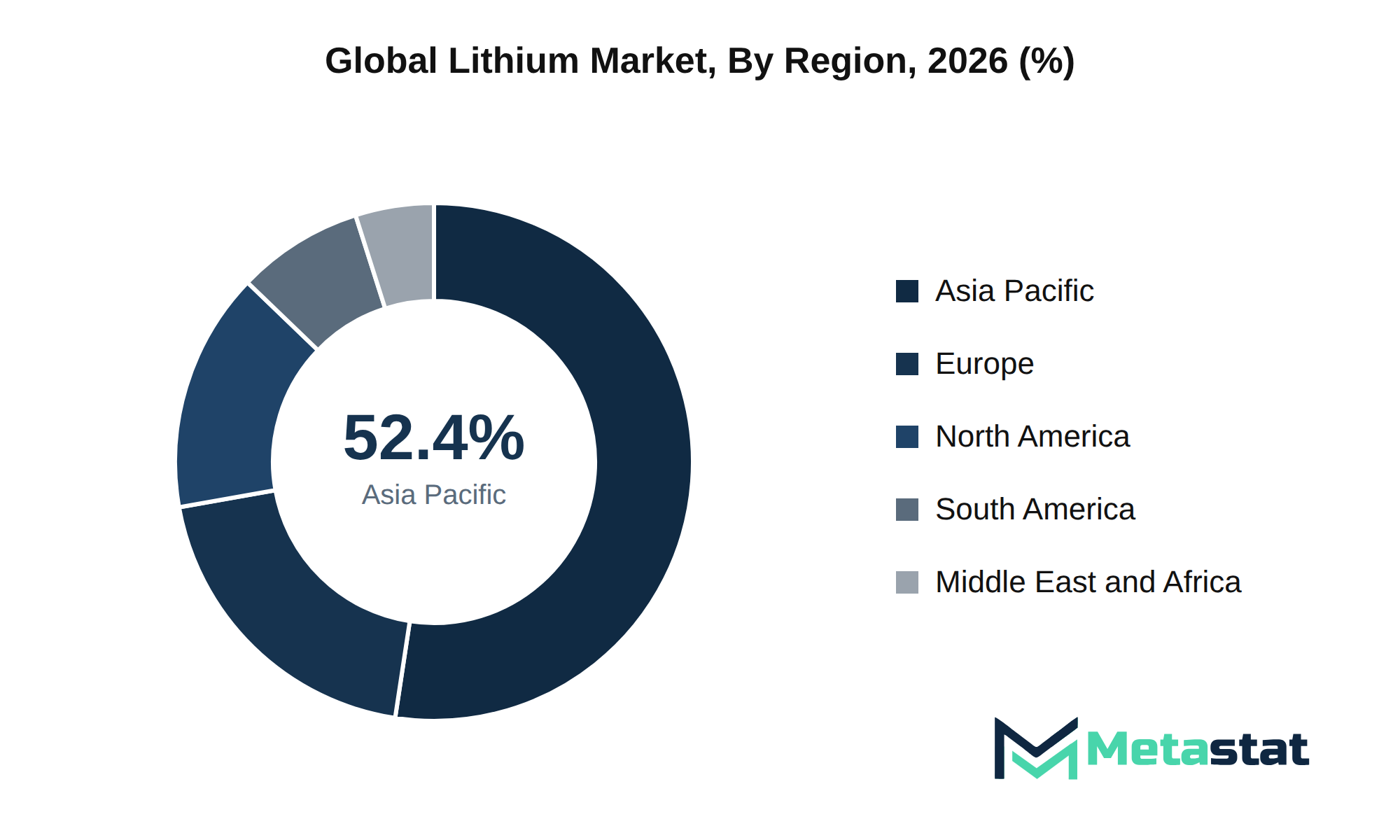
North America holds a share of the Lithium market, accounting for 15.0% of the global market in 2025. The region is set to expand at a CAGR of 14.9% within the forecast period, reaching a market size of USD 5.2 billion by the end of 2033. Primary demand drivers in North America include the increasing production of electric vehicles, which significantly boosts the need for lithium-ion batteries. Adoption rates remain strong, driven by manufacturers prioritizing lithium sourcing to meet escalating consumer demands for energy-efficient vehicles.
Infrastructure modernization is essential for the expansion of the Lithium market, particularly in the United States, Canada, and Mexico. Investments in local manufacturing capabilities, coupled with nearshoring initiatives, enhance the region's capacity to supply lithium products. This localized approach reduces dependency on imports while supporting domestic supply chains, which are vital for the market's growth.
Emerging market front-runners in North America leverage the region's rich lithium resource availability, particularly in hard-rock lithium ores. These resources contribute to enhancing supply chain resilience and support incremental growth vectors across various segments. The growing focus on sustainable energy sources increases interest in lithium applications, particularly for energy storage systems and electric vehicle batteries.
Geopolitical factors and regional compliance mandates significantly influence market dynamics. Domestic players proactively engage in vendor consolidation trends to strengthen competitive positioning. The strategic entry barriers, including regulatory frameworks and local compliance requirements, ensure that only well-prepared companies thrive in this evolving landscape.
The dynamics of procurement in North America reflect distinct cultural nuances and regional B2B buying behaviors. A focus on energy grid resiliency, combined with the readiness of local infrastructure, supports the integration of lithium solutions into various applications. While the market matures, high-value replacement cycles emerge, creating growth opportunities for established players while facilitating the entry of new participants.
The Lithium market in Europe demonstrates significant growth potential, driven by increasing investments in electric vehicle infrastructure and energy storage systems. Countries including Germany, France, and the UK lead in adopting lithium technologies due to stringent environmental regulations and ambitious sustainability goals.
Adoption rates in the region are expected to accelerate, supported by cross-border trade corridors that enhance supply chain efficiency. Local compliance mandates facilitate market entry for new players, creating a competitive landscape characterized by domestic market participants including Albemarle Corporation and SQM.
The region's resource availability, including hard-rock lithium ores and conventional brines, influences production capabilities, ensuring sufficient supply to meet demand. Growth vectors arise from localized manufacturing densities and nearshoring initiatives, creating opportunities for emerging companies to establish a foothold in the market.
While the market matures, high-value replacement cycles in applications including electric vehicle batteries and energy storage systems stimulate continued investment. The focus on infrastructure modernization supports the long-term sustainability of the Lithium market in Europe, ensuring resilience against global supply chain disruptions.
Asia Pacific dominates the global Lithium market, accounting for 52.4% of the share in 2025. Key players include China, Japan, India, South Korea, and Australia. The region exhibits substantial growth potential driven by increasing demand for Electric Vehicle Batteries and Energy Storage Systems. Emerging economies like India and Southeast Asia contribute to the expanding consumer base, highlighting significant opportunities for market penetration.
The region benefits from a robust supply chain characterized by localized manufacturing densities. This structure facilitates efficient production processes while aligning with rising energy grid resiliency and infrastructure modernization efforts. Geopolitical factors shape trade dynamics, influencing cross-border trade corridors and regional competitive landscapes.
Domestic market participants in Asia Pacific leverage resource availability and strategic entry barriers to enhance their market position. A focus on high-value replacement cycles and incremental growth vectors supports the development of new segments within the Lithium market. Cultural nuances and regional B2B buying behaviors influence procurement dynamics, creating unique opportunities for suppliers aiming to cater to the diverse needs of Asia Pacific’s customers.
South America represents a vital region in the Lithium market, holding a share of 7.9% in 2025. Brazil and Argentina lead the region in lithium production, supported by abundant natural resources. Geographical advantages in these countries enable efficient mining operations, significantly contributing to global supply. Rising demand for lithium is attributed to its applications in electric vehicle batteries and energy storage systems, sectors experiencing rapid growth.
Infrastructure modernization within South America enhances overall production capabilities. Investment in mining technologies and local manufacturing supports mining and extraction processes. The region's commitment to sustainable practices in lithium extraction aligns with global environmental initiatives, attracting foreign direct investment (FDI) and driving market growth. Cultural nuances in procurement dynamics influence regional buying behaviors.
Emerging market front-runners, particularly Brazil and Argentina, demonstrate robust potential for expansion. These countries benefit from favorable regulatory frameworks that encourage investment in lithium projects. Local compliance mandates drive adherence to environmental standards, promoting sustainable mining practices. While global demand for lithium persists, South America's strategic position within the market is projected for significant development over the forecast period.
The Lithium market in the Middle East and Africa presents unique dynamics influencing its growth trajectory. Countries including Saudi Arabia, UAE, and South Africa implement strategic initiatives aimed at enhancing local demand for lithium-related applications, particularly in electric vehicle batteries and energy storage systems. The region's focus on renewable energy adoption acts because a catalyst for increased lithium utilization, positioning it because a crucial resource for sustainability efforts.
Infrastructure modernization remains a key driver in the region, with investments directed toward enhancing energy grid resiliency and expanding local manufacturing capabilities. This modernization leads to improved supply chain efficiencies and promotes cross-border trade corridors, encouraging regional collaboration in lithium sourcing and production. Despite a lower overall market share of 4.9% in 2025, the region's growth potential arises from developing localized procurement dynamics, which support domestic market leaders in capitalizing on increasing demand.
Geopolitical considerations further shape the competitive landscape within the market, because regional players navigate trade policies and compliance mandates. The emergence of companies dedicated to lithium extraction, processing, and recycling indicates a commitment to tapping into underpenetrated territories. With strategic entry barriers in place, foreign direct investment flows are likely to enhance local capacities, creating competitive advantages for market participants.
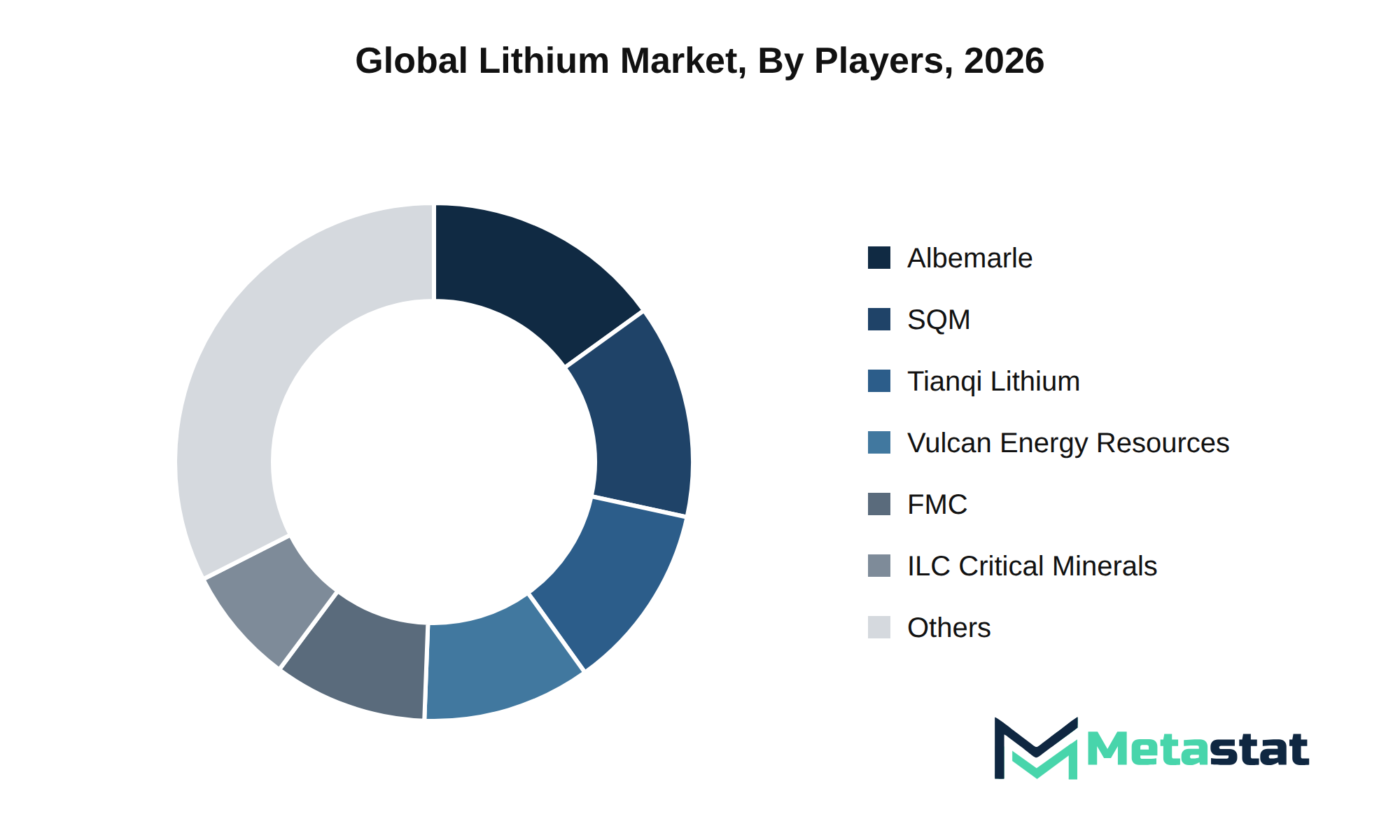
The Lithium market experiences significant competitive dynamics, driven by mergers, acquisitions, and strategic consolidations among key players. Companies including Albemarle Corporation and Ganfeng Lithium Group Co., Ltd focus on integrating their value chains to enhance procurement leverage and optimize supply chain efficiency. This strategic integration improves operational effectiveness and aids in responding to fluctuating market demands.
Product differentiation remains a critical aspect of competition in the market. Firms like SQM and Tianqi Lithium Co., Ltd concentrate on developing proprietary technologies and innovative product offerings to establish technological defensibility. R&D pipelines play a crucial role, with continuous investment in research enabling advancements in lithium extraction and processing methods.
Strategic alliances and joint ventures are prevalent, driven by companies collaborating to strengthen their market positions. For instance, collaborations among regional players enhance brand equity and customer retention strategies, facilitating entry into new markets while managing switching costs. The competitive outlook indicates that the market will continue to evolve through these strategic maneuvers, creating an environment where established firms and new entrants navigate the challenges posed by disruptive innovations.
Market size is forecast to rise from USD 11.8 billion in 2025 to over USD 35.8 billion by 2033. The base case reflects a growth trajectory at a 14.9% CAGR during this period, driven by increasing demand across various applications, particularly in electric vehicle batteries and energy storage systems. The anticipated structural consumption shifts arise from the ongoing transition towards renewable energy solutions and electric mobility, pushing demand for lithium products.
The bull case scenario suggests a more rapid uptake of next-generation technologies that integrate lithium more efficiently, potentially accelerating growth beyond current projections. In contrast, the bear case highlights potential regulatory challenges, geopolitical realignments, and supply chain disruptions that could hinder growth, leading to a less favorable market environment.
Strategic capital allocation and infrastructure commitments emerge due to essential factors influencing the market landscape. Companies that prioritize R&D and commercialization timelines stand to address unmet enterprise needs, opening high-growth pockets within the lithium market. Evolving trade corridors and regulatory evolutions will shape future compliance milestones and policy enforcement horizons, further impacting market dynamics.
While the market matures, ongoing assessments of executive-level strategic imperatives and defensibility roadmaps will become crucial for stakeholders aiming to sustain competitive advantages. Understanding market fluctuations and shifts in downstream demand will facilitate informed decision-making and strategic planning in a dynamic industry.
The report strategically identifies and profiles the key market players and analyses their core competencies in each sub-segment of the Lithium market.
Report Attributes | Details |
Study Period | 2021-2033 |
Base Year | 2025 |
Estimated Year | 2026 |
Forecast Period | 2026-2033 |
Historical Period | 2021-2025 |
Growth Rate | CAGR 14.9% from 2026 to 2033 |
Revenue Unit | USD billion |
Segmentation | By Product Type, Feedstock, Application, Value Chain Stage, and Region |
By Region | North America (By Product Type, Feedstock, Application, Value Chain Stage, and Country)
|
Europe (By Product Type, Feedstock, Application, Value Chain Stage, and Country)
| |
Asia Pacific (By Product Type, Feedstock, Application, Value Chain Stage, and Country)
| |
South America (By Product Type, Feedstock, Application, Value Chain Stage, and Country)
| |
Middle East and Africa (By Product Type, Feedstock, Application, Value Chain Stage, and Country)
|
Find answers to common questions about this report
The Lithium market size was valued at USD 11.8 billion in 2025.
The Lithium market is projected to grow at a CAGR of 14.9% during the forecast period from 2026 to 2033.
The North America Lithium market size is estimated to reach USD 5.2 billion by 2033.
Lithium Carbonate leads the Lithium market with a projected value of USD 14.1 billion by 2033, based on its significant demand in various applications. This segment's growth reflects a compound annual growth rate of 13.1 percent during the forecast period.
Increasing environmental awareness and stringent emission limits drive the Lithium market's growth. The shift towards electric vehicles and investment in sustainable technology enhance demand, while the focus on reducing carbon footprints encourages companies to prioritize sustainable lithium sourcing and processing. These factors create a favorable environment for market expansion.
Asia Pacific holds the dominant share of the Lithium market, accounting for 52.4% of the total market in 2025. This region's significant share reflects its extensive production capabilities and demand for Lithium applications.
Increasing regulatory challenges, macroeconomic headwinds, and supply chain disruptions significantly restrain Lithium market growth. Stringent environmental regulations raise operational costs, while inflationary pressures strain production budgets. geopolitical instability complicates supply chain logistics, leading to delays and increased prices for lithium resources.
Increasing environmental awareness and stringent emission limits favor product adoption in the Lithium market. The shift toward electric vehicles and investment in sustainable technology drives demand for lithium-based solutions, aligning with the focus on reducing carbon footprints across industries. This trend enhances the market's attractiveness and potential for growth.
The Lithium market is estimated to reach a valuation of USD 35.8 billion by 2033.
Top players operating in the Lithium market include Vulcan Energy Resources Limited, Albemarle Corporation, SQM, Tianqi Lithium Co. Ltd., FMC Corporation, and Ganfeng Lithium Group Co., Ltd.
The analysts below cover Chemicals and Materials research at Metastat Insights.
LEAD ANALYST
Utkarsh Khirodkar is a Lead Market Research Analyst at MetaStat Insight, specializing in market intelligence, technology sector assessments, and competitive strategy.

INDUSTRY CONSULTANT - CHEMICALS & ADVANCED MATERIALS
Chemicals and Materials · Machinery & Equipment · Packaging
Amit Gadhekar Consultant for Chemicals and Materials at MetaStat Insight, directing sector-specific intelligence, research, and strategic consulting across global chemical and processing markets.
Integrating zero-trust access controls across legacy electronic health record systems involves complex compliance overhead. Team produced an analysis that clearly separated identity governance and administration tools from privileged access management platforms. Their evaluation of HIPAA and GDPR compliance features across cloud native solutions gave our architecture group clear baseline criteria. The custom data request regarding biometric authentication adoption in hospital networks was returned promptly with clear documentation.
Evaluating calorific value requirements and air permit compliance across municipal waste facilities requires localized data. Metastat Insight structured their analysis around operational throughput capacity and feedstock composition variations in Latin America and Eastern Europe. Their competitive mapping of sorting equipment vendors helped clarify technology differences between optical separators and heavy media systems. The study provided an objective baseline during our capital expenditure reviews.
Decarbonizing industrial thermal processes hinges on refrigerant regulations and compressor efficiency limits. Metastat Insights delivered a thorough market analysis that evaluated natural refrigerants like CO2 and hydrocarbons against synthetic low-GWP alternatives. The breakdown of utility incentives and grid capacity constraints across key European manufacturing hubs offered valuable perspective. The follow-up conversation with their sector analysts addressed our specific questions on mechanical vapor recompression systems efficiently.
Explore related market intelligence reports worth reading alongside this one.