
LEAD ANALYST
Utkarsh Khirodkar is a Lead Market Research Analyst at MetaStat Insight, specializing in market intelligence, technology sector assessments, and competitive strategy.

Global Minerals & Mining Process Plants Market Size, Share, By Plant Type (Crushing, Screening and Material Handling Plants, Grinding and Classification Plants, Mineral Concentration and Beneficiation Plants, Coal Preparation Plants, Hydrometallurgical Processing Plants, Pyrometallurgical and Smelting Plants, Refining and Metal Recovery Plants, Tailings, Dewatering and Water Treatment Plants, Mineral Sands and Industrial Minerals Processing Plants), By Solution Type (Process Plant Engineering and Design, Process Equipment and Machinery, Process Automation and Control Systems, Electrical and Power Systems, Process Optimization and Digital Solutions, Plant Construction and EPC/EPCM Services, Operations, Maintenance and Lifecycle Services), By Project Lifecycle Stage (Conceptual Studies and Feasibility, FEED and Basic Engineering, Detailed Engineering and Design, Procurement and Equipment Supply, Construction and Installation, Commissioning and Start-up, Operations, Maintenance and Optimization, Brownfield Expansion and Retrofit), By Mineral (Iron Ore, Copper, Gold, Coal, Lithium, Nickel, Zinc and Lead, Rare Earth Elements, Mineral Sands, Other Minerals and Ores), Industry Analysis, Growth, Trends, and Forecast, 2026-2033
Report ID
MSI-5119
Published
September, 2026
Pages
282 Pages
Format
Historical
Base year
Forecast
Forecast period
Report Details
Choose Your License
Global Minerals & Mining Process Plants Market
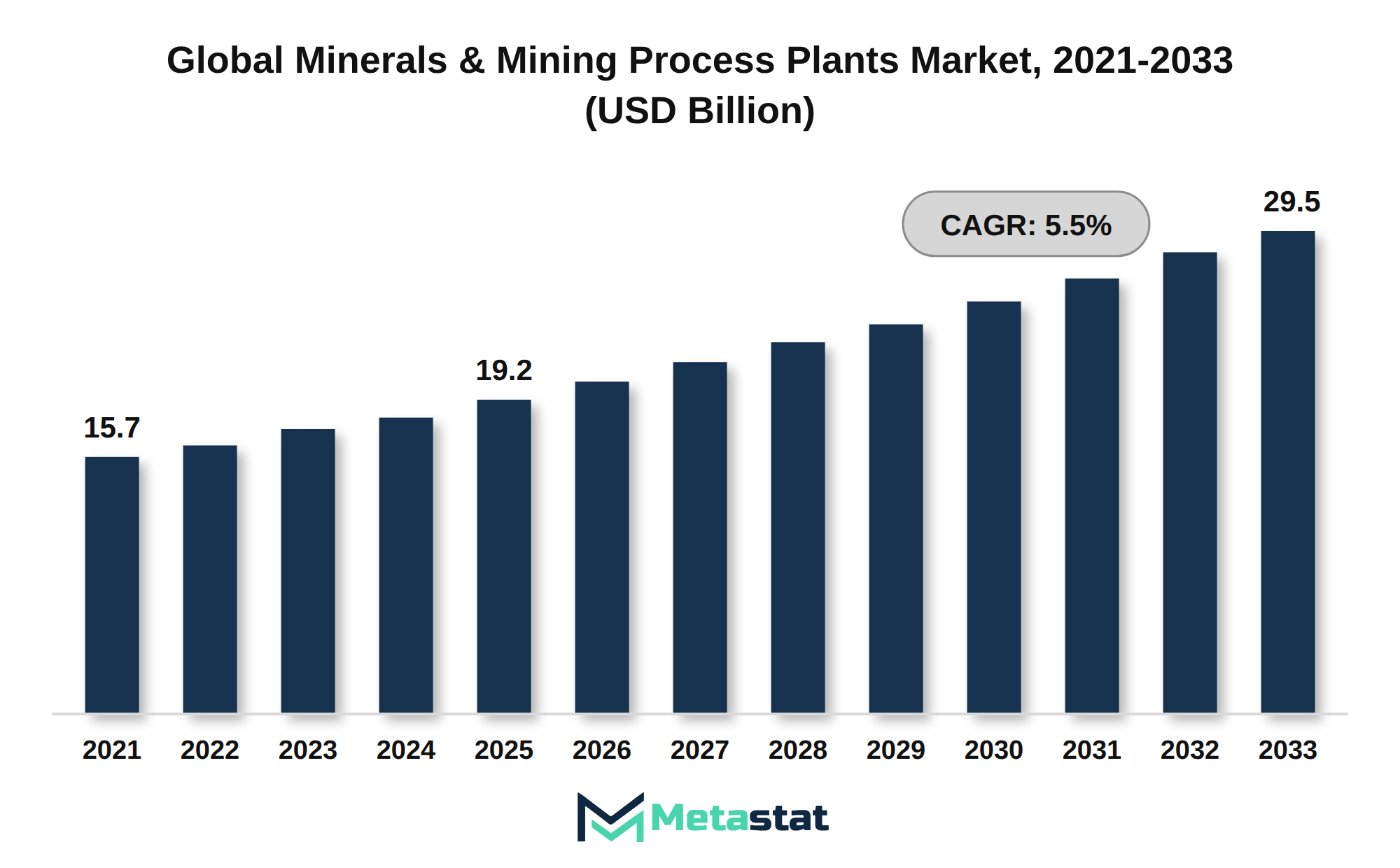
The global Minerals & Mining Process Plants market was valued at USD 19.2 billion in 2025 and is projected to reach USD 29.5 billion by 2033, growing at a CAGR of 5.5% over the forecast period.
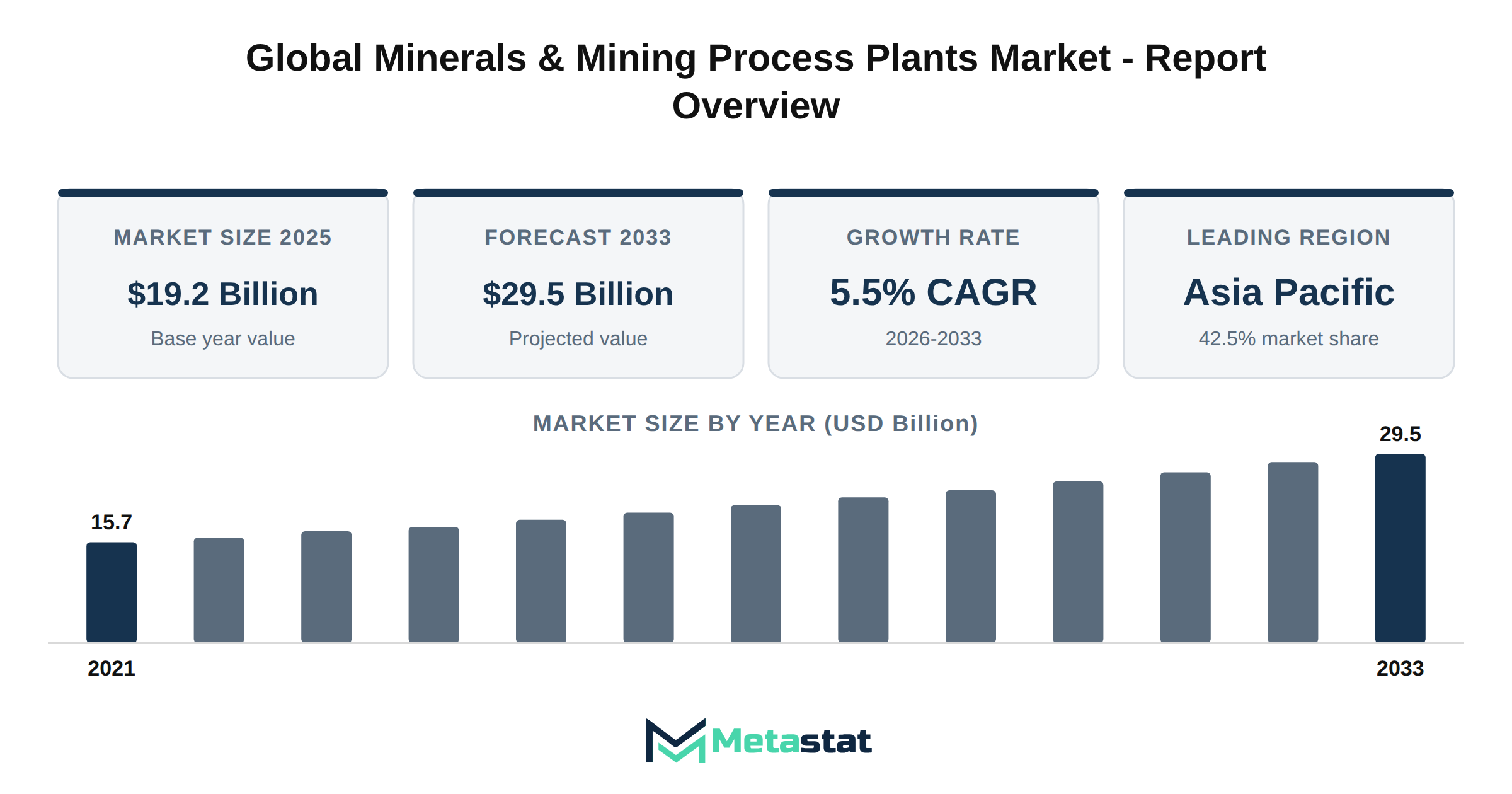
The Minerals & Mining Process Plants market reached a value of USD 19.2 billion in 2025, reflecting significant growth from USD 15.7 billion in 2021. With a compound annual growth rate (CAGR) of 5.5%, the market is projected to attain USD 29.5 billion by 2033. The robust expansion reflects increasing demand across several sectors, driven by advancements in technology and evolving consumer preferences.
Regional dynamics play a critical role in shaping market trends. The Asia Pacific region holds the largest share, accounting for 42.5% of the market. North America and Europe follow, comprising 22.7% and 17.6% respectively. These regions exhibit distinct characteristics influencing their growth trajectories. For instance, North America's focus on sustainable mining practices and regulatory compliance drives innovation in the sector. Meanwhile, Asia Pacific's rapid industrialization and urbanization drive demand for advanced mining processes.
Market participants engage in several segments, including plant type, solution type, and project lifecycle stage. Crushing, Screening & Material Handling Plants, for example, is anticipated to expand from USD 4.6 billion in 2026 to USD 6.3 billion by 2033, reflecting a CAGR of 4.6%. The growing need for efficient material handling solutions significantly influences this segment's growth. Similarly, the Process Equipment & Machinery segment is projected to reach USD 8.5 billion by 2033, highlighting the continuous investment in advanced machinery.
Key players in the Minerals & Mining Process Plants market, including Metso, Thyssenkrupp AG, and Sandvik AB, actively pursue strategic initiatives to enhance their market positions. These companies invest in research and development, focusing on next-generation innovations and sustainable transformation. Such investments align with the industry's shift toward decarbonization and circular economy dynamics, ensuring compliance with evolving regulatory frameworks.
The Minerals & Mining Process Plants market encounters significant influences from regulatory compliance and standards, which shape operational frameworks. Companies in the market adhere to various regulations focused on environmental sustainability and safety. These regulations ensure that operations comply with local and international standards, enhancing market stability.
Disruption remains a critical factor, particularly from advancements in technology and changes in consumer preferences. Companies invest in research and development trajectories to remain competitive, driving next-generation innovations that address evolving market demands. The emphasis on sustainable transformation drives the adoption of cleaner processes, aligning with global decarbonization efforts and circular economy dynamics.
The supply chain landscape is evolving, influenced by logistics architecture and sourcing strategies. Companies optimize their supply chains to improve efficiency and reduce costs, often leveraging local suppliers to minimize transportation expenses. Market fragmentation presents challenges and opportunities, leading to mergers and acquisitions that reshape competitive dynamics.
Value chain optimization becomes essential for companies seeking to enhance procurement strategies and improve customer journey dynamics. Effective capital allocation towards infrastructure investments supports growth and expansion in the market. This emphasis on strategic investments reflects a proactive approach to future challenges and opportunities, ensuring companies are well-prepared.
Corporate imperatives focus on aligning business strategies with high-value recommendations that drive long-term success. The Minerals & Mining Process Plants market is positioned for growth, driven by innovation and strategic alignment with industry trends. A robust understanding of market dynamics ensures that companies remain competitive and responsive to changing demands.
Increased capital investment in infrastructure development significantly influences the Minerals & Mining Process Plants market. Economic growth drives higher levels of private and public spending, leading to enhanced funding for mining projects and related processes. Nations investing in infrastructure upgrades create favorable conditions for the installation and modernization of mining process plants. This trend enables mining companies to enhance operational efficiency, improve output, and reduce production costs.
The availability of venture funding supports innovation and technological advancements within the market. Investors recognize the importance of integrating automation, artificial intelligence, and digital solutions to optimize production processes. By adopting advanced technologies, mining companies enhance their competitiveness and operational productivity while responding to evolving market demands. This focus on technological integration ensures that capital investments yield substantial returns.
Overall, the strong capital investment environment, driven by economic growth and technological adoption, advances the Minerals & Mining Process Plants market. This dynamic creates an environment conducive to growth, attracting new players and encouraging existing companies to expand operations.
Digital transformation drives the Minerals & Mining Process Plants market. The integration of advanced technologies, including automation and artificial intelligence, streamlines operations and enhances productivity across various stages of mineral processing. Digitizing legacy processes enables companies to achieve significant cost reductions and optimize resource allocation, leading to improved margins and operational efficacy.
Incorporating digital tools enables data-driven decision-making, allowing firms to respond swiftly to market fluctuations and operational demands. Enhanced analytics capabilities facilitate real-time monitoring and predictive maintenance, which minimizes downtime and extends equipment lifespan. This technological shift encourages investment in innovative solutions, contributing to overall market growth.
Digital transformation supports sustainability initiatives by facilitating resource stewardship and lowering carbon footprints. Companies increasingly adopt practices aligned with environmental, social, and governance (ESG) mandates, enhancing competitive positions. The focus on sustainable operations aligns with evolving consumer behaviors and demographic patterns, ensuring that the market meets contemporary expectations.
Overall, the ongoing digital transformation within the Minerals & Mining Process Plants market positions firms to capitalize on new opportunities while addressing operational challenges. The shift toward automation and advanced analytics signifies a significant movement toward more efficient, responsive, and sustainable mining processes.
The Minerals & Mining Process Plants market faces considerable challenges stemming from regulatory tightening and compliance hurdles. Strict environmental regulations increase operational complexity for companies, requiring extensive investments in technology and processes to comply with evolving legal mandates. These requirements often lead to delays in project approvals and significantly slow the pace of new developments.
Macroeconomic headwinds, including inflationary pressures and stagnant capital investment, further restrict market growth. Rising costs for materials and labor impact project feasibility, making it difficult for many companies to maintain or expand operations. These financial constraints hinder investment in new technologies that enhance productivity and efficiency, resulting in technological obsolescence.
Supply chain disruptions caused by geopolitical instability contribute to resource scarcity, affecting the availability of critical inputs required for the operation of process plants. With increasing competition for limited resources, companies in the Minerals & Mining Process Plants market confront heightened operational costs, straining profitability.
Infrastructure gaps and connectivity deficits in various regions impede the timely deployment of new plants and technologies. These factors create bottlenecks, delaying project timelines and exacerbating market fragmentation. Inadequate skilled labor availability and rising workforce overhead pose additional challenges, limiting operational effectiveness and increasing overall costs.
Consequently, the Minerals & Mining Process Plants market experiences pressures that restrict growth potential. Regulatory challenges, economic factors, and workforce issues create a complex environment that companies navigate to sustain operations and achieve long-term success.
Geopolitical fragmentation presents a key challenge for the Minerals & Mining Process Plants market, leading to disruptions in supply chains and increased trade deficits. This fragmentation complicates international trade relationships, resulting in tariff friction that raises costs for producers and limits access to critical materials. Countries imposing tariffs on imported machinery and raw materials create uncertainty, impacting project timelines and expected returns on investment.
Technological disruptions further exacerbate this challenge. Rapid advancements in mining technologies require significant investments in research and development. The integration of new technologies often encounters interoperability friction, making it difficult for companies to upgrade existing systems without incurring substantial costs. Volatility in feedstock and component availability pressures manufacturers to adapt quickly to changing market conditions while maintaining operational efficiency.
Logistics disruptions contribute to supply chain instability in the market, complicating the timely delivery of materials and equipment. Transportation bottlenecks and rising logistics costs delay project completion, affecting overall profitability. Tightening global regulatory standards increase compliance overhead, requiring firms to invest in sustainability measures that align with evolving legal liabilities.
Pricing compression and margin pressures challenge the financial stability of participants in the market. Rising input costs and skill gaps in the workforce result in talent retention pressures that strain operational capabilities. These factors collectively hinder growth, making it imperative for firms to navigate the complexities of the current market environment effectively.
Rising demand in emerging economies significantly influences the Minerals & Mining Process Plants market. Countries in Asia Pacific, particularly China and India, demonstrate increasing investments in infrastructure projects, enhancing mineral extraction and processing capabilities. This trend generates opportunities for market participants to establish operations in these regions, aligning with local economic growth and resource requirements.
Infrastructure modernization initiatives across various regions further stimulate market dynamics. Countries prioritize investments in state-of-the-art mining technologies, improving operational efficiency and reducing environmental impacts. Such advancements encourage suppliers to innovate their product offerings, focusing on process equipment and automation solutions tailored for evolving market needs.
Technological disruptions, including advancements in digital procurement and operational automation, reshape traditional business models within the market. Adoption of digital solutions enhances project lifecycle management, facilitating integration of processes and improving decision-making efficiency. This shift creates opportunities for suppliers to provide scalable solutions that accommodate the diverse needs of clients across different project stages.
Sustainability imperatives drive firms toward eco-friendly practices and compliance with environmental standards. Market participants align their strategies with these demands by investing in greener technologies and sustainable practices. This shift not only addresses environmental concerns but meets the expectations of increasingly eco-conscious consumers, enhancing market competitiveness.
Strategic consolidation and cross-industry mergers present additional opportunities for growth within the Minerals & Mining Process Plants market. Collaborations between firms enable resource sharing, knowledge exchange, and enhanced capabilities, creating a stronger competitive position in the market. Such partnerships encourage innovation and expand product portfolios, catering to niche applications and diverse client requirements.
The Global Minerals & Mining Process Plants market is segmented based on Plant Type, Solution Type, Project Lifecycle Stage, and Mineral.
Crushing, Screening & Material Handling Plants segment is valued at USD 4.6 billion in 2026 and is projected to reach USD 6.3 billion by 2033, at a CAGR of 4.6% during the forecast period. High demand for efficient material handling solutions drives market growth, particularly in sectors including construction and mining, where the need for effective resource management remains critical. The segment benefits from advancements in automation and technology, enhancing operational efficiency and reducing labor costs. Innovations in product design contribute to improved performance and sustainability, aligning with global environmental regulations and increasing consumer awareness regarding responsible sourcing. Competition among key players encourages continuous improvements and product evolution, further stimulating investment in this segment. The integration of smart technologies within the Minerals & Mining Process Plants market provides strategic opportunities for players focused on innovation and value-added solutions.
Investment in efficient and automated systems drives demand for Grinding & Classification Plants within the Minerals & Mining Process Plants market. These plants play a critical role in the processing of minerals, ensuring that raw materials are effectively separated and classified to meet industry specifications. Increasing mineral extraction activities, particularly in developing regions, prompt further investment in advanced grinding technologies, enhancing operational efficiency and productivity.
Regulatory compliance and environmental standards heighten the focus on sustainable practices, fueling the adoption of innovative technologies in the segment. The shift towards environmentally friendly solutions necessitates upgrades to existing systems, boosting the market's growth potential. In addition, the trend towards digitalization in mining operations influences the segment, with automation and control systems increasingly integrated into plant design and operation.
The Grinding & Classification Plants segment is projected to reach USD 4.9 billion by 2033, at a CAGR of 5.3% during the forecast period. The demand for high-quality processed minerals, particularly in construction and manufacturing sectors, supports the segment's expansion. Players invest in research and development for next-generation technologies, positioning the market for sustained growth.
Growth within the Mineral Concentration & Beneficiation Plants segment arises from increasing global demand for efficient extraction processes. Industries focused on mining and resource recovery prioritize these plants to enhance output and reduce waste. Enhanced technologies including advanced separation techniques contribute to improved recovery rates, aligning production with sustainability goals and regulatory compliance.
Investment in this segment is projected to reach USD 4.7 billion by 2033. The shift toward automation and real-time analytics in processing plants ensures optimized operations and reduces labor costs. This evolution supports the economic viability of projects, particularly in resource-rich regions.
The Minerals & Mining Process Plants market reflects a strategic response to fluctuating commodity prices and environmental standards. Companies involved in this segment benefit from aligning their operations with technological advancements and regulatory requirements, resulting in improved efficiencies and competitive positioning.
Growth within the Coal Preparation Plants segment arises from increasing demand for efficient coal processing technologies. Technological advancements enhance the ability to prepare coal for industrial applications, driving investments in these processes. Companies specializing in coal preparation optimize operations, leading to improved yield and reduced environmental impact.
Regulatory compliance influences the adoption of modernized coal preparation systems. Stricter environmental standards impose costs on traditional methods, prompting operators to invest in advanced solutions. This shift towards sustainable practices aligns with broader industry trends focusing on greener operations.
The Coal Preparation Plants segment is projected to grow at a CAGR of 2.9% during the forecast period. Market players experience pricing volatility, affecting margins and overall profitability. Fluctuations in raw material costs create challenges for operators, leading to strategic sourcing and efficiency enhancements.
Increasing competition within the market motivates ongoing innovation and product evolution. Companies invest in next-generation technologies, emphasizing automation and digital controls to streamline processes. This evolution positions the market for sustained growth, with operators adopting more sophisticated coal preparation methodologies.
Growing environmental awareness drives adoption of hydrometallurgical processing techniques within the Minerals & Mining Process Plants market. This segment features processes that enhance metal recovery and minimize environmental impact compared to traditional methods. Regulations emphasizing sustainable practices encourage investments in advanced hydrometallurgical technologies, promoting their integration into mining operations.
Technological maturation further supports segment expansion. Continuous advancements in extraction and refining processes enhance efficiency and reduce costs, allowing firms to optimize resource recovery. Innovations in automation and process control systems support operational efficiency and compliance with stringent environmental regulations, contributing to the segment's growth trajectory.
End-use dynamics indicate increased demand for metals, particularly in high-tech industries and renewable energy sectors. The growing focus on electric vehicles and energy storage systems intensifies the need for metals processed through hydrometallurgical methods. This growing demand creates strategic opportunity windows for investment in next-generation upgrades and product evolution.
Supply chain resilience remains vital in the hydrometallurgical processing plants segment, with raw material sourcing becoming critical to ensure consistent production. Disruptive alternatives pose a challenge, necessitating continuous evaluation of emerging technologies and practices. Firms actively explore innovative solutions to mitigate substitution risks and maintain competitive advantages in the market.
The hydrometallurgical processing segment benefits from favorable capital investment outlooks, driven by projected increases in metal prices and consumption shifts. This positive outlook incentivizes stakeholders to enhance operational capacities and adapt to evolving market conditions, reinforcing the segment's role in the broader Minerals & Mining Process Plants market.
Significant demand for Pyrometallurgical & Smelting Plants emerges from the need for efficient metal recovery processes across various industries. Increased focus on resource efficiency drives organizations to invest in advanced smelting technologies aimed at enhancing recovery rates and reducing waste. The ongoing emphasis on sustainability and environmental compliance accelerates the adoption of these plants, driven by companies seeking to minimize their environmental footprint while maximizing production outputs.
Investment in next-generation upgrades within the segment evolves rapidly, incorporating innovative technologies that streamline operations. Enhanced process automation and control systems become key factors in optimizing plant performance, resulting in reduced operational costs and improved safety standards. Market players observe an uptick in demand for integrated systems that facilitate real-time monitoring and data analytics. This capability enables more informed decision-making during production cycles.
Downstream applications across various industries including automotive, construction, and electronics increasingly rely on the capabilities of pyrometallurgical processes. The shift towards electric vehicles and renewable energy technologies directly influences demand for metals, driving further growth in the market. Increased consumption of copper, lithium, and nickel in battery production highlights the need for efficient smelting solutions to support these evolving industry dynamics.
Regulatory compliance plays a significant role in shaping the landscape for Pyrometallurgical & Smelting Plants. Stricter environmental regulations demand adherence to emissions standards, prompting firms to invest in technologies that ensure compliance. The evolving policy environment introduces complexities but creates strategic opportunity windows for players who innovate ahead of regulatory trends.
Price volatility in raw materials impacts cost structures and margin pressures, making efficient operations imperative for profitability. Players adapt to fluctuating market conditions while maintaining competitiveness through supply chain resilience and effective raw material sourcing strategies. The market outlook suggests a robust capital investment trajectory, driven by ongoing technological maturation and the need for enhanced operational efficiencies within the segment.
Investment in refining and metal recovery processes remains critical for the Minerals & Mining Process Plants market. Stakeholders increasingly focus on sustainable practices, leading to higher demand for advanced technologies that enhance recovery rates and reduce waste. Regulatory compliance standards drive adoption of these technologies, because companies seek certifications that demonstrate commitment to environmental stewardship and operational efficiency.
Technological maturation within this segment drives innovation in refining processes, enabling facilities to achieve greater efficiency through automation and digital solutions. End-use dynamics reflect a shift towards higher quality outputs, necessitating upgrades to existing infrastructure. Consumption shifts towards recycled materials further influence the market, aligning with global sustainability goals and reducing dependency on virgin resources.
Cost structures in refining and metal recovery plants face pressures from fluctuating raw material prices and the need for continuous investment in technology to maintain competitive advantages. Pricing volatility impacts operational margins, compelling businesses to seek strategic partnerships and diversify supply chains. The evolution of disruptive alternatives and substitution risks necessitates vigilance among market participants to adapt to changing consumer preferences and regulatory landscapes.
Strategic opportunity windows arise from the increasing demand for critical minerals, positioning refining and metal recovery because essential components of the supply chain. Investments in next-generation upgrades enhance resilience against market fluctuations, while white-space analysis identifies potential growth areas for companies looking to expand their service offerings. Capital investment outlooks remain positive, with significant funding directed towards improving efficiency and sustainability within refining and metal recovery operations.
Growing environmental regulations and sustainability goals drive interest in Tailings, Dewatering & Water Treatment Plants within the Minerals & Mining Process Plants market. Enhanced focus on minimizing ecological impact encourages mining companies to adopt advanced treatment solutions for waste products. Investments in innovative technologies streamline water treatment processes, resulting in efficient recovery and reuse of resources. This trend aligns with industry commitments to reduce water usage and comply with stringent environmental standards.
The increasing complexity of mining operations heightens the demand for sophisticated treatment facilities. Mining companies prioritize effective tailings management to mitigate risks associated with waste storage and potential pollution. The adoption of next-generation technologies, including automated monitoring and control systems, supports operational efficiency and regulatory compliance. While the market expands, partnerships with technology providers are likely to enable the development of advanced solutions tailored to specific mining needs.
Investors show growing interest in companies offering Tailings, Dewatering & Water Treatment Plants, recognizing their role in enhancing operational sustainability. Enhanced focus on technological advancements facilitates product evolution, which addresses the unique challenges faced by different mining segments. Research and development efforts concentrate on creating more efficient systems that meet current needs and anticipate future regulatory frameworks. This proactive approach positions key players competitively within the evolving environment of the Minerals & Mining Process Plants market.
Investment in the Minerals & Mining Process Plants market benefits from the robust demand for mineral sands and industrial minerals processing. Growing applications across various industries, including construction, electronics, and renewable energy, drive this demand. Advancements in processing technologies support the effective extraction and utilization of these minerals, enhancing operational efficiency and product quality.
Regulatory compliance emphasizes the importance of environmentally responsible practices in mineral extraction and processing. Manufacturers focus on sustainable practices to align with emerging regulations, thus supporting market growth. The emphasis on sustainability influences investments in next-generation upgrades and innovations within processing plants.
Price volatility remains a critical factor affecting production costs. Fluctuations in raw material prices impact operational margins, requiring companies to implement effective cost management strategies. Strengthening supply chain resilience enhances market participants' ability to navigate material sourcing challenges while maintaining production efficiency.
Strategic opportunity windows arise from shifting consumption patterns and growing demand for high-quality industrial minerals. Market players actively explore white-space analysis to identify untapped markets and niches, focusing on enhancing product offerings and expanding service capabilities. These initiatives contribute to a competitive landscape characterized by continuous evolution and adaptation to market dynamics, driving innovation and investment in the sector.
Valued at USD 3.1 billion in 2026, the Process Plant Engineering & Design segment is projected to reach USD 4.4 billion by 2033, at a CAGR of 5.3% during the forecast period. This segment experiences growth driven by increasing regulatory compliance standards and the technological maturation of engineering practices. Enhanced focus on efficiency and productivity leads to the adoption of advanced engineering solutions across various projects in the Minerals & Mining Process Plants market.
Investment in next-generation upgrades enhances operational capabilities, supporting the demand for innovative designs and engineering methodologies. Increased integration of digital technologies into engineering processes strengthens project execution and reduces costs associated with design inefficiencies. This trend signifies a shift towards more sustainable practices within the market, resulting from stakeholders prioritizing environmentally friendly solutions alongside traditional operational goals.
End-use dynamics within the segment reflect a growing emphasis on tailored solutions that meet specific project requirements. This approach encourages deeper collaboration between engineering firms and mining operators, ultimately driving demand for specialized design services. The competitive landscape highlights several players focusing on delivering customized engineering solutions, ensuring that they remain relevant amid changing market needs.
Consumption shifts towards more efficient and sustainable practices in the Minerals & Mining Process Plants market underline the importance of innovation within engineering and design. Regulatory headwinds motivate stakeholders to adopt compliance-driven approaches, which contribute to the segment's growth. Capital investments in advanced engineering solutions provide strategic opportunities for growth, enabling companies to align their services with evolving market demands.
Rapid advancements in technology drive demand for Process Equipment & Machinery within the Minerals & Mining Process Plants market. Innovations in automation and machine efficiency enhance operational productivity, attracting investments from mining companies focusing on cost reduction and performance optimization. The increasing complexity of mineral processing operations requires sophisticated machinery, pushing manufacturers to develop next-generation products that offer higher reliability and lower operating costs.
Regulatory compliance standards significantly influence the market dynamics, resulting from companies investing in advanced equipment to meet stringent environmental regulations. This trend leads to a surge in demand for energy-efficient and environmentally friendly machinery. Fluctuating raw material costs and pricing volatility compel operators to seek more efficient processing solutions, further accelerating the adoption of advanced equipment and technologies.
Process Equipment & Machinery segment is estimated to reach USD 8.5 billion by 2033, at a CAGR of 5% during the forecast period. This growth presents strategic opportunities for stakeholders looking to expand their market presence, particularly in regions with rising mineral demand. Companies that drive innovation and maintain robust supply chain practices will likely gain a competitive edge, enabling them to navigate market challenges effectively.
Investment in Process Automation & Control Systems drives operational efficiency and enhances productivity within the Minerals & Mining Process Plants market. Technological advancements, including the integration of artificial intelligence and machine learning, support the optimization of processes, minimizing downtime and improving resource management. Regulatory compliance standards prompt operators to adopt these systems, ensuring safe and efficient operations while adhering to environmental guidelines.
End-user dynamics reflect a growing need for real-time data analytics and reporting capabilities, which facilitate better decision-making and resource allocation. The demand for Process Automation & Control Systems stems from various sectors within the minerals and mining industry, including iron ore, copper, and gold production, strengthening the market's overall growth trajectory. By 2033, the segment is expected to reach USD 3.9 billion, reflecting a robust adoption of automation technologies across different phases of mining operations.
Strategic investment opportunities arise from the ongoing digital transformation within the sector, with a shift towards more automated solutions. The market's emphasis on efficiency, sustainability, and compliance creates an environment conducive to innovation and technological maturation, ultimately positioning Process Automation & Control Systems because a vital component in the evolution of the Minerals & Mining Process Plants market.
Increasing investments in electrical and power systems support demand within the Minerals & Mining Process Plants market. These systems facilitate efficient energy use, helping operators improve productivity and reduce operational costs. Technological maturation and advancements in automation enhance the effectiveness of electrical and power systems, promoting adoption across various mining operations.
Significant growth in this segment is projected, with a CAGR of 4% during the forecast period. Enhanced focus on sustainability and regulatory compliance shapes market dynamics. Companies prioritize energy-efficient solutions, aligning with global initiatives aimed at reducing carbon footprints and enhancing operational efficiency.
The need for reliable and scalable electrical and power systems becomes critical for processing plants amid rising energy costs and operational pressures. Integration of digital solutions enhances monitoring and control capabilities, providing operators with real-time data to optimize performance and manage resources effectively. This evolution creates strategic opportunities for suppliers to innovate and capture market share.
Overall, the electrical and power systems segment is essential in supporting the broader objectives of the Minerals & Mining Process Plants market, driving sustainable growth and efficiency across operations.
Growing interest in Process Optimization & Digital Solutions reflects the increasing need for enhanced operational efficiency and data-driven decision-making within the Minerals & Mining Process Plants market. Organizations are implementing advanced technologies to streamline processes and optimize resources, leading to significant improvements in productivity and cost-effectiveness.
Technological maturation in this sector drives innovation through the introduction of next-generation upgrades and digital solutions. Adoption of digital twins, predictive analytics, and real-time monitoring systems enables companies to make informed decisions, resulting in lower operational risks and improved performance metrics.
Demand for these solutions stems from shifts in end-use dynamics, particularly within industries focused on sustainability and environmental compliance. Regulatory compliance standards push organizations to embrace more efficient processes, making investments in digital solutions a strategic priority. This emphasis on regulatory adherence creates a landscape where companies actively pursue certifications that validate their commitment to operational excellence.
Cost structures associated with traditional mining processes face significant pressures due to fluctuating commodity prices and rising operational expenses. In response, organizations increasingly invest in Process Optimization & Digital Solutions to mitigate pricing volatility and enhance margins. Such investments improve supply chain resilience and efficiency while addressing challenges related to raw material sourcing and logistics vulnerabilities.
The Minerals & Mining Process Plants market sees strategic opportunity windows emerging because companies recognize the potential for disruptive alternatives that enhance operational capabilities. By embracing innovative technologies and solutions, organizations position themselves to capitalize on white-space opportunities, ultimately driving revenue growth and creating a competitive advantage in the evolving marketplace.
Demand for Plant Construction & EPC/EPCM Services within the Minerals & Mining Process Plants market arises from increasing project complexities and the need for specialized expertise in plant design and construction. Industry players seek reliable partners to navigate regulatory frameworks and achieve compliance with environmental standards, ensuring projects adhere to safety and quality benchmarks.
Technological maturation influences the segment, with advancements in digital solutions and process optimization enhancing project execution efficiency. Integration of next-generation technologies allows for improved accuracy in project planning and execution, contributing to cost management and resource optimization.
Downstream applications in various mining sectors drive the relevance of this segment. While mining operations expand, demands for efficient and sustainable construction practices push suppliers to adopt innovative approaches and materials. Increased focus on sustainability further increases the need for EPC/EPCM services tailored to environmentally friendly practices.
Cost structures and pricing volatility impact operational strategies. Fluctuations in raw material prices challenge margin stability, prompting firms to develop robust supply chain resilience. Strategic opportunity windows emerge for companies that invest in adaptive capabilities and advanced project management techniques, enabling agile responses to market dynamics.
Investment outlooks indicate a steady increase in capital allocation toward EPC/EPCM services. Mining companies recognize the importance of efficient project execution, and partnerships with experienced service providers enhance prospects for growth within the market. Continuous advancements in technology and service offerings drive competitive differentiation, shaping the future of the Minerals & Mining Process Plants market.
Increasing focus on sustainability and operational efficiency drives demand for Operations, Maintenance & Lifecycle Services within the Minerals & Mining Process Plants market. Companies prioritize these services to enhance equipment reliability, reduce downtime, and optimize resource consumption. Adoption of advanced technologies strengthens service offerings, allowing providers to deliver more comprehensive solutions tailored to specific client requirements.
Regulatory compliance plays an important role in shaping the landscape for Operations, Maintenance & Lifecycle Services. Stricter environmental regulations compel operators to invest in efficient maintenance practices and lifecycle management to minimize environmental impact. This landscape creates strategic opportunities for service providers equipped to navigate complex compliance requirements.
Technological advancements support the evolution of service capabilities. Incorporating predictive maintenance and automation enhances operational excellence and improves system performance. This technological maturation allows clients to focus on core operations while leveraging specialized expertise in maintenance and lifecycle management.
Cost structures within the market require careful management. Fluctuations in service pricing, driven by labor costs and material sourcing, challenge profitability. Service providers continuously seek to optimize costs while delivering high-value services to maintain competitive positioning.
Strategic investments in Operations, Maintenance & Lifecycle Services are critical for achieving long-term growth in the Minerals & Mining Process Plants market. The emphasis on lifecycle management and efficient operations enhances the overall value proposition for clients, ensuring sustainable profitability.
Valued at USD 1.8 billion in 2026, the Conceptual Studies & Feasibility segment is projected to reach USD 2.1 billion by 2033, at a CAGR of 2.9% during the forecast period. Demand for this segment derives primarily from the necessity for thorough project evaluations and risk assessments prior to significant capital investments in the Minerals & Mining Process Plants market. Early-stage analysis enhances decision-making and reduces uncertainties, particularly in volatile markets characterized by fluctuating commodity prices and geopolitical factors.
Growing regulatory compliance standards and environmental considerations necessitate comprehensive feasibility studies that assess sustainability practices and community impacts. This trend highlights the importance of integrating innovative solutions and advanced technologies during the conceptual phase. Companies increasingly favor next-generation analytical tools that facilitate accurate predictions and efficiency improvements in project lifecycles.
Investment in conceptual studies and feasibility assessments establishes a foundation for downstream applications, ultimately enhancing operational performance and profitability for stakeholders. Evolving market dynamics and shifting consumption patterns further increase the need for detailed analysis, driving segment growth within the broader Minerals & Mining Process Plants market.
Demand for the FEED & Basic Engineering segment in the Minerals & Mining Process Plants market stems from the increasing complexity of mining projects and the need for comprehensive planning and design solutions. Companies prioritize feasibility studies and engineering design services to mitigate risks associated with project execution. This focus on thorough engineering analysis ensures projects align with regulatory standards and operational efficiency, enhancing investor confidence and driving capital allocation.
Technological advancements contribute significantly to segment growth. Innovative engineering practices streamline processes and reduce time-to-market for new mining projects. The integration of digital solutions supports better data management, analysis, and project monitoring, allowing companies to optimize performance throughout the project lifecycle. This evolution in engineering practices attracts investments and encourages further development in the sector.
Competition within the market influences pricing dynamics and service offerings. Firms differentiate themselves by providing tailored engineering solutions that cater to specific project requirements. This competitive landscape encourages continuous improvement and innovation in engineering methodologies, enhancing overall project outcomes. The FEED & Basic Engineering segment is projected to reach USD 2.4 billion by 2033, at a CAGR of 5.8% during the forecast period.
Regulatory compliance remains a critical factor, with companies increasingly adopting engineering practices that meet local and international standards. This compliance minimizes the risk of project delays and penalties, ensuring a smoother operational trajectory. The emphasis on regulatory adherence drives demand for specialized engineering services, reinforcing the importance of the FEED & Basic Engineering segment in the overall Minerals & Mining Process Plants market.
Strong demand for the Detailed Engineering & Design segment stems from the increasing complexity of mining projects and the need for precision in project execution. Clients seek tailored engineering solutions to enhance efficiency and reduce operational risks. Regulatory compliance and sustainability standards influence project designs, necessitating sophisticated engineering practices to ensure adherence to environmental guidelines. Growth in capital investments across the Minerals & Mining Process Plants market fuels demand, with industry players focusing on innovative design methodologies and advanced simulation techniques.
Technological advancements have driven the evolution of engineering practices within the segment. Automation and digital tools enhance project accuracy and reduce lead times, positioning companies to respond effectively to dynamic market conditions. The Detailed Engineering & Design segment is projected to reach USD 3.5 billion by 2033. While stakeholders pursue optimal resource utilization and cost-effectiveness, investments in this area remain a priority.
Competition among engineering firms intensifies, with organizations leveraging strategic partnerships to expand their service offerings and enhance project capabilities. The pursuit of operational excellence and risk mitigation shapes demand dynamics, prompting firms to innovate continually. These trends signify a robust outlook for the segment, aligned with the broader growth trajectory of the Minerals & Mining Process Plants market.
Anticipated growth in the Procurement & Equipment Supply segment aligns with rising activities in the Minerals & Mining Process Plants market. This segment is projected to grow at a CAGR of 5.2% during the forecast period, driven by increased demand for efficiency and reliability in mining operations. Investment in advanced equipment and technologies fuels expansion, driven by firms seeking to enhance productivity while minimizing operational risks.
Technological maturation plays an important role in shaping procurement strategies. The integration of digital solutions, automation, and advanced machinery raises the standards for procurement processes, enabling suppliers to offer more sophisticated equipment. These advancements enhance competitiveness in the market, attracting investments from various sectors.
Downstream applications of mined materials influence the Procurement & Equipment Supply segment significantly. Industries focused on construction, energy, and manufacturing depend on reliable procurement to ensure uninterrupted supply chains and operational continuity. This dynamic creates a collaborative environment among suppliers and buyers, ultimately driving growth in the market.
Regulatory compliance standards mandate responsible sourcing and sustainable practices, compelling firms to adapt their procurement strategies. Suppliers responding to these challenges establish credibility and strengthen their market positioning. These efforts lead to increased capital investments, further enhancing the segment's overall performance.
Growing global demand for efficient construction and installation practices within the Minerals & Mining Process Plants market drives significant interest in this segment. Factors influencing adoption include increasing project complexity, regulatory compliance requirements, and a focus on sustainable development practices. Enhanced collaboration between stakeholders in the construction and installation phases ensures streamlined project execution and risk mitigation, benefiting both operators and contractors.
Technological maturation significantly influences the progress of construction and installation services. Advanced methodologies, including modular construction and digital twin technologies, facilitate improved accuracy and speed in project delivery. Adoption of innovative solutions optimizes resource allocation and enhances overall project performance, increasing demand for specialized services in the market.
Regulatory compliance standards continue to shape operations in this segment, compelling companies to prioritize adherence to safety and environmental regulations during construction and installation activities. Stakeholders face pressure to adopt best practices that align with these standards, influencing market dynamics and operational decision-making processes.
Strategic opportunity windows arise from shifts in downstream application and end-use dynamics. Industries including renewable energy and electric vehicle production create new avenues for construction and installation services, reflecting economic growth and evolving consumer preferences. Capital investment outlook reflects these trends, with industry players targeting high-growth areas to enhance their portfolios.
Cost structures within the construction and installation segment are subject to fluctuations in material pricing and labor availability. Maintaining competitive pricing while ensuring quality service delivery presents ongoing challenges for market participants. Addressing these challenges effectively contributes to sustained growth and resilience within the market.
Investment in the commissioning and start-up phase significantly influences the overall success of projects within the Minerals & Mining Process Plants market. This stage encompasses the final preparations, ensuring that all systems operate efficiently and meet project specifications. Relevant stakeholders, including project managers and engineers, prioritize this phase to mitigate risks associated with operational failures and ensure compliance with established standards.
Technological maturation accelerates advancements in commissioning methodologies, contributing to enhanced efficiency and reliability. Adoption of automation tools and advanced monitoring systems facilitates real-time adjustments during the commissioning process, directly impacting project timelines and cost management. Strategic investments in this area yield operational benefits, aligning with the broader trends of digital transformation across the mining sector.
End-use dynamics demonstrate a growing emphasis on sustainable practices, prompting operators to adopt innovative solutions. Increased regulatory compliance standards necessitate rigorous testing and validation processes during commissioning, ensuring that all systems align with environmental and operational mandates. Enhanced focus on sustainability and efficiency reshapes strategies within this segment, driving demand for advanced commissioning techniques.
Consumption shifts toward more complex, integrated systems highlight the need for skilled labor and expertise in the commissioning phase. Companies investing in training programs and certification processes experience improved project outcomes and reduced delays. This focus on skill development creates strategic opportunity windows for firms specializing in commissioning services, enhancing their competitive edge in the evolving market.
Overall, the commissioning and start-up segment plays a critical role in shaping the operational landscape of the Minerals & Mining Process Plants market. While projects evolve in complexity, the importance of this phase continues to grow, positioning it because a key driver of efficiency and compliance in the mining sector.
Investment in the Operations, Maintenance & Optimization segment aligns with the need for increased efficiency within the Minerals & Mining Process Plants market. Advanced technologies and methodologies contribute to enhancing operational performance, resulting in improved uptime and reduced costs. Adoption of predictive maintenance practices minimizes downtime and associated losses by addressing unexpected breakdowns. The focus on operational efficiency drives demand from various stakeholders, including mining companies seeking to optimize resource utilization.
Regulatory compliance standards significantly influence the Operations, Maintenance & Optimization segment, encouraging companies to adopt best practices in maintenance and optimization strategies. These standards often set benchmarks for operational efficiency and safety, compelling organizations to invest in new technologies and processes. Consequently, companies face pricing volatility and margin pressures, necessitating strategic decisions regarding investments in maintenance and operational optimization.
Technological maturation within the sector creates opportunities for next-generation upgrades, enabling companies to implement innovative solutions that enhance productivity. Innovations in automation and data analytics allow organizations to make informed decisions that improve operational capabilities. The influx of smart technologies facilitates real-time monitoring and performance optimization, presenting a strategic opportunity window for companies aiming to gain a competitive edge in the market.
Supply chain resilience remains essential for maintaining operational continuity, particularly during disruptions. Effective management of raw material sourcing and logistics vulnerabilities ensures that companies remain agile in a dynamic market environment. This adaptability enhances operational stability and supports consistent performance across the Minerals & Mining Process Plants market.
Investment in brownfield expansion and retrofit projects aligns with the need for enhanced operational efficiency and sustainability within the Minerals & Mining Process Plants market. Existing facilities seek modernization to improve productivity and reduce environmental impacts. This trend is driven by increasing regulatory pressures and the necessity to maintain competitive advantage in a changing environment.
Technological maturation facilitates upgrades and expansions. Advanced automation systems and process optimizations enable operators to enhance output while minimizing costs. The growing emphasis on digital solutions contributes to this segment's expansion, enabling operators to leverage real-time data for informed decision-making.
Demand within this segment is driven by shifting consumption patterns, attributed to industries prioritizing sustainable practices. Existing infrastructures require retrofitting to meet modern standards and comply with evolving regulations. The integration of next-generation technologies supports this transformation, driving improved operational efficiencies and increased market competitiveness.
Regulatory compliance standards significantly influence investment decisions within the brownfield expansion and retrofit segment. Companies face pressure to adhere to stringent environmental regulations, prompting a shift toward more sustainable operational practices. This regulatory landscape creates strategic opportunity windows for investments in retrofitting existing facilities.
While companies navigate pricing volatility and margin pressures, brownfield retrofits offer a pathway to enhance cost structures. Improved efficiency and reduced operational costs lead to better profit margins. Strategic capital investments in this area ensure long-term viability and resilience in the face of market challenges.
Valued at USD 4.5 billion in 2026, the Iron Ore segment is projected to reach USD 6.1 billion by 2033, at a CAGR of 4.7% during the forecast period. Demand for iron ore primarily derives from the steel industry, where it serves because a crucial raw material for production. Increased global infrastructure development and urbanization significantly influence this demand, particularly in emerging economies. Adoption of advanced extraction and processing technologies enhances operational efficiency, leading to cost reductions and improved yield in iron ore production.
Market dynamics shift due to consumption patterns influenced by economic growth rates and industrial output. Regulatory compliance standards impact the sector, pushing operators towards more sustainable practices and technologies. Price volatility in iron ore markets directly affects profitability, prompting firms to optimize their cost structures and explore alternative sourcing strategies. Ongoing investment in capital projects and technological upgrades strengthens resilience within the supply chain while addressing potential disruptions.
This segment's growth reflects broader trends in the Minerals & Mining Process Plants market, where demand for innovative solutions and efficient process management continues to rise. The outlook for the Iron Ore segment highlights strategic opportunities for investment and development, ensuring alignment with global market needs and evolving regulatory landscapes.
Investment in copper production and processing continues to gain traction, reflecting its essential role in various industrial applications and global infrastructure projects. Demand for copper arises from its conductivity and versatility, with significant usage in electrical wiring, plumbing, and renewable energy technologies. This demand aligns with the increasing focus on renewable energy sources and electric vehicles, which require copper extensively in their components.
Technological advancements in extraction and processing methods enhance efficiency and reduce environmental impact, driving interest within the segment. The copper segment is projected to reach USD 7.5 billion by 2033, expanding at a CAGR of 5.3% during the forecast period. The growing emphasis on sustainable mining practices influences investment decisions, with companies seeking to minimize their carbon footprint.
Cost structures remain a crucial consideration, influenced by fluctuations in raw material prices and operational expenses. Pricing volatility often affects profit margins, necessitating strategic pricing mechanisms to maintain competitiveness. The resilience of supply chains for copper reflects the industry's adaptability to regulatory and market changes, ensuring steady availability for processing plants within the Minerals & Mining Process Plants market.
Increased exploration and development projects contribute to the segment's expansion, focusing on untapped mineral deposits. Strategic opportunities arise from shifts in consumption patterns and advancements in processing technologies, driving growth in the market. Overall, the copper segment presents significant potential for future development and investment within the Minerals & Mining Process Plants market.
Increasing global demand for gold, driven by its traditional role because a safe-haven asset, highlights the significance of this segment within the Minerals & Mining Process Plants market. Investment in gold mining projects rises owing to economic uncertainties, geopolitical tensions, and inflationary pressures influencing investor behavior. This heightened interest boosts exploration and production efforts, directly impacting the overall market growth. The gold segment is expected to reach USD 2.8 billion by 2033, reflecting strong growth dynamics. Technological advancements in extraction and processing methods, including improved hydrometallurgical techniques, enhance operational efficiencies and reduce costs, further promoting segment expansion. The market anticipates increased capital investments because companies strive to improve yield and sustainability in their operations, ensuring competitiveness in a challenging economic landscape. Regulatory compliance standards around environmental sustainability influence operational practices, pushing firms towards adopting more responsible mining methods. Overall, these factors collectively drive the growth trajectory of the gold segment within the broader market.
Projected growth in the coal segment at a CAGR of 3.3% during the forecast period reflects steady demand for coal processing technologies. This demand arises from the continued use of coal in energy generation and steel production, particularly in emerging economies. Adoption of advanced processing plants enhances efficiency and reduces environmental impacts, aligning with the global push for cleaner energy solutions.
Technological maturation in coal processing equipment contributes to this growth, with innovations in automation and control systems improving operational capabilities. Downstream applications in power and construction sectors drive further demand within the Minerals & Mining Process Plants market. Regulatory compliance standards require modern facilities to adopt cleaner technologies, ensuring operational sustainability.
Consumption shifts towards more efficient coal utilization support the segment's expansion, reflecting a need for high-quality processing systems. Challenges related to pricing volatility and margin pressures require stakeholders to optimize cost structures. Strategic investments in next-generation upgrades create opportunities, enhancing competitiveness in a dynamic market environment.
The coal segment's growth within the Minerals & Mining Process Plants market emphasizes the ongoing relevance of coal in energy and industrial applications. Continued investment in processing technology ensures the segment adapts to evolving market conditions while meeting regulatory and operational demands.
Growing interest in lithium, driven by its applications in batteries for electric vehicles and renewable energy storage, increases demand in the Minerals & Mining Process Plants market. Increased global emphasis on sustainable energy solutions influences the expansion of lithium processing capabilities, driven by industries seeking to transition away from fossil fuels. Technological advancements in extraction and refining processes enhance efficiency and reduce costs, supporting wider adoption across various sectors.
Emerging regulations around emissions and sustainability standards further drive investment in lithium mining and processing technologies. Strategies focused on reducing environmental impact align with the evolving demands of consumers and regulatory bodies. Fluctuations in supply and pricing for lithium raw materials impact the market, creating opportunities for innovative solutions to address sourcing challenges.
Investment trends indicate a shift towards modernizing existing facilities and developing new projects tailored for lithium processing. Enhancements in processing technologies and methodologies contribute to improved product quality and cost-effectiveness. These advancements position stakeholders to capitalize on the strategic opportunities presented by the growing demand for lithium in the global market.
Increased investments in electric vehicles and renewable energy sources drive demand for nickel, a critical component in batteries and various industrial applications. The transition to cleaner technologies emphasizes the importance of nickel in energy storage solutions and electric vehicle production. Consequently, industries involved in battery manufacturing and renewable energy respond to the growing need for high-purity nickel, enhancing their supply chains to accommodate this shift.
Technological advancements in refining and extraction processes facilitate the efficient production of nickel, resulting in improved yield and reduced environmental impact. Innovations in hydrometallurgical techniques enhance the extraction of nickel from lower-grade ores, broadening the range of available sources. This evolution in technology supports the competitive positioning of companies within the Minerals & Mining Process Plants market.
Regulatory compliance regarding environmental standards necessitates stricter controls on nickel production, influencing operational costs and investment strategies. Companies adapt to these regulations by implementing sustainable practices while ensuring profitability. This dynamic significantly impacts the market, with organizations prioritizing innovation to address regulatory challenges and maintain competitive advantage.
Price volatility in nickel markets presents challenges for manufacturers, affecting production costs and overall margins. Fluctuations in demand and supply dynamics contribute to pricing uncertainties, requiring companies to develop strategies that enhance resilience against market shifts. Such strategic planning remains crucial for firms aiming to thrive in the evolving Minerals & Mining Process Plants market.
Supply chain resilience becomes critical due to companies exploring raw material sourcing options for nickel. Diversifying suppliers and establishing robust partnerships mitigate risks associated with disruptions, ensuring consistent access to critical resources. This strategic approach enhances operational stability and supports long-term growth in response to fluctuating demand within the market.
Increasing demand for zinc and lead in various industries drives significant interest in the Zinc & Lead segment of the Minerals & Mining Process Plants market. This demand arises from the essential roles these metals play in the construction, automotive, and electronics sectors, which require reliable supply chains and production processes. The segment benefits from rising applications in battery production and renewable energy technologies, where lead-acid batteries remain a standard power solution.
Technological maturation influences the segment through advancements in extraction and processing methods, enhancing efficiency and reducing environmental impact. Companies focus on next-generation upgrades to existing facilities, aiming for improved recovery rates and reduced waste generation in production. Evolving regulatory frameworks support sustainable mining practices, attracting investments into cleaner technologies.
Consumption shifts towards more sustainable practices align with global trends toward environmental responsibility. The market responds to pressures stemming from fluctuating pricing and margin challenges. Companies operating within this segment navigate cost structures that vary based on raw material sourcing and logistics vulnerabilities. Adapting to these dynamics is crucial for maintaining competitiveness.
Strategic investments into technological innovations and enhanced operational efficiencies within the Zinc & Lead segment underline the importance of staying relevant within the Minerals & Mining Process Plants market. This focus on continuous improvement supports the overall growth trajectory of the segment, ensuring that stakeholders respond effectively to market demands and environmental standards.
Interest in Rare Earth Elements continues to rise due to their critical applications in various high-tech and green technologies, including electronics, renewable energy systems, and advanced manufacturing. Demand drivers include the increasing need for energy storage solutions, electric vehicles, and high-performance magnets. The market benefits from technological advancements that enhance extraction and processing methods, leading to efficient operations and reduced environmental impacts.
Investment in next-generation upgrades and product evolution enables companies to enhance their capabilities in rare earth processing, making operations more competitive. End-use dynamics indicate a shift towards sustainable practices, influencing manufacturers to adopt eco-friendly technologies. Regulatory compliance standards and certifications related to environmental impacts shape operational strategies in the market, prompting firms to prioritize sustainable sourcing and production practices.
Pricing volatility remains a challenge for the Rare Earth Elements segment, influenced by geopolitical factors and supply chain vulnerabilities. Fluctuations in demand from key industries impact pricing and margin pressures, necessitating strategic planning from market participants. Supply chain resilience becomes crucial, with companies focusing on securing raw material sources and diversifying supply chains to mitigate risks.
Technological obsolescence poses a risk. Firms remain vigilant in integrating new technologies to maintain competitive advantages. Strategic opportunity windows arise from the growing focus on sustainability and the push for substitute materials in certain applications. Capital investment outlook reflects optimism in the market, driven by anticipated growth in demand across various sectors reliant on rare earth elements, ensuring continued relevance within the Minerals & Mining Process Plants market.
Demand for mineral sands has seen a steady increase due to their applications in various industries including construction, electronics, and automotive. The segment benefits from rising consumption of titanium dioxide, zircon, and other mineral-based products, which drive growth in the Minerals & Mining Process Plants market. Factors driving this demand include urbanization, infrastructure development, and advancements in technology, which enhance extraction and processing methods.
Technological maturation influences segment expansion, with innovative extraction and processing techniques leading to improved efficiency and reduced environmental impact. Next-generation upgrades in equipment and processes enhance the ability to extract and refine mineral sands, supporting higher production rates while maintaining quality. Companies investing in advanced machinery and digital solutions gain a competitive advantage, enabling them to optimize operations and improve profitability.
End-use dynamics reflect a significant shift toward sustainable materials. Many industries increasingly prioritize the use of responsibly sourced mineral sands, aligning with global sustainability goals. This transition influences consumption patterns and encourages suppliers to adopt environmentally friendly practices, impacting all stakeholders in the supply chain.
Regulatory compliance standards and certifications become increasingly important, affecting operational processes within the segment. Companies adhering to stringent regulations strengthen their market position, while those failing to comply face potential penalties and lost opportunities. This regulatory landscape encourages investment in sustainable mining practices and promotes transparency in supply chains.
Strategic opportunity windows appear within the market due to growing demand for alternative materials and raw material sourcing challenges. Companies exploring substitution risks and disruptive alternatives capture market share while addressing the evolving needs of consumers. Capital investment in innovative solutions and sustainable practices becomes vital for long-term success in the mineral sands segment.
Investment in the development of the Other Minerals & Ores segment reflects a diverse range of applications, including industrial and construction materials. Demand is influenced by the increasing need for specialty minerals across various industries, including electronics and automotive manufacturing. The integration of innovative technologies enhances extraction and processing efficiencies, supporting segment growth within the Minerals & Mining Process Plants market.
Regulatory compliance remains a critical factor affecting operations, with stringent environmental standards shaping manufacturing practices. Companies are investing in sustainable practices to ensure adherence to these regulations, which leads to improved market positioning. Shifts in consumption patterns toward more sustainable materials drive innovations in sourcing and processing methods, creating opportunities within the market.
Technological advancements in extraction methods and processing techniques enhance the competitiveness of the Other Minerals & Ores segment. While companies strive for operational efficiency, investments in next-generation upgrades facilitate the adoption of automation and smart technologies. These enhancements optimize production and mitigate risks associated with supply chain vulnerabilities.
Market players focus on strategic partnerships and collaborations to strengthen their supply chains, ensuring resilience against disruptions. This collaborative approach aids in securing raw materials while enhancing logistical efficiency. Overall, the dynamic relationship between demand drivers and regulatory requirements continues to shape the future trajectory of the Other Minerals & Ores segment within the broader Minerals & Mining Process Plants market.
Based on geography, the Global Minerals & Mining Process Plants market is divided into North America, Europe, Asia-Pacific, South America, Middle East, and Africa.
North America represents a significant player in the Minerals & Mining Process Plants market, with a projected market size of USD 5.9 billion by the end of 2033. The region holds a share of 22.7% of the global market in 2025, indicating strong positioning among key players. Factors driving this expansion include rising demand for various minerals, coupled with advancements in processing technologies.
Investment in infrastructure modernization further supports market growth, driven by companies seeking to enhance operational efficiencies and reduce downtime. Countries including the United States, Canada, and Mexico are experiencing increased activities in resource extraction, contributing to the demand for mining process plants. The presence of established market participants creates competitive dynamics that stimulate innovation and drive incremental growth.
Localized manufacturing densities in North America promote supply chain regionalization, aiding firms in reducing logistical challenges and enhancing response times. Cross-border trade corridors facilitate the movement of goods and services, improving market access for players engaged in the Minerals & Mining Process Plants market. Foreign direct investment flows into the region signal confidence in the market's potential, enabling new projects and expansions.
Overall, North America's mature market dynamics present a fertile ground for sustained growth in the Minerals & Mining Process Plants market, driven by a combination of emerging technologies, strategic investments, and localized operational efficiencies.
Europe holds a share of the Minerals & Mining Process Plants market, accounting for 17.6% in 2025. The region exhibits a well-established industrial framework, with countries like Germany, France, the UK, Italy, and Spain leading in mining operations and process plant engineering. Russia's vast natural resources contribute to the market dynamics, driving investments in mineral extraction and processing technologies.
Demand for advanced processing solutions remains strong due to the need for efficiency and sustainability in mining practices. The focus on environmental regulations fuels the adoption of innovative solutions that enhance operational performance while adhering to local compliance mandates. Germany and the UK represent strong markets for process automation and control systems, highlighting the region's emphasis on technological advancements.
Recent trends indicate a shift toward localized manufacturing densities and nearshoring initiatives, enhancing the competitiveness of European players in the market. Domestic leaders, including FLSmidth A/S and Metso, leverage their capabilities to cater to local demands and capitalize on supply chain regionalization. The market features a mix of established players and emerging market front-runners, ensuring growth opportunities across various segments of the market.
Investment in infrastructure modernization is crucial for the continued expansion of the market, enabling improved access to resources and streamlined operations. The region's geopolitical landscape influences trade corridors and procurement strategies, shaping the competitive dynamics among vendors. European countries prioritize resource availability and energy grid resiliency, positioning the minerals and mining sector for growth through 2033.
Asia Pacific holds a share of 42.5% in the global Minerals & Mining Process Plants market for 2025, establishing itself because a dominant region in this sector. The rapid industrialization and urbanization across countries including China and India contribute to the increasing demand for minerals and mining process plants. Government initiatives promoting infrastructure development and investment in renewable energy further support market expansion.
China remains a key player, with strong growth in mining activities and increasing production capacities. The presence of abundant mineral resources supports the expansion of the market. In India, government policies aimed at boosting mining efficiency and sustainability are driving the adoption of advanced process technologies. Japan and South Korea contribute through technological innovation and advanced engineering solutions, enhancing operational efficiencies in existing plants.
Emerging economies in Southeast Asia present untapped opportunities for growth in the market. Localized procurement dynamics and cultural nuances influence purchasing behaviors, necessitating tailored solutions for these markets. The presence of domestic market leaders drives competition and stimulates investment in modernization and capacity enhancement.
Infrastructure modernization across the region supports higher operational efficiencies and reduces costs associated with mineral processing. The increasing focus on energy grid resiliency ensures that mining operations maintain a stable energy supply, creating an environment conducive to sustained growth. Strategic entry barriers, including regulatory compliance and local mandates, shape market dynamics and influence foreign direct investment flows into the sector.
The competitive landscape in Asia Pacific features a mix of established players and emerging companies, with vendor consolidation trends impacting the supply chain. This regional market is poised for substantial growth, driven by high-value replacement cycles and incremental growth vectors, positioning it because a focal point in the global Minerals & Mining Process Plants market.
South America represents a distinct market within the Minerals & Mining Process Plants market, contributing 10.0% of the global share in 2025. Brazil and Argentina serve because key players, with investments aimed at enhancing mineral extraction and processing capabilities. The region’s rich resource endowment drives interest in iron ore and copper production, while ongoing modernization initiatives in infrastructure support the expansion of processing facilities.
The market experiences a surge in demand influenced by the growing significance of sustainable mining practices and localized manufacturing. Enhanced foreign direct investment (FDI) flows into Brazil reflect a strategic focus on extracting value from natural resources while adapting to global sustainability standards. The regional competitive landscape sees domestic market leaders leveraging their expertise in mineral processing technologies.
Localized procurement dynamics and cultural nuances play essential roles in the purchasing decisions of B2B buyers within the region. Understanding these factors allows suppliers to tailor their offerings, thereby strengthening relationships with local clients. Overall, the Minerals & Mining Process Plants market in South America is poised for growth, driven by regional resource availability and an emphasis on efficiency in mineral extraction and processing.
The Middle East and Africa region, contributing 7.1% of the global Minerals & Mining Process Plants market in 2025, presents distinct dynamics influenced by local resource availability and infrastructure readiness. Countries including Saudi Arabia and the UAE show increasing investments in mining projects, driven by governmental initiatives aimed at economic diversification. South Africa, with its established mining sector, continues to play a crucial role in driving technological advancements in mineral processing.
Emerging markets within this region exhibit potential growth vectors, particularly in the fields of mineral exploration and processing. The expansion of localized manufacturing densities has led to improved supply chain efficiencies, creating a favorable environment for domestic players. Regional competitive landscapes feature a mix of established corporations and new entrants, enhancing the competitive fabric of the market.
Strategic entry barriers remain relevant, with foreign direct investment flows directed towards projects that align with local compliance mandates and regulatory frameworks. This investment trend reinforces the importance of geopolitical stability and market entry strategies tailored to the unique cultural and economic characteristics of the region. The Minerals & Mining Process Plants market is projected to evolve alongside these developments, creating opportunities for suppliers and stakeholders in the coming years.
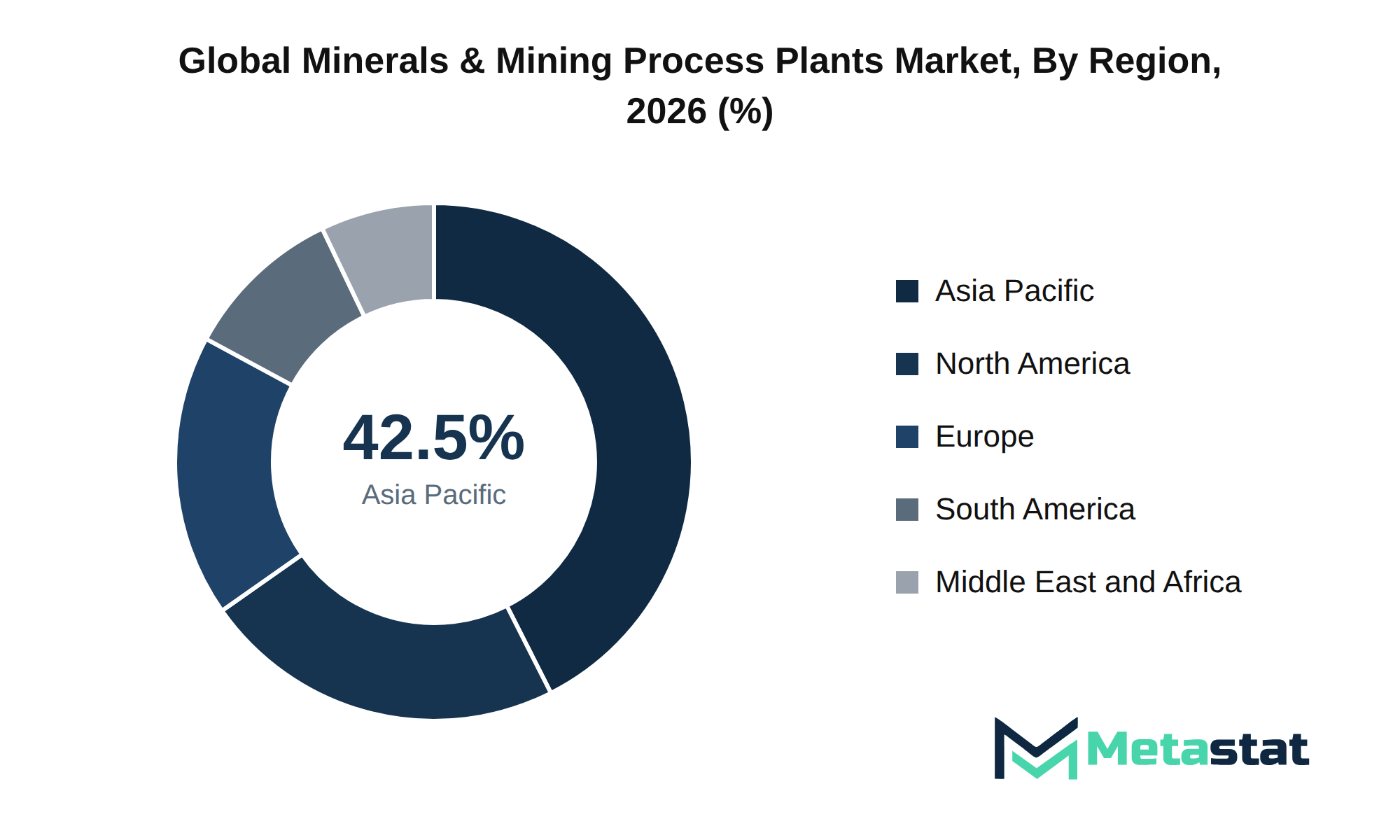
The Minerals & Mining Process Plants market features a diverse range of players, focusing on strategic consolidation and operational efficiencies to enhance market presence. Companies including Metso, Thyssenkrupp AG, and Sandvik AB invest heavily in research and development to innovate their offerings and differentiate their product lines. This emphasis on product differentiation strengthens their positions in the market, enabling them to cater to evolving customer needs.
Strategic alliances and partnerships among key players, including Weir PLC, Multotec, and Hatch Ltd., facilitate access to new technologies and market segments, driving growth opportunities. The development of proprietary technology moats enhances competitive advantage, offering unique solutions that address specific industry challenges. Companies including Tenova S.p.A. and Derrick Corporation leverage their extensive intellectual property portfolios to maintain technological defensibility, further enhancing their market positions.
Threats from new entrants are present, with potential disruptions driven by innovative startups employing agile business models. Established companies navigate these dynamics through customer retention strategies and brand equity initiatives, which play critical roles in sustaining market share. Overall, the competitive outlook for the Minerals & Mining Process Plants market emphasizes a proactive approach to strategic growth vectors, ensuring resilience against emerging challenges.
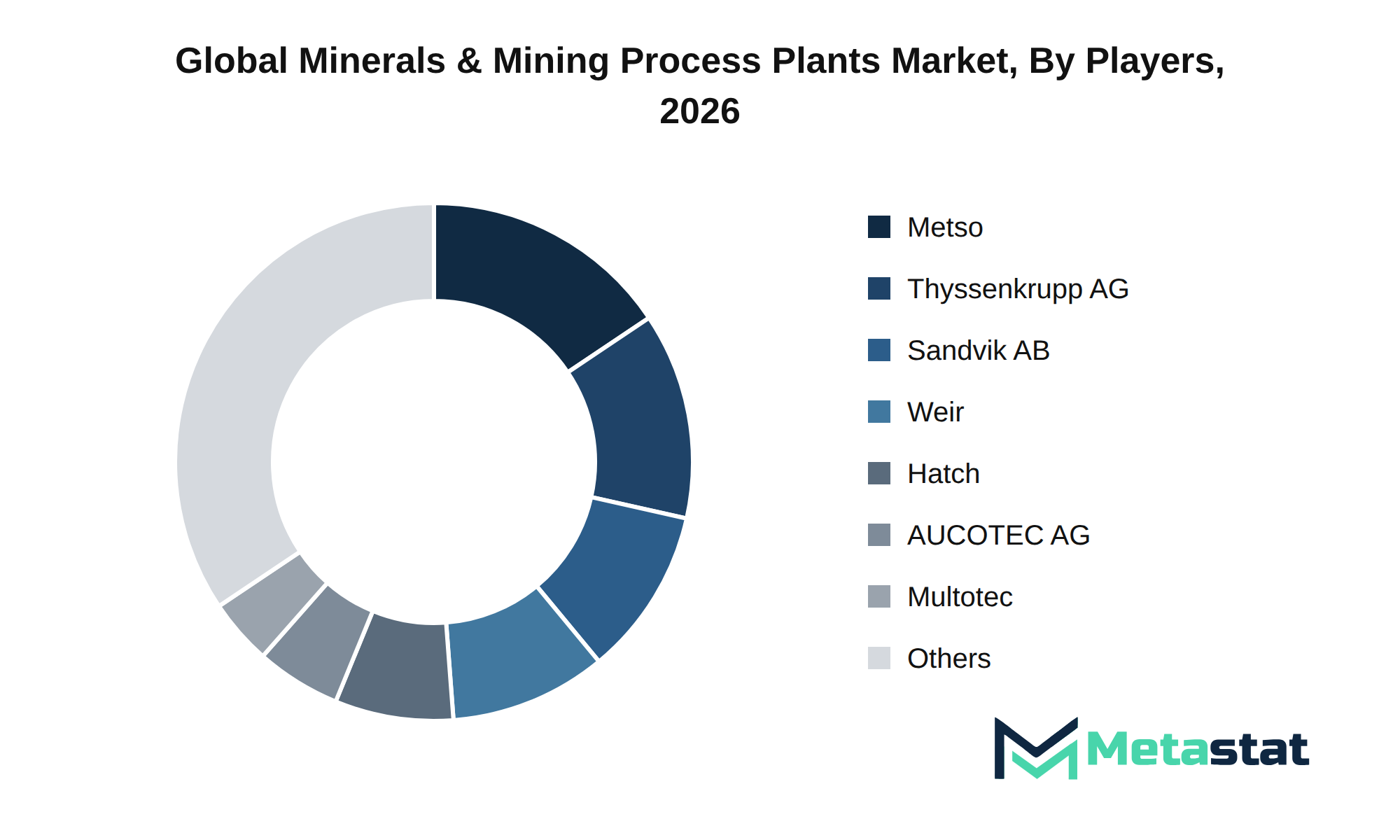
Market size is forecast to rise from USD 19.2 billion in 2025 to over USD 29.5 billion by 2033. This growth reflects a compound annual growth rate (CAGR) of 5.5%. Various factors contribute to this trajectory, including evolving macroeconomic conditions, downstream demand shifts, and advancements in next-generation technologies.
The bullish scenario envisions robust investment in infrastructure and capital expenditures, leading to accelerated growth within the Minerals & Mining Process Plants market. Meanwhile, the bearish outlook anticipates potential disruptions arising from geopolitical realignments, regulatory changes, and supply chain fluctuations, which could impede market expansion.
Strategic capital allocation directives and commitments to infrastructure enhancement shape the market's future. Executive-level strategic imperatives focusing on unmet enterprise needs and high-growth pockets enhance competitive positioning. Timely responses to compliance milestones and regulatory evolution remain essential for stakeholders in navigating market dynamics and ensuring sustainable growth.
Next-generation technology integration and R&D commercialization timelines significantly influence operational efficiency and product life cycles. Firms prioritizing innovation and addressing structural consumption shifts fortify their market presence, aligning with the evolving demands of various sectors. This focus on agility and adaptability establishes resilient positioning for industry participants amid fluctuating market conditions.
The report strategically identifies and profiles the key market players and analyses their core competencies in each sub-segment of the Minerals & Mining Process Plants market.
Report Attributes | Details |
Study Period | 2021-2033 |
Base Year | 2025 |
Estimated Year | 2026 |
Forecast Period | 2026-2033 |
Historical Period | 2021-2025 |
Growth Rate | CAGR 5.5% from 2026 to 2033 |
Revenue Unit | USD billion |
Segmentation | By Plant Type, Solution Type, Project Lifecycle Stage, Mineral, and Region |
By Region | North America (By Plant Type, Solution Type, Project Lifecycle Stage, Mineral, and Country)
|
Europe (By Plant Type, Solution Type, Project Lifecycle Stage, Mineral, and Country)
| |
Asia Pacific (By Plant Type, Solution Type, Project Lifecycle Stage, Mineral, and Country)
| |
South America (By Plant Type, Solution Type, Project Lifecycle Stage, Mineral, and Country)
| |
Middle East and Africa (By Plant Type, Solution Type, Project Lifecycle Stage, Mineral, and Country)
|
Find answers to common questions about this report
The Minerals & Mining Process Plants market size was valued at USD 19.2 billion in 2025.
The Minerals & Mining Process Plants market is projected to grow at a CAGR of 5.5% during the forecast period from 2026 to 2033.
The North America Minerals & Mining Process Plants market size is estimated to reach USD 5.9 billion by 2033.
The segment leading the Minerals & Mining Process Plants market is Process Equipment & Machinery, with a projected value of USD 8.5 billion by 2033. This segment surpasses others in terms of market size within the forecast period.
Increased capital investment in infrastructure development and ongoing digital transformation drive the Minerals & Mining Process Plants market. Economic growth supports higher private and public spending, enabling mining companies to enhance operational efficiency through technological adoption, while sustainability initiatives align with evolving consumer expectations.
Asia Pacific holds the dominant share of the Minerals & Mining Process Plants market, accounting for 42.5% in 2025. This region's significant share reflects its extensive mining activities and resource availability.
The Minerals & Mining Process Plants market faces challenges from regulatory tightening, compliance hurdles, and macroeconomic pressures. Rising costs for materials and labor, along with supply chain disruptions, hinder investment in new technologies and operational effectiveness, ultimately restricting growth potential.
Increased capital investment in infrastructure development and the ongoing digital transformation significantly favor product adoption in the Minerals & Mining Process Plants market. Enhanced funding for mining projects and the integration of advanced technologies improve operational efficiency, competitiveness, and sustainability, aligning with evolving consumer expectations and regulatory mandates.
The Minerals & Mining Process Plants market is estimated to reach a valuation of USD 29.5 billion by 2033.
Key players in the Minerals & Mining Process Plants market include Metso, Thyssenkrupp AG, Sandvik AB, Weir PLC, FLSmidth A/S, and BHP Group.
The analysts below cover Chemicals and Materials research at Metastat Insights.
LEAD ANALYST
Utkarsh Khirodkar is a Lead Market Research Analyst at MetaStat Insight, specializing in market intelligence, technology sector assessments, and competitive strategy.

INDUSTRY CONSULTANT - CHEMICALS & ADVANCED MATERIALS
Chemicals and Materials · Machinery & Equipment · Packaging
Amit Gadhekar Consultant for Chemicals and Materials at MetaStat Insight, directing sector-specific intelligence, research, and strategic consulting across global chemical and processing markets.
Evaluating calorific value requirements and air permit compliance across municipal waste facilities requires localized data. Metastat Insight structured their analysis around operational throughput capacity and feedstock composition variations in Latin America and Eastern Europe. Their competitive mapping of sorting equipment vendors helped clarify technology differences between optical separators and heavy media systems. The study provided an objective baseline during our capital expenditure reviews.
Decarbonizing industrial thermal processes hinges on refrigerant regulations and compressor efficiency limits. Metastat Insights delivered a thorough market analysis that evaluated natural refrigerants like CO2 and hydrocarbons against synthetic low-GWP alternatives. The breakdown of utility incentives and grid capacity constraints across key European manufacturing hubs offered valuable perspective. The follow-up conversation with their sector analysts addressed our specific questions on mechanical vapor recompression systems efficiently.
Assessing 200mm wafer transition schedules and substrate supply bottlenecks requires precise technical intelligence. MetaStat Insight supplied an actionable breakdown comparing planar and trench MOSFET architectures across automotive and industrial drive markets. The regional capacity estimates for Asia-Pacific foundries helped clarify lead-time uncertainties during our strategic planning session. When we needed additional clarification on high-purity raw material sourcing, their analyst team responded with helpful context within twenty-four hours.
Explore related market intelligence reports worth reading alongside this one.
Starting from
$2950