
LEAD ANALYST
Utkarsh Khirodkar is a Lead Market Research Analyst at MetaStat Insight, specializing in market intelligence, technology sector assessments, and competitive strategy.

Indonesia Oil Condition Monitoring Laboratory Services Market Size, Share, By Fluid Type (Lubricating Oil, Hydraulic Oil, Turbine Oil, Transformer Oil, Gear Oil, Engine Oil, Coolant, Grease and Others), By Diagnostic Service Type (Routine Oil Condition Testing, Wear Debris and Elemental Analysis, Contamination Analysis, Lubricant Degradation Analysis, Advanced Failure Investigation, Tribology and Root-Cause Diagnosis and Others), By Service Delivery Model (Independent Third-Party Laboratory Testing, Lubricant Supplier Monitoring Programs, OEM and Equipment Dealer Fluid Analysis Programs, Managed On-Site Laboratory Programs and Digital Reporting and Trend Monitoring Programs), By End-Use Industry (Mining, Oil and Gas, Power Generation, Manufacturing, Marine and Port Operations, Construction and Heavy Equipment, Transportation and Logistics, Plantation and Agriculture and Others), Industry Analysis, Growth, Trends, and Forecast, 2026-2033
Report ID
MSI-5814
Published
November, 2026
Pages
304 Pages
Format
Historical
Base year
Forecast
Forecast period
Report Details
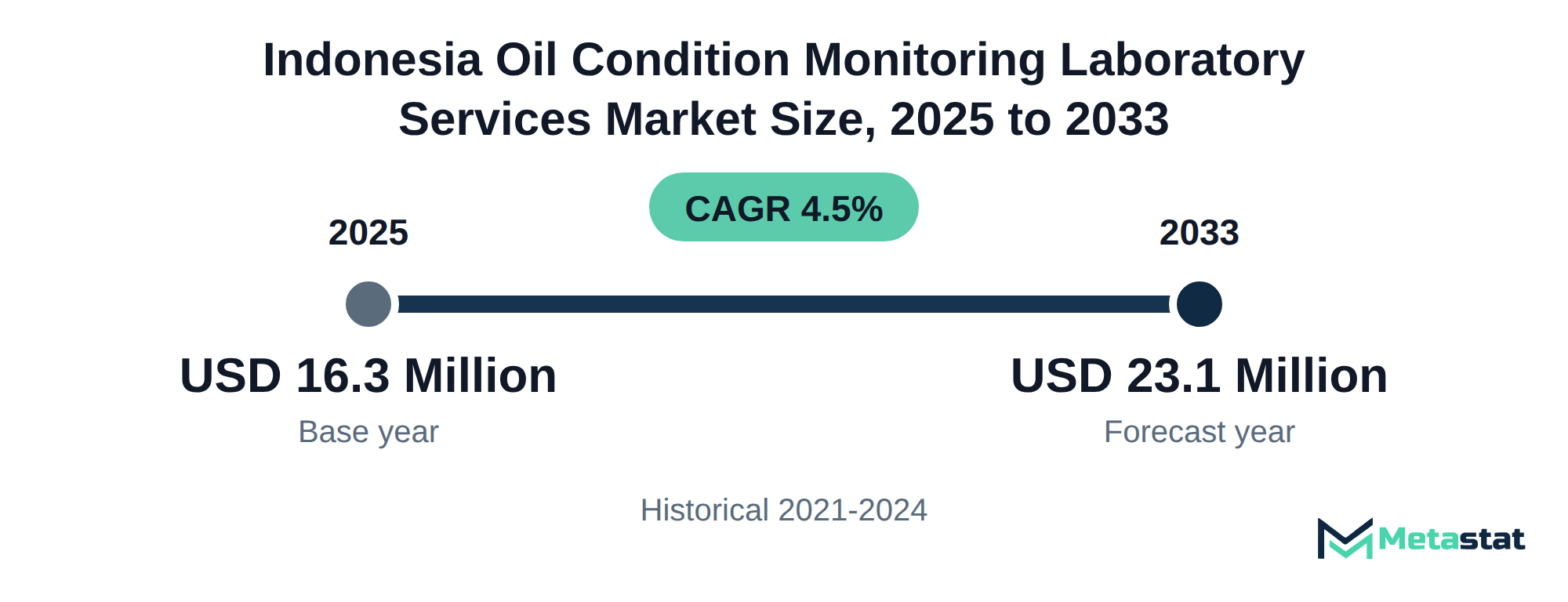
Market Valuation: Valued at $16.3 Million in 2025, projected to reach $23.1 Million by 2033 at a 4.5% CAGR.
Dominant Segment: The lubricating oil segment leads the market, driven by its critical role in machinery performance and the growing emphasis on maintenance solutions across industries.
Geographic Lead: Southeast Asia is the fastest-growing region, fueled by rapid industrialization and an increasing demand for efficient machinery maintenance.
What's Inside: The report provides comprehensive coverage of market dynamics, competitive landscape, and detailed forecasts for various fluid types and diagnostic services from 2026 to 2033.
Growing Demand for Advanced Diagnostics: The market is witnessing a surge in demand for advanced diagnostic services, particularly wear debris and elemental analysis, which is expected to grow significantly due to its role in predictive maintenance.
Choose Your License
Indonesia Oil Condition Monitoring Laboratory Services Market
The Indonesia Oil Condition Monitoring Laboratory Services market was valued at USD 16.3 million in 2025 and is projected to reach USD 23.1 million by 2033, growing at a CAGR of 4.5% over the forecast period.
The Indonesia Oil Condition Monitoring Laboratory Services market encompasses a range of diagnostic services and fluid types essential for maintaining the performance and longevity of machinery and equipment. Organizations invest in these services to ensure optimal operation, reduce downtime, and prevent costly failures. The services include routine oil condition testing, wear debris and elemental analysis, and contamination analysis, tailored to various fluid types including lubricating oil, hydraulic oil, and turbine oil.
Growth in the market is driven by increasing industrial activities, particularly in the mining and oil and gas sectors. These industries heavily rely on effective fluid management to enhance operational efficiency and minimize equipment wear. In this context, lubricating oil represents the largest segment, reflecting significant investment due to its critical role in machinery performance. The market's expansion is further supported by advancements in diagnostic technologies that enable more precise monitoring and analysis of oil conditions.
Regional dynamics indicate that the market's growth is particularly pronounced in Asia, where rapid industrialization and infrastructure development fuel demand for oil condition monitoring services. The rising focus on predictive maintenance strategies among industries enhances the adoption of these services. A key factor driving this trend is the increasing emphasis on operational reliability and efficiency, positioning the market for sustained growth through the forecast period.
The oil condition monitoring services market provides crucial insights into the performance of various lubricants, ensuring optimal operational efficiency and preventing breakdowns. Buyers invest in these services to mitigate risks associated with equipment failure, enhance productivity, and reduce maintenance costs. The demand for advanced diagnostic services drives spending, allowing industries to maintain high levels of reliability and operational excellence.
Significant growth in the market is driven by increasing awareness of the benefits of oil condition monitoring among end-users, particularly in the manufacturing and oil and gas sectors. The lubricating oil segment represents the largest value, reflecting the essential role of high-performance lubricants in various industrial applications. Southeast Asia holds the largest share, supported by rapid industrialization and the growing need for efficient machinery maintenance.
The market expands with the increasing adoption of condition-based maintenance practices, which replace traditional time-based maintenance strategies. This shift enhances operational efficiency and minimizes downtime, driving demand for oil condition monitoring services. The Indonesia Oil Condition Monitoring Laboratory Services market is projected to benefit from these trends and the continuous evolution of technology in diagnostic services.
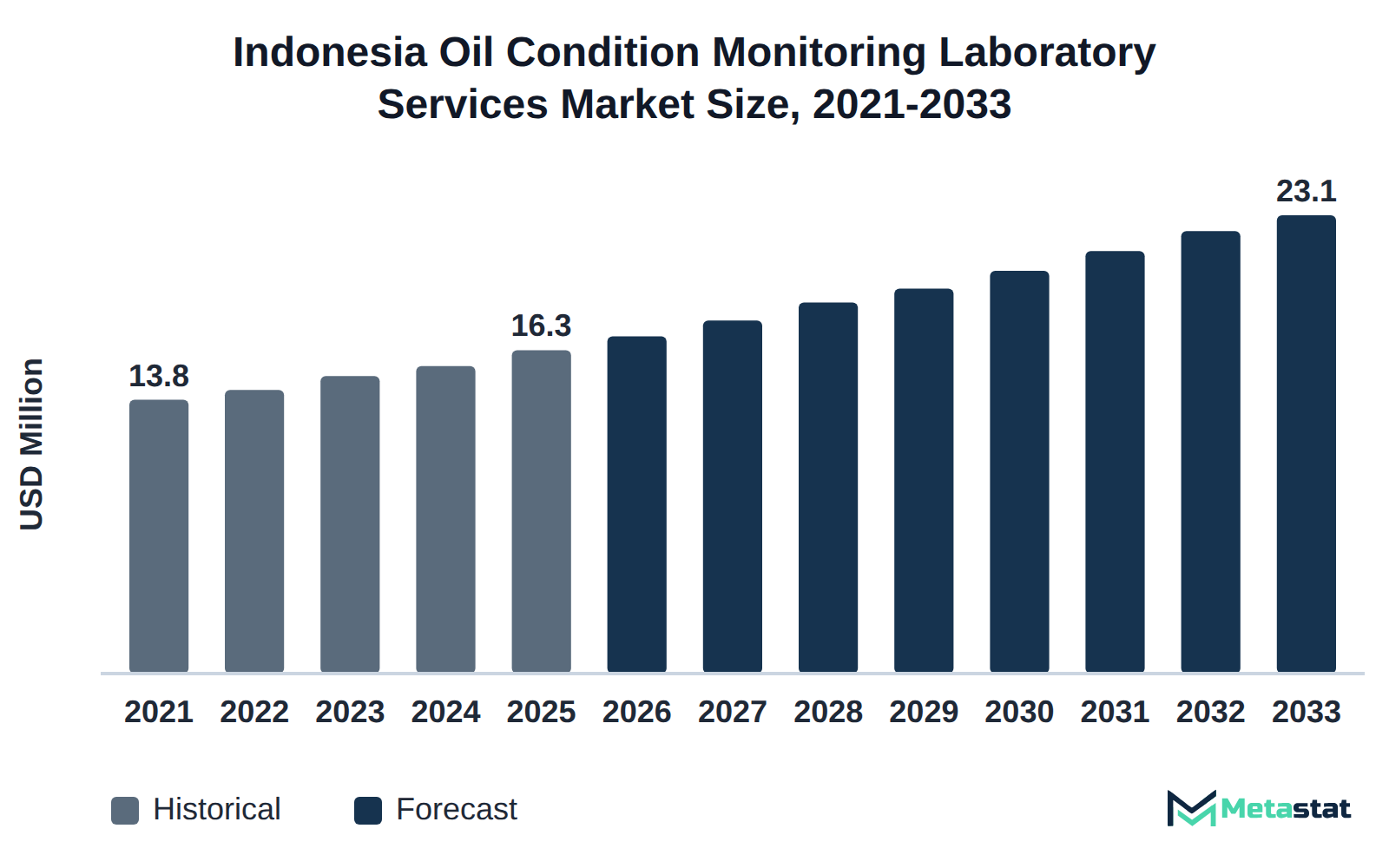
The integration of predictive maintenance and industrial lubricant testing enhances operational efficiency within mining and heavy equipment fleets. A notable shift towards Routine Oil Condition Testing is evident, with this diagnostic service type projected to increase from USD 3.9 million in 2026 to USD 5.1 million by 2033, reflecting a compound annual growth rate of 3.9%. This growth stems from an increasing focus on reducing downtime and maintenance costs, driven by the need for reliable performance in challenging environments.
Mining and heavy equipment operators recognize the importance of lubricant analysis in preventing costly failures. The implementation of wear debris and elemental analysis, expected to reach USD 4.3 million by 2033, supports this trend. These analytical methods identify potential equipment failures before they escalate, allowing for timely interventions. By investing in these services, operators enhance their ability to maintain equipment reliability and extend the life cycle of critical machinery.
The Indonesia Oil Condition Monitoring Laboratory Services market reflects a broader shift towards data-driven maintenance strategies. Enhanced lubricant testing capabilities enable fleets to optimize their operations, promoting a proactive maintenance culture. This strategic approach minimizes operational disruptions and contributes to overall cost efficiencies, positioning operators favorably in a competitive environment.
Pricing models in the Indonesia Oil Condition Monitoring Laboratory Services market reflect a nuanced approach that aligns with the specific needs of various end-users. Contractual agreements typically emphasize flexibility, allowing buyers to choose from a range of services, including wear debris analysis and oil degradation diagnostics. For instance, the growing demand for routine oil condition testing is projected to reach USD 5.1 million by 2033, indicating significant investment in these diagnostic services.
Buyers engage in long-term contracts with providers to ensure consistent service and reliable data. This practice cultivates a stable revenue stream for service providers while strengthening deeper relationships with clients. Such arrangements allow for tailored service packages, accommodating the unique requirements of different industries, including mining and oil and gas. Many firms prioritize independent third-party laboratory testing, which is expected to grow from USD 5.8 million in 2026 to USD 7.6 million in 2033, reflecting the increasing reliance on objective analysis.
The trend toward managed on-site laboratory programs enhances the purchase experience by integrating advanced testing capabilities directly into the operational environment of clients. These models streamline the process, reduce downtime, and improve overall efficiency. While the market evolves, pricing strategies are expected to adapt to maintain competitiveness while meeting the rising demand for comprehensive oil condition monitoring services.
Digital oil monitoring and managed laboratory programs enhance operational efficiency within the Indonesia Oil Condition Monitoring Laboratory Services market. Adoption of condition-based maintenance strategies increasingly aligns with the evolving needs of industries reliant on heavy machinery and complex systems. For instance, the mining sector is projected to experience growth, from USD 2.9 million in 2026 to USD 3.9 million by 2033, reflecting a compound annual growth rate (CAGR) of 4.3%. This shift demonstrates a proactive approach to maintenance, where continuous monitoring prevents unexpected failures and reduces downtime.
The integration of digital solutions facilitates real-time analysis, enabling industries to make informed decisions regarding equipment health. Managed laboratory programs streamline the testing process, offering insights into lubricant performance and equipment condition. These services support organizations in optimizing maintenance schedules, ultimately leading to improved productivity and reduced operational costs. In a competitive environment, businesses leveraging digital oil monitoring technologies position themselves advantageously within the Indonesia Oil Condition Monitoring Laboratory Services market, enhancing their ability to respond effectively to operational challenges.
Demand for oil condition monitoring laboratory services is experiencing notable shifts across various industrial sectors in Indonesia. This trend results from heightened awareness regarding equipment maintenance and operational efficiency in mining operations, where equipment reliability is crucial for productivity.
The oil and gas sector significantly influences demand dynamics within the Indonesia Oil Condition Monitoring Laboratory Services market. Expected growth in this sector sees an increase to USD 3.3 million by 2033. Companies within this industry recognize the importance of maintaining fluid integrity to prevent failures and optimize performance in extraction and refining processes. Such initiatives directly impact operational costs and contribute to increased overall profitability.
Consequently, the evolving demand across these sectors highlights the critical need for robust monitoring solutions, which ensure that organizations remain competitive and efficient in their operations. Investing in oil condition monitoring services facilitates better decision-making, enhances equipment lifespan, and drives operational excellence.
Recent shifts in the demand for oil condition monitoring laboratory services stem from an increased focus on equipment reliability within various industries. Companies in sectors including manufacturing and oil and gas emphasize the importance of maintaining equipment performance, leading to a surge in spending on diagnostic services. This growing emphasis results in higher demand for routine oil condition testing, which ensures optimal operational efficiency and minimizes costly equipment failures. Such growth highlights ongoing investment in monitoring services that enhance reliability and performance across critical machinery. Increased adoption of these services impacts the overall market positively, driving revenue growth and expanding the customer base.
The advancement of testing technologies significantly influences the Indonesia Oil Condition Monitoring Laboratory Services market. Innovations in analytical equipment and testing methodologies enhance accuracy and speed, allowing for more effective diagnosis of oil conditions. Users within industries including mining and power generation experience increased operational efficiency through the adoption of these advanced testing solutions. Enhanced data analysis capabilities enable users to make informed decisions regarding maintenance and fluid management, ultimately driving down costs associated with equipment failure and unscheduled downtime. The market responds positively to this technological shift, with service providers investing in state-of-the-art laboratory equipment to meet rising demand. This competitive environment stimulates further innovation, creating a cycle of continuous improvement in service quality and reliability. Industries increasingly prioritize efficiency and performance, making the integration of advanced testing technologies essential for sustaining growth and maintaining a competitive edge.
Price sensitivity significantly constrains the adoption of oil condition monitoring laboratory services among buyers in various industries. The costs associated with advanced diagnostic testing and monitoring programs lead to slower uptake, particularly among smaller enterprises that struggle with capital allocation. High service prices deter potential customers from seeking necessary analyses, resulting in smaller orders or delayed fluid replacement cycles. Industries including mining and manufacturing, which require ongoing maintenance and monitoring, face challenges in justifying these expenses within tight operational budgets. In the Indonesia Oil Condition Monitoring Laboratory Services market, this price sensitivity directly impacts revenue growth and overall market expansion. Addressing these pricing challenges is essential for increasing awareness of the full benefits these services provide, thereby enhancing broader market penetration and adoption strategies.
Profitability challenges arise in the Indonesia Oil Condition Monitoring Laboratory Services market due to increasing operational costs. Suppliers face rising expenses associated with talent acquisition and retention, particularly within specialized testing roles. This environment forces a reevaluation of pricing strategies, ultimately affecting revenue and margins. Suppliers respond by enhancing service efficiency and improving operational workflows, striving to deliver high-quality services while managing costs effectively.
Investment in advanced technologies further supports efforts to maintain competitive pricing without sacrificing service quality. Collaboration with educational institutions and training organizations emerges as a strategy to cultivate a skilled workforce, addressing talent shortages within the industry. By focusing on these approaches, suppliers aim to navigate ongoing margin pressures while meeting evolving demands from clients within the market.
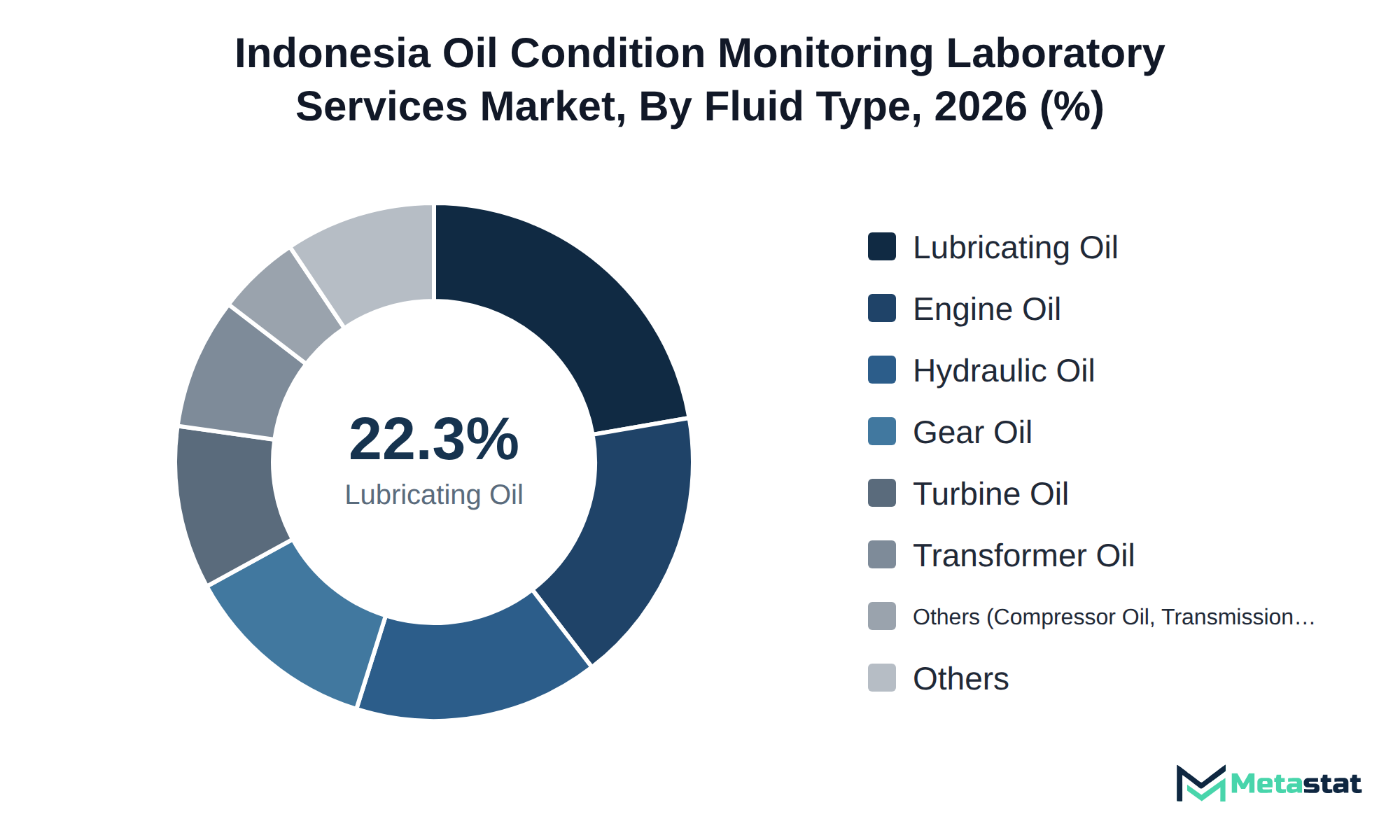
Growth within the lubricating oil segment presents a significant opportunity in the market, driven by rising demand for effective maintenance solutions across various industries. The lubricating oil segment is expected to expand from USD 3.8 million in 2026 to USD 5.1 million by 2033, reflecting a compound annual growth rate (CAGR) of 4.2%. This expansion arises from heightened awareness of equipment reliability and the critical role lubricants play in maximizing operational efficiency. Industries including mining, manufacturing, and oil and gas heavily rely on lubricating oil testing to ensure optimal performance and reduce downtime. Innovations in testing technologies enhance service delivery and provide comprehensive diagnostics, positioning providers favorably to capture this growth. Addressing the specific needs of customers within this segment allows service providers to tap into a robust revenue stream, contributing to overall market dynamics within the Indonesia Oil Condition Monitoring Laboratory Services market.
The Indonesia Oil Condition Monitoring Laboratory Services market is segmented based on Fluid Type, Diagnostic Service Type, Service Delivery Model, and End-Use Industry.
This segment plays a critical role in various industries, including manufacturing and automotive, where maintaining optimal operational efficiency is essential. The demand for lubricating oil services arises primarily from the need for reliable equipment performance and longevity, driving purchases among operators seeking to minimize downtime. In comparison to other segments, including Hydraulic Oil, which is projected to grow at a CAGR of 4.6%, the lubricating oil segment exhibits slightly slower growth. However, it remains a vital component of oil condition monitoring, catering to specific buyer requirements for routine maintenance and analysis, further distinguishing it from other fluid types.
Hydraulic oil segment is estimated to reach USD 3.6 million by 2033, at a CAGR of 4.6% during the forecast period. This segment finds application primarily in hydraulic systems within industries including manufacturing, construction, and oil and gas, where precise fluid control is essential for machinery operation. Demand for hydraulic oil monitoring is driven by the need for maintenance and reliability of equipment, which directly impacts operational efficiency. This segment exhibits a slightly faster growth rate compared to others, supported by advancements in testing methodologies that enhance the accuracy of condition monitoring. The increasing complexity of hydraulic systems necessitates more rigorous testing protocols, distinguishing this segment from others that focus on simpler lubricants. The market is expected to evolve with ongoing technological improvements, ensuring that hydraulic oil testing remains pertinent across various sectors.
Turbine Oil segment is expected to reach USD 2.4 million by 2033. This oil type is essential for high-speed machinery, particularly in power generation and industrial applications. Operators of turbines use this segment to ensure efficient performance and extend equipment life through effective monitoring and analysis. The segment experiences growth driven by the increasing importance of equipment reliability and the transition to predictive maintenance practices. Compared to other fluid types, Turbine Oil has a more specialized application, often commanding higher prices due to its critical role in operational effectiveness. The market for Turbine Oil testing benefits from technological advancements in diagnostic services, with a forecasted growth rate of 4.6% in the coming years, reinforcing its importance within the Indonesia Oil Condition Monitoring Laboratory Services market.
Transformer Oil segment is projected to grow at a CAGR of 4.8% during the forecast period. This fluid type is used primarily in electrical transformers to ensure efficient heat transfer and insulation. Utilities and manufacturers involved in power generation rely on transformer oil to maintain operational integrity and prevent equipment failures. The segment experiences growth driven by increasing demand for reliable energy sources and ongoing expansion of electrical infrastructure. Compared to other fluid types, transformer oil has a slower growth trajectory, influenced by its specific application domain and the high standards required for its performance. While lubricant types including hydraulic oil and lubricating oil are expected to see higher demand, transformer oil remains a critical segment for the market, addressing unique needs in energy production and distribution.
Gear oil functions as a critical lubricant for various machinery, providing essential protection against wear and tear in components including gears and bearings. Used predominantly in automotive and industrial applications, gear oil ensures optimal performance and longevity of equipment, catering to sectors that prioritize reliability and efficiency. The demand for gear oil is driven by increasing reliance on sophisticated machinery, which necessitates high-performance lubricants. This segment distinguishes itself from others within the fluid type category due to specialized formulation requirements and pricing dynamics, often leading to higher costs compared to general lubricants. Growing awareness of the benefits of preventive maintenance further fuels the adoption of condition monitoring services related to gear oil, enhancing operational efficiency. The Indonesia Oil Condition Monitoring Laboratory Services market observes significant interest in gear oil analysis, reflecting the sector's commitment to maximizing machinery uptime and performance.
Engine oil serves a critical function in maintaining engine efficiency and longevity, making it essential for various types of vehicles and heavy machinery. This segment appeals to automotive manufacturers, fleet operators, and maintenance service providers who rely on accurate diagnostics to optimize engine performance and minimize downtime. The growing emphasis on preventive maintenance drives demand for condition monitoring, ensuring that engine oil quality meets required standards. Unlike other fluid types, engine oil testing focuses on unique characteristics including viscosity and contamination levels, which directly influence engine health. This segment's growth aligns with advancements in diagnostic technologies, enhancing reliability in performance assessments and differentiating it from segments including hydraulic oil, which targets specific industrial applications.
Coolant functions as a vital fluid in various industrial equipment, maintaining optimal temperatures and preventing overheating. It sees widespread use in sectors including manufacturing and automotive, where heat management is critical for operational efficiency. The segment experiences growth driven by increasing regulations on equipment performance and sustainability, pushing industries to adopt comprehensive monitoring solutions. Compared to other fluid types, coolant exhibits slower growth, primarily due to the established nature of existing cooling systems and lower turnover rates in replacement cycles. This contrasts with segments like lubricating oil, which sees more dynamic demand due to a higher frequency of use and replacement across industries. The Indonesia Oil Condition Monitoring Laboratory Services market reflects a shifting focus toward advanced testing methods to ensure coolant effectiveness and compliance with industry standards.
Grease functions as a vital lubricant for machinery and equipment, ensuring optimal performance and longevity. Used predominantly in industrial applications, it maintains effective lubrication under varying temperature and load conditions. Demand for grease within the Indonesia Oil Condition Monitoring Laboratory Services market experiences pressure from industries prioritizing maintenance practices to prevent equipment failure. The increasing focus on equipment reliability drives investment in oil condition monitoring services, emphasizing the importance of grease analysis. Compared to other fluid types, grease has a different pricing structure and usage frequency among buyers. Industries including manufacturing, mining, and transportation rely on comprehensive monitoring solutions to ensure operational efficacy. This segment distinguishes itself through targeted applications and specific lubrication requirements, which influence testing services and operational practices across various sectors.
This sub-segment encompasses compressor oil, transmission oil, and industrial process fluids, highlighting its importance in various industrial applications. These fluids serve critical roles in ensuring machinery operates smoothly and efficiently, particularly in sectors including manufacturing and transportation. Demand for comprehensive oil condition monitoring rises due to increasing operational complexity and the need for effective maintenance strategies. This segment differs from others, including lubricating oil, in terms of market focus, with users primarily concentrated in specialized sectors requiring tailored solutions. Unlike segments experiencing faster growth trajectories, the adoption of these oils progresses at a more measured pace, aligning with specific industrial requirements and practices. Continuous advancements in testing technologies positively influence this segment, allowing for more precise diagnostics and improved operational performance.
This testing assesses the condition of lubricants in machinery and equipment, ensuring optimal performance and minimizing downtime. Industries including manufacturing and oil and gas significantly rely on these services to enhance equipment longevity and reliability. Demand arises from the increasing focus on maintenance and efficiency, driving steady growth in this segment. Compared to other diagnostic services, Routine Oil Condition Testing experiences a modest growth rate, influenced by its essential role in preventive maintenance. The segment's growth is propelled by the necessity for reliable operations across various sectors, setting it apart from more rapidly growing segments including Wear Debris and Elemental Analysis, which is anticipated to reach USD 4.3 million by 2033.
Wear Debris and Elemental Analysis segment is estimated to reach USD 4.3 million by 2033, at a CAGR of 4.8% during the forecast period. This analysis detects wear particles and elemental composition in lubricants, providing critical insights into equipment condition and performance. Mining and manufacturing industries increasingly adopt this analysis to enhance equipment reliability and reduce maintenance costs. Rising demand for predictive maintenance directly influences this segment, with organizations focusing on minimizing downtime and extending equipment lifespan. Compared to other diagnostic service types in the market, Wear Debris and Elemental Analysis exhibits a more pronounced growth trajectory, driven by its specific application in proactive maintenance strategies. In contrast to segments including Routine Oil Condition Testing, this analysis requires specialized equipment and expertise, resulting in higher pricing structures.
Contamination Analysis segment is expected to reach USD 3.6 million by 2033. This analysis focuses on identifying and quantifying contaminants in lubricants, which is vital for ensuring equipment protection and performance. Industries including manufacturing and oil and gas frequently employ these services to maintain operational efficiency. The increasing complexity of machinery drives the need for thorough contamination assessments, resulting in heightened demand in this segment. Compared to other diagnostic services, Contamination Analysis experiences a steady growth trajectory, with a CAGR of 4.8%, indicating a slightly faster expansion than Routine Oil Condition Testing. This segment's specialized focus on contamination differentiates it from broader testing services, appealing to specific buyers who prioritize equipment integrity and longevity. The Indonesia Oil Condition Monitoring Laboratory Services market benefits from this targeted approach, reflecting the evolving needs of industries reliant on high-performance lubricants.
Lubricant Degradation Analysis segment is projected to grow at a CAGR of 4.6% during the forecast period. This analysis is a critical diagnostic service used by industries including manufacturing, mining, and oil and gas to assess the condition of lubricants and predict equipment reliability. Rising awareness regarding predictive maintenance and the importance of minimizing downtime increasingly influences demand for this analysis. Compared to other segments including Wear Debris and Elemental Analysis, which is expected to reach USD 4.3 million by 2033, Lubricant Degradation Analysis focuses specifically on the chemical breakdown of lubricants, enabling timely interventions to prevent equipment failure. The segment's growth reflects a broader trend in the Indonesia Oil Condition Monitoring Laboratory Services market, highlighting the shift toward more proactive and preventive maintenance strategies across various industries.
Advanced Failure Investigation involves detailed analysis of oil samples to identify root causes of machinery failures. This diagnostic service serves industries that require precise insights into equipment performance, aiding in maintenance and longevity. The mining and oil and gas sectors, characterized by high operational risks, significantly employ this service to mitigate downtime and enhance equipment reliability. Demand for advanced failure investigation is driven by increasing machinery complexity and the need for predictive maintenance solutions, encouraging companies to invest in sophisticated diagnostic tools. This sub-segment differentiates itself with a focus on specialized analysis, appealing to businesses that prioritize high-value insights and often command higher prices compared to more routine services. Consequently, it aligns closely with sectors emphasizing operational efficiency in the Indonesia Oil Condition Monitoring Laboratory Services market.
Tribology and Root-Cause Diagnosis involves the analysis of wear particles, lubricant properties, and other critical factors that affect machine performance and longevity. This diagnostic service is essential in sectors including manufacturing and oil and gas, where maintaining equipment reliability is crucial to operational efficiency. Demand for this service has strengthened due to the increasing complexity of machinery and the growing emphasis on preventative maintenance. Unlike Routine Oil Condition Testing or Contamination Analysis, this segment often commands a higher price due to the specialized knowledge and technology required for thorough analysis. The sector's focus on detailed root-cause investigations distinguishes it from other diagnostic services, catering to clients who prioritize in-depth insights into equipment health. Adoption of advanced technologies further enhances service capabilities, supporting overall growth in the Indonesia Oil Condition Monitoring Laboratory Services market.
This sub-segment focuses on specialized testing services, including oil compatibility testing, additive analysis, and various forms of specialized fluid testing. These services support industries by ensuring proper fluid formulation and compatibility, which are critical for maintaining the efficiency and reliability of machinery. This testing is particularly relevant for sectors including manufacturing and oil and gas, where fluid integrity directly impacts operational performance. Factors driving growth within this segment include rising demand for enhanced lubricant performance and increased scrutiny on material compatibility in machinery. Compared to other diagnostic services, this sub-segment experiences slower growth due to the perceived complexity and cost associated with specialized testing, which limits broader market adoption. The Indonesia Oil Condition Monitoring Laboratory Services market encompasses a diverse array of diagnostic services, with this sub-segment addressing specific, high-value testing needs essential for advanced industrial applications.
This segment provides essential testing services for lubricating oils, hydraulic oils, and other fluids, primarily serving industries including manufacturing, mining, and oil and gas. Demand for these services is driven by increasing focus on equipment reliability and operational efficiency, prompting industries to adopt regular fluid analysis. Compared to other service delivery models, this segment experiences steady growth, characterized by reliance on independent testing facilities to ensure unbiased results, distinguishing it from OEM and lubricant supplier monitoring programs, which involve proprietary interests. The Indonesia Oil Condition Monitoring Laboratory Services market reflects the importance of independent testing in maintaining machinery performance and longevity through rigorous testing methodologies.
Lubricant Supplier Monitoring Programs segment is estimated to reach USD 5 million by 2033, at a CAGR of 4.6% during the forecast period. This segment focuses on monitoring the performance and quality of lubricants supplied to various industries, ensuring optimal lubrication for machinery and equipment. Key buyers include lubricant suppliers and manufacturers who apply these programs to maintain product quality and reliability. Growth in this segment is driven by increasing demand for high-quality lubricants and the need for enhanced maintenance protocols across industries. Compared to other service delivery models, this segment experiences a moderate growth rate, distinguishing itself through its specific focus on supplier relationships and product assurance rather than direct laboratory testing services. The market sees a shift towards more stringent quality standards, which further fuels the adoption of these monitoring programs across various sectors.
OEM and Equipment Dealer Fluid Analysis Programs segment is expected to reach USD 4.3 million by 2033. This segment targets manufacturers and equipment dealers who rely on fluid analysis to monitor and optimize machinery performance. Key drivers include the increasing emphasis on equipment reliability and maintenance, enhancing productivity and reducing downtime. Compared to other service delivery models, this segment demonstrates a more targeted approach, focusing on manufacturers and OEMs, resulting in a higher price point for services. The growth rate of this segment is influenced by evolving technology and the demand for precision monitoring in complex systems, with an anticipated CAGR of 4.3% throughout the forecast period. The Indonesia Oil Condition Monitoring Laboratory Services market reflects a growing trend towards specialized testing that meets the stringent requirements of the manufacturing sector. Effective fluid analysis in equipment dealer programs enhances operational efficiency and ensures the longevity of machinery.
Managed On-Site Laboratory Programs segment is projected to grow at a CAGR of 4.9% during the forecast period. This segment involves providing laboratory testing services directly on-site at client facilities, targeting industries including manufacturing and oil and gas. Companies apply this service to ensure the efficient monitoring of lubricant quality and machinery health, leading to reduced downtime and maintenance costs. Demand for this segment experiences growth due to the increasing need for immediate analysis and timely interventions in operational processes, which enhances productivity. Compared to other service delivery models, Managed On-Site Laboratory Programs often have a higher service cost due to the specialized equipment and expertise required for on-location testing. This segment's performance reflects broader trends within the market, driven by an emphasis on proactive maintenance and risk management strategies.
Digital Reporting and Trend Monitoring Programs encompass advanced technological solutions that facilitate the tracking and analysis of oil condition data over time. Users of this segment include industries including manufacturing and power generation, where real-time insights support proactive maintenance strategies and extend equipment lifespan. The driving force behind this segment is the increasing emphasis on data-driven decision making, allowing operators to detect issues early and minimize downtime. Compared to other service delivery models, this segment appeals to clients focusing on integrated solutions that offer ongoing monitoring rather than single-instance analysis. Its unique positioning caters to industries that prioritize digital transformation and operational efficiency. This differentiation within the Indonesia Oil Condition Monitoring Laboratory Services market offers potential for increased penetration and adoption among technology-forward enterprises.
The mining sector relies heavily on oil condition monitoring to ensure the efficient operation of machinery and equipment, preventing costly downtime due to equipment failure. Major players in this industry use these services to maintain optimal performance levels in their operations. Increasing demand for high-efficiency machinery and a focus on preventive maintenance drive growth within this segment. Compared to other segments, the mining sector demonstrates consistent demand for specialized oil testing services, highlighted by its steady growth rate of 4.3%, which positions it in the middle of the overall market. In contrast, sectors including oil and gas experience different dynamics affecting their growth rates. The Indonesia Oil Condition Monitoring Laboratory Services market reflects these trends, with mining contributing significantly to overall demand.
Oil and Gas segment is estimated to reach USD 3.3 million by 2033, at a CAGR of 4.5% during the forecast period. This segment serves critical industries involved in the extraction and processing of fossil fuels, where maintaining oil condition is essential for operational efficiency and equipment longevity. Demand for oil condition monitoring is driven by the necessity to prevent machinery failures, resulting in costly downtimes and safety hazards. Compared to other segments, this one experiences steady growth due to the ongoing reliance on oil and gas resources globally. The specific requirements and high stakes associated with the oil and gas sector differentiate it from segments including Manufacturing, which often face slower growth and varying demand dynamics. The Indonesia Oil Condition Monitoring Laboratory Services market remains vital in supporting the operational capabilities of the oil and gas industry.
Power Generation segment is expected to reach USD 2.9 million by 2033. This segment focuses on the provision of oil condition monitoring services specifically for power generation equipment, including turbines and generators in electricity production. Companies operating in this segment typically include utilities and independent power producers, which rely on these services to maintain equipment efficiency and prevent costly downtime. Demand for these services is driven by the increasing emphasis on operational efficiency and extending equipment lifespan. With a compound annual growth rate (CAGR) of 4.5%, this segment exhibits a steady growth trajectory, aligning with broader trends in the Indonesia Oil Condition Monitoring Laboratory Services market. Compared to other segments, Power Generation shows a unique emphasis on reliability and regulatory compliance, with equipment failures in this sector leading to significant disruptions in service and financial losses.
Manufacturing segment is projected to grow at a CAGR of 4.5% during the forecast period. This segment encompasses oil condition monitoring services employed by manufacturers to maintain machinery performance and extend equipment lifespan. The focus on predictive maintenance and operational efficiency drives demand in this sector. Increasing pressure to optimize production processes leads to enhanced investments in monitoring services. Compared to other segments, this sub-segment shows a balanced growth trajectory, appealing to diverse buyers including machinery operators and maintenance teams. The forecasted revenue for the manufacturing segment reflects a robust response to evolving industry needs, with expected growth translating into greater operational reliability and cost savings for manufacturing entities. The Indonesia Oil Condition Monitoring Laboratory Services market exhibits potential, driven by the necessity for consistent machinery upkeep and enhanced production reliability.
Marine and Port Operations involve the maintenance and monitoring of equipment and fluids used in maritime activities. This segment serves shipping companies and port operators, focusing on ensuring optimal performance and longevity of machinery through effective oil condition monitoring. Demand for oil condition monitoring in this sub-segment derives primarily from the increasing emphasis on operational efficiency and safety regulations. Unlike other segments, the Marine and Port Operations segment experiences different pricing dynamics and service requirements due to unique operational contexts. Factors including environmental regulations and the need for compliance with international maritime standards drive demand in this category. The Indonesia Oil Condition Monitoring Laboratory Services market benefits from these trends, supporting growth and encouraging investment in innovative monitoring solutions tailored to marine applications.
Construction and Heavy Equipment involves the use of machinery and equipment essential for large-scale construction projects. This segment caters to industries including civil engineering, infrastructure development, and heavy machinery operation. Demand for oil condition monitoring services in this area stems from the necessity to ensure optimal performance and reliability of construction equipment. Maintenance schedules heavily influence the demand, driving companies to adopt these services to prevent equipment failure and minimize downtime. Compared to other segments, this sub-segment experiences slower growth due to capital investment constraints in the construction sector. However, rising infrastructure projects and increased government spending present significant growth opportunities for the market. In particular, services tailored for heavy equipment monitoring are important for maintaining operational efficiency and extending machinery lifespan.
Transportation and Logistics involves the movement of goods and services, relying heavily on various fluid types for efficient operations. This segment is used by freight companies, delivery services, and supply chain operators who require regular monitoring of lubricating oils and hydraulic fluids to ensure optimal performance and reduce operational downtime. Emerging trends including increased demand for e-commerce and advancements in fleet management technologies drive this segment's growth. The market reflects a need for enhanced reliability and safety in transport operations, differentiating it from other segments through the specific requirements for real-time fluid monitoring. Compared to sectors including Mining and Manufacturing, which exhibit distinct operational focuses, Transportation and Logistics emphasizes speed and flexibility, requiring tailored oil condition monitoring services to address unique challenges and priorities.
Plantation and Agriculture relies on precise oil condition monitoring to maintain equipment efficiency and longevity in agricultural machinery. This segment serves farmers and agricultural equipment operators who prioritize the health of their machinery to optimize productivity. Key factors impacting this segment include the increasing adoption of advanced agricultural technologies and the essential nature of fluid management in maximizing operational uptime. Compared to other segments, including Mining and Oil and Gas, the Plantation and Agriculture segment emphasizes cost-effective solutions for equipment maintenance, reflecting a distinct focus on agricultural performance metrics. This focus differentiates it from higher-priced segments that cater to more capital-intensive industries. Demand for oil condition monitoring services in agriculture is expected to remain strong, driven by ongoing efforts to enhance productivity and reduce operational costs in the increasingly competitive agricultural landscape, which contributes to strengthening long-term demand in the Indonesia Oil Condition Monitoring Laboratory Services market.
This sub-segment encompasses testing services relevant to cement production, pulp and paper manufacturing, and water treatment processes. Industries in this category require rigorous monitoring to ensure the integrity and performance of lubricants used in various equipment. Demand in this segment derives from a growing emphasis on maintaining operational efficiency and minimizing downtime in facilities. Regulatory standards surrounding environmental impact and product quality further influence the need for precise monitoring solutions. Compared to other segments, this sub-segment focuses on specialized applications that do not experience the same rapid growth, aligning with broader sustainability goals. The Indonesia Oil Condition Monitoring Laboratory Services market reflects the importance of adapting services to meet industry-specific needs, thereby enhancing overall operational reliability.
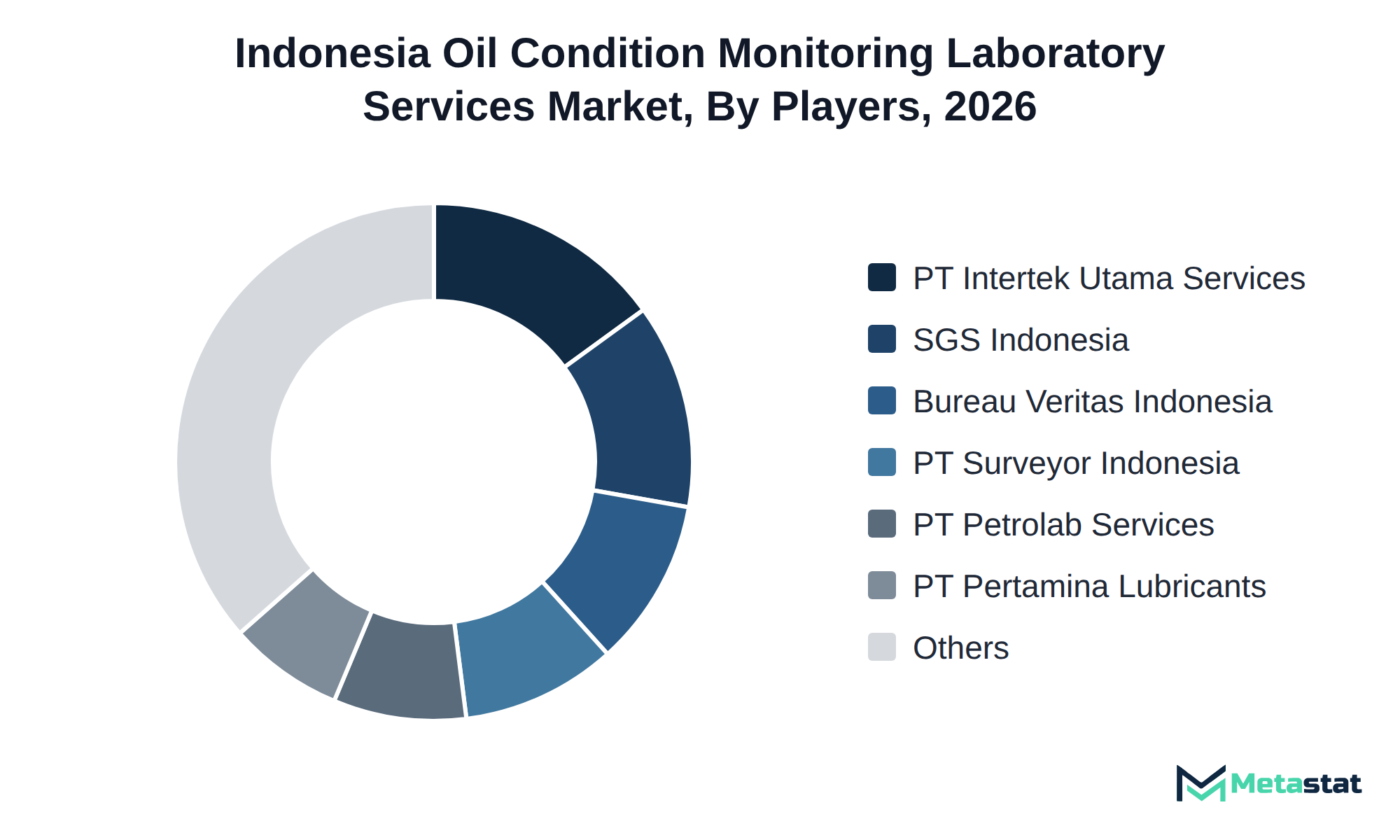
Companies in the Indonesia Oil Condition Monitoring Laboratory Services market adopt various strategic approaches to address the evolving needs of customers. The market primarily divides into segments based on diagnostic service type and service delivery model. Buyers evaluate options based on price, certification, customization, and service quality.
PT Intertek Utama Services focuses on independent third-party laboratory testing, appealing to clients seeking impartial results. SGS Indonesia emphasizes its comprehensive service offerings, catering to sectors including mining and manufacturing. Bureau Veritas Indonesia positions itself through its expertise in contamination analysis, attracting clients requiring specialized testing capabilities.
PT Surveyor Indonesia strives to deliver tailored lubricating oil analysis services, addressing specific buyer requirements. PT Pertamina Lubricants leverages its strong market presence to offer lubricant supplier monitoring programs, ensuring consistent quality for end-users. Shell Indonesia capitalizes on its brand recognition, providing a range of oil condition monitoring services that are well-regarded in the oil and gas sector.
Significant growth in the Indonesia Oil Condition Monitoring Laboratory Services market hinges on several key developments. First, the increasing demand for routine oil condition testing supports overall market expansion. This segment's growth relates directly to industries including mining and oil and gas, where effective monitoring directly impacts operational efficiency and equipment longevity. Second, advancements in contamination analysis and wear debris analysis contribute to revenue growth. The market faces risks from potential fluctuations in global oil prices, which could limit investment in oil condition monitoring services. Economic pressures could slow down adoption rates across key sectors, ultimately impacting future revenue growth. Keeping these developments and challenges in mind is crucial for stakeholders aiming to capitalize on the expanding opportunities within the Indonesia Oil Condition Monitoring Laboratory Services market.
By Fluid Type: Lubricating Oil, Hydraulic Oil, Turbine Oil, Transformer Oil, Gear Oil, Engine Oil, Coolant, Grease, Others (Compressor Oil, Transmission Oil, Industrial Process Fluids)
By Diagnostic Service Type: Routine Oil Condition Testing, Wear Debris and Elemental Analysis, Contamination Analysis, Lubricant Degradation Analysis, Advanced Failure Investigation, Tribology and Root-Cause Diagnosis, Others (Oil Compatibility Testing, Additive Analysis and Specialized Fluid Testing)
By Service Delivery Model: Independent Third-Party Laboratory Testing, Lubricant Supplier Monitoring Programs, OEM and Equipment Dealer Fluid Analysis Programs, Managed On-Site Laboratory Programs, Digital Reporting and Trend Monitoring Programs
By End-Use Industry: Mining, Oil and Gas, Power Generation, Manufacturing, Marine and Port Operations, Construction and Heavy Equipment, Transportation and Logistics, Plantation and Agriculture, Others (Cement, Pulp and Paper, Water Treatment)
The report strategically identifies and profiles the key market players and analyses their core competencies in each sub-segment of the Oil Condition Monitoring Laboratory Services market.
Report Attributes | Details |
Study Period | 2021-2033 |
Base Year | 2025 |
Estimated Year | 2026 |
Forecast Period | 2026-2033 |
Historical Period | 2021-2025 |
Growth Rate | CAGR 4.5% from 2026 to 2033 |
Revenue Unit | USD million |
Segmentation | By Fluid Type, Diagnostic Service Type, Service Delivery Model, End-Use Industry, and Region |
Find answers to common questions about this report
The Oil Condition Monitoring Laboratory Services market size was valued at USD 16.3 million in 2025.
The market is projected to grow at a CAGR of 4.5% during the forecast period from 2026 to 2033.
Lubricating Oil leads the Oil Condition Monitoring Laboratory Services market with a projected value of USD 5.1 million by 2033, based on its growth trajectory compared to other fluid types.
Increased focus on equipment reliability drives demand for oil condition monitoring laboratory services, particularly in sectors including manufacturing and oil and gas. The growth within the lubricating oil segment reflects heightened awareness of maintenance solutions and the critical role lubricants play in maximizing operational efficiency.
Price sensitivity significantly constrains the adoption of oil condition monitoring laboratory services, particularly among smaller enterprises facing challenges in capital allocation. Profitability challenges arise due to increasing operational costs, which force suppliers to reevaluate pricing strategies and impact revenue and margins.
Growth within the lubricating oil segment favors adoption due to rising demand for effective maintenance solutions across various industries. This segment is expected to expand significantly, driven by heightened awareness of equipment reliability and the critical role lubricants play in maximizing operational efficiency.
The Oil Condition Monitoring Laboratory Services market is estimated to reach a valuation of USD 23.1 million by 2033.
Key players operating in the Oil Condition Monitoring Laboratory Services industry include PT Intertek Utama Services, SGS Indonesia, Bureau Veritas Indonesia, PT Surveyor Indonesia, PT Petrolab Services, PT Pertamina Lubricants, and PT Trakindo Utama.
The lubricating oil segment is projected to grow from USD 3.8 million in 2026 to USD 5.1 million by 2033, reflecting a compound annual growth rate of 4.2 percent.
Increased focus on equipment reliability within industries including manufacturing and oil and gas drives demand for oil condition monitoring services, leading to higher spending on diagnostic services.
The analysts below cover Energy and Power research at Metastat Insights.
LEAD ANALYST
Utkarsh Khirodkar is a Lead Market Research Analyst at MetaStat Insight, specializing in market intelligence, technology sector assessments, and competitive strategy.

PRINCIPAL CONSULTANT - ENTERPRISE AI & EMERGING TECHNOLOGIES
Banking & Finance · Electronics and Semiconductor · Energy and Power · Healthcare IT · Information & Technology · Professional Services
Vijay Gunti is a Principal Consultant at MetaStat Insight, bringing over two decades of experience across enterprise digital transformation, technology strategy, and intelligent systems.

ENERGY & INFRASTRUCTURE INDUSTRY CONSULTANT
Automotive and Transportation · Electronics and Semiconductor · Energy and Power · Machinery & Equipment
Saurabh Vasant Ganvir consults for Energy & Infrastructure Industry at MetaStat Insight, specializing in renewable energy, solar EPC, and electric vehicle (EV) infrastructure markets.
Enterprise zero-trust network rollouts are often slowed down by multi-cloud transit latency and proprietary hardware retirement schedules. This study provided realistic total cost of ownership models comparing cloud-delivered security edge solutions against traditional hardware refreshes. The analysis of contract renewal lengths and software maintenance fees gave us clear visibility into enterprise replacement cycles over the next three to five years.
Scaling antibody-drug conjugate manufacturing hinges on contract manufacturing availability for high-potency active ingredients. The MetaStat Insight analysis looked closely at global cleanroom slot constraints, bioconjugation batch failure rates, and supply chain redundancies between the US, Europe, and India. The supplier capability matrix proved genuinely useful for our team when mapping secondary source options across our clinical pipeline.
Floating offshore wind feasibility relies heavily on specialized installation vessel availability and port crane limits, which most broad renewable energy forecasts ignore. The report delivered a thorough analysis of dry dock capacity, mooring chain supply constraints, and raw material pricing trends for deepwater anchor installations. It served as a solid independent sanity check for our offshore project capital expenditure assumptions.
Explore related market intelligence reports worth reading alongside this one.