
LEAD ANALYST
Utkarsh Khirodkar is a Lead Market Research Analyst at MetaStat Insight, specializing in market intelligence, technology sector assessments, and competitive strategy.

Global Fuel Cell Humidifier Market Size, Share, By Humidifier Technology (Hollow-Fiber Membrane Humidifiers, Flat-Sheet Membrane Humidifiers, Evaporative Humidifiers, Spray Humidifiers and Others (Enthalpy-Wheel Humidifiers)), By Humidification Mode (Gas-to-Gas Humidification and Water-to-Gas Humidification), By Rated Fuel Cell Power (Below 50 kW, 50 to below 80 kW, 80 to 120 kW and Above 120 kW), By Application (Passenger Cars, Buses, Commercial Trucks, Material Handling Equipment, Stationary Power Generation, Marine and Rail, Portable Power, Fuel Cell Research and Testing and Others (Aviation, Defense)), Industry Analysis, Growth, Trends, and Forecast, 2026-2033
Report ID
MSI-2432
Published
November, 2026
Pages
292 Pages
Format
Historical
Base year
Forecast
Forecast period
Report Details
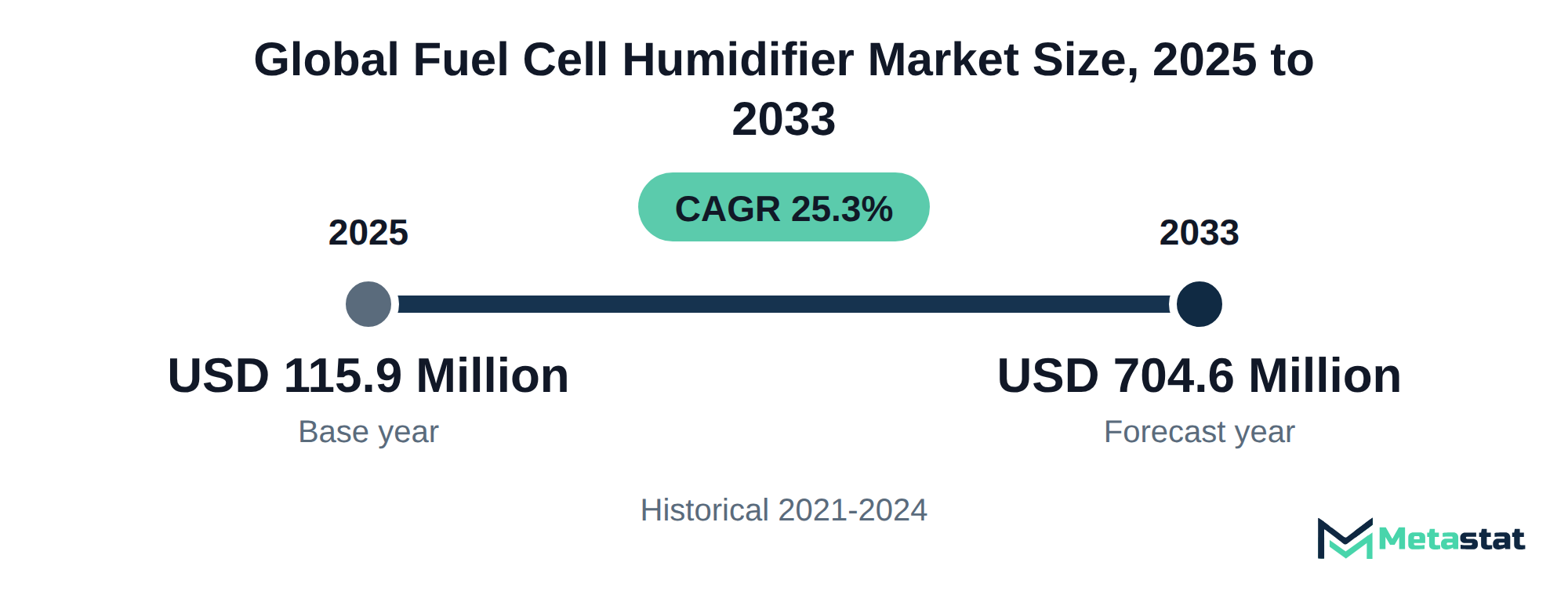
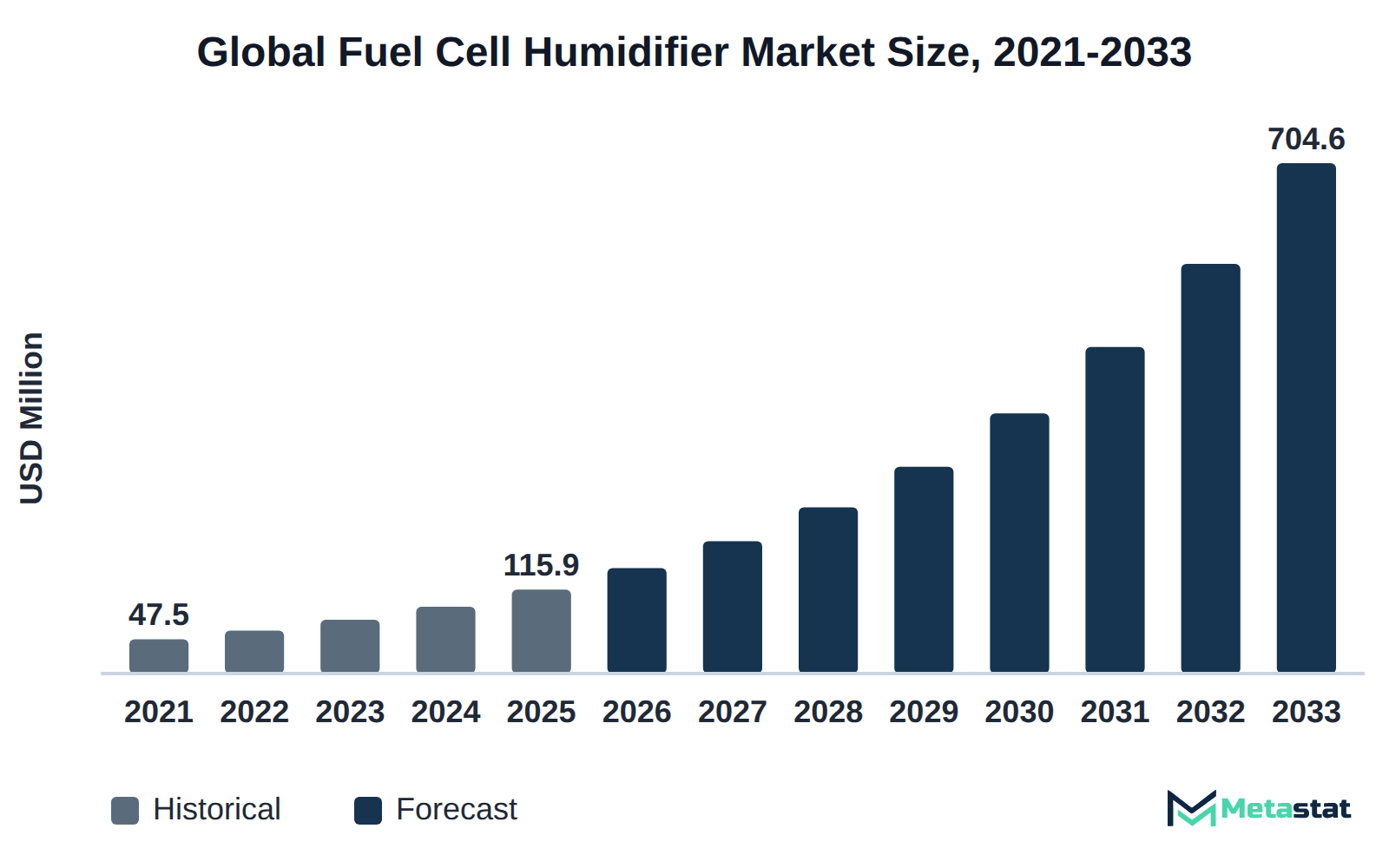
Market Valuation: Valued at $115.9 Million in 2025, projected to reach $704.6 Million by 2033 at a 25.3% CAGR.
Dominant Segment: Hollow-Fiber Membrane Humidifiers lead the market, driven by their advanced efficiency and effectiveness in moisture management, crucial for optimal fuel cell performance.
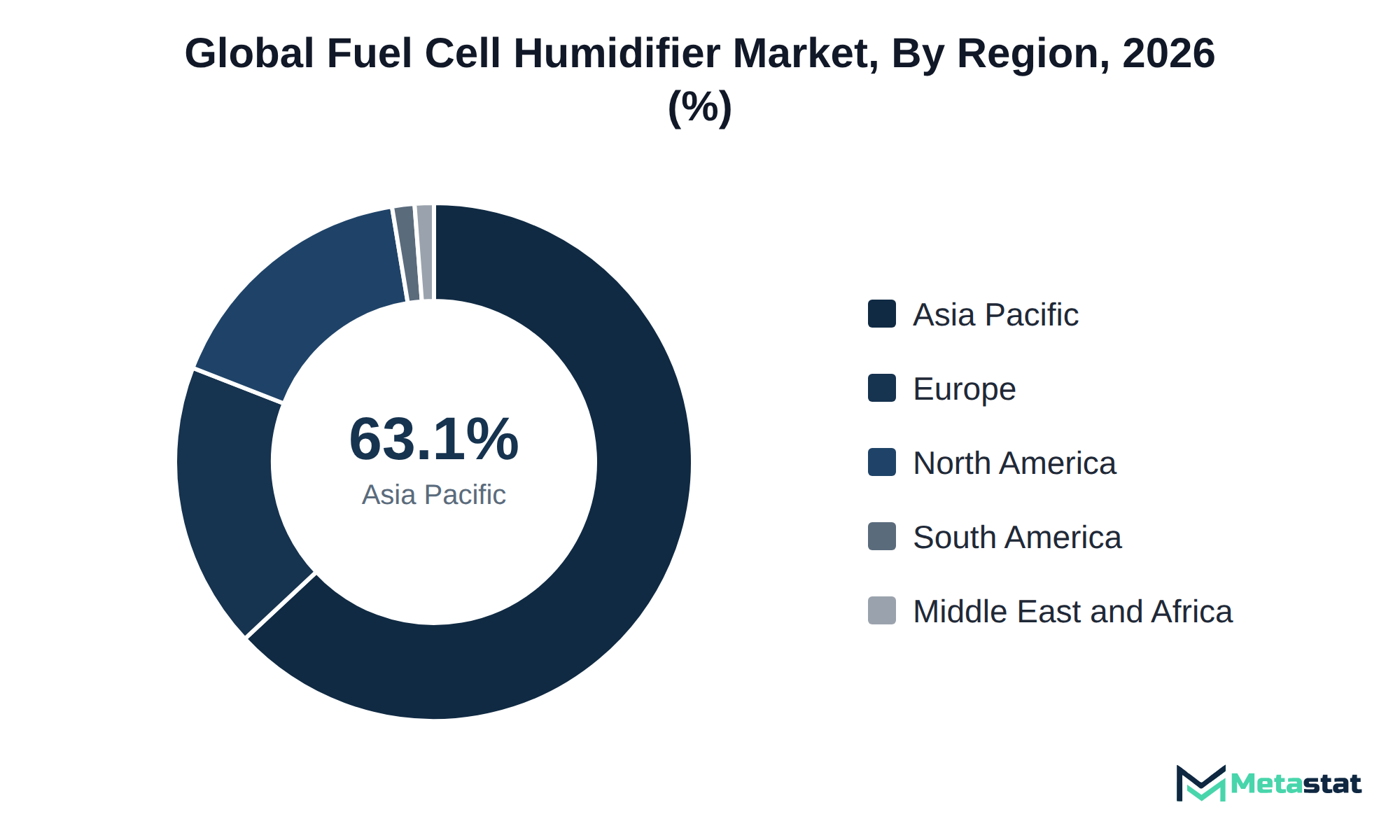
Geographic Lead: Asia Pacific dominates the market with a share of 63.1%, fueled by rapid industrialization and increasing energy demands in the region.
What's Inside: The report provides comprehensive coverage of market dynamics, competitive analysis, and forecasts through 2033, detailing various humidifier technologies and applications.
Technological Advancements: Recent innovations in humidifier technology enhance efficiency and performance, making them increasingly attractive for manufacturers across automotive and industrial sectors.
High Costs Impact Adoption: High costs associated with fuel cell humidifiers limit adoption, particularly among commercial truck manufacturers, affecting overall market growth.
Choose Your License
Global Fuel Cell Humidifier Market
The global Fuel Cell Humidifier market was valued at USD 115.9 million in 2025 and is projected to reach USD 704.6 million by 2033, growing at a CAGR of 25.3% over the forecast period.
The Fuel Cell Humidifier market encompasses various technologies designed to enhance humidity levels in fuel cell systems, ensuring optimal performance and efficiency. Buyers invest in these humidifiers to prevent membrane dehydration, which leads to performance degradation. Key applications include passenger cars, commercial trucks, and material handling equipment such as forklifts, where maintaining specific humidity levels directly influences operational effectiveness.
Significant growth in the market is driven by the increasing demand for fuel cell technologies, particularly in the automotive sector. Among the segments, Hollow-Fiber Membrane Humidifiers represent the largest share, reflecting advanced efficiency and effectiveness in moisture management. In terms of regional distribution, Asia Pacific dominates with a notable share of 63.1%, significantly outpacing North America, which holds 16.5% of the market in 2025, with the US leading in 2026.
Technological advancements and a shift toward sustainable energy solutions further support market expansion. Rising investments in hydrogen fuel cell technologies enhance demand for efficient humidification solutions. The focus on reducing carbon emissions and promoting cleaner energy sources positions the Fuel Cell Humidifier market for substantial growth in the coming years.
Demand for fuel cell humidifiers arises from their role in keeping fuel cells running efficiently. Buyers prioritize these systems for their ability to maintain optimal humidity levels, which directly influences the performance and longevity of fuel cells. The market serves a variety of industrial applications, with significant investment driven by the growing need for reliable energy sources and advancements in fuel cell technology.
Growth in the market is primarily supported by increasing adoption across transportation sectors, particularly in passenger vehicles and buses. The segment of Hollow-Fiber Membrane Humidifiers represents the largest value within the market, reflecting the effectiveness of this technology in enhancing fuel cell efficiency. Asia Pacific holds the largest market share, accounting for 63.1%, driven by rapid industrialization and rising energy demands in the region.
The expansion of fuel cell technology in commercial applications contributes to this growth and raises the need for reliable humidification solutions. Continuous advancements in humidifier technology further enhance market attractiveness and drive investment.
The adoption of Hollow-Fiber and Flat-Sheet membrane designs in the Fuel Cell Humidifier market enhances efficiency and compactness in cathode systems. By 2033, the revenue from Hollow-Fiber Membrane Humidifiers is projected to reach USD 428.5 million, reflecting a compound annual growth rate (CAGR) of 24.4%. This design minimizes space requirements while delivering high performance, making it an attractive option for manufacturers focused on optimizing fuel cell systems.
Flat-Sheet Membrane Humidifiers contribute significantly to the market, projected to achieve a value of USD 207.6 million by 2033 with a CAGR of 28.6%. The flat-sheet design offers ease of integration within existing systems, appealing to sectors aiming for rapid deployment and scalability. Demand for these technologies spans various applications, including passenger vehicles and commercial trucks, driven by the need for improved efficiency and performance.
The transition toward these membrane designs positions suppliers to capitalize on growing market demand and strengthens their competitive edge.
Adoption of heavy-duty vehicles significantly influences the power requirements for fuel cell humidifiers. This trend arises from the increasing integration of fuel cell technology in transportation sectors where higher power levels are essential to meet operational demands. Commercial trucks show a forecast requirement of USD 167.1 million by 2033, reflecting the growing need for efficient humidification solutions tailored to these vehicles.
Buyers in the fuel cell humidifier market engage in long-term contracts to secure their supply and manage price volatility. Fixed-price agreements appeal to buyers, providing cost stability over extended periods. This approach allows manufacturers to forecast revenue with greater accuracy, supporting investments in research and development of advanced humidification technologies. The anticipated growth in the commercial trucks segment directly correlates with the contractual arrangements made by fleet operators seeking reliability and performance.
Growing heavy-duty vehicle adoption drives higher power demands for fuel cell humidifiers. Buyers prioritize agreements that ensure consistent supply and cost efficiency, enhancing their operational effectiveness and supporting the advancement of the market. Such dynamics shape the strategies employed by suppliers to meet the specific needs of these demanding applications.
In the Fuel Cell Humidifier market, water recovery and pressure loss significantly influence purchasing decisions, particularly for commercial truck manufacturers. These customers prioritize systems that optimize water recovery efficiency while minimizing pressure drops during operation. The performance of fuel cell humidifiers directly impacts vehicle efficiency and operational costs for these manufacturers. The segment of commercial trucks is projected to reach a value of USD 167.1 million by 2033.
Investing in high-efficiency humidifiers addresses the operational demands of commercial trucks, where maintaining optimal humidity levels is crucial for fuel cell operation. Improved water recovery leads to reduced frequency of maintenance and enhanced reliability of the overall system. In this context, buyers increasingly seek humidifiers that effectively balance water recovery rates and pressure maintenance, ensuring robust performance under varying operational conditions.
This focus on efficiency and reliability shapes the purchasing landscape, prompting suppliers to emphasize advanced technologies that support superior water recovery and minimized pressure loss. Manufacturers that align their offerings with these specific needs position themselves favorably in the market, capitalizing on the growing trend toward more efficient and sustainable commercial vehicle operations.
The choice of fuel cell humidifier strongly influences the durability of Proton Exchange Membrane (PEM) stacks. Humidifiers that efficiently manage moisture levels within the fuel cell system contribute significantly to performance longevity. For instance, the Gas-to-Gas Humidification method is projected to reach a value of USD 517.3 million by 2033, demonstrating its increasing adoption due to its effectiveness in maintaining optimal humidity conditions. This method offers advantages including improved stack hydration and reduced membrane drying, directly impacting the operational lifespan of PEM stacks.
Effective humidification optimizes performance and reduces the risk of membrane degradation. Inadequate moisture control leads to severe performance issues, incurring significant costs for replacement and maintenance. Consequently, selecting the right humidifier technology becomes a decisive factor for operators in the Fuel Cell Humidifier market aiming to maximize system reliability and reduce operational expenses. Investments in sophisticated humidification solutions lead to enhanced stack durability and, ultimately, improved profitability for stakeholders in the market.
Increased demand for passenger cars significantly influences spending on fuel cell humidifiers. The automotive industry increasingly focuses on incorporating advanced technologies to enhance vehicle efficiency and reduce emissions. This heightened emphasis on sustainability pushes manufacturers to invest in robust fuel cell systems, where efficient humidity control is essential. The market is projected to reach USD 245.4 million by 2033, reflecting a compound annual growth rate of 19.2% for this segment. This growth stems from shifting consumer preferences towards environmentally friendly vehicles and stricter emission regulations. With automakers aiming to improve overall vehicle performance, demand for fuel cell humidifiers is expected to continue rising, creating opportunities for suppliers in the market.
Increased adoption of buses further supports the fuel cell humidifier market. The growing focus on public transportation solutions encourages manufacturers to integrate advanced technologies that ensure optimal performance in fuel cell systems.
Recent innovations in humidifier technology enhance performance and efficiency in fuel cell systems. The introduction of advanced materials and designs, including improved membrane structures, optimizes the water transport process. This technological evolution drives manufacturers to adopt more efficient humidifiers, resulting in enhanced fuel cell operation.
Adoption of these advanced technologies is evident across various sectors, particularly in automotive and industrial applications. Companies in the Fuel Cell Humidifier market use these advancements to deliver products that meet stringent performance requirements. Increased efficiency reduces overall operational costs for end-users, making fuel cell systems more attractive.
Competition intensifies among suppliers, and investments in research and development remain critical. Companies focus on enhancing their technological capabilities to differentiate product offerings in a changing market. This technological progress correlates directly with the growth projections for the Fuel Cell Humidifier market.
High costs associated with fuel cell humidifiers significantly restrict adoption among various buyer groups. The steep pricing impacts commercial truck manufacturers, who face budget constraints when integrating advanced humidification systems into their fleets. This limitation results in slower uptake and reduced order sizes, as these manufacturers prioritize cost-effective solutions. High expenses deter investment in new technology, causing delays in the transition from conventional systems. The market experiences a ripple effect, where potential buyers in other sectors, including passenger cars and material handling equipment, exhibit hesitation in pursuing fuel cell humidifier solutions. Consequently, the overall growth trajectory of the market remains constrained by financial barriers, hampering widespread adoption across industries that rely on efficient fuel cell operations.
Rising input costs present a significant challenge for suppliers within the Fuel Cell Humidifier market. Price increases in raw materials, components, and logistics impact overall production expenses, squeezing profit margins. Suppliers respond by implementing cost-control measures, optimizing supply chains, and exploring alternative sourcing options. Innovative procurement strategies and long-term contracts with suppliers help stabilize costs and enhance predictability in pricing. Investments in research and development focus on improving manufacturing efficiency while maintaining product quality. These approaches help market participants manage cost pressure while preserving competitiveness and profitability. While these measures mitigate financial pressures, ongoing volatility in material costs continues to challenge sustained growth and stability within the market.
The Gas-to-Gas humidification mode is projected to experience significant growth, driven by increasing adoption rates in various applications, including transportation and stationary power generation. This segment is expected to achieve a compound annual growth rate (CAGR) of 26.3% through 2033, illustrating strong demand from industries that prioritize efficiency in fuel cell operations. The expanding market reflects a shift toward innovative technologies that optimize performance in fuel cells, leading to enhanced operational efficiency.
With a projected value increase from USD 100.7 million in 2026 to USD 517.3 million by 2033, the Gas-to-Gas segment offers considerable opportunities for manufacturers and suppliers. This growth aligns with broader trends in the Fuel Cell Humidifier market, where emphasis on efficient, high-performance systems is evident across multiple industries. Companies focusing on developing advanced humidifiers that support this mode are likely to capture emerging market share.
The Global Fuel Cell Humidifier market is segmented based on Humidifier Technology, Humidification Mode, Rated Fuel Cell Power, and Application.
Hollow-Fiber Membrane Humidifiers maintain optimal humidity levels within fuel cells, supporting applications in sectors including automotive and stationary power generation. Increasing regulatory demands for fuel efficiency and lower emissions drive significant interest in this segment. The growth trajectory of Hollow-Fiber Membrane Humidifiers is robust compared to other technologies; for example, Flat-Sheet Membrane Humidifiers exhibit a CAGR of 28.6%, indicating a more aggressive expansion. Buyers favor these systems for their efficiency and compact design, which enhances overall system performance. The distinct advantages provided by Hollow-Fiber designs position them favorably against alternatives, contributing to a competitive environment in the Fuel Cell Humidifier market.
Flat-Sheet Membrane Humidifiers serve applications including transportation and commercial vehicles by providing optimal humidity levels for improved fuel cell performance. The growing emphasis on efficiency and sustainability among manufacturers drives demand for this segment. Compared to other humidifier technologies, Flat-Sheet Membrane designs offer higher growth rates due to their effective moisture retention capabilities and ease of integration into existing systems. The emphasis on reducing operational costs complements the increasing adoption within the market, particularly in applications where performance and reliability are essential. This segment's strong growth trajectory highlights the trend toward advanced humidification solutions in the evolving Fuel Cell Humidifier market.
Evaporative Humidifiers segment is expected to reach USD 37.5 million by 2033. This segment primarily finds application in various industries requiring effective moisture control, including automotive and commercial sectors. Demand is driven by the significant need for maintaining optimal humidity levels in fuel cell systems, which enhances overall performance. The adoption of evaporative humidifiers offers advantages in energy efficiency and cost-effectiveness compared to other technologies, catering to a broad range of buyers, including manufacturers of passenger cars and commercial vehicles. With a compound annual growth rate (CAGR) of 25.9%, this segment demonstrates a faster growth rate relative to other humidifier technologies, reflecting its increasing relevance in the evolving Fuel Cell Humidifier market. Such trends highlight the growing recognition of the importance of moisture management in enhancing fuel cell efficiency and reliability.
Spray humidifiers segment is projected to grow at a CAGR of 23.9% during the forecast period. These devices play a vital role in enhancing humidity levels within fuel cell systems, primarily used in various applications including passenger cars and commercial trucks. The rising demand for efficient fuel cell operation drives the adoption of spray humidifiers, particularly in the transportation sector. Unlike other humidifier technologies, which experience slower growth rates, the spray humidifiers segment benefits from significant advancements in performance and efficiency. The distinct operational characteristics of spray humidifiers make them appealing for specific applications that require precise humidity control. This segment's unique capabilities and ongoing technological improvements highlight its potential to capture a larger share of the market in the coming years.
Enthalpy-Wheel Humidifiers feature a rotating wheel that transfers moisture between exhaust and incoming air streams, ensuring effective humidity control. This technology finds applications primarily in large-scale industrial settings, including commercial buildings and power generation facilities. Demand for Enthalpy-Wheel Humidifiers stems from the increasing focus on energy efficiency and environmental sustainability, compelling industries to adopt innovative solutions for climate control. Unlike Hollow-Fiber and Flat-Sheet technologies, which focus on compact designs, Enthalpy-Wheel systems attract buyers seeking higher efficiency in larger applications. The market experiences competition from alternative humidification technologies, driving investments in research and development to enhance performance and reduce operational costs. Such developments position Enthalpy-Wheel Humidifiers as a viable option for organizations aiming to optimize fuel cell systems.
Gas-to-Gas Humidification is used in fuel cell systems, primarily serving industries including transportation and stationary power generation. The growing emphasis on efficiency drives demand for this segment, enabling optimal performance in fuel cells. Comparatively, the Gas-to-Gas segment demonstrates a faster growth trajectory than the Water-to-Gas humidification mode, which has a CAGR of 22.6%. Increased adoption of fuel cell technologies across various sectors pushes investment in this segment, enhancing its market potential. The focus on reducing emissions and improving energy efficiency supports the market expansion, highlighting the importance of Gas-to-Gas Humidification in modern fuel cell applications.
Water-to-Gas Humidification segment is estimated to reach USD 187.4 million by 2033, at a CAGR of 22.6% during the forecast period. This humidification mode primarily serves applications in industries requiring efficient humidity management, including transportation and power generation. Demand for this segment is driven by the increasing transition towards hydrogen fuel cells, which require effective moisture control for optimal performance. Compared to other humidification modes, Water-to-Gas benefits from a more stable growth trajectory due to its suitability for various applications, unlike Gas-to-Gas humidification, which experiences higher volatility in adoption rates. Technological advancements in fuel cells enhance the efficiency and effectiveness of Water-to-Gas systems, supporting its competitiveness within the market.
Valued at USD 28 million in 2026, this segment is projected to reach USD 100.7 million by 2033, at a CAGR of 20.1% during the forecast period. Fuel cell humidifiers in this segment primarily serve applications involving smaller fuel cells, commonly found in portable power systems and low-capacity vehicles. Demand for these humidifiers stems from the growing adoption of fuel cell technology in markets including consumer electronics and light-duty vehicles. This sub-segment experiences a moderate growth rate compared to the Above 120 kW segment, which has a higher CAGR of 34.9%. Factors influencing this segment include technological advancements that improve efficiency and reduce costs associated with manufacturing and integration, positioning it as a suitable option for buyers focused on budget-friendly solutions. Increased interest from manufacturers seeking to enhance the performance of low-capacity fuel cell applications continues to drive growth in the market.
The 50 to below 80 kW segment is estimated to reach USD 166.5 million by 2033, at a CAGR of 18.7% during the forecast period. This segment primarily serves applications requiring moderate power levels, particularly in commercial trucks and buses. The growing demand for fuel-efficient vehicles drives interest in this segment, reflecting a trend toward reducing emissions in transportation. Compared to other segments, this one experiences slower growth due to higher competition from lower-rated power segments, including below 50 kW, which appeal to cost-sensitive buyers. The moderate pricing associated with this segment positions it as a viable option for manufacturers transitioning to more sustainable power solutions. The market evolution toward increased energy efficiency and environmental sustainability enhances the attractiveness of the 50 to below 80 kW segment.
The 80 to 120 kW segment is expected to reach USD 200.2 million by 2033. Applications for this segment primarily involve medium-sized fuel cell systems used in commercial trucks and buses, providing necessary humidity control to enhance performance and efficiency. Demand in this segment is driven by a growing focus on sustainable transportation solutions, with various governments and industries pushing for cleaner alternatives. Compared to other segments, this category exhibits a moderate growth rate, influenced by the 19.2% CAGR of the passenger cars segment, which attracts more attention and investment. The 80 to 120 kW segment, while essential, faces competition from both lower-powered segments and advancements in alternative technologies, emphasizing the need for continuous innovation to maintain relevance in the dynamic market environment.
This segment primarily serves high-power applications, including large commercial vehicles and industrial machinery. Increasing demand for efficient energy solutions drives growth in this area, with manufacturers recognizing the advantages of using higher capacity fuel cells. Compared to other rated fuel cell power segments, this sub-segment distinguishes itself through faster growth and a focus on specialized applications, appealing to buyers seeking robust performance. The shift toward cleaner technologies in transportation and energy generation further supports this trend. Investments in infrastructure and regulatory incentives for clean energy boost adoption, setting this segment apart from others with lower capacity ratings.
Valued at USD 71.7 million in 2026, the Passenger Cars segment is projected to reach USD 245.4 million by 2033, at a CAGR of 19.2% during the forecast period. This segment primarily serves the automotive industry, focusing on integrating fuel cell humidifiers into vehicles to enhance efficiency and performance. Key drivers for this segment include the increasing emphasis on sustainable transportation solutions and the growing adoption of fuel cell technology in passenger vehicles. Compared to other applications, this segment experiences faster growth, partly due to heightened consumer demand for eco-friendly automobiles. In contrast, commercial trucks and buses exhibit different growth rates, characterized by varying price sensitivities and operational requirements. The Fuel Cell Humidifier market is expected to see a significant shift in market dynamics as automotive manufacturers prioritize innovations aimed at reducing emissions and improving vehicle efficiency.
Buses segment is estimated to reach USD 108.7 million by 2033, at a CAGR of 27.8% during the forecast period. This segment finds application in public transportation, where fuel cell technology enhances operational efficiency and reduces greenhouse gas emissions. The growing demand for cleaner transportation solutions drives the adoption of fuel cell humidifiers in buses, particularly in urban areas. Compared to other applications, including passenger cars, the buses segment experiences faster growth, driven by increasing regulatory support for environmentally friendly transportation options. The transition toward hydrogen-powered buses aligns with global efforts to reduce carbon footprints, making this segment particularly attractive for investment. Key manufacturers focus on developing advanced humidification technologies to optimize fuel cell performance in buses, contributing to overall market growth.
The Commercial Trucks segment serves the logistics and transportation industry, where fuel cell technology enhances efficiency and reduces emissions. The growing demand for cleaner transport solutions drives adoption among fleet operators, who seek to comply with stringent environmental regulations. The rising focus on sustainable logistics establishes a favorable environment for investment in fuel cell technology. Compared to other applications, the Commercial Trucks segment experiences slower growth due to the higher initial investment associated with fuel cell systems. However, ongoing advancements in technology and decreasing costs of fuel cell components create opportunities for increased uptake. The market is anticipated to experience steady growth, supported by regulations aimed at reducing carbon footprints in the transportation sector.
Material Handling Equipment segment is projected to grow at a CAGR of 25.9% during the forecast period. This segment serves industries involved in the transportation and storage of goods, focusing on enhancing operational efficiency in warehouses and distribution centers. The increasing demand for warehouse automation in these sectors drives adoption, with suppliers seeking advanced technologies to improve productivity. Unlike other applications, including Passenger Cars, this segment experiences faster growth due to heightened investment in logistics and supply chain infrastructure. The growing emphasis on sustainability further increases interest in fuel cell technologies, with operators striving to reduce emissions and enhance energy efficiency. By 2033, this segment is expected to contribute significantly to the overall Fuel Cell Humidifier market, underscoring the importance of innovation in material handling operations.
Stationary Power Generation involves using fuel cells to provide consistent electricity for various applications, serving commercial and industrial sectors. This segment supports operations in facilities requiring uninterrupted power supply, including hospitals, data centers, and manufacturing plants. Demand for reliable energy sources drives growth, with environmental regulations pushing industries toward cleaner energy solutions. Compared to other applications, this segment experiences slower growth due to higher initial investment costs and longer payback periods. In contrast, sectors including passenger cars and buses exhibit more rapid expansion due to increasing consumer adoption and technological advancements, highlighting distinct market dynamics. Overall, the Fuel Cell Humidifier market benefits from the shift toward sustainable energy, driving further innovation and investment in this area.
Marine and Rail applications employ fuel cell humidifiers to enhance operating efficiency and maintain optimal humidity levels in onboard systems. This sector primarily serves transportation providers, including shipping companies and rail operators, focused on improving performance and reliability in their transport systems. Key demand drivers include the increasing emphasis on reducing emissions and enhancing energy efficiency in the maritime industry and rail transportation. Compared to other applications, Marine and Rail displays unique operational challenges, often requiring specialized equipment to address varying environmental conditions. Growth in this segment is influenced by regulatory pressures aimed at environmental sustainability, prompting a shift toward cleaner technologies, including fuel cells. The market evolves, driven by advancements in fuel cell technology and the necessity for efficient humidification solutions in increasingly competitive transportation sectors.
Portable power applications employ fuel cell humidifiers for various portable energy solutions. Industries involved include outdoor recreational equipment, emergency power supplies, and military applications. Significant demand for lightweight and efficient energy sources drives adoption in this segment. The focus on reducing emissions and enhancing sustainability influences growth, making fuel cell humidifiers a viable alternative to traditional power sources like batteries and generators. Compared to other sub-segments, portable power applications typically encounter less price sensitivity due to their specialized nature, which caters to niche markets. The market for portable power solutions continues to evolve, emphasizing the importance of innovative technologies and efficiency improvements that enhance overall performance and user experience.
Fuel Cell Research and Testing involves specialized applications that focus on advancing fuel cell technologies through rigorous experimentation and validation. Researchers and engineers apply fuel cell humidifiers to maintain optimal humidity levels during testing processes, ensuring accurate performance assessments. This segment experiences growth driven by the increasing demand for efficient fuel cell systems in various industries. The complexity of research applications often leads to higher pricing compared to other segments, reflecting the need for precision and reliability in testing environments. Unlike applications including passenger cars and buses, which target broader markets with established demand, this segment caters to specific research and development needs, distinguishing it from segments focused on mass production. The market continues to evolve; innovations emerge, influencing the strategies of research entities and academic institutions involved in fuel cell advancements.
This sub-segment includes applications in aviation and defense, where efficient humidity control is crucial for functionality and performance. Fuel cell humidifiers in this area maintain optimal humidity levels in various systems, enhancing operational efficiency. The primary demand drivers include advancements in technology and a push for energy-efficient solutions in these industries. Compared to other applications, this sub-segment experiences slower growth due to higher costs associated with specialized technologies and stringent regulatory requirements. While commercial trucks and buses cater to broader transportation needs, this segment's focus remains on niche applications that require robust performance under challenging conditions. The fuel cell humidifier market benefits from ongoing innovations tailored to meet the specific needs of aviation and defense, ensuring reliability and sustainability in critical operations.
Based on geography, the Global Fuel Cell Humidifier market is divided into North America, Europe, Asia-Pacific, South America, Middle East, and Africa.
Growth in the market is driven by increasing investments in fuel cell technology and a strong push towards sustainable energy solutions. The United States, Canada, and Mexico exhibit growing demand for fuel cell humidifiers, particularly within the automotive and public transportation sectors. Regulatory frameworks promoting clean energy technologies in these countries support market expansion. North America is projected to reach USD 124.6 million by the end of 2033, reflecting robust interest from various industries in adopting fuel cell systems. The market benefits from established manufacturing capabilities and a rising focus on reducing environmental impact, creating opportunities for innovation and collaboration among key players in the region.
In Europe, the Fuel Cell Humidifier market experiences significant demand driven by the automotive and transportation sectors, particularly in countries like Germany, France, and the UK. The region benefits from increasing investments in fuel cell technology and supportive initiatives aimed at reducing carbon emissions. Countries including Italy and Spain contribute to advancements in public transport systems, emphasizing the integration of fuel cell vehicles. The market share in Europe is projected to reach 17.9% by 2025, reflecting growing adoption amid stringent environmental regulations. Russia emerges as a notable participant in this transformation, enhancing its manufacturing capabilities. Combined efforts in research and development across European nations position the market for growth, driving innovation and increasing competition within the industry.
Asia Pacific holds the largest share of the Fuel Cell Humidifier market, accounting for 63.1% of the global total in 2025. This region benefits from strong demand driven by industries including automotive, particularly in China and Japan, where rising environmental regulations support the adoption of clean technologies. Increased investment in infrastructure, including the development of hydrogen refueling stations, supports the market. Countries like India and South Korea exhibit significant growth in fuel cell technologies, enhancing demand for efficient humidification solutions. The market in Southeast Asia reflects similar trends, focusing on innovative applications in public transportation and commercial vehicles. By 2033, Asia Pacific is projected to maintain its dominance, with significant revenue growth anticipated across various segments.
Demand for the Fuel Cell Humidifier market in South America primarily stems from the growing transportation sector, particularly in Brazil and Argentina. The region's challenging infrastructure conditions highlight the necessity for reliable and efficient energy solutions, which fuel cell technologies provide. Brazil's focus on sustainable energy initiatives drives interest in fuel cell applications, contributing to market growth. Argentina's automotive industry increasingly adopts clean technologies, further supporting expansion within the market. In 2025, South America accounted for 1.4% of the global share, reflecting its developing yet significant role in the overall landscape. By addressing regional energy demands, the market is expected to experience growth, driven by evolving consumer preferences towards cleaner alternatives.
The Fuel Cell Humidifier market in the Middle East and Africa represents a niche segment, with Saudi Arabia, the UAE, and South Africa contributing to its growth. Key industries driving demand include automotive, energy, and manufacturing, where humidity control enhances operational efficiency and product performance. Infrastructure developments, particularly in renewable energy projects, support increased adoption of fuel cell technologies. Government initiatives focusing on sustainability and clean energy adoption create a conducive environment for market expansion. Growth potential is expected to remain strong, driven by a combination of technological advancements and rising awareness of the benefits of fuel cell humidifiers.
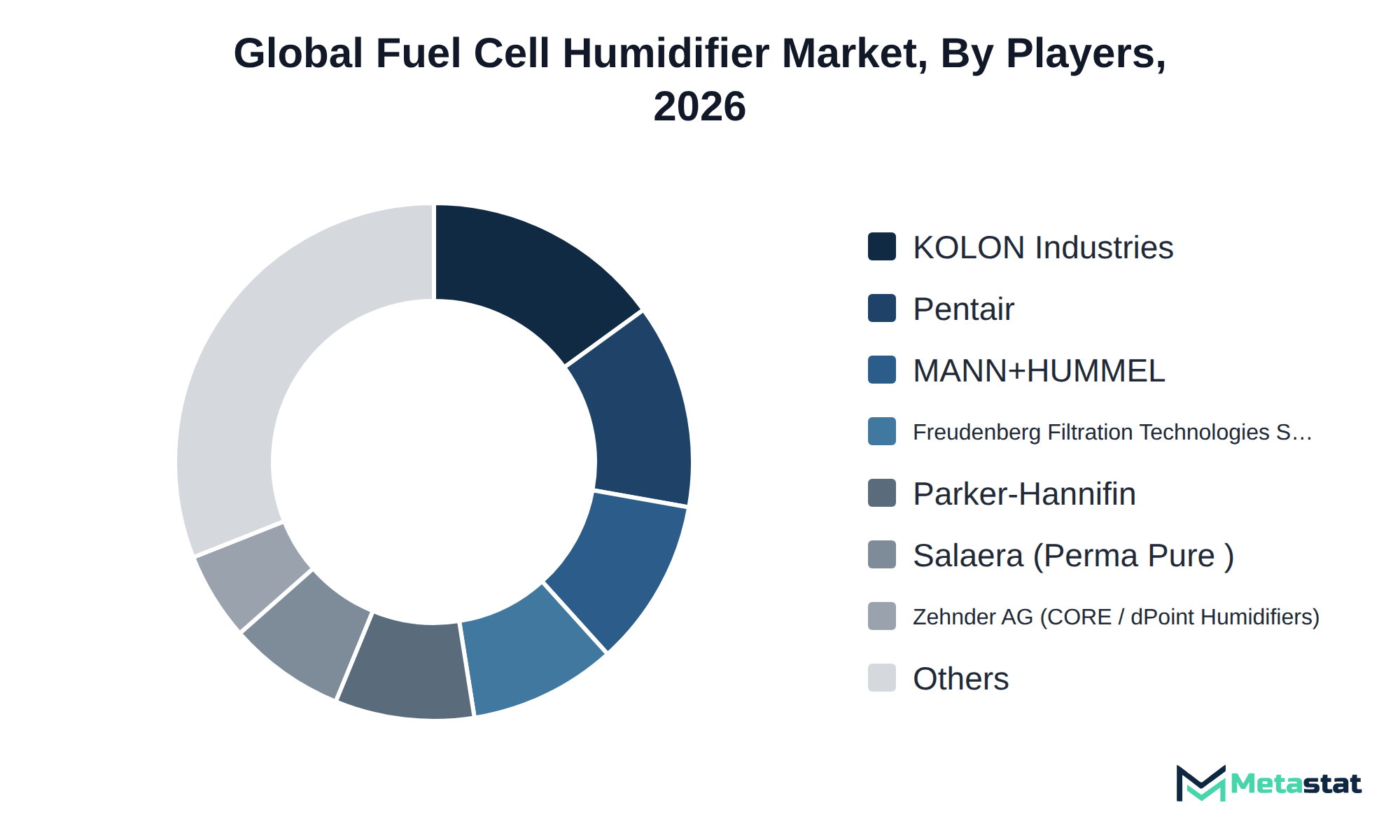
Competition within the Fuel Cell Humidifier market reflects diverse strategies among companies. Key segments include technology type, humidification mode, rated fuel cell power, and application. Buyers prioritize factors including price, certification, customization, and service quality when making purchasing decisions, influencing their choice of suppliers.
KOLON Industries, Inc. focuses on developing advanced humidification technology, tailoring solutions to meet specific customer needs. Freudenberg Filtration Technologies SE & Co. KG emphasizes product quality and reliability, appealing to industries that require robust performance. Pentair plc targets a broad range of applications, leveraging its expertise in fluid management to enhance its market presence. In contrast, Salaera (Perma Pure LLC) and Shenzhen Extender Co., Ltd. concentrate on innovative humidification solutions that cater to specialized sectors, driving their competitive edge in the market.
This growth relies on several key developments within the Fuel Cell Humidifier market. Firstly, innovation in humidifier technology, particularly the expansion of Hollow-Fiber Membrane Humidifiers, is crucial. Secondly, the adoption of Gas-to-Gas Humidification, projected to grow at a CAGR of 26.3%, will drive demand as industries previously reliant on outdated humidification methods transition to more efficient technologies. This shift is particularly significant in the Asia Pacific region, where adoption rates are highest. Risks including supply chain disruptions or regulatory hurdles in key markets could hinder progress. If manufacturers experience increased costs or face delays in technology approval, this could lead to slower than expected adoption rates. Understanding these dynamics is vital for stakeholders aiming to navigate the evolving landscape of the Fuel Cell Humidifier market.
By Humidifier Technology: Hollow-Fiber Membrane Humidifiers, Flat-Sheet Membrane Humidifiers, Evaporative Humidifiers, Spray Humidifiers, Others (Enthalpy-Wheel Humidifiers)
By Rated Fuel Cell Power: Below 50 kW, 50 to below 80 kW, 80 to 120 kW, Above 120 kW
By Application: Passenger Cars, Buses, Commercial Trucks, Material Handling Equipment, Stationary Power Generation, Marine and Rail, Portable Power, Fuel Cell Research and Testing, Others (Aviation, Defense)
The report strategically identifies and profiles the key market players and analyses their core competencies in each sub-segment of the Fuel Cell Humidifier market.
|
Report Attributes |
Details |
|
Study Period |
2021-2033 |
|
Base Year |
2025 |
|
Estimated Year |
2026 |
|
Forecast Period |
2026-2033 |
|
Historical Period |
2021-2025 |
|
Growth Rate |
CAGR 25.3% from 2026 to 2033 |
|
Revenue Unit |
USD million |
|
Segmentation |
By Humidifier Technology, Humidification Mode, Rated Fuel Cell Power, Application, and Region |
|
By Region |
North America (By Humidifier Technology, Humidification Mode, Rated Fuel Cell Power, Application, and Country)
|
|
Europe (By Humidifier Technology, Humidification Mode, Rated Fuel Cell Power, Application, and Country)
|
|
|
Asia Pacific (By Humidifier Technology, Humidification Mode, Rated Fuel Cell Power, Application, and Country)
|
|
|
South America (By Humidifier Technology, Humidification Mode, Rated Fuel Cell Power, Application, and Country)
|
|
|
Middle East and Africa (By Humidifier Technology, Humidification Mode, Rated Fuel Cell Power, Application, and Country)
|
Find answers to common questions about this report
The Fuel Cell Humidifier market size was valued at USD 115.9 million in 2025.
The market is projected to grow at a CAGR of 25.3% during the forecast period from 2026 to 2033.
The North America Fuel Cell Humidifier market size is estimated to reach USD 124.6 million by 2033.
Hollow-Fiber Membrane Humidifiers lead the market with a projected value of USD 428.5 million by 2033, based on the highest growth rate among the segments.
Increased demand for fuel cell humidifiers stems from rising interest in environmentally friendly vehicles and stricter emission regulations. The automotive industry's focus on advanced technologies for efficiency and sustainability drives this growth. the expansion of public transportation solutions further supports the market's development.
Asia Pacific holds the dominant share of the Fuel Cell Humidifier market, accounting for 63.1 percent of the total market. This significant share reflects its leading position compared to North America, Europe, South America, and the Middle East and Africa.
High costs associated with fuel cell humidifiers significantly restrict adoption among various buyer groups, particularly commercial truck manufacturers facing budget constraints. Rising input costs further challenge suppliers, impacting production expenses and squeezing profit margins.
The increasing focus on public transportation solutions and the shift towards environmentally friendly vehicles favor adoption in the fuel cell humidifier industry. Enhanced performance and efficiency from recent innovations in humidifier technology further drive demand across various applications.
The Fuel Cell Humidifier market is estimated to reach a valuation of USD 704.6 million by 2033.
Key players operating in the Fuel Cell Humidifier market include KOLON Industries, Inc., Salaera (Perma Pure LLC), Freudenberg Filtration Technologies SE & Co. KG, Shenzhen Extender Co., Ltd., MANN+HUMMEL GmbH, Pentair plc, and Zehnder Group AG (CORE / dPoint Humidifiers).
The analysts below cover Energy and Power research at Metastat Insights.
LEAD ANALYST
Utkarsh Khirodkar is a Lead Market Research Analyst at MetaStat Insight, specializing in market intelligence, technology sector assessments, and competitive strategy.

PRINCIPAL CONSULTANT - ENTERPRISE AI & EMERGING TECHNOLOGIES
Banking & Finance · Electronics and Semiconductor · Energy and Power · Healthcare IT · Information & Technology · Professional Services
Vijay Gunti is a Principal Consultant at MetaStat Insight, bringing over two decades of experience across enterprise digital transformation, technology strategy, and intelligent systems.

ENERGY & INFRASTRUCTURE INDUSTRY CONSULTANT
Automotive and Transportation · Electronics and Semiconductor · Energy and Power · Machinery & Equipment
Saurabh Vasant Ganvir consults for Energy & Infrastructure Industry at MetaStat Insight, specializing in renewable energy, solar EPC, and electric vehicle (EV) infrastructure markets.
Assessing 200mm wafer transition schedules and substrate supply bottlenecks requires precise technical intelligence. MetaStat Insight supplied an actionable breakdown comparing planar and trench MOSFET architectures across automotive and industrial drive markets. The regional capacity estimates for Asia-Pacific foundries helped clarify lead-time uncertainties during our strategic planning session. When we needed additional clarification on high-purity raw material sourcing, their analyst team responded with helpful context within twenty-four hours.
Tracking maintenance cycle demand for secondary flight display units and terrain collision avoidance systems across regional jet fleets involves complex aftermarket dynamics. MetaStat Insight provided practical analysis separating airline retrofit programs from OEM forward-fit production schedules in North America and Southeast Asia. The supplier matrix highlighted component obsolescence timelines without resorting to vague generalizations. The dataset served as a dependable reference during our annual program review meetings.
Evaluating secondary resin quality across post-consumer packaging streams requires reliable technical segmentation. MetaStat Insight delivered an objective assessment that distinguished between extrusion-grade flake pricing and optical sorting throughput limitations across Western Europe. The competitive positioning breakdown for licensed depolymerization technology providers answered several questions during our feedstock feasibility audit. Their team clarified regional trade restrictions on mixed plastic scrap quickly when our team submitted follow-up requests.
Explore related market intelligence reports worth reading alongside this one.
Starting from
$2950