
LEAD ANALYST
Utkarsh Khirodkar is a Lead Market Research Analyst at MetaStat Insight, specializing in market intelligence, technology sector assessments, and competitive strategy.

Africa LED Lighting Market Size, Share, By Product Type (LED Luminaires and LED Lamps), By End Use (Commercial, Residential, Industrial, Public Infrastructure, Institutional and Agricultural), By Installation Type (New Installations and Retrofit and Replacement Installations), By Region (Southern Africa, Northern Africa, Western Africa, Eastern Africa and Central Africa), Industry Analysis, Growth, Trends, and Forecast, 2026-2033
Report ID
MSI-5509
Published
October, 2026
Pages
284 Pages
Format
Historical
Base year
Forecast
Forecast period
Report Details
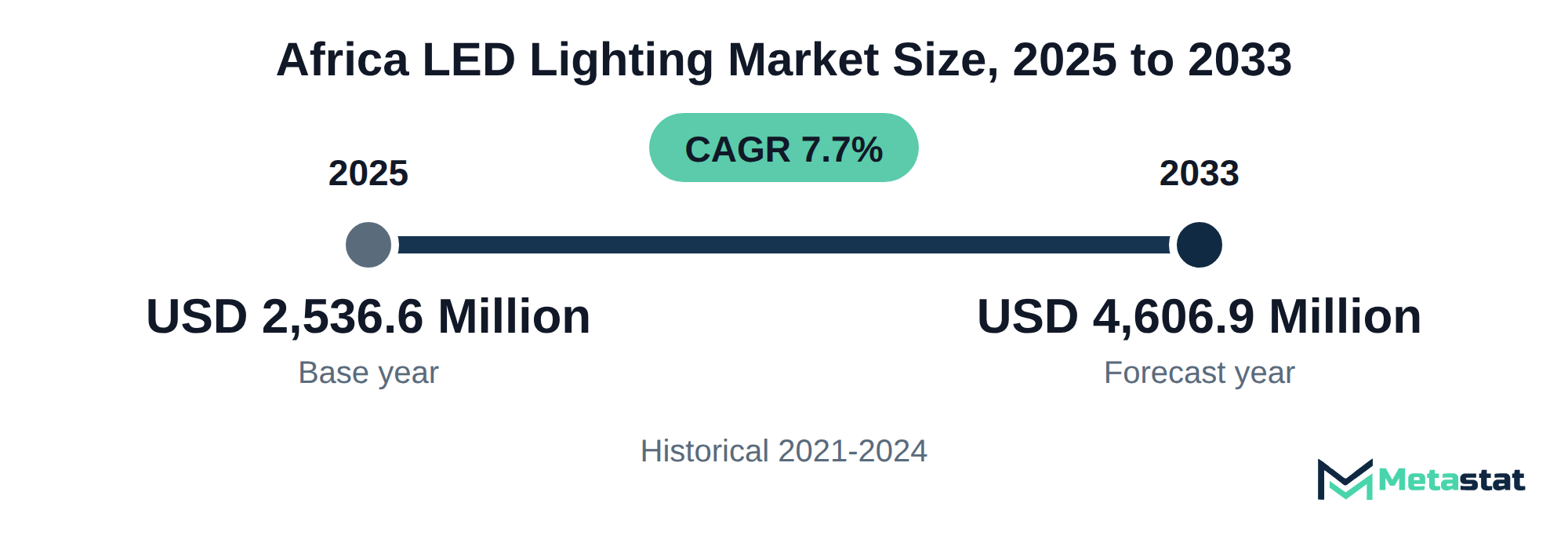
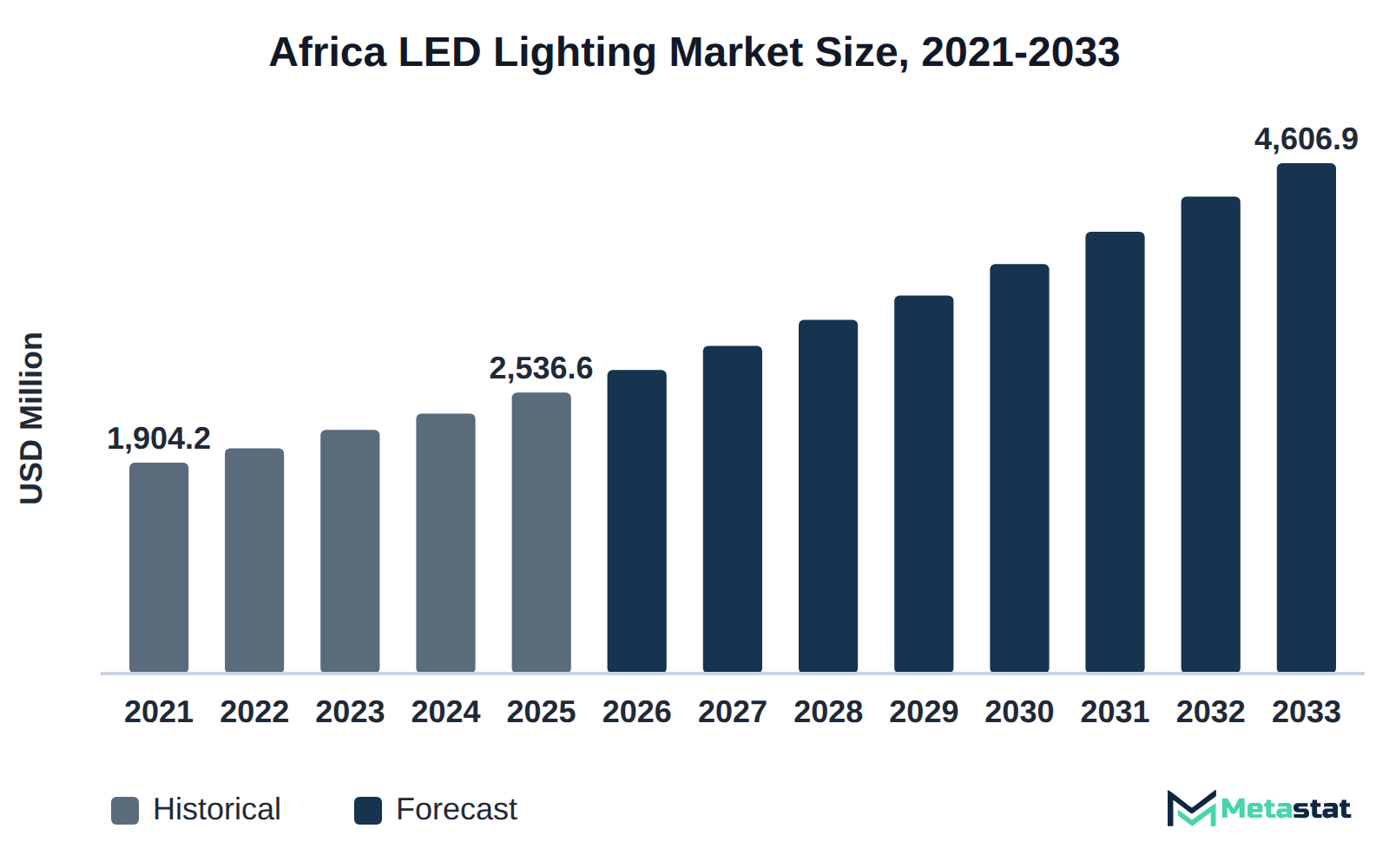
Market Valuation: Valued at $2,536.6 Million in 2025, projected to reach $4,606.9 Million by 2033 at a 7.7% CAGR.
Dominant Segment: LED lamps lead the Africa LED Lighting market, driven by their appeal to a broad consumer base across residential and commercial applications. Their energy efficiency and cost-effectiveness contribute significantly to their market dominance.
Geographic Lead: Southern Africa is the leading region in the Africa LED Lighting market, benefiting from rapid urbanization and infrastructure development that enhances the adoption of energy-efficient lighting solutions.
What's Inside: The report provides a comprehensive analysis of the Africa LED Lighting market, including competitive coverage, segment breakdowns, and detailed forecasts from 2026 to 2033.
Growth in Residential LED Lamps: The residential segment is projected to grow at a CAGR of 6.9%, reflecting increasing consumer awareness and demand for energy-efficient lighting solutions in homes.
Shift to Energy-Efficient Lighting Solut: Commercial lighting is expected to grow at a CAGR of 9.0%, driven by businesses seeking to reduce energy costs and enhance sustainability through modern lighting technologies.
Choose Your License
Africa LED Lighting Market
The Africa LED Lighting market was valued at USD 2,536.6 million in 2025 and is projected to reach USD 4,606.9 million by 2033, growing at a CAGR of 7.7% over the forecast period.
The Africa LED Lighting market encompasses a range of lighting solutions, primarily featuring LED luminaires and LED lamps. Buyers invest in these products due to energy efficiency, longevity, and reduced operational costs compared to traditional lighting options. The increasing focus on sustainability and energy conservation stimulates market demand, particularly in commercial and residential sectors.
Growth in the market is driven by several factors, with the transition towards energy-efficient lighting solutions serving as a primary catalyst. Among the various segments, LED lamps represent the highest value, appealing to a wide range of consumers from households to businesses. Southern Africa holds the largest share of the market, benefiting from rising urbanization and infrastructure development, which enhance adoption rates across the region.
Environmental awareness increases, and the push for energy-saving technologies continues to expand. This trend encourages investment in LED lighting systems, which align with governmental policies and consumer preferences for sustainable practices. The combination of economic growth and technological advancements positions the Africa LED Lighting market for significant expansion over the coming years.
Investment in the Africa LED Lighting market reflects a growing emphasis on energy efficiency and sustainability. Businesses across various sectors prioritize LED lighting solutions due to lower operational costs and longer lifespans compared to traditional lighting options. The market comprises segments including LED luminaires and LED lamps, appealing to commercial, residential, and industrial buyers seeking to enhance lighting quality while reducing energy consumption.
Rising demand for energy-efficient lighting solutions is the main driver of market growth. Among the segments, LED lamps hold the largest share, with significant uptake in residential applications. Southern Africa stands out as the region with the largest market share, supported by rising urbanization and infrastructure development. This region's commitment to modernizing its lighting systems significantly drives market expansion.
Public infrastructure projects further stimulate demand for LED lighting, reflecting a broader trend towards sustainable urban development. Local governments and organizations invest in upgrading public spaces, resulting in a corresponding rise in the adoption of LED technologies. The focus on eco-friendly solutions aligns with global efforts to combat climate change, enhancing the attractiveness of the Africa LED Lighting market.
Off-grid solar LED street lighting has gained significant traction across Africa, addressing the need for sustainable and reliable lighting solutions in areas lacking grid access. This market segment is projected to grow, with a compound annual growth rate (CAGR) of 7.5% for retrofit and replacement installations, indicating a strong shift towards renewable energy sources in the region.
The advantages of solar LED street lighting include reduced operational costs and increased energy efficiency, which appeal to municipalities and local governments focused on sustainability. The initial investment for these systems is offset by long-term savings on energy bills and maintenance costs. Adoption of off-grid solar LED street lighting aligns with urban development plans, particularly in rapidly expanding cities that require innovative solutions to meet public infrastructure needs.
Investment in off-grid solar solutions drives a significant transformation in the Africa LED Lighting market. This trend supports broader energy access initiatives and emphasizes the importance of integrating renewable energy technologies into urban planning strategies. This shift improves market growth prospects and reflects a commitment to sustainable development across the continent.
LED retrofitting in African commercial and industrial facilities achieves significant payback through reduced energy costs and improved operational efficiency. The market increasingly recognizes that installing LED luminaires lowers electricity consumption while also improving lighting quality and lifespan. In 2026, the value of new installations in the Africa LED Lighting market is estimated at USD 656.4 million, indicating strong investment in energy-efficient solutions.
Buyers typically engage in various contract models when pursuing LED retrofitting projects. These include outright purchases, leasing arrangements, and energy performance contracts. Outright purchases allow for immediate ownership and upfront energy cost savings, while leasing provides flexibility and lower initial capital requirements. Energy performance contracts shift the financial burden onto the service provider, allowing buyers to pay based on the energy savings achieved. A related option is lighting as a service, where buyers pay for illumination rather than buying the equipment. This flexibility in purchasing drives adoption across several sectors.
The trend towards LED retrofitting in African commercial and industrial facilities forms part of the wider energy retrofit movement and aligns with broader sustainability goals, reinforcing the commitment to energy efficiency and environmental stewardship. The anticipated growth in the market, projected at a CAGR of 7.7%, creates opportunities for suppliers and buyers alike to capitalize on advancing technologies and reduced operational costs.
In the Africa LED Lighting market, local assembly is essential in meeting the demand for efficient lighting solutions. Reliance on imported lighting products creates significant challenges for manufacturers and suppliers. Many countries on the continent experience heavy dependence on imported LED components, which adds to the overall cost and complexity of bringing products to market. LED chips are part of the broader opto semiconductors category, which supplies core components for LED products. For instance, the base value for the market reached USD 2,536.6 million by 2025, driven partly by the need for locally assembled products that comply with regional standards and preferences.
Buyers in the residential segment particularly exhibit distinct needs, emphasizing affordability and accessibility. With a projected value of USD 2,279.5 million by 2033, the residential sector represents a substantial opportunity for local manufacturers. Establishing assembly plants allows firms to reduce import costs and align their offerings with local preferences, ultimately driving sales. Local assembly supports job creation and economic development, reinforcing the value of investing in domestic production facilities. Domestic assembly also improves competitiveness by meeting buyer demand for reliable, cost-effective lighting solutions.
Voltage instability significantly affects the lifespan of LED lamps in Africa. Fluctuations in voltage levels lead to premature failure of LED lighting systems, reducing their operational efficiency and increasing maintenance costs. The LED lamp segment is projected to reach USD 1,962.1 million by 2033, highlighting the importance of reliability in this growing market. Unstable voltage produces surges and sags that stress the electronic components within LED lamps. This stress results in thermal issues and shortens the expected lifespan of the lamps. An AC voltage stabilizer is one option for limiting the effect of these surges and sags on connected lighting.
Buyers in the Africa LED Lighting market face the challenge of ensuring that their lighting solutions remain functional despite voltage fluctuations. Selecting LED lamps designed with better voltage tolerance and built-in surge protection is crucial for maintaining long-term performance. Ongoing investment in infrastructure improvements across various regions will help stabilize voltage levels and extend the life of LED lamps. Addressing voltage instability protects lighting investments and improves overall energy efficiency in commercial and residential applications.
Commercial buyers increasingly prioritize energy-efficient lighting solutions due to rising energy costs and a stronger focus on sustainability. This shift drives demand for LED luminaires and lamps, which offer long-term operational savings through reduced energy consumption. The transition towards LED technology significantly affects installation volumes, and replacement cycles are accelerating as older, less efficient lighting systems are phased out. In this context, commercial end use is projected to grow at a compound annual growth rate of 9.0% from 2026 to 2033, reflecting the urgency for businesses to enhance their energy profiles. The Africa LED Lighting market sees substantial interest from commercial entities aiming to lower operational expenses while contributing to environmental goals. This trend enhances market dynamics, leading to increased competition among suppliers striving to meet the evolving demands of commercial buyers.
Growing residential adoption of LED technology is evident due to heightened awareness of energy savings and environmental benefits. Homeowners increasingly opt for LED lamps, leading to significant growth in residential end use.
Ongoing advancements in LED technology significantly influence market dynamics. Enhanced LED chip designs and innovative luminaire features provide improved energy efficiency and light quality, attracting a broader range of buyers. The commercial and industrial sectors increasingly adopt these technologies to achieve operational efficiencies and meet sustainability targets. The introduction of smart lighting systems further enhances flexibility and lighting control, allowing users to optimize energy consumption based on real-time needs. Buyers benefit from reduced energy costs and prolonged product lifespans, resulting in lower maintenance expenses. The Africa LED Lighting market stands to gain from these technological improvements, driving further investment and adoption across various segments. Increased competition among suppliers to provide advanced solutions contributes to market growth and customer satisfaction.
Higher costs associated with LED lighting components affect buyer adoption, particularly in the residential segment. The financial burden of upgrading to LED technology deters homeowners, resulting in slower uptake of energy-efficient lighting solutions. Increased prices for LED luminaires and lamps prompt buyers to delay replacement of traditional lighting systems, which subsequently affects long-term energy savings. Budget constraints influence purchasing decisions, pushing several buyers toward lower-cost alternatives that do not offer the same efficiency or longevity. Consequently, overall growth in the Africa LED Lighting market slows as potential customers weigh the initial investment against long-term benefits. Cost-effective strategies that improve affordability are needed to drive adoption among residential buyers.
Profit margins face significant pressure due to rising input costs for LED components. Suppliers experience challenges in sourcing raw materials required for manufacturing LED products, driven by global supply chain disruptions and increased demand for sustainable materials. This scenario impacts the ability to maintain competitive pricing, compelling suppliers to explore alternative sourcing strategies and cost-saving measures. Several manufacturers invest in local partnerships to reduce dependence on imported materials, enhancing operational resilience. Suppliers focus on optimizing production processes and using technology to improve efficiency, which offsets rising costs. The Africa LED Lighting market reflects this transition, with companies adopting innovative solutions to maintain profitability while delivering high-quality lighting products. Such adaptations are critical in an environment with fluctuating material prices and increased competition among suppliers.
Residential lighting represents a significant growth opportunity within the Africa LED Lighting market. With a projected CAGR of 6.9%, demand for LED lamps in residential settings reflects a shift toward energy-efficient solutions among homeowners. Factors driving this expansion include increased awareness of energy consumption, alongside the economic benefits associated with lower electricity bills. The market shows a growing preference for durable lighting options that enhance living spaces.
Investment in LED lamp technology caters to this emerging demand, with suppliers focusing on product innovations that improve performance and reduce environmental impact. The substantial potential for increased market penetration in the residential segment highlights the importance of addressing consumer preferences through targeted marketing and product offerings. Growth in this area is expected to contribute significantly to the overall market value, which is projected to reach USD 4,606.9 million by 2033.
The Africa LED Lighting market is segmented based on Product Type, End Use, Installation Type, and Region.
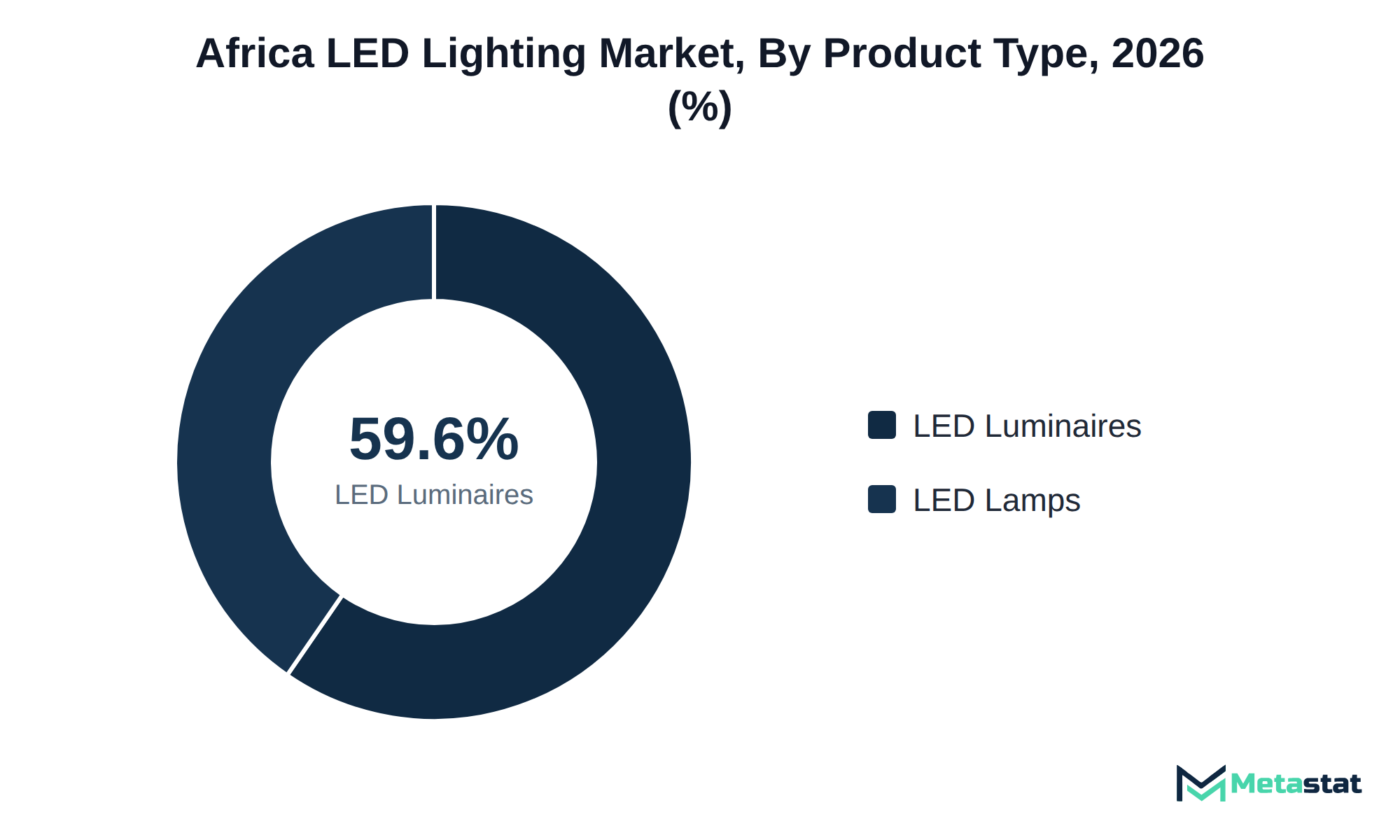
LED Luminaires segment is valued at USD 1,625.2 million in 2026 and is projected to reach USD 2,644.8 million by 2033, at a CAGR of 7.2% during the forecast period. This segment finds application primarily in commercial and industrial settings, providing energy-efficient lighting solutions that enhance workspace productivity and sustainability. The demand for LED luminaires is driven by increasing energy costs and a growing emphasis on green building practices. Compared to LED Lamps, which are projected to reach USD 1,962.1 million by 2033 at a CAGR of 8.4%, LED Luminaires experience slightly slower growth. The higher upfront investment in LED luminaires often leads to a more extended payback period, influencing purchasing decisions among buyers focused on cost efficiency. Investment in this segment reflects broader trends of energy efficiency and sustainability within the Africa LED Lighting market.
The LED lamps segment provides energy-efficient lighting for residential, commercial, and public infrastructure applications. Key drivers of growth include increasing demand for sustainable lighting options and rising adoption of energy-efficient technologies among consumers and businesses. Compared to LED Luminaires, the LED Lamps segment experiences faster growth, with a higher CAGR driven by heightened consumer awareness and the shift towards environmentally friendly alternatives. These products form part of the broader lamps and bulbs industry, alongside traditional lighting options. This growing preference reflects a wider transition towards more sustainable energy consumption in the Africa LED Lighting market.
Commercial lighting is valued at USD 488.1 million in 2026 and is projected to reach USD 889.6 million by 2033, at a CAGR of 9% during the forecast period. This segment serves various businesses, including offices, retail stores, and hospitality, which rely on effective illumination for both functionality and aesthetics. The increasing emphasis on energy efficiency drives demand in this segment, with businesses seeking to lower energy costs while enhancing the customer experience. Compared to other segments, commercial lighting exhibits faster growth, influenced by the need for modern, energy-efficient solutions. This segment outpaces the industrial and residential segments, which have CAGRs of 6.9% and 6.8% respectively. The growing adoption of advanced LED technologies and smart lighting solutions further enhances the commercial segment, distinguishing it from the industrial and residential segments that experience slower adoption rates or face more significant regulatory hurdles.
Residential lighting is estimated to reach USD 2,279.5 million by 2033, at a CAGR of 6.9% during the forecast period. This segment primarily serves households requiring energy-efficient illumination for various living spaces, including kitchens, bedrooms, and living rooms. The ongoing shift towards energy-efficient solutions, driven by rising energy costs, significantly influences this segment. Unlike the commercial segment, which experiences a higher growth rate at a CAGR of 9%, the residential segment's growth rate reflects steady demand and stable pricing. The adoption of smart lighting technologies further distinguishes this segment, providing homeowners with enhanced control and customization options while ensuring compliance with increasing energy regulations. Overall, the residential segment contributes to the emphasis on sustainable and cost-effective lighting solutions.
The industrial LED lighting segment is expected to reach USD 549.6 million by 2033. This segment encompasses industrial lighting equipment and solutions applied in factories and manufacturing facilities, where energy efficiency and operational cost savings remain essential. Demand for LED lighting in industrial applications arises from the need for reliable and sustainable illumination while maintaining high productivity levels. Factors driving growth include increased focus on energy savings and stringent regulations regarding energy consumption. Compared to other segments, the industrial segment experiences a slower growth rate due to higher initial investment costs associated with large-scale installations. The segment benefits from technological advancements that improve efficiency and reduce energy consumption, further enhancing its appeal to industrial users.
Public Infrastructure segment is projected to grow at a CAGR of 8.6% during the forecast period. This segment encompasses lighting solutions used in governmental and community-owned facilities, including streets, parks, and public buildings. Street lighting also forms part of the wider street furniture category found in public spaces. Local governments and municipalities typically adopt these solutions to enhance public safety, promote energy efficiency, and reduce operational costs. The growing focus on urbanization and infrastructure development drives demand for reliable and sustainable lighting. Increased investments in public infrastructure projects significantly impact the segment's expansion. Differentiating from the Residential segment, which is projected to grow at a CAGR of 6.9%, the Public Infrastructure segment exhibits a stronger growth trajectory, driven by larger-scale projects and governmental initiatives. The expected growth of this segment highlights the ongoing shift towards more efficient lighting solutions in public spaces, contributing to enhanced community well-being.
Institutional lighting involves applications in educational, healthcare, and governmental facilities that require reliable and energy-efficient lighting solutions. Institutions prioritize energy efficiency and reduced operational costs, driving demand for LED solutions in this segment. Adoption increases due to the growing emphasis on sustainability and the long lifespan of LED fixtures, which align with the goals of various institutions. Market dynamics differ from other segments, including commercial and residential, which experience different growth rates and consumer preferences. Institutional lighting often faces budget constraints that limit the speed of adoption compared to sectors with more flexible spending. Nevertheless, the focus on energy-saving technologies and compliance with environmental regulations continues to advance the market.
Agricultural applications employ lighting solutions to enhance growth cycles and improve productivity in crop production. Farmers and agricultural businesses adopt LED lighting to optimize yields and extend growing seasons, contributing to food security and sustainable practices. Demand for energy-efficient solutions drives this segment, particularly in environments including commercial greenhouses and indoor farming facilities. Compared to other end-use segments, agricultural lighting experiences unique challenges related to initial investment costs and varying technology adoption rates. While the residential segment sees steady demand, agricultural applications differentiate themselves with a focus on specialized lighting for plant growth, requiring specific spectral outputs and energy efficiency. This emphasis on efficiency aligns with broader trends within the Africa LED Lighting market, highlighting the potential for growth in sustainable agricultural practices.
New installations segment is valued at USD 656.4 million in 2026 and is projected to reach USD 1,160 million by 2033, at a CAGR of 8.5% during the forecast period. This segment primarily serves commercial and residential sectors, facilitating the installation of LED lighting in new constructions and renovations. Increasing urbanization and new infrastructure projects stimulate demand significantly. In comparison to retrofit installations, new installations often attract higher initial investments but lead to greater long-term energy savings and reduced maintenance costs. The anticipated growth rate for this segment surpasses that of retrofit installations, driven by expanding infrastructure needs across the region. The growing emphasis on energy efficiency drives further adoption, reinforcing the segment's important role in the Africa LED Lighting market.
Retrofit and Replacement Installations segment is estimated to reach USD 3,446.9 million by 2033, at a CAGR of 7.5% during the forecast period. This segment focuses on upgrading existing lighting systems in residential, commercial, and industrial settings, providing enhanced energy efficiency and improved lighting quality. The demand for this segment arises from replacing outdated lighting with more efficient solutions, driven by increasing energy costs and a stronger emphasis on sustainability. Compared to New Installations, which are valued at USD 656.4 million in 2026, the Retrofit and Replacement Installations segment experiences a different growth trajectory. With a CAGR of 7.5%, it demonstrates a strong growth rate, appealing to various buyers seeking to lower operational costs while improving lighting performance. Consequently, this segment has an important role in the broader Africa LED Lighting market through its emphasis on resource efficiency and modernization.
Southern Africa segment is valued at USD 895.8 million in 2026 and is projected to reach USD 1,420.3 million by 2033, at a CAGR of 6.8% during the forecast period. This segment serves various applications, including commercial, residential, and industrial lighting, catering to businesses, homeowners, and factories. An increasing demand for energy-efficient lighting solutions drives growth, particularly within commercial and residential sectors. Rising urbanization and infrastructure development across the region facilitate the adoption of advanced lighting technologies. Compared to other segments, Southern Africa displays moderate growth potential, with higher demand from the residential sector, which is expected to reach USD 2,279.5 million by 2033. The competitive landscape includes key players including Signify N.V. and Schréder S.A., contributing to innovation and market expansion with their diverse product offerings in the Africa LED Lighting market.
Northern Africa segment is estimated to reach USD 1,366.9 million by 2033, at a CAGR of 7.2% during the forecast period. This segment primarily serves commercial, residential, and public infrastructure applications, supporting energy efficiency and sustainability in lighting solutions. Urbanization and rising energy costs influence demand, driving growth in this region. Northern Africa's unique climate and economic conditions create specific requirements for energy-efficient lighting systems, setting it apart from Southern Africa's market. With a projected CAGR of 7.2%, growth in Northern Africa is slightly slower than the commercial segment, which achieves a higher CAGR of 9%. The Northern Africa market benefits from increasing investments in infrastructure, ensuring reliable lighting solutions for emerging urban centers and public spaces. Demand is expected to continue rising, driven by public and private sector interest in sustainable lighting solutions that enhance living conditions and promote energy conservation.
Western Africa segment is expected to reach USD 950.4 million by 2033. This segment serves various applications, including residential, commercial, and public infrastructure lighting, catering to diverse buyers including households, businesses, and government entities. Consumer demand is driven by the increasing need for energy-efficient lighting solutions, while urbanization and infrastructure development fuel growth in commercial and public lighting sectors. Compared to neighboring regions, Western Africa experiences moderate growth, influenced by a CAGR that aligns closely with the overall market. The focus on sustainable lighting technologies creates both opportunities and challenges, distinguishing it from other segments with higher or lower projected growth rates, including Northern Africa and Southern Africa.
Eastern Africa segment is projected to grow at a CAGR of 9.6% during the forecast period. This segment finds application in various sectors, particularly in residential and commercial settings, where energy-efficient lighting solutions play a critical role. Increasing urbanization and the expansion of infrastructure drive demand for LED lighting, with consumers favoring LED technologies due to their longevity and lower energy consumption. Compared to other regions, the Eastern Africa segment exhibits faster growth, driven by rising awareness of energy efficiency and sustainability among buyers. The shift towards smart lighting solutions further influences this market, enhancing its attractiveness for new investments and innovation. Overall growth outlook remains positive, supported by ongoing developments in renewable energy and technological advancements in lighting systems.
Central Africa focuses on the adoption of LED lighting solutions for various applications, supporting energy efficiency and sustainability. This region employs LED technology in residential, commercial, and public infrastructure sectors, contributing to overall market growth. Demand in Central Africa is driven by increasing energy consumption and a shift towards renewable energy sources. Government initiatives and policies promoting energy-efficient technologies further support this transition. Compared to other regions, Central Africa experiences unique challenges, including limited infrastructure and varying local regulations, which impact adoption rates. Growth trends differ from those in Southern and Northern Africa, yet the market continues to develop steadily amid these regional nuances and opportunities for investment in energy-saving technologies. The Africa LED Lighting market benefits from the diverse applications and innovations emerging from this segment, providing substantial potential for further expansion.
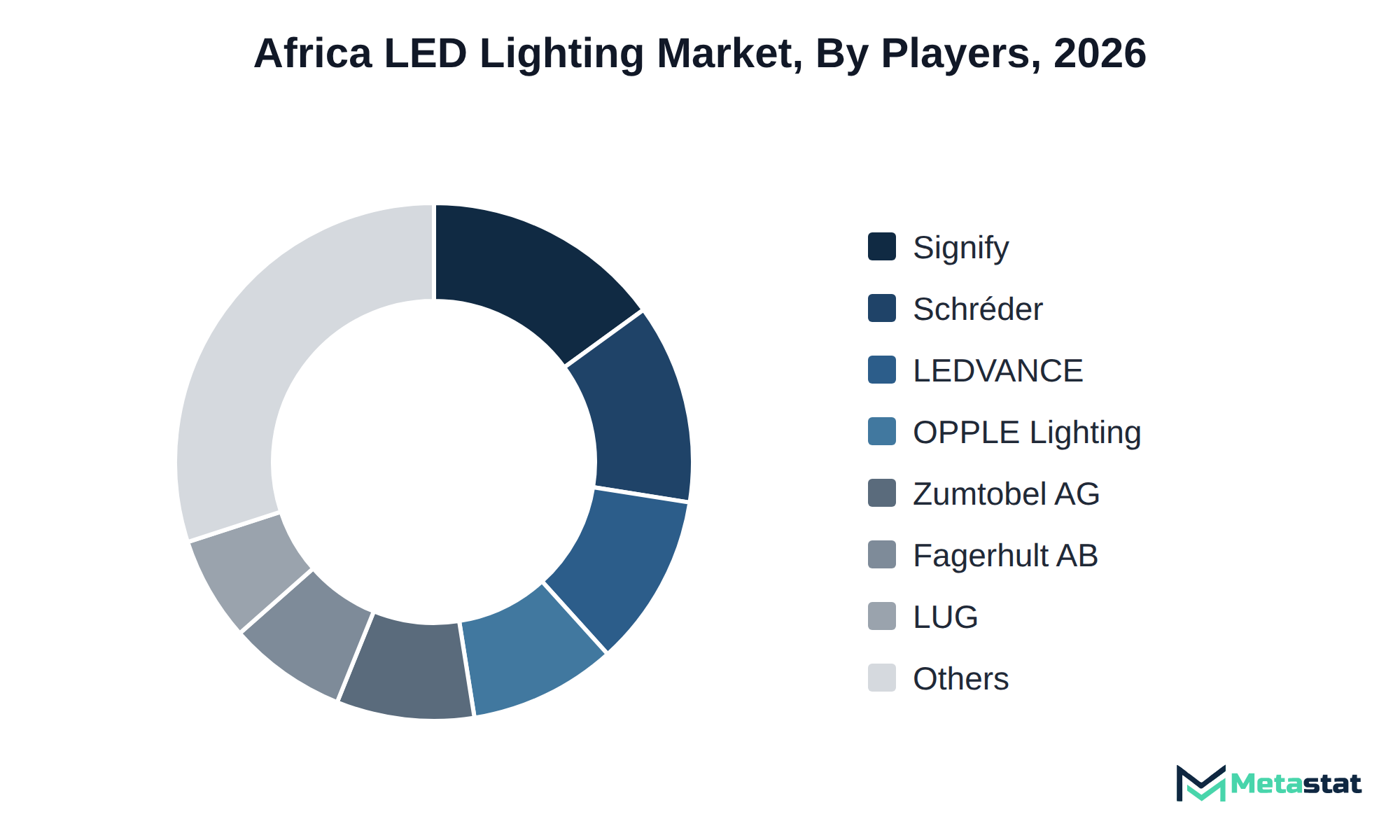
The Africa LED Lighting market features a diverse array of companies that compete on various fronts, including product quality, customization, and pricing structures. Players including Signify N.V. and LEDVANCE GmbH focus on delivering innovative lighting solutions tailored to customer needs, enhancing their appeal to buyers seeking reliability and efficiency. Competition spans various segments including commercial and residential applications, with companies offering unique product features that cater to specific market demands.
Buyers prioritize factors like price, certification, and after-sales service in their purchasing decisions. Companies including Schréder S.A. emphasize certification and energy efficiency, appealing to environmentally conscious consumers. Meanwhile, OPPLE Lighting Co., Ltd. adopts a strategy centered on offering competitively priced LED luminaires that cater to price-sensitive segments. In this competitive environment, suppliers actively refine their offerings to align with evolving consumer preferences, driving growth within the market.
This growth relies on several key developments within the Africa LED Lighting market. First, an increase in adoption of LED Luminaires in the commercial sector is crucial, with expectations of rising demand driven by energy efficiency initiatives. Second, expansion in residential applications will support overall market growth, with LED Lamps anticipated to reach USD 1,962.1 million by 2033, influenced by increasing urbanization and consumer preference for energy-saving solutions. Finally, growth in public infrastructure projects, benefiting from a compound annual growth rate of 8.6%, will further enhance market development across various regions. Despite these positive trends, risks exist that could hinder growth. Economic fluctuations and supply chain disruptions impede manufacturers' ability to meet demand, potentially slowing down the widespread adoption of LED technologies in key sectors. Monitoring these factors will be essential for market stakeholders aiming to navigate this evolving environment.
By Product Type: LED Luminaires, LED Lamps
By End Use: Commercial, Residential, Industrial, Public Infrastructure, Institutional, Agricultural
By Installation Type: New Installations, Retrofit and Replacement Installations
By Region: Southern Africa, Northern Africa, Western Africa, Eastern Africa, Central Africa
The report strategically identifies and profiles the key market players and analyses their core competencies in each sub-segment of the LED Lighting market.
Report Attributes | Details |
Study Period | 2021-2033 |
Base Year | 2025 |
Estimated Year | 2026 |
Forecast Period | 2026-2033 |
Historical Period | 2021-2025 |
Growth Rate | CAGR 7.7% from 2026 to 2033 |
Revenue Unit | USD million |
Segmentation | By Product Type, End Use, Installation Type, Region, and Region |
Find answers to common questions about this report
The LED Lighting market size was valued at USD 2,536.6 million in 2025.
The market is projected to grow at a CAGR of 7.7% during the forecast period from 2026 to 2033.
LED Lamps lead the market with a projected value of USD 1,962.1 million by 2033, surpassing other segments based on revenue.
Commercial buyers increasingly prioritize energy-efficient lighting solutions due to rising energy costs and a stronger focus on sustainability. Residential lighting represents a significant growth opportunity driven by increased awareness of energy consumption and the economic benefits associated with lower electricity bills.
Higher costs associated with LED lighting components hinder buyer adoption, particularly in the residential segment. Budget constraints push many buyers toward lower-cost alternatives that do not offer the same efficiency or longevity.
Growing awareness of energy savings and environmental benefits among homeowners drives the adoption of LED technology in the residential segment. advancements in LED lamp technology cater to consumer preferences for robust, durable lighting options, enhancing market penetration opportunities.
The LED Lighting market is estimated to reach a valuation of USD 4,606.9 million by 2033.
Key players operating in the LED Lighting industry include Signify N.V., Schréder S.A., LEDVANCE GmbH, OPPLE Lighting Co., Ltd., Zumtobel Group AG, and Fagerhult Group AB.
LED Luminaires are projected to reach USD 2,644.8 million by 2033, reflecting a compound annual growth rate of 7.2 percent from 2026.
Eastern Africa exhibits the highest growth rate, with a projected compound annual growth rate of 9.6 percent.
The analysts below cover Energy and Power research at Metastat Insights.
LEAD ANALYST
Utkarsh Khirodkar is a Lead Market Research Analyst at MetaStat Insight, specializing in market intelligence, technology sector assessments, and competitive strategy.

PRINCIPAL CONSULTANT - ENTERPRISE AI & EMERGING TECHNOLOGIES
Banking & Finance · Electronics and Semiconductor · Energy and Power · Healthcare IT · Information & Technology · Professional Services
Vijay Gunti is a Principal Consultant at MetaStat Insight, bringing over two decades of experience across enterprise digital transformation, technology strategy, and intelligent systems.

ENERGY & INFRASTRUCTURE INDUSTRY CONSULTANT
Automotive and Transportation · Electronics and Semiconductor · Energy and Power · Machinery & Equipment
Saurabh Vasant Ganvir consults for Energy & Infrastructure Industry at MetaStat Insight, specializing in renewable energy, solar EPC, and electric vehicle (EV) infrastructure markets.
Integrating zero-trust access controls across legacy electronic health record systems involves complex compliance overhead. Team produced an analysis that clearly separated identity governance and administration tools from privileged access management platforms. Their evaluation of HIPAA and GDPR compliance features across cloud native solutions gave our architecture group clear baseline criteria. The custom data request regarding biometric authentication adoption in hospital networks was returned promptly with clear documentation.
Evaluating calorific value requirements and air permit compliance across municipal waste facilities requires localized data. Metastat Insight structured their analysis around operational throughput capacity and feedstock composition variations in Latin America and Eastern Europe. Their competitive mapping of sorting equipment vendors helped clarify technology differences between optical separators and heavy media systems. The study provided an objective baseline during our capital expenditure reviews.
Decarbonizing industrial thermal processes hinges on refrigerant regulations and compressor efficiency limits. Metastat Insights delivered a thorough market analysis that evaluated natural refrigerants like CO2 and hydrocarbons against synthetic low-GWP alternatives. The breakdown of utility incentives and grid capacity constraints across key European manufacturing hubs offered valuable perspective. The follow-up conversation with their sector analysts addressed our specific questions on mechanical vapor recompression systems efficiently.
Explore related market intelligence reports worth reading alongside this one.