
LEAD ANALYST
Utkarsh Khirodkar is a Lead Market Research Analyst at MetaStat Insight, specializing in market intelligence, technology sector assessments, and competitive strategy.

Global Solar PV Operation and Maintenance Market Size, Share, By Service Type (Preventive and Predictive Maintenance, Corrective Maintenance, Plant Operations and Remote Monitoring, Module Cleaning and Site Upkeep), By Installation Type (Ground-Mounted Systems, Rooftop Systems, Floating Solar Systems), By End Use (Utility-Scale Power Generation, Commercial and Industrial, Residential), By Contract Model (Comprehensive O&M Agreements, Limited-Scope Recurring Agreements, On-Demand Service Contracts), Industry Analysis, Growth, Trends, and Forecast, 2026-2033
Report ID
MSI-5653
Published
October, 2026
Pages
296 Pages
Format
Historical
Base year
Forecast
Forecast period
Report Details
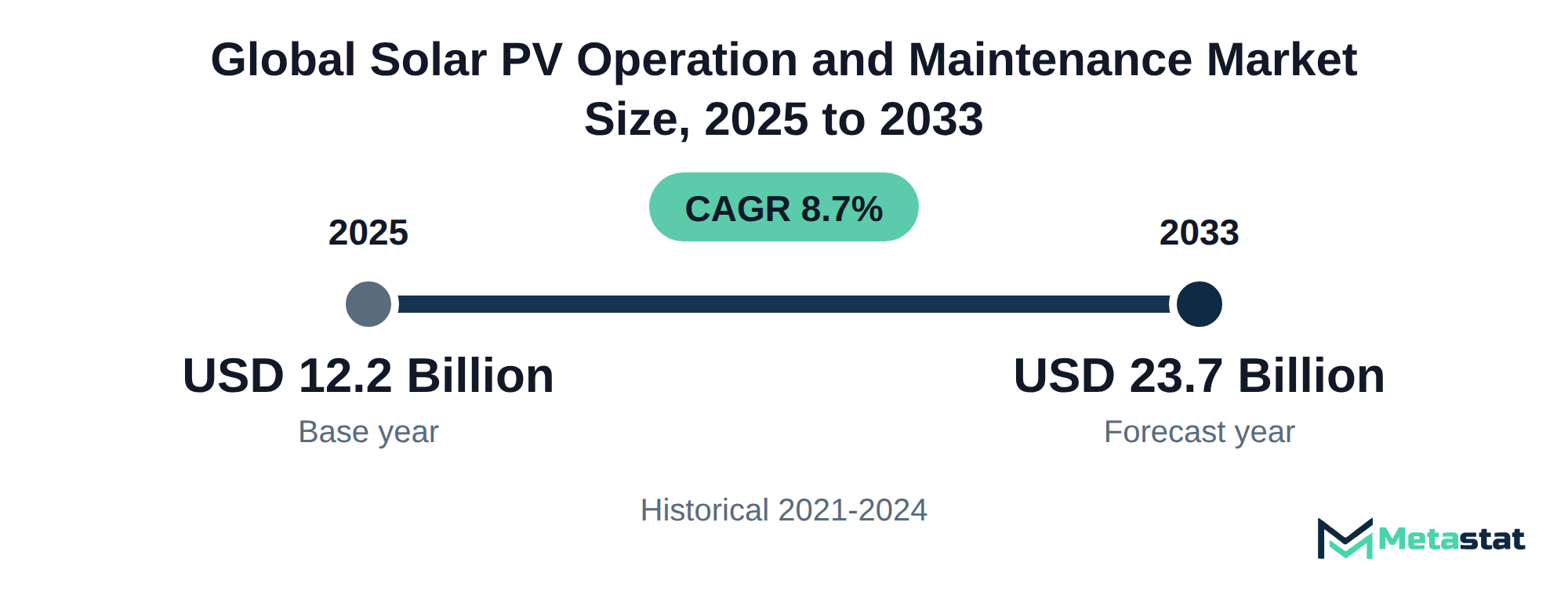
Market Valuation: Valued at $12.2 Billion in 2025, projected to reach $23.7 Billion by 2033 at a 8.7% CAGR.
Dominant Segment: Utility-scale power generation leads the market, driven by a growing reliance on solar energy to meet energy needs sustainably. This segment reflects the largest share of the market, highlighting the demand for reliable maintenance services.
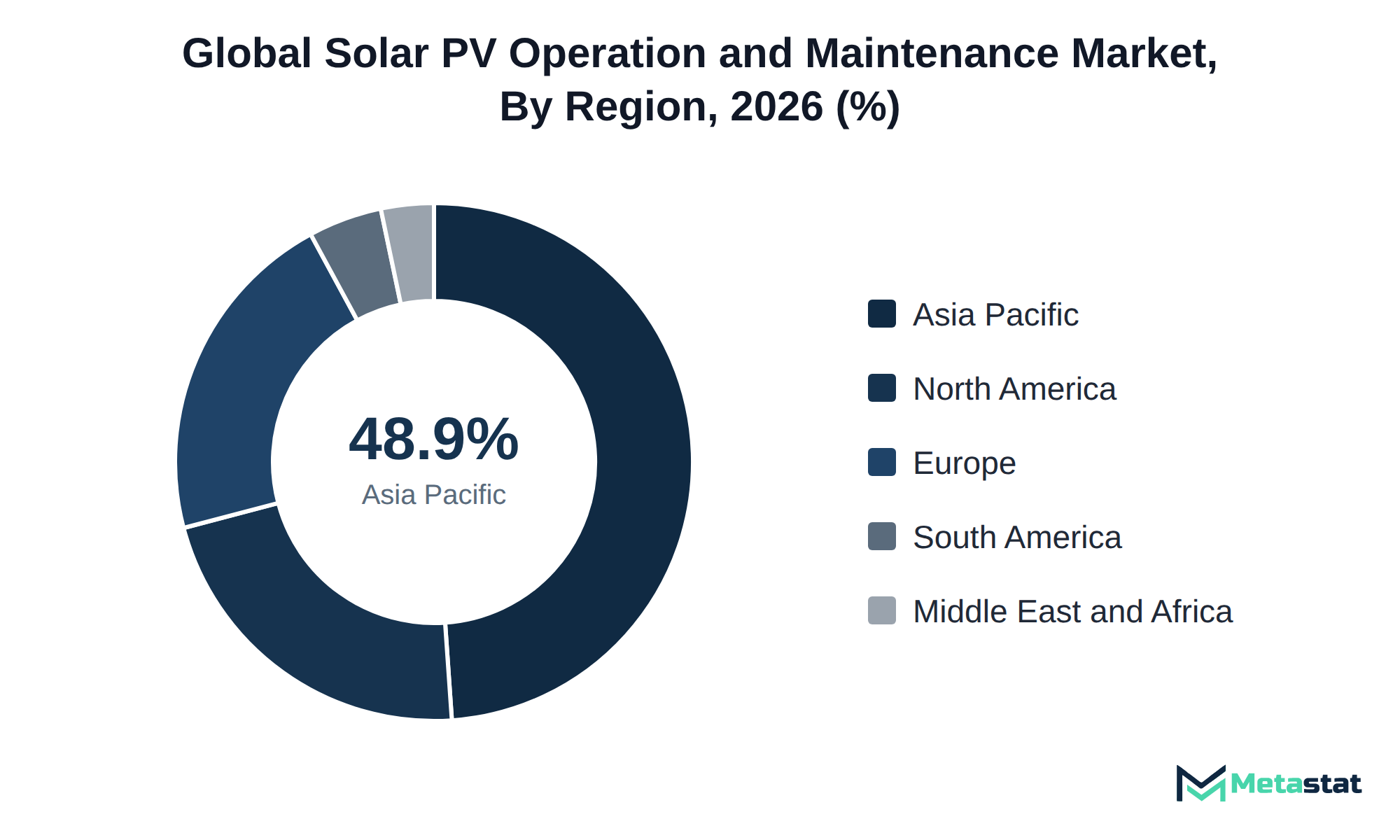
Geographic Lead: Asia Pacific is the fastest-growing region, accounting for 48.9% of the market in 2025, with significant adoption in countries like China and India. This growth is supported by favorable regulatory frameworks and increasing investments in renewable energy.
What's Inside: The report provides a comprehensive analysis of service types, installation types, and end-use segments in the Solar PV Operation and Maintenance market. It includes competitive coverage and detailed forecasts from 2026 to 2033.
Growing Demand for Rooftop Systems: The rooftop systems segment is projected to grow at a CAGR of 9.7% through 2033, driven by increasing interest in sustainable energy solutions among commercial and residential buyers.
Increased Integration of Automation Tech: Automation technologies are enhancing operational efficiency and reliability in the market, allowing for routine inspections and maintenance tasks to be performed with minimal manual intervention.
Choose Your License
Global Solar PV Operation and Maintenance Market
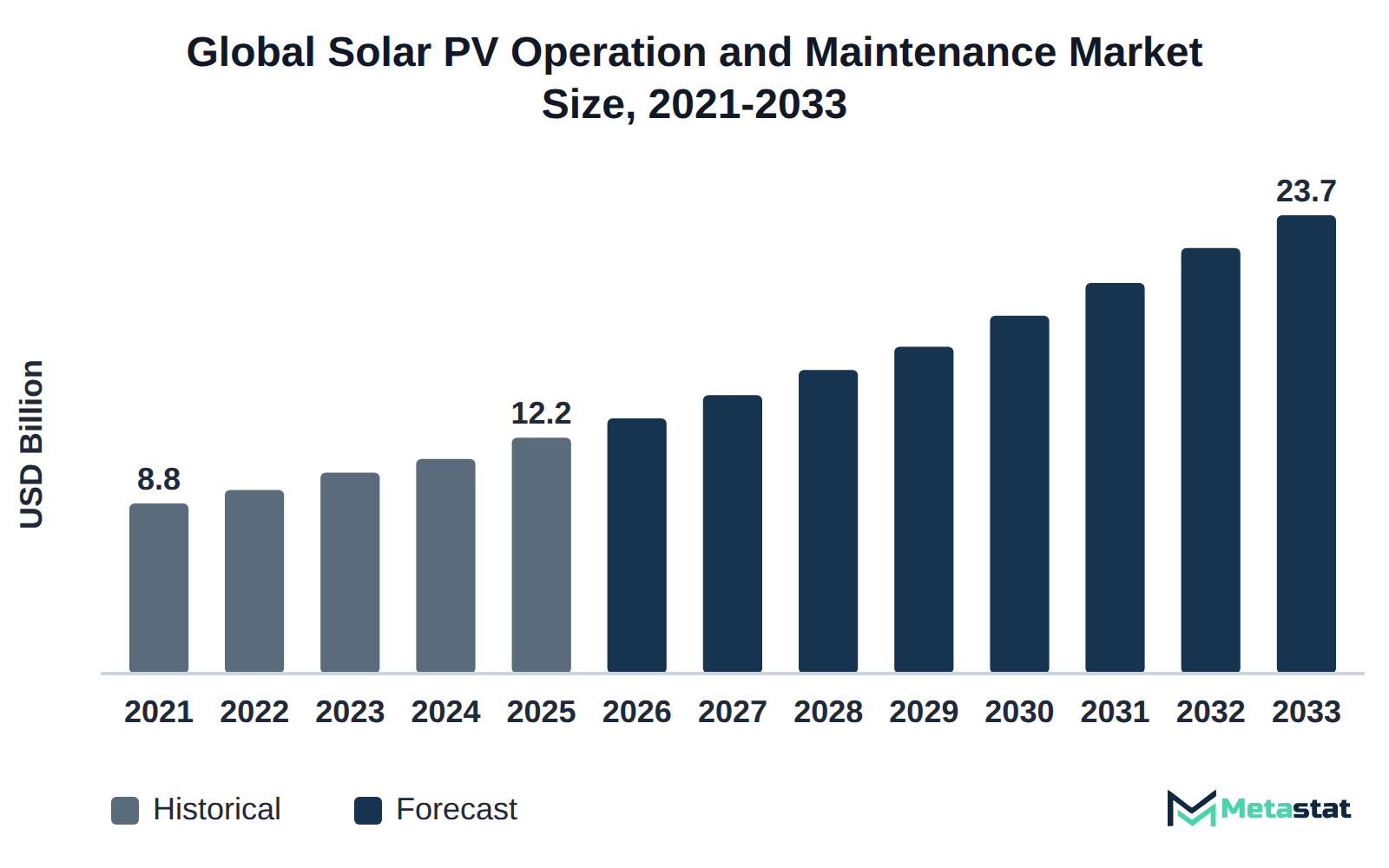
The global Solar PV Operation and Maintenance market was valued at USD 12.2 billion in 2025 and is projected to reach USD 23.7 billion by 2033, growing at a CAGR of 8.7% over the forecast period.
The Solar PV Operation and Maintenance market encompasses a range of services essential for the efficient performance and upkeep of solar photovoltaic systems. Buyers invest in these services primarily due to the need for reliable energy production, system longevity, and compliance with regulatory standards. Preventive and predictive maintenance keeps systems at optimal functionality, while corrective maintenance resolves issues as they arise, protecting the investment and enhancing operational efficiency.
Growth in the market is driven by an increasing demand for renewable energy sources across various sectors, particularly in utility-scale power generation. This segment represents the largest share of the market, reflecting a growing reliance on solar energy to meet energy needs sustainably. North America holds 22.0% of the market in 2025, with the US leading in 2026. The Asia Pacific region follows closely, accounting for 48.9% of the market, indicating significant adoption in countries including China and India.
Key drivers of growth within the market include technological advancements in solar maintenance and monitoring systems. These innovations facilitate enhanced efficiency, providing operators with better tools for performance analysis and system management. Evolving service models, from comprehensive agreements to on-demand contracts, support the market's expansion by matching service scope to each client's needs.
The Solar PV Operation and Maintenance market includes essential services that ensure the optimal functioning of solar photovoltaic systems. Buyers invest in these services to enhance system performance, reduce downtime, and prolong the lifespan of installations. The diverse service offerings, from preventive maintenance to corrective actions and remote monitoring, cater to various operational requirements. These investments reflect a commitment to maximizing energy production and operational efficiency.
Growth within the market is propelled by increasing investments in renewable energy infrastructure, driven by global sustainability goals and energy transition initiatives. Utility-scale power generation represents the segment with the most value, reflecting significant demand for large-scale solar projects. Asia Pacific holds the largest share of the market at 48.9%, reflecting the region's rapid adoption of solar technology and supportive regulatory frameworks that facilitate investment.
This region experiences strong demand for comprehensive O&M agreements, which enhance operational reliability and cost effectiveness for solar projects. Technological advancements and a growing emphasis on sustainable energy solutions continue to shape the solar PV O&M market.
Predictive diagnostics have transformed solar fault detection by enabling proactive field maintenance. This technology enhances the ability to identify potential failures before they disrupt operations. In the Solar PV Operation and Maintenance market, the segment focusing on preventive and predictive maintenance is projected to grow from USD 4.4 billion in 2026 to USD 7.6 billion by 2033, reflecting a compound annual growth rate (CAGR) of 8.2%. This growth points to wider adoption of smart maintenance practices that use real-time data and analytics to minimize downtime and optimize system performance.
Implementing predictive diagnostics facilitates early detection of issues including inverter failures or module degradation, which prevents costly repairs and extends the lifespan of solar installations. By using advanced monitoring and asset performance management systems, operators analyze performance data and receive alerts when anomalies arise, allowing for timely interventions. This proactive approach enhances operational efficiency and improves the return on investment for solar assets. The increasing reliance on predictive diagnostics signifies a shift toward more sophisticated management of solar PV systems, contributing to the overall growth of the market.
The growing number of ageing photovoltaic (PV) fleets drives an increase in demand for corrective maintenance and inverter services. Systems age, and the frequency of malfunctions and inefficiencies rises, resulting in higher operational costs for owners. Corrective maintenance, which focuses on repairing and restoring equipment, is projected to reach USD 6.8 billion by 2033, reflecting a compound annual growth rate (CAGR) of 9.9%. This shift emphasizes the importance of effective service contracts to manage unexpected failures.
Buyers are increasingly opting for comprehensive O&M agreements to mitigate risks associated with ageing equipment. These agreements provide proactive maintenance strategies that include corrective measures, ensuring optimal system performance. The value of comprehensive O&M agreements is expected to surge to USD 15 billion by 2033, supported by a CAGR of 9.4%. This trend highlights a shift away from traditional limited-scope agreements toward more comprehensive service models, enabling buyers to manage their assets more effectively and reduce downtime.
As corrective maintenance needs grow in the Solar PV Operation and Maintenance market, contract models shape how service providers and buyers negotiate pricing and service levels. Effective contracts not only establish clear expectations for maintenance and repair services but influence the overall cost of ownership for PV systems, impacting long-term investment decisions.
Performance guarantees are reshaping utility-scale solar PV Operation and Maintenance contracts. These guarantees, which ensure specified performance levels of solar installations, attract utility companies focused on maximizing operational efficiency and minimizing downtime. The trend emerges from the growing need for reliability in solar energy production, particularly in regions with high competition for renewable energy resources.
Utility-scale power generation, which includes large solar installations, is projected to reach USD 13.9 billion by 2033, reflecting an increasing commitment to renewable energy solutions. The incorporation of performance guarantees into O&M contracts enhances the accountability of service providers, creating a relationship built on trust and performance benchmarks. This shift benefits buyers by ensuring that renewable energy sources contribute effectively to grid stability and energy supply security.
The integration of performance guarantees into contracts aligns the interests of service providers and utility companies, driving a collaborative approach toward achieving operational excellence in the solar PV Operation and Maintenance market. Such arrangements incentivize O&M providers to deliver high-quality services, contributing to the long-term viability and competitiveness of solar energy within the broader energy market.
Full-service solar operation and maintenance (O&M) contracts protect energy yield by keeping solar photovoltaic systems performing reliably at optimal levels. These contracts include comprehensive services including preventive and predictive maintenance, enabling early detection of potential issues before they escalate into costly repairs.
The comprehensive nature of these contracts minimizes downtime and enhances energy production efficiency. With guaranteed maintenance schedules and remote monitoring capabilities, operators maintain high system performance, directly influencing energy output. This proactive approach secures consistent energy yield and aligns with the increasing demand for renewable energy sources. Solar operators benefit from predictable revenue streams and improved return on investment.
Investing in full-service O&M contracts ultimately supports long-term operational success in the market. By safeguarding energy yield through effective maintenance strategies, stakeholders position themselves competitively in a growing sector driven by sustainability and efficiency.
Demand for operation and maintenance services in the utility-scale segment is increasing due to heightened investments in large solar projects. Utility companies and investors recognize the need for reliable maintenance to ensure optimal energy production and return on investment. This shift toward utility-scale projects influences expenditure in the Solar PV Operation and Maintenance market, with anticipated growth driven by the necessity for comprehensive management of extensive solar installations. The market for utility-scale power generation services is expected to reach USD 13.9 billion by 2033, reflecting an annual growth rate of 8.1%. This growth creates opportunities for service providers to enhance their offerings and meet the rising demand for efficient solar system operations.
Growing adoption of renewable energy sources further highlights the significance of maintaining utility-scale solar installations. Increased energy demands and policy support for renewable solutions push operators to seek advanced maintenance strategies that minimize downtime and enhance system longevity. The market evolves while stakeholders prioritize long-term performance and sustainability in their solar energy investments.
The incorporation of intelligent automation technologies enhances efficiency and reliability in the Solar PV Operation and Maintenance market. Automated systems perform routine inspections, maintenance tasks, and remote monitoring, significantly reducing the need for manual intervention. This shift results from advancements in artificial intelligence, machine learning, and IoT applications, which streamline operations and minimize downtime. Solar operators benefit from improved response times to maintenance issues, leading to higher energy yield and reduced operational costs. Automation lowers labor costs while increasing the frequency and accuracy of maintenance activities. The market captures opportunities generated by this trend, particularly in utility-scale applications where operational efficiency directly impacts profitability. Increased reliance on automated solutions influences the competitive landscape, propelling providers to innovate and enhance service offerings. The shift toward automation supports sustainable growth in the sector and contributes to the expansion of the market. Automation technologies represent a significant development that shapes the future of operation and maintenance strategies for solar installations.
High initial costs associated with the installation and maintenance of solar photovoltaic systems deter buyers, particularly in the residential and commercial segments. These price barriers result in a slower uptake of solar technologies, delaying potential investments in solar PV Operation and Maintenance services. Customers often weigh the long-term savings against significant upfront expenditures, leading to smaller orders or deferred decisions. Industries reliant on tighter budgets, including small businesses and residential owners, experience pronounced impacts, causing them to postpone the transition to renewable energy solutions.
In the context of the market, the financial burden linked with comprehensive operation and maintenance contracts further exacerbates hesitance among potential users. Customers frequently seek more cost-effective alternatives or limited-scope agreements, which compromise performance and longevity. This price-conscious mindset affects overall market growth, resulting in missed opportunities for several service providers and buyers seeking sustainable energy solutions.
The rooftop systems segment represents one of the fastest-growing areas within the Solar PV Operation and Maintenance market. A growth rate of 9.7% through 2033 highlights interest among commercial and residential buyers. Increasing emphasis on sustainable energy solutions drives this trend, with urban areas seeking to maximize space utilization through solar installations on existing structures. Buyers prioritize energy independence and cost savings, fueling the adoption of rooftop systems, which offer flexible integration into diverse architectural designs. This segment's expansion creates opportunities for service providers to develop tailored operation and maintenance packages that address the unique needs of rooftop installations.
The market's projected value for rooftop systems is expected to reach USD 7.7 billion by 2033, reflecting an increasing willingness to invest in renewable energy sources. Efforts to enhance system performance and reliability will lead to heightened demand for specialized maintenance services. The ongoing shift toward decentralized energy generation emphasizes the strategic importance of rooftop systems in achieving energy goals.
The Global Solar PV Operation and Maintenance market is segmented based on Service Type, Installation Type, End Use, and Contract Model.
This segment focuses on routine inspections, diagnostics, and maintenance activities that ensure solar photovoltaic systems operate smoothly and efficiently. Utility-scale power generation companies and commercial entities engage these services to maximize their energy output and mitigate potential downtime. Growing awareness of the benefits of proactive maintenance drives demand, particularly in sectors where energy reliability is critical. Compared to other segments, Preventive and Predictive Maintenance exhibits slower growth, influenced by initial investment costs and variable return timelines. The segment's focus on long-term efficiency and cost savings distinguishes it, offering a different value proposition compared to the reactive nature of Corrective Maintenance.
This segment focuses on the repair and restoration of solar photovoltaic systems, addressing specific faults and performance issues that arise during operation. Utility-scale operators and commercial entities primarily employ corrective maintenance services to ensure optimal functionality. The rising number of ageing photovoltaic fleets drives demand for this segment, owing to the necessity to maintain performance standards. Compared to preventive maintenance services, corrective maintenance exhibits a higher growth rate, indicating an increasing urgency for timely interventions in this area. While preventive measures are essential, corrective maintenance effectively addresses immediate needs when systems fail, underscoring its critical role in the overall Solar PV Operation and Maintenance market.
Plant Operations and Remote Monitoring segment is expected to reach USD 5.8 billion by 2033. This segment focuses on the continuous oversight and management of solar power plants, ensuring optimal performance and quick response to issues. Utility companies and large-scale solar operators frequently employ these services to enhance efficiency and minimize downtime. An increasing emphasis on real-time data monitoring drives this segment, reflecting the growing demand for proactive maintenance solutions. With a compound annual growth rate (CAGR) of 8.1%, this segment experiences significant growth, outpacing other service types like Corrective Maintenance, projected to grow at a CAGR of 9.9%. The segment's focus on advanced technology solutions, including remote monitoring tools and SCADA systems, differentiates it from traditional maintenance offerings that require more manual intervention.
Module Cleaning and Site Upkeep segment is projected to grow at a CAGR of 6.7% during the forecast period. This segment focuses on maintaining the cleanliness and operational efficiency of photovoltaic modules, primarily serving utility-scale operators, commercial facilities, and residential users. The segment experiences growth driven by increasing awareness of the impact of dirt and debris on solar energy output, prompting stakeholders to invest in regular cleaning services. Unlike other service types, Module Cleaning and Site Upkeep faces less competition from automated solutions, resulting in a more stable demand trajectory. The emphasis on maintaining optimal performance in solar installations distinguishes this segment, attracting buyers who prioritize long-term energy yield. Corrective Maintenance has a higher projected CAGR of 9.9%, while Module Cleaning and Site Upkeep offers a more consistent but slower growth profile. This reflects its role in routine maintenance rather than reactive service.
Warranty administration and spare parts logistics focus on ensuring the availability and proper management of components necessary for solar PV systems. This service caters primarily to operators of solar installations who require reliable access to essential parts for maintenance and repairs. Factors driving this segment include the increasing complexity of solar systems and the demand for timely repairs. Compared to other service types, this segment experiences slower growth, with customers prioritizing preventive and predictive maintenance strategies that directly enhance system performance and reliability. Operators gain from efficient spare parts logistics, which minimize downtime and support the overall maintenance strategy. The Solar PV Operation and Maintenance market emphasizes the importance of effective warranty administration, contributing to operational efficiency and the long-term viability of solar installations.
Ground-Mounted Systems segment is valued at USD 8.7 billion in 2026 and is projected to reach USD 14.8 billion by 2033, at a CAGR of 7.9% during the forecast period. This segment primarily serves utility-scale solar power generation, where large-scale installations require extensive operational support and maintenance. Increasing investments in large solar projects drive demand for these services, enhancing reliability and energy efficiency. Ground-mounted systems differentiate themselves through a typically higher average cost compared to rooftop systems, attributed to the extensive infrastructure and land requirements. While the market faces challenges from rising operational costs, driven by competition for skilled labor, strong growth within the utility-scale segment provides opportunities for companies focusing on comprehensive maintenance solutions. Overall, the performance of the Ground-Mounted Systems segment significantly influences the dynamics of the Solar PV Operation and Maintenance market.
Rooftop Systems segment is estimated to reach USD 7.7 billion by 2033, at a CAGR of 9.7% during the forecast period. This segment primarily serves residential and commercial clients seeking to utilize solar energy through installations on building rooftops. Demand for rooftop systems is driven by increasing awareness of sustainable energy solutions and regulatory support encouraging solar adoption. Compared to other segments, rooftop systems exhibit faster growth due to lower initial investment requirements and enhanced accessibility for consumers. In contrast, ground-mounted systems, while larger in scale, experience slower growth due to higher land usage and installation costs. The market for rooftop systems significantly contributes to the overall Solar PV Operation and Maintenance market by expanding the consumer base and promoting localized energy generation.
Floating Solar Systems segment is expected to reach USD 0.9 billion by 2033. These systems float on bodies of water, providing an alternative to traditional land-based installations. Floating solar systems are primarily adopted by utility companies and large-scale energy developers seeking to optimize space and enhance energy generation efficiency. An increasing focus on renewable energy sources drives demand in this segment, alongside the use of underused water surfaces, including reservoirs and lakes. The growing popularity of floating solar systems highlights a shift toward innovative solutions that differentiate them from ground-mounted and rooftop systems, with projected growth driven by an expanding market share. This segment's unique positioning within the broader Solar PV Operation and Maintenance market allows for a niche that addresses both environmental considerations and energy production efficiency.
Others (Facade-Integrated PV, Solar Canopies) segment is projected to grow at a CAGR of 10.7% during the forecast period. This segment integrates photovoltaic systems into building facades and solar canopies, appealing to architects and developers focused on aesthetic and functional design. The push for sustainable architecture drives growth, with building owners seeking innovative ways to generate energy without compromising appearance. Demand for this segment is supported by the increasing emphasis on renewable energy sources and energy-efficient building designs. Compared to rooftop systems, which grow at a CAGR of 9.7%, the Others segment experiences a more rapid expansion, reflecting a stronger focus on integrating solar solutions within urban landscapes. Overall, the segment reflects evolving preferences in the Solar PV Operation and Maintenance market, where aesthetics and functionality converge with sustainability goals.
This segment includes large-scale solar projects that supply electricity to the grid and serve utilities. Investors focus on this segment due to increasing demand for renewable energy, driven by regulatory support and the growing need for sustainable power sources. Unlike other sub-segments, including Residential or Commercial and Industrial, this segment features higher capital investments and longer project timelines. The competitive landscape for utility-scale projects emphasizes the importance of effective operation and maintenance strategies, ensuring reliability and performance. The Solar PV Operation and Maintenance market reflects a strong commitment to optimizing energy generation and reducing downtime, highlighting the critical role of service providers in enhancing system efficiency.
Commercial and Industrial segment is estimated to reach USD 7 billion by 2033, at a CAGR of 9.9% during the forecast period. This segment serves businesses and organizations that require reliable energy solutions to power their operations. Growth in this segment is driven by an increasing focus on sustainability and the desire to reduce energy costs. Businesses adopt solar PV systems to meet their energy requirements while minimizing dependence on conventional energy sources. The Commercial and Industrial segment grows faster than the Utility-Scale Power Generation segment, with a higher CAGR of 9.9%. This growth reflects heightened interest in renewable energy initiatives and the implementation of solar PV systems within commercial spaces. Demand for operation and maintenance services remains vital, ensuring optimal performance and longevity of installed solar PV systems. The Solar PV Operation and Maintenance market continues to evolve, driven by the specific needs of commercial entities striving for energy efficiency and sustainability.
The residential segment is expected to reach USD 2.8 billion by 2033. This segment primarily serves homeowners seeking to install solar photovoltaic systems for energy savings and sustainability. The increasing awareness of environmental issues drives demand in this area, alongside governmental incentives that encourage residential solar installations. Compared to other segments, residential operation and maintenance services experience slower growth, reflecting a more cautious purchasing approach from homeowners. This contrasts with the commercial and utility-scale sectors, which exhibit higher growth rates due to larger projects and investments. The market for residential services encounters challenges related to initial installation costs and ongoing maintenance expenses, which affect adoption rates among potential buyers. Nevertheless, the potential for increased energy independence and cost savings continues to motivate residential users to invest in solar technologies, shaping the market's evolution.
This segment provides extensive operational management and maintenance services for solar PV installations, catering primarily to utility-scale power generation and large commercial projects. The segment's growth is driven by the increasing complexity of solar systems and the demand for long-term reliability, with clients seeking comprehensive strategies to maximize efficiency and minimize downtime. In contrast to other contract models, including Limited-Scope Recurring Agreements, this segment typically involves larger investments and offers higher service integration. The market experiences heightened competition, compelling providers to enhance offerings and expand service capabilities to attract clients seeking dependable, comprehensive solutions.
Limited-Scope Recurring Agreements segment is estimated to reach USD 6.5 billion by 2033, at a CAGR of 7.8% during the forecast period. This segment involves contracts that provide maintenance services on a recurring basis but with limitations on the scope, often appealing to customers with smaller-scale solar installations. Commercial and industrial users frequently opt for this model, driven by cost efficiency and flexibility. The demand for these agreements grows due to increasing awareness of solar energy benefits and the desire for predictable maintenance costs. Compared to Comprehensive O&M Agreements, which are projected to reach USD 15 billion by 2033 at a CAGR of 9.4%, Limited-Scope Recurring Agreements offer a more tailored approach, attracting buyers who prioritize specific services without the comprehensive coverage. This targeted approach allows customers to engage in maintenance activities that correspond directly to their operational needs, making it a practical choice in the evolving Solar PV Operation and Maintenance market.
On-Demand Service Contracts segment is expected to reach USD 2.2 billion by 2033. These contracts provide flexible maintenance services for solar PV systems, appealing to a variety of users, including residential, commercial, and utility-scale operators. Demand for this segment is driven by the increasing desire for tailored maintenance solutions that offer quick response times and cost control. Compared to other service types, On-Demand Service Contracts typically involve higher pricing options due to their flexible nature, catering to clients who prefer to pay for services when required rather than committing to long-term agreements. The market's growth reflects a shift in how operators manage their maintenance requirements, emphasizing efficiency and adaptability in an evolving energy landscape while contributing to the overall dynamics of the Solar PV Operation and Maintenance market.
Based on geography, the Global Solar PV Operation and Maintenance market is divided into North America, Europe, Asia-Pacific, South America, Middle East, and Africa.
North America demonstrates significant growth potential in the Solar PV Operation and Maintenance market, driven primarily by the increasing adoption of solar technology in the United States, Canada, and Mexico. Technological advancements in solar energy solutions stimulate demand across various buyer groups, including utility companies, commercial enterprises, and residential customers. The market is projected to reach USD 5.4 billion by the end of 2033, reflecting strong interest in renewable energy sources. Local policies promoting sustainability and investment in solar infrastructure contribute to the region's expanding market share, which holds 22% of the global total in 2025. Rising energy prices enhance the appeal of solar PV systems, further supporting market growth. Stakeholders in this region actively pursue enhancements in operational efficiency and cost-effectiveness, positioning themselves well to capitalize on the anticipated demand for solar PV services.
European countries demonstrate substantial investment in the Solar PV Operation and Maintenance market, emphasizing utility-scale power generation and commercial applications. Germany, France, the UK, Italy, and Spain constitute major contributors, driven by strong government policies promoting renewable energy. A commitment to reducing carbon emissions accelerates growth in solar power installations, enhancing the need for comprehensive maintenance solutions. Europe is projected to capture 21.2% of the global market by 2025. The evolving regulatory landscape further supports the market, presenting opportunities for innovation and expansion within the solar sector. This growth reflects an increasing focus on sustainability and energy independence across the region.
Asia-Pacific represents a significant portion of the global Solar PV Operation and Maintenance market, accounting for 48.9% of the total share in 2025. Rapid industrialization in countries including China and India drives demand for utility-scale power generation, while Japan and South Korea emphasize advancements in rooftop systems. Australia invests heavily in solar infrastructure, aligning with national goals for renewable energy adoption. The region benefits from favorable governmental incentives that encourage solar energy deployment, enhancing market growth. High levels of solar irradiation and technological innovations in maintenance services facilitate operational efficiency. The growing emphasis on sustainability in the Southeast Asia solar energy sector further strengthens the need for effective maintenance solutions, which improve system reliability and longevity.
Brazil and Argentina represent key markets for the Solar PV Operation and Maintenance market, driven by growing demand for renewable energy sources. Investment in solar technology is increasing, supported by various state initiatives focused on sustainability and energy independence. Infrastructure improvements, particularly in power generation capacity, enhance operational reliability for solar installations. The market in South America holds a share of 4.6% of the global total in 2025. Companies focusing on utility-scale and commercial applications find significant opportunities for growth in these countries, creating a favorable environment for operational and maintenance services. The demand for specialized maintenance services, including preventive and corrective maintenance, is expected to rise with increasing installations.
The growth of the Solar PV Operation and Maintenance market in the Middle East and Africa reflects increasing investments in renewable energy projects. Countries including Saudi Arabia and the UAE are investing heavily in solar energy infrastructure, driven by government initiatives aimed at diversifying energy sources and enhancing sustainability. South Africa has shown significant demand for solar solutions, with both commercial and residential sectors adopting solar energy to reduce reliance on conventional power sources. The market in this region holds a share of 3.3% of the global total in 2025, highlighting its potential for future expansion. The market anticipates a growing need for maintenance services to ensure the efficient operation of solar installations across various applications.
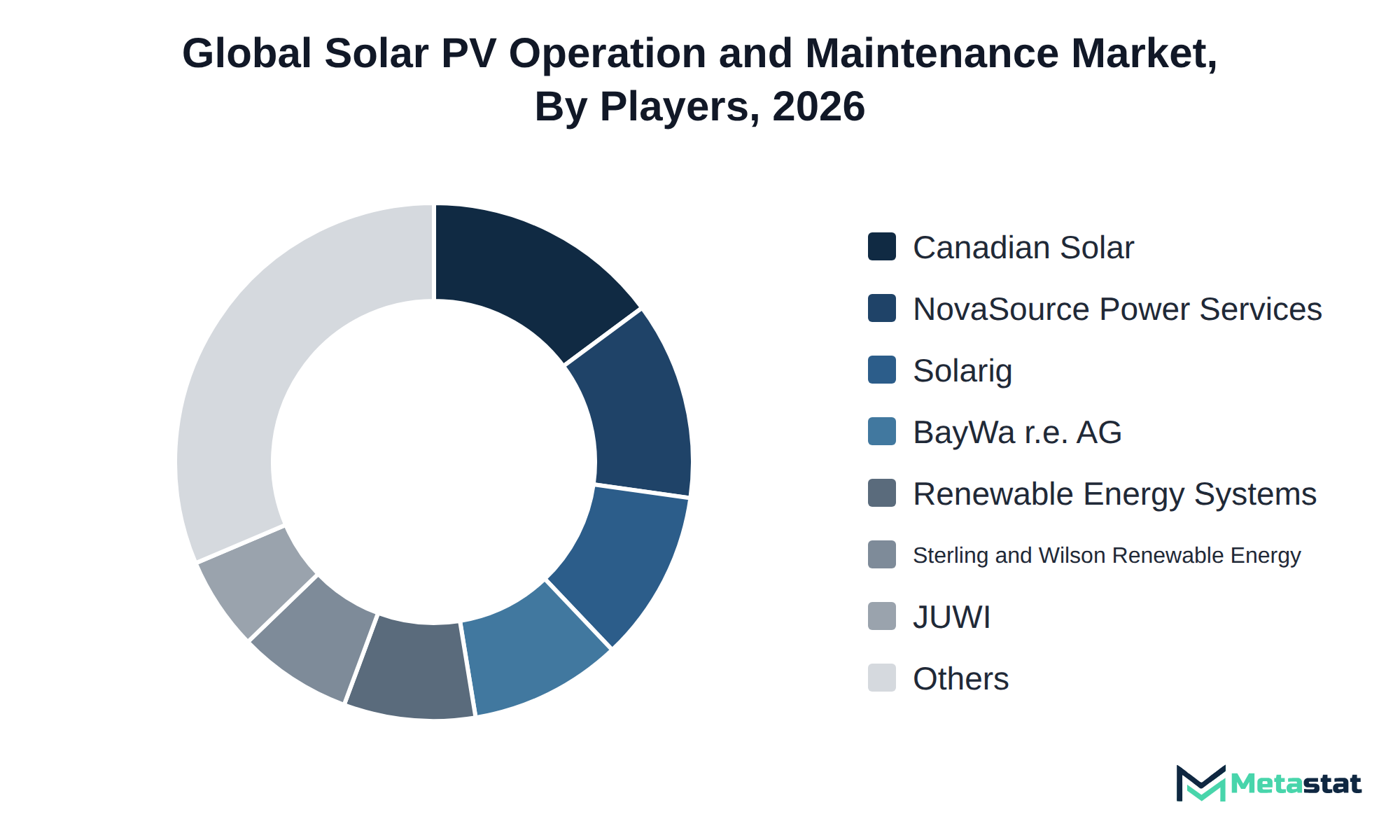
The Solar PV Operation and Maintenance market features diverse service offerings, including preventive and predictive maintenance, corrective maintenance, and remote monitoring services. These options allow buyers to select services based on specific operational requirements and investment strategies.
Price, service quality, and customization drive buyer decisions. Companies including NovaSource Power Services focus on comprehensive O&M agreements, enhancing service reliability and customer satisfaction. Renewable Energy Systems Limited emphasizes advanced technologies in remote monitoring, providing clients with real-time performance analytics. Meanwhile, SOLV Energy, Inc. specializes in corrective maintenance, addressing urgent issues to maximize uptime and efficiency.
The competitive environment highlights various approaches, including comprehensive agreements and on-demand service contracts. Buyers prioritize companies that offer certifications and proven performance histories, ensuring reliable support for solar installations. For instance, EDF power solutions targets utility-scale projects with tailored service models, reflecting expertise in larger installations. Companies like BayWa r.e. AG focus on sustainability, aligning operational practices with environmental standards to attract eco-conscious clients.
Achieving this significant growth depends on several developments within the market. First, the expansion of preventive and predictive maintenance services is projected to enhance operational efficiency. This segment, which is expected to grow from USD 4.4 billion in 2026 to USD 7.6 billion by 2033, will attract more utility-scale power generation projects focused on maximizing performance and reducing downtime.
Second, the rising demand for rooftop systems, particularly in commercial and industrial applications, will influence overall market growth. This segment is anticipated to grow to USD 7.7 billion by 2033, reflecting increased investments in renewable energy infrastructure. However, challenges including rising operational costs and regulatory hurdles could slow down this growth. The impact of these risks could vary across regions, particularly in North America, where market dynamics are increasingly shaped by regulatory frameworks and technological advancements. The Solar PV Operation and Maintenance market demonstrates significant growth potential, but sustaining this momentum requires careful management of these developments and risks.
By Service Type: Preventive and Predictive Maintenance, Corrective Maintenance, Plant Operations and Remote Monitoring, Module Cleaning and Site Upkeep, Others (Warranty Administration, Spare Parts Logistics)
By Installation Type: Ground-Mounted Systems, Rooftop Systems, Floating Solar Systems, Others (Facade-Integrated PV, Solar Canopies)
By End Use: Utility-Scale Power Generation, Commercial and Industrial, Residential
By Contract Model: Comprehensive O&M Agreements, Limited-Scope Recurring Agreements, On-Demand Service Contracts
The report strategically identifies and profiles the key market players and analyses their core competencies in each sub-segment of the Solar PV Operation and Maintenance market.
Report Attributes | Details |
Study Period | 2021-2033 |
Base Year | 2025 |
Estimated Year | 2026 |
Forecast Period | 2026-2033 |
Historical Period | 2021-2025 |
Growth Rate | CAGR 8.7% from 2026 to 2033 |
Revenue Unit | USD billion |
Segmentation | By Service Type, Installation Type, End Use, Contract Model, and Region |
By Region | North America (By Service Type, Installation Type, End Use, Contract Model, and Country)
|
Europe (By Service Type, Installation Type, End Use, Contract Model, and Country)
| |
Asia Pacific (By Service Type, Installation Type, End Use, Contract Model, and Country)
| |
South America (By Service Type, Installation Type, End Use, Contract Model, and Country)
| |
Middle East and Africa (By Service Type, Installation Type, End Use, Contract Model, and Country)
|
Find answers to common questions about this report
The Solar PV Operation and Maintenance market size was valued at USD 12.2 billion in 2025.
The market is projected to grow at a CAGR of 8.7% during the forecast period from 2026 to 2033.
The North America Solar PV Operation and Maintenance market size is estimated to reach USD 5.4 billion by 2033.
Preventive and Predictive Maintenance leads the Solar PV Operation and Maintenance market, with a projected value of USD 7.6 billion by 2033. This segment outpaces others in growth potential, reflecting a compound annual growth rate of 8.2 percent.
Demand for operation and maintenance services is increasing due to heightened investments in large solar projects driven by the need for reliable maintenance to ensure optimal energy production. Growing adoption of renewable energy sources emphasizes the significance of maintaining utility-scale solar installations.
High initial costs associated with the installation and maintenance of solar photovoltaic systems deter buyers, particularly in the residential and commercial segments. This financial burden linked with comprehensive operation and maintenance contracts leads to hesitance among potential users, resulting in smaller orders or deferred decisions.
Growing adoption of renewable energy sources and heightened investments in large solar projects favor adoption in the Solar PV Operation and Maintenance industry. The increasing emphasis on sustainable energy solutions and the need for reliable maintenance to ensure optimal energy production drive demand for efficient solar system operations.
The Solar PV Operation and Maintenance market is estimated to reach a valuation of USD 23.7 billion by 2033.
Key players operating in the Solar PV Operation and Maintenance market include NovaSource Power Services, Renewable Energy Systems Limited, SOLV Energy, Inc., Solarig, Canadian Solar Inc., and Shizen Operations Inc.
Demand for operation and maintenance services in the utility-scale segment is increasing due to heightened investments in large solar projects. Utility companies recognize the need for reliable maintenance to ensure optimal energy production and return on investment.
The analysts below cover Energy and Power research at Metastat Insights.
LEAD ANALYST
Utkarsh Khirodkar is a Lead Market Research Analyst at MetaStat Insight, specializing in market intelligence, technology sector assessments, and competitive strategy.

PRINCIPAL CONSULTANT - ENTERPRISE AI & EMERGING TECHNOLOGIES
Banking & Finance · Electronics and Semiconductor · Energy and Power · Healthcare IT · Information & Technology · Professional Services
Vijay Gunti is a Principal Consultant at MetaStat Insight, bringing over two decades of experience across enterprise digital transformation, technology strategy, and intelligent systems.

ENERGY & INFRASTRUCTURE INDUSTRY CONSULTANT
Automotive and Transportation · Electronics and Semiconductor · Energy and Power · Machinery & Equipment
Saurabh Vasant Ganvir consults for Energy & Infrastructure Industry at MetaStat Insight, specializing in renewable energy, solar EPC, and electric vehicle (EV) infrastructure markets.
Decarbonizing industrial thermal processes hinges on refrigerant regulations and compressor efficiency limits. Metastat Insights delivered a thorough market analysis that evaluated natural refrigerants like CO2 and hydrocarbons against synthetic low-GWP alternatives. The breakdown of utility incentives and grid capacity constraints across key European manufacturing hubs offered valuable perspective. The follow-up conversation with their sector analysts addressed our specific questions on mechanical vapor recompression systems efficiently.
Assessing 200mm wafer transition schedules and substrate supply bottlenecks requires precise technical intelligence. MetaStat Insight supplied an actionable breakdown comparing planar and trench MOSFET architectures across automotive and industrial drive markets. The regional capacity estimates for Asia-Pacific foundries helped clarify lead-time uncertainties during our strategic planning session. When we needed additional clarification on high-purity raw material sourcing, their analyst team responded with helpful context within twenty-four hours.
Tracking maintenance cycle demand for secondary flight display units and terrain collision avoidance systems across regional jet fleets involves complex aftermarket dynamics. MetaStat Insight provided practical analysis separating airline retrofit programs from OEM forward-fit production schedules in North America and Southeast Asia. The supplier matrix highlighted component obsolescence timelines without resorting to vague generalizations. The dataset served as a dependable reference during our annual program review meetings.
Explore related market intelligence reports worth reading alongside this one.