
LEAD ANALYST
Utkarsh Khirodkar is a Lead Market Research Analyst at MetaStat Insight, specializing in market intelligence, technology sector assessments, and competitive strategy.

Global Asset Performance Management Market Size, Share, By Deployment Model (Cloud, On-Premises and Hybrid), By Type (Asset Integrity Management, Predictive Asset Management, Asset Strategy Optimization, Asset Reliability and Others), By Offering (APM Software & Platforms, Condition Monitoring Hardware & Edge Devices, Professional Services and Managed Monitoring & Reliability Services), By End-Use Industry (Oil & Gas, Power Generation & Utilities, Chemicals & Petrochemicals, Mining & Metals, Automotive & Discrete Manufacturing, Food & Beverage, Pharmaceuticals & Life Sciences, Transportation & Infrastructure and Others), Industry Analysis, Growth, Trends, and Forecast, 2026-2033
Report ID
MSI-5270
Published
September, 2026
Pages
261 Pages
Format
Historical
Base year
Forecast
Forecast period
Report Details
Market Valuation: Valued at $4,386.4 Million in 2025, projected to reach $12,084 Million by 2033 at a 13.5% CAGR.
Dominant Segment: The Asset Integrity Management segment leads the market, driven by a strong focus on enhancing operational efficiency and minimizing downtime, particularly in industries like oil and gas and power generation.
Geographic Lead: North America is poised to be a significant growth region, supported by high investments in advanced asset management technologies and a strong regulatory framework emphasizing operational efficiency.
What's Inside: The report includes a comprehensive analysis of market dynamics, competitive landscape, and detailed forecasts for various deployment models, types, offerings, and end-use industries.
Emerging Technologies: Technological advancements, particularly in AI and IoT, are driving market growth by enabling real-time data analysis and predictive maintenance, which are crucial for optimizing asset performance.
Choose Your License
Global Asset Performance Management Market
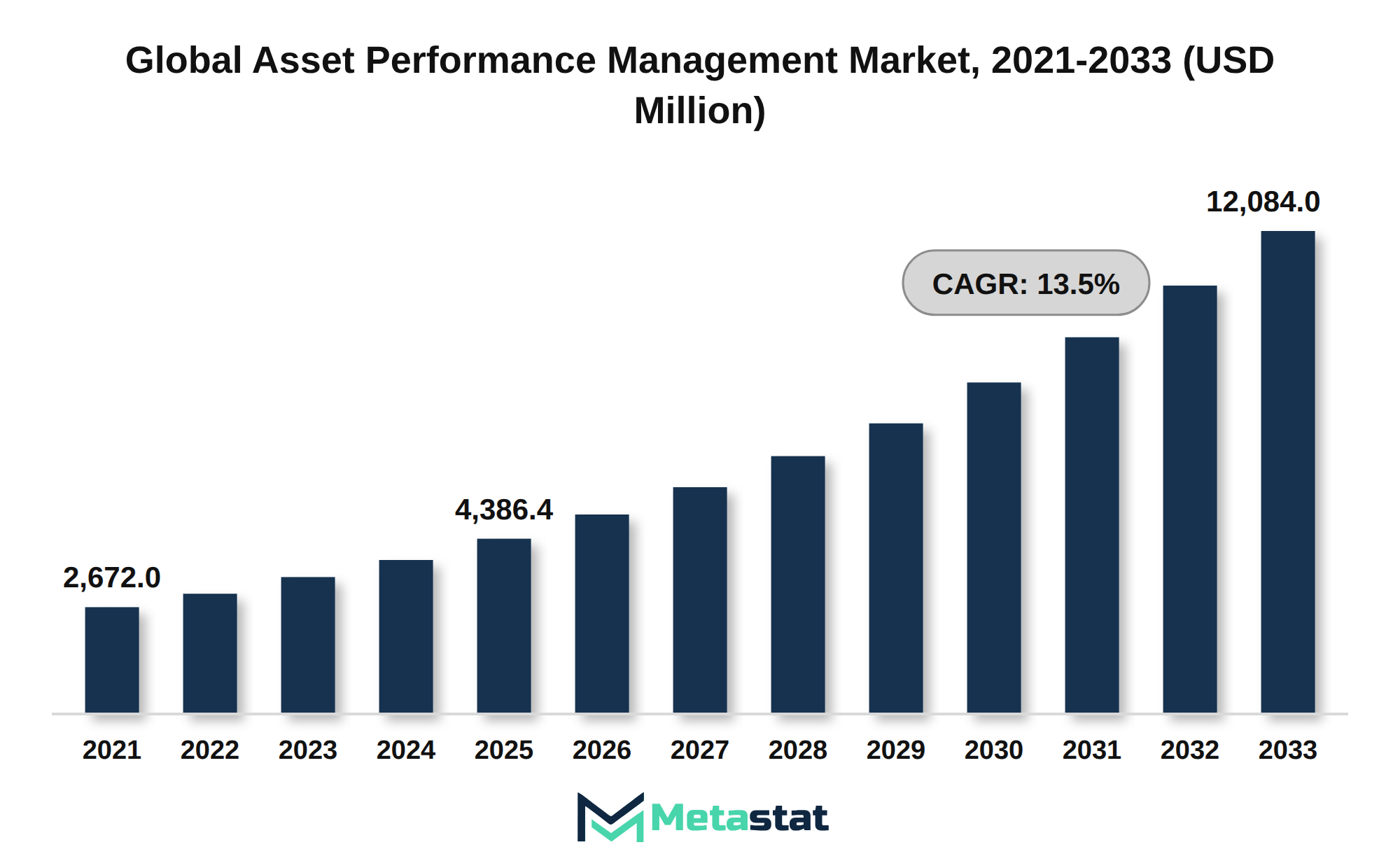
The global Asset Performance Management market was valued at USD 4,386.4 million in 2025 and is projected to reach USD 12,084 million by 2033, growing at a CAGR of 13.5% over the forecast period.
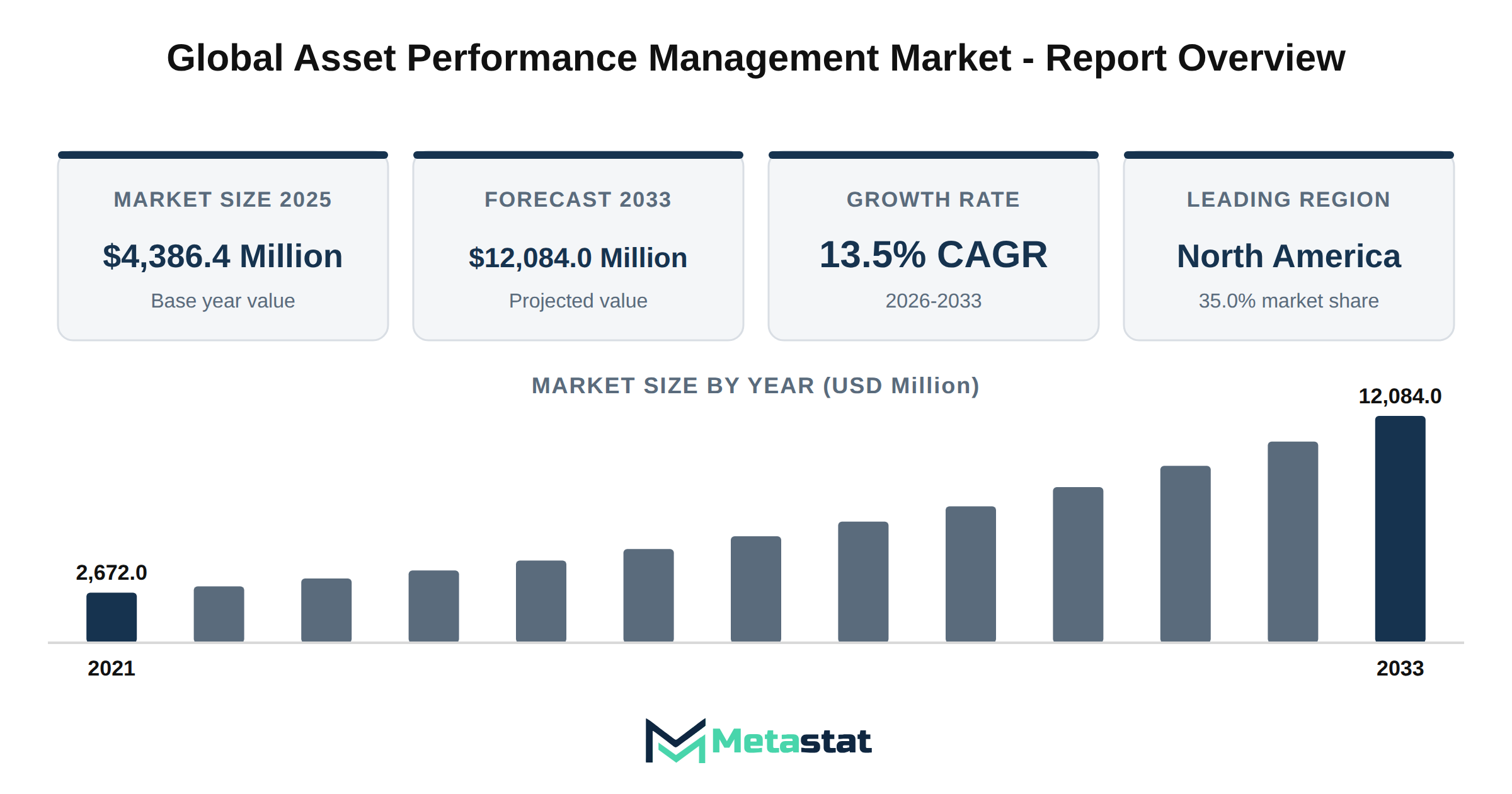
The Asset Performance Management market is projected to grow significantly, expanding from USD 4,386.4 million in 2025 to USD 12,084 million by 2033, reflecting a compound annual growth rate (CAGR) of 13.5%. This growth is driven by several factors, including the increasing shift toward proactive maintenance adoption across various industries. Organizations recognize the value of transitioning from reactive to predictive and prescriptive asset strategies, which enhances operational efficiency and minimizes downtime.
Integration of artificial intelligence (AI), machine learning (ML), and generative AI into asset performance management systems is transforming how organizations monitor and maintain assets. This technological evolution enables real-time operational intelligence, allowing for better decision-making and improved asset reliability. The convergence of operational technology (OT) and IT systems supports this trend, driven by organizations seeking to utilize data insights for enhanced performance.
The evolution of customer buying criteria significantly influences the market landscape. Clients increasingly prioritize solutions that offer real-time asset health monitoring and operational intelligence. This shift emphasizes the need for comprehensive APM solutions that seamlessly integrate with enterprise asset management (EAM), computerized maintenance management systems (CMMS), and enterprise resource planning (ERP) systems.
Competitive dynamics within the market highlight ongoing product developments, strategic partnerships, and mergers and acquisitions. Firms actively invest in enhancing their offerings, aiming to capture market share by delivering innovative solutions and value-added services. The focus on reliability-centered maintenance and asset risk optimization is critical, particularly in sectors including oil and gas, utilities, manufacturing, and mining.
The expansion of cloud-based asset performance management solutions across industrial enterprises further drives market growth. Organizations increasingly adopt cloud technologies to enhance scalability and accessibility, facilitating streamlined operations. The rise of edge analytics and the Industrial Internet of Things (IIoT) enhances condition monitoring capabilities, providing real-time insights into asset performance.
Data quality and integration challenges persist within the asset performance management landscape. Organizations face difficulties in consolidating industrial data from diverse sources, impacting the effectiveness of APM initiatives. Addressing these challenges remains critical for achieving optimal asset performance and realizing return on investment (ROI) expectations.
The shift towards proactive maintenance continues to reshape the operational frameworks within the Asset Performance Management market. Organizations increasingly recognize the value of predictive analytics and condition monitoring, allowing for timely interventions and reduced unplanned downtime. This evolution reflects a broader trend towards more strategic asset management practices across various industries.
Integration of artificial intelligence and machine learning technologies enhances asset performance. Advanced algorithms facilitate the analysis of vast datasets, improving predictive accuracy and enabling more informed decision-making. The incorporation of generative AI further enhances capabilities, allowing for innovative solutions that improve operations and optimize asset utilization.
Real-time operational technology (OT) intelligence convergence stands out because a key component in modern asset management strategies. By leveraging real-time data, organizations achieve enhanced visibility into asset performance, leading to improved maintenance practices and operational efficiency. This convergence supports a more cohesive approach to asset management, integrating physical and digital components effectively.
Customer buying criteria are evolving, with a strong emphasis on integrated solutions that provide comprehensive insights into asset performance. Organizations prioritize systems that enable interoperability with existing enterprise systems, including enterprise asset management (EAM), computerized maintenance management systems (CMMS), and enterprise resource planning (ERP) systems. This trend reflects a desire for comprehensive solutions that address multifaceted operational challenges.
Competitive dynamics within the market have intensified, driven by product innovations, strategic partnerships, and mergers and acquisitions. Companies are increasingly collaborating to enhance their service offerings and expand their market presence, further stimulating growth. These developments indicate a robust competitive environment that encourages continual advancement within the sector.
The transition from reactive maintenance to predictive and prescriptive asset strategies marks a significant shift in operational paradigms. Organizations prioritize real-time asset health monitoring, allowing for more proactive decision-making and risk mitigation. This strategic transition enhances overall operational reliability and promotes better resource allocation.
Digital twin technology adoption is gaining momentum within the market, facilitating enhanced asset reliability and performance optimization. By creating virtual representations of physical assets, organizations achieve greater insights into asset behavior, enabling more effective monitoring and management strategies.
Cloud-based asset performance management adoption is expanding across industrial enterprises, reflecting a growing preference for scalable and flexible solutions. The cloud infrastructure supports real-time data access and collaboration, driving operational efficiencies and enhancing decision-making processes.
Expansion of edge analytics and the Industrial Internet of Things (IIoT) in condition monitoring further emphasizes the trend towards data-driven asset management. Real-time analytics enable organizations to derive insights from their data, improving maintenance and operational strategies.
Data quality and industrial data integration challenges remain prevalent within the asset performance management landscape. Organizations face hurdles in ensuring accurate and reliable data flows, which are vital for effective decision-making and operational efficiency.
Reliability-centered maintenance and asset risk optimization strategies are increasingly prioritized by organizations seeking to enhance asset performance. This approach promotes a systematic evaluation of assets, focusing on critical components to ensure maximum uptime and efficiency.
APM adoption continues to gain traction across various sectors, including oil and gas, utilities, manufacturing, and mining. The growing demand for remote monitoring and managed reliability services showcases the market's responsiveness to evolving operational needs.
Investment in asset performance management reflects a commitment to achieving enhanced returns on investment (ROI) through improved operational efficiencies. Companies increasingly allocate resources towards solutions that promise significant performance improvements and cost savings.
Cybersecurity and operational technology data governance play essential roles in connected asset performance management environments. Organizations prioritize robust security measures to protect critical data and maintain operational integrity.
Energy efficiency and sustainability applications of asset performance management are gaining importance because organizations strive to meet regulatory standards and corporate responsibility goals. The focus on sustainable practices aligns with broader industry trends towards environmental stewardship.
Expansion opportunities within the Asia Pacific region present significant potential for asset performance management providers. The growing industrial base and increasing investment in digital transformation initiatives create a conducive environment for market growth.
The future of autonomous asset management and intelligent maintenance workflows reflects a shift towards greater automation and efficiency. Organizations increasingly leverage technology to optimize asset management processes, positioning themselves for sustained success in a competitive environment.
The growing emphasis on emission limits significantly influences the Asset Performance Management market. Governments and industries prioritize carbon footprint reduction strategies to address climate change, prompting organizations to adopt advanced technologies that enhance operational efficiency. This regulatory focus encourages firms to implement asset performance management solutions that integrate real-time monitoring and predictive analytics, thereby optimizing resource utilization and reducing environmental impact.
Industries including oil and gas, power generation, and manufacturing experience heightened pressure to comply with sustainability standards, driving capital investments in innovative technologies. Investment in automation, artificial intelligence, and cloud solutions enables companies to streamline operations, enhance data visibility, and improve decision-making processes. Consequently, the market experiences significant growth driven by organizations seeking to meet stringent emission regulations while optimizing their asset management practices.
The pursuit of sustainability not only aligns with regulatory requirements but reflects shifting consumer preferences that favor environmentally responsible practices. Companies adopting comprehensive asset performance strategies enhance their competitive edge, resulting in increased demand for solutions that support compliance and operational excellence. Such dynamics contribute to the overall expansion of the market, with organizations recognizing the value of integrating sustainability into their core operational frameworks.
Infrastructure development significantly contributes to the growth of the Asset Performance Management market. Increasing investment in upgrading both physical and digital infrastructure enhances operational capabilities and efficiency. This trend is driven by rising demand for modernized facilities and advanced network capabilities across various industries, including oil and gas, power generation, and manufacturing.
Investment in infrastructure upgrades reflects a broader commitment to improving asset reliability and optimizing performance. Enhanced facilities support the adoption of advanced technologies, including artificial intelligence and automation, which streamline operations and reduce overhead costs. Organizations prioritizing asset modernization experience improved productivity and reduced maintenance expenses, further driving demand in the market.
The impact of infrastructure development extends to various end-use industries, where modernization initiatives align with sustainability goals and operational efficiency. Companies focusing on digitizing legacy processes experience an increase in demand for Asset Performance Management solutions, strengthening the overall market landscape. This dynamic creates a more resilient supply chain and enhances competitiveness, positioning organizations to capitalize on emerging opportunities in the evolving economic environment.
Regulatory complexity significantly hampers growth in the Asset Performance Management market. Organizations face challenges related to compliance hurdles that arise from stringent legal mandates and a complex regulatory environment. These complexities create barriers for firms seeking to implement and adopt advanced asset management solutions, leading to delays in project timelines and increased costs.
High capital investment requirements present a notable restraint for companies considering upgrades to their asset management capabilities. Budget constraints limit the ability of firms to invest in necessary technologies, resulting in stagnation of innovation and a reliance on outdated systems. This situation affects various industries, particularly those with tight profit margins, including oil and gas and power generation.
Supply chain disruptions and geopolitical instability exert pressure on the market, complicating the procurement of critical components necessary for effective asset performance management. Disruptions in the supply chain lead to increased costs and delays in project execution, impacting overall operational efficiency.
Rising costs associated with skilled labor shortages present challenges for organizations aiming to implement robust asset management systems. The ongoing talent gap limits the availability of skilled professionals required for the successful deployment and maintenance of these systems, restricting adoption rates across the market.
Data security vulnerabilities pose another significant concern for firms operating within the Asset Performance Management market. Companies navigate increasing threats to their operational data, prompting heightened investment in cybersecurity measures. These additional expenditures divert resources from other critical areas, further limiting growth potential.
Geopolitical fragmentation creates significant challenges for the Asset Performance Management market. Trade deficits and tariff friction contribute to uncertainties in supply chains, resulting in increased costs and project delays. Various industries experience heightened pressure to adapt to rapidly changing political landscapes, negatively impacting investment decisions and operational efficiency.
Technological disruptions further complicate market dynamics. Companies face interoperability friction, requiring significant resources for integration of new systems and technologies. Complex research and development processes lead to longer timelines for product deployment, extending the time to market for innovative solutions. This affects the ability of organizations to respond to evolving customer demands.
Fluctuations in feedstock and component availability create supply chain instability. Logistics disruptions hinder the timely delivery of crucial materials, posing challenges for manufacturers attempting to maintain consistent production levels. This volatility influences pricing strategies, placing pressure on profit margins across the market.
Talent retention pressures exacerbate workforce skill gaps within the industry. Organizations struggle to retain qualified personnel, resulting in a shortage of skilled workers capable of leveraging advanced asset performance management technologies. This talent drain impedes growth prospects and hampers the adoption of innovative solutions.
Compliance overhead associated with tightening global regulatory standards presents additional hurdles. Companies invest substantial resources to meet these requirements, diverting funds from innovation and growth initiatives. This scenario limits the overall market potential, because firms grapple with balancing compliance costs against the need for technological advancement.
Technological disruptions significantly impact the Asset Performance Management market, generating innovative solutions that enhance operational efficiency. The integration of advanced analytics, machine learning, and Internet of Things technologies streamlines asset management processes, allowing organizations to optimize performance and reduce downtime. This evolution caters to industries including oil and gas, power generation, and manufacturing, which increasingly prioritize efficiency and sustainability.
The push for digital transformation fuels demand for asset performance management solutions. Businesses actively seek tools that enable real-time data analysis and predictive maintenance, leading to reduced operational costs and improved asset longevity. Consequently, the market experiences growth driven by organizations aiming to modernize their infrastructure and support sustainability imperatives.
Geographical expansion significantly shapes the market landscape. Emerging economies invest in infrastructure development to support industrial growth, creating opportunities for asset performance management implementations. These regions exhibit rising demand for solutions that enhance reliability and performance while aligning with global sustainability goals.
The shift toward eco-friendly practices influences purchasing decisions. Organizations increasingly prioritize solutions that support environmental, social, and governance (ESG) criteria, which drives adoption within the market. This alignment with sustainability frameworks positions the Asset Performance Management market favorably for future growth, driven by companies striving to meet stricter environmental standards and improve their overall compliance strategies.
The combination of technological innovations, geographical expansion, and a strong focus on sustainability creates a favorable environment for the Asset Performance Management market. These trends enable organizations to enhance operational efficiency, adopt eco-friendly practices, and ultimately achieve long-term growth objectives.
The Global Asset Performance Management market is segmented based on Deployment Model, Type, Offering, and End-Use Industry.
Valued at USD 2,312.6 million in 2026, the Cloud segment is projected to reach USD 6,359.8 million by 2033, with a CAGR of 15.5% during the forecast period. Factors driving demand for cloud-based Asset Performance Management solutions include their ability to enhance operational efficiency and reduce maintenance costs. Industries including oil and gas, power generation, and manufacturing increasingly adopt these technologies to maximize asset utilization and streamline processes.
Technological maturation contributes to the expansion of this segment, with advancements in machine learning and data analytics enabling improved predictive capabilities. While organizations transition towards digital transformation, the integration of cloud-based solutions aligns with strategic objectives for optimizing asset management. Heightened emphasis on data security and regulatory compliance increases the adoption of cloud technologies within the market.
Investment in next-generation upgrades enhances the value proposition of cloud offerings, driving competition among providers. Companies increasingly seek scalability and flexibility in their asset management solutions, positioning cloud deployments because desirable options. This growing preference for cloud solutions shifts consumption patterns, leading to a notable increase in market share.
Cost structures associated with cloud deployments present advantages over traditional on-premises models. Lower upfront capital expenditure requirements and ongoing maintenance cost reductions appeal to organizations seeking effective asset management strategies. Consequently, this dynamic creates a more attractive investment landscape, encouraging further capital investment within the market. Overall, the Cloud segment is poised for significant growth, driven by technological advancements and evolving industry demands.
Demand for On-Premises solutions in the Asset Performance Management market reflects a growing need for businesses to maintain control over their data and systems, especially within industries where data sensitivity and regulatory compliance are critical. This preference stems from organizations that prioritize enhanced security protocols and tailored configurations, which on-premises deployments uniquely offer. Adoption rates continue to expand driven by the increasing complexity of industrial operations, where real-time monitoring and asset optimization become essential for operational efficiency.
The On-Premises segment is estimated to reach USD 3,131 million by 2033, at a CAGR of 10% during the forecast period. Companies investing in on-premises solutions expect improvements in performance reliability and reduced downtime, directly impacting their bottom line. The demand for high-availability systems, especially in critical sectors like oil and gas, power generation, and manufacturing, further fuels this growth. Organizations increasingly recognize the benefits of integrating advanced analytics and machine learning capabilities into on-premises systems to enhance decision-making processes and predictive maintenance strategies.
Competition within the market intensifies due to technological advancements that improve the performance and capabilities of on-premises systems. The market is influenced by the introduction of next-generation upgrades that facilitate integration with existing infrastructure. This evolution encourages businesses to invest in on-premises solutions, ensuring they remain competitive in an environment where operational efficiency is critical. Overall, industries continue to adapt to changing operational requirements, and the On-Premises segment represents a significant opportunity for sustained growth in the Asset Performance Management market.
Adoption of hybrid deployment models in the Asset Performance Management market aligns well with the need for flexible and scalable solutions. Organizations increasingly seek to blend cloud and on-premises capabilities to enhance data integration and operational efficiency. This trend emerges from the desire to leverage both the agility of cloud computing and the control of traditional on-premises systems. Industries including oil and gas, manufacturing, and utilities contribute significantly to this demand, investing in solutions that support real-time data analysis and predictive maintenance.
Technological maturation drives the development of hybrid systems. Advancements in cloud technologies facilitate integration with existing on-premises infrastructure, enabling businesses to transition progressively without major disruptions. This evolution attracts companies focused on optimizing asset performance while maintaining data integrity and compliance with regulatory standards.
By 2033, the hybrid segment is projected to reach USD 2,593.2 million, reflecting significant growth driven by the increasing complexity of operational environments. Businesses recognize the competitive advantage gained from hybrid models, particularly those that facilitate enhanced asset visibility and operational reliability. This trend further supports the broader growth narrative of the Asset Performance Management market.
Asset Integrity Management segment is valued at USD 1,346 million in 2026 and is projected to reach USD 2,998 million by 2033, at a CAGR of 12.1% during the forecast period. This segment benefits from a strong focus on enhancing operational efficiency and minimizing downtime, which drives demand from industries including oil and gas, power generation, and chemicals. The increasing complexity of assets requires integrated solutions for effective management, encouraging companies to adopt advanced technologies that improve asset performance.
Technological maturation, including the adoption of predictive analytics and IoT capabilities, facilitates real-time monitoring and early detection of potential failures. This trend significantly enhances decision-making processes and increases overall asset reliability. The emphasis on regulatory compliance and safety standards pushes organizations to invest in robust asset integrity management solutions, ensuring adherence to industry regulations while optimizing performance.
Investment in next-generation upgrades and product evolution contributes to the segment’s growth. Companies focus on integrating innovative solutions that offer improved data analytics and reporting capabilities, enabling better insights into asset health. This focus on continuous improvement creates a competitive advantage within the market, allowing early adopters to capitalize on new opportunities while addressing emerging challenges in asset management.
Demand dynamics within end-use industries reflect an increasing need for more efficient asset management practices. Companies recognize the importance of maintaining asset integrity to minimize operational risks, and investments in this area are expected to rise. Consequently, the overall asset performance management market experiences sustained growth fueled by robust demand for asset integrity solutions.
Investment in predictive analytics drives the rapid expansion of the Predictive Asset Management segment within the Asset Performance Management market. Organizations increasingly seek to enhance operational efficiency and minimize downtime through data-driven insights. This segment benefits from advancements in machine learning and artificial intelligence, enabling the accurate forecasting of asset failures and maintenance needs.
Sector dynamics play a significant role in shaping demand for predictive asset management solutions. Industries including oil and gas, power generation, and manufacturing exhibit heightened adoption driven by their efforts to comply with stringent operational standards. The rising importance of regulatory compliance further increases investment in predictive technologies, ensuring organizations remain competitive while meeting safety and environmental requirements.
Predictive Asset Management segment is estimated to reach USD 3,706.2 million by 2033, at a CAGR of 16% during the forecast period. This growth reflects a broader trend of digital transformation across industries, where organizations prioritize proactive maintenance strategies. The segment's evolution aligns with the broader objectives of enhancing asset reliability and optimizing lifecycle costs.
Technological maturation within the segment drives the development of next-generation upgrades and solutions. Enhanced software platforms and integrated hardware devices streamline data collection and analysis, promoting more effective decision-making processes. While organizations increasingly adopt these innovations, the competitive landscape within the market intensifies, encouraging ongoing investments and strategic partnerships.
Market participants navigate various challenges, including pricing volatility and margin pressures. Supply chain resilience becomes crucial in mitigating risks associated with raw material sourcing and logistics vulnerabilities. Strategic opportunity windows exist for those who effectively address these issues while capitalizing on the substantial growth potential within the predictive asset management domain.
Rapid advancements in data analytics and machine learning technologies drive the evolution of the Asset Strategy Optimization segment within the Asset Performance Management market. Organizations prioritize efficiency and performance, prompting them to adopt data-driven strategies for asset management. This focus results in enhanced decision-making capabilities, leading to improved asset reliability and reduced operational costs.
The segment is expected to reach USD 2,346.7 million by 2033. Significant investments in next-generation upgrades and digital transformation initiatives contribute to this growth. Industries including oil and gas, power generation, and chemicals actively seek advanced solutions to optimize asset strategies, reflecting a growing recognition of the value of asset performance management in achieving operational excellence.
Increasing regulatory compliance standards further influence market dynamics. Companies implement strategies to align with emerging regulations, ensuring sustainable operations and minimizing their environmental impact. This alignment creates a competitive edge and drives the adoption of innovative asset management solutions.
Shifts in consumption patterns impact the market, with organizations transitioning toward predictive and proactive asset management approaches. This transition generates demand for technologies that facilitate real-time monitoring and analysis, further enhancing the effectiveness of asset strategy optimization.
The overall outlook for the segment remains positive due to strategic opportunity windows created by technological advancements and the growing emphasis on operational efficiency across various industries. Investments in asset strategy optimization reflect a commitment to leverage data for informed decision-making, positioning organizations for sustained competitiveness in the evolving market.
Growing reliance on consistent operational performance drives demand for the Asset Reliability segment within the Asset Performance Management market. Organizations prioritize the longevity and dependability of assets, stimulating the adoption of advanced reliability solutions. This shift towards reliability enhances maintenance strategies and minimizes downtime, resulting in significant operational cost reductions.
Technological advancements play a critical role in segment growth. Innovations in predictive maintenance technologies enable organizations to anticipate failures and address potential issues before they escalate. This proactive approach leads to higher reliability levels and improved asset utilization, contributing to revenue growth across various sectors.
End-use industries including Oil and Gas, Power Generation, and Chemicals exhibit strong demand for reliable asset management solutions, reflecting a growing focus on operational excellence. With an increasing emphasis on regulatory compliance and sustainability, organizations prioritize investments in asset reliability to meet stringent standards, ensuring long-term viability.
The Asset Reliability segment is projected to grow at a CAGR of 11.8% during the forecast period. This growth reflects ongoing investments in technology upgrades and maintenance practices, driven by the need for enhanced operational efficiency and reduced lifecycle costs. Overall, the segment's expansion aligns closely with broader trends in the Asset Performance Management market.
Field Service Management and Asset Health Management play increasingly vital roles in the asset performance management market. The push for operational efficiency drives demand for innovative solutions that improve maintenance processes and enhance asset reliability. Companies actively pursue advanced technology solutions to address the evolving needs of their operations, promoting a culture of proactive asset management.
Technological maturation has accelerated the development of integrated platforms that offer interoperability between various systems. This evolution enables companies to capture real-time data, enhancing decision-making capabilities. Demand for comprehensive asset management solutions is evident across several industries, reinforcing the importance of these sub-segments in supporting operational excellence.
Regulatory compliance standards increasingly dictate operational strategies, compelling organizations to adopt advanced management practices. Companies in sectors including oil and gas, power generation, and manufacturing prioritize regulatory alignment, ensuring sustainable operations that adhere to environmental and safety requirements. This regulatory framework creates significant demand for tools that support compliance and operational transparency.
Strategic investment drives innovation in these sub-segments, encouraging companies to explore next-generation upgrades and product evolution. By leveraging emerging technologies, organizations achieve new efficiencies and optimize asset utilization. The focus on sustainability and cost-effectiveness shapes consumption shifts, creating opportunities for growth within the market.
Valued at USD 2,420 million in 2026, the APM Software & Platforms segment is projected to reach USD 6,305.4 million by 2033, at a CAGR of 14.7% during the forecast period. Increased focus on operational efficiency drives demand for software solutions that enhance asset management capabilities. Industries including oil and gas, power generation, and utilities leverage these platforms to optimize performance and reduce downtime, driving a shift towards digital transformation across sectors. The integration of advanced analytics and machine learning into software offerings enables predictive maintenance, allowing organizations to anticipate failures and minimize disruptions.
Growing investments in Industry 4.0 initiatives further support the APM Software & Platforms segment, because organizations strive to enhance productivity and maintain competitiveness. End-use industries increasingly adopt cloud-based solutions for flexibility and scalability, aligning with the trend of remote monitoring and management. Regulatory compliance standards and sustainability goals demand advanced monitoring capabilities, reinforcing the importance of robust asset management software. This segment experiences significant expansion due to its adaptability to evolving technological landscapes, ensuring a solid position within the overall Asset Performance Management market.
Growing interest in remote monitoring solutions enhances demand for Condition Monitoring Hardware & Edge Devices within the Asset Performance Management market. Industries prioritize real-time data collection to improve asset performance and reduce downtime, driving adoption across sectors including oil and gas, power generation, and manufacturing.
Technological maturation in IoT devices and sensor technology supports the development of advanced monitoring solutions. These innovations enable companies to access real-time insights, promoting proactive maintenance strategies and facilitating operational efficiencies. Enhanced connectivity and data integration capabilities further accelerate the evolution of this segment.
Condition Monitoring Hardware & Edge Devices segment is projected to reach USD 2,618.6 million by 2033, at a CAGR of 11.8% during the forecast period. This expansion reflects the growing importance of predictive maintenance strategies across various end-use industries, highlighting the critical role of this segment in enhancing asset reliability and performance.
Increased competition among manufacturers influences pricing structures and margin pressures, compelling firms to innovate and differentiate their offerings. Strategic partnerships and collaborations within the supply chain further strengthen market resilience, addressing potential risks associated with raw material sourcing and logistics vulnerabilities.
The shift towards digitization in asset management creates strategic opportunity windows for new entrants and established players in the market. Companies that invest in next-generation upgrades and product evolution capture an increasing number of opportunities in the expanding market, aligning with current trends toward smart manufacturing and industrial automation.
Growth in the Professional Services segment of the Asset Performance Management market stems from the increasing need for specialized expertise in optimizing asset performance and enhancing operational efficiency. Industries including oil and gas, power generation, and manufacturing rely on these services to implement best practices and leverage advanced technologies effectively.
Expanding demand for digital transformation across sectors fuels investment in professional services, driving the segment's growth. Organizations recognize the importance of integrating sophisticated asset performance management strategies to maintain competitiveness and achieve sustainability goals. This trend highlights a strategic opportunity for service providers to enhance their offerings and expand their clientele.
The Professional Services segment is projected to reach USD 1,792.1 million by 2033. The segment's growth trajectory aligns with broader market trends, driven by advancements in technology and a growing emphasis on predictive maintenance and asset reliability. Companies invest in professional services to navigate the complexities of implementing these innovative solutions.
Regulatory compliance influences the demand for professional services, attributed to organizations seeking guidance in meeting industry standards and ensuring operational integrity. While regulations evolve, service providers positioned to offer compliance expertise play a crucial role in supporting clients' operational frameworks.
Investments in training and upskilling workforce capabilities are essential for maintaining relevance in an increasingly competitive landscape. Providers of professional services anticipate significant opportunities to enhance their service delivery models, contributing to margin improvements and customer retention within the market.
Growing demand for effective operational strategies drives the Managed Monitoring & Reliability Services segment within the Asset Performance Management market. This segment is projected to grow at a CAGR of 13.4% during the forecast period, reflecting businesses' increasing investment in monitoring and reliability solutions. Companies seek to enhance asset performance through advanced monitoring techniques, reducing downtime and optimizing maintenance schedules.
Technological advancements in IoT and data analytics facilitate proactive monitoring and maintenance practices. Organizations leverage real-time data to predict potential failures, which enhances decision-making processes. This proactive approach minimizes operational disruptions, increasing overall efficiency across various industries.
End-use industries, particularly oil and gas, power generation, and manufacturing, demonstrate strong demand for these services. The focus on regulatory compliance and sustainability further accelerates adoption. Companies in these sectors prioritize reliability and operational efficiency, making Managed Monitoring & Reliability Services integral to their strategic frameworks.
Capital investment in technology integration and workforce training contributes to market growth. While businesses navigate increasingly complex operational environments, the need for tailored monitoring solutions becomes essential. Investments in next-gen upgrades ensure organizations remain competitive, addressing evolving market demands.
Overall, the Managed Monitoring & Reliability Services segment represents a significant opportunity within the broader Asset Performance Management market. Enhanced performance and reliability through these services provide a robust framework for organizations aiming to optimize their operations and reduce costs.
Valued at USD 1,021.3 million in 2026, the Oil & Gas segment is projected to reach USD 2,345.5 million by 2033, at a CAGR of 12.6% during the forecast period. Demand for Asset Performance Management in this sector arises from the need for improved operational efficiency and cost reduction in exploration and production activities. Companies in the oil and gas industry increasingly rely on advanced analytics for predictive maintenance, enhancing asset reliability and extending equipment life. Regulatory compliance standards necessitate the adoption of performance management solutions to monitor emissions and safety measures.
Investment in next-generation upgrades and digital transformation accelerates the segment's growth. Organizations focus on integrating IoT devices and cloud-based solutions to facilitate real-time data analysis and optimize asset utilization. This technological maturation aligns with the industry's evolving demands for sustainable practices, driving further adoption of Asset Performance Management solutions. Global energy markets shift towards renewable sources while traditional oil and gas companies adopt innovative approaches to maintain competitiveness and operational effectiveness.
Product evolution within the segment emphasizes the importance of integrated software platforms that provide comprehensive visibility into asset performance. Leveraging condition monitoring hardware and edge devices enhances operational capabilities, addressing the complexities of fluctuating resource prices and market demands. Strategic opportunity windows arise from partnerships with technology providers, allowing firms to expand their capabilities and improve overall performance in the market.
Investment in the Power Generation and Utilities segment of the Asset Performance Management market reflects a strong focus on maintaining efficient and reliable energy production. Regulatory compliance standards and increasing demand for sustainable energy solutions drive this growth. The shift towards renewable energy sources intensifies the need for advanced performance management systems, influencing technology adoption in this sector. Organizations seek solutions that enhance operational efficiency, reduce downtime, and optimize asset utilization.
The Power Generation and Utilities segment is estimated to reach USD 2,399.9 million by 2033, at a CAGR of 14.3% during the forecast period. The implementation of predictive analytics and real-time monitoring technologies significantly improves maintenance and operational strategies. Leveraging data-driven insights enhances decision-making processes and enables proactive responses to potential disruptions, thereby reducing operational costs.
Technological maturation in asset performance management solutions leads to the integration of Internet of Things (IoT) and artificial intelligence (AI), facilitating next-gen upgrades across infrastructure. This evolution enables better risk management and compliance with industry regulations, addressing both environmental and operational challenges. The continuous focus on innovation ensures that stakeholders remain competitive in a rapidly changing market, further reinforcing the segment's growth trajectory.
Increasing focus on operational efficiency drives significant investment in the Chemicals & Petrochemicals segment of the Asset Performance Management market. This industry prioritizes the implementation of advanced asset management strategies to enhance productivity and maintain regulatory compliance standards, ensuring safe and efficient operations. With the Chemicals & Petrochemicals segment projected to reach USD 1,537.1 million by 2033, demand for innovative solutions reflects a broader trend towards technological maturation and next-gen upgrades.
Growing consumption shifts towards sustainable practices and digital transformation increase the need for comprehensive asset performance management solutions. Companies actively seek ways to improve asset integrity and operational reliability in response to evolving market dynamics. Technological advancements in predictive asset management strategies enable firms to optimize operations while mitigating risks associated with aging infrastructure and regulatory compliance pressures.
Market participants face pricing volatility and margin pressures that necessitate strategic investment in robust asset management frameworks. The need for supply chain resilience and effective raw material sourcing further emphasizes the importance of adopting advanced technologies. This sector's focus on operational excellence and strategic opportunity windows positions it well for sustained growth within the overall market.
Technological advancements and increasing automation in the mining and metals sector drive significant demand for Asset Performance Management solutions. The push for enhanced operational efficiency and real-time monitoring capabilities increases adoption among industry players. Rising pressure to comply with stricter environmental regulations compels companies to integrate APM technologies to optimize resource utilization and minimize waste.
Mining and metals companies actively seek solutions that improve predictive maintenance and asset integrity management. This strategic shift enhances productivity while reducing downtime and operational costs. Analyzing data provides organizations with valuable insights that support decision-making processes related to asset performance, ultimately improving overall competitiveness.
The Mining & Metals segment is projected to grow at a CAGR of 13.8% during the forecast period. The expanding emphasis on sustainability and resource management presents a strategic opportunity for suppliers of Asset Performance Management solutions. Increased investment in innovative technologies further strengthens the segment's growth prospects, driving demand across various sub-sectors within the mining and metals industry.
Technological advancements in automation and manufacturing processes significantly influence the Automotive & Discrete Manufacturing segment. The push for enhanced productivity drives widespread adoption of Asset Performance Management solutions, which streamline operations and improve asset utilization. Industries focus on data-driven decision-making to optimize production schedules and reduce downtime, resulting in increased operational efficiency. Regulatory requirements regarding operational safety and environmental compliance create additional impetus for implementing robust asset management strategies.
Investment in next-generation technologies, including IoT and AI, drives the development of predictive maintenance solutions tailored to the needs of automotive and discrete manufacturing. These technologies help identify potential equipment failures before they occur, lowering maintenance costs and improving product quality. Manufacturers recognize the value of integrating asset management systems with existing production infrastructure, enabling data flow and enhancing real-time visibility across operations.
Shifts in consumer preferences toward high-quality, customized products drive the necessity for agile manufacturing practices. Companies increasingly rely on data analytics to respond swiftly to changing market demands and ensure competitive advantages. The combination of evolving industry dynamics and technological maturation creates strategic opportunities within the Asset Performance Management market, ultimately shaping the future of the automotive and discrete manufacturing sectors.
Increasing focus on sustainability and regulatory compliance within the Food & Beverage sector drives the need for effective asset performance management solutions. Producers emphasize efficiency and quality assurance, prompting investment in technologies that enhance operational reliability and reduce waste. This market segment benefits from advancements in predictive maintenance and real-time monitoring, which ensure compliance with health and safety regulations while optimizing production processes.
Shifts in consumer preferences toward healthier and organic products influence production strategies, compelling manufacturers to adopt solutions that enhance flexibility and responsiveness to market trends. Technological advancements contribute to product evolution. Companies implement innovative strategies to streamline operations and improve product quality. The integration of advanced analytics and automation into production lines reduces downtime, ultimately increasing profitability.
Regulatory compliance standards impose stringent requirements on Food & Beverage manufacturers, necessitating investment in asset performance management systems to monitor and report on operational metrics. These systems provide insights that support decision-making and facilitate compliance with industry regulations. The growing emphasis on traceability within supply chains accentuates the demand for robust asset performance solutions in this market.
Supply chain resilience remains crucial, with manufacturers focusing on raw material sourcing and logistics vulnerabilities. The sector faces challenges related to price volatility and margin pressures, compelling companies to adopt advanced management tools. Continuous improvement in asset reliability and performance plays a significant role in enhancing competitiveness within the market.
Investment in the Pharmaceuticals and Life Sciences sector emphasizes reliability and efficiency in asset management, influencing strategies across the industry. Regulatory compliance requirements drive adoption of advanced Asset Performance Management solutions, ensuring adherence to stringent standards while enhancing operational effectiveness. The push towards digital transformation encourages the integration of next-generation technologies that optimize processes, minimize downtime, and enhance product quality.
Competition intensifies because companies prioritize data-driven decision-making, employing predictive analytics to anticipate equipment failures and reduce operational risks. This trend highlights the significance of technological maturation, enabling firms to leverage advanced analytics and real-time monitoring capabilities. The evolution of product offerings in the market supports the customization of solutions to meet the specific needs of the Pharmaceuticals and Life Sciences sector.
Consumption shifts among end-users reflect a growing emphasis on sustainability, prompting organizations to adopt more environmentally responsible practices. Investments in resilient supply chains remain critical, addressing vulnerabilities and ensuring a steady flow of raw materials essential for production processes. This dynamic drives strategic opportunity windows, allowing businesses to enhance their competitive edge through innovative Asset Performance Management practices.
With heightened focus on cost structures, organizations evaluate pricing volatility and margin pressures associated with operational activities. The emphasis on maintaining profitability while ensuring compliance with regulatory standards highlights the importance of effective asset management. This environment presents challenges and opportunities for businesses aiming to remain agile and responsive to market demands.
The Pharmaceuticals and Life Sciences segment within the Asset Performance Management market reflects a complex relationship of regulatory requirements, technological advancements, and evolving business strategies. This segment's growth potential hinges on companies' ability to navigate these factors while maximizing efficiency and sustaining compliance.
Investment in the Transportation and Infrastructure segment benefits from the growing demand for efficient management systems that optimize asset usage and extend operational lifespan. This segment experiences heightened interest among key players focused on enhancing the reliability and safety of infrastructure systems, driven by increasing urbanization and the need for sustainable development practices. Significant pressure arises from regulatory compliance standards, which emphasize the importance of maintaining safety and reliability in transportation systems. Compliance with these standards promotes the adoption of advanced asset performance management solutions, enabling operators to meet evolving regulatory requirements.
Technological maturation remains a crucial factor influencing this segment. The emergence of next-generation upgrades enhances the capabilities of asset management systems, allowing organizations to leverage real-time data analytics and predictive maintenance strategies. This evolution supports the integration of innovative solutions, addressing various challenges related to asset integrity and operational efficiency. The segment's expansion stimulates interest in alternative solutions, including disruptive technologies that offer enhanced monitoring and management capabilities.
Capital investment outlook within the Transportation and Infrastructure segment aligns with the increasing focus on infrastructure modernization initiatives. Government and private sector investments contribute to significant advancements in infrastructure reliability, further stimulating demand for asset performance management solutions. The ongoing trend toward digital transformation within this sector positions the market for growth, driven by the need for comprehensive asset management strategies that enhance operational efficiency and reduce downtime.
Investment in the pulp and paper, cement, and buildings and facilities sectors drives demand for asset performance management solutions. These industries seek to enhance operational efficiency while addressing sustainability challenges and regulatory compliance. Technological maturation, alongside the push for digital transformation in these sectors, accelerates the adoption of advanced asset management tools.
Next-generation upgrades focus on integrating predictive analytics and condition monitoring technologies, enabling real-time insights into asset health. Shifts in consumption patterns, particularly the emphasis on sustainable practices, push these industries to adopt innovative solutions that optimize resource utilization and minimize waste. Regulatory compliance standards exert pressure on companies to improve asset reliability and performance, creating robust demand for comprehensive asset management strategies.
Investment in asset performance management technologies supports strategic opportunity windows, allowing firms to enhance operational resilience. Continuous product evolution, alongside advancements in IoT and AI, creates a competitive landscape where companies adapt to remain relevant. The market for asset performance management solutions in these industries reflects a growing commitment to efficiency and sustainability, driving long-term value creation.
Based on geography, the Global Asset Performance Management market is divided into North America, Europe, Asia-Pacific, South America, Middle East, and Africa.
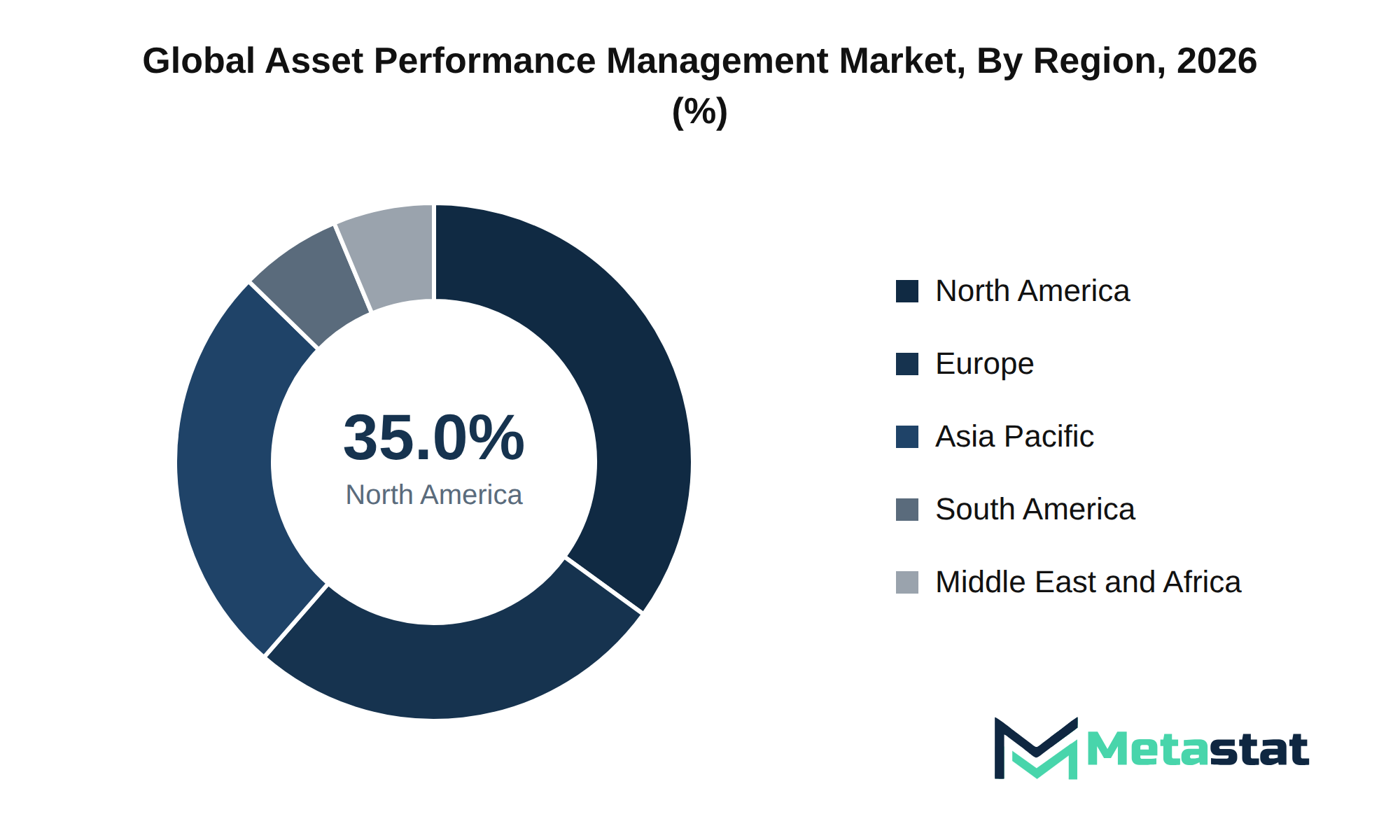
North America displays strong growth potential in the Asset Performance Management market, with a projected CAGR of 13.5% during the forecast period, leading to a market size (TAM) of USD 4,080.8 million by the end of 2033. The region accounted for 35.0% of the global market share in 2025, highlighting its significant role in the industry.
Demand for innovative technologies and solutions is evident among industries including oil and gas, power generation, and utilities, with a heightened focus on enhancing operational efficiency. The adoption of cloud-based deployment models aligns with increasing digital transformation initiatives across sectors, driving investment in advanced asset management solutions.
Infrastructure modernization serves because a key catalyst for growth, especially in sectors like power generation and utilities. Regulatory frameworks in the United States, Canada, and Mexico emphasize compliance, encouraging organizations to invest in asset performance management technologies that meet local mandates while improving operational reliability.
Increased emphasis on predictive asset management solutions reflects the region's focus on maximizing asset uptime and optimizing maintenance processes. Local compliance mandates drive the expansion of offerings including condition monitoring hardware and professional services, further shaping the market landscape.
Competitive dynamics within North America include domestic players like GE Vernova Inc., IBM Corporation, and Siemens AG, which contribute to vendor consolidation trends and innovation in the market. The presence of established firms supports localized procurement dynamics and enhances market penetration.
The Asset Performance Management market in Europe exhibits significant growth potential, driven by increasing demand for enhanced operational efficiency and data-driven decision-making. Countries including Germany, France, the UK, Italy, and Spain play a central role in this expansion, leveraging advanced technologies to optimize asset management and maintain competitive advantages. The region's strong emphasis on sustainability and regulatory compliance stimulates the market, leading to heightened investments in innovative solutions.
With a market share of 26.4% in 2025, Europe significantly shapes global trends in asset performance management. The presence of companies including GE Vernova Inc., IBM Corporation, and SAP SE contributes to a dynamic competitive landscape, encouraging ongoing innovation and collaboration. Emerging technologies and localized approaches to asset management enhance the market's attractiveness to both investors and service providers.
Infrastructure modernization remains a critical factor driving growth, particularly in sectors including oil and gas and power generation. The region benefits from a well-established industrial framework, robust energy grid resiliency, and increasing investments in localized manufacturing and nearshoring initiatives. These factors present opportunities for companies seeking to capitalize on emerging market front-runners while navigating the complexities of regional compliance mandates and trade policies.
In the Asia Pacific region, the Asset Performance Management market benefits from strong demand in 2025. Rapid modernization of infrastructure across major countries including China, Japan, India, and South Korea drives demand for advanced asset management solutions. Increased investment in digital transformation initiatives across industries further enhances the adoption of APM strategies.
High-value replacement cycles in sectors like oil and gas, power generation, and manufacturing create substantial opportunities for market players. Localized manufacturing densities contribute to the growth of the market by enabling timely access to technology and services. Emerging market front-runners like India and Southeast Asia are poised for increases in asset performance management adoption, capitalizing on their expanding industrial bases.
Geopolitical fragmentation influences cross-border trade corridors and regional supply chain dynamics, prompting businesses to invest in localized solutions. The presence of domestic market players, supported by foreign direct investment flows, creates a competitive landscape that encourages innovation and vendor consolidation trends. Cultural nuances and regional B2B buying behaviors significantly impact procurement decisions, further shaping the market's evolution.
The Asset Performance Management market in South America exhibits a growing interest in optimizing asset utilization and operational efficiency. Brazil and Argentina represent key markets within the region, supported by a shift towards modernization in industrial operations. Investment in infrastructure development drives demand for enhanced asset management solutions, with a focus on predictive and asset integrity management technologies. The market reflects a share of 6.40% of the global landscape in 2025, indicating potential for increased penetration in underdeveloped territories. Localized manufacturing and procurement dynamics influence purchasing behaviors, driven by companies prioritizing solutions that align with regional compliance regulations and operational needs. Domestic players are establishing a stronger presence, enhancing competition and innovation in the market. While companies in South America seek to improve their operational resilience and adapt to evolving regulatory frameworks, the demand for asset performance management solutions is expected to rise.
The Middle East and Africa region represents a unique opportunity within the Asset Performance Management market, characterized by ongoing infrastructure modernization and a growing emphasis on operational efficiency. Countries including Saudi Arabia and the UAE pursue initiatives aimed at enhancing energy grid resiliency, creating significant demand for advanced asset management solutions.
Investment in local manufacturing densities drives adoption rates for Asset Performance Management technologies. South Africa exhibits potential for growth in the market, with an increased focus on predictive asset management to optimize production processes, particularly in the mining and utilities sectors.
Regional compliance mandates and local trade policies influence the competitive landscape. Companies operating in the Middle East and Africa navigate these frameworks to maintain market presence and meet the demands of domestic customers. The region's fragmented market dynamics necessitate localized procurement strategies, supporting the development of strong vendor relationships.
Emerging companies and established players alike benefit from foreign direct investment flows targeting the market. The increasing interest in localized manufacturing aligns with broader trends in regionalization and nearshoring initiatives, enhancing the ability of firms to respond to specific market needs. This dynamic fosters a competitive environment conducive to innovation and growth.
With a projected market share of 6.3% in 2025, the Middle East and Africa is anticipated to experience incremental growth. This growth will largely stem from the need for high-value replacement cycles and the adoption of innovative asset management technologies across various industries.
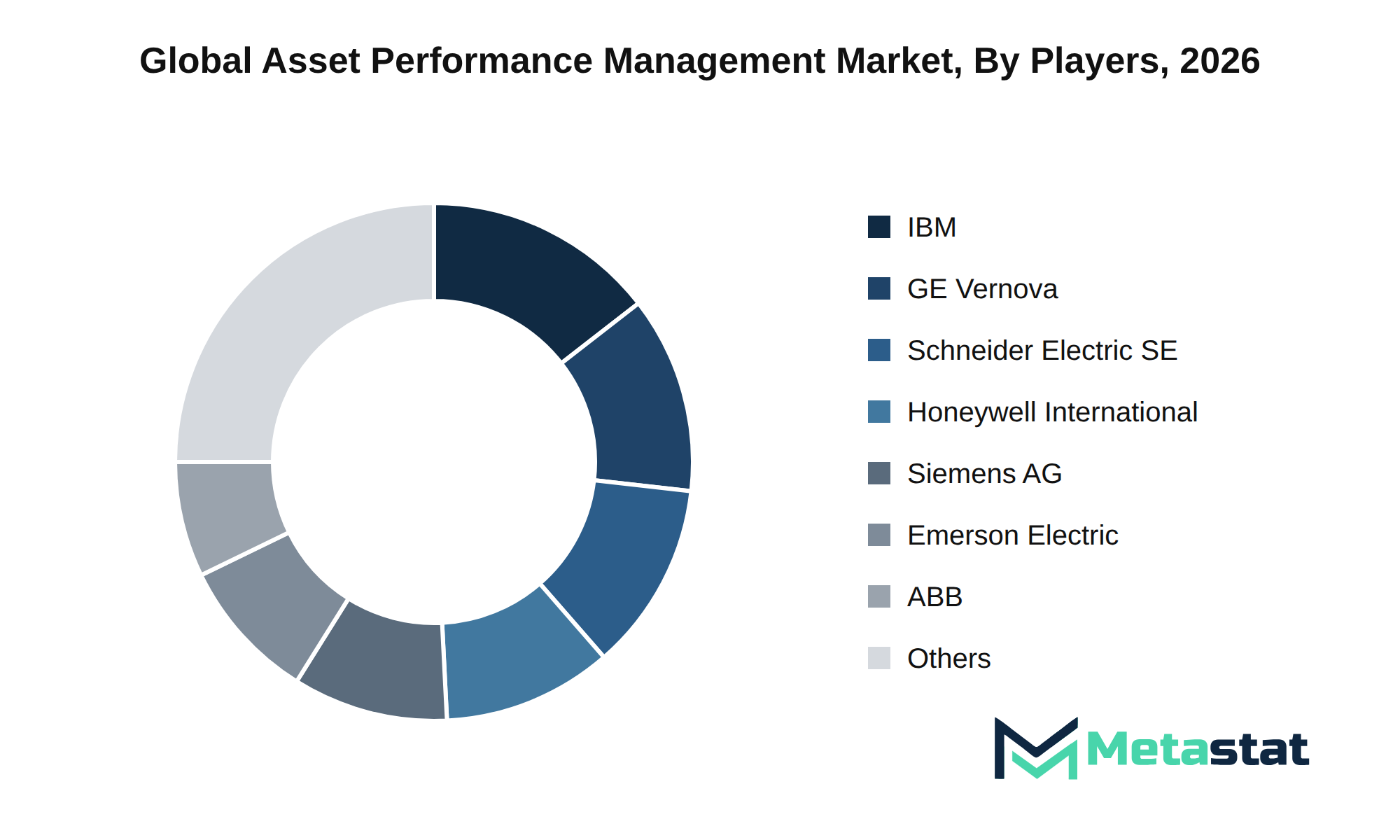
The Asset Performance Management market features a diverse array of players engaged in strategic consolidation, partnerships, and product differentiation. Companies including GE Vernova Inc., IBM Corporation, and Schneider Electric SE pursue mergers and acquisitions to enhance their technological capabilities and broaden their service offerings. These strategic moves facilitate the integration of advanced analytics and Internet of Things (IoT) technologies, which are crucial for delivering innovative solutions that improve asset reliability and efficiency.
In addition to expansion through acquisitions, companies emphasize development of proprietary technologies and R&D pipelines. For instance, Honeywell International Inc. and Emerson Electric Co. focus on maintaining their competitive advantage through continuous innovation in condition monitoring hardware and software platforms. Strategic alliances with leading technology firms further strengthen their market positions, allowing them to leverage complementary strengths and enhance value propositions.
Pricing architectures and commercial models play a significant role in shaping competitive dynamics. Companies like Siemens AG and ABB Ltd. implement flexible pricing strategies to cater to diverse customer segments, ensuring they meet specific market needs while maximizing profitability. The presence of robust customer retention strategies and brand equity serves because a barrier to entry for new entrants, maintaining the established players' dominance in the market.
Looking ahead, the competitive outlook for the Asset Performance Management market indicates heightened focus on sustainability and operational efficiency. Players will likely prioritize investments in digital transformation initiatives, positioning themselves to address evolving customer demands and emerging market trends. Firms that successfully integrate advanced technologies and enhance their service offerings will capture greater market share and drive further growth in the sector.
Market size is forecast to rise from USD 4,386.4 million in 2025 to over USD 12,084 million by 2033. The base case anticipates growth at a 13.5% CAGR throughout this period. This growth trajectory reflects strong demand for Asset Performance Management solutions driven by the increasing need for operational efficiency and asset optimization across various industries.
In the bullish scenario, accelerated adoption of next-generation technologies and proactive capital allocations will drive demand significantly. Conversely, in a bearish outlook, economic uncertainties and regulatory challenges could impede growth, leading to a more conservative investment approach from enterprises.
Strategic capital allocation will play a critical role in shaping the market landscape. Infrastructure commitments and CapEx investment vectors are expected to align with emerging white-space opportunities, highlighting unmet enterprise needs. The integration of advanced technologies, including predictive analytics and IoT, will facilitate significant shifts within industries, enhancing operational resilience and efficiency.
Geopolitical realignments and evolving trade corridors will impact supply chain dynamics, potentially altering the competitive landscape. Companies operating in the Asset Performance Management market navigate these complexities to establish defensibility roadmaps and capitalize on future growth opportunities.
Regulatory evolution will continue to influence market dynamics, with imminent compliance milestones necessitating adaptation from service providers. Adapting to these changes will become essential for maintaining competitiveness and ensuring alignment with market demands.
The report strategically identifies and profiles the key market players and analyses their core competencies in each sub-segment of the Asset Performance Management market.
Report Attributes | Details |
Study Period | 2021-2033 |
Base Year | 2025 |
Estimated Year | 2026 |
Forecast Period | 2026-2033 |
Historical Period | 2021-2025 |
Growth Rate | CAGR 13.5% from 2026 to 2033 |
Revenue Unit | USD million |
Segmentation | By Deployment Model, Type, Offering, End-Use Industry, and Region |
By Region | North America (By Deployment Model, Type, Offering, End-Use Industry, and Country)
|
Europe (By Deployment Model, Type, Offering, End-Use Industry, and Country)
| |
Asia Pacific (By Deployment Model, Type, Offering, End-Use Industry, and Country)
| |
South America (By Deployment Model, Type, Offering, End-Use Industry, and Country)
| |
Middle East and Africa (By Deployment Model, Type, Offering, End-Use Industry, and Country)
|
Find answers to common questions about this report
The Asset Performance Management market size was valued at USD 4,386.4 million in 2025, according to the Metastat Insights study.
The Asset Performance Management market is projected to grow at a CAGR of 13.5% during the forecast period from 2026 to 2033.
The North America Asset Performance Management market size is estimated to reach USD 4,080.8 million by 2033.
The Predictive Asset Management segment leads the Asset Performance Management market, with a projected value of USD 3,706.2 million by 2033. This segment demonstrates the highest growth potential compared to others.
The key drivers for the Asset Performance Management market include the growing emphasis on emission limits and the need for organizations to adopt advanced technologies to enhance operational efficiency. significant investments in upgrading infrastructure support the adoption of innovative asset management solutions, aligning with sustainability goals and improving competitiveness across various industries.
North America holds the dominant share of the Asset Performance Management market, with a projected value of USD 4,080.8 million in 2033, representing 35 percent of the total market.
Regulatory complexity hampers growth in the Asset Performance Management market, because organizations face compliance challenges from stringent legal mandates. High capital investment requirements and budget constraints limit firms' ability to upgrade asset management capabilities, while skilled labor shortages and supply chain disruptions further complicate implementation and adoption of advanced solutions.
The emphasis on emission limits and sustainability drives product adoption in the Asset Performance Management market. Investments in advanced technologies enhance operational efficiency and resource utilization, supporting compliance with regulations and improving competitiveness across industries.
The Asset Performance Management market is estimated to reach a valuation of USD 12,084 million by 2033.
Key players in the Asset Performance Management market include GE Vernova Inc., IBM Corporation, SAP SE, Schneider Electric SE, Emerson Electric Co., and Honeywell International Inc. These companies significantly influence the market through their innovative solutions and technologies.
The analysts below cover Information & Technology research at Metastat Insights.
LEAD ANALYST
Utkarsh Khirodkar is a Lead Market Research Analyst at MetaStat Insight, specializing in market intelligence, technology sector assessments, and competitive strategy.

PRINCIPAL CONSULTANT - ENTERPRISE AI & EMERGING TECHNOLOGIES
Banking & Finance · Electronics and Semiconductor · Energy and Power · Healthcare IT · Information & Technology · Professional Services
Vijay Gunti is a Principal Consultant at MetaStat Insight, bringing over two decades of experience across enterprise digital transformation, technology strategy, and intelligent systems.

LEAD CONSULTANT - COMMUNICATION, TELECOM, AND IT
Electronics and Semiconductor · Information & Technology · Machinery & Equipment · Professional Services
Ravindra Sathe Consultants for Communication, Telecom, and IT at MetaStat Insight. He leads the firm's industry research initiatives across telecommunications infrastructure, digital connectivity, enterprise networking, and emerging information technology domains.
Our group needed clearer visibility into out-of-autoclave processing timelines for high-temperature thermoplastic composites. MetaStat Insight delivered an objective assessment that contrasted automated fiber placement scrap rates with traditional thermoset prepreg layup cycles. The supplier landscape mapped out primary resin suppliers and tape slitting capacity across France, Germany, and Japan with solid technical accuracy. Their analyst handled our questions on precursor supply risks during an unscheduled inquiry call, providing clear, unembellished context.
Evaluating sensor fusion reliability across harsh operating environments can be tricky without field-validated data. The study on agricultural autonomous guidance systems clearly separated stereo vision setups from automotive-grade solid-state LiDAR. We appreciated the regional infrastructure analysis, specifically around RTK network density across North America and South America. During our follow-up consultation, the MetaStat Insight team walked through tier-two perception software partnerships, giving our engineering leads a practical basis for vendor shortlisting.
Analyzing the transition from natural gas to green hydrogen in iron ore reduction requires realistic infrastructure timelines. Meta stat insight supplied a detailed regional assessment of DRI plant conversion costs and scrap metal availability in North America and Western Europe. Their report carefully examined pellet quality specs and electrical grid access constraints without making oversimplified market assumptions. The research material served as a practical reference during internal technology roadmap discussions.
Explore related market intelligence reports worth reading alongside this one.
Starting from
$2950
Starting from
$2950