
LEAD ANALYST
Utkarsh Khirodkar is a Lead Market Research Analyst at MetaStat Insight, specializing in market intelligence, technology sector assessments, and competitive strategy.

North America NMC Battery Energy Storage System (BESS) Market Size, Share, By Battery Form Factor (Pouch, Prismatic, Cylindrical and Others), By System Configuration (Containerized, Cabinet, Rack-Mounted and Others), By End-Use Industry (Utilities, Commercial and Industrial, Residential and Others), By Region (United States, Canada and Mexico), Industry Analysis, Growth, Trends, and Forecast, 2026-2033
Report ID
MSI-5732
Published
November, 2026
Pages
262 Pages
Format
Historical
Base year
Forecast
Forecast period
Report Details
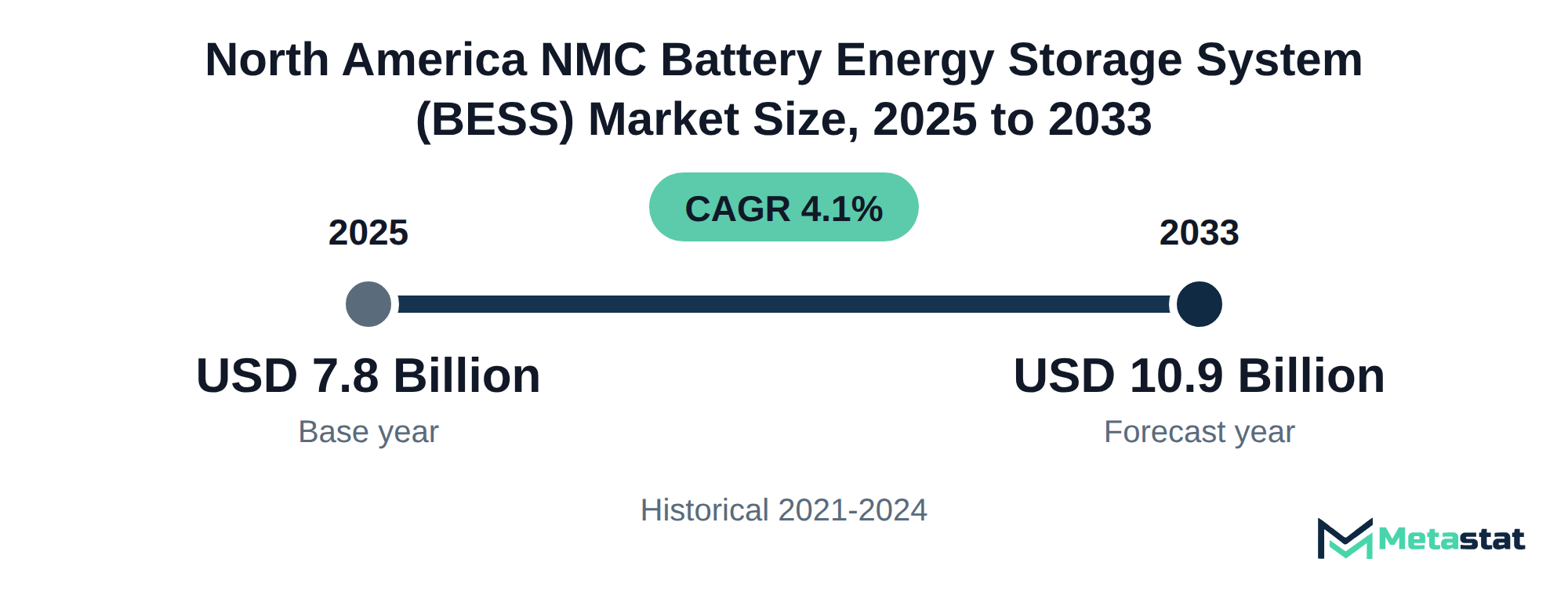
Market Valuation: Valued at $7.8 Billion in 2025, projected to reach $10.9 Billion by 2033 at a 4.1% CAGR.
Dominant Segment: The utilities segment leads the North America NMC Battery Energy Storage System market, driven by the increasing demand for grid stability and renewable energy integration.
Geographic Lead: The United States is the largest market, supported by robust investments in energy infrastructure and regulatory support for energy storage solutions.
What's Inside: This report provides a comprehensive analysis of market dynamics, competitive landscape, and detailed forecasts for various segments, including battery form factors and system configurations.
Rising Demand for Prismatic Batteries: The prismatic battery segment is projected to grow at a CAGR of 5.7%, reaching USD 4.7 billion by 2033, driven by their superior energy density and efficiency.
Utility Procurement Trends: Utilities are shifting towards higher-density battery storage architectures, with containerized systems expected to grow from USD 5.5 billion in 2026 to USD 7.7 billion by 2033.
Choose Your License
North America NMC Battery Energy Storage System (BESS) Market
The North America NMC Battery Energy Storage System (BESS) market was valued at USD 7.8 billion in 2025 and is projected to reach USD 10.9 billion by 2033, growing at a CAGR of 4.1% over the forecast period.
The North America NMC Battery Energy Storage System (BESS) market encompasses a range of energy storage solutions that use nickel manganese cobalt (NMC) technology. This technology helps balance energy supply and demand while improving storage capability and grid stability. Buyers invest in these systems to meet their energy needs, improve efficiency, and support renewable energy integration. The growing emphasis on sustainability and energy independence drives demand across various sectors, including utilities, commercial enterprises, and residential applications.
Growth in the market is propelled by increasing energy storage requirements, particularly within the utilities sector, which represents the largest share of the market. The adoption of renewable energy sources, including solar and wind, necessitates reliable energy storage solutions to balance intermittent supply and ensure consistent availability. Among the various segments, containerized systems exhibit the highest value, reflecting their widespread application and preference for large-scale deployments. The United States accounts for the largest share of the market, driven by strong investment in energy infrastructure and regulatory support.
In addition to the utilities sector, commercial and industrial applications contribute to market expansion, driven by the need for improved energy management and cost reduction. The residential sector continues to evolve, with increasing consumer interest in energy independence and sustainability. These factors position the North America NMC BESS market for continued growth, with a projected CAGR of 4.1% through the forecast period.
Energy storage solutions in the North America NMC Battery Energy Storage System (BESS) market cater to various consumer needs, including grid stability, renewable energy integration, and peak shaving. Buyers invest in these systems to enhance energy efficiency, manage electricity costs, and ensure a reliable power supply. The increasing focus on sustainability and the transition to cleaner energy sources drives demand for advanced storage technologies across multiple sectors.
The growth of the market is primarily fueled by rising demand for renewable energy sources, which require efficient storage solutions to balance intermittency. Among the various segments, Containerized systems hold the most significant value, providing flexibility and scalability for large-scale applications. The United States holds the largest regional share, reflecting strong infrastructure and a supportive regulatory environment that promotes energy storage adoption.
Technological advancements in battery chemistry and battery management systems further enhance the performance and lifespan of energy storage solutions. Investment in research and development continues to create new capabilities, strengthening the competitive position of players within the North America NMC Battery Energy Storage System (BESS) market. This dynamic environment drives innovation and positions the market for sustained growth in the coming years.
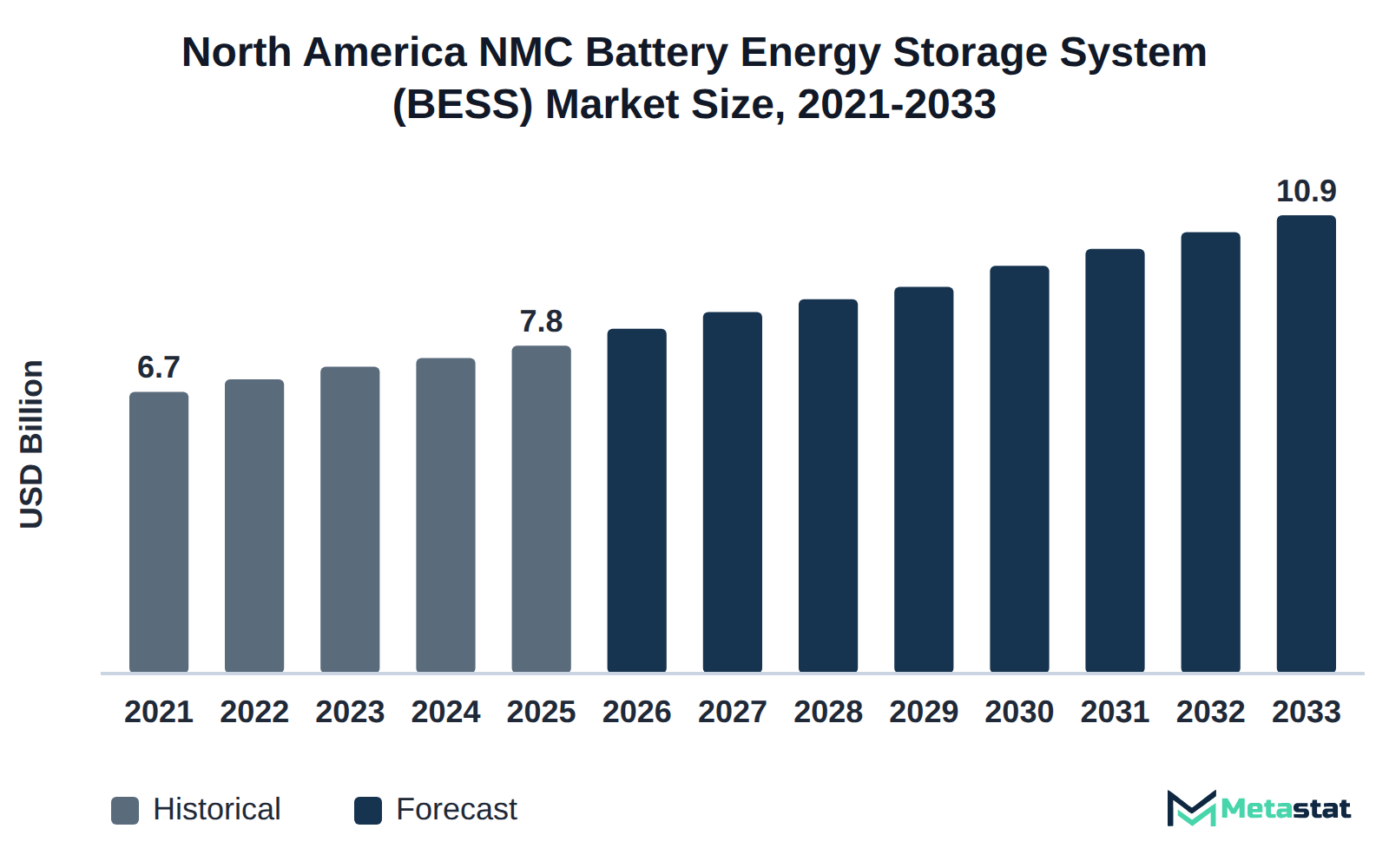
The North America NMC Battery Energy Storage System (BESS) market continues to prioritize the adoption of prismatic battery designs, driven by their superior energy density and efficiency. Prismatic batteries, projected to reach a market value of USD 4.7 billion by 2033, outperform traditional forms by optimizing space and enhancing performance within energy storage systems. Prismatic designs make larger-scale energy storage practical, which helps meet rising demand for grid stability and renewable energy integration.
Utilities and commercial sectors increasingly gravitate toward prismatic solutions, attracted by their scalability and reliability. This growing preference reflects a broader shift in the market toward advanced technologies that support the transition to cleaner energy. Manufacturers invest in prismatic designs to meet sustainability goals and the changing needs of energy consumers.
While momentum builds, prismatic battery adoption is expected to drive competitive differentiation among players in the market. Firms that enhance their offerings with this technology position themselves for future growth, reflecting a strategic response to regulatory pressures and the demand for more efficient energy storage solutions. The trend toward prismatic designs will likely result in a more resilient energy infrastructure throughout North America.
The North America NMC Battery Energy Storage System (BESS) market experiences a significant trend toward higher-density battery storage architectures due to evolving procurement strategies of utilities. Utilities prioritize contracts that emphasize performance-based incentives, driving the shift toward advanced battery technologies. The procurement landscape reflects this transition, with utilities focusing on the benefits of higher energy density configurations that deliver improved efficiency and reduced space requirements.
In the segment of system configurations, the containerized solution is projected to achieve a value of USD 7.7 billion by 2033, growing from USD 5.5 billion in 2026, reflecting a compound annual growth rate (CAGR) of 4.9%. Such figures highlight the utility sector's adoption of these efficient solutions, demonstrating a growing preference for standardized systems that easily integrate into existing infrastructure. Containerized deployments also draw on BESS container and enclosure systems, which house the battery equipment at large-scale sites. The shift toward higher-density architectures enhances energy efficiency and allows utilities to optimize operations while minimizing costs associated with land use and installation.
This shift in procurement practices strengthens competition within the market, drives innovation, and encourages new entrants to refine their offerings. Higher-density architectures enhance the overall value proposition for utilities, facilitating increased adoption and investment in the North America NMC Battery Energy Storage System (BESS) market.
Utilities represent a crucial buyer group in the North America NMC Battery Energy Storage System (BESS) market. These organizations employ utility-scale battery energy storage systems to enhance grid reliability and facilitate the integration of renewable energy sources. The uptake of energy storage technologies aligns with regulatory requirements for cleaner energy solutions and the need for more resilient power systems. For instance, from 2026 to 2033, the utilities segment is projected to expand from USD 5.5 billion to USD 7.5 billion, achieving a compound annual growth rate of 4.4%. This growth reflects increasing demand for large-scale energy storage solutions to balance energy supply and demand effectively.
Utilities prioritize energy storage systems for their ability to provide ancillary services, including frequency regulation and demand response. By employing these systems, utilities optimize operations, reduce operational costs, and enhance service reliability for end users. The adoption of NMC battery systems enables utilities to store excess energy generated during off-peak hours and discharge it during peak demand periods, leading to improved grid stability. The commercial benefit of this strategy manifests in reduced energy costs and enhanced customer satisfaction, directly impacting overall profitability.
The relationship between U.S. manufacturing capabilities and cell supply significantly impacts the economics of projects within the North America NMC Battery Energy Storage System (BESS) market. A robust domestic supply chain for battery cells leads to reduced logistics costs and shorter lead times, enhancing overall project feasibility. This growth is driven by increasing investments in local manufacturing facilities, which provide stability and reliability in supply. Cell supply for these projects also ties into the wider advanced lithium-ion battery industry.
Local production reduces dependency on imports, which often face tariffs and shipping delays. The utilization of domestically sourced materials reduces overall project costs, making systems more competitive in pricing. The ongoing emphasis on energy independence further supports this trend, with stakeholders prioritizing domestic solutions over foreign alternatives. Demand for energy storage solutions continues to rise. The ability to source materials and manufacture components locally will become a critical factor in the economic viability of BESS projects and will shape investment strategies within the market.
The North America NMC Battery Energy Storage System (BESS) market experiences significant demand from utilities, resulting from heightened investments in renewable energy and grid stability initiatives. Utilities focus on enhancing resilience while integrating more renewable sources into the grid. This shift leads to a surge in demand for energy storage systems, crucial for balancing supply and demand. Utilities prioritize advanced storage solutions to support sustainability goals and respond to regulatory pressures. Increasing demand influences prices and volumes positively, creating a competitive environment for suppliers aiming to meet the evolving needs of the market.
The transition towards more sustainable energy sources fuels opportunities for innovative technologies within the energy storage landscape. Growing attention on energy independence and environmental concerns pushes various stakeholders to seek effective solutions, thereby expanding the market further.
Improvements in battery technologies significantly enhance the efficiency and capability of energy storage systems. Innovations in materials and design, particularly within nickel manganese cobalt (NMC) batteries, lead to higher energy density and faster charging rates. These advancements attract interest from various sectors, including utilities and commercial enterprises, looking to optimize operational performance and reduce costs. Suppliers increasingly focus on developing these advanced technologies to meet growing demand for reliable energy storage solutions. The result is a competitive landscape in the North America NMC Battery Energy Storage System (BESS) market, where businesses strive to differentiate their offerings through superior battery performance and longevity. This drive for innovation supports expansion within the market, driven by stakeholders recognizing the value of integrating advanced battery technologies into their energy strategies. Cooling approaches, including liquid-cooled BESS designs in North America, are another area that affects performance and longevity.
The evolution of battery technology reflects ongoing trends in energy storage, ensuring businesses remain responsive to the challenges of a rapidly changing energy environment.
Higher costs associated with battery production and installation create a barrier for various buyer groups in the North America NMC Battery Energy Storage System (BESS) market. Utilities, which represent a significant segment, experience slower uptake of energy storage solutions due to budget constraints and the overall financial impact of rising battery material prices. Increased expenditures on technology and infrastructure often result in smaller orders, delaying project timelines and limiting growth potential. This financial challenge influences decision-making processes, leading to a preference for less expensive alternatives or postponing investments in advanced energy storage technologies. Consequently, current economic conditions negatively affect overall demand in the market, impacting revenue growth and operational efficiency across key sectors.
Commercial and industrial buyers face similar challenges, where price sensitivity influences their ability to invest in energy storage solutions, ultimately hindering market expansion.
Suppliers in the North America NMC Battery Energy Storage System (BESS) market face escalating input costs for key materials, including lithium, cobalt, and nickel. Price volatility for these materials is driven by geopolitical factors and supply chain disruptions. Increased demand from various sectors further pressures suppliers, limiting their ability to maintain profit margins while delivering competitive pricing. Efforts to improve sourcing strategies and enhance supply chain resilience are underway among suppliers. Several companies explore partnerships with raw material producers to secure stable pricing and supply, reducing exposure to market fluctuations. Others invest in recycling technologies to reclaim valuable materials from used batteries, thereby lowering dependency on newly mined resources. This focus on sustainable practices helps mitigate cost challenges and aligns with the broader market shift towards eco-friendly solutions. Such strategies are expected to influence long-term stability and growth within the market while supporting a more sustainable supply chain. How effectively suppliers handle these challenges will determine the competitive landscape in the coming years.
Significant growth opportunities exist in the North America NMC Battery Energy Storage System (BESS) market, particularly within the prismatic battery segment. This segment is projected to expand at a compound annual growth rate (CAGR) of 5.7%, reaching USD 4.7 billion by 2033. Prismatic batteries gain traction due to their efficient space utilization and superior energy density, making them highly suitable for various applications, including commercial and industrial energy storage. The increasing adoption of renewable energy sources drives demand for these batteries, encouraging investments in energy storage solutions that optimize grid operations and enhance energy management. The prismatic segment addresses the specific requirements of energy-intensive industries and positions itself as a leading choice for utilities seeking reliable and scalable energy storage solutions. Growth in this segment reflects broader energy storage trends and supports the transition to sustainable energy systems.
The North America NMC Battery Energy Storage System (BESS) market is segmented based on Battery Form Factor, System Configuration, End-Use Industry, and Region.
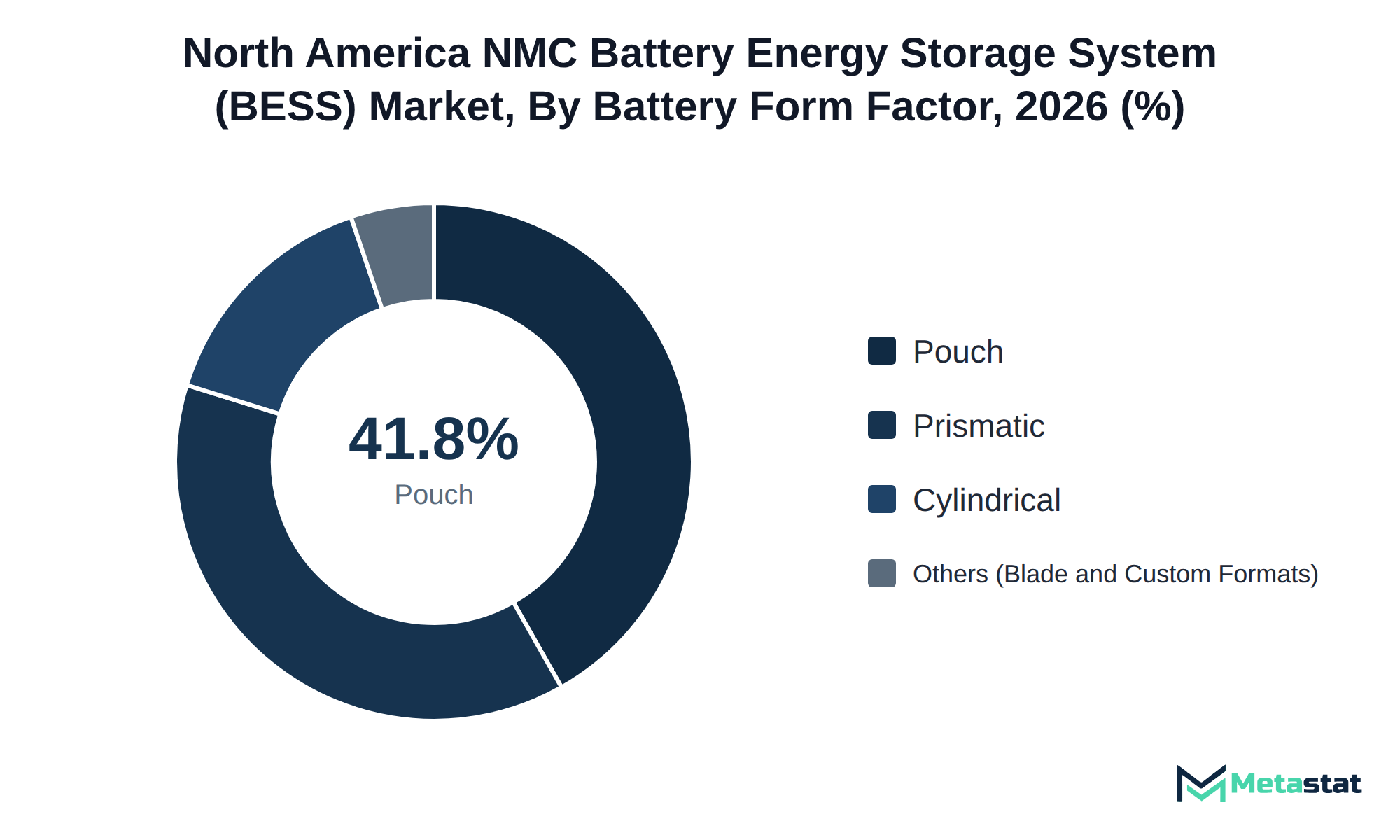
Pouch battery designs hold a value of USD 3.4 billion in 2026 and are projected to reach USD 4.2 billion by 2033, achieving a CAGR of 3% during the forecast period. These batteries serve multiple applications in energy storage, particularly for utilities, which use them for grid energy management and stabilization. Demand for Pouch batteries is driven by the increasing focus on space efficiency and energy density, offering advantages in compact installations. Compared to other formats like Prismatic, which exhibit a higher CAGR of 5.7%, Pouch batteries experience a slower growth rate. This distinction highlights evolving preferences among various buyer groups, with Prismatic batteries gaining traction due to enhanced performance characteristics. Pouch batteries remain essential components in the broader framework of the North America NMC Battery Energy Storage System (BESS) market, catering to specific operational requirements and design preferences.
Prismatic segment is estimated to reach USD 4.7 billion by 2033, at a CAGR of 5.7% during the forecast period. This segment finds application in various energy storage solutions, particularly where compactness and efficiency are vital. Utilities represent a primary buyer group, driven by the transition toward renewable energy sources and the demand for enhanced grid stability. In contrast to other battery form factors, the prismatic design offers higher energy density, making it a preferred choice for applications requiring space efficiency. The growth of this segment is supported by advances in manufacturing technologies that lower production costs while maintaining performance standards. Such developments allow prismatic batteries to compete effectively against cylindrical and pouch designs, which experience different growth dynamics and market pricing strategies.
Cylindrical segment is expected to reach USD 1.5 billion by 2033. This segment serves various applications, particularly in commercial and industrial environments, where space efficiency and energy density play vital roles. The increasing focus on compact energy storage solutions drives demand, with sectors seeking to optimize their energy management strategies. Compared to other battery form factors, cylindrical designs typically offer lower costs, though market growth is projected to remain slower at a CAGR of 4.2% relative to prismatic batteries, which exhibit a CAGR of 5.7%. Firms prioritize effective energy storage systems, and the cylindrical segment stands out due to its unique combination of cost-effectiveness and performance efficiency, appealing to a diverse range of buyers across multiple industries.
Others (Blade and Custom Formats) segment is projected to grow at a CAGR of 4.2% during the forecast period. This segment includes specialized battery designs tailored for unique applications, often found in niche markets. Industries including renewable energy integration and specialized commercial applications employ these formats for their flexibility and adaptability. Adoption of advanced manufacturing techniques supports the growth of this segment, catering to specific customer requirements. Compared to standard battery formats, this segment typically experiences slower growth due to its specialized nature and potentially higher production costs. However, the increasing emphasis on customized solutions creates opportunities for innovation and market penetration, distinguishing it from more conventional battery formats including prismatic and cylindrical designs. The escalating demand for more efficient energy solutions continues to drive interest in alternative battery formats within the North America NMC Battery Energy Storage System (BESS) market.
This configuration serves critical roles in energy storage solutions, particularly for utilities and large-scale commercial applications requiring mobility and modularity. Demand for containerized systems is driven primarily by a commitment to renewable energy integration and the need for rapid deployment in various environments. This segment experiences a higher growth rate compared to cabinet configurations, which are anticipated to reach USD 1.6 billion by 2033, with a CAGR of 1.7%. This distinction highlights the increasing preference for adaptable solutions that containerized systems provide, catering to the evolving demands of buyers seeking efficiency and flexibility. The market continues to evolve, reflecting an ongoing shift toward innovative configurations that align with changing energy strategies.
This configuration typically offers a compact and modular approach, appealing to various buyers, including commercial and industrial sectors looking for efficient energy storage solutions. The demand for this segment derives from the need for reliable energy management systems, ensuring stability amid growing renewable energy integration. Compared to containerized systems, which are expected to achieve a CAGR of 4.9%, cabinet systems experience slower growth, reflecting a preference for larger, scalable solutions that address diverse energy needs. However, cabinet systems remain popular due to their suitable application in space-constrained environments, where flexibility in installation and maintenance is essential. Their position within the North America NMC Battery Energy Storage System (BESS) market continues to strengthen, driven by evolving energy demands and regulatory support for energy efficiency.
Rack-Mounted segment is expected to reach USD 1.1 billion by 2033. This configuration type serves utility and commercial sectors that require flexible energy storage solutions. The growing demand for modular systems leads to increased adoption due to their efficient space utilization and ease of installation. The segment's CAGR stands at a lower rate compared to containerized systems, which experience a CAGR of 4.9%. This difference reflects a pricing advantage for containerized configurations that attract large-scale buyers, resulting in quicker growth. Operative flexibility remains a strong driver for the Rack-Mounted segment, appealing particularly to customers prioritizing adaptability in smaller installations. The market continues to evolve, accommodating diverse buyer requirements while promoting competitive offerings across various system configurations.
Projected to grow at a CAGR of 4.2% during the forecast period, the Others (Modular and Building-Integrated) segment contributes to energy storage solutions. This segment primarily serves commercial and industrial clients seeking flexible energy management systems that integrate with existing infrastructure. The increasing demand for modular configurations reflects the growing trend of customized energy solutions that align with specific operational requirements. Demand for this segment rises due to the need for scalable energy solutions that adapt to varying energy consumption patterns. Compared to other system configurations, including containerized and cabinet systems, the Others segment offers enhanced adaptability, catering to diverse buyer needs. This adaptability positions it uniquely within the North America NMC Battery Energy Storage System (BESS) market, driving growth due to advancing technology and increased energy efficiency. The market is anticipated to see this segment contribute significantly to overall revenue growth by 2033.
Utility companies mainly use energy storage systems to support grid stability and renewable energy integration, aiming to enhance energy reliability and reduce operational costs. The growing emphasis on renewable energy adoption acts as a significant driver for this segment, reflecting the industry's shift toward sustainable energy solutions. In comparison to other segments, the Utilities segment exhibits a strong growth profile, with a CAGR that surpasses that of the Cabinet segment at 1.7%. The increasing focus on energy independence and decarbonization further influences demand dynamics, positioning the Utilities segment as a key part of the North America NMC Battery Energy Storage System (BESS) market.
Commercial and Industrial segment is estimated to reach USD 2.2 billion by 2033, at a CAGR of 4.5% during the forecast period. This segment serves a variety of businesses including retail, manufacturing, and service industries that require reliable energy storage solutions for operational efficiency and cost management. Demand from this segment is driven by the increasing need for energy resilience and sustainability initiatives. Compared to other segments in its group, the Commercial and Industrial segment demonstrates a relatively slower growth rate, influenced by the specific energy requirements of diverse industries. Unlike the Utilities segment, which has a higher projected CAGR, this segment reflects a unique mix of buyer dynamics leading to stable but moderate expansion. The market benefits from advancements in battery technology, enhancing storage capabilities and reducing long-term operational costs.
The residential segment is expected to reach USD 1 billion by 2033. This segment serves primarily individual homeowners and small residential developments, facilitating energy management and small-scale battery energy storage solutions for personal use. Key demand drivers stem from the increasing adoption of renewable energy sources, including solar panels, which enhance energy independence and efficiency. Growing emphasis on sustainability and energy self-sufficiency significantly influences this segment's expansion. Compared to other segments within the end-use industry, residential applications exhibit slower growth, with a projected CAGR of 4.5%, reflecting a more cautious approach to investment among homeowners versus larger businesses or utilities. The market remains influenced by regulatory incentives aimed at promoting clean energy technologies and reducing reliance on traditional power sources.
Projected to grow at a CAGR of -2.1% during the forecast period, this segment includes energy storage solutions tailored for data centers and microgrids. These systems support critical operations by providing backup power, enhancing energy reliability, and facilitating peak shaving. Demand from data center operators also ties into the broader data center power industry. Demand within this segment arises from the increasing reliance on digital infrastructure and the need for sustainable energy management solutions. The challenge of high initial capital expenditures limits widespread adoption, contrasting with other segments including Utilities, which exhibit stronger growth. While Utilities are projected to achieve a CAGR of 4.4%, the Others (Data Centers and Microgrids) segment's slower growth reflects its specialized applications and unique buyer base, which primarily includes data center operators and microgrid developers. The North America NMC Battery Energy Storage System (BESS) market continues to evolve, with various segments reflecting differing growth dynamics.
Valued at USD 6.7 billion in 2026, the segment is projected to reach USD 8.7 billion by 2033, at a CAGR of 3.9% during the forecast period. This segment primarily serves utilities, providing critical energy storage solutions for grid stability and reliability. Demand arises from the increasing need for renewable energy integration and the growing emphasis on energy security. Compared to other segments, this segment experiences moderate growth and maintains a higher value due to the essential services it supports. The utilities sector faces challenges related to regulatory frameworks that influence adoption rates and investment strategies. With a strong focus on enhancing grid resilience, investments in advanced energy storage systems remain essential to the progression of the market.
Canada segment is estimated to reach USD 1.4 billion by 2033, at a CAGR of 5% during the forecast period. Applications within this segment primarily serve commercial and industrial sectors, with demand driven significantly by increasing investments in renewable energy and energy efficiency initiatives. A focus on sustainability and reducing greenhouse gas emissions supports growth in energy storage solutions, allowing these sectors to optimize energy consumption. Compared to the United States and Mexico, Canada experiences faster growth, fueled by supportive government policies and incentives promoting clean energy technologies. The emphasis on integrating energy storage into the grid enhances reliability and resilience, making Canada an attractive market for energy storage deployment. This segment's distinct growth trajectory reflects its unique regulatory environment and proactive stance on clean energy, positioning it favorably against other segments in the region.
Mexico segment is expected to reach USD 0.8 billion by 2033. This segment serves energy storage needs across various applications, including commercial and industrial projects and utility-scale deployments. Increased focus on renewable energy sources and energy independence drives growth in this segment. Compared to other segments, Mexico's growth rate presents unique opportunities due to a robust push for sustainable energy initiatives and regulatory support. While the growth rate for this segment aligns closely with regional trends, it faces distinct challenges, including limited infrastructure and initial investment costs. The Mexico segment's trajectory indicates a commitment to advancing energy storage technology, reflecting broader trends within the North America NMC Battery Energy Storage System (BESS) market.
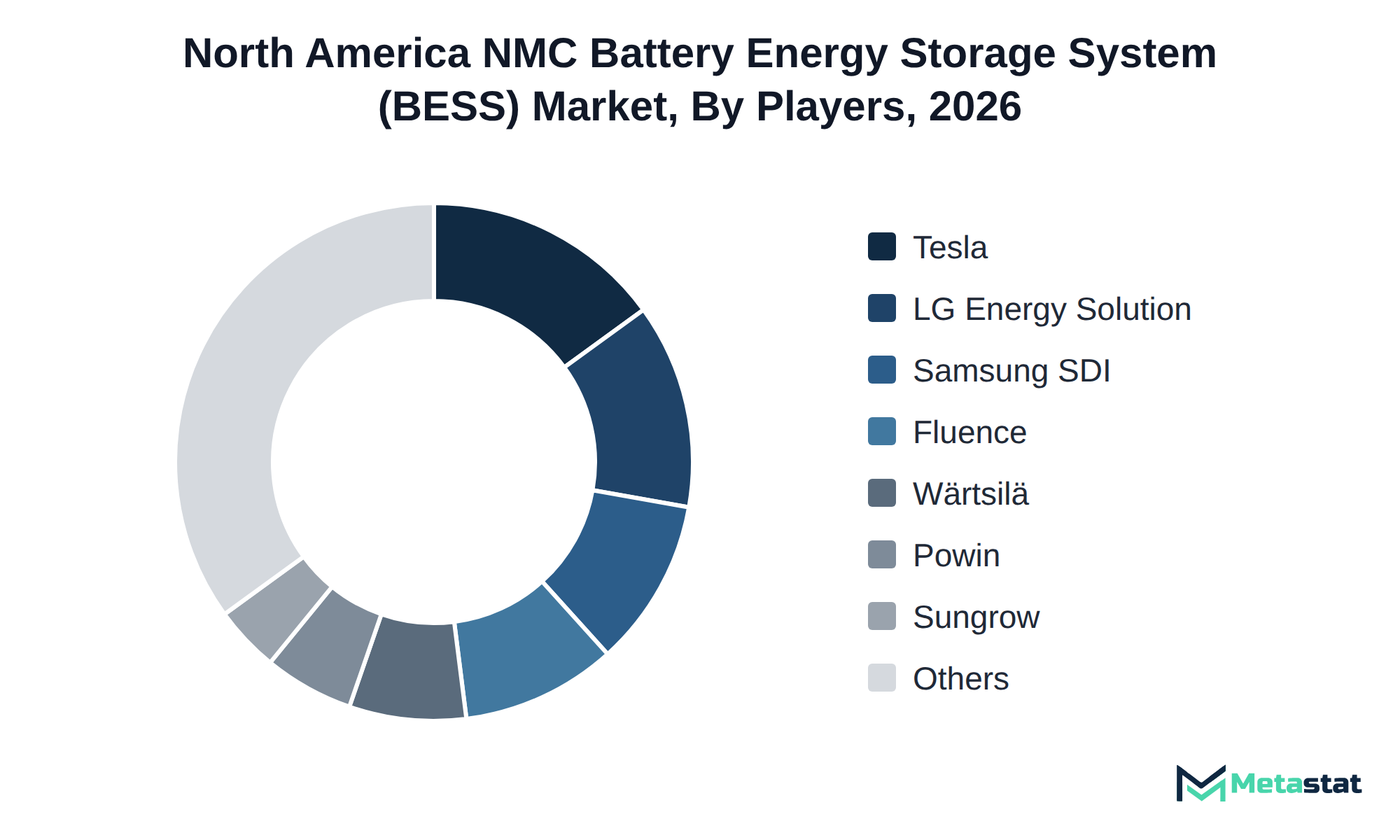
Competition in the North America NMC Battery Energy Storage System (BESS) market demonstrates distinct strategic behaviors among key players. Major companies focus on various aspects including technology development, product customization, and pricing strategies to attract diverse buyer segments.
Companies like LG Energy Solution and Samsung SDI emphasize technological advancements and product innovation, enhancing their offerings to meet specific customer requirements. Tesla and Fluence concentrate on integrating renewable energy sources with energy storage solutions, appealing to environmentally conscious consumers.
Buyers prioritize certifications, pricing, and the ability to customize solutions based on operational needs. For instance, Wärtsilä and Powin provide tailored solutions that cater to commercial and industrial clients, ensuring compliance with regulatory standards while optimizing performance. Companies including Schneider Electric and Hitachi Energy focus on creating systems that combine energy management and storage, further influencing purchasing decisions.
Achieving this growth hinges on several key developments within the North America NMC Battery Energy Storage System (BESS) market. The increasing adoption of containerized systems, projected to expand from USD 5.5 billion in 2026 to USD 7.7 billion by 2033 at a 4.9% CAGR, helps meet demand from utilities. This segment increasingly acts as a backbone for energy management, facilitating integration with renewable sources. Growth in the prismatic battery form factor, expected to reach USD 4.7 billion by 2033 at a 5.7% CAGR, reflects rising investments in commercial and industrial applications, particularly in energy-intensive sectors that require reliable storage solutions.
However, potential risks exist that could hinder the market's trajectory. Regulatory uncertainties surrounding energy storage and shifting policies impact investment decisions and market confidence. In the United States, these factors could slow the expansion of capacity and adoption rates, ultimately affecting the overall growth potential of the market. Strategic alignment with evolving regulations will dictate the ability to fully realize growth opportunities within the North America NMC Battery Energy Storage System (BESS) market.
By Battery Form Factor: Pouch, Prismatic, Cylindrical, Others (Blade and Custom Formats)
By System Configuration: Containerized, Cabinet, Rack-Mounted, Others (Modular and Building-Integrated)
By End-Use Industry: Utilities, Commercial and Industrial, Residential, Others (Data Centers and Microgrids)
By Region: United States, Canada, Mexico
The report strategically identifies and profiles the key market players and analyses their core competencies in each sub-segment of the NMC Battery Energy Storage System (BESS) market.
Report Attributes | Details |
Study Period | 2021-2033 |
Base Year | 2025 |
Estimated Year | 2026 |
Forecast Period | 2026-2033 |
Historical Period | 2021-2025 |
Growth Rate | CAGR 4.1% from 2026 to 2033 |
Revenue Unit | USD billion |
Segmentation | By Battery Form Factor, System Configuration, End-Use Industry, Region, and Region |
Find answers to common questions about this report
The NMC Battery Energy Storage System (BESS) market size was valued at USD 7.8 billion in 2025.
The market is projected to grow at a CAGR of 4.1% during the forecast period from 2026 to 2033.
The leading segment in the NMC Battery Energy Storage System (BESS) market is the Utilities segment, with a projected value of USD 7.5 billion by 2033. This segment surpasses others in terms of revenue generation within the market.
Significant demand arises from utilities driven by heightened investments in renewable energy and grid stability initiatives. Improvements in battery technologies enhance the efficiency and capability of energy storage systems, attracting interest from various sectors.
Higher costs associated with battery production and installation create a barrier for various buyer groups, particularly utilities, which experience slower uptake due to budget constraints. Price sensitivity among commercial and industrial buyers further hinders their ability to invest in energy storage solutions, impacting overall market expansion.
Significant growth opportunities in the North America NMC Battery Energy Storage System (BESS) market arise from the expanding prismatic battery segment, projected to reach USD 4.7 billion by 2033. This segment's efficient space utilization and superior energy density align with the increasing adoption of renewable energy sources, driving demand for optimized energy storage solutions.
The NMC Battery Energy Storage System (BESS) market is estimated to reach a valuation of USD 10.9 billion by 2033.
Key players operating in the NMC Battery Energy Storage System (BESS) market include LG Energy Solution, Samsung SDI, Tesla, Fluence, Wärtsilä, and Energy Vault.
The prismatic battery segment is projected to expand at a compound annual growth rate of 5.7%, reaching USD 4.7 billion by 2033. This growth reflects increasing adoption due to its efficient space utilization and superior energy density.
Demand for NMC Battery Energy Storage Systems arises from heightened investments in renewable energy and grid stability initiatives. Utilities prioritize these systems to enhance resilience while integrating more renewable sources into the grid.
The analysts below cover Energy and Power research at Metastat Insights.
LEAD ANALYST
Utkarsh Khirodkar is a Lead Market Research Analyst at MetaStat Insight, specializing in market intelligence, technology sector assessments, and competitive strategy.

PRINCIPAL CONSULTANT - ENTERPRISE AI & EMERGING TECHNOLOGIES
Banking & Finance · Electronics and Semiconductor · Energy and Power · Healthcare IT · Information & Technology · Professional Services
Vijay Gunti is a Principal Consultant at MetaStat Insight, bringing over two decades of experience across enterprise digital transformation, technology strategy, and intelligent systems.

ENERGY & INFRASTRUCTURE INDUSTRY CONSULTANT
Automotive and Transportation · Electronics and Semiconductor · Energy and Power · Machinery & Equipment
Saurabh Vasant Ganvir consults for Energy & Infrastructure Industry at MetaStat Insight, specializing in renewable energy, solar EPC, and electric vehicle (EV) infrastructure markets.
Decarbonizing industrial thermal processes hinges on refrigerant regulations and compressor efficiency limits. Metastat Insights delivered a thorough market analysis that evaluated natural refrigerants like CO2 and hydrocarbons against synthetic low-GWP alternatives. The breakdown of utility incentives and grid capacity constraints across key European manufacturing hubs offered valuable perspective. The follow-up conversation with their sector analysts addressed our specific questions on mechanical vapor recompression systems efficiently.
Assessing 200mm wafer transition schedules and substrate supply bottlenecks requires precise technical intelligence. MetaStat Insight supplied an actionable breakdown comparing planar and trench MOSFET architectures across automotive and industrial drive markets. The regional capacity estimates for Asia-Pacific foundries helped clarify lead-time uncertainties during our strategic planning session. When we needed additional clarification on high-purity raw material sourcing, their analyst team responded with helpful context within twenty-four hours.
Tracking maintenance cycle demand for secondary flight display units and terrain collision avoidance systems across regional jet fleets involves complex aftermarket dynamics. MetaStat Insight provided practical analysis separating airline retrofit programs from OEM forward-fit production schedules in North America and Southeast Asia. The supplier matrix highlighted component obsolescence timelines without resorting to vague generalizations. The dataset served as a dependable reference during our annual program review meetings.
Explore related market intelligence reports worth reading alongside this one.
Starting from
$2950