
LEAD ANALYST
Utkarsh Khirodkar is a Lead Market Research Analyst at MetaStat Insight, specializing in market intelligence, technology sector assessments, and competitive strategy.

Global Utility-Scale BESS Market Size, Share, By Type (Product, Service and Solution), By Battery Type (Lithium-Ion (Li-ion), Advanced Lead-Acid, Flow Batteries (Vanadium Redox), Sodium-Sulfur (NaS), Others (Solid-State, Nickel-Based)), By Application (Renewable Energy Integration, Grid Services (Frequency Regulation, Peak Shaving, Load Shifting), Backup Power Supply, Microgrid Support), Industry Analysis, Growth, Trends, and Forecast, 2026-2033
Report ID
MSI-5330
Published
September, 2026
Pages
268 Pages
Format
Historical
Base year
Forecast
Forecast period
Report Details
Market Valuation: Valued at $20.8 Billion in 2025, projected to reach $92.6 Billion by 2033 at a 20.3% CAGR.
Dominant Segment: The Product segment leads the market, projected to grow from USD 17.5 billion in 2026 to USD 62.5 billion by 2033, driven by the increasing emphasis on renewable energy integration.
Geographic Lead: North America is a key region for growth, supported by significant investments in energy storage infrastructure and modernization initiatives.
What's Inside: The report includes comprehensive competitive coverage, detailed analyses of market dynamics, and forecasts through 2033, providing insights into various segments and applications.
Emerging Regional Demands: Countries in Asia Pacific, North America, and Europe are prioritizing energy storage solutions to support renewable energy integration, creating substantial market opportunities.
Investment Trends: The market is seeing a robust influx of private equity and innovative project finance structures, enhancing capital availability for large-scale BESS projects.
Choose Your License
Global Utility-Scale BESS Market
The global Utility-Scale BESS market was valued at USD 20.8 billion in 2025 and is projected to reach USD 92.6 billion by 2033, growing at a CAGR of 20.3% over the forecast period.
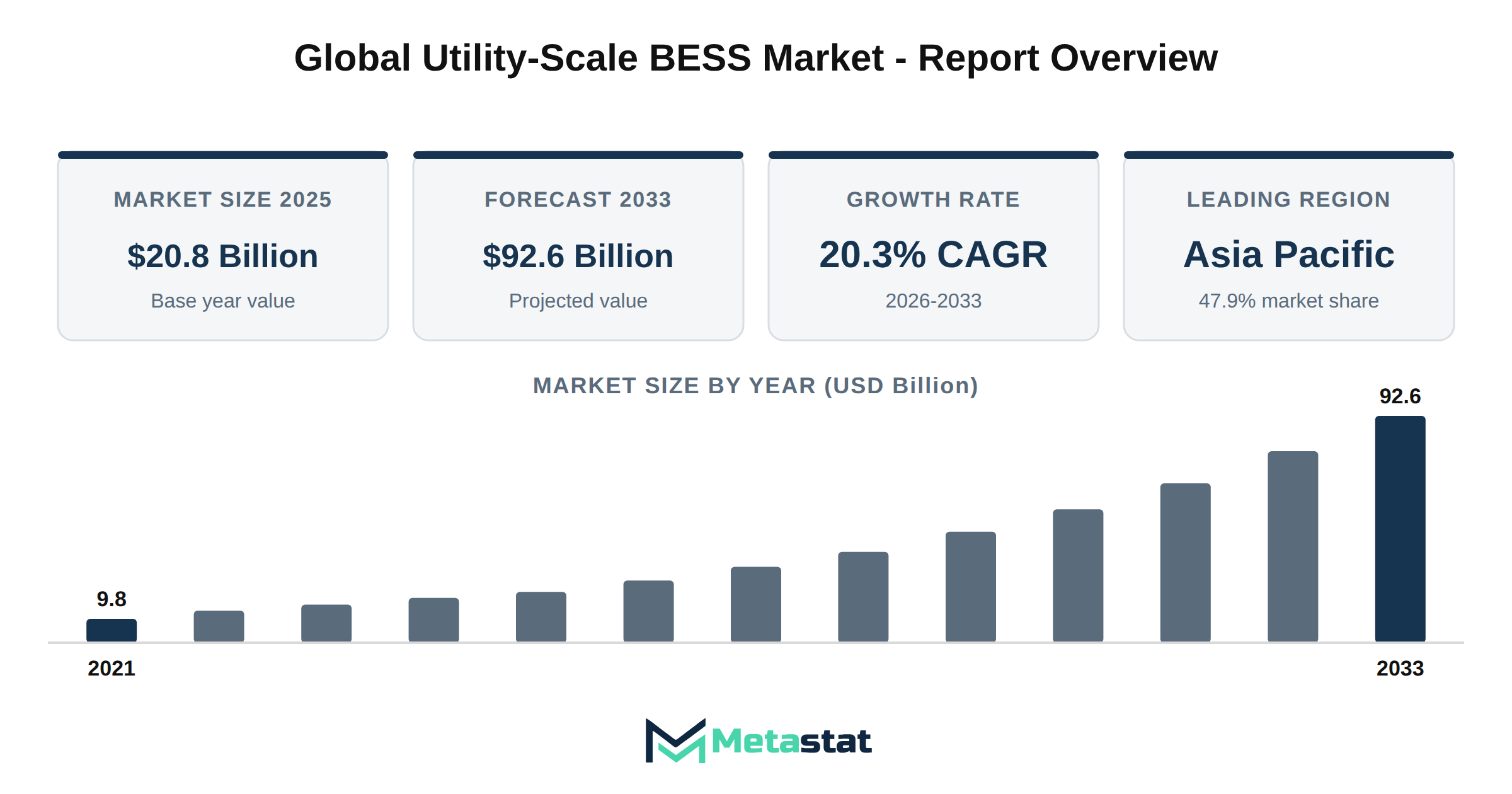
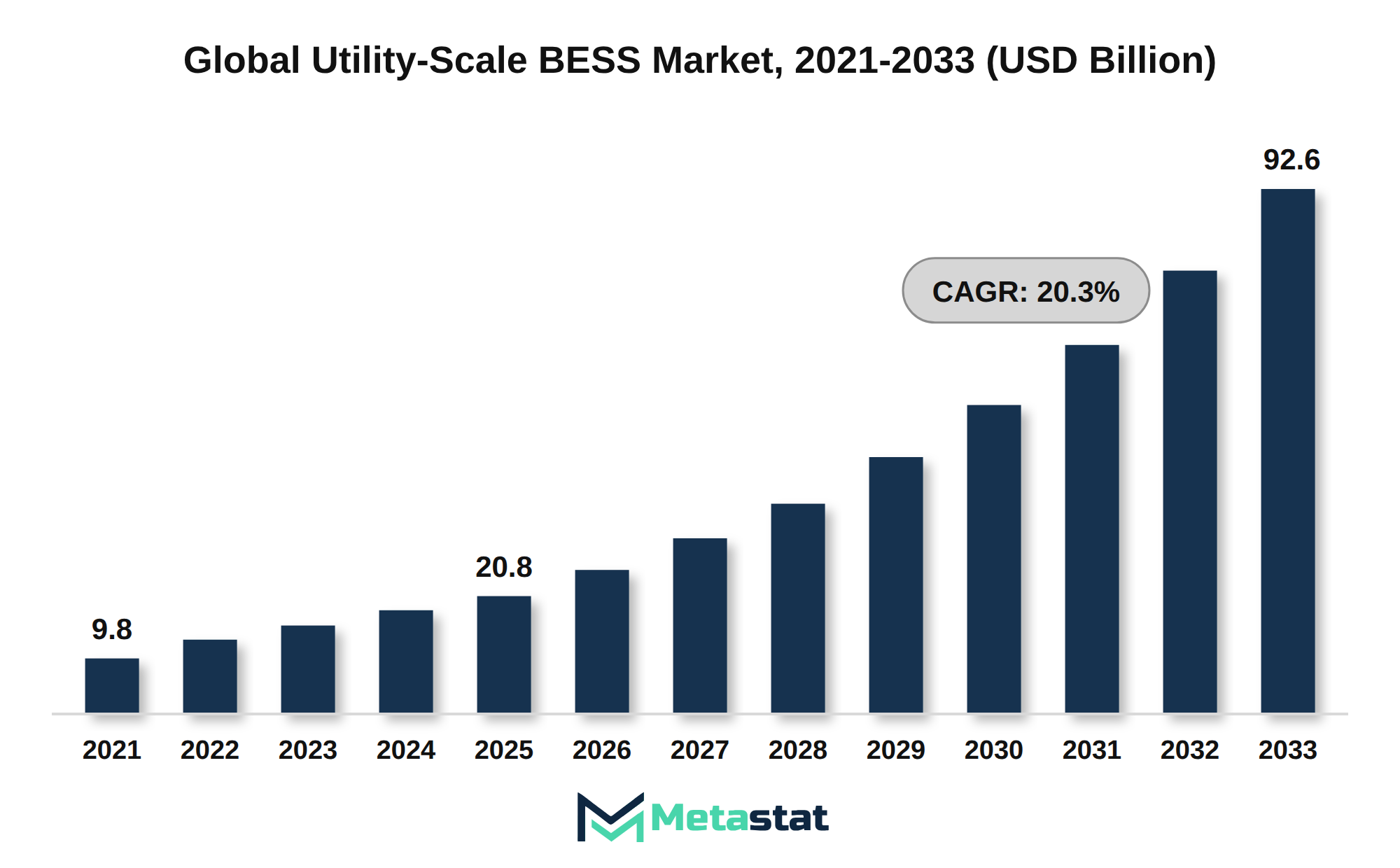
The Utility-Scale BESS market exhibits significant growth, with a base value of USD 20.8 billion in 2025, projected to reach USD 92.6 billion by 2033, reflecting a compound annual growth rate (CAGR) of 20.3 percent. Historical data indicates an increase from USD 9.8 billion in 2021 to USD 15.6 billion in 2023, further emphasizing the market's upward trajectory.
Several factors contribute to this growth, including grid modernization, increasing demand for renewable integration, and heightened need for long-duration storage solutions. These dynamics drive investment in utility-scale battery energy storage systems, particularly in regions including North America, Europe, and Asia-Pacific, where emerging grid opportunities present significant potential.
The dominance of lithium iron phosphate (LiFePO4) chemistry highlights a trend toward reliable and efficient energy storage solutions. Adoption of next-generation sodium-ion and flow batteries is gaining traction, indicating a diversification of technology within the market. This evolution in battery technology aligns with the broader energy transition and enhances the capabilities of energy storage systems.
Ancillary services, energy arbitrage, and merchant revenue stacking models create additional revenue streams for market participants. These mechanisms facilitate the economic viability of utility-scale BESS, attracting investments and enabling projects to achieve profitability in an increasingly competitive landscape.
Investment trends reflect a robust influx of private equity capital flows and project finance structures within large-scale BESS initiatives. Stakeholders recognize the strategic importance of energy storage in achieving long-term sustainability and energy security goals. Grid interconnection queues, transmission bottlenecks, and permitting frameworks represent challenges that market players navigate while scaling operations.
Supply chain bottlenecks, alongside critical mineral volatility, impact the overall landscape of battery manufacturing. Domestic battery manufacturing policies play a crucial role in addressing these challenges, ensuring a stable supply of necessary components for the market's growth.
The levelized cost of storage (LCOS) trajectory and turnkey system pricing forecasts demonstrate a positive outlook for utility-scale BESS. While technologies evolve and economies of scale are realized, the cost of energy storage systems is expected to decline, further enhancing market attractiveness.
The Utility-Scale BESS market experiences significant growth driven by several key factors. Grid modernization initiatives and the increasing demand for renewable energy integration significantly influence market dynamics. Long-duration storage solutions enable a smoother transition to renewable energy sources, attracting investments in new technologies and infrastructure.
Investment in utility-scale battery energy storage systems aligns with global sustainability goals. The transition to cleaner energy sources fuels demand for large-scale storage solutions, enabling utilities to manage energy supply and demand effectively. With a projected compound annual growth rate (CAGR) of 20.3%, the market is expected to reach USD 92.6 billion by 2033, indicating a substantial increase in deployment and capacity across various regions.
Modernizing existing grid infrastructure remains a priority for many countries, enhancing the reliability and efficiency of energy distribution. The integration of renewable energy sources, including wind and solar, necessitates advanced storage solutions to ensure grid stability. Long-duration storage technologies, including lithium-ion and flow batteries, support this integration, allowing for greater flexibility and resilience in the energy supply chain.
Lithium iron phosphate (LiFePO4) battery chemistry currently dominates the market due to its safety, stability, and cost-effectiveness. However, emerging technologies like sodium-ion and flow batteries show promise for future applications, offering potential advantages in performance and recycling. The shift towards these next-generation solutions reshapes the competitive landscape, impacting market dynamics and customer preferences.
Utility-scale BESS provides ancillary services, including frequency regulation and peak shaving. Energy arbitrage opportunities arise from price fluctuations that create a favorable environment for energy storage operators, enabling them to optimize revenue through strategic charging and discharging. Merchant revenue stacking models further enhance profitability by combining multiple revenue streams from grid services and energy sales.
Investment activity in the market reflects a growing interest from private equity and institutional investors. Innovative project finance structures facilitate access to capital for large-scale BESS projects, promoting technological advancements and operational efficiency. This influx of capital supports the expansion of utility-scale storage capacity, driving competitive advantages for early adopters and established players.
Challenges related to grid interconnection queues and transmission bottlenecks impact the deployment timeline of utility-scale BESS projects. Streamlined permitting frameworks alleviate these constraints, allowing for faster implementation and integration into the existing grid. Addressing these barriers remains essential for optimizing market growth and maximizing the benefits of large-scale energy storage.
Supply chain bottlenecks, particularly concerning critical minerals used in battery production, pose risks to the market. Volatility in mineral prices affects production costs, impacting overall market stability. Domestic battery manufacturing policies aimed at enhancing local production capabilities mitigate these challenges, ensuring a more resilient supply chain and promoting sustainable growth in the utility-scale BESS market.
The levelized cost of storage continues to decline, driven by technological advancements and economies of scale. Favorable pricing forecasts for turnkey systems enhance the attractiveness of utility-scale BESS solutions for investors and operators. This trend supports widespread adoption across various sectors, further enhancing market growth and expanding the range of available applications.
The competitive landscape features several Tier-1 system integrators, battery original equipment manufacturers (OEMs), and engineering, procurement, and construction (EPC) providers. Key players in the market include BYD Company Limited, Contemporary Amperex Technology Co. Limited (CATL), and Tesla Inc. These companies drive innovation and competition, contributing to the overall development of the utility-scale BESS market.
Safety standards are essential for ensuring the reliable operation of utility-scale BESS. Innovations in thermal runaway mitigation and fire suppression technologies enhance the safety profile of battery systems. These advancements increase confidence among stakeholders and facilitate broader adoption of energy storage solutions in critical applications.
Hybrid co-located systems combining solar and storage or wind and storage are gaining traction in the market. These configurations optimize resource utilization and enhance grid stability, providing efficient energy solutions. Capacity expansions in such systems contribute to the overall growth of the utility-scale BESS market, enabling more integrated energy solutions.
Legislative frameworks, including the Inflation Reduction Act (IRA) and the EU Net Zero Industry Act, serve because catalysts for market growth. These policies promote clean energy initiatives and enhance the feasibility of utility-scale BESS investments. Supportive regulatory environments encourage innovation and development, fostering a transition towards a more sustainable energy landscape.
Advancements in battery management systems (BMS) and the integration of AI-driven energy trading software enhance operational efficiency. These technologies facilitate real-time monitoring and optimization of energy storage systems, improving overall performance. The incorporation of smart technologies supports market growth by enabling more effective energy management strategies.
Second-life battery applications offer significant potential for extending the lifecycle of battery systems. Recycling economics play a vital role in ensuring the sustainability of the market, promoting compliance with circular lifecycle practices. These initiatives contribute to the overall viability of utility-scale BESS solutions while addressing environmental concerns and resource scarcity.
The long-term capacity outlook for utility-scale BESS continues to reflect significant growth potential, with technology transition milestones projected through 2035. Ongoing advancements and increased investments in energy storage technologies will shape the future of the market, positioning it because a critical component of the global energy landscape.
Increasing capital investment environments significantly influence the Utility-Scale BESS market. Favorable interest rates alongside strong GDP growth enhance the availability of financial resources for investments in energy storage solutions. Venture funding and public-private spending power contribute to heightened financial support for emerging technologies in the energy sector, leading to widespread adoption of battery energy storage systems.
Investment in energy storage infrastructure creates opportunities for technological integration, enabling automation and digital transformation. Streamlining processes and adopting advanced software solutions enhance operational efficiency and reduce costs, positioning stakeholders competitively in the market. Cost-efficiency initiatives stimulate demand for battery energy storage systems, accelerating the growth trajectory of the market.
A robust capital investment environment encourages innovation and supports the development of advanced energy storage technologies. Collaboration between various stakeholders promotes scalability and drives the market towards achieving its projected growth, enhancing the resilience and sustainability of energy systems globally.
The integration of advanced technologies significantly enhances the efficiency and adoption of the Utility-Scale BESS market. Automation and artificial intelligence streamline operations, enabling faster decision-making and improved asset management. The digitization of legacy processes allows for better data analytics, informing strategic planning and optimizing system performance. These technological advancements lower operational costs and enhance service delivery across various applications, including renewable energy integration and grid services.
Investment in technological solutions promotes competitive differentiation among suppliers. Companies leveraging innovative technologies improve their offerings, attracting a broader customer base seeking efficient energy storage solutions. These advancements contribute to the market's overall growth by meeting the rising demand for sustainable energy solutions while ensuring reliability and efficiency in energy management.
The trend toward digital transformation aligns with the global shift toward sustainability and resource stewardship. Organizations adopting advanced technologies commit to reducing their carbon footprint and enhancing operational productivity. This commitment resonates with consumers and investors focused on environmental, social, and governance (ESG) mandates, driving investment and interest in the Utility-Scale BESS market.
Regulatory tightening presents challenges within the Utility-Scale BESS market, driven by compliance hurdles that increase operational complexity for manufacturers and service providers. Legal mandates concerning energy storage installations require adherence to stringent standards, raising both time and costs associated with project execution. This scenario places an additional strain on companies, particularly smaller firms with limited resources, potentially delaying market entry and affecting competitive positioning.
Macroeconomic headwinds, including inflationary pressures and rising operating costs, further complicate the landscape. Increases in material prices and labor costs diminish profit margins, influencing investment decisions across the sector. This dynamic discourages new entrants and slows the expansion of existing players, thereby impacting overall market growth.
Infrastructure gaps and connectivity deficits hinder the Utility-Scale BESS market. Regions lacking adequate grid infrastructure face significant deployment bottlenecks, which restrict access to key markets and limit the effectiveness of energy storage solutions. These deficiencies create barriers to adoption and diminish the overall attractiveness of utility-scale projects, particularly in emerging markets.
Skilled labor shortages present a notable obstacle. The necessity for specialized technicians and engineers to facilitate project design, installation, and maintenance strains available talent pools, delaying project timelines. This talent gap impedes the scalability of operations for firms looking to expand their offerings and market share.
Finally, ongoing geopolitical instability leads to uncertainty in supply chains, affecting the availability of critical components required for production. Resource scarcity, particularly of essential battery materials, introduces volatility in pricing and supply, complicating procurement strategies for companies operating within the market. These factors contribute to a more challenging operational environment, potentially restricting growth opportunities in the Utility-Scale BESS market.
The Utility-Scale BESS market faces challenges due to geopolitical fragmentation, which disrupts supply chains and creates instability in product availability. Trade deficits and tariff friction exacerbate these issues, increasing costs and complicating international transactions. Manufacturers often experience delays in securing critical components, leading to longer project timelines and reduced competitiveness in the market.
Technological disruptions further complicate advancements in the sector, where rapid innovation occurs alongside the need for complex research and development integrations. Companies struggle to keep pace with evolving technologies while managing interoperability friction among various systems. This friction results in significant barriers to efficient project implementation and hinders overall market growth.
Pricing compression and margin pressures arise owing to firms navigating rising input costs and volatile component prices. This financial strain limits the ability of players in the market to invest in new solutions and expand their offerings. Workforce skill gaps and automation displacements present obstacles in maintaining a skilled labor force, crucial for driving the market forward.
Environmental lifecycle footprints and decarbonization mandates add further complexity to operations within the Utility-Scale BESS market. Companies face increasing demands for sustainability, which require investment in new technologies and processes. Failure to adapt to these evolving expectations leads to challenges in meeting compliance standards and retaining market share.
Infrastructure gaps and retrofitting barriers create additional hurdles, with many regions lacking the necessary frameworks to support large-scale energy storage implementation. This situation delays project timelines and inflates costs, ultimately impacting the market's growth trajectory. Intellectual property protection deficits and cybersecurity risks pose significant threats, because data vulnerabilities compromise sensitive information, further challenging market participants in their efforts to innovate and grow.
The Utility-Scale BESS market navigates a complex landscape of geopolitical tensions, pricing pressures, and evolving environmental mandates, which collectively impact supply chain stability and growth potential. Addressing these challenges will determine the market's ability to capitalize on emerging opportunities and sustain momentum in the years ahead.
The Utility-Scale BESS market experiences substantial opportunities stemming from emerging regional demands. Countries across Asia Pacific, North America, and Europe prioritize energy storage solutions to support renewable energy integration and grid stability. The shift towards sustainable energy sources drives this demand, compelling governments and energy providers to invest in large-scale battery energy storage systems.
Infrastructure modernization initiatives enhance the market's prospects by improving existing power grids and enabling the integration of renewable energy sources. Investments in smart grid technologies and energy management systems facilitate more efficient energy distribution and consumption. Enhanced infrastructure supports utilities in meeting rising energy demands while ensuring reliability and sustainability.
Geographical expansion of manufacturing facilities and project sites in developing regions serves because a catalyst for market growth. Companies establish production capabilities closer to emerging markets, which reduces shipping costs and accelerates deployment timelines. This strategic localization enhances their competitive position while addressing specific regional needs.
Technological disruptions, particularly in battery chemistry and energy management systems, enhance the market landscape. Advancements in lithium-ion battery technology provide increased energy density and efficiency, lowering overall costs over time. Operators gain access to more reliable and scalable energy storage solutions.
The drive for digital transformation in energy management enhances operational efficiencies within the market. Data analytics, machine learning, and smart technology aid in optimizing battery performance and life-cycle management. These innovations support operators in maximizing yield and minimizing operational costs, leading to more sustainable energy solutions.
Sustainability imperatives aligned with Environmental, Social, and Governance (ESG) criteria fuel demand for Utility-Scale BESS systems. Companies increasingly focus on eco-friendly practices and transparent reporting, pushing for energy solutions that meet regulatory requirements and market expectations. This alignment strengthens corporate reputations while attracting investment and enhancing market stability.
Strategic consolidation through mergers and acquisitions enhances market competitiveness. By merging capabilities and resources, companies optimize product offerings and enter new segments, driving innovation. This consolidation approach enables faster response times to shifting market dynamics and evolving customer preferences.
The evolving buying behaviors of consumers, influenced by sustainability awareness and digital procurement shifts, create new opportunities. Increased emphasis on environmentally responsible products drives demand for energy storage solutions, compelling businesses to adapt their offerings to meet changing expectations. This transition reinforces the market's growth trajectory while shifting commercial models.
The global utility-scale BESS market has shifted decisively toward Lithium Iron Phosphate (LFP) over Nickel Manganese Cobalt (NMC) chemistries. While NMC delivered early energy density advantages in space-constrained installations, grid-scale applications prioritize levelized cost, operational safety, and calendar durability over volumetric density. Stationary storage assets demand predictable financial returns over 15 to 20 years, making LFP the preferred baseline for system integrators and asset owners.
Safety considerations drive the primary operational divergence between both chemistries. Lithium Iron Phosphate possesses a strong covalent iron-phosphorus-oxygen bond that resists thermal breakdown up to roughly 270 degrees Celsius. In contrast, Nickel Manganese Cobalt starts exothermic decomposition around 210 degrees Celsius, releasing self-sustaining oxygen into the cell structure during thermal runaway. This chemical divergence directly affects site layout requirements, mandatory setback distances, and thermal runaway mitigation infrastructure.
LFP chemistry provides superior longevity under continuous cycling profiles. Modern utility-scale LFP cells routinely deliver between 6,000 and 10,000 cycles at 80 percent depth of discharge (DOD) before reaching their end-of-life capacity threshold. NMC configurations typically achieve 2,500 to 4,000 cycles under comparable discharge conditions. For operators participating in multiple daily dispatch routines, such as energy arbitrage paired with frequency regulation, LFP delivers a significantly lower degradation rate per delivered megawatt-hour.
From a capital expenditure standpoint, LFP avoids cobalt and nickel, two raw materials historically plagued by supply bottlenecks, geopolitical constraints, and price volatility. Iron and phosphate mineral precursors are globally abundant and cheaper to process. Although cathode-grade lithium carbonate remains a core raw material cost for both chemistries, LFP packs retain an equipment-level cost advantage of 20 to 30 percent over NMC counterparts, directly driving down upfront balance-of-system requirements.
Evaluating financial viability in the utility-scale BESS market requires examining total cost of ownership (TCO) rather than focusing solely on upfront hardware procurement. The full lifecycle cost structure encompasses initial turnkey capital expenditure (capex), continuous operations and maintenance (O&M), ongoing capacity degradation, and scheduled battery augmentations over a 20-year operational life.
Initial capex for utility-scale assets is divided between DC block battery equipment, power conversion systems (PCS), balance of plant (BOP), and engineering, procurement, and construction (EPC) activities. Battery cells and enclosures constitute roughly 50 to 55 percent of total installed capex. Power conversion, balance of plant civil work, grid interconnect transformers, and software integration account for the remaining balance. Turnkey pricing has moderated toward standardized, pre-integrated enclosures that lower onsite labor hours and minimize commissioning delays.
Routine O&M costs typically scale between 1.5 and 2.5 percent of initial capex annually. Preventative maintenance centers on heating, ventilation, and air conditioning (HVAC) filter replacements, liquid-cooling loop maintenance, coolant top-offs, and inverter power electronics servicing. Moving from reactive maintenance to condition-based analytics mitigates unscheduled downtime, preventing lost revenue during seasonal peak-spread arbitrage windows.
System capacity fades over time due to electrochemical loss of lithium inventory and impedance rise. Project developers address this fade by either oversizing the initial battery array by 15 to 30 percent or executing modular augmentations around years 7 through 10. Planned mid-life augmentation models generally yield an optimized Levelized Cost of Storage (LCOS). They allow asset owners to defer capital spending and capture expected future battery cell cost declines, preserving positive net present value (NPV).
Fire safety and thermal runaway prevention represent major gating factors for permitting, insuring, and deploying utility-scale energy storage assets. Jurisdictions have strengthened local zoning requirements following early commercial safety incidents, requiring developers to demonstrate robust multi-stage containment from the cell level up to the entire site enclosure.
UL 9540A evaluates thermal runaway fire propagation through four rigorous testing tiers: cell, module, unit, and installation level. The objective is to determine whether an engineered thermal event in a single cell will cascade across adjacent cells, breaches the enclosure boundary, or generates explosive off-gas concentrations. Tier-1 battery manufacturers must supply verified UL 9540A test reports before authorities having jurisdiction (AHJ) will issue construction and operational permits.
The Standard for the Installation of Stationary Energy Storage Systems (NFPA 855) enforces strict separation distances, water supply capacities, and maximum aggregate energy limits per container. Unless full-scale UL 9540A testing demonstrates that fire will not spread between enclosures, NFPA 855 mandates a minimum three-foot separation between modular units and ten-foot separation from exterior property lines and adjacent structures. These requirements dictate land acquisition sizing and civil layout engineering.
Fire mitigation systems comprise a meaningful portion of containerized balance-of-plant costs. Typical safety stacks deploy early-stage off-gas sensors that detect volatile organic compounds (VOCs) and hydrogen release before smoke or heat emerges. Suppression designs integrate condensed aerosol canisters, clean-agent gases, or localized water mist piping. While total suppression packages add 3 to 6 percent to total system capex, compliant pre-engineered fire suppression systems sharply reduce annual property and casualty insurance premiums.
The Power Conversion System (PCS) serves as the bidirectional electrical interface between the DC battery blocks and the high-voltage AC transmission network. As inverter technology evolves, PCS units determine round-trip efficiency (RTE), deliver reactive power support, and ensure stability across weak transmission grids.
Modern utility-scale PCS architectures achieve single-stage DC-to-AC conversion efficiencies exceeding 98.5 percent. Overall round-trip system efficiency, which includes battery chemistry, step-up transformers, and auxiliary thermal management loads, typically settles between 85 and 90 percent for modern liquid-cooled LFP plants. Maximizing PCS conversion efficiency preserves valuable wholesale energy during daily charging and discharging cycles.
Transmission operators require strict compliance with IEEE 519 standards governing total harmonic distortion (THD). PCS designs deploy active pulse-width modulation (PWM) and advanced LC or LCL low-pass filtering to limit current harmonic injection below 5 percent. Clean waveform production prevents resonance disruptions across adjacent substation transformers and protects nearby distribution systems from electrical noise.
A critical technical transition is occurring from legacy grid-following inverters to advanced grid-forming (GFM) inverters with synthetic inertia. Grid-following systems depend on an existing transmission voltage and frequency angle reference to operate. Conversely, grid-forming PCS units act as independent voltage sources, allowing them to stabilize low short-circuit ratio (SCR) grids, provide black-start services, and immediately counter frequency deviations without waiting for external control signals.
Asset profitability in the utility-scale BESS market depends on software-driven dispatch execution. The combination of supervisory control and data acquisition (SCADA) hardware and intelligent Energy Management System (EMS) software translates wholesale market pricing into automated real-time physical battery operation.
Substation-grade SCADA frameworks aggregate telemetry across tens of thousands of individual battery cells, auxiliary liquid cooling pumps, fire protection sensors, and PCS units. These systems execute deterministic industrial protocols such as Modbus TCP/IP, DNP3, and IEC 61850. Real-time monitoring ensures thermal equilibrium across all battery strings while enforcing power-plant controller (PPC) setpoints dictated by the balancing authority.
Modern EMS platforms incorporate machine learning models that process weather forecasts, localized day-ahead market spreads, real-time node congestion, and renewable generation variability. The optimization engine coordinates asset dispatch to capture the highest-value revenue streams. For instance, the system will balance high-margin spinning reserves against energy arbitrage opportunities while continuously respecting state-of-charge (SOC) operating boundaries.
Sophisticated dispatch algorithms avoid chasing nominal short-term market margins that incur disproportionate battery capacity loss. By modeling electrochemical stress factors such as high C-rates, elevated ambient temperatures, and extreme state-of-charge states, the EMS assigns a variable degradation cost to every potential megawatt-hour dispatch. This economic optimization protects the asset's long-term internal rate of return (IRR) against premature capacity fade.
Deploying utility-scale BESS requires complex non-recourse project finance mechanisms. Commercial viability relies on aligning federal tax incentives with predictable, long-term commercial revenue contracts that satisfy debt service coverage ratios (DSCR).
BESS installations qualify for substantial federal incentives, including the Investment Tax Credit (ITC) and Clean Electricity Investment Credit under IRA Section 48E. Because project developers often lack sufficient corporate taxable income to absorb millions of dollars in tax credits directly, they partner with institutional tax equity investors. These partnership flip structures allocate tax depreciation benefits and investment tax credits to tax-motivated institutions in exchange for low-cost project construction capital.
Merchant price volatility presents investment risks for debt underwriting, making long-term offtake agreements essential for securing low interest rates. Utility-scale projects deploy three primary contractual structures:
Commercial lenders assess debt sizing through debt service coverage ratios (DSCR), commonly requiring 1.20x to 1.30x coverage under contracted tolling structures and 1.75x to 2.00x under merchant exposures. Independent engineering reviews evaluate battery warranty coverage, degradation curves, inverter reliability, and offtaker credit ratings before closing construction-to-term loan facilities.
Interconnection delays represent the single largest operational obstacle facing utility-scale energy storage developers across North American and European power markets. Transmission network capacity constraints and administrative delays have extended project gestation timelines from months to multiple years.
Regional transmission organizations, including CAISO, ERCOT, and PJM Interconnection, have experienced an influx of renewable-plus-storage and standalone storage applications. Regional queues are historically designed for predictable, synchronous thermal generation rather than dynamic, bi-directional storage resources. In response, grid operators are transitioning from sequential first-come, first-served reviews to clustered, first-ready, first-served study processes to clear speculative projects from backlogged queues.
Developers increasingly encounter substantial assigned costs for transmission network upgrades, including substation expansions, circuit-breaker reconductoring, and stability upgrades far upstream from the point of interconnection (POI). These unexpected costs, sometimes reaching tens of millions of dollars, frequently break initial project pro-formas. Furthermore, grid operators mandate non-refundable financial deposits to retain queue positions, tying up significant developer development capital during study phases.
Interconnection timelines differ dramatically by market structure. ERCOT operates a streamlined connection framework outside federal jurisdiction, allowing assets to achieve commercial operations in two to three years. In contrast, the CAISO and PJM Interconnection study cycles routinely extend four to six years, driven by extensive thermal and deliverability transfer capability assessments. As a result, developers actively pursue brownfield interconnection sites, such as retiring coal and gas generation facilities, to leverage pre-existing substation interconnections.
Accurate battery degradation modeling is essential for revenue forecasting, financial auditing, and maintenance planning. Because capacity loss is irreversible, degradation curves directly govern how aggressively an asset can be dispatched into lucrative power markets without violating vendor performance guarantees.
State of Health (SOH) measures an operational battery system's remaining storage capacity and internal resistance relative to factory-original specifications. Degradation mechanisms split into two paths: calendar fade and cycling fade. Calendar degradation occurs continuously as a function of passive electrolyte decomposition, temperature, and average resting state-of-charge. Cycling degradation stems from mechanical stress, cathode microcracking, and the irreversible loss of active lithium ions during charge-discharge cycling.
Tier-1 equipment manufacturers structure performance warranties around three core constraints: operating time, energy throughput, or cycle count. A standard warranty guarantees that the BESS will retain at least 65 to 70 percent of its initial nameplate capacity after 10 to 15 years, provided the asset operates within specified boundaries. These operating limits dictate maximum ambient temperatures, average continuous C-rates, and cumulative lifetime megawatt-hour throughput.
To support project financing, warranty packages are wrapped with performance guarantees backed by contractual liquidated damages. Key metrics include round-trip efficiency (RTE) minimums, equivalent system availability (commonly targeted above 98 percent), and response time benchmarks. If a system experiences prolonged forced outages or degrades faster than the modeled baseline, the manufacturer must supply replacement capacity modules or pay direct capacity loss damages to offset lost merchant revenue.
Government energy policies and regulatory frameworks remain primary catalysts for utility-scale energy storage deployment. Strategic financial mechanisms directly lower capital expenditures while regional capacity mandates guarantee baseline commercial demand.
The Inflation Reduction Act (IRA) structurally altered energy storage economics by establishing a standalone energy storage investment tax credit, transitioning into the technology-neutral Section 48E Clean Electricity Investment Credit. Prior regulations required storage to be directly charged by co-located solar generation to claim the tax credit. Standalone eligibility provides absolute flexibility to site storage assets directly at congested transmission nodes.
Section 48E establishes a baseline 30 percent tax credit, provided developers comply with prevailing wage and registered apprenticeship requirements. Developers can unlock additional 10 percent credit adders by meeting domestic content thresholds for US-manufactured structural iron, steel, and battery cells. Siting projects within designated energy communities, such as brownfield locations or regions affected by fossil-fuel facility retirements, unlocks an additional 10 percent credit adder, driving total tax credit support up to 40 or 50 percent of qualified capex.
Complementing tax incentives, the Infrastructure Investment and Jobs Act (IIJA) funds competitive grid infrastructure and resilience grant programs administered by the Department of Energy. These funds support utility-scale grid-forming storage deployments, long-duration energy storage (LDES) commercialization pilots, and transmission upgrade programs designed to integrate high-density renewable corridors.
State-level regulatory mandates create localized procurement demand independent of federal policy. States including California, New York, Texas, Virginia, and Massachusetts enforce multi-gigawatt energy storage targets. In California, resource adequacy (RA) contracts managed by the California Public Utilities Commission (CPUC) provide stable capacity payments, while the Electric Reliability Council of Texas (ERCOT) relies on dynamic price caps to attract high volumes of private capital through merchant investment models.
The competitive landscape of the utility-scale BESS market features intense rivalry among vertically integrated original equipment manufacturers and dedicated system integrators. Product differentiation centers on pre-commissioned energy density, integrated cooling designs, system integration reliability, and established project deployment track records.
Tesla maintains a prominent position in the North American utility-scale storage sector through its standardized, factory-assembled Megapack platforms. The fully integrated AC enclosure houses battery cells, bi-directional inverters, liquid-cooling loops, and balance-of-plant wiring in a single footprint. Major reference deployments, including the massive Gemini Solar-plus-Storage facility in Nevada, demonstrate Tesla's focus on repeatable, rapid site installation. Tesla's internal energy software stack, including Autobidder, provides automated algorithmic trading that appeals to merchant developers.
Formed as a joint venture between Siemens and AES, Fluence operates as a dedicated energy storage technology and systems integrator. Rather than manufacturing its own proprietary battery cells, Fluence sources qualified cells across a diversified base of Tier-1 manufacturers, reducing direct commodity exposure. Its Gridstack modular architecture is widely deployed across Europe, Australia, and the Americas. Fluence pairs its hardware with its Fluence OS platform and advanced asset performance software, capturing major market share among regulated electric utilities requiring customized substation interfaces.
BYD leverages high vertical integration as one of the world's largest lithium battery and electric vehicle manufacturers. The company manufactures its proprietary lithium iron phosphate cells, modules, and complete containerized systems, giving it tight supply chain control. Its standardized energy storage platforms feature high volumetric packing density and thermal efficiency, securing multi-gigawatt-hour project portfolios across Asia, Europe, and Latin America. BYD's cost competitiveness appeals to EPC contractors focused on optimizing capital outlay.
Building on its foundation as a global solar inverter manufacturer, Sungrow has become a leading system integrator in utility-scale energy storage. Sungrow's PowerTitan liquid-cooled BESS integrates power electronics and battery systems, optimizing thermal uniformity across large-scale arrays. The company has secured significant multi-gigawatt utility contracts across Europe, the Middle East, and the Asia-Pacific region. Sungrow's mastery of power conversion technology and competitive turnkey pricing make it an attractive option for developers building large hybrid solar-plus-storage plants.
The Global Utility-Scale BESS market is segmented based on Type, Battery Type, and Application.
Valued at USD 17.5 billion in 2026, the Product segment is projected to reach USD 62.5 billion by 2033, reflecting a CAGR of 20% during the forecast period. The growing emphasis on renewable energy integration drives demand for utility-scale battery energy storage systems (BESS) within this segment. While more organizations prioritize energy efficiency and sustainability, the adoption of advanced battery technologies becomes crucial for balancing intermittent renewable energy sources.
Technological advancements contribute significantly to the maturation of products in the market. Innovations in lithium-ion battery technology enhance energy density, lifespan, and safety, positioning these products favorably in comparison to traditional energy storage options. Enhanced performance capabilities attract investments from various sectors, promoting wider utilization across applications including grid services, backup power solutions, and microgrid support.
Downstream applications show a clear trend towards integrating utility-scale BESS with renewable energy platforms, particularly solar and wind. This shift supports the demand for reliable energy storage solutions, which stabilize energy supply and enhance grid resilience. Regulatory compliance standards and incentives aimed at renewable energy adoption further encourage investment in the Product segment, facilitating rapid market expansion.
Price stability remains a critical factor influencing the market. Pricing volatility in raw materials, particularly lithium and cobalt, affects overall production costs. Manufacturers focus on optimizing supply chain resilience and sourcing strategies to mitigate these challenges. Establishing strategic partnerships with suppliers contributes to reducing margin pressures and ensures a steady flow of essential components.
Strategic opportunity windows emerge because industry players explore next-gen upgrades and disruptive alternatives within the Product segment. Ongoing research and development initiatives aim to improve energy storage solutions' efficiency and sustainability, creating a competitive landscape characterized by innovation and adaptability. The growing interest in smart grid technologies and electrification of transportation provides additional avenues for market growth, further enhancing the utility-scale BESS market's role in the energy transition.
Rapid advancements in technology drive growth in the Service and Solution segment of the Utility-Scale BESS market. Increasing demand for energy storage solutions, particularly in renewable energy integration and grid services, drives this segment forward. Service and Solution offerings are integral for optimizing battery performance, enhancing operational efficiency, and ensuring system reliability.
Market players increasingly focus on developing tailored solutions that cater to specific end-use applications, including frequency regulation and peak shaving. This strategic shift aligns with the need for resilient energy infrastructure, especially in regions experiencing a surge in renewable energy deployment. Capitalizing on this trend, service providers enhance their portfolios to address the evolving needs of customers.
The Service and Solution segment is estimated to reach USD 30.1 billion by 2033, at a CAGR of 20.9% during the forecast period. This expansion reflects the growing recognition of energy storage systems because critical components in achieving energy transition goals and enhancing grid stability. The segment's growth trajectory highlights its importance within the broader Utility-Scale BESS market.
Regulatory compliance standards play a significant role in shaping the dynamics of the Service and Solution segment. While governments implement stricter policies aimed at reducing carbon emissions and promoting sustainable energy solutions, service providers align their offerings to meet these requirements. This alignment builds trust among users and enhances market penetration.
Cost structures and pricing volatility present challenges for service providers within the market. Fluctuations in raw material prices and supply chain disruptions affect operational margins, prompting companies to explore innovative strategies for cost containment. This ongoing adaptation reaffirms the segment's resilience against external pressures, further supporting its growth potential.
Valued at USD 22.1 billion in 2026, the Lithium-Ion (Li-ion) segment is projected to reach USD 78.3 billion by 2033, at a CAGR of 19.8% during the forecast period. This growth results from the increasing demand for energy storage solutions that support renewable energy integration and grid reliability. The transition towards sustainable energy sources drives significant investments in lithium-ion technologies, attributed to their high efficiency and performance compared to other battery types.
Technological advancements play a crucial role in enhancing the performance and lifespan of lithium-ion batteries, leading to wider adoption across various applications, including grid services, backup power supply, and microgrid support. The evolution of these technologies encourages competition among suppliers, driving innovation and cost reduction. Regulatory frameworks that promote clean energy solutions create favorable conditions for market expansion.
Increasing capacities of lithium-ion battery systems contribute to meeting the growing energy demands of various sectors, including commercial, industrial, and utility applications. Consumption shifts toward more efficient energy storage systems drive the need for upgraded infrastructure, further supporting the market. Competitive pricing dynamics and strategic partnerships within the supply chain enhance the resilience of lithium-ion battery providers, ensuring stability amid fluctuating raw material costs.
In response to substitution risks from alternative battery technologies, lithium-ion batteries maintain a competitive edge through ongoing research and development initiatives. The strategic opportunity windows for investment in next-generation upgrades remain significant, focusing on improved energy density and reduced environmental impact. Overall, the growth trajectory of the Lithium-Ion (Li-ion) segment significantly contributes to the overall expansion of the Utility-Scale BESS market.
Growth within the Advanced Lead-Acid segment of the Utility-Scale BESS market aligns with rising demand for efficient energy storage solutions. Increasing initiatives focused on renewable energy adoption and grid stability fuel this demand. Enhanced performance characteristics of advanced lead-acid batteries, including improved cycling capabilities and reduced maintenance requirements, drive adoption among customers in various sectors, particularly utilities and commercial enterprises.
Segment expansion results from technological maturation and continual research and development investments. Product evolution emphasizes the development of next-generation upgrades that enhance energy density and lifespan while reducing environmental impact. These advancements position advanced lead-acid batteries because a viable option for large-scale applications, including renewable energy integration and backup power supply.
Regulatory compliance standards and certifications support market growth, instilling confidence in potential customers regarding the safety and reliability of these solutions. The segment is projected to reach USD 2.4 billion by 2033, at a CAGR of 16.6% during the forecast period. Competitive pricing structures and the cost-effectiveness of advanced lead-acid batteries contribute to their appeal, particularly in regions with cost-sensitive markets, ensuring that the segment remains attractive for capital investment.
Valued at USD 5.5 billion by 2033, the Flow Batteries (Vanadium Redox) segment shows significant potential within the Utility-Scale BESS market. Rising demand for energy storage solutions that support renewable energy integration, along with a push for grid stability, drives this growth. Technological advancements enhance the efficiency and lifespan of vanadium redox flow batteries, presenting strategic opportunities for manufacturers seeking to capture market share.
Shifts in energy policies globally toward sustainable practices increase demand for environmentally friendly battery technologies, driving investments in this segment. Regulatory compliance standards require energy storage systems to meet specific performance metrics, further supporting the adoption of flow batteries. Economic dynamics, including pricing volatility and margin pressures, influence decision-making for end-users, favoring solutions with lower lifecycle costs.
Increased focus on energy resilience, particularly in regions facing frequent natural disasters, drives investments in backup power applications, enhancing the market's attractiveness. The diverse functionalities of vanadium redox flow batteries make them suitable for various applications, including renewable energy integration and grid services. This versatility supports their growth trajectory within the broader energy storage solutions in the Utility-Scale BESS market.
Growth in the Sodium-Sulfur (NaS) segment aligns with increasing demand for energy storage solutions that support renewable energy integration and grid stability. Factors driving adoption include the technology's high energy density, long lifespan, and ability to operate at high temperatures, making it suitable for various applications. The ongoing shift towards sustainable energy systems positions Sodium-Sulfur batteries because a preferred choice among utilities and large-scale energy providers seeking reliable energy storage solutions.
This segment is projected to grow at a CAGR of 30% during the forecast period. Companies investing in the development and enhancement of Sodium-Sulfur technology contribute to its expansion, focusing on improving efficiency, reducing costs, and enhancing performance in diverse operating conditions. Regulatory support for renewable energy initiatives stimulates market growth, emphasizing the importance of energy storage in achieving sustainability goals.
Emerging applications for Sodium-Sulfur batteries include large-scale renewable energy storage systems and backup power solutions. The increasing need for grid services, including frequency regulation and load shifting, enhances the segment's relevance within the broader Utility-Scale BESS market. With technological advancements and strategic collaborations among key players, this segment is positioned for substantial growth and increased market share over the forecast period.
Emerging technologies in the Others (Solid-State, Nickel-Based) segment of the Utility-Scale BESS market offer significant potential. Innovations in solid-state batteries, known for enhanced safety and energy density, provide a promising alternative to traditional battery technologies. Nickel-based batteries, recognized for longevity and cost-effectiveness, contribute to the segment's attractiveness for diverse energy storage applications.
Adoption of these technologies aligns with an increasing focus on renewable energy integration and grid stability. Rising global energy demand compels end-users to seek effective solutions for energy storage that deliver efficiency and reliability. The segment's evolution reflects a broader trend toward sustainable energy practices.
Regulatory standards emphasize safety and environmental considerations, further driving innovation within the segment. Advancements in manufacturing processes and material sourcing enhance supply chain resilience, addressing concerns related to raw material availability and costs. Strategic investment in research and development positions players to capitalize on growth opportunities within the market.
Competition within the market drives continued advancements, with companies focusing on enhancing battery performance and reducing costs. Collaborative efforts among manufacturers, technology providers, and regulatory bodies contribute to the segment's maturation, ensuring it meets evolving market demands effectively.
Renewable Energy Integration segment is valued at USD 10.1 billion in 2026 and is projected to reach USD 37.2 billion by 2033, at a CAGR of 20.5% during the forecast period. The market expands due to increasing demand for sustainable energy solutions and regulatory support for renewable technologies. Strong governmental initiatives promoting the adoption of renewable energy sources contribute significantly to this demand, particularly in regions emphasizing energy transition. Energy storage solutions are essential for integrating intermittent renewable energy sources, while a heightened focus on grid reliability and stability drives further investment in this segment.
Technological maturation plays a critical role in enhancing the performance and cost-effectiveness of energy storage systems. Innovations in battery chemistry, particularly Lithium-Ion technologies, improve energy density and discharge rates, making these systems more attractive for renewable energy integration. The transition toward next-generation upgrades, including solid-state and advanced flow batteries, presents strategic opportunities for manufacturers and investors in the market.
Downstream applications in sectors including solar and wind energy create additional demand for robust energy storage solutions. Energy producers increasingly rely on these technologies to ensure energy availability during peak demand and to balance supply fluctuations. Regulatory compliance standards prioritizing clean energy initiatives create a favorable environment for investment and development within the market.
Cost structures and pricing strategies have become essential considerations for market participants. While competition intensifies, cost efficiencies in production and supply chain processes significantly impact profit margins. Strategic investment in research and development facilitates innovation while ensuring long-term sustainability and competitiveness in the evolving landscape of energy storage solutions.
Steady growth in the Grid Services (Frequency Regulation, Peak Shaving, Load Shifting) segment reflects increasing demand for efficient energy management solutions. This demand arises from the need for utilities and energy providers to optimize power distribution, maintain grid stability, and reduce operational costs. The segment is projected to reach USD 42 billion by 2033, at a CAGR of 20.3% during the forecast period. Numerous factors drive this growth, including the rise of renewable energy sources and their intermittent nature, necessitating effective energy storage and management solutions. Integration of Battery Energy Storage Systems (BESS) within grid services supports utilities in addressing fluctuations and enhancing overall grid performance.
Significant technological maturation influences the segment, leading to more advanced battery technologies and energy management systems. Next-generation upgrades enhance efficiency and reduce costs, further driving adoption across various applications. The market benefits from regulatory compliance standards promoting cleaner energy solutions, incentivizing utilities to invest in energy storage capabilities. These factors contribute to a favorable investment outlook for the segment.
Competition intensifies due to new players entering the market, alongside established firms seeking to expand their offerings. This dynamic environment encourages innovation and product evolution, resulting in more effective and diverse energy storage solutions. With a growing emphasis on operational efficiency and regulatory compliance, stakeholders in the Utility-Scale BESS market prioritize investments in the Grid Services segment.
Increasing reliance on uninterrupted power supply significantly drives the Backup Power Supply segment within the Utility-Scale BESS market. This segment attracts interest from various sectors, including healthcare, data centers, and critical infrastructure, which require reliable energy sources to maintain operations during outages. The rising frequency of power interruptions due to climate change and aging grid infrastructure has heightened demand for backup systems, leading to expanded adoption in both urban and rural settings.
Technological advancements enhance the efficiency and reliability of backup solutions, increasing confidence among end users. Innovations in energy storage technology are progressing, and the segment anticipates improvements in energy density and response times, making backup systems more appealing. Regulatory frameworks promoting energy resilience and incentivizing infrastructure upgrades contribute positively to market dynamics, encouraging further investment.
Valued at USD 7.7 billion by 2033, the Backup Power Supply segment reflects steady growth driven by these factors. This growth trajectory highlights the importance of strategic investment in energy storage technologies, enabling industries to mitigate risks associated with power disruptions. While factors including consumption shifts and regulatory compliance continue to evolve, the market is expected to maintain its expansion.
Strong demand for Microgrid Support within the Utility-Scale BESS market aligns with the global shift toward decentralized energy systems. This segment is projected to grow at a CAGR of 22.9% during the forecast period, driven by increasing investments in renewable energy integration and the need for reliable backup power solutions. Technological maturation, including advancements in battery technologies and control systems, enhances the operational efficiency of microgrids, attracting investments from both public and private sectors. The growing focus on energy resilience and sustainability further supports the demand for microgrid solutions across various industries, including commercial, industrial, and residential sectors.
Regulatory compliance standards and government incentives aimed at promoting renewable energy adoption serve because significant catalysts for market expansion. While nations strive to meet their climate targets, the integration of microgrids into existing infrastructure becomes essential. This transition supports energy independence while reducing reliance on traditional grid systems, which often face challenges including congestion and outages. Consequently, the market's growth trajectory benefits from favorable policies and funding opportunities that stimulate capital investment.
Market players actively seek strategic partnerships and innovations to enhance their offerings in microgrid support. Collaboration with technology providers, utilities, and government agencies strengthens supply chain resilience and mitigates risks associated with raw material sourcing and logistics vulnerabilities. This collaborative approach drives the development of comprehensive solutions that address both customer needs and market dynamics.
Microgrid Support stands because a vital component within the Utility-Scale BESS market, driven by robust demand, technological advancements, and supportive regulatory frameworks. The segment's projected growth signifies a significant opportunity for stakeholders to capitalize on the evolving energy landscape.
Strategic opportunities exist within the Others sub-segment of the Utility-Scale BESS market, driven by the necessity for innovative solutions that complement conventional energy storage applications. Adoption of advanced technologies, including solid-state and nickel-based batteries, enhances product offerings and meets diverse energy needs. This segment reflects a growing interest in versatile applications that extend beyond traditional use cases, positioning it favorably for market expansion.
Key demand drivers include a shift towards sustainable energy practices and the increasing integration of renewable sources. The necessity for robust energy solutions in microgrid support and backup power supply applications reinforces the segment's relevance. Ongoing technological maturation, characterized by next-gen upgrades and product evolution, further supports growth and adoption within this category.
Regulatory compliance standards and policies encouraging energy efficiency strengthen segment demand. Industries seek to align with sustainability goals, and investments in innovative energy solutions align with broader environmental mandates. Supply chain resilience and raw material sourcing strategies enhance the ability to respond effectively to market demands, mitigating potential vulnerabilities. Overall, the Others sub-segment reflects significant potential within the Utility-Scale BESS market, capitalizing on evolving consumption patterns and regulatory landscapes.
Based on geography, the Global Utility-Scale BESS market is divided into North America, Europe, Asia-Pacific, South America, Middle East, and Africa.
North America presents significant opportunities within the Utility-Scale BESS market, driven by strong demand for renewable energy integration and infrastructure modernization. The region expands at a CAGR of 20.3% during the forecast period, reaching a market size (TAM) of USD 20 billion by the end of 2033. The share of the global market for North America is 21.00% in 2025, reflecting the region's growing role in energy storage solutions.
Investment in advanced battery technologies, particularly Lithium-Ion (Li-ion), underpins the regional market's expansion. Increased focus on energy grid resiliency and local infrastructure readiness supports this growth, facilitating the integration of renewable energy sources into existing grids. The presence of domestic market participants enhances competition, while localized procurement dynamics cater to specific regional needs.
Cross-border trade corridors and geopolitical fragmentation influence regional supply chains, prompting a shift towards nearshoring initiatives and localized manufacturing densities. Strategic entry barriers and foreign direct investment (FDI) flows contribute to a favorable business environment for new entrants and established players alike. The competitive landscape features established companies and emerging participants, driving innovation and increasing the overall market value.
Europe accounts for 18.2% of the global Utility-Scale BESS market in 2025, driven by countries including Germany, France, the UK, Italy, Spain, and Russia. The region experiences a strong push towards renewable energy, supported by aggressive climate policies and regulatory frameworks aimed at reducing carbon emissions. Germany and France lead in legislating measures to enhance energy efficiency, stimulating demand for energy storage solutions.
Infrastructure modernization in Europe facilitates the adoption of advanced battery storage technologies. Investments in grid upgrades and the integration of renewable energy sources create a favorable environment for utility-scale applications. The market benefits from high-value replacement cycles, particularly in aging power infrastructure that requires modernization, providing opportunities for new energy storage solutions.
Localized manufacturing densities and nearshoring initiatives contribute to supply chain regionalization, allowing European manufacturers to enhance production capacity. This trend encourages domestic market participants to develop competitive advantages through innovation and efficiency. Cross-border trade corridors and geopolitical fragmentation shape the market, prompting regional players to focus on localized procurement dynamics.
Energy grid resiliency becomes increasingly important amid growing energy demands and environmental challenges. European countries prioritize the development of smart grid solutions that incorporate energy storage, enhancing the overall stability and efficiency of the electrical grid. The market aligns with local compliance mandates that incentivize the adoption of utility-scale energy storage systems.
Foreign Direct Investment (FDI) flows into the region signal confidence in the market's growth potential. Strategic entry barriers exist, but established companies and new entrants consider the region's high adoption rates and supportive policies attractive for investment. The Utility-Scale BESS market in Europe presents significant opportunities for growth and expansion amid evolving energy dynamics.
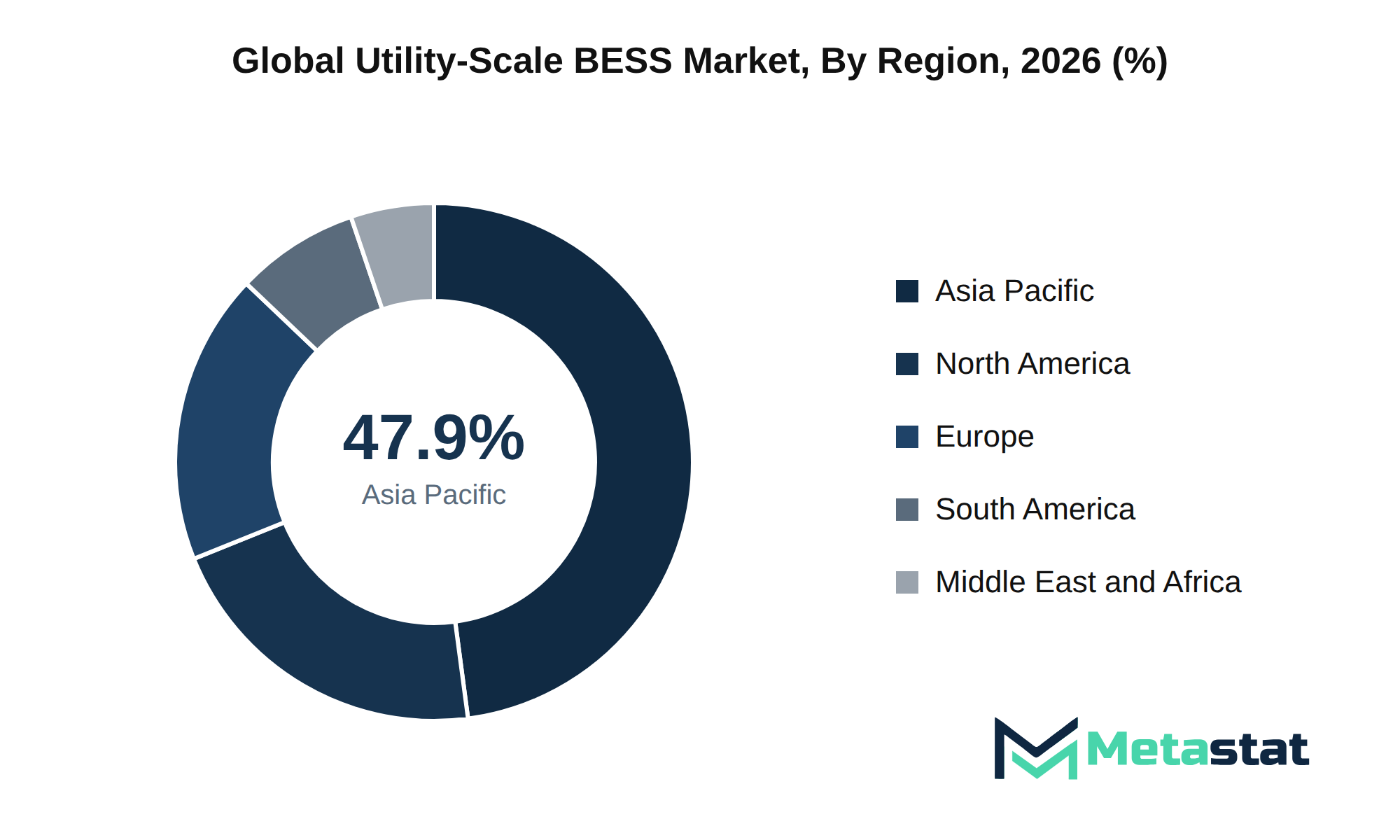
Asia-Pacific holds a significant position in the Utility-Scale BESS market, commanding a 47.9% share of the global market in 2025. Demand for energy storage solutions in this region stems from increasing investments in renewable energy infrastructure and the need for reliable energy supply during rapid urbanization. Countries including China, Japan, India, and South Korea emerge because regional front-runners due to aggressive energy transition policies and technological advancements in battery storage systems.
The region's focus on renewable energy integration drives substantial growth, particularly in the Lithium-Ion (Li-ion) segment, projected to expand significantly from USD 22.1 billion in 2026 to USD 78.3 billion by 2033. Robust government support for energy storage technology and financial incentives enhance adoption rates across various applications, including grid services and backup power supply. Local manufacturing capabilities and nearshoring initiatives strengthen the supply chain and contribute to market resilience.
Infrastructure modernization significantly shapes the market landscape, with investments directed toward upgrading energy grids for enhanced energy resilience. The utility sector's transition towards smart grids aligns with the increasing demand for advanced energy storage solutions. While the market evolves, emerging players focus on localized procurement dynamics to capture specific market segments, ensuring that their offerings align with regional energy requirements and regulatory frameworks.
High-value replacement cycles within existing energy storage systems provide incremental growth opportunities. Strategic entry barriers, including compliance with local regulations and adaptation to cultural nuances in B2B buying behaviors, present challenges for new entrants. Nonetheless, established domestic players continue to consolidate their positions, creating competitive dynamics that benefit end-users through improved technologies and reduced costs in the Utility-Scale BESS market.
South America holds a significant position in the Utility-Scale BESS market, accounting for a 7.7% share of the global market in 2025. Brazil and Argentina present substantial growth opportunities, driven by increasing investments in renewable energy sources and infrastructure modernization. Rising demand for energy storage solutions in both countries is attributed to the need for grid stability and the integration of renewable energy sources.
Localized procurement dynamics shape the market, influencing buyer behavior and preferences. Regional players actively seek solutions that align with their operational frameworks and regulatory requirements. The presence of domestic market participants enhances the competitive landscape, encouraging innovation and collaboration within the sector.
Investment in localized manufacturing densities supports the development of the Utility-Scale BESS market. Cross-border trade corridors facilitate the movement of goods and technology, strengthening supply chain regionalization. Energy grid resiliency initiatives across the region create a favorable environment for the adoption of energy storage technologies.
The Utility-Scale BESS market in the Middle East and Africa experiences challenges and opportunities shaped by regional dynamics. Emerging market front-runners, particularly Saudi Arabia and the UAE, invest heavily in renewable energy projects and grid stabilization initiatives. Investment in energy infrastructure modernization boosts the market, with significant projects aimed at improving energy resilience and reliability.
In South Africa, energy scarcity and an aging power grid drive the demand for battery energy storage systems. Government efforts to enhance energy security encourage utility-scale storage solutions, supporting market growth. The region's energy landscape features a mix of traditional and renewable sources, necessitating innovative integration methods to ensure grid stability.
Localized procurement dynamics influence the supply chain, with a trend toward nearshoring initiatives that promote regional manufacturing capabilities. The market benefits from collaborations with domestic players, facilitating the adoption of advanced battery technologies tailored to local needs. This strengthens competitive positioning within the broader Utility-Scale BESS market.
Geopolitical considerations and regulatory frameworks shape market entry strategies. Local compliance mandates encourage investments by foreign entities looking to navigate the regional market. Companies including BYD Company Limited and Contemporary Amperex Technology Co. Limited (CATL) engage in partnerships, enhancing their foothold in the Middle East and Africa.
Overall, the Utility-Scale BESS market in this region is poised for growth, supported by increased investment, regional resource availability, and strategic entry barriers that facilitate foreign direct investment flows. The focus on localized solutions aligns with broader trends in energy transition and sustainability.
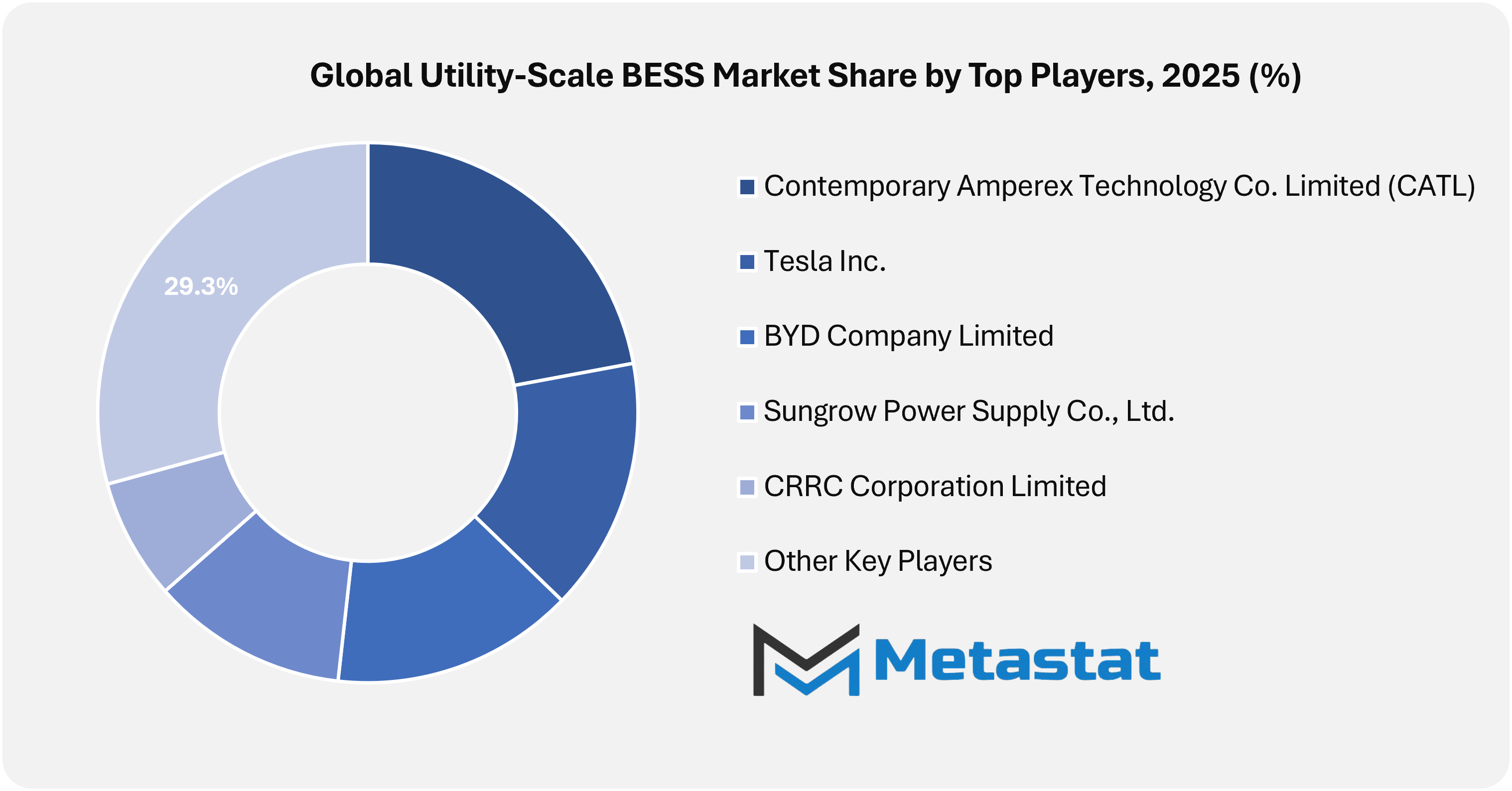
The Utility-Scale BESS market features a diverse array of companies engaging in various strategic behaviors. Mergers and acquisitions play a significant role, with numerous players forming alliances to enhance their market positioning and expand their technology portfolios. Strategic partnerships and joint ventures drive innovation and facilitate entry into new markets, allowing firms to leverage each other's strengths in product development and distribution.
Product differentiation remains a key focus, with companies investing heavily in research and development to create proprietary technologies. This focus on innovation enables firms to establish a competitive edge through unique offerings tailored to specific customer needs. Well-established players including Tesla Inc., BYD Company Limited, and Samsung SDI Co., Ltd. pursue aggressive pricing architectures that reflect their technological capabilities and market demand.
In the context of barriers to entry, new entrants face challenges related to established brand equity and customer retention strategies. Companies with strong reputations, including General Electric Company and Enel S.p.A., benefit from high switching costs, which enhance customer loyalty and hinder competitive threats from emerging startups. The future competitive outlook suggests continued consolidation within the market, driven by the need for scale and operational efficiency.
Market size is forecast to rise from USD 20.8 billion in 2025 to over USD 92.6 billion by 2033. The anticipated growth stems from several macroeconomic factors, including evolving regulatory environments and increasing investments in renewable energy infrastructure. The Utility-Scale BESS market experiences robust demand driven by the need for grid stability and energy storage solutions that support the integration of renewable energy sources.
Economic cycles have a direct impact on downstream demand changes, influencing capital expenditures in the sector. A strong economy typically leads to increased investments in energy storage technologies, while economic downturns constrain financial resources for new projects. The maturation of core industries, particularly those reliant on renewable energy, supports steady consumption increases, establishing a foundation for sustained market growth.
Next-generation technology integration plays a critical role in shaping product life-cycles and R&D commercialization timelines. Innovations in battery technology, including the advancement of Lithium-Ion and Sodium-Sulfur systems, enhance performance and cost-effectiveness. This transition toward more efficient technologies aligns with regulatory evolution timelines that emphasize sustainability and environmental compliance.
Geopolitical realignments and evolving trade corridors impact the global supply chain, affecting the availability of critical materials for battery production. Strategic capital allocation directives focus on building resilient supply chains, optimizing production capabilities, and ensuring compliance with imminent regulations. This proactive approach enables companies to address emerging opportunities and unmet enterprise needs in the market.
Executive-level strategic imperatives drive the adoption of Utility-Scale BESS solutions, emphasizing the importance of defensibility roadmaps and future growth recommendations. By aligning resources with market demands and regulatory requirements, companies position themselves to capitalize on high-growth pockets within the industry, ensuring long-term success while navigating evolving market dynamics.
The report strategically identifies and profiles the key market players and analyses their core competencies in each sub-segment of the Utility-Scale BESS market.
|
Report Attributes |
Details |
|
Study Period |
2021-2033 |
|
Base Year |
2025 |
|
Estimated Year |
2026 |
|
Forecast Period |
2026-2033 |
|
Historical Period |
2021-2025 |
|
Growth Rate |
CAGR 20.3% from 2026 to 2033 |
|
Revenue Unit |
USD billion |
|
Segmentation |
By Type, Battery Type, Application, and Region |
|
By Region |
North America (By Type, Battery Type, Application, and Country)
|
|
Europe (By Type, Battery Type, Application, and Country)
|
|
|
Asia Pacific (By Type, Battery Type, Application, and Country)
|
|
|
South America (By Type, Battery Type, Application, and Country)
|
|
|
Middle East and Africa (By Type, Battery Type, Application, and Country)
|
Find answers to common questions about this report
The Utility-Scale BESS market size was valued at USD 20.8 billion in 2025, according to the Metastat Insights study.
The Utility-Scale BESS market is projected to grow at a CAGR of 20.3% during the forecast period from 2026 to 2033.
The North America Utility-Scale BESS market size is estimated to reach USD 20 billion by 2033.
The Product segment leads the Utility-Scale BESS market with a projected value of USD 62.5 billion by 2033, compared to the Service and Solution segment, which is expected to reach USD 30.1 billion in the same year.
Key drivers for the Utility-Scale BESS market include increasing capital investment environments, favorable interest rates, and strong GDP growth that enhance financial resources for energy storage investments. Technological advancements, including automation and digital transformation, improve operational efficiency and reduce costs, driving demand for battery energy storage systems.
Asia Pacific holds the dominant share of the Utility-Scale BESS market, accounting for 47.9 percent in 2025. This region's significant share reflects its leading position compared to North America, Europe, South America, and the Middle East and Africa.
The Utility-Scale BESS market growth faces challenges from regulatory tightening, which increases operational complexity and costs for manufacturers. Infrastructure gaps and skilled labor shortages further hinder deployment, while geopolitical instability disrupts supply chains, affecting the availability of critical components. These factors collectively create a challenging operational environment that restricts growth opportunities.
Favorable capital investment environments, characterized by strong GDP growth and accessible financial resources, significantly enhance product adoption in the Utility-Scale BESS market. advancements in automation and digital transformation improve operational efficiency, attract a broader customer base, and align with sustainability goals, further driving the demand for battery energy storage solutions.
The Utility-Scale BESS market is estimated to reach a valuation of USD 92.6 billion by 2033.
Top players operating in the Utility-Scale BESS market include BYD Company Limited, Contemporary Amperex Technology Co. Limited (CATL), CRRC Corporation Limited, Canadian Solar (e-STORAGE), Fluence Energy, LLC, General Electric Company, LG Energy Solution, and Tesla Inc.
DC-coupled configurations share a centralized inverter, capturing solar energy that would otherwise be clipped, which raises electrical charging efficiency. AC-coupled architectures place solar and storage on independent inverters, simplifying equipment replacement, enabling flexible independent dispatch into wholesale markets, and minimizing engineering complexity in large-scale utility grid designs.
Degradation directly reduces available capacity for wholesale energy arbitrage and firm capacity market compliance. Operating heavily in high-throughput frequency regulation accelerates capacity fade. Energy Management Systems run degradation-aware dispatch models, balancing real-time ancillary service margins against asset longevity to preserve peak capacity and protect long-term project revenue stacking.
Condensed aerosol canisters combined with early off-gas detection sensors offer the most cost-effective, low-maintenance solution for UL 9540A compliance. While clean-agent gases and internal water mist systems provide rapid flame suppression, aerosols eliminate complex pressurized piping, optimize container footprints, minimize structural weight, and lower ongoing balance-of-plant maintenance costs.
Interconnection timelines range from two to three years in ERCOT to four to six years in CAISO and PJM Interconnection. Grid upgrade costs vary from nominal substation adjustments up to tens of millions of dollars per project, depending on local transmission circuit congestion, voltage stability limits, and assigned network upgrade allocations.
Total cost of ownership for a 100 MW / 400 MWh BESS project includes initial turnkey capex between $50 million and $72 million globally, alongside annual operational maintenance at 1.5 to 2.5 percent of capex. Adding mid-life cell augmentations and charging costs yields a 20-year Levelized Cost of Storage (LCOS) roughly between $60 and $85 per MWh.
IRA Section 48E establishes a baseline 30 percent investment tax credit, which increases project internal rate of return (IRR) by reducing net installed capital expenditure. Securing an additional 10 percent domestic content bonus or energy community adder boosts the credit to 40 or 50 percent, raising equity IRRs by 300 to 600 basis points.
Tesla, Fluence, and BYD provide 10-to-15-year baseline performance warranties guaranteeing 65 to 70 percent retained capacity. These contracts tie degradation to cumulative megawatt-hour energy throughput, annual equivalent full cycles, average daily operating C-rates, and continuous compliance with specified cell operating temperature windows.
Lithium Iron Phosphate (LFP) outperforms Nickel Manganese Cobalt (NMC) in stationary grid safety due to its higher thermal runaway threshold of roughly 270 degrees Celsius. LFP delivers 6,000 to 10,000 cycles compared to 2,500 to 4,000 for NMC, producing a substantially lower Levelized Cost of Storage across multi-decade operating lifespans.
The analysts below cover Energy and Power research at Metastat Insights.
LEAD ANALYST
Utkarsh Khirodkar is a Lead Market Research Analyst at MetaStat Insight, specializing in market intelligence, technology sector assessments, and competitive strategy.

PRINCIPAL CONSULTANT - ENTERPRISE AI & EMERGING TECHNOLOGIES
Banking & Finance · Electronics and Semiconductor · Energy and Power · Healthcare IT · Information & Technology · Professional Services
Vijay Gunti is a Principal Consultant at MetaStat Insight, bringing over two decades of experience across enterprise digital transformation, technology strategy, and intelligent systems.

ENERGY & INFRASTRUCTURE INDUSTRY CONSULTANT
Automotive and Transportation · Electronics and Semiconductor · Energy and Power · Machinery & Equipment
Saurabh Vasant Ganvir consults for Energy & Infrastructure Industry at MetaStat Insight, specializing in renewable energy, solar EPC, and electric vehicle (EV) infrastructure markets.
Most industry reports on warehouse automation bundle autonomous mobile robots and fixed conveyor installations into the same top-level numbers, which complicates advisory work. This study split the market cleanly by payload tiers, navigation technology, and fleet management software layers. The regional forecast for Western Europe gave our team defensible adoption benchmarks when evaluating capital allocation for logistics clients, saving us days of secondary data scrubbing.
Analyzing the transition from natural gas to green hydrogen in iron ore reduction requires realistic infrastructure timelines. Meta stat insight supplied a detailed regional assessment of DRI plant conversion costs and scrap metal availability in North America and Western Europe. Their report carefully examined pellet quality specs and electrical grid access constraints without making oversimplified market assumptions. The research material served as a practical reference during internal technology roadmap discussions.
Integrating zero-trust access controls across legacy electronic health record systems involves complex compliance overhead. Team produced an analysis that clearly separated identity governance and administration tools from privileged access management platforms. Their evaluation of HIPAA and GDPR compliance features across cloud native solutions gave our architecture group clear baseline criteria. The custom data request regarding biometric authentication adoption in hospital networks was returned promptly with clear documentation.
Explore related market intelligence reports worth reading alongside this one.