
LEAD ANALYST
Utkarsh Khirodkar is a Lead Market Research Analyst at MetaStat Insight, specializing in market intelligence, technology sector assessments, and competitive strategy.

Private Industrial 5G Networks Market Size, Share, By Deployment Mode (On-premises, Cloud-based, and Hybrid), By Frequency Band (Sub-6 GHz and Millimeter Wave (mmWave), By Organization Size (Large Enterprises, Small Enterprises and Medium Enterprises), By End-Use (Manufacturing, Healthcare, Transportation, Logistics, Retail, Energy, Utilities, Smart Cities, and Others), Industry Analysis, Growth, Trends, and Forecast, 2026-2033
Report ID
MSI-4658
Published
April, 2026
Pages
309 Pages
Format
Report Details
Choose Your License
Private Industrial 5G Networks Market
Global Private Industrial 5G Networks market size is valued at USD 3,111.3 million in 2025 and projected to grow at a CAGR of 29.1% during the forecast period, reaching USD 23,996.2 million by 2033.
North America holds 27.8% of the global market in 2025, with the U.S. leading regional revenue generation.
On-premises segment accounts for a market share of 51.4% in 2025.
Key trends driving growth: Industry 4.0 automation and real-time machine control requirements along with OT and IT convergence priorities for secure, site-controlled wireless connectivity.
Opportunities include edge compute plus AI-enabled private 5G for closed-loop automation, vision analytics, and autonomous operations.
Key insight: Rising enterprise digitization and mission-critical connectivity needs accelerate investment in Global Private Industrial 5G Networks across manufacturing, energy, logistics, and smart infrastructure.
The Global Private Industrial 5G Networks market within the telecommunications and enterprise connectivity industry is expanding well beyond factory floors and controlled production environments, reshaping how organizations design, govern, and secure mission-critical operations. Early deployments focused on reducing latency and enabling deterministic communication for automation, while the next phase of market development is centered on dedicated spectrum, localized core networks, and edge-native processing. These capabilities are allowing industrial campuses to strengthen data sovereignty, reduce dependence on public infrastructure, and improve compliance, control, and operational resilience across manufacturing, logistics, energy, and mining.
Over the forecast period, private industrial 5G networks are expected to evolve into critical digital backbones that support immersive training, real-time digital twins, AI-enabled orchestration, and autonomous industrial workflows. Heavy industries are increasingly integrating advanced robotics that require synchronized connectivity, while ports, airports, and smart warehouses are deploying secure and highly reliable network environments for safety monitoring, asset tracking, predictive maintenance, and autonomous operations. This transition is positioning private industrial 5G as a foundational layer within the future of connected enterprise infrastructure.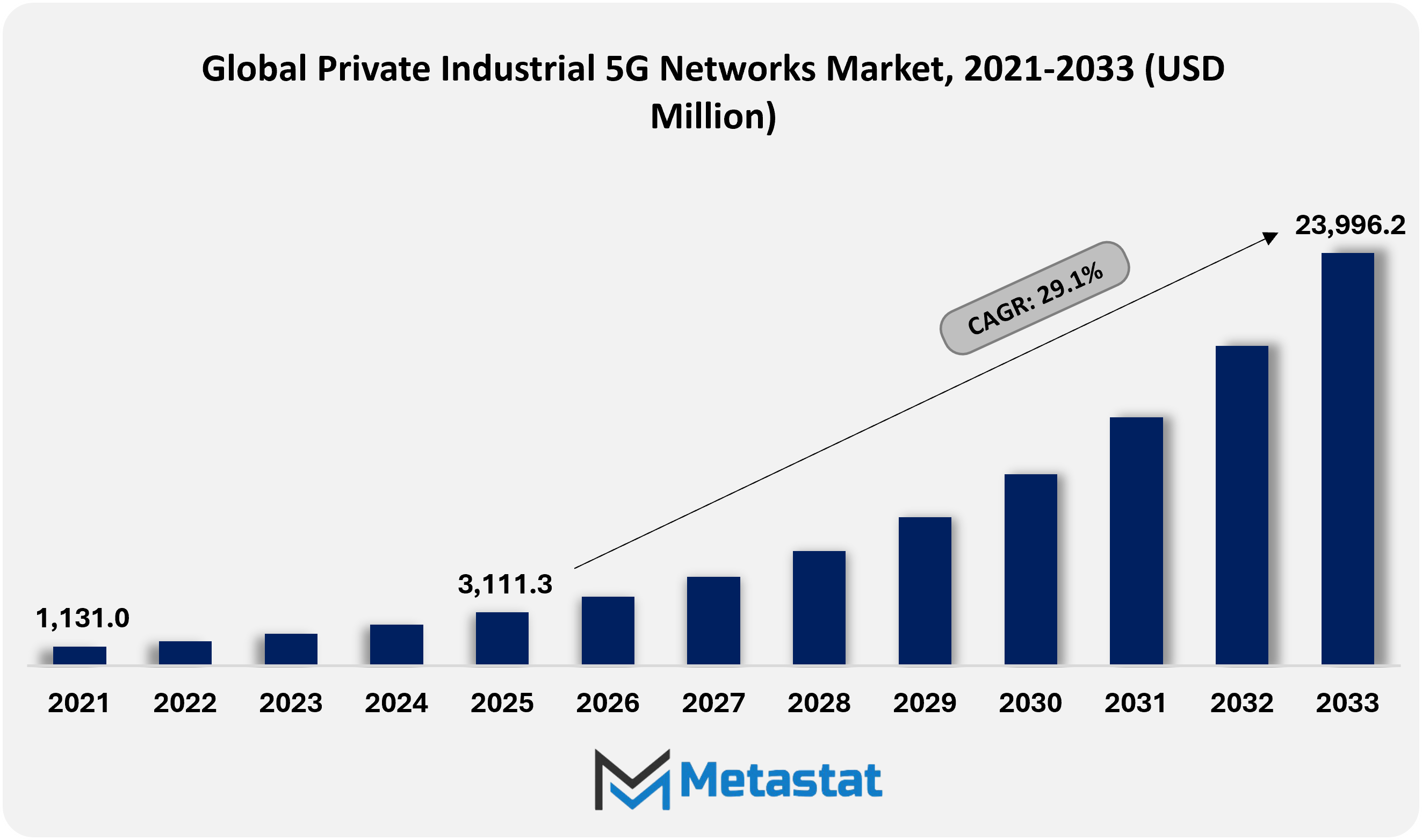
Industry 4.0 automation and real-time machine control requirements.
Rapid progress in smart manufacturing is accelerating demand in the Global Private Industrial 5G Networks market. Advanced robotics, predictive maintenance systems, machine vision, and synchronized production lines require ultra-low-latency and deterministic connectivity. Real-time machine control across large industrial facilities depends on dedicated networks that deliver high reliability, minimal interference, and stable throughput, making private industrial 5G increasingly important in precision-driven production environments.
OT and IT convergence priorities for secure, site-controlled wireless connectivity
The convergence of operational technology and enterprise IT systems is supporting long-term expansion in the Global Private Industrial 5G Networks market. Industrial operators are prioritizing secure, site-controlled wireless infrastructure that protects sensitive production data while improving connectivity across machines, devices, and applications. These network environments support unified monitoring, centralized analytics, and policy-based access control, strengthening visibility, cybersecurity, and compliance across complex industrial operations.
Spectrum availability and licensing complexity across jurisdictions
Spectrum availability and licensing complexity remain major structural barriers in the Global Private Industrial 5G Networks market. Regulatory variation across countries creates uncertainty for enterprises planning multi-site or cross-border deployments. Licensing procedures, administrative approvals, and frequency coordination requirements extend deployment timelines, increase execution risk, and slow broader adoption across large industrial ecosystems.
Deployment cost and integration complexity across OT systems, devices, and security stacks
High deployment costs and integration complexity continue to limit adoption among mid-sized industrial operators. Private industrial 5G deployment requires investment in network design, hardware, software, cybersecurity architecture, and ongoing management capabilities. Integration across legacy OT systems, industrial sensors, edge platforms, and layered security stacks often requires phased implementation, specialist expertise, and careful validation before full-scale rollout.
Edge compute plus AI-enabled private 5G for closed-loop automation, vision analytics, and autonomous operations
The convergence of edge computing and artificial intelligence is creating strong opportunities in the Global Private Industrial 5G Networks market. Closed-loop automation systems are increasingly processing production data locally to support faster and more precise decision-making. Vision analytics for quality inspection, autonomous mobile robots for material handling, and AI-based workflow orchestration are all benefiting from secure, low-latency private 5G environments, supporting the rise of intelligent and self-optimizing industrial facilities.
The Global Private Industrial 5G Networks market is classified based on Deployment Mode, Frequency Band, Organization Size, and End-Use.
On-premises segment is valued at USD 2,064.9 million in 2026 and is projected to reach USD 8,365.1 million by 2033, at a CAGR of 22.1% during the forecast period.
On-premises deployment in the Global Private Industrial 5G Networks market supports full control over network architecture, data governance, and security management. Industrial campuses, manufacturing sites, and critical infrastructure facilities are adopting dedicated setups to protect sensitive operations and maintain high service reliability. Rising requirements for ultra-low latency, predictable performance, and regulatory control are supporting long-term investment in localized private 5G environments.
Cloud-based segment is valued at USD 846 million in 2026 and is projected to reach USD 6,027.8 million by 2033, at a CAGR of 32.4% during the forecast period.
Cloud-based deployment enables scalable network management through centralized software platforms. Enterprises benefit from remote monitoring, automated updates, lower site-level hardware dependency, and faster multi-site orchestration. Increasing reliance on analytics, AI tools, and software-defined networking is supporting stronger cloud integration across industrial environments, particularly where organizations require flexibility, centralized visibility, and optimized cost structures.
Hybrid segment is valued at USD 1,102.5 million in 2026 and is projected to reach USD 9,603.3 million by 2033, at a CAGR of 36.2% during the forecast period.
Hybrid deployment models combine on-site infrastructure with cloud-based orchestration to balance security, control, and scalability. Mission-critical workloads remain under local management, while analytics, optimization, and network intelligence functions operate through cloud-enabled environments. Hybrid strategies are gaining traction across industries seeking resilience, operational efficiency, and adaptive performance across distributed industrial assets.
Sub-6 GHz segment is projected to reach USD 19,753.6 million by 2033, at a CAGR of 27.4% during the forecast period.
Sub-6 GHz spectrum adoption supports wider coverage and stable connectivity across large industrial zones. Manufacturing plants, logistics hubs, utility sites, and energy facilities prefer this band for reliable signal penetration and consistent bandwidth across expansive operating environments. Its long-range communication capability supports connected machinery, industrial sensors, workforce mobility, and process continuity within large campuses.
Millimeter Wave (mmWave) segment is projected to reach USD 4,242.5 million by 2033, at a CAGR of 40.8% during the forecast period.
Millimeter wave technology enables ultra-high data speeds and very low latency for advanced industrial use cases. Applications such as precision robotics, real-time automation, immersive training, and high-density machine vision are well aligned with mmWave performance capabilities. Adoption is expected to strengthen in industrial environments where rapid data transfer, localized coverage, and high-capacity connectivity are essential.
Large Enterprises segment is projected to reach USD 15,662.3 million by 2033.
Large enterprises are investing in customized private industrial 5G ecosystems aligned with broader digital transformation strategies. Multi-site operations, extensive production lines, and high-volume data exchange require advanced connectivity frameworks that support secure, reliable, and scalable communications. Strong capital availability and technical capabilities are supporting early adoption and helping large enterprises establish benchmarks for smart infrastructure integration.
Small and Medium Enterprises segment is projected to reach USD 8,333.9 million by 2033.
Small and medium enterprises are gradually adopting scalable and cost-efficient private 5G solutions to improve productivity, automation, and operational visibility. Managed services, flexible deployment models, and subscription-led offerings are lowering barriers to adoption. Competitive pressure and modernization priorities are encouraging SMEs to invest in reliable, secure, and adaptable connectivity infrastructure.
Manufacturing segment is projected to grow at a CAGR of 27.2% during the forecast period.
Manufacturing remains one of the most prominent end-use areas in the Global Private Industrial 5G Networks market. Smart automation, predictive maintenance, digital twins, machine vision, and autonomous material handling systems are increasingly operating on secure and low-latency private networks. These capabilities improve production quality, reduce downtime, and strengthen visibility across connected factory environments.
Healthcare segment is projected to grow at a CAGR of 32.4% during the forecast period.
Healthcare adoption is rising as hospitals and research centers seek secure, high-performance connectivity for real-time imaging, connected medical equipment, remote diagnostics, and robotics-assisted procedures. Private industrial 5G networks support secure data handling, reliable communication, and improved operational efficiency across healthcare environments where performance and confidentiality remain critical.
Transportation and Logistics segment is projected to grow at a CAGR of 31.2% during the forecast period.
Transportation and logistics operators are deploying private industrial 5G to improve fleet visibility, warehouse automation, asset utilization, and route coordination. Real-time tracking of cargo movement, autonomous vehicle support, and intelligent yard management are becoming important use cases. These capabilities are improving efficiency across increasingly connected logistics networks and industrial corridors.
Retail segment is projected to grow at a CAGR of 26.5% during the forecast period.
Retail adoption is expanding across connected stores, automated checkout environments, inventory tracking systems, and smart distribution facilities. Private industrial 5G networks support secure management of connected devices, operational data, and real-time analytics across retail infrastructure. These deployments are helping retailers improve process efficiency, transaction visibility, and customer experience delivery.
Energy and Utilities segment is projected to grow at a CAGR of 28.2% during the forecast period.
Energy and utilities integration is strengthening as private industrial 5G supports grid monitoring, predictive maintenance, remote infrastructure control, and real-time performance visibility. Power generation assets, renewable energy sites, substations, and utility distribution networks require secure and resilient connectivity environments to support continuity, safety, and asset intelligence across distributed operations.
Smart Cities segment is projected to grow at a CAGR of 31.6% during the forecast period.
Smart city projects are increasingly adopting private industrial 5G for intelligent traffic systems, surveillance networks, connected public utilities, and environmental monitoring infrastructure. Municipal authorities are using secure 5G environments to improve urban operations, service coordination, and infrastructure responsiveness. High-capacity connectivity is supporting data-led planning and smarter public asset management.
Others segment is projected to grow at a CAGR of 30.3% during the forecast period.
Other end-use sectors, including mining, defense, and education, are adopting private industrial 5G to support specialized operating requirements. Remote site communication, mission-critical coordination, worker safety monitoring, and secure data transfer are supporting broader deployment across these sectors. Industry-specific customization is expanding the relevance of private industrial 5G across diverse enterprise environments.
Based on geography, the Global Private Industrial 5G Networks market is divided into North America, Europe, Asia-Pacific, South America, Middle East, and Africa.
North America Private Industrial 5G Networks Market is set to expand at a CAGR of 29.1% within the forecast period, reaching a market size (TAM) of USD 6,675.7 million by the end of 2033.
North America drives the Private Industrial 5G Networks market through fast deployment of committed organisation networks across production and logistics hubs in the United States and Canada.
North America speeds up adoption in the Private Industrial 5G Networks marketplace due to robust collaboration among telecom operators and industrial organizations investing in steady, low-latency connectivity.
Europe remains an important market for private industrial 5G, supported by strong industrial automation capabilities, advanced manufacturing ecosystems, and continued investment in enterprise-grade digital infrastructure.
Asia Pacific offers predominant opportunities inside the Private Industrial 5G Networks market pushed by big-scale smart factory tasks across China, Japan, and South Korea.
Asia Pacific creates growth avenues in the Private Industrial 5G Networks market via government-subsidized virtual transformation programs helping industrial automation and campus network expansion.
Across the Middle East, Africa, and South America, the Private Industrial 5G Networks market profits traction from increasing commercial zones, strength initiatives, and mining operations looking for dependable personal connectivity solutions.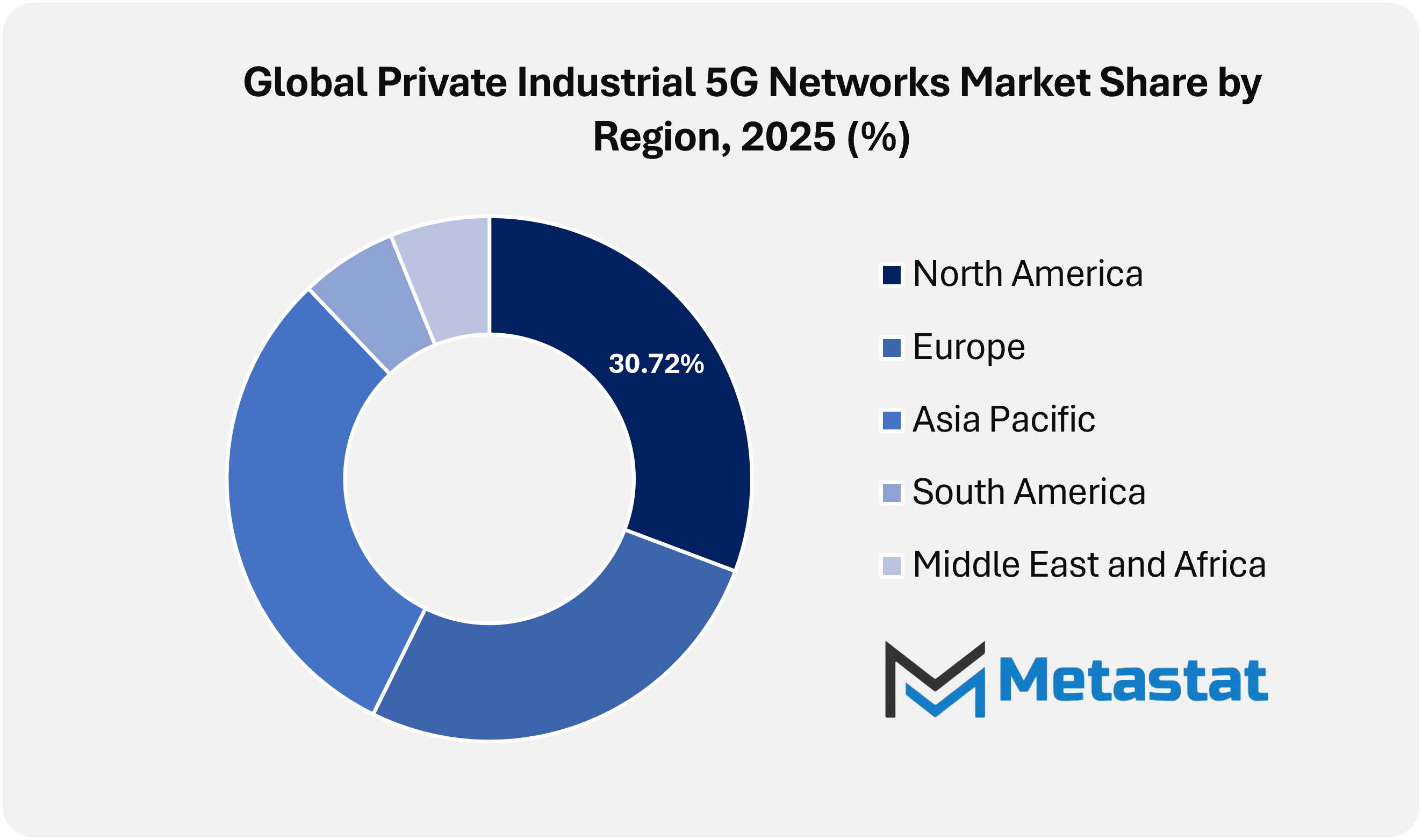
The Global Private Industrial 5G Networks market is gaining strong momentum as enterprises seek secure, high-speed, and low-latency connectivity within their own operating environments. Unlike public mobile networks, private industrial 5G deployments are built for dedicated use across factories, warehouses, ports, campuses, and energy facilities. Organizations are investing in these networks to support automation, robotics, remote monitoring, machine vision, and real-time analytics, positioning private industrial 5G as a critical foundation for next-generation industrial operations.
Large telecom and network infrastructure vendors continue to lead the competitive landscape. Companies such as Telefonaktiebolaget LM Ericsson, Nokia Corporation, Huawei Technologies Co., Ltd., Samsung Electronics Co., Ltd., and ZTE Corporation are providing end-to-end 5G infrastructure that includes radio access networks, core systems, and network orchestration platforms. Their strength in spectrum management, deployment scale, and enterprise-grade connectivity is supporting adoption across complex industrial environments.
Cloud providers and IT service companies are also expanding their market role by combining connectivity with analytics, edge computing, AI tools, and hybrid cloud infrastructure. Amazon Web Services, Inc., IBM Corporation, and Hewlett Packard Enterprise Company are strengthening adoption through cloud-native management capabilities and edge integration. System integrators such as Capgemini SE and Tata Consultancy Services Limited are helping enterprises design and implement customized architectures that align with existing operational technology systems and transformation priorities.
Telecom operators and industrial automation specialists are establishing strong positions through managed service models and integrated industrial connectivity solutions. Deutsche Telekom AG, Orange S.A., Vodafone Group Plc, Verizon Communications Inc., and AT&T Inc. are offering managed private 5G services for enterprise customers, while Siemens AG, Schneider Electric SE, and Rockwell Automation, Inc. are integrating private 5G into broader smart manufacturing and automation environments. Emerging players such as Celona, Inc., JMA Wireless, Airspan Networks Inc., Federated Wireless, Inc., Mavenir Systems, Inc., Parallel Wireless, Inc., and Druid Software Limited are expanding the market with flexible and enterprise-friendly deployment models. Qualcomm Technologies, Inc. continues to support the ecosystem through industrial device compatibility and chipset performance optimization.
Market size is forecast to rise from USD 3,111.3 million in 2025 to over USD 23,996.2 million by 2033.
The Global Private Industrial 5G Networks market is expected to play a wider role in enterprise operations, risk management, and digital infrastructure planning over the coming years. As industrial environments become more connected and data-intensive, enterprises are likely to place greater emphasis on secure local control, edge-based processing, and zero-trust cybersecurity frameworks. This shift will strengthen the role of private industrial 5G as a strategic enabler of industrial automation, operational resilience, and long-term digital transformation.
This research report categorizes the Private Industrial 5G Networks market based on key segments and regions, forecasts revenue growth, and analyses trends in each submarket. The report analyses the key growth drivers, opportunities, and challenges influencing the Private Industrial 5G Networks market. Recent market developments and competitive strategies such as expansion, product launch, partnership, merger, and acquisition have been included to draw the competitive landscape in the market.
The report strategically identifies and profiles the key market players and analyses their core competencies in each sub-segment of the Private Industrial 5G Networks market.
|
Report Attributes |
Details |
|
Study Period |
2021-2033 |
|
Base Year |
2025 |
|
Estimated Year |
2026 |
|
Forecast Period |
2026-2033 |
|
Historical Period |
2021-2025 |
|
Growth Rate |
CAGR 29.1% from 2026 to 2033 |
|
Revenue Unit |
USD million |
|
Segmentation |
By Deployment Mode, Frequency Band, Organization Size, End-Use, and Region |
|
By Region |
North America (By Deployment Mode, Frequency Band, Organization Size, End-Use, and Country)
|
|
Europe (By Deployment Mode, Frequency Band, Organization Size, End-Use, and Country)
|
|
|
Asia Pacific (By Deployment Mode, Frequency Band, Organization Size, End-Use, and Country)
|
|
|
South America (By Deployment Mode, Frequency Band, Organization Size, End-Use, and Country)
|
|
|
Middle East and Africa (By Deployment Mode, Frequency Band, Organization Size, End-Use, and Country)
|
Find answers to common questions about this report
Top players operating in the Private Industrial 5G Networks industry include Telefonaktiebolaget LM Ericsson, Nokia Corporation, Huawei Technologies Co., Ltd., Samsung Electronics Co., Ltd., and ZTE Corporation.
Global Private Industrial 5G Networks market is estimated to reach USD 23,996.2 million by 2033.
Industry 4.0 automation and real-time machine control requirements and OT and IT convergence priorities for secure, site-controlled wireless connectivity are key driving factors, boosting the market.
Spectrum availability and licensing complexity across jurisdictions will hamper the market growth within the forecast period.
North America region dominates the market.
The On premises is the leading type of segment in the Global market.
The Metastat Insights analysis shows that the North America Private Industrial 5G Networks market size is estimated to be USD 6675.7 million by 2033.
The Global Private Industrial 5G Networks market is expected to grow at a CAGR of 29.1% over the forecast period (2026-2033).
The Metastat Insights study shows that the Global Private Industrial 5G Networks market size was USD 3,111.3 million in 2025.
The analysts below cover Information & Technology research at Metastat Insights.
LEAD ANALYST
Utkarsh Khirodkar is a Lead Market Research Analyst at MetaStat Insight, specializing in market intelligence, technology sector assessments, and competitive strategy.

PRINCIPAL CONSULTANT - ENTERPRISE AI & EMERGING TECHNOLOGIES
Banking & Finance · Electronics and Semiconductor · Energy and Power · Healthcare IT · Information & Technology · Professional Services
Vijay Gunti is a Principal Consultant at MetaStat Insight, bringing over two decades of experience across enterprise digital transformation, technology strategy, and intelligent systems.

LEAD CONSULTANT - COMMUNICATION, TELECOM, AND IT
Electronics and Semiconductor · Information & Technology · Machinery & Equipment · Professional Services
Ravindra Sathe Consultants for Communication, Telecom, and IT at MetaStat Insight. He leads the firm's industry research initiatives across telecommunications infrastructure, digital connectivity, enterprise networking, and emerging information technology domains.
Our team was tracking whether regional recycling infrastructure could realistically absorb the growing volume of lithium iron phosphate batteries over the next decade. The report did a solid job separating announced hydrometallurgical plant capacity from active, permitted operational throughput. That distinction made the feedstock availability projections and regional recovery rate models far more credible than standard commercial overviews.
Tracking capacity expansion in single-use bioprocessing requires dependable data on raw material availability and cleanroom-grade polymer supply chains. The competitive landscape chapter gave a grounded evaluation of secondary component suppliers across North America and Asia-Pacific rather than simply reprinting press releases. Having that level of supplier benchmarking helped clarify dual-sourcing considerations for our clinical pipeline planning.
When evaluating distributed energy resource management systems, standard research summaries tend to gloss over the operational differences between front-of-the-meter utility deployments and behind-the-meter industrial sites. The MetaStat Insight report addressed those distinctions directly, especially regarding software interoperability standards and grid interconnection backlogs. The five-year market sizing across regional transmission organizations provided actionable context for our grid modernization strategy.
Explore related market intelligence reports worth reading alongside this one.