
LEAD ANALYST
Utkarsh Khirodkar is a Lead Market Research Analyst at MetaStat Insight, specializing in market intelligence, technology sector assessments, and competitive strategy.

Europe HR Analytics Market Size, Share, By Deployment Model (Cloud-Based and On-Premises), By Offering Type (HR Analytics Software, HR Analytics Implementation and Integration Services, and Managed HR Analytics Services), By Application (Workforce Planning and Organizational Analytics, Recruitment Analytics, Employee Retention and Turnover Analytics, Employee Engagement and Experience Analytics, Performance and Productivity Analytics, Compensation and Benefits Analytics, Learning and Skills Analytics, Diversity, Equity and Inclusion Analytics, and Others (Absence Analytics and Health and Safety Analytics)), By Region (Germany, United Kingdom, France, Netherlands, Spain, and Rest of Europe), Industry Analysis, Growth, Trends, and Forecast, 2026-2033
Report ID
MSI-5534
Published
October, 2026
Pages
290 Pages
Format
Historical
Base year
Forecast
Forecast period
Report Details
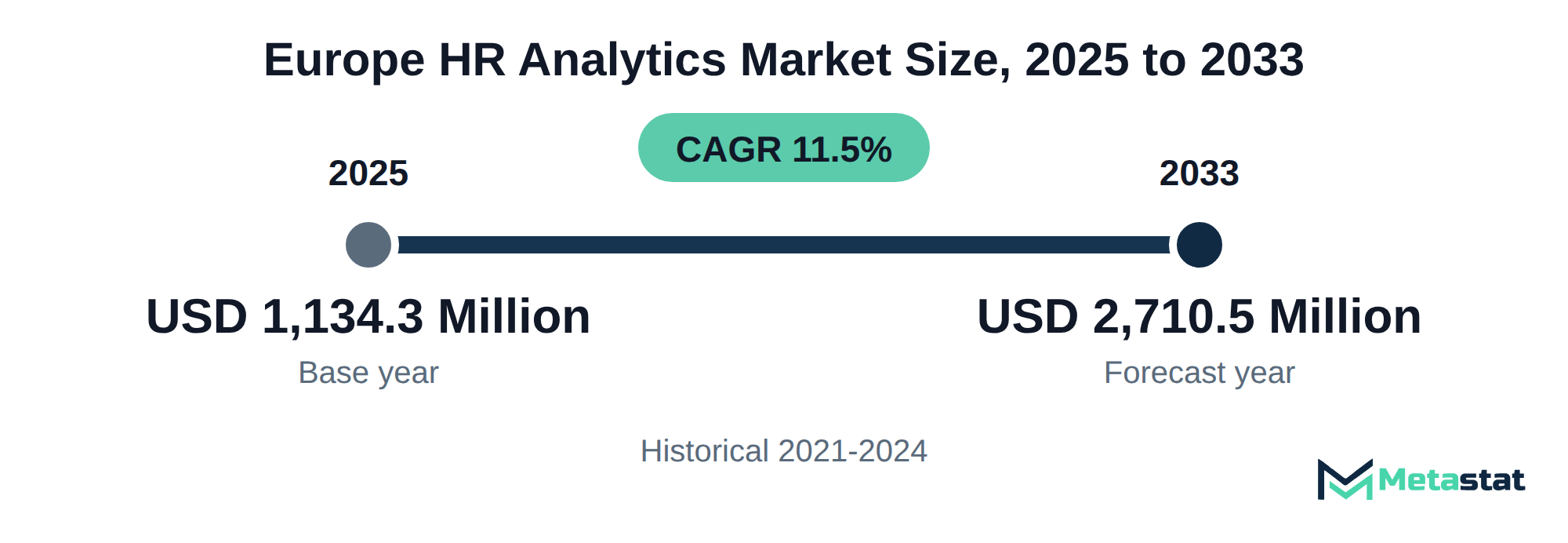
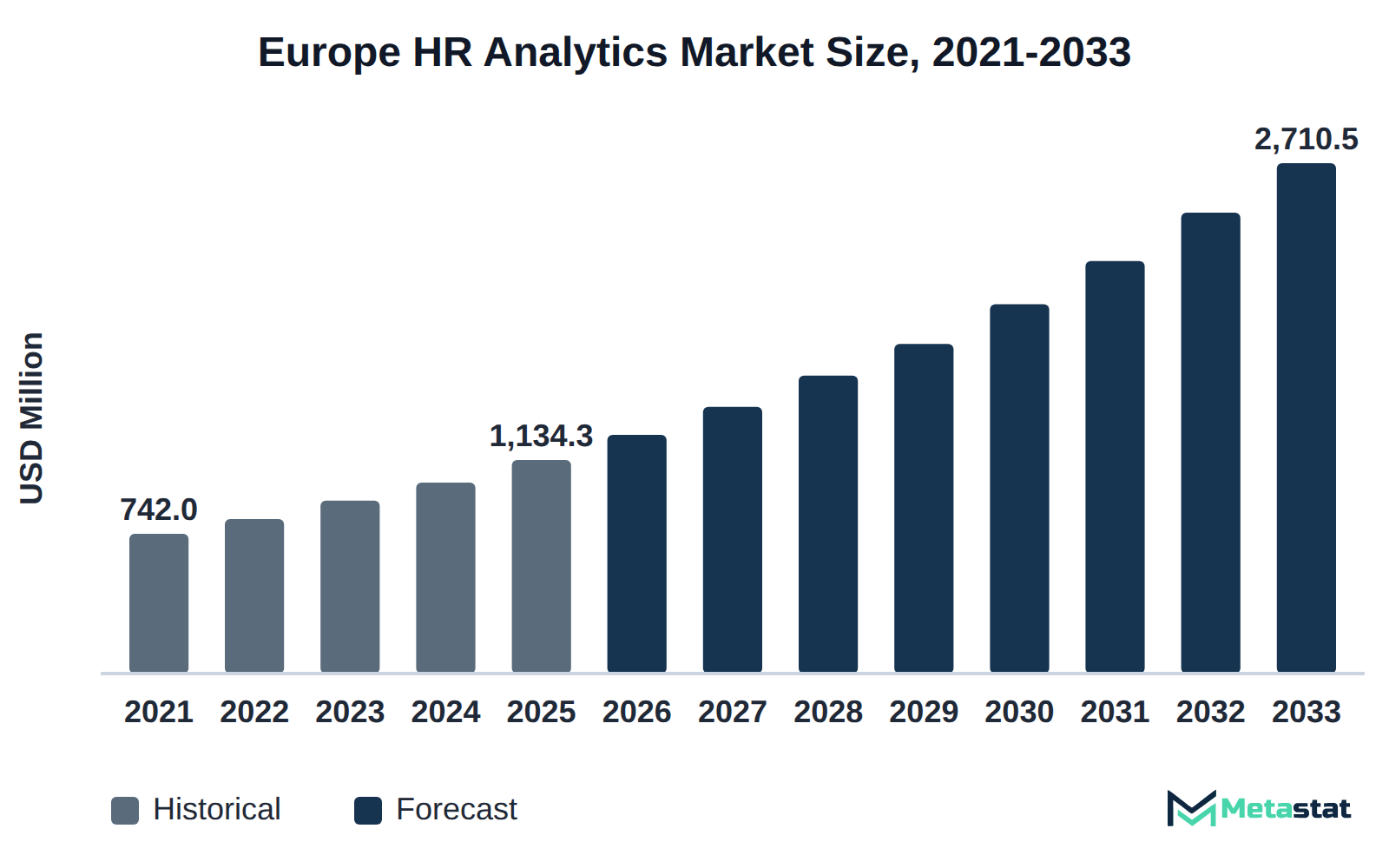
Market Valuation: Valued at $1,134.3 Million in 2025, projected to reach $2,710.5 Million by 2033 at a 11.5% CAGR.
Dominant Segment: The software segment leads the Europe HR Analytics market, driven by the increasing need for advanced analytics tools that support strategic decision-making in workforce management.
Geographic Lead: Germany is the leading region in the Europe HR Analytics market, reflecting a robust investment climate and a mature market for HR analytics solutions.
What's Inside: The report includes comprehensive competitive coverage, detailed analyses of market dynamics, and forecasts extending to 2033, providing insights into key trends and growth opportunities.
Growth Drivers: The rising demand for cloud-based deployment models is a significant growth driver, offering organizations flexibility and scalability in their HR analytics solutions.
Emerging Trends: Predictive workforce planning is gaining traction, with organizations increasingly relying on analytics to forecast workforce needs and address skills gaps.
Choose Your License
Europe HR Analytics Market
The Europe HR Analytics market was valued at USD 1,134.3 million in 2025 and is projected to reach USD 2,710.5 million by 2033, growing at a CAGR of 11.5% over the forecast period.
The Europe HR Analytics market encompasses software and services that facilitate data-driven decision-making in human resource management. Organizations invest in these solutions to enhance workforce productivity, improve employee engagement, and streamline recruitment processes. The increasing emphasis on data analytics for HR functions supports spending, driven by businesses striving for a competitive edge in talent acquisition and management.
Growth in the market is propelled by rising demand for cloud-based deployment models, providing flexibility and scalability to organizations. The software segment represents the largest share, driven by the need for advanced analytics tools that support strategic decision-making in workforce management. Germany stands out as the region with the largest share, reflecting a robust investment climate and a mature market for HR analytics solutions.
Investments in employee engagement analytics contribute significantly to market expansion, enabling companies to leverage data to enhance workplace satisfaction and retention. This focus aligns with broader trends in organizational development, positioning HR analytics as a critical component in achieving strategic human resource objectives. The ongoing evolution of the market suggests sustained growth in the coming years.
Investment in the Europe HR Analytics market primarily focuses on enhancing workforce efficiency, improving employee engagement, and optimizing talent management. Organizations recognize the value of leveraging data analytics to make informed decisions regarding recruitment, retention, and performance management. By adopting advanced analytics solutions, companies identify trends, benchmark performance, and align human resource practices with overall business strategy more effectively.
Growth in this market is driven by the increasing demand for cloud-based solutions, which offer flexibility and scalability for organizations of various sizes. Cloud-based analytics is projected to dominate the deployment model segment, reflecting a shift toward digital transformation in human resources. Germany stands out as the leading region in terms of market share, reflecting its robust industrial base and commitment to adopting innovative HR technologies.
Workforce planning and organizational analytics emerge as the highest value segment within the market, reflecting the critical importance of strategic workforce management. Organizations increasingly prioritize data-driven insights to align workforce capabilities with business objectives, driving investments in analytics tools. Technological advancements and changing workforce dynamics continue to shape the trajectory of the Europe HR Analytics market.
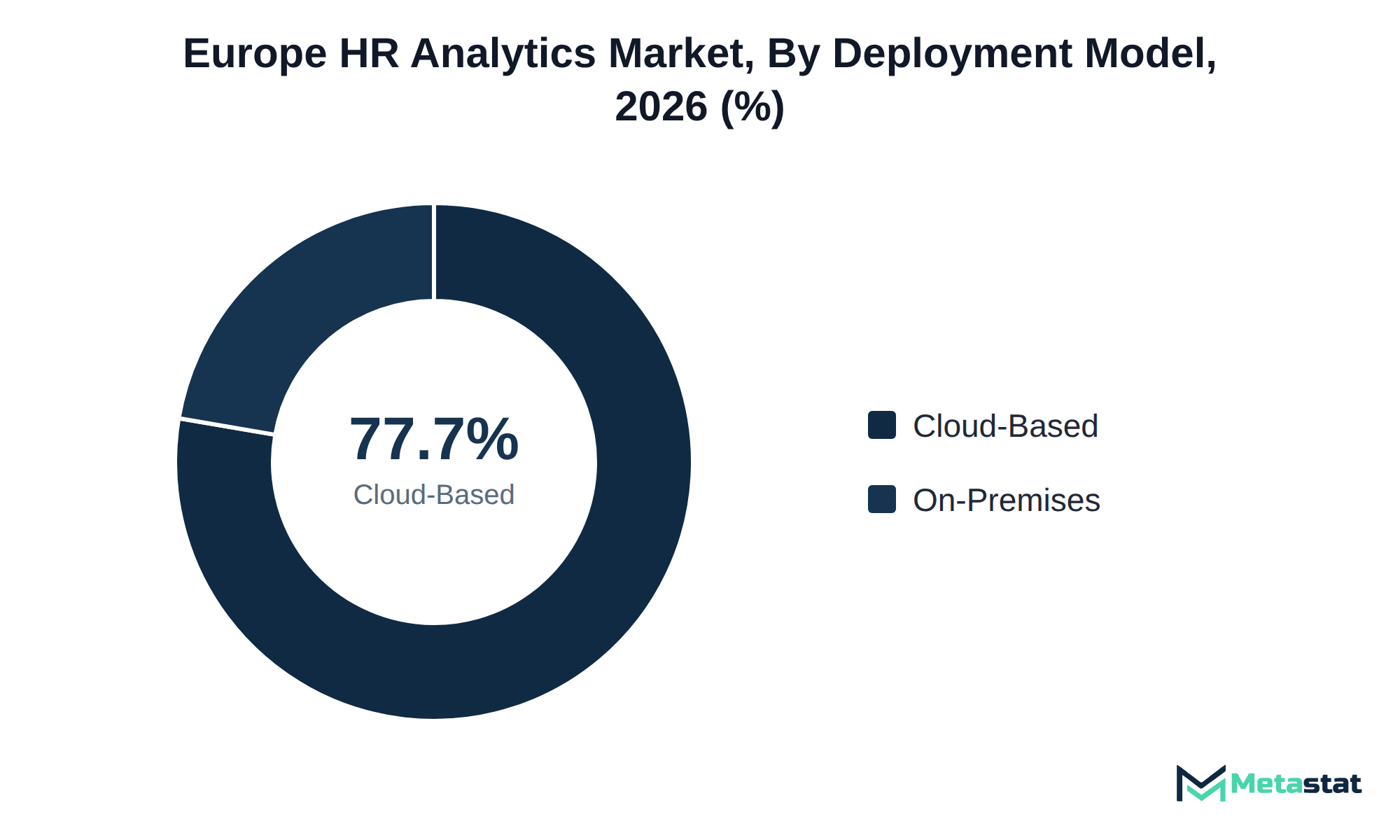
Cloud-based HR analytics solutions emerge as a vital resource for mid-sized enterprises in Europe. The increasing adoption of these solutions reflects a significant shift within the Europe HR Analytics market. By 2033, the cloud-based segment is projected to reach USD 2,322 million, demonstrating a compound annual growth rate (CAGR) of 12.8% from 2026. This growth is driven by enterprises seeking cost-effective, scalable solutions that streamline HR functions and enhance operational efficiencies.
Mid-sized companies recognize the benefits of implementing cloud HR analytics, including improved data accessibility and real-time decision-making capabilities. Such technologies enable organizations to analyze workforce data effectively, driving strategic initiatives in areas like recruitment and employee retention. The cloud-based model's flexibility leads to more efficient resource allocation, allowing these enterprises to focus on core business activities while leveraging advanced analytics.
This shift toward cloud HR analytics positions mid-sized enterprises to thrive in a competitive landscape, increasing their agility and responsiveness to changing market demands. The expansion of cloud-based offerings within the Europe HR Analytics market indicates a growing trend among organizations prioritizing digital transformation and data-driven strategies.
Predictive workforce planning has gained traction in the Europe HR Analytics market, particularly for addressing skills gaps and managing employee attrition. A growing emphasis on data-driven decision-making fuels this trend, with organizations increasingly relying on analytics to forecast workforce needs. The implementation of predictive analytics aids HR departments in identifying potential skills shortages, allowing organizations to proactively address these gaps through targeted recruitment and training initiatives.
In 2026, the workforce planning and organizational analytics application segment is projected to reach USD 332 million, reflecting a commitment to enhancing workforce capabilities. This growth highlights significant investment in technologies that enable organizations to interpret complex workforce data effectively. Emphasizing predictive analytics ensures a tailored approach to workforce management, resulting in improved employee retention rates and optimized talent acquisition strategies.
Organizations adopting predictive workforce planning strategies in the Europe HR Analytics market realize substantial benefits, including reduced turnover costs and enhanced employee satisfaction. By focusing on skills gaps and attrition rates, businesses cultivate a resilient workforce capable of navigating industry challenges, ultimately supporting long-term organizational success.
The implementation of the General Data Protection Regulation (GDPR) and the upcoming EU AI Act significantly shapes the environment for employee data analytics within the Europe HR Analytics market. Organizations using HR analytics software ensure compliance with stringent data protection measures, which affects their data handling procedures. In 2026, HR analytics software revenue is projected to reach USD 940.0 million, reflecting increasing investment in compliance-driven analytics solutions.
Compliance with GDPR necessitates that organizations prioritize data privacy in their analytics processes. This requirement directly influences how businesses collect, store, and analyze employee data, promoting a culture of transparency and trust. Companies investing in GDPR-compliant HR analytics solutions enhance their reputation while mitigating legal risks associated with data breaches. Organizations failing to adapt to these regulations incur significant fines and reputational damage, challenging their competitive position in the market.
Incorporating AI technologies into HR analytics under the EU AI Act further complicates the compliance landscape. Employers navigate the balance between leveraging AI capabilities for improved decision-making and adhering to ethical considerations surrounding employee data. The evolving regulatory environment demands that organizations invest in advanced HR analytics solutions that not only comply with existing laws but proactively address future regulatory challenges. This strategic focus represents an opportunity for growth in the Europe HR Analytics market, enabling businesses to thrive while facing complex compliance requirements.
Evaluating HR analytics software requires a keen understanding of specific functionalities that drive value. For employers in the Europe HR Analytics market, focusing on workforce planning and organizational analytics proves essential. This application segment is projected to grow from USD 332 million in 2026 to USD 729.4 million by 2033, reflecting a compound annual growth rate (CAGR) of 11.9%. This growth indicates strong demand for tools that enhance strategic decision-making related to workforce management.
Employers should assess software based on its ability to provide insights into employee performance, engagement, and turnover. Solutions that integrate seamlessly with existing systems reduce implementation challenges and enhance data accuracy. The ability to analyze data across various touchpoints enables organizations to tailor strategies for recruitment and retention more effectively.
Ultimately, selecting the right HR analytics software impacts operational efficiency and improves employee satisfaction. With robust analytics capabilities, employers anticipate workforce trends and make informed decisions that align with business goals, positioning themselves competitively within the market.
Growing interest in data-driven insights fuels investment in analytics solutions among European organizations. Human resources departments increasingly prioritize evidence-based decision-making to enhance workforce efficiency and employee engagement. The adoption of advanced analytics tools supports strategic initiatives, with a notable focus on employee retention and recruitment strategies. This trend reflects the changing nature of workforce management, where organizations prioritize adapting to new labor market dynamics. This growth is driven by the increasing demand for efficient talent management practices, owing to organizations recognizing the competitive advantage gained from leveraging data analytics in human resources.
Emerging technologies enhance the capabilities of HR analytics, providing organizations with the tools necessary to analyze employee performance and satisfaction comprehensively. Employers in sectors including technology and finance actively seek these insights to drive better planning and workforce engagement.
Cloud-based HR analytics solutions drive operational efficiency within organizations across Europe. These technologies facilitate real-time data processing, enabling HR departments to gain immediate insights into workforce performance and engagement. The increasing reliance on advanced analytics tools stems from the growing need for organizations to respond promptly to changing workforce dynamics.
Companies implementing these solutions benefit from improved decision-making capabilities, significantly impacting recruitment and employee retention strategies. Enhanced analytics create a more agile workforce, allowing organizations to adapt to market demands swiftly.
In this competitive landscape, the integration of cloud-based technologies becomes crucial for organizations aiming to leverage data-driven insights effectively. The emergence of these solutions marks a significant shift in HR practices, enhancing capabilities to analyze and optimize talent management strategies within the Europe HR Analytics market.
High costs associated with HR analytics solutions remain a significant barrier to widespread adoption among small and medium-sized enterprises (SMEs) in Europe. Budget constraints often lead to slower uptake of these solutions, limiting SMEs' ability to leverage valuable data for decision-making. The market requires significant investment in software, implementation services, and ongoing maintenance, which deters potential buyers. Many SMEs prioritize immediate cost savings over long-term benefits, resulting in smaller orders or delayed replacements of existing systems. This hesitation restricts the overall growth potential of the Europe HR Analytics market. The perception of HR analytics as a luxury rather than a necessity further exacerbates this issue. Affordable pricing structures tailored to SMEs are increasingly evident to facilitate greater adoption and capitalize on the efficiencies offered by advanced HR analytics solutions.
Talent acquisition costs present a considerable challenge for suppliers in the Europe HR Analytics market. Rising salaries for skilled professionals, competitive hiring practices, and the need for specialized expertise drive these elevated costs. Many companies struggle to balance these expenses while maintaining profitability. To address these challenges, suppliers implement strategies focused on improving operational efficiency and leveraging automation technologies. By investing in advanced AI-driven analytics, suppliers streamline recruitment processes, reduce time-to-hire, and optimize talent management. This approach allows for better alignment between recruitment efforts and organizational goals, ultimately leading to improved workforce outcomes. Delivering cost-effective solutions while adapting to changing market conditions is essential for suppliers' success and the overall growth of the market.
Growing demand for workforce planning and organizational analytics presents a significant market opportunity. Companies increasingly recognize the value of analytics to optimize workforce allocation and improve overall organizational efficiency. Investment in this area enhances decision-making related to resource management, ultimately driving productivity and reducing turnover costs.
Businesses aiming to address skills gaps and improve employee engagement focus on workforce planning analytics. Organizations continue to adapt to shifting market conditions, and the ability to analyze workforce data effectively will provide a competitive advantage. This trend reflects a broader shift towards data-driven strategies in human resource management.
The Europe HR Analytics market is segmented based on Deployment Model, Offering Type, Application, and Region.
This segment provides organizations with scalable solutions for data analytics, allowing for efficient management of workforce data and supporting strategic decision-making. Enterprises employ cloud-based HR analytics to enhance workforce planning and improve employee engagement. The demand for these solutions is driven by the growing need for real-time insights and the flexibility that cloud services offer compared to traditional on-premises solutions. In contrast, the On-Premises segment experiences slower growth, with a projected CAGR of 5.5%. Competitive pricing and lower implementation costs associated with cloud offerings appeal to a broader range of organizations, including small to mid-sized enterprises, thus accelerating adoption within the Europe HR Analytics market.
On-Premises segment is estimated to reach USD 388.4 million by 2033, at a CAGR of 5.5% during the forecast period. This segment provides organizations with the ability to manage HR analytics internally, which appeals particularly to larger firms with robust IT infrastructure. Such enterprises prioritize data security and control over sensitive employee information, opting for on-premises solutions. Adoption of these solutions is driven by the necessity for compliance with regulations and corporate governance standards. Compared to cloud-based alternatives, the on-premises segment experiences slower growth due to the higher initial capital investment required for infrastructure setup. Organizations using this model tend to have lower operational costs over time, yet face challenges in scalability and flexibility compared to cloud solutions. The market reflects a mixture of traditional and evolving demands, with distinct trends shaping each deployment model.
HR Analytics Software segment is valued at USD 940 million in 2026 and is projected to reach USD 1,946.9 million by 2033, at a CAGR of 11% during the forecast period. This software offers tools for data analysis in various HR functions, including recruitment, employee engagement, and performance management, benefiting organizations that seek to enhance workforce efficiency. Demand for this segment is driven by the increasing importance of data-driven decision-making in human resource management. Compared to other offerings, HR Analytics Software features a higher growth rate, indicating a strong preference for software solutions over implementation and integration services, which show a CAGR of 11%. The focus on software supports a more dynamic and adaptable approach to HR analytics, meeting the evolving needs of organizations. The market reflects a significant opportunity for continued investment and growth within this segment.
HR Analytics Implementation and Integration Services segment is estimated to reach USD 467.8 million by 2033, at a CAGR of 11% during the forecast period. This segment provides essential support for organizations implementing HR analytics solutions, facilitating integration with existing systems and ensuring optimal functionality. Human resource departments, particularly in large enterprises, increasingly rely on these services to enhance their data capabilities and streamline processes. The primary demand driver stems from the growing emphasis on data-driven decision-making, pushing organizations to invest in comprehensive HR analytics solutions. Compared to other segments, this one experiences moderate growth, reflecting stable demand for implementation and integration services. The distinct requirement for specialized expertise in implementation differentiates this segment from HR Analytics Software, which focuses primarily on providing analytical tools and insights.
Managed HR Analytics Services segment is expected to reach USD 295.7 million by 2033. This segment focuses on delivering tailored analytics solutions that assist organizations in optimizing their human resource operations. Corporations, particularly large enterprises with complex workforce dynamics, apply these services to gain insights into employee performance, retention, and engagement. The growing demand for data-driven decision-making drives significant growth in this area, reflecting an increasing trend toward investing in human capital. Compared to other offerings, the growth rate for Managed HR Analytics Services demonstrates a steady pace, influenced by rising operational needs and the necessity for expert integration of analytics with existing HR systems. The segment’s growth trajectory differs from the HR Analytics Software segment, which is anticipated to expand more rapidly at a CAGR of 11% through 2033. The emphasis on tailored analytics solutions continues to drive investment in this sector, supporting organizations in achieving strategic HR objectives.
This segment serves organizations by enabling data-driven decision-making regarding workforce management, optimizing staffing levels, and analyzing organizational structure. Companies operating in various sectors increasingly emphasize effective workforce planning to enhance productivity and reduce turnover costs. The segment's growth is driven by rising demand for data insights that inform strategic HR initiatives. Compared to other applications, including Recruitment Analytics, which has a CAGR of 9.8%, Workforce Planning and Organizational Analytics demonstrates a stronger growth trajectory. This difference in growth rates reflects organizations' increasing focus on both current workforce efficiency and future workforce needs, highlighting the importance of predictive analytics in HR strategies.
Recruitment Analytics segment is estimated to reach USD 347.8 million by 2033, at a CAGR of 9.8% during the forecast period. This segment focuses on optimizing the hiring process through data analysis, enabling organizations to make informed hiring decisions and improve candidate selection. Companies apply recruitment analytics to identify trends in hiring, evaluate candidate performance, and enhance overall recruitment strategies. The segment experiences growth driven by the increasing demand for data-backed hiring solutions among businesses aiming for talent acquisition efficiencies. Compared to other applications, recruitment analytics exhibits slower growth due to heightened competition in the recruitment technology landscape, where offerings often overlap. In contrast, Workforce Planning and Organizational Analytics has a higher CAGR of 11.9%, indicating a more rapid expansion as organizations prioritize workforce optimization and long-term strategic planning. The Europe HR Analytics market continues to advance with innovations that address specific recruitment challenges faced by various industries.
Employee Retention and Turnover Analytics segment is expected to reach USD 386.8 million by 2033. This segment analyzes employee behavior and retention patterns, providing organizations with insights to enhance workforce stability. Companies across various industries employ these analytics to improve employee engagement strategies and reduce turnover rates. The increasing focus on employee satisfaction acts as a significant demand driver for this segment. Unlike Recruitment Analytics, which experiences a slower growth trajectory with a CAGR of 9.8%, Employee Retention and Turnover Analytics is expected to grow at a CAGR of 11.9%, indicating stronger demand for effective retention strategies. Insights derived from this segment support organizations in implementing proactive measures to create a positive workplace culture, ultimately improving overall productivity and reducing costs associated with high employee turnover.
Employee Engagement and Experience Analytics segment is projected to grow at a CAGR of 12% during the forecast period. This segment focuses on measuring and improving employee satisfaction, engagement, and overall workplace experience, primarily used by human resources departments and organizational leaders. Organizations increasingly adopt these analytics solutions to enhance workforce productivity and retention rates. Driving factors include the growing emphasis on employee well-being and the recognition of its impact on overall organizational performance. Compared to other application segments, this segment exhibits faster growth due to heightened interest in employee-centric strategies. The market reflects a shift toward using data-driven insights to inform decisions about employee engagement initiatives, setting it apart from other segments that focus on different aspects of HR analytics.
Performance and Productivity Analytics focuses on measuring and enhancing employee effectiveness and output within organizations. This sub-segment serves human resources professionals and management teams aiming to optimize workforce performance through clear insights. Factors driving growth include the need for organizations to improve efficiency and the increasing adoption of data analytics technologies. Unlike other sub-segments in the market, this area emphasizes qualitative and quantitative analysis of employee performance metrics, which leads to tailored strategies for improvement. The competitive landscape features a variety of solutions that appeal to different buyer segments and align with broader trends in HR analytics. Insights derived from this sub-segment support informed decision-making and strategic planning, ultimately contributing to the overall success of workforce management initiatives in the Europe HR Analytics market.
Compensation and Benefits Analytics focuses on evaluating and managing employee compensation structures and benefit programs. This segment is essential for organizations striving to optimize their compensation strategies while ensuring employee satisfaction and retention. Human resources departments apply these analytics to benchmark salaries, assess benefit uptake, and align compensation with organizational goals. Competition for top talent drives demand for competitive compensation packages, influencing organizations to invest in analytics solutions. In the context of the Europe HR Analytics market, this segment presents unique challenges compared to others, including the need for precise tailoring to local labor laws and market conditions. Its growth dynamics differ from those of Recruitment Analytics, which experiences faster growth driven by immediate position fills and adaptation to workforce changes.
Learning and Skills Analytics focuses on assessing employees' training needs, tracking skill development, and evaluating the effectiveness of learning programs. Organizations leverage this segment to enhance workforce capabilities and ensure alignment with strategic business goals. Companies, particularly in sectors undergoing rapid technological change, rely on insights derived from this analytics sub-segment to improve employee performance and retention. Demand for such analytics stems from the increasing importance of upskilling and reskilling in the market. Unlike other segments, Learning and Skills Analytics experiences unique growth patterns, driven by the push for continuous learning and development in the workforce. This sub-segment does not match the rapid expansion rates observed in areas like Workforce Planning and Organizational Analytics, reflecting a more gradual adoption among organizations.
Diversity, Equity and Inclusion Analytics emphasizes the assessment and promotion of diversity within organizations, ensuring equitable treatment and creating inclusive environments. This sub-segment serves various industries, particularly those focused on human resources and organizational development. Demand for this analytics category is driven by heightened awareness regarding social justice and the business benefits of diverse workforces. Companies increasingly rely on data to gauge their diversity efforts and enhance inclusivity, reflecting a broader societal shift toward equity.
Compared to other segments, Diversity, Equity and Inclusion Analytics often experiences slower adoption due to challenges in data collection and the complexity of measuring qualitative aspects of diversity. Organizations face barriers in integrating these analytics into existing HR systems. However, the emphasis on a diverse workforce positions this sub-segment for gradual growth, aligning with trends in the Europe HR Analytics market.
Absence Analytics and Health and Safety Analytics focus on evaluating employee absences and ensuring workplace safety. Organizations apply these tools to monitor attendance patterns, identify potential risks, and implement safety protocols that protect employee well-being. This segment appeals primarily to human resources departments and safety compliance teams seeking to enhance occupational health and reduce liability risks. Demand for these analytics is driven by increasing regulatory pressures surrounding workplace safety and the need for effective management of absenteeism, particularly in sectors with high safety standards. Unlike other applications including Employee Engagement Analytics, which experience faster growth, this segment shows steadier demand while businesses prioritize compliance and risk management. The market is evolving, reflecting a heightened emphasis on employee health as a crucial component of corporate responsibility.
Germany segment is valued at USD 292.7 million in 2026 and is projected to reach USD 673.8 million by 2033, at a CAGR of 12.7% during the forecast period. This segment focuses on leveraging HR analytics to enhance workforce management and improve employee performance. Organizations in Germany increasingly adopt these solutions to streamline recruitment processes and improve employee engagement. The rapid growth in digital transformation initiatives within German enterprises drives this segment strongly. Comparatively, this segment exhibits a higher growth rate than On-Premises solutions, suggesting a trend toward cloud-based offerings. With the demand for innovative HR strategies intensifying, the market in Germany is expected to capitalize on advancements in artificial intelligence and machine learning technologies to enhance analytical capabilities.
United Kingdom segment is estimated to reach USD 584.6 million by 2033, at a CAGR of 11.9% during the forecast period. This segment caters primarily to organizations seeking to leverage data for effective human resource management and strategic decision-making. Demand is driven by the increasing need for data-driven insights to enhance employee engagement and optimize workforce performance. The UK market distinguishes itself through strong government regulations promoting workforce analytics, which supports growth. In comparison with the On-Premises segment, the UK segment shows faster growth due to the higher adoption of cloud-based solutions, providing flexibility and scalability. This adaptability positions the United Kingdom as a key player in the Europe HR analytics market.
France segment is expected to reach USD 320.6 million by 2033. This market is used for various HR functions, including recruitment, employee retention, and organizational planning. Organizations in France increasingly adopt HR analytics to enhance decision-making and optimize workforce management. Demand for these solutions is driven by the growing emphasis on data-driven decision-making in human resources, coupled with the expansion of cloud-based technologies that facilitate these analytics. Compared to other regions, the French segment experiences moderate growth, with an expected CAGR aligned with broader market trends. The integration of advanced analytics solutions into HR processes differentiates this segment, enabling companies to improve operational efficiency and workforce effectiveness in a competitive environment. The market's dynamic nature reflects changing workforce needs and organizational priorities.
The Netherlands segment is projected to grow at a CAGR of 11.9% during the forecast period. This segment serves various industries, including technology, finance, and manufacturing, focusing on enhancing organizational effectiveness through data-driven insights. Businesses leverage HR analytics to improve workforce planning, talent management, and employee engagement strategies. The demand for advanced analytics in this region is influenced by the increasing need for data accuracy and real-time insights, driving companies to adopt cloud-based solutions. This segment's growth trajectory surpasses the slower growth seen in the On-Premises segment, reflecting a strong shift toward cloud-based offerings, which are expected to dominate the market. The Netherlands stands out due to its emphasis on integrating analytics into HR processes, leading to more informed decision-making and optimized workforce management.
Spain holds a significant position within the Europe HR Analytics market. This segment primarily focuses on applying analytics to enhance workforce management, improve employee engagement, and streamline recruitment processes. Organizations in Spain apply these analytics to make data-driven decisions that enhance operational efficiency and create a better work environment. Demand for HR analytics in Spain is influenced by the increasing emphasis on workforce optimization and digital transformation initiatives undertaken by companies across various sectors. The segment distinguishes itself through unique challenges, including varying levels of technological adoption among organizations compared to other regions, impacting the speed of integration and application of advanced HR analytics tools. This nuance creates a distinct environment for growth opportunities and competitive dynamics in the market.
This segment encompasses various countries in Europe that do not fall under the major individual markets like Germany, the United Kingdom, France, and the Netherlands. Organizations in this segment apply HR analytics to enhance workforce management, improve employee engagement, and optimize talent acquisition strategies. Demand for these capabilities is driven by the ongoing digital transformation of HR processes and the increasing need for data-driven decision-making. Compared to other regions, the Rest of Europe segment experiences slower growth due to varying levels of technological adoption and economic stability across different countries. Several smaller enterprises face budget constraints, impacting their investment in HR analytics solutions. This segment positions itself distinctively within the Europe HR Analytics market, focusing on the unique needs of the diverse economies present in the area.
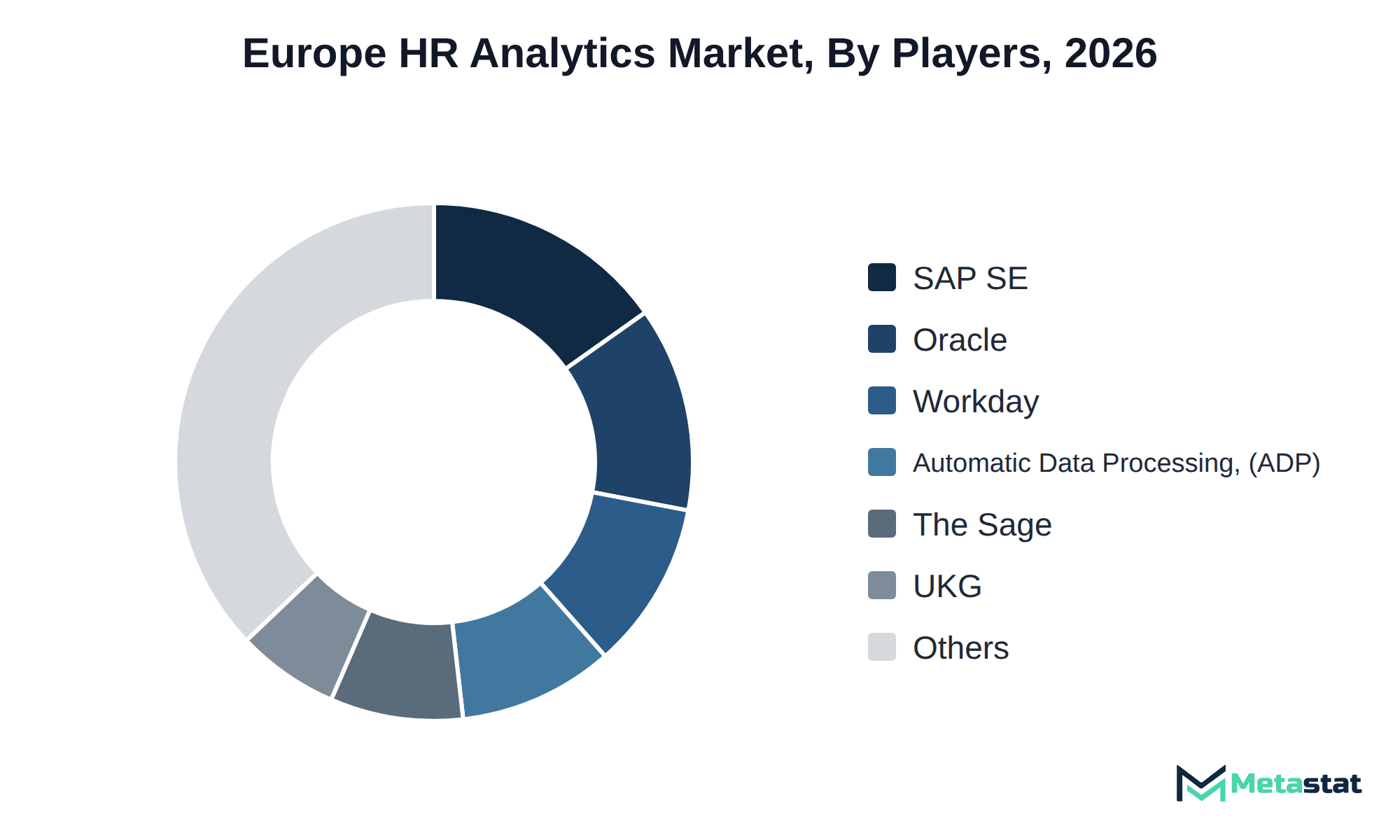
Competition in the Europe HR Analytics market revolves around various strategic behaviors, including service type, product customization, and pricing. Companies focus on delivering tailored HR solutions that cater to the specific needs of their clients, emphasizing flexibility and integration capabilities. This competitive environment drives innovation and enhances service delivery, ultimately benefiting end-users through improved HR processes.
SAP SE highlights its comprehensive software offerings, focusing on integration and extensive analytics capabilities. Workday, Inc. emphasizes user-friendly interfaces and cloud-based solutions, appealing to organizations seeking modern HR tools. Oracle Corporation targets large enterprises with robust data management and analytics, providing solutions that support complex organizational structures. These strategies position these companies to effectively meet the evolving demands of the market.
This growth relies on several key developments within the Europe HR Analytics market. First, the transition to cloud-based deployment models drives significant growth, reflecting a projected CAGR of 12.8% from 2026 to 2033. Companies in Germany will contribute to this expansion, supported by a shift toward more flexible, scalable solutions. Second, the demand for HR Analytics Software increases, with a projected CAGR of 11% over the forecast period. This software enables organizations to optimize workforce planning and improve employee engagement, enhancing overall performance. Potential risks exist that could impede market growth. Economic uncertainties and regulatory changes slow adoption rates, particularly in regions like France, where businesses grapple with evolving compliance requirements. Addressing these challenges while capitalizing on the growing interest in analytics solutions shapes the trajectory of the market in the coming years.
By Deployment Model: Cloud-Based, On-Premises
By Offering Type: HR Analytics Software, HR Analytics Implementation and Integration Services, Managed HR Analytics Services
By Application: Workforce Planning and Organizational Analytics, Recruitment Analytics, Employee Retention and Turnover Analytics, Employee Engagement and Experience Analytics, Performance and Productivity Analytics, Compensation and Benefits Analytics, Learning and Skills Analytics, Diversity, Equity and Inclusion Analytics, Others (Absence Analytics, Health and Safety Analytics)
By Region: Germany, United Kingdom, France, Netherlands, Spain, Rest of Europe
The report strategically identifies and profiles the key market players and analyses their core competencies in each sub-segment of the HR Analytics market.
Report Attributes | Details |
Study Period | 2021-2033 |
Base Year | 2025 |
Estimated Year | 2026 |
Forecast Period | 2026-2033 |
Historical Period | 2021-2025 |
Growth Rate | CAGR 11.5% from 2026 to 2033 |
Revenue Unit | USD million |
Segmentation | By Deployment Model, Offering Type, Application, Region, and Region |
Find answers to common questions about this report
The HR Analytics market size was valued at USD 1,134.3 million in 2025.
The market is projected to grow at a CAGR of 11.5% during the forecast period from 2026 to 2033.
HR Analytics Software leads the market with a value of USD 940 million in 2026. This segment surpasses others in terms of initial revenue generation.
Growing interest in data-driven insights fuels investment in analytics solutions among European organizations. The increasing demand for efficient talent management practices drives the recognition of competitive advantages gained from leveraging data analytics in human resources.
High costs associated with HR analytics solutions significantly restrain market growth, particularly among small and medium-sized enterprises (SMEs) that face budget constraints. The perception of HR analytics as a luxury rather than a necessity further exacerbates this issue, limiting SMEs' ability to leverage valuable data for decision-making.
Growing demand for workforce planning and organizational analytics drives adoption in the Europe HR Analytics market. Companies increasingly recognize the value of analytics to optimize workforce allocation, enhance decision-making, and improve overall organizational efficiency.
The HR Analytics market is estimated to reach a valuation of USD 2,710.5 million by 2033.
Key players operating in the HR Analytics market include SAP SE, Workday, Inc., Oracle Corporation, Visier Inc., Automatic Data Processing, Inc. (ADP), UKG Inc., The Sage Group plc, and Cornerstone OnDemand, Inc.
Cloud-based HR analytics solutions are projected to reach USD 2,322 million by 2033, representing a compound annual growth rate (CAGR) of 12.8%.
High costs associated with HR analytics solutions present significant challenges for small and medium-sized enterprises (SMEs), often leading to slower uptake and limited investment in data-driven decision-making.
The analysts below cover Professional Services research at Metastat Insights.
LEAD ANALYST
Utkarsh Khirodkar is a Lead Market Research Analyst at MetaStat Insight, specializing in market intelligence, technology sector assessments, and competitive strategy.

PRINCIPAL CONSULTANT - ENTERPRISE AI & EMERGING TECHNOLOGIES
Banking & Finance · Electronics and Semiconductor · Energy and Power · Healthcare IT · Information & Technology · Professional Services
Vijay Gunti is a Principal Consultant at MetaStat Insight, bringing over two decades of experience across enterprise digital transformation, technology strategy, and intelligent systems.

PRINCIPAL CONSULTANT - QUALITY SYSTEMS & COMPLIANCE
Electronics and Semiconductor · Machinery & Equipment · Professional Services
Omkar Phadtare is an Industry Consultant at MetaStat Insight, specializing in quality systems, regulatory compliance, and standards benchmarking to drive data-driven market intelligence and strategic industry research.

LEAD CONSULTANT - COMMUNICATION, TELECOM, AND IT
Electronics and Semiconductor · Information & Technology · Machinery & Equipment · Professional Services
Ravindra Sathe Consultants for Communication, Telecom, and IT at MetaStat Insight. He leads the firm's industry research initiatives across telecommunications infrastructure, digital connectivity, enterprise networking, and emerging information technology domains.
Assessing commercial microgrid software adoption requires looking past top-level installation numbers and examining utility interconnection queues. The research provided verifiable data on average permitting timelines, tariff structures, and battery storage integration costs across regional utility territories. That grounded perspective was valuable for our team when building five-year demand projections for industrial microgrid controllers.
Ambulatory surgical centers have very different purchasing cycles for robotic-assisted surgery platforms than major hospital networks. The MetaStat Insight study focused squarely on capital expenditure depreciation, procedural reimbursement pathways, and surgeon training overhead. That operational clarity made it much simpler to validate multi-year procedure growth forecasts against actual ambulatory center adoption patterns.
When planning edge sensor rollouts across refinery environments, generic IoT reports typically miss the harsh-environment certification bottlenecks. MetaStat Insight gave an objective evaluation of ATEX and Class 1 Division 2 hardware availability, along with realistic five-year maintenance cycle cost projections. The comparison of wireless mesh versus private cellular backhaul helped our team pressure-test network reliability models for remote processing facilities.
Explore related market intelligence reports worth reading alongside this one.