
LEAD ANALYST
Utkarsh Khirodkar is a Lead Market Research Analyst at MetaStat Insight, specializing in market intelligence, technology sector assessments, and competitive strategy.

Global Management Consulting Services Market Size, Share, By Service Type (Operations Consulting, Strategy Consulting, Digital Transformation Consulting, Financial Advisory Consulting, Human Resources Consulting, Risk and Governance Consulting, Sustainability Consulting and Others), By End-Use Industry (Banking, Financial Services and Insurance, Manufacturing, IT and Telecommunications, Government and Public Sector, Healthcare and Life Sciences, Energy and Utilities, Retail and Consumer Goods, Transportation and Logistics, Real Estate and Construction and Others), By Client Organization Size (Large Organizations and Small and Medium-Sized Organizations), By Delivery Model (On-Site Consulting, Hybrid Consulting and Remote Consulting), Industry Analysis, Growth, Trends, and Forecast, 2026-2033
Report ID
MSI-5641
Published
October, 2026
Pages
282 Pages
Format
Historical
Base year
Forecast
Forecast period
Report Details
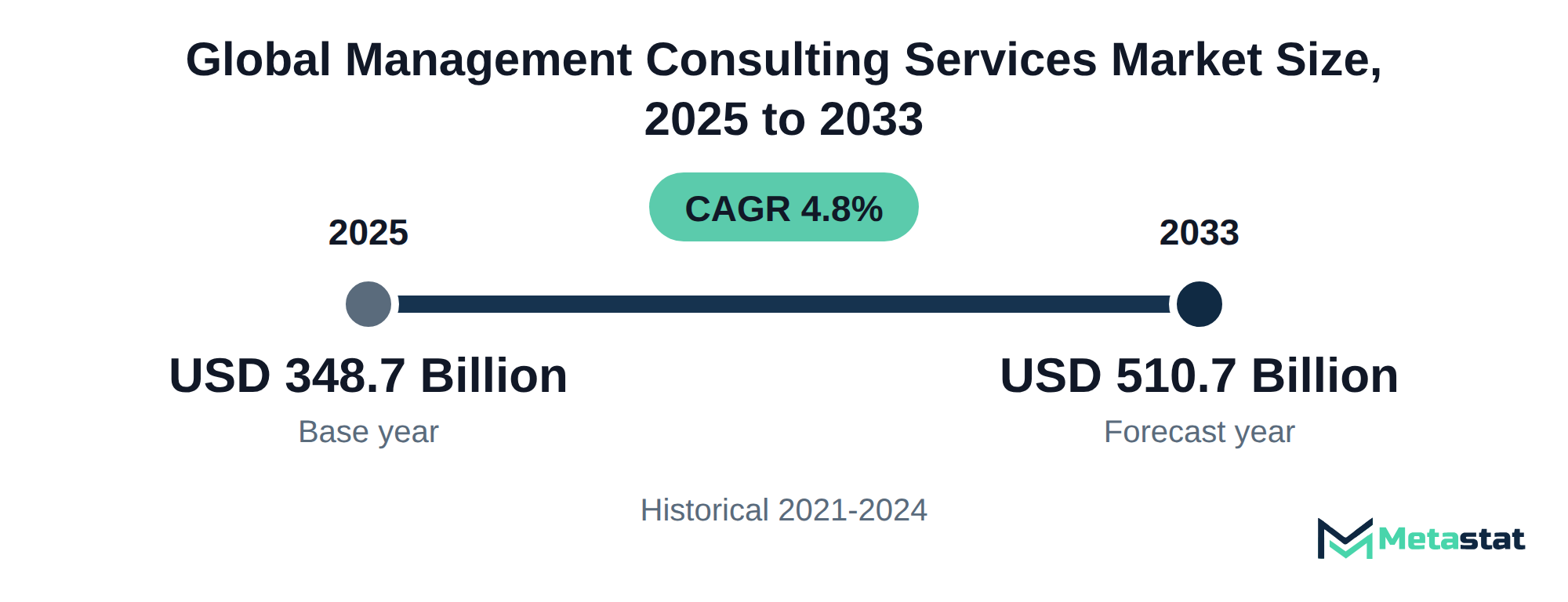
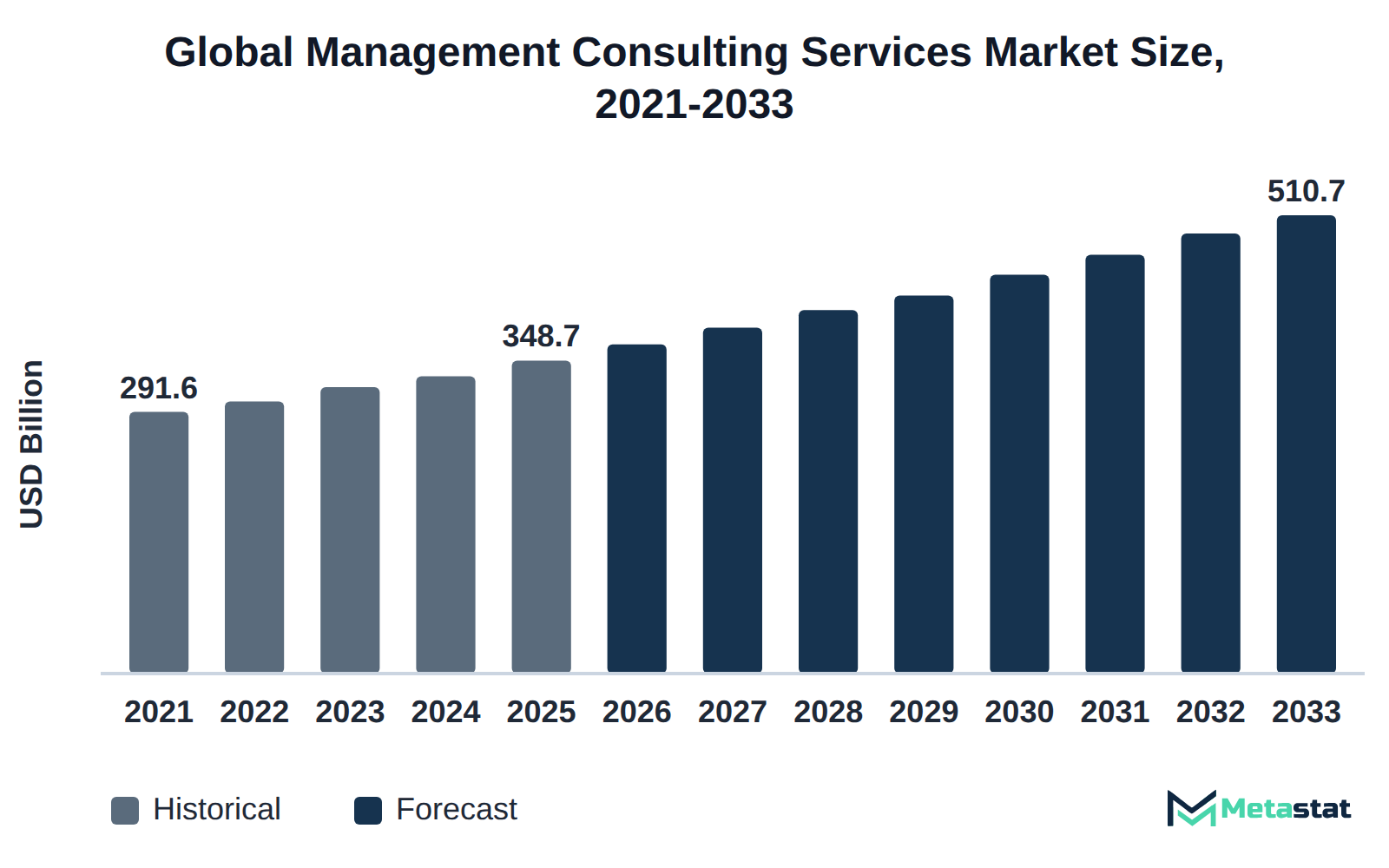
Market Valuation: Valued at $348.7 Billion in 2025, projected to reach $510.7 Billion by 2033 at a 4.8% CAGR.
Dominant Segment: Operations Consulting leads the Management Consulting Services market, driven by the critical need for organizations to optimize processes and enhance productivity.
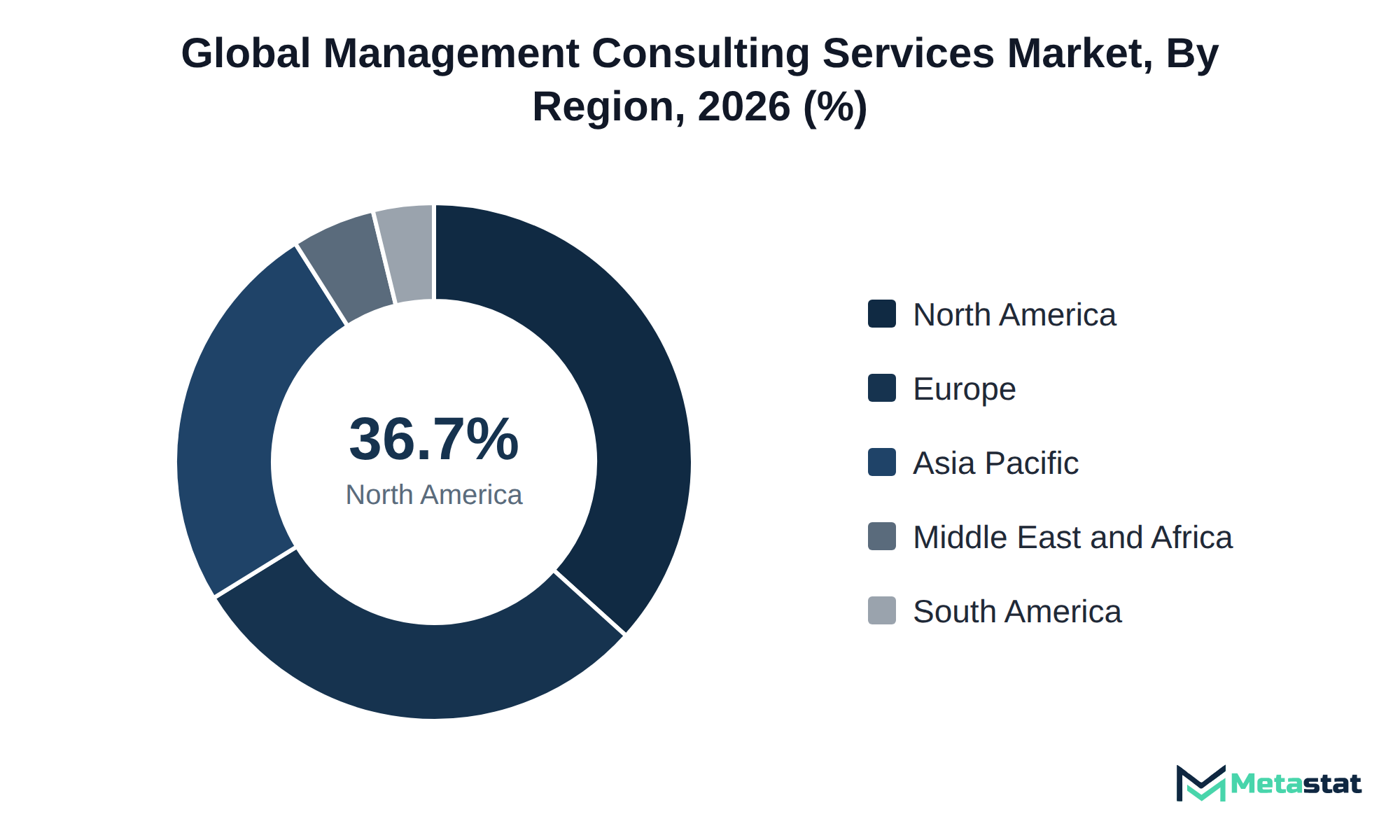
Geographic Lead: North America is the leading region, holding 36.7% of the market in 2025, with the US expected to maintain this dominance into 2026.
What's Inside: The report provides a comprehensive analysis of market dynamics, competitive landscape, and detailed forecasts across various service types and client organization sizes.
Digital Transformation Growth: The Digital Transformation Consulting segment is projected to grow significantly, reaching USD 127 billion by 2033, reflecting the increasing demand for technological integration in business operations.
Pricing Trends: Outcome-based fees are becoming popular, particularly among large organizations, aligning consultants' incentives with client performance outcomes.
Choose Your License
Global Management Consulting Services Market
The global Management Consulting Services market was valued at USD 348.7 billion in 2025 and is projected to reach USD 510.7 billion by 2033, growing at a CAGR of 4.8% over the forecast period.
The Management Consulting Services market encompasses services that improve organizational performance, strategy, and efficiency. Buyers invest in these services to address complex challenges, streamline operations, and enhance overall business outcomes. Demand arises from various sectors, including banking, manufacturing, and information technology, which seek expertise to navigate changing market dynamics and optimize their strategies.
Growth within the market is driven primarily by the increasing complexity of business environments, which necessitates specialized consulting services. North America holds 36.7% of the market in 2025, with the US leading in 2026. The operations consulting segment represents the largest share, reflecting the demand for optimizing processes and enhancing productivity across organizations. Other regions, including Europe and Asia Pacific, follow closely, which points to broad global interest in consulting services.
In addition to operational improvements, technological advancements significantly influence spending patterns, pushing organizations to adopt innovative solutions. Digital transformation consulting highlights this trend and helps firms apply technology effectively. Businesses continue to prioritize efficiency and adaptability, and the market growth trajectory is expected to remain strong, driving increased investment in management consulting services.
Management consulting covers services that help organizations strengthen their operational capabilities and strategic direction. Buyers invest in these services to navigate complex challenges, streamline processes, and leverage expertise for improved performance. Organizations across different sectors, including finance, manufacturing, and technology, rely on these services to adapt to changing market dynamics and maintain competitive advantages.
Growth in the market is driven by increasing demand for specialized consulting services that address specific industry challenges. Among the various segments, Operations Consulting holds the highest value, reflecting the critical nature of optimizing processes and efficiencies for organizations. This leading position highlights the significant investment in consulting services, which are essential for businesses aiming to enhance productivity and profitability.
The continuous evolution of technology further drives market expansion, particularly in areas including digital transformation and financial advisory. Organizations are increasingly aware of the importance of integrating advanced technologies to stay relevant in a competitive landscape. This growing recognition fuels demand for consulting services and supports sustained growth over the coming years.
The integration of artificial intelligence (AI) into digital transformation consulting is reshaping project mandates significantly. By 2033, the segment for Digital Transformation Consulting is expected to reach USD 127 billion, representing a substantial opportunity for consulting firms equipped to use AI technologies effectively. Clients increasingly seek solutions that enhance operational efficiency and customer engagement, driving demand for AI-enabled digital transformation strategies.
Consultants specializing in this area focus on implementing enterprise AI tools that optimize workflows, enhance data analytics, and automate processes. The development of AI technologies offers firms within the Management Consulting Services market a chance to differentiate their offerings through innovative solutions. This shift emphasizes the importance of tailored consulting approaches that address unique client challenges using AI capabilities.
Consulting firms that add advanced AI tools to their services will capture a greater share of the expanding market as organizations invest in AI technologies. The projected growth of the Digital Transformation Consulting segment highlights the need for firms to integrate AI into their service delivery models, enhancing their competitive edge in a changing environment.
The implementation of Saudi Vision 2030 has significantly increased the demand for public-sector consulting and advisory services focused on transformation within the Management Consulting Services market. This initiative aims to diversify the Saudi economy and enhance government efficiency, resulting in a substantial rise in consulting engagements. The financial advisory consulting segment is projected to grow, driven by increased investments in public services and infrastructure projects.
Buyers engage consultants through a variety of pricing and contract models tailored to the specific needs of public-sector projects. Fixed-fee contracts dominate in this space, providing clarity on costs and deliverables for government entities. Performance-based pricing has emerged as a competitive option, incentivizing consultants to deliver measurable outcomes aligned with governmental goals. This flexible pricing strategy aligns consultant interests with those of public organizations, creating a collaborative environment.
The strategic alignment of consulting services with government objectives enhances overall project success rates. It enables public sector clients to achieve key milestones outlined in Saudi Vision 2030. The increased focus on performance metrics in contracts is expected to lead to more efficient use of resources, ultimately contributing to the market's growth trajectory.
Outcome-based fees are gaining traction within the Management Consulting Services market, particularly among large organizations that seek value-driven engagements. This pricing structure aligns consultants' incentives with clients' performance outcomes, enhancing accountability and the effectiveness of consulting interventions. A notable shift occurs in the hybrid delivery model, which combines on-site and remote consulting approaches. The hybrid model permits flexibility, allowing consultants to respond quickly to unique client requirements while optimizing resource allocation.
The anticipated growth of large organizations adopting hybrid consulting services is evident, with an expected increase from USD 256.4 billion in 2026 to over USD 339.2 billion by 2033, reflecting a compound annual growth rate of 4.1%. This trend indicates significant strategic investments in consulting services that deliver measurable results. Organizations prioritize efficiency and productivity, and outcome-based fees paired with a hybrid delivery model help optimize operational effectiveness while addressing diverse client needs.
Small and Medium-sized Enterprises (SMEs) face critical decisions when selecting between strategy and operations consultants. The choice often hinges on immediate operational requirements versus long-term strategic goals. For many SMEs, the decision aligns with their specific needs, which significantly influence business outcomes.
In the Management Consulting Services market, operations consulting is projected to grow from USD 102.5 billion in 2026 to USD 124.2 billion by 2033, reflecting an annual growth rate of 2.8%. This growth indicates a rising preference for consultants who streamline processes and enhance efficiency. SMEs focused on improving day-to-day operations prioritize operations consultants, viewing their expertise as essential for immediate results and cost savings.
Conversely, firms seeking to develop comprehensive business strategies, expand into new markets, or overhaul their business models often turn to strategy consultants. Strategic insights lead to significant changes that support long-term growth, providing SMEs with a competitive edge. The decision ultimately influences a firm's operational effectiveness and strategic positioning within the market.
Large organizations actively pursue digital transformation initiatives to enhance operational efficiency and improve customer engagement. This shift reflects a growing recognition of the need for advanced technological solutions to remain competitive. The rising demand for digital transformation consulting drives substantial growth in the market. The segment for Digital Transformation Consulting is projected to reach USD 127 billion by 2033, reflecting the significant investment in modernizing business processes. With increasing reliance on technology, organizations seek expertise in navigating this transition, leading to higher consulting volumes and increased service fees. The emphasis on digital transformation reshapes consulting engagements and influences overall market dynamics, prompting providers to innovate and tailor solutions to meet evolving client needs.
The demand for financial advisory consulting is gaining momentum, particularly among clients in the banking, financial services, and insurance sectors, where regulatory changes and market complexities create opportunities for expert guidance.
Innovations in emerging technologies significantly influence consulting strategies across various industries. Rapid advancements in technologies including cloud computing, blockchain, and machine learning drive organizations to seek innovative solutions. Consulting firms integrate these technologies into their offerings, enabling clients to enhance operational efficiencies and achieve competitive advantages. For instance, the adoption of cloud services allows organizations to streamline processes and improve data accessibility, which supports agile decision-making.
Industries including banking, financial services, and manufacturing show heightened interest in using these technologies to optimize performance and reduce costs. The potential for increased efficiency and productivity encourages organizations to invest in consulting services that facilitate technology integration. The Management Consulting Services market experiences heightened demand as firms provide strategic insights and support for technology implementation, aligning with clients' growth objectives. This trend highlights the critical role of technology in shaping future consulting mandates and influencing market dynamics.
Price sensitivity among buyers significantly impacts demand within the Management Consulting Services market. Organizations often delay engaging consulting services when faced with high costs, particularly smaller enterprises. This pricing constraint leads to slower uptake of consulting solutions, resulting in missed opportunities for efficiency improvements. Large organizations allocate substantial budgets for consulting; however, economic fluctuations and budget cuts trigger caution in spending, impacting service selection and project initiation.
In the banking, financial services, and insurance sectors, where operational budgets face scrutiny, organizations prioritize cost-effective solutions. Consequently, consulting firms encounter smaller order sizes and delayed project timelines. Financial advisory consulting, for instance, experiences this constraint as firms hesitate to invest in services perceived as non-essential. These dynamics shape the competitive environment and influence strategic planning within the broader market.
The Management Consulting Services market faces increasing challenges related to talent acquisition. The demand for skilled consultants has intensified, driven by evolving client expectations and the complexity of projects. Suppliers struggle to attract and retain top talent, leading to rising personnel costs, which directly impacts profitability. In response, consulting firms focus on enhancing their employer branding and employee value propositions to attract candidates. Investment in training programs has become crucial for developing existing talent, ensuring that firms maintain competitive capabilities. Several organizations explore partnerships with educational institutions to create talent pipelines. These measures aim to mitigate the impact of talent shortages on service delivery and ultimately enhance operational efficiency across the market.
Firms are implementing flexible work arrangements to improve employee satisfaction and retention. This approach aligns with the preferences of a new generation of workers seeking work-life balance. Together, these strategies are expected to help consulting firms manage talent challenges while maintaining high service quality.
Significant growth potential exists within the digital transformation consulting segment, projected to reach USD 127 billion by 2033. This growth reflects ongoing demand for organizations to enhance operational efficiencies and adapt to technological advancements. The acceleration of digital transformation initiatives aligns with the increasing need for businesses to remain competitive in a dynamic market environment. Companies across various sectors, including IT and telecommunications, manufacturing, and financial services, actively pursue consulting services to integrate innovative technologies into operations. The market anticipates a compound annual growth rate (CAGR) of 7.1% for hybrid consulting, which allows organizations to use both on-site and remote expertise effectively. The expansion of digital transformation consulting directly addresses operational challenges and strategic imperatives facing businesses today, driving sustained investment and enhancing profitability within the market.
The Global Management Consulting Services market is segmented based on Service Type, End-Use Industry, Client Organization Size, and Delivery Model.
This segment focuses on optimizing business processes, improving operational efficiency, and driving performance enhancements across various industries. Companies, particularly large organizations, engage operations consulting to implement best practices, streamline workflows, and use data analytics for informed decision-making. The growing emphasis on efficiency and productivity acts as a key driver for this segment, with clients increasingly seeking specialized expertise to address complex operational challenges. Compared to other segments, operations consulting exhibits slower growth relative to digital transformation consulting, which is projected to reach USD 127 billion by 2033. The anticipated value for operations consulting reflects its critical role in shaping effective operational strategies, while other segments experience an accelerated pace of demand driven by technology adoption.
Strategy Consulting segment is estimated to reach USD 93.9 billion by 2033, at a CAGR of 3.6% during the forecast period. This segment focuses on assisting organizations in defining their overall strategy, addressing critical challenges, and identifying opportunities for growth. Major clients include large corporations and government agencies that seek to enhance their competitive positioning. A significant driver of demand in this segment stems from the increasing complexity of the business environment, which necessitates expert insights for strategic decision-making. Compared to other service types, Strategy Consulting experiences slower growth, driven by the longer-term nature of strategic initiatives, unlike the more rapid advancements seen in Digital Transformation Consulting. Firms operating in this segment often command higher fees due to the specialized expertise required, with an emphasis on delivering tailored solutions that address specific organizational needs. The combination of these factors positions Strategy Consulting as a vital, albeit slower-expanding, segment in the Management Consulting Services market.
This segment focuses on optimizing business processes and enhancing customer experiences through digital tools and technology. Organizations, particularly large ones, engage digital transformation consulting to integrate advanced technologies into their operations, improving efficiency and competitiveness. Demand is driven by the rapid evolution of technology and the increasing need for organizations to adapt to digital trends. Compared to other service types, Digital Transformation Consulting experiences faster growth, with a projected CAGR of 4.8%, emphasizing its critical role in shaping strategic decisions. Organizations across various sectors, including Banking and Financial Services, increasingly rely on digital solutions to maintain relevance and meet customer expectations, further highlighting the segment's importance in the broader market.
Financial Advisory Consulting segment is projected to grow at a CAGR of 3.9% during the forecast period. This segment primarily provides guidance on financial strategy, risk management, and compliance to organizations ranging from small enterprises to large corporations. The growth of this segment is driven by the increasing complexity of financial regulations and the demand for improved financial performance among clients. Unlike the operations or strategy consulting segments, which have higher projected growth rates, financial advisory services cater to a more specialized clientele focused on navigating financial challenges. The anticipated growth in the Banking, Financial Services, and Insurance industry, expected to reach USD 118.4 billion by 2033, significantly contributes to the expansion of the financial advisory services segment. This market's emphasis on regulatory compliance and risk management distinguishes it from other segments within the Management Consulting Services market, highlighting the need for tailored advisory solutions.
Human Resources Consulting involves advisory services focused on optimizing workforce management, talent acquisition, and employee engagement strategies. Organizations, particularly those in competitive industries, engage these services to enhance their human capital and drive overall performance. A significant driver of this segment stems from the increasing emphasis on employee well-being and organizational culture, which has become critical in retaining top talent. Compared to other consulting segments, Human Resources Consulting often experiences a more pronounced demand from smaller enterprises seeking cost-effective solutions for workforce challenges. The focus on innovative workforce strategies contrasts with segments including Operations Consulting, which prioritize operational efficiencies. This unique positioning influences the dynamics and pricing strategies within the market.
Risk and Governance Consulting focuses on addressing the complexities of risk management and ensuring compliance with regulatory frameworks, areas that overlap with enterprise governance, risk and compliance programs. Organizations use this service to enhance governance structures, manage risks, and ensure alignment with legal and ethical standards. The segment attracts various entities, including large corporations and public sector institutions, which prioritize risk mitigation and governance excellence. Demand for this consulting service is driven by increasing regulatory requirements and heightened awareness of risk exposure among businesses. Compared to other service types, this segment experiences significant growth due to the rising importance of governance frameworks in strategic decision-making. Organizations recognize that effective risk management safeguards assets and builds trust among stakeholders, which strengthens competitive positioning. The market's emphasis on governance highlights the differentiating factor influencing investment in this area.
Sustainability Consulting offers guidance on environmental, social, and governance (ESG) strategies to organizations seeking to enhance their sustainability practices. This segment serves a diverse range of clients, including large corporations and government agencies, focused on implementing sustainable practices and achieving compliance with regulatory frameworks. Increasing regulatory pressures and consumer demand for responsible business practices drive the growth of this segment. Unlike other consulting services, Sustainability Consulting emphasizes long-term environmental impact and ethical governance, setting it apart in terms of pricing and value proposition. Organizations in this segment frequently leverage data analytics and innovative technologies to assess sustainability performance and identify areas for improvement. The market for management consulting services increasingly reflects a commitment to sustainability, aligning business goals with environmental responsibility.
This segment encompasses specialized management advice and franchise advisory services, catering to organizations seeking tailored strategies for unique operational challenges. Businesses often rely on this segment for insights on franchising opportunities, operational efficiency, and specialized guidance that standard consulting services do not address. The segment appeals primarily to small and medium-sized enterprises and larger corporations exploring niche markets or innovative approaches. Demand is driven by the increasing complexity of business operations and the need for customized solutions that traditional consulting practices do not provide. In contrast to broader segments, this area typically experiences slower growth due to its specialized nature and smaller client base, which requires a different approach to pricing and service delivery. The market dynamics suggest that these specialized offerings will continue to play a vital role in supporting businesses navigating unique challenges and growth opportunities.
Banking, Financial Services and Insurance segment is valued at USD 86.9 billion in 2026 and is projected to reach USD 118.4 billion by 2033, at a CAGR of 4.5% during the forecast period. This segment primarily serves large banks, insurance companies, and investment firms seeking expertise in risk management, regulatory compliance, and operational efficiency. Demand arises from ongoing digital transformation within the sector, which drives the need for advanced consulting services to adapt to changing market dynamics. Compared to other segments, the Banking, Financial Services and Insurance segment displays a moderate growth trajectory, with a CAGR of 4.5%, contrasting with the more rapid expansion observed in the Small and Medium-Sized Organizations segment, projected at 6.5%. Pricing pressures and regulatory complexities pose additional challenges, influencing cost structures and consulting strategies across the market.
The manufacturing segment is estimated to reach USD 74.7 billion by 2033, at a CAGR of 4.2% during the forecast period. This segment focuses on providing consulting services to manufacturing organizations, enhancing operational efficiency, supply chain management, and production processes. Key driving forces include increasing demand for automation and digital technologies in manufacturing operations, aiming to improve productivity and reduce costs. Compared to other segments in the market, the manufacturing segment experiences slower growth than areas including digital transformation consulting, which is projected to grow significantly. However, the manufacturing sector faces unique challenges, including the need for skilled labor and adaptation to evolving regulatory standards, impacting the pace of consulting service adoption.
The IT and Telecommunications segment is expected to reach USD 80.8 billion by 2033. This segment serves organizations within the technology sector, providing essential consulting services that enhance operational efficiency and drive innovation. Digital transformation initiatives significantly influence this segment, with companies seeking to modernize infrastructures and improve service delivery. The segment is distinct from others due to its higher growth trajectory, supported by a CAGR of 4.2% during the forecast period. Demand is fueled by the increasing reliance on advanced communications technologies and data analytics. Organizations in this sector actively pursue consulting services to navigate complex regulatory environments and enhance cybersecurity measures. The market continues to evolve, with technology becoming increasingly integral to business strategies, resulting in a dynamic and competitive landscape.
The Government and Public Sector segment is projected to grow at a CAGR of 5.4% during the forecast period. This segment serves government agencies and public organizations, focusing on enhancing operational efficiency and policy implementation. Demand derives from increasing regulatory requirements and the ongoing need for modernization in public services. The segment differentiates itself by addressing specific governmental challenges, leading to higher growth compared to other segments. Factors including budget constraints delay investment in consulting services, but the demand for tailored solutions ensures continued interest and potential expansion. The overall growth trajectory reflects a committed effort to improve public sector performance through consulting services, aligning with broader trends in the market.
This segment focuses on consulting services directed toward the healthcare and life sciences sectors. Organizations within these industries engage consulting to enhance operational efficiency, navigate regulatory challenges, and implement new technologies. Demand in this segment derives from the ongoing emphasis on improving patient outcomes and managing costs effectively. Regulatory pressures continue to influence consulting engagements, with organizations seeking expertise to comply with evolving healthcare standards. Unlike the manufacturing and banking sectors, which experience slower growth rates, healthcare and life sciences consulting often exhibits more dynamic demand patterns. The need for innovative solutions in patient care and operational management differentiates this segment, positioning it uniquely within the broader market.
Consulting services focused on the Energy and Utilities sector provide critical support for organizations managing energy supply, distribution, and regulatory compliance. Utilities companies frequently rely on these services to optimize operations, enhance efficiency, and adapt to the evolving regulatory landscape. Key drivers include the transition to renewable energy sources and the integration of advanced technologies, which significantly impact operational strategies. This sector experiences unique challenges in maintaining infrastructure and achieving sustainability goals, differentiating it from other segments. While sectors including Banking and Financial Services grow at a higher rate, the Energy and Utilities segment demands specialized insights and expertise, ensuring client organizations navigate complex market dynamics. The Management Consulting Services market experiences a continuous push for innovation and efficiency in this area, with firms adapting to meet the specific needs of utility providers and energy companies.
This segment encompasses consulting services tailored specifically for the retail and consumer goods sector, focusing on strategies to enhance operational efficiency, customer engagement, and supply chain management. Companies operating in this space include large retailers, consumer goods manufacturers, and e-commerce platforms, all seeking to navigate competitive pressures and changing consumer behaviors. Demand in this segment is driven by the need for organizations to adapt to changing market trends and improve the customer experience. Retail and consumer goods face unique challenges compared to other segments, including the necessity for real-time data analytics and responsiveness to consumer preferences, leading to differentiated consulting service needs. These factors contribute to varying growth rates and pricing strategies across the market, highlighting the importance of specialized expertise in addressing the dynamic nature of this industry.
Transportation and Logistics encompasses consulting services focused on optimizing supply chain management, improving operational efficiency, and enhancing service delivery across various modes of transportation. Organizations in this segment include freight companies, shipping lines, and logistics providers that require tailored strategies to navigate complex supply chains and regulatory requirements. Demand drivers include increasing globalization, which increases the need for efficient logistics solutions, and the rising e-commerce sector, creating heightened expectations for shipping and delivery performance. Compared to other segments, Transportation and Logistics experiences unique challenges associated with fluctuating fuel costs and regulatory changes affecting transportation routes. This segment's growth trajectory reflects specific market dynamics and operational demands that influence consulting engagements in the market.
The Real Estate and Construction segment focuses on providing advisory services that enhance operational efficiency, project management, and resource allocation for various real estate and construction projects. Clients, including developers, contractors, and government entities, leverage these services to optimize their operations in a competitive and heavily regulated environment. Growth in this segment is influenced by increasing urbanization and the consequent demand for residential and commercial spaces. Regulatory changes, particularly those related to building codes and environmental sustainability, drive consulting engagement. Compared to other segments, this sector experiences fluctuations due to economic cycles affecting construction activities. Sustained investment in infrastructure projects supports its resilience and offers growth potential. This segment addresses specific challenges unique to real estate and construction, reflecting diverse consulting needs across industries.
This segment encompasses specialized consulting services focused on Education, Hospitality, and Media sectors. These services assist organizations in enhancing operational efficiency, strategic planning, and customer engagement. Clients include educational institutions, hospitality providers, and media companies that seek to optimize their processes and adapt to changing market dynamics. A primary demand driver for this segment stems from the growing emphasis on digital transformation, urging organizations to modernize their operations and service delivery. The segment exhibits growth patterns distinct from other categories, influenced by factors including technological advancements and shifting consumer preferences. Unlike traditional consulting segments, which focus on specific industries like finance or manufacturing, this segment addresses the unique challenges faced by clients in creative and service-oriented fields. The Management Consulting Services market reflects a diverse range of needs, highlighting the importance of tailored strategies for varied industries.
This segment caters to large enterprises seeking comprehensive consulting services to enhance operational efficiency, strategic planning, and overall competitiveness. Increasing pressure to innovate and streamline processes drives demand for consulting services within this segment, particularly in complex industries including finance and manufacturing. Compared to Small and Medium-Sized Organizations, which exhibit a higher growth rate of 6.5%, the Large Organizations segment experiences steadier growth due to established processes and large-scale operations. However, the larger financial investment in consulting services often results in more significant returns, making it essential for large firms to engage consultants for strategic insights and competitive advantages. The Management Consulting Services market continues to evolve, reflecting these dynamics within the Large Organizations segment.
Small and Medium-Sized Organizations segment is estimated to reach USD 171.5 billion by 2033, at a CAGR of 6.5% during the forecast period. This segment caters to smaller enterprises requiring tailored consulting services to improve competitiveness and operational efficiency. These organizations often face challenges in resource allocation and strategic planning. Increased emphasis on digital transformation drives demand for consulting services in this segment, with organizations seeking expertise to navigate technological advancements. Compared to large organizations, small and medium-sized enterprises typically pursue more cost-effective solutions, leading to a distinct service approach. Growth within this segment surpasses that of larger organizations, which are projected to grow at a CAGR of 4.1%. This difference reflects the growing recognition among smaller firms of the value management consulting services bring to their operations, contributing to the overall expansion of the market.
On-Site Consulting segment is valued at USD 210.1 billion in 2026 and is projected to reach USD 248.9 billion by 2033, at a CAGR of 2.5% during the forecast period. This segment focuses on providing consulting services directly at client sites, allowing for tailored solutions that address specific challenges and client needs. Large organizations in various industries frequently engage on-site consulting to implement strategic initiatives, optimize processes, and improve operational efficiency. The demand for this segment is driven by the increasing complexity of business environments, which necessitates hands-on support from consultants. Compared to other delivery models including Hybrid Consulting and Remote Consulting, which show higher growth rates, On-Site Consulting exhibits slower growth due to its resource-intensive nature and higher operational costs associated with travel and personnel. Nevertheless, the segment remains essential for organizations seeking immediate and personalized consulting interventions.
Hybrid Consulting segment is estimated to reach USD 174.5 billion by 2033, at a CAGR of 7.1% during the forecast period. This segment integrates both on-site and remote consultation methods, allowing organizations to tailor their approach to consulting services based on specific requirements and operational contexts. Businesses seeking flexibility and efficiency primarily employ hybrid consulting, which provides access to specialized expertise while minimizing travel costs and time constraints. The growing emphasis on digital transformation accelerates demand for this model, with organizations increasingly adopting technology-driven solutions. Compared to traditional consulting models, hybrid consulting experiences faster growth, driven by its ability to meet evolving client needs in a rapidly changing business environment. This flexibility positions it favorably against other delivery models within the market, highlighting its increasing relevance in contemporary consulting dynamics.
Remote Consulting segment is expected to reach USD 87.4 billion by 2033. This consulting model provides organizations with access to expert advice without necessitating physical presence, leveraging digital tools to facilitate remote interactions. Clients include various sectors, with particular interest from those prioritizing cost efficiency and flexibility. The demand for Remote Consulting is driven by advancements in technology, which streamline communication and project management. Compared to On-Site Consulting, this segment appeals to clients seeking budget-friendly options while maintaining access to high-quality consultancy services. Remote Consulting shows a distinct trajectory, positioning itself as a rapidly expanding segment within the Management Consulting Services market, attracting organizations targeting adaptive solutions and immediate support.
Based on geography, the Global Management Consulting Services market is divided into North America, Europe, Asia-Pacific, South America, Middle East, and Africa.
North America represents a significant portion of the Management Consulting Services market, with a projected value of USD 174.8 billion by the end of 2033. The region's growth is driven by strong demand from the Banking, Financial Services and Insurance sector, which is expected to reach USD 118.4 billion during the forecast period, reflecting a CAGR of 4.5%. Large organizations significantly contribute to the market, with a valuation forecasted to rise to USD 339.2 billion by 2033, supported by investments in strategic initiatives and operational enhancements. The region benefits from a highly developed infrastructure and established consulting practices, positioning it favorably for continued expansion in the Management Consulting Services market. The focus on digital transformation and operational efficiency remains crucial for organizations aiming to maintain competitive advantages in this evolving environment.
Demand within the Management Consulting Services market in Europe is driven by a diverse range of industries, particularly in Banking, Financial Services, and Insurance, where consulting services support regulatory compliance and operational efficiencies. Countries including Germany and the UK place substantial emphasis on digital transformation initiatives, which is evident in the growing interest in consulting related to digital technologies. The market benefits from significant investment in infrastructure projects across Europe, enhancing operational frameworks for various organizations. Financial Advisory Consulting services face increasing demand amid growing complexities in financial regulations. In 2025, Europe is projected to hold a 29.5% share of the global market, reflecting its strategic importance in the overall management consulting landscape.
In the Asia-Pacific region, the demand for management consulting services is driven by the growth of industries including banking, financial services, and insurance. Countries like China and India are experiencing significant investments in digital transformation initiatives. The increasing complexity of regulatory frameworks in these markets influences the consulting landscape, prompting organizations to seek expert guidance. The rise of small and medium-sized enterprises in Southeast Asia presents unique opportunities for tailored consulting solutions. By 2025, the region is expected to represent 24.8% of the global market, reflecting its growing importance within the management consulting services market. This competitive environment encourages innovation and practices that align with local market needs.
In South America, market demand stems primarily from sectors including Banking, Financial Services, and Insurance, with significant growth anticipated in the coming years. The region's consulting landscape experiences unique challenges, including economic volatility and regulatory changes that influence investment decisions. Brazil and Argentina represent the largest markets within this region, highlighting a growing interest in consulting services tailored to improve operational efficiency and strategic planning. South America holds a 3.80% share of the global market, with expectations for expansions driven by rising investments in technology and management practices. The Management Consulting Services market in South America positions itself to adapt to local economic conditions, creating opportunities for firms to enhance their service offerings and cater to the specific needs of clients.
Emerging demand in the Middle East and Africa stems from the Banking, Financial Services, and Insurance sectors, which require tailored management consulting solutions. Countries including Saudi Arabia and the UAE show significant investment in digital transformation initiatives, contributing to the overall growth within the market. The region's share of the global market reached 5.2% in 2025, reflecting a growing interest in consulting services aimed at enhancing operational efficiency and compliance. South Africa, with its expanding financial sector, further complements this demand with a focus on governance and risk management consulting. A unique blend of regulatory frameworks and market conditions influences consulting strategies throughout the region, driving firms to adapt their offerings to local needs. This dynamic environment presents opportunities for growth in the management consulting services market, encouraging innovation and collaboration among service providers.
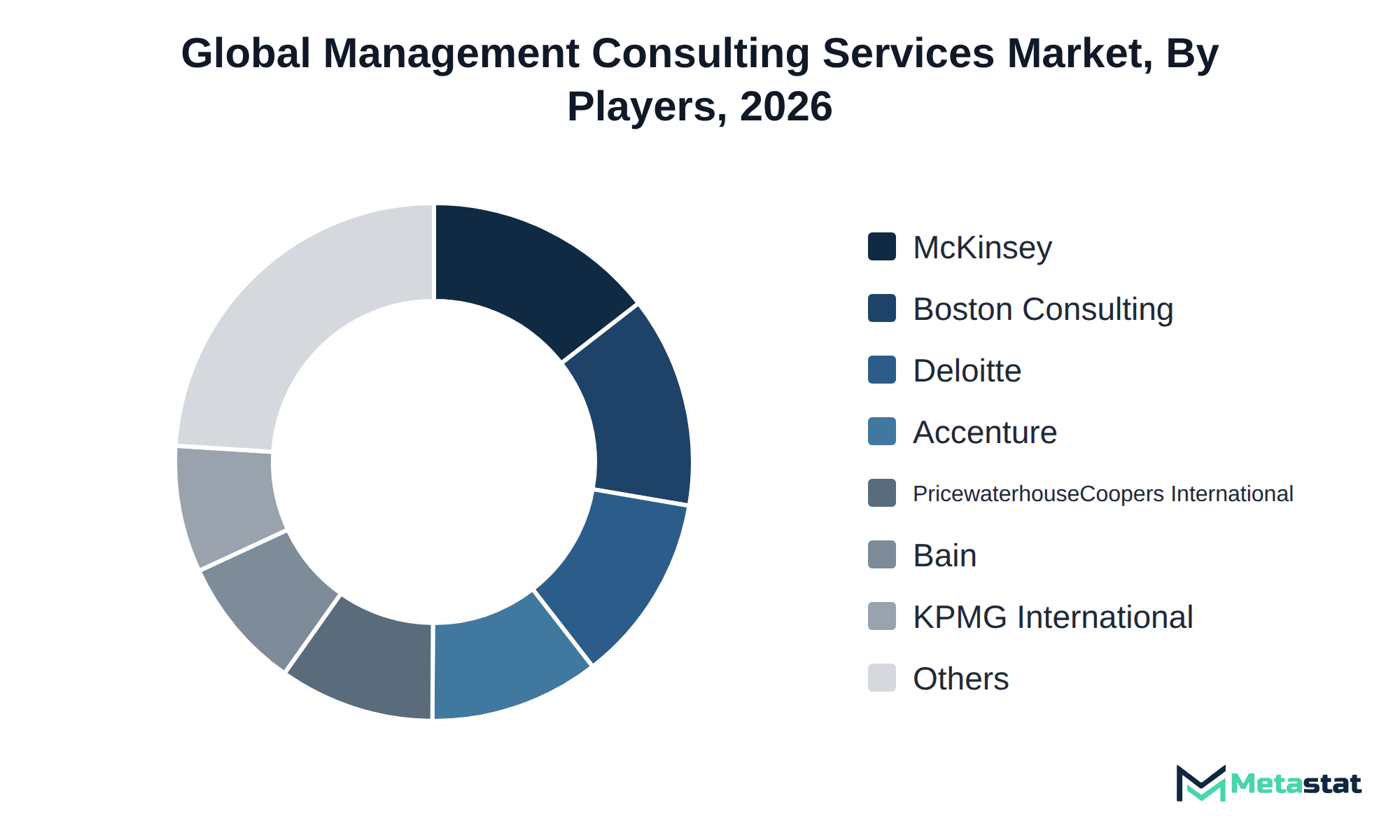
Competition within the Management Consulting Services market reflects diverse strategic behaviors, particularly along service types and delivery models. Companies focus on specialized consulting areas, including operations, strategy, and digital transformation. For instance, McKinsey & Company prioritizes strategy consulting, while Deloitte emphasizes a broad range of operations consulting and financial advisory services.
Buyers in this market select firms based on price, customization, and service quality. Premium service providers like Bain & Company and Accenture plc attract clients through tailored solutions and robust ecosystems. Ernst & Young Global Limited and KPMG International Limited leverage their extensive experience in financial advisory, appealing to clients seeking depth in expertise.
Achieving this growth relies on several key developments. First, the expansion of the Digital Transformation Consulting segment is essential, with organizations increasingly investing in digital solutions to enhance efficiency and adapt to changing market conditions. This trend is particularly pronounced in the IT and Telecommunications industry, where demand for consulting services focuses on the integration of innovative technologies. Second, growth within the Banking, Financial Services and Insurance sector will significantly contribute to the market, driven by rising regulatory requirements and the adoption of advanced analytics to improve decision-making processes. However, potential economic downturns present a risk to this growth trajectory. Economic uncertainty could dampen investment and spending on consulting services, particularly affecting large organizations. Maintaining momentum in both demand and investment will be critical for the Management Consulting Services market to reach the anticipated USD 510.7 billion by 2033.
By Service Type: Operations Consulting, Strategy Consulting, Digital Transformation Consulting, Financial Advisory Consulting, Human Resources Consulting, Risk and Governance Consulting, Sustainability Consulting, Others (Franchise Advisory, Specialized Management Advice)
By End-Use Industry: Banking, Financial Services and Insurance, Manufacturing, IT and Telecommunications, Government and Public Sector, Healthcare and Life Sciences, Energy and Utilities, Retail and Consumer Goods, Transportation and Logistics, Real Estate and Construction, Others (Education, Hospitality, Media)
By Client Organization Size: Large Organizations, Small and Medium-Sized Organizations
The report strategically identifies and profiles the key market players and analyses their core competencies in each sub-segment of the Management Consulting Services market.
Report Attributes | Details |
Study Period | 2021-2033 |
Base Year | 2025 |
Estimated Year | 2026 |
Forecast Period | 2026-2033 |
Historical Period | 2021-2025 |
Growth Rate | CAGR 4.8% from 2026 to 2033 |
Revenue Unit | USD billion |
Segmentation | By Service Type, End-Use Industry, Client Organization Size, Delivery Model, and Region |
By Region | North America (By Service Type, End-Use Industry, Client Organization Size, Delivery Model, and Country)
|
Europe (By Service Type, End-Use Industry, Client Organization Size, Delivery Model, and Country)
| |
Asia Pacific (By Service Type, End-Use Industry, Client Organization Size, Delivery Model, and Country)
| |
South America (By Service Type, End-Use Industry, Client Organization Size, Delivery Model, and Country)
| |
Middle East and Africa (By Service Type, End-Use Industry, Client Organization Size, Delivery Model, and Country)
|
Find answers to common questions about this report
The Management Consulting Services market size was valued at USD 348.7 billion in 2025.
The market is projected to grow at a CAGR of 4.8% during the forecast period from 2026 to 2033.
The North America Management Consulting Services market size is estimated to reach USD 174.8 billion by 2033.
Digital Transformation Consulting leads the Management Consulting Services market with a projected value of USD 127 billion by 2033. This segment surpasses others in growth potential and revenue generation.
The rising demand for digital transformation consulting drives substantial growth in the market. Price sensitivity among buyers significantly impacts demand, leading to cautious spending and delayed project timelines.
North America holds the dominant share of the Management Consulting Services market, with a value of USD 174.8 billion projected for 2033, representing 36.7 percent of the total market.
Price sensitivity among buyers significantly impacts demand, leading to slower uptake of consulting solutions, particularly among smaller enterprises. challenges related to talent acquisition hinder growth, as firms struggle to attract and retain skilled consultants, resulting in rising personnel costs.
The ongoing demand for digital transformation initiatives significantly favors adoption in the management consulting industry. Organizations seek expertise to enhance operational efficiencies and adapt to technological advancements, driving sustained investment and profitability.
The Management Consulting Services market is estimated to reach a valuation of USD 510.7 billion by 2033.
Key players operating in the Management Consulting Services market include McKinsey & Company, Boston Consulting Group, Bain & Company, Deloitte, PricewaterhouseCoopers International Limited, and Accenture plc.
The analysts below cover Professional Services research at Metastat Insights.
LEAD ANALYST
Utkarsh Khirodkar is a Lead Market Research Analyst at MetaStat Insight, specializing in market intelligence, technology sector assessments, and competitive strategy.

PRINCIPAL CONSULTANT - ENTERPRISE AI & EMERGING TECHNOLOGIES
Banking & Finance · Electronics and Semiconductor · Energy and Power · Healthcare IT · Information & Technology · Professional Services
Vijay Gunti is a Principal Consultant at MetaStat Insight, bringing over two decades of experience across enterprise digital transformation, technology strategy, and intelligent systems.

PRINCIPAL CONSULTANT - QUALITY SYSTEMS & COMPLIANCE
Electronics and Semiconductor · Machinery & Equipment · Professional Services
Omkar Phadtare is an Industry Consultant at MetaStat Insight, specializing in quality systems, regulatory compliance, and standards benchmarking to drive data-driven market intelligence and strategic industry research.

LEAD CONSULTANT - COMMUNICATION, TELECOM, AND IT
Electronics and Semiconductor · Information & Technology · Machinery & Equipment · Professional Services
Ravindra Sathe Consultants for Communication, Telecom, and IT at MetaStat Insight. He leads the firm's industry research initiatives across telecommunications infrastructure, digital connectivity, enterprise networking, and emerging information technology domains.
Enterprise zero-trust network rollouts are often slowed down by multi-cloud transit latency and proprietary hardware retirement schedules. This study provided realistic total cost of ownership models comparing cloud-delivered security edge solutions against traditional hardware refreshes. The analysis of contract renewal lengths and software maintenance fees gave us clear visibility into enterprise replacement cycles over the next three to five years.
Scaling antibody-drug conjugate manufacturing hinges on contract manufacturing availability for high-potency active ingredients. The MetaStat Insight analysis looked closely at global cleanroom slot constraints, bioconjugation batch failure rates, and supply chain redundancies between the US, Europe, and India. The supplier capability matrix proved genuinely useful for our team when mapping secondary source options across our clinical pipeline.
Floating offshore wind feasibility relies heavily on specialized installation vessel availability and port crane limits, which most broad renewable energy forecasts ignore. The report delivered a thorough analysis of dry dock capacity, mooring chain supply constraints, and raw material pricing trends for deepwater anchor installations. It served as a solid independent sanity check for our offshore project capital expenditure assumptions.
Explore related market intelligence reports worth reading alongside this one.
Starting from
$2950
Starting from
$2950
Starting from
$2950