
LEAD ANALYST
Utkarsh Khirodkar is a Lead Market Research Analyst at MetaStat Insight, specializing in market intelligence, technology sector assessments, and competitive strategy.

Global Public Relations (PR) Market Size, Share, By Service Type (Media Relations, Digital and Social Media PR, Crisis and Issues Management, Event and Experiential Communication, Content Development and Thought Leadership, Analytics and Insights Services, Investor and Financial Communications), By Channel (Traditional / Earned Media, Digital / Online Media, Influencer and Creator-led Media), By Organisation Size (Large Enterprises and Small and Medium Enterprises), By End-User Industry (Consumer Goods and Retail, BFSI, IT and Telecom, Healthcare and Life Sciences, Government and Public Sector, Entertainment and Media, Travel and Hospitality), Industry Analysis, Growth, Trends, and Forecast, 2026-2033
Report ID
MSI-4532
Published
November, 2026
Pages
286 Pages
Format
Historical
Base year
Forecast
Forecast period
Report Details
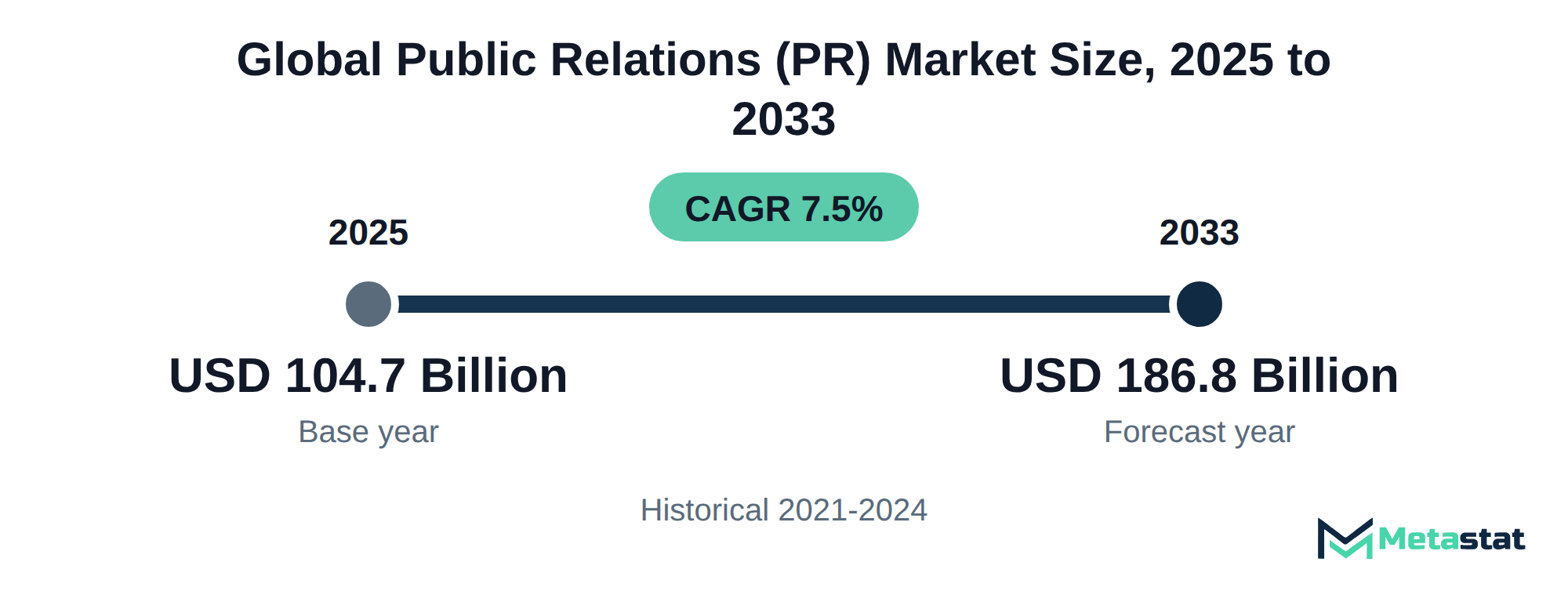
Market Valuation: Valued at $104.7 Billion in 2025, projected to reach $186.8 Billion by 2033 at a 7.5% CAGR.
Dominant Segment: Digital and Social Media PR leads the market, driven by the increasing importance of online engagement strategies and the need for brands to respond swiftly to public sentiment.
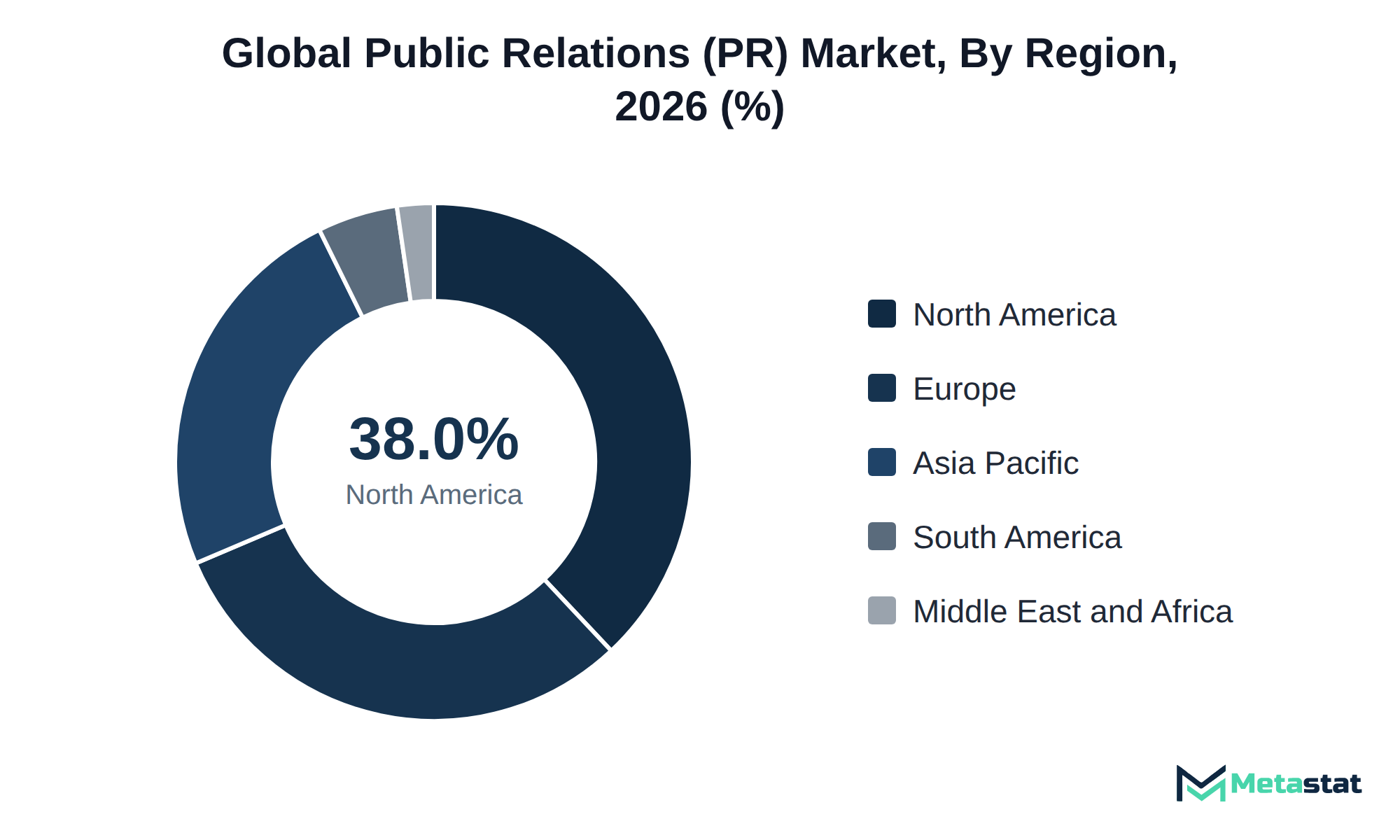
Geographic Lead: North America holds the largest market share at 38.0% in 2025, with the US expected to maintain its leadership position due to its integration of PR strategies within overall marketing efforts.
What's Inside: The report provides a comprehensive analysis of the Public Relations market, including competitive coverage, service type segmentation, and forecasts from 2026 to 2033.
Buyer Shift: There is a notable shift towards digital media channels, with spending on digital and online media projected to reach USD 102.7 billion by 2033, reflecting a CAGR of 7.8%.
Investment Trends: Organizations are increasingly investing in analytics and insights services to enhance communication effectiveness and optimize public relations strategies.
Choose Your License
Global Public Relations (PR) Market
The global Public Relations (PR) market was valued at USD 104.7 billion in 2025 and is projected to reach USD 186.8 billion by 2033, growing at a CAGR of 7.5% over the forecast period.
The Public Relations (PR) market encompasses various services aimed at managing communication between organizations and their audiences. Buyers invest in this market to enhance their brand reputation, engage with stakeholders, and navigate public perception effectively. The need for strategic communication has intensified, driven by the growing importance of digital platforms and social media in shaping public opinion.
Growth in the market is fueled by increasing demand for digital and social media PR services, which have demonstrated significant value in engaging audiences and driving brand visibility. North America holds 38.0% of the market in 2025, with the US leading in 2026. Asia Pacific follows with a share of 24.1%, reflecting a growing trend towards digital engagement in emerging markets. The Consumer Goods and Retail segment stands out, representing the largest share of expenditure within the market, with companies prioritizing strong customer relationships.
The expansion of digital communication channels and influencer marketing continues to reshape strategies within the market. Organizations seek innovative solutions to capture audience attention and adapt to evolving consumer preferences. The increasing emphasis on analytics and insights further supports market growth, enabling companies to measure the effectiveness of their PR efforts and refine strategies.
The Public Relations (PR) market covers services that enhance brand reputation and manage public perception. Companies invest in these services to engage effectively with their target audiences, build strong relationships, and navigate crises. Growing reliance on digital platforms and social media has raised demand for specialized PR services tailored to these channels. This leads buyers to seek digital and social media PR expertise to strengthen their messaging and outreach.
The rising importance of brand visibility and reputation management across industries drives growth in the PR market. Digital and Social Media PR represents the segment with the highest value, reflecting the shift in communication strategies among organizations. North America holds 38.0% of the market in 2025, with the US leading in 2026, marking it the region with the largest share. This dominance highlights the integration of PR strategies within overall marketing efforts in the region.
One main growth driver involves the increasing need for companies to respond rapidly to public opinion and manage potential crises effectively. Organizations recognize that effective communication strategies mitigate risks associated with negative publicity and enhance brand loyalty. The continuous evolution of communication technologies further influences the market, prompting a shift toward innovative PR solutions that cater to changing consumer expectations.
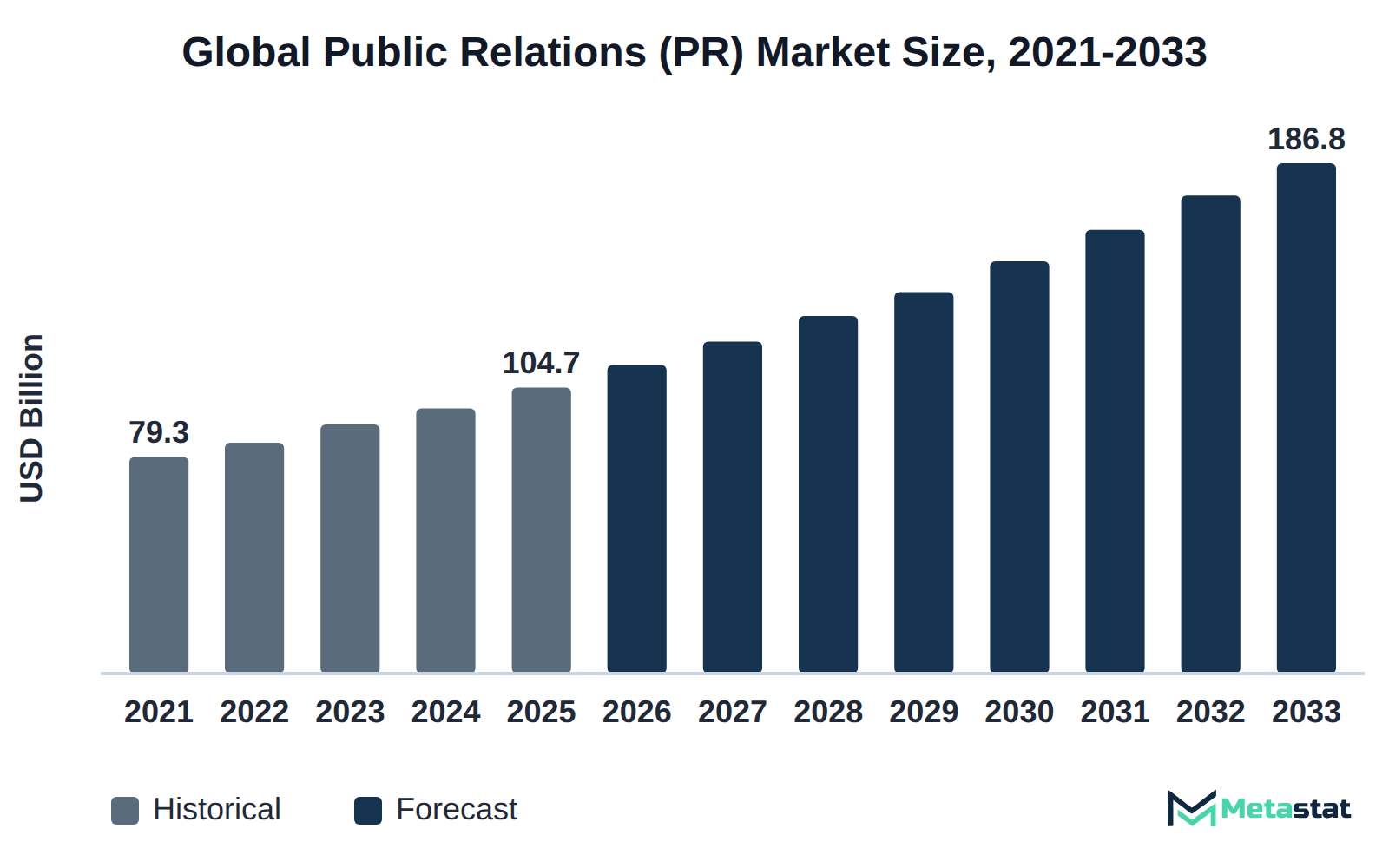
Generative artificial intelligence (AI) is transforming public relations (PR) strategies, particularly by improving predictive campaign attribution. The integration of generative AI enables PR professionals to analyze vast datasets, drawing insights that inform campaign effectiveness with greater precision. This technology reduces reliance on retrospective analytics, promoting a proactive approach to campaign management.
In the Public Relations (PR) market, digital and social media PR is projected to reach USD 46.7 billion by 2033, highlighting the growing importance of online engagement strategies. Generative AI tools facilitate real-time monitoring of social media trends, audience sentiment, and competitor activities, allowing firms to adjust their strategies swiftly. The technology supports tailored messaging and content creation, aligning with audience preferences and enhancing overall engagement.
This shift towards predictive analytics translates into improved return on investment for PR campaigns. By using generative AI, organizations allocate resources more effectively, anticipate market shifts, and optimize their communication strategies. Firms in the market that adopt these advanced capabilities are likely to gain a competitive advantage, positioning themselves for sustained growth in a changing environment.
The rise of deepfake technology presents significant challenges for organizations, impacting their reputation and necessitating advanced crisis communication strategies. In this context, the Public Relations (PR) market adapts to incorporate automation tools that facilitate rapid response and effective management of misinformation. The integration of crisis communication automation tools allows organizations to streamline their responses to reputation threats, enhancing their ability to protect brand integrity.
Digital and social media PR is projected to reach USD 46.7 billion by 2033, highlighting a shift in buyer preferences towards modern communication methods. Growing reliance on digital platforms for information dissemination raises the risk of reputational damage from deepfake content. Buyers prioritize solutions that provide quick and efficient responses to potential crises, leading to demand for automated systems that monitor brand mentions and manage public perception in real-time.
The commercial implications of adopting these automated tools are profound. Organizations that invest in crisis communication automation reduce the time and resources required to address reputation threats, ultimately safeguarding their market position. By using technology to improve communication strategies, companies in the Public Relations (PR) market strengthen their resilience against misinformation and build a stronger framework for reputation management.
The growing trend of zero-click media distribution represents a significant shift in the Public Relations (PR) market. This approach prioritizes the delivery of content directly to consumers without requiring them to click through to external websites. Such a method aligns with the increasing demand for immediate and accessible information, particularly among consumers in the digital and social media PR segment. That segment is projected to reach USD 46.7 billion by 2033, reflecting a compound annual growth rate (CAGR) of 7.2%. The shift towards zero-click content is driven by the need for brands to maintain visibility in an oversaturated digital landscape.
Large enterprises, in particular, have adopted generative engine optimization (GEO) techniques to enhance their zero-click media strategies. These enterprises use advanced algorithms and machine learning to create tailored content that engages audiences without additional clicks. With the goal of increasing brand awareness and consumer engagement, the adoption of GEO techniques allows organizations to streamline their communication efforts. Consequently, this trend creates a competitive advantage and positions enterprises to capture a larger share of the market.
Algorithmic search updates significantly influence traditional Public Relations (PR) agency workflows by prioritizing content relevance and engagement metrics. These updates require agencies to adapt their strategies, focusing more on digital and social media PR to enhance visibility and client engagement. In 2026, the value of digital and social media PR is projected to reach USD 46.7 billion by 2033, reflecting the industry's shift towards online platforms for communication and audience interaction.
Demand for transparency and measurable results drives PR agencies to refine their approaches and use analytics to demonstrate ROI. Enhanced data collection enables agencies to track campaign performance more accurately, allowing for real-time adjustments to strategies and tactics. This data-driven focus enhances agencies' ability to deliver quantifiable results to clients, aligning PR efforts with broader marketing goals.
While the Public Relations (PR) market continues to evolve, agencies that embrace algorithmic changes position themselves to better serve clients. This adaptability builds stronger relationships with clients, ultimately contributing to long-term success and sustainability within the market. A strong focus on analytics will support client retention by delivering campaigns that connect with target audiences and align with evolving search engine criteria.
The surge in digital and online media utilization signals a significant shift in buyer behavior within the Public Relations (PR) market. Organizations, particularly small and medium enterprises, increasingly prioritize digital strategies to enhance engagement and reach broader audiences. This transition results from businesses seeking more effective ways to connect with consumers in a digital-first environment, strengthening their communication efforts. Spending on digital and online media is projected to reach USD 102.7 billion by 2033, reflecting a compound annual growth rate of 7.8%. The preference for digital channels over traditional methods creates greater competition among service providers and encourages innovation in PR strategies. This evolving landscape ultimately drives an increase in the volume of services consumed and influences pricing dynamics within the market.
Investment in analytics and insights services is reshaping strategies within the Public Relations (PR) market. Businesses increasingly leverage data-driven decision-making to enhance communication effectiveness and target audience engagement. These services enable organizations to measure the impact of their PR efforts, facilitating adjustments that optimize outcomes. The rise in demand for tangible results pressures PR firms to adopt sophisticated analytics tools that track media coverage, audience sentiment, and campaign performance metrics.
Consumer Goods and Retail, BFSI, and IT and Telecom sectors drive this trend, seeking insights that support strategic initiatives and enhance brand image. The integration of advanced analytics creates competitive advantage and leads to improved client satisfaction and retention. Operational efficiencies emerge through data application, allowing firms to allocate resources more effectively and increase return on investment. Overall, analytics and insights services have become a core component of public relations and support market growth.
Price sensitivity represents a significant restraint within the market, particularly for small and medium enterprises (SMEs). These buyers operate with constrained budgets, resulting in slower uptake of PR services. Rising costs lead SMEs to delay investment in essential public relations strategies, opting for less comprehensive approaches that do not meet their full communication needs. The impact of this restraint is noticeable in smaller orders, limiting the growth potential of agencies that cater to this segment.
In contrast, larger enterprises allocate substantial budgets for public relations initiatives, recognizing the value of effective communication in maintaining brand reputation. However, pricing pressures faced by SMEs hinder the overall expansion of the market, reducing demand for certain service types including media relations and digital PR. This situation creates challenges for agencies aiming to diversify their client base and scale their offerings.
Rising talent costs represent a significant challenge in the market, affecting operational profitability for agencies. The competition for skilled professionals intensifies, driving up salaries and benefits, which raises overall service costs. Agencies face the dilemma of balancing competitive compensation with maintaining pricing structures that appeal to clients, particularly among small and medium enterprises (SMEs).
In response, agencies are increasingly investing in training and development programs to enhance employee skill sets, aiming to boost productivity without escalating hiring costs. Several agencies leverage technology, including automation and analytics, to optimize workflows and reduce the need for extensive staffing. These strategies enhance efficiency, allowing firms to manage talent costs while still delivering high-quality services in the public relations (PR) market.
The segment of small and medium enterprises (SMEs) represents a significant opportunity within the Public Relations (PR) market. With an anticipated compound annual growth rate (CAGR) of 8.5%, this segment reflects a growing demand for tailored communication strategies that enhance brand visibility and reputation. Increasing digitization and the need for effective online presence contribute to this rising demand, particularly for SMEs seeking to establish themselves in competitive marketplaces. Investment in digital and social media PR services supports these organizations in connecting with target audiences more effectively. The market offers SMEs a clear path to adopt innovative PR solutions and capitalize on emerging trends. This growth potential emphasizes the importance of developing specialized offerings to meet the unique needs of SMEs, enabling deeper engagement and brand loyalty.
The Global Public Relations (PR) market is segmented based on Service Type, Channel, Organisation Size, and End-User Industry.
Media Relations segment is valued at USD 28.3 billion in 2026 and is projected to reach USD 41.8 billion by 2033, at a CAGR of 5.8% during the forecast period. This segment serves clients looking to enhance their visibility and manage their reputation through strategic communication with the media. Companies across various sectors, including consumer goods, healthcare, and technology, engage heavily in media relations to develop brand narratives and connect with key audiences. The demand for effective media relations is driven by the increasing need for businesses to maintain a favorable public image and respond to media inquiries swiftly. Compared to other segments, including Digital and Social Media PR, which is expected to grow at a CAGR of 7.2%, Media Relations exhibits a slower growth rate. This differentiation highlights the importance of integrating traditional methods with modern practices to remain competitive in the evolving environment of the Public Relations (PR) market.
This segment primarily focuses on using online platforms to shape brand narratives, engage audiences, and manage reputations in a digital context. Corporations and organizations extensively use digital and social media PR to enhance their messaging and build community relationships. The growing importance of social media channels drives significant demand, allowing brands to respond swiftly to public sentiment and participate in real-time conversations. Compared to other segments, this area exhibits faster growth due to its adaptability to changing digital landscapes and consumer preferences. Traditional media relations, with a CAGR of 5.6%, faces challenges in maintaining relevance alongside this dynamic segment. The distinct pricing and engagement strategies in digital and social media PR further differentiate it, catering to a diverse range of buyers seeking innovative solutions for effective communication.
Crisis and Issues Management segment is expected to reach USD 26.1 billion by 2033. Organizations engage this segment to address and mitigate potential crises, ensuring effective communication during challenging situations. Key players in various industries, including healthcare and consumer goods, actively engage in this segment to maintain their reputation and manage public perception effectively. The increasing incidence of crises across sectors fuels demand for Crisis and Issues Management services, particularly in light of heightened scrutiny in the digital age. With a CAGR of 8.4%, this segment demonstrates faster growth compared to others within the market. Organizations prioritize investment in crisis management protocols, reflecting the rising importance of maintaining a positive image in an interconnected world. This segment’s emphasis on strategic communication differentiates it from others, highlighting its unique role in safeguarding brand integrity.
Event and Experiential Communication is projected to grow at a CAGR of 7.1% during the forecast period. This segment focuses on creating immersive experiences that engage audiences in meaningful ways, used by brands across various industries to launch products, build relationships, and strengthen brand loyalty. Companies invest in this segment to differentiate themselves through unique events that encourage direct interaction with their target audience, enhancing customer engagement and brand identity. The demand for innovative event experiences drives growth, influenced by rising expectations from consumers for personalized and engaging content. This segment exhibits a higher growth rate compared to others due to its dynamic nature and the increasing need for businesses to create memorable experiences in an ever-competitive market. The emphasis on experiential marketing continues to reshape strategies, further reinforcing its significance in the market.
Content Development and Leadership focuses on creating valuable and relevant content aimed at influencing audiences and establishing authority within various industries. Organizations engage this service to enhance brand credibility, engage consumers, and drive initiatives for industry authority. Increasing demand for authentic storytelling and personalized content fuels growth in this segment. Companies in the technology and healthcare sectors particularly seek these services to differentiate themselves through innovative content strategies. Compared to other segments, including Digital and Social Media PR, this segment experiences slower growth due to the more resource-intensive nature of content creation. Clients often expect higher-quality and more tailored content, which leads to increased service costs. Overall, the unique focus on content creation positions this segment as integral for brands aiming to build trust and authority in their respective markets.
Analytics and Insights Services focus on evaluating and interpreting data to enhance communication strategies and optimize public relations efforts. This segment serves organizations across various industries, providing critical information that informs decision-making and strategy development. Clients engaging these services include large enterprises and small to medium enterprises (SMEs), both seeking to better understand market trends and audience behaviors. Demand for advanced analytics is rising due to the increasing complexity of media landscapes and the necessity for data-driven insights. In contrast to other service types including Media Relations or Crisis and Issues Management, Analytics and Insights Services cater specifically to organizations seeking detailed evaluations, leading to a unique positioning that emphasizes data over traditional media engagement. This focus on analytics encourages growing interest in integrating technology to refine public relations strategies and enhance engagement with target audiences.
Investor and Financial Communications focuses on delivering strategic communications to help organizations effectively convey their financial performance and corporate messaging to stakeholders. Typically employed by publicly traded companies and financial institutions, this segment provides essential support during earnings announcements, investor relations, and financial reporting periods. Demand in this segment is driven by increasing regulatory requirements and the necessity for transparent communication with investors. Compared to other service types, Investor and Financial Communications experiences steady growth, often characterized by stable pricing structures due to the specialized expertise required. The market relies heavily on tailored messaging that connects with investors, distinguishing it from broader public relations efforts that lack a financial focus.
The Others segment encompasses various additional public relations services tailored to specific client needs, including investor relations, financial communications, and unique consulting solutions. Organizations across different industries engage these services to enhance their reputation, manage stakeholder relationships, and navigate complex communication challenges. Demand for these tailored solutions is driven by the increasing complexity of the global business environment and the need for specialized expertise to address unique situations. Compared to more traditional segments including Media Relations and Digital and Social Media PR, this segment offers a more customized approach, catering to niche markets and specific client requirements. This custom focus often results in higher pricing structures compared to broader service offerings, appealing particularly to large enterprises that prioritize strategic communication in their operations. Growth is expected to remain strong within the Others segment, reflecting a shift in client expectations towards more specialized PR services.
Traditional / Earned Media segment is valued at USD 35.7 billion in 2026 and is projected to reach USD 52.3 billion by 2033, at a CAGR of 5.6% during the forecast period. This segment significantly influences public perception through press releases, articles, and interviews, primarily used by large enterprises and various organizations seeking to enhance their visibility and reputation. The growth of this segment is driven by increasing demand for authentic and credible communication channels, which stand out against the backdrop of digital media saturation. Traditional / Earned Media distinguishes itself by maintaining a slower growth rate compared to Digital / Online Media, which is projected to expand at a CAGR of 7.8%. This segment's reliance on established media channels presents both challenges and opportunities, with organizations adapting their strategies to balance traditional approaches with emerging trends within the Public Relations (PR) market.
This segment serves various clients, including large enterprises and small to medium-sized businesses, focusing on enhancing brand visibility through online channels. The increasing importance of digital platforms in shaping public perception drives demand within this segment. Organizations prioritize online media strategies to engage directly with audiences, leveraging social media and influencer partnerships for effective communication. Compared to other channels, Digital / Online Media experiences faster growth, driven by the prevalence of digital consumption and the ongoing transition from traditional media. This segment's accelerated expansion reflects the shifting communication landscape, presenting opportunities for innovative approaches that are not prominent in Traditional / Earned Media.
Influencer and Creator-led Media segment is expected to reach USD 31.8 billion by 2033. This segment serves brands and organizations seeking to leverage the popularity and reach of social media influencers and content creators to engage audiences effectively. Demand for authentic and relatable content drives growth, owing to consumers increasingly relying on influencers for product recommendations. This segment exhibits a higher growth trajectory compared to more traditional channels, highlighting an increased focus on digital strategies. The CAGR for this segment stands at 7.8%, surpassing other channels in the market. Unlike traditional media channels, influencer-led media offers targeted reach and engagement, aligning closely with evolving consumer behaviors and preferences. The reliance on personal connections established by influencers enhances brand trust and customer loyalty, which represents a significant advantage over other media types.
Large Enterprises segment is valued at USD 65.4 billion in 2026 and is projected to reach USD 102.7 billion by 2033, at a CAGR of 6.7% during the forecast period. This segment serves large corporations that seek comprehensive public relations strategies to enhance their brand reputation and stakeholder engagement. The increasing complexity of corporate communications drives demand, alongside the necessity for strategic crisis management. Large Enterprises invest in digital and online media to reach broader audiences and enhance their public profiles. This segment experiences growth at a slower pace than Small and Medium Enterprises, which are projected to grow at a CAGR of 8.5%. The distinct needs of Large Enterprises for tailored and sophisticated PR strategies reflect their unique operational challenges and market positioning, creating a differentiated landscape within the Public Relations (PR) market.
Small and Medium Enterprises segment is estimated to reach USD 84.1 billion by 2033, at a CAGR of 8.5% during the forecast period. This segment serves various businesses seeking to enhance their brand visibility and communication strategies. Demand for effective public relations solutions among SMEs results from their competition with larger corporations while managing limited resources. This segment grows faster than the Large Enterprises segment, which shows a CAGR of 6.7%. SMEs rely heavily on digital and social media platforms to connect with their audience, reflecting a shift in how public relations services are delivered. The emphasis on cost-effective, targeted strategies aligns with the overall trend of digital transformation across industries, making this segment a crucial player in the market.
The Consumer Goods and Retail segment is valued at USD 24.3 billion in 2026 and is projected to reach USD 38.3 billion by 2033, at a CAGR of 6.7% during the forecast period. This segment primarily serves businesses focused on selling products directly to consumers, including retailers and manufacturers. Demand for effective public relations strategies in this segment is driven by the need for enhanced brand visibility and consumer engagement across various channels. The shift towards digital marketing and social media platforms influences how companies in this sector engage with their audiences. Compared to other segments, including BFSI, which is projected to reach USD 25.2 billion by 2033, this segment experiences a relatively faster growth rate, indicating strong demand for innovative communication strategies tailored to consumer preferences. The market's dynamic nature requires organizations to adapt quickly to changing consumer behaviors and trends.
BFSI segment is estimated to reach USD 25.2 billion by 2033, at a CAGR of 6.5% during the forecast period. This segment supports financial institutions in managing their public perception and communications strategies effectively. Banks, insurance companies, and investment firms engage these services to enhance their reputation, engage with stakeholders, and mitigate risks during crises. The increasing focus on transparency and regulatory compliance drives demand for public relations services specifically tailored to the financial sector. Compared to other segments, including Consumer Goods and Retail, which has a CAGR of 6.7%, the BFSI segment experiences slightly slower growth. The distinct regulatory environment and the complex nature of financial products create unique challenges and opportunities, impacting the overall strategies employed by organizations within this segment.
The IT and Telecom segment is expected to reach USD 41.1 billion by 2033. This segment serves organizations involved in technology and telecommunications, focusing on enhancing brand visibility and managing stakeholder relations. Demand is driven by rapid technological advancements and the increasing need for effective communication strategies in a competitive landscape. The growing reliance on digital platforms for information dissemination significantly influences this segment. Compared to others, IT and Telecom experiences a moderate growth rate, attributed to unique challenges related to regulatory compliance and dynamic consumer expectations. This segment's growth rate is supported by ongoing digital transformation efforts, positioning it favorably within the broader market.
The Healthcare and Life Sciences segment is projected to grow at a CAGR of 8.4% during the forecast period. This segment finds application in promoting healthcare services, pharmaceuticals, and medical devices, catering primarily to hospitals, clinics, and healthcare practitioners. The increasing demand for effective communication strategies during health crises drives growth in this segment, pushing organizations to engage with their audiences through targeted messaging. Regulatory requirements surrounding health communications further influence the strategies adopted by these organizations. This category experiences significant growth due to the heightened emphasis on public health and wellness, distinguishing it from industries with slower growth rates. With a projected value reaching USD 41.1 billion, this segment reflects a commitment to enhancing public relations efforts that connect with consumers and stakeholders alike.
Government and Public Sector focuses on providing strategic communication services tailored to meet the specific needs of government entities and public organizations. This segment serves various buyers, including local, regional, and national government agencies, and non-profit organizations. Demand for this segment is driven by the increasing emphasis on transparency and accountability in government communications. Regulatory pressures and the need for effective crisis management further influence buyer behavior within this segment. Compared to other segments, Government and Public Sector typically experiences slower growth rates due to its unique requirements and longer decision-making cycles, which contrast with the more dynamic nature of consumer-driven segments. The market creates a distinct environment where public trust and reputation management play critical roles.
Entertainment and Media encompasses a dynamic sector focused on promoting various forms of media, including film, music, television, and digital content. This segment serves a wide range of clients, including production companies, broadcasters, streaming services, and artists, who rely on effective communication strategies to engage audiences and manage public perception. Growth within this segment is influenced by the rising demand for digital content and new media channels, challenging traditional communication methods. Unlike other segments, including Consumer Goods and Retail, which experience steady demand, this area experiences fluctuations driven by trends in entertainment consumption. The market demonstrates unique characteristics, with an emphasis on creativity and innovation to adapt to evolving audience preferences and technology, making it distinct from more stable sectors.
Travel and Hospitality encompasses public relations services tailored for the tourism and hospitality sectors. This segment engages clients including hotels, travel agencies, and tourism boards in crafting compelling narratives to attract visitors and improve brand perception. The increased focus on digital engagement and social media strategies drives growth, with companies seeking to connect with consumers in an increasingly competitive market. Evolving consumer expectations around experiences shape the demand for innovative communication strategies that connect with target audiences. This segment exhibits higher growth potential than certain other segments, reflecting a robust recovery trajectory as global travel resumes and expands.
This segment includes various public relations services tailored to specific industries, including Food and Beverage, Automotive and Mobility, Non-Profit, and Education. Organizations within these sectors employ these services to communicate their values effectively, engage with their audiences, and navigate complex market dynamics. Demand for services in this segment reflects the need for specialized communication strategies that connect with target demographics, driven by increasing competition and the desire for brand differentiation. Unlike other segments including Consumer Goods and Retail, which experience significant growth, this segment varies in its growth patterns, influenced by specific market conditions and regulatory environments unique to each industry. Organizations often require tailored approaches in strategy development and execution, leading to unique challenges and opportunities within these diverse sectors. The Public Relations (PR) market continues to evolve, addressing the unique needs of these distinct end-user industries.
Based on geography, the Global Public Relations (PR) market is divided into North America, Europe, Asia-Pacific, South America, Middle East, and Africa.
In North America, strong demand for the Public Relations (PR) market stems from industries including consumer goods, technology, and healthcare. The United States, Canada, and Mexico represent key contributors, with large enterprises driving significant investments in PR strategies. This region holds a 38.0% share of the global market in 2025. The market is projected to reach USD 70.6 billion by the end of 2033. Increased digital engagement and the necessity for effective crisis communication drive the demand for specialized PR services. Enhanced focus on analytics and insights further supports growth, enabling businesses to tailor their strategies to target audiences effectively. The combination of these factors reinforces North America’s position as a leading market for public relations services.
Several factors influence the growth of the Public Relations (PR) market in Europe. Demand stems primarily from the presence of large enterprises and the dynamic consumer goods and retail sectors across countries including Germany, France, and the UK. A significant trend includes increasing investment in digital and social media strategies, driven by the need for more engaging customer interactions. The market benefits from well-established communication infrastructures within these countries. The regulatory landscape, particularly regarding data protection and privacy laws, adds complexity but drives firms to adopt more sophisticated PR strategies. By 2025, Europe is projected to account for 30.6% of the global market, indicating growth potential fueled by evolving buyer preferences and technological advancements.
In Asia-Pacific, the Public Relations (PR) market benefits from diverse industries driving demand, particularly in technology, retail, and healthcare. Rapid digital transformation across countries including India and China enhances the need for effective communication strategies, resulting in increased investments in Digital and Social Media PR services. Australia’s robust infrastructure supports innovative PR campaigns, while Japan's focus on crisis management emphasizes the importance of Crisis and Issues Management services. The region is projected to capture a market share of 24.1% in 2025, highlighting its significant role in the global landscape. Commitment to sustainability and corporate responsibility in sectors like consumer goods influences the market's trajectory.
Public Relations (PR) market growth in South America reflects increasing demand from key industries, particularly in consumer goods and retail. Brazil and Argentina play significant roles, with consumer behavior shifting towards digital platforms, increasing the need for effective communication strategies. Investment in digital infrastructure supports this trend, enabling businesses to engage with audiences more effectively. The market share within South America is projected at 5.00% in 2025, indicating a steady expansion trend driven by evolving consumer preferences and technological advancements. Industry players focus on adapting their strategies to meet the changing landscape, ensuring relevance in an increasingly competitive environment. The market continues to cultivate opportunities for innovative approaches to public relations, enhancing brand visibility and engagement.
The Public Relations (PR) market in the Middle East and Africa experiences unique dynamics, driven by industries including technology, telecommunications, and consumer goods. The presence of rapidly developing economies in countries like Saudi Arabia and the UAE stimulates demand for innovative communication strategies. Increasing digital connectivity supports the growth of digital public relations services. The market shares 2.3% of the global total in 2025, reflecting the region's expanding influence. South Africa, a key player, contributes significantly through its diverse industries, including tourism and finance. Continued investment in digital infrastructure and communication technologies enhances opportunities for growth in public relations. The market faces challenges related to varying regulatory environments across countries, which impact the implementation of public relations strategies.
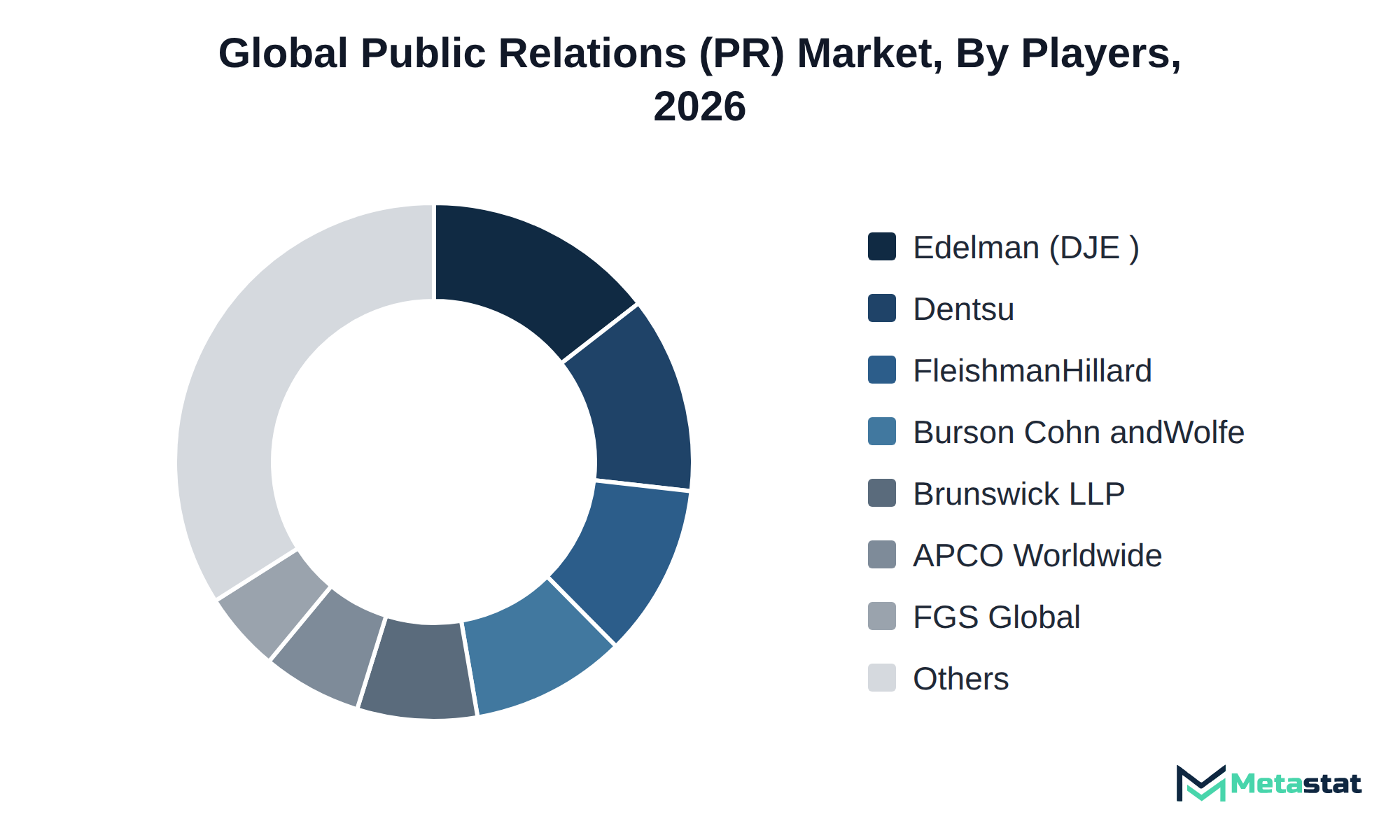
In the Public Relations (PR) market, companies position themselves based on service type, pricing strategies, and customization capabilities. Service offerings include media relations, digital and social media PR, crisis management, and experiential communication. Different segments require tailored approaches, with firms emphasizing their expertise in specific areas to attract clients. For example, Edelman (DJE Holdings) focuses on digital and social media strategies, while Dentsu Group Inc. emphasizes traditional media relations and crisis management. This strategic differentiation helps clients select firms based on unique requirements.
Buyers in the market prioritize factors including pricing, service quality, and company reputation when choosing PR firms. Customization options and the ability to adapt campaigns to specific industries influence decisions. For instance, small and medium enterprises seek cost-effective solutions, whereas large enterprises favor firms like WPP plc that offer extensive resources and proven track records. The competitive dynamics result in a diverse range of offerings, enhancing client options within the Public Relations (PR) market.
Achieving this target relies on several key developments within the Public Relations (PR) market. A significant push towards digital and online media channels is essential, with organizations increasingly allocating budgets to these areas, with projections indicating a rise to USD 102.7 billion by 2033. The growth of small and medium enterprises (SMEs) will be critical, with their PR spending expected to reach USD 84.1 billion in the same timeframe. The healthcare and life sciences sector significantly influences demand, with an anticipated CAGR of 8.4%, enhancing demand for PR services tailored to this industry.
Despite these promising trends, potential risks could hinder market growth. Economic uncertainties or shifts in consumer behavior slow the adoption of PR strategies, particularly in regions heavily reliant on traditional media, including North America and Europe. The balance between these growth factors and risks will shape the market's trajectory through the forecast period.
By Service Type: Media Relations, Digital and Social Media PR, Crisis and Issues Management, Event and Experiential Communication, Content Development and Thought Leadership, Analytics and Insights Services, Investor and Financial Communications, Others
By Channel: Traditional / Earned Media, Digital / Online Media, Influencer and Creator-led Media
By Organisation Size: Large Enterprises, Small and Medium Enterprises
By End-User Industry: Consumer Goods and Retail, BFSI, IT and Telecom, Healthcare and Life Sciences, Government and Public Sector, Entertainment and Media, Travel and Hospitality, Others (Food and Beverage, Automotive and Mobility, Non-Profit and Education, etc.)
The report strategically identifies and profiles the key market players and analyses their core competencies in each sub-segment of the Public Relations (PR) market.
|
Report Attributes |
Details |
|
Study Period |
2021-2033 |
|
Base Year |
2025 |
|
Estimated Year |
2026 |
|
Forecast Period |
2026-2033 |
|
Historical Period |
2021-2025 |
|
Growth Rate |
CAGR 7.5% from 2026 to 2033 |
|
Revenue Unit |
USD billion |
|
Segmentation |
By Service Type, Channel, Organisation Size, End-User Industry, and Region |
|
By Region |
North America (By Service Type, Channel, Organisation Size, End-User Industry, and Country)
|
|
Europe (By Service Type, Channel, Organisation Size, End-User Industry, and Country)
|
|
|
Asia Pacific (By Service Type, Channel, Organisation Size, End-User Industry, and Country)
|
|
|
South America (By Service Type, Channel, Organisation Size, End-User Industry, and Country)
|
|
|
Middle East and Africa (By Service Type, Channel, Organisation Size, End-User Industry, and Country)
|
Find answers to common questions about this report
The Public Relations (PR) market size was valued at USD 104.7 billion in 2025.
The market is projected to grow at a CAGR of 7.5% during the forecast period from 2026 to 2033.
The North America Public Relations (PR) market size is estimated to reach USD 70.6 billion by 2033.
Digital and Social Media PR leads the market with a projected value of USD 46.7 billion by 2033. This segment's growth reflects the increasing importance of online engagement and digital communication strategies.
Key drivers for the Public Relations (PR) market include the increasing utilization of digital and online media, prompting organizations to adopt digital strategies for improved engagement. the rising demand for analytics and insights services supports data-driven decision-making, enhancing communication effectiveness and audience engagement.
North America holds the dominant share of the Public Relations market, with a projected value of USD 70.6 billion in 2033, representing 38 percent of the total market.
Price sensitivity represents a significant restraint, particularly for small and medium enterprises (SMEs) operating with constrained budgets, which delays their investment in essential public relations strategies. Rising talent costs challenge operational profitability for agencies, as competition for skilled professionals drives up salaries and benefits, increasing overall service costs.
Several factors favor adoption in the Public Relations (PR) industry, including the rising demand for digital and social media PR services, which is projected to reach USD 46.7 billion by 2033. The increasing need for effective communication strategies among small and medium enterprises (SMEs) drives this trend, reflecting an anticipated compound annual growth rate (CAGR) of 8.5%.
The Public Relations (PR) market is estimated to reach a valuation of USD 186.8 billion by 2033.
Key players operating in the Public Relations (PR) industry include APCO Worldwide, Edelman (DJE Holdings), Burson Cohn and Wolfe, Dentsu Group Inc, FleishmanHillard, Omnicom Group Inc, and Publicis Groupe SA.
The analysts below cover Professional Services research at Metastat Insights.
LEAD ANALYST
Utkarsh Khirodkar is a Lead Market Research Analyst at MetaStat Insight, specializing in market intelligence, technology sector assessments, and competitive strategy.

PRINCIPAL CONSULTANT - ENTERPRISE AI & EMERGING TECHNOLOGIES
Banking & Finance · Electronics and Semiconductor · Energy and Power · Healthcare IT · Information & Technology · Professional Services
Vijay Gunti is a Principal Consultant at MetaStat Insight, bringing over two decades of experience across enterprise digital transformation, technology strategy, and intelligent systems.

PRINCIPAL CONSULTANT - QUALITY SYSTEMS & COMPLIANCE
Electronics and Semiconductor · Machinery & Equipment · Professional Services
Omkar Phadtare is an Industry Consultant at MetaStat Insight, specializing in quality systems, regulatory compliance, and standards benchmarking to drive data-driven market intelligence and strategic industry research.

LEAD CONSULTANT - COMMUNICATION, TELECOM, AND IT
Electronics and Semiconductor · Information & Technology · Machinery & Equipment · Professional Services
Ravindra Sathe Consultants for Communication, Telecom, and IT at MetaStat Insight. He leads the firm's industry research initiatives across telecommunications infrastructure, digital connectivity, enterprise networking, and emerging information technology domains.
Evaluating secondary resin quality across post-consumer packaging streams requires reliable technical segmentation. MetaStat Insight delivered an objective assessment that distinguished between extrusion-grade flake pricing and optical sorting throughput limitations across Western Europe. The competitive positioning breakdown for licensed depolymerization technology providers answered several questions during our feedstock feasibility audit. Their team clarified regional trade restrictions on mixed plastic scrap quickly when our team submitted follow-up requests.
Evaluating sovereign cloud deployments for core banking platforms demands a clear view of data residency regulations and migration exit strategies. MetaStat Insight delivered an exhaustive review of regional latency tolerances, mainframe decommission milestones, and third-party vendor concentration risk. The regulatory compliance mapping across European and Asian financial jurisdictions gave our team a dependable baseline for multi-cloud infrastructure discussions.
Replacing petrochemical surfactants with bio-based alternatives requires realistic timelines on industrial precision fermentation scaling. The market research broke down commercialization timelines, feedstock sugar price sensitivities, and regional cosmetic ingredient regulatory approvals in Europe and East Asia. That supplier readiness mapping gave our formulations team reliable context when comparing renewable chemical sourcing roadmaps.
Explore related market intelligence reports worth reading alongside this one.