
LEAD ANALYST
Utkarsh Khirodkar is a Lead Market Research Analyst at MetaStat Insight, specializing in market intelligence, technology sector assessments, and competitive strategy.

Global AI Professional Services Market Size, Share, By Service Type (AI Strategy and Consulting, Custom AI Solution Development, AI Systems Integration and Implementation, Generative AI Services, AI Managed Services, AI Governance and Responsible AI Services), By AI Technology (Machine Learning and Deep Learning, Natural Language Processing (NLP), Generative Artificial Intelligence, Computer Vision, Predictive Analytics, Intelligent and Agentic AI), By Deployment Model (Cloud-Based Deployment, On-Premises Deployment, Hybrid Deployment), By Application (Customer Service and Conversational AI, Enterprise Process and Workflow Automation, Document Intelligence and Knowledge Management, Business Intelligence and Decision Support, Sales and Marketing Optimization, Software Development and IT Operations, Industry-Specific AI Applications), Industry Analysis, Growth, Trends, and Forecast, 2026-2033
Report ID
MSI-5822
Published
November, 2026
Pages
259 Pages
Format
Historical
Base year
Forecast
Forecast period
Report Details
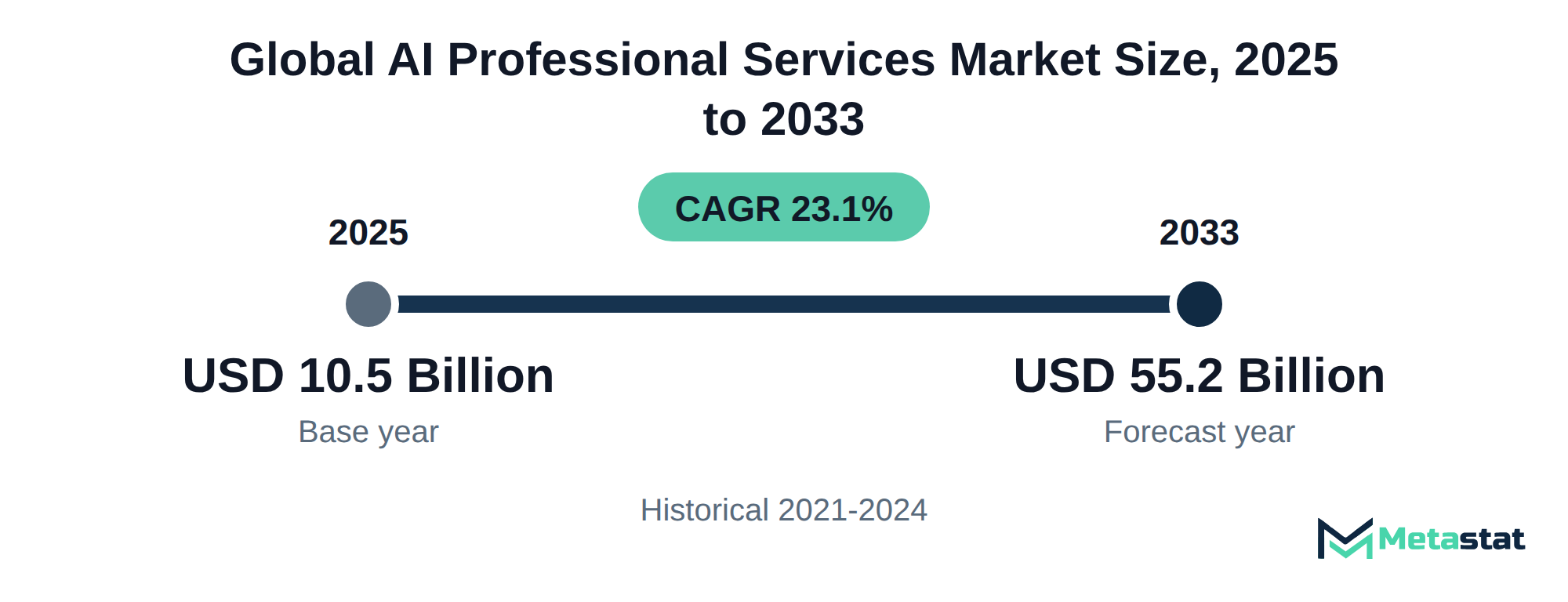
Market Valuation: Valued at $10.5 Billion in 2025, projected to reach $55.2 Billion by 2033 at a 23.1% CAGR.
Dominant Segment: Custom AI Solution Development leads the market, driven by the increasing demand for tailored services that meet specific business needs, projected to reach USD 11.1 billion by 2033.
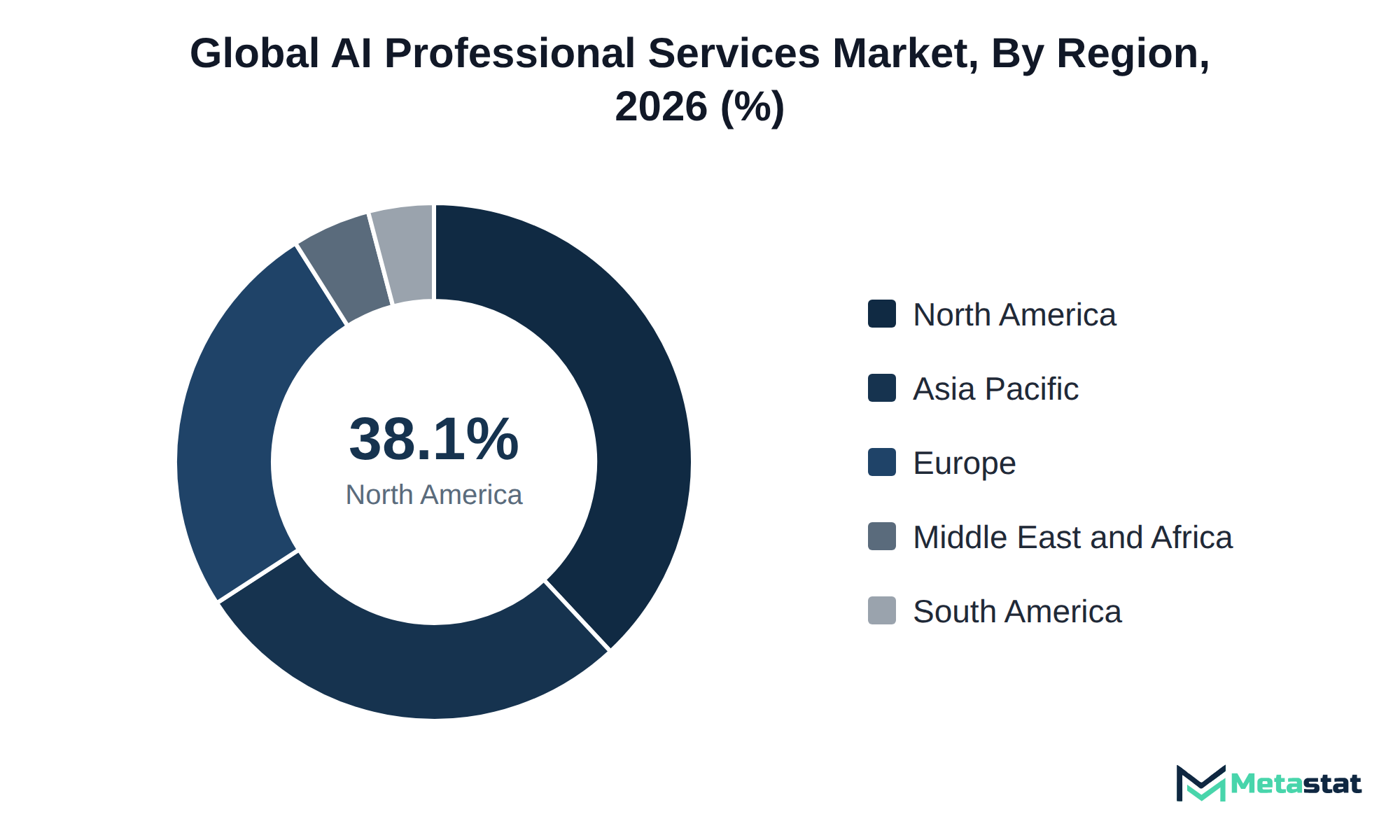
Geographic Lead: North America holds the largest market share at 38.1% in 2025, with the US expected to continue leading due to high levels of technological adoption and investment in digital transformation.
What's Inside: The report provides a comprehensive analysis of the AI Professional Services market, detailing service types, technologies, deployment models, and applications, along with competitive coverage and growth forecasts.
Rising Demand for Custom Solutions: The market is witnessing a notable increase in demand for Custom AI Development, with a CAGR of 22.4%, as organizations seek bespoke solutions to enhance operational efficiency.
AI Governance and Responsible AI: The focus on AI governance and responsible practices is driving the growth of AI Strategy and Consulting services, projected to expand from USD 2.8 billion in 2026 to USD 10.7 billion by 2033.
Choose Your License
Global AI Professional Services Market
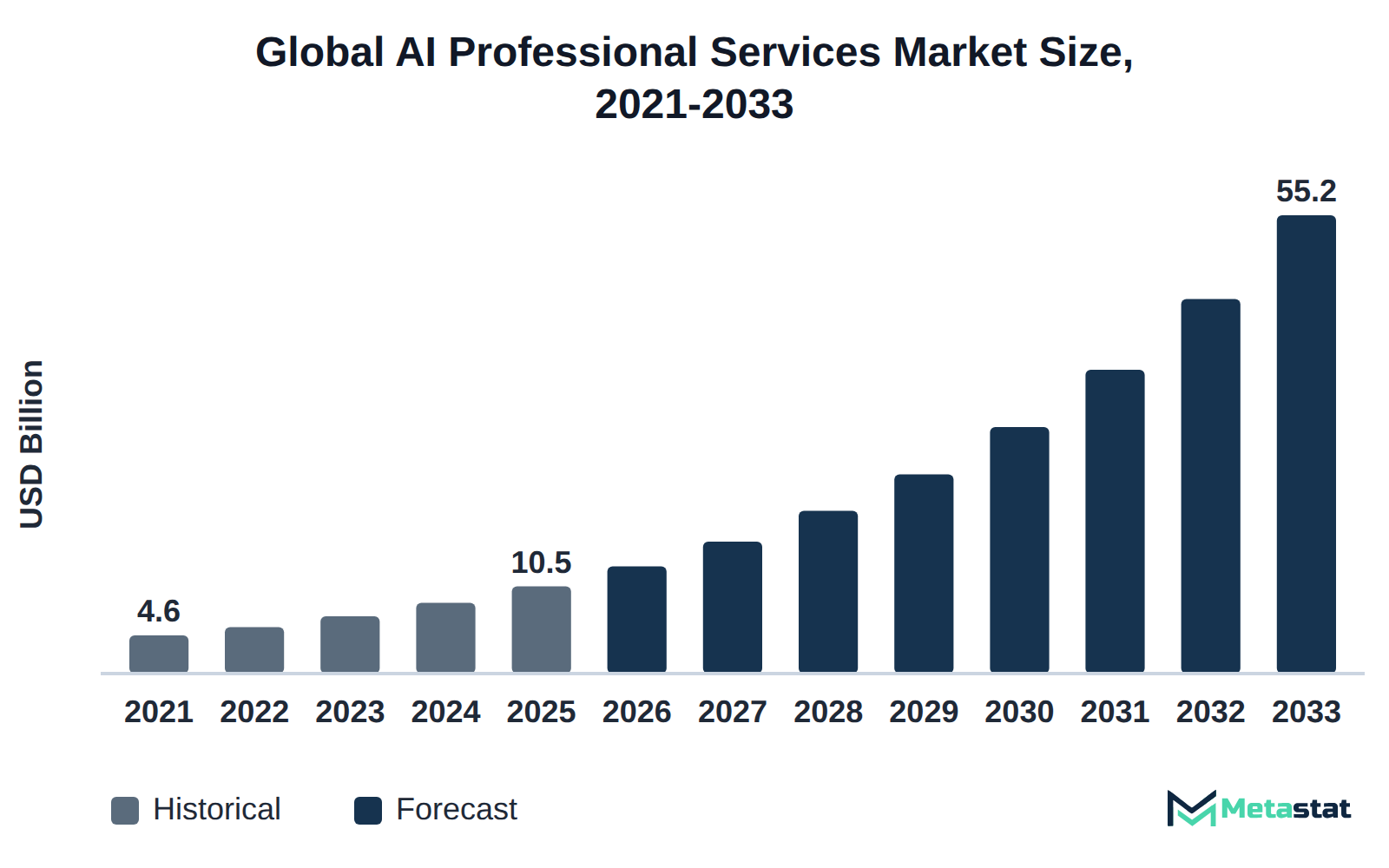
The global AI Professional Services market was valued at USD 10.5 billion in 2025 and is projected to reach USD 55.2 billion by 2033, growing at a CAGR of 23.1% over the forecast period.
The AI Professional Services market covers services that support the integration and application of artificial intelligence across industries. Buyers invest in these services to leverage advanced technologies that optimize processes, improve decision-making capabilities, and drive innovation. Key buyer groups include enterprises seeking to implement AI solutions for efficiency, organizations focusing on customer engagement through AI-driven insights, and firms aiming to gain competitive advantages in their respective sectors.
Growth in the market is primarily driven by the increasing demand for customized AI solutions that address specific business needs. North America holds 38.1% of the market in 2025, with the US leading in 2026. The segment of Custom AI Solution Development stands out in terms of value, reflecting a strong trend towards tailored applications that meet unique operational challenges. This focus on personalization supports broader adoption across various sectors, including retail, healthcare, and finance.
In addition to North America, regions including Europe and Asia Pacific capture significant shares of the market, with 25.2% and 27.8%, respectively. The pursuit of advanced analytics and automation technologies drives investment in these regions. Enterprises seek to enhance efficiency and productivity, further boosting the need for professional services that facilitate AI integration into existing infrastructures.
The AI Professional Services market features consulting, development, and integration services that facilitate the adoption of artificial intelligence technologies. Buyers invest in these services to achieve operational efficiency, enhance decision-making capabilities, and drive innovation within their organizations. Increased demand stems from the growing need for businesses to leverage AI for competitive advantage, particularly in sectors including finance, healthcare, and retail.
Growth in the market is fueled by advancements in AI technologies and their application across various industries. Among the segments, Custom AI Solution Development holds the highest value, reflecting significant investments by organizations seeking tailored solutions to meet specific operational requirements. This regional dominance indicates a robust demand for AI services, driven by high levels of technological adoption and investment in digital transformation initiatives.
Organizations increasingly recognize the value of AI, and competition intensifies among service providers. The emergence of new technologies, including generative artificial intelligence, supports the expansion of service offerings and creates new opportunities for growth. The AI Professional Services market is poised for significant development, driven by the necessity for businesses to integrate advanced AI capabilities into their operations.
Generative AI significantly enhances enterprise consulting and implementation strategies, enabling organizations to utilize advanced capabilities to achieve operational efficiency. This technology's adoption is projected to grow at a compound annual growth rate (CAGR) of 27.7%. Organizations integrating generative AI into their consulting practices streamline processes, optimize resource allocation, and develop innovative solutions that address diverse business challenges.
Agentic AI complements this shift by introducing dynamic decision-making capabilities, facilitating more agile consulting environments. These technologies allow consultants to provide tailored solutions, effectively using data insights to drive strategic initiatives. Organizations increasingly prioritize digital transformation, and the demand for generative and agentic AI solutions within the AI Professional Services market is rising, compelling firms to adapt their strategies to stay competitive.
Integrating these advanced technologies reshapes consulting methodologies and enhances client engagement, which improves outcomes and satisfaction. Embracing generative AI and agentic AI helps consulting firms meet changing client needs while strengthening operational resilience.
Custom AI solution development exhibits a notable increase in demand within the AI Professional Services market, influenced by the necessity for tailored services that meet specific business needs. This trend is supported by a projected value of USD 11.1 billion for this segment by 2033. Clients increasingly recognize the importance of bespoke AI solutions that align with their strategic objectives, prompting an evolution in purchasing behaviors.
Contract models shape buyer experiences in the AI Professional Services market. Fixed-price contracts are favored for projects with clearly defined scopes, providing predictability in budgeting. Conversely, time-and-materials contracts cater to dynamic projects requiring flexibility. These arrangements allow clients to adjust project parameters in response to changing needs, ensuring optimal outcomes. Service providers often deploy tiered pricing structures, which align costs with the complexity and scale of services offered. This approach helps clients manage expenses while accessing advanced AI capabilities. The growing demand for custom solutions leads to competitive negotiations surrounding pricing models, compelling providers to deliver transparent, value-driven offers.
The shift toward tailored services and flexible contract models significantly impacts market dynamics. Companies investing in custom AI solutions benefit from improved operational efficiencies and enhanced decision-making capabilities, ultimately driving growth. Successful implementation of these models creates long-term partnerships between clients and service providers and reinforces the value of adaptability.
Concerns surrounding AI governance and responsible AI practices significantly influence service adoption within the AI Professional Services market. Organizations increasingly prioritize compliance with regulations and ethical standards, driven by the need to mitigate reputational risks and ensure accountability in AI deployments. This emphasis on governance is reflected in the projected growth of AI Strategy and Consulting services, which expand from USD 2.8 billion in 2026 to USD 10.7 billion by 2033, reflecting a CAGR of 21%.
Enterprises are adopting AI governance frameworks that incorporate responsible AI principles, building trust among stakeholders and customers. This strategic focus enhances decision-making processes and promotes transparency in AI operations. For instance, the demand for AI Systems Integration and Implementation services is growing alongside the emphasis on security and compliance, with an anticipated maturity in service offerings that align with evolving enterprise cybersecurity requirements. Organizations strengthening their AI capabilities drive heightened competition and innovation, resulting in increased investment in comprehensive governance solutions.
The financial services industry is a key driver of demand for AI consulting and professional services. This sector increasingly seeks advanced technologies to enhance operational efficiency, improve risk management, and deliver personalized customer experiences. The integration of AI technologies, particularly in areas including Machine Learning and Deep Learning, enables financial institutions to analyze vast amounts of data, thus supporting data-driven decision-making. The segment for Machine Learning and Deep Learning is projected to reach USD 13.3 billion by 2033, reflecting a compound annual growth rate (CAGR) of 20.8% from 2026.
Healthcare significantly influences the demand for AI professional services. Healthcare organizations leverage AI for applications like predictive analytics in patient care, streamlining administrative processes, and enhancing diagnostic capabilities. The sector's focus on operational efficiency and improved patient outcomes drives investments in AI solutions, ensuring sustained growth in the market. These advancements in healthcare improve service delivery and reduce operational costs, creating a favorable environment for AI consulting providers.
Retail is another industry propelling demand for AI consulting. Retailers increasingly adopt AI to optimize supply chain management, enhance customer engagement, and implement dynamic pricing strategies. By applying AI-powered analytics, retailers gain insights into consumer behavior, allowing for personalized marketing efforts. This trend supports growth in the AI Professional Services market, highlighting the importance of tailored AI solutions in meeting retail challenges.
Growing acceptance of artificial intelligence across industries drives significant investment in AI technologies. Enterprises increasingly recognize the value of AI in enhancing operational efficiency and improving decision-making processes. This shift in perspective has led to a broader adoption of AI Professional Services, with organizations actively seeking expertise in areas including AI strategy, custom solution development, and systems integration. This trend indicates a strategic pivot among buyers towards leveraging AI capabilities, ultimately boosting overall market growth and expanding service requirements.
Consumer expectations for personalized experiences further fuel this investment, compelling businesses to enhance their customer engagement strategies. Companies focused on customer service and conversational AI are projected to see revenues grow significantly, reflecting increasing consumer demand for tailored interactions. This dynamic environment positions the market for substantial growth, providing opportunities for service providers to expand their offerings and reach a wider customer base.
Increased emphasis on AI governance and responsible practicesRapid advancements in AI technologies fuel significant demand for professional services. Machine learning and deep learning innovations enhance capabilities, enabling organizations to implement more sophisticated solutions. Clients across various sectors increasingly seek expertise in AI strategy and consulting to remain competitive. The surge in cloud-based deployment models further accelerates this trend, allowing organizations to adopt flexible and scalable solutions through cloud services without heavy upfront investments. Service providers expand their offerings to include AI systems integration and implementation, which ensures effective adoption of new technologies. This focus on integrating AI solutions leads to a higher demand for skilled professionals who navigate the complexities of deployment. The competitive landscape of the AI Professional Services market continuously evolves, reflecting a pressing need for organizations to adapt to technological changes to achieve their business objectives.
The growth of generative AI services exemplifies this shift, pushing firms to explore new applications of AI. Emerging technologies and changing client needs drive growth in the market.
High costs associated with AI Professional Services inhibit adoption among small and medium-sized enterprises (SMEs). Many SMEs face budget constraints that restrict their ability to invest in advanced AI solutions and consulting services. This financial limitation results in slower uptake of available services, impacting their competitiveness in the market. Reluctance to allocate substantial resources toward AI initiatives leads to smaller order sizes, limiting the growth potential for service providers. The perception of AI services as expensive contributes to lower awareness and understanding of their long-term benefits. Market players targeting SMEs experience challenges in securing contracts, primarily due to pricing pressures. Competitive pricing strategies become essential to enhance accessibility for these buyers. The combination of budget constraints and price sensitivity poses significant challenges for service providers aiming to penetrate this segment effectively.
Increasing talent costs represent a significant challenge for suppliers in the AI Professional Services market. Hiring skilled professionals capable of delivering high-quality services necessitates substantial investment. This challenge affects profit margins, particularly as competition intensifies for top-tier talent. Suppliers are responding by enhancing their recruitment strategies, offering competitive salaries, and investing in training programs to develop internal expertise. Firms are exploring partnerships with academic institutions to source new talent and engage in talent-sharing arrangements with other organizations. These approaches aim to mitigate the impact of rising costs while maintaining service quality.
Innovative service delivery methods emerge in response to talent pressures. Automation of routine tasks through AI solutions allows professionals to focus on more complex and higher-value activities. By streamlining operations, suppliers manage costs more effectively and enhance overall productivity. This adaptation enables the market to sustain growth amid challenging economic conditions, balancing the demand for high-quality AI services with the realities of talent acquisition costs.
AI strategy and consulting shows a compound annual growth rate (CAGR) of 21%, driven by rising demand for strategic guidance in AI implementation. Companies across various industries seek expertise to optimize their AI investments and navigate the complexities of technology integration. The ability to tailor solutions to specific business needs enhances the appeal of these services. Organizations prioritizing effective AI strategies experience improved operational efficiency and competitive advantage. The market's growth trajectory highlights the importance of consulting services that align with organizations' digital transformation initiatives. While companies continue to invest in AI technologies, demand for strategic consulting plays a critical role in shaping successful AI adoption.
The Global AI Professional Services market is segmented based on Service Type, AI Technology, Deployment Model, and Application.
The AI Strategy and Consulting segment helps organizations develop strategic frameworks to adopt and implement AI technologies effectively. Companies across various sectors, including finance, healthcare, and retail, engage these services to navigate the complexities of AI integration. Demand is driven by the increasing need for organizations to optimize operations and improve decision-making processes. Compared to other segments, this segment experiences a moderate growth rate, slower than Custom AI Solution Development which achieves a CAGR of 22.4%. Factors influencing this segment include the rising need for specialized expertise and evolving regulatory frameworks, which necessitate comprehensive consulting services tailored to specific business needs.
Custom AI solution development is estimated to reach USD 11.1 billion by 2033, at a CAGR of 22.4% during the forecast period. This segment focuses on creating tailored AI applications to meet specific business requirements, allowing organizations across various sectors to enhance operational efficiency and improve customer experiences. Industries including finance, healthcare, and retail drive demand for custom solutions, seeking innovative approaches to leverage AI technologies effectively. The segment stands out with its significant growth rate compared to others, driven by rising investments in AI capabilities and a strong inclination towards personalized services. The increasing complexity of business processes necessitates custom solutions that traditional off-the-shelf software cannot address adequately. This trend highlights the critical role of custom AI development in the broader AI Professional Services market.
AI Systems Integration and Implementation segment is expected to reach USD 10.9 billion by 2033. This segment focuses on integrating AI technologies into existing systems and processes, primarily serving enterprises seeking to enhance operational efficiency and innovation. The significant push towards automation and data-driven decision-making drives demand from various industries, particularly in finance, healthcare, and manufacturing. Companies in these sectors prioritize effective integration of AI solutions with their operations to remain competitive. Unlike segments including AI Strategy and Consulting, which is projected to grow at a CAGR of 21%, the Systems Integration and Implementation segment shows a more measured growth rate, influenced by the technical challenges of implementation. The complexities of integrating new technologies into established systems create barriers, requiring skilled professionals to navigate these transitions effectively.
Generative AI Services segment is projected to grow at a CAGR of 27.7% during the forecast period. This segment focuses on the development and implementation of AI systems that generate content, automate tasks, and create insights based on data patterns. Businesses across various sectors, including creative industries and customer engagement, leverage these services to enhance operations and improve user experiences. The increasing demand for personalized content and automation in workflows drives this segment's growth. Differentiating from other service types, Generative AI Services experiences faster growth rates compared to AI Strategy and Consulting, which is projected to grow at a CAGR of 21%. The unique capabilities of generative models attract a diverse buyer base, ranging from SMEs to large enterprises, eager to capitalize on innovative AI solutions. The market reflects a strong trajectory, driven by the evolving needs of businesses seeking advanced AI applications.
AI Managed Services encompass a range of offerings designed to assist organizations in managing and optimizing their AI systems over time. These services appeal to a diverse set of industries, enabling enterprise customers to maintain AI solutions that align with evolving business needs. Rapid technological change presents a driving force behind this segment, with organizations requiring ongoing support for their AI systems to utilize their full potential effectively. The increasing complexity of AI technologies necessitates a focus on maintenance and management, distinguishing this segment from others with higher growth rates. Comparatively, AI Managed Services exhibit a slower growth trajectory, reflecting the maturity of existing implementations and the ongoing support required for effective AI governance and integration. This segment serves organizations that prioritize long-term AI integration and operational efficiency.
AI Governance and Responsible AI Services focus on ensuring that artificial intelligence applications adhere to ethical standards and regulatory requirements. Organizations apply these services to develop frameworks that govern AI use, promoting accountability and transparency in AI-driven decisions. Demand for such services stems from heightened scrutiny over AI applications, particularly regarding bias, privacy, and compliance. The increasing emphasis on regulatory adherence across various sectors drives this demand, compelling enterprises to adopt more rigorous governance measures. Compared to other segments, this sub-segment experiences slower growth, driven by the complexities involved in creating responsible AI frameworks. Enterprises in highly regulated industries, including finance and healthcare, particularly benefit from these services, given their stringent compliance requirements. This focus on governance differs from more technical segments, including Custom AI Solution Development, which emphasize rapid deployment and technological advancement.
This segment enables organizations to analyze large datasets and derive insights, which enhances decision-making capabilities across various industries, including finance, healthcare, and manufacturing. The increasing emphasis on data-driven strategies fuels demand for machine learning solutions, driven by pressures for efficiency and competitive advantage. Compared to other segments, including Natural Language Processing, which is projected to grow at a CAGR of 21.4%, the Machine Learning and Deep Learning segment experiences a strong growth trajectory while maintaining a lower entry price point for various applications, appealing to a broader range of buyers in the market.
Natural Language Processing (NLP) segment is estimated to reach USD 8.9 billion by 2033, at a CAGR of 21.4% during the forecast period. This segment focuses on facilitating human-computer interaction through language understanding and generation. Industries including customer service, healthcare, and finance increasingly adopt NLP for chatbots, sentiment analysis, and data extraction. Rapid advancements in machine learning and deep learning technologies drive this growth, enhancing the capabilities and accuracy of NLP applications. Compared to other segments, NLP demonstrates significant growth, outpacing segments including AI Systems Integration and Implementation, which is expected to reach USD 10.9 billion by 2033. The focus on improving user experiences and automating processes positions NLP as a critical component in the evolving environment of the AI Professional Services market.
Generative Artificial Intelligence segment is expected to reach USD 12.8 billion by 2033. This segment focuses on creating new content, including text, images, and audio, through advanced algorithms. Organizations in sectors like entertainment, marketing, and software development increasingly leverage these services to enhance user experiences and optimize workflows. The notable growth rate of 27.7% CAGR highlights its rapid expansion compared to other segments, driven primarily by the demand for innovative content generation solutions. In contrast to Machine Learning and Deep Learning, which have a CAGR of 20.8%, the generative approach attracts different buyer profiles, emphasizing creativity and engagement. This transition reflects a broader trend in the AI Professional Services market, where businesses seek to differentiate themselves through enhanced customer interactions and unique offerings.
Computer Vision segment is projected to grow at a CAGR of 21.6% during the forecast period. This technology is applied for tasks including image recognition, object detection, and facial recognition, serving industries like healthcare, automotive, and security. The demand for advanced imaging solutions drives growth, particularly in sectors that rely on visual inspection or analysis. Compared to other AI technologies, Computer Vision sees a higher adoption rate due to its ability to enhance operational efficiency and accuracy. This segment differentiates itself through a focus on visual data, making it crucial for businesses aiming to leverage visual insights for decision-making. The combination of increasing investments in automation and technological advancements fuels further expansion in the market.
Predictive analytics involves the use of statistical algorithms and machine learning techniques to identify the likelihood of future outcomes based on historical data. Organizations apply this segment to enhance decision-making processes and operational efficiency. Demand for predictive analytics is driven by the increasing need for businesses to leverage data for strategic planning and operational improvements. This segment attracts larger enterprises seeking advanced analytical capabilities, distinguishing it from other segments that cater to a broader range of buyers. In contrast to generative AI services, which exhibit a high growth rate, predictive analytics typically experiences steadier growth, appealing to companies focused on risk management and forecasting. The market supports these developments, with businesses investing in technologies that enable predictive models to deliver insights in real-time.
Intelligent and Agentic AI encompasses systems, including AI agents, designed to perform tasks autonomously and interact intelligently with users. Organizations across various sectors apply this technology for enhancing customer interactions and improving operational efficiencies. Demand for intelligent and agentic AI is rising due to the increasing need for automation in customer service and business operations, which helps companies operate more efficiently. This segment differentiates itself from others through its focus on advanced user interaction capabilities. While traditional AI applications often concentrate on specific functions, intelligent and agentic AI emphasizes integration into existing workflows, promoting enhanced decision-making processes. This approach attracts businesses seeking innovative solutions that stand out in competitive environments.
Cloud-Based Deployment segment is valued at USD 6.9 billion in 2026 and is projected to reach USD 30.7 billion by 2033, at a CAGR of 23.9% during the forecast period. This deployment model is widely used for applications that require flexibility, scalability, and rapid integration with various services. Organizations across multiple sectors, including finance, healthcare, and retail, adopt cloud-based deployment for its capacity to enhance operational efficiency and support innovative solutions. Key drivers influencing this segment include increasing demand for cost-effective IT solutions and the push for digital transformation. The segment distinguishes itself from on-premises deployment through its faster growth rate, indicated by its CAGR of 23.9%, compared to the more gradual expansion of other deployment options in the market. The continued shift towards cloud solutions makes this segment central to AI Professional Services.
On-Premises Deployment segment is estimated to reach USD 12.8 billion by 2033, at a CAGR of 20.9% during the forecast period. This deployment model generally involves the installation and management of AI systems on a company’s own servers and infrastructure. Enterprises prioritize this model for enhanced control over data security and compliance, which is particularly relevant for highly regulated industries including finance and healthcare. The segment benefits from organizations seeking customized solutions tailored to their specific environments, with substantial investment driven by greater data privacy. Compared to cloud-based deployment, which is projected to grow at a CAGR of 23.9%, on-premises deployment displays slower growth but caters to a different buyer demographic with distinct preferences regarding data management and infrastructure control.
Hybrid Deployment segment is expected to reach USD 11.7 billion by 2033. This deployment model integrates cloud and on-premises solutions, providing organizations with flexibility in their AI implementations. Enterprises adopt hybrid deployment when seeking to balance data security with the scalability of cloud resources. Demand in this segment is influenced by the growing need for customized solutions that adapt to varying business environments. Compared to other deployment models, hybrid deployment experiences stronger growth, driven by an anticipated CAGR of 20.9%, reflecting a shift in preferences among organizations looking for adaptable infrastructure. This model differs from purely cloud-based or on-premises options, offering unique advantages in managing sensitive data while harnessing the cloud's computational power.
Customer Service and Conversational AI segment is valued at USD 2.4 billion in 2026 and is projected to reach USD 10.9 billion by 2033, at a CAGR of 24.2% during the forecast period. Organizations employ this segment to enhance customer interactions and streamline service delivery through automated response systems and virtual assistants. The demand for these solutions is driven by the increasing need for efficient customer engagement tools across various industries, particularly in retail and telecommunications. Compared to other segments, this category demonstrates faster growth due to the rapid adoption of AI technologies that improve customer experiences. Distinct from AI Systems Integration and Implementation, which maintains a CAGR of 21%, Customer Service and Conversational AI solutions provide immediate, scalable support, representing a significant opportunity for providers in the AI Professional Services market.
Enterprise Process and Workflow Automation segment is estimated to reach USD 10 billion by 2033, at a CAGR of 23.8% during the forecast period. This segment focuses on streamlining organizational processes and enhancing productivity through automation technologies, serving industries including manufacturing, finance, and healthcare. Increased demand for efficiency drives investment in this segment, with companies seeking to reduce operational costs and improve service delivery. The segment stands out due to its significant growth rate compared to other application segments, reflecting a greater emphasis on digital transformation. The ongoing shift towards remote and hybrid work environments increases adoption, with organizations recognizing the value of automating routine tasks to free up resources for more strategic initiatives. The AI Professional Services market continues to evolve, with this segment enhancing operational capabilities for various organizations.
Document Intelligence and Knowledge Management segment is expected to reach USD 7.2 billion by 2033. This segment involves the use of AI technologies to enhance the organization, retrieval, and management of knowledge within enterprises. Organizations leverage these services to improve operational efficiency and decision-making processes, particularly in sectors including finance, healthcare, and legal services. The growing emphasis on data-driven decision-making fuels demand, supported by increasing volumes of unstructured data that require efficient processing and analysis. Compared to other segments, Document Intelligence and Knowledge Management exhibits a higher growth rate, with a CAGR of 24.2%, driven by the urgent requirement for effective knowledge management solutions. This growth outpaces many other segments within the AI Professional Services market, highlighting its significance in contemporary business environments.
Business Intelligence and Decision Support segment is projected to grow at a CAGR of 21.8% during the forecast period. This segment enables organizations to make informed decisions by analyzing data and generating insights. Companies across various sectors use these services to enhance operational efficiency and strategic planning. Key drivers include the increasing demand for data-driven decision-making and the growing complexity of business environments. Organizations are adopting these services to gain a competitive edge and optimize their processes. Compared to other segments, including Enterprise Process and Workflow Automation, which grows at a CAGR of 23.8%, Business Intelligence and Decision Support offers a more moderate growth trajectory. Companies focusing on this segment recognize its significance in transforming raw data into meaningful information, driving overall market growth.
Sales and Marketing Optimization leverages advanced analytical techniques and AI technologies to enhance marketing strategies and improve sales performance. Companies apply this segment to refine customer targeting, optimize marketing campaigns, and enhance overall customer engagement. Increased competition in various sectors drives demand for these capabilities, allowing businesses to gain insights on consumer behavior and preferences. This segment stands out from others due to its focus on delivering immediate, relevant insights that support marketing initiatives, differentiating it from broader applications including Document Intelligence and Knowledge Management. The emphasis on data-driven decision-making fuels client interest, particularly among companies aiming to maximize their return on marketing investments. Enhanced personalization and predictive analytics form key components that shape this segment's trajectory, making it vital for organizations striving to maintain a competitive edge in the AI Professional Services market.
Software Development and IT Operations involves the integration of AI technologies to enhance application development and streamline IT operations. Organizations leverage these services to improve efficiency, reduce errors, and accelerate project timelines. This segment attracts businesses focused on digital transformation, including tech firms and enterprises aiming to enhance their software capabilities. Demand is driven by the increasing complexity of software applications and the growing need for automation in IT processes. Compared to other segments, this area faces significant competition from traditional IT service providers, which influences pricing strategies. While other segments experience significant growth rates, Software Development and IT Operations sees a moderate increase due to fluctuating investment in IT infrastructure. Ongoing advancements in AI are expected to stimulate further interest and investment in these services, contributing to overall market expansion.
Industry-Specific AI Applications focus on tailoring artificial intelligence solutions to meet the unique needs of various industries, including healthcare, finance, and manufacturing. These applications enable organizations to enhance operational efficiency, improve decision-making, and deliver personalized customer experiences. Demand stems from the increasing emphasis on digital transformation and the pursuit of competitive advantages through technology. Specific sectors benefit from these tailored solutions, creating a differentiated market landscape. Compared to other segments, including Customer Service and Conversational AI, which experience rapid growth, Industry-Specific AI Applications exhibit steady adoption trends. The specialized nature of these applications necessitates a deeper understanding of industry-specific challenges, which influences pricing and development strategies, further shaping competitive dynamics in the AI Professional Services market.
Based on geography, the Global AI Professional Services market is divided into North America, Europe, Asia-Pacific, South America, Middle East, and Africa.
Demand for AI Professional Services in North America stems from a strong technology sector, with significant investments in artificial intelligence across various industries. The market benefits from the high concentration of major players, including the United States, Canada, and Mexico, which drive technological advancements and innovation. Increasing reliance on cloud-based solutions enhances service delivery, prompting businesses to adopt AI for efficiency and competitiveness. North America is projected to reach USD 19.7 billion by the end of 2033. Regulatory support for AI development drives growth, promoting investments in infrastructure and research. The market experiences strong interest from sectors including finance, healthcare, and retail, which prioritize AI-driven strategies to optimize operations and improve customer engagement.
Europe accounts for 25.2% of the AI Professional Services market in 2025. The region's demand arises from industries including finance, healthcare, and retail, which increasingly pursue advanced AI solutions to enhance operational efficiency and customer engagement. Countries like Germany and the UK invest heavily in AI strategy and consulting services to modernize their infrastructure. Regulatory frameworks in Europe focus on data privacy and ethical AI use, influencing how companies implement solutions. The emphasis on responsible AI creates a competitive environment, encouraging investments in generative AI services and custom AI solution development. Interest in AI systems integration and implementation further supports the market's expansion across various sectors.
The Asia Pacific region represents a significant portion of the AI Professional Services market, with a share of 27.8% in 2025. Rapid technological advancement drives demand, particularly in countries including China and India, where industries focus on digital transformation and automation. The presence of a large, tech-savvy population in these countries supports the growth of AI solutions across various sectors, including finance, healthcare, and manufacturing. Investment in infrastructure, particularly in cloud technologies and machine learning capabilities, further enhances market potential. Japan's commitment to AI-driven initiatives contributes to competitive advantages in automation and robotics. The region's unique characteristics, including varying levels of regulatory frameworks and economic conditions, influence deployment strategies, creating diverse opportunities within the market.
Brazil and Argentina drive growth in the AI Professional Services market, focusing on sectors including finance, healthcare, and manufacturing. The region's digital transformation initiatives support increased investment in AI technologies, enhancing operational efficiencies and customer experiences. Infrastructural challenges persist, with varying levels of technology adoption across countries, impacting service accessibility and integration. The share of the global market in 2025 stands at 4.1%, highlighting the potential for expansion. Efforts to strengthen academic and industrial collaborations aim to improve innovation and develop a skilled workforce. This approach enhances local capabilities and attracts international players, further enriching the market landscape.
Growth in the AI Professional Services market within the Middle East and Africa derives from increasing investments in technology and digital transformation initiatives across various sectors. Countries including Saudi Arabia and the UAE actively pursue diversification strategies, shifting from oil-dependent economies to knowledge-driven growth. South Africa has a significant presence with its established technology infrastructure and skilled workforce, attracting substantial investments in AI. The market share for this region is anticipated to reach 4.9% in 2025, indicating a steady increase in demand for AI solutions. Companies focus on tailored solutions that enhance customer experience and streamline operational efficiency, aligning strategies with regional economic goals.
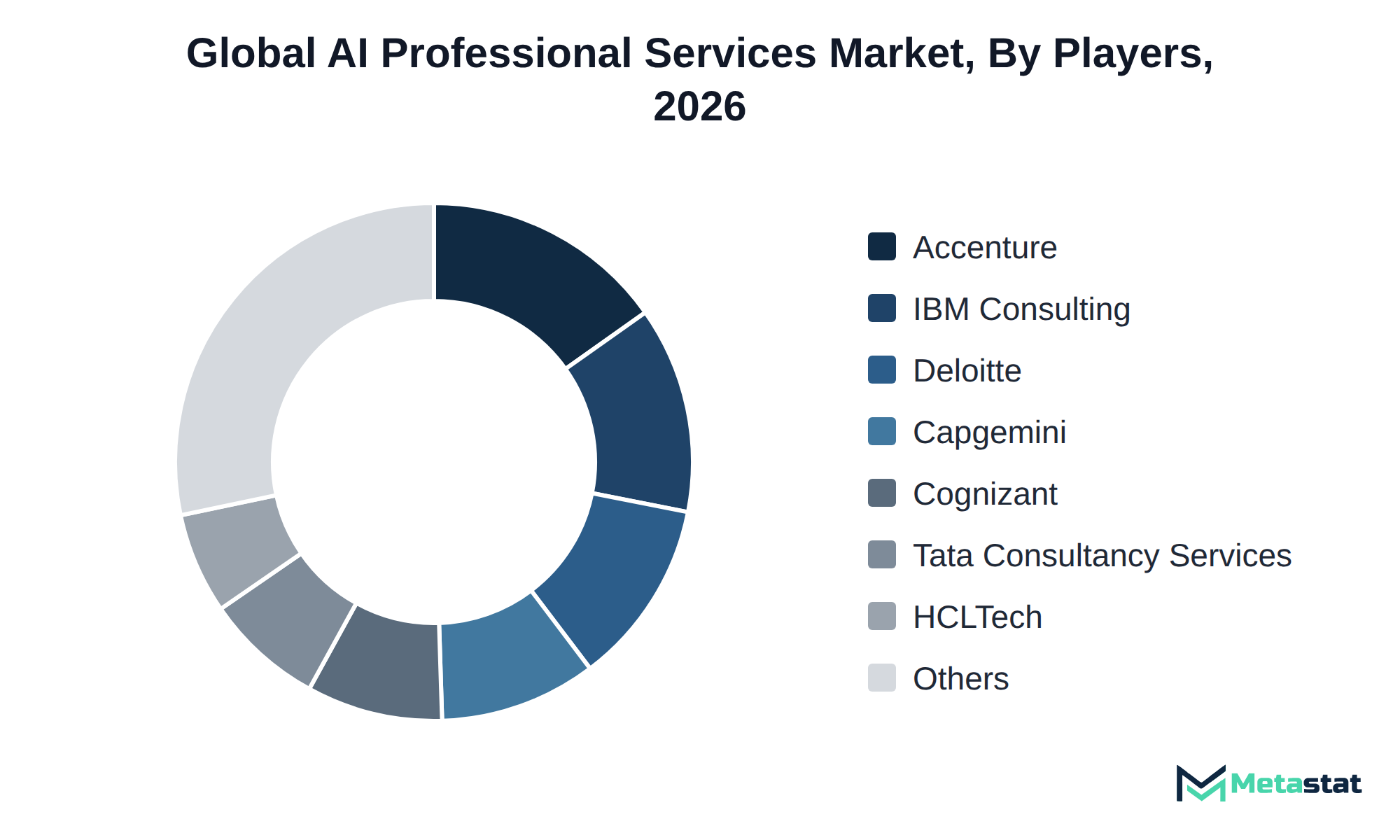
The AI Professional Services market divides into several key segments, with companies competing across service types including AI Strategy and Consulting, Custom AI Solution Development, and Generative AI Services. Buyers consider factors like customization, service quality, and the robustness of the provider's ecosystem when selecting a partner.
Accenture focuses on AI Strategy and Consulting, leveraging its strong brand to attract clients seeking comprehensive solutions. Deloitte emphasizes Custom AI Solution Development and AI Systems Integration, providing tailored services that address specific client needs. IBM Consulting stands out with its emphasis on Generative AI Services and machine learning capabilities, appealing to organizations aiming for advanced technological applications.
The competitive environment includes players such as Capgemini, Cognizant, and Tata Consultancy Services, each with distinct skills and expertise. Companies including Infosys and HCLTech prioritize operational efficiency and scalability in their service offerings, appealing to clients seeking cost-effective solutions. In contrast, firms like McKinsey & Company and the Boston Consulting Group deliver high-value management consulting services that emphasize strategic insight and long-term planning.
Buyers in the AI Professional Services market increasingly demand demonstrable expertise and a track record of successful implementations, influencing firms to strengthen their service portfolios and enhance client relationships. This dynamic drives growth and competition within the market.
Achieving this growth relies on several critical developments. First, the rise of cloud-based deployment solutions is expected to drive demand significantly, particularly within the North American region, where companies increasingly prioritize scalability and flexibility. This segment is projected to facilitate a substantial portion of the revenue increase. Advancements in generative AI services will contribute to market expansion, with applications spanning various industries, including customer service and workflow automation. The anticipated growth rate of 27.7% in this segment indicates strong adoption trends. However, a key risk that could impede the market's trajectory involves potential regulatory challenges surrounding AI implementation. If regulations become overly restrictive, particularly in Europe, this could slow adoption rates and limit growth opportunities. Therefore, monitoring regulatory developments will be crucial for stakeholders engaged in the AI Professional Services market.
By Service Type: AI Strategy and Consulting, Custom AI Solution Development, AI Systems Integration and Implementation, Generative AI Services, AI Managed Services, AI Governance and Responsible AI Services
By AI Technology: Machine Learning and Deep Learning, Natural Language Processing (NLP), Generative Artificial Intelligence, Computer Vision, Predictive Analytics, Intelligent and Agentic AI
By Deployment Model: Cloud-Based Deployment, On-Premises Deployment, Hybrid Deployment
By Application: Customer Service and Conversational AI, Enterprise Process and Workflow Automation, Document Intelligence and Knowledge Management, Business Intelligence and Decision Support, Sales and Marketing Optimization, Software Development and IT Operations, Industry-Specific AI Applications
The report strategically identifies and profiles the key market players and analyses their core competencies in each sub-segment of the AI Professional Services market.
Report Attributes | Details |
Study Period | 2021-2033 |
Base Year | 2025 |
Estimated Year | 2026 |
Forecast Period | 2026-2033 |
Historical Period | 2021-2025 |
Growth Rate | CAGR 23.1% from 2026 to 2033 |
Revenue Unit | USD billion |
Segmentation | By Service Type, AI Technology, Deployment Model, Application, and Region |
By Region | North America (By Service Type, AI Technology, Deployment Model, Application, and Country)
|
Europe (By Service Type, AI Technology, Deployment Model, Application, and Country)
| |
Asia Pacific (By Service Type, AI Technology, Deployment Model, Application, and Country)
| |
South America (By Service Type, AI Technology, Deployment Model, Application, and Country)
| |
Middle East and Africa (By Service Type, AI Technology, Deployment Model, Application, and Country)
|
Find answers to common questions about this report
The AI Professional Services market size was valued at USD 10.5 billion in 2025.
The market is projected to grow at a CAGR of 23.1% during the forecast period from 2026 to 2033.
The North America AI Professional Services market size is estimated to reach USD 19.7 billion by 2033.
Custom AI Solution Development leads the AI Professional Services market with a projected value of USD 11.1 billion by 2033. This segment surpasses others in growth potential and revenue generation.
Growing acceptance of artificial intelligence across industries drives significant investment in AI technologies. Increased emphasis on AI governance and responsible practices further fuels demand for professional services.
North America holds the dominant share of the AI Professional Services market, with a projected value of USD 19.7 billion in 2033, representing 38.1 percent of the total market.
High costs associated with AI Professional Services inhibit adoption among small and medium-sized enterprises (SMEs), as budget constraints restrict their ability to invest in advanced solutions. Increasing talent costs represent a significant challenge for suppliers, affecting profit margins and intensifying competition for skilled professionals.
Significant opportunities in AI strategy and consulting favor adoption, with projected growth from USD 2.8 billion in 2026 to USD 10.7 billion by 2033. Organizations increasingly seek expertise to optimize AI investments and enhance operational efficiency while navigating complex technology integration.
The AI Professional Services market is estimated to reach a valuation of USD 55.2 billion by 2033.
Key players operating in the AI Professional Services market include Accenture, IBM Consulting, Deloitte, Capgemini, Cognizant, Infosys, and Tata Consultancy Services.
The analysts below cover Professional Services research at Metastat Insights.
LEAD ANALYST
Utkarsh Khirodkar is a Lead Market Research Analyst at MetaStat Insight, specializing in market intelligence, technology sector assessments, and competitive strategy.

PRINCIPAL CONSULTANT - ENTERPRISE AI & EMERGING TECHNOLOGIES
Banking & Finance · Electronics and Semiconductor · Energy and Power · Healthcare IT · Information & Technology · Professional Services
Vijay Gunti is a Principal Consultant at MetaStat Insight, bringing over two decades of experience across enterprise digital transformation, technology strategy, and intelligent systems.

PRINCIPAL CONSULTANT - QUALITY SYSTEMS & COMPLIANCE
Electronics and Semiconductor · Machinery & Equipment · Professional Services
Omkar Phadtare is an Industry Consultant at MetaStat Insight, specializing in quality systems, regulatory compliance, and standards benchmarking to drive data-driven market intelligence and strategic industry research.

LEAD CONSULTANT - COMMUNICATION, TELECOM, AND IT
Electronics and Semiconductor · Information & Technology · Machinery & Equipment · Professional Services
Ravindra Sathe Consultants for Communication, Telecom, and IT at MetaStat Insight. He leads the firm's industry research initiatives across telecommunications infrastructure, digital connectivity, enterprise networking, and emerging information technology domains.
Most industry reports on warehouse automation bundle autonomous mobile robots and fixed conveyor installations into the same top-level numbers, which complicates advisory work. This study split the market cleanly by payload tiers, navigation technology, and fleet management software layers. The regional forecast for Western Europe gave our team defensible adoption benchmarks when evaluating capital allocation for logistics clients, saving us days of secondary data scrubbing.
Standard industry briefs frequently blur the operational distinctions between isobaric pressure exchangers and centrifugal turbines. In this study, MetaStat Insight categorized mega-scale desalination tenders across the GCC and Mediterranean basins by membrane replacement frequencies and salinity tolerances. Their primary research helped us evaluate local content requirements in Saudi Arabia and the UAE without relying on marketing literature. We found the segment-level equipment replacement estimates grounded and well-reasoned throughout.
The technical breakdown of ISO 20022 migration readiness across correspondent banking corridors was remarkably thorough. Rather than treating cross-border corporate payments as a single block, the report drew a useful distinction between multilateral netting platforms and domestic instant payment rails across ASEAN economies. MetaStat Insight highlighted regulatory constraints on foreign exchange liquidity management that many publications gloss over. The research material offered practical clarity for our platform development roadmap.
Explore related market intelligence reports worth reading alongside this one.
Starting from
$2950