
LEAD ANALYST
Utkarsh Khirodkar is a Lead Market Research Analyst at MetaStat Insight, specializing in market intelligence, technology sector assessments, and competitive strategy.

Global Generative AI Market Size, Share, By Component (Software and Services), By Deployment Mode (Cloud, On-Premises, Hybrid and Edge), By Application (Content Creation, Conversational Assistance and Knowledge Management, Code Generation and Software Testing, IT Operations and Service Management, Business Process Automation, Product Design and Engineering, Synthetic Data Generation, Research and Drug Discovery, Data Analysis and Reporting), By End-Use Industry (Banking, Financial Services and Insurance, IT and Telecommunications, Media and Entertainment, Healthcare and Life Sciences, Retail and Consumer Goods, Manufacturing, Professional Services, Government and Defense, Education), Industry Analysis, Growth, Trends, and Forecast, 2026-2033
Report ID
MSI-5700
Published
November, 2026
Pages
270 Pages
Format
Historical
Base year
Forecast
Forecast period
Report Details
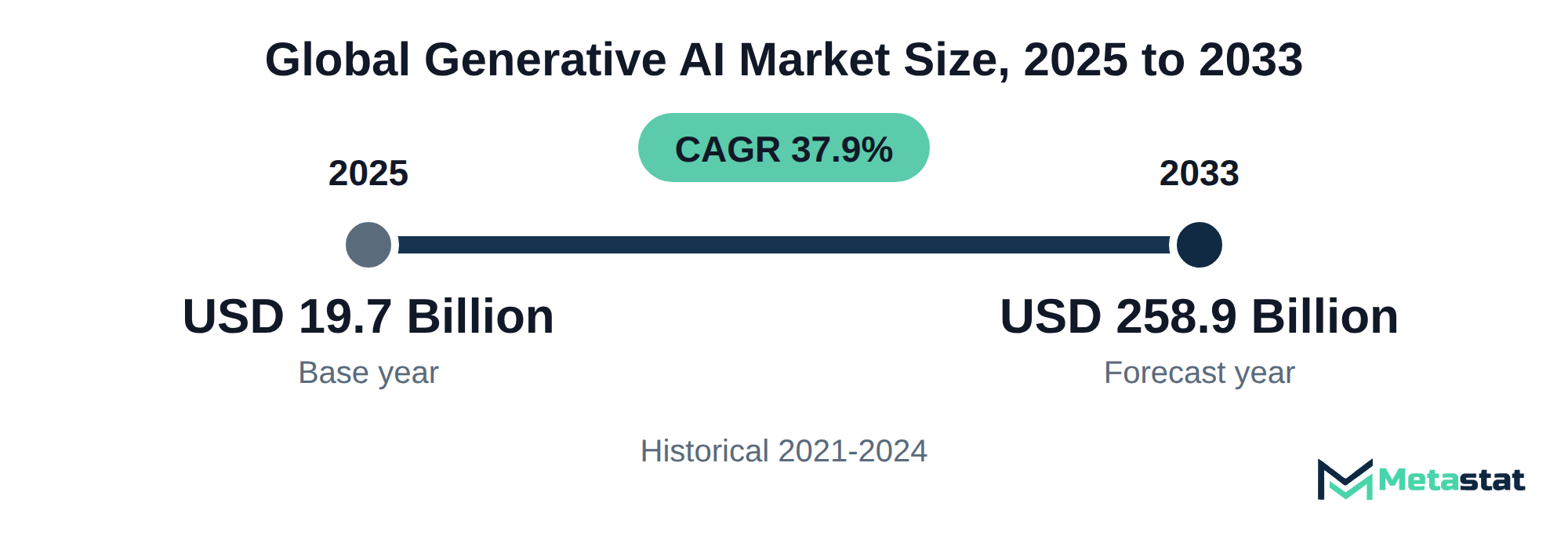
Market Valuation: Valued at $19.7 Billion in 2025, projected to reach $258.9 Billion by 2033 at a 37.9% CAGR.
Dominant Segment: The software segment leads the market, projected to reach USD 157.3 billion by 2033, driven by significant investments in automation and efficiency across various industries.
Geographic Lead: North America is expected to dominate the market, holding 40.3% in 2025, with the US showing the fastest growth due to strong technological infrastructure and high enterprise adoption.
What's Inside: The report provides a comprehensive analysis of the Generative AI market, including competitive coverage, segment breakdowns by component, deployment mode, application, and end-use industry, along with growth forecasts through 2033.
Emerging Opportunities: The services segment is set to experience robust growth, projected to reach USD 101.7 billion by 2033, as industries increasingly seek specialized solutions to integrate generative AI into their operations.
Deployment Trends: Cloud deployment is anticipated to grow significantly, from USD 19.4 billion in 2026 to USD 174.6 billion by 2033, reflecting a shift towards scalable and flexible infrastructure solutions.
Choose Your License
Global Generative AI Market
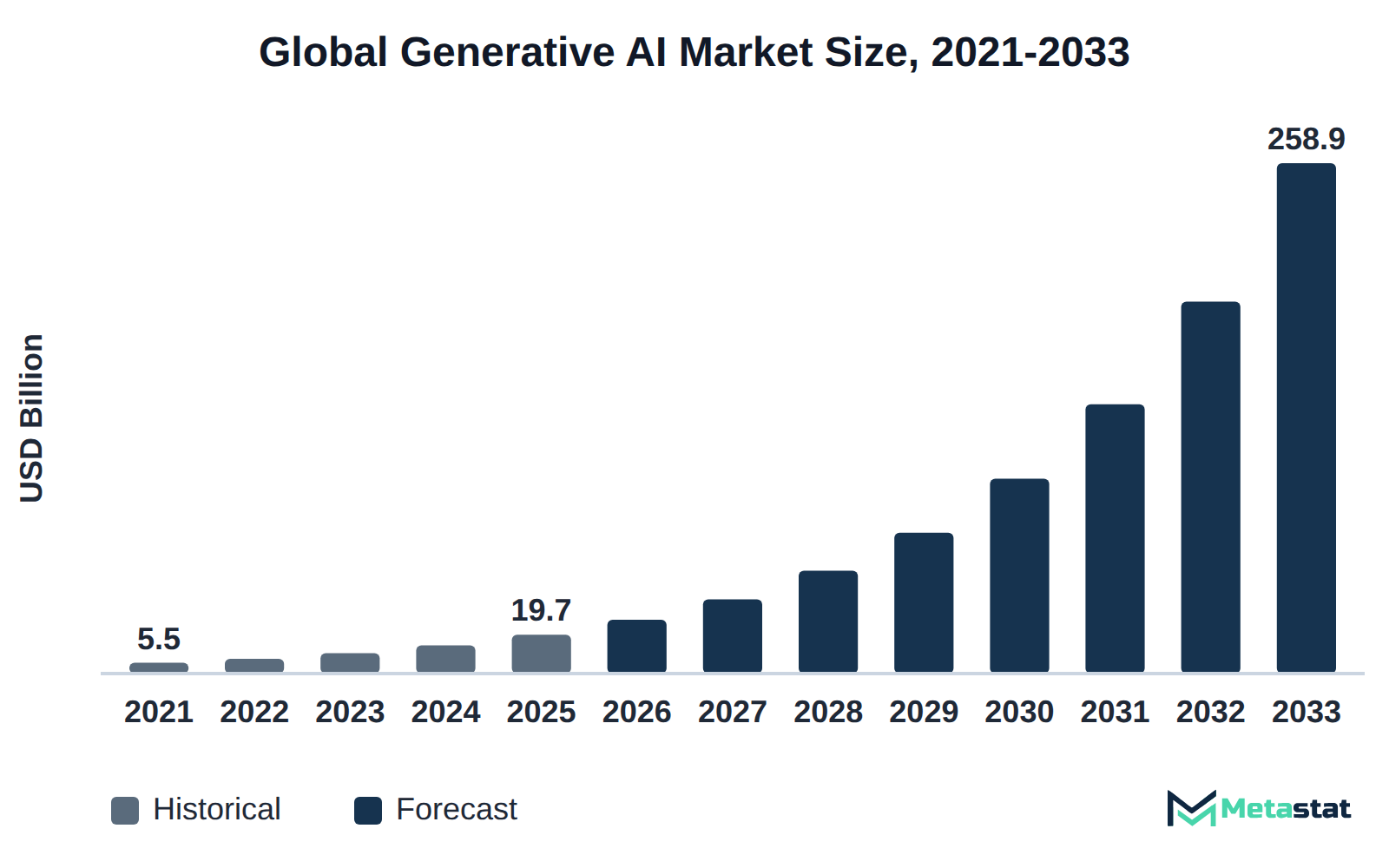
The global Generative AI market was valued at USD 19.7 billion in 2025 and is projected to reach USD 258.9 billion by 2033, growing at a CAGR of 37.9% over the forecast period.
The Generative AI market encompasses software and services designed to automate content creation, improve efficiency, and enhance user interactions across various applications. Buyers invest in this technology to leverage its capabilities in areas including conversational assistance, code generation, and data analysis, addressing the increasing demand for innovative solutions that drive productivity and enhance customer experiences.
Rising demand for advanced tools that automate operations and streamline work across multiple industries drives growth in the market. Among the segments, software holds the most value, with significant investments directed towards cloud deployment modes. North America holds 40.3% of the market in 2025, with the US leading in 2026. The region's strong share reflects solid technology infrastructure and high enterprise adoption of AI-driven solutions as companies seek competitive advantages.
One primary growth driver is the expanding applications of generative AI in sectors including banking, financial services, and healthcare. Organizations in these industries focus on adopting AI solutions to enhance operational efficiency and customer engagement. Increased spending in the Generative AI market positions it for growth in the coming years.
The market encompasses tools and services that support various industries in generating content, enhancing interactions, and automating tasks. Buyers invest in these solutions to increase efficiency, reduce costs, and improve user experiences across applications including content creation and conversational assistance. The need for advanced technology to streamline operations drives spending, particularly in sectors like banking, financial services, and insurance, where the potential for innovation remains significant.
Growth in the Generative AI market is fueled by advancements in AI algorithms and increased demand for personalized content. The software segment stands out with the highest value, projected to reach USD 157.3 billion by 2033. This dominance reflects strong investments from major players and a robust technological infrastructure, creating an environment ripe for innovation.
With a compound annual growth rate (CAGR) of 37.9%, the market is set to experience substantial expansion, driven by the increasing adoption of cloud-based deployment models and the integration of AI in diverse applications. Industries recognize the benefits of Generative AI, and demand for these solutions is anticipated to enhance significantly, leading to further advancements and competitive opportunities.
Generative AI copilots introduce significant capabilities in IT operations and service management, enhancing efficiency and accuracy. The incorporation of these advanced tools facilitates automated troubleshooting and predictive maintenance, allowing organizations to optimize their IT resources. By 2033, the expected market value for IT operations and service management within the Generative AI market reaches USD 49 billion. This growth stems from the increasing complexity of IT environments, where traditional methods struggle to keep pace with rapid technological advancements.
The integration of Generative AI copilots enables real-time analysis and decision-making, leading to streamlined operations. Organizations experience reduced downtime and faster incident response times, directly impacting productivity and customer satisfaction. With the anticipated compound annual growth rate of 42.4%, the segment expansion reflects rising demand for innovative solutions that improve operational efficiency and drive cost savings.
Contract models and pricing strategies play a significant role in the adoption of generative AI solutions by enterprises. Many organizations opting for generative AI solutions favor subscription-based pricing models, allowing them to manage costs more effectively over time. The generative AI market, valued at USD 19.7 billion in 2025, demonstrates strong growth, with an anticipated rise to USD 258.9 billion by 2033, reflecting the increasing importance of these solutions across various industries.
Enterprises often negotiate contracts that include tiered pricing based on usage levels. This structure provides flexibility for organizations, enabling them to scale their usage according to operational needs and budgets. For instance, cloud deployment, projected to reach USD 174.6 billion by 2033, contributes to the growing preference for pay-as-you-go models that cater to fluctuating workloads.
The choice of pricing model directly influences the financial health of enterprises, as more predictable costs allow for better budget allocation and resource management. Organizations investing in generative AI technologies understand the nuances of pricing and contract structures to maximize return on investment.
Data-sensitive workloads increasingly require private and hybrid deployment solutions within the Generative AI market. Organizations in industries including banking, financial services, and healthcare prioritize data security and compliance, influencing their choice of deployment. The forecast for the banking, financial services, and insurance sector indicates revenue growth from USD 5.7 billion in 2026 to USD 55.3 billion in 2033, reflecting a compound annual growth rate of 38.2%. This significant increase highlights the urgency for secure deployment solutions, ensuring that sensitive data remains protected while leveraging the advantages of Generative AI.
Private and hybrid deployments provide control over sensitive data, addressing the compliance requirements of various regulations. Companies focusing on IT operations and service management emphasize the need for customized solutions that integrate seamlessly with existing infrastructures. The demand for private and hybrid deployment options expands, driving investment in secure, scalable architectures. Adoption of these deployment models positions organizations to capitalize on Generative AI capabilities while ensuring data integrity, ultimately creating competitive advantages in their respective markets.
Reducing generative AI inference costs at scale is a significant opportunity for enterprises in a competitive landscape. This growth increases pressure on businesses to optimize operational efficiencies, particularly regarding costs associated with AI inference.
Enterprises implement several strategies to lower inference costs. Transitioning to a cloud deployment mode results in significant savings. The cloud segment is expected to grow from USD 19.4 billion in 2026 to USD 174.6 billion in 2033, driven by its scalability and reduced infrastructure requirements. This approach enables organizations to leverage advanced cloud services, which provide more efficient resource allocation, ultimately reducing expenses associated with maintaining on-premises hardware.
Investing in optimized algorithms reduces computational demands, further minimizing costs during inference operations. Techniques including model quantization and pruning effectively reduce the size and complexity of models without sacrificing performance, contributing to lower operational expenditures.
Overall, these strategies improve profitability as the market expands and position enterprises for an AI-driven economy.
The increasing preference for cloud-based solutions drives significant investment in the Generative AI market. Enterprises in sectors including IT, healthcare, and finance rapidly adopt these technologies to enhance operations and improve service delivery. This shift occurs due to the need for greater scalability, flexibility, and cost efficiency, which traditional on-premises systems struggle to provide. Cloud deployment offers organizations the ability to access advanced generative AI tools while minimizing infrastructure costs. In 2026, the estimated value for cloud-based solutions in this market reaches USD 19.4 billion, reflecting a growing trend toward adopting these services.
Organizations transitioning to cloud-based generative AI solutions experience enhanced operational efficiency and reduced time to market for new applications. This shift directly impacts volume, as businesses increasingly integrate these solutions into everyday operations. The market is projected to experience considerable growth, driven by this trend.
Technological advancements in on-device AI solutions drive significant interest within the Generative AI market. Innovations in hardware and software enable processing directly on devices, reducing reliance on cloud infrastructure and improving response times. This shift appeals to industries prioritizing data security and privacy, including healthcare and finance, where sensitive information requires local processing. Better performance lets applications run without constant internet connectivity, which improves user experiences.
Increased adoption of on-device solutions supports operational efficiency by decreasing latency associated with cloud-based systems. Organizations benefit from lower operational costs, leading to greater returns on investment. This trend prompts further exploration of generative AI implementations across various sectors, reinforcing the industry's growth trajectory. Demand for on-device solutions has surged, with developments expected to shape the competitive landscape significantly in the coming years.
High costs associated with generative AI solutions present a significant restraint for many potential buyers, particularly small to medium-sized enterprises (SMEs). These organizations face budget constraints that impact their ability to invest in advanced technologies. The financial burden associated with implementing generative AI solutions leads to slower uptake, as SMEs prioritize more affordable alternatives that do not deliver the same capabilities. Such pricing challenges influence purchasing decisions, resulting in smaller orders or delayed adoption of generative AI technologies.
The need for budget-conscious solutions drives SMEs to explore cost-effective substitutes or rely on conventional methods, further hampering market growth. Consequently, price sensitivity influences the overall competitive landscape, as providers seek to balance innovation with affordability to attract a broader customer base. This challenge of pricing, particularly for SMEs, necessitates strategic pricing models from suppliers to enhance accessibility and stimulate demand within the generative AI market.
The increasing cost of talent acquisition presents a significant challenge for suppliers within the Generative AI market. Growing demand for skilled professionals in artificial intelligence and machine learning has led to heightened competition for top-tier talent. This competitive environment drives up salaries, impacting operational margins for companies delivering generative AI solutions. Suppliers responding to these pressures focus on strategies including investing in employee training programs, enhancing workplace culture, and leveraging remote work arrangements to attract and retain talent. By developing a skilled workforce through development initiatives, suppliers aim to optimize productivity and maintain competitiveness in a changing market. The pursuit of efficiency in talent management directly influences profit margins and sustainability for organizations in the market.
Market participants explore partnerships with educational institutions to create pipelines for emerging talent. Such collaborations enable access to a broader talent pool, ensuring organizations remain equipped to meet the demands of the market while navigating cost pressures effectively. Strategic investments in technology and automation further support these efforts, allowing firms to streamline operations and mitigate the impact of rising talent costs on profitability.
The services segment within the Generative AI market highlights significant growth potential, driven by increasing demand for advanced capabilities across various sectors. With a projected value of USD 101.7 billion by 2033 and a compound annual growth rate (CAGR) of 39.3 percent, this segment illustrates strong interest from industries seeking to enhance operational efficiency and innovation. Various sectors, including banking, healthcare, and media, increasingly rely on services to integrate generative AI solutions into their workflows.
This trend reflects a broader shift, as businesses recognize that generative AI helps address complex challenges and optimize processes. An increasing number of companies focused on delivering specialized services are likely to capture a share of this growing market. This emphasis on services supports adoption of generative AI and drives competitive differentiation among players that meet unique client needs.
The Global Generative AI market is segmented based on Component, Deployment Mode, Application, and End-Use Industry.
Valued at USD 17.3 billion in 2026, this segment is projected to reach USD 157.3 billion by 2033, at a CAGR of 37.1% during the forecast period. Software solutions handle tasks such as content generation, code development, and customer interaction enhancements, appealing to industries that prioritize efficiency and innovation. The demand for scalable and flexible software solutions drives significant investment, particularly among tech-focused companies and enterprises seeking to automate processes. This segment outpaces others in growth, with a higher CAGR compared to services, which shows a CAGR of 39.3%. The increasing integration of machine learning and natural language processing technologies further drives demand for software, positioning it uniquely within the broader market dynamics.
Services is estimated to reach USD 101.7 billion by 2033, at a CAGR of 39.3% during the forecast period. This segment provides consulting, implementation, and support services tailored to integrate generative AI solutions into various operational frameworks. Key users include businesses seeking to enhance productivity through automated content creation or improve customer interactions. The primary demand driver remains the increasing necessity for customized solutions that address specific enterprise challenges, leading to a robust push for service offerings. Compared to the software component, the services segment demonstrates faster growth, with a significant CAGR that outpaces the software's 37.1%. This growth reflects the rising complexity of AI systems and the demand for specialized expertise in deploying and managing these technologies.
Cloud deployment in the Generative AI market is valued at USD 19.4 billion in 2026 and is projected to reach USD 174.6 billion by 2033, at a CAGR of 36.9% during the forecast period. This deployment mode is widely adopted by organizations seeking to access scalable and flexible infrastructure for various applications, including content creation and data analysis. The growing demand for cloud solutions is driven by increased operational efficiency and cost-effectiveness, attracting several businesses of all sizes. Compared to on-premises deployment, the cloud segment experiences faster growth due to lower upfront costs and ease of integration with existing systems. This segment benefits from continuous technological advancements, enabling improved performance and accessibility for users across diverse industries.
The On-Premises segment is estimated to reach USD 26.4 billion by 2033, at a CAGR of 35% during the forecast period. This deployment mode typically serves enterprises that prefer to maintain control over their AI infrastructure, allowing for enhanced security and data privacy. Organizations in sectors including banking, healthcare, and government adopt on-premises solutions to meet specific regulatory compliance requirements. The growing demand for data governance and risk management drives adoption, particularly among enterprises with sensitive information. Compared to cloud-based solutions, the on-premises segment experiences slower growth, influenced by higher initial setup costs and the need for ongoing maintenance, which makes it less attractive for smaller organizations. In contrast, cloud deployment offers scalability and lower upfront investment, appealing to a broader range of buyers.
Hybrid deployment is expected to reach USD 36.9 billion by 2033. This mode integrates on-premises and cloud solutions, allowing organizations to combine both environments for enhanced flexibility and privacy. Industries including finance and healthcare frequently use hybrid models for sensitive data management, benefiting from the scalability of cloud services while maintaining control over critical operations. Demand for hybrid solutions grows due to increasing concerns surrounding data security and compliance. The segment shows a competitive edge over purely cloud-based models, attracting enterprises focused on balancing accessibility with data governance. This deployment type exhibits a compound annual growth rate of 35%, making it a strategic choice for businesses navigating the complexities of digital transformation and regulatory requirements in the Generative AI market.
Edge and on-Device segment is projected to grow at a CAGR of 47% during the forecast period. This segment focuses on deploying generative AI solutions directly on devices or at the network's edge, allowing for real-time processing and reduced latency. Industries including consumer electronics and automotive leverage this technology for applications like personalized user interactions and autonomous driving features. The increasing demand for low-latency applications drives this segment, with users prioritizing speed and efficiency in their operations. Compared to other deployment modes, edge and on-device solutions typically offer faster response times, positioning them favorably for applications requiring immediate data processing. The market for this segment aligns with broader trends toward decentralized computing and real-time analytics, ensuring significant growth potential in the coming years.
Content Creation segment is valued at USD 7.7 billion in 2026 and is projected to reach USD 60.6 billion by 2033, at a CAGR of 34.2% during the forecast period. This segment primarily serves writers, marketers, and content creators looking to enhance productivity and creativity. Use cases include automated article writing, social media content generation, and personalized marketing messages. Significant demand arises from the increasing need for high-quality, customized content across various industries, driving growth in this segment. Unlike other applications including Conversational Assistance, which is projected to grow at a CAGR of 38.4%, Content Creation experiences slightly slower growth, reflecting its unique challenges and dynamics in the market. The ongoing evolution of AI technologies enhances capabilities, enabling more sophisticated content generation tools that appeal to diverse buyer profiles.
Conversational Assistance and Knowledge Management segment is estimated to reach USD 48.8 billion by 2033, at a CAGR of 38.4% during the forecast period. This segment serves various industries, providing solutions for streamlining communication and managing knowledge effectively. Organizations leverage these tools for customer support, information retrieval, and enhanced user engagement. A significant driver for this segment involves the growing reliance on automated systems to improve operational efficiency and customer experiences. The demand for conversational interfaces in sectors including banking and healthcare drives this growth, differentiating it from related segments that experience slower growth rates. Developing advanced natural language processing technologies further supports this segment's expansion, enabling interactions between humans and machines and creating strong market momentum.
The Code Generation and Software Testing segment is expected to reach USD 49 billion by 2033. This segment focuses on automating the creation of code and the testing of software applications, appealing primarily to software development teams, IT departments, and technology firms. Rising demand for rapid application development and efficient testing processes drives growth, supported by increasing complexity of software projects. This segment experiences a higher growth trajectory compared to others, influenced by advancements in machine learning algorithms and software development practices. The CAGR for this segment aligns with the growing need for organizations to streamline operations and reduce time-to-market for applications. The shift towards automation in software development highlights a significant trend shaping the future of the market.
IT Operations and Service Management segment is projected to grow at a CAGR of 42.4% during the forecast period. This segment focuses on enhancing the efficiency of IT operations and managing service delivery within organizations. Key players in this segment include IT service management teams and operations managers, who employ generative AI solutions to streamline processes and improve service quality. The increasing demand for automation in IT workflows drives growth in this segment, with organizations seeking to reduce operational costs and enhance service reliability. Compared to other application segments in the market, IT Operations and Service Management exhibits a higher growth rate, reflecting a shift toward advanced technological integration in operational frameworks. This trend indicates robust investment in AI technologies that facilitate real-time data analysis and decision-making.
Business Process Automation involves using generative AI technologies to streamline and optimize organizational workflows. This segment finds applications in various sectors, including finance, healthcare, and manufacturing, where automation enhances efficiency and reduces operational costs. Demand for automation solutions is driven by the growing need for businesses to improve productivity and reduce human error, particularly in repetitive tasks. This segment differentiates itself by focusing on specific automation applications compared to other areas including content creation or conversational assistance. Adoption barriers include integration challenges faced by organizations transitioning from traditional processes to automated solutions. Overall, Business Process Automation continues to gain traction, significantly impacting the market by enabling companies to focus on strategic initiatives while generative AI handles routine tasks.
Product Design and Engineering enhances generative AI technologies to improve design processes, enabling rapid prototyping, simulation, and optimization of products. Engineers and designers leverage these capabilities to improve innovation and efficiency while reducing time-to-market. The segment experiences growth driven by the increasing demand for advanced design tools that streamline workflows. This increase is fueled by industries including automotive, aerospace, and manufacturing that prioritize efficiency and precision. Compared to other applications, this segment demonstrates unique characteristics, including a specialized user base focused on intricate design requirements. Ongoing advancements in generative algorithms contribute to significant improvements in design accuracy and speed, differentiating it from segments including Content Creation and Conversational Assistance, which focus more on text and dialogue generation.
Synthetic Data Generation involves creating artificial data that mimics real-world data, allowing organizations to train machine learning models without compromising sensitive information. This technique finds applications across various sectors, including healthcare, finance, and autonomous vehicles, where data privacy and security are critical. The increasing demand for privacy-preserving methods drives this segment, with businesses seeking innovative solutions to enhance their data handling practices. Compared to other applications within the Generative AI market, Synthetic Data Generation exhibits significant differentiation, focusing on compliance and ethical considerations rather than solely on product features. This segment attracts buyers prioritizing data integrity and regulatory adherence, distinguishing it from other segments emphasizing speed or cost-efficiency.
Research and Drug Discovery involves the application of generative AI technologies to expedite the processes of drug development and biomedical research. Pharmaceutical companies, biotechnology firms, and research institutions leverage these capabilities to enhance their discovery processes, significantly reducing time and costs associated with traditional methods. Demand for rapid drug development, driven by the increasing prevalence of complex diseases, is expected to drive growth in this segment. This application distinguishes itself from others due to its focus on specialized scientific research, which requires deep domain expertise and substantial investment in technology. Compared to other segments, Research and Drug Discovery typically experiences slower growth, characterized by high regulatory scrutiny and longer timelines, which influences adoption rates within the broader market.
Data Analysis and Reporting involves advanced analytics to interpret complex datasets, facilitating informed decision-making for various stakeholders. This segment serves sectors including banking, healthcare, and manufacturing, where data-driven insights enhance operational efficiency and strategic planning. Key forces influencing this segment include the growing emphasis on data-driven strategies and the increasing complexity of data management. Unlike other segments, which focus more on creative applications, Data Analysis and Reporting emphasizes accuracy and practical insights, crucial for industries relying heavily on data analysis. The demand for sophisticated analytical tools and platforms drives growth within this segment, distinguishing it from areas including Content Creation, which prioritizes creative output over analytical precision.
Training simulations and security copilots apply generative AI technologies to enhance user training and improve security measures. Organizations in sectors including healthcare, finance, and technology adopt these tools to develop realistic training environments and strengthen cybersecurity defenses. Demand for these applications grows due to increasing concerns over data security and the value of effective training solutions. Organizations seek advanced tools to mitigate risks and improve employee capabilities, driving investment in this segment. In contrast with other applications, this sub-segment experiences slower growth compared to areas including content creation and conversational assistance, reflecting its focus on specialized use cases rather than broad-based consumer applications. The market increasingly recognizes the importance of combining security and training to create a safer operational environment.
This segment finds applications in risk assessment, fraud detection, customer service optimization, and compliance monitoring, serving banks, insurance companies, and investment firms. Growing concerns regarding financial security and the increasing complexity of regulatory frameworks drive demand for advanced AI solutions. This sector grows faster because it places high value on data-driven insights that improve operational efficiency and customer engagement. Its significant automation potential positions it favorably against less dynamic segments and highlights the pressing need for innovative compliance and risk management solutions in a competitive market.
IT and Telecommunications segment is estimated to reach USD 51.1 billion by 2033, at a CAGR of 38.3% during the forecast period. This segment encompasses various applications of generative AI technologies, primarily by network operators, service providers, and IT departments to enhance system efficiency, automate processes, and improve customer service. The demand for advanced AI solutions, driven by the increasing complexity of IT environments and the need for more robust telecommunications infrastructure, supports growth in this segment. Compared to others, the IT and Telecommunications segment experiences faster growth, attributed to rapid digital transformation and increasing investments in AI-driven technologies. With a CAGR of 38.3%, this segment outpaces many other areas in the market, reflecting robust demand for innovative solutions that address emerging challenges and improve operational efficiencies.
The Media and Entertainment segment is expected to reach USD 40.1 billion by 2033. This segment serves various stakeholders, including content creators, film studios, and digital marketers, employing generative AI technologies to enhance creative processes and content production. Increased demand for personalized content drives growth in this segment, with organizations seeking innovative solutions to engage audiences. The adoption of AI-driven tools for video production, scriptwriting, and music generation significantly influences this market. Compared to other segments, Media and Entertainment experiences a unique growth trajectory, characterized by rapid advancements in content delivery and audience engagement strategies. Such differentiation positions this segment with higher growth potential relative to others in its group.
The Healthcare and Life Sciences segment is projected to grow at a CAGR of 40.1% during the forecast period. This segment focuses on enhancing patient care, accelerating drug discovery, and optimizing operational efficiencies through generative AI technologies. Key users include healthcare providers, pharmaceutical companies, and research institutions that apply these solutions to improve outcomes and drive innovation. The growing demand for personalized medicine and the increasing complexity of healthcare data act as significant drivers for this segment. Compared to other end-use industries, the healthcare sector exhibits faster growth due to the pressing need for advanced solutions to tackle emerging challenges in patient management and treatment. By 2033, this segment is expected to reach USD 55.3 billion, reflecting strong investment and interest in generative AI applications within the sector.
Retail and Consumer Goods incorporates various applications tailored to enhance customer experiences and optimize supply chains. Businesses in this segment leverage generative AI for personalized marketing, inventory management, and customer service automation. Growth in this segment is driven by increasing demand for personalized shopping experiences and the necessity for efficient inventory tracking. Retailers and consumer goods manufacturers seek innovative solutions that improve customer engagement and operational efficiency. This segment exhibits distinct buyer dynamics, focusing on consumer-driven technologies. The market for generative AI continues to expand through advancements in AI algorithms and machine learning capabilities, supporting the evolving needs of retailers and consumer goods companies.
Manufacturing employs generative AI technologies to optimize processes, improve efficiency, and enhance product quality. This segment finds application in areas including predictive maintenance, quality control, and supply chain management. Key players in manufacturing, including automotive and electronics sectors, leverage these technologies to drive innovation and reduce operational costs. Demand for AI-driven solutions in this segment is influenced by ongoing trends toward automation and digital transformation, prompting organizations to invest in advanced technologies. Compared to other segments, manufacturing presents unique challenges, including higher integration costs and a more cautious approach to adopting new technologies. The competitive landscape in this segment features significant differentiation, with companies focusing on customized solutions tailored to specific operational needs and regulatory requirements. Organizations increasingly prioritize AI to maintain a competitive edge, indicating a strong growth trajectory in the generative AI market.
Professional Services encompasses a range of offerings that enhance consulting, strategy, and operational effectiveness through generative AI technologies. This segment serves various industries, including finance, healthcare, and technology, where firms seek to improve decision-making, efficiency, and customer engagement through advanced AI solutions. Demand for these services stems from organizations' ongoing efforts to integrate innovative technologies into their operations, driven by competitive differentiation and efficiency. Despite growth in other segments, Professional Services experiences a unique demand trajectory due to the specialized nature of these offerings and the need for expertise in implementation. This segment typically commands higher pricing compared to more commoditized applications, reflecting the specialized skills and knowledge required for effective deployment. The Generative AI market continues to evolve, with Professional Services facilitating the adoption of these advanced technologies.
The Government and Defense sector employs generative AI technologies for various applications, including intelligence analysis, logistics optimization, and cybersecurity. Government agencies and defense organizations leverage these technologies to enhance decision-making, streamline operations, and improve national security measures. Demand for advanced analytics, driven by escalating cybersecurity threats and the need for efficient resource management, drives the growth of this segment. Compared to other sectors, including Media and Entertainment, the Government and Defense segment experiences a unique demand landscape influenced by regulatory requirements and budget constraints. The focus on national security necessitates higher standards for compliance and data protection, making the adoption of generative AI technologies more complex yet critical. Overall, the Government and Defense sector represents a distinct aspect of the Generative AI market, characterized by its specific requirements and challenges.
Education encompasses a range of applications where generative AI enhances learning experiences and administrative functions. Institutions apply these technologies for personalized learning, content creation, and administrative streamlining. The demand for innovative teaching methods drives this segment, particularly among educational technology providers and schools aiming to improve student engagement and outcomes. Growth is influenced by the increasing integration of technology in classrooms and the push for remote and hybrid learning solutions. Compared to other segments, education represents a unique buyer profile, focusing on long-term investments in technology to improve learning environments. Adoption progresses at a different pace due to budget constraints faced by educational institutions, which typically have limited resources for technological upgrades. The generative AI market continues to evolve, providing tools that support educators and learners.
This sub-segment encompasses applications targeting energy and utilities, transportation and logistics, and individual users. Organizations within these domains increasingly adopt generative AI technologies to streamline operations, enhance predictive maintenance, and improve user experiences. For instance, energy firms leverage AI to optimize resource allocation and minimize operational costs, while logistics companies apply these technologies for route optimization and supply chain management. One significant driver affecting this sub-segment includes the rising demand for efficient energy management solutions, driven by sustainability initiatives and regulatory pressures. Differentiating this sub-segment from others, the focus on individual users highlights a broader usage of generative AI, not limited to large enterprises. This shift toward personalization leads to diverse applications and potentially higher engagement rates. The generative AI market is expected to expand, reflecting the growing recognition of its value across various industries.
Based on geography, the Global Generative AI market is divided into North America, Europe, Asia-Pacific, South America, Middle East, and Africa.
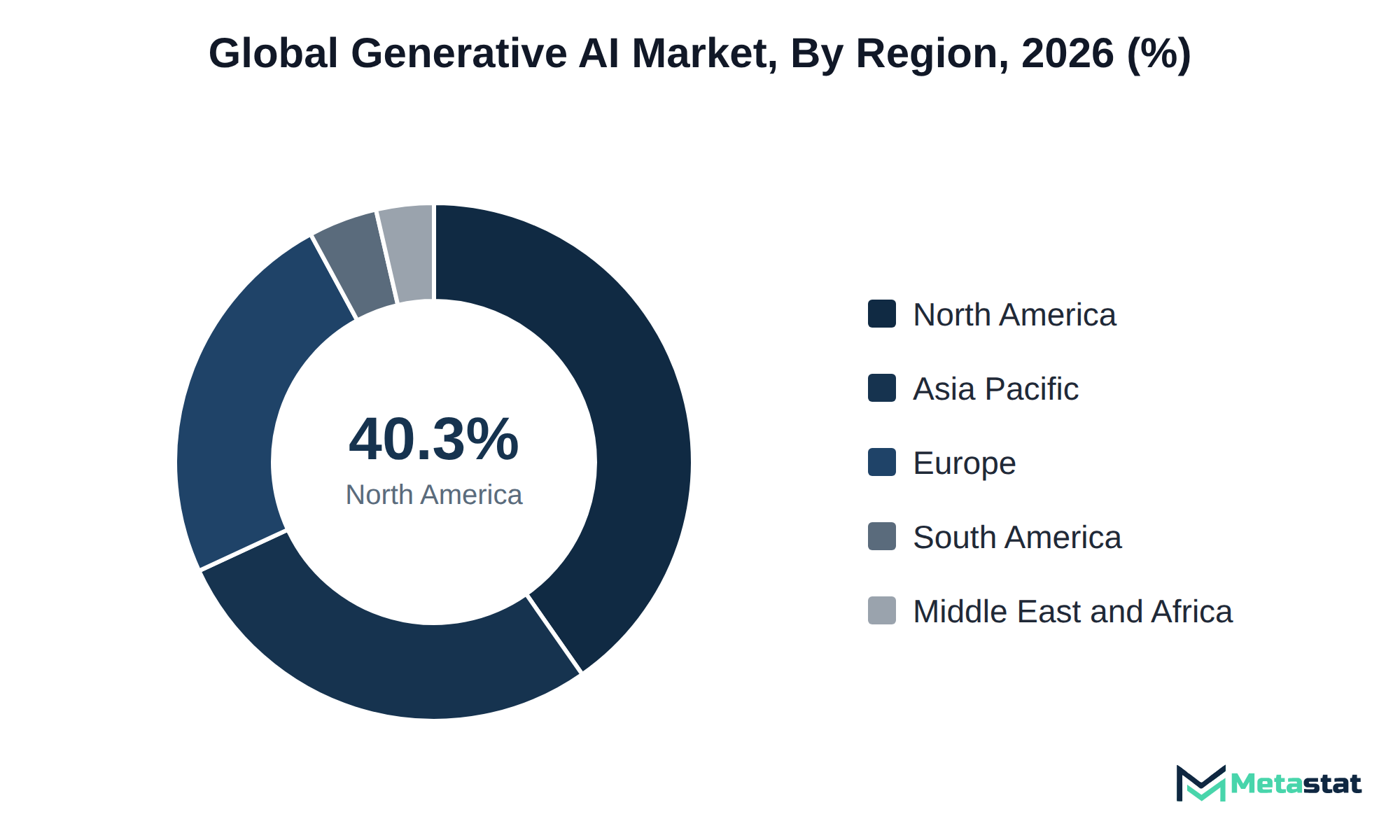
Strong growth within the North American market stems from significant investments in technology and innovation, particularly in the United States and Canada. The emphasis on sectors including banking, financial services, and IT drives demand, with organizations seeking advanced solutions to enhance operational efficiency and customer engagement. North America is projected to reach USD 94.5 billion by the end of 2033, reflecting a robust commitment to generative AI adoption. The region's share of the global market stands at 40.3% in 2025, highlighting its leadership in technological advancements. A favorable regulatory environment supports local businesses, promoting the integration of generative AI technologies into various aspects of operations, thereby positioning the market for sustained expansion.
The generative AI market in Europe experiences significant growth, driven by demand from the banking, financial services, and insurance sectors. Countries including Germany, France, and the UK lead investments in advanced technologies to enhance customer interactions and streamline operational processes. The presence of established technology hubs facilitates collaboration between industries and research institutions. Regulatory frameworks focusing on data privacy and security have a notable influence on the market, shaping how solutions are developed and deployed. With a market share of 24.0% in 2025, Europe is projected to expand substantially, contributing to the overall growth trajectory through 2033. Investments in cloud computing infrastructure further support the adoption of generative AI, enabling businesses to leverage innovative applications efficiently.
Rapid advancements in artificial intelligence technologies drive significant growth in the Generative AI market across Asia-Pacific. China, Japan, and India stand out as key players, with robust investments in AI research and development. South Korea and Australia continue to enhance their technological infrastructure, facilitating the adoption of generative AI solutions.
Demand from industries including banking, financial services, and telecommunications fuels market expansion in this region. Organizations increasingly leverage generative AI for applications in content creation and code generation, ensuring efficiency and innovation. The notable share of 27.8% in the global market highlights the region's importance. With a projected compound annual growth rate (CAGR) of 36.9% in cloud-based deployments, the market is positioned for substantial advancements through 2033.
Brazil and Argentina drive notable demand within the generative AI market, particularly in sectors including banking and financial services, IT and telecommunications, and media and entertainment. The unique infrastructure landscape in South America, characterized by a growing technology adoption rate, influences market expansion. Investments in digital transformation initiatives across various industries further enhance opportunities for generative AI applications. Competitive pricing strategies from local and international players improve accessibility for businesses seeking to integrate generative AI solutions. The market in this region is projected to capture a 4.3% share of the global market in 2025, reflecting growing interest and investment in AI technologies.
Demand for the generative AI market in the Middle East and Africa primarily stems from industries including banking, financial services, and telecommunications, where advanced data analytics and automation tools enhance operational efficiency. Saudi Arabia and the UAE demonstrate significant interest in adopting generative AI technologies, supported by government initiatives focusing on digital transformation and economic diversification. The region's share of the global market in 2025 remains limited at USD [figure]. South Africa's growing tech ecosystem contributes to the market's expansion, with local firms exploring innovative applications across various sectors. Investment in AI infrastructure and talent development is crucial for realizing the full potential of the market, leading to opportunities for growth in this emerging landscape.
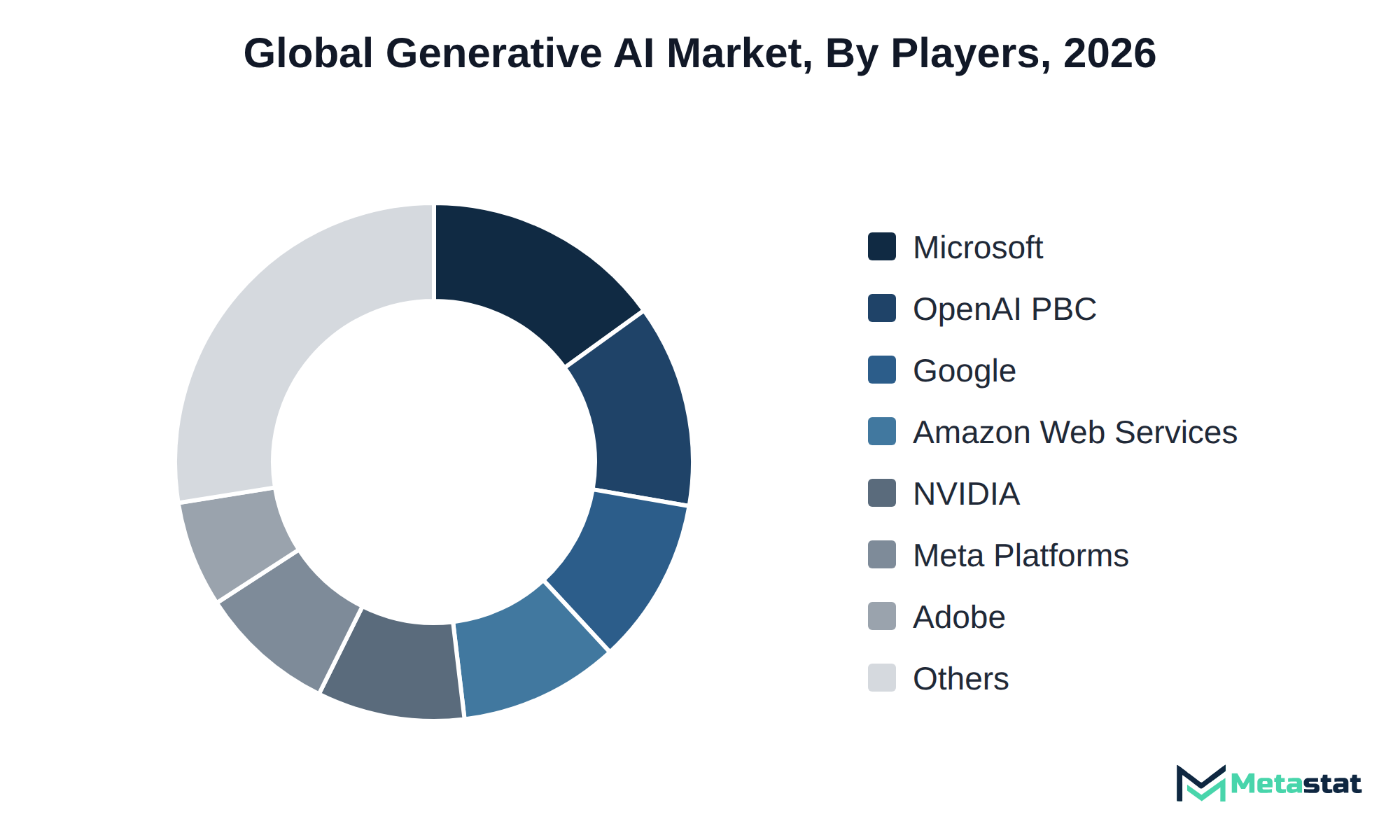
The competitive environment in the Generative AI market splits primarily by component types, deployment modes, and applications offered. Companies provide a range of software and services tailored to various industry needs, influencing buyer decisions based on factors including price, service quality, and customization options. The choice of deployment mode, including cloud, on-premises, hybrid, and edge, determines how organizations adopt and integrate generative AI solutions.
Organizations including OpenAI Group PBC and Microsoft Corporation emphasize robust software offerings, while companies like Amazon Web Services, Inc. focus on delivering cloud-based solutions. Adobe Inc. and Salesforce, Inc. provide specialized applications for content creation and customer relationship management, enhancing their attractiveness to industry-specific buyers.
Firms like NVIDIA Corporation and Google LLC leverage advanced technologies to enhance their service capabilities, leading to increased competitive advantages. Companies including IBM and SAP SE concentrate on enterprise solutions, diversifying the competitive environment in the market.
To achieve this significant growth, key developments in the generative AI market include advancements in deployment modes, particularly cloud services, which are expected to dominate. The cloud segment's rise, from USD 19.4 billion in 2026 to USD 174.6 billion by 2033, reflects increased efficiency and scalability, enabling broader market access across various industries. The expansion in content creation applications, forecasted to grow from USD 7.7 billion in 2026 to USD 60.6 billion by 2033, drives demand for innovative AI solutions in media and entertainment. However, potential risks, including regulatory challenges in regions like Europe, could slow market growth. Regulatory constraints impact the pace of adoption and innovation, particularly in sectors including banking and financial services, where compliance is critical. Addressing these challenges while capitalizing on opportunities in deployment and application segments will be essential for reaching the projected market size.
By Component: Software, Services
By Deployment Mode: Cloud, On-Premises, Hybrid, Edge and on-Device
By Application: Content Creation, Conversational Assistance and Knowledge Management, Code Generation and Software Testing, IT Operations and Service Management, Business Process Automation, Product Design and Engineering, Synthetic Data Generation, Research and Drug Discovery, Data Analysis and Reporting, Others (Security Copilots, Training Simulations)
By End-Use Industry: Banking, Financial Services and Insurance, IT and Telecommunications, Media and Entertainment, Healthcare and Life Sciences, Retail and Consumer Goods, Manufacturing, Professional Services, Government and Defense, Education, Others (Energy and Utilities, Transportation and Logistics, Individual Users)
The report strategically identifies and profiles the key market players and analyses their core competencies in each sub-segment of the Generative AI market.
Report Attributes | Details |
Study Period | 2021-2033 |
Base Year | 2025 |
Estimated Year | 2026 |
Forecast Period | 2026-2033 |
Historical Period | 2021-2025 |
Growth Rate | CAGR 37.9% from 2026 to 2033 |
Revenue Unit | USD billion |
Segmentation | By Component, Deployment Mode, Application, End-Use Industry, and Region |
By Region | North America (By Component, Deployment Mode, Application, End-Use Industry, and Country)
|
Europe (By Component, Deployment Mode, Application, End-Use Industry, and Country)
| |
Asia Pacific (By Component, Deployment Mode, Application, End-Use Industry, and Country)
| |
South America (By Component, Deployment Mode, Application, End-Use Industry, and Country)
| |
Middle East and Africa (By Component, Deployment Mode, Application, End-Use Industry, and Country)
|
Find answers to common questions about this report
The Generative AI market size was valued at USD 19.7 billion in 2025.
The market is projected to grow at a CAGR of 37.9% during the forecast period from 2026 to 2033.
The North America Generative AI market size is estimated to reach USD 94.5 billion by 2033.
The software segment leads the Generative AI market, with a projected value of USD 157.3 billion by 2033. This segment's growth reflects a compound annual growth rate of 37.1 percent from 2026 to 2033.
Key drivers for the Generative AI market include the increasing preference for cloud-based solutions, which enhances operational efficiency in sectors including IT, healthcare, and finance. Technological advancements in on-device AI solutions improve response times and appeal to industries prioritizing data security and privacy.
North America holds the dominant share of the Generative AI market, with a value of USD 94.5 billion projected for 2033, representing 40.3 percent of the total market.
High costs associated with generative AI solutions present a significant restraint for many potential buyers, particularly small to medium-sized enterprises (SMEs). The increasing cost of talent acquisition poses a challenge for suppliers, impacting operational margins and driving competition for skilled professionals.
The increasing preference for cloud-based solutions and advancements in on-device AI technologies significantly favor adoption within the Generative AI industry. These trends enhance operational efficiency, reduce costs, and improve user experiences, driving demand across various sectors.
The Generative AI market is estimated to reach a valuation of USD 258.9 billion by 2033.
Key players operating in the Generative AI market include OpenAI Group PBC, Microsoft Corporation, Google LLC, Amazon Web Services, Inc., Anthropic PBC, and NVIDIA Corporation. Other notable participants are Meta Platforms, Inc., Adobe Inc., Salesforce, Inc., and Oracle Corporation.
The analysts below cover Information & Technology research at Metastat Insights.
LEAD ANALYST
Utkarsh Khirodkar is a Lead Market Research Analyst at MetaStat Insight, specializing in market intelligence, technology sector assessments, and competitive strategy.

PRINCIPAL CONSULTANT - ENTERPRISE AI & EMERGING TECHNOLOGIES
Banking & Finance · Electronics and Semiconductor · Energy and Power · Healthcare IT · Information & Technology · Professional Services
Vijay Gunti is a Principal Consultant at MetaStat Insight, bringing over two decades of experience across enterprise digital transformation, technology strategy, and intelligent systems.

LEAD CONSULTANT - COMMUNICATION, TELECOM, AND IT
Electronics and Semiconductor · Information & Technology · Machinery & Equipment · Professional Services
Ravindra Sathe Consultants for Communication, Telecom, and IT at MetaStat Insight. He leads the firm's industry research initiatives across telecommunications infrastructure, digital connectivity, enterprise networking, and emerging information technology domains.
Transitioning ultra-class mining haul trucks to alternative power requires concrete data on remote hydrogen refueling infrastructure economics. The report evaluated megawatt-scale electrolyzer installation expenses, onsite storage safety mandates, and heavy-duty fuel cell stack degradation under continuous duty cycles. That technical rigor helped our engineers benchmark realistic total operating cost horizons for off-highway fleet decarbonization.
Enterprise zero-trust network rollouts are often slowed down by multi-cloud transit latency and proprietary hardware retirement schedules. This study provided realistic total cost of ownership models comparing cloud-delivered security edge solutions against traditional hardware refreshes. The analysis of contract renewal lengths and software maintenance fees gave us clear visibility into enterprise replacement cycles over the next three to five years.
Scaling antibody-drug conjugate manufacturing hinges on contract manufacturing availability for high-potency active ingredients. The MetaStat Insight analysis looked closely at global cleanroom slot constraints, bioconjugation batch failure rates, and supply chain redundancies between the US, Europe, and India. The supplier capability matrix proved genuinely useful for our team when mapping secondary source options across our clinical pipeline.
Explore related market intelligence reports worth reading alongside this one.
Starting from
$2950