
LEAD ANALYST
Utkarsh Khirodkar is a Lead Market Research Analyst at MetaStat Insight, specializing in market intelligence, technology sector assessments, and competitive strategy.

Global Influencer Marketing Market Size, Share, By Component (Software and Services), By End User (Brands and Marketing Agencies), By Platform (Instagram, YouTube, TikTok, Facebook, Twitch, and Others), By Organization Size (Small & Medium-Sized Enterprises and Large Enterprises), Industry Analysis, Growth, Trends, and Forecast, 2026-2033
Report ID
MSI-5150
Published
September, 2026
Pages
296 Pages
Format
Historical
Base year
Forecast
Forecast period
Report Details
Choose Your License
Global Influencer Marketing Market
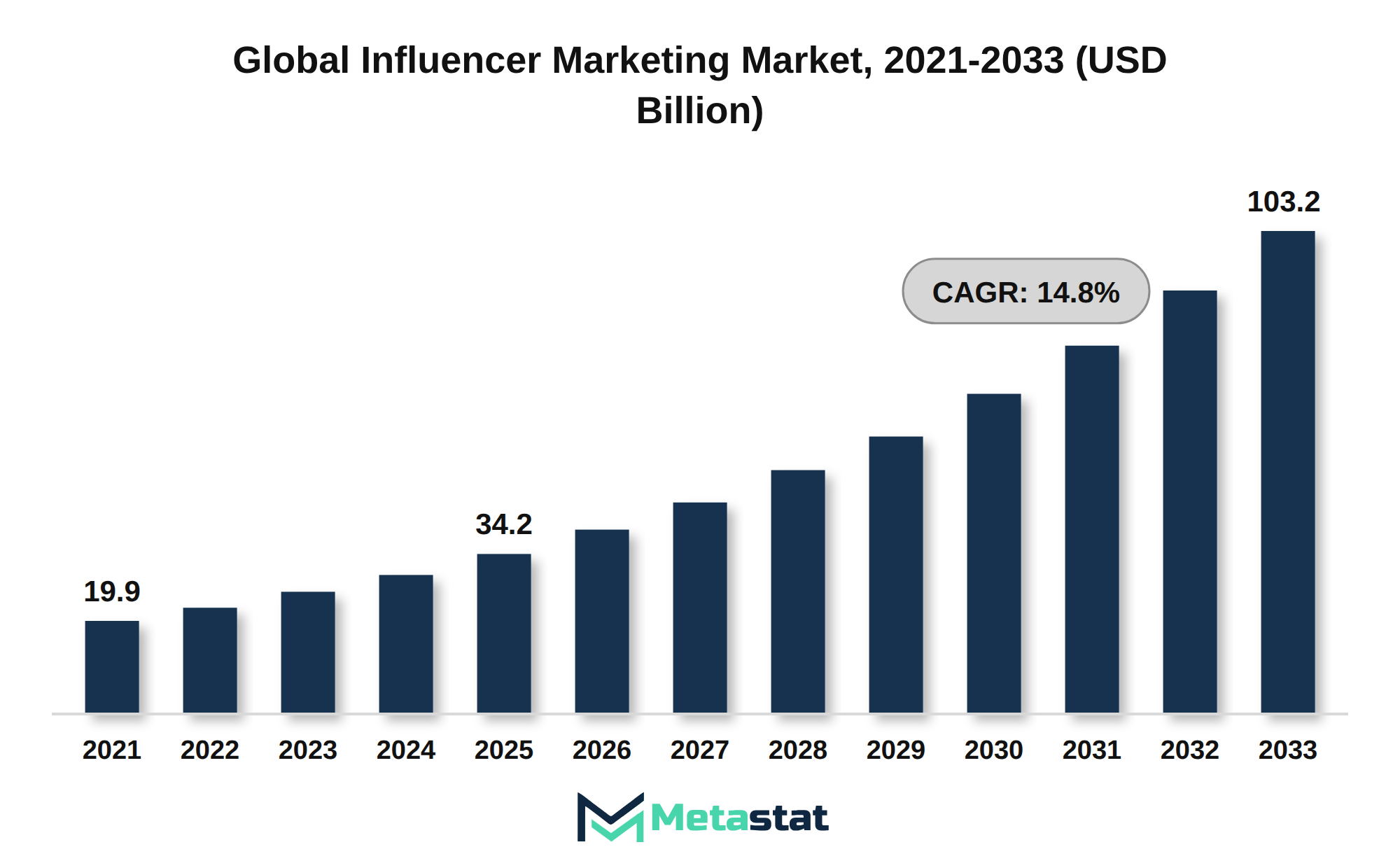
The global Influencer Marketing market was valued at USD 34.2 billion in 2025 and is projected to reach USD 103.2 billion by 2033, growing at a CAGR of 14.8% over the forecast period.
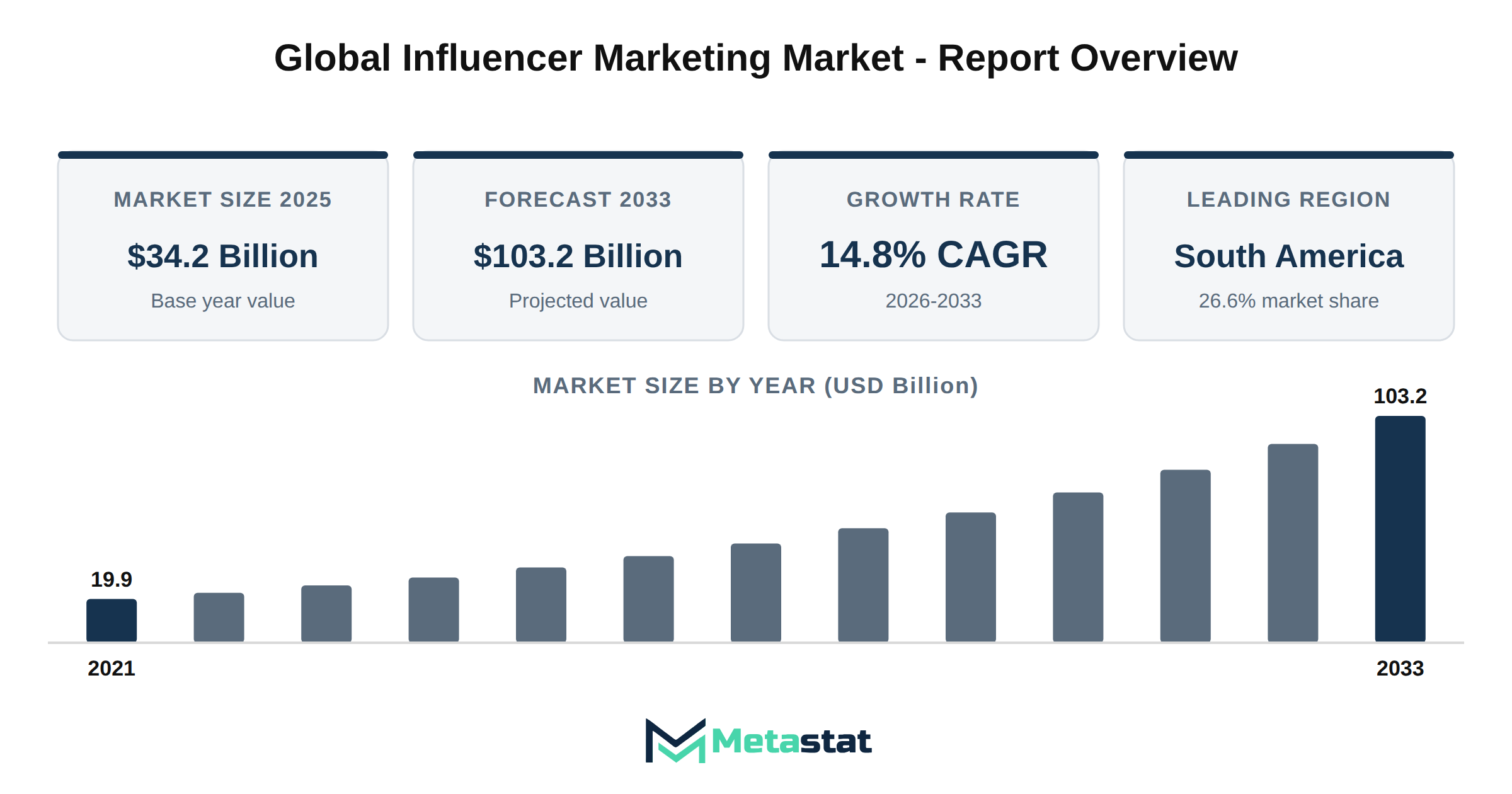
The Influencer Marketing market reached a valuation of USD 34.2 billion in 2025, following a consistent growth trajectory from USD 19.9 billion in 2021, USD 22.7 billion in 2022, USD 26.1 billion in 2023, and USD 29.7 billion in 2024. Projections indicate that the market is expected to expand substantially, with an anticipated value of USD 103.2 billion by 2033, reflecting a compound annual growth rate (CAGR) of 14.8% from 2026 to 2033.
Significant factors driving growth in the Influencer Marketing market include the rising importance of creator partnerships and digital campaign strategies. Brands across various sectors increasingly leverage influencer-led engagement to enhance consumer connection and brand loyalty. This trend is particularly strong within the entertainment industry, where influencers play an essential role in shaping consumer perceptions and driving engagement.
Market participants face challenges related to regulatory compliance and the evolving landscape of regional risk frameworks. Navigating these compliance requirements necessitates strategic adaptations, which influence operational costs and market entry strategies. Companies that effectively address these compliance issues position themselves favorably in a competitive environment.
Emerging trends in research and development trajectories highlight the focus on next-generation innovations. Companies actively invest in technologies that enhance influencer marketing effectiveness, including advanced analytics and performance measurement tools, ensuring campaigns deliver measurable results. Sustainable transformation initiatives, including decarbonization and circular economy dynamics, are increasingly integrated into marketing strategies, appealing to environmentally conscious consumers.
The market experiences fragmentation, characterized by numerous players with varying capabilities. This fragmentation necessitates strategic mergers and acquisitions (M&A) to enhance market positioning and expand service offerings. The value chain within the market is complex, involving multiple stakeholders from brands to influencers, each contributing to the overall customer journey dynamics.
The Influencer Marketing market experiences significant transformation driven by creator partnerships. Brands increasingly leverage these collaborations to enhance their digital campaign strategies, resulting in higher engagement rates and deeper connections with target audiences. This approach establishes a unique relationship between influencers and brands, ultimately enhancing brand loyalty and consumer trust.
The growing role of influencer-led engagement across brands and entertainment sectors highlights a shift in marketing dynamics. Organizations recognize the value of authentic storytelling, which connects more profoundly with consumers than traditional advertising. This trend encourages brands to refine their strategies, focusing on tailored content that aligns with their audience's interests and values.
Regulatory compliance and standards play a crucial role in shaping the influencer marketing landscape. Organizations navigate various regional risk frameworks to ensure adherence to advertising guidelines and consumer protection laws. This compliance not only safeguards brands from legal repercussions but enhances brand credibility in the eyes of consumers.
Market fragmentation characterizes the influencer marketing ecosystem, with numerous players vying for attention. M&A dynamics become essential because companies pursue strategic partnerships and acquisitions to strengthen their market position. This consolidation often leads to enhanced service offerings, enabling brands to access a broader range of influencer marketing solutions.
Capital allocation and infrastructure investments remain critical because organizations seek to optimize their influencer marketing strategies. Companies prioritize research and development trajectories to explore next-gen innovations, ensuring they remain competitive in a changing market. Sustainable transformation initiatives, including decarbonization and circular economy dynamics, further influence spending and strategy formulation.
The future strategic outlook for the Influencer Marketing market suggests continued growth and evolution. Organizations that effectively adapt to emerging trends and consumer behaviors will likely strengthen their market presence. High-value recommendations focus on leveraging data analytics to refine audience targeting and enhance campaign performance, ensuring brands achieve optimal results in their influencer marketing efforts.
Digital transformation significantly impacts the Influencer Marketing market, driving increased adoption of technology and changing how brands engage with consumers. The rapid evolution of digital platforms enables brands to connect with audiences more effectively, encouraging greater collaboration with influencers. This transformation results from ongoing advancements in technology, automation, and artificial intelligence, which streamline marketing processes and improve targeting strategies.
Brands are increasingly leveraging data analytics to refine their marketing campaigns, identifying consumer preferences and behaviors. This analytical approach enhances decision-making and optimizes resource allocation, leading to improved operational efficiency. The market experiences heightened demand for innovative software solutions that facilitate influencer collaboration, track campaign performance, and measure return on investment.
Digital transformation reshapes consumer expectations, leading to a shift toward personalized content and authentic interactions. The growing emphasis on transparency and genuine connections with influencers drives brands to prioritize collaboration with creators who connect with their target audiences. This trend influences investment strategies, encouraging brands to allocate resources toward influencer partnerships and technology that support these initiatives.
While the market evolves, the integration of advanced technologies enhances the scalability of influencer marketing efforts, allowing brands to reach larger audiences more effectively. Overall, digital transformation acts because a crucial driver of growth within the Influencer Marketing market, supporting enhanced collaboration and encouraging innovative approaches to consumer engagement.
The Influencer Marketing market experiences growth fueled by evolving consumer behaviors, including lifestyle changes and urbanization. Consumers increasingly seek personalized and authentic interactions with brands, leading to a heightened reliance on influencers who connect with specific demographics. This shift toward individual preferences necessitates that brands adapt their marketing strategies, integrating influencer partnerships to effectively engage target audiences.
Demographic patterns, including aging populations and changing buying preferences, contribute significantly to this dynamic. Younger generations, particularly millennials and Gen Z, exhibit strong affinity for influencer-driven content, driving brands to invest in influencer marketing because an essential component of their promotional strategies. Brands aligning with influencers who embody values reflective of their target demographics enhance their market presence and appeal.
While consumers prioritize sustainability and ethical practices, influencers advocating for these values hold increased sway. This trend encourages brands to collaborate with influencers who embody social responsibility, ultimately impacting purchasing decisions. The Influencer Marketing market is projected to expand in response to these shifts, with brands recognizing the importance of engaging with audiences through authentic influencer partnerships.
The Influencer Marketing market encounters significant challenges due to regulatory compliance hurdles, which complicate the operational landscape for participants. Legislative requirements demand substantial investment in compliance frameworks, diverting resources from core marketing initiatives. Industry players face increased scrutiny over advertising practices and transparency, impacting brand credibility and consumer trust. Consequently, these compliance burdens create barriers for new entrants and reduce the agility of existing firms, ultimately constraining market growth.
Macroeconomic headwinds exacerbate these challenges, with inflationary pressures increasing operational costs across the industry. Rising costs of essential services and materials result in budget constraints for brands and marketing agencies, forcing them to reassess their influencer partnerships. Financial pressures lead to a conservative approach towards spending on influencer marketing campaigns, impacting overall demand within the market.
Another significant factor affecting the Influencer Marketing market is the increasing complexity of data security and privacy regulations. Heightened awareness of data protection has made compliance with privacy standards critical. This necessitates extensive investments in technology and processes to ensure consumer data protection, further straining budgets in an environment characterized by fierce competition and limited resources.
The market faces challenges related to cultural barriers and regional adoption resistors. Different regions exhibit varying levels of acceptance and understanding of influencer marketing strategies. This regional disparity requires tailored approaches, leading to additional complexities for brands aiming to establish a global presence. Such fragmentation hinders cohesive marketing campaigns, resulting in inefficient resource allocation and diluted brand messaging.
The Influencer Marketing market faces significant challenges owing to geopolitical fragmentation, which creates uncertainty in trade relationships and increases tariff friction. Fragmentation influences consumer trust and brand loyalty, leading to shifting demands that complicate strategic planning for marketers. Businesses encounter difficulties in adapting their campaigns to diverse political and economic contexts, resulting in compromised effectiveness and higher operational costs.
Technological disruptions further complicate the market landscape, with the rapid pace of innovation creating interoperability friction among platforms. Marketers struggle to integrate various technologies, leading to inefficiencies and potential missed opportunities in reaching target audiences. This technological complexity necessitates ongoing investment in research and development, which contributes to increased compliance overhead and operational expenses.
Rising input costs and margin pressures impact profitability across the board. For brands and marketing agencies operating in the market, these financial pressures necessitate cautious budget management. Businesses are compelled to find innovative ways to deliver effective influencer campaigns without compromising quality, resulting in a decrease in overall market activity.
The Influencer Marketing market navigates a landscape characterized by changing downstream demands. Saturation in influencer options leads to increased competition for attention, further complicating marketers' strategies to differentiate their offerings. This competitive pressure often results in price compression, making it challenging for businesses to maintain profitability while delivering compelling value propositions.
Environmental sustainability concerns increasingly influence consumer preferences and regulatory expectations, which adds another layer of complexity. Brands are under pressure to demonstrate responsible practices, compelling them to adapt their marketing strategies to effectively communicate sustainability initiatives. This shift requires significant investment in infrastructure and talent retention, resulting from organizations adjusting to evolving market dynamics.
The Influencer Marketing market experiences opportunities driven by increasing consumer engagement and digital adoption across various regions. Regional demands for personalized content and authentic interactions create a fertile environment for brands to invest in influencer partnerships. This expansion is particularly evident in emerging economies, where rapid social media penetration fuels demand for influencer-driven campaigns.
Infrastructure modernization supports the growth of the market by enhancing connectivity and access to digital platforms. Improved internet access and mobile penetration drive user engagement, leading to higher investment in influencer marketing strategies. Brands recognize the value of leveraging local influencers to effectively reach target audiences, significantly impacting market dynamics.
Geographical expansion across regions, particularly in South America and Asia Pacific, presents additional opportunities for the market. Companies increasingly focus on localized strategies that connect with diverse cultures and consumer behaviors. Tailored approaches enable brands to optimize their marketing efforts, thereby enhancing overall campaign effectiveness.
Technological disruptions play a critical role in shaping the influencer marketing landscape. Advances in artificial intelligence and data analytics allow brands to identify suitable influencers and measure campaign effectiveness more accurately. Such innovations enable companies to allocate resources efficiently, maximizing their return on investment in influencer-driven initiatives.
The growing emphasis on sustainability influences buying behaviors within the market. Brands align their messaging with eco-friendly practices, appealing to environmentally conscious consumers. This shift results in increased demand for influencers who advocate sustainable lifestyles, further diversifying the influencer marketing landscape.
Strategic consolidation among companies within the market enhances competitive dynamics. Collaborations and mergers create synergies that enable players to offer comprehensive solutions to brands. These strategic alliances drive innovation, facilitating the development of new tools and platforms that cater to the evolving needs of marketers.
Cross-industry mergers and acquisitions enable companies to leverage diverse expertise and expand their service offerings. This trend enhances market competitiveness while providing brands with access to a broader range of influencer marketing solutions. The resulting ecosystem stimulates innovation, driving further growth in the Influencer Marketing market.
The Global Influencer Marketing market is segmented based on Component, End User, Platform, and Organization Size.
Valued at USD 29 billion in 2026, the Software segment of the Influencer Marketing market is projected to reach USD 79.6 billion by 2033, at a CAGR of 15.5% during the forecast period. Demand for software solutions in this segment experiences growth driven by the increasing need for brands to enhance their marketing strategies through data-driven insights and analytics. Adoption of advanced technologies, including artificial intelligence and machine learning, supports the development of innovative tools that facilitate influencer identification, campaign management, and performance measurement.
Investments in software optimize influencer marketing efforts, maximizing return on investment. Enhanced capabilities for tracking engagement rates and measuring campaign performance contribute significantly to the operational efficiency of brands and marketing agencies. The segment anticipates further expansion, fueled by ongoing technological maturation and next-generation upgrades that provide more sophisticated solutions for managing influencer relationships.
Growing emphasis on regulatory compliance and data privacy standards influences software development, compelling providers to create solutions that align with these requirements. The shift towards automation and real-time analytics drives consumption patterns, allowing brands to execute campaigns with increased agility and effectiveness. The Software segment remains essential within the broader Influencer Marketing market, reflecting the evolution of marketing practices in a digital-first environment.
Growth in the Services segment of the Influencer Marketing market reflects a substantial increase in demand for expertise in managing influencer partnerships, campaign strategies, and content creation. Brands increasingly recognize the value of professional services in navigating the complexities of influencer collaborations, leading to an expected market size of USD 23.6 billion by 2033, at a CAGR of 12.4% during the forecast period. Factors including the evolution of social media platforms, changing consumer preferences, and advancements in data analytics contribute to this demand surge.
Technological maturation continues to influence service offerings, with next-gen upgrades facilitating improved tracking and measurement of influencer performance. Increased investment in sophisticated tools and platforms enables brands to optimize their campaigns more effectively, ensuring higher return on investment. While brands focus on integrating influencer marketing into their broader marketing strategies, service providers that adapt to these shifts will experience significant growth opportunities.
End-user dynamics show that brands, particularly those in competitive sectors, prioritize quality service providers capable of delivering tailored solutions. Marketing agencies expand their roles by leveraging influencer marketing to enhance service offerings, ensuring they remain relevant in the changing market. This strategic alignment between brands and agency services is expected to lead to deeper collaborations, enhancing overall market growth.
Consumption shifts indicate a preference for authentic and engaging content, driving demand for specialized service offerings that emphasize storytelling and community building. Regulatory compliance standards further shape service strategies, because brands seek to adhere to guidelines while maximizing campaign effectiveness. The overall capital investment outlook remains positive, with increasing budgets allocated to influencer marketing services, ensuring the segment's expansion within the Influencer Marketing market.
Valued at USD 24.2 billion in 2026, the Brands segment is projected to reach USD 61.2 billion by 2033, demonstrating a CAGR of 14.2% during the forecast period. This growth is driven by increasing investments from brands that recognize the effectiveness of influencer marketing in reaching targeted audiences. While brands shift their marketing strategies towards digital channels, influencer partnerships emerge because a vital tool in enhancing brand visibility and consumer engagement.
Adoption rates of influencer marketing strategies among brands accelerate owing to the proliferation of social media platforms, where influencers hold significant sway over consumer opinions. The growing demand for authentic content encourages collaboration between brands and influencers, allowing for personalized marketing approaches that connect with diverse consumer segments. This trend contributes to the rising value of the Brands segment within the Influencer Marketing market.
Technological maturation in analytics tools and social media management platforms further supports brands in measuring campaign effectiveness, enabling data-driven decision-making. Brands leverage insights from influencer campaigns to optimize their marketing strategies and allocate budgets more effectively. The integration of advanced analytics enhances the ability to track ROI, ensuring that marketing investments yield desirable outcomes.
Brands continue to explore next-generation upgrades in content creation, using features including live streaming and interactive posts to enhance audience engagement. The evolution of platforms and content formats encourages brands to adapt their strategies, creating a dynamic environment where influencer marketing remains relevant and effective. This adaptability positions the Brands segment for sustained growth in the evolving Influencer Marketing market.
Regulatory compliance standards and policy frameworks increasingly influence marketing strategies, prompting brands to navigate the complexities of influencer partnerships. Ensuring adherence to advertising guidelines and transparency in collaborations establishes trust with consumers and enhances brand reputation. This focus on compliance supports long-term growth prospects for brands in the influencer marketing ecosystem.
Growth in the Marketing Agencies segment reflects a robust demand for strategic partnerships with influencers. Increasing competition among brands drives agencies to leverage influencer networks for effective marketing campaigns. This shift enhances brand visibility and audience engagement, leading to more significant investments in influencer marketing services.
Marketing Agencies segment is estimated to reach USD 42 billion by 2033, at a CAGR of 15.6% during the forecast period. Agencies are transitioning towards advanced technology solutions to optimize campaign management and analytics. Incorporating data-driven insights supports agencies in crafting tailored strategies that connect with target audiences.
Consumer behavior trends, including heightened reliance on authentic recommendations and peer endorsements, significantly influence agency strategies. The increasing prevalence of social media platforms, driven by key marketing channels, facilitates collaboration between brands and influencers. This dynamic environment encourages agencies to adopt innovative approaches in their service offerings.
The Influencer Marketing market's outlook for Marketing Agencies highlights opportunities for specialization in niche markets. Agencies focusing on specific demographics or industry segments enhance their competitive positioning. This targeted approach aligns with the growing demand for personalized marketing experiences.
While agencies adapt to the evolving landscape, identifying cost-effective solutions while managing pricing volatility remains critical. Strategic partnerships with technology providers streamline operations and enhance service delivery, optimizing overall performance in the marketplace. Continued investment in talent development and training will further strengthen agencies' capabilities, ensuring responsiveness to market shifts.
Valued at USD 12.6 billion in 2026, the Instagram segment is projected to reach USD 31 billion by 2033, at a CAGR of 13.7% during the forecast period. Growth draws from the increasing popularity of visual content, which connects with users across diverse demographics. Brands prioritize Instagram for influencer collaborations due to its significant engagement rates and extensive reach, particularly among younger audiences.
Consumer preferences shift towards authentic and relatable content, driving brands to seek influencers who connect genuinely with their followers. This trend emphasizes the importance of storytelling in marketing efforts on the platform. Influencers continue to cultivate their personal brands, while businesses recognize the value of leveraging these relationships to enhance brand awareness and loyalty.
Technological advancements contribute to the evolution of marketing strategies on Instagram. Features including Instagram Stories and Reels enable dynamic content creation, allowing influencers to engage audiences interactively. Brands invest in these formats to maximize visibility and drive user engagement, reinforcing the platform's position in the influencer marketing sector.
The Instagram segment benefits from rising investments in digital advertising, which incentivizes brands to allocate larger budgets towards influencer partnerships. This trend reflects a broader shift in marketing strategies, where traditional advertising channels face heightened competition from digital platforms. The ongoing integration of e-commerce capabilities within Instagram further enhances its role because a vital channel for direct-to-consumer sales.
Overall, the Instagram segment of the Influencer Marketing market demonstrates significant growth potential driven by evolving consumer preferences, technological advancements, and increased brand investments. This trajectory positions the segment for continued expansion, reflecting the changing dynamics of marketing in the digital age.
YouTube has emerged because a critical component of the Influencer Marketing market, recognized for its expansive reach and engagement potential. Influencer campaigns leveraging YouTube benefit from high visibility, because creators engage audiences through dynamic video content. This format enhances brand storytelling while creating a more authentic connection with viewers.
Influencer partnerships on YouTube are experiencing robust demand driven by the platform's unique ability to blend entertainment with marketing. Brands increasingly recognize the effectiveness of video content in conveying messages, thus enhancing product visibility. This approach leads to higher conversion rates, with advertisers investing significantly to capitalize on YouTube's diverse user base.
The YouTube segment is estimated to reach USD 27.9 billion by 2033, at a CAGR of 14.3% during the forecast period. This growth highlights the platform's importance in the evolving digital landscape, with content creators continuing to attract substantial followings across various niches. The increasing preference for video content among consumers drives further investments in influencer collaborations on YouTube.
Technological advancements play a significant role in shaping the YouTube environment, with innovations enhancing user experience and content discovery. The rise of algorithm-driven recommendations facilitates content exposure, allowing influencers to reach broader audiences. Ongoing improvements in video quality and production techniques further enhance the appeal of influencer marketing on this platform.
The competitive environment within the Influencer Marketing market emphasizes the necessity for brands to adapt strategies continually. Emphasis on data analytics enables advertisers to gauge campaign effectiveness, thereby optimizing future marketing efforts. Brands that effectively leverage YouTube's features and analytics tools position themselves competitively, capitalizing on the platform's expansive reach.
While consumer preferences shift towards interactive and engaging content, YouTube remains a key platform for influencer marketing. Brands that prioritize video content strategies will likely see favorable outcomes in audience engagement and brand loyalty. This strategic alignment with consumer behavior reinforces YouTube's role because an indispensable channel within the Influencer Marketing market.
Rapid growth in the TikTok segment within the Influencer Marketing market reflects its increasing popularity among consumers and brands alike. Engaging content created by influencers on TikTok captures significant attention, driving brands to allocate larger budgets toward this platform. TikTok's unique algorithm enhances visibility, allowing brands to reach broader audiences effectively, resulting in higher engagement rates and improved brand awareness.
Valued at USD 28.7 billion by 2033, this segment experiences substantial demand driven by the platform's innovative features and trends. Brands continuously seek to leverage TikTok's dynamic environment to connect with younger demographics, who tend to favor short-form video content. This strategy creates deeper connections between brands and consumers, generating a strong impetus for growth in the segment.
The market's expansion is further supported by the ongoing evolution of content creation tools and analytics. These advancements enable brands to optimize campaigns and measure effectiveness accurately, thereby enhancing return on investment. The surge in TikTok's user base, particularly among Gen Z and millennials, reinforces its position because a critical player in the influencer marketing landscape.
Strategic partnerships between brands and influencers on TikTok create opportunities for authentic storytelling, further boosting brand loyalty and sales conversions. This collaborative approach highlights TikTok's role because a vital tool for marketers aiming to enhance their outreach and engagement strategies. Overall, the TikTok segment is positioned for continued expansion within the Influencer Marketing market.
Influencer Marketing within the Facebook segment shows a projected growth at a CAGR of 11.9% during the forecast period. This expansion stems from increasing user engagement with content shared by influencers, which effectively captures audience attention and drives brand awareness. Brands continuously seek innovative ways to connect with consumers, leveraging Facebook's extensive reach to achieve targeted marketing. This approach enables businesses to enhance customer interactions and build brand loyalty.
Competitive advantages arise from the platform's sophisticated advertising tools that allow for precise audience targeting and analytics. These tools enable marketers to assess the effectiveness of their campaigns in real-time. While brands invest more in social media strategies, the Facebook segment of the Influencer Marketing market becomes increasingly integral to overall marketing efforts. This trend reflects a shift toward data-driven decision-making in marketing approaches, driving further growth in this segment.
Consumer behavior trends indicate a preference for authentic and relatable content offered by influencers, reinforcing the platform's role in shaping brand narratives. The strategic utilization of influencers on Facebook supports brands in differentiating themselves within crowded markets. Consequently, this segment is anticipated to contribute significantly to the overall growth of the Influencer Marketing market, aligning with evolving consumer preferences and technological advancements.
In the Influencer Marketing market, Twitch attracts attention due to its unique engagement strategies and user demographics. This platform thrives on real-time interactions, creating an immersive experience that builds community among viewers and content creators. The growth in live streaming content has shifted consumption habits, with audiences increasingly favoring dynamic, interactive formats over traditional media.
Adoption of Twitch because a marketing platform continues to expand, driven by brands seeking to leverage influencer partnerships for authentic engagement. Content creators on Twitch capitalize on the direct connection with their audience, generating trust and loyalty that translate into effective marketing campaigns. This trend signals a strategic opportunity window for brands looking to enhance their reach and visibility through influencer-driven promotions.
Technological advancements support streaming and enhanced viewer engagement. Innovations in streaming technology enable high-quality broadcasts and interactive features including chat, polls, and viewer participation. These enhancements create an environment where brands experiment with new marketing strategies, refining their approaches based on immediate feedback from the community.
Downstream applications of Twitch extend beyond entertainment, impacting industries including gaming, lifestyle, and education. Brands targeting younger demographics find Twitch particularly effective in reaching tech-savvy audiences. Consumption shifts toward interactive content highlight the importance of adapting marketing strategies to align with evolving viewer preferences.
Regulatory compliance remains a factor because platforms face scrutiny over content moderation and advertising transparency. While brands navigate these regulations, building partnerships with established content creators provides a level of assurance regarding content quality and audience alignment. Cost structures on Twitch vary, influenced by factors including content creation expenses, influencer fees, and promotional investments. The evolving pricing landscape requires brands to stay agile in their budgeting and campaign strategies.
Supply chain resilience remains critical, particularly in the context of digital content production. Brands consider the sourcing of creative talent and the implications of technological obsolescence because new platforms and formats emerge. Strategic planning around these elements will enable brands to optimize their investments in influencer marketing on Twitch, ensuring sustained growth and relevance in a competitive environment.
Platforms including LinkedIn, Pinterest, Snapchat, Blogs, and Podcasts play a significant role in diversifying outreach strategies within the Influencer Marketing market. Demand for these platforms arises from brands seeking to engage with niche audiences, allowing for tailored messaging that aligns with specific interests and behaviors. While consumers increasingly gravitate towards personalized content, brands utilize these platforms to build deeper connections with their target demographics.
Segment expansion relies on the unique capabilities of each platform. For instance, LinkedIn operates because a powerful tool for B2B marketing, enabling brands to connect with professionals and decision-makers. Pinterest supports visual discovery, appealing to users seeking inspiration for purchases, while Snapchat offers ephemeral content that drives immediate engagement. Blogs and Podcasts continue to evolve, providing in-depth narratives that connect with audiences seeking authenticity in brand communication.
Technological maturation contributes significantly to the growth of these platforms. Enhanced analytics and targeting capabilities enable brands to refine their strategies, ensuring that campaigns reach the most relevant audiences. The rise of next-gen upgrades in platform functionalities, including advanced ad formats and interactive content, supports the evolution of influencer marketing strategies across these channels.
End-use dynamics illustrate a shift in consumption patterns, with consumers increasingly favoring platforms that offer authentic, relatable content. This trend drives brands to prioritize influencer partnerships that reflect genuine experiences. Regulatory compliance standards, particularly concerning data privacy and advertising transparency, shape how brands engage with audiences on these platforms. Adherence to these standards builds trust, enhancing the overall effectiveness of influencer campaigns.
Strategic opportunity windows emerge because brands capitalize on the unique strengths of each platform. By utilizing the distinct attributes of LinkedIn, Pinterest, Snapchat, Blogs, and Podcasts, brands create multifaceted campaigns that engage diverse audience segments. Capital investment outlook reflects an increasing commitment to leveraging these platforms, positioning them because integral components of broader marketing strategies in the Influencer Marketing market.
Valued at USD 10 billion in 2026, the Small & Medium-Sized Enterprises (SMEs) segment is projected to reach USD 29.2 billion by 2033, achieving a CAGR of 16.5% during the forecast period. Growth in this segment is attributed to increased adoption of influencer marketing strategies among SMEs seeking to enhance brand visibility and consumer engagement. This trend reflects the rising importance of digital marketing channels, where influencer collaborations significantly influence purchase decisions.
The expanding digital landscape enables SMEs to leverage cost-effective marketing approaches, facilitating direct connections with target audiences through influencers. This approach builds brand loyalty and trust, essential factors for SMEs competing with larger enterprises. The increasing use of social media platforms for brand promotion strengthens the relevance of influencer relationships, prompting SMEs to allocate more resources to these collaborations.
Technology maturation supports SMEs' influencer marketing efforts. Advances in analytics and data-driven insights equip these businesses with tools to measure campaign effectiveness, optimizing their marketing strategies. Increased access to affordable influencer marketing platforms streamlines engagement processes, allowing SMEs to connect with influencers efficiently.
Downstream application of influencer marketing strategies indicates a shift towards personalized marketing efforts that resonate with consumers. This shift enhances customer engagement and retention rates, providing SMEs with significant competitive advantages in their respective markets. Overall, the Influencer Marketing market experiences a positive outlook, driven by the continuous evolution of marketing practices among SMEs.
Large Enterprises segment is estimated to reach USD 74 billion by 2033, at a CAGR of 14.1% during the forecast period. Increased investment in advanced technologies and data-driven marketing strategies drives demand for influencer marketing within large enterprises. These organizations prioritize brand awareness and customer engagement, leveraging influencer collaborations to effectively reach target audiences. The trend toward digital transformation within enterprises creates a favorable environment for influencer marketing adoption, enhancing overall marketing strategies.
Technological maturation plays a critical role in enabling large enterprises to innovate their marketing approaches. Access to sophisticated analytics tools allows these organizations to measure campaign effectiveness, optimizing influencer partnerships for maximum impact. The shift toward personalized marketing experiences aligns with consumer expectations, encouraging large enterprises to engage influencers who align with their brand values. This evolution ensures that investment in influencer marketing yields measurable results, further motivating commitment from large enterprises.
Overall, the Influencer Marketing market reflects a dynamic growth trajectory led by large enterprises. With a robust capital investment outlook, organizations focusing on influencer collaborations are expected to expand their market presence significantly. This shift influences competitive dynamics, driven by businesses striving to integrate influencer strategies into broader marketing frameworks, highlighting the essential role of influencer marketing in driving growth and engagement.
Based on geography, the Global Influencer Marketing market is divided into North America, Europe, Asia-Pacific, South America, Middle East, and Africa.
The Influencer Marketing market within North America is projected to expand at a CAGR of 14.8% during the forecast period, reaching a market size of USD 9.5 billion by the end of 2033. Contributing factors include a high penetration of digital media and a robust presence of social media platforms, which drive the adoption of influencer marketing strategies among brands and marketing agencies. The region, comprising the United States, Canada, and Mexico, accounts for 15.6% of the global market in 2025.
Demand in North America stems from evolving consumer preferences and increased spending on influencer collaborations, especially among younger demographics. Brands constantly seek innovative strategies to engage their audiences, prompting a shift towards influencer partnerships that leverage authenticity and relatability. This trend results in a higher allocation of marketing budgets towards social media influencers and content creators.
Infrastructure modernization, specifically in digital marketing technologies, supports the growth of the market. Enhanced analytics and measurement tools allow brands to assess the ROI of their influencer campaigns more effectively. The presence of established tech firms provides brands with diverse software solutions tailored to optimize influencer collaborations, further fueling market expansion.
The competitive landscape in North America features prominent players including ALA Global Media, AspireIQ, Inc., and Dentsu Group, which drive innovation and service offerings. These firms invest in advanced technologies and data analytics to enhance influencer selection and campaign management processes. Collaborative initiatives among market participants underline the trend towards vendor consolidation, strengthening market positions.
Cultural nuances significantly influence regional buying behaviors, with brands adapting their strategies to fit local preferences. B2B dynamics in the region emphasize relationships and trust in influencer partnerships. Brands prioritize long-term collaborations with influencers who connect with their target audiences, thus enhancing brand loyalty and engagement.
Europe is a key player in the Influencer Marketing market, holding a share of 25.5% in 2025. Countries including Germany, France, the UK, Italy, Spain, and Russia contribute to this robust market presence. The region's competitive landscape features several domestic market participants, creating a dynamic environment. Investment in localized procurement and an understanding of cultural nuances enhance B2B buying behaviors in this region.
Infrastructure modernization within Europe supports the growth of the market, with increasing investment in technology and digital channels. Emerging market front-runners, including innovative platforms and marketing agencies, drive demand for effective influencer strategies. The high-value replacement cycles of marketing approaches indicate a shift towards more personalized and engaging consumer interactions. Geographic regulatory frameworks and local compliance mandates necessitate adapting strategies to meet specific regional requirements.
Cross-border trade corridors within Europe facilitate greater collaboration among stakeholders, while geopolitical fragmentation prompts a reassessment of strategies among marketers. The regional competitive landscape encourages vendor consolidation trends, enhancing efficiency and effectiveness in influencer campaigns. By capitalizing on strategic entry barriers and foreign direct investment flows, businesses leverage opportunities within this active market. Overall, the Influencer Marketing market in Europe is poised for continued growth, driven by various catalysts and a commitment to innovative practices.
The Asia-Pacific region is positioned to account for 22.2% of the global Influencer Marketing market by 2025. This region experiences significant expansion attributed to its dynamic digital landscape and high smartphone penetration, increasing engagement with social media platforms. Key markets including China, Japan, and India exhibit strong growth dynamics driven by a growing youth population and increasing disposable income, leading to a surge in influencer collaborations across various sectors.
Emerging players within the region leverage localized content strategies, aligning marketing efforts with cultural nuances, creating stronger connections with target audiences. In South Korea and Australia, innovative marketing approaches are influencing brand partnerships with influencers, enhancing credibility and consumer trust. Southeast Asia presents untapped potential, with rising internet users and a preference for digital advertising, positioning it because a potential growth engine for the market.
Investment in digital infrastructure and the shift towards e-commerce further strengthen the market's prospects. While companies adapt to changes in consumer behavior, the demand for effective influencer strategies will likely increase. The presence of established market participants in the region supports this growth, facilitating vendor consolidation trends and enhancing competitive dynamics.
The Influencer Marketing market in South America demonstrates a strong growth trajectory, primarily driven by increasing digital engagement and a significantly growing population of internet users. Brazil and Argentina serve because the primary markets within the region, reflecting diverse cultural influences that shape consumer behavior and marketing strategies. Awareness of influencer marketing strategies continues to rise among local brands, leading to an increased allocation of budgets toward digital marketing initiatives.
Emerging market front-runners in South America position themselves to capitalize on the rapid adoption of social media platforms, particularly among younger demographics. The rising number of local influencers presents opportunities for brands looking to enhance their visibility and engagement. Local compliance mandates and trade policy shifts further influence the dynamics of the market, necessitating adaptation from brands and agencies operating in these countries.
Infrastructure modernization efforts contribute to the evolving market, with improved internet accessibility and mobile penetration enhancing the effectiveness of influencer marketing campaigns. Strategic entry barriers, including cultural nuances and localized procurement dynamics, challenge new entrants while increasing competition among existing players. The regional competitive environment includes both domestic market participants and international brands vying for market share in the Influencer Marketing market.
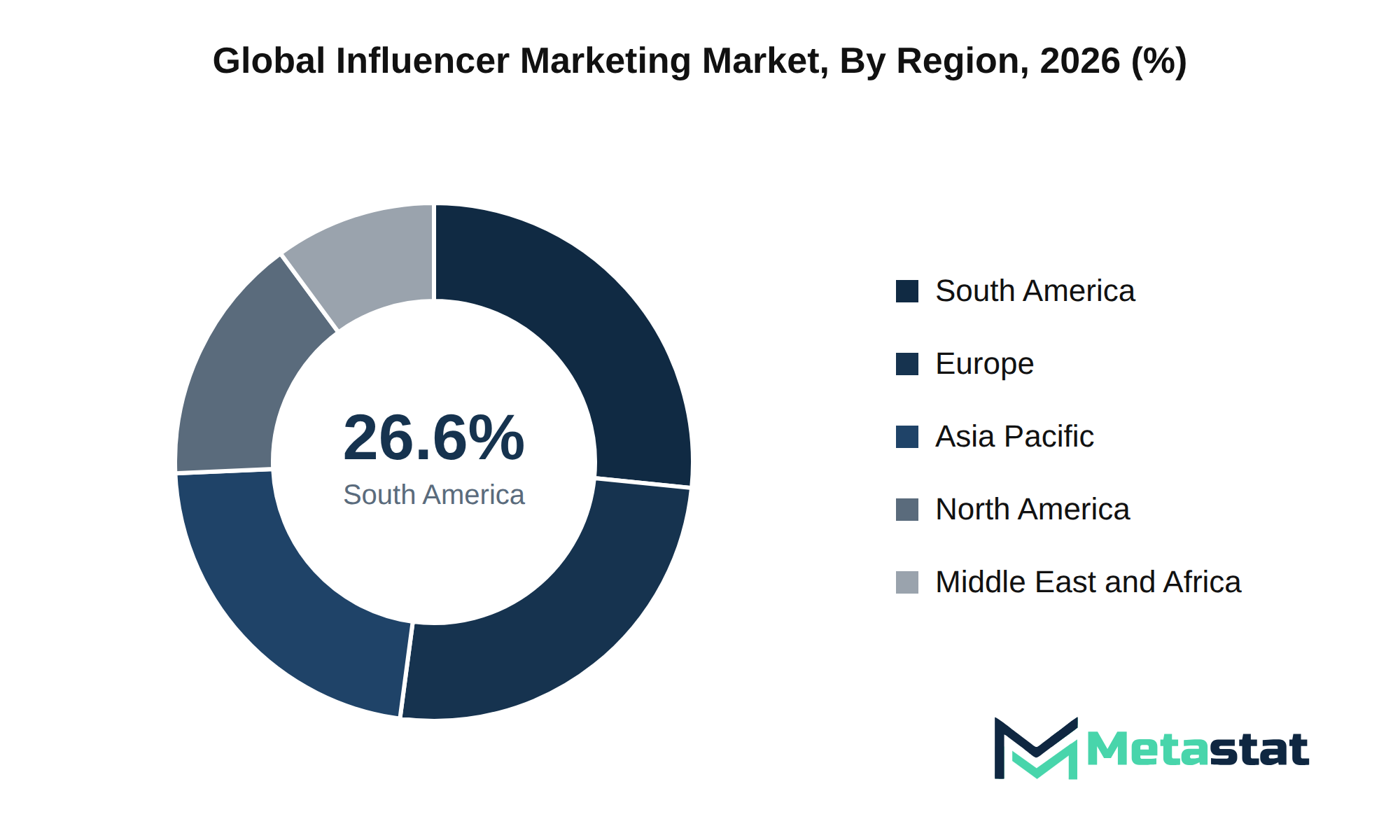
Valued at 26.6% of the global market in 2025, South America's share in the influencer marketing space highlights its potential for growth. With continued investment from both local and foreign entities, incremental growth vectors are anticipated, further enhancing the region's role in the global marketplace. Overall, the combination of increased digital adoption, cultural relevance, and competitive dynamics will shape the future trajectory of influencer marketing in South America.
The Influence Marketing market within the Middle East and Africa demonstrates significant potential for growth, driven by increasing digital engagement and social media usage across the region. Countries including Saudi Arabia and the UAE lead in adopting influencer marketing strategies, supported by a youthful population and high levels of internet penetration. South Africa contributes to this trend, attributed to local brands increasingly recognizing the value of leveraging influencers to enhance their reach and engagement.
Infrastructure modernization provides the necessary digital frameworks to support influencer marketing initiatives. While local companies invest in technology and platforms that facilitate influencer collaborations, a more robust ecosystem for the market develops. This dynamic environment creates partnerships between brands and influencers, creating opportunities for innovative marketing campaigns.
Underpenetrated territories within the region offer incremental growth vectors, specifically in emerging markets where influencer marketing remains in nascent stages. The cultural nuances and diverse consumer behaviors within these markets present unique challenges and opportunities for tailored marketing strategies that connect with local audiences. This localized approach allows companies to effectively tap into the specific preferences of consumers, driving further adoption of influencer marketing tactics.
Geopolitical factors influence market dynamics, impacting cross-border trade corridors and necessitating localized compliance with regulatory frameworks. Companies operating in this space navigate these complexities while seeking to expand their influence and reach. Overall, emerging domestic market leaders adapt to the shifting landscape of consumer preferences and technological advancements, establishing their positions within the influencer marketing ecosystem.
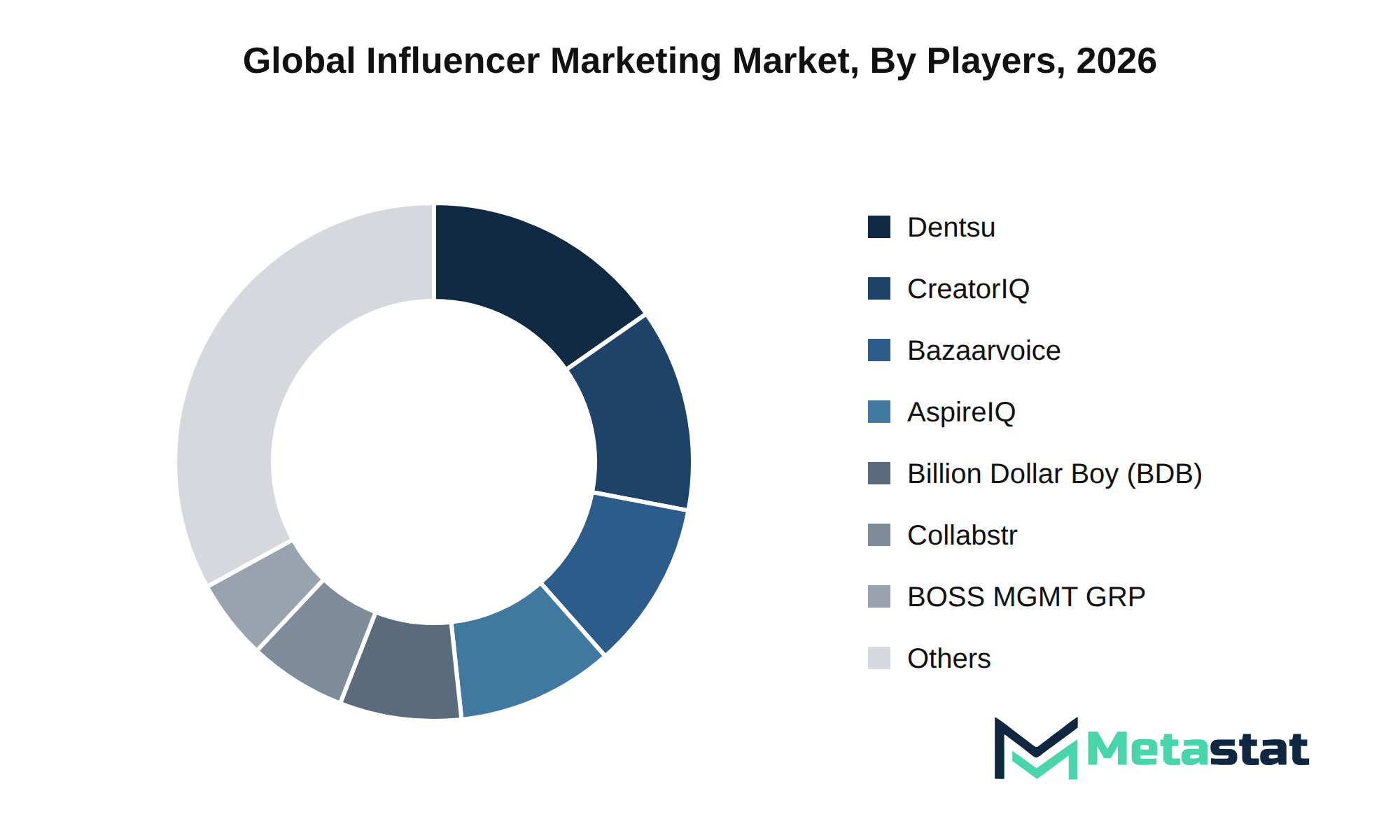
The Influencer Marketing market features a diverse range of players employing various strategies to capture market share. Companies including ALA Global Media, Bazaarvoice, and Dentsu Group focus on strategic alliances and partnerships to enhance service offerings and broaden customer reach. Collaborative efforts among these firms create innovative solutions that cater to evolving consumer preferences and industry trends.
Product differentiation is essential in the competitive dynamics of the market. Firms like CreatorIQ and Grin Technologies Inc. leverage proprietary technologies to deliver unique insights and analytics, ensuring brands achieve optimal influencer engagement. The emphasis on research and development strengthens their market positions by providing advanced tools that enhance campaign effectiveness.
Pricing architectures and commercial models vary significantly among players, with companies like Emplifi Inc. and Klear adopting flexible pricing strategies that appeal to both small and large enterprises. This adaptability enhances customer retention and brand loyalty, contributing to competitive advantages. The market landscape remains fluid, with ongoing mergers and acquisitions shaping future growth trajectories and market consolidation.
Barriers to entry persist, driven by established brand equity and technological advancements. New entrants face challenges in overcoming the dominance of existing players including IZEA Worldwide, Inc. and Meltwater NV, which possess extensive intellectual property portfolios and established customer bases. While the market evolves, the focus shifts toward integrating value chains and optimizing supply chain efficiencies to maintain competitive positions.
The future competitive outlook centers on strategic growth vectors, including expansion into emerging markets and enhancement of digital platforms. Players that successfully navigate these dynamics will lead the Influencer Marketing market, shaping its trajectory through innovation and strategic foresight.
Market size is forecast to rise from USD 34.2 billion in 2025 to over USD 103.2 billion by 2033. This growth reflects a base case of a 14.8% CAGR, driven by several macroeconomic factors. In an optimistic scenario, enhanced consumer engagement and rapid adoption of digital platforms could further accelerate growth, enabling brands to leverage influencer marketing for more personalized and effective communication strategies. Conversely, in a bear case, economic downturns or regulatory pressures could constrain investment in marketing initiatives, potentially limiting the growth trajectory.
The Influencer Marketing market experiences structural shifts influenced by changing consumer preferences, technological advancements, and evolving regulatory frameworks. Integration of next-generation technologies will facilitate innovative content creation and distribution methods, enhancing engagement rates across various platforms. Research and development timelines will play a critical role in determining how quickly new tools and methodologies become accessible to brands.
Compliance with evolving regulations will affect operational practices within the market, requiring brands to adapt their influencer partnerships accordingly. Geopolitical realignments and trade dynamics will impact marketing strategies by altering supply chains and access to key consumer markets. Strategic allocation of capital towards influencer marketing initiatives will strengthen brands' competitive position, enabling them to navigate these challenges.
Identifying emerging white-space opportunities will enable companies to address unmet enterprise needs while capturing high-growth pockets within the market. Executive-level strategic imperatives will focus on developing defensibility roadmaps to ensure sustained growth during competitive pressures. These factors will shape the future of the Influencer Marketing market, influencing how brands invest and engage with consumers over the forecast period.
The report strategically identifies and profiles the key market players and analyses their core competencies in each sub-segment of the Influencer Marketing market.
Report Attributes | Details |
Study Period | 2021-2033 |
Base Year | 2025 |
Estimated Year | 2026 |
Forecast Period | 2026-2033 |
Historical Period | 2021-2025 |
Growth Rate | CAGR 14.8% from 2026 to 2033 |
Revenue Unit | USD billion |
Segmentation | By Component, End User, Platform, Organization Size, and Region |
By Region | North America (By Component, End User, Platform, Organization Size, and Country)
|
Europe (By Component, End User, Platform, Organization Size, and Country)
| |
Asia Pacific (By Component, End User, Platform, Organization Size, and Country)
| |
South America (By Component, End User, Platform, Organization Size, and Country)
| |
Middle East and Africa (By Component, End User, Platform, Organization Size, and Country)
|
Find answers to common questions about this report
The Influencer Marketing market size was valued at USD 34.2 billion in 2025, according to the Metastat Insights study.
The Influencer Marketing market is projected to grow at a CAGR of 14.8% during the forecast period from 2026 to 2033.
The North America Influencer Marketing market size is estimated to reach USD 9.5 billion by 2033.
The largest segment in the Influencer Marketing market is the Software component, projected to reach USD 79.6 billion by 2033, compared to USD 23.6 billion for Services in the same year.
Key drivers for the Influencer Marketing market include digital transformation, which enhances brand engagement through technology and data analytics. Evolving consumer behaviors, particularly among younger generations, emphasize the demand for personalized and authentic interactions with brands, leading to increased investments in influencer partnerships.
Europe holds the largest share of the Influencer Marketing market, representing 25.5 percent of the total market. This region's strong position reflects significant investment and engagement in influencer campaigns by brands and marketing agencies.
The Influencer Marketing market growth faces significant challenges due to regulatory compliance hurdles that require substantial investment, diverting resources from core marketing initiatives. Macroeconomic headwinds, including inflationary pressures, increase operational costs, leading brands to adopt a conservative approach toward influencer marketing spending.
Factors favoring product adoption in the Influencer Marketing industry include the increasing reliance on personalized and authentic interactions, particularly among younger consumers. The integration of advanced technologies enhances collaboration and targeting strategies, while evolving consumer behaviors drive brands to invest in influencer partnerships that align with specific demographics.
The Influencer Marketing market is estimated to reach a valuation of USD 103.2 billion by 2033.
Key players in the Influencer Marketing market include ALA Global Media, AspireIQ, Inc., Bazaarvoice, Billion Dollar Boy (BDB), Brandwatch, CreatorIQ, and IZEA Worldwide, Inc.
The analysts below cover Consumer Goods research at Metastat Insights.
LEAD ANALYST
Utkarsh Khirodkar is a Lead Market Research Analyst at MetaStat Insight, specializing in market intelligence, technology sector assessments, and competitive strategy.
Enterprise zero-trust network rollouts are often slowed down by multi-cloud transit latency and proprietary hardware retirement schedules. This study provided realistic total cost of ownership models comparing cloud-delivered security edge solutions against traditional hardware refreshes. The analysis of contract renewal lengths and software maintenance fees gave us clear visibility into enterprise replacement cycles over the next three to five years.
Scaling antibody-drug conjugate manufacturing hinges on contract manufacturing availability for high-potency active ingredients. The MetaStat Insight analysis looked closely at global cleanroom slot constraints, bioconjugation batch failure rates, and supply chain redundancies between the US, Europe, and India. The supplier capability matrix proved genuinely useful for our team when mapping secondary source options across our clinical pipeline.
Floating offshore wind feasibility relies heavily on specialized installation vessel availability and port crane limits, which most broad renewable energy forecasts ignore. The report delivered a thorough analysis of dry dock capacity, mooring chain supply constraints, and raw material pricing trends for deepwater anchor installations. It served as a solid independent sanity check for our offshore project capital expenditure assumptions.
Explore related market intelligence reports worth reading alongside this one.