
LEAD ANALYST
Utkarsh Khirodkar is a Lead Market Research Analyst at MetaStat Insight, specializing in market intelligence, technology sector assessments, and competitive strategy.

Global Hospitality Market Size, Share, By Service Type (Hotels and Motels, Other Short-Stay Accommodation, Full-Service Restaurants, Quick-Service Restaurants, Cafés, Coffee Shops and Bars, Contract Catering), By Customer Type (Individual and Household Customers, Corporate Customers, Institutional Customers), By Ownership Type (Independent Operators, Chain-Affiliated Operators), By Sales Channel (Direct on-Premises Transactions, Direct Remote Bookings and Orders, Third-Party Intermediaries), Industry Analysis, Growth, Trends, and Forecast, 2026-2033
Report ID
MSI-5706
Published
November, 2026
Pages
269 Pages
Format
Historical
Base year
Forecast
Forecast period
Report Details
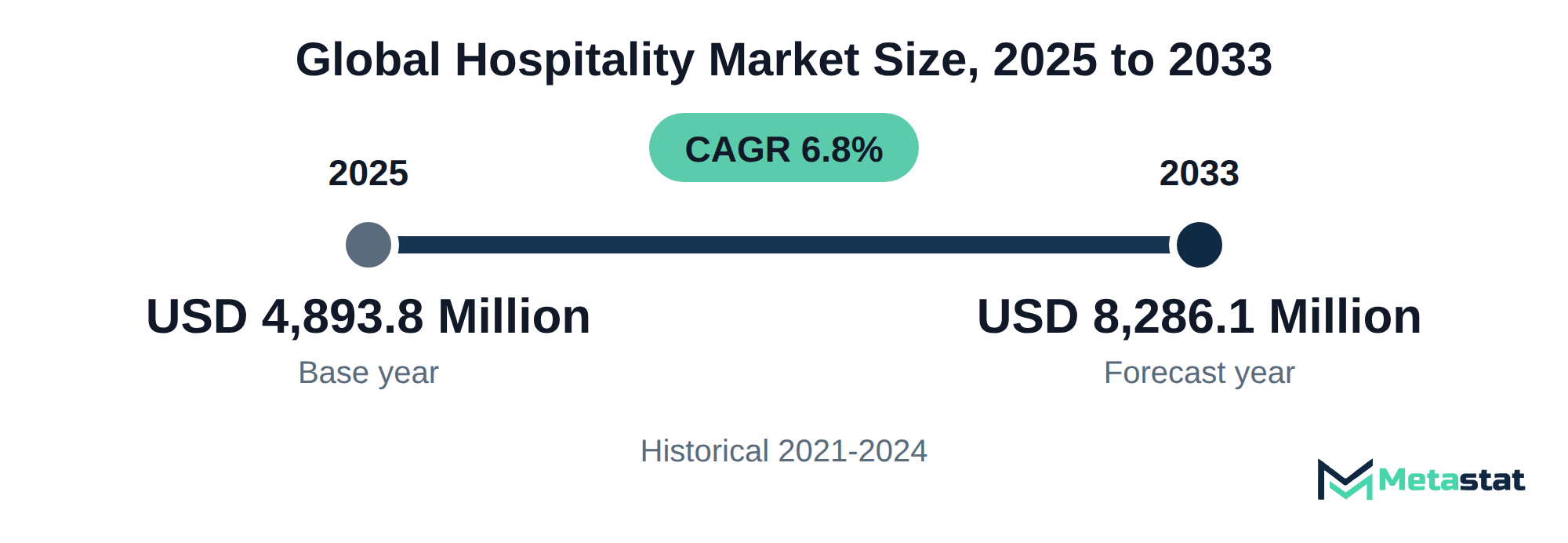
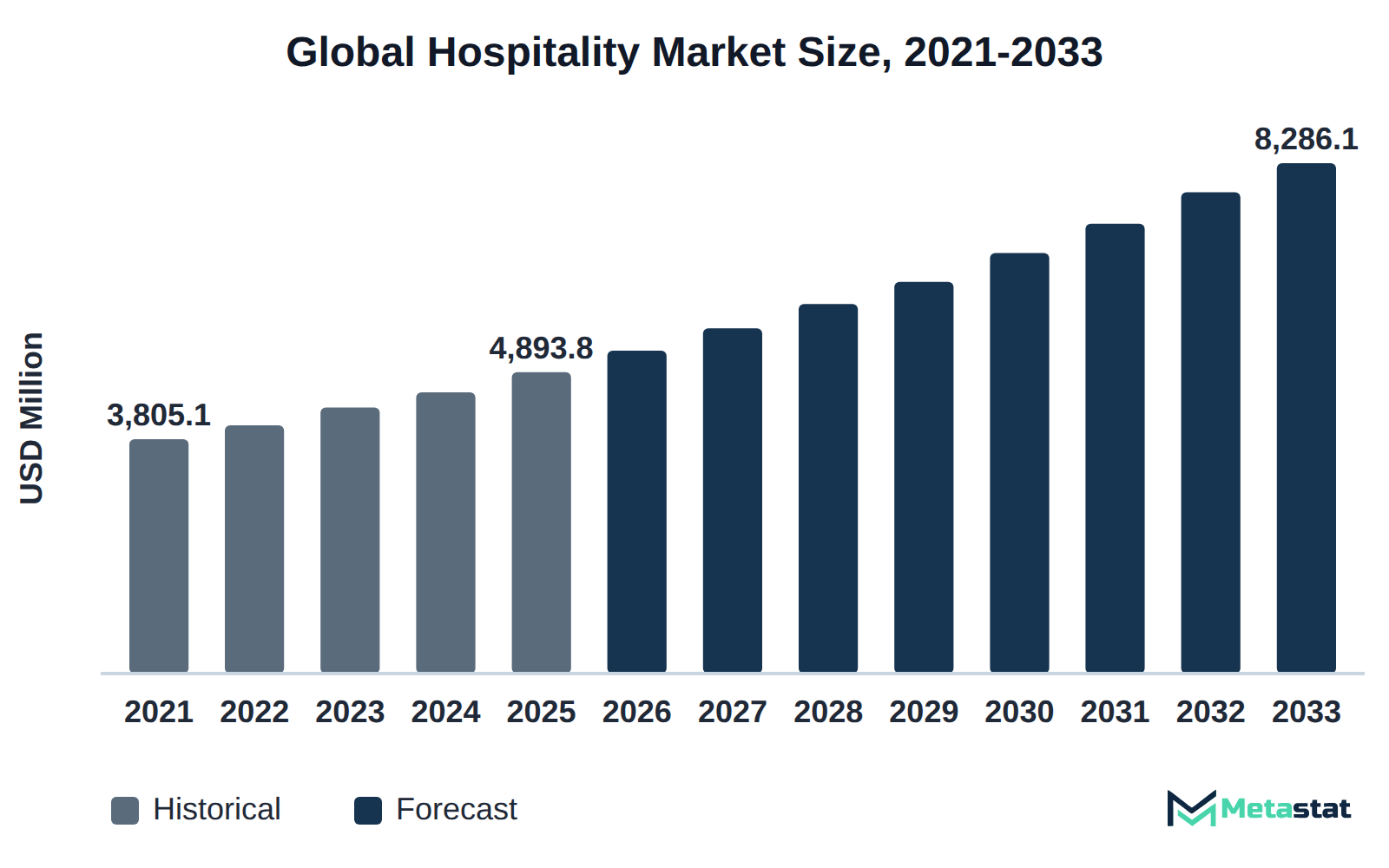
Market Valuation: Valued at $4,893.8 Million in 2025, projected to reach $8,286.1 Million by 2033 at a 6.8% CAGR.
Dominant Segment: The individual and household customers segment leads the market, driven by a growing interest in travel and unique dining experiences.
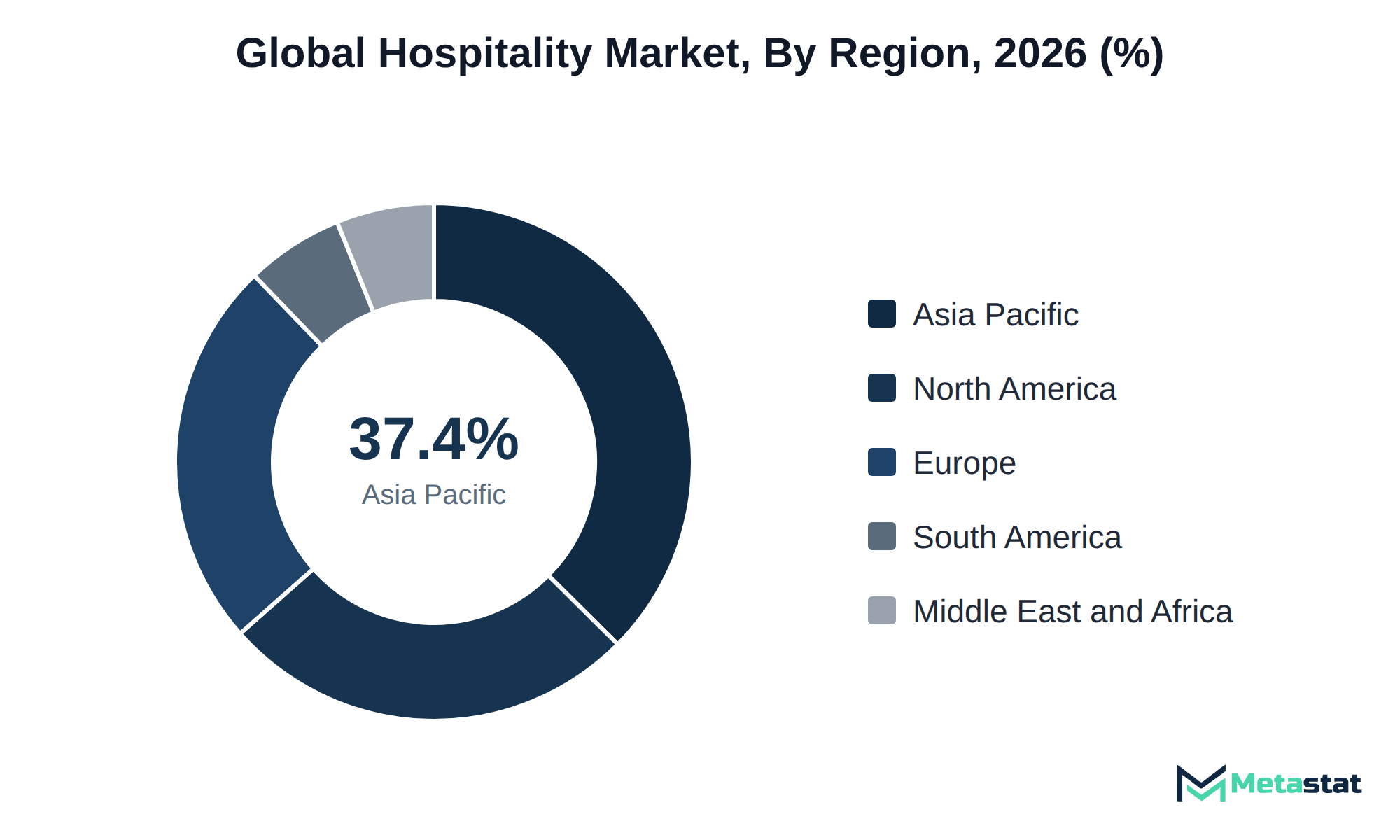
Geographic Lead: Asia Pacific is the leading region, holding a market share of 37.4%, fueled by increasing disposable incomes and a preference for experiential travel.
What's Inside: The report includes detailed analyses of service types, customer types, and ownership types, along with competitive coverage and a forecast window from 2026 to 2033.
Emerging Trends: Key trends include the rise of digital booking solutions and a focus on sustainability, reshaping consumer preferences and service delivery in the hospitality market.
Growth Drivers: Factors such as higher disposable incomes and the shift towards personalized experiences are propelling market growth, particularly among individual and household customers.
Choose Your License
Global Hospitality Market
The global Hospitality market was valued at USD 4,893.8 million in 2025 and is projected to reach USD 8,286.1 million by 2033, growing at a CAGR of 6.8% over the forecast period.
The Hospitality market encompasses a wide range of services and accommodations, including hotels, restaurants, and other short-stay options. Buyers invest in this market to satisfy their travel, dining, and leisure needs, driven by factors including increased disposable income and changing consumer preferences. The demand for quality experiences fuels spending, with individual and household customers representing the largest segment, reflecting a shift toward personalized services and unique offerings.
Growth is primarily supported by the rising trend of experiential travel, with consumers seeking memorable and immersive experiences. Significant contributions from various regions characterize the market, with Asia Pacific leading in market share at 37.4%. North America holds 26.0% of the market in 2025, with the US leading in 2026. The competitive landscape includes several players that serve varied customer needs while adapting to market conditions.
Investment in technology and infrastructure enhances service delivery and customer satisfaction. The integration of digital booking platforms and mobile applications streamlines the customer journey, making it easier for individuals to access hospitality services. The growing emphasis on sustainability and eco-friendly practices further influences consumer choices, creating opportunities for businesses to align with these values.
The Hospitality market includes various service types, including hotels, motels, restaurants, and short-stay accommodations, which cater to diverse customer needs. Individual and household customers represent a significant portion of the market, driven by the desire for travel, dining experiences, and leisure activities. Corporate customers contribute to market spending, seeking accommodation and catering services for business events and travel. This diverse customer base highlights the market's importance in facilitating both personal and professional engagements.
Growth in the market is influenced by several factors, with the increasing popularity of travel and dining experiences serving as a primary catalyst. Among the various service types, full-service restaurants generate the most value, reflecting robust demand for high-quality dining options. In terms of regional performance, the Asia Pacific region stands out with a share of 37.4%, surpassing other regions, including North America, which holds 26.0% of the market in 2025, with the US leading in 2026. This indicates a shift in consumer preferences toward experiences that blend cultural exploration with culinary enjoyment.
Changing consumer behaviors and preferences continue to reshape the Hospitality market. Emerging trends, including an increased focus on sustainability and personalized services, have begun to reshape the competitive landscape. Businesses adapting to these trends require investment in innovative solutions and strategic partnerships to maintain market relevance and capture growth opportunities.
In response to evolving guest expectations, hotel and restaurant operators increasingly adopt smart hospitality technology to enhance customer experiences. The rise of mobile applications and contactless services has transformed how guests interact with hospitality venues. For instance, the adoption of mobile check-in and digital menus, driven by the desire for convenience and safety, has become essential. This shift aligns with the market's projected growth, with the full-service restaurants segment expected to reach USD 2,100.5 million by 2033.
Operators focusing on these technological advancements experience increased customer satisfaction and loyalty. The integration of data analytics allows businesses to personalize offerings, tailoring experiences to individual preferences and enhancing engagement. This personalization encourages repeat visits, contributing to overall revenue growth. Establishments that embrace innovation are better positioned to meet the demands of modern consumers, which benefits the hospitality market.
The integration of digital booking systems and food delivery services significantly reshapes purchasing behaviors within the Hospitality market. A notable trend is the increasing reliance on direct remote bookings and orders, which is projected to reach USD 1,671.3 million by 2033, reflecting a compound annual growth rate of 8%. This shift indicates a growing preference for convenience and efficiency among consumers, prompting service providers to enhance their digital platforms and improve the booking process.
Corporate customers, in particular, are expected to drive demand for these digital solutions, seeking integration with their corporate travel management systems. This transition allows for quicker transactions and greater flexibility in payment methods, including contactless payments and mobile wallets. The rise in corporate travel post-pandemic further fuels this trend, creating opportunities for hospitality providers to innovate their contract models and pricing strategies.
Companies that adapt to these changes can capture a larger share of growing consumer expectations, which supports revenue and customer loyalty. Digital solutions are essential for staying competitive in the Hospitality market.
The staffing requirements for hotels, restaurants, and catering services differ significantly due to the unique operational dynamics and customer interactions in each segment. For hotels, a more diverse range of services, including front desk operations, housekeeping, and concierge services, contributes to a higher staffing need. Individual and household customers, which include hotel guests, are expected to rise from USD 4,246.6 million in 2026 to USD 6,640.5 million by 2033, reflecting growing demand for accommodation services.
In contrast, restaurants focus on food preparation and dining experiences, requiring a mix of chefs, waitstaff, and management personnel. Quick-service restaurants exhibit a unique demand for staffing that emphasizes speed and efficiency. The quick-service restaurant segment is projected to expand significantly, driven by a growing preference for fast dining options. Catering services employ seasonal staff to accommodate fluctuating demand during events and peak seasons. These distinctions help hospitality businesses optimize their workforce, enhance customer service, and improve operational efficiency.
Growing interest in travel and culinary experiences drives significant demand for hospitality services worldwide. The hospitality market benefits from an increase in individual and household customers seeking diverse accommodation and dining options. This customer segment is projected to expand, with a rise from USD 4,246.6 million in 2026 to USD 6,640.5 million by 2033, reflecting a compound annual growth rate of 6.6%. This trend stems from a combination of higher disposable incomes, a desire for unique travel experiences, and an expanding population that prioritizes leisure and social activities.
Corporate customers contribute to this demand, with expectations of growth reaching USD 1,016.7 million by 2033, driven by increased business travel and corporate events. The hospitality market adapts to these shifts, ensuring that offerings meet the evolving preferences of both individual and corporate clientele. This alignment with customer demands positions companies to capture larger market shares, ultimately enhancing revenue streams. Increased investment in marketing and service innovation enables hospitality providers to attract these diverse customer segments, strengthening their presence in an increasingly competitive environment.
Changing consumer behavior significantly influences spending patterns within the hospitality market. Enhanced disposable income levels among individual and household customers drive higher demand for travel and dining experiences. This demographic shift leads to an influx of customers seeking leisure and business travel opportunities. Consequently, the market experiences increased volume and price, creating growth opportunities for service providers. The adaptability of offerings to cater to emerging consumer preferences strengthens the competitive landscape. Operators who align services with current travel and dining trends enjoy enhanced customer loyalty and market share.
Advancements in technology significantly improve operational efficiency within the Hospitality market. Automation tools streamline processes in hotels and restaurants, allowing staff to focus on delivering high-quality customer experiences. For example, automated check-in systems reduce wait times for guests, enhancing satisfaction and encouraging repeat visits.
Data analytics enables operators to tailor services based on customer preferences and behavior. This approach enhances marketing strategies, allowing businesses to engage with specific customer segments more effectively. Implementation of mobile apps for reservations and ordering boosts convenience for customers and increases order accuracy and operational speed.
The integration of these technologies contributes to a competitive advantage in the market, enabling firms to attract a broader customer base. The evolution of technology continues, with its role in improving service delivery and operational performance remaining critical to meeting the expectations of today's consumers.
Labor shortages within the hospitality industry impact service delivery and operational efficiency. Many establishments struggle to secure qualified staff, resulting in slower service and reduced customer satisfaction. These challenges particularly affect restaurants and hotels, which rely heavily on frontline employees to maintain service standards. The inability to fill positions leads to extended wait times and compromises guest experiences. Consequently, businesses face pressure to reduce operational hours or limit capacity, resulting in diminished revenue opportunities. This restraint limits the growth potential of the hospitality market, with establishments struggling to meet the increasing demand for services from both individual customers and corporate clients. Addressing labor shortages is crucial for maintaining service quality and profitability.
Profitability within the Hospitality market faces significant margin pressure, stemming from rising costs associated with service delivery and operational expenses. Increased competition drives prices down, compelling suppliers to adjust their pricing strategies. In this context, operators focus on enhancing operational efficiency and streamlining processes to mitigate financial strain. Suppliers invest in technology that automates various tasks, thereby reducing labor costs and improving service delivery times. Implementing dynamic pricing models allows businesses to better align their offerings with demand fluctuations, optimizing revenue. These adjustments reflect a strategic response to evolving market conditions, ensuring that operators maintain competitiveness while safeguarding profit margins. Adapting to these financial pressures is essential for long-term growth and stability in the market.
The segment of individual and household customers presents a significant growth opportunity within the Hospitality market. Increasing consumer interest in travel experiences and specialized dining options drives this growth. Households seeking unique accommodations and culinary experiences fuel demand for hotels, short-stay options, and full-service restaurants. Business models that cater to this clientele focus on personalized services, enhancing customer satisfaction and loyalty. This trend creates a favorable environment for operators targeting individual and household customers, making it essential for firms to strategically align their offerings to meet evolving preferences. Anticipated growth in this segment strengthens the overall market trajectory through 2033.
The Global Hospitality market is segmented based on Service Type, Customer Type, Ownership Type, and Sales Channel.
Hotels and Motels segment is valued at USD 849.9 million in 2026 and is projected to reach USD 1,368 million by 2033, at a CAGR of 7% during the forecast period. This segment caters primarily to both individual and household customers seeking accommodation for leisure or business travel. Factors driving demand include the resurgence of travel and tourism, supported by increased consumer spending on experiences. In contrast to other segments, including Full-Service Restaurants, which target dining experiences, Hotels and Motels offer extended stays and amenities including room service and meeting spaces. The anticipated growth reflects shifting preferences towards quality accommodations, influencing competition and investment strategies among operators aiming to enhance guest experiences while maintaining operational efficiency. The Hotels and Motels segment stands out for its ability to adapt to changing consumer expectations, which positions it for significant growth in the Hospitality market.
Other Short-Stay Accommodation segment is estimated to reach USD 779.7 million by 2033, at a CAGR of 7.1% during the forecast period. This segment caters primarily to travelers seeking flexible lodging options, including vacation rentals and serviced apartments. Individual and household customers, driven by the need for convenience and affordability, significantly contribute to growth in this area. The adoption of technology for efficient booking and enhanced guest experiences boosts demand. Compared to other segments like Full-Service Restaurants, which have a projected value of USD 2,100.5 million, the Other Short-Stay Accommodation segment exhibits faster growth due to rising consumer preference for unique, personalized travel experiences and the increasing popularity of alternative lodging options.
This segment serves individual customers seeking dining experiences, alongside corporate clients requiring catering and business dining services. Growth in this segment is driven by increasing consumer preference for dining out and demand for diverse culinary offerings. The CAGR for this segment stands at 7.0%, reflecting robust performance compared to other segments, influenced by the rising trend of food experiences. In contrast to Quick-Service Restaurants, which exhibit a higher CAGR of 7.2%, Full-Service Restaurants provide a different atmosphere and service style, appealing to customers willing to spend more on quality and ambiance. This unique positioning builds loyalty among patrons and enables operators to command higher price points, enhancing revenue potential. Factors including shifting dining trends and the growing emphasis on food culture contribute significantly to the segment’s expansion in the market.
Quick-Service Restaurants segment is projected to grow at a CAGR of 7.2% during the forecast period. This segment serves customers seeking fast, convenient meal options, appealing to individual and household clients who prioritize efficiency and affordability. Increased demand for quick dining solutions, driven by busy lifestyles, fuels the segment's growth. Compared to Full-Service Restaurants, which are expected to reach USD 2,100.5 million by 2033, the Quick-Service Restaurants segment offers lower price points and faster service, attracting a broader clientele. Corporate customers contribute to demand, utilizing quick-service options for meetings and events. The market demonstrates resilience through innovation, responding to evolving consumer preferences and dietary trends, which further stimulates revenue growth.
Cafés, Coffee Shops and Bars operate as social hubs where individuals gather for leisure, work, or casual meetings. This segment attracts individual and household customers seeking a comfortable atmosphere for relaxation or productivity. The rise of remote work has driven increased patronage, with consumers seeking environments that blend comfort and convenience, which differentiates this segment from more formal dining options. Consumer preferences for specialty beverages and unique experiences enhance growth potential, distinguishing it from slower-growing segments like Full-Service Restaurants. Competition from at-home beverage preparation presents challenges, necessitating innovation in product offerings and service styles to maintain customer interest. The market adapts to evolving preferences.
Contract catering serves food and beverage services for businesses, educational institutions, and healthcare facilities, ensuring that meals meet the specific needs of the client while maintaining high standards of quality and service. This segment helps organizations provide dining facilities without managing food services internally. Demand for contract catering experiences growth driven by increasing attention to employee wellness and satisfaction, creating a preference for high-quality food options in workplaces. This segment differentiates itself from traditional restaurant service models, emphasizing tailored services for corporate and institutional clients, resulting in less price sensitivity compared to other service types. Contract catering remains important as businesses increasingly recognize that quality dining supports employee engagement and productivity.
Food trucks and stands provide diverse culinary experiences, appealing to a wide range of consumers. These mobile food services cater to individual and household customers seeking convenience and quick service, particularly in urban areas and during events. The growing preference for street food and gourmet offerings drives increased demand for this segment. Food trucks benefit from lower overhead costs compared to traditional restaurants, allowing for competitive pricing and greater flexibility in location. Consumer interest in unique dining experiences fuels growth, distinguishing this segment from other service types, including full-service restaurants, which typically involve higher operational expenses. The hospitality market embraces this trend, driven by evolving consumer tastes and the desire for accessible dining options.
Individual and household customers engage with hospitality services for leisure travel, dining, and various social activities. The growth of disposable income and a rising trend towards experiential spending drive demand in this segment. This customer type differs from corporate clients, who seek volume discounts and specific service arrangements, resulting in a lower projected value of USD 1,016.7 million by 2033 with a CAGR of 7.7%. The market's adaptability to changing consumer preferences, including the increasing focus on personalized experiences, enhances its competitive edge. Overall, individual and household customers significantly contribute to the total revenue generated in the Hospitality market, leveraging both traditional and digital channels for bookings and orders.
Corporate Customers segment is estimated to reach USD 1,016.7 million by 2033, at a CAGR of 7.7% during the forecast period. This segment caters primarily to businesses seeking accommodations, event spaces, and dining options for their employees and clients. Demand for corporate travel, meetings, and events drives growth, reflecting the increasing importance of business interactions in enhancing collaboration and partnerships. The Corporate Customers segment differs from Individual and Household Customers in both purchasing behavior and spending capacity. Higher budgets typically characterize corporate clients, leading to greater expenditure on services that enhance their operations. This segment's growth is supported by rising corporate travel budgets, which are expected to continue influencing the market trajectory throughout the forecast period.
Institutional Customers segment is expected to reach USD 628.9 million by 2033. This segment primarily serves organizations, including schools, hospitals, and government entities, requiring catering and accommodation services for events and operational needs. A shift toward healthier and more sustainable food options influences the choices made by institutional buyers, creating a demand for providers capable of meeting these expectations. This difference arises from the relatively stable nature of institutional contracts, governed by longer-term agreements and budget constraints. Increasing investment in institutional facilities and the rising focus on enhancing the overall customer experience drive strong growth potential in this market.
Valued at USD 3,018.5 million in 2026, the Independent Operators segment is projected to reach USD 4,612.1 million by 2033, at a CAGR of 6.2% during the forecast period. Independent operators provide a range of accommodations and services, appealing primarily to individual and household customers seeking personalized experiences. This segment thrives due to the growing preference for unique, locally-inspired stays, contrasting with chain-affiliated operators who often deliver standardized offerings. Enhanced customer experiences drive demand, reflected in the segment's competitive growth, outperforming chain-affiliated operators that are expected to reach USD 3,674.1 million by 2033. The shift toward experiential travel promotes investment in independent operators, creating opportunities for differentiation and niche market expansion. The hospitality market continues to evolve, with independent operators capitalizing on trends favoring authenticity and local engagement.
Chain-Affiliated Operators segment is estimated to reach USD 3,674.1 million by 2033, at a CAGR of 7.4% during the forecast period. This segment caters primarily to travelers seeking reliable and consistent lodging options through established brands. Demand within this segment is driven by increased travel and tourism, reflecting higher occupancy rates and revenue. Chain-affiliated operators often offer loyalty programs that attract repeat customers, enhancing their competitive edge. Unlike independent operators, these chains typically benefit from brand recognition and established marketing strategies, contributing to their higher revenue projections. The segment shows a growth rate that outpaces other ownership types, indicating a robust response to evolving consumer preferences for trusted accommodations.
Valued at USD 3,570.9 million in 2026, this segment is projected to reach USD 5,328.8 million by 2033, at a CAGR of 5.9% during the forecast period. Direct on-Premises Transactions are primarily used by individual and household customers seeking dining and entertainment experiences. Growth within this segment is influenced by the increasing preference for in-person dining, driven by trends in socializing and consumer engagement. Compared to other sales channels, this segment exhibits slower growth, reflecting a shift towards direct remote bookings and orders, which is expected to reach USD 1,671.3 million by 2033 at a CAGR of 8%. The Hospitality market continues to evolve, with direct on-premises transactions remaining integral for creating memorable customer experiences while adapting to changing consumer preferences.
This segment primarily serves customers seeking convenience and flexibility in booking accommodations and services remotely. Growth is driven by an increasing preference for digital channels among individual and corporate clients, facilitating efficient booking experiences. Compared to direct on-premises transactions, which have a CAGR of 5.9%, this segment exhibits more rapid growth, highlighting a shift towards online engagement. The rise of mobile applications and platforms enhances accessibility, attracting tech-savvy consumers and businesses alike. This evolution in booking behavior represents a significant transformation in the hospitality sector, reflecting changing consumer preferences and technological advancements.
Third-Party Intermediaries segment is expected to reach USD 1,286 million by 2033. This segment involves platforms and services that connect consumers with hospitality providers, facilitating bookings and reservations. Individual travelers and corporate clients frequently engage these intermediaries for convenience and access to a broader range of options. The growth of online booking platforms and increased smartphone penetration drive demand within this segment. Compared to direct on-premises transactions, this segment displays a higher projected growth rate, with a CAGR of 8% during the forecast period, reflecting the shift toward digital solutions. Market dynamics differ from traditional sales channels, with these intermediaries operating at competitive pricing compared to direct bookings, enhancing consumer appeal and engagement.
Based on geography, the Global Hospitality market is divided into North America, Europe, Asia-Pacific, South America, Middle East, and Africa.
North America represents a significant portion of the Hospitality market, holding a 26.0% share in 2025. The region's demand is driven primarily by individual and household customers, who seek diverse accommodation and dining options. The hospitality infrastructure in the United States, Canada, and Mexico continues to expand, supporting sector growth. Regulatory frameworks focusing on health and safety standards influence operational practices within restaurants and accommodation services. North America is expected to reach USD 2,083.1 million by the end of 2033, indicating strong growth within the market.
The European market exhibits a unique blend of cultural and culinary diversity, driving demand across various segments. Countries like Germany and France are known for their rich dining experiences, which significantly influence the full-service restaurant segment. The hospitality market in Europe benefits from strong tourism, with Italy and Spain attracting millions of visitors annually, thereby boosting demand for hotels and motels. Competitive pricing and high-quality services help operators capture both individual and corporate customers. Economic growth across the region supports investment in infrastructure, enhancing travel and accommodation options. By 2025, Europe is projected to represent 24.3% of the global market, reflecting its significance in the overall hospitality sector.
The Asia-Pacific region accounts for 37.4% of the global hospitality market in 2025. Growth in this market results from rising disposable incomes and an expanding middle class, particularly in countries including China, India, and Southeast Asia. Increased domestic and international travel drives demand for various hospitality services, including hotels and restaurants. Investment in infrastructure, including transportation and communication, enhances accessibility and convenience for travelers, thus contributing to market expansion. The market's diverse customer base, encompassing individual households and corporate clients, shapes offerings and service design across various segments. Innovative approaches and adaptations to local preferences further strengthen the region's hospitality environment.
The hospitality market in South America experiences growth driven by the expanding tourism sector, particularly in Brazil and Argentina. Increased domestic and international travel fuels demand for various services, including hotels, restaurants, and other accommodations. The market share for South America is projected at 6.1% in 2025, indicating a stable position within the global landscape. Investment in infrastructure, including transportation and hospitality facilities, enhances accessibility to popular destinations, further stimulating visitor numbers. The region relies on a diverse range of customer types, particularly individual and household customers, which contribute significantly to overall market revenue. This dynamic environment presents opportunities for growth across multiple segments, emphasizing the region's potential within the broader hospitality market.
The hospitality market in the Middle East and Africa highlights increasing demand driven by tourism and business travel, particularly in Saudi Arabia and the UAE. Focus on infrastructure development, including new hotels and resorts, enhances the region's appeal to visitors. South Africa represents a growing market for both leisure and business travelers, contributing to the overall growth of the industry. The market share in this region is projected at 6.1% in 2025, reflecting ongoing investments and development efforts. Significant opportunities exist within the hospitality sector for innovative customer experiences and enhanced service offerings, aligning with evolving traveler preferences. The emphasis on sustainability and local culture also attracts a diverse customer base. Overall, the hospitality market in this region is expected to benefit from favorable trends and strategic initiatives.
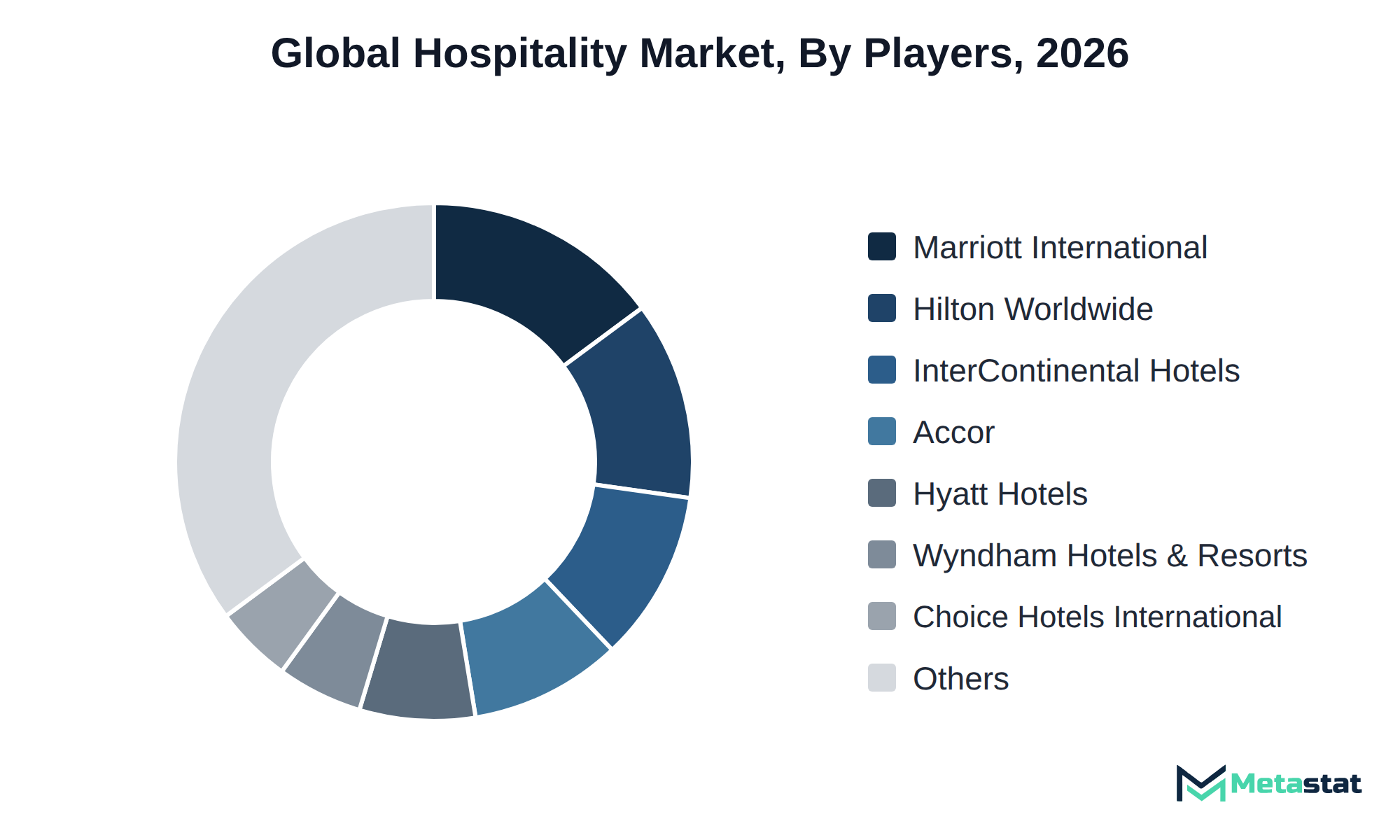
Companies in the Hospitality market compete across various service types, focusing on hotels, restaurants, and short-stay accommodations. Key factors influencing buyer choices include pricing, customer service, and the overall experience offered by the service provider. Customers prioritize quality and ecosystem integration when selecting their preferred service providers, emphasizing reliability and reputation.
Major players including Marriott International, Inc. and Hilton Worldwide Holdings Inc. focus on providing comprehensive lodging solutions tailored for individual and corporate customers. Meanwhile, Accor SA emphasizes a diverse portfolio that caters to various customer segments, while Hyatt Hotels Corporation strives to enhance customer loyalty through innovative service offerings. Quick-service restaurant chains like McDonald's Corporation and Yum! Brands, Inc. prioritize speed and convenience, appealing to a different customer base within the market.
The projected growth relies on several key developments. Firstly, the increasing demand from individual and household customers for full-service restaurants and hotels drives significant revenue growth, particularly in the Asia Pacific region, which accounts for 37.4% of the market share. The shift towards direct remote bookings and orders enhances convenience and accessibility, attracting more consumers. Secondly, the expansion of corporate customers in North America supports a rise in spending on hospitality services, with expectations for corporate revenue to reach USD 1,016.7 million by 2033. However, a major risk includes economic downturns that could lead to reduced consumer spending on non-essential services, negatively impacting the market. The hospitality market faces challenges in maintaining growth momentum if external economic conditions become unfavorable, affecting both individual and corporate spending habits.
By Service Type: Hotels and Motels, Other Short-Stay Accommodation, Full-Service Restaurants, Quick-Service Restaurants, Cafés, Coffee Shops and Bars, Contract Catering, Others (Food Trucks and Stands)
By Customer Type: Individual and Household Customers, Corporate Customers, Institutional Customers
By Ownership Type: Independent Operators, Chain-Affiliated Operators
By Sales Channel: Direct on-Premises Transactions, Direct Remote Bookings and Orders, Third-Party Intermediaries
The report strategically identifies and profiles the key market players and analyses their core competencies in each sub-segment of the Hospitality market.
Report Attributes | Details |
Study Period | 2021-2033 |
Base Year | 2025 |
Estimated Year | 2026 |
Forecast Period | 2026-2033 |
Historical Period | 2021-2025 |
Growth Rate | CAGR 6.8% from 2026 to 2033 |
Revenue Unit | USD million |
Segmentation | By Service Type, Customer Type, Ownership Type, Sales Channel, and Region |
By Region | North America (By Service Type, Customer Type, Ownership Type, Sales Channel, and Country)
|
Europe (By Service Type, Customer Type, Ownership Type, Sales Channel, and Country)
| |
Asia Pacific (By Service Type, Customer Type, Ownership Type, Sales Channel, and Country)
| |
South America (By Service Type, Customer Type, Ownership Type, Sales Channel, and Country)
| |
Middle East and Africa (By Service Type, Customer Type, Ownership Type, Sales Channel, and Country)
|
Find answers to common questions about this report
The Hospitality market size was valued at USD 4,893.8 million in 2025.
The market is projected to grow at a CAGR of 6.8% during the forecast period from 2026 to 2033.
The North America Hospitality market size is estimated to reach USD 2,083.1 million by 2033.
The leading segment in the Hospitality market is Individual and Household Customers, with a projected value of USD 6,640.5 million by 2033. This segment surpasses others in terms of revenue generation.
Changing consumer behavior drives higher demand for travel and dining experiences, supported by enhanced disposable income levels among individual and household customers. Labor shortages within the hospitality industry impact service delivery and operational efficiency, limiting the growth potential of the market.
Labor shortages significantly restrain growth within the Hospitality market. Many establishments struggle to secure qualified staff, resulting in slower service and reduced customer satisfaction. This challenge impacts operational efficiency and limits the ability to meet increasing demand for services.
Factors favoring adoption in the hospitality industry include rising disposable income levels among individual and household customers, driving demand for travel and dining experiences. The significant projected growth of this customer segment, expanding from USD 4,246.6 million in 2026 to USD 6,640.5 million by 2033, creates opportunities for operators to align their offerings with evolving preferences.
The Hospitality market is estimated to reach a valuation of USD 8,286.1 million by 2033.
Key players operating in the Hospitality market include Marriott International, Inc., Hilton Worldwide Holdings Inc., InterContinental Hotels Group PLC, Accor SA, Hyatt Hotels Corporation, and Wyndham Hotels & Resorts, Inc. Other notable companies in this sector are Choice Hotels International, Inc., Minor International PCL, The Indian Hotels Company Limited, Meliá Hotels International, S.A., Whitbread PLC, Shangri-La Asia Limited, Mandarin Oriental International Limited, Compass Group PLC, Sodexo S.A., Aramark, McDonald's Corporation, Starbucks Corporation, Yum! Brands, Inc., Yum China Holdings, Inc., Restaurant Brands International Inc., Darden Restaurants, Inc., Chipotle Mexican Grill, Inc., and Domino's Pizza, Inc.
Individual and household customers' expenditure is projected to increase from USD 4,246.6 million in 2026 to USD 6,640.5 million by 2033, reflecting a compound annual growth rate of 6.6%.
The analysts below cover Consumer Goods research at Metastat Insights.
LEAD ANALYST
Utkarsh Khirodkar is a Lead Market Research Analyst at MetaStat Insight, specializing in market intelligence, technology sector assessments, and competitive strategy.
When planning edge sensor rollouts across refinery environments, generic IoT reports typically miss the harsh-environment certification bottlenecks. MetaStat Insight gave an objective evaluation of ATEX and Class 1 Division 2 hardware availability, along with realistic five-year maintenance cycle cost projections. The comparison of wireless mesh versus private cellular backhaul helped our team pressure-test network reliability models for remote processing facilities.
In the biological seed treatment space, registration timelines vary drastically between the European Union, Brazil, and North America. The MetaStat Insight research handled these cross-border regulatory barriers with genuine nuance, mapping commercialization pathways alongside historical field adoption rates. The segmentation between microbial strains and biochemical active ingredients was particularly well structured.
Our team was tracking whether regional recycling infrastructure could realistically absorb the growing volume of lithium iron phosphate batteries over the next decade. The report did a solid job separating announced hydrometallurgical plant capacity from active, permitted operational throughput. That distinction made the feedstock availability projections and regional recovery rate models far more credible than standard commercial overviews.
Explore related market intelligence reports worth reading alongside this one.