
LEAD ANALYST
Utkarsh Khirodkar is a Lead Market Research Analyst at MetaStat Insight, specializing in market intelligence, technology sector assessments, and competitive strategy.

Global Nutricosmetics Market Size, Share, By Form (Tablets, Capsules and Softgels, Powders and Granules, Liquids and Ready-to-Drink Beverages, Gummies and Soft Chews), By Primary Active Ingredient (Collagen and Collagen Peptides, Vitamins and Minerals, Botanical Extracts and Other Antioxidants, Hyaluronic Acid and Ceramides, Probiotics and Postbiotics), By Primary Beauty Application (Skin, Hair, Nails, Multi-Benefit Beauty), By Distribution Channel (Pharmacies and Drugstores, Specialty Health and Beauty Stores, Online Retail and Brand Websites, Supermarkets and Hypermarkets), Industry Analysis, Growth, Trends, and Forecast, 2026-2033
Report ID
MSI-5779
Published
November, 2026
Pages
304 Pages
Format
Historical
Base year
Forecast
Forecast period
Report Details
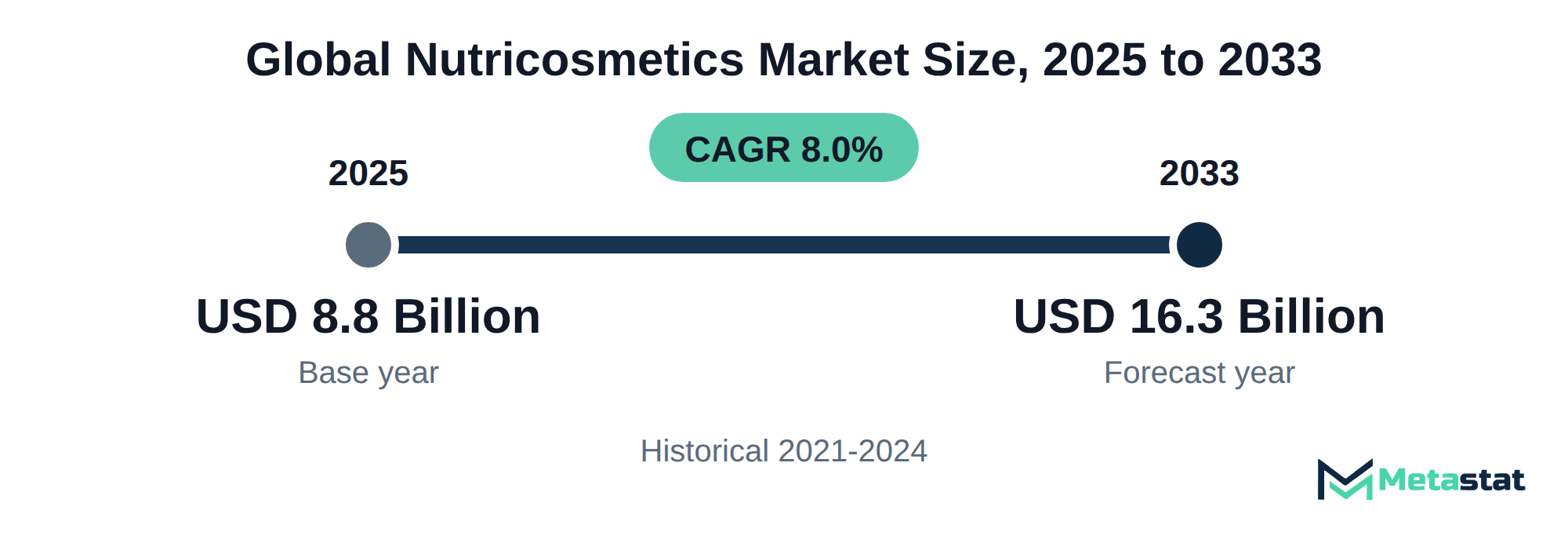
Market Valuation: Valued at $8.8 Billion in 2025, projected to reach $16.3 Billion by 2033 at a 8.0% CAGR.
Dominant Segment: Collagen and collagen peptides lead the nutricosmetics market, driven by rising consumer awareness of their benefits for skin and joint health.
Geographic Lead: North America is the leading region, holding 29.3% of the market in 2025, with the U.S. expected to dominate growth in 2026.
What's Inside: The report includes detailed analyses of market segments by form, active ingredient, and beauty application, alongside competitive coverage and a forecast window extending to 2033.
Emerging Segments: Gummies and soft chews are rapidly growing, projected to expand at a CAGR of 11%, appealing to consumers seeking convenient and enjoyable beauty solutions.
Technological Advancements: Innovations in product formulations and delivery methods enhance market appeal, with emerging technologies improving ingredient efficacy and bioavailability.
Choose Your License
Global Nutricosmetics Market
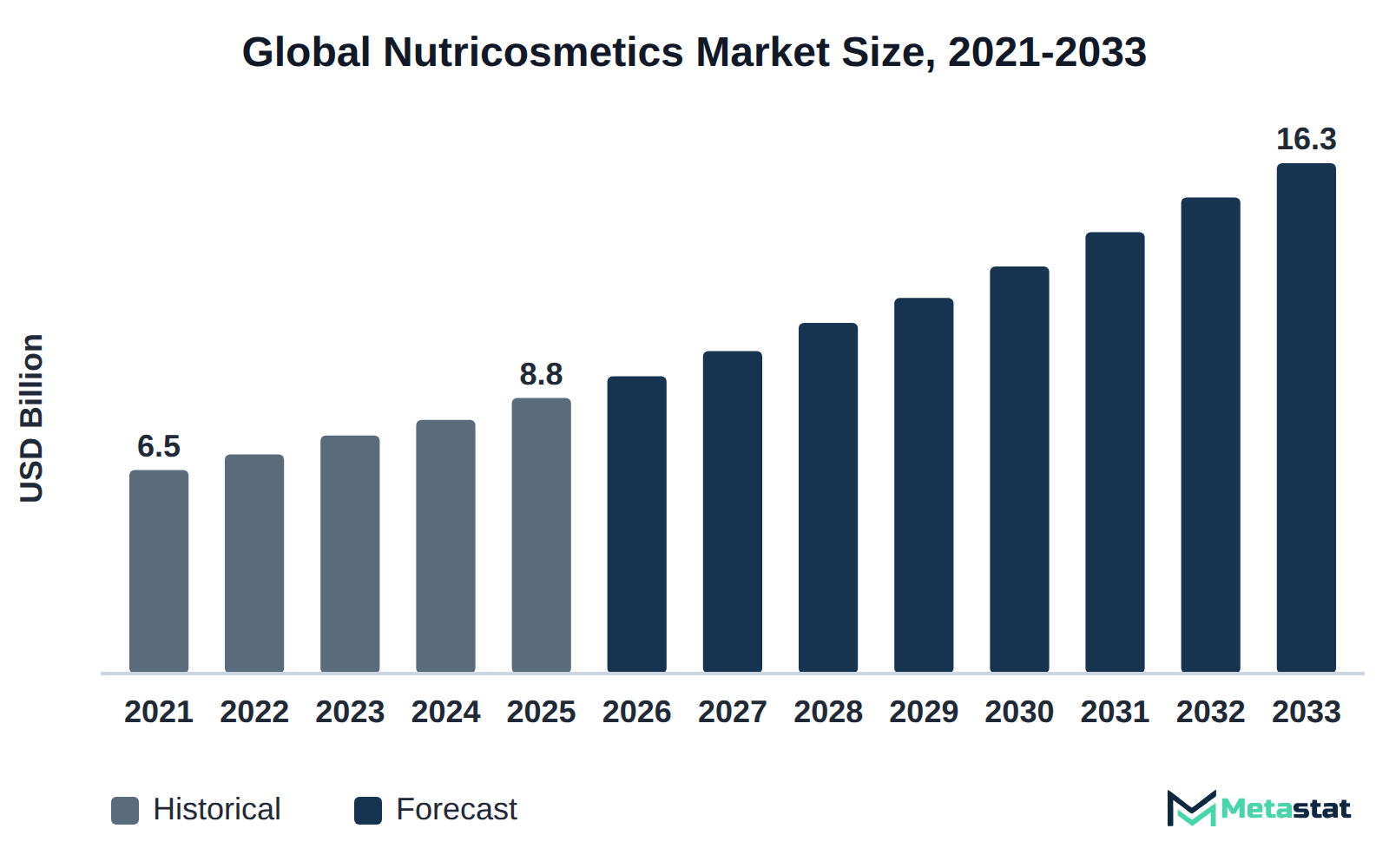
The global Nutricosmetics market was valued at USD 8.8 billion in 2025 and is projected to reach USD 16.3 billion by 2033, growing at a CAGR of 8.0% over the forecast period.
The Nutricosmetics market encompasses a range of products designed to enhance beauty and wellness from within. This market attracts buyers due to the increasing focus on health and the growing intersection of beauty and nutrition. Consumers prioritize products that promote skin health, hair vitality, and overall well-being, leading to a significant rise in spending in this sector.
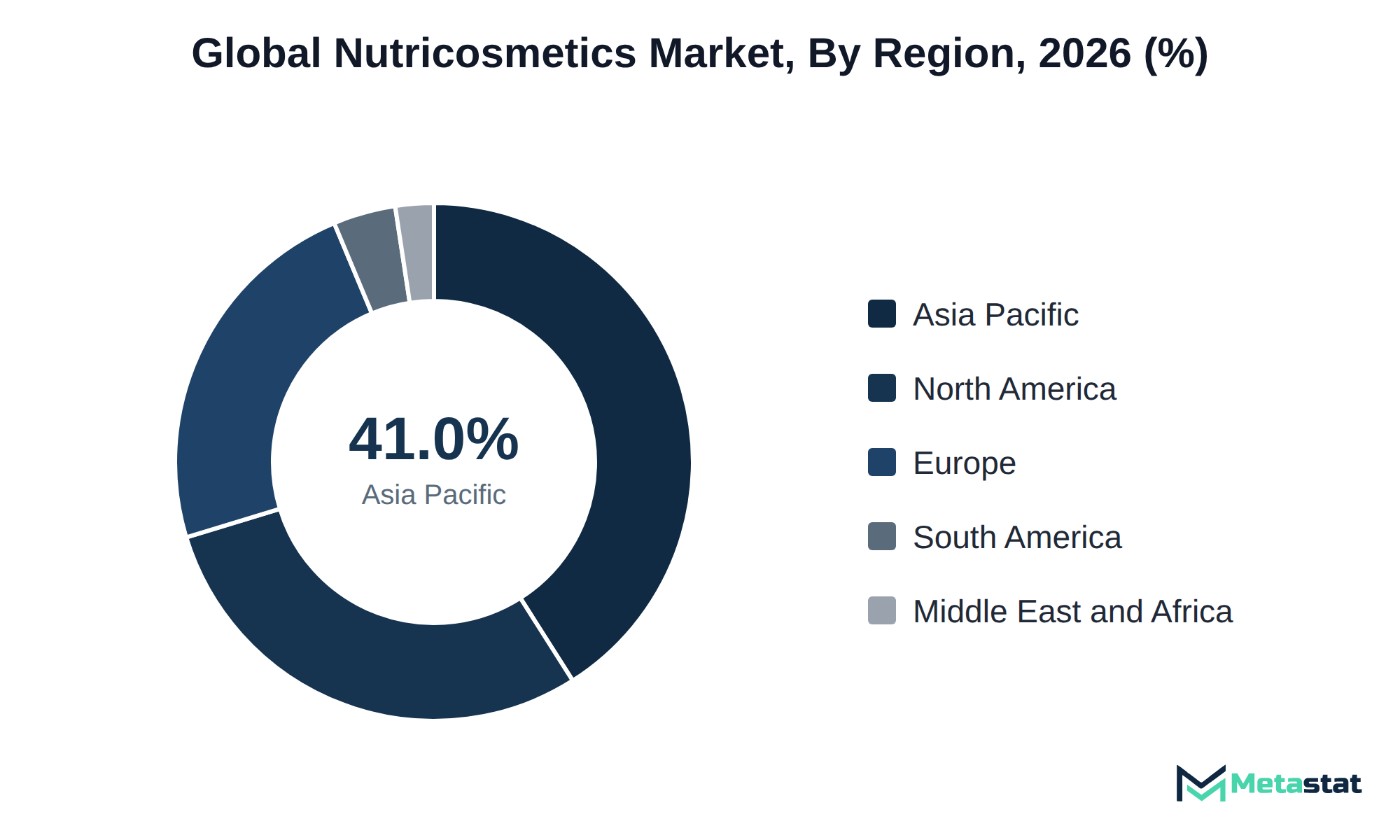
Growth in the market is driven by rising consumer awareness regarding the benefits of nutritional supplements for beauty. Collagen and collagen peptides represent the segment with the highest value, reflecting a growing demand for skin and joint health solutions. North America holds 29.3% of the market in 2025, with the US leading in 2026. The Asia Pacific region follows closely, accounting for 41% of the market share, highlighting its robust consumer base and increasing purchasing power.
One prominent growth driver stems from the shift toward preventive health measures. Consumers seek products that support long-term beauty rather than solely addressing immediate concerns. This trend influences purchasing decisions, encouraging consumers to invest in nutricosmetics that promise lasting results. The combination of innovation in formulation and effective marketing strategies enhances market penetration across various demographics.
The various products within the Nutricosmetics market address the growing consumer demand for beauty solutions that combine nutrition and wellness. Buyers invest in these products to achieve visible improvements in skin, hair, and overall health, reflecting a shift towards comprehensive beauty approaches. This trend is driven by a heightened awareness of the benefits associated with natural ingredients and a preference for preventive care over reactive treatments.
Growth in the market is significantly influenced by the increasing popularity of collagen and collagen peptides, which represent the highest-value segment. The Asia Pacific region accounts for 41% of market share, reflecting the region's robust demand for beauty and wellness products. The emphasis on personalized beauty regimens and the rise of influencer marketing drive consumer interest and spending within the market.
Innovation in product formulations and delivery methods contributes to the expanding market. The demand for diverse forms, including gummies and soft chews, appeals to consumers seeking convenience and efficacy in their beauty supplements. This preference for accessible and enjoyable options enhances market penetration and presents opportunities for new entrants and established brands alike.
Drinkable collagen represents a significant development in the Nutricosmetics market, contributing to the product's growing appeal among consumers. This form of collagen offers a convenient approach for individuals seeking to enhance skin elasticity and overall beauty from within. The introduction of drinkable collagen products aligns with the increasing demand for innovative beauty solutions driven by changing consumer preferences toward ingestible options.
In 2026, the market for powders and granules, which includes drinkable collagen, is expected to reach USD 4 billion by 2033, demonstrating a compound annual growth rate of 8.1%. This shift signifies a growing recognition of the benefits of collagen beyond topical applications, leading to greater adoption among diverse buyer segments. Companies within the Nutricosmetics market focus on product formulations that cater to this trend, enhancing their competitive positioning.
The rise in popularity of drinkable collagen not only broadens the appeal of nutricosmetics but presents an opportunity for brands to differentiate their product offerings. By promoting the health benefits associated with ingestible collagen, brands create potential for increased consumer engagement and loyalty. The incorporation of drinkable collagen into product lines is expected to drive growth in the market, attracting health-conscious consumers seeking effective beauty solutions.
Ceramide-based products are experiencing a significant rise in popularity within the nutricosmetics market, reflecting a growing consumer preference for ingredients that support skin health and hydration. The market's value for hyaluronic acid and ceramides is projected to expand, with a notable compound annual growth rate (CAGR) of 10.3%. This growth indicates strong demand for formulations that incorporate these active ingredients, appealing to consumers seeking effective solutions for skin-related concerns.
The purchasing process for ceramide formulations typically involves a combination of direct sales and online retail channels. Pharmacies and specialty health and beauty stores remain critical touchpoints for buyers, offering expert consultations and product demonstrations. These channels facilitate informed purchasing decisions, enhancing consumer confidence in the efficacy of ceramide products. Online platforms increasingly serve as a vital distribution channel, with a projected market value of USD 6.1 billion by 2033, reflecting a shift in consumer purchasing behavior toward convenience and accessibility.
Pricing strategies vary across different distribution channels, with premium products often positioned at higher price points due to their perceived effectiveness and quality. Buyers in the nutricosmetics market are willing to invest in high-quality ceramide formulations, recognizing the long-term benefits to skin health. This willingness to pay reflects an opportunity for brands to differentiate themselves through quality and innovation, ultimately driving revenue within this segment.
The rise of online subscriptions significantly influences purchasing patterns in the nutricosmetics market. This model enhances customer loyalty by simplifying repeat purchases, which is essential for maintaining consistent product usage. Consumers seeking convenience and personalized solutions for their beauty and wellness regimes actively engage with subscription services. The market's growth trajectory reflects this shift, with segments like online retail and brand websites projected to reach USD 6.1 billion by 2033.
Targeting health-conscious consumers who prioritize long-term beauty solutions, subscription offerings present an opportunity for brands to build direct relationships with customers. This strategy strengthens brand loyalty while ensuring steady revenue streams, particularly for companies emphasizing quality and effectiveness in their products. The adoption of online subscription models will become crucial for brands aiming to capture and retain a dedicated customer base in the increasingly competitive nutricosmetics sector.
Research supports the claim that specific nutricosmetics contribute to skin hydration through the inclusion of active ingredients. Collagen and collagen peptides, for example, play an important role in enhancing skin moisture levels. The nutricosmetics market features a projected growth in this segment, with collagen and collagen peptides expected to increase from USD 3.4 billion in 2026 to USD 6 billion by 2033, reflecting a compound annual growth rate (CAGR) of 8.5%. This growth reflects the rising consumer demand for solutions that promote skin hydration from within.
The use of collagen supplements has been linked to improved skin hydration and elasticity, resulting in a healthier appearance. This trend appeals to a broad audience seeking to enhance their beauty regime, particularly among consumers focused on maintaining youthful skin. While the nutricosmetics market continues to expand, the incorporation of scientifically backed ingredients into products will likely drive further demand. Companies investing in these formulations expect to capture an increasing number of consumers in the growing market for skin hydration solutions.
Health-conscious consumers increasingly seek products promoting both beauty and overall wellness. This shift in buyer behavior reflects a growing desire for comprehensive approaches to beauty, leading to heightened demand for nutricosmetics. The awareness of the benefits of ingredients including collagen and vitamins in supporting skin, hair, and nail health contributes significantly to this trend. While consumers prioritize health in their purchasing decisions, the market experiences an increase in volume, highlighting the importance of nutritional beauty solutions. In 2026, the value of nutricosmetics is projected to reach USD 9.5 billion, reflecting this upward trajectory in consumer spending.
A substantial segment of buyers includes millennials and Gen Z consumers who favor products offering multifunctional benefits. This demographic shift stimulates market growth and encourages suppliers to innovate and diversify their product offerings.
Emerging technologies enable the development of innovative formulations within the nutricosmetics market. Suppliers increasingly leverage advancements in extraction techniques, enhancing the bioavailability and efficacy of active ingredients. The integration of biotechnology allows for more sustainable and efficient production processes, appealing to environmentally conscious consumers.
The rise of personalized nutrition facilitates tailored nutricosmetic solutions that cater to specific consumer needs. This customization leads to greater customer satisfaction and loyalty, ultimately driving market growth. Enhanced delivery systems, including microencapsulation and liposomal technologies, improve ingredient stability and absorption, further increasing the appeal of these products.
These innovations attract a diverse range of buyers, including health and wellness-focused consumers and beauty enthusiasts seeking effective solutions. The market experiences growth, supported by a continuous pipeline of new and improved products that meet evolving consumer expectations.
High prices associated with premium nutricosmetics products create a barrier for many consumers, particularly in price-sensitive demographics. This situation particularly affects buyers seeking affordable beauty solutions, resulting in slower uptake in certain segments. The premium positioning of many brands limits access to potential customers who prioritize budget over quality. Consequently, these consumers often opt for lower-cost alternatives that lack the same efficacy or brand recognition. The overall demand for nutricosmetics experiences constraints, especially in regions with lower disposable incomes. Price sensitivity in the market leads to smaller orders and delayed purchases, ultimately impacting revenue growth for suppliers. In this environment, brands focusing on cost-effective solutions gain traction, influencing competitive dynamics within the market.
Raw material costs create challenges for suppliers within the Nutricosmetics market. Increasing prices of key ingredients, including collagen and botanical extracts, significantly impact overall production expenses. Suppliers face pressure to maintain competitive pricing while ensuring product quality. In response, many suppliers are exploring alternative sourcing strategies and investing in research to identify cost-effective ingredients. This approach not only mitigates input cost challenges but enables suppliers to diversify their product offerings. Several companies are adopting vertical integration to streamline their supply chains, reducing dependence on external suppliers. This strategy supports better control over costs and enhances profit margins. While the market expands, ongoing adjustments to sourcing and production strategies are essential for maintaining competitive advantage. The focus on cost-efficient practices aligns with broader industry trends aimed at delivering value to consumers while ensuring sustainability in product development.
Gummies and soft chews represent a rapidly growing segment within the market, exhibiting a compound annual growth rate of 11% through 2033. This format appeals to consumers seeking convenient and enjoyable ways to incorporate beauty-enhancing nutrients into their daily routines. The increasing demand for functional snack options and the rise of health-conscious consumers underline this trend, particularly among younger demographics prioritizing wellness. The market’s expansion into this form supports significant revenue growth, projected to reach USD 4 billion by 2033. Key players are likely to focus on innovative flavors and formulations to attract consumers, further enhancing the appeal of these products. The growth of gummies and soft chews illustrates a shift in consumer preferences toward more accessible and palatable nutricosmetic solutions, reflecting broader trends in the beauty and wellness sectors.
The Global Nutricosmetics market is segmented based on Form, Primary Active Ingredient, Primary Beauty Application, and Distribution Channel.
Tablets, Capsules and Softgels segment is valued at USD 3.6 billion in 2026 and is projected to reach USD 5.6 billion by 2033, at a CAGR of 6.4% during the forecast period. This segment primarily serves consumers seeking convenient, easy-to-consume forms of beauty-enhancing products. The growing preference for dietary supplements that support skin health and overall wellness drives demand in this segment, particularly among health-conscious individuals. Compared to other forms like powders or liquids, the tablets, capsules, and softgels segment offers a more straightforward consumption method, appealing to those who prioritize convenience. This segment's growth rate of 6.4% is moderate relative to the powders and granules segment, which has a higher CAGR of 8.1%. The established presence of this sub-segment in the market continues to attract a loyal consumer base, supporting consistent sales and reinforcing its significance in the overall nutricosmetics market.
This segment serves various users seeking convenient and effective beauty solutions. Products in this category primarily cater to health-conscious individuals looking to enhance their skin, hair, and overall appearance through nutritional supplements. Demand for Powders and Granules is driven by increasing consumer preference for versatile products that offer ease of use and flexibility in consumption. Compared to other forms, including Gummies and Soft Chews, which exhibit a CAGR of 11%, Powders and Granules experience relatively steady growth, appealing to consumers who prioritize dosage accuracy and mixability with beverages. Competitive pricing of Powders and Granules enhances accessibility, making this segment an attractive option among budget-conscious consumers in the market.
The Liquids and Ready-to-Drink Beverages segment is expected to reach USD 3.5 billion by 2033. This segment serves consumers seeking convenient, on-the-go beauty solutions that promote hydration and general wellness. A growing preference for functional beverages drives demand among health-conscious individuals, particularly those looking to integrate beauty-enhancing attributes into their daily routines. The appeal of ready-to-drink formats differentiates this segment from others, including Powders and Granules, which require preparation before consumption. Liquids are projected to achieve a compound annual growth rate of 8.1% through 2033, reflecting stronger growth compared to Tablets, Capsules and Softgels, which have a CAGR of 6.4%. Consumers increasingly prioritize product accessibility, with a willingness to seek out innovative formulations that provide immediate benefits while fitting into their active lifestyles. The increasing availability of these products through various retail channels further supports their market expansion.
Gummies and Soft Chews segment is projected to grow at a CAGR of 11% during the forecast period. These products appeal to consumers seeking convenient and enjoyable ways to enhance their beauty and wellness. Typically, they target health-conscious individuals looking for effective solutions that are easy to integrate into daily routines. The rising preference for tasty and easy-to-consume formats drives demand, especially among younger consumers who prioritize both nutrition and enjoyment. Unlike other forms including Powders and Granules or Tablets, which require mixing or water for consumption, gummies provide a straightforward, on-the-go option. This segment stands out with the fastest growth rate compared to the other segments in the Form category, highlighting its unique position in capturing consumer interest and expanding market share significantly.
Gels and jelly sticks represent an appealing product form within the Nutricosmetics market. These products attract consumers seeking convenient and enjoyable ways to enhance their beauty and wellness routines. Users include health-conscious individuals looking for easy-to-consume options that fit busy lifestyles. Market dynamics reflect a growing demand for innovative delivery formats, driven by consumer preferences for tasty and portable solutions. Compared to other segments, this sub-segment faces slower growth due to lower market penetration and consumer awareness compared to gummies and soft chews. Competition from more established forms, including powders and capsules, influences the market landscape, potentially impacting pricing and consumer choice. The market remains open to further development and innovation in this area, emphasizing the importance of product differentiation and unique marketing strategies.
This segment finds extensive use among consumers seeking to improve skin elasticity and hydration, particularly among older demographics. The growing awareness of the benefits of collagen supplementation drives demand, with an increasing number of products formulated with this active ingredient. In contrast to other segments, the Collagen and Collagen Peptides segment experiences faster growth due to its widespread appeal and the rising trend of beauty solutions. Factors influencing this segment include the increased focus on beauty from within and advancements in production technologies that enhance product efficacy. The market continues to evolve, with consumers actively seeking high-quality and effective collagen products to meet their beauty and wellness objectives.
The Vitamins and Minerals segment is estimated to reach USD 3.8 billion by 2033, at a CAGR of 6.2% during the forecast period. This segment supports various health and beauty needs, appealing primarily to consumers focused on nutritional wellness. Individuals seeking to enhance their skin, hair, and overall vitality frequently choose products containing vitamins and minerals. The growing awareness of the benefits of these ingredients drives demand, particularly among health-conscious consumers. Compared to other sub-segments, this segment experiences slower growth, influenced by the more established nature of vitamins and minerals in consumers' daily routines. While segments like Collagen and Collagen Peptides exhibit a higher CAGR of 8.5%, the Vitamins and Minerals segment remains a staple due to its established role in personal care regimens. The stability of this segment contributes to the overall growth of the nutricosmetics market.
Botanical Extracts and Other Antioxidants segment is expected to reach USD 3.1 billion by 2033. This segment finds significant application in skincare, targeting consumers who prioritize natural ingredients for enhancing beauty and overall wellness. The rising inclination toward natural products influences demand, driven by consumers seeking alternatives to synthetic formulations. The growth rate for this segment aligns with increasing awareness of the benefits of antioxidants in combating oxidative stress and promoting skin health. Compared to other active ingredients, this segment exhibits a competitive CAGR, highlighting its strong position in the market, with growth characteristics distinct from those of collagen and collagen peptides, which hold a different consumer appeal. The emphasis on clean and green formulations continues to drive interest, establishing this segment as a noteworthy contributor within the broader Nutricosmetics market.
The Hyaluronic Acid and Ceramides segment is projected to grow at a CAGR of 10.3% during the forecast period. This segment focuses on moisturizing and enhancing skin elasticity, appealing to consumers seeking effective beauty solutions. Increasing awareness of skin health and hydration drives demand among beauty enthusiasts, particularly in regions with dry climates. Unlike other segments, this one experiences a higher growth rate, reflecting the rising popularity of skincare products infused with these ingredients. The effectiveness of Hyaluronic Acid in retaining moisture and the role of Ceramides in strengthening the skin barrier contribute to their strong market position. This segment, distinct for its rapid expansion, captures a diverse range of consumers, from skincare aficionados to those seeking multifunctional beauty products, further enhancing its significance in the Nutricosmetics market.
Probiotics and postbiotics encompass live microorganisms and their byproducts, which promote digestive health and enhance skin vitality. These ingredients appeal to consumers seeking health benefits that extend beyond traditional cosmetics, targeting individuals interested in wellness. Demand for products rich in probiotics is influenced by increasing awareness of gut health and its correlation with skin conditions. This segment differentiates itself from others by focusing on functional benefits, leading to a unique consumer base primarily composed of health-oriented individuals. The market experiences substantial interest in probiotic-enriched formulations, driven by a growing trend toward natural and science-backed beauty solutions. This segment's specialized appeal leads to higher price points relative to standard ingredients, reflecting its unique health-oriented positioning.
Others (Omega-3 Fatty Acids and Standalone Amino Acids) encompasses products aimed at enhancing beauty and overall health through targeted nutritional support. Consumers increasingly gravitate toward formulations containing these ingredients for their benefits related to skin elasticity, hair strength, and overall vitality. This sub-segment differentiates itself within the market through its appeal to health-oriented individuals seeking specific functional benefits, thus driving increased demand. Rising awareness of the importance of omega-3 fatty acids and amino acids in personal care contributes to their adoption among diverse buyer groups, including fitness enthusiasts and those prioritizing preventative health. With a growing emphasis on wellness, products featuring Omega-3 Fatty Acids and Standalone Amino Acids experience steady interest, further influencing trends in the nutricosmetics market.
Skin segment is valued at USD 5 billion in 2026 and is projected to reach USD 8.7 billion by 2033, at a CAGR of 8.3% during the forecast period. This segment primarily serves consumers focused on enhancing skin health, appearance, and overall beauty. The demand for effective solutions targeting skin aging and hydration drives adoption, particularly among adults seeking preventive measures against skin deterioration. With a CAGR of 8.3%, this segment outpaces others, reflecting heightened consumer interest in skin health products. Innovative formulations incorporating ingredients like collagen and antioxidants enhance the segment's appeal. In contrast, other segments do not experience the same level of growth, illustrating the unique position of skin products in the market. The rise in online retailing further facilitates access, ensuring that a broad range of consumers explore and purchase skin-focused nutricosmetics.
Hair segment is estimated to reach USD 3.7 billion by 2033, at a CAGR of 8.3% during the forecast period. This segment primarily addresses concerns related to hair health and appearance, attracting consumers focused on hair growth, strength, and shine. The growing awareness of the link between nutrition and hair health drives demand among younger demographics, including millennials and Gen Z, who actively seek solutions for hair issues. This segment demonstrates a faster growth rate compared to others, largely due to the increasing popularity of nutricosmetics that target multi-benefit applications. Unlike the skin segment, which has broader applications, the hair segment attracts a more niche audience dedicated to specific hair-related benefits. The focus on premium ingredients within this segment supports its higher price point, contributing to its projected expansion in the market.
Nails segment is expected to reach USD 0.5 billion by 2033. This segment primarily targets consumers seeking to enhance the appearance and health of their nails through nutritional support. Growing awareness about nail health and aesthetics among consumers drives demand for products tailored to this application. In comparison to other beauty applications, growth for nails occurs at a slower pace, reflecting lower consumer prioritization. The compound annual growth rate (CAGR) for nails is expected to align with overall trends in the market, although it remains distinct from skin and hair segments with higher projected growth rates. The focus on specialized formulations catering to nail strength and growth distinguishes this sub-segment, positioning it uniquely within the broader nutricosmetics market.
Multi-Benefit Beauty segment is projected to grow at a CAGR of 7.6% during the forecast period. This segment encompasses products designed to address multiple beauty concerns, including skincare, haircare, and nail health, appealing primarily to consumers seeking comprehensive solutions. Demand drivers for this segment include heightened consumer awareness regarding comprehensive beauty approaches and the growing preference for products that deliver various benefits in a single formulation. Compared to other segments, the Multi-Benefit Beauty segment stands out due to its diverse target audience, which spans different age groups and demographics. This broad appeal contributes to its significant growth trajectory, differentiating it from more specialized segments. The market anticipates an increased focus on innovative formulations that cater to multifaceted beauty needs, driving adoption and expanding the consumer base.
Pharmacies and Drugstores segment is valued at USD 2.1 billion in 2026 and is projected to reach USD 3.2 billion by 2033, at a CAGR of 6% during the forecast period. This distribution channel serves consumers seeking convenient access to nutricosmetic products, including dietary supplements and beauty-enhancing formulations. Growing awareness of health and wellness drives demand within this channel, particularly among health-conscious individuals seeking reliable options for beauty and well-being. The segment exhibits slower growth compared to others, reflecting the competitive nature of retail environments and consumer preferences for online shopping. In contrast, segments including Online Retail and Brand Websites are projected to experience higher growth rates due to their convenience and expanding digital reach. The nutricosmetics market continues to evolve, with pharmacies adapting to changing consumer behaviors while offering a diverse range of products.
Specialty Health and Beauty Stores segment is estimated to reach USD 4.9 billion by 2033, at a CAGR of 7% during the forecast period. These stores cater to consumers seeking specific beauty and wellness products, offering targeted solutions for various beauty concerns. The growing trend of personalized beauty regimens drives consumers to specialty outlets, enhancing customer loyalty in this sector. Unlike general retailers, specialty stores provide a curated selection of products, ensuring a unique shopping experience. The demand for innovative formulations and high-quality ingredients among discerning consumers fuels this segment's growth. In comparison to other distribution channels, this segment achieves slower growth, reflecting challenges in maintaining a niche market focus in an increasingly competitive environment. The market evolves, adapting to consumer preferences while striving to offer premium products that appeal to health-conscious individuals.
Online Retail and Brand Websites segment is expected to reach USD 6.1 billion by 2033. This distribution channel primarily serves consumers seeking convenience and a wider selection of nutricosmetic products. Online platforms allow buyers to access a variety of brands and formulations, enhancing consumer engagement and driving sales growth. The increasing penetration of smartphones and improved internet access significantly influence this segment. Unlike traditional retail formats, Online Retail and Brand Websites benefit from lower operating costs and the ability to offer competitive pricing. With a projected growth rate of 7.6% during the forecast period, this segment exhibits faster growth compared to other traditional distribution channels including Pharmacies and Drugstores, which experience slower growth at a CAGR of 6%. While the market evolves, the convenience and accessibility provided by online platforms will shape consumer preferences in the nutricosmetics market.
Supermarkets and Hypermarkets segment is projected to grow at a CAGR of 6.1% during the forecast period. This channel serves consumers seeking convenience and accessibility in purchasing nutricosmetics products. Major factors driving growth in this segment include increasing health consciousness and the rising demand for beauty-enhancing supplements among a broad demographic, including health-conscious individuals and beauty enthusiasts. Compared to other distribution channels, Supermarkets and Hypermarkets provide a more extensive physical presence, facilitating impulse purchases, which boost sales volume. While Online Retail and Brand Websites exhibit faster growth, the traditional shopping experience in supermarkets continues to attract several consumers, contributing to the overall expansion of the market.
Others (Clinics and Direct Selling) focuses on targeted sales strategies within the Nutricosmetics market. This segment caters to consumers seeking personalized guidance from healthcare professionals and beauty experts regarding specific nutritional products. The increasing awareness of wellness drives demand in this segment, with consumers prioritizing tailored solutions. In contrast to other distribution channels, this segment typically features higher price points due to the personalized service and professional recommendations provided. Consumer preference for direct interactions with trusted advisors influences purchasing decisions, differentiating it from online retail channels, which often provide lower prices but lack the personal touch. This segment contributes to the overall market growth while presenting unique challenges related to scaling personalized services.
Based on geography, the Global Nutricosmetics market is divided into North America, Europe, Asia-Pacific, South America, Middle East, and Africa.
Strong consumer interest in beauty and wellness drives growth in the Nutricosmetics market within North America. The focus on health and beauty supplements strengthens demand, particularly among consumers seeking effective skincare solutions. Regulatory frameworks in the United States, Canada, and Mexico support product innovation while ensuring safety standards, enhancing consumer confidence. The market share for North America is projected at 29.3% in 2025, reflecting significant purchasing power and an established retail infrastructure. North America is projected to reach USD 4.7 billion by the end of 2033, indicating robust expansion within the market throughout the forecast period. This growth aligns with increasing awareness of beauty-related health benefits and the rising preference for ingestible beauty products.
Demand within the Nutricosmetics market in Europe reflects a growing emphasis on health and beauty solutions among consumers. Key countries including Germany, France, and the UK drive this trend, supported by increasing awareness of the benefits associated with nutricosmetic products. The region's share of the global market reached 23.4% in 2025, indicating its significant role in the overall market landscape. Innovative product formulations, particularly those focusing on skin and hair health, attract attention from consumers seeking quality and efficacy. Retail channels including pharmacies and specialty health stores play a crucial role in product distribution, enhancing accessibility and consumer engagement. The region's established beauty culture further drives demand for effective nutricosmetic solutions, indicating solid growth potential through 2033.
Demand within the Nutricosmetics market in Asia-Pacific reflects a strong growth trajectory, driven by increasing health consciousness among consumers. Countries including China, India, and Japan exhibit significant adoption rates of these products, supported by a rising middle class and changing lifestyle trends. The expansion of online retail platforms in the region enhances product accessibility, catering to diverse consumer needs. Regulatory frameworks in several countries promote the use of natural ingredients, aligning with consumer preferences for clean-label products. By 2025, the region is anticipated to hold a 41.0% share of the global market, emphasizing its important role in the industry. Market players invest in localized marketing strategies to capture the unique preferences of consumers across Southeast Asia and Australia, contributing to a competitive landscape that shapes future growth.
Consumer demand for beauty and wellness products significantly influences the market in South America, particularly in Brazil and Argentina. A growing emphasis on natural ingredients drives purchases, with consumers increasingly seeking products that support overall health and beauty. The region's market share accounted for 3.9% of the global landscape in 2025, highlighting its potential for growth. The market benefits from a dynamic retail environment, including pharmacies and specialty health stores, creating easy access to a variety of nutricosmetics. The rising popularity of online retail is reshaping consumer purchasing patterns, contributing to increased market activity. Continued investment in product innovation aligns with evolving consumer preferences, creating a competitive environment for brands in the region.
The Nutricosmetics market in the Middle East and Africa is marked by increasing consumer interest in beauty and wellness products. Buyers in countries like Saudi Arabia and the UAE drive demand for innovative beauty solutions that promote overall health. Rising disposable incomes and an expanding middle class support market expansion by enabling consumers to invest in premium products. Unique cultural preferences and an emphasis on natural ingredients further influence purchasing behaviors across the region. With a market share of 2.4% in 2025, growth opportunities exist for brands looking to penetrate this emerging market. South Africa and the Rest of Middle East and Africa exhibit diverse consumer preferences, highlighting the importance of localized marketing strategies within this environment. The Nutricosmetics market reflects ongoing trends toward health and beauty integration in daily lifestyles.
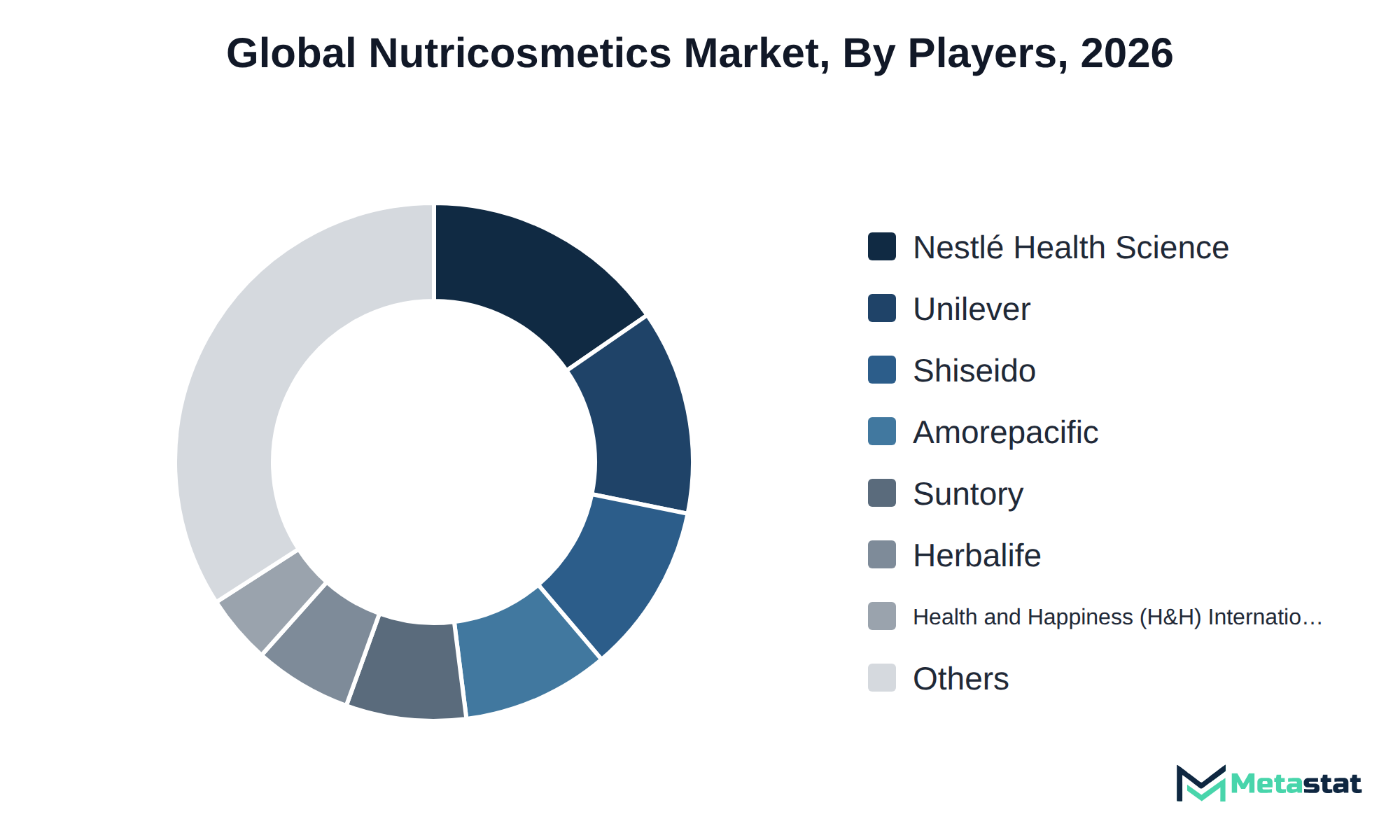
Companies in the Nutricosmetics market exhibit diverse strategies that align with consumer preferences and market trends. Key competitors include Nestlé Health Science, Shiseido Company, Limited, and Herbalife Ltd., each focusing on different areas within the market. Nestlé Health Science emphasizes functional nutrition products, appealing to health-conscious consumers. Shiseido Company, Limited concentrates on beauty and skincare solutions, leveraging its expertise in cosmetics to enhance the appeal of its nutraceutical offerings. Herbalife Ltd. focuses on nutritional supplements, promoting a comprehensive approach to health and beauty.
The market divides into various distribution channels, including online retail and pharmacies, influencing how consumers approach purchasing decisions. Buyers select products based on price, certification, and customization offerings. Unilever PLC and Amway Corporation represent companies that prioritize accessibility and customer engagement through their innovative distribution strategies, enhancing customer loyalty and driving market growth.
Achieving this growth depends on several key developments within the market. First, the increasing consumer preference for natural ingredients, particularly in the Asia Pacific region, supports the demand for products featuring botanical extracts and antioxidants. This trend drives growth in the primary beauty application segment, particularly for skin-related products, which is anticipated to reach USD 8.7 billion by 2033, reflecting a CAGR of 8.3%. Second, the expansion of online retail channels enhances accessibility, with that segment projected to reach USD 6.1 billion by 2033, driven by shifting consumer purchasing habits. A significant risk looms that could hinder market growth: regulatory challenges surrounding product formulations and claims could restrict the launch of new products, particularly in North America and Europe, where stringent regulations apply. These factors highlight the complex landscape and underline the importance of adapting to consumer trends while navigating regulatory frameworks to ensure the market reaches its forecast potential.
By Form: Tablets, Capsules and Softgels, Powders and Granules, Liquids and Ready-to-Drink Beverages, Gummies and Soft Chews, Others (Gels and Jelly Sticks)
By Primary Active Ingredient: Collagen and Collagen Peptides, Vitamins and Minerals, Botanical Extracts and Other Antioxidants, Hyaluronic Acid and Ceramides, Probiotics and Postbiotics, Others (Omega-3 Fatty Acids and Standalone Amino Acids)
By Primary Beauty Application: Skin, Hair, Nails, Multi-Benefit Beauty
By Distribution Channel: Pharmacies and Drugstores, Specialty Health and Beauty Stores, Online Retail and Brand Websites, Supermarkets and Hypermarkets, Others (Clinics and Direct Selling)
The report strategically identifies and profiles the key market players and analyses their core competencies in each sub-segment of the Nutricosmetics market.
Report Attributes | Details |
Study Period | 2021-2033 |
Base Year | 2025 |
Estimated Year | 2026 |
Forecast Period | 2026-2033 |
Historical Period | 2021-2025 |
Growth Rate | CAGR 8.0% from 2026 to 2033 |
Revenue Unit | USD billion |
Segmentation | By Form, Primary Active Ingredient, Primary Beauty Application, Distribution Channel, and Region |
By Region | North America (By Form, Primary Active Ingredient, Primary Beauty Application, Distribution Channel, and Country)
|
Europe (By Form, Primary Active Ingredient, Primary Beauty Application, Distribution Channel, and Country)
| |
Asia Pacific (By Form, Primary Active Ingredient, Primary Beauty Application, Distribution Channel, and Country)
| |
South America (By Form, Primary Active Ingredient, Primary Beauty Application, Distribution Channel, and Country)
| |
Middle East and Africa (By Form, Primary Active Ingredient, Primary Beauty Application, Distribution Channel, and Country)
|
Find answers to common questions about this report
The Nutricosmetics market size was valued at USD 8.8 billion in 2025.
The market is projected to grow at a CAGR of 8.0% during the forecast period from 2026 to 2033.
The North America Nutricosmetics market size is estimated to reach USD 4.7 billion by 2033.
The leading segment in the Nutricosmetics market is "Skin," with a projected value of USD 8.7 billion by 2033. This segment demonstrates significant growth potential, driven by increasing consumer interest in skin health and beauty applications.
Health-conscious consumers increasingly seek products promoting both beauty and overall wellness, driving demand for nutricosmetics. The rise of personalized nutrition facilitates tailored solutions that cater to specific consumer needs, enhancing customer satisfaction and loyalty.
High prices associated with premium nutricosmetics create barriers for many consumers, particularly in price-sensitive demographics. Increasing raw material costs significantly impact overall production expenses, pressuring suppliers to maintain competitive pricing while ensuring product quality.
Health-conscious consumers increasingly seek nutricosmetics that promote both beauty and overall wellness, driving market adoption. The rise of personalized nutrition facilitates tailored solutions, enhancing customer satisfaction and loyalty.
The Nutricosmetics market is estimated to reach a valuation of USD 16.3 billion by 2033.
Key players operating in the Nutricosmetics market include Nestlé Health Science, Shiseido Company, Limited, Amorepacific Corporation, Kirin Holdings Company, Limited, Suntory Holdings Limited, Unilever PLC, and Herbalife Ltd.
The gummies and soft chews segment is projected to reach USD 4 billion by 2033, reflecting a growing consumer preference for convenient and enjoyable ways to incorporate beauty-enhancing nutrients.
The analysts below cover Consumer Goods research at Metastat Insights.
LEAD ANALYST
Utkarsh Khirodkar is a Lead Market Research Analyst at MetaStat Insight, specializing in market intelligence, technology sector assessments, and competitive strategy.
Our group needed clearer visibility into out-of-autoclave processing timelines for high-temperature thermoplastic composites. MetaStat Insight delivered an objective assessment that contrasted automated fiber placement scrap rates with traditional thermoset prepreg layup cycles. The supplier landscape mapped out primary resin suppliers and tape slitting capacity across France, Germany, and Japan with solid technical accuracy. Their analyst handled our questions on precursor supply risks during an unscheduled inquiry call, providing clear, unembellished context.
Evaluating sensor fusion reliability across harsh operating environments can be tricky without field-validated data. The study on agricultural autonomous guidance systems clearly separated stereo vision setups from automotive-grade solid-state LiDAR. We appreciated the regional infrastructure analysis, specifically around RTK network density across North America and South America. During our follow-up consultation, the MetaStat Insight team walked through tier-two perception software partnerships, giving our engineering leads a practical basis for vendor shortlisting.
Analyzing the transition from natural gas to green hydrogen in iron ore reduction requires realistic infrastructure timelines. Meta stat insight supplied a detailed regional assessment of DRI plant conversion costs and scrap metal availability in North America and Western Europe. Their report carefully examined pellet quality specs and electrical grid access constraints without making oversimplified market assumptions. The research material served as a practical reference during internal technology roadmap discussions.
Explore related market intelligence reports worth reading alongside this one.