
LEAD ANALYST
Utkarsh Khirodkar is a Lead Market Research Analyst at MetaStat Insight, specializing in market intelligence, technology sector assessments, and competitive strategy.

Global Custom Dog Tags Market Size, Share, By Product Type (Pet Identification Tags, Military-Style Identification Tags, Medical Alert Dog Tags, Commemorative and Novelty Dog Tags), By Material (Stainless Steel, Aluminum, Brass, Silicone, Plastic and Acrylic, Others (Copper, Titanium, Wood)), By Customization Method (Laser and Rotary Engraving, Embossing and Debossing, Mechanical Stamping, Digital and Full-Color Printing, Enamel Inlay and Color Filling, Others (Photo Etching, QR Code and Braille Personalization)), By Distribution Channel (Online Direct-to-Consumer (D2C), E-Commerce Marketplaces, Pet Specialty Stores, Pet Clinics and Veterinary Hospitals, Military and Tactical Equipment Retailers, Others (Gift Shops, Promotional Product Retailers)), Industry Analysis, Growth, Trends, and Forecast, 2026-2033
Report ID
MSI-5752
Published
November, 2026
Pages
281 Pages
Format
Historical
Base year
Forecast
Forecast period
Report Details
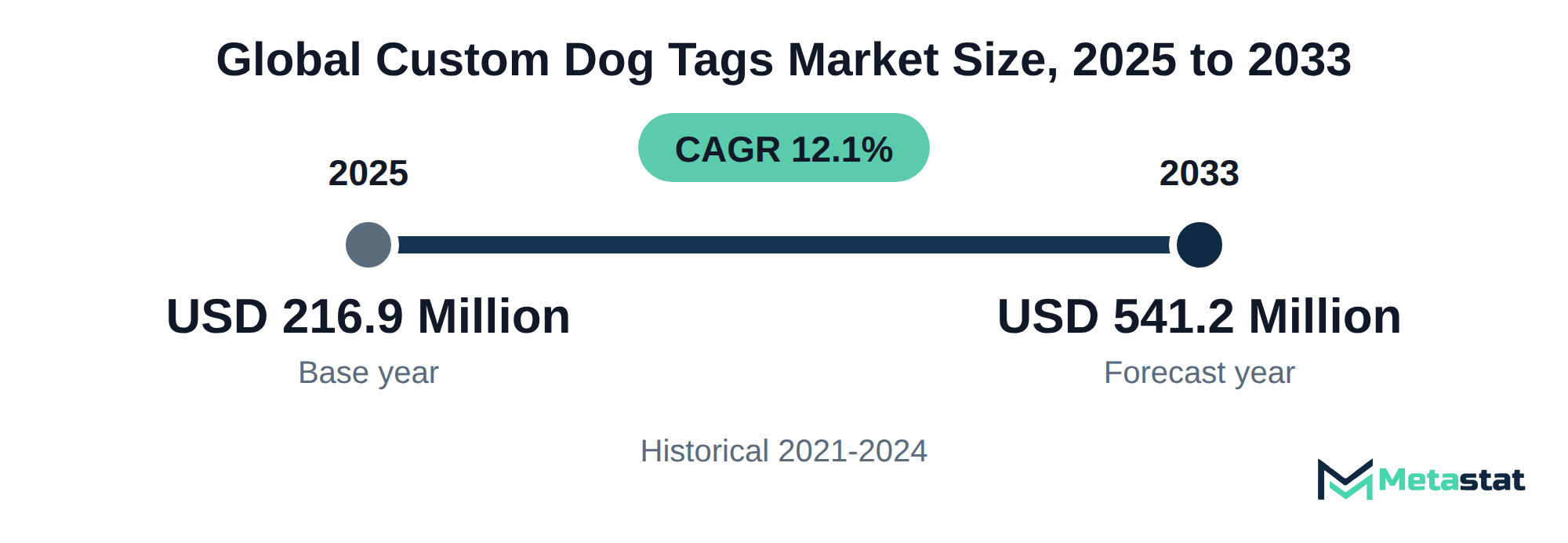
Market Valuation: Valued at $216.9 Million in 2025, projected to reach $541.2 Million by 2033 at a 12.1% CAGR.
Dominant Segment: Pet Identification Tags lead the market, driven by increasing pet ownership and heightened awareness of pet safety. This segment's focus on reliable identification solutions significantly contributes to its market value.
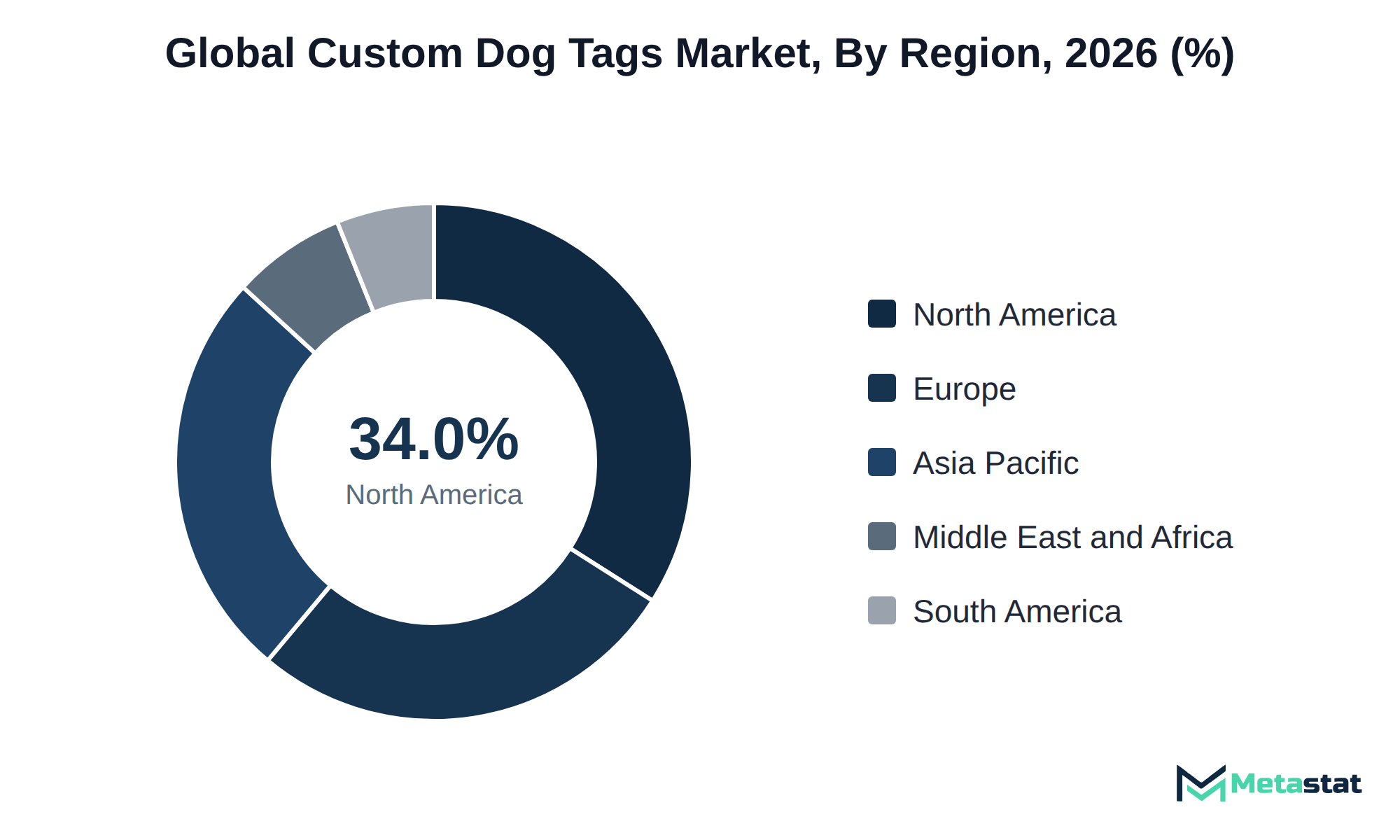
Geographic Lead: North America is the leading region, holding 34.0% of the market in 2025, with the US expected to maintain this position due to high purchasing power and a strong preference for customized products.
What's Inside: The report includes comprehensive competitive coverage, detailed market analyses, and a forecast window extending from 2026 to 2033, providing insights into growth trends and market dynamics.
Customization Trends: Technological advancements in customization methods, particularly laser engraving and digital printing, are enhancing personalization options, appealing to consumers' desire for unique identification solutions.
E-Commerce Growth: The Online Direct-to-Consumer channel is projected to grow significantly, with a CAGR of 13.3% from 2026 to 2033, reflecting shifting consumer preferences towards convenient online shopping experiences.
Choose Your License
Global Custom Dog Tags Market
The global Custom Dog Tags market was valued at USD 216.9 million in 2025 and is projected to reach USD 541.2 million by 2033, growing at a CAGR of 12.1% over the forecast period.
The Custom Dog Tags market encompasses a diverse range of identification tags designed for pets, military personnel, medical alerts, and commemorative purposes. Buyers invest in these products to ensure safety, enhance pet identification, and commemorate special events. Growing awareness of pet safety and the desire for personalized items contribute significantly to this spending.
Growth in the market is driven by factors including increasing pet ownership and consumer preferences for personalized products. The segment generating the most value is Pet Identification Tags, which appeals to pet owners prioritizing safety and identification. North America holds 34.0% of the market in 2025, with the US leading in 2026. Strong demand in this region reflects high purchasing power and a preference for customized products.
Technological advancements in customization methods, including laser engraving and digital printing, boost market expansion. These innovations allow for greater personalization options, enhancing consumer appeal. The market is projected to benefit from these trends, with a forecasted compound annual growth rate of 12.1% through 2033.
The Custom Dog Tags market addresses various buyer preferences, leading to increased expenditures on identification solutions for pets, military personnel, and medical alerts. Growing awareness of pet safety and the importance of identification in emergencies drives demand. Customization options further enhance appeal, allowing consumers to choose designs that reflect personal style or functional requirements.
Rising consumer spending fuels growth in the market, particularly in the Pet Identification Tags segment, where revenue is projected to climb significantly. North America's strong emphasis on pet ownership and safety contributes to this substantial share, outpacing other regions including Europe and Asia Pacific.
Laser and rotary engraving enable more intricate designs and personalization, attracting a wider consumer base. The market also benefits from a growing preference for unique, meaningful identification solutions that combine function with aesthetic appeal.
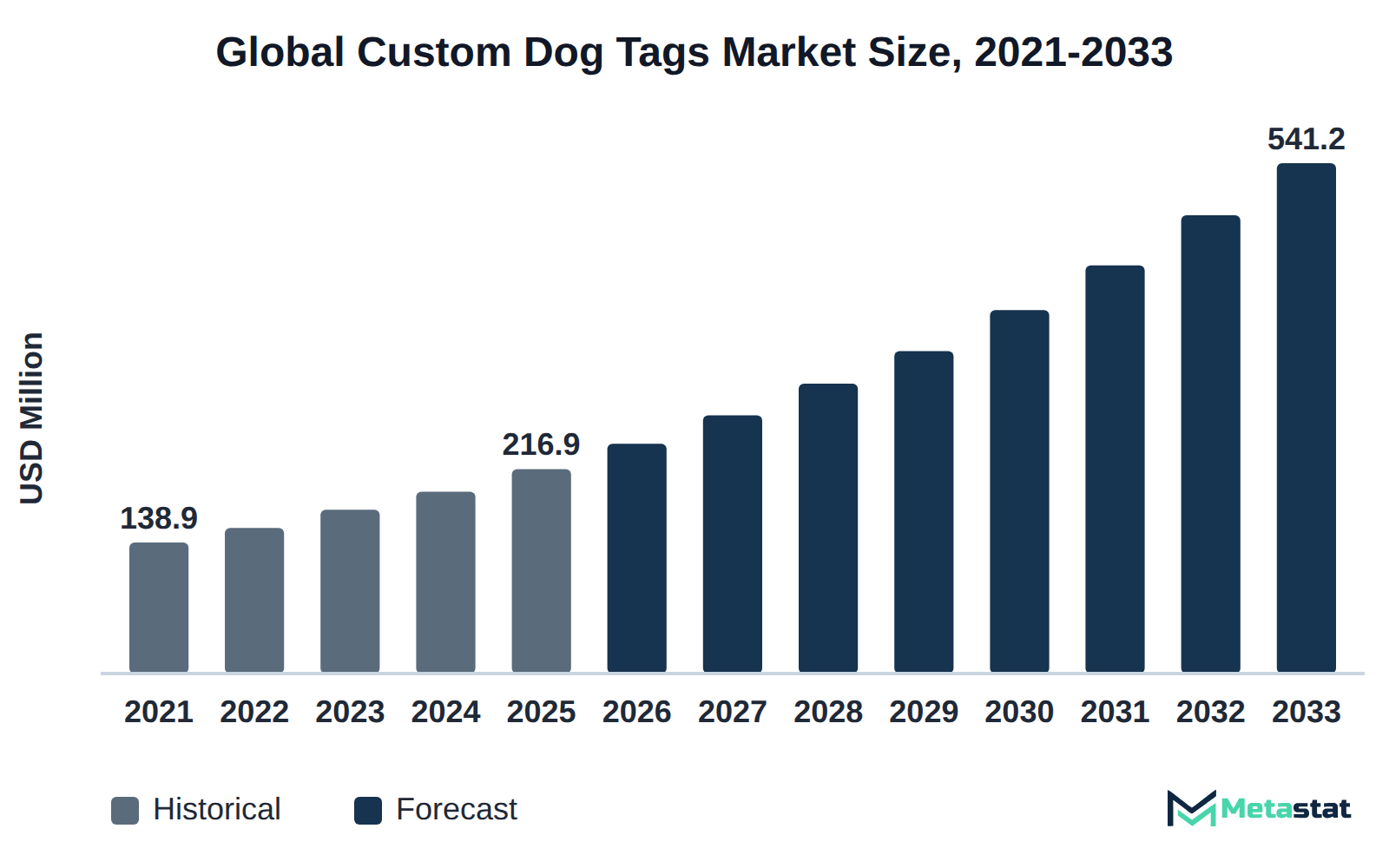
Personalization in the Custom Dog Tags market reflects a significant shift towards customized pet identification solutions that enhance owner-pet bonding. Advances in technology, particularly laser and rotary engraving, facilitate more intricate designs and personalization options. This customization method, valued at USD 94.1 million in 2026, is expected to reach USD 211.8 million by 2033, with a compound annual growth rate (CAGR) of 12.3%. Engraving names, intricate designs, and messages lets pet owners express their unique relationship with their pets.
Materials used in manufacturing custom dog tags shape personalization trends. Stainless steel, a popular choice, combines durability with aesthetic appeal. The segment for stainless steel is projected to grow from USD 116.6 million in 2026 to USD 249.6 million by 2033, achieving a CAGR of 11.5%. This growth indicates a rising preference for materials that offer both longevity and customization potential. The trend towards personalization and material innovation positions the market for substantial commercial growth, attracting both new consumers and businesses focused on unique pet identification solutions.
The rise of online direct-to-consumer (D2C) channels significantly influences purchasing behaviors in the Custom Dog Tags market. This shift towards digital platforms permits consumers to conveniently customize and order products from home, enhancing the overall shopping experience. By 2033, the Online D2C segment is expected to reach USD 164.6 million, reflecting a compound annual growth rate (CAGR) of 13.3% from 2026. This growth reflects a shift in consumer preference toward e-commerce.
Pricing strategies strongly influence this transition. With the increasing reliance on online platforms, transparent pricing models have become essential. Buyers often seek competitive pricing that reflects the customization options available, allowing them to compare different suppliers easily. The ability to access various designs and prices online allows buyers to make informed decisions, ultimately affecting purchasing patterns. Suppliers must optimize their e-commerce strategies to remain competitive.
Consequently, the adoption of online D2C and e-commerce channels presents opportunities for growth while reshaping traditional retail dynamics in the Custom Dog Tags market. Suppliers who adapt to these digital trends are well-positioned to capture a larger share of the expanding market.
Military personnel and outdoor enthusiasts represent a significant buyer group for custom dog tags, distinguishing themselves with specific requirements for durability and functionality. Military-style identification tags demonstrate resilience, with a projected value of USD 123.1 million by 2033, reflecting a compound annual growth rate of 12.4%. This segment emphasizes the need for high-quality materials and manufacturing processes, ensuring tags withstand harsh environments and rigorous use.
In addition to durability, these consumers seek smart identification features, including engraving personalized information and emergency contact details, enhancing safety for pets and individuals alike. Smart-connected pet collars serve a related need for pet identification and safety. The demand for military-style tags aligns with broader trends in pet safety applications, where custom dog tags serve a critical role in identifying lost pets and providing vital information to finders.
Growth in this segment reflects rising recognition that safety and identification matter in outdoor activities, which is increasing investment in durable products. Manufacturers that develop innovative solutions for the specific needs of this buyer group are likely to capture a larger share of the market.
The increasing focus on pet safety and identification significantly influences the demand for personalized dog tags among pet owners. Pet identification tags serve as essential tools for ensuring that lost pets are returned to their owners. In the Custom Dog Tags market, pet identification tags are projected to grow from USD 147.9 million in 2026 to USD 316.2 million by 2033, reflecting a compound annual growth rate (CAGR) of 11.5%. This substantial growth shows that pet owners increasingly value reliable identification for their pets.
The trend toward personalized products has transformed consumer preferences, with many pet owners seeking custom designs that reflect their pet's personality. This shift drives demand for unique and creatively designed dog tags, enhancing the emotional connection between pets and their owners. The customization options available in the market cater to diverse tastes, allowing for names, contact information, and decorative elements to be engraved or printed on tags. Increased sales in the Custom Dog Tags market result in greater investment opportunities for manufacturers and retailers focused on innovation and customer engagement.
Pet owners increasingly prioritize their pets' safety and identification, driving heightened demand for custom identification solutions. This buyer group invests in pet identification tags to ensure their animals are easily returned if lost. The expansion of pet ownership demographics, particularly among millennials and Gen Z, contributes to this trend. Custom tags also belong to the wider dog clothing and accessories category. Owners seek personalized tags that reinforce their pet's identity and enhance their chances of being reunited. This demand growth emphasizes the importance of clear identification and safety measures for pets in contemporary households.
Growing awareness of pet safety and welfare drives demand for customized solutions. The market adapts to consumer preferences for personalization, creating new opportunities for suppliers and innovative product offerings.
Recent developments in customization technologies significantly influence the Custom Dog Tags market. Innovations including laser and rotary engraving enhance the precision and quality of inscriptions, appealing to consumers who prioritize personalized identification solutions. The ability to create intricate designs and incorporate various colors through digital printing further differentiates products, catering to diverse customer preferences. Increasing consumer emphasis on uniqueness and personalization drives competition among suppliers, incentivizing them to adopt advanced manufacturing techniques.
The rise of online direct-to-consumer channels contributes to the demand for customized dog tags. Enhanced user experiences through interactive customization interfaces, including 3D visual product configurator software, allow customers to visualize their designs before purchase. This convenience drives an increasing number of consumers to seek personalized options, expanding market opportunities. Suppliers that invest in advanced technology to streamline production processes and improve product offerings position themselves favorably in the competitive landscape. The combination of technological advancements and evolving consumer preferences creates a strong growth trajectory for the market.
Price sensitivity among pet owners and military personnel represents a significant constraint in the Custom Dog Tags market. Higher production costs impact the final pricing of these tags, resulting in slower uptake among budget-conscious consumers. Many buyers, particularly in economically challenging times, hesitate to invest in personalized identification solutions, leading to smaller order quantities and delayed replacement of existing tags. The presence of affordable alternatives, including generic tags, further exacerbates this limitation. Consequently, brands experience pressure to balance quality and affordability while catering to the diverse needs of their customers. This pricing challenge restricts market growth and hinders the overall expansion of custom product offerings.
Material costs create significant challenges for suppliers in the Custom Dog Tags market. Fluctuating prices for raw materials, including stainless steel and aluminum, directly affect profit margins. Suppliers face pressure to maintain competitiveness while ensuring product quality. This challenge arises from the necessity to balance affordability with the use of high-quality materials that meet customer expectations.
To address these challenges, suppliers implement cost-reduction strategies, including bulk purchasing agreements and sourcing materials from diverse suppliers. These strategies help mitigate the impact of price volatility on production costs. Companies focus on operational efficiencies to streamline production processes and reduce waste, ultimately improving profitability. This proactive approach helps suppliers keep a competitive edge despite these cost pressures.The Online Direct-to-Consumer (D2C) channel for custom dog tags presents a substantial growth opportunity. This distribution method allows sellers to engage directly with consumers, enhancing brand loyalty and customer relationships. The CAGR of 13.3% from 2026 to 2033 indicates strong market potential, reflecting shifting buying behaviors towards online platforms. Consumers prefer the convenience of purchasing personalized products online, contributing to the demand for custom dog tags.
Growth in e-commerce is fueled by the rising trend of online shopping, which allows broader access to a variety of products. This shift benefits smaller businesses and niche providers, enabling them to reach specific buyer segments effectively. Enhanced marketing strategies tailored for the online environment drive sales further. The market experiences transformation through the focus on e-commerce, creating an efficient pathway for growth and consumer engagement.
The Global Custom Dog Tags market is segmented based on Product Type, Material, Customization Method, and Distribution Channel.
These tags serve a critical function in identifying military personnel and are essential for safety and operational purposes. The primary buyers include military organizations and tactical enthusiasts who prioritize durability and functionality. The segment's growth is driven by increasing demand for reliable identification solutions in military settings, coupled with a rise in outdoor activities that necessitate such products. Compared to other segments, Military-Style Identification Tags exhibit a higher growth rate, supported by a focused buyer demographic. The product's emphasis on robustness differentiates it from conventional pet tags, which do not require the same level of durability. This distinction highlights the unique market positioning of Military-Style Identification Tags within the broader landscape.
Medical Alert Dog Tags segment is expected to reach USD 53.1 million by 2033. Designed to provide critical medical information for pets requiring specific care, these tags serve a vital role for pet owners concerned about their animals' health. The segment primarily caters to pet owners with animals suffering from chronic conditions or allergies, necessitating immediate identification in emergencies. Growing awareness of pet health and safety significantly influences this segment, driving demand for reliable identification solutions. Growth in this segment is anticipated at a compound annual growth rate (CAGR) of 12.4%, positioning it faster than several other segments in the market. Compared to Military-Style Identification Tags and Pet Identification Tags, this segment targets a niche market focused on specific medical needs rather than general identification purposes, resulting in higher perceived value among consumers.
Commemorative and Novelty Dog Tags segment is projected to grow at a CAGR of 13.3% during the forecast period. These tags serve various purposes, including memorialization and personalization for special events or achievements. Buyers including pet owners, gift-givers, and organizations use these tags for commemorative purposes, enhancing the emotional connection to pets or honoring significant milestones. The segment is impacted by trends in personalization, where consumers increasingly seek unique designs and custom messages. This demand differs from other segments in the market, particularly from Pet Identification Tags, which focus primarily on safety and identification, reflecting slower growth at a CAGR of 11.5%. The distinctive appeal of commemorative tags, combined with their emotional significance, drives their adoption and contributes to the overall growth potential in the market.
This material is commonly used for pet identification, favored for its durability and resistance to wear, appealing to pet owners and military personnel who require reliable identification solutions. The growing emphasis on safety and identification drives demand for stainless steel tags, particularly among pet owners. Compared to other materials, stainless steel offers a higher price point while providing greater longevity and resilience. The segment's growth is driven by increasing awareness of pet safety, while competing materials including aluminum and brass present alternatives with lower costs and varied aesthetics. The stainless steel segment stands out with its anticipated growth trajectory, contributing significantly to the overall performance of the market.
The aluminum segment is estimated to reach USD 113.9 million by 2033, at a CAGR of 11.9% during the forecast period. This material is increasingly popular due to its lightweight nature and resistance to corrosion, making it suitable for various applications. Pet owners, particularly those seeking durable identification solutions for their pets, primarily choose aluminum dog tags. Growing awareness of pet safety and the importance of identification drives demand for aluminum tags. While aluminum offers competitive pricing, it demonstrates a different growth trajectory compared to stainless steel, which has a CAGR of 11.5%. The affordability of aluminum tags attracts budget-conscious consumers, distinguishing this segment within the market. Customization of these tags through engraving or printing enhances their appeal to buyers seeking unique identification solutions. This customization potential positions aluminum tags as a favored choice among buyers in the market.
Brass is projected to reach USD 49.1 million by 2033. This material appeals primarily to pet owners seeking durable and stylish dog tags that enhance identification. The brass segment differentiates itself from others through its aesthetic appeal and perceived quality, which attracts buyers looking for unique and long-lasting options. Demand for brass tags benefits from the trend toward personalized pet products, driven by an emphasis on safety and identification. While the growth rate for brass tags remains stable, it is slower compared to aluminum and stainless steel segments, which see higher growth due to their lightweight and corrosion-resistant properties. The market adapts, with shifts in consumer preferences influencing demand dynamics across different material categories.
Silicone is projected to grow at a CAGR of 13.8% during the forecast period. This material is primarily used for its flexibility and lightweight properties, appealing to pet owners seeking durable and safe identification solutions for their pets. Increasing awareness of pet safety drives demand within this segment, supported by evolving consumer preferences for lightweight alternatives. Compared to other materials, including stainless steel and aluminum, silicone offers a unique blend of comfort and safety, particularly for pets with sensitive skin. While stainless steel and aluminum segments command higher market values due to durability, the silicone segment distinguishes itself through rapid growth potential and a focus on comfort. The segment's anticipated growth reflects a shift in buyer priorities toward innovative, pet-friendly identification options. In the Custom Dog Tags market, the emphasis on customization and personalization enhances the appeal of silicone products, ensuring alignment with consumer trends.
Plastic and Acrylic materials contribute unique characteristics to custom dog tags, offering lightweight, flexible, and cost-effective options. These materials attract a diverse range of applications, appealing to pet owners seeking affordable identification solutions. Demand for plastic and acrylic dog tags is driven by their customizable features and colors, appealing to buyers seeking personalization. These tags cater to a younger demographic that values aesthetics and affordability. Compared to other materials, including stainless steel and aluminum, plastic and acrylic tags generally exhibit lower price points, enhancing their appeal to cost-sensitive consumers. While the segment experiences slower growth relative to several alternatives, including stainless steel, it remains attractive due to its unique offerings and aesthetic appeal. The market emphasizes various customization methods, allowing for distinct branding and personalization, which sets this segment apart from traditional options in the Custom Dog Tags market.
Materials including copper, titanium, and wood contribute to a diverse offering in the Custom Dog Tags market. These materials appeal to consumers seeking unique or eco-friendly identification solutions for their pets, particularly among niche buyers focusing on aesthetics and sustainability. Demand for this segment is influenced by rising consumer awareness regarding environmentally friendly products and the growing trend of personalization. Differentiation from other materials lies in the specific customer base attracted to these offerings, which often command higher prices due to their unique attributes and craftsmanship. The market for custom dog tags continues to evolve, with specialty niches emerging that cater to the preferences of environmentally conscious pet owners and collectors.
This segment focuses on creating detailed and durable engravings for pet identification and other custom tags, appealing to pet owners who prioritize personalization and identification. The demand is driven by the increasing need for clear and lasting identification solutions, especially among pet owners and military personnel. Compared to other segments, Laser and Rotary Engraving exhibits a strong growth rate, positioning it as one of the more attractive options due to its higher quality output and customization capabilities. The segment's growth reflects a broader trend toward personalized products, highlighting its importance in the Custom Dog Tags market.
Embossing and Debossing segment is estimated to reach USD 116.2 million by 2033, at a CAGR of 11.6% during the forecast period. This customization method involves creating raised or recessed designs on dog tags, appealing to pet owners seeking distinctive and personalized identification. The segment caters primarily to consumers looking for high-quality, durable, and aesthetically appealing products. The rising trend of personalization in pet accessories drives demand, particularly among pet owners prioritizing unique designs. Compared to alternative methods, Embossing and Debossing offers a more tactile and visually striking finish, contributing to its competitive edge. This segment's growth is supported by a growing interest in customized products, differentiating it from segments including Laser and Rotary Engraving, which holds a slightly lower CAGR of 12.3%. Investment in advanced techniques enhances production capabilities, supporting the increasing trend toward unique pet identification solutions in the market.
Mechanical Stamping segment is expected to reach USD 85.7 million by 2033. This method typically caters to consumers seeking durable and efficient identification solutions for pets. Primarily used by pet owners and organizations requiring reliable tags, including veterinary clinics, it demonstrates steady demand driven by growing awareness of pet safety. Compared to other customization methods, this segment experiences moderate growth, with its CAGR lower than that of Digital and Full-Color Printing, which has a CAGR of 14.5%. The market recognizes Mechanical Stamping for its cost-effectiveness and simplicity, providing an attractive option for budget-conscious buyers. The ongoing shift toward personalized pet products enhances the segment's relevance, with customers increasingly seeking unique identification solutions that reflect their pets' personalities. This trend in the Custom Dog Tags market aligns with broader consumer preferences for personalization and functionality.
Digital and Full-Color Printing segment is projected to grow at a CAGR of 14.5% during the forecast period. This method allows for detailed designs, appealing to pet owners seeking personalization for their animals. Buyers, including pet owners and specialty retailers, value this customization for its aesthetic appeal and the ability to convey unique messages. Rising demand for bespoke products drives this segment's growth, differentiating it from other customization methods like Laser and Rotary Engraving, which is projected to grow at a CAGR of 12.3%. Heightened consumer preference for personalized dog tags supports this segment's expansion, enhancing the overall revenue potential in the market.
Enamel Inlay and Color Filling provides distinct aesthetic enhancements to custom dog tags. This method appeals predominantly to pet owners and collectors seeking personalized designs that reflect creativity and individuality. The rich colors and intricate details offered by this customization method attract buyers looking for unique identifiers for their pets or commemorative pieces for special events. Demand for enamel inlay and color filling grows due to a rising trend in personalization within pet products. Differentiating this method from others, including laser engraving or embossing, is its focus on artistic expression rather than merely functional identification. The market sees sustained interest in this segment driven by consumers willing to invest in premium designs that reflect personal tastes.
Customization methods including photo etching, QR code, and Braille personalization offer unique features that cater to specific customer needs. These methods serve individuals requiring enhanced identification solutions, including those with disabilities or those seeking personalized gifts. Demand for these specialized tags stems from the growing awareness of inclusivity and the desire for unique, customized items that stand out in the market. Compared to other customization methods, this sub-segment experiences slower growth due to higher production costs and the need for specialized technology. However, rising interest in personalized products provides opportunities for growth in the Custom Dog Tags market, attracting niche buyers focused on innovative and meaningful designs.
This segment caters primarily to pet owners seeking personalized identification solutions for their animals. The increasing trend of e-commerce and consumer preference for online shopping significantly drives this segment's growth. Compared to other distribution channels, the D2C segment experiences faster growth, reflected in its CAGR of 13.3%, which surpasses that of Pet Specialty Stores, projected to reach USD 87.3 million by 2033. The convenience of direct access to customized products enhances customer engagement and satisfaction in the market. Focusing on digital marketing strategies is essential for attracting a wider audience, ultimately supporting the segment's expansion.
E-Commerce Marketplaces segment is estimated to reach USD 147 million by 2033, at a CAGR of 13% during the forecast period. This segment serves a vital role for consumers seeking a diverse range of custom dog tags, facilitating easier access to various styles and designs. The rising trend of online shopping drives growth in this segment, with consumers prioritizing convenience and variety. Compared to other distribution channels, including Pet Specialty Stores and Pet Clinics, E-Commerce Marketplaces exhibit faster growth due to the expanding digital retail environment. The estimated growth rate of 13% outpaces the growth of physical retail alternatives, reflecting a shift in consumer buying behavior toward online platforms. The convenient purchasing experience and broad selection contribute to the increasing popularity of E-Commerce Marketplaces, positioning this segment favorably in the overall Custom Dog Tags market.
These stores cater primarily to pet owners seeking specialized products for their pets, including custom dog tags that enhance identification and personalization. Increased consumer awareness regarding pet safety and health drives demand for these products. This segment differentiates itself from other distribution channels through its focus on in-person customer interaction and tailored service, often commanding a higher price point compared to online channels. This results in slower growth relative to the Online Direct-to-Consumer (D2C) segment, which is projected to grow at a CAGR of 13.3%. Market dynamics indicate that while Pet Specialty Stores serve a niche audience, their unique offerings contribute significantly to the overall Custom Dog Tags market.
USD 87.3 million in revenue is expected from the Pet Clinics and Veterinary Hospitals segment by 2033. This segment primarily serves pet owners seeking reliable identification solutions for their animals, particularly in emergency or health-related situations. Increasing awareness of pet safety drives demand, alongside the trend of responsible pet ownership. Pet clinics and veterinary hospitals form part of the wider veterinary services industry. Unlike other distribution channels, this segment exhibits a slower growth rate, with a CAGR of 10.8% during the forecast period. Other channels, including Online Direct-to-Consumer (D2C), show more rapid expansion due to their accessibility and convenience. Pet Clinics and Veterinary Hospitals provide a distinct market opportunity, ensuring that pet owners secure essential identification for their pets while fostering trust and care in the community.
Military and Tactical Equipment Retailers serve a specialized distribution channel for custom dog tags, catering primarily to military personnel and enthusiasts seeking identification solutions. These retailers fulfill the demand for durable and reliable tags that withstand harsh conditions while providing essential information. Growth in this segment is driven by increasing interest in tactical gear and accessories among outdoor enthusiasts and veterans, alongside heightened emphasis on personal safety. Unlike other distribution channels, Military and Tactical Equipment Retailers offer a more niche selection of products focused on functionality and durability. This contrasts with more general channels, including E-Commerce Marketplaces, which focus on broader consumer appeal and higher volumes. The unique positioning of these retailers signals stable demand for specialized dog tags within the Custom Dog Tags market.
Gift shops and promotional product retailers serve an essential distribution channel for custom dog tags, targeting consumers seeking personalized or unique items. This segment caters primarily to pet owners looking for distinctive identification solutions that reflect their pets' personalities or commemorate special occasions. Demand for custom dog tags in this channel is driven by trends in personalization, where consumers increasingly prefer products that express individual preferences. Unlike other distribution channels, this segment focuses on lower-priced products, appealing to a broader audience. The market shows diverse growth dynamics across different channels, with retailers emphasizing promotional offerings, which differ significantly from specialized channels including pet clinics and veterinary hospitals. Custom dog tags in this segment often feature creative designs and novelty options, attracting a wide range of buyers including gift seekers and pet enthusiasts.
Based on geography, the Global Custom Dog Tags market is divided into North America, Europe, Asia-Pacific, South America, Middle East, and Africa.
In North America, demand for custom dog tags is driven primarily by pet ownership and military engagements. The region's significant pet population, particularly in the United States, supports the need for identification tags, while military personnel consistently require durable and reliable identification solutions. The projected market value for North America stands at USD 175.4 million by the end of 2033, reflecting a strong presence in the overall market, which holds a share of 34.00% in 2025. The presence of established manufacturers and a growing trend toward personalized products enhance market dynamics. Increased online shopping and direct-to-consumer sales channels further augment revenue opportunities in this region. The Custom Dog Tags market thrives on innovations in product design and customization methods, aligning with consumer preferences for personalized pet identification solutions.
Demand in the European Custom Dog Tags market derives from a variety of buyer groups, including pet owners, military enthusiasts, and individuals seeking medical alert tags. The popularity of personalized products drives growth; consumers increasingly prioritize unique and customized options. Countries including Germany, France, and the UK exhibit strong engagement in product adoption due to cultural trends favoring personalization. The market in this region represents 27.1% of the global share in 2025. A growing e-commerce infrastructure facilitates access to custom dog tags, enhancing consumer convenience. Competitive pricing and product variety attract buyers seeking distinctive identification solutions. Manufacturers in Europe benefit from developing innovative materials and customization methods to cater to diverse consumer preferences.
Growth in the Custom Dog Tags market within Asia-Pacific is driven by rising pet ownership and the increasing trend of personalization. Countries like China, Japan, and India exhibit strong demand for pet identification tags, influenced by a growing awareness of pet safety and identification. The region's technological advancements in customization methods, including laser and rotary engraving, enhance product appeal. Online shopping continues to gain traction, with e-commerce platforms facilitating easy access to a diverse range of products. The market's share is projected to hold 25.7% in 2025, reflecting the significant role of consumer preferences in shaping trends. Countries including South Korea and Australia contribute to the market's expansion through a blend of innovation and cultural emphasis on pet care.
In South America, significant demand for the Custom Dog Tags market originates from the increasing number of pet owners and the growing popularity of personalized pet products. Brazil and Argentina lead the region in consumption, driven by a strong culture of pet ownership and the desire for unique identification solutions. The market is characterized by a rising interest in commemorative and novelty dog tags, appealing to consumers seeking distinctive items. The regional share accounts for 6.1% of the global market in 2025, reflecting growing trends in customization and personalization within the pet industry. With disposable income increasing, spending on pet-related products continues to rise, creating opportunities for market growth. Innovations in design and material create an environment conducive to new product launches and enhanced consumer engagement.
Demand for custom dog tags in the Middle East and Africa reflects a growing interest, particularly in Saudi Arabia, UAE, and South Africa. This region experiences unique consumer behavior driven by the increasing popularity of pet ownership and the need for personalized identification products among military personnel. The market benefits from rising disposable income, encouraging consumers to invest in high-quality dog tags. The availability of e-commerce platforms plays a critical role in expanding reach to customers seeking convenient shopping options. Investment in infrastructure, particularly in e-commerce logistics, supports market development and enhances distribution efficiency. Innovation in product design, including advancements in materials and customization methods, further contributes to market growth.
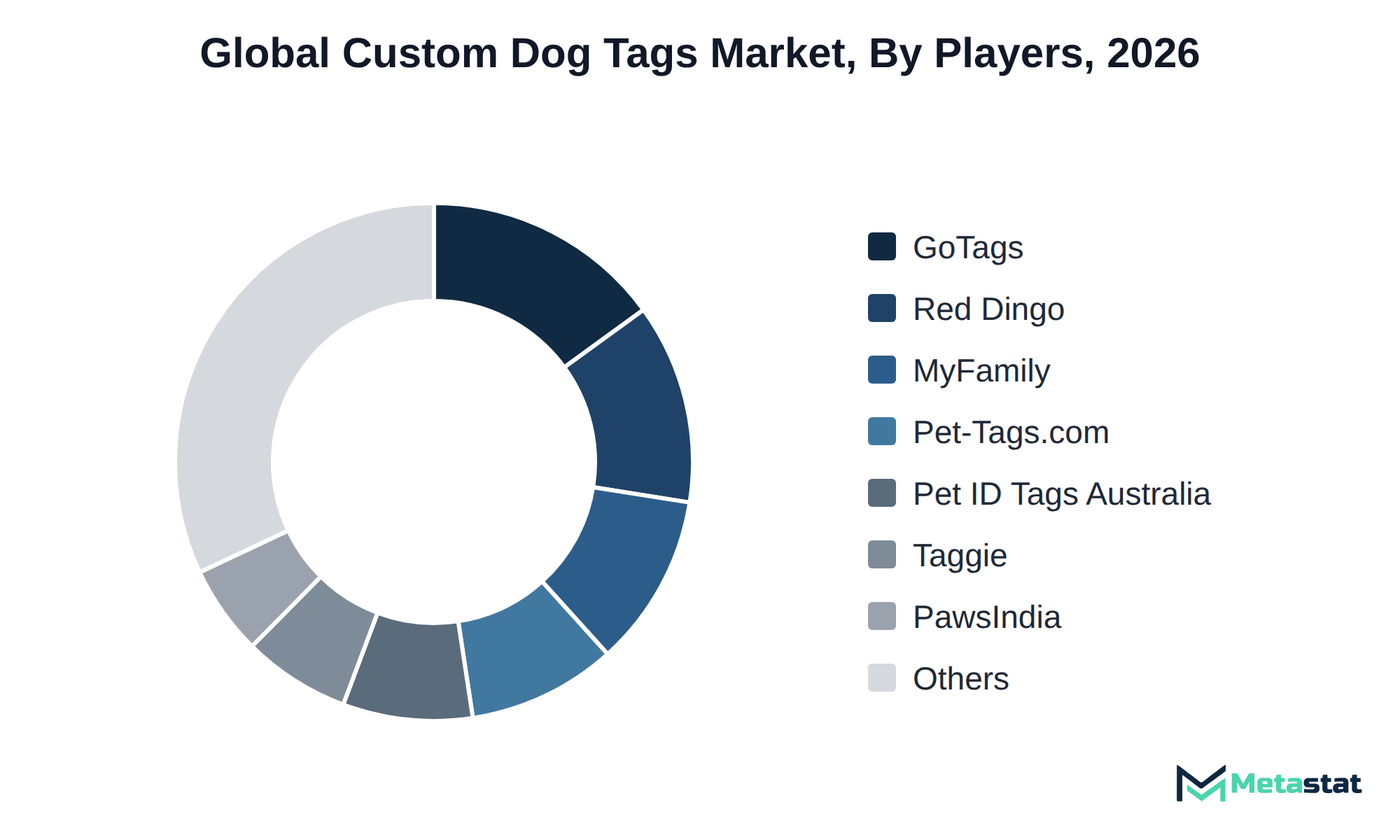
The Custom Dog Tags market features a competitive environment where companies differentiate based on product offerings, customization options, and distribution strategies. Buyers prioritize factors including price, quality of materials, and level of personalization when selecting products. Strategic positioning within the market reflects these preferences.
Companies like GoTags and Red Dingo focus heavily on customization, offering a range of options in design and engraving techniques. Organizations including MyFamily cater to specific needs by providing pet identification tags that emphasize durability and aesthetic appeal. Pet-Tags.com leverages online direct-to-consumer channels to enhance accessibility, while PawsIndia positions itself as a provider of specialized tags for various pet types.
Material selection influences competitive positioning. Taggie and 3Deality emphasize stainless steel and aluminum options, attracting buyers seeking longevity and stylish designs. In addition, DogTags.com and DogTagsInc.com prioritize e-commerce marketplaces to enhance their reach and streamline customer interactions. These strategies reflect an understanding of consumer demand within the broader market, reinforcing the importance of product quality and distribution channels.
This growth relies on several key developments within the market. The increasing popularity of online direct-to-consumer (D2C) channels, expected to expand from USD 68.5 million in 2026 to USD 164.6 million by 2033, supports broader market access and consumer engagement. A notable risk includes potential fluctuations in raw material costs, particularly for stainless steel, which impacts pricing strategies and production efficiency across various segments. Each of these factors plays a critical role in determining whether the market reaches the anticipated level of USD 541.2 million by 2033, highlighting the importance of strategic management and market responsiveness in navigating the evolving landscape of the Custom Dog Tags market.
By Product Type: Pet Identification Tags, Military-Style Identification Tags, Medical Alert Dog Tags, Commemorative and Novelty Dog Tags
By Material: Stainless Steel, Aluminum, Brass, Silicone, Plastic and Acrylic, Others (Copper, Titanium, Wood)
By Customization Method: Laser and Rotary Engraving, Embossing and Debossing, Mechanical Stamping, Digital and Full-Color Printing, Enamel Inlay and Color Filling, Others (Photo Etching, QR Code and Braille Personalization)
By Distribution Channel: Online Direct-to-Consumer (D2C), E-Commerce Marketplaces, Pet Specialty Stores, Pet Clinics and Veterinary Hospitals, Military and Tactical Equipment Retailers, Others (Gift Shops, Promotional Product Retailers)
The report strategically identifies and profiles the key market players and analyses their core competencies in each sub-segment of the Custom Dog Tags market.
Report Attributes | Details |
Study Period | 2021-2033 |
Base Year | 2025 |
Estimated Year | 2026 |
Forecast Period | 2026-2033 |
Historical Period | 2021-2025 |
Growth Rate | CAGR 12.1% from 2026 to 2033 |
Revenue Unit | USD million |
Segmentation | By Product Type, Material, Customization Method, Distribution Channel, and Region |
By Region | North America (By Product Type, Material, Customization Method, Distribution Channel, and Country)
|
Europe (By Product Type, Material, Customization Method, Distribution Channel, and Country)
| |
Asia Pacific (By Product Type, Material, Customization Method, Distribution Channel, and Country)
| |
South America (By Product Type, Material, Customization Method, Distribution Channel, and Country)
| |
Middle East and Africa (By Product Type, Material, Customization Method, Distribution Channel, and Country)
|
Find answers to common questions about this report
The Custom Dog Tags market size was valued at USD 216.9 million in 2025.
The market is projected to grow at a CAGR of 12.1% during the forecast period from 2026 to 2033.
The North America Custom Dog Tags market size is estimated to reach USD 175.4 million by 2033.
Pet Identification Tags lead the Custom Dog Tags market with a projected value of USD 316.2 million by 2033, reflecting the highest demand among the product segments.
Pet owners increasingly prioritize safety and identification, driving heightened demand for custom identification solutions. The rise of online direct-to-consumer channels enhances convenience and expands market opportunities for personalized products.
North America holds the dominant share of the Custom Dog Tags market, with a value of USD 175.4 million projected for 2033, representing 34 percent of the total market.
Price sensitivity among pet owners and military personnel significantly restrains growth in the Custom Dog Tags market. Higher production costs impact final pricing, resulting in slower uptake among budget-conscious consumers and leading to smaller order quantities.
The Custom Dog Tags market is estimated to reach a valuation of USD 541.2 million by 2033.
Key players operating in the Custom Dog Tags market include GoTags, Red Dingo, MyFamily, Pet-Tags.com, Pet ID Tags Australia, Taggie, and PawsIndia.
Increased pet ownership and a focus on pet safety drive demand for custom identification solutions. Pet owners prioritize personalized tags that enhance their pets' chances of being returned if lost.
The analysts below cover Consumer Goods research at Metastat Insights.
LEAD ANALYST
Utkarsh Khirodkar is a Lead Market Research Analyst at MetaStat Insight, specializing in market intelligence, technology sector assessments, and competitive strategy.
Scaling antibody-drug conjugate manufacturing hinges on contract manufacturing availability for high-potency active ingredients. The MetaStat Insight analysis looked closely at global cleanroom slot constraints, bioconjugation batch failure rates, and supply chain redundancies between the US, Europe, and India. The supplier capability matrix proved genuinely useful for our team when mapping secondary source options across our clinical pipeline.
Floating offshore wind feasibility relies heavily on specialized installation vessel availability and port crane limits, which most broad renewable energy forecasts ignore. The report delivered a thorough analysis of dry dock capacity, mooring chain supply constraints, and raw material pricing trends for deepwater anchor installations. It served as a solid independent sanity check for our offshore project capital expenditure assumptions.
Assessing commercial microgrid software adoption requires looking past top-level installation numbers and examining utility interconnection queues. The research provided verifiable data on average permitting timelines, tariff structures, and battery storage integration costs across regional utility territories. That grounded perspective was valuable for our team when building five-year demand projections for industrial microgrid controllers.
Explore related market intelligence reports worth reading alongside this one.