
LEAD ANALYST
Utkarsh Khirodkar is a Lead Market Research Analyst at MetaStat Insight, specializing in market intelligence, technology sector assessments, and competitive strategy.

Global Dog Clothing and Accessories Market Size, Share, By Product (Sweaters and Jackets, Raincoats, Costumes and Apparel, Overalls and Full-Body Garments, Collars, Hoodies, Harnesses and Leashes, and Other Accessories and Toys), By Dog Size (Extra-Small and Small Dogs, Medium Dogs, and Large and Extra-Large Dogs), By Material (Cotton, Polyester, Fleece, Nylon, Leather, and Others), By Distribution Channel (Specialty Pet Stores, Supermarkets and Hypermarkets, Department Stores, Online, and Others), Industry Analysis, Growth, Trends, and Forecast, 2026-2033
Report ID
MSI-4944
Published
August, 2026
Pages
282 Pages
Format
Historical
Base year
Forecast
Forecast period
Report Details
Choose Your License
Global Dog Clothing and Accessories Market
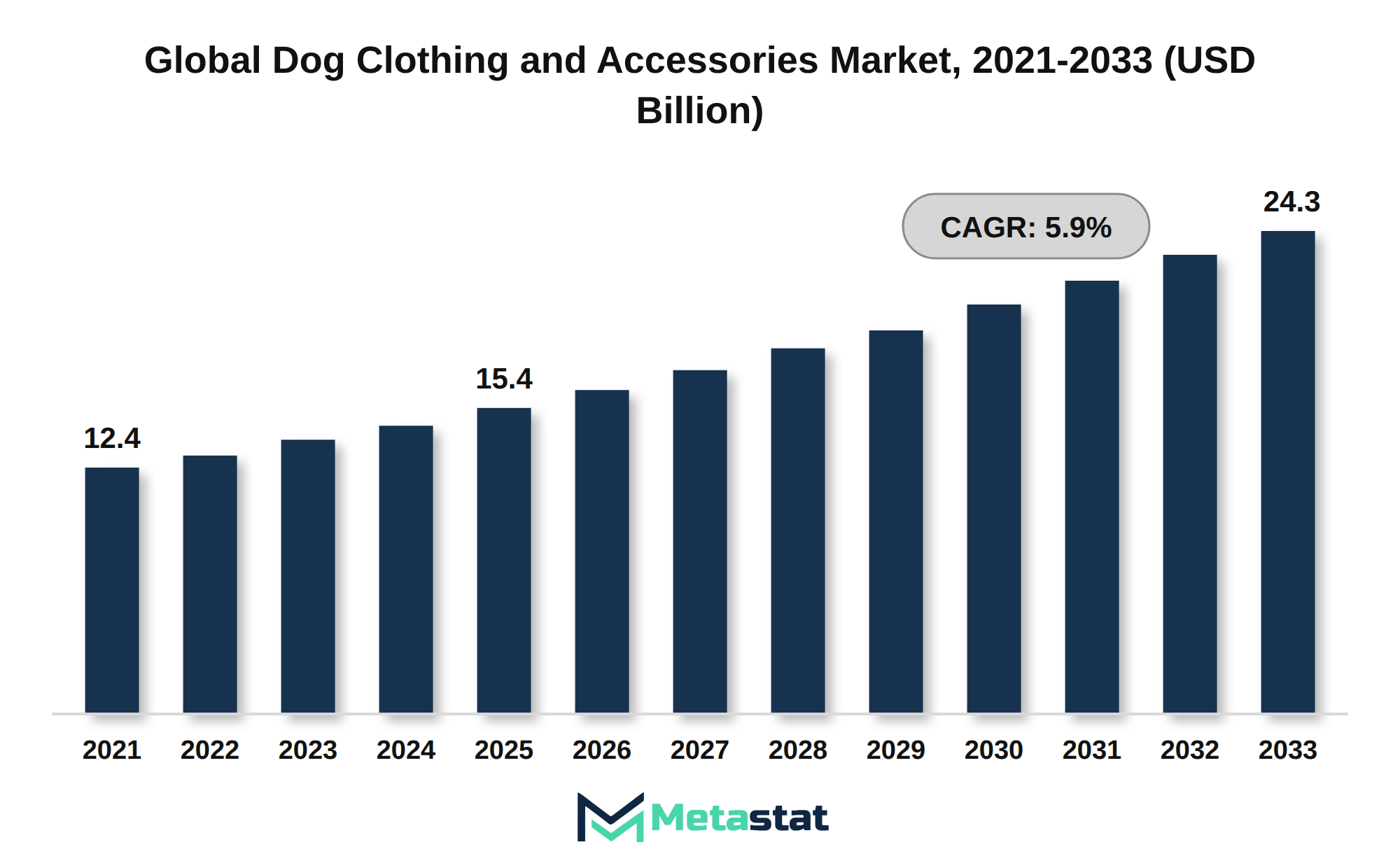
The global Dog Clothing and Accessories market was valued at USD 15.4 billion in 2025 and is projected to reach USD 24.3 billion by 2033, growing at a CAGR of 5.9% over the forecast period.
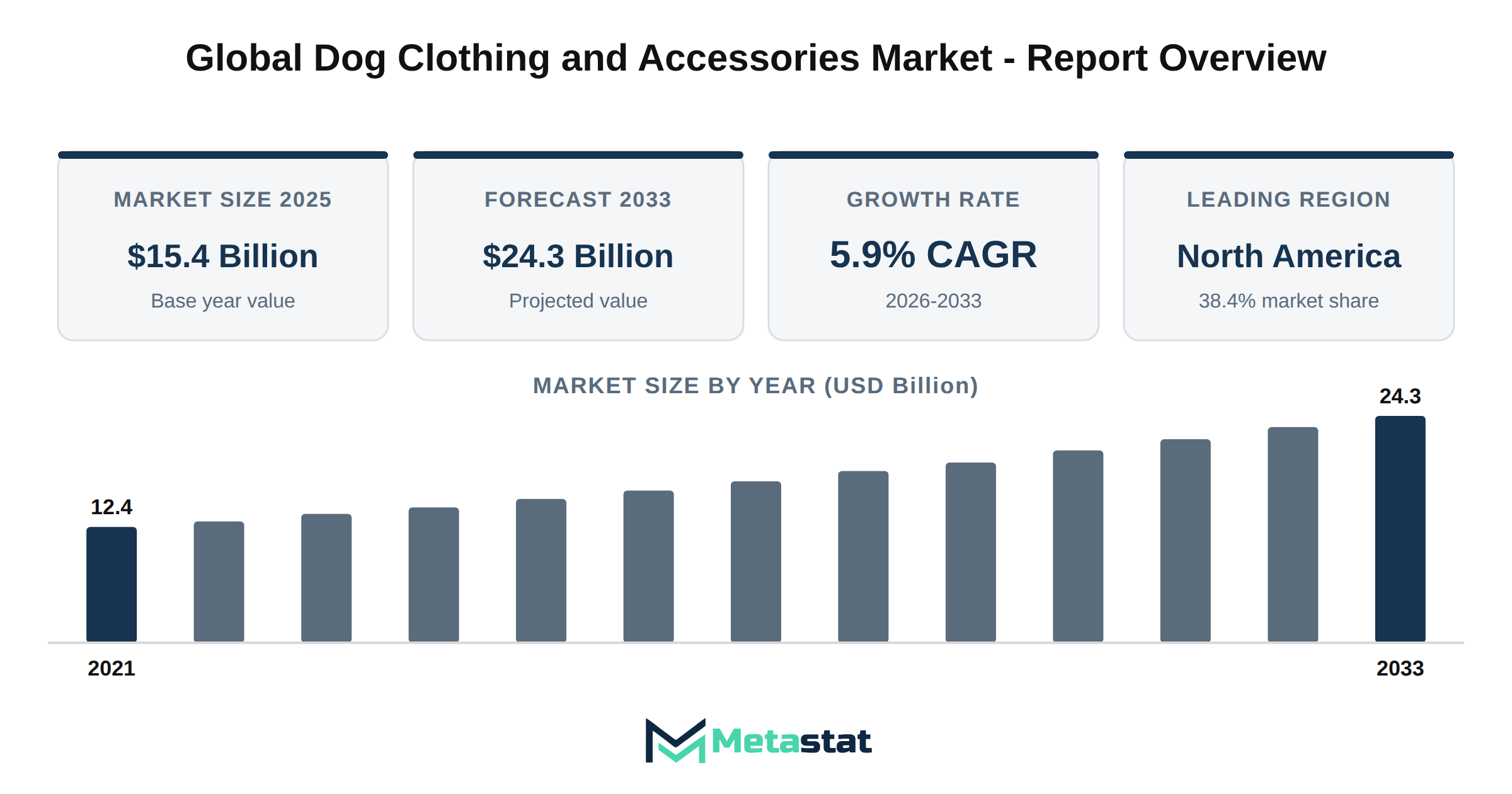
The Dog Clothing and Accessories market reached a valuation of USD 15.4 billion in 2025, reflecting a steady increase from USD 12.4 billion in 2021. Subsequent years have shown consistent growth, with projections estimating the market is expected to expand to USD 24.3 billion by 2033, representing a compound annual growth rate (CAGR) of 5.9% over the forecast period.
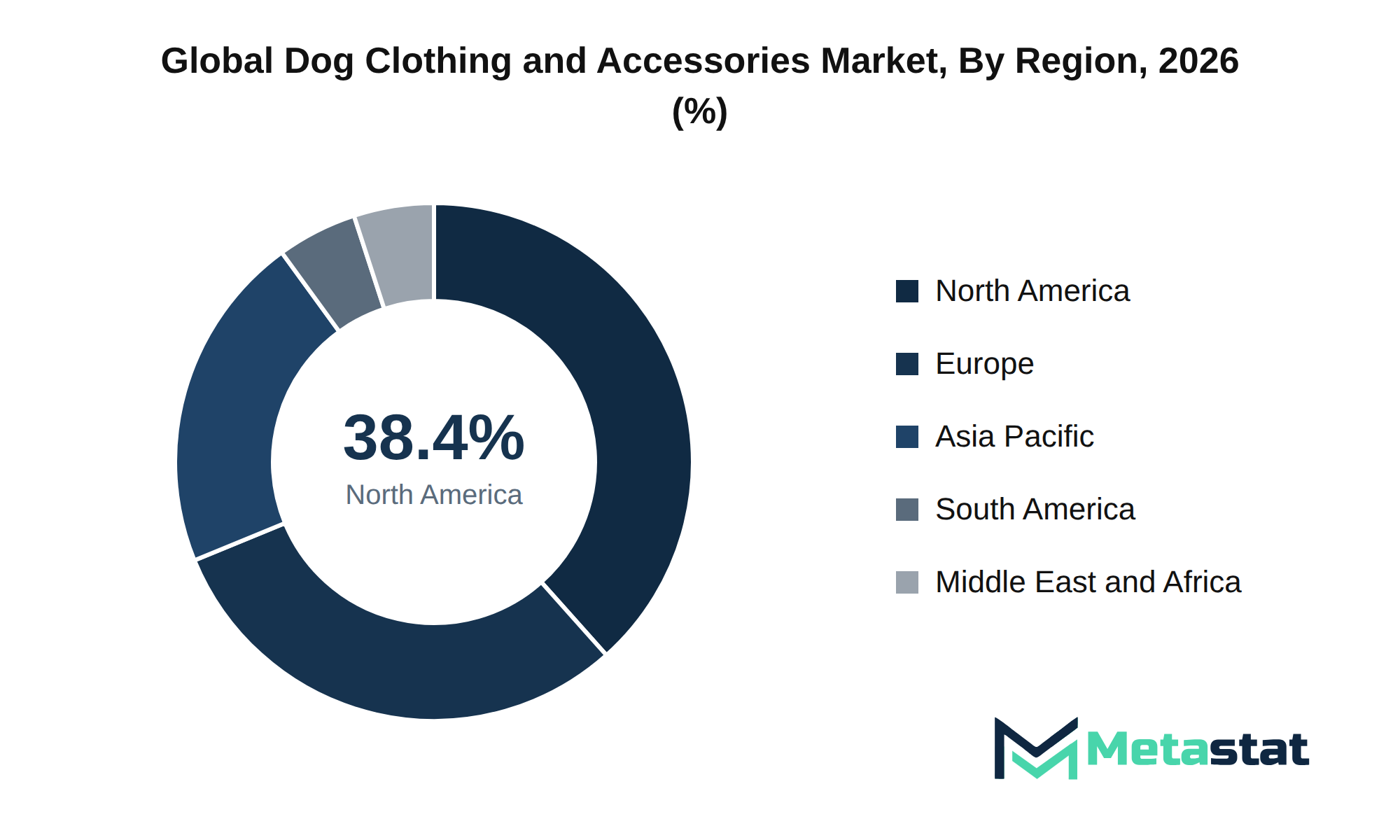
Regional distribution indicates that North America holds a share of the market at 38.4%, followed by Europe at 30.4%. The Asia Pacific region accounts for 21.2%, while South America and the Middle East and Africa each represent 5%. By 2033, North America will contribute USD 9 billion to the overall market value, maintaining a CAGR of 5.9%.
The segments within the market, including various product categories and dog sizes, reflect diverse consumer preferences. In the product category, sweaters and jackets project a value increase from USD 2.9 billion in 2026 to USD 4.3 billion by 2033. Raincoats are anticipated to reach a value of USD 2.1 billion by 2033, with a CAGR of 6.8%. Costumes and apparel will contribute to the market growth with a projected value of USD 2.4 billion by 2033.
Within the dog size segment, extra-small and small dogs will see growth from USD 6.9 billion in 2026 to USD 10.5 billion in 2033, indicating a CAGR of 6.2%. Medium dogs are projected to reach USD 8.4 billion by 2033, while the large and extra-large dog segment is anticipated to achieve a value of USD 5.4 billion.
The Dog Clothing and Accessories market experiences significant dynamics influenced by several factors, including supply chain landscapes and macroeconomic conditions. Inflationary pressures and currency volatility affect pricing strategies across various segments, prompting suppliers to adapt to fluctuating production costs and consumer purchasing power. In response, companies within the market prioritize strategic sourcing and logistics architecture to enhance operational efficiency and maintain competitive pricing.
Research and development trajectories focus on innovative materials and designs that align with evolving consumer preferences for sustainability. The shift towards eco-friendly products drives a circular economy dynamic, increasing demand for sustainable transformation within the market. This trend encourages manufacturers to invest in sustainable practices, enhancing their brand value and attracting environmentally conscious consumers.
Market fragmentation remains a characteristic feature, with numerous players competing across diverse segments. This fragmentation creates opportunities for mergers and acquisitions, driven by companies seeking to consolidate resources, expand market share, and enhance product offerings. Strategic capital allocation towards infrastructure improvements supports growth initiatives and strengthens supply chain resilience.
The Dog Clothing and Accessories market's future strategic outlook reflects a commitment to innovation and sustainability. Companies are positioned to navigate the evolving landscape by leveraging technological advancements and consumer insights to enhance their product lines and customer engagement strategies. High-value recommendations emphasize the importance of agility in responding to market changes while maintaining a focus on quality and sustainability.
The rising trend of pet ownership significantly influences the Dog Clothing and Accessories market. Increased emotional and financial investment in pets results from changing consumer lifestyles, leading to heightened demand for products that enhance pet well-being and style. Various demographic shifts, including urbanization and an aging population, contribute to this trend. Younger consumers prioritize their pets' needs and experiences. The emphasis on personalization in pet fashion drives market expansion, because pet owners seek unique and fashionable items for their companions.
This increased focus on pet apparel and accessories reflects a broader shift in consumer behavior, where pets are increasingly viewed because family members. Such perspectives drive higher spending on premium products, including custom clothing and stylish accessories. The demand for high-quality materials that ensure comfort and durability supports growth within the Dog Clothing and Accessories market. While pet ownership continues to rise, the overall market potential for innovative and diverse product offerings increases.
The Dog Clothing and Accessories market experiences growth driven by digital transformation, which reshapes retail channels and consumer engagement strategies. Increasing internet penetration and evolving consumer preferences for online shopping lead to a shift towards e-commerce platforms. This transformation enables brands to reach a broader customer base while optimizing the shopping experience through user-friendly interfaces and personalized recommendations.
Technological integration plays a crucial role in enhancing operational efficiencies. Adoption of advanced software solutions streamlines inventory management, order processing, and customer relationship management. These improvements result in cost reductions and improved service delivery, benefiting suppliers and consumers in the market.
Investment in digital marketing strategies further drives brand visibility. Companies leverage social media and online advertising to engage potential buyers and promote new product launches. Increased focus on digital channels enhances brand loyalty and encourages repeat purchases, significantly impacting overall growth in the Dog Clothing and Accessories market.
Automation and data analytics enable companies to gather insights into customer behavior and market trends. Understanding consumer preferences allows businesses to tailor their offerings and pricing strategies, creating a competitive advantage. This responsive approach to market demands strengthens the market position and encourages innovation in product design and delivery.
Regulatory challenges significantly restrict growth in the Dog Clothing and Accessories market. Stringent compliance hurdles, often necessitated by complex legal mandates, increase operational costs for manufacturers and retailers. These compliance requirements disproportionately burden small and medium enterprises, limiting their ability to compete effectively in the market.
Macroeconomic headwinds, including rising inflationary pressures, add to the challenges faced by businesses. Higher production costs result from increased raw material prices and labor expenses, pushing several manufacturers to reduce profit margins. Financial strain hinders investment in product innovation and marketing efforts.
Supply chain disruption has emerged because another considerable restraint. Geopolitical instability and resource scarcity contribute to delays in the availability of essential materials, affecting production timelines and increasing lead times. This situation creates uncertainty for retailers, impacting their ability to maintain inventory levels and meet consumer demand.
Technological obsolescence poses a notable concern for the Dog Clothing and Accessories market. Companies face pressure to adopt new technologies to stay competitive, yet high capital investment requirements for modernizing production facilities and processes deter smaller players from making necessary upgrades.
Market fragmentation and cultural barriers in various regions result in uneven adoption rates across different markets. Inconsistent consumer preferences and varying levels of pet ownership understanding complicate marketing strategies, leading to challenges in customer engagement and retention. The cumulative effect of these restraints impacts overall market growth potential, limiting opportunities for expansion and innovation.
The Dog Clothing and Accessories market faces significant challenges from geopolitical fragmentation, which creates uncertainty in trade dynamics. Tariff friction and trade deficits disrupt supply chains, leading to increased costs for manufacturers and retailers. These factors contribute to pricing compression, negatively affecting profit margins across the market.
Technological disruptions introduce complexity into research and development processes, hindering innovation. Companies navigate friction while addressing evolving downstream demands, which complicates product development. Rising input costs, particularly in materials and labor, impact overall pricing strategies.
Logistics disruptions and supply chain instability exacerbate these challenges, creating bottlenecks that delay product availability. Tightening global regulatory standards complicate compliance overhead, leading to increased operational costs and potential legal liabilities. These pressures create a challenging environment for businesses seeking to maintain market competitiveness while meeting consumer expectations.
The combination of these factors results in talent retention pressures and workforce skill gaps that affect operational efficiency. Companies in the Dog Clothing and Accessories market address environmental lifecycle footprints and sustainability demands, adding another layer of complexity to their operations. Overall, these challenges shape strategic decision-making and growth trajectories in the coming years.
The Dog Clothing and Accessories market experiences transformation driven by technological advancements. Innovations in materials and manufacturing processes significantly enhance product offerings, improving durability and comfort for pets. The integration of smart textiles enables temperature regulation, appealing to pet owners seeking enhanced functionality.
Digital procurement shifts contribute to market expansion by facilitating streamlined purchasing processes. E-commerce platforms enable consumers to access a broader range of products, enhancing competitive pricing and convenience. This trend aligns with evolving buying behaviors, where pet owners increasingly prefer online shopping for pet apparel and gear.
Geographical expansion represents a key opportunity for the market. Emerging regional demands, particularly in Asia Pacific and South America, indicate a growing interest in premium pet products. Brands that effectively localize their offerings capitalize on these emerging markets, tailoring products to cultural preferences and climatic conditions.
Sustainability imperatives drive the market towards eco-friendly materials and practices. Increased awareness of environmental impact prompts manufacturers to adopt sustainable production methods, appealing to environmentally conscious consumers. This alignment with sustainability attracts a wider customer base and enhances brand loyalty.
Strategic consolidation through mergers and acquisitions enables companies to strengthen their market presence and diversify product offerings. Collaborations between traditional retailers and innovative startups facilitate the sharing of resources and knowledge, leading to enhanced product development. This approach supports the growth trajectory of the Dog Clothing and Accessories market, contributing to its ongoing evolution.
The Global Dog Clothing and Accessories market is segmented based on Product, Dog Size, Material, and Distribution Channel.
Sweaters & Jackets segment is valued at USD 2.9 billion in 2026 and is projected to reach USD 4.3 billion by 2033, at a CAGR of 5.6% during the forecast period. Primary demand drivers for this segment include increasing awareness of pet fashion and the desire among pet owners to enhance their dog's appearance. The growing trend of pet humanization drives demand, leading to a surge in product innovation and customization options. Adoption of high-quality materials, including fleece and cotton, ensures comfort while meeting aesthetic needs. Segment expansion catalysts include the increasing availability of specialized retail outlets and e-commerce platforms, facilitating broader access to diverse product ranges. Technological maturation enables advanced manufacturing processes that result in better fitting and durable garments. The evolution of dog apparel reflects changing consumer preferences, with a focus on sustainable materials and designs that reflect personal style. Consumption shifts indicate a growing market for seasonal offerings, including winter jackets and raincoats, aligning with climate variations and pet health concerns. Regulatory compliance and certifications related to material safety and durability contribute to consumer confidence, influencing purchasing decisions. Pricing volatility and margin pressures arise from fluctuating raw material costs, yet premium product offerings remain in demand, with consumers willing to invest in high-quality items. Supply chain resilience in this segment is crucial, with manufacturers focusing on reliable sourcing and logistics strategies to mitigate potential disruptions. Substitution risks from alternative pet apparel options require ongoing innovation to maintain market share. Overall, the growth outlook for the Sweaters & Jackets segment within the Dog Clothing and Accessories market highlights its significance in the overall industry.
Growth in the Raincoats segment reflects a heightened awareness of pet care and comfort during adverse weather conditions. Factors driving demand include an increase in pet ownership and the growing trend of treating pets because family members, which encourages investments in their well-being. The segment is estimated to reach USD 2.1 billion by 2033, at a CAGR of 6.8% during the forecast period.
Technological advancements in fabric and design enhance the functionality and appeal of raincoats. Innovations include lightweight, waterproof materials that provide durability and comfort without sacrificing style. These advancements attract a broader consumer base, including pet owners seeking high-quality apparel for their dogs.
Growing e-commerce platforms facilitate better access to a diverse range of products, enabling consumers to explore various options tailored to their preferences and their pets' needs. This shift in purchasing behavior supports the growth of the Dog Clothing and Accessories market, specifically benefiting the Raincoats segment.
Consumer preferences reflect a shift toward sustainable and eco-friendly materials, prompting manufacturers to adapt their offerings. This trend not only aligns with environmental concerns but positions brands favorably among eco-conscious consumers, expanding market reach.
Competitive pricing strategies and promotional activities contribute to increased market penetration. Brands that offer discounts and loyalty programs enhance customer retention while attracting new buyers, boosting sales and reinforcing the growth of the segment.
Growth in the Costumes & Apparel sub-segment of the Dog Clothing and Accessories market is driven by a variety of factors, including increased consumer spending on pet-related products and a focus on personalization. Pet owners continue to seek out unique clothing options that allow them to express their pets' personalities, reflecting a broader trend towards customization across retail sectors. Adoption of creative designs and seasonal themes has enhanced product appeal, driving demand among pet owners keen to participate in celebrations and holidays with their pets.
Market expansion is anticipated owing to suppliers innovating their product offerings, introducing new styles and materials that cater to changing consumer preferences. Costumes that leverage high-quality fabrics and sustainable materials attract environmentally conscious buyers, supporting the segment’s growth. The increasing popularity of social media platforms allows pet owners to present their pets in costumes, further fueling consumer interest and creating an engaging market environment.
Costumes & Apparel segment is expected to reach USD 2.4 billion by 2033. The competitive landscape features a range of players, from large retailers to niche brands that cater specifically to this segment. Effective marketing strategies, strategic partnerships, and distribution through various channels, including online platforms, enhance market reach. Investment in digital marketing and e-commerce capabilities is vital, creating opportunities for brands to engage with a larger audience.
Changes in consumer behavior, including the shift toward online shopping, have significantly impacted the market dynamics. Online sales channels provide a platform for brands to present their diverse product ranges, often leading to increased sales volumes. While the market continues to evolve, adaptability to consumer trends and preferences will be crucial for brands looking to compete effectively in the Costumes & Apparel sub-segment.
Growth in the Overalls and Full-Body Garments segment reflects a rising preference for comprehensive coverage among pet owners, ensuring comfort and protection for dogs in various weather conditions. This trend aligns with increasing consumer awareness about the health and well-being of pets, driving demand for high-quality, functional dog clothing. Overalls and full-body garments provide practical solutions for outdoor activities, appealing to active dog owners seeking reliable apparel for their pets. Factors including evolving fashion trends within the pet clothing sector contribute to the expansion of this segment.
The Overalls and Full-Body Garments segment is projected to grow at a CAGR of 7.5% during the forecast period. The anticipated growth results from advancements in fabric technology, allowing for the creation of lightweight, breathable, and waterproof materials. Innovations in design further enhance the appeal of these products, catering to diverse consumer preferences and lifestyles. The segment experiences heightened competition driven by brands striving to differentiate their offerings through unique features, including adjustable fits and stylish designs, attracting a broader customer base.
Increasing expenditure on pet care supports the Dog Clothing and Accessories market, with consumers prioritizing quality and function. This trend reinforces the position of overalls and full-body garments within the broader market, emphasizing the importance of durability and versatility. While more pet owners seek specialized clothing options for their dogs, the segment is expected to capture a larger share of the overall market, fueled by creative marketing strategies and the influence of social media in promoting pet fashion.
Collars represent a crucial sub-segment within the Dog Clothing and Accessories market, driven by several primary demand factors. Increasing pet ownership and the rising trend of pet humanization contribute to heightened consumer spending on pet products, including collars. These factors reflect a cultural shift where pet owners prioritize their pets' comfort and style, leading to a surge in demand for fashionable and functional collars.
Segment expansion is driven by innovations in materials and design, improving both the aesthetic appeal and functionality of collars. Manufacturers focus on creating products that enhance safety, including collars with reflective materials or integrated identification tags. Technological advancements ensure that collars serve a decorative purpose while incorporating features appealing to tech-savvy consumers, including GPS tracking capabilities.
Consumption shifts indicate that buyers prefer high-quality, durable collars made from sustainable materials. This trend aligns with a broader movement toward eco-friendly products, influencing purchasing decisions. Regulatory compliance standards surrounding pet safety and product quality shape market dynamics, compelling manufacturers to adhere to stringent requirements while enhancing their offerings.
Pricing volatility remains a concern, particularly with fluctuations in raw material costs affecting profit margins. However, strategic opportunity windows arise for companies adept at managing these challenges, allowing for competitive pricing strategies without sacrificing quality. The focus on raw material sourcing and supply chain resilience becomes critical to mitigate potential disruptions and ensure consistent product availability.
Overall, the collars sub-segment's growth within the Dog Clothing and Accessories market reflects evolving consumer preferences and technological advancements. Continuous innovation and adherence to safety standards position companies to capitalize on the expanding market.
Increased consumer interest in fashionable and functional pet apparel drives the demand for hoodies within the Dog Clothing and Accessories market. Pet owners increasingly seek to reflect their own style and preferences through their pets' clothing choices, leading to a greater focus on unique designs and materials. This trend encourages brand differentiation and compels suppliers to innovate in design and fabric selection.
Hoodies appeal to a wide range of dog owners, particularly those with smaller breeds that require additional warmth during colder months. The versatility of hoodies allows for various applications, from casual wear to special occasions, enhancing their attractiveness to consumers. Vendors focus on expanding their product lines to include hoodies in diverse colors, sizes, and styles, addressing the evolving preferences of pet owners.
Technological advancements in fabric production contribute to the growth of this segment. Innovations in materials, including moisture-wicking and lightweight fabrics, create comfortable options for dogs, making hoodies more appealing for outdoor activities. The integration of functionality with fashion positions hoodies favorably within the market.
Shifts in consumption trends toward sustainable and eco-friendly products influence the hoodies segment. Many suppliers emphasize using organic or recycled materials, aligning their offerings with environmentally conscious consumers. This strategic positioning not only meets consumer demands but enhances brand loyalty.
Investment in marketing and promotional strategies focuses on targeting specific demographics, including millennials and Gen Z, who prioritize their pets' fashion and lifestyle. Social media platforms serve because effective channels for brands to present their hoodie collections, driving engagement and encouraging purchases. Overall, the hoodies sub-segment within the Dog Clothing and Accessories market experiences significant growth potential, fueled by consumer trends and innovations in product development.
Growth in the leashes sub-segment stems from various demand drivers, including increasing pet safety awareness and evolving consumer preferences for durable and fashionable products. Pet owners prioritize functionality alongside aesthetics, which encourages manufacturers to innovate and enhance their offerings. This evolution in product design aligns with a broader trend toward enhanced pet ownership experiences, with owners seeking reliable and stylish solutions for their pets.
Technological advancements play a significant role in the segment's expansion. New materials and manufacturing processes contribute to the development of lightweight, durable, and weather-resistant leashes, appealing to a wide range of consumers. The focus on sustainability influences purchasing decisions, prompting suppliers to explore eco-friendly alternatives for raw materials. Regulatory compliance with safety standards ensures product reliability, further driving consumer confidence in the market.
Cost structures within the leashes segment face pressures from fluctuating raw material prices and increased production costs. Strategic partnerships across the supply chain enhance resilience, enabling manufacturers to maintain competitive pricing while addressing consumer demands. This collaborative approach extends to logistics, where efficient distribution channels reduce vulnerabilities, allowing for timely product availability.
Consumer consumption shifts toward premium offerings within the market, driven by a willingness to invest in high-quality, well-designed products. This trend creates strategic opportunity windows for new entrants and existing players, encouraging innovation and differentiation. While the market evolves, the focus on leashes is expected to grow, reaffirming their importance within the broader Dog Clothing and Accessories market.
In recent years, the Other Accessories and Toys segment within the Dog Clothing and Accessories market has gained traction, driven by consumers seeking a diverse range of products for their pets. This segment includes life vests, bandanas, beds, bowls, and various toys designed to enhance the well-being and enjoyment of pets. The increase in pet adoption rates and the trend toward treating pets because family members contribute significantly to the demand for these products.
Innovation is important in this segment, with manufacturers introducing new designs and materials that cater to the evolving preferences of pet owners. Sustainable materials and eco-friendly production methods align with growing consumer awareness of environmental issues, further boosting segment attractiveness. Advancements in product safety standards and certification processes enhance consumer confidence and drive purchases.
Consumer consumption shifts toward premium and specialized products influence market dynamics. Pet owners increasingly prioritize high-quality, durable, and aesthetically pleasing items for their pets, leading to greater willingness to invest in these accessories. The rise of e-commerce offers new distribution channels, enabling consumers to access a wider variety of products conveniently, thus expanding the reach and visibility of these offerings in the market.
Overall, the Other Accessories and Toys segment stands poised for growth within the Dog Clothing and Accessories market, fueled by persistent demand for unique and engaging products that cater to both functional and lifestyle needs of pet owners.
Valued at USD 6.9 billion in 2026, the Extra-Small and Small Dogs segment is projected to reach USD 10.5 billion by 2033, at a CAGR of 6.2% during the forecast period. The increasing number of pet owners adopting small dog breeds significantly drives demand for tailored clothing and accessories. Products designed for these breeds often combine style with practical features, addressing the unique needs of smaller dogs.
The market experiences a shift toward innovative designs and materials, enhancing comfort and functionality. Pet owners prioritize quality and durability, leading to a preference for premium products in this segment. Brands that introduce next-generation upgrades, including waterproof and breathable fabrics, capture consumer interest and expand their market share.
Product evolution highlights a growing focus on customization and personalization, allowing pet owners to express their individual taste while ensuring their pets’ comfort. This trend reflects broader consumption shifts toward unique and fashionable pet apparel, directly impacting the Dog Clothing and Accessories market.
Competitive pressures drive continuous improvement in cost structures and pricing strategies, driven by brands striving to balance quality with affordability. Companies that effectively manage supply chain resilience and raw material sourcing enhance their operational efficiency, vital for maintaining competitive pricing amid fluctuating market conditions. The ability to respond to consumer preferences rapidly positions brands favorably, creating strategic opportunity windows and enabling long-term growth within the segment.
Demand for Medium Dogs clothing and accessories reflects a growing trend toward personalized and stylish pet apparel. Pet owners increasingly seek products that cater specifically to the size and needs of their dogs, driving this segment's expansion. Medium Dogs segment is estimated to reach USD 8.4 billion by 2033, at a CAGR of 5.8% during the forecast period. The trend of treating pets like family members continues to influence purchase decisions, with owners willing to invest in high-quality and fashionable items.
Technological advancements in fabric development significantly enhance product offerings. Innovative materials, including breathable and moisture-wicking fabrics, cater to comfort and functionality, appealing to conscientious consumers. The market benefits from a rise in e-commerce, facilitating easier access to diverse product ranges tailored for medium-sized dog breeds. Online platforms provide a convenient shopping experience, enabling owners to compare options and find unique designs.
Product evolution plays an important role in shaping this segment. The introduction of versatile clothing options, including adjustable features and multi-functional designs, addresses the practical needs of pet owners while emphasizing style. Collaborations between designers and brands in the Dog Clothing and Accessories market encourage creativity and expand choices, aligning with consumer preferences.
Regulatory compliance standards surrounding pet apparel ensure safety and quality, enhancing consumer trust. Meeting these standards acts because a competitive advantage for manufacturers, reinforcing brand reputation. Pricing volatility, stemming from fluctuations in raw material costs, presents challenges for producers, necessitating strategic pricing approaches to maintain margins while appealing to price-sensitive consumers.
The Medium Dogs segment thrives on evolving consumer preferences and technological innovations, positioning itself for sustained growth within the broader Dog Clothing and Accessories market. Capital investment in product development and marketing strategies will further enhance market penetration and brand loyalty.
Consumer demand for Large and Extra-Large Dogs clothing has become a central focus within the Dog Clothing and Accessories market, with buyers increasingly seeking products tailored for larger breeds. This trend is attributed to the growing number of pet owners embracing larger dog breeds because companions, leading to an expansion of product offerings in this segment. Manufacturers respond by developing clothing that emphasizes comfort and style, accommodating the unique profiles of larger dogs. The increasing trend of pet humanization prompts owners to dress their pets in fashionable garments, further driving market growth.
Large and Extra-Large Dogs segment is expected to reach USD 5.4 billion by 2033. The shift toward high-quality materials and fashionable designs has prompted brands to innovate, enhancing product appeal and functionality. This evolution aligns with broader consumption shifts, where pet apparel is not merely functional but a reflection of personal style. Retail distribution strategies have adapted, focusing on specialty pet stores and online platforms to cater to this growing demographic.
Pricing strategies within this segment have become critical, because brands navigate cost pressures from raw material sourcing and supply chain dynamics. Competitive pricing remains vital to attract consumers, particularly in a market where brand loyalty is important. The successful positioning of products in the Dog Clothing and Accessories market hinges on balancing quality with affordability, ensuring accessibility for a diverse customer base.
Growing awareness of sustainability drives demand for cotton in the Dog Clothing and Accessories market. Eco-conscious consumers increasingly prefer products made from natural fibers, leading to a shift in purchasing behavior. This preference enhances adoption rates of cotton-based apparel, driven by pet owners seeking environmentally friendly options for their pets.
Technological maturation in textile manufacturing plays a significant role in improving the quality and versatility of cotton fabrics. Innovations in processing techniques enhance the durability and comfort of cotton products, making them appealing to a broader consumer base. Retailers in the market have started expanding their cotton offerings to meet evolving consumer expectations.
Consumer trends indicate a preference for comfortable and breathable materials in pet clothing. Cotton's natural properties align with this demand, establishing it because a favorable choice for pet owners concerned about their dogs' comfort. This focus on pet well-being drives segment expansion, encouraging brands to innovate and invest in cotton-based products.
Regulatory compliance standards related to textile products increasingly emphasize the use of safe and non-toxic materials. Cotton meets these standards, providing a competitive advantage in the market. Brands leveraging cotton in their product lines market their items because safer alternatives, appealing to pet owners who prioritize health and safety.
Supply chain resilience remains crucial for the cotton segment. Producers work to ensure consistent availability. With fluctuations in raw material sourcing, brands that establish strong supplier relationships mitigate risks associated with pricing volatility. This strategic approach enhances market stability and supports long-term growth.
Opportunities for cotton in the Dog Clothing and Accessories market extend into product evolution. Brands explore various cotton blends to create functional and fashionable items that appeal to diverse consumer preferences. This innovation drives engagement and demand across various product categories.
Growing adoption of polyester in the Dog Clothing and Accessories market results from its lightweight and durable characteristics, making it an appealing choice for pet apparel. The material's resistance to wrinkles and fading contributes to its increasing popularity among consumers prioritizing longevity and ease of maintenance in their purchases. Enhanced moisture-wicking properties make polyester garments suitable for various weather conditions, addressing the practical needs of pet owners.
Innovative designs and technological advancements in polyester fabric production lead to the emergence of next-generation materials that further enhance comfort and functionality for dogs. Manufacturers invest in research and development to create breathable, water-resistant, and eco-friendly variants, appealing to a more environmentally conscious consumer base. This evolution in product offerings aligns with broader trends within the Dog Clothing and Accessories market.
Shifts in consumer preferences toward high-performance and fashionable pet apparel drive greater adoption of polyester, with increased emphasis on aesthetics and functionality in design. The demand for stylish yet practical garments fuels competition among brands, prompting ongoing investments in design and marketing strategies. In response, brands leverage social media and influencer partnerships to reach target demographics effectively, supporting market expansion.
Regulatory compliance standards related to pet apparel continue to evolve, impacting polyester use. Brands ensure that their products meet safety and environmental regulations, influencing sourcing and production practices. This focus on compliance enhances consumer trust and strengthens brand reputation in a competitive environment.
Pricing volatility of raw materials poses challenges for manufacturers, with fluctuations impacting production costs. However, the cost-effectiveness of polyester compared to other materials positions it favorably in the market. Brands strategically manage their supply chains to mitigate risks associated with external market pressures, enhancing resilience and ensuring consistent product availability.
Strategic opportunity windows exist for brands that innovate within the polyester segment, particularly concerning sustainable sourcing and production methods. Capital investment in environmentally friendly manufacturing processes appeals to a growing demographic of eco-conscious consumers. This strategic direction aligns with emerging trends in the Dog Clothing and Accessories market, allowing brands to capture greater market share.
Consumer preferences increasingly trend toward comfort and warmth for pets, positioning fleece because a desirable material within the Dog Clothing and Accessories market. This fabric offers a soft texture, lightweight properties, and excellent insulation, appealing to pet owners focused on functionality and styling in pet apparel. The rising popularity of outdoor activities fuels demand for fleece garments, providing necessary protection against colder weather conditions and enhancing user experience during outdoor adventures.
Innovation in fleece materials has led to the availability of high-performance fabrics that are both durable and easy to clean, positively impacting consumer adoption rates. Advances in technology have improved the moisture-wicking properties of fleece, making it suitable for various climates and conditions. The growth of e-commerce platforms facilitates easier access to fleece products, enabling consumers to make informed purchasing decisions.
Pricing dynamics in the fleece segment show responsiveness to raw material sourcing and production costs. Flexible supply chains support manufacturers in optimizing costs while maintaining quality standards. The ongoing trend toward environmentally friendly materials creates opportunities for fleece products made from recycled fibers, appealing to eco-conscious consumers within the market. Pet owners increasingly focus on sustainability, driving a shift toward fleece items that combine performance with environmental responsibility.
Growing interest in durable and lightweight materials supports heightened demand for nylon in the Dog Clothing and Accessories market. The resilience and moisture-wicking properties of nylon appeal to pet owners seeking functional apparel, particularly in climates that require waterproof and weather-resistant gear. Adoption of nylon products has expanded due to the material's affordability, strength, and ease of maintenance, which positively affects consumer purchasing decisions.
Technological maturation in textile manufacturing enhances the quality and performance of nylon fabrics, contributing to broader acceptance among consumers. Innovations in nylon production processes result in enhanced breathability and comfort, which significantly impacts product evolution in various apparel categories including raincoats and jackets. Companies emphasize aesthetic and functional qualities while the market experiences a shift towards more stylish and modern designs.
End-use dynamics reflect a growing trend of pet owners investing in high-quality, long-lasting clothing options for their dogs. Increased disposable income among pet owners drives consumption shifts toward premium materials, influencing purchasing patterns across all dog sizes. Regulatory compliance standards regarding material safety further enhance consumer confidence, thereby enhancing market growth.
Supply chain resilience remains vital owing to producers navigating raw material sourcing and logistics vulnerabilities. Fluctuations in raw material costs impact pricing strategies, which in turn affect profit margins for companies within the nylon segment. Strategic opportunity windows arise for businesses that adapt to changing consumer preferences and invest in sustainable production practices.
Overall, the nylon segment presents a compelling outlook within the Dog Clothing and Accessories market, driven by evolving consumer expectations and technological advancements. Firms that capitalize on these trends will likely secure a significant position in the market of pet apparel.
Leather has emerged because a prominent material in the Dog Clothing and Accessories market, attracting consumers seeking durability and style. The appeal of leather stems from its robust and weather-resistant properties, which enhance the longevity of products including jackets, collars, and other pet accessories. Pet owners increasingly prioritize quality and aesthetics; leather products provide a fashionable yet functional choice for pet apparel.
Adoption of leather is driven by a growing trend toward premium pet products, reflecting owners' willingness to invest in high-quality materials for their pets. The segment has experienced expansion owing to technological advancements in leather processing, which improve the material's softness and versatility while maintaining strength. Product evolution in design and functionality has further attracted consumers looking for unique and stylish options for their pets.
Increased consumer awareness regarding the environmental impact of materials has influenced the leather supply chain, leading to a focus on sustainable sourcing practices. Manufacturers actively seek responsibly sourced leather, aligning with consumer preferences for ethical products. This shift enhances brand reputation and contributes to competitive differentiation within the market.
Pricing volatility presents a challenge for the leather segment, driven by fluctuations in raw material costs and changing regulations regarding animal welfare. Companies navigate these dynamics to maintain margins while delivering quality products. Strategic opportunity windows exist for players that effectively balance cost management with innovation, ensuring competitiveness in the market.
Consumer interest in natural and sustainable materials drives demand for wool in the Dog Clothing and Accessories market. The unique properties of wool, including breathability and moisture-wicking capabilities, appeal to pet owners seeking functional and comfortable clothing options. While consumers prioritize eco-friendly products, wool's renewable nature positions it strongly within the market, supporting long-term demand for wool-based offerings.
Innovations in wool processing enhance product quality, driving further adoption in the Dog Clothing and Accessories market. Advances in textile technology improve wool’s durability and reduce care requirements, increasing its attractiveness to manufacturers and consumers alike. This progress promotes existing product lines while encouraging the introduction of new styles and designs, expanding the addressable base for wool products.
Changing consumer preferences toward sustainable fashion influence purchasing behavior, leading to increased interest in wool-based products. The segment benefits from heightened awareness regarding environmental impact, with many pet owners choosing products that align with their values. Retailers and manufacturers recognizing this trend adapt their offerings accordingly, reinforcing wool's position in the market and increasing investment across the value chain.
Raw material sourcing is essential in the wool segment, with suppliers focusing on responsible practices. Establishing strong relationships with ethical producers ensures consistent quality and supply, which is vital for maintaining market competitiveness. This focus on sustainability supports price stability and enhances brand reputation among conscious consumers, influencing purchasing decisions in favor of wool-based products.
Consumer preference for personalized and unique pet products strengthens the position of specialty pet stores within the Dog Clothing and Accessories market. These retail outlets frequently offer a curated selection of fashionable and functional pet apparel, appealing to pet owners seeking quality and style for their animals.
Increased spending on pet care drives demand for specialized products that reflect individual tastes. Specialty pet stores provide exclusive brands and designs, differentiating their offerings from mass-market retailers. Such differentiation enhances customer loyalty and promotes repeat visits.
The growing trend towards health and wellness influences purchase decisions. Pet owners increasingly seek products that support the well-being of their pets, including clothing made from sustainable or hypoallergenic materials. Specialty retailers cater to this need by stocking items that align with health-focused preferences.
Technological advancements contribute to product evolution within the specialty pet store sector. Retailers connect with consumers through online platforms and social media to present new arrivals and promotions that align with emerging trends. This engagement leads to greater brand loyalty and increased sales.
Regulatory compliance regarding product safety and quality standards shapes the offerings available in specialty pet stores. Compliance with these standards builds consumer trust and enhances the overall reputation of retailers in the market.
Significant growth of the Dog Clothing and Accessories market correlates with the rise in the popularity of supermarkets and hypermarkets, which serve because primary distribution channels for pet products. These retailers offer convenience and accessibility, attracting a broad spectrum of consumers who prioritize quick and efficient shopping experiences. Enhanced product visibility and promotional activities in these outlets further stimulate demand, encouraging consumers to explore diverse offerings in dog clothing and accessories.
Consumer behavior shifts towards one-stop shopping experiences drive expansion within this segment. Supermarkets and hypermarkets facilitate impulse purchases, which boosts sales for various dog apparel and accessories. The competitive nature of these retail environments encourages retailers to stock a wide range of products, catering to different dog sizes and owner preferences.
Technological advancements influence the segment, with retailers adopting innovative inventory management systems. These technologies enhance stock availability, ensuring that popular items remain accessible to consumers. Marketing strategies focused on engaging pet owners through targeted promotions and loyalty programs contribute to increased foot traffic within stores, positively impacting overall sales.
Pricing strategies within supermarkets and hypermarkets play a crucial role, because competitive pricing attracts budget-conscious consumers. Retailers frequently implement promotional discounts and bundled offers to entice purchases, driving volume sales in the market. These pricing dynamics influence consumer perceptions of value, further reinforcing the position of supermarkets and hypermarkets because leading distribution channels for dog clothing and accessories.
Department stores play a significant role in the distribution of dog clothing and accessories, serving because vital retail hubs for consumers seeking a variety of pet apparel. The accessibility of department stores attracts pet owners who prefer a one-stop shopping experience, combining convenience with a wide selection of products. Consumers often evaluate dog clothing based on style, functionality, and brand recognition, with department stores offering a range of established and emerging brands, thereby increasing visibility for new entrants in the market.
Trends in consumer behavior indicate a shift towards premium products, highlighting quality and durability because primary purchasing factors. Department stores frequently feature seasonal promotions and exclusive collections, incentivizing purchases and driving sales growth. Enhanced marketing strategies, including collaborations with popular pet influencers, increase brand presence and attract a broader customer base, further strengthening the segment's position within the dog clothing and accessories market.
The increasing focus on sustainability and eco-friendly products influences purchasing decisions, leading department stores to prioritize brands that align with these values. This trend creates growth opportunities for manufacturers who emphasize responsible sourcing and production methods. Innovations in materials and design contribute to product evolution, encouraging ongoing consumer interest and creating a competitive environment among brands.
Growth in the online distribution channel for dog clothing and accessories reflects a shift in consumer purchasing behavior towards digital platforms. Factors driving this trend include the convenience of online shopping, a wider selection of products, and competitive pricing. Pet owners increasingly prefer the ability to browse and compare products from various brands at their convenience, leading to significant shifts in sales patterns.
Technological advancements in e-commerce, including enhanced user experience, mobile accessibility, and personalized recommendations, contribute to the expansion of this segment. The rise of social media influences consumer purchasing decisions, where pet owners discover and engage with new products and brands. This segment's evolution aligns with the broader market trends of digital transformation and growing reliance on online shopping.
Strategically, companies prioritize investment in online platforms to capture the increasing digital consumer base. Robust online visibility and user-friendly interfaces enhance customer engagement and conversion rates. Focusing on e-commerce capabilities strengthens competitive positioning in the dog clothing and accessories market and creates growth opportunities in the coming years.
Growth in the distribution channel encompassing veterinary clinics, company-owned websites, and third-party e-commerce platforms significantly impacts the Dog Clothing and Accessories market. The shift towards online purchasing channels enhances accessibility for consumers seeking a variety of pet apparel and accessories. This trend aligns with changing shopping behaviors, where convenience and speed drive purchasing decisions among pet owners.
Technological advancements in e-commerce enable efficient transactions and customer service, further boosting adoption of these platforms. Enhanced digital marketing strategies allow brands to reach targeted audiences effectively, thereby increasing visibility and product awareness. The integration of engaging online experiences, including virtual try-ons and personalized recommendations, creates stronger connections between consumers and brands.
Regulatory compliance standards governing online sales and pet products influence operational practices within this distribution channel. Compliance with safety certifications ensures that products meet necessary quality benchmarks, enhancing consumer trust and brand loyalty. The market experiences increased scrutiny regarding product safety, compelling companies to prioritize compliance while maintaining competitive pricing strategies.
Supply chain resilience presents challenges and opportunities for businesses operating within this segment. Effective management of raw material sourcing and logistics ensures timely delivery and availability of products. Companies face potential vulnerabilities in their supply chains, particularly in response to fluctuating demand and supply disruptions.
Strategic opportunity windows emerge because companies identify gaps in the market and adapt their offerings accordingly. Continuous product evolution, driven by consumer feedback and market trends, enables businesses to introduce innovative solutions that meet the evolving needs of pet owners. Enhancements in product features, design, and functionality contribute to capturing a larger share of the Dog Clothing and Accessories market.
Based on geography, the Global Dog Clothing and Accessories market is divided into North America, Europe, Asia-Pacific, South America, Middle East, and Africa.
North America accounts for 38.4% of the global Dog Clothing and Accessories market in 2025. The region is set to expand at a CAGR of 5.9% within the forecast period, reaching a market size (TAM) of USD 9 billion by the end of 2033. This growth reflects heightened consumer interest in pet fashion, driven by increased spending on premium pet products.
Market dynamics in North America benefit from a strong supply chain and established distribution channels, including specialty pet stores and online platforms. The presence of major players, including PetSmart LLC and Central Garden & Pet Company, enhances competition and innovation within the market. Cultural trends emphasizing pet humanization contribute to rising demand for stylish and functional pet apparel.
Regional procurement dynamics reflect a preference for locally manufactured products, supported by increasing efforts towards nearshoring initiatives. This shift creates a more resilient supply chain and reduces dependence on imports from distant markets. The trend of local manufacturing aligns with consumer expectations for quality and sustainability.
The North American region benefits from well-established retail infrastructures, enabling efficient access to pet clothing and accessories. Ongoing investments in e-commerce and digital marketing strategies enhance brand visibility and consumer engagement, driving overall market growth.
The Dog Clothing and Accessories market in Europe shows a strong trajectory, driven by increasing pet ownership and enhanced spending on pet-related products. Significant demand arises from countries like Germany, France, the UK, Italy, and Spain, where the cultural perception of pets because family members fuels the desire for high-quality, stylish clothing and accessories. The rising trend of premiumization in pet products, alongside a growing focus on comfort and functionality, prompts consumers to invest more in their pets’ well-being.
Regional dynamics highlight a diverse competitive environment, with established brands and emerging local players vying for market share. Countries including Germany and the UK host numerous domestic market participants, leveraging localized manufacturing and tailored marketing strategies to cater to consumer preferences. The presence of a robust supply chain enhances product availability, while cross-border trade supports broader distribution networks, allowing brands to reach consumers in various segments.
Germany, leading the market in terms of revenue, benefits from a high level of disposable income, driving demand for luxury pet apparel. France and the UK exhibit similar trends, with retailers increasingly focusing on exclusive collections and collaborations to attract discerning pet owners. The overall market in Europe anticipates steady growth owing to evolving consumer behaviors and preferences creating opportunities for innovation and expansion within the Dog Clothing and Accessories market.
The Asia-Pacific region accounts for 21.2% of the Dog Clothing and Accessories market in 2025. Growing pet ownership across countries including China, Japan, and India contributes to this market expansion. Increasing disposable income in these nations enhances consumer spending on premium pet products, driving demand for diverse offerings in dog clothing and accessories.
Cultural factors, including the humanization of pets, influence market dynamics, with pet owners seeking fashionable and functional clothing for their dogs. Emerging market front-runners, particularly in Southeast Asia, exhibit rapid adoption of innovative products, reflecting a shift toward high-quality, stylish options. Segment expansion catalysts include rising trends in pet fashion, which encourage the introduction of new designs and materials tailored to local preferences.
Infrastructure modernization across the region supports distribution networks, enabling easier access to specialty pet stores and online platforms. The growth of e-commerce provides a robust channel for the market, facilitating direct-to-consumer sales and broadening product availability. Localized manufacturing densities strengthen supply chains, allowing vendors to respond quickly to changing market demands.
Competitive landscapes reflect a mix of domestic market participants and international players, creating an environment of innovation and collaboration. Cultural nuances play a crucial role in shaping B2B buying behaviors, encouraging partnerships that align with regional preferences. Ongoing foreign direct investment (FDI) flows promote geographic expansion windows, enhancing the overall market outlook.
The Dog Clothing and Accessories market in South America presents unique characteristics, with Brazil and Argentina because the primary contributors. This region holds a 5.0% share of the global market in 2025, reflecting distinct consumer preferences and cultural nuances surrounding pet ownership. Rising disposable incomes and the increasing humanization of pets drive demand for quality clothing and accessories, promoting an expanding market.
Regional supply chain dynamics influence the availability of products, with increased interest in locally made items supporting domestic producers. Local procurement dynamics shape purchasing behaviors, generating opportunities for growth among emerging brands. Strategic entry barriers pose challenges for new entrants, while established players navigate vendor consolidation trends to maintain competitive advantages.
The market benefits from targeted marketing initiatives aimed at specific demographics, enhancing customer engagement and driving sales. Infrastructure modernization in Brazil and Argentina facilitates better distribution capabilities, enabling brands to reach consumers more effectively. Continued investment in local manufacturing and the development of cross-border trade corridors positions the Dog Clothing and Accessories market for sustained growth in the coming years.
The Dog Clothing and Accessories market in the Middle East and Africa demonstrates potential driven by evolving consumer preferences and an increasing pet ownership rate across the region. Countries including Saudi Arabia and the UAE exhibit significant growth opportunities, reflecting a cultural shift toward pet companionship and increased spending on pet-related products. South Africa contributes to the regional demand, characterized by a growing middle class with disposable income allocated for dog clothing and accessories.
Infrastructure modernization supports the market, with improved retail channels and e-commerce platforms facilitating access to diverse product offerings. Localized manufacturing initiatives contribute to reducing supply chain complexities, promoting regional production capabilities. Emerging players establish a foothold, attracting foreign investment and encouraging competitive dynamics. This competitive environment stimulates innovation and the introduction of unique product designs tailored to regional tastes.
Adoption of modern distribution channels enhances market penetration, with specialty pet stores and online platforms gaining traction. Cultural nuances influence purchase behaviors, affecting preferences for specific products. While the market expands, regional players are positioned to capitalize on rising demand, enhancing overall market growth during the forecast period.
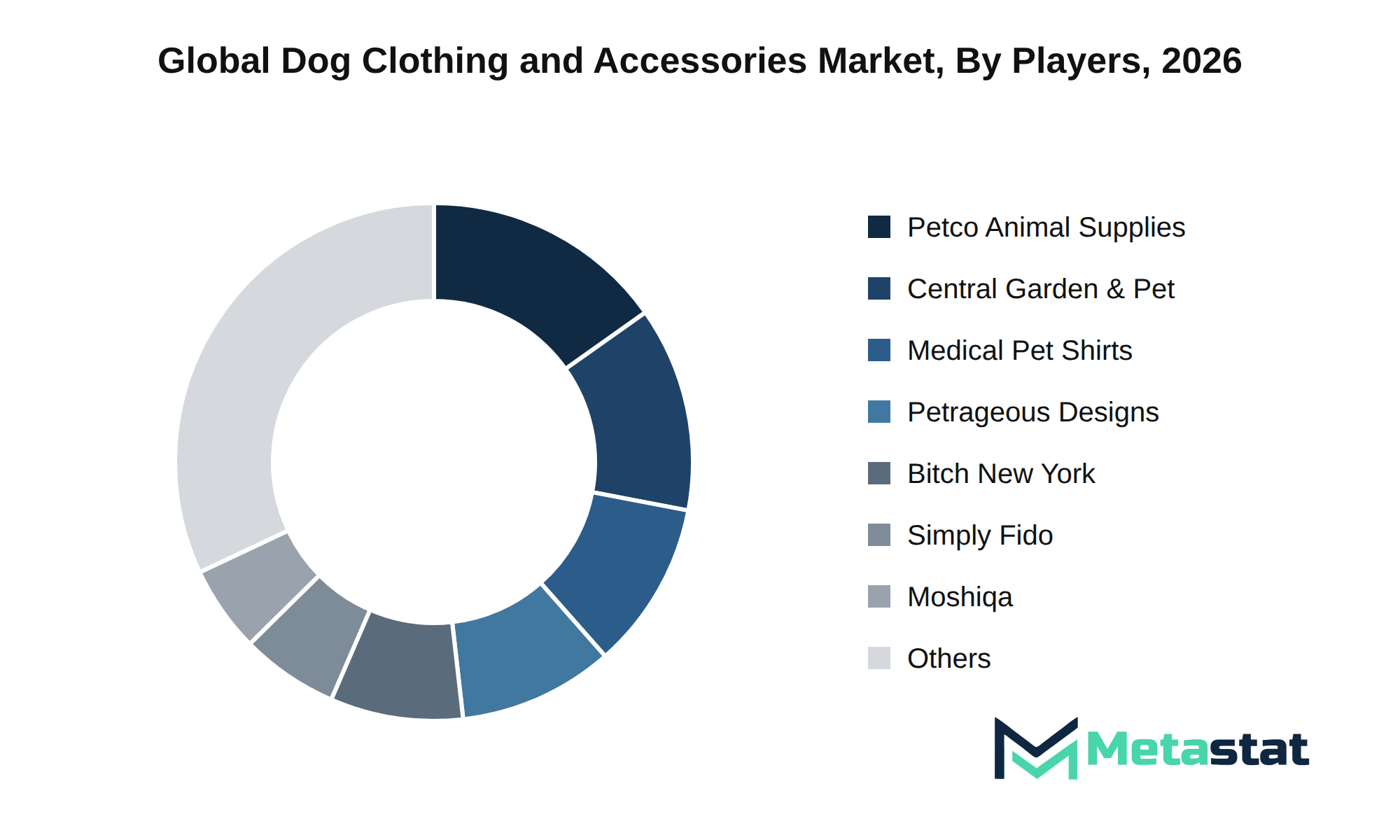
The Dog Clothing and Accessories market exhibits a dynamic environment shaped by various strategic behaviors among key players. Companies including Medical Pet Shirts, Bitch New York, and Moshiqa focus on product differentiation, leveraging unique designs and high-quality materials to attract discerning consumers. This approach enhances brand loyalty and strengthens market presence.
Petco Animal Supplies, Inc., and PetSmart LLC emphasize extensive distribution networks and go-to-market strategies that enhance customer accessibility. These companies engage in omnichannel retailing to capture a broader audience, integrating both online and in-store shopping experiences.
Ruffwear and Hurtta, known for their innovative product offerings, drive research and development initiatives to introduce advanced functionalities and materials in dog clothing. This commitment to innovation creates competitive advantages and strengthens their positioning within the market.
Strategic alliances among players including Earthwhile Ventures, Inc., and Central Garden & Pet Company facilitate resource sharing and joint marketing efforts. These partnerships enhance supply chain efficiency and market reach, contributing to a more integrated value chain.
The threat of new entrants persists, requiring established companies to enhance customer retention strategies. Brand equity dynamics influence market share, with established brands leveraging loyal customer bases against emerging competitors.
Overall, the Dog Clothing and Accessories market demonstrates ongoing adaptations to competitive pressures, emphasizing innovation, strategic partnerships, and customer-focused approaches that shape its future direction.
Market size is forecast to rise from USD 15.4 billion in 2025 to over USD 24.3 billion by 2033. This represents a compound annual growth rate (CAGR) of 5.9%. The base case reflects a steady growth trajectory, driven by increasing consumer awareness and interest in dog clothing and accessories. The demand for premium and environmentally sustainable products drives expansion, with consumers willing to invest in high-quality items that enhance their pets' comfort and style.
The bullish case suggests heightened demand due to increasing pet ownership, particularly in urban areas, where lifestyle changes lead to greater disposable income for pet-related expenses. Tailored products and innovative designs could position certain brands for significant market share gains in this favorable scenario.
Conversely, the bearish case indicates potential challenges, including economic downturns impacting discretionary spending. Regulatory hurdles related to product safety and sustainability could pose risks, limiting growth in specific segments. Despite these challenges, the overall outlook remains positive due to underlying trends favoring pet humanization and the emotional bond between pets and owners.
Investment in research and development will play a crucial role in shaping product innovation and responding to changing consumer preferences. Companies focusing on next-generation technology integration and efficient supply chain management will likely outperform competitors, capturing market share in the evolving dog clothing and accessories market.
The report strategically identifies and profiles the key market players and analyses their core competencies in each sub-segment of the Dog Clothing and Accessories market.
Report Attributes | Details |
Study Period | 2021-2033 |
Base Year | 2025 |
Estimated Year | 2026 |
Forecast Period | 2026-2033 |
Historical Period | 2021-2025 |
Growth Rate | CAGR 5.9% from 2026 to 2033 |
Revenue Unit | USD billion |
Segmentation | By Product, Dog Size, Material, Distribution Channel, and Region |
By Region | North America (By Product, Dog Size, Material, Distribution Channel, and Country)
|
Europe (By Product, Dog Size, Material, Distribution Channel, and Country)
| |
Asia Pacific (By Product, Dog Size, Material, Distribution Channel, and Country)
| |
South America (By Product, Dog Size, Material, Distribution Channel, and Country)
| |
Middle East and Africa (By Product, Dog Size, Material, Distribution Channel, and Country)
|
Find answers to common questions about this report
The Dog Clothing and Accessories market size was valued at USD 15.4 billion in 2025, according to the Metastat Insights study.
The Dog Clothing and Accessories market is projected to grow at a CAGR of 5.9% during the forecast period from 2026 to 2033.
The North America Dog Clothing and Accessories market size is estimated to reach USD 9 billion by 2033.
The segment of Extra-Small and Small Dogs leads the Dog Clothing and Accessories market, with a projected value of USD 10.5 billion by 2033. This segment shows significant growth potential, driven by increasing pet ownership and consumer spending on pet apparel.
The Dog Clothing and Accessories market experiences growth driven by rising pet ownership, increased consumer investment in pet well-being, and a focus on personalization. Digital transformation reshapes retail channels, enhancing e-commerce engagement and operational efficiencies, while the demand for high-quality materials supports market expansion.
North America holds the dominant share of the Dog Clothing and Accessories market, with a projected value of USD 9 billion in 2033, representing 38.4 percent of the total market.
Regulatory challenges significantly restrict growth in the Dog Clothing and Accessories market, because stringent compliance requirements increase operational costs for manufacturers and retailers. macroeconomic headwinds, including rising inflation and supply chain disruptions, create further financial strain, limiting investment in product innovation and marketing efforts.
The rising trend of pet ownership and increased emotional investment in pets drive demand for dog clothing and accessories. Personalization in pet fashion and the focus on high-quality materials further enhance product adoption, because consumers seek unique, durable items that reflect their pets' status because family members.
The Dog Clothing and Accessories market is estimated to reach a valuation of USD 24.3 billion by 2033.
Key players in the Dog Clothing and Accessories market include Medical Pet Shirts, Bitch New York, Moshiqa, Petrageous Designs, Petco Animal Supplies, Inc., KONG Company Store, and PetSmart LLC.
The analysts below cover Consumer Goods research at Metastat Insights.
LEAD ANALYST
Utkarsh Khirodkar is a Lead Market Research Analyst at MetaStat Insight, specializing in market intelligence, technology sector assessments, and competitive strategy.
When planning edge sensor rollouts across refinery environments, generic IoT reports typically miss the harsh-environment certification bottlenecks. MetaStat Insight gave an objective evaluation of ATEX and Class 1 Division 2 hardware availability, along with realistic five-year maintenance cycle cost projections. The comparison of wireless mesh versus private cellular backhaul helped our team pressure-test network reliability models for remote processing facilities.
In the biological seed treatment space, registration timelines vary drastically between the European Union, Brazil, and North America. The MetaStat Insight research handled these cross-border regulatory barriers with genuine nuance, mapping commercialization pathways alongside historical field adoption rates. The segmentation between microbial strains and biochemical active ingredients was particularly well structured.
Our team was tracking whether regional recycling infrastructure could realistically absorb the growing volume of lithium iron phosphate batteries over the next decade. The report did a solid job separating announced hydrometallurgical plant capacity from active, permitted operational throughput. That distinction made the feedstock availability projections and regional recovery rate models far more credible than standard commercial overviews.
Explore related market intelligence reports worth reading alongside this one.