
LEAD ANALYST
Utkarsh Khirodkar is a Lead Market Research Analyst at MetaStat Insight, specializing in market intelligence, technology sector assessments, and competitive strategy.

Global Aluminium Market Size, Share, By Product Form (Sheet and Strip, Plate, Foil, Extrusions, Cast Products, Forgings and Others), By Production Source (Primary Aluminium and Recycled Aluminium), By Alloy Family (Unalloyed Aluminium, Aluminium-Silicon Alloys, Aluminium-Magnesium Alloys, Aluminium-Magnesium-Silicon Alloys, Aluminium-Manganese Alloys, Aluminium-Copper Alloys, Aluminium-Zinc-Magnesium Alloys and Others), By End-Use Industry (Automotive and Transportation, Building and Construction, Packaging, Electrical and Electronics, Machinery and Equipment, Consumer Durables and Others), Industry Analysis, Growth, Trends, and Forecast, 2026-2033
Report ID
MSI-5602
Published
October, 2026
Pages
292 Pages
Format
Historical
Base year
Forecast
Forecast period
Report Details
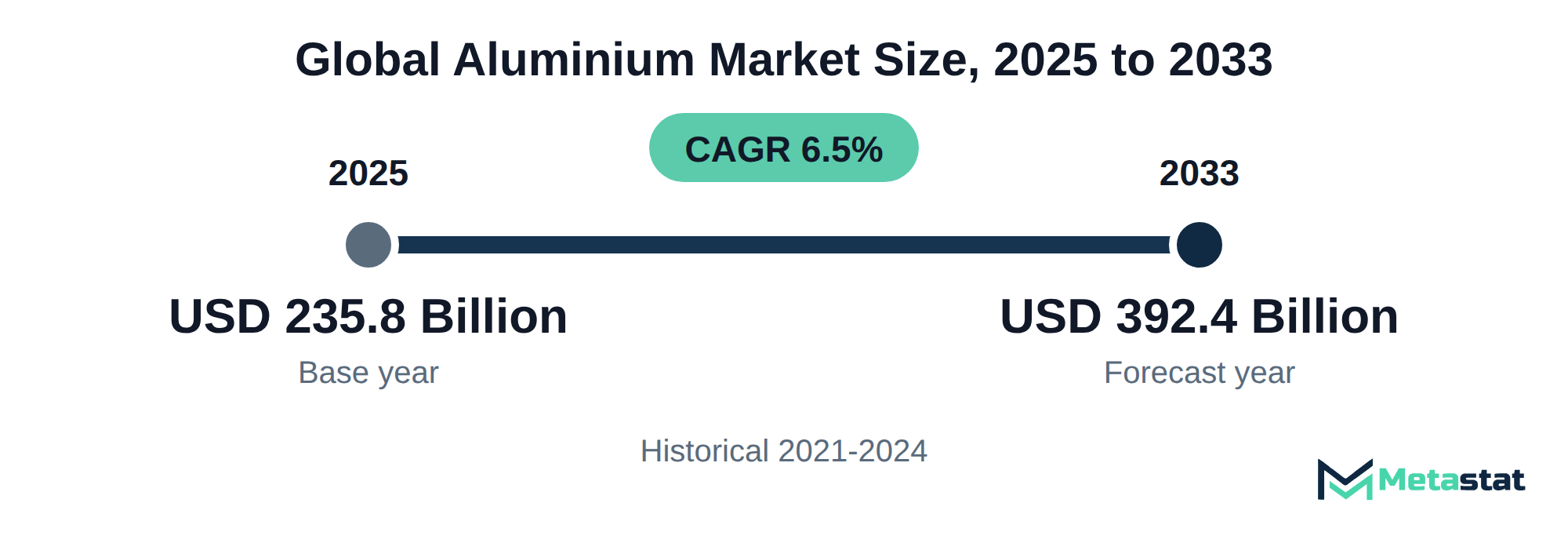
Market Valuation: Valued at $235.8 Billion in 2025, projected to reach $392.4 Billion by 2033 at a 6.5% CAGR.
Dominant Segment: The automotive and transportation segment leads the market, driven by a growing demand for lightweight materials that enhance fuel efficiency and comply with emissions regulations.
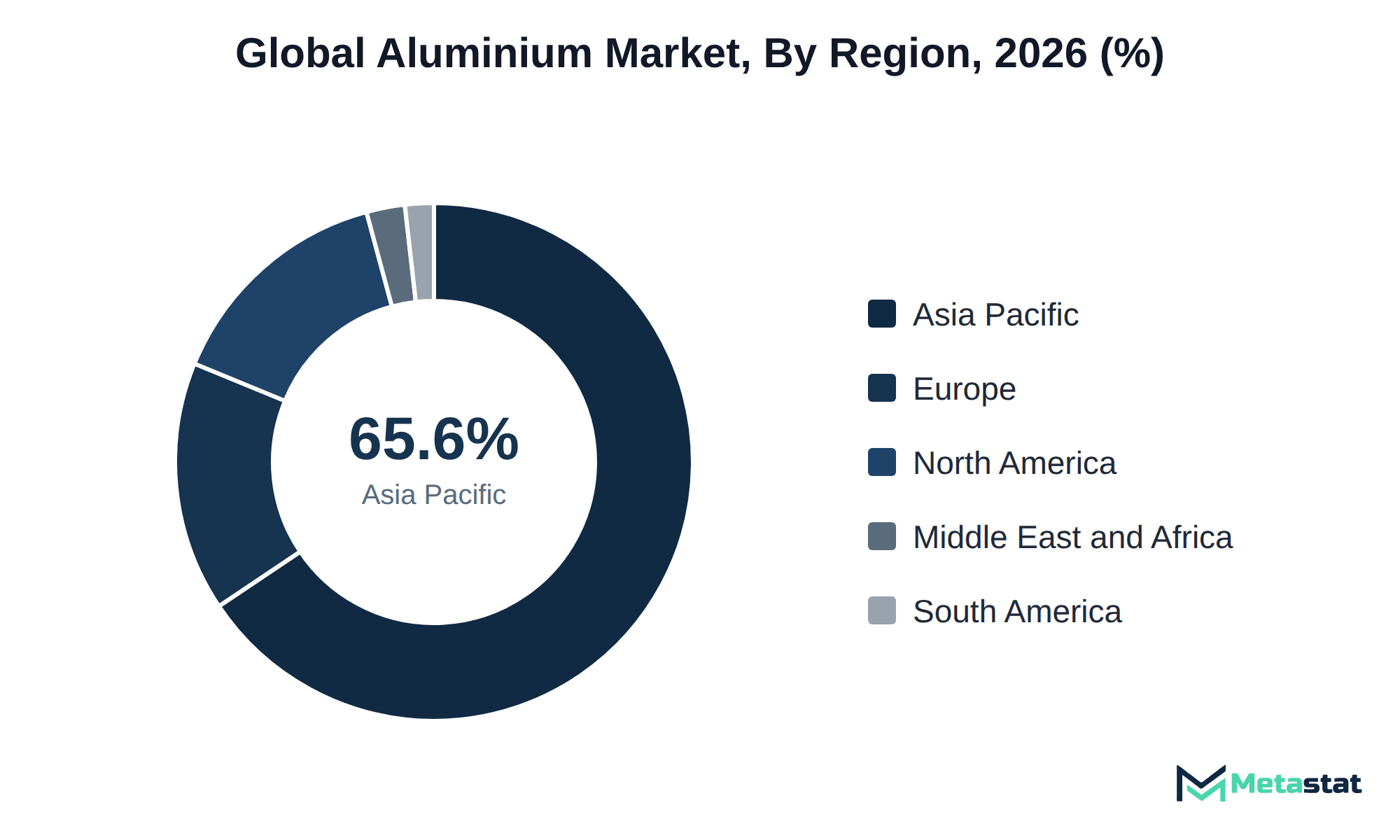
Geographic Lead: Asia Pacific dominates the market with a 65.6% share, fueled by rapid industrialization and urbanization in countries like China and India.
What's Inside: The report provides comprehensive coverage of market dynamics, competitive landscape, and future forecasts, focusing on various product forms, production sources, and alloy families.
Market Opportunity: The recycled aluminium segment presents a significant growth opportunity, projected to reach USD 159.2 billion by 2033, driven by increasing sustainability initiatives across industries.
Input Cost Pressures: Rising input costs for raw materials, including energy, challenge aluminium producers, impacting profit margins and production efficiency.
Choose Your License
Global Aluminium Market
The global Aluminium market was valued at USD 235.8 billion in 2025 and is projected to reach USD 392.4 billion by 2033, growing at a CAGR of 6.5% over the forecast period.
The Aluminium market encompasses the production, processing, and distribution of aluminium products across various industries. Buyers invest in this market primarily due to the material's lightweight properties, resistance to corrosion, and recyclability, which make it a preferred choice for sectors including automotive, construction, and packaging. The increasing demand for energy-efficient and sustainable solutions drives the need for aluminium in these industries.
Growth in the market is fueled by rising consumer demand for lightweight materials that enhance fuel efficiency and reduce emissions in vehicles. The automotive and transportation segment represents the most significant value within the market, reflecting an ongoing trend toward lightweight materials in vehicle manufacturing. Asia Pacific dominates the market with a share of 65.6%, driven by rapid industrialization and urbanization in countries like China and India.
North America holds 14.6% of the market in 2025, with the US leading in 2026. The projected expansion in the construction sector, along with increasing infrastructure investments, supports further growth. The emphasis on sustainable practices and recycling initiatives in the region aligns with the strategic objectives of buyers looking to minimize environmental impact.
The Aluminium market covers products used across automotive, construction, and packaging applications. Significant expenditure by buyers stems from the need for lightweight materials that enhance energy efficiency and performance. The market's capacity to meet these requirements drives growth, with increasing demand for aluminium solutions noted in several sectors.
Among the product forms, Sheet and Strip represents the largest value segment, anticipated to achieve a compound annual growth rate of 7% through the forecast period. Asia Pacific leads with a 65.6% share of the market, benefiting from robust manufacturing bases and increasing industrial activities. North America holds 14.6% of the market in 2025, with the US contributing significantly to growth in 2026.
One main growth driver for the market involves the rising focus on sustainable practices. The transition towards recycled aluminium, which is projected to capture an increasing share due to its environmental benefits, reflects a broader trend in both consumer preferences and regulatory frameworks aimed at carbon footprint management and reduction.
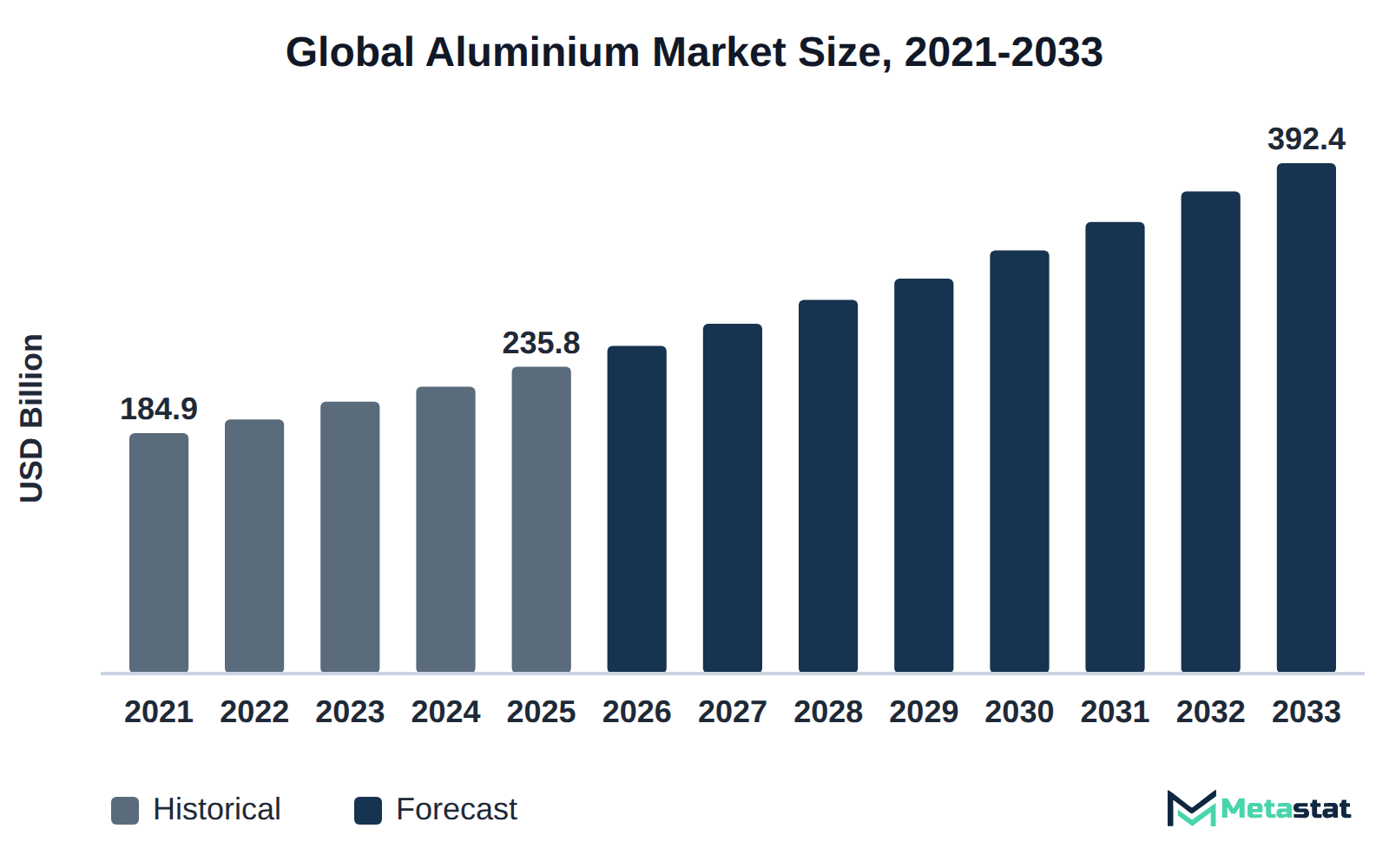
Low-carbon aluminium premiums are becoming a significant factor in smelter procurement strategies across the aluminium market. The commitment to sustainable production drives manufacturers to seek cleaner energy sources for aluminium smelting processes, which also supports the supply of green aluminium. Investments in renewable energy infrastructure facilitate reductions in greenhouse gas emissions, resulting in lower production costs and enhanced market competitiveness. In 2026, primary aluminium production is projected to reach a value of USD 158.3 billion, which shows that economic efficiency matters alongside sustainability.
This shift towards low-carbon aluminium affects suppliers and end-users in industries such as automotive and construction. By integrating clean-power procurement into their operational models, aluminium producers enhance their appeal to environmentally conscious buyers. The automotive and transportation segment is expected to grow from USD 85.8 billion in 2026 to USD 138.9 billion by 2033, illustrating how demand for sustainable materials reshapes purchasing decisions.
Aluminium producers with strong clean-power strategies are better placed for long-term growth as the market adapts to these dynamics. Acceptance of low-carbon aluminium products supports brand reputation and affects market share in a competitive environment shaped by sustainability concerns.
Closed-loop scrap recovery significantly influences alloy quality in the recycled aluminium supply chain, impacting buyer purchasing strategies and contract negotiations. The increasing demand for high-quality recycled aluminium prompts suppliers to implement more stringent quality control measures, ensuring that the recycled materials meet necessary specifications. Recycled aluminium is projected to reach USD 159.2 billion by 2033, which gives buyers an economic incentive to consider sustainability in their procurement processes.
In the context of purchasing, buyers engage in long-term contracts to secure stable pricing and availability of high-quality recycled materials. This shift towards closed-loop systems enhances the reliability of supply and mitigates fluctuations in raw material costs, ultimately benefiting manufacturers reliant on recycled aluminium. Improved alloy quality reduces production waste and enhances product performance, allowing manufacturers to meet regulatory standards and consumer expectations effectively. Consequently, the emphasis on closed-loop scrap recovery promotes environmental sustainability and strengthens commercial viability within the aluminium market.
The increasing focus on automotive lightweighting and battery enclosures significantly reshapes demand within the Aluminium market. With a shift towards electric vehicles, manufacturers prioritize materials that enhance efficiency and performance. Aluminium, known for its lightweight properties, enables the development of lighter vehicles that improve fuel efficiency and reduce emissions.
In the context of product segments, the Aluminium market anticipates a strong increase in demand for extruded products, which provide structural support while minimizing weight. The automotive and transportation sector projects growth from USD 85.8 billion in 2026 to USD 138.9 billion by 2033, reflecting a compound annual growth rate of 7.1%. This trend highlights the automotive industry's transition towards more sustainable designs.
Battery technology advances, and the necessity for durable, lightweight EV battery enclosure systems becomes evident, driving the adoption of Aluminium in battery production. This transition helps manufacturers meet regulatory requirements and improves vehicle performance, which gives consumers better energy efficiency. Aluminium suppliers whose products match these evolving requirements are better placed in this competitive environment.
Regional metal premiums significantly impact Aluminium buyers by influencing overall material costs. These premiums vary by region due to supply chain dynamics and local market conditions. In the Asia Pacific region, for instance, the Aluminium market accounts for 65.6% of global demand, demonstrating the region's dominance. This heightened demand contributes to higher premiums, ultimately raising procurement costs for buyers operating in this area.
Carbon costs further affect Aluminium prices, particularly in regions with stringent environmental regulations. These costs lead to increased operational expenses for producers, which are passed on to buyers. In the North American market, projected Aluminium consumption is expected to reach USD 55.7 billion by 2033. Buyers in this region face the challenge of managing rising costs driven by both premiums and environmental compliance measures.
Consequently, Aluminium buyers strategically evaluate their sourcing options to mitigate the impact of regional premiums and carbon costs. Understanding these factors shapes procurement strategies and influences overall competitiveness in the market.
Demand for lightweight materials in the automotive and transportation sectors drives increased spending on aluminium products. Enhanced fuel efficiency and stricter emissions regulations prompt manufacturers to adopt aluminium for vehicle construction. The shift to lighter materials has resulted in significant growth, with spending in this segment expected to reach USD 138.9 billion by 2033, reflecting a CAGR of 7.1% from 2026. Consumers increasingly prioritize eco-friendly vehicles, further influencing this trend. The aluminium market benefits from this transition, with automotive producers seeking to reduce weight while maintaining structural integrity, leading to heightened demand across various product forms. This transformation increases volume and positions aluminium as a key material in automotive manufacturing.
Increasing adoption of recycled aluminium is driven by the growing emphasis on sustainability and cost efficiency across various industries. Surging prices of primary aluminium compel manufacturers to seek more economical alternatives, propelling the demand for recycled materials. Industries including automotive and construction increasingly recognize the economic and environmental benefits associated with recycled aluminium, leading to enhanced procurement strategies that prioritize these materials. Lower production costs associated with recycled aluminium result in increased profit margins for companies that adopt this approach.
The Aluminium market anticipates continued growth in the recycled aluminium segment, driven by innovations in recycling technologies and processes. Enhanced recycling methods facilitate higher recovery rates and improved quality of recycled products, further motivating companies to transition from primary sources. This shift contributes to a more sustainable production cycle, aligning with global efforts toward reducing carbon footprints and promoting circular economies. The emphasis on recycled aluminium positions the market for growth through 2033, with stakeholders prioritizing responsible sourcing and sustainability initiatives.
Increasing energy costs significantly impact aluminium producers, leading to reduced profit margins and slower production processes. Many aluminium manufacturers rely on electricity-intensive smelting processes, making them particularly vulnerable to fluctuations in energy prices. The automotive and construction sectors, major consumers of aluminium, experience delays in project timelines due to these rising costs, which lead to smaller orders or postponed replacements. While companies attempt to mitigate these costs through energy efficiency measures and alternative sourcing, the persistent increase in energy prices constrains operational capabilities. Consequently, the aluminium market faces challenges that hinder demand growth, with potential buyers reconsidering purchasing decisions amid an uncertain pricing environment. Stable energy prices remain crucial for investment and expansion in the sector.
Rising input costs significantly challenge suppliers within the Aluminium market. Increased prices for raw materials, including bauxite and energy, contribute to higher production expenses, which directly impact profit margins. Suppliers respond by exploring alternative sourcing strategies, optimizing production processes, and investing in energy-efficient technologies to mitigate these financial pressures. Innovations in recycling processes enhance material efficiency, allowing suppliers to reduce dependency on virgin materials, thus lowering overall costs. By implementing these strategies, companies aim to maintain competitive pricing while ensuring product quality and availability. Suppliers continue to adjust their operations as input costs rise.
Rapid growth in the recycled aluminium segment presents a significant opportunity within the Aluminium market. The compound annual growth rate (CAGR) for recycled aluminium is projected at 7.9% through 2033, driven by increasing environmental awareness and sustainability initiatives across various industries. This trend reflects a shift in purchasing preferences among manufacturers seeking to minimize their carbon footprint while maintaining cost-effectiveness. Recycled aluminium is expected to reach USD 159.2 billion by 2033, and the segment remains under-penetrated and open to investment. Companies focusing on developing efficient recycling technologies are likely to capture a larger share of this expanding market. Demand for recycled aluminium aligns with growing regulatory pressures to enhance recycling rates and improve material efficiency, positioning it as a vital component of future supply chains. This focus on sustainability enables firms to meet evolving consumer expectations while enhancing their competitive advantage.
The Global Aluminium market is segmented based on Product Form, Production Source, Alloy Family, and End-Use Industry.
Sheet and Strip segment is valued at USD 64.1 billion in 2026 and is projected to reach USD 102.7 billion by 2033, at a CAGR of 7% during the forecast period. This segment primarily finds applications in automotive, construction, and packaging industries, where its lightweight and durable properties support various structural and aesthetic needs. Key drivers for growth include increasing demand for lightweight materials, driven by strict regulatory standards on emissions and fuel efficiency in automotive manufacturing. Compared to other segments, Sheet and Strip exhibits stronger growth, primarily due to its adaptability and the rising trend toward more efficient designs that prioritize weight reduction. In contrast, other product forms like Plate and Foil have lower CAGRs of 6.1% and do not match the rapid expansion observed in the Sheet and Strip segment.
Plate segment is estimated to reach USD 29.3 billion by 2033, at a CAGR of 6.1% during the forecast period. This segment finds extensive usage in various applications, particularly in the construction and transportation industries, where it serves structural and aesthetic purposes. The growing demand for high-strength materials in sectors including aerospace and automotive drives the need for plate products. This segment is characterized by a moderate growth rate, differing from other sub-segments like sheet and strip, which experience faster expansion at a CAGR of 7%. Factors influencing the plate segment include advancements in manufacturing processes, enabling the production of thinner, lighter plates without compromising quality. These innovations support demand from industries prioritizing efficiency and performance, ultimately enhancing the segment's commercial prospects while challenging plate producers to maintain competitive pricing strategies.
Foil is expected to reach USD 37.9 billion by 2033. This product finds extensive application in packaging, catering to industries including food and pharmaceuticals that rely on lightweight, flexible, and moisture-resistant materials. Growing demand for eco-friendly and sustainable packaging solutions drives expansion in this segment. Increased consumer focus on convenience and safety increases the need for foil in various applications. Compared to other segments, foil shows a higher growth rate. With increasing regulatory pressures on packaging waste, manufacturers prioritize innovations in foil products to meet sustainability targets. The market evolves, adapting to shifting consumer preferences and regulations while competing with other product forms.
Extrusions segment is projected to grow at a CAGR of 6.7% during the forecast period. This segment includes products formed by forcing aluminium through a shaped opening, resulting in long shapes with consistent cross-sections. Aluminium billets serve as the feedstock for this forming process. Industries including construction, automotive, and consumer goods use extrusions for structural components, frameworks, and functional parts. Demand for lightweight materials in these sectors drives growth, with a focus on reducing weight without compromising strength. Extrusions stand out due to their unique application in creating complex shapes, unlike other product forms including sheet and strip, which serve primarily flat applications. The increasing preference for energy-efficient designs in construction and automotive systems further boosts demand for extrusions, enhancing their market presence compared to slower-growing segments including plate.
Cast Products consist of aluminium products that undergo a casting process, making them suitable for various applications in industries including automotive, aerospace, and construction. This segment is closely tied to aluminium die casting for automotive parts. These products serve critical purposes in creating complex shapes and components, which traditional manufacturing methods do not achieve efficiently. Demand for Cast Products has been influenced by increasing requirements for lightweight and high-strength materials, particularly in the automotive industry, where enhanced fuel efficiency and performance are priorities. This segment experiences distinct growth dynamics compared to others within the Product Form category, which attracts demand from specialized manufacturing sectors, differentiating it from more generalized aluminium forms. Factors including advancements in casting technologies and fluctuating raw material costs drive its development and uptake, allowing manufacturers to optimize production processes and product quality.
Forgings involve the shaping of aluminium through processes including hammering or pressing, resulting in components with superior mechanical properties. This segment finds extensive application in industries including aerospace, automotive, and machinery manufacturing. The automotive sector demands forgings for critical components that require high strength and lightweight characteristics. Increasing emphasis on performance and safety in vehicle design drives this demand. Technological advances that improve forging processes raise efficiency and product quality, which supports growth in this segment. Compared to other product forms, forgings typically command a higher price point due to the specialized techniques required for production. This aspect differentiates it from segments with broader applications and lower production costs, reinforcing its position within the overall aluminium market.
Others (Powders, Pastes) include aluminium products used in various applications, including coatings, additives, and specialized manufacturing processes. Industries including aerospace, automotive, and consumer goods leverage these products for their unique properties and versatility. The segment experiences growth driven by increasing demand for lightweight materials and sustainable manufacturing solutions. The trend towards environmentally friendly practices encourages industries to adopt powders and pastes, which often feature recycled content. This segment differs from others in its group due to its specific applications and reliance on technological advancements, influencing pricing and production processes. The market benefits from innovations that enhance performance and reduce environmental impact, further reinforcing the relevance of powders and pastes in the aluminium market.
Valued at USD 158.3 billion in 2026, the Primary Aluminium segment is projected to reach USD 233.1 billion by 2033, at a CAGR of 5.7% during the forecast period. This segment primarily serves industries including automotive, aerospace, and construction, where lightweight and durable materials are essential. Demand is driven by the increasing need for energy efficiency and sustainability in manufacturing processes. Unlike recycled aluminium, which benefits from heightened environmental awareness, Primary Aluminium experiences steady growth due to its fundamental role in producing high-quality alloys and components. The segment's consistent performance contrasts with the more rapid growth anticipated in recycled aluminium, which is expected to reach USD 159.2 billion by 2033 at a CAGR of 7.9%. This differentiation highlights the evolving dynamics in the aluminium market, where both sources play crucial roles while catering to different demands and production strategies.
This segment finds extensive use in various applications, including automotive components, construction materials, and packaging solutions. Key drivers for this segment include increasing sustainability initiatives and the need for cost-effective production methods across multiple industries. Compared to Primary Aluminium, the Recycled Aluminium segment experiences faster growth, driven by rising demand for environmentally friendly materials. The market benefits from technological advancements in recycling processes, which enhance the quality and purity of recycled products. This competitive advantage positions recycled aluminium as a preferred choice for manufacturers aiming to meet regulatory requirements and consumer preferences for sustainable materials.
Valued at USD 57.5 billion in 2026, Unalloyed Aluminium is projected to reach USD 84 billion by 2033, at a CAGR of 5.6% during the forecast period. Unalloyed Aluminium finds widespread application in sectors including construction, automotive, and packaging, where it serves as a critical material for various structural components and products. The segment benefits from trends emphasizing lightweight materials and sustainability, which drive demand for high-purity aluminium in manufacturing. Unlike other alloy families, Unalloyed Aluminium typically offers lower price points, making it accessible for a broader range of buyers. However, competition from aluminium alloys with enhanced properties impacts growth, presenting challenges in maintaining market share. While manufacturers continue to innovate and improve processing techniques, adoption in emerging markets shows potential for future expansion. The dynamics of the Aluminium market reflect ongoing shifts in consumer preferences and economic conditions influencing production and usage patterns.
Aluminium-Silicon Alloys segment is estimated to reach USD 93.1 billion by 2033, at a CAGR of 6.2% during the forecast period. This alloy family serves various applications, particularly in the automotive and aerospace sectors, where lightweight and high-strength materials are essential. Key drivers include demand for improved fuel efficiency and stringent emission regulations requiring lighter materials. Compared to other alloy segments, Aluminium-Silicon Alloys exhibit a competitive advantage in casting applications, reflecting a growth pattern distinct from alloys including Aluminium-Magnesium. This segment's growth trajectory aligns with increasing adoption rates, driven by the automotive industry's push for advanced materials, contributing to anticipated expansion in the market.
The Aluminium-Magnesium Alloys segment is expected to reach USD 53.7 billion by 2033. These alloys find extensive use in industries including automotive, aerospace, and marine, where lightweight and corrosion-resistant materials are essential for performance and efficiency. The increasing demand for lightweight solutions drives growth, particularly in the automotive sector, where manufacturers prioritize fuel efficiency and reduced emissions. This segment exhibits a compound annual growth rate (CAGR) of 7.2%, indicating a robust market trajectory compared to other alloys. Unlike unalloyed aluminium, which offers lower strength and flexibility, Aluminium-Magnesium Alloys provide superior mechanical properties, attracting a diverse range of buyers. The adoption of advanced manufacturing techniques contributes to improved production efficiency, enhancing the segment's competitiveness. The market for these alloys reflects an ongoing trend toward lighter materials, aligning with evolving industry standards and environmental considerations.
Aluminium-Magnesium-Silicon Alloys are anticipated to grow at a CAGR of 7.2% during the forecast period. These alloys are primarily used in the automotive and aerospace sectors, where their lightweight properties and strength contribute to improved fuel efficiency and performance. Demand is driven by the increasing emphasis on reducing vehicle weight and enhancing energy efficiency, aligning with regulations aimed at lowering emissions. This segment distinguishes itself from others in the Alloy Family by appealing to industries focused on high-performance applications, resulting in a higher price point compared to non-alloyed aluminium options. The anticipated value for Aluminium-Magnesium-Silicon Alloys is projected to reach USD 53.7 billion by 2033, highlighting their growing importance in the market.
Aluminium-Manganese Alloys serve various applications, particularly in the automotive and aerospace industries, where lightweight yet strong materials are critical. Manufacturers apply these alloys for their excellent corrosion resistance and good weldability, making them suitable for a range of structural components. Demand for Aluminium-Manganese Alloys experiences upward pressure due to increasing requirements for lightweight materials in fuel-efficient vehicles and advanced aircraft designs. This segment distinguishes itself through its specific performance characteristics, while other alloys, including Aluminium-Silicon Alloys, focus more on different applications where casting quality or thermal stability is important. The Aluminium market reflects significant trends toward sustainability, with recycled aluminium becoming a competing option; however, Aluminium-Manganese Alloys maintain appeal due to their unique properties and performance capabilities.
Aluminium-Copper Alloys are essential materials known for their superior strength and excellent thermal conductivity, frequently used in aerospace, automotive components, and electrical applications. Industries focused on high-performance applications, including aerospace and automotive, predominantly source these alloys to enhance durability and reduce weight in their products. Demand growth arises from increasing requirements for lightweight materials in the automotive sector, driven by regulatory pressures for fuel efficiency and emissions reduction. Compared to other alloys, Aluminium-Copper Alloys typically command higher prices due to their specific performance attributes, making them attractive for specialized applications while maintaining a distinct position within the broader alloy family. This segment's unique properties differentiate it, providing manufacturers with the ability to develop advanced products that cater to evolving industry standards.
Aluminium-Zinc-Magnesium Alloys are notable for their application in aerospace and automotive industries, where high strength-to-weight ratios are essential. Key users include manufacturers focused on lightweight structures that enhance fuel efficiency and performance. The demand for these alloys is driven by the increasing emphasis on sustainability and energy efficiency, aligning with broader trends toward lightweight materials in vehicle design. In comparison to other alloy families, Aluminium-Zinc-Magnesium Alloys typically command a premium price due to their specialized properties and performance. This segment differentiates itself through its growth potential within the Aluminium market, reflecting targeted demand from industries prioritizing performance and efficiency in their material choices, setting it apart from other alloy families that experience slower growth or wider price ranges.
Others (Aluminium-Lithium, Proprietary Alloys) consist of specialized aluminium products employed in various high-performance applications, particularly in aerospace and defense sectors. This demand connects directly to the broader aerospace materials industry. Industries relying on advanced materials adopt these alloys due to their lightweight properties and enhanced mechanical characteristics. Demand for these proprietary alloys rises due to the growing focus on fuel efficiency and lower emissions in transportation. This segment offers attributes that distinguish it from other alloy families, focusing on niche markets with specific performance requirements rather than mass production. In comparison to more common alloys, the pricing dynamics differ, reflecting the specialized applications and limited production volumes associated with proprietary variants. While manufacturers prioritize innovation and sustainability, this segment exhibits opportunities for growth, supported by ongoing technological advancements.
This segment encompasses aluminium products predominantly in vehicle manufacturing, including body components, engine parts, and frames. The growing demand for lightweight materials, driven by the automotive industry’s focus on fuel efficiency and emissions reduction, significantly influences this segment. Unlike other segments, Automotive and Transportation exhibits a higher growth rate, partially due to advancements in electric vehicle technology and increased production of hybrid models. Suppliers in this domain face pressure to innovate while managing costs, with price fluctuations in raw materials posing a challenge. The competitive landscape is closely tied to technological developments aimed at enhancing performance and sustainability, supporting the segment's expansion within the overall Aluminium market.
Building and Construction segment is estimated to reach USD 95.6 billion by 2033, at a CAGR of 5.9% during the forecast period. This segment is used for constructing residential and commercial buildings, infrastructure, and other structures. Related building envelope products include aluminium composite panels. Key buyers include construction companies, contractors, and real estate developers who seek materials that combine strength with lightweight properties. A significant driver for this sector arises from increasing urbanization and infrastructure development, which continue to push demand for aluminium products. Compared to other segments, including Automotive and Transportation, which grows at a faster rate of 7.1%, the Building and Construction segment shows steadier growth, reflecting the gradual nature of construction projects and investment cycles. The adoption of aluminium in this sector reflects shifts toward sustainable materials, with recycled aluminium products playing a vital role in meeting environmental standards and reducing overall costs in the market.
The Packaging segment is expected to reach USD 59.8 billion by 2033. This segment serves various industries, primarily food and beverage, cosmetics, and pharmaceuticals, where lightweight and durable materials are crucial for product protection and shelf life enhancement. Beverage cans are one familiar packaging format within the food and beverage portion of this demand. Rising consumer demand for sustainable packaging solutions drives adoption, with manufacturers focusing on recyclable and lightweight designs. In comparison to other segments, the Packaging sub-segment experiences higher growth, reflecting a CAGR of 7.4%, surpassing many other aluminium applications. The ability to tailor aluminium's properties for specific packaging needs contributes to its competitive advantage over alternatives including plastic. The market continues to benefit from increasing environmental regulations that encourage the use of recyclable materials, reinforcing demand for aluminium in packaging applications.
The Electrical and Electronics segment is projected to grow at a CAGR of 7.4% during the forecast period. This segment finds extensive application in the production of various electronic devices, components, and electrical systems, primarily used by manufacturers in the electronics and electrical sectors. Electrical conductor materials, including aluminium wire rod, form a closely related product category. Increasing demand for lightweight, durable, and corrosion-resistant materials drives adoption within these industries. Compared to other segments, this segment benefits from advancements in technology that allow for higher efficiency in manufacturing processes. The distinct growth trajectory differentiates it, focusing on innovation in product design to meet evolving consumer expectations. The segment's expected value of USD 59.8 billion by 2033 highlights its significance in the overall Aluminium market, contributing to trends prioritizing sustainability and energy efficiency in electronic applications.
Machinery and Equipment involve critical applications employing aluminium for industrial machinery manufacturing and equipment components. This segment is vital for industries including manufacturing and construction, where lightweight yet durable materials are essential. Demand for aluminium in this area is driven by advancements in technology and the ongoing shift towards automation. These factors push manufacturers to seek materials that enhance efficiency and reduce overall weight in machinery. Compared to other segments, Machinery and Equipment often experience slower growth, reflecting its specialized nature and the need for adaptation in traditional manufacturing processes. Buyers in this segment prioritize the strength-to-weight ratio and corrosion resistance, distinguishing it from sectors including automotive, which focus more on aesthetic and performance qualities. Overall, developments in the Machinery and Equipment segment significantly influence the broader aluminium market, shaping future trends and opportunities.
Consumer durables encompass a range of products used by consumers for everyday use, including appliances, electronics, and furniture. This segment attracts buyers including households and commercial establishments that prioritize durability, functionality, and aesthetics in their purchases. The increasing demand for lightweight and energy-efficient products significantly influences this segment, driven by consumer preferences for sustainable options. Compared to other segments, consumer durables experience slower growth, influenced by market saturation and higher pricing compared to simpler applications like packaging. The proliferation of smart technologies within consumer durables has prompted manufacturers to innovate, introducing advanced features and connectivity in products, further shaping buyer preferences in the aluminium market. The emphasis on recycling and sustainability has an enduring impact on how manufacturers approach product design and production processes, molding the future of the market.
This sub-segment encompasses various specialized aluminium products used in metallurgy and chemical processing applications. Industries including metal casting and chemical manufacturing use these materials for their lightweight and durable characteristics. Demand in this segment is primarily driven by the increasing need for efficient materials that enhance production processes. Unlike other segments, this area experiences variability in growth patterns, influenced by fluctuations in industrial demand and the specific requirements of end-user applications. The segment addresses niche markets where specific material properties are critical for performance, distinguishing it from more common aluminium products used in broader sectors including automotive or construction. Growing environmental concerns and regulatory pressures surrounding sustainability further influence adoption trends within this sub-segment. The aluminium market continues to evolve, reflecting ongoing shifts in industrial practices and technological advancements.
Based on geography, the Global Aluminium market is divided into North America, Europe, Asia-Pacific, South America, Middle East, and Africa.
North America is projected to reach USD 55.7 billion by the end of 2033 in the Aluminium market. This region benefits from a robust automotive sector that drives demand for lightweight materials, enhancing fuel efficiency and performance. Established manufacturing infrastructure in the United States, Canada, and Mexico facilitates production and distribution. Competitive pricing and sustainability initiatives undertaken by local players enhance market dynamics, leading to increased adoption of recycled aluminium. By 2025, North America will account for 14.6% of the global market, reflecting strong growth potential and opportunities for investment within the region.
In Europe, the Aluminium market benefits from significant demand driven by the automotive and building sectors. Germany and France lead in industrial activities, while the UK, Italy, and Spain contribute with their growing construction projects. Russia's vast natural resources enhance production capabilities, aligning with the region's focus on sustainability and recycling initiatives that boost the appeal of recycled aluminium. The commitment to reducing carbon emissions influences manufacturers to explore innovative production techniques, enhancing competitiveness in the market. With a share of 15.6% in 2025, Europe significantly influences global trends in aluminium usage and production.
Asia-Pacific represents a significant portion of the Aluminium market, contributing 65.6% to global demand in 2025. Key drivers include the automotive and construction industries, with rising production rates in these sectors generating strong requirements for aluminium products. China, a major producer and consumer of aluminium, operates in the market, supported by substantial investments in infrastructure and manufacturing capabilities. India and Southeast Asia experience increasing demand, driven by urbanization and industrialization trends. Efforts towards sustainability and recycling in this region, particularly through initiatives to enhance recycled aluminium use, further influence market growth. The projected growth within Asia-Pacific signifies ongoing opportunities for market participants, with expectations of continued expansion in various end-use applications.
In South America, the Aluminium market experiences unique dynamics influenced by regional demand from the automotive and construction industries. Brazil and Argentina contribute significantly to market activities, with demand driven by increasing infrastructure projects and automotive production. The need for lightweight materials in transportation aligns with global trends toward sustainability, prompting greater consumption of aluminium in vehicle manufacturing. South America represents 1.8% of the global market in 2025, highlighting its emerging significance. Cost conditions related to energy resources impact production capabilities, affecting pricing strategies within the market. Local manufacturers focus on recycling aluminium to enhance sustainability and reduce costs, supporting growth in various industrial applications.
The Aluminium market in the Middle East and Africa experiences unique dynamics driven by growing industrial sectors, particularly in countries like Saudi Arabia and the UAE. Increased investments in infrastructure projects and a focus on manufacturing capabilities contribute to demand for Aluminium products. In South Africa, government initiatives promote local production and recycling efforts, enhancing the availability of Aluminium in the market. The region's projected share in the global Aluminium market is 2.4% for 2025. This growing demand reflects a commitment to sustainability and innovation in various applications, including construction and packaging. Companies operating in this region actively invest in technological advancements, which enhances their competitive edge in the market.
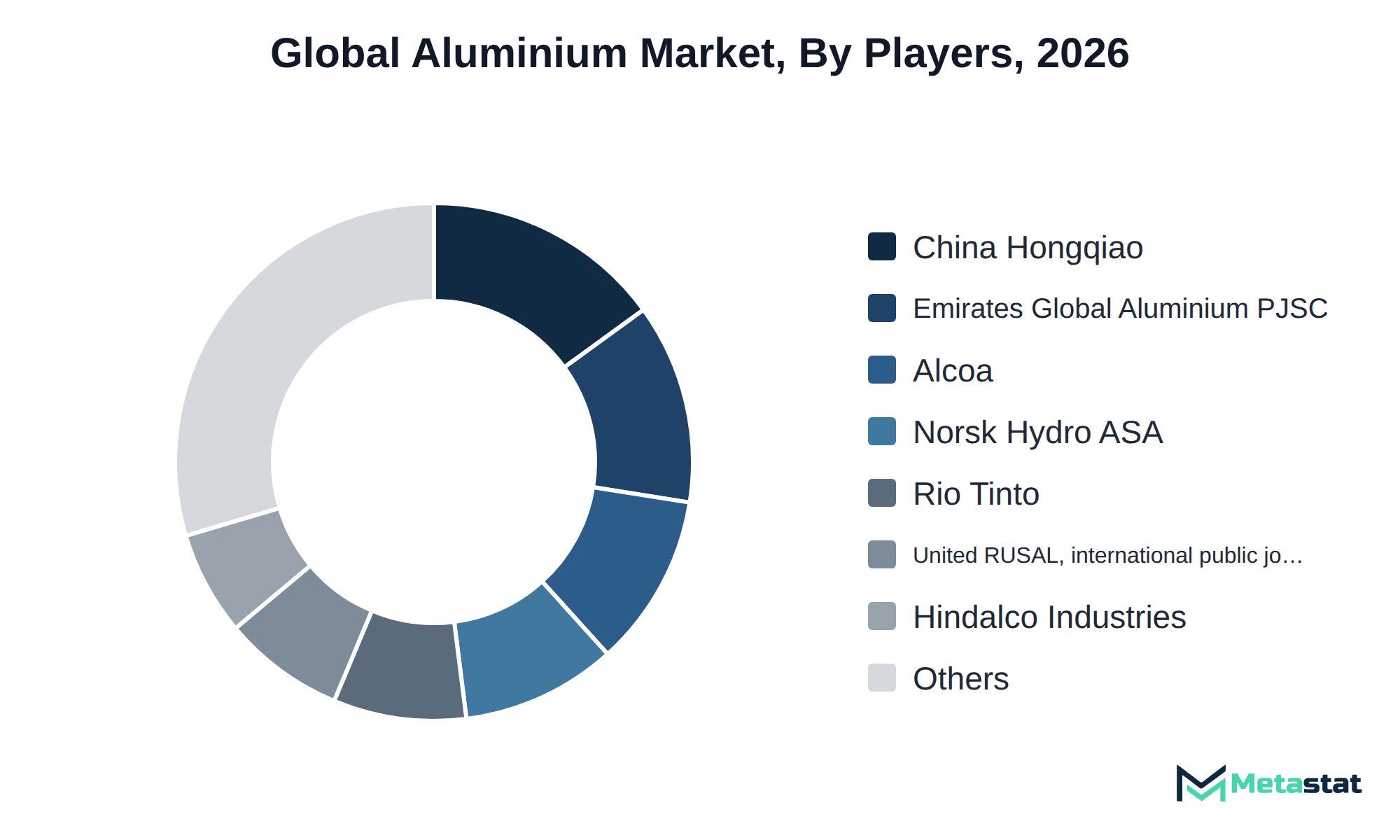
Companies in the Aluminium market compete through various strategies, including pricing, product customization, and certification standards. Pricing remains a crucial factor for buyers, who evaluate the customization options offered by suppliers. Service quality and the ability to meet specific industry certifications significantly influence purchasing decisions.
Emirates Global Aluminium PJSC focuses on primary aluminium production, leveraging advanced technologies to enhance efficiency. Alcoa Corporation emphasizes sustainable practices, positioning itself strongly in the market through eco-friendly initiatives. United Company RUSAL concentrates on offering a diverse range of aluminium products, catering to multiple industries, including automotive and construction.
Aluminium market growth relies heavily on rising adoption in the automotive and transportation industries, where demand is projected to expand as lightweight materials improve fuel efficiency. In the Asia Pacific region, robust infrastructure development will drive demand for primary aluminium, particularly in construction projects. The projected CAGR of 6.5% reflects these positive trends.
Conversely, risks including fluctuating raw material prices and environmental regulations could impede growth. For instance, stricter regulations regarding emissions in Europe increase production costs for suppliers, potentially leading to reduced output. Supply chain disruptions, exacerbated by geopolitical tensions, pose challenges to market stability. Overall, the outlook for the aluminium market remains strong, provided that demand from key industries holds and producers manage external pressures.
By Product Form: Sheet and Strip, Plate, Foil, Extrusions, Cast Products, Forgings, Others (Powders, Pastes)
By Production Source: Primary Aluminium, Recycled Aluminium
By Alloy Family: Unalloyed Aluminium, Aluminium-Silicon Alloys, Aluminium-Magnesium Alloys, Aluminium-Magnesium-Silicon Alloys, Aluminium-Manganese Alloys, Aluminium-Copper Alloys, Aluminium-Zinc-Magnesium Alloys, Others (Aluminium-Lithium, Proprietary Alloys)
By End-Use Industry: Automotive and Transportation, Building and Construction, Packaging, Electrical and Electronics, Machinery and Equipment, Consumer Durables, Others (Metallurgy, Chemical Processing)
The report strategically identifies and profiles the key market players and analyses their core competencies in each sub-segment of the Aluminium market.
Report Attributes | Details |
Study Period | 2021-2033 |
Base Year | 2025 |
Estimated Year | 2026 |
Forecast Period | 2026-2033 |
Historical Period | 2021-2025 |
Growth Rate | CAGR 6.5% from 2026 to 2033 |
Revenue Unit | USD billion |
Segmentation | By Product Form, Production Source, Alloy Family, End-Use Industry, and Region |
By Region | North America (By Product Form, Production Source, Alloy Family, End-Use Industry, and Country)
|
Europe (By Product Form, Production Source, Alloy Family, End-Use Industry, and Country)
| |
Asia Pacific (By Product Form, Production Source, Alloy Family, End-Use Industry, and Country)
| |
South America (By Product Form, Production Source, Alloy Family, End-Use Industry, and Country)
| |
Middle East and Africa (By Product Form, Production Source, Alloy Family, End-Use Industry, and Country)
|
Find answers to common questions about this report
The Aluminium market size was valued at USD 235.8 billion in 2025.
The market is projected to grow at a CAGR of 6.5% during the forecast period from 2026 to 2033.
The North America Aluminium market size is projected to reach USD 55.7 billion by 2033.
The leading segment in the Aluminium market is Primary Aluminium, with a projected value of USD 233.1 billion by 2033. This segment surpasses others in terms of market size and growth potential.
Demand for lightweight materials in the automotive and transportation sectors drives increased spending on aluminium products. The rapid growth in the recycled aluminium segment presents a significant opportunity, supported by rising environmental awareness and sustainability initiatives across various industries.
Asia Pacific holds the dominant share of the Aluminium market, accounting for 65.6% of the total market in 2025. This region significantly surpasses others, including Europe at 15.6% and North America at 14.6%.
Increasing energy costs restrain Aluminium market growth, leading to reduced profit margins and slower production processes. Rising input costs challenge suppliers, with higher prices for raw materials contributing to increased production expenses, directly affecting profitability.
Increasing environmental awareness and sustainability initiatives favor adoption in the aluminium industry. Manufacturers prioritize recycled aluminium to reduce their carbon footprint while maintaining cost-effectiveness. This shift in purchasing preferences drives demand, particularly in sectors including automotive and construction.
The Aluminium market is estimated to reach a valuation of USD 392.4 billion by 2033.
Key players operating in the Aluminium market include Emirates Global Aluminium PJSC, Alcoa Corporation, Rio Tinto plc, United Company RUSAL, Norsk Hydro ASA, and Shandong Nanshan Aluminium Co., Ltd.
The analysts below cover Chemicals and Materials research at Metastat Insights.
LEAD ANALYST
Utkarsh Khirodkar is a Lead Market Research Analyst at MetaStat Insight, specializing in market intelligence, technology sector assessments, and competitive strategy.

INDUSTRY CONSULTANT - CHEMICALS & ADVANCED MATERIALS
Chemicals and Materials · Machinery & Equipment · Packaging
Amit Gadhekar Consultant for Chemicals and Materials at MetaStat Insight, directing sector-specific intelligence, research, and strategic consulting across global chemical and processing markets.
Evaluating calorific value requirements and air permit compliance across municipal waste facilities requires localized data. Metastat Insight structured their analysis around operational throughput capacity and feedstock composition variations in Latin America and Eastern Europe. Their competitive mapping of sorting equipment vendors helped clarify technology differences between optical separators and heavy media systems. The study provided an objective baseline during our capital expenditure reviews.
Decarbonizing industrial thermal processes hinges on refrigerant regulations and compressor efficiency limits. Metastat Insights delivered a thorough market analysis that evaluated natural refrigerants like CO2 and hydrocarbons against synthetic low-GWP alternatives. The breakdown of utility incentives and grid capacity constraints across key European manufacturing hubs offered valuable perspective. The follow-up conversation with their sector analysts addressed our specific questions on mechanical vapor recompression systems efficiently.
Assessing 200mm wafer transition schedules and substrate supply bottlenecks requires precise technical intelligence. MetaStat Insight supplied an actionable breakdown comparing planar and trench MOSFET architectures across automotive and industrial drive markets. The regional capacity estimates for Asia-Pacific foundries helped clarify lead-time uncertainties during our strategic planning session. When we needed additional clarification on high-purity raw material sourcing, their analyst team responded with helpful context within twenty-four hours.
Explore related market intelligence reports worth reading alongside this one.
Starting from
$2950