
LEAD ANALYST
Utkarsh Khirodkar is a Lead Market Research Analyst at MetaStat Insight, specializing in market intelligence, technology sector assessments, and competitive strategy.

Global Personalized Products Market Size, Share, By Product Type (Apparel, Jewelry, Fashion Accessories, Home Decor & Textiles, Drinkware & Kitchenware, Photo Books, Prints & Albums, Stationery & Greeting Cards, Toys & Children's Books, Food & Beverage Gifts), By Personalization Method (Direct Printing, Sublimation & Heat Transfer, Engraving & Etching, Embroidery, Embossing & Debossing, Handcrafted Customization), By End User (Individual Consumers and Corporate & Institutional Buyers), By Distribution Channel (Brand-Owned Websites & Apps, Online Marketplaces, Specialty Gift & Personalization Stores and Department Stores & Mass Merchandisers), Industry Analysis, Growth, Trends, and Forecast, 2026-2033
Report ID
MSI-5577
Published
October, 2026
Pages
252 Pages
Format
Historical
Base year
Forecast
Forecast period
Report Details
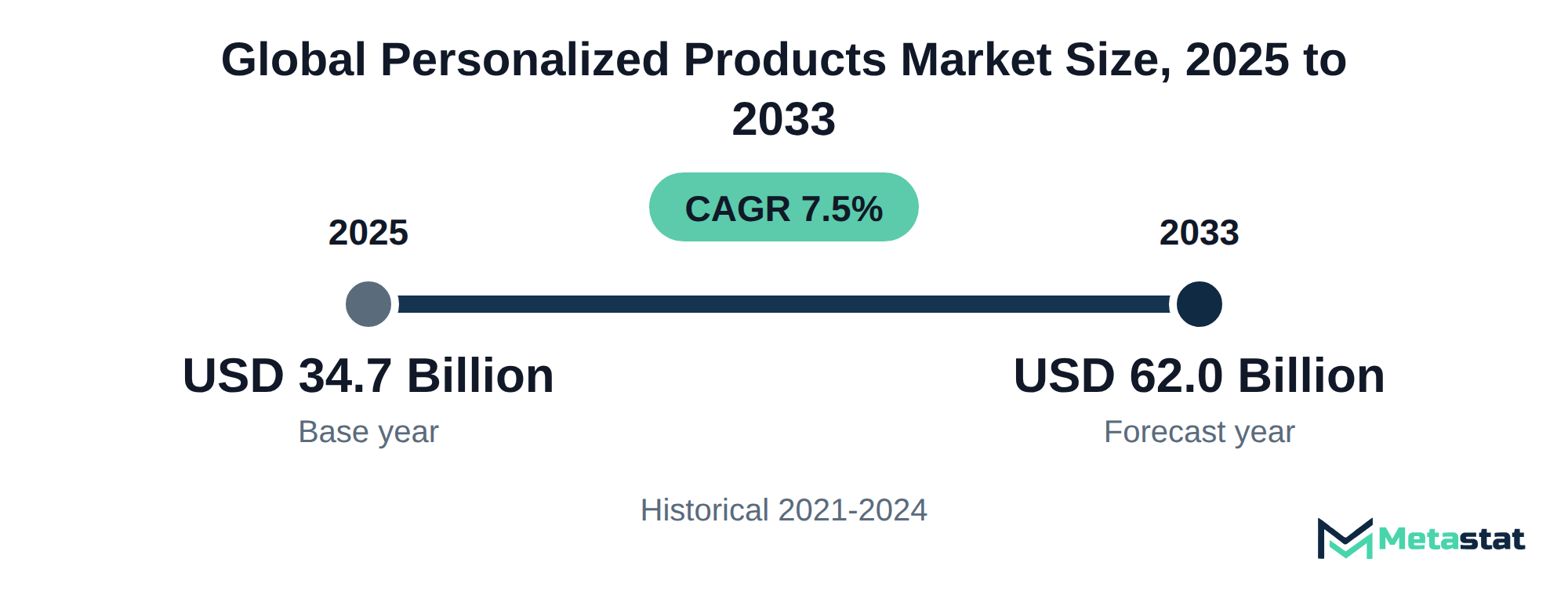
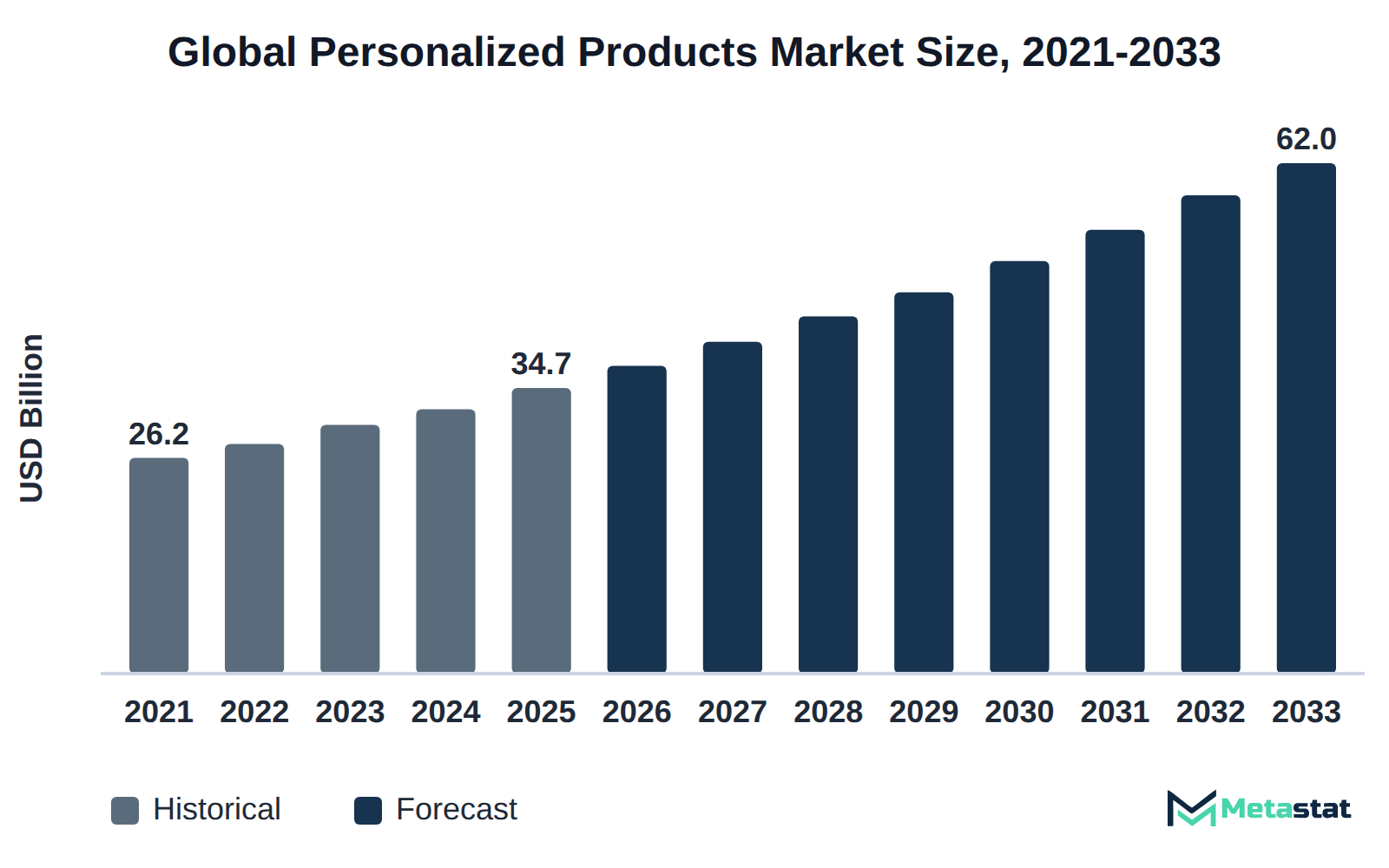
Market Valuation: Valued at $34.7 Billion in 2025, projected to reach $62 Billion by 2033 at a 7.5% CAGR.
Dominant Segment: The apparel segment leads the market, driven by a strong consumer preference for customized clothing and accessories that reflect personal style.
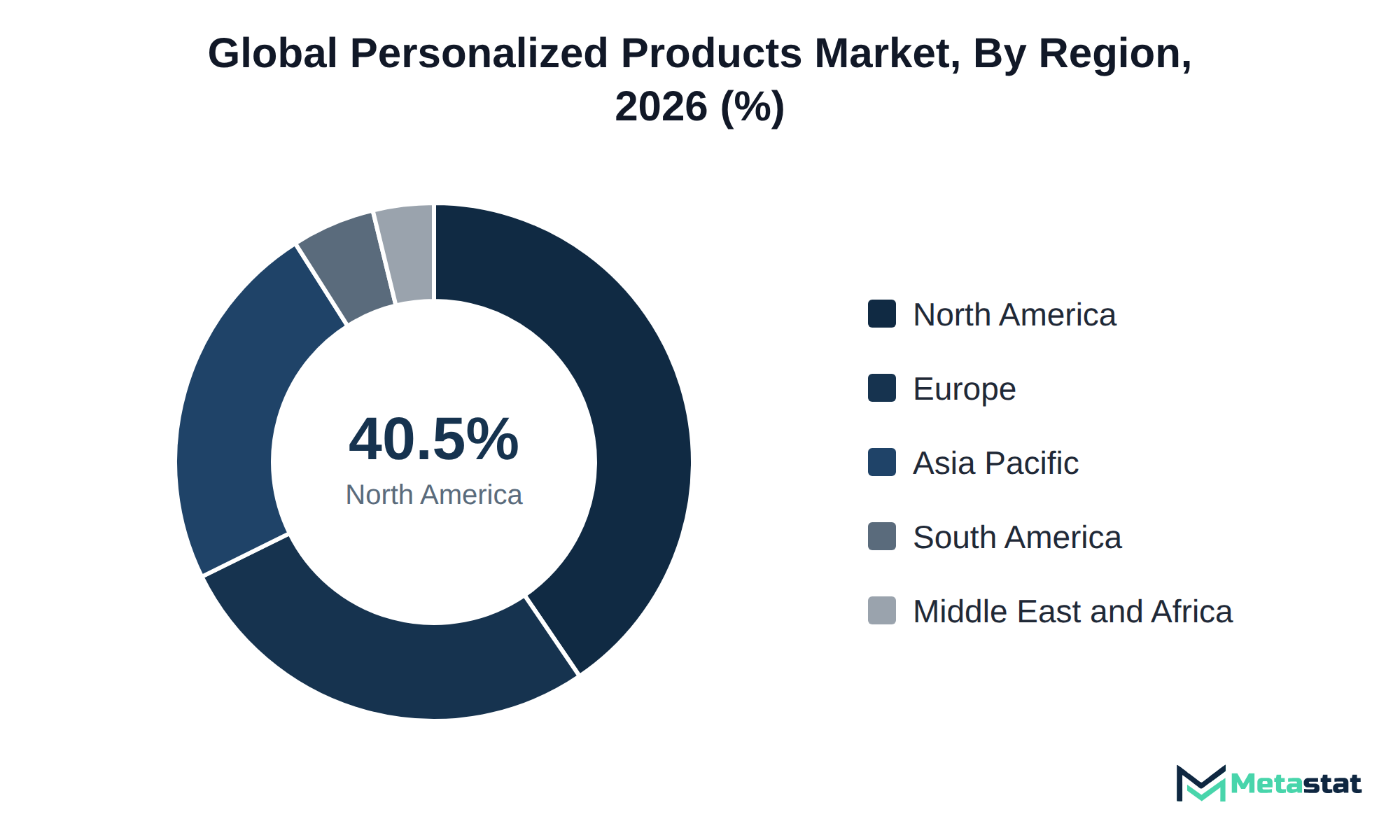
Geographic Lead: North America dominates the market, holding 40.5% in 2025, with the US expected to continue leading due to its robust e-commerce infrastructure.
What's Inside: The report provides comprehensive competitive coverage, detailed analyses of market dynamics, and a forecast window from 2026 to 2033.
Emerging Opportunities: Apparel personalization is projected to grow significantly, with demand for unique fashion items increasing due to the influence of social media and e-commerce.
Corporate Gifting Trends: Corporate gifting programs are expanding, with projected growth in this segment driven by businesses seeking to strengthen relationships through personalized gifts.
Choose Your License
Global Personalized Products Market
The global Personalized Products market was valued at USD 34.7 billion in 2025 and is projected to reach USD 62 billion by 2033, growing at a CAGR of 7.5% over the forecast period.
The market covers customized products designed to meet individual preferences and raise consumer satisfaction through personalization. Buyers invest in these products due to the growing desire for unique and meaningful items, which serve as gifts or personal keepsakes. This trend is evident among individual consumers, corporate clients, and institutional buyers seeking personalized solutions that reflect their identities and values.
Growth in the market is driven by increased disposable income and a shift towards online shopping, which allows for easier access to personalized offerings. Among product types, apparel generates the highest value, reflecting a strong consumer preference for custom clothing and accessories. North America holds 40.5% of the market in 2025, with the US leading in 2026. This dominance is supported by a well-established e-commerce infrastructure and consumer willingness to invest in personalized items.
Technological advancements in printing and customization methods enhance product offerings and consumer experiences. The ability to create personalized items quickly and affordably strengthens demand across various segments. Continuous innovation in personalization methods enables businesses to cater to evolving consumer preferences and drives growth in the Personalized Products market.
The Personalized Products market includes a variety of items tailored to individual tastes, fulfilling the demand for unique, customized solutions. Buyers invest in these products to enhance their personal expression, celebrate special occasions, or create memorable gifts. This market caters to individual consumers and corporate buyers, who seek distinctive offerings that stand out in a crowded marketplace.
Growth within the market is driven by increasing consumer preference for personalized goods. The apparel segment represents the highest value within the market, reflecting a significant shift towards customized clothing options. This region's strong market share is attributed to high disposable incomes, a robust retail infrastructure, and a growing trend of self-expression through personalized products.
Technological advancements in production methods, including direct printing and sublimation, contribute to the market's expansion. These innovations facilitate rapid customization of products, attracting consumers looking for bespoke solutions. Enhanced accessibility through online platforms further supports this growth, allowing buyers to easily access and order personalized items from the comfort of their homes.
The growth of on-demand digital printing technology has transformed the economics of the Personalized Products market, particularly in the segments of custom apparel and photo gifts. This advancement allows for the production of items only when orders are received, reducing inventory costs and wastage. For example, the segment for direct printing within custom apparel is projected to grow from USD 11.8 billion in 2026 to USD 19 billion by 2033, demonstrating a compound annual growth rate of 7%. This shift towards on-demand fulfillment supports personalized offerings and enhances customer satisfaction by allowing for unique designs tailored to individual preferences.
Businesses adopting on-demand printing solutions benefit from a streamlined production process that aligns with changing consumer behaviors favoring personalization. The demand for custom apparel, driven by individual consumers seeking personalized clothing options, is anticipated to reach USD 46.9 billion by 2033 from USD 29.1 billion in 2026. This growth shows why efficient production methods matter when responding to trends in the Personalized Products market. On-demand printing creates a more responsive and cost-effective business model, with potential for both established brands and new entrants.
The rise of engraved jewelry and monogrammed accessories significantly enhances the premium gifting segment within the Personalized Products market. The jewelry segment is projected to reach USD 8.9 billion by 2033, reflecting a compound annual growth rate of 8.9%. This growth stems from consumers seeking unique and personalized gifts, especially for special occasions including weddings and anniversaries.
Buyers engage in purchasing through various channels, including brand-owned websites and specialty stores. Online jewelry sales are one route through which buyers reach engraved and personalized pieces. Pricing strategies for personalized jewelry frequently involve a premium on customization options, which increase overall customer spend. Consumers are willing to pay more for engraved items due to their perceived value and emotional significance. The ability to personalize these gifts enhances customer satisfaction and promotes repeat purchases, thereby driving revenue for sellers in the market.
The demand for engraved jewelry and monogrammed accessories influences marketing strategies. Companies emphasize the personal connection that customized products create, encouraging consumers to invest in unique gifts that carry special meaning. This targeted approach contributes to expanding market penetration and strengthens the position of personalized products within the gifting sector.
Corporate gifting programs increasingly drive demand for personalized products throughout the year, extending beyond traditional seasonal purchases. This shift arises from businesses seeking to strengthen relationships with clients and employees by offering customized gifts. For instance, corporate and institutional buyers in the personalized products market are projected to reach a value of USD 15.1 billion by 2033, reflecting an annual growth rate of 9%. This trend highlights the importance of personalization in corporate gifting, allowing companies to create meaningful connections and enhance brand loyalty.
Customization options including engraving, embroidery, and direct printing help meet the unique preferences of corporate clients. Businesses recognize that personalized gifts convey appreciation and build long-lasting relationships. By investing in tailored gifting solutions, companies differentiate themselves in competitive markets, creating a memorable impression on recipients.
The expansion of corporate gifting programs significantly impacts revenue streams within the market. By moving away from one-time seasonal purchases, businesses develop continuous engagement strategies that drive repeat orders and increase brand visibility. This evolution in corporate gifting makes personalized products a practical way to strengthen client and employee relations across industries.
Engraving and etching stand out as effective personalization methods that deliver quality while maintaining reasonable costs. This method enhances gift appeal through precision and detail, catering to customers seeking unique and memorable items. By 2033, engravings and etchings are projected to generate significant revenue in the Personalized Products market, with a forecast value reaching USD 14.1 billion. The focus on personalization aligns with increasing consumer preferences for distinctive gifts, making this method favorable for both buyers and suppliers.
Direct printing offers a competitive balance between quality, cost, and delivery speed. This technique allows for rapid production while maintaining high-quality visuals on various products. The growth of direct printing reflects the method's efficiency, appealing to consumers who prioritize quality and timely delivery of personalized gifts in an increasingly competitive environment.
Shifting consumer preferences towards personalized items drive substantial growth in the Personalized Products market. Individual buyers increasingly seek customized products that align with their unique tastes and personal identities. This demographic change enhances demand, particularly among younger consumers who value distinction and self-expression in their purchases. Spending on personalized products is projected to rise significantly. From 2026 to 2033, the segment for individual consumers is expected to grow from USD 29.1 billion to USD 46.9 billion, reflecting a compound annual growth rate of 7.1%. This trend represents a broader cultural move towards personalization, strengthening market dynamics and compelling suppliers to adapt to the evolving demands of consumers.
Advancements in technology significantly impact the personalization capabilities within the market. Innovations in direct printing, sublimation, and heat transfer techniques allow suppliers to offer a diverse range of products tailored to consumer preferences. Heat transfer vinyl is one of the materials used to apply designs through heat transfer methods. These methods enable faster production times and improved quality, enhancing customer satisfaction and driving repeat purchases.
Individual consumers increasingly seek unique products, prompting brands to invest in advanced personalization technologies. This investment benefits the competitive landscape, cultivating differentiation among suppliers and strengthening brand loyalty. The introduction of automated and scalable printing solutions reduces operational costs, further supporting market growth. Enhanced customization through these technologies allows suppliers to meet rising consumer expectations while maintaining profitability.
The Personalized Products market is projected to expand substantially through 2033, driven by these technological innovations. Suppliers that strengthen their personalization capabilities are better placed to capture a larger share of the market.
Price fluctuations represent a significant barrier to widespread adoption among corporate and institutional buyers, impacting purchasing decisions and budgets. Higher material and production costs result in higher retail prices, leading to slower uptake of personalized products in this segment. Many organizations prioritize cost-efficiency, which restricts their willingness to invest in customized solutions. This constraint often translates into smaller orders or delayed replacement cycles, with buyers seeking to minimize expenses while fulfilling their personalization needs.
For individual consumers, rising costs similarly influence purchasing behavior, with price sensitivity affecting demand for personalized options. While prices escalate, consumers opt for less expensive alternatives or limit spending on personalized items, ultimately restraining growth in the market. The relationship between rising costs and consumer behavior directly impacts overall market dynamics, necessitating strategies for manufacturers and retailers to address price concerns and increase demand.
Rising input costs present a significant challenge for suppliers in the Personalized Products market. Increasing prices of raw materials and components directly affect profit margins, compelling suppliers to reassess pricing strategies. In response to these pressures, suppliers streamline production processes and seek alternative materials that offer cost savings without sacrificing quality. Many invest in technology to enhance efficiency and reduce waste, thereby improving overall profitability. Suppliers explore partnerships with local manufacturers to decrease transportation costs, which helps mitigate the impact of fluctuating raw material prices. Such adaptations sustain competitive pricing and support continued growth within the market.
Apparel personalization is a notable growth segment in the Personalized Products market, where demand is projected to expand significantly. The apparel segment is expected to rise from USD 8.3 billion in 2026 to USD 13.3 billion by 2033, reflecting a compound annual growth rate of 6.9%. This growth stems from a shift in consumer behavior, with buyers increasingly seeking unique and personal fashion items that reflect their identity. The rising influence of social media and e-commerce platforms further fuels this trend, providing consumers with easy access to personalized offerings.
Companies focusing on innovative personalization techniques, including direct printing and embroidery, target this segment effectively. By enhancing the customization experiences through advanced technology, brands capitalize on the increasing demand for personalized apparel. The Personalized Products market benefits from consumers embracing personalized items for everyday wear and special occasions, creating new revenue streams for manufacturers and retailers.
The Global Personalized Products market is segmented based on Product Type, Personalization Method, End User, and Distribution Channel.
This segment caters to individual consumers who seek customized clothing options, allowing for unique expressions of personal style and identity. The growing trend of personalization among consumers drives demand for apparel, with individuals desiring distinctive items reflecting their preferences and personalities. This segment experiences higher growth compared to other categories, including fashion accessories, which have a slower growth rate. Factors influencing this segment include advancements in direct printing technology, enhancing the customization process for various apparel types, and increasing consumer willingness to pay premium prices for tailored products. In contrast, segments including jewelry face different market dynamics, leading to varying growth trajectories within the overall Personalized Products market.
Popular among individual consumers, this segment includes personalized pieces including necklaces, bracelets, and rings that serve unique gifts or self-expressive items. The rising trend of gifting personalized jewelry during special occasions including birthdays, anniversaries, and holidays drives substantial demand. Significant consumer interest in customized designs differentiates this segment from others, including fashion accessories, which exhibit a slower growth rate. Personalized jewelry typically commands higher price points, reflecting the intricate craftsmanship and customization involved. The combination of emotional appeal and uniqueness enhances its market positioning, attracting both individual buyers and gift-givers seeking meaningful presents. The market continues to expand, fueled by technological advancements in customization methods that enhance design capabilities.
Fashion Accessories segment is expected to reach USD 5.5 billion by 2033. Personalized fashion accessories appeal to individual consumers seeking unique items that express personal style. This segment finds significant application among consumers looking for custom jewelry, handbags, and other personalized items. The growing trend of self-expression drives demand, particularly among younger demographics who prefer distinctive and tailored products. Compared to other segments, including apparel, fashion accessories exhibit a slower growth rate, with a CAGR of 6.9%. This slower pace stems from competitive pricing pressures and an abundance of readily available non-personalized alternatives in retail outlets. However, the increasing inclination towards customized gifts enhances the segment's revenue potential, presenting various opportunities for innovative offerings within the market.
Home Decor & Textiles segment is projected to grow at a CAGR of 7.2% during the forecast period. This segment encompasses a variety of personalized items, including custom-made cushions, wall art, and home textiles that enhance living spaces. Individual consumers primarily drive demand, seeking to customize their home environments with unique products. Increasing consumer interest in home aesthetics supports growth, with buyers valuing personalization to reflect their identities and styles. Compared to apparel and jewelry, Home Decor & Textiles offers a slightly slower growth trajectory, owing to its positioning in the market. Products within this segment often carry different price points, appealing to budget-conscious shoppers while attracting those willing to invest in premium customizations. The market thrives on the ability to create emotional connections through personalized home decor items, distinguishing it from other product types.
Drinkware & Kitchenware products offer a unique blend of functionality and personalization, appealing to consumers seeking customized kitchen items and drinkware that reflect their individual styles. These products cater to individual consumers who prioritize both aesthetics and utility in their kitchenware choices. Growing trends in home entertaining and gifting drive demand within this segment, increasing interest in personalized drinkware, including custom mugs and engraved glassware. Compared to other segments, this sub-segment presents distinct growth potential due to the rise in e-commerce, which facilitates easy access to personalized items. The price point for personalized drinkware tends to be moderate, attracting a wider consumer base. This segment captures attention for its unique offerings that enhance everyday experiences, aligning with broader trends in the Personalized Products market.
Photo printing and merchandise products such as photo books, prints, and albums provide customizable keepsakes that enable individuals to preserve memories in a personalized format. These products attract individual consumers seeking to commemorate significant life events, including weddings, birthdays, and family gatherings. Growing demand stems from the desire for unique, tangible memories that digital formats cannot fully replicate. In this segment, technological advancements enhance personalization options, allowing for creative designs and layouts tailored to individual preferences. Compared to other product types, including apparel or jewelry, photo products typically involve lower price points, making them accessible to a broader audience. The emotional connection associated with these personalized items sets them apart, driving consistent interest from consumers seeking meaningful gifts and personal mementos.
Stationery & Greeting Cards encompass customizable paper products that cater to various occasions, including birthdays, weddings, and holidays. Individual consumers frequently seek to add a personal touch to their greetings and gifts. The segment experiences growth driven by rising consumer interest in unique, tailored items that enhance personal connections. This demand reflects a broader trend toward personalization across various product categories. Compared to other segments, including Apparel and Jewelry, Stationery & Greeting Cards exhibit slower growth due to market saturation and shifting consumer preferences toward digital solutions. Nonetheless, the demand for tangible, personalized communication remains a key factor in sustaining the segment's relevance in the Personalized Products market, appealing to consumers who value meaningful interactions.
Toys & Children’s Books encompass personalized items designed for young audiences, including customized toys, storybooks, and educational materials tailored to individual preferences. Parents and guardians frequently purchase these products for gifting or educational purposes, enhancing the appeal of personalization in the children’s segment. Rising demand stems from parents seeking unique gifts that provide both entertainment and educational value to their children. This segment stands out within the broader product type category due to its focus on individual consumer needs, contrasting with more adult-focused segments like jewelry and apparel. The personalized nature of toys and children’s books creates emotional connections, differentiating it from other product types. Overall, this segment contributes to the growth trajectory of the Personalized Products market, driven by the desire for customized, meaningful gifts for children.
Food & Beverage Gifts encompass a variety of personalized items designed for gifting, primarily targeting special occasions including holidays, weddings, and anniversaries. These gifts appeal to individuals seeking unique, thoughtful options for their loved ones. The segment experiences strong demand driven by the growing interest in personalized gifting, enhancing emotional connections between givers and recipients. The popularity of gourmet food and specialty beverages boosts consumer interest in customized options that offer a personal touch. Compared to other product types, this segment often enjoys higher price points due to the specialized nature of its offerings. With increasing competition, suppliers in this segment focus on unique flavors, high-quality ingredients, and attractive packaging to differentiate their products in the expansive Personalized Products market.
Pet accessories and keepsake awards encompass a diverse range of personalized products designed to cater to unique consumer preferences. Dog clothing and accessories are one example of the pet-focused products in this group. These items often serve as gifts or memorials, appealing to individual consumers who value personalization in meaningful ways. Factors driving this segment include the increasing emotional attachment people form with their pets and the desire for commemorative items that reflect personal memories. This segment typically commands higher prices compared to other segments due to the emotional value and significance attached to these products. Consumer spending on these personalized products influences growth, differentiating it from segments including apparel, which benefits from broader market trends and higher volumes. While the overall market continues to expand, pet accessories and keepsake awards bring distinct consumer dynamics and purchasing behaviors.
This method customizes apparel, home decor items, and various accessories to meet individual consumer preferences. Individual consumers frequently engage in direct printing for items that enhance personal expression or serve as gifts for special occasions. Demand is driven by an increasing desire for unique, branded, or personalized products that reflect individual tastes. Compared to other personalization methods, including sublimation and heat transfer, which are projected to grow at a CAGR of 7.2%, direct printing shows substantial growth opportunities, albeit at a slightly slower rate. The market benefits from technological advancements that enhance printing quality and reduce production costs, influencing purchasing decisions for both consumers and retailers.
Sublimation & Heat Transfer segment is estimated to reach USD 14.3 billion by 2033, at a CAGR of 7.2% during the forecast period. This personalization method enables high-quality designs on fabrics and other materials, appealing to individual consumers and businesses seeking customized options. Demand for this segment is driven by an increase in consumer interest in unique, personalized products for apparel and home decor. Compared to other methods, Sublimation & Heat Transfer offers superior durability and color vibrancy, making it popular among brands focusing on high-quality merchandise. The segment's growth rate outpaces other personalization methods, reflecting a shift towards more sophisticated customization technologies. Greater affordability and advances in digital textile printing techniques further enhance adoption among various consumer groups, contributing to sustainability in production practices.
Engraving & Etching segment is expected to reach USD 14.1 billion by 2033. This personalization method involves creating designs or patterns on various materials, appealing to both individual consumers and corporate buyers seeking unique branding opportunities. Factors driving demand include the increasing popularity of custom gifts and a growing desire for personalized products among consumers. Compared to other methods, including Direct Printing, Engraving & Etching offers more permanence and a distinctive aesthetic, often commanding higher prices due to the intricate processes involved. While the segment grows steadily, its projected CAGR is 8.0%, reflecting a faster expansion rate relative to other personalization methods in the market. Corporate buyers particularly favor this method for awards and recognition items, highlighting the versatility and appeal of Engraving & Etching in creating lasting impressions.
Embroidery segment is projected to grow at a CAGR of 8% during the forecast period. This method serves to personalize a variety of products, including apparel and home textiles, appealing to individual consumers and corporate buyers alike. The increasing demand for unique, customized items drives this segment, particularly among consumers seeking personalized gifts or distinctive fashion pieces. Compared to other personalization methods, embroidery offers a more durable and visually appealing finish, enhancing its value. The segment attracts buyers seeking quality and longevity in personalized products, differentiating it from faster-growing methods including sublimation and heat transfer. With a competitive edge in customization, embroidery continues to gain traction, contributing positively to the overall dynamics of the market.
Embossing & Debossing involves the application of raised or recessed designs on various products, enhancing their aesthetic appeal. This method finds significant use in the production of personalized items including stationery, gifts, and promotional materials. Embossing and debossing also serve as finishing techniques within commercial printing. Individual consumers and corporate buyers frequently engage this technique for branding or gifting purposes. The growing preference for unique, personalized products drives demand in this segment, with brands focusing on higher-quality finishes to attract discerning customers. Compared to other personalization methods, this segment distinguishes itself by offering a tactile experience and a premium feel, appealing particularly to buyers willing to invest in high-quality, customized products. The rise in e-commerce and online personalization platforms further encourages adoption, enabling consumers to easily access and order these specialized products.
Handcrafted Customization involves the creation of personalized items through skilled manual techniques, resulting in unique products tailored to individual preferences. This segment attracts various consumers looking for bespoke gifts or items that reflect personal stories. Individual consumers highly value handcrafted products, driving demand as they seek authenticity and emotional connection in their purchases. The growth of this segment reflects a shift towards valuing artisanal quality and personal touch over mass-produced alternatives. Strong demand stems from consumers prioritizing unique and meaningful gifts for special occasions, including weddings and anniversaries. This segment competes with others in the market by offering higher price points due to the labor-intensive nature of the customization process. The focus on personalized craftsmanship sets it apart from segments relying primarily on automated methods, establishing a niche appeal among buyers seeking distinctiveness.
This sub-segment includes 3D printing and digital cutting technologies, which enable the production of highly customized products tailored to individual specifications. These methods are used primarily by individual consumers and small businesses, facilitating the creation of intricate designs that enhance product personalization. Growth in this segment is supported by increasing consumer demand for unique and individualized items, reflecting broader trends in personalized gifting and self-expression. Compared to other personalization methods, including direct printing, 3D printing and digital cutting often incur higher costs due to the advanced technology required. However, they allow for more complex customization options, appealing to niche markets that prioritize unique designs over mass-produced alternatives. Continuous advancements in these technologies further enhance their appeal, driving interest in the Personalized Products market.
Individual consumers purchase personalized products for various purposes, including gifts, clothing, and home decor, reflecting personal tastes and preferences. The increasing trend toward personalization, driven by consumers’ desire for unique and meaningful products, significantly influences this segment. Compared to corporate and institutional buyers, individual consumers typically exhibit more diverse purchasing motivations and higher sensitivity to trends. The market experiences growth due to the expanding online presence of brands, enhancing accessibility. While the Individual Consumers segment grows steadily, corporate buyers target larger volumes, resulting in differing dynamics and pricing strategies across segments. Demand for personalized products among individual consumers remains a crucial driver of expansion in the broader market.
This segment serves various entities, including businesses, schools, and non-profit organizations, providing personalized products for branding, gifts, and promotional purposes. Increasing demand for unique corporate gifts and branded promotional products drives this segment's growth. The need for differentiation in competitive markets leads organizations to invest in personalized solutions, enhancing customer engagement and loyalty. This sub-segment grows at a faster rate compared to Individual Consumers, which achieves a CAGR of 7.1%. Corporate and Institutional Buyers often seek higher volumes and customized solutions, resulting in distinct pricing strategies reflective of their purchasing power. The demand for tailored products in this sector illustrates the evolving landscape of consumer preferences, aligning with trends in the Personalized Products market.
Brand-Owned Websites & Apps segment is valued at USD 16.6 billion in 2026 and is projected to reach USD 29.5 billion by 2033, at a CAGR of 8.6% during the forecast period. This distribution channel primarily serves individual consumers seeking convenient access to personalized products through branded online platforms. The increasing reliance on digital shopping experiences drives growth, owing to consumer preference for the ease of customizing products from the comfort of their homes. This segment differentiates itself from other distribution channels by demonstrating significant growth potential due to its direct connection with brands and customers. In contrast, specialty gift stores and mass merchandisers exhibit slower growth rates. While the market continues to evolve, improvements in technology and user experience will further enhance the appeal of brand-owned websites and apps, reinforcing their importance in the Personalized Products market.
Online Marketplaces segment is estimated to reach USD 16 billion by 2033, at a CAGR of 8% during the forecast period. This segment serves various buyers, including individual consumers seeking personalized gifts and corporate buyers pursuing unique promotional items. The significant shift toward online shopping enhances accessibility and convenience, driving growth in this channel. Increased consumer preference for personalized products drives demand, supported by the proliferation of e-commerce platforms. Compared to other distribution channels, Online Marketplaces experience faster growth, benefiting from a broader reach and diverse product offerings. This segment's strong performance contrasts with traditional retail channels, where growth faces more constraints due to changing shopping behaviors and rising operational costs. The Personalized Products market evolves, influenced by technological advancements and consumer trends favoring customization and personalization.
Specialty Gift & Personalization Stores segment is expected to reach USD 12.7 billion by 2033. This segment serves individual consumers looking for unique and customized gifts, often tied to personal milestones or events. The increasing demand for personalized products drives growth within this segment, reflecting a shift toward more meaningful gift-giving experiences. This segment experiences a CAGR of 5.3%, positioning it slower than other segments including Brand-Owned Websites & Apps, which has a CAGR of 8.6%. Specialty Gift & Personalization Stores cater primarily to individuals seeking distinctive gifts, distinguishing it from Corporate & Institutional Buyers, who focus on bulk and corporate gifting solutions. The market for personalized products emphasizes individual expression, making this segment essential in fulfilling the desire for customized gifting options.
The Department Stores & Mass Merchandisers segment is projected to grow at a CAGR of 5.3% during the forecast period. This segment serves consumers seeking personalized products for gifting and personal use, available through a range of retail outlets. Growth factors include increasing demand for customized gifts and expansion of personalized offerings in retail environments. Unlike other distribution channels, this segment experiences slower growth due to competitive online marketplaces that provide convenience and often lower prices. Brand-owned websites and apps are projected to reach USD 29.5 billion by 2033, highlighting a significant trend toward direct consumer engagement. Department stores and mass merchandisers maintain their relevance by providing immediate access to personalized items. The evolving landscape of consumer preferences drives the need for innovation in merchandise offerings, positioning this segment as a vital player in the broader Personalized Products market.
Based on geography, the Global Personalized Products market is divided into North America, Europe, Asia-Pacific, South America, Middle East, and Africa.
Strong consumer interest drives the Personalized Products market in North America, with individual consumers representing several market participants. The popularity of customized items in the United States, Canada, and Mexico reflects a trend toward personal expression and unique gifts. In this region, ongoing advancements in e-commerce infrastructure enhance consumer access to personalized offerings, facilitating online purchases through brand-owned websites and apps. Regulatory support for local manufacturing processes encourages the development of innovative personalization methods, allowing businesses to meet consumer expectations effectively. North America is projected to reach USD 23.4 billion by the end of 2033, reinforcing its dominant position in the global market.
In Europe, the personalized products market exhibits significant growth potential, driven primarily by individual consumers seeking unique and customized items. Countries including Germany, France, and the UK serve as major demand centers, reflecting strong consumer preferences for personalized apparel, jewelry, and home decor. Rising disposable incomes in these nations contribute to the increasing willingness to invest in personalized products, enhancing market dynamics. The growing popularity of e-commerce platforms facilitates access to a wide range of personalized offerings, further stimulating demand. Regulations promoting sustainable practices in manufacturing influence production methods, encouraging suppliers to adopt eco-friendly approaches. By 2025, Europe holds a market share of 27.2%, positioning itself as a critical player in the global personalized products market.
Demand in the Asia-Pacific region is driven by individual consumers seeking personalized products that reflect personal tastes and preferences. Countries including China, Japan, and India show significant growth potential, supported by a rising middle class and increased disposable income. The market gains traction due to advancements in technology that enable efficient production methods like direct printing and sublimation. The popularity of online marketplaces in South Korea and Southeast Asia facilitates access to these personalized items, enhancing consumer convenience. While demand for personalized products continues to grow, the Asia-Pacific market is projected to capture 23.3% of the global share in 2025.
In South America, the Personalized Products market experiences growth driven by individual consumers in Brazil and Argentina. Increasing disposable income among these consumers supports higher spending on personalized items, particularly in fashion and home décor. Expanding internet penetration and the availability of e-commerce platforms enhance access to these products, resulting in increased demand. Local artisans and small businesses contribute to the market by offering unique, customized options that cater to regional preferences. With a market share of 5.2% in 2025, the region's potential remains significant. The focus on personalization aligns with global trends, positioning the market for continued expansion through 2033.
The Personalized Products market in the Middle East and Africa experiences unique demand dynamics influenced by cultural preferences and growing online accessibility. Key countries including Saudi Arabia and the UAE drive a significant portion of market activity, fueled by a young, tech-savvy population with increasing disposable incomes. Specific trends include a rising interest in personalized gifts and customized home décor, reflecting regional values and traditions.
In South Africa, demand for personalized products has emerged from both individual consumers and corporate buyers seeking unique solutions for events and marketing. The market benefits from expanding internet infrastructure and e-commerce capabilities, enabling greater adoption of online marketplaces. Opportunities for growth remain strong, particularly through innovative personalization methods tailored to regional tastes.
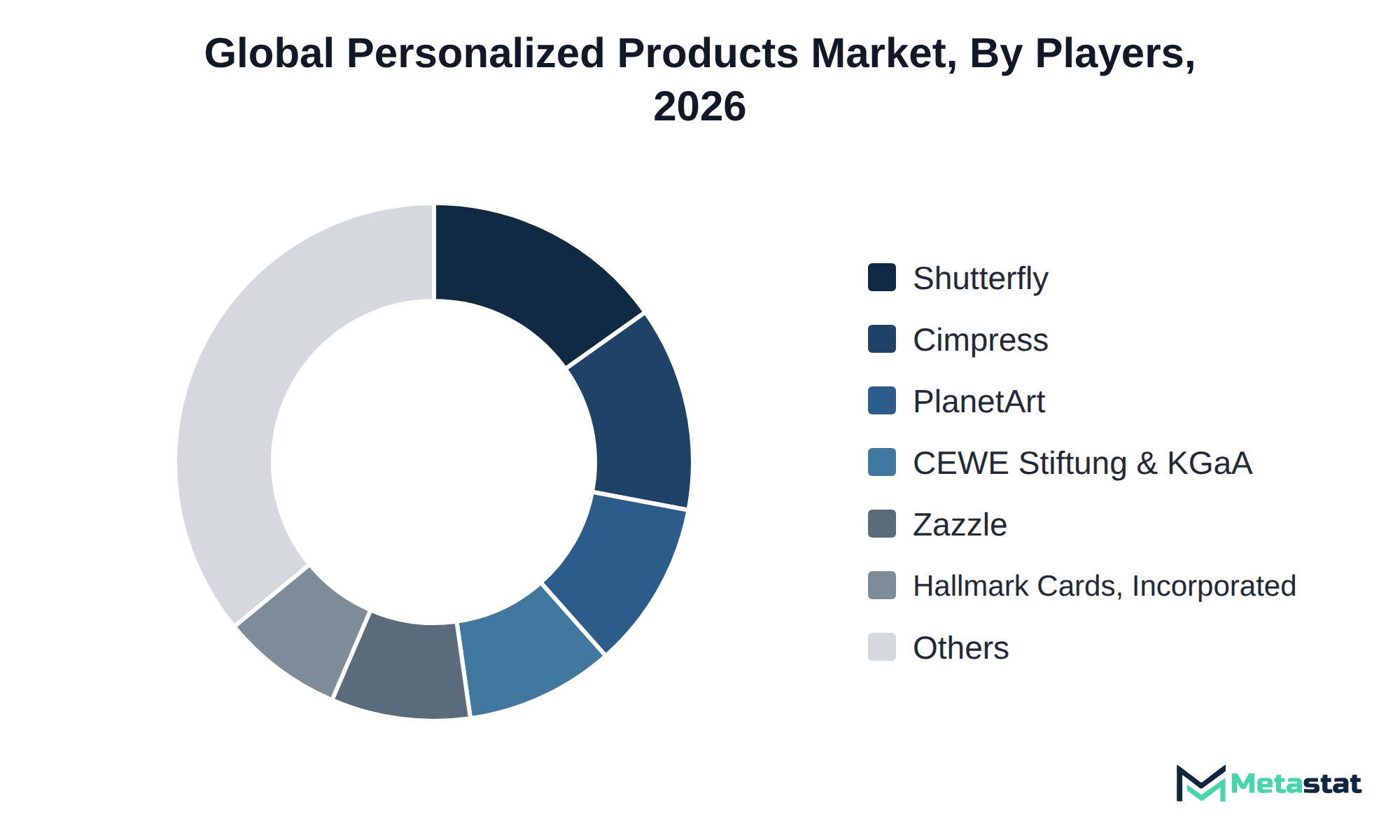
The Personalized Products market features diverse company strategies focused on various buyer preferences including price, certification, customization, and service. Companies compete through online platforms, brand-owned websites, and specialty stores, creating distinct ecosystems in which they operate. Competition in the market divides along the lines of product variety and personalization methods.
Shutterfly, LLC emphasizes a broad array of personalized products and uses a strong online presence to attract individual consumers. Zazzle Inc. specializes in custom designs across multiple categories, appealing to buyers seeking unique gifts. PlanetArt, LLC focuses on affordable personalized photo products, employing competitive pricing to attract a diverse consumer base.
Growth in the Personalized Products market relies on several key developments. First, the expansion of the Individual Consumers segment will significantly drive demand, particularly through brand-owned websites and apps, which are projected to grow at a CAGR of 8.6%. This channel's growth reflects increasing consumer preference for personalized products, enhancing direct engagement with brands. Second, the Jewelry segment shows promising growth potential, with a projected CAGR of 8.9% through 2033, appealing to consumers looking for unique and customized options. Third, rising online marketplace activity supports overall market growth, with expectations of a strong contribution from platforms that facilitate personalized purchases. The primary risk that could impede reaching USD 62 billion lies in potential supply chain disruptions, particularly affecting the delivery of raw materials necessary for personalization methods including direct printing and sublimation. Such disruptions could lead to increased costs and delays, impacting consumer purchasing behavior. Together, these developments and risks define how the market moves forward.
By Product Type: Apparel, Jewelry, Fashion Accessories, Home Decor & Textiles, Drinkware & Kitchenware, Photo Books, Prints & Albums, Stationery & Greeting Cards, Toys & Children's Books, Food & Beverage Gifts, Others (Pet Accessories, Keepsake Awards)
By Personalization Method: Direct Printing, Sublimation & Heat Transfer, Engraving & Etching, Embroidery, Embossing & Debossing, Handcrafted Customization, Others (3D Printing, Digital Cutting)
By End User: Individual Consumers, Corporate & Institutional Buyers
By Distribution Channel: Brand-Owned Websites & Apps, Online Marketplaces, Specialty Gift & Personalization Stores, Department Stores & Mass Merchandisers
The report strategically identifies and profiles the key market players and analyses their core competencies in each sub-segment of the Personalized Products market.
Report Attributes | Details |
Study Period | 2021-2033 |
Base Year | 2025 |
Estimated Year | 2026 |
Forecast Period | 2026-2033 |
Historical Period | 2021-2025 |
Growth Rate | CAGR 7.5% from 2026 to 2033 |
Revenue Unit | USD billion |
Segmentation | By Product Type, Personalization Method, End User, Distribution Channel, and Region |
By Region | North America (By Product Type, Personalization Method, End User, Distribution Channel, and Country)
|
Europe (By Product Type, Personalization Method, End User, Distribution Channel, and Country)
| |
Asia Pacific (By Product Type, Personalization Method, End User, Distribution Channel, and Country)
| |
South America (By Product Type, Personalization Method, End User, Distribution Channel, and Country)
| |
Middle East and Africa (By Product Type, Personalization Method, End User, Distribution Channel, and Country)
|
Find answers to common questions about this report
The Personalized Products market size was valued at USD 34.7 billion in 2025.
The market is projected to grow at a CAGR of 7.5% during the forecast period from 2026 to 2033.
The North America Personalized Products market size is estimated to reach USD 23.4 billion by 2033.
The leading segment in the Personalized Products market is Individual Consumers, with a projected value of USD 46.9 billion by 2033. This segment surpasses Corporate & Institutional Buyers, which is expected to reach USD 15.1 billion in the same year.
Shifting consumer preferences towards personalized items drive substantial growth in the market. Advancements in technology significantly impact the personalization capabilities, enabling suppliers to offer a diverse range of products tailored to consumer preferences.
North America holds the dominant share of the Personalized Products market, accounting for USD 23.4 billion in 2033, representing 40.5 percent of the total market. This figure surpasses the shares of other regions significantly.
Rising input costs restrain growth in the Personalized Products market by affecting profit margins and prompting suppliers to reassess pricing strategies. Price fluctuations hinder widespread adoption among corporate and institutional buyers, impacting their purchasing decisions and budgets.
Technological advancements significantly enhance personalization capabilities, allowing suppliers to meet rising consumer expectations effectively. Innovations in production techniques, including direct printing and sublimation, enable brands to offer unique products, leading to increased adoption among individual consumers.
The Personalized Products market is estimated to reach a valuation of USD 62 billion by 2033.
Key players operating in the Personalized Products market include Shutterfly, LLC, Cimpress plc, PlanetArt, LLC, CEWE Stiftung & Co. KGaA, Zazzle Inc., Hallmark Cards, Incorporated, Minted, LLC, and Callie.
The analysts below cover Consumer Goods research at Metastat Insights.
LEAD ANALYST
Utkarsh Khirodkar is a Lead Market Research Analyst at MetaStat Insight, specializing in market intelligence, technology sector assessments, and competitive strategy.
When evaluating distributed energy resource management systems, standard research summaries tend to gloss over the operational differences between front-of-the-meter utility deployments and behind-the-meter industrial sites. The MetaStat Insight report addressed those distinctions directly, especially regarding software interoperability standards and grid interconnection backlogs. The five-year market sizing across regional transmission organizations provided actionable context for our grid modernization strategy.
Most industry reports on warehouse automation bundle autonomous mobile robots and fixed conveyor installations into the same top-level numbers, which complicates advisory work. This study split the market cleanly by payload tiers, navigation technology, and fleet management software layers. The regional forecast for Western Europe gave our team defensible adoption benchmarks when evaluating capital allocation for logistics clients, saving us days of secondary data scrubbing.
Analyzing the transition from natural gas to green hydrogen in iron ore reduction requires realistic infrastructure timelines. Meta stat insight supplied a detailed regional assessment of DRI plant conversion costs and scrap metal availability in North America and Western Europe. Their report carefully examined pellet quality specs and electrical grid access constraints without making oversimplified market assumptions. The research material served as a practical reference during internal technology roadmap discussions.
Explore related market intelligence reports worth reading alongside this one.