
LEAD ANALYST
Utkarsh Khirodkar is a Lead Market Research Analyst at MetaStat Insight, specializing in market intelligence, technology sector assessments, and competitive strategy.

Global Commercial Printing Market Size, Share, By Printing Technology (Offset Lithography, Electrophotography (Dry Toner), Liquid Electrophotography, Inkjet Printing, Nanographic Printing, Digital Duplicating, Screen Printing and Others (Letterpress and Specialty Impact Printing)), By Application (Marketing Collateral and General Commercial Print, Publishing and Book Printing, Direct Mail and Transactional Print, Signage and Display Graphics, Photo and Fine-Art Reproduction, Labels and Short-Run Packaging and Others (Security and Specialty Print)), By Format (Large-Format Printing and Small-Format Printing), By Print Substrate (Paper and Paperboard, Plastic Films and Vinyl, Self-Adhesive Media, Rigid Boards and Sheets, Textiles and Fabrics and Specialty Media (Canvas, Synthetic Paper, Metallic and Foil Media)), Industry Analysis, Growth, Trends, and Forecast, 2026-2033
Report ID
MSI-5334
Published
September, 2026
Pages
266 Pages
Format
Historical
Base year
Forecast
Forecast period
Report Details
Market Valuation: Valued at $549 Billion in 2025, projected to reach $763.2 Billion by 2033 at a 4.2% CAGR.
Dominant Segment: Offset Lithography leads the market, driven by its efficiency and high-quality output, particularly in large-volume applications like packaging.
Geographic Lead: The Asia Pacific region is poised for significant growth, fueled by rising urbanization and increasing demand from emerging economies.
What's Inside: The report provides a comprehensive analysis of the competitive landscape, including detailed segment breakdowns by technology and application, along with forecasts through 2033.
Emerging Applications: The market is witnessing growth in innovative print solutions, particularly in marketing collateral and specialized printing, as businesses seek to differentiate themselves.
Sustainability Trends: Sustainability is a critical focus, with companies increasingly adopting eco-friendly materials and low-waste practices to meet consumer demand and regulatory pressures.
Choose Your License
Global Commercial Printing Market
The global Commercial Printing market was valued at USD 549 billion in 2025 and is projected to reach USD 763.2 billion by 2033, growing at a CAGR of 4.2% over the forecast period.
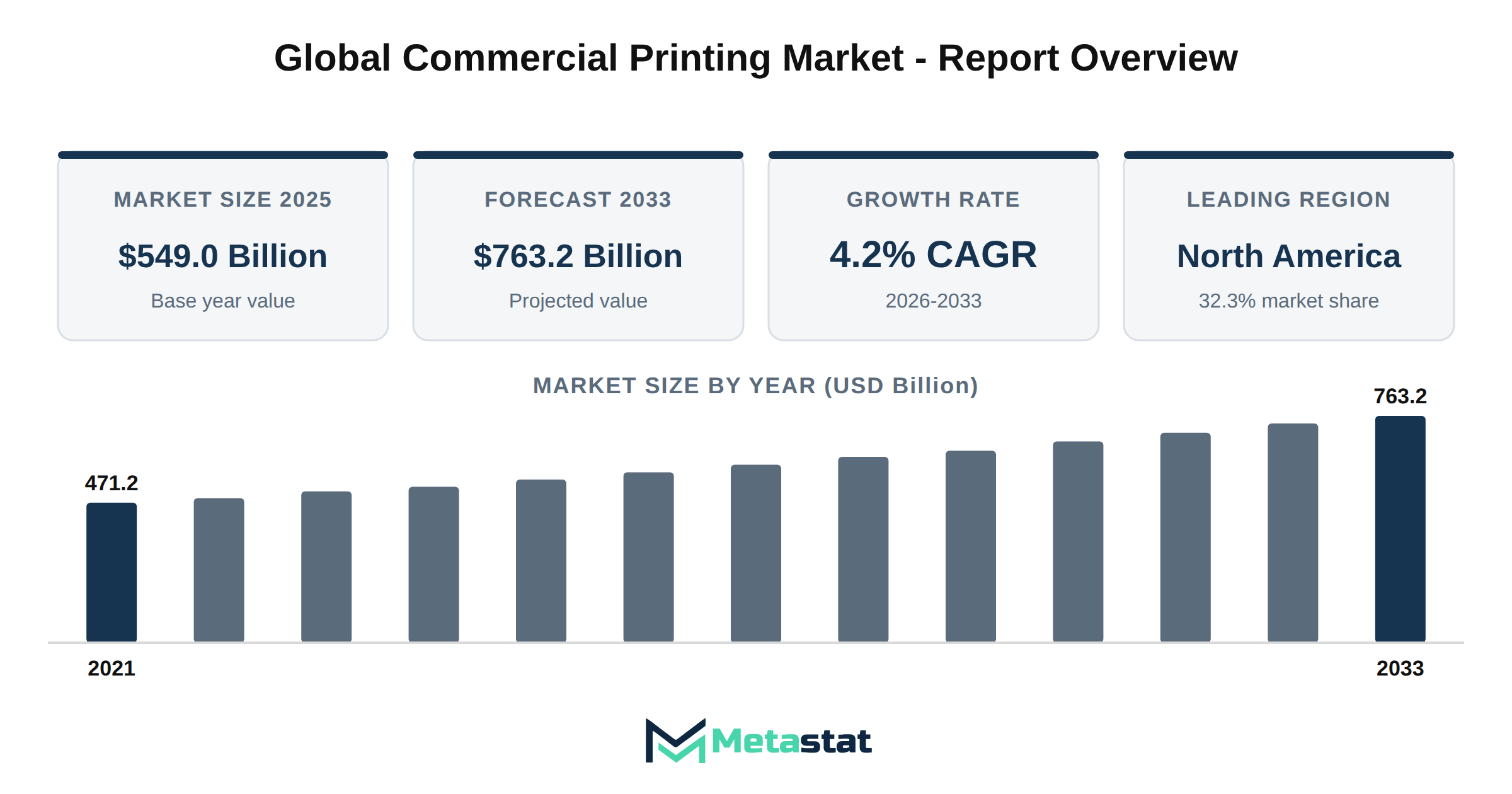
The Commercial Printing market reached USD 549 billion in 2025 and is projected to grow to USD 763.2 billion by 2033, reflecting a compound annual growth rate (CAGR) of 4.2%. This growth is significantly driven by the increasing adoption of digital print technologies, particularly inkjet printing, which reshapes commercial print production. The demand for offset printing continues to thrive, especially in high-volume commercial applications, establishing a robust foundation for market expansion.
Short-run and on-demand printing present substantial growth opportunities, catering to shifting consumer preferences for customized solutions. This trend is particularly evident in packaging and label applications, where commercial printing demand continues to escalate. The signage and display graphics segment demonstrates notable market trends, with businesses seeking innovative visual communication solutions.
Direct mail and transactional printing remain critical components of the market, driven by organizations leveraging personalized communication strategies to engage customers effectively. The publishing and book printing sectors experience evolving print volume trends, influenced by digital transformation and changing reading habits.
Variable data printing and personalization adoption enhance customer engagement, providing tailored solutions that connect with target audiences. Automation and workflow software play an important role in transforming commercial printing processes, optimizing efficiency and reducing production times.
AI-enabled print production and prepress optimization further streamline operations, allowing businesses to maximize output quality while minimizing costs. Sustainable printing materials and low-waste production practices gain traction, reflecting the commitment of the market to environmental responsibility.
Cost trends for paper, ink, energy, and substrates impact the overall economics of commercial printing, prompting stakeholders to seek innovative solutions to manage expenses effectively. Equipment innovation and press modernization drive advancements in production capabilities, enabling print service providers to meet evolving customer demands.
Consolidation among print service providers intensifies competitive dynamics, creating a landscape where collaboration and strategic partnerships become essential for success. The Asia Pacific region presents significant growth opportunities in the commercial printing sector, driven by rising demand from emerging economies.
North America experiences robust commercial printing demand, supported by technology adoption and advancements in production capabilities. Europe emphasizes sustainability and regulatory trends, shaping practices within the market.
Developments in the commercial printing supply chain and raw materials continue to influence market dynamics, creating pathways for future growth opportunities in digital and specialty commercial printing.
The increasing adoption of digital printing technologies significantly influences the Commercial Printing market. Companies prioritize efficiency and customization, leading to a shift towards digital solutions. The demand for faster turnaround times and the ability to produce shorter print runs without sacrificing quality drives this trend.
Inkjet printing technology is expanding rapidly, transforming production capabilities within the market. This technology supports high-quality output and versatility across various applications, appealing to businesses seeking to enhance their print offerings. The growth of inkjet printing directly correlates with the rising demand for customized and variable data printing solutions.
Offset printing continues to dominate high-volume commercial applications due to its efficiency and cost-effectiveness. This printing method excels in producing large quantities of consistent quality prints, making it the preferred choice for businesses with substantial printing needs. Demand for offset printing remains strong, particularly in packaging and advertising sectors.
The trend towards short-run and on-demand printing creates new opportunities within the market. Companies increasingly seek flexibility in production, allowing them to adapt quickly to market changes and consumer demands. This shift caters to the needs of businesses looking for cost-effective solutions without compromising quality.
Packaging and label applications significantly contribute to the growth of the Commercial Printing market. The rise in e-commerce and retail sectors drives demand for innovative packaging designs and labels that attract consumer attention. This segment presents potential for expansion, reflecting businesses' focus on enhancing brand visibility through printed materials.
Signage and display graphics represent a dynamic segment within the market, with increasing investments in visually appealing printed materials. The rise of experiential marketing and retail environments enhances the need for high-quality signage solutions. Businesses leverage these print applications to create effective customer experiences and drive foot traffic.
Direct mail and transactional printing continue to experience steady demand, driven by personalized marketing strategies. Businesses implement direct mail campaigns to target specific consumer segments effectively, enhancing engagement and response rates. This approach positions direct mail because a key component of overall marketing strategies.
The book and publishing sector experiences evolving print volume trends, influenced by digital formats and consumer preferences. Despite the rise of e-books, print books maintain a loyal customer base, particularly among niche markets. This trend supports sustained demand for quality print production in the publishing industry.
Variable data printing becomes increasingly significant in the Commercial Printing market, allowing businesses to customize their print materials for targeted audiences. This capability enhances marketing effectiveness, driving higher conversion rates. Adoption of personalized print solutions aligns with broader trends towards individualized customer experiences.
Automation and advanced workflow software enhance operational efficiency within the market. These technologies streamline production processes, reduce turnaround times, and minimize errors, enabling print service providers to improve productivity. Integration of automation supports competitiveness and responsiveness to client demands.
Artificial intelligence introduces innovative solutions for print production and prepress optimization. AI-driven tools enhance decision-making, reduce waste, and improve overall production efficiency. The implementation of these technologies positions businesses to meet the growing demands for quality and speed in print production.
Sustainability emerges because a critical focus within the Commercial Printing market, with businesses increasingly adopting eco-friendly materials and low-waste production practices. This shift responds to consumer preferences for environmentally responsible products and aligns with regulatory pressures. Sustainable practices contribute to brand reputation and long-term viability.
Cost trends for paper, ink, energy, and substrates directly impact the profitability of the market. Fluctuations in raw material prices influence production costs and pricing strategies for print service providers. Monitoring these trends is essential for businesses to maintain competitive pricing while ensuring quality output.
Innovation in commercial printing equipment and press modernization enhances production capabilities. Adoption of the latest technologies, including digital presses and high-speed printing systems, enables companies to respond to changing market demands effectively. This modernization enhances productivity and quality across various print applications.
Consolidation among print service providers shapes competitive dynamics within the market. Mergers and acquisitions enable companies to expand their service offerings and geographic reach, creating stronger entities capable of meeting diverse client needs. This trend influences market structure and competition, encouraging innovation and improved service delivery.
The Asia Pacific region presents significant growth opportunities for the Commercial Printing market, driven by expanding economies and increasing urbanization. Rising disposable incomes and consumer spending support demand for printed materials across various sectors. Companies targeting this region capitalize on emerging trends and consumer preferences.
North America showcases robust demand for commercial printing, supported by advanced technology adoption. Businesses in this region prioritize innovation to enhance operational efficiency and meet diverse client demands. The integration of advanced technologies positions North American print service providers competitively in the global market.
Europe emphasizes sustainability and regulatory compliance within the Commercial Printing market. Stricter environmental regulations encourage businesses to adopt sustainable practices and materials. Companies operating in this region navigate these trends to maintain compliance and enhance their market position.
Developments in the supply chain and raw materials significantly impact the Commercial Printing market. Efficient sourcing and management of materials enhance production capabilities and cost-effectiveness. Companies that optimize their supply chains respond better to market demands and maintain competitive pricing.
Future growth opportunities in the market center on digital and specialty printing applications. Increasing consumer demand for customized and high-quality print products creates avenues for expansion. Companies that innovate and adapt to these trends are well-positioned to capture new market share and enhance profitability.
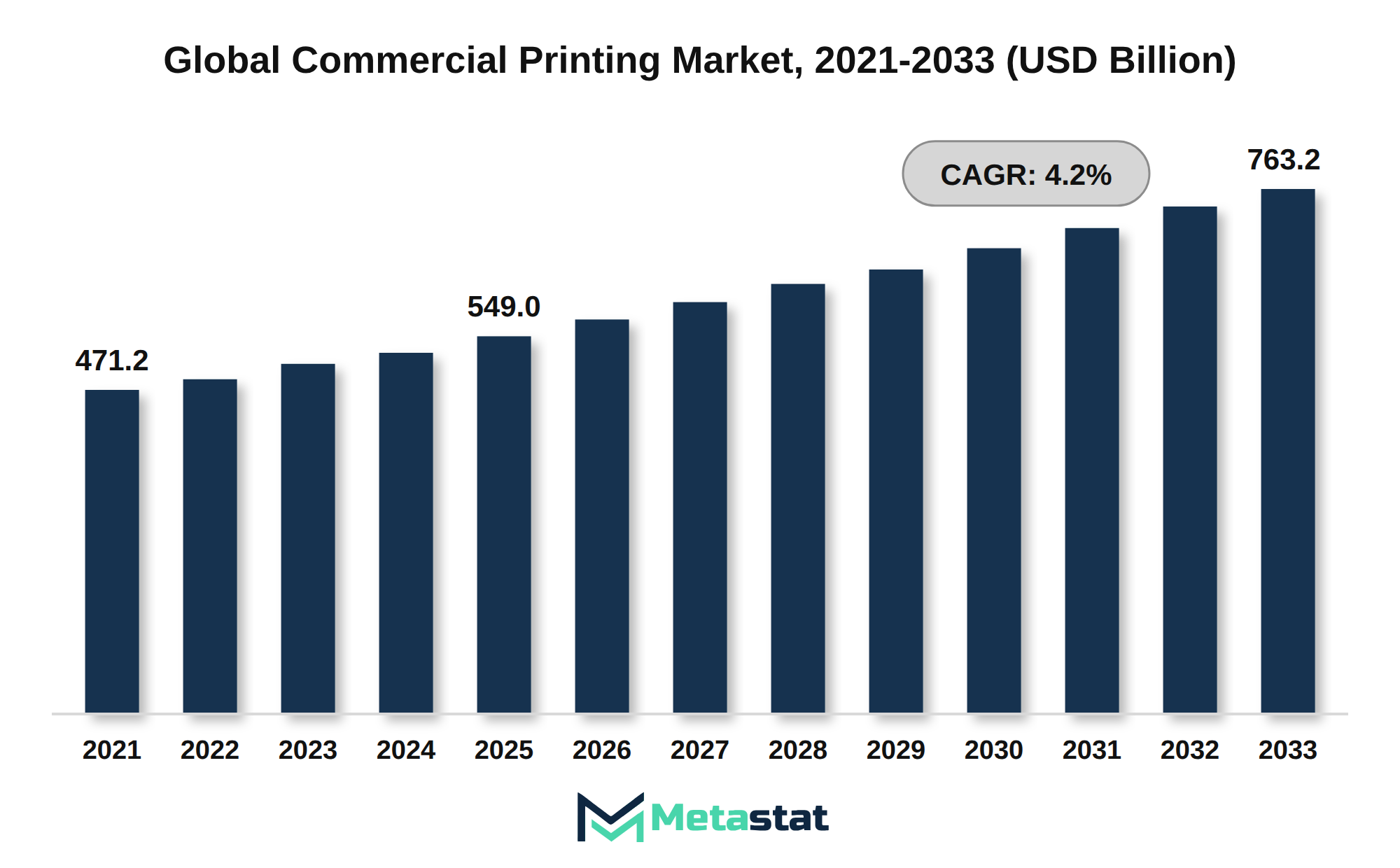
Growth in the Commercial Printing market derives significantly from macro-economic factors, including GDP growth and capital investment environments. Increasing public-private spending power enhances the financial landscape, leading to greater investment in printing technologies and services. This economic expansion drives increased demand from various sectors, resulting in the need for effective and innovative printing solutions.
Technological integration, particularly automation and software adoption, further influences market dynamics. Firms prioritize digitizing legacy processes to enhance operational efficiency and reduce costs. These advancements support the transition toward more sustainable printing practices, attracting businesses focused on resource stewardship and ESG mandates. Environmental considerations have become critical, prompting the market to adapt to meet these expectations.
Shifting demographic patterns and evolving consumer behaviors contribute to demand fluctuations within the market. The aging population and urbanization trends shape purchasing preferences, compelling businesses to explore new marketing collateral and promotional materials. The demand for personalized and targeted print solutions is rising, prompting providers to innovate and diversify their offerings.
Macro-economic factors significantly shape the Commercial Printing market landscape, driving growth and encouraging innovation while aligning with contemporary consumer and operational demands.
Digital transformation serves because a key growth driver for the Commercial Printing market, facilitating improvements in operational efficiency and customer engagement. Organizations leverage automation, artificial intelligence, and software adoption to optimize workflows and reduce production times. Enhanced digital capabilities enable companies to respond more effectively to consumer demands, offering customized solutions that align with evolving market preferences.
The shift towards integrating digital technologies enhances cost efficiency across the value chain. Businesses benefit from streamlined processes, which reduce overhead and improve profit margins. Investment in advanced printing technologies allows firms to produce high-quality materials at lower costs while maintaining flexibility to adapt to various market segments. Consequently, the market is positioned for sustained growth because organizations continue to prioritize digital integration in their operations.
In addition, the demand for personalized and innovative products accelerates, driven by shifting consumer behaviors and technological advancements. Companies within the Commercial Printing market gain competitive advantages through innovation-led product diversification, further enhancing their market presence. While the digital landscape evolves, organizations that embrace transformation will likely lead in capturing market share and meeting changing customer expectations.
Increasing regulatory compliance challenges constrain the Commercial Printing market's growth potential. Stricter environmental regulations and compliance requirements necessitate significant investments in advanced machinery and sustainable practices. Many smaller firms face difficulties in meeting these standards, limiting their market participation. The operational costs associated with compliance create financial pressure, particularly for businesses operating on tight margins.
Macroeconomic headwinds, including inflationary pressures and rising raw material costs, further exacerbate the challenges facing the market. These economic factors reduce profit margins and hinder the ability of companies to invest in new technologies. Supply chain disruptions, stemming from geopolitical instability, have intensified operational vulnerabilities, leading to delays in production and distribution.
Technological obsolescence presents another significant restraint. Rapid advancements in printing technology require continual investment, placing strain on companies to remain competitive. Firms that fail to modernize lose market share to more technologically advanced competitors. The threat of substitution by digital alternatives remains a persistent risk, compelling traditional print businesses to innovate to retain relevance.
Market fragmentation complicates the landscape, with numerous small players competing for market share. This fragmentation leads to price wars, further squeezing profit margins and creating an unstable market environment. Cultural barriers and regional adoption resistors limit the expansion of innovative printing solutions, particularly in emerging markets.
Overall, these challenges create a complex operating environment for the Commercial Printing market. Addressing these issues will require strategic investments and a commitment to adaptation, influencing growth trajectories in the coming years.
Geopolitical fragmentation increasingly impacts the Commercial Printing market, leading to trade deficits and tariff frictions. Such conditions create uncertainty for manufacturers relying on global supply chains, raising operational costs and inhibiting the flow of goods. Heightened expenses due to tariffs influence pricing strategies and exert margin pressures across the sector.
Technological disruptions challenge the market, particularly in research and development. Companies face complexities in integrating new technologies, hindering innovation and leading to interoperability issues. These challenges affect various stakeholders, including suppliers and buyers, resulting in delays and increased costs associated with adopting advanced printing technologies.
Supply chain instability, stemming from logistical disruptions and volatility in feedstock and component availability, presents another challenge. These issues complicate production schedules and contribute to rising input costs, impacting profitability. Tightening regulatory standards add compliance overhead, increasing operational burdens for businesses striving to meet evolving legal obligations.
Environmental concerns drive sustainability demands, compelling companies to adopt decarbonization mandates while managing their lifecycle footprints. This shift requires significant investment in new processes and technologies, putting additional pressure on resources. Workforce skill gaps and automation displacements complicate talent retention efforts, limiting access to skilled labor necessary for advancing operational capabilities.
Overall, the combination of geopolitical fragmentation, technological disruptions, supply chain instability, and evolving environmental demands presents multifaceted challenges for the Commercial Printing market. Addressing these issues requires strategic investments and adaptations in operational practices to maintain competitiveness in a rapidly changing environment.
The Commercial Printing market experiences significant opportunities through emerging applications and technological disruptions. Demand for innovative print solutions, particularly in marketing collateral and specialized printing, increases due to businesses seeking to differentiate themselves in competitive environments. The rise of digital procurement shifts enhances the accessibility of printing services, allowing for greater customization and quicker turnaround times.
Geographical expansion is essential for capturing opportunities in underserved regions. Areas including Asia Pacific demonstrate growth potential due to rising urbanization and evolving consumer preferences. Infrastructure modernization across these regions supports investment in advanced printing technologies, enabling efficient production processes and improved quality.
Sustainability imperatives shape the market by driving the adoption of eco-friendly materials and processes. Organizations increasingly align with environmental standards, compelling suppliers to innovate with sustainable substrates and printing methods. This shift toward green transformations not only meets consumer demand for responsible practices but positions companies favorably in an eco-conscious marketplace.
Strategic consolidation through mergers and acquisitions allows companies to broaden their service offerings and enhance operational efficiencies. Collaborations between traditional printing firms and technology providers facilitate the integration of next-generation innovations, including automation and advanced digital printing solutions. The resulting collaboration strengthens competitive positioning while satisfying diverse customer needs.
Overall, the Commercial Printing market benefits from a multifaceted approach to growth, where emerging applications, sustainability efforts, and strategic partnerships drive expansion across various segments. These dynamics create a dynamic environment for companies to thrive and adapt to changing market conditions.
The Global Commercial Printing market is segmented based on Printing Technology, Application, Format, and Print Substrate.
Offset Lithography represents a significant segment within the Commercial Printing market, valued at USD 236.5 billion in 2026 and projected to reach USD 273.5 billion by 2033, at a CAGR of 2.1% during the forecast period. Demand for Offset Lithography primarily derives from its efficiency and high-quality output, making it suitable for large-volume printing applications, including packaging and commercial materials. Technological maturation in printing processes has enhanced the capabilities of Offset Lithography, allowing for improved color accuracy and faster turnaround times, which appeal to businesses focusing on marketing collateral and product packaging.
Investment in next-generation upgrades is expected to drive further adoption of Offset Lithography. Continuous advancements in ink formulations and press technologies contribute to expanding market capabilities. End-use dynamics indicate rising demand for customized printing solutions among various industries, including retail and manufacturing. Regulatory compliance standards related to print materials and sustainability increasingly influence purchasing decisions, further shaping market dynamics. The segment's cost structure remains competitive, with efficient production processes enabling firms to manage pricing volatility effectively, thereby maintaining healthy profit margins.
Strategic opportunity windows are evident for suppliers focusing on enhancing product offerings and service capabilities within the Offset Lithography space. Continuous evaluation of raw material sourcing and supply chain resilience ensures that firms remain well-positioned to mitigate risks associated with market fluctuations. Overall, the robust performance of Offset Lithography in the Commercial Printing market highlights its importance in meeting the evolving needs of diverse industries.
Electrophotography (Dry Toner) experiences steady growth, driven by advancements in printing technology and increasing demand for high-quality color prints. The segment is projected to reach USD 130.4 billion by 2033, at a CAGR of 3.3% during the forecast period. Adoption of this technology benefits industries requiring quick turnaround times and flexible printing solutions, including marketing and advertising. The ability to produce short runs and on-demand printing enhances operational efficiency, attracting businesses seeking to minimize waste and lower inventory costs.
Technological maturation in electrophotography enables enhanced print quality and speed, making it a favorable choice for commercial printing applications. Ongoing product evolution introduces innovative features including improved toner formulations and automated workflows, supporting downstream applications across various sectors. Changes in consumption patterns, particularly the shift toward digital media, necessitate high-quality print collateral, positioning the market for continued growth in this segment.
Regulatory compliance standards governing print quality and environmental considerations significantly influence purchasing decisions. Adherence to these regulations drives demand for advanced electrophotographic solutions that align with sustainability initiatives. Price volatility challenges the market due to fluctuating raw material costs, impacting margins. Strategic investment in research and development enhances supply chain resilience and facilitates the introduction of next-generation upgrades.
Growth in the Liquid Electrophotography segment stems from advancements in digital printing technologies, which enhance efficiency and flexibility in production. Increased demand for customized and short-run printing solutions drives adoption among various industries including packaging, publishing, and commercial printing. The segment benefits significantly from the shift toward on-demand printing, where shorter print runs become more common.
Technological maturation is significant in the expansion of this segment. Innovations in liquid electrophotography, including improved ink formulations and enhanced printer capabilities, contribute to higher print quality and operational speeds. The segment's evolution aligns with market trends toward sustainability and cost-effectiveness, reinforcing its relevance in a rapidly changing industry.
The Liquid Electrophotography segment is expected to reach USD 39.5 billion by 2033. This growth reflects a broader shift in the Commercial Printing market toward technologies that offer versatility and efficiency. Companies investing in these technologies benefit from lower operational costs and increased customer satisfaction, positioning them competitively within the market.
Adoption of liquid electrophotography is influenced by changing consumer preferences, with an increasing focus on environmentally friendly printing solutions. The segment faces competition from other digital printing technologies, but its unique advantages in quality and efficiency support ongoing demand. Regulatory compliance regarding environmental standards enhances the attractiveness of this technology, ensuring a sustainable path forward for producers.
Growth prospects for inkjet printing remain robust, with the segment projected to grow at a CAGR of 7.8% during the forecast period. This growth emerges from increasing demand for high-quality, customizable printing solutions across various applications. Industries including marketing, packaging, and publishing are increasingly adopting inkjet technology for its versatility and efficiency in producing short runs and variable data prints.
Technological maturation enhances print quality and speed, with advancements in printhead technology and ink formulations. These innovations enable businesses to meet diverse customer demands, establishing competitive advantages in the marketplace. The transition towards digital printing methods, including inkjet, reflects a broader consumption shift among end users seeking flexible and cost-effective solutions.
Downstream applications encompass marketing collateral, direct mail, and packaging, where inkjet printing proves particularly advantageous. The ability to produce vivid color graphics and intricate designs caters to the evolving preferences of consumers, driving adoption among businesses looking to differentiate their offerings. Cost structures in the inkjet printing segment benefit from reduced waste and faster turnaround times, directly impacting margins positively.
Regulatory compliance standards continue to influence market dynamics, particularly concerning environmental regulations. Manufacturers are increasingly investing in eco-friendly inks and processes, aligning with sustainability goals. These shifts signify strategic opportunity windows for players in the inkjet printing sector, boosting investments in next-generation upgrades that enhance operational efficiency and meet changing consumer expectations.
Supply chain resilience remains vital, with a focus on raw material sourcing and logistics vulnerabilities. The industry encounters challenges related to material availability and pricing volatility, necessitating proactive approaches to mitigate risks. Companies that effectively navigate these factors position themselves favorably within the competitive landscape of the commercial printing market.
Increasing interest in Nanographic Printing stems from its ability to produce high-quality images at competitive speeds. This technology offers significant benefits in terms of print quality and efficiency, attracting interest from various sectors within the Commercial Printing market. Adoption of this technology aligns with the growing demand for customized and short-run print jobs, driving opportunities for print service providers.
Technological maturation plays a crucial role in the expansion of Nanographic Printing. Developments in digital printing processes and materials enhance the capabilities of this technology, enabling its application across diverse end-use sectors. The ability to print on a wide variety of substrates further broadens the market appeal, meeting the specific requirements of different industries.
Downstream applications demonstrate diverse usage of Nanographic Printing, especially in packaging and promotional materials. Brands increasingly leverage this technology for its rapid turnaround times and flexibility in design, which strengthens their marketing efforts. Consumption shifts toward personalized products further contribute to the growth of this printing method, with businesses aiming to fulfill consumer preferences for unique and customized offerings.
Regulatory compliance regarding sustainability and environmental impact remains a critical factor influencing the segment. Advances in eco-friendly materials and processes in Nanographic Printing align with these regulations, supporting the technology's adoption. Cost structures within the segment benefit from reduced waste and energy consumption, enhancing profitability for operators.
Market dynamics reflect the strategic opportunity windows available for Nanographic Printing. Investments in research and development focus on next-generation upgrades, ensuring the technology evolves to meet future demands. The emphasis on innovation strengthens competitive positioning within the market, providing a platform for growth and differentiation.
Demand for Digital Duplicating in the Commercial Printing market aligns with the growing need for efficient, high-quality printing solutions across various sectors. This segment experiences significant interest driven by advancements in technology that enhance print quality and reduce turnaround times. Industries including marketing, education, and publishing increasingly adopt digital duplicating methods to meet their demands for fast and accurate printing.
Technological maturation is essential in refining digital duplicating processes. Continuous innovation introduces next-generation upgrades that expand print capabilities, addressing diverse customer needs. The evolution of products in this segment supports a wider range of applications, from short-run printing to personalized marketing materials.
Changing consumption patterns reflect a shift towards more sustainable printing practices. The market sees heightened interest in digital duplicating methods that incorporate eco-friendly materials and processes. This trend aligns with growing regulatory compliance standards that promote sustainability across the printing industry.
Pricing volatility and margin pressures in the sector influence strategic decisions among suppliers. Companies focus on optimizing cost structures to maintain competitiveness while investing in modern technologies that support resilience in supply chains. These dynamics create strategic opportunity windows for businesses that adapt to shifting market demands.
Overall, Digital Duplicating stands because a vital component of the Commercial Printing market, reflecting broader trends in technology, sustainability, and efficiency that drive growth and innovation.
Shifts in consumer preferences and a growing demand for personalized products drive adoption within the screen printing segment of the Commercial Printing market. This method excels in producing rich colors and high-quality graphics, making it ideal for a variety of applications, including textiles, promotional materials, and packaging. Technological advancements enhance the capabilities of screen printing, incorporating automation and digital processes that streamline production and improve efficiency. These next-generation upgrades enable faster turnaround times and reduced waste, aligning with industry trends toward sustainability. Increased competition among suppliers leads to product evolution, with firms developing innovative inks and substrates that expand the functional applications of screen printing. The rise of e-commerce and the need for unique branding push businesses to leverage screen printing for customized packaging solutions. Regulatory compliance standards influence material sourcing and waste management practices, prompting firms to adopt eco-friendly inks and sustainable processes. This focus on environmental responsibility connects with consumers and strengthens brand loyalty. Pricing volatility in raw materials, particularly for inks and substrates, poses challenges, impacting profit margins across the value chain. Strategic investments in technology and process optimization offer opportunities for firms to enhance operational resilience and maintain competitive pricing structures. The screen printing segment displays significant potential for growth, driven by evolving market dynamics and consumer demands. The industry’s adaptability to challenges and its focus on innovation position it for continued success within the broader Commercial Printing market.
Demand for letterpress and specialty impact printing reflects a niche yet significant aspect of the Commercial Printing market. This sub-segment appeals to industries seeking unique textures and finishes, particularly in high-end packaging, artisanal products, and limited-edition publications. Consumer preferences for personalized and tactile printed materials drive growth, highlighting craftsmanship and quality in printing.
Technological advancements enhance the capabilities of letterpress and specialty impact printing, allowing for greater design flexibility and efficiency. Innovations in materials, inks, and finishing processes contribute to the evolution of products within this segment. End-users prioritize these advancements and leverage them to create distinctive printed materials that stand out in increasingly competitive markets.
Shifts in consumer consumption patterns emphasize sustainability and eco-friendly practices. The sub-segment benefits from a growing awareness of environmental issues, leading to increased demand for sustainable printing solutions. Regulatory compliance related to sustainable practices influences production methods, prompting suppliers to invest in eco-friendly materials and processes.
Strategic opportunity windows arise due to brands seeking differentiation in their offerings. The incorporation of letterpress and specialty impact printing into marketing strategies enhances brand identity and consumer engagement. Companies recognize the value of unique printed materials in building customer loyalty and enhancing product appeal, positioning this segment for growth within the broader Commercial Printing market.
Valued at USD 151.4 billion in 2026, the Marketing Collateral and General Commercial Print segment is projected to reach USD 184 billion by 2033, reflecting a CAGR of 2.8% during the forecast period. Growing demand for targeted marketing strategies across various sectors drives expansion within this segment. Businesses increasingly engage with marketing collateral to enhance brand recognition and customer engagement, creating a need for high-quality printed materials. The rise of e-commerce and digital marketing increases the importance of effective marketing collateral, pushing companies to invest in print solutions that complement their digital efforts.
Adoption of advanced printing technologies, including inkjet and electrophotography, acts because a catalyst for growth within the segment. These technologies enable quick turnaround times, customization, and cost-effective production, meeting the dynamic requirements of brands. The evolution of printing capabilities supports a wider range of applications, enhancing product offerings and catering to various customer needs.
End-use dynamics exhibit a shift towards personalized and targeted communication, necessitating innovative approaches within the Marketing Collateral and General Commercial Print segment. Companies prioritize high-quality prints that connect with their target audience, creating stronger connections between brands and consumers. Successful strategies in this segment leverage data analytics and customer insights to create tailored marketing materials, improving overall effectiveness.
Regulatory compliance and environmental sustainability influence the choices made by businesses in this sector. Adopting eco-friendly materials and practices aligns with consumer expectations and regulatory standards, building brand loyalty and trust. Companies actively seeking certification in sustainable practices enhance their market appeal and attract environmentally conscious consumers.
Overall, the Marketing Collateral and General Commercial Print segment experiences significant growth driven by evolving consumer preferences, technological advancements, and strategic investments. The market's ability to adapt to changes in demand dynamics and capitalize on emerging opportunities positions it for continued expansion in the coming years.
Growing interest in printed books and educational materials supports expansion in the Publishing and Book Printing segment. Digital transformation in the publishing industry enhances the demand for print publications alongside e-books, encouraging publishers to adopt hybrid models. The need for physical books in educational settings drives market growth. Publishers increasingly focus on high-quality printed materials to meet consumer preferences for tactile reading experiences.
The Publishing and Book Printing segment is projected to reach USD 121.5 billion by 2033, advancing at a CAGR of 2.3% during the forecast period. Innovations in printing technology and production processes contribute to cost efficiencies. These advancements enable publishers to produce smaller print runs without compromising quality, effectively catering to niche markets. This adaptability attracts investment and drives competition among players in the market.
Changes in consumer behavior, including a resurgence in demand for physical books, significantly influence end-use dynamics within the market. Publishers adopt sustainable practices, responding to environmental concerns by employing eco-friendly materials and processes. This shift aligns with regulatory compliance standards, enhancing brand reputation and consumer trust. Consequently, strategic opportunity windows expand for companies investing in sustainable printing technologies.
Valued at USD 108.8 billion by 2033, the Direct Mail and Transactional Print segment demonstrates strong growth within the Commercial Printing market. Primary demand drivers include the increased adoption of omnichannel marketing strategies, which rely on effective communication through direct mail. The need for personalized customer engagement fuels this demand, particularly within retail and e-commerce industries. Advancements in printing technologies enhance production efficiency and reduce turnaround times, expanding the segment's appeal to businesses seeking rapid delivery of printed materials.
Technological maturation is evident, with innovations including data-driven printing enabling targeted marketing campaigns. Companies increasingly leverage analytics to optimize mailing lists and improve campaign effectiveness. This shift toward data-centric strategies enhances the value proposition of direct mail, driving higher conversion rates and customer retention. The integration of digital printing solutions facilitates shorter print runs, making it economically viable for businesses to produce smaller quantities tailored to specific audiences.
Consumption shifts reflect changing consumer attitudes toward tangible communication methods. A resurgence in direct mail results from a trusted medium contrasting with declining effectiveness of digital advertisements, leading to renewed investment in printed materials. Regulatory compliance standards, particularly concerning data privacy, shape operational practices in this segment, compelling companies to implement robust data protection measures while handling customer information.
Market participants experience pricing volatility due to fluctuations in raw material costs, impacting profit margins. Strategic opportunity windows arise from the growing demand for sustainable printing practices, prompting many firms to explore eco-friendly substrates and inks. This alignment with environmental concerns enhances brand loyalty and attracts environmentally conscious consumers, positioning the segment for continued expansion within the Commercial Printing market.
Growth in the Signage and Display Graphics segment of the Commercial Printing market is driven by an increasing demand for visually appealing marketing materials and branding solutions. Businesses across various industries seek innovative methods to attract and engage customers through dynamic signage and display graphics, contributing to the segment's expansion. The segment is projected to grow at a CAGR of 5.9% during the forecast period.
Technological maturation enhances production capabilities within this segment. Advancements in large-format printing technologies enable the creation of high-quality graphics, providing businesses with greater flexibility in design and output. This evolution supports the production of diverse display materials, including banners, posters, and point-of-sale displays, meeting the needs of a wide range of end-users.
Consumption shifts towards eco-friendly materials and sustainable practices influence the segment's growth trajectory. Increasing awareness of environmental issues prompts businesses to adopt greener printing solutions, driving demand for substrates including recyclable and biodegradable materials. This shift aligns with broader trends in the Commercial Printing market, because sustainability becomes a core focus for consumers and businesses alike.
Strategic opportunity windows emerge because digital technologies reshape customer expectations regarding customization and personalization. The ability to produce tailored signage and graphics at scale enhances competitive advantage for printing companies, facilitating better engagement with target audiences. This adaptability generates strong demand for innovative printing solutions within the segment.
Strong demand for photo and fine-art reproduction derives from the increasing popularity of personalized art and photography. Artists and photographers seek high-quality prints that accurately reflect their work, enhancing the value of their creations. The proliferation of digital photography significantly influences this sub-segment, driving consumers toward professional printing services that offer superior color accuracy and detail.
Technological advancements in digital and inkjet printing methods improve output quality and reduce lead times, enabling artists to produce limited editions efficiently. These innovations facilitate greater flexibility in print sizes and materials, allowing for unique creations tailored to individual preferences. Evolving consumer behaviors, focused on aesthetics and personal expression, fuel growth in this area.
The importance of high-quality reproduction extends into various applications, including home decor, galleries, and corporate environments. This versatility attracts a broad range of customers, from casual consumers to professional artists, thereby expanding the market. Consumers prioritize unique and customized artwork, and the market for photo and fine-art reproduction continues to evolve, presenting opportunities for growth within the broader commercial printing market.
Rapid growth in the Labels and Short-Run Packaging sub-segment arises from increasing demand for customized packaging solutions across various industries. Businesses prioritize versatility and quick turnaround times, driving adoption in sectors including food and beverage, personal care, and pharmaceuticals. The push for sustainability fuels the development of eco-friendly materials, ensuring compliance with regulatory standards while attracting environmentally conscious consumers. Technological maturation, including advancements in digital printing technologies, enhances production capabilities, reduces lead times, and enables shorter runs economically.
The evolution of packaging designs tailored to specific consumer preferences supports market expansion. Innovative applications, including holographic labels and interactive packaging, create engaging experiences for end-users, further reinforcing the sub-segment's relevance. Cost structures reflect the need for competitiveness, prompting businesses to optimize pricing strategies while managing margin pressures. While raw material sourcing becomes more complicated, suppliers focus on establishing resilient supply chains to mitigate risks associated with disruptions.
Investment in next-generation technologies and adaptive production methods will drive strategic opportunity windows. Companies aim to capitalize on the rising trend of personalization, with significant implications for the Commercial Printing market. Brands exploring unique label solutions expect to differentiate themselves in a crowded marketplace, reinforcing their positioning and enhancing customer loyalty.
Demand for security and specialty print services has surged due to increasing concerns over brand protection and counterfeit prevention. Industries including pharmaceuticals, cosmetics, and high-end consumer goods actively seek advanced printing solutions to enhance product uniqueness and traceability. Innovations in printing technology contribute to improved security features, including holograms, watermarks, and other anti-counterfeiting measures that enhance brand integrity.
Growth in this sub-segment links directly to evolving regulations around product labeling and packaging, driving businesses to invest in compliant print solutions. Increased competition among providers leads to more varied offerings tailored to specific security needs across different sectors. Heightened consumer awareness regarding product authenticity boosts demand, influencing brands to prioritize specialized print solutions over traditional methods.
Technological advancements play an important role in expanding capabilities within the security and specialty print market. Enhanced digital printing technologies facilitate faster production times and allow for customization, catering to diverse customer requirements. While the market adapts to technological maturation, opportunities arise for the development of next-generation printing products that incorporate innovative features, ensuring continued relevance in an evolving environment.
Valued at USD 224 billion in 2026, the Large-Format Printing segment is projected to reach USD 312.3 billion by 2033, at a CAGR of 4.9% during the forecast period. This growth results from increasing demand across various industries, including advertising, retail, and events, where large-scale visuals enhance brand visibility and communication effectiveness. Technological advancements in printing processes have facilitated higher quality and faster production times, making large-format printing a preferred choice for marketers and businesses.
Next-generation upgrades in printer technology have expanded the capabilities of large-format printing, allowing for a wider range of materials and applications. Innovations in eco-friendly inks and substrates align with growing sustainability trends, appealing to environmentally conscious consumers and businesses. This transition toward sustainable practices influences purchasing decisions, driving demand for large-format printing solutions that meet regulatory compliance standards.
End-use dynamics reflect a shift toward customized solutions, with businesses increasingly seeking tailored prints that connect with target audiences. The market experiences a growing trend toward personalized marketing collateral, which enhances customer engagement and brand loyalty. Such consumption shifts present strategic opportunity windows for companies to innovate and capture market share.
Pricing volatility remains a consideration, with fluctuations in raw material costs impacting overall expenses. However, firms in the market demonstrate resilience through effective supply chain management and strategic sourcing of materials. Investments in advanced technologies and equipment ensure competitive positioning and meet the evolving demands of the Commercial Printing market.
Small-Format Printing remains a significant segment within the Commercial Printing market, driven by its diverse applications across various industries. This segment is estimated to reach USD 402.4 billion by 2033, at a CAGR of 3.4% during the forecast period. Demand stems from the increasing popularity of short-run jobs, personalized content, and smaller batch sizes, aligning with consumer preferences for tailored offerings. Advancements in technology, particularly in digital printing methods, enhance efficiency and reduce turnaround times, making small-format solutions more appealing for businesses.
End-use dynamics significantly influence the market for Small-Format Printing. Industries including retail, education, and manufacturing employ these solutions for marketing materials, labels, and packaging. The growing emphasis on branding and customer engagement drives the need for high-quality printed materials, thereby enhancing market demand. Price volatility in raw materials, particularly paper, poses challenges; yet innovative sourcing strategies and sustainability initiatives mitigate these impacts.
Strategic opportunities arise from technological maturation and next-generation upgrades, allowing for improved print quality and functionality. The shift towards environmentally friendly printing processes enhances the attractiveness of this segment among consumers and businesses alike. Increased competition from digital alternatives necessitates continuous innovation within the segment to maintain market relevance. Overall, the Small-Format Printing segment is significant in the broader Commercial Printing market, adapting to changing consumer demands and technological advancements.
Valued at USD 48.5 billion by 2033, the Direct-to-Object Printing segment experiences significant interest driven by technological advancements and diverse application capabilities. This segment stands out due to its ability to print directly onto various substrates, including textiles, plastics, and metals, facilitating customized solutions for industries including packaging, manufacturing, and promotional products. The growing preference for personalized and unique products fuels demand, leading to a shift in consumption patterns where businesses seek innovative printing solutions that enhance brand differentiation.
Advancements in printing technology have resulted in improved efficiency and reduced costs associated with Direct-to-Object Printing. Enhanced print quality and speed position this method favorably against traditional printing techniques. Companies in the Commercial Printing market invest substantially in next-generation upgrades, further supporting segment expansion. The increasing adoption of eco-friendly inks and substrates aligns with sustainability trends, attracting environmentally conscious consumers and businesses.
Challenges including pricing volatility and margin pressures continue to shape the market landscape. Fluctuations in raw material costs impact profitability, necessitating strategic pricing strategies from suppliers. Robust demand for high-quality, customized outputs contributes to the segment's resilience. The Direct-to-Object Printing segment's growth trajectory reflects current market dynamics and the ongoing evolution of consumer preferences within the broader Commercial Printing market.
Valued at USD 346.5 billion in 2026, the Paper and Paperboard segment is projected to reach USD 433.8 billion by 2033, at a CAGR of 3.3% during the forecast period. Increasing demand for packaging materials across various industries drives growth in this sub-segment. The rise of e-commerce and a focus on sustainable packaging solutions enhance the need for paper-based materials. Consumer preferences continue to shift towards recyclable and biodegradable options, leading to greater adoption of paper and paperboard products.
Technological advancements in printing processes and materials contribute to the evolution of the segment. Innovations including digital printing and enhanced coatings improve the performance and quality of paper products, aligning with industry standards. Regulatory compliance regarding sustainability and environmental impact influences production methods, prompting manufacturers to adopt greener practices. Pricing volatility in raw materials presents challenges, affecting profit margins and cost structures within the market.
Supply chain resilience has become a significant focus for companies operating in this segment. Increased sourcing of sustainable raw materials supports long-term growth and aligns with consumer expectations. Substitution risks from alternative materials persist, but the unique properties of paper and paperboard ensure continued relevance within the Commercial Printing market. Strategic opportunities arise from capital investments in advanced manufacturing technologies, enhancing production efficiency and product offerings.
Strong demand for Plastic Films and Vinyl arises from various end-use applications, including packaging, branding, and advertising. This segment contributes significantly to the Commercial Printing market, driven by the increasing need for durable and versatile materials that withstand various environmental conditions. Innovations in printing technology and product evolution enhance the capabilities of plastic films, enabling high-quality finishes and intricate designs. Growth in consumer markets, including food and beverage packaging, fuels the expansion of this segment.
The Plastic Films and Vinyl segment is projected to reach USD 115.9 billion by 2033, at a CAGR of 5.2% during the forecast period. Regulatory compliance regarding waste management and sustainability influences the direction of this segment, prompting manufacturers to explore biodegradable and recyclable materials. This shift toward sustainable products aligns with consumer preferences, emphasizing eco-friendliness and reducing environmental impact. Strategic opportunity windows arise from these trends, reflecting companies adapting their offerings to meet evolving market demands.
Pricing volatility in raw materials impacts cost structures and margin pressures within the segment. Fluctuations in supply chain dynamics and sourcing challenges necessitate proactive strategies to mitigate risks. Diversification in raw material sourcing and investment in innovative production processes enhance supply chain resilience. Technological obsolescence pressures players to continuously upgrade their capabilities and adopt next-gen advancements to maintain competitiveness. These factors collectively shape the outlook for the Plastic Films and Vinyl segment within the broader Commercial Printing market.
Shifts in the packaging and labeling industries drive demand for Self-Adhesive Media. This segment benefits from an increase in e-commerce and retail applications, where sticky labels and tags enhance product identification and branding. The market for Self-Adhesive Media is expected to reach USD 83.4 billion by 2033, reflecting significant growth potential driven by technological advancements in printing processes.
Next-generation upgrades in adhesive formulations and printing technologies enhance product performance, lower production costs, and improve responsiveness to customer needs. Regulatory compliance regarding labeling standards further drives growth, leading manufacturers to adopt innovative solutions that meet evolving market requirements. This trend results in increased competition among suppliers to provide high-quality, reliable products to end-users.
Consumption shifts towards more sustainable materials influence the development of eco-friendly Self-Adhesive Media, appealing to environmentally conscious consumers and businesses. Manufacturers increasingly focus on raw material sourcing strategies that prioritize sustainability and reduce environmental impact. These efforts maintain market relevance within the broader Commercial Printing market.
Strategic investment opportunities continue to emerge. Market players recognize the potential for expanding product offerings and enhancing supply chain resilience. Addressing substitution risks posed by alternative adhesive technologies ensures market players maintain competitiveness. Continuous research and development efforts position Self-Adhesive Media because a vital component within the evolving commercial printing sector.
Demand for rigid boards and sheets in the Commercial Printing market derives from a diverse array of applications, including packaging, construction, and signage. The durability and structural integrity of these substrates make them particularly suitable for high-quality print jobs requiring robust materials. Enhanced aesthetic qualities, including surface texture and finish, further increase their appeal across various industries.
The rigid boards and sheets segment is projected to grow at a CAGR of 5.2% during the forecast period. This growth stems from increasing consumer preference for sustainable and environmentally friendly materials, pushing manufacturers to adopt eco-friendly practices in the production process. Technological advancements in printing techniques enable higher precision and customization, expanding adoption in various sectors.
Regulatory compliance regarding sustainability and waste management significantly influences production strategies. Certification standards for environmentally friendly materials enhance market credibility, driving manufacturers to innovate and adapt. Companies focusing on raw material sourcing and supply chain resilience improve their competitive position, ensuring consistent quality and availability of rigid substrates.
While sectors including packaging and construction evolve, the demand dynamics in the Commercial Printing market adapt. Rigid boards and sheets play a vital role in meeting these changing demands, positioning companies strategically to capture emerging opportunities while navigating challenges including pricing volatility and margin pressures.
Demand for textiles and fabrics in the Commercial Printing market experiences notable growth driven by emerging applications in fashion, home decor, and promotional materials. Increasing customization opportunities enable businesses to offer unique products, leading to a rise in consumer interest. Technological advancements enhance printing capabilities, allowing for intricate designs and appealing colors that attract modern consumers.
Expansion catalysts include the rising trend of sustainable materials. Consumers increasingly prefer eco-friendly options, prompting manufacturers to invest in clean production methods. Innovations in digital textile printing have allowed for shorter production runs, catering to the demand for personalized products without compromising quality. These developments contribute to a dynamic market environment, driving competition among leading firms.
Shifts in consumption patterns reflect a growing preference for multifunctional textiles, which serve various purposes across multiple sectors. Industries including fashion and interior design increasingly seek printed textiles for branding and promotional campaigns. This trend indicates a robust end-use dynamic, with businesses adopting printed textiles for both aesthetic and functional applications.
Regulatory compliance standards focused on environmental sustainability impact production processes within the market. Firms align with certifications that promote responsible sourcing and manufacturing practices. Adhering to these regulations not only enhances brand reputation but opens up new markets and customer segments.
Strategic opportunity windows exist for companies to invest in next-generation technologies that improve production efficiency and reduce costs. The integration of automation and AI in printing processes could streamline operations, enhancing profitability. Capital investment outlook remains positive, with stakeholders recognizing the potential of textiles and fabrics because a lucrative market segment within the Commercial Printing sector.
Interest in Specialty Media, including canvas, synthetic paper, metallic, and foil media, reflects evolving consumer preferences and innovative applications across various sectors. This sub-segment addresses the demand for unique printing solutions that enhance visual appeal and durability. Industries including art reproduction, advertising, and packaging increasingly adopt these materials due to their distinct aesthetic qualities and functional benefits, which support growth in the Commercial Printing market.
Technological advancements drive the evolution of Specialty Media, contributing to product enhancements and enabling the development of innovative printing techniques. The emergence of next-generation upgrades facilitates improved print quality, faster production times, and enhanced versatility, attracting end-users. The shift towards personalized and high-quality print products makes the Specialty Media sub-segment integral in meeting evolving demands within the Commercial Printing market.
Cost structures associated with Specialty Media are influenced by raw material sourcing and manufacturing processes. Suppliers face pressures related to pricing volatility, which affects margins and impacts overall market dynamics. Strategic opportunity windows arise for players that effectively manage these cost factors while maintaining quality and performance standards. Consumption shifts towards more sustainable materials will lead to changes in production strategies and supplier relationships within the Commercial Printing market.
Regulatory compliance standards and certifications increasingly shape the Specialty Media landscape, compelling manufacturers to adhere to environmental considerations and safety regulations. Non-compliance results in market disadvantages, while those who successfully navigate these challenges gain a competitive edge. The ongoing evolution of this sub-segment aligns with broader trends within the Commercial Printing market, emphasizing the importance of adaptability and responsiveness to market demands.
Based on geography, the Global Commercial Printing market is divided into North America, Europe, Asia-Pacific, South America, Middle East, and Africa.
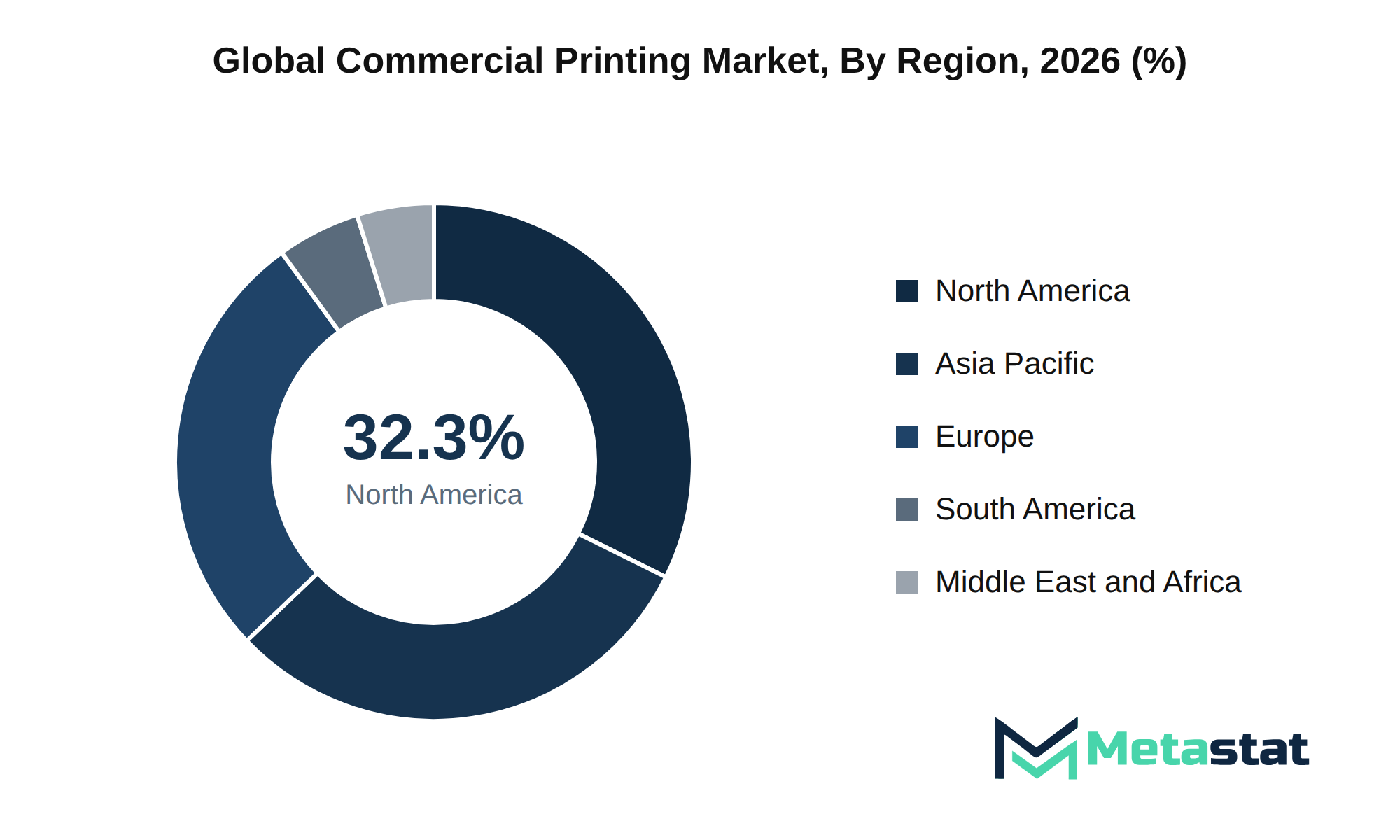
The Commercial Printing market in North America is projected to experience steady growth driven by significant investment in infrastructure modernization and a focus on localized manufacturing. With a projected CAGR of 4.2%, the market is set to reach USD 235.5 billion by the end of 2033. The region accounted for 32.3% of the global market in 2025, highlighting its vital role in the overall market.
Factors including regional competitive dynamics and established domestic market leaders create a robust environment for innovation and expansion. Local procurement dynamics influence purchasing behaviors, with businesses focusing on reliable suppliers that meet cultural and regulatory requirements. A strong emphasis on cross-border trade corridors and nearshoring initiatives enhances market accessibility and efficiency.
High-value replacement cycles for printing technologies drive demand for advanced solutions, encompassing a range of applications from marketing collateral to publishing. The push for environmentally sustainable practices further influences the selection of substrates and technologies across the sector, reflecting shifting consumer preferences and regulatory frameworks.
Overall, the North American Commercial Printing market presents a region rich with opportunities, characterized by strategic entry barriers and a framework that supports domestic and foreign direct investment. This regional focus allows for the cultivation of competitive advantages because businesses adapt to evolving market conditions.
Europe commands a share of the global Commercial Printing market, accounting for 27.1% in 2025. Growth in this region results from several factors, including robust demand for marketing collateral and general commercial print, alongside a solid appetite for publishing and book printing. Countries including Germany, France, and the UK demonstrate particularly high activity in these segments, creating competitive dynamics among local and international players.
Infrastructure modernization initiatives contribute to the region's growth trajectory, enhancing the capabilities of local printing firms. Significant investment in technology upgrades, particularly in offset lithography and inkjet printing, drives operational efficiencies and expands service offerings. Rising demand for direct mail and transactional print supports incremental growth within the market.
Cultural nuances and regional B2B buying behaviors shape procurement dynamics, influencing print service providers' strategies. Localized manufacturing densities facilitate supply chain regionalization and provide competitive advantage for domestic players. Strategies including nearshoring tap into regional resource availability, aligning production with local demand, thereby enhancing service responsiveness.
Further, geopolitical fragmentation affects cross-border trade corridors, presenting both challenges and opportunities for market participants. Awareness of local compliance mandates and geographic regulatory frameworks remains critical for firms operating in Europe. The market features a mix of established players and emerging entrants, reflecting ongoing vendor consolidation trends that impact pricing and service offerings across the Commercial Printing sector.
In the Asia-Pacific region, the Commercial Printing market shows significant growth potential, driven by increasing demand for diverse printing applications across several industries. Countries including China and India lead this trend, with their expanding manufacturing bases and a growing middle-class consumer market fueling demand for marketing collateral and packaging solutions.
Technology adoption plays a critical role in market dynamics, particularly with the rise of inkjet and digital printing technologies, which provide flexibility and efficiency in production. The region's emphasis on modernization and infrastructure development supports these advancements, enhancing operational efficiency within commercial printing facilities.
Investment in localized manufacturing and nearshoring initiatives strengthens the market's supply chain, enabling quicker response times to consumer demands and reducing logistical challenges. This approach aligns with the region's increasing focus on sustainability and resource efficiency, reflecting changing consumer preferences.
The competitive landscape features a mix of established players and emerging companies, contributing to a dynamic environment for innovation and collaboration. Domestic companies capitalize on regional strengths while nurturing relationships with local businesses to expand their market reach.
Cultural nuances influence B2B buying behaviors, with regional preferences shaping the types of print applications in demand. Understanding these dynamics allows suppliers to tailor their offerings, ensuring alignment with local customer needs in the Commercial Printing market.
Overall, the Asia-Pacific region represents a significant segment within the broader Commercial Printing market, characterized by strong growth trajectories and evolving consumer demands that present opportunities for sustained investment and development.
The Commercial Printing market in South America is characterized by a share of 5.2% of the global market in 2025. Brazil and Argentina serve because the primary contributors to market growth, driven by increasing demand for diverse printing applications, particularly in marketing collateral and general commercial print. The region experiences a gradual shift towards modernization in printing technology, with investments in offset lithography and inkjet printing enhancing production capabilities.
Infrastructure improvements continue to play a significant role in increasing adoption rates. Enhanced logistics and connectivity between countries facilitate cross-border trade, allowing local businesses to access a broader market. Cultural preferences in South America influence purchasing behaviors, with a focus on quality and customization in commercial printing services.
Vendor consolidation trends have emerged, with domestic market leaders strengthening their position through strategic partnerships and acquisitions. This trend contributes to competitive dynamics, where localized procurement dynamics enhance operational efficiencies. While the market evolves, foreign direct investment flows support geographic expansion, particularly in underpenetrated territories.
Overall, the growth prospects for the market in South America reflect a combination of emerging opportunities and established industry players, positioning the region for sustainable development in the coming years.
The Middle East and Africa region plays a notable role in the global Commercial Printing market in 2025. Countries within this region, including Saudi Arabia, UAE, and South Africa, exhibit varying levels of market development and demand dynamics. Growth is driven by increasing urbanization and a rising middle class, leading to higher consumption of print media and promotional materials.
Investment in infrastructure modernization enhances capacity for commercial printing. Localized manufacturing initiatives and supply chain regionalization support growth, particularly in urban centers. Emerging market front-runners like Saudi Arabia leverage economic diversification strategies, attracting foreign direct investment that strengthens the market.
Cultural nuances influence B2B buying behaviors, with traditional print media maintaining relevance. Growing interest in digital printing technologies represents a significant opportunity for expansion, driven by demand for customization and shorter print runs. Vendors adapt to evolving consumer preferences, contributing to incremental growth in the market.
Geopolitical factors and regulatory frameworks impact operational costs and competitive dynamics. Domestic market participants in this region focus on strategic entry barriers and localized procurement dynamics to secure market share. Careful navigation of these elements will determine the trajectory of the Commercial Printing market in the Middle East and Africa.
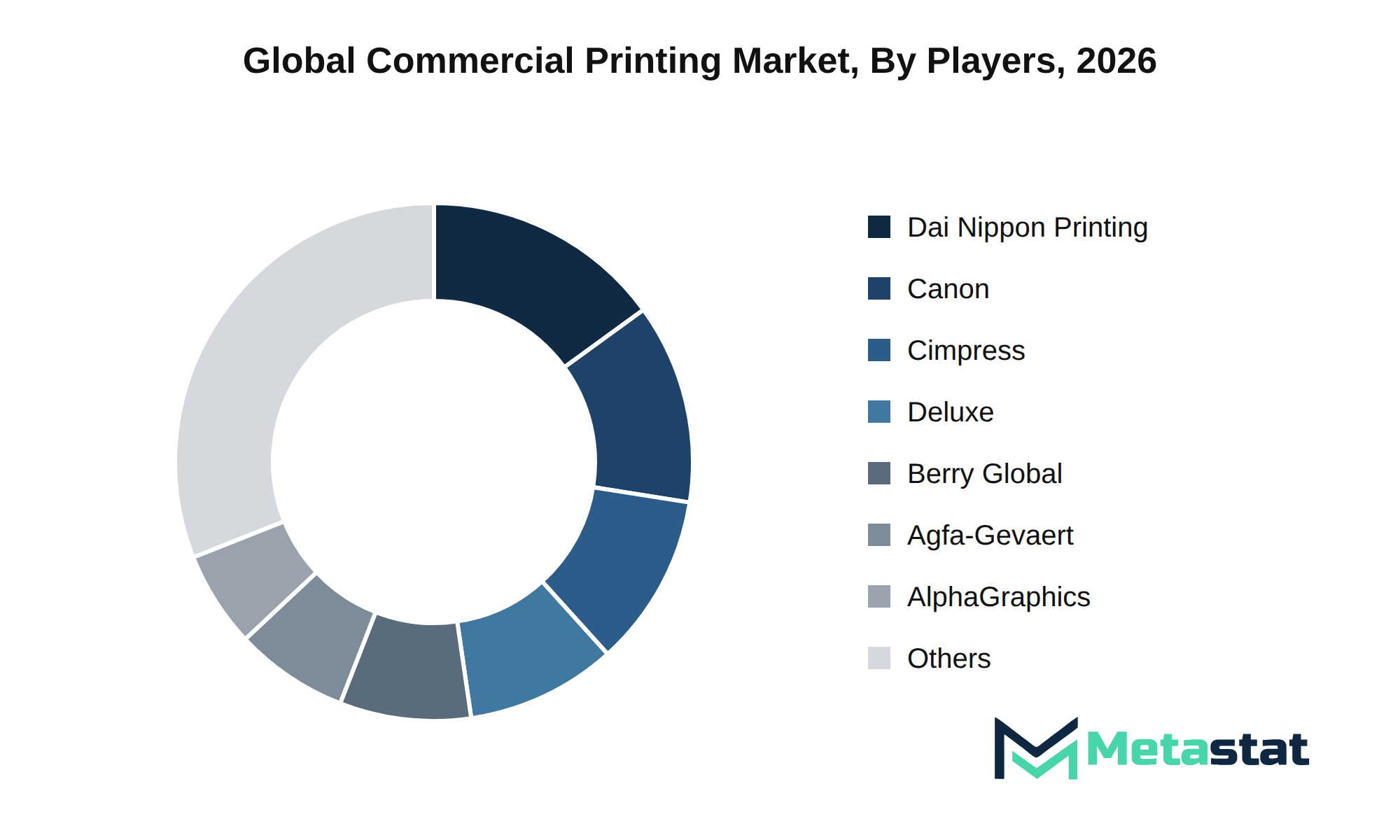
The Commercial Printing market experiences significant activity driven by mergers and acquisitions, strategic alliances, and cross-industry partnerships. Companies including Agfa-Gevaert N.V., Canon Inc., and HP Inc (PageWide Industrial) engage in strategic consolidation to enhance their operational capabilities and expand market reach. This environment creates a competitive atmosphere, encouraging players to strengthen their positions through innovative business models and product differentiation.
Investment in research and development proves vital for players like FUJIFILM Business Innovation Corp. and Ricoh Company, Ltd., focusing on proprietary technology and intellectual property to secure a competitive edge. Companies prioritize technological defensibility to create barriers to entry for potential new entrants into the market. Customer retention strategies and brand equity dynamics remain crucial owing to businesses aiming to maintain customer loyalty amid growing competition.
The future competitive outlook suggests continued restructuring and strategic growth vectors, with companies leveraging supply chain dominance and procurement leverage to optimize operational efficiency. Such dynamics highlight the importance of adapting to market trends while ensuring a robust response to emerging challenges in the Commercial Printing market.
Market size is forecast to rise from USD 549 billion in 2025 to over USD 763.2 billion by 2033. The base case indicates a growth trajectory characterized by a 4.2% CAGR, reflecting steady demand across various sectors. In a bullish scenario, increasing investments in next-generation technologies and innovations could accelerate growth, driving the market beyond the projected figures. Conversely, a bearish outlook arises from potential economic downturns and supply chain disruptions, which could hinder growth.
The commercial printing market faces multiple macroeconomic factors affecting future performance. Key trends include shifts in downstream demand driven by evolving consumer preferences and technological advancements. Core industries are maturing, requiring strategic innovation and adaptation to maintain competitiveness. Timelines for R&D commercialization and product life cycles continue to evolve, impacting how players approach market entry and sustainability. Regulatory evolution introduces compliance milestones that necessitate proactive measures from market participants to align with changing policies.
Geopolitical realignments and evolving trade corridors influence the global supply chain, affecting costs and availability of materials. Strategic capital allocation directives focus on enhancing operational efficiency and infrastructure commitments, positioning players for success in a dynamic environment. Emerging white-space opportunities highlight unmet enterprise needs, providing fertile ground for growth. High-growth pockets within the market present avenues for investment, driven by demand for customized solutions and specialized printing technologies.
Executive-level strategic imperatives emphasize the importance of developing defensibility roadmaps to navigate potential market disruptions. Investments in innovation and sustainability will play significant roles in shaping future growth recommendations, ensuring players remain competitive in an increasingly complex environment.
The report strategically identifies and profiles the key market players and analyses their core competencies in each sub-segment of the Commercial Printing market.
Report Attributes | Details |
Study Period | 2021-2033 |
Base Year | 2025 |
Estimated Year | 2026 |
Forecast Period | 2026-2033 |
Historical Period | 2021-2025 |
Growth Rate | CAGR 4.2% from 2026 to 2033 |
Revenue Unit | USD billion |
Segmentation | By Printing Technology, Application, Format, Print Substrate, and Region |
By Region | North America (By Printing Technology, Application, Format, Print Substrate, and Country)
|
Europe (By Printing Technology, Application, Format, Print Substrate, and Country)
| |
Asia Pacific (By Printing Technology, Application, Format, Print Substrate, and Country)
| |
South America (By Printing Technology, Application, Format, Print Substrate, and Country)
| |
Middle East and Africa (By Printing Technology, Application, Format, Print Substrate, and Country)
|
Find answers to common questions about this report
The Commercial Printing market size was valued at USD 549 billion in 2025, according to the Metastat Insights study.
The Commercial Printing market is projected to grow at a CAGR of 4.2% during the forecast period from 2026 to 2033.
The North America Commercial Printing market size is estimated to reach USD 235.5 billion by 2033.
The largest segment in the Commercial Printing market is Offset Lithography, with a projected value of USD 273.5 billion by 2033. This segment leads based on its significant share compared to other printing technologies.
Key drivers for the Commercial Printing market include macro-economic factors including GDP growth and increased public-private spending, which enhance investment in printing technologies. the integration of digital technologies and automation improves operational efficiency, enabling companies to meet evolving consumer demands for personalized and innovative print solutions.
North America holds the dominant share of the Commercial Printing market, with a value of USD 235.5 billion projected for 2033, representing 32.3 percent of the total market.
Increasing regulatory compliance challenges, including stricter environmental regulations, constrain growth in the Commercial Printing market. Smaller firms struggle to meet these standards, leading to financial pressures and limiting market participation. macroeconomic headwinds, including inflation and rising raw material costs, further hinder investment in new technologies and reduce profit margins.
Growth in the Commercial Printing market derives from macro-economic factors, including GDP growth and increased public-private spending. Technological integration, particularly automation and software adoption, enhances operational efficiency and enables firms to offer personalized solutions that align with evolving consumer demands. These advancements drive innovation and support the transition towards sustainable practices.
The Commercial Printing market is estimated to reach a valuation of USD 763.2 billion by 2033.
Top players operating in the Commercial Printing industry include ACME Printing Company, Inc., Agfa-Gevaert N.V., Canon Inc., FUJIFILM Business Innovation Corp., Heidelberger Druckmaschinen AG, HP Inc. (PageWide Industrial), and Konica Minolta, Inc.
The analysts below cover Packaging research at Metastat Insights.
LEAD ANALYST
Utkarsh Khirodkar is a Lead Market Research Analyst at MetaStat Insight, specializing in market intelligence, technology sector assessments, and competitive strategy.

SENIOR RESEARCH ANALYST
Biotechnology · Food and Beverages · Medical Devices · Packaging
Snehal Pasalkar is a Research Analyst at MetaStat Insight, operating at the intersection of life sciences research, competitive strategy, and market intelligence.

INDUSTRY CONSULTANT - CHEMICALS & ADVANCED MATERIALS
Chemicals and Materials · Machinery & Equipment · Packaging
Amit Gadhekar Consultant for Chemicals and Materials at MetaStat Insight, directing sector-specific intelligence, research, and strategic consulting across global chemical and processing markets.
Decarbonizing industrial thermal processes hinges on refrigerant regulations and compressor efficiency limits. Metastat Insights delivered a thorough market analysis that evaluated natural refrigerants like CO2 and hydrocarbons against synthetic low-GWP alternatives. The breakdown of utility incentives and grid capacity constraints across key European manufacturing hubs offered valuable perspective. The follow-up conversation with their sector analysts addressed our specific questions on mechanical vapor recompression systems efficiently.
Assessing 200mm wafer transition schedules and substrate supply bottlenecks requires precise technical intelligence. MetaStat Insight supplied an actionable breakdown comparing planar and trench MOSFET architectures across automotive and industrial drive markets. The regional capacity estimates for Asia-Pacific foundries helped clarify lead-time uncertainties during our strategic planning session. When we needed additional clarification on high-purity raw material sourcing, their analyst team responded with helpful context within twenty-four hours.
Tracking maintenance cycle demand for secondary flight display units and terrain collision avoidance systems across regional jet fleets involves complex aftermarket dynamics. MetaStat Insight provided practical analysis separating airline retrofit programs from OEM forward-fit production schedules in North America and Southeast Asia. The supplier matrix highlighted component obsolescence timelines without resorting to vague generalizations. The dataset served as a dependable reference during our annual program review meetings.
Explore related market intelligence reports worth reading alongside this one.