
LEAD ANALYST
Utkarsh Khirodkar is a Lead Market Research Analyst at MetaStat Insight, specializing in market intelligence, technology sector assessments, and competitive strategy.

Global Digital Textile Printing Market Size, Share, By Printing Technology (Direct-to-Fabric, Dye-Sublimation Transfer, Direct-to-Garment (DTG), Single-Pass Digital Printing, Hybrid Digital Printing and Other Digital Printing Technologies), By Ink Type (Sublimation/Dye-Sublimation Inks, Pigment Inks, Reactive Inks, Disperse Inks, Acid Inks and Other Textile Inks), By Substrate (Polyester, Cotton, Viscose/Rayon, Blends, Nylon/Polyamide, Silk, Linen and Others (Wool, Hemp, Jute, Acrylic, Polypropylene)), By Application (Home Textiles and Interior Décor, Fashion and Apparel, Soft Signage and Display, Technical and Industrial Textiles, Sportswear and Athleisure, Carpets and Rugs and Other Textile Applications), Industry Analysis, Growth, Trends, and Forecast, 2026-2033
Report ID
MSI-5180
Published
September, 2026
Pages
269 Pages
Format
Historical
Base year
Forecast
Forecast period
Report Details
Choose Your License
Global Digital Textile Printing Market
The global Digital Textile Printing market was valued at USD 9.3 billion in 2025 and is projected to reach USD 25.6 billion by 2033, growing at a CAGR of 13.4% over the forecast period.
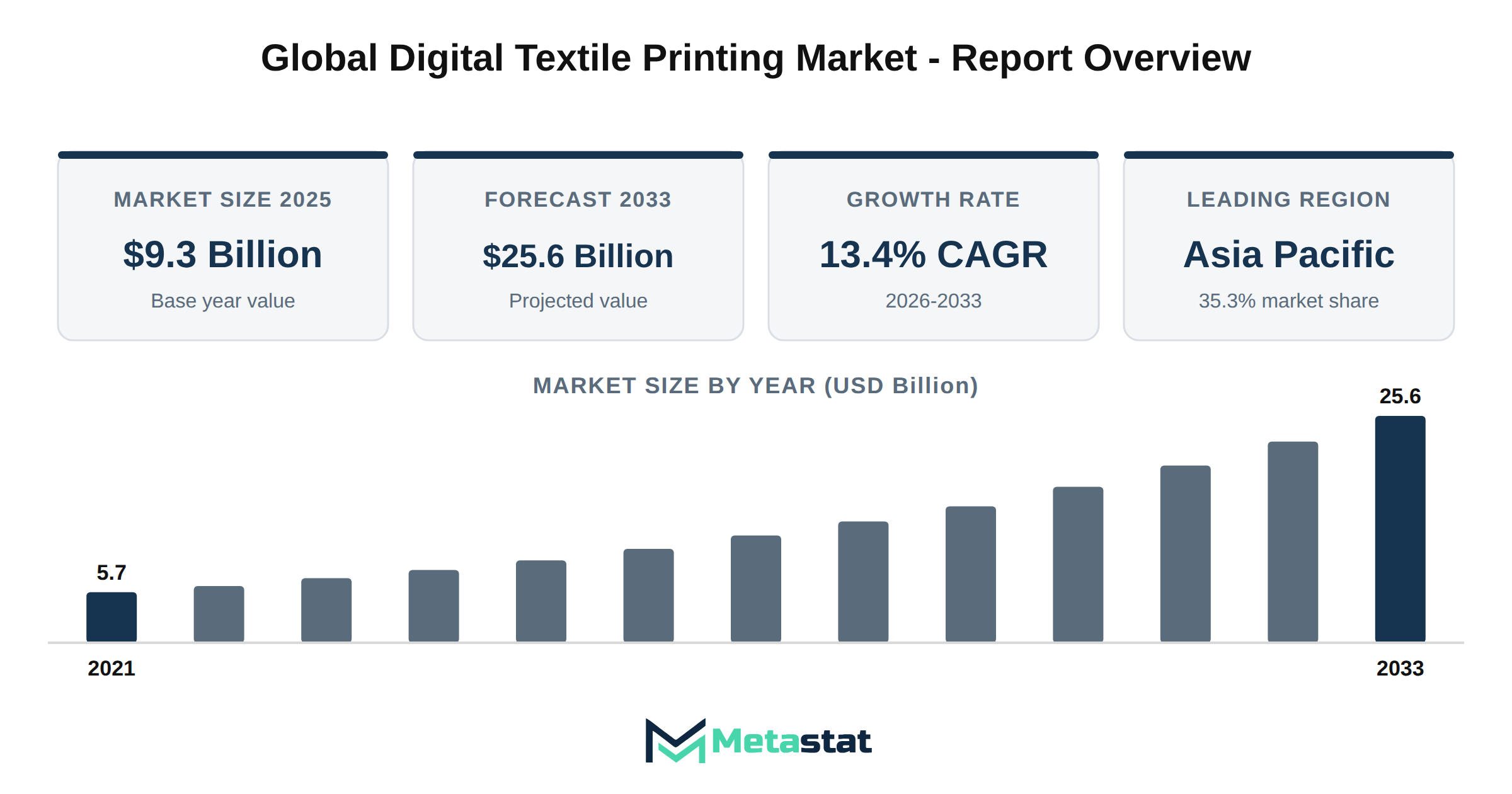
The Digital Textile Printing market was valued at USD 9.3 billion in the base year of 2025. This figure represents significant growth from USD 5.7 billion in 2021, reflecting a compound annual growth rate (CAGR) of 13.4% through the forecast period ending in 2033. By 2033, the market is projected to reach USD 25.6 billion, indicating robust expansion driven by technological advancements and increased adoption across various sectors.
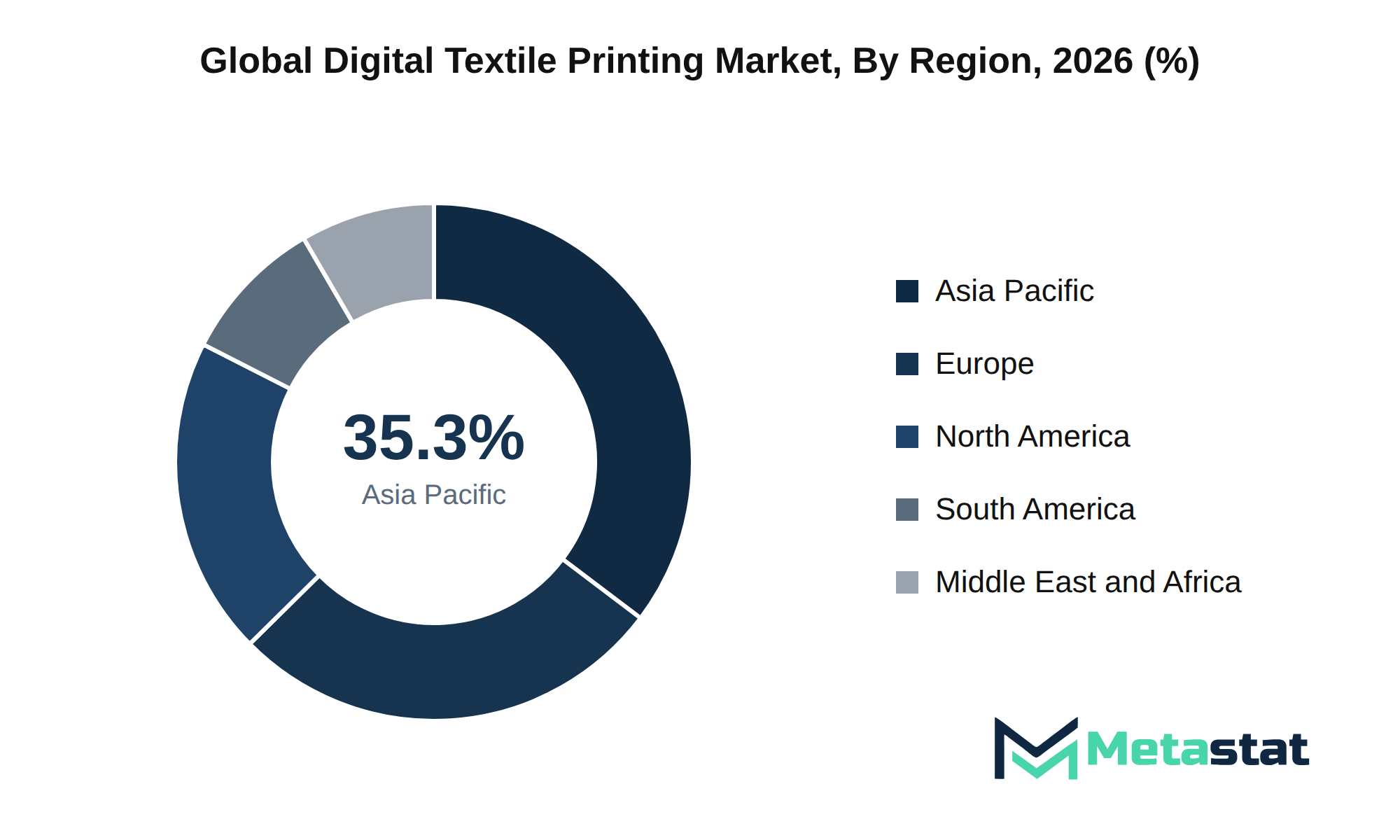
Geographically, the market demonstrates diverse regional dynamics. The Asia Pacific region commands the largest share at 35.3%, followed by Europe at 27.3% and North America at 19.9%. South America and the Middle East and Africa contribute 9.1% and 8.4% respectively. This distribution highlights the varying levels of market penetration and growth potential across different regions. North America is anticipated to reach USD 4.9 billion by 2033, exhibiting a CAGR of 13.4%.
Several factors contribute to the expanding market. Increased demand for customized textile products, driven by consumer preferences for personalization and rapid fashion cycles, fuels this growth. The rise of e-commerce and digital platforms enables manufacturers to reach a broader audience, enhancing the market's overall appeal. Advancements in printing technology, particularly in direct-to-fabric and dye-sublimation transfer methods, significantly enhance production efficiency and quality, supporting market expansion.
Investment in sustainable practices and eco-friendly materials reshapes the market. Manufacturers prioritize sustainable solutions to meet growing environmental regulations and consumer expectations. This shift towards sustainability drives innovation within the market, with companies developing new inks and substrates that reduce environmental impact. Such initiatives are expected to support market growth by attracting environmentally conscious consumers.
The regulatory landscape surrounding the Digital Textile Printing market continues to evolve, influencing operational practices across various regions. Compliance with standards, particularly those governing environmental impact and workplace safety, impacts production processes and costs. Regional risk frameworks necessitate adherence to these standards, shaping market dynamics and influencing investment decisions.
Disruption from technological advancements introduces new methodologies and materials into the market. Research and development trajectories focus on enhancing printing technologies, improving ink formulations, and developing sustainable substrates. Next-generation innovations drive efficiency and quality, creating an environment where companies adapt swiftly to changing consumer preferences.
Sustainable transformation remains a core focus, with decarbonization efforts and circular economy dynamics influencing production strategies. Manufacturers increasingly prioritize eco-friendly practices, minimizing waste and recycling materials. This commitment enhances brand reputation and aligns with consumer demand for sustainable products.
The supply chain landscape reflects a complex network of suppliers and distributors. Logistics architecture optimizes the movement of raw materials and finished products, enabling timely deliveries and reducing operational costs. Strategic sourcing decisions influence supplier selection, impacting overall market competitiveness.
Market fragmentation poses challenges and opportunities, with numerous players competing across segments. Merger and acquisition dynamics play a role in consolidating market share, allowing companies to expand their capabilities and enhance product offerings. This consolidation impacts the competitive landscape, requiring smaller firms to innovate to maintain relevance.
The value chain in the Digital Textile Printing market involves multiple stakeholders, from raw material suppliers to end-users. Effective procurement strategies support cost management and quality assurance, influencing overall profitability. Understanding customer journey dynamics enables firms to tailor offerings that meet specific consumer needs.
Significant capital allocation towards infrastructure investments enhances production capacity and technological capabilities. Companies increasingly focus on modernizing facilities to accommodate advanced printing techniques and improve operational efficiency. This strategic outlook positions firms competitively within the market.
Corporate imperatives drive strategic initiatives that align with consumer trends and regulatory demands. High-value recommendations emphasize the importance of adaptability, innovation, and sustainability to thrive in the evolving landscape of the Digital Textile Printing market.
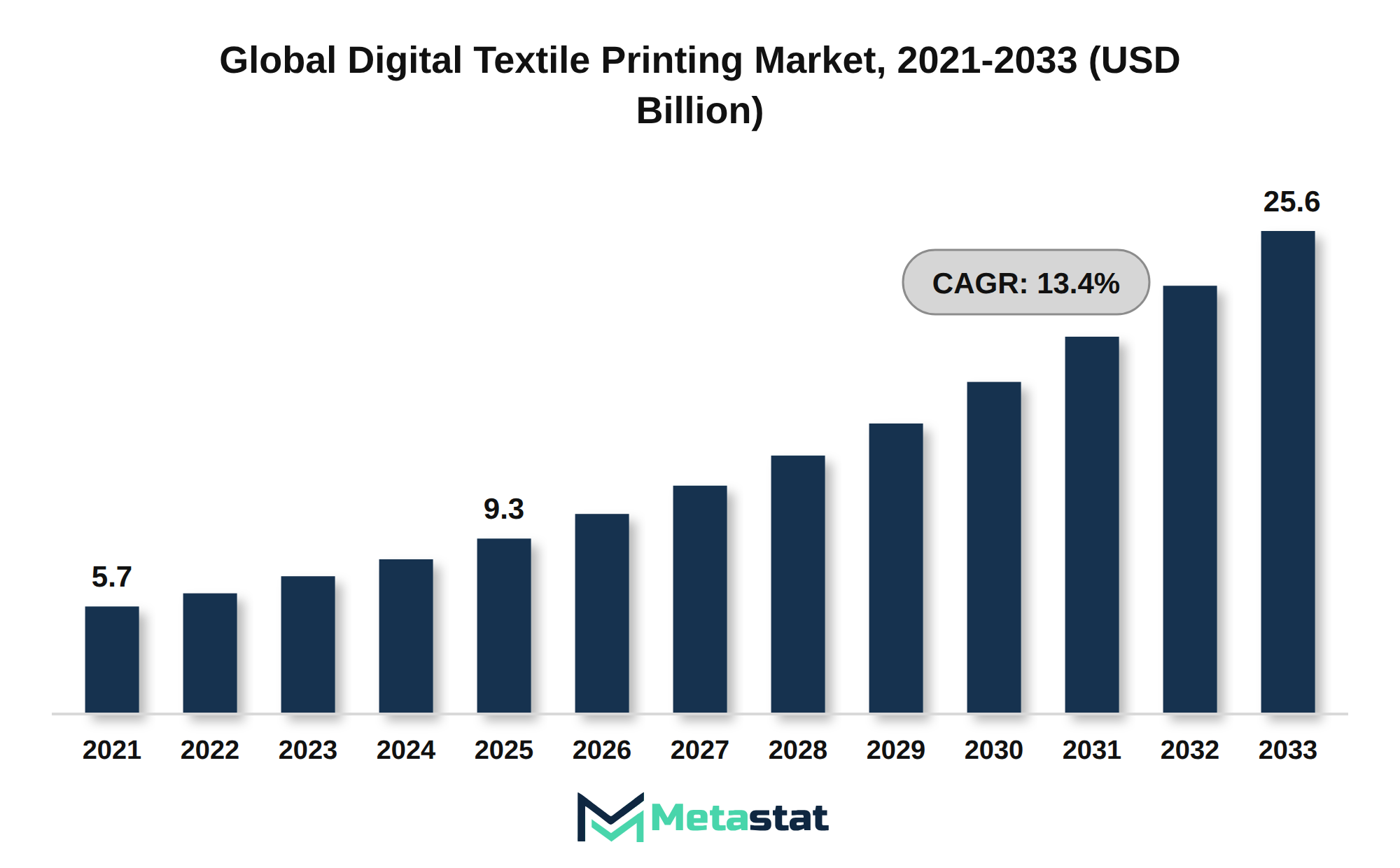
The Digital Textile Printing market experiences significant growth driven by macro-economic factors including GDP growth and capital investment environments. Increasing investments in technology and infrastructure contribute to enhanced production capabilities, positioning businesses to capitalize on evolving consumer preferences.
Digital transformation initiatives improve operational productivity and cost efficiency within the market. Companies adopting automation and advanced software solutions enhance production processes, leading to reduced operational overhead and improved margins. Investments in technological integration facilitate greater agility in responding to market demands.
Shifting demographic patterns and changing consumer behaviors fuel demand for digital textile printing solutions. A growing urban population and an increasing focus on sustainability drive businesses to adopt eco-friendly printing technologies. The market sees an uptick in consumer interest for custom and personalized products, creating new opportunities for manufacturers.
Strong emphasis on environmental, social, and governance (ESG) mandates influences production methodologies, pushing players towards sustainable practices. The market's focus on circular economy initiatives aligns with global trends in resource stewardship, promoting responsible production methods and reducing carbon footprints.
Overall, the convergence of these macro-economic factors significantly impacts the Digital Textile Printing market, creating an environment conducive to growth and innovation in the sector.
The Digital Textile Printing market experiences accelerated development driven by technological integration. Automation and artificial intelligence enhance production efficiencies, reducing labor costs while increasing output quality. The infusion of advanced software solutions streamlines operations, allowing businesses to digitize legacy processes effectively. Industry players invest in these technologies to improve competitive positioning and meet the growing demand for personalized and intricate designs.
Shifts in consumer behavior towards customized products fuel adoption of digital textile printing technologies. The ability to quickly respond to changing market trends and individual preferences positions companies favorably within the market. Operational productivity gains derived from technological advancements lead to cost-efficiency initiatives, enabling producers to optimize resources and reduce overhead costs. These factors contribute to a strong growth trajectory for the market, supported by a steady increase in capital investments.
Looking ahead, the integration of emerging technologies is expected to create new opportunities for innovation-led product and service diversification. Businesses that embrace these advancements will likely enhance revenue streams, further strengthening their presence in the Digital Textile Printing market. The ongoing evolution of technology within the sector lays the groundwork for sustainable and profitable growth, addressing the needs of an increasingly dynamic consumer base.
High capital investment requirements present a significant restraint for the Digital Textile Printing market. The advanced technology used in digital textile printing requires substantial upfront expenditure for equipment and machinery. Small and medium-sized enterprises struggle to secure the required funding, limiting their ability to compete effectively in the market. Consequently, this situation restricts market penetration for new entrants and reduces overall competition.
Operating costs remain another critical factor impacting profitability within the market. Ongoing maintenance and replacement of digital printing equipment incur additional financial burdens that deter investment. This issue is particularly pronounced for companies operating on thin margins, where managing costs becomes essential for sustainability. Inflationary pressures escalate, and rising operational costs challenge the financial viability of companies in the Digital Textile Printing market.
Supply chain disruptions exacerbate these issues by increasing lead times and costs for raw materials and components vital for production. Geopolitical instability leads to uncertainties in sourcing key materials, impacting the ability of businesses to maintain consistent production levels. Delays in the supply chain affect production timelines and undermine customer satisfaction, resulting in decreased demand within the market.
Technological obsolescence poses an additional risk for companies that fail to invest in the latest advancements. The rapid pace of innovation within digital textile printing requires firms to continually update their technology to remain competitive. Companies that do not adapt lose market share to those that leverage advanced technologies, further restricting growth opportunities.
High capital investment requirements, inflated operating costs, supply chain disruptions, and technological obsolescence limit the Digital Textile Printing market's growth potential. Addressing these challenges will be essential for companies seeking to enhance their competitive positioning and achieve sustained profitability.
The Digital Textile Printing market encounters significant challenges stemming from geopolitical fragmentation, leading to trade deficits and increased tariff friction among nations. Such fragmentation complicates the flow of materials and finished goods, ultimately affecting manufacturers' capabilities to meet demand efficiently. This situation results in prolonged delivery times and inflated costs for crucial inputs, which pressures profit margins across the market.
Technological disruptions present another challenge, requiring companies to integrate varying systems and processes. The complex nature of research and development (R&D) integrations hinders innovation, owing to interoperability friction among different digital printing technologies. This friction slows down the pace of advancements and makes it difficult to achieve economies of scale, impacting overall market competitiveness.
Volatility in feedstock and components further exacerbates challenges within the market. Fluctuations in material availability and pricing create uncertainty that complicates strategic planning for manufacturers. Logistics disruptions caused by global events lead to supply chain instability, making it harder to source necessary materials at predictable costs. Consequently, firms in the Digital Textile Printing market navigate these challenges to maintain operational efficiency and protect profitability.
Rising input costs and environmental sustainability demands contribute to pricing compression and margin pressures. Companies face increasing scrutiny regarding their environmental lifecycle footprints, prompting many to invest in sustainable practices that involve higher initial expenditures. Balancing these financial pressures while addressing evolving regulatory standards requires significant effort and resources from market players.
The challenge of workforce skill gaps complicates market dynamics. The rapid evolution of technology within the Digital Textile Printing market necessitates highly skilled talent, yet many organizations struggle to retain qualified personnel. Automation displacements create additional hurdles, because businesses seek to implement advanced technologies while ensuring their workforce remains engaged and capable of adapting to new operational paradigms.
The Digital Textile Printing market presents significant opportunities due to emerging regional demands, particularly in the Asia Pacific region, which holds the largest market share at 35.3 percent. This growth reflects a rising consumer preference for customized textile products across various applications, especially in fashion and apparel. Infrastructure modernization further supports demand, with advancements in printing technology enabling quicker, more efficient production processes.
Geographical expansion contributes to the market's potential, driven by manufacturers establishing operations in regions with rising textile sectors, including South America and Asia Pacific. These locations benefit from lower production costs and increasing export capabilities. Technological disruptions continue to reshape the market, with innovations including direct-to-garment and dye-sublimation printing technologies delivering higher quality outputs, enhancing operational efficiency, and meeting diverse consumer needs.
Digital transformation influences the market, with businesses adopting digital procurement approaches to streamline operations and respond to consumer trends rapidly. Next-generation innovations in ink formulations, including eco-friendly inks, align with sustainability imperatives, enhancing the market's appeal to environmentally conscious consumers. This shift towards sustainability has prompted companies to integrate greener practices into their production processes, meeting the increasing demand for eco-friendly products.
Strategic consolidation through cross-industry mergers expands market reach, allowing companies to diversify product offerings and explore niche applications. Evolving buying behaviors, driven by increased awareness of sustainability, push the market towards innovations that align with consumer values. Supply chain localization promotes resilience and efficiency, enabling companies to adapt to changing market conditions and consumer preferences.
Value-chain optimization efforts focus on maximizing operational yields, facilitating asset life-cycle extensions through regular maintenance and equipment upgrades. These strategies improve overall productivity and drive down costs, further enhancing the market's growth potential. The Digital Textile Printing market stands poised for expansion, supported by these multifaceted opportunities that cater to evolving consumer demands and technological advancements.
The Global Digital Textile Printing market is segmented based on Printing Technology, Ink Type, Substrate, and Application.
Valued at USD 7 billion in 2026, the Direct-to-Fabric segment is projected to reach USD 15.3 billion by 2033, demonstrating a CAGR of 11.9% during the forecast period. Rising demand for customized textiles fuels the expansion of this segment, driven by the growing trend of personalization across various industries, including fashion and home décor. Enhanced printing technologies have improved the quality and efficiency of direct-to-fabric processes, enabling manufacturers to deliver high-quality prints rapidly.
Continuous evolution of printing technology strengthens the segment’s capabilities, facilitating quicker turnaround times and reduced waste. This adaptability appeals to brands aiming to respond swiftly to market trends while maintaining environmental sustainability. Shifting consumer preferences towards unique and on-demand products compel manufacturers to adopt digital textile printing techniques, ensuring competitiveness in a rapidly changing environment.
The regulatory landscape influences the segment through environmental compliance mandates, pushing manufacturers to embrace eco-friendly inks and processes. Innovations in ink types, including sublimation and pigment inks, drive further development, catering to diverse fabric substrates and applications. With a focus on compliance and sustainability, the segment anticipates increased investments in state-of-the-art technology and sustainable practices, positioning itself for significant growth within the Digital Textile Printing market.
Dye-sublimation transfer technology is essential to the expansion of the Digital Textile Printing market, driven by increasing demand for high-quality prints in various applications. This segment is estimated to reach USD 4.9 billion by 2033, at a CAGR of 14.8% during the forecast period. Factors influencing this growth encompass advancements in printing technology, which enhance print quality and production efficiency, allowing manufacturers to meet the evolving needs of consumers and businesses.
Technological maturation in dye-sublimation transfer methods leads to higher resolution images and greater color accuracy, appealing to sectors including fashion, home textiles, and advertising. These advancements facilitate the creation of intricate designs and accurate colors, aligning with consumer preferences for personalized and unique products. The fashion and apparel industry, in particular, drives substantial demand within this segment, attributed to its increasing adoption of digital printing methods for custom designs and rapid prototyping.
Cost structures specific to the dye-sublimation transfer segment benefit from the decreasing prices of printing machines and inks, which enhances accessibility for smaller businesses and startups. This shift supports broader adoption across various sectors, including home textiles and interior décor. The market's alignment with sustainable practices, including reduced waste and energy consumption, further attracts environmentally conscious consumers and businesses.
Regulatory compliance standards and certifications affecting the dye-sublimation transfer segment promote environmental responsibility, creating strategic opportunity windows for manufacturers who prioritize eco-friendly practices. The resilience of the supply chain for raw materials essential to this technology ensures a steady flow of resources, minimizing risks associated with production disruptions. The ongoing evolution of dye-sublimation transfer technology signifies a strong future for this segment within the overall Digital Textile Printing market.
Growth in the Direct-to-Garment (DTG) segment is driven by increasing demand for customized apparel and rapid production capabilities. Retailers and brands seek efficient solutions for small-batch productions, allowing them to respond swiftly to consumer preferences. This segment is projected to reach USD 3.6 billion by 2033, reflecting its expanding role within the Digital Textile Printing market.
Technological advancements enable innovations in printing techniques, enhancing quality and operational efficiency. The maturation of these technologies allows manufacturers to produce high-quality prints with complex designs, appealing to fashion-forward consumers. Strategic investments in next-generation upgrades significantly enhance competitive positioning, improving product offerings that align with evolving market demands.
Adoption of DTG printing is evident across various applications, including fashion and apparel, where personalization trends reshape consumer behavior. Brands increasingly utilize DTG capabilities to offer unique designs, supporting direct-to-consumer models that enhance engagement and loyalty. This shift towards customized products directly influences growth dynamics within the market.
Cost structures remain a critical consideration for stakeholders, with pricing volatility affecting profitability. Efficient raw material sourcing and optimized production processes are vital for managing costs while maintaining output quality. The segment’s resilience is further strengthened by adaptability to changing consumer preferences and economic conditions.
Overall, the Direct-to-Garment (DTG) segment contributes significantly to the broader Digital Textile Printing market, driven by demand for versatility and rapid turnaround times in production. Continuous evaluation of market trends and consumer preferences will dictate strategies for future growth and investment opportunities.
Significant advancements in technology drive the growth of Single-Pass Digital Printing within the Digital Textile Printing market. This segment leverages high-speed production capabilities, enabling manufacturers to achieve quick turnaround times and customized outputs. Increasing demand for personalized textiles fuels innovation, prompting companies to invest in research and development for next-generation technologies. The segment is projected to grow at a CAGR of 17% during the forecast period, reflecting robust adoption across various applications.
Fashion and apparel sectors increasingly rely on Single-Pass Digital Printing due to its ability to produce intricate designs with reduced waste. This trend encourages brands to adopt sustainable practices while meeting consumer preferences for uniqueness. Enhanced color quality and resolution achieved through technological maturation further enhance the appeal of this printing method. Consequently, manufacturers experience improved operational efficiency and profit margins.
Regulatory compliance standards regarding environmental impact influence the adoption of Single-Pass Digital Printing. Stricter regulations prompt companies to seek eco-friendly inks and processes, aligning their operations with sustainability goals. This shift opens strategic opportunity windows for players investing in greener technologies, enabling them to capture a larger market share. Overall, the segment's growth contributes significantly to the expansion of the overall Digital Textile Printing market.
Recent advancements in Hybrid Digital Printing technology are transforming the digital textile printing landscape. This segment benefits from various factors, including increasing demand for customization in textile products from fashion and interior design industries. Enhanced efficiency in printing processes enables manufacturers to respond swiftly to market trends, creating high-quality prints on diverse substrates.
Market players drive innovation within this sub-segment by focusing on technological maturation and next-generation upgrades. Enhanced printing capabilities reduce turnaround times while maintaining quality, leading to greater customer satisfaction. End-use dynamics, particularly the growing preference for sustainable and eco-friendly materials, influence the evolution of Hybrid Digital Printing technologies.
Consumption shifts towards short-run production align with market demands for quick delivery and personalized products. Regulatory compliance standards surrounding sustainable practices support the adoption of Hybrid Digital Printing solutions. Manufacturers invest in capital to enhance their capabilities and meet these emerging requirements.
Pressure on cost structures challenges operators within this segment. Fluctuations in raw material prices impact overall profitability, necessitating strategic management of supply chain resilience. Market participants seek to mitigate risks associated with substitution and disruptive alternatives by diversifying raw material sources and enhancing their technological offerings.
Innovation within the Other Digital Printing Technologies segment enhances market dynamics, driven by demand for customization and efficiency. Advancements in technology support adoption across various applications, including fashion, home textiles, and industrial applications. Increased consumer preferences for personalized products prompt manufacturers to explore alternative printing methods, contributing to segment expansion. The integration of digital technologies into traditional printing processes accelerates production capabilities and reduces lead times, which are vital for meeting market demands.
Competitive pressure influences investment in new technologies, leading to the emergence of next-generation printing solutions. These innovations address evolving consumer preferences, enabling brands to offer unique products that cater to diverse market segments. Regulatory compliance standards around sustainability and waste reduction encourage the development of eco-friendly printing methods, aligning with global trends toward environmental responsibility. A heightened focus on quality and reliability in printing processes drives manufacturers to invest in advanced technologies, facilitating future growth.
Supply chain resilience impacts the segment's performance, with raw material sourcing and logistics vulnerabilities affecting production timelines. Strategic opportunity windows arise from the increasing demand for short-run production and quick turnaround times. Disruptive alternatives, including hybrid printing technologies, challenge traditional methodologies, compelling industry players to adapt swiftly to maintain competitiveness. Continuous technological maturation and the exploration of white-space opportunities enhance the market, improving overall performance within the Digital Textile Printing market.
Sublimation/Dye-Sublimation Inks exhibit significant market potential, valued at USD 5.4 billion in 2026 and projected to reach USD 14 billion by 2033, at a CAGR of 14.4% during the forecast period. The demand for sublimation inks primarily originates from their ability to produce rich colors and high-quality prints on various substrates, making them ideal for applications in fashion, home textiles, and promotional products.
Adoption of sublimation inks is driven by technological advancements, which enhance print quality and speed. The market experiences growth from the increasing popularity of personalized and custom textile products, leading to a shift in consumer preferences towards unique designs. Industries including fashion and apparel leverage these inks for their ability to deliver intricate designs with minimal waste, optimizing production efficiency.
Technological maturation in ink formulation and printing processes facilitates the expansion of this segment. Innovations in dye-sublimation technology improve color stability, durability, and environmental compliance, further attracting investments from manufacturers. Regulatory compliance concerning environmental sustainability supports the transition towards eco-friendly inks, promoting broader acceptance across various sectors.
Cost structures and pricing volatility play crucial roles in shaping the competitive landscape. Suppliers focus on optimizing raw material sourcing to mitigate margin pressures and enhance profitability. Strategic opportunity windows arise due to the market experiencing a surge in demand for versatile and cost-effective printing solutions.
Market dynamics indicate a steady transition towards advanced sublimation inks, with potential for substantial growth in the coming years. Continuous product evolution and the integration of next-generation technologies will likely enhance applications and expand consumer bases within the Digital Textile Printing market.
Increasing adoption of pigment inks within the Digital Textile Printing market stems from their versatility and ability to produce rich colors on various substrates. Manufacturers apply these inks to achieve a wide range of applications, including fashion, home textiles, and soft signage, contributing to their growing popularity. Environmental considerations drive demand for pigment inks, attributed to these products often containing fewer hazardous substances compared to traditional dye-based inks, appealing to eco-conscious consumers and brands.
The Pigment Inks segment is estimated to reach USD 4.9 billion by 2033, at a CAGR of 14% during the forecast period. This growth reflects the increasing shift towards sustainable printing solutions, with pigment inks offering better durability and wash resistance, which enhances their appeal in the competitive landscape. Advancements in pigment ink formulations and printing technology enhance overall print quality, enabling faster drying times and higher production efficiency for manufacturers.
Market expansion hinges on the development of new pigment ink technologies that improve color gamut and adhesion properties. Strategic investments in R&D from key players further facilitate this evolution, resulting in innovative products that meet diverse customer needs. Demand dynamics indicate a noticeable shift towards customization and personalization in textile printing, driving the need for efficient and effective pigment ink solutions within the market.
Technological maturation of reactive inks aligns with increasing demand for high-quality prints in the Digital Textile Printing market. Industries including fashion and home textiles prioritize rich colors and durability, driving manufacturers to innovate with advanced formulations. This segment incorporates next-generation upgrades, enhancing performance through improved color fastness and eco-friendly attributes.
Rapid adoption of reactive inks supports segment growth, particularly in applications requiring intricate designs and patterns. The need for versatility in textile applications promotes ongoing development, with manufacturers focusing on product evolution to meet diverse customer preferences. The segment is expected to reach USD 3.8 billion by 2033, reflecting the importance of high-performance inks in various end-use dynamics.
Market players emphasize compliance with regulatory standards and certifications, ensuring products align with sustainability goals. This focus on eco-conscious production practices influences consumption shifts, driven by consumers increasingly favoring environmentally friendly options. Consequently, the market experiences heightened demand from brands prioritizing sustainable textiles.
Cost structures and pricing volatility impact the segment, with fluctuations in raw material sourcing affecting profit margins. Strategic investments in supply chain resilience become essential to mitigate risks associated with sourcing and logistics vulnerabilities. Overall, the projected growth of the reactive inks segment highlights its vital role in the evolving market of Digital Textile Printing.
Growth in the Disperse Inks segment reflects increasing demand for rich colors and excellent print quality, particularly in applications including fashion and home textiles. The expanding capabilities of disperse inks contribute to a diversified product offering, catering to various substrates including polyester, which enhances their appeal among manufacturers. Adoption of these inks aligns with trends in sustainability, driven by their requirement for less water and energy during application compared to traditional methods.
The segment is projected to grow at a CAGR of 9.8% during the forecast period, supported by technological maturation and continuous product evolution. Emerging innovations in dye chemistry improve color fastness and compatibility with digital printing systems. This facilitates wider application in technical textiles and soft signage. End-use dynamics indicate a substantial shift towards digital solutions that prioritize efficiency and flexibility, enhancing the market’s competitive position.
Regulatory compliance standards increasingly emphasize eco-friendly practices, propelling manufacturers to adopt disperse inks that meet stringent environmental requirements. This shift influences cost structures, where investments in advanced technologies lead to enhanced profit margins. The market's overall growth trajectory supports strategic opportunity windows for players looking to capture market share through sustainable product offerings.
Acid inks represent a significant component within the Digital Textile Printing market, specifically catering to applications that require rich colors and superior print quality. The demand for these inks stems from various end-user sectors, including fashion, home textiles, and industrial applications, where color fidelity and durability are essential.
Adoption of acid inks is driven by their compatibility with synthetic fibers, particularly nylon and silk, which are increasingly popular among textile manufacturers. This compatibility enhances the product's appeal in high-end fashion and décor, where the need for complex designs and vivid colors prevails.
Segment expansion catalysts include technological advancements that improve the performance and efficiency of acid inks. Innovation within this area focuses on achieving faster drying times and better wash fastness, which are critical for meeting the rigorous standards of quality demanded by consumers.
Downstream application dynamics reflect a shift in consumer preferences toward sustainable and eco-friendly printing solutions. Manufacturers invest in acid inks that offer a lower environmental impact compared to traditional inks, aligning with regulatory compliance standards increasingly imposed by various markets.
Pricing volatility and margin pressures specific to this sub-segment pose challenges for manufacturers. Fluctuations in raw material costs impact the overall pricing strategy, requiring firms to adopt agile supply chain practices to maintain competitiveness.
The strategic opportunity windows within the acid inks segment emerge from heightened consumer awareness regarding sustainable practices, prompting manufacturers to innovate and adapt formulations accordingly. This evolution in consumer demand presents avenues for capital investment, aimed at enhancing production capabilities and expanding market reach.
Demand for Other Textile Inks arises from unique requirements across various applications within the Digital Textile Printing market. The growth trajectory of this segment aligns with the increasing customization trends observed in textile design and production, particularly in niche markets that require specialized ink formulations. End-users in the fashion, home textiles, and industrial applications express a need for inks that maintain strong colors and durability while minimizing environmental impact. This demand drives innovation toward more sustainable and efficient ink technologies.
Technological maturation plays a critical role in the segment's expansion. Advancements in ink formulation and printing technologies enhance the performance of these inks, facilitating better adhesion and faster drying times. The industry's shift toward digital processes results in increased adoption of eco-friendly inks, which contribute to sustainability goals. This evolution correlates with consumer preferences for environmentally responsible products, prompting manufacturers to invest in research and development.
Consumption shifts within the Digital Textile Printing market indicate a growing emphasis on customization and short-run productions, influencing the demand for Other Textile Inks. Brands and manufacturers increasingly seek to differentiate their offerings, leading to a higher requirement for versatile inks that cater to diverse materials and printing techniques. This shift supports market resilience and encourages continuous innovation, positioning Other Textile Inks because a crucial component in meeting evolving consumer expectations.
Regulatory compliance standards significantly impact the market landscape, prompting ink manufacturers to align their products with environmental regulations. Adhering to these standards ensures that inks are safe for both consumers and the environment. This alignment not only mitigates risks associated with compliance but enhances brand reputation among environmentally conscious consumers.
Strategic opportunity windows emerge because manufacturers assess the potential for growth within the Other Textile Inks segment. Investment in new product lines and technology upgrades aligns with market demands, positioning companies to capitalize on evolving trends. The focus on developing innovative ink solutions creates opportunities for capturing market share and enhancing profitability in the Digital Textile Printing market.
Projected growth within the Digital Textile Printing market highlights the significance of the polyester substrate. This segment is valued at USD 3 billion in 2026 and is projected to reach USD 7.9 billion by 2033, at a CAGR of 14.9% during the forecast period. Increased demand for polyester arises from its versatility and cost-effectiveness, making it a preferred choice for various applications, including fashion, home textiles, and technical textiles.
The adoption of polyester is supported by its compatibility with different digital printing technologies. Advancements in these technologies enhance the quality and efficiency of polyester printing, driving market expansion. The lightweight nature and durability of polyester contribute to its growing acceptance in the market, particularly in sectors requiring high-performance textiles.
Shifting consumer preferences towards sustainable and innovative textile products further drive the polyester segment's growth. Manufacturers increasingly focus on developing eco-friendly polyester options, aligning with global sustainability trends. This focus builds brand loyalty and opens avenues for new market entrants committed to sustainable practices.
Pricing dynamics within the polyester segment reflect fluctuations in raw material costs, impacting overall margins. The segment's robust demand trajectory continues to attract investment, particularly in research and development for next-generation polyester fabrics. The expansion of this segment aligns with broader trends in the Digital Textile Printing market, emphasizing technological enhancement and consumer-driven innovation.
Cotton continues to establish itself because a key substrate within the Digital Textile Printing market, driven by increasing demand for sustainable and eco-friendly materials. Consumers increasingly prefer natural fibers, enhancing cotton's appeal across various applications. This trend aligns with the broader movement towards sustainable fashion and environmentally conscious production processes.
While the cotton segment is estimated to reach USD 12.5 billion by 2033, at a CAGR of 12.5% during the forecast period, advancements in printing technology support this growth. Consumers demand high-quality prints on cotton fabrics, propelling innovations in digital textile printing techniques. Enhanced printing capabilities on cotton substrates facilitate rich colors and intricate designs, attracting both manufacturers and end-users.
End-use dynamics play a significant role in the cotton segment's expansion. The fashion and apparel sector increasingly adopts cotton for its natural properties and comfort, driving up demand. Home textiles and interior décor applications capitalize on cotton's aesthetic and functional attributes, contributing to its growth within the market.
Emerging consumption shifts emphasize the importance of organic and sustainably sourced cotton. Regulatory compliance standards regarding environmental impact influence producers to adopt more sustainable practices, increasing the overall market presence of cotton-based textile printing. Consequently, the segment faces an opportunity window for growth because brands seek to align with consumer expectations for responsible sourcing.
Cost structures for cotton printing continue to evolve, with producers seeking to balance quality and pricing to remain competitive. Despite fluctuations in raw material prices, cotton's resilient supply chain supports steady availability for digital printing applications. Investment in next-gen upgrades and technology enhances production efficiency and quality, further reinforcing cotton's position in the digital textile printing market.
Projected to reach USD 1.5 billion by 2033, the Viscose/Rayon sub-segment benefits from several demand drivers, including an increasing focus on sustainable textiles and consumer preferences for breathable materials. Adoption of Viscose/Rayon because a substrate arises from its versatility in applications ranging from fashion to home textiles, where it provides a soft and luxurious feel. The segment's expansion is fueled by advancements in digital printing technologies, enabling high-quality designs and efficient production processes.
Technological maturation within this segment enhances product offerings, with next-gen upgrades focusing on improving printing techniques that deliver rich colors and intricate patterns on Viscose/Rayon fabrics. Downstream application dynamics reflect a shift towards customized and on-demand textile solutions, responding to the evolving preferences of end-users in the fashion and interior décor markets. Consumption shifts towards eco-friendly materials further support growth, because brands increasingly prioritize sustainable sourcing in their product lines.
Regulatory compliance standards and certifications play a significant role in shaping market dynamics, influencing the sourcing of raw materials and production practices across the industry. Cost structures within the segment remain stable due to the availability of Viscose and Rayon fibers, although fluctuations in raw material pricing introduce margin pressures. Supply chain resilience enhances operational efficiency, enabling manufacturers to respond promptly to changes in demand.
Strategic opportunities within the Viscose/Rayon segment emerge from the growing interest in innovative designs and sustainable production methods. Capital investment outlook remains positive, with stakeholders focusing on expanding production capabilities and enhancing technological infrastructure. The Digital Textile Printing market shows strong potential for growth, driven by the unique attributes of Viscose/Rayon substrates and their compatibility with digital printing methods.
Growing interest in blended fabrics, driven by their versatility, impacts the Digital Textile Printing market positively. Blends, combining different fiber types, offer improved performance characteristics including increased durability and enhanced aesthetics, appealing to various sectors. This segment is projected to grow at a CAGR of 13.8% during the forecast period, reflecting strong demand for innovative textile solutions.
Increased adoption of blended textiles across applications like fashion and home décor highlights changing consumer preferences. The flexibility of blends allows for unique design opportunities while maintaining functionality, catering to the evolving needs of modern consumers. Manufacturers focusing on sustainability and product evolution find blends represent an area of significant opportunity within the market.
The market's upward trajectory is further supported by technological advancements in printing techniques, enabling higher quality prints on blended substrates. This evolution enhances the production capabilities of manufacturers, creating competitive advantages in customization and short-run printing. Investments in technology and innovation are expected to facilitate further growth in the blends segment.
Emerging trends in the Digital Textile Printing market indicate rising demand for Nylon/Polyamide substrates, driven by their versatility and performance in various applications. These materials exhibit excellent properties including strength, flexibility, and resistance to abrasion, making them ideal for fashion, technical textiles, and industrial applications.
Adoption of Nylon/Polyamide substrates aligns with consumer preferences for lightweight and durable textiles, particularly in high-performance apparel. This segment experiences expansion due to a shift towards sustainable practices, prompting manufacturers to explore eco-friendly production methods while maintaining the desirable attributes of Nylon/Polyamide.
Technological maturation enhances the performance characteristics of Nylon/Polyamide, facilitating innovations that improve dye uptake and color vibrancy during printing processes. Increased investment in research and development drives next-generation upgrades, ensuring that these substrates remain competitive within the evolving market.
Downstream applications for Nylon/Polyamide extend beyond apparel to include home textiles and industrial uses, further broadening the market's appeal. Regulatory compliance standards increasingly influence production processes, because manufacturers seek certifications that align with environmentally friendly practices.
The market experiences fluctuations in cost structures tied to raw material sourcing for Nylon/Polyamide, affecting pricing volatility. Supply chain resilience remains critical, with sourcing strategies adapting to mitigate risks associated with logistics vulnerabilities and disruptive alternatives.
Strategic opportunity windows emerge because brands recognize the potential of Nylon/Polyamide in addressing niche markets, reinforcing the importance of innovation and product evolution within the Digital Textile Printing market. Capital investment outlook remains robust, with stakeholders committing resources to maximize growth in this promising segment.
Silk serves because a luxurious substrate within the Digital Textile Printing market, appealing to high-end fashion and interior decor sectors. Increasing consumer preference for sustainable and natural materials fuels demand for silk, particularly among environmentally conscious brands seeking to differentiate their offerings. Technological advancements in digital printing methods enhance the versatility of silk, allowing for intricate designs and vivid colors, which further attracts designers aiming for unique textile solutions.
The evolution of silk printing aligns with trends in personalized fashion and home textiles, driving collaborations between textile manufacturers and designers. This collaboration drives innovation and expands the application of silk in various end-use dynamics, including home textiles, apparel, and luxury items. Consistent shifts in consumer consumption patterns toward bespoke and artisanal products raise silk's status, strengthening its position in the market.
Regulatory compliance standards focusing on sustainable sourcing and production processes increasingly influence silk supply chains. Manufacturers invest in certifications to assure compliance with these standards, enhancing product credibility and consumer trust. Strategic opportunities arise from the necessity for sustainable practices, prompting investments in raw material sourcing and supply chain resilience.
Pricing volatility persists due to fluctuations in raw material costs and production expenses. Producers navigate these challenges by optimizing operations and leveraging technological advancements to mitigate margin pressures. The resulting efficiency improvements enable manufacturers to maintain competitive pricing while ensuring consistent quality, supporting growth prospects for the silk segment within the Digital Textile Printing market.
Interest in linen because a substrate for digital textile printing derives from its natural properties and environmental benefits. Its biodegradability contributes to a growing preference for sustainable options among consumers and manufacturers alike. The textile industry increasingly recognizes the appeal of linen in home textiles and fashion applications, where tactile quality and aesthetic value enhance product offerings.
Adoption rates for linen in the digital textile printing market reflect the fabric's ability to absorb rich colors, leading to high-quality print results. This characteristic attracts designers and brands seeking to innovate and differentiate their products. Advancements in printing technologies enable more efficient and effective application of inks onto linen substrates, enhancing overall production capabilities.
Shifts in consumer behavior favoring eco-friendly and sustainable materials significantly impact the growth of linen applications. Manufacturers respond to this trend by increasing production capacity and exploring next-generation upgrades for printing processes. These developments drive the market's expansion, attributed to increasing demand for sustainable textiles.
Cost structures associated with linen printing exhibit volatility, influenced by fluctuations in raw material sourcing and production costs. Strategic opportunity windows arise for manufacturers who ensure supply chain resilience while maintaining competitive pricing. This dynamic emphasizes the importance of operational efficiency and innovation in the digital textile printing market.
Regulatory compliance and certification standards promote the use of eco-friendly materials like linen in the textile industry. Manufacturers emphasizing compliance enhance brand reputation and market reach, aligning with consumer preferences. Strategic integration of linen within product lines presents manufacturers with avenues for growth and differentiation in an increasingly competitive environment.
Interest in the use of alternative substrates, including wool, hemp, jute, acrylic, and polypropylene, is rising within the Digital Textile Printing market. This shift aligns with growing consumer awareness regarding sustainability and eco-friendly practices, driving demand for materials that offer lower environmental impact. The versatility of these materials accommodates various applications, from fashion to interior décor, enhancing their attractiveness among producers.
Technological advancements play a critical role in facilitating the incorporation of these substrates into digital textile printing processes. Innovations in ink formulations and printing technologies enhance the printability of these materials, making them viable options for manufacturers. Evolving production capabilities enable producers to leverage new techniques to deliver high-quality prints on these diverse substrates.
Demand for wool, hemp, jute, acrylic, and polypropylene aligns with broader consumption shifts toward sustainable and natural materials. This trend reflects a significant change in consumer preferences, pushing brands to explore eco-friendly alternatives. By integrating these substrates into their product offerings, manufacturers meet the expectations of environmentally conscious consumers.
Investment in research and development for these materials indicates strategic opportunity windows for companies aiming to capture market share within the sustainable textile sector. Producers respond to shifting consumer dynamics, and the market landscape for digital textile printing adapts, positioning itself to accommodate the growing interest in sustainable textile solutions.
Growing interest in home textiles and interior décor drives demand for digital textile printing solutions. This segment is valued at USD 2 billion in 2026 and is projected to reach USD 5 billion by 2033, at a CAGR of 14.3% during the forecast period. A shift towards customization in home furnishings, coupled with a trend of personalization among consumers, increases adoption of digital printing technologies. Manufacturers leverage advanced printing technologies to meet consumer preferences for unique designs and eco-friendly materials.
Technological advancements enhance the capabilities of digital textile printing, allowing for rapid production and the ability to print complex patterns on various substrates. The combination of high-quality prints and reduced lead times aligns with growing consumer demand for faster delivery of customized products. Sustainability becomes a key consideration, leading to a transition towards water-based inks and environmentally friendly substrates, reflecting changing consumer values.
Regulatory compliance regarding environmental impacts pushes manufacturers to adopt more sustainable practices in textile production. These factors contribute to the expansion of the digital textile printing market, particularly within the home textiles and interior décor segment, reinforcing its relevance in contemporary consumer markets. Overall, the segment's growth aligns with broader trends in consumer behavior, technological advancement, and regulatory frameworks shaping the market.
Demand for innovative and fashionable clothing fuels growth in the Fashion and Apparel segment of the Digital Textile Printing market. The increasing focus on sustainability and eco-friendly practices influences major brands to adopt digital textile printing technologies, allowing for more efficient use of resources and reduced waste in production processes. Fashion trends that emphasize personalization lead to heightened interest in custom designs, driving manufacturers to invest in advanced digital printing solutions.
The Fashion and Apparel segment is projected to reach USD 13.5 billion by 2033, expanding at a CAGR of 13.1% during the forecast period. Integration of direct-to-garment (DTG) printing technologies enhances production capabilities, enabling faster turnaround times and adaptability to changing market demands. The evolution of dye-sublimation transfer techniques supports the creation of high-quality prints that appeal to consumers.
While competition intensifies, brands strategize to differentiate their offerings, leveraging digital textile printing to create unique and eye-catching designs. The market experiences an influx of players focusing on product innovation, sustaining momentum in the sub-segment. The combination of these factors shapes a strong growth trajectory, enhancing the market's attractiveness for investment and development.
Increasing utilization of digital printing technologies in advertising and promotional activities drives expansion in the Soft Signage and Display segment of the Digital Textile Printing market. The growing preference for visually dynamic and customizable displays, which enhance brand visibility, significantly influences demand. Key industries adopting these solutions include retail, events, and exhibitions, emphasizing high-quality and sustainable printing options.
The segment is projected to reach USD 3.7 billion by 2033. Technological advancements in printing equipment and ink formulations offer improved durability and color vibrancy, enhancing the competitive edge of printed materials. Adoption of eco-friendly inks and materials aligns with regulatory compliance standards, supporting market growth while addressing sustainability concerns.
Increased focus on personalization and rapid turnaround times in production further fuels demand within this application. Changes in consumer preferences toward versatile and visually appealing environments contribute to the expansion. The market demonstrates resilience amid challenges by leveraging advanced digital technologies, which facilitate efficient production and logistics management.
Increasing adoption of digital textile printing in the Technical and Industrial Textiles segment emerges from the need for customization and flexibility in production processes. Industries including automotive, aerospace, and healthcare demand high-performance textiles with specific functional properties. This trend aligns with a shift toward advanced manufacturing techniques that enhance productivity and reduce waste. The segment is projected to grow at a CAGR of 14.6% during the forecast period.
Technological advancements continue to drive innovation within the Digital Textile Printing market, with improvements in printing speed, resolution, and ink formulations contributing to enhanced product offerings. Producers invest in next-generation upgrades to remain competitive, leading to the development of more efficient and sustainable printing technologies. These advancements cater to the evolving requirements of end-users who seek high-quality printed textiles for technical applications.
Regulatory compliance standards play a crucial role in shaping the landscape for Technical and Industrial Textiles. Manufacturers face increasing pressure to meet environmental and safety certifications, influencing material selection and production processes. The market sees a growing emphasis on sustainable materials and processes that align with regulatory demands, resulting in enhanced operational efficiencies.
Investment in research and development remains vital for market players to capitalize on emerging opportunities. Strategic partnerships and collaborations within the supply chain enhance resource accessibility and support innovation. These collaborative efforts strengthen supply chain resilience and mitigate risks associated with raw material sourcing and logistics vulnerabilities.
Overall, robust demand for customized technical textiles fuels expansion within the market. The combination of technological maturation, increasing regulatory pressures, and strategic investment creates a dynamic environment, positioning the Technical and Industrial Textiles segment for significant growth in the coming years.
Consumer preferences for activewear significantly influence growth within the Sportswear and Athleisure sub-segment. Increasing demand for high-performance textiles, which offer moisture-wicking, breathability, and stretch, enhances adoption rates for digital printing technologies designed for this application. The convergence of fashion and functionality shapes product evolution, with brands focusing on innovative designs that appeal to health-conscious consumers.
Technological advancements in digital textile printing drive segment expansion. Enhanced capabilities, including custom printing and rapid prototyping, align with the evolving nature of the fashion industry. This responsiveness supports downstream applications, including personalized merchandise and limited-edition releases, further stimulating demand. The market experiences a shift towards sustainable practices, prompting brands to explore eco-friendly materials and processes that connect with environmentally conscious consumers.
Regulatory compliance and certifications play a crucial role in shaping industry standards, emphasizing quality and safety in textiles. Brands investing in compliance ensure consumer trust while differentiating themselves in a competitive landscape. Pricing volatility in raw materials necessitates resilience in supply chains, prompting manufacturers to seek reliable sourcing strategies that mitigate risks. This focus enhances operational efficiency and stability in production, ultimately benefiting the segment's growth potential.
While the market evolves, strategic opportunity windows emerge for companies to innovate and capture market share. Investment in research and development drives next-generation upgrades, allowing players to remain competitive by offering unique textile solutions tailored to consumer needs. Continuous shifts in consumption patterns highlight the importance of flexibility in production methods, enabling swift adaptations to market demands while maximizing profitability.
Increased focus on sustainable practices drives substantial interest in the Carpets and Rugs segment of the Digital Textile Printing market. Consumers prioritize eco-friendly products, leading manufacturers to adopt digital printing technologies that require fewer resources compared to traditional methods. This shift aligns with global trends emphasizing waste reduction and sustainable sourcing.
Advancements in printing technology enhance product quality and design flexibility, enabling the creation of intricate patterns and custom designs. Manufacturers apply these capabilities to meet evolving consumer preferences, resulting in increased market share within the home decor sector. Customization options attract consumers seeking unique flooring solutions, driving segment growth.
While the demand for carpets and rugs evolves, effective raw material sourcing becomes critical. Manufacturers explore diverse materials, including recycled fibers, to meet environmental standards and attract eco-conscious consumers. This focus on alternative materials impacts production strategies and positions the segment for future expansion.
Technological maturation in digital textile printing equipment enhances production efficiency and reduces lead times. Manufacturers invest in next-generation machinery, benefiting the segment with improved operational capabilities, enabling rapid response to market trends. This investment in innovation positions the market for sustained growth and increased competitiveness.
Overall, the Carpets and Rugs segment presents strategic opportunities for manufacturers committed to sustainability and innovation. The combination of consumer demand for customization, advancements in technology, and a push towards eco-friendly practices creates a favorable environment for growth within the Digital Textile Printing market.
Interest in the Other Textile Applications segment reflects the growing diversification of digital textile printing beyond traditional uses. This expansion results from increasing demand for unique customized products across various industries, including sportswear and event branding. Brands increasingly seek innovative ways to differentiate themselves, leading to a greater reliance on digital textile printing technologies for short-run production and personalized items.
Technological maturation influences this segment's evolution. Advancements in printing technologies enhance product quality and reduce turnaround times, enabling manufacturers to meet the needs of consumer markets. Adoption of digital printing in non-standard applications, including promotional items and specialty textiles, drives growth opportunities, highlighting the flexibility of digital methods compared to conventional processes.
Cost structures remain critical for producers within the Other Textile Applications segment. While initial investments in technology are substantial, operational efficiency achieved through digital processes often offsets these costs over time. Pricing volatility in raw materials impacts margins, necessitating strategic sourcing practices and effective supply chain management. Companies actively seek ways to mitigate risks associated with price fluctuations to maintain competitiveness while ensuring product quality.
Regulatory compliance standards shape the operational landscape, influencing material choices and production practices. Manufacturers increasingly prioritize sustainability and eco-friendly practices, driven by shifting consumer preferences towards environmentally responsible products. Certification programs focusing on sustainable textiles further enhance market opportunities, because they align with environmentally conscious consumers.
Strategic opportunity windows within this segment arise from ongoing technological advancements and evolving consumer preferences. Companies that invest in next-gen upgrades and innovative product development stand to capture significant market share. The continued evolution of digital textile printing technologies positions the market for growth, with the Other Textile Applications segment contributing meaningfully to overall industry expansion.
Based on geography, the Global Digital Textile Printing market is divided into North America, Europe, Asia-Pacific, South America, Middle East, and Africa.
The Digital Textile Printing market in North America benefits from a robust infrastructure and significant consumer demand for customized textile solutions. The presence of leading manufacturers and technology innovators in the United States, Canada, and Mexico supports the expansion of this market. The region's projected market size is expected to reach USD 4.9 billion by the end of 2033, reflecting a CAGR of 13.4% during the forecast period.
Factors contributing to market growth include increasing adoption of innovative printing technologies and rising demand for sustainable textiles. Consumer preferences for personalized home furnishings and fashionable apparel drive the need for advanced digital printing solutions. With a market share of 19.9% in 2025, North America significantly influences industry trends and developments.
Localized manufacturing densities and nearshoring initiatives enhance supply chain efficiency, allowing for rapid turnaround times and responsiveness to market shifts. The growing focus on sustainability drives manufacturers to prioritize environmentally friendly practices, further supporting the market. The Digital Textile Printing market in North America is poised for continued growth, driven by strategic investments and strong demand across various applications.
The European Digital Textile Printing market benefits from a strong emphasis on innovation and sustainability, which drives significant demand for advanced printing technologies. Countries including Germany, France, the UK, Italy, Spain, and Russia focus on integrating eco-friendly materials and processes in textile production. These nations prioritize sustainability in their manufacturing operations, thereby boosting the adoption of digital textile printing technologies.
The region's market landscape features a blend of mature and emerging segments, with a notable shift towards high-value applications including fashion and home textiles. The combination of technological advancements and shifting consumer preferences contributes to steady growth within the Digital Textile Printing market. Countries within Europe are expected to enhance their established infrastructure and skilled workforce to improve production capabilities and respond to evolving market demands.
Germany and Italy serve because frontrunners, owing to their strong industrial bases and emphasis on high-quality textile production. The presence of leading vendors and a robust supply chain network further strengthen the region's position in the global market. Meanwhile, ongoing investments in localized manufacturing and nearshoring initiatives enable firms to optimize production efficiency while meeting the needs of a diverse customer base.
Cross-border trade corridors and collaborations among European nations facilitate the exchange of innovative printing technologies and practices. These dynamics create a competitive environment, encouraging companies to adopt advanced solutions in response to rising consumer expectations. The Digital Textile Printing market reflects the region's commitment to innovation, sustainability, and quality, positioning Europe because a significant player in the global market.
Asia-Pacific represents a 35.3% share of the Digital Textile Printing market in 2025. The region benefits from a robust manufacturing base, particularly in countries including China, India, and Japan, which serve key players in the textile industry. High demand for customized and fashion-forward textile products stimulates growth and increases adoption of digital technologies.
Rapid infrastructure modernization across Asia-Pacific enhances accessibility to advanced printing technologies. Investment in local manufacturing facilities supports shorter lead times and improved supply chain efficiency. Emerging markets within Southeast Asia experience notable expansion, driven by foreign direct investment and an increasing middle-class population seeking quality textile products.
Cultural nuances influence B2B buying behaviors in the region, with local preferences driving product offerings in fashion and home textiles. Domestic market leaders like Japan and China actively invest in research and development to innovate their product lines, further enhancing their competitive advantage. The Digital Textile Printing market continues to expand due to traditional printing methods facing pressure from the rising trend of customization and quick turnaround times.
With an emphasis on sustainability and eco-friendly practices, manufacturers in Asia-Pacific integrate more efficient production methods to meet changing consumer demands. The presence of local suppliers enables a more responsive market that adapts to evolving trends in textile design and production. While strategic entry barriers diminish, several market participants are primed to capitalize on the region's growth potential.
The Digital Textile Printing market in South America shows robust potential, driven by the growing demand for personalized and innovative textile solutions. Brazil and Argentina lead the market, with local manufacturers increasingly adopting advanced digital printing technologies to enhance production capabilities. The region's focus on sustainability and eco-friendly practices aligns with global trends, encouraging brands to invest in digital textile printing that requires less water and energy compared to traditional methods.
Infrastructure modernization is essential for facilitating market growth, owing to improvements in logistics and distribution networks. Increased investments in localized manufacturing and nearshoring initiatives contribute to efficiency, reducing lead times and costs associated with cross-border trade. This trend enhances the competitive landscape, allowing South American players to capture a larger share of the global market.
Vendor consolidation trends emerge because key players strive for market dominance, resulting in partnerships and collaborations that strengthen supply chains. Cultural nuances impact B2B buying behaviors, with a growing preference for innovative designs and high-quality materials among consumers driving demand across various applications, including fashion and home textiles. The market is set to expand significantly, with a projected share of 9.1% of the global market in 2025.
The Digital Textile Printing market in the Middle East and Africa presents unique opportunities driven by rising consumer demand for customized textile products. Rapid urbanization in countries like Saudi Arabia and the UAE contributes to increased spending on fashion and home décor, creating a favorable environment for market growth. Emerging local manufacturers recognize the importance of adopting advanced printing technology to meet evolving consumer preferences.
Investment in infrastructure modernization plays a critical role in shaping market dynamics. The establishment of local production facilities enhances supply chain efficiency and reduces dependency on imports. Countries within this region are experiencing a shift towards localized manufacturing, which supports market accessibility and affordability of digital textile printing solutions.
Despite challenges, including varying regulatory frameworks across countries, the market benefits from a growing base of domestic market participants. These players focus on leveraging regional resources and optimizing production capabilities. South Africa, in particular, has displayed significant advancements in technology adoption, which supports increased market penetration.
Competition within the region intensifies, with local vendors consolidating their positions to capture emerging market segments. This consolidation facilitates resource sharing and improves overall operational efficiency, contributing to a robust competitive environment. The Digital Textile Printing market is projected to continue evolving, driven by strategic initiatives aimed at enhancing product offerings and expanding regional reach.
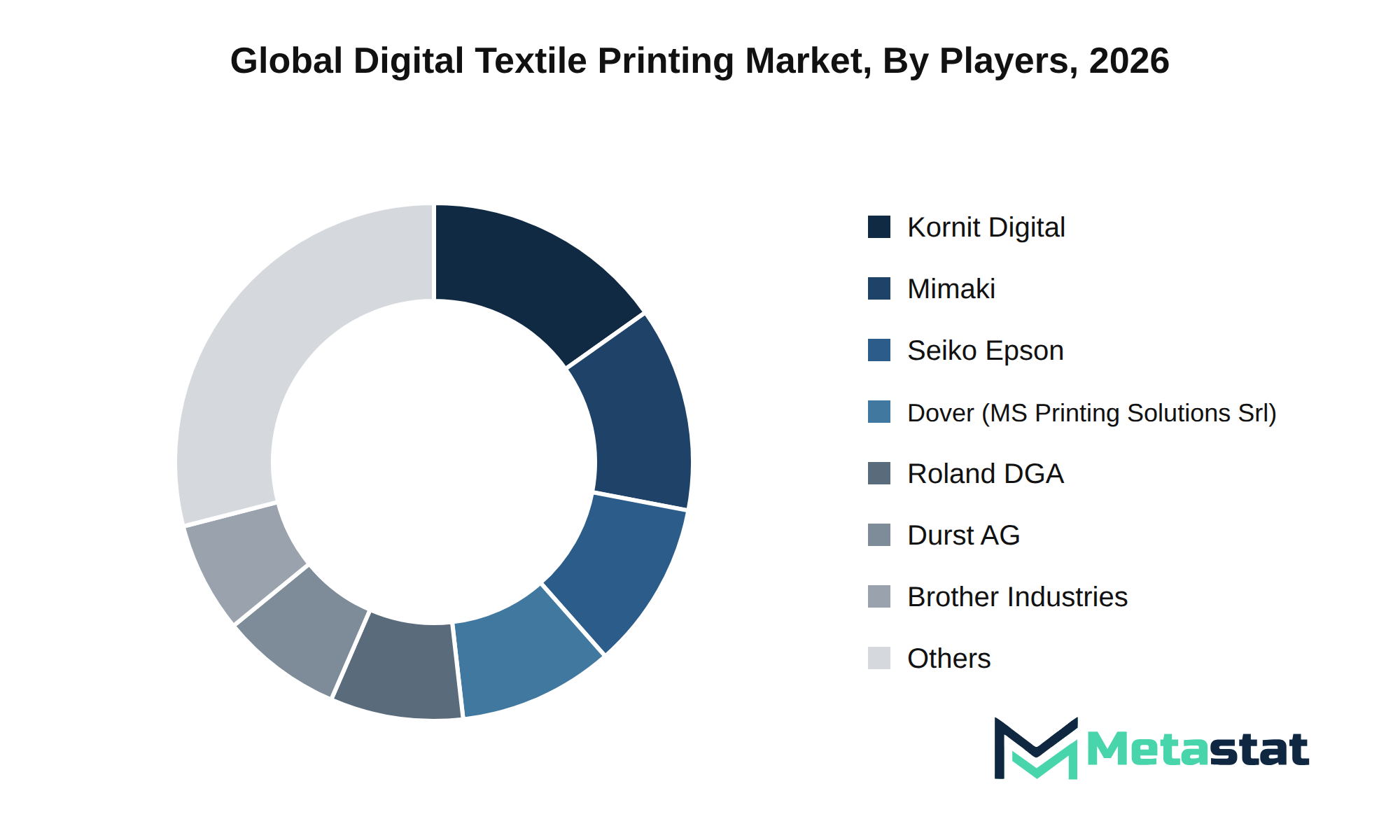
The Digital Textile Printing market features a diverse array of players competing across various dimensions including product differentiation, strategic alliances, and technological innovation. Firms like Louvolite, Mimaki, and Kornit Digital focus on enhancing their product offerings through proprietary technologies and research and development pipelines. This emphasis on innovation enhances their positioning within the competitive landscape, providing a competitive edge.
Strategic consolidation remains significant, with companies including SPGPrints and Dover Corporation pursuing mergers and partnerships to strengthen their market presence. These strategic moves aim to enhance supply chain dynamics and procurement leverage, allowing firms to optimize operational efficiencies. The establishment of joint ventures and alliances, particularly within the digital textile ecosystem, drives collaboration and resource sharing, supporting growth within the market.
Barriers to entry in the Digital Textile Printing market include established brand equity and customer retention strategies implemented by leading players like Seiko Epson Corporation and Durst Group AG. These firms leverage their strong market positions to create switching costs for customers, thereby reinforcing their market share. New entrants face challenges in overcoming the technological defensibility established by existing players through intellectual property portfolios and patent landscapes.
The competitive outlook for the market remains robust, with companies including HP Development Company, L.P. and Brother Industries, Ltd. continually exploring strategic growth vectors to capture emerging opportunities. Emphasis on sustainable practices and innovative applications positions these firms to address evolving market demands effectively and efficiently.
Market size is forecast to rise from USD 9.3 billion in 2025 to over USD 25.6 billion by 2033. The primary case outlines a growth trajectory at a 13.4% CAGR, reflecting strong market dynamics driven by technological advancements and evolving consumer preferences.
In a bullish scenario, robust adoption of next-generation technologies in digital textile printing, alongside increasing sustainability initiatives, will accelerate market penetration and expand applications across various sectors. Industries focusing on customization and rapid prototyping will experience heightened demand, further contributing to market expansion.
Conversely, a bearish outlook stems from potential regulatory challenges and geopolitical tensions that could disrupt supply chains and increase costs for manufacturers. Economic slowdowns in key markets could lead to subdued downstream demand, impacting growth rates in the digital textile printing market.
Strategic capital allocation and infrastructure commitments remain critical for players within the industry. Investment in R&D and adherence to regulatory compliance will shape the competitive landscape, influencing how companies position themselves for future growth. Identifying high-growth pockets and unmet enterprise needs will be essential for firms aiming to thrive in the evolving market environment.
The report strategically identifies and profiles the key market players and analyses their core competencies in each sub-segment of the Digital Textile Printing market.
Report Attributes | Details |
Study Period | 2021-2033 |
Base Year | 2025 |
Estimated Year | 2026 |
Forecast Period | 2026-2033 |
Historical Period | 2021-2025 |
Growth Rate | CAGR 13.4% from 2026 to 2033 |
Revenue Unit | USD billion |
Segmentation | By Printing Technology, Ink Type, Substrate, Application, and Region |
By Region | North America (By Printing Technology, Ink Type, Substrate, Application, and Country)
|
Europe (By Printing Technology, Ink Type, Substrate, Application, and Country)
| |
Asia Pacific (By Printing Technology, Ink Type, Substrate, Application, and Country)
| |
South America (By Printing Technology, Ink Type, Substrate, Application, and Country)
| |
Middle East and Africa (By Printing Technology, Ink Type, Substrate, Application, and Country)
|
Find answers to common questions about this report
The Digital Textile Printing market size was valued at USD 9.3 billion in 2025.
The Digital Textile Printing market is projected to grow at a CAGR of 13.4% during the forecast period from 2026 to 2033.
The North America Digital Textile Printing market size is estimated to reach USD 4.9 billion by 2033.
The Direct-to-Fabric segment leads the Digital Textile Printing market, with a projected value of USD 15.3 billion by 2033. This segment demonstrates significant growth potential, with a compound annual growth rate of 11.9 percent.
Key drivers for the Digital Textile Printing market include significant investments in technology and infrastructure, which enhance production capabilities. shifting consumer preferences towards customized and eco-friendly products further fuel demand, while technological advancements improve operational productivity and cost efficiency.
High capital investment requirements and inflated operating costs significantly restrain the Digital Textile Printing market's growth. Small and medium-sized enterprises face challenges in securing funding for advanced technology, while ongoing maintenance costs and supply chain disruptions further limit profitability and market competitiveness.
Increasing investments in technology and infrastructure enhance production capabilities, driving demand for digital textile printing solutions. shifting consumer preferences towards customized and eco-friendly products further support product adoption within the market.
The Digital Textile Printing market is estimated to reach a valuation of USD 25.6 billion by 2033.
Key players in the Digital Textile Printing market include Kornit Digital, Mimaki, Durst Group AG, Seiko Epson Corporation, Brother Industries, Ltd., and HP Development Company, L.P.
The Digital Textile Printing market is projected to grow at a CAGR of 13.4% from 2026 to 2033.
The analysts below cover Chemicals and Materials research at Metastat Insights.
LEAD ANALYST
Utkarsh Khirodkar is a Lead Market Research Analyst at MetaStat Insight, specializing in market intelligence, technology sector assessments, and competitive strategy.

INDUSTRY CONSULTANT - CHEMICALS & ADVANCED MATERIALS
Chemicals and Materials · Machinery & Equipment · Packaging
Amit Gadhekar Consultant for Chemicals and Materials at MetaStat Insight, directing sector-specific intelligence, research, and strategic consulting across global chemical and processing markets.
Analyzing the transition from natural gas to green hydrogen in iron ore reduction requires realistic infrastructure timelines. Meta stat insight supplied a detailed regional assessment of DRI plant conversion costs and scrap metal availability in North America and Western Europe. Their report carefully examined pellet quality specs and electrical grid access constraints without making oversimplified market assumptions. The research material served as a practical reference during internal technology roadmap discussions.
Integrating zero-trust access controls across legacy electronic health record systems involves complex compliance overhead. Team produced an analysis that clearly separated identity governance and administration tools from privileged access management platforms. Their evaluation of HIPAA and GDPR compliance features across cloud native solutions gave our architecture group clear baseline criteria. The custom data request regarding biometric authentication adoption in hospital networks was returned promptly with clear documentation.
Evaluating calorific value requirements and air permit compliance across municipal waste facilities requires localized data. Metastat Insight structured their analysis around operational throughput capacity and feedstock composition variations in Latin America and Eastern Europe. Their competitive mapping of sorting equipment vendors helped clarify technology differences between optical separators and heavy media systems. The study provided an objective baseline during our capital expenditure reviews.
Explore related market intelligence reports worth reading alongside this one.