
LEAD ANALYST
Utkarsh Khirodkar is a Lead Market Research Analyst at MetaStat Insight, specializing in market intelligence, technology sector assessments, and competitive strategy.

Global Leisure Travel Services Market Size, Share, By Service Type (Accommodation, Passenger Transportation, Food and Beverage, Attractions, Tours and Entertainment), By Traveller Type (Solo Travellers, Couples, Families with Children, Organised Leisure Groups), By Booking Channel (Direct Online, Online Travel Agencies and Marketplaces, Travel Agents and Tour Operators), By Destination Type (Domestic, International), Industry Analysis, Growth, Trends, and Forecast, 2026-2033
Report ID
MSI-5591
Published
October, 2026
Pages
304 Pages
Format
Historical
Base year
Forecast
Forecast period
Report Details
Market Valuation: Valued at $3,645.1 Billion in 2025, projected to reach $6,698.6 Billion by 2033 at a 7.9% CAGR.
Dominant Segment: The accommodation segment leads the market, projected to reach USD 2,285.6 billion by 2033, driven by increasing demand for diverse lodging options that cater to family and couple preferences.
Geographic Lead: North America is expected to dominate the market with a 27.2% share in 2025, bolstered by strong consumer demand and a growing inclination towards leisure travel experiences.
What's Inside: The report provides comprehensive coverage of service types, traveler segments, and booking channels, along with detailed analyses and forecasts from 2026 to 2033.
Emerging Trends: Bundled offerings, such as accommodation combined with theme park access, are gaining traction, significantly influencing family spending on short breaks.
Consumer Dynamics: A notable rise in spending among solo travelers is expected, reflecting a growing desire for personalized experiences and independent exploration.
Choose Your License
Global Leisure Travel Services Market
The global Leisure Travel Services market was valued at USD 3,645.1 billion in 2025 and is projected to reach USD 6,698.6 billion by 2033, growing at a CAGR of 7.9% over the forecast period.
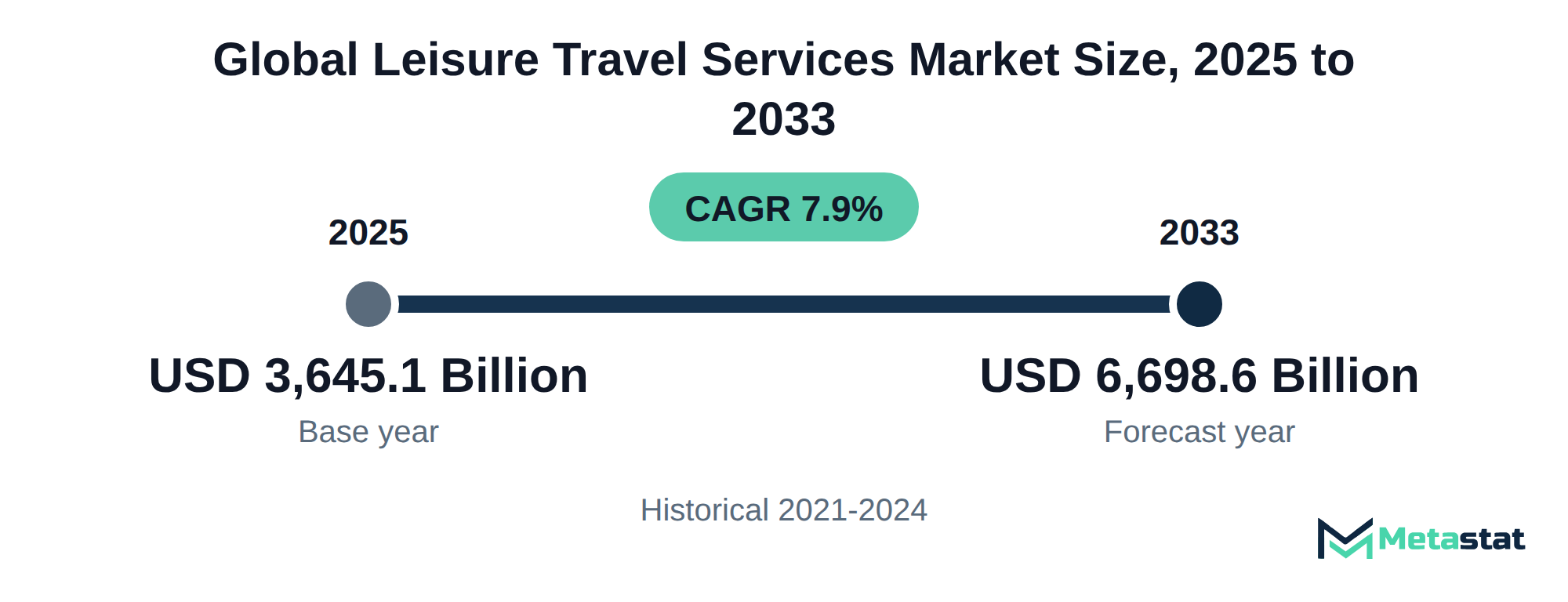
The Leisure Travel Services market covers offerings designed for leisure travelers, including accommodation, transportation, food and beverage, and attractions. Buyers invest in these services to enhance their travel experiences, driven by factors including convenience, exploration, and enjoyment. This market caters to various traveler segments, including solo travelers, couples, and families, each with distinct preferences and spending patterns.
Growth in the market is fueled by increasing disposable income and a growing inclination towards travel experiences. The accommodation segment represents the most significant value within the market, contributing substantially to overall revenue. North America holds 27.2% of the market in 2025, with the US leading in 2026. This regional share highlights strong demand for leisure travel services in North America, surpassing other regions including Europe and Asia Pacific, which hold shares of 32.9% and 29.7% respectively.
The rising trend of experiential travel drives consumers to seek unique and memorable experiences. This shift in consumer preferences encourages investments in diverse travel services, enhancing competition among providers. The market continues to evolve, reflecting changing travel habits and the growing importance of personalized experiences in leisure travel.
The Leisure Travel Services market encompasses various segments that cater to leisure travelers' interests and preferences. Buyers typically invest in these services to enhance their travel experiences, seeking comfort, convenience, and memorable activities during their journeys. The factors influencing spending include increasing disposable incomes, a growing desire for unique travel experiences, and the rising popularity of personalized travel packages, which fulfill the need for customized leisure options.
Growth within the market is driven by several factors, with a notable increase in demand for accommodation services, which represents the largest share of market value. The Asia Pacific region accounts for 29.7% of the market share. The emphasis on domestic tourism during recent years has fueled the market's expansion, reflecting changing consumer preferences and enhancing local travel opportunities.
The Leisure Travel Services market is set to benefit from the ongoing recovery of the travel sector following disruptions from global events. Continued investments in technology and infrastructure will further improve service delivery, optimizing the customer experience across various channels and platforms. Competition intensifies, prompting service providers to focus on innovation and strategic partnerships that diversify offerings for evolving consumer demands.
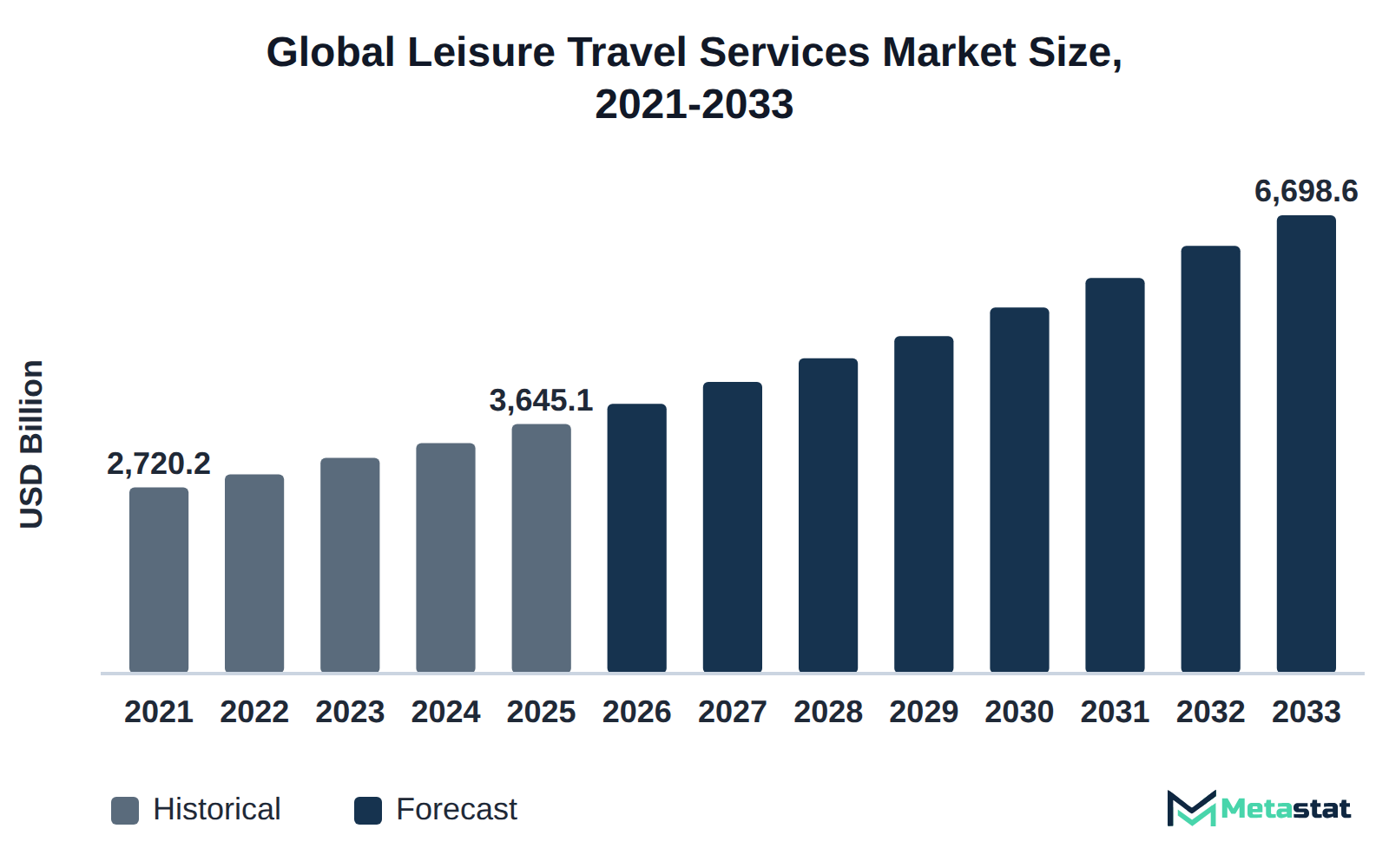
Bundles combining accommodation and theme park experiences have emerged as a prominent trend, significantly influencing family spending on short breaks. This development reflects the growing preference for packaged travel experiences, allowing families to enjoy leisure during their vacations. The Leisure Travel Services market is positioned to benefit from this trend, with families increasingly opting for packages that simplify planning and enhance overall enjoyment.
In 2026, the accommodation segment is expected to reach USD 1,365.3 billion, illustrating the financial potential associated with this shift. These bundles provide convenience and often include exclusive deals on theme park tickets, which further encourage families to book them. The integration of accommodation options with theme park access enhances the value proposition for families, making short breaks more attractive and financially viable.
This trend contributes positively to revenue growth in the market, as families allocate larger portions of their travel budgets toward such bundled offerings. The simultaneous appeal of theme parks and comfortable lodging encourages consumers to spend more during their vacations, driving growth in the market. The combination of accommodation and entertainment options aligns with evolving consumer preferences for convenience and quality, reinforcing the market's trajectory toward expansion.
Direct booking strategies significantly influence pricing models and distribution channels within the Leisure Travel Services market. The shift towards direct online bookings allows consumers to engage more personally with holiday parks and resorts, streamlining the purchasing process. In 2026, direct online booking is projected to generate USD 1.3 billion, increasing to USD 2.4 billion by 2033, reflecting a compound annual growth rate of 9.1 percent. This change in purchasing behavior reflects a growing preference for personalized travel experiences and flexibility in booking options.
Consumers increasingly seek transparent pricing, which direct booking platforms offer. By eliminating intermediaries, holiday parks and resorts enhance their pricing strategy, providing competitive rates that appeal to value-sensitive customers. This approach supports higher margins for providers and secures customer loyalty through perceived value. The result is a stronger distribution framework that promotes better financial outcomes for operators and enriches the consumer experience.
Cross-border drive tourism has become a significant factor in supporting consistent demand for leisure destinations throughout Europe. Travelers from nearby regions increasingly seek the convenience of drive trips to access attractions, accommodations, and cultural experiences. This trend aligns with the increasing value of the domestic segment, projected to grow from USD 2.99 billion in 2026 to USD 5.00 billion by 2033, reflecting a compound annual growth rate (CAGR) of 7.6 percent. Such growth indicates the strong preference for regional travel, particularly among families with children and couples who appreciate the flexibility of road trips. Car rental is one option for travelers planning such road trips.
European countries benefit from well-developed transport infrastructure, enabling efficient cross-border travel. The accessibility of popular tourist destinations encourages various buyers, including solo travelers and families, to explore multiple countries within a single trip. This preference leads to enhanced bookings in accommodation and passenger transportation services, contributing to the overall growth of the Leisure Travel Services market. With a projected value of USD 1.97 billion for passenger transportation by 2033, the industry is positioned for operational expansion driven by cross-border tourism.
Theme park holiday packages offer travelers a strong option compared with standalone tickets and hotel bookings. These packages typically offer significant cost savings and convenience, combining ticket access with accommodations and sometimes additional perks like meal plans and transportation. The Attractions, Tours and Entertainment segment exhibits a compound annual growth rate (CAGR) of 9.4%, reflecting strong interest in bundled experiences.
The Leisure Travel Services market shows a distinct trend toward integrated offerings, with consumers increasingly favoring packages that simplify trip planning. Ticket prices for popular theme parks reach substantial amounts, making the bundled deals attractive. Standalone purchases for theme park admissions do not usually include accommodations, leading to higher overall expenses for travelers. Instead, packaged deals offer a clearer, often lower total cost.
Travelers seeking a hassle-free experience prefer these comprehensive packages, allowing them to focus on enjoyment rather than logistics. The commercial consequence of this shift results in an increase in revenue for providers focusing on integrated holiday solutions. The market's growth trajectory reflects this preference, highlighting the potential for sustained demand for theme park holiday packages.
Recent trends indicate a significant rise in spending among solo travelers, driven by a growing desire for personalized experiences and independent exploration. This demographic shift stems from changing attitudes towards travel, with individuals seeking unique adventures and tailored itineraries that cater to their personal interests. The market shows that solo travelers are projected to increase from USD 0.573 billion in 2026 to USD 1.030 billion by 2033, reflecting a compound annual growth rate of 8.7 percent. This surge in spending positively influences the overall market, with higher demand anticipated across various service types, including accommodation and transportation. The preference for customized travel experiences among solo travelers enhances competition among service providers, encouraging innovation and diversification in offerings within the market.
Changing consumer preferences emphasize the importance of catering to solo travelers, presenting opportunities for growth in specific segments of the market.
Technological advancements significantly enhance the overall experience for leisure travelers, driven by increasing integration of smart technologies within the industry. Digital platforms improve customer engagement and streamline the booking process, enabling travelers to access tailored solutions. Innovations including mobile applications and virtual reality experiences transform how consumers plan and engage with their trips. The travel sector increasingly focuses on personalized offerings, powered by data analytics and artificial intelligence, which identify preferences and behaviors of travelers. This evolution in technology attracts various buyer groups, including families and couples, who seek convenience and customized experiences during their leisure time. Adoption of these technological solutions contributes to substantial revenue growth within the Leisure Travel Services market. Enhanced travel experiences build customer loyalty, resulting in repeat business and long-term growth for service providers. Investment in technology equips suppliers to meet evolving consumer expectations while remaining competitive in a dynamic market.
Increasing operational costs significantly impact the Leisure Travel Services market, particularly affecting operators reliant on transportation and accommodation services. Higher fuel prices and wage inflation directly translate to increased expenses for service providers, resulting in higher prices for end consumers. This scenario leads to slower uptake among families seeking affordable travel options, particularly in segments including domestic accommodation and passenger transportation. The resulting price sensitivity restricts discretionary spending, influencing travel frequency and overall market revenue. Operators facing these constraints prioritize cost-cutting measures that compromise service quality, further deterring potential customers. The financial burden of rising costs necessitates strategic adjustments, influencing investment decisions and altering competitive dynamics within the market.
Increasing competition within the Leisure Travel Services market creates substantial margin pressure for suppliers. Price sensitivity among consumers drives the need for competitive pricing, while rising operational expenses challenge profitability. Consequently, suppliers adopt strategies to streamline operations and enhance efficiency. Investments in technology and automation optimize service delivery, reducing costs while maintaining customer satisfaction. Suppliers explore partnerships to expand service offerings, aiming to attract diverse traveler segments while managing pricing pressures.
Implementing dynamic pricing models within revenue management enables suppliers to respond effectively to fluctuating demand, ensuring consistent revenue streams. Enhanced marketing efforts target specific traveler preferences, allowing providers to differentiate services and justify pricing structures. These measures help suppliers manage margin challenges while capturing growth opportunities within the market.
Solo travelers represent a growing segment within the Leisure Travel Services market, driven by increased interest in personalized experiences and self-exploration. This segment is projected to experience a compound annual growth rate (CAGR) of 8.7% from 2026 to 2033, reaching a market value of USD 1,029.6 billion by 2033. The rising number of individuals seeking independence during their journeys fuels demand for tailored accommodations and activities, emphasizing the importance of flexibility and unique offerings.
Travel providers are likely to respond with innovative packages that cater specifically to solo travelers, including guided tours and exclusive experiences that encourage social interactions. This focus on personalized service enhances customer satisfaction and encourages repeat bookings, strengthening loyalty within this segment. Solo travel continues to gain traction, and the market's adaptability and responsiveness to traveler preferences will shape future growth within the industry.
The Global Leisure Travel Services market is segmented based on Service Type, Traveller Type, Booking Channel, and Destination Type.
Accommodation segment is valued at USD 1,365.3 billion in 2026 and is projected to reach USD 2,285.6 billion by 2033, at a CAGR of 7.6% during the forecast period. This segment serves travelers seeking lodging options, from hotels to vacation rentals, catering to various preferences including luxury, budget, and unique experiences. A significant driver of growth stems from the increasing demand for diverse accommodation types, particularly from families and couples looking for tailored experiences. Compared to other segments like Passenger Transportation, which has a lower CAGR of 7.4%, accommodation benefits from a stronger growth trajectory, reflecting travelers' evolving preferences. The trend towards direct online bookings further enhances value, with consumers favoring platforms that provide competitive pricing and personalized options.
Passenger Transportation segment is estimated to reach USD 1,968 billion by 2033, at a CAGR of 7.4% during the forecast period. This segment is essential for facilitating travel for leisure seekers, including diverse categories of travelers who prioritize convenience and accessibility. Growth in this segment is influenced by increasing disposable incomes, which drive consumer spending on travel experiences. The growing popularity of ride-sharing and integrated transportation services enhances mobility options for travelers. Compared to other segments, Passenger Transportation exhibits a moderate growth rate, making it an important area of focus for operators. While Accommodation and Attractions attract higher growth rates, demand for effective transportation remains a fundamental aspect of the overall travel experience. The market adapts to changing consumer preferences, ensuring that transportation solutions remain relevant and competitive.
Food and Beverage segment is expected to reach USD 1,304.2 billion by 2033. This segment serves leisure travelers seeking culinary experiences and social interactions during their trips. The increasing trend of experiential dining drives demand, particularly among families with children and couples, who prioritize unique food offerings and memorable dining experiences. The growth rate for this segment is projected at 9.4%, positioning it favorably compared to other segments like Accommodation and Passenger Transportation, which have lower growth rates at 7.6% and 7.4% respectively. The rising popularity of local cuisines and food tours enhances the appeal of this segment. Evolving consumer preferences toward organic and locally sourced ingredients contribute to market dynamics, influencing suppliers and the types of offerings available in various destinations. Increased consumer spending on food and beverage experiences highlights its integral role in the broader leisure travel experience.
Attractions, Tours and Entertainment segment is projected to grow at a CAGR of 9.4% during the forecast period. This segment covers leisure activities including theme parks, guided tours, and various entertainment options. Travelers seeking experiences that enrich their vacations rely on these services, making them vital for creating memorable moments. The increasing emphasis on unique and immersive experiences contributes to segment growth. Rising disposable incomes and a shift towards experiential travel further enhance demand. Compared to other service types, this segment shows a faster growth trajectory due to its appeal to diverse traveler demographics, including families and adventure seekers. The evolving consumer preferences for tailored experiences differentiate this segment, positioning it for robust expansion within the market.
This segment encompasses components including travel insurance, visa services, and booking fees, which support leisure travelers in their preparations. Travelers rely on these services to ensure a smooth travel experience while minimizing risks associated with unforeseen circumstances. The demand for travel insurance has increased, driven by heightened awareness of potential travel disruptions. Visa services have gained importance due to varying regulations across countries. Compared to other segments, this sub-segment typically experiences slower growth, influenced by lower consumer engagement and higher price sensitivity among travelers. While segments like accommodation and transportation enjoy rapid expansion, this market faces distinct challenges in promoting the necessity and value of these ancillary services. This dynamic impacts purchasing decisions, particularly among families and solo travelers who prioritize core travel experiences over supplementary services.
This segment caters to individuals seeking unique travel experiences, prioritizing personal interests and self-discovery. The demand for customized itineraries drives growth, with solo travelers increasingly preferring flexible and personalized options tailored to their preferences. Compared to other traveller types, including couples and families, solo travellers frequently exhibit a higher willingness to spend on experiences that enhance their journey. This segment's anticipated growth rate of 8.7% surpasses that of couples, who are projected to grow at a CAGR of 7.5%. The desire for independence and freedom in travel options significantly influences the market, highlighting the unique characteristics of solo travelers and their distinct spending patterns.
Couples segment is estimated to reach USD 1,903.7 billion by 2033, at a CAGR of 7.5% during the forecast period. This segment caters to couples seeking romantic getaways, honeymoons, and shared experiences, primarily focusing on activities including dining, entertainment, and accommodations. Growing interest in unique travel experiences drives this segment, with couples increasingly seeking personalized itineraries that enhance their travel enjoyment. Couples differ from solo travelers and families with children due to their higher spending power and preference for luxury travel services, leading to a more robust market position. The market benefits from an expanding digital landscape, enhancing online visibility for couples' travel packages while supporting competitive pricing strategies. In comparison to the other segments, couples exhibit a moderate growth trajectory, driven by cultural shifts toward shared travel experiences and higher customer expectations.
Families with Children segment is expected to reach USD 2,323.1 billion by 2033. This segment attracts families seeking leisure experiences that cater to children’s needs and preferences, covering travel arrangements, accommodations, and family-friendly activities. Demand for this segment is driven by an increasing focus on family bonding and shared experiences during holidays. Families prioritize convenience and safety, which influences purchasing decisions related to various service offerings. While the Families with Children segment retains significant revenue potential, competition from other traveler types, including Solo Travellers, impacts market dynamics, compelling suppliers to innovate and diversify their offerings. Engaging experiences tailored to families, including all-inclusive resort packages and kid-centric attractions, continue to shape preferences in the market.
Other Private Groups (Friends, Adult Relatives) segment is projected to grow at a CAGR of 6.9% during the forecast period. This segment caters to groups of friends and adult relatives traveling together, seeking shared experiences and bonding opportunities. Social connections drive demand for group travel, with shared accommodations and activities enhancing the experience. Favorable pricing for group packages presents a critical advantage, attracting more customers who prefer cost-effective options. This segment differs from Families with Children, which requires different services tailored for younger travelers, leading to a distinct growth trajectory. While the Families with Children segment focuses on family-friendly amenities and activities, Other Private Groups emphasizes social engagement, resulting in a different value proposition within the market. Overall, this segment reflects a growing trend toward experiential travel and social connectivity among adult groups.
Organised Leisure Groups cater to travelers seeking group experiences, often organized through travel agencies or tour operators. This segment serves various groups, including friends, adult relatives, and community organizations, facilitating shared activities and experiences. A significant force driving this segment is the rising demand for group travel, where consumers prioritize social interactions during travel, enhancing their overall enjoyment. Unlike solo travelers or couples, this segment does not emphasize individualized experiences but focuses on collective enjoyment, which influences pricing and service offerings. The need for social connection during travels differentiates Organised Leisure Groups from other segments, contributing to its unique positioning in the Leisure Travel Services market. Companies developing packages for organized group experiences often feature competitive pricing to attract larger groups, further influencing growth dynamics.
Direct Online segment is valued at USD 1,318.5 billion in 2026 and is projected to reach USD 2,423.5 billion by 2033, at a CAGR of 9.1% during the forecast period. This segment serves customers who prefer booking their travel arrangements through online platforms, providing convenience and a wide range of choices. Growth stems from the increasing preference for digital transactions and the rising penetration of internet services. Compared to other booking channels, Direct Online experiences faster growth, particularly driven by tech-savvy travelers seeking streamlined processes. The ongoing shift toward online booking platforms influences consumer behavior, reinforcing the trend in the Leisure Travel Services market. Enhanced user experiences and personalized offerings further contribute to this segment's expansion.
Online Travel Agencies and Marketplaces segment is estimated to reach USD 2,494.6 billion by 2033, at a CAGR of 8.7% during the forecast period. This segment primarily serves travelers seeking convenient booking options for various travel services, including flights, accommodations, and activities. A significant demand driver involves the increasing preference for online platforms among users, enabling them to compare prices and options seamlessly. This segment exhibits a higher growth rate compared to others in the Booking Channel category, including Travel Agents and Tour Operators (Offline), reflecting a shift toward digital solutions in travel planning. Enhanced accessibility and user-friendly interfaces contribute to the segment's appeal, creating an environment for accelerated adoption. The growing reliance on mobile applications further strengthens this segment, allowing travelers to book services on-the-go. The market continues to evolve, shaping the future of leisure travel experiences through innovative technology and responsive customer service.
Travel Agents and Tour Operators (Offline) segment is expected to reach USD 1,134.1 billion by 2033. This segment serves travelers seeking personalized guidance and assistance in planning their trips, often catering to those who prefer traditional booking methods. Growth in this segment is influenced by consumers' desire for tailored travel experiences and expert recommendations that online platforms do not provide. Unlike Direct Online channels, which are projected to grow at a CAGR of 9.1%, this segment exhibits a lower growth rate at 5% CAGR. Reliance on offline agencies stems from travelers desiring comprehensive service, from itinerary planning to on-the-ground support. This preference for personalized service contributes to the segment's unique position compared to other booking channels in the market.
Direct Offline segment is projected to grow at a CAGR of 5% during the forecast period. This segment involves traditional booking methods, allowing customers to engage with travel agents or tour operators directly, catering primarily to those who prefer personal interactions or require tailored services. Demand for this segment is influenced by consumers seeking assistance for complex itineraries or specialized travel needs, which differ from the more automated processes of online channels. While the Direct Online segment is projected to experience significant growth with a CAGR of 9.1%, the Direct Offline segment's growth reflects a different preference among travelers, particularly families and older customers who prioritize face-to-face service. This segment remains essential for providing bespoke travel experiences that online platforms do not fully address.
Domestic travel services are valued at USD 2,990 billion in 2026 and are projected to reach USD 5,002.5 billion by 2033, at a CAGR of 7.6% during the forecast period. This segment primarily caters to local travelers seeking leisure experiences within their own countries, making it highly relevant for families and individuals who prefer familiar environments. Demand for domestic travel services benefits from increased disposable incomes and a growing interest in local tourism, which encourages exploration of regional attractions. Compared to international travel, the domestic segment offers lower costs and greater accessibility, positioning it as a more attractive option for budget-conscious travelers. The market experiences strong growth driven by consumer preferences for convenience and safety in travel, particularly following the pandemic.
International segment is estimated to reach USD 1,696.1 billion by 2033, at a CAGR of 8.6% during the forecast period. This segment attracts travelers pursuing experiences beyond their home countries, often involving cultural exploration and adventure tourism. Rising global connectivity and decreasing travel restrictions drive this segment, enhancing accessibility to various destinations. Compared to domestic travel services, the international segment shows stronger growth potential due to increasing consumer preference for unique travel experiences. While domestic services project growth at a CAGR of 7.6%, the international segment surpasses it, indicating heightened demand for international adventures and cultural exchanges among travelers. Enhanced marketing strategies by travel agencies and online platforms further support the sector's expansion, reflecting changing consumer behavior and preferences in the Leisure Travel Services market.
Based on geography, the Global Leisure Travel Services market is divided into North America, Europe, Asia-Pacific, South America, Middle East, and Africa.
Growth in the Leisure Travel Services market stems from strong consumer spending in North America. The United States, Canada, and Mexico exhibit strong demand for travel services, driven by a desire for diverse experiences. A strong tourism sector, supported by an extensive infrastructure network, enhances accessibility to various destinations. North America holds a 27.2% share of the global market in 2025, with projections indicating a market value of USD 1,730.9 billion by the end of 2033. The growing preference for personalized travel experiences contributes to increased bookings across various platforms. Direct Online and Online Travel Agencies are expected to experience substantial growth, reflecting shifting consumer behaviors in the industry. Continued expansion is anticipated, driven by evolving trends and a competitive landscape.
The European market for leisure travel services accounts for 32.9% of global demand in 2025. Key drivers include robust tourism industries in countries including Germany, France, and Italy, which attract both domestic and international travelers. The region benefits from well-established transportation infrastructure, facilitating easy access to various attractions. In particular, the rise of online booking platforms has enhanced consumer convenience, allowing travelers to explore diverse options quickly. The strong preference for experiential travel among individuals in Europe drives increased spending in attractions, tours, and entertainment. The leisure travel services market reflects evolving consumer preferences toward unique experiences, creating growth opportunities across multiple segments.
The Asia-Pacific region holds a significant market share of 29.7% within the global Leisure Travel Services market in 2025. Key drivers of demand include the growing middle class in countries including China and India, which fuels increased spending on leisure activities. The region benefits from extensive infrastructure development, including improved transportation networks and accommodations, enhancing accessibility for travelers. Domestic travel remains a popular choice, with substantial growth anticipated in both domestic and international segments. In addition, technological advancements in online booking platforms facilitate smoother travel planning for consumers. The market is growing strongly, supported by diverse traveler types and booking channels that sustain investment in leisure travel experiences throughout the region.
Leisure travel services in South America reflect unique characteristics driven by rising disposable incomes and a growing middle class, particularly in Brazil and Argentina. The increasing interest in domestic tourism enhances participation across various segments in the market. Infrastructure improvements, including the expansion of airports and transportation networks, facilitate travel within the region. The market represents a share of 4.7% of global leisure travel services in 2025, indicating its potential for growth. Consumers increasingly seek diverse experiences, from adventure tourism to cultural exploration, effectively shaping demand. The market focuses on adapting to local preferences while responding to global trends, which enhances competitiveness and investment opportunities.
The Middle East and Africa region contributes 5.5% to the global Leisure Travel Services market in 2025. Demand derives primarily from Saudi Arabia, the UAE, and South Africa, driven by growing interest in tourism, which includes both cultural and recreational activities. Increasing disposable income and evolving consumer preferences significantly influence the purchasing decisions of travelers in these countries. Infrastructure investments, including upgraded airports and hospitality services, enhance accessibility and support growth within the region. Online booking platforms are gaining traction among consumers, enabling more efficient access to leisure travel options. The market is projected to expand with a focus on both domestic and international travel experiences, catering to a diverse range of travelers seeking unique adventures.
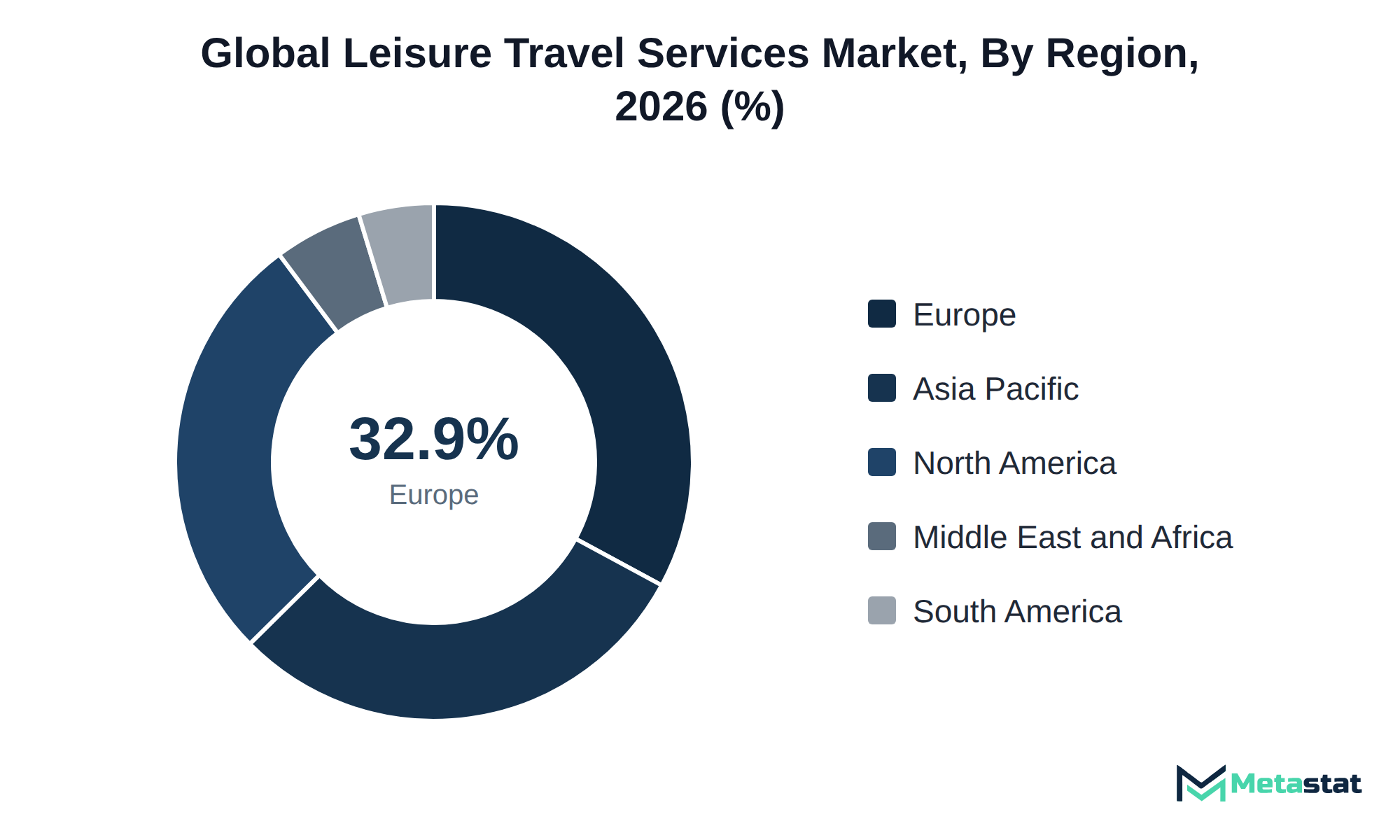
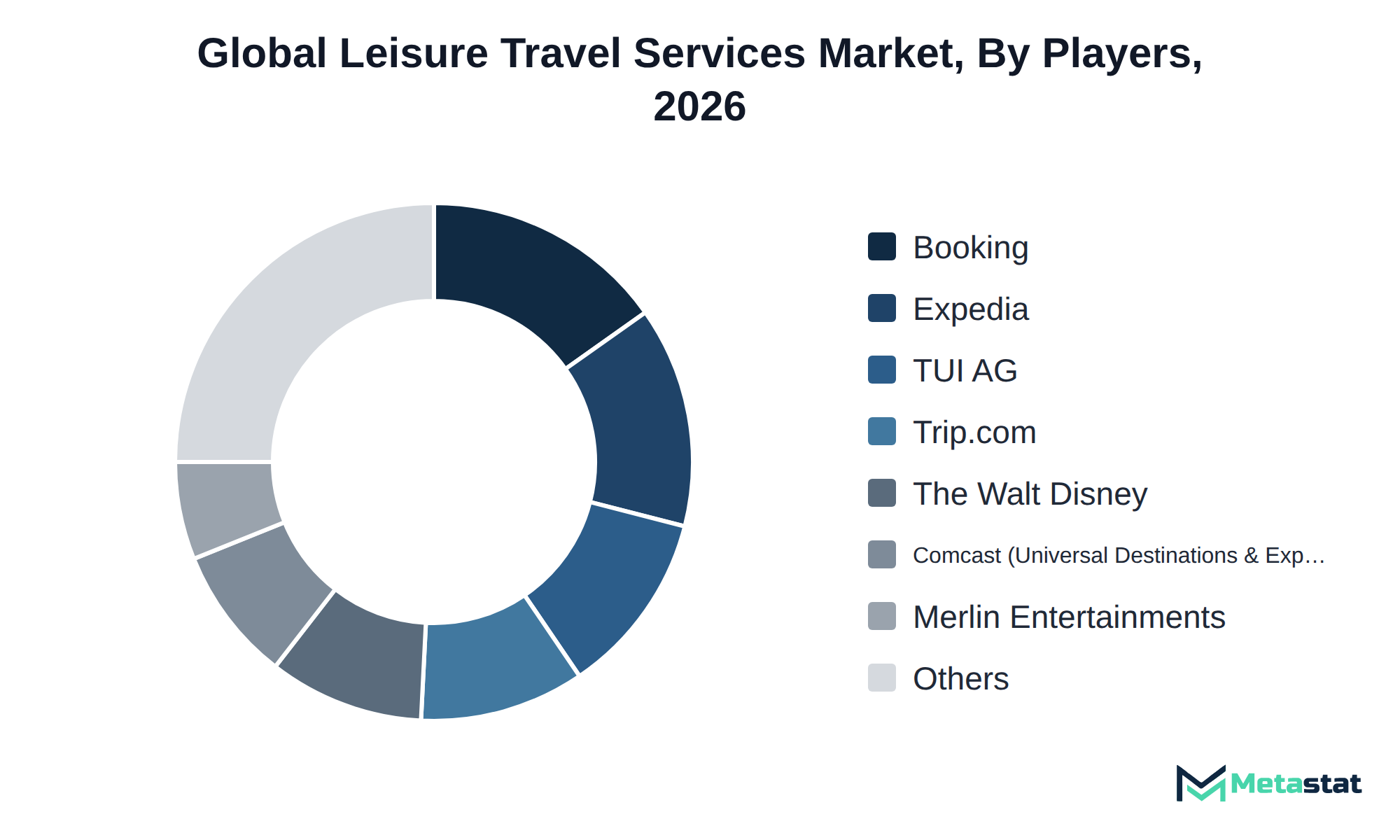
Competition in the Leisure Travel Services market is diverse, with companies differentiating their offerings through various service types and booking channels. Key areas of competition include accommodation, transportation, and entertainment services, with companies tailoring their services to meet the unique preferences of different traveller types.
In the accommodation segment, TUI AG focuses on varied lodging options for solo travellers, couples, and families. Booking Holdings Inc. emphasizes online booking platforms, enhancing user experience through competitive pricing and a wide selection of travel packages. The Walt Disney Company stands out by offering themed experiences that integrate entertainment and leisure travel, appealing to families and groups seeking comprehensive vacation experiences.
Airbnb, Inc. emphasizes the growth of alternative lodging, tapping into the demand for unique and personalized travel experiences. Expedia Group, Inc. uses its extensive network of travel services so customers can customize their travel itineraries. Companies like Carnival Corporation Ltd. and Royal Caribbean Cruises Ltd. focus on passenger transportation, offering cruise tourism experiences that combine leisure travel with onboard entertainment.
The anticipated growth depends on several key developments. First, the Accommodation segment, projected to reach USD 2,285.6 billion by 2033, drives overall market growth. Rising demand from Solo Travellers, who are expected to contribute significantly by reaching USD 1,029.6 billion, fuels that expansion. Second, the growth of the Domestic Destination Type, which will rise from USD 2,990 billion to USD 5,002.5 billion, illustrates a shift in consumer preference towards local travel experiences. Third, the increased adoption of Direct Online booking channels, projected to exceed USD 2,423.5 billion, reflects changing consumer behavior towards convenience and accessibility in travel planning.
However, challenges exist that could impede this growth. Economic downturns and inflationary pressures represent risks that could affect discretionary spending on Leisure Travel Services. While global travel patterns fluctuate, maintaining growth in key regions including North America and Europe will require adaptation to evolving consumer preferences and economic conditions, impacting the market's trajectory toward the forecasted figure.
By Service Type: Accommodation, Passenger Transportation, Food and Beverage, Attractions, Tours and Entertainment, Others (Travel Insurance, Visa and Booking Fees)
By Traveller Type: Solo Travellers, Couples, Families with Children, Other Private Groups (Friends, Adult Relatives), Organised Leisure Groups
By Booking Channel: Direct Online, Online Travel Agencies and Marketplaces, Travel Agents and Tour Operators (Offline), Direct Offline
By Destination Type: Domestic, International
The report strategically identifies and profiles the key market players and analyses their core competencies in each sub-segment of the Leisure Travel Services market.
Report Attributes | Details |
Study Period | 2021-2033 |
Base Year | 2025 |
Estimated Year | 2026 |
Forecast Period | 2026-2033 |
Historical Period | 2021-2025 |
Growth Rate | CAGR 7.9% from 2026 to 2033 |
Revenue Unit | USD billion |
Segmentation | By Service Type, Traveller Type, Booking Channel, Destination Type, and Region |
By Region | North America (By Service Type, Traveller Type, Booking Channel, Destination Type, and Country)
|
Europe (By Service Type, Traveller Type, Booking Channel, Destination Type, and Country)
| |
Asia Pacific (By Service Type, Traveller Type, Booking Channel, Destination Type, and Country)
| |
South America (By Service Type, Traveller Type, Booking Channel, Destination Type, and Country)
| |
Middle East and Africa (By Service Type, Traveller Type, Booking Channel, Destination Type, and Country)
|
Find answers to common questions about this report
The Leisure Travel Services market size was valued at USD 3,645.1 billion in 2025.
The market is projected to grow at a CAGR of 7.9% during the forecast period from 2026 to 2033.
The North America Leisure Travel Services market size is estimated to reach USD 1,730.9 billion by 2033.
Accommodation leads the Leisure Travel Services market with a projected value of USD 2,285.6 billion in 2033, based on its significant share compared to other service types.
Rising spending among solo travelers, driven by a desire for personalized experiences and self-exploration, significantly influences market growth. technological advancements enhance customer engagement and streamline the booking process, attracting diverse buyer groups seeking customized leisure experiences.
Europe holds the dominant share of the Leisure Travel Services market, representing 32.9 percent of the total market in 2033. This position reflects Europe's significant influence within the global landscape of leisure travel services.
Increasing operational costs significantly impact the Leisure Travel Services market, particularly for operators reliant on transportation and accommodation services. Higher fuel prices and wage inflation result in increased prices for end consumers, leading to slower uptake among families seeking affordable travel options.
The growing interest in personalized experiences and self-exploration among solo travelers drives adoption within the Leisure Travel Services market. This demographic shift encourages travel providers to develop innovative packages and tailored offerings, enhancing customer satisfaction and building loyalty.
The Leisure Travel Services market is estimated to reach a valuation of USD 6,698.6 billion by 2033.
Key players operating in the Leisure Travel Services market include TUI AG, Booking Holdings Inc., Expedia Group, Inc., Trip.com Group Limited, The Walt Disney Company, and GetYourGuide Deutschland GmbH.
The analysts below cover Automotive and Transportation research at Metastat Insights.
LEAD ANALYST
Utkarsh Khirodkar is a Lead Market Research Analyst at MetaStat Insight, specializing in market intelligence, technology sector assessments, and competitive strategy.

ENERGY & INFRASTRUCTURE INDUSTRY CONSULTANT
Automotive and Transportation · Electronics and Semiconductor · Energy and Power · Machinery & Equipment
Saurabh Vasant Ganvir consults for Energy & Infrastructure Industry at MetaStat Insight, specializing in renewable energy, solar EPC, and electric vehicle (EV) infrastructure markets.
Floating offshore wind feasibility relies heavily on specialized installation vessel availability and port crane limits, which most broad renewable energy forecasts ignore. The report delivered a thorough analysis of dry dock capacity, mooring chain supply constraints, and raw material pricing trends for deepwater anchor installations. It served as a solid independent sanity check for our offshore project capital expenditure assumptions.
Assessing commercial microgrid software adoption requires looking past top-level installation numbers and examining utility interconnection queues. The research provided verifiable data on average permitting timelines, tariff structures, and battery storage integration costs across regional utility territories. That grounded perspective was valuable for our team when building five-year demand projections for industrial microgrid controllers.
Ambulatory surgical centers have very different purchasing cycles for robotic-assisted surgery platforms than major hospital networks. The MetaStat Insight study focused squarely on capital expenditure depreciation, procedural reimbursement pathways, and surgeon training overhead. That operational clarity made it much simpler to validate multi-year procedure growth forecasts against actual ambulatory center adoption patterns.
Explore related market intelligence reports worth reading alongside this one.
Starting from
$2950