
LEAD ANALYST
Utkarsh Khirodkar is a Lead Market Research Analyst at MetaStat Insight, specializing in market intelligence, technology sector assessments, and competitive strategy.

Global Ride-Hailing Market Size, Share, By Vehicle Type (Passenger Cars, Two-Wheelers, Three-Wheelers, Vans and MPVs, Buses and Shuttles), By Propulsion Type (Internal Combustion Engine, Battery-Electric, Hybrid, CNG and LPG), By Booking Channel (App-Based, Web-Based, Voice and Phone), By End User (Personal Riders, Corporate and Institutional Accounts), Industry Analysis, Growth, Trends, and Forecast, 2026-2033
Report ID
MSI-4258
Published
October, 2026
Pages
277 Pages
Format
Historical
Base year
Forecast
Forecast period
Report Details
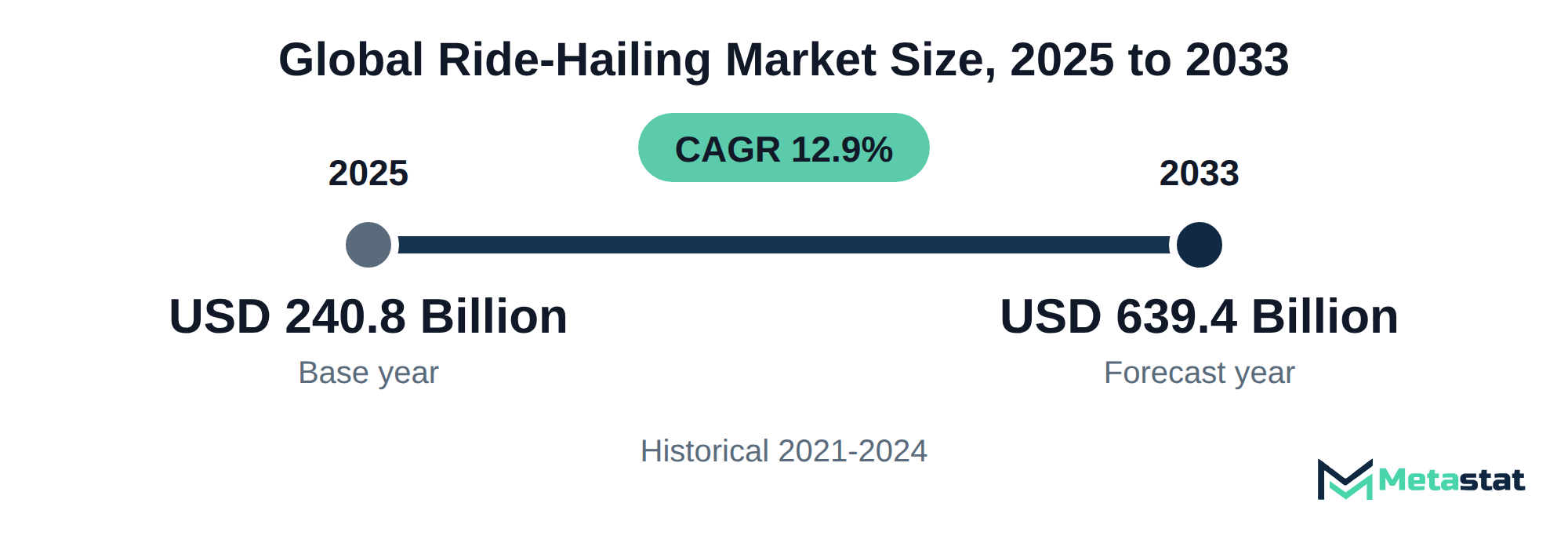
Market Valuation: Valued at $240.8 Billion in 2025, projected to reach $639.4 Billion by 2033 at a 12.9% CAGR.
Dominant Segment: Passenger cars lead the Ride-Hailing market, driven by a growing number of users opting for car-based services over other transportation modes.
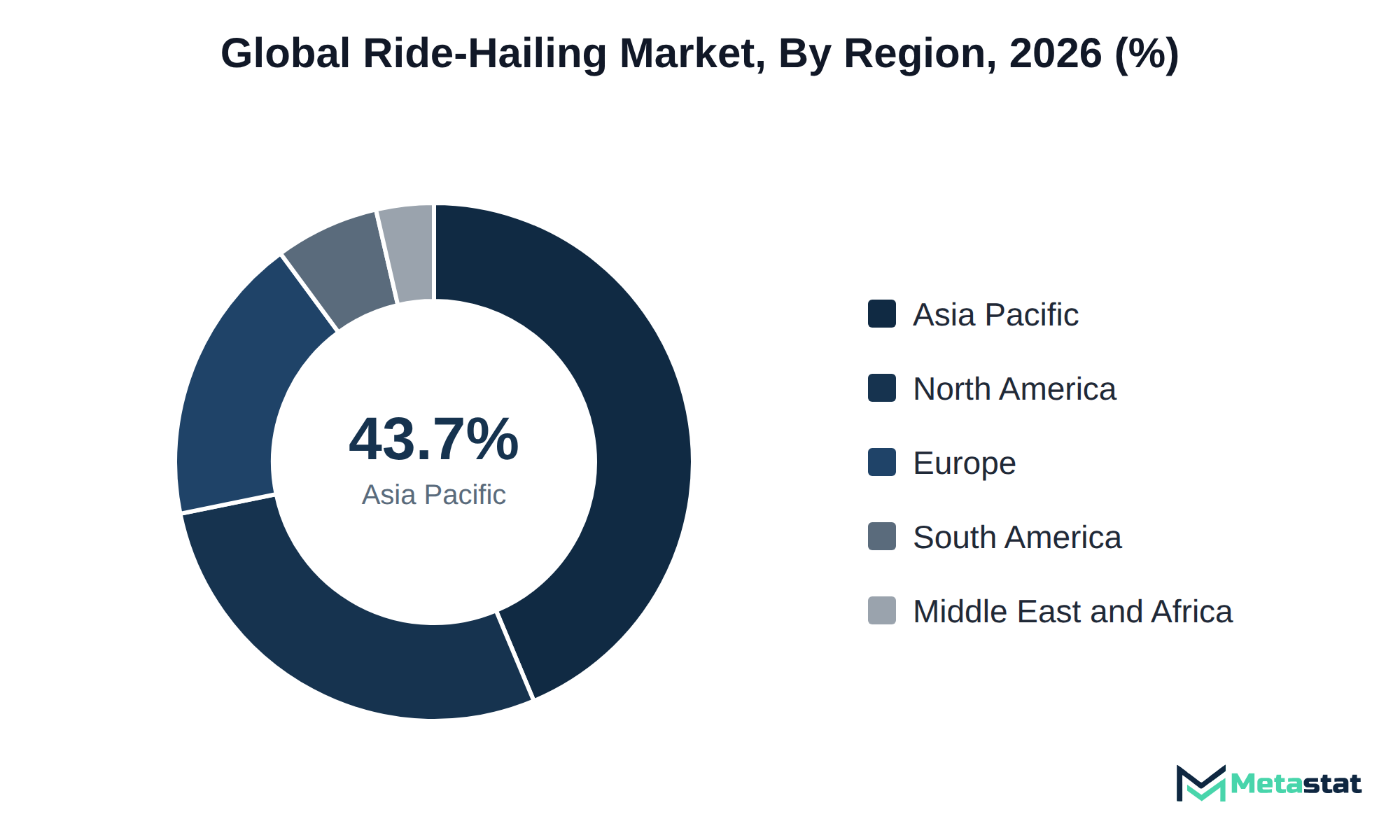
Geographic Lead: Asia Pacific dominates the market with a 43.7% share in 2025, fueled by rapid urbanization and the demand for cost-effective transport solutions.
What's Inside: The report provides comprehensive competitive coverage, detailed analyses, and forecasts from 2026 to 2033, focusing on various segments including vehicle types and booking channels.
Rising Demand from Corporate Accounts: The corporate accounts segment is projected to reach USD 283.8 billion by 2033, reflecting a significant shift towards efficient transportation solutions for businesses.
Technological Advancements Drive App-Bas: The app-based booking segment is expected to grow at a CAGR of 13.7%, supported by increasing smartphone penetration and user-friendly interfaces.
Choose Your License
Global Ride-Hailing Market
The global Ride-Hailing market was valued at USD 240.8 billion in 2025 and is projected to reach USD 639.4 billion by 2033, growing at a CAGR of 12.9% over the forecast period.
The Ride-Hailing market encompasses services that facilitate transportation by connecting passengers with drivers through mobile applications. Buyers invest in these services for convenience, flexibility, and efficiency, which align with the increasing demand for on-demand transportation solutions. The market serves various user segments, including personal riders and corporate accounts, reflecting a shift in consumer behavior towards more accessible mobility options.
Growth in the market is supported by several factors, including urbanization and the rising preference for shared mobility. The segment of passenger cars represents the largest value within the market, driven by an increasing number of users opting for car-based ride-hailing services over other transportation modes. North America holds 28.1% of the market in 2025, with the US leading in 2026.
Increased smartphone penetration and the availability of internet services enhance accessibility to ride-hailing platforms, further driving user adoption. The Asia Pacific region holds a 43.7% market share, highlighting its critical role in shaping the industry's future. This regional dominance results from the rapid growth of urban populations and the demand for cost-effective transport solutions.
The Ride-Hailing market covers a range of services that connect users with transportation providers through digital platforms. Buyers invest in this market to access convenient and flexible transportation options, responding to the growing demand for quick and efficient mobility solutions. The integration of technology into everyday transport needs drives spending, highlighting a shift towards more modern solutions in personal and corporate travel.
Growth in the market is supported by the increasing preference for app-based ride-hailing services, which offer enhanced user experience and operational efficiency. Among the various segments, passenger cars represent the largest share, highlighting consumer preference for personal transport solutions. In terms of regional performance, Asia Pacific leads with a significant market share of 43.7%, influenced by rising urbanization and the expansion of digital infrastructure in major cities.
The strong demand for ride-hailing services in urban areas, combined with the shift towards sustainable mobility options, further supports expansion in this sector. Investment in technology and partnerships with local transport providers align with evolving consumer preferences, positioning the market for growth in the coming years.
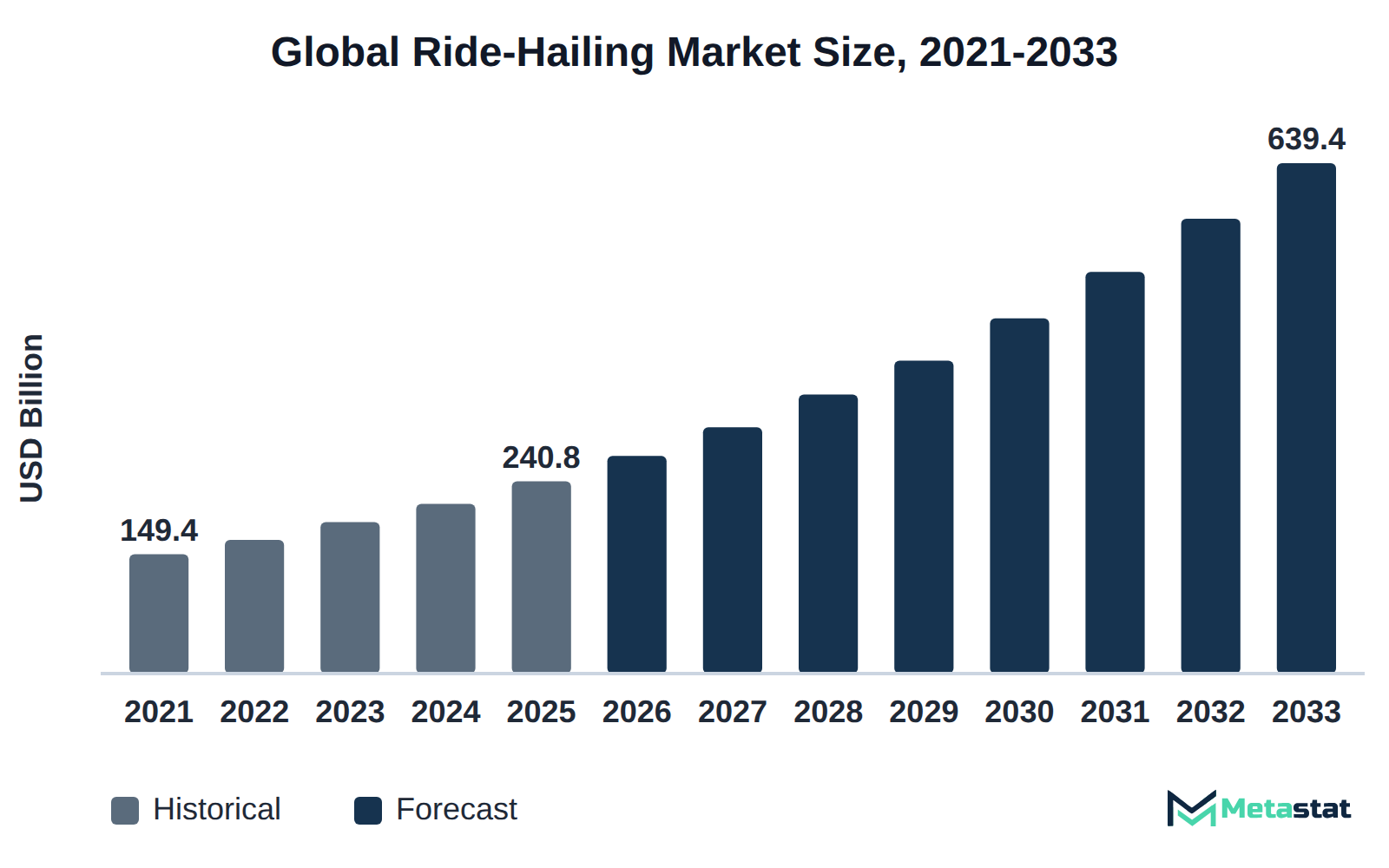
The Ride-Hailing market experiences a notable shift toward shared and autonomous transportation options, expanding beyond traditional private car services. The advent of technologies including AI and machine learning facilitates efficient routing and optimizes vehicle usage, leading to enhanced user experiences. By 2033, the market for passenger cars is projected to reach USD 379.7 billion, reflecting a compound annual growth rate (CAGR) of 12.2% from 2026. This growth reflects the increasing acceptance of shared mobility models, where users share rides, thereby maximizing vehicle occupancy and reducing overall transportation costs.
Autonomous ride-hailing services are emerging, driven by innovations in vehicle automation and safety technologies. Companies actively invest in this area to develop fleets capable of operating without human drivers. With the global push for sustainability, battery-electric vehicles are anticipated to comprise a significant portion of the market, projected to hit USD 122.3 billion by 2033. This transition aligns with shifting consumer preferences toward environmentally friendly transport solutions.
Increased adoption of shared and autonomous trips transforms the competitive landscape, presenting substantial opportunities for new entrants and existing players. Companies positioned in this niche capitalize on evolving consumer demands for convenience, affordability, and sustainability within the Ride-Hailing market. The ongoing integration of advanced technologies not only enhances operational efficiencies but influences overall market dynamics, enabling significant commercial growth.
Pricing models have a significant impact on buyer behavior in the Ride-Hailing market. Most platforms implement a dynamic pricing strategy, which adjusts fares based on demand fluctuations, time of day, and geographic location. This model encourages riders to book during off-peak hours by offering lower rates, enhancing overall accessibility and increasing ride frequency. In 2025, app-based services generated USD 242.7 billion, illustrating the financial implications of effective pricing strategies.
In addition to dynamic pricing, subscription models are gaining traction among corporate and institutional accounts. These models typically involve a monthly fee that covers a set number of rides, appealing to businesses seeking predictable transportation costs. With corporate accounts projected to reach USD 283.8 billion by 2033, this segment reflects growing demand for structured payment options that align with organizational travel budgets.
Financing options, including partnerships with financial institutions, are emerging to facilitate ride payments. These arrangements ease the financial burden for users who prefer to manage costs more flexibly, ultimately driving market growth. Enhanced payment solutions contribute to increased user retention and satisfaction, reinforcing the position of ride-hailing services in the competitive environment.
The shift towards battery-electric fleets significantly impacts the economics of the ride-hailing market, aligning with a growing demand for sustainable transportation solutions. While the global focus on reducing carbon emissions intensifies, ride-hailing platforms increasingly adopt battery-electric vehicles to meet these expectations. The battery-electric propulsion segment is expected to reach a value of USD 122.3 billion by 2033, reflecting an annual growth rate of 18.5%. This transition not only enhances brand reputation but attracts environmentally conscious consumers.
Corporate and institutional accounts, a key buyer group within the ride-hailing market, emphasize sustainability in their transportation strategies. Many organizations implement policies that prioritize eco-friendly travel options for employees, increasing demand for ride-hailing services offering battery-electric solutions. This trend creates an opportunity for providers to differentiate themselves through sustainable fleet offerings, potentially enhancing their market share and profitability.
Incorporating battery-electric vehicles into ride-hailing fleets aligns operational practices with contemporary corporate social responsibility (CSR) mandates. By investing in these vehicles, companies position themselves favorably within a competitive landscape, appealing to a growing demographic that prioritizes eco-conscious choices. This strategic shift toward battery-electric fleets supports market growth while fulfilling corporate sustainability commitments.
Competition within the ride-hailing market increasingly centers around pricing strategies, safety measures, and the availability of drivers. Pricing strategies have shifted significantly, with services aiming to offer competitive rates while maintaining profitability. For instance, the segment of passenger cars, projected to grow from USD 169.7 billion in 2026 to USD 379.7 billion by 2033, reflects the intense focus on price competitiveness. Providers are implementing dynamic pricing models that adjust rates based on demand and local market conditions.
Safety remains a significant concern for consumers, influencing their choice of ride-hailing services. Companies are enhancing safety features through advanced technology, including in-app safety tools and driver background checks. The emphasis on safety has proven essential, with riders increasingly favoring platforms that prioritize their well-being during journeys. The market's focus on driver supply impacts operational efficiency, with companies seeking to attract and retain quality drivers. A robust driver supply ensures reliable service delivery, which is critical for customer satisfaction and retention.
Growth in demand among corporate and institutional accounts drives spending in the market. Increased emphasis on efficient transportation solutions reflects a broader trend toward mobility as a service. Companies seek reliable and cost-effective options for employee travel, contributing to significant volume increases. The segment for corporate accounts is projected to reach USD 283.8 billion by 2033, highlighting the transition in buyer focus. Personal riders contribute to this demand, while the corporate segment expands at a faster rate. The shift toward corporate usage influences pricing strategies, as providers adapt to meet the evolving needs of businesses.
The rise in corporate account utilization leads to enhanced service offerings and competitive pricing, further establishing growth trajectories in urban areas. This dynamic reinforces the importance of technology integration within the market, ensuring positive user experiences across various platforms.
Advancements in mobile application technology facilitate improved user experiences and enhance ride-hailing service accessibility. Continuous improvements in smartphone capabilities, including faster processors and advanced GPS systems, support the growing adoption of app-based booking platforms. Users increasingly prefer app-based channels due to their convenience, offering features including real-time tracking, flexible payment options, and integrated safety measures.
Increased smartphone penetration across various demographics fuels this trend. Consumers across regions exhibit a strong preference for app-based platforms, contributing to significant growth in the market. The rise of user-friendly interfaces, combined with effective payment integration, enhances customer satisfaction and encourages repeat usage.
The transition towards app-based bookings shifts the competitive landscape within the ride-hailing market, compelling traditional taxi services to adapt or risk obsolescence. Enhanced technology in app development improves user engagement and broadens the potential customer base, driving revenue growth within the market.
Regulatory challenges significantly affect growth patterns within the Ride-Hailing market. Compliance with evolving local and national transportation regulations often leads to operational delays and increased costs for service providers. Smaller operators, in particular, face difficulties adapting to stringent regulations, resulting in slower market entry and reduced service availability. These regulatory hurdles primarily impact personal riders, who experience restricted access to services in certain regions. Delays in regulatory approvals slow the uptake of innovative solutions, hindering overall service expansion. The cumulative effect of regulatory compliance pressures leads to decreased market competitiveness, influencing pricing strategies and customer satisfaction levels. Overall, the impact of these regulatory challenges poses a significant barrier to growth in the Ride-Hailing market, affecting both supply and customer experience.
Profitability within the Ride-Hailing market faces challenges due to margin pressure stemming from rising operational costs and competitive pricing strategies. Suppliers encounter increased costs related to driver incentives, vehicle maintenance, and insurance, which constrains their ability to sustain profit margins. Heightened competition compels providers to offer lower fares, further squeezing margins.
In response, suppliers implement various strategies to mitigate these pressures. Many operators enhance efficiency by adopting technology solutions that streamline operations and reduce costs. This includes leveraging advanced analytics to optimize routing and driver allocation, thereby improving service efficiency and reducing operational expenses. Several providers focus on diversifying their service offerings to include premium options, targeting higher-end consumers willing to pay more for enhanced services. Such measures aim to improve profitability while navigating the demanding environment of the market.
Two-wheelers represent a significant growth opportunity within the Ride-Hailing market, driven by urbanization and increasing traffic congestion. With a projected compound annual growth rate (CAGR) of 16% through 2033, this segment is expected to reach USD 123.5 billion. Cities with high population density demonstrate a greater need for efficient and cost-effective transportation options, compelling riders to opt for two-wheelers over traditional vehicle types. This shift reflects a change in consumer preferences toward quicker and more maneuverable transport solutions, particularly in regions facing heavy traffic. The rise of two-wheelers supports operational efficiencies for service providers, enhancing service accessibility while reducing costs associated with fuel and maintenance. Growth in this segment contributes to overall market expansion, aligning with the increasing demand for diverse mobility solutions in urban environments.
The Global Ride-Hailing market is segmented based on Vehicle Type, Propulsion Type, Booking Channel, and End User.
This segment caters primarily to individual consumers seeking convenient and flexible transportation options. Growing urbanization and rising disposable incomes stimulate demand, particularly among personal riders who prefer the comfort and privacy that passenger cars offer. Compared to other vehicle types like Two-Wheelers, which experience faster growth at a CAGR of 16%, the passenger car segment remains a stable and significant part of the market. The emphasis on enhanced safety features and improved ride experiences further distinguishes this segment, reflecting evolving consumer preferences for reliable transportation solutions. Overall, the growing focus on passenger comfort and safety drives investment and strategic developments in this segment.
This segment primarily caters to urban commuters seeking convenient and efficient transportation options. Increasing traffic congestion in metropolitan areas drives demand for two-wheeler services, which offer quicker navigation through dense traffic. Compared to other vehicle types, two-wheelers experience faster growth due to affordability, operational efficiency, and a smaller environmental footprint. The segment's competitive pricing attracts a diverse range of personal and corporate riders seeking economical travel solutions. Preferences shift toward more sustainable and agile transportation methods, with two-wheelers standing out due to their potential for significant market expansion.
The Three-Wheelers segment is expected to reach USD 58.2 billion by 2033. This segment primarily serves urban commuters seeking affordable and convenient transportation solutions. The rise in urbanization and increasing congestion in city environments drive demand for three-wheelers, which offer flexibility and maneuverability in crowded areas. Compared to other vehicle types, this segment exhibits a faster growth rate, with a projected CAGR of 16%. This growth reflects changing consumer preferences and a shift towards more efficient modes of transport. In contrast to passenger cars, which grow at a CAGR of 12.2%, three-wheelers capture a specific market niche that caters to personal riders and local businesses alike, contributing significantly to the overall dynamics of the market.
The Vans and MPVs segment is projected to grow at a CAGR of 11.7% during the forecast period. This segment primarily serves groups requiring flexible transportation options for larger parties, including families or corporate groups. The increase in urban populations and the demand for group travel solutions drive growth in this segment. Vans and MPVs differentiate themselves from other vehicle types by catering specifically to larger groups, making them less competitive on pricing compared to smaller vehicles like passenger cars. The growing need for comfortable group transport strengthens their market position, while slower growth compared to two-wheelers reflects shifting consumer preferences toward more compact options for individual use. The Ride-Hailing market is expected to benefit from the expansion of this segment, which aligns with trends in shared mobility solutions and increased reliance on digital booking channels.
Buses and Shuttles serve a vital transportation option, catering to a broad audience seeking efficient mobility solutions. Various organizations and municipalities engage this segment to transport groups, including employees and event attendees, enhancing accessibility in urban areas. A growing emphasis on cost-efficiency drives adoption, particularly among corporate clients who prefer economical group travel solutions. This segment experiences slower growth compared to other vehicle types, influenced by regulatory requirements and infrastructure limitations that hinder rapid scaling. Unlike passenger cars, which appeal to personal riders seeking convenience, Buses and Shuttles primarily target institutional buyers, creating distinct market dynamics. The Ride-Hailing market reflects diverse service offerings, with each segment addressing unique consumer needs and preferences.
Specialty passenger vehicles include non-traditional ride-hailing options catering to niche markets. This segment primarily attracts users needing unique transportation solutions including luxury, accessibility, or specific event transport. Demand for specialized services is driven by increasing consumer expectations for tailored experiences, creating opportunities for operators focused on high-quality offerings. Unlike standard passenger cars, which dominate the market, specialty vehicles offer differentiated services that command higher prices, appealing to specific customer segments. Operators in this niche navigate unique regulatory considerations depending on service offerings, influencing operational costs and market strategies. Understanding consumer behavior in this segment requires recognizing the value placed on personalized service and quality, setting it apart from other vehicle types in the overall market.
Internal Combustion Engine segment is valued at USD 194.5 billion in 2026 and is projected to reach USD 416.7 billion by 2033, at a CAGR of 11.5% during the forecast period. Vehicles operating on internal combustion engines serve a diverse range of users, including personal riders and corporate clients seeking convenient transport solutions. The demand for this segment is driven by the widespread availability of traditional fuel infrastructures, ensuring accessibility for a large user base. Compared to battery-electric options, which are anticipated to grow at a CAGR of 18.5%, the internal combustion segment experiences slower growth. However, it remains crucial for markets lacking comprehensive charging networks, providing a viable option for many riders. Continued reliance on internal combustion engines in various regions significantly influences the overall dynamics of the market.
This category focuses on ride-hailing services that use electric vehicles, appealing primarily to environmentally conscious riders and corporate clients aiming to reduce their carbon footprint. The rapid shift towards sustainable transportation fuels demand for battery-electric options, driven by increasing awareness of climate change and regulatory support for zero-emission vehicles. Compared to traditional internal combustion engine alternatives, this segment experiences faster growth, reflecting a CAGR of 18.5%, in contrast to the 11.5% CAGR projected for internal combustion engine vehicles. Competitive pricing of battery-electric options further enhances their attractiveness, positioning them as viable alternatives for users seeking cost-effective and eco-friendly transportation solutions. Ongoing evolution of battery technologies strengthens this segment's position, enabling it to capture a larger share of the market while electric vehicle adoption rises.
Hybrid vehicles are projected to reach USD 61.4 billion by 2033. This segment serves both personal riders and corporate clients seeking environmentally friendly options while maintaining ease of use and convenience. The increasing focus on sustainability drives demand for hybrid vehicles, which offer reduced emissions compared to traditional internal combustion engines. The growth trajectory for hybrids reflects a CAGR of 15.3%, aligning with rising consumer preferences for greener transportation solutions. This growth rate surpasses that of internal combustion engine vehicles, highlighting a notable shift in buyer behavior towards adopting cleaner technologies. Corporate and institutional accounts seek hybrid options to fulfill sustainability goals, reinforcing this segment's position in the market. Adoption of hybrid vehicles represents a significant response to urbanization and regulatory incentives aimed at reducing environmental impact.
CNG and LPG segment is projected to grow at a CAGR of 12.2% during the forecast period. This segment predominantly serves personal riders seeking economical and environmentally friendlier transportation options. Rising awareness of climate change and the increasing preference for sustainable mobility solutions drive growth in this segment. Compared to other propulsion types, CNG and LPG vehicles often come at a lower initial cost, appealing to budget-conscious consumers. However, the limited availability of refueling infrastructure hinders widespread adoption, impacting growth rates. Despite these challenges, the segment presents a unique value proposition in the Ride-Hailing market, catering to environmentally conscious consumers while contributing to the overall expansion of the market.
Hydrogen and alternative fuels represent a niche segment within the propulsion type category. Used for environmentally friendly ride-hailing solutions, this segment attracts environmentally conscious riders and companies aiming to reduce their carbon footprints. Growth accelerates due to increased regulatory pressure for sustainable practices and investments in cleaner technologies. Compared to the internal combustion engine segment, this category experiences slower adoption rates due to infrastructure limitations and higher initial costs associated with alternative fuel vehicles. While traditional ride-hailing services primarily rely on gasoline or diesel vehicles, the push for innovative propulsion systems highlights distinct differentiation in customer preferences and market positioning. Players in the ride-hailing market focusing on alternative fuels seek to capitalize on emerging opportunities, supporting the broader transition toward sustainable mobility solutions.
App-Based segment is valued at USD 242.7 billion in 2026 and is projected to reach USD 596.6 billion by 2033, at a CAGR of 13.7% during the forecast period. This segment primarily serves personal riders and corporate accounts seeking convenient and efficient transportation solutions. One significant demand driver arises from increasing smartphone penetration and reliance on mobile applications for booking rides. Compared to other booking channels, App-Based services experience faster growth due to user-friendly interfaces and efficient payment processes. In contrast, the Web-Based booking channel, with a CAGR of 6.4%, lags behind, reflecting a shift in consumer preferences toward mobile platforms. The market shows a strong inclination toward app usage, highlighting the importance of technological advancements in shaping consumer behavior.
Web-Based segment is estimated to reach USD 31.4 billion by 2033, at a CAGR of 6.4% during the forecast period. This segment offers an alternative online platform for customers to book ride-hailing services, appealing to both personal riders and corporate clients seeking convenience. The growing penetration of smartphones and reliable internet connectivity significantly contributes to the rise in web-based bookings. Compared to the App-Based segment, which shows a projected CAGR of 13.7%, the Web-Based segment experiences slower growth yet serves a demographic that prefers traditional online booking methods. Factors including the increasing integration of digital payment solutions enhance its attractiveness, ensuring that the market caters to diverse consumer preferences.
Voice and Phone segment is expected to reach USD 7 billion by 2033. This segment serves users who prefer direct communication for booking rides, particularly in areas with limited internet access or among demographics favoring traditional booking methods. Growth remains influenced primarily by increasing smartphone penetration and user familiarity with ride-hailing services. While the App-Based segment experiences significant growth at a CAGR of 13.7%, Voice and Phone exhibits a slower growth trajectory, with a projected CAGR of 6.4%. This slower pace reflects evolving user preferences shifting towards digital platforms, although a segment of users continues to rely on voice interactions for convenience or accessibility. Companies targeting this segment face unique challenges in maintaining relevance against rapidly advancing app-based technologies in the broader market.
Segment valued at USD 7 billion is projected to grow at a CAGR of 5.4% during the forecast period. This channel primarily serves users who prefer to book rides through messaging apps or require assistance during the booking process. The increasing penetration of smartphones and messaging applications drives the demand for this channel, attracting a diverse array of personal riders and corporate clients. Compared to other booking channels, this segment exhibits slower growth relative to app-based bookings, which are on track to reach USD 596.6 billion by 2033 at a CAGR of 13.7%. The distinct preference for direct interaction and assistance in booking rides reflects a unique demand among users who prioritize convenience and a personal touch in their ride-hailing experience. Growth in this segment highlights evolving dynamics within the market, where traditional booking methods continue to coexist alongside digital innovations.
Personal riders engage ride-hailing services for daily commuting needs, leisure travel, and other personal transportation requirements. The rising urban population and increasing smartphone penetration drive demand in this segment, significantly impacting growth. Corporate and institutional accounts differ from personal riders by focusing on business-related travel and typically requiring more formal arrangements. The personal riders segment experiences comparatively slower growth than the corporate segment, which registers a CAGR of 15.3%. This discrepancy highlights the varying dynamics of consumer demand and corporate mobility needs, influencing market strategies across the Ride-Hailing market.
Corporate and Institutional Accounts segment is estimated to reach USD 283.8 billion by 2033, at a CAGR of 15.3% during the forecast period. This segment serves businesses and organizations by providing efficient transportation solutions for employees and clients. The increasing focus on employee mobility and the need for cost-effective transportation options drive demand within this segment. Organizations adopt ride-hailing services to streamline travel expenses while ensuring convenience. Compared to Personal Riders, this segment exhibits a faster growth rate, reflecting a growing trend among businesses to leverage technology for mobility solutions. Corporate and Institutional Accounts often entail higher spending per transaction than individual users, further distinguishing this segment from others in the market.
Segment is expected to reach USD 5.8 billion by 2033. This segment caters to public-sector initiatives and sponsored mobility programs, providing transportation solutions for various institutions and organizations. Growing government emphasis on sustainable transport and public welfare drives demand in this area. Enhanced funding for mobility solutions and partnerships between ride-hailing providers and public entities support this growth trajectory. Compared to personal riders and corporate accounts, this segment experiences slower growth, reflecting a CAGR of 11.5%, primarily due to budget constraints and regulatory frameworks. Distinct from corporate and institutional accounts, which target businesses and organizations seeking efficient transportation options, this segment focuses on community and social needs, influencing adoption and pricing strategies within the market.
Based on geography, the Global Ride-Hailing market is divided into North America, Europe, Asia-Pacific, South America, Middle East, and Africa.
Significant growth in the Ride-Hailing market in North America reflects increasing demand for personal and corporate transport solutions. Drivers include a strong preference for app-based services, particularly among younger consumers in urban environments. The region's infrastructure supports this trend, with widespread smartphone penetration and improved internet accessibility enhancing user experience. Regulatory frameworks in the United States, Canada, and Mexico promote competition among service providers, contributing to the market's expansion. North America is projected to reach USD 167.3 billion by the end of 2033. The region's market share accounted for 28.1% in 2025, illustrating its importance within the global market. Factors including technological advancements and evolving consumer preferences are expected to continue driving growth in the coming years.
Demand for ride-hailing services within Europe stems from a diverse urban population seeking flexible transportation options. Countries including Germany, France, and the UK experience substantial interest in app-based platforms, driven by the increasing preference for convenience among personal riders. Regulatory frameworks across these nations support ride-hailing, further enhancing market accessibility. Spain and Italy highlight a growing acceptance of alternative propulsion types, particularly battery-electric vehicles, which align with the region's sustainability goals. The market share for Europe is projected at 18.1% in 2025, reflecting robust activity and potential for expansion. Russia adds complexity due to varying regional regulations impacting service provision and user adoption. Overall, the ride-hailing market in Europe emphasizes a blend of consumer demands and regulatory influences that shape ongoing growth.
Asia Pacific represents a significant portion of the Ride-Hailing market, holding a 43.7% share in 2025. Demand in this region is driven primarily by rapid urbanization and the growing middle class, with increased disposable incomes in countries including China, India, and Southeast Asia. The proliferation of smartphone usage further supports the adoption of app-based services, enhancing convenience for personal riders and corporate accounts. In addition, favorable government policies promoting digital transportation solutions contribute to market expansion. Infrastructure developments in urban centers facilitate efficient mobility solutions, ensuring the market keeps pace with rising consumer expectations. The region's diverse needs highlight the importance of tailored services, positioning providers to capitalize on evolving demand patterns.
In South America, the Ride-Hailing market experiences growth driven by urbanization and increasing smartphone penetration. Brazil and Argentina serve key markets, with rising disposable incomes among consumers boosting demand for ride-hailing services. Infrastructure improvements, particularly in major urban centers, enhance service accessibility. Brazil's focus on enhancing public transport through technology supports integration with ride-hailing platforms. The market's share in 2025 stands at 6.5%. This segment is characterized by a diverse user base, including personal riders and corporate clients, who value convenience and affordability. Innovations in service delivery, including real-time tracking and flexible payment options, further contribute to market expansion. The overall trajectory indicates a significant increase in user adoption and market value through 2033.
The Ride-Hailing market in the Middle East and Africa experiences unique growth factors influenced by urbanization and an increasing preference for convenient transportation. Countries like Saudi Arabia and the UAE demonstrate strong demand for ride-hailing services, driven by rising populations and expanding urban infrastructure. South Africa's diverse urban centers contribute to a growing user base seeking flexible commuting options. Regulatory frameworks in these countries support market expansion by creating a competitive environment for ride-sharing platforms. Market penetration is projected to benefit from increasing smartphone usage and internet connectivity, enhancing accessibility to these services. The region's share of the global market stands at 3.6% in 2025, indicating potential for future growth in this segment.
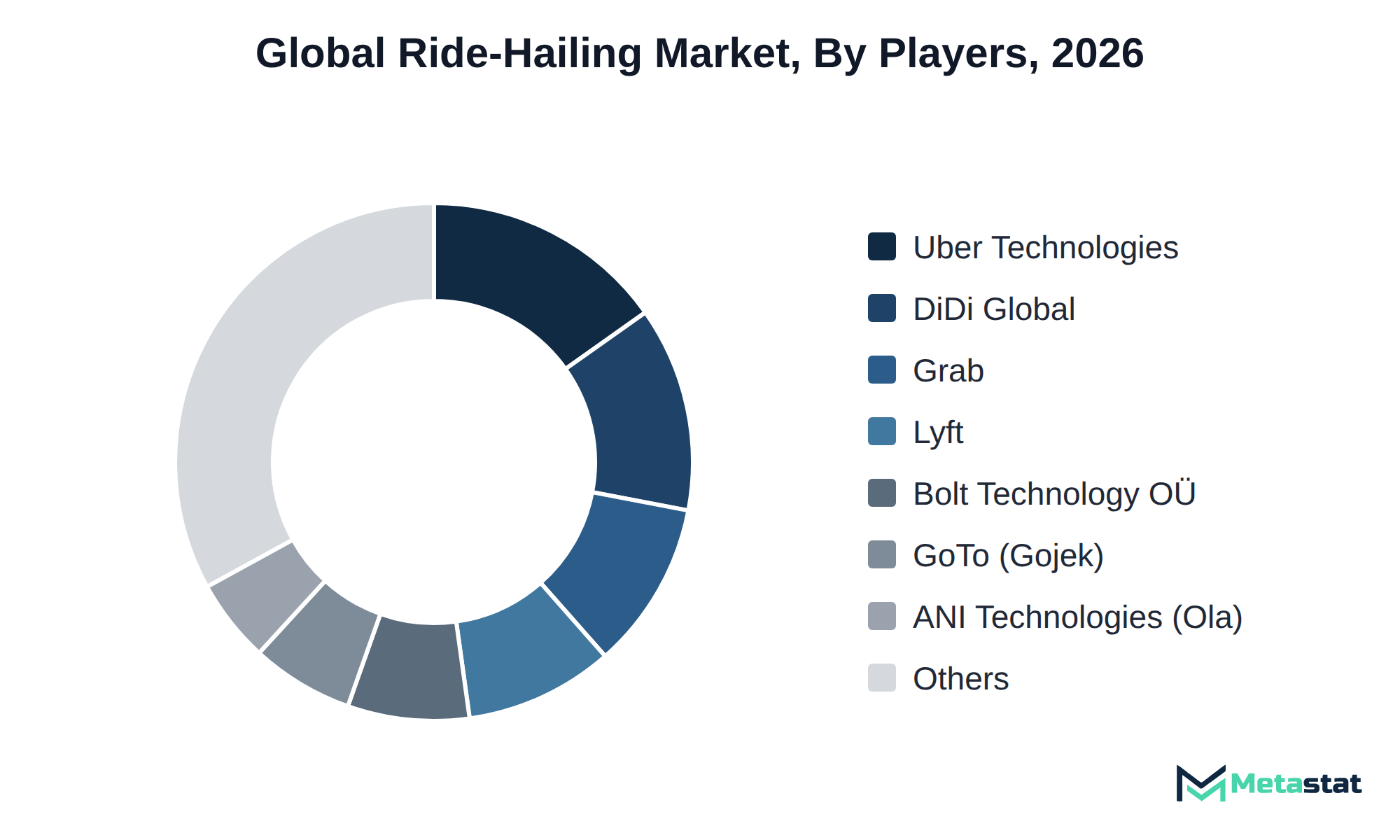
Competition within the Ride-Hailing market presents a diverse array of strategies influenced by various factors including pricing, service quality, and customer-centric offerings. Several prominent players focus on app-based models, enhancing user experience through efficient ride matching algorithms. Companies including Uber Technologies, Inc. and Lyft, Inc. prioritize user-friendly applications while ensuring competitive pricing structures to attract personal riders and corporate accounts.
Other companies, including Grab Holdings Limited and DiDi Global Inc., leverage localized services tailored to regional preferences, enhancing customer loyalty through effective engagement strategies. Bolt Technology OÜ offers unique pricing incentives to attract budget-conscious riders, further diversifying competitive tactics within the market. Companies including Waymo LLC focus on advancing technology-driven solutions, emphasizing safety and reliability in autonomous ride-hailing services.
This growth relies on several key developments within the Ride-Hailing market. The expansion of app-based booking channels is important, with projections indicating a rise from USD 242.7 billion in 2026 to USD 596.6 billion by 2033, reflecting a compound annual growth rate of 13.7%. The adoption of battery-electric vehicles is crucial, targeting a market size of USD 122.3 billion by 2033, driven by increasing demand for environmentally friendly transportation. However, potential regulatory challenges in various regions, particularly in Europe and North America, could hinder growth. Stricter regulations regarding ride-hailing operations and vehicle emissions create obstacles for providers, impacting their ability to scale operations and compete effectively. The market's trajectory hinges on these developments and risks, shaping the competitive landscape and influencing future investments.
By Vehicle Type: Passenger Cars, Two-Wheelers, Three-Wheelers, Vans and MPVs, Buses and Shuttles, Others (specialty passenger vehicles)
By Propulsion Type: Internal Combustion Engine, Battery-Electric, Hybrid, CNG and LPG, Others (hydrogen and alternative fuels)
By Booking Channel: App-Based, Web-Based, Voice and Phone, Others (messaging and assisted booking)
By End User: Personal Riders, Corporate and Institutional Accounts, Others (public-sector and sponsored mobility)
The report strategically identifies and profiles the key market players and analyses their core competencies in each sub-segment of the Ride-Hailing market.
|
Report Attributes |
Details |
|
Study Period |
2021-2033 |
|
Base Year |
2025 |
|
Estimated Year |
2026 |
|
Forecast Period |
2026-2033 |
|
Historical Period |
2021-2025 |
|
Growth Rate |
CAGR 12.9% from 2026 to 2033 |
|
Revenue Unit |
USD billion |
|
Segmentation |
By Vehicle Type, Propulsion Type, Booking Channel, End User, and Region |
|
By Region |
North America (By Vehicle Type, Propulsion Type, Booking Channel, End User, and Country)
|
|
Europe (By Vehicle Type, Propulsion Type, Booking Channel, End User, and Country)
|
|
|
Asia Pacific (By Vehicle Type, Propulsion Type, Booking Channel, End User, and Country)
|
|
|
South America (By Vehicle Type, Propulsion Type, Booking Channel, End User, and Country)
|
|
|
Middle East and Africa (By Vehicle Type, Propulsion Type, Booking Channel, End User, and Country)
|
Find answers to common questions about this report
The Ride-Hailing market size was valued at USD 240.8 billion in 2025.
The market is projected to grow at a CAGR of 12.9% during the forecast period from 2026 to 2033.
The North America Ride-Hailing market size is estimated to reach USD 167.3 billion by 2033.
Passenger Cars lead the Ride-Hailing market with a projected value of USD 379.7 billion in 2033, based on the segment's growth trajectory. This segment's growth rate stands at a compound annual growth rate of 12.2 percent.
Key drivers for the Ride-Hailing market include the growth in demand from corporate and institutional accounts, reflecting a shift toward efficient transportation solutions. the two-wheeler segment presents a significant opportunity, projected to grow at a compound annual growth rate of 16% through 2033, aligning with changing consumer preferences for quicker transport options.
Regulatory challenges restrain growth in the Ride-Hailing market by causing operational delays and increasing costs for service providers. Profitability faces further constraints due to margin pressure from rising operational costs and competitive pricing strategies.
Increased smartphone penetration and advancements in mobile application technology enhance user experiences, driving adoption in the Ride-Hailing market. The preference for app-based platforms, offering features like real-time tracking and flexible payment options, contributes to significant growth.
The Ride-Hailing market is estimated to reach a valuation of USD 639.4 billion by 2033.
Key players operating in the Ride-Hailing market include Uber Technologies, Inc., DiDi Global Inc., Lyft, Inc., Grab Holdings Limited, Bolt Technology OÜ, GoTo Group (Gojek), and ANI Technologies Pvt. Ltd. (Ola).
The two-wheeler segment is projected to reach USD 123.5 billion by 2033, with a compound annual growth rate (CAGR) of 16%.
The analysts below cover Automotive and Transportation research at Metastat Insights.
LEAD ANALYST
Utkarsh Khirodkar is a Lead Market Research Analyst at MetaStat Insight, specializing in market intelligence, technology sector assessments, and competitive strategy.

ENERGY & INFRASTRUCTURE INDUSTRY CONSULTANT
Automotive and Transportation · Electronics and Semiconductor · Energy and Power · Machinery & Equipment
Saurabh Vasant Ganvir consults for Energy & Infrastructure Industry at MetaStat Insight, specializing in renewable energy, solar EPC, and electric vehicle (EV) infrastructure markets.
Analyzing the transition from natural gas to green hydrogen in iron ore reduction requires realistic infrastructure timelines. Meta stat insight supplied a detailed regional assessment of DRI plant conversion costs and scrap metal availability in North America and Western Europe. Their report carefully examined pellet quality specs and electrical grid access constraints without making oversimplified market assumptions. The research material served as a practical reference during internal technology roadmap discussions.
Integrating zero-trust access controls across legacy electronic health record systems involves complex compliance overhead. Team produced an analysis that clearly separated identity governance and administration tools from privileged access management platforms. Their evaluation of HIPAA and GDPR compliance features across cloud native solutions gave our architecture group clear baseline criteria. The custom data request regarding biometric authentication adoption in hospital networks was returned promptly with clear documentation.
Evaluating calorific value requirements and air permit compliance across municipal waste facilities requires localized data. Metastat Insight structured their analysis around operational throughput capacity and feedstock composition variations in Latin America and Eastern Europe. Their competitive mapping of sorting equipment vendors helped clarify technology differences between optical separators and heavy media systems. The study provided an objective baseline during our capital expenditure reviews.
Explore related market intelligence reports worth reading alongside this one.
Starting from
$2950