
LEAD ANALYST
Utkarsh Khirodkar is a Lead Market Research Analyst at MetaStat Insight, specializing in market intelligence, technology sector assessments, and competitive strategy.

Global Utility Task Vehicle (UTV) Market Size, Share, By Propulsion Type (Gasoline, Diesel, Battery Electric, Hybrid Electric), By Application (Sports and Recreation, Agriculture and Forestry, Construction and Industrial Operations, Grounds and Property Maintenance, Military and Law Enforcement), By Seating Capacity (One to Two Seats, Three to Four Seats, Five or More Seats), By Drive Type (Two-Wheel Drive, Four-Wheel Drive and All-Wheel Drive), Industry Analysis, Growth, Trends, and Forecast, 2026-2033
Report ID
MSI-5691
Published
November, 2026
Pages
310 Pages
Format
Historical
Base year
Forecast
Forecast period
Report Details
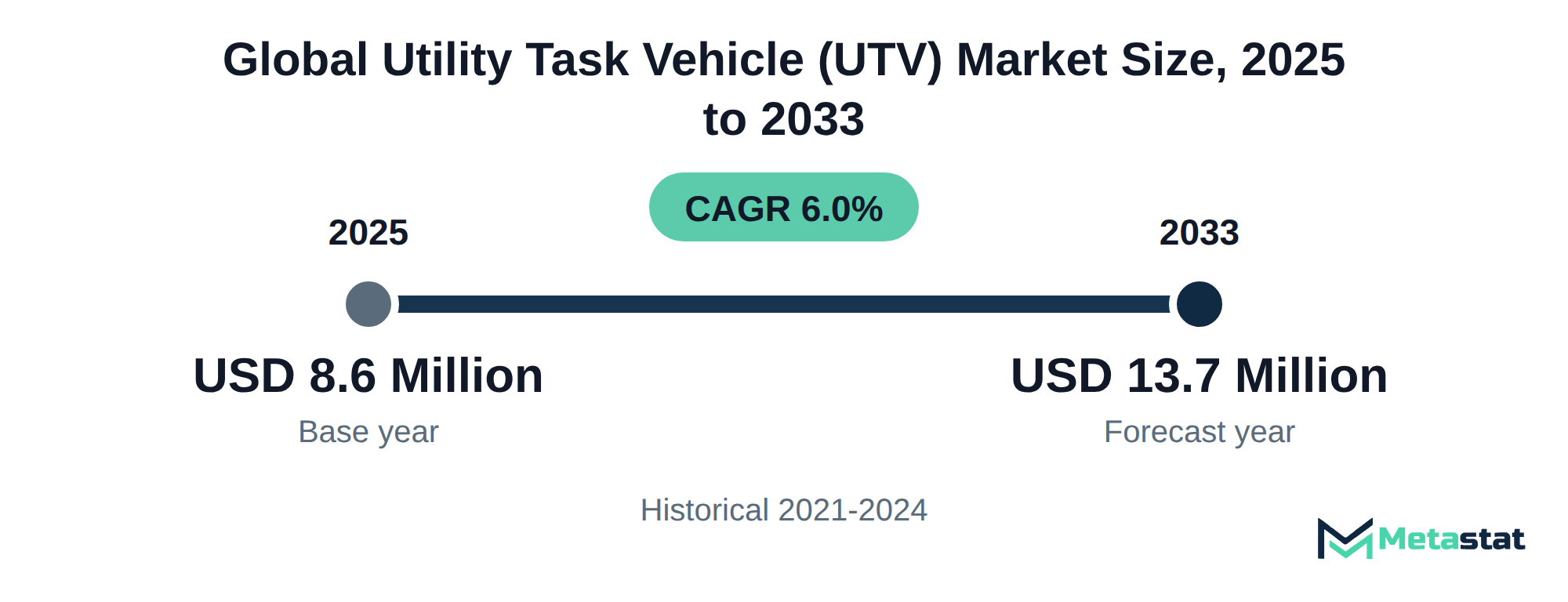
Market Valuation: Valued at $8.6 Million in 2025, projected to reach $13.7 Million by 2033 at a 6.0% CAGR.
Dominant Segment: Gasoline-powered UTVs lead the market, driven by their reliability and familiarity among users, particularly in recreational and agricultural applications.
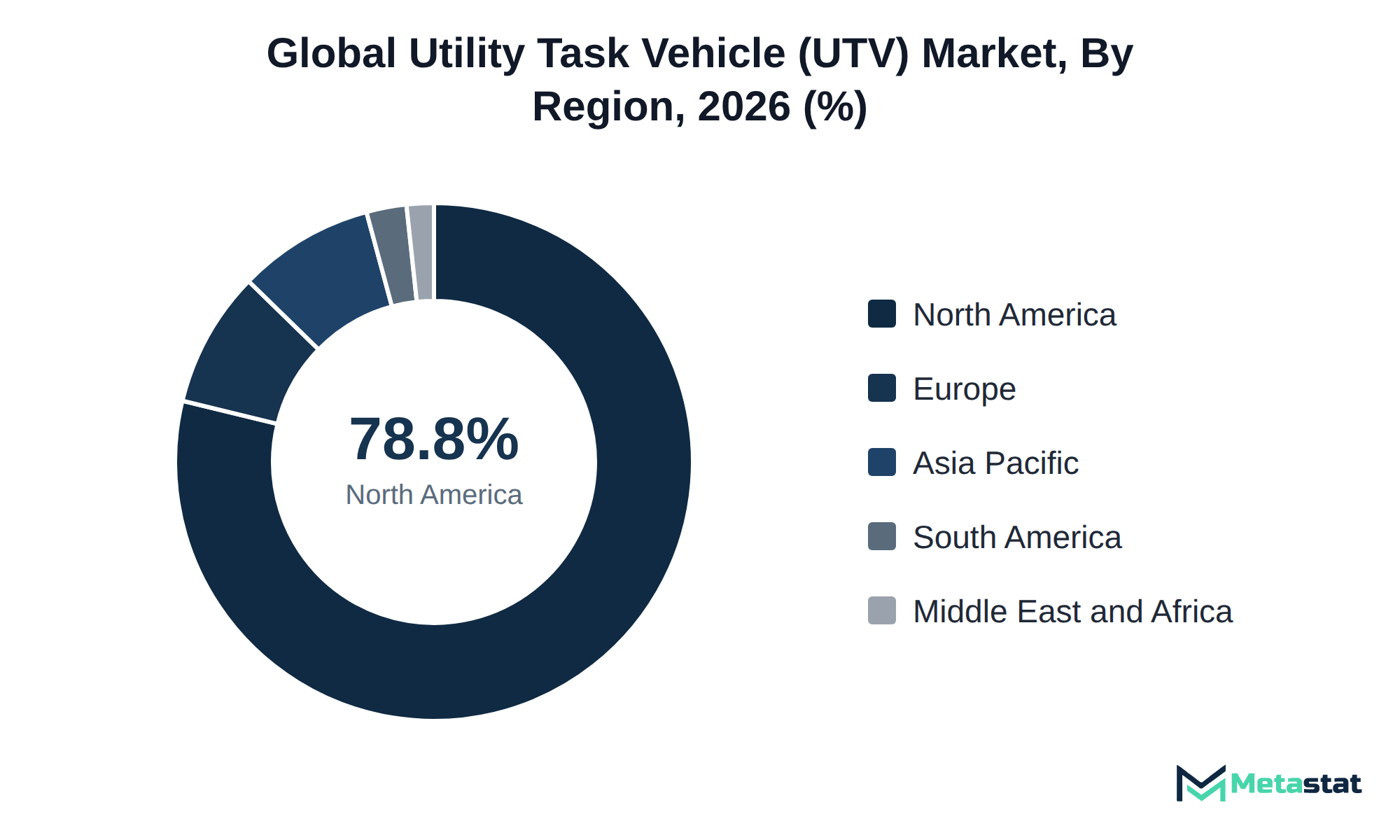
Geographic Lead: North America dominates the UTV market, holding 78.8% of the share in 2025, with the US expected to maintain this leadership position through 2026.
What's Inside: The report provides a comprehensive analysis of the UTV market, including competitive coverage, segment performance, and forecasts through 2033.
Growth of Hybrid Electric UTVs: The hybrid electric segment is projected to grow at a CAGR of 16.9%, reflecting rising demand for environmentally friendly alternatives in agriculture and recreational sectors.
Increased Recreational Usage: The sports and recreation application segment is set to expand from USD 3.9 million to USD 5.6 million by 2033, driven by a surge in outdoor activities and consumer interest.
Choose Your License
Global Utility Task Vehicle (UTV) Market
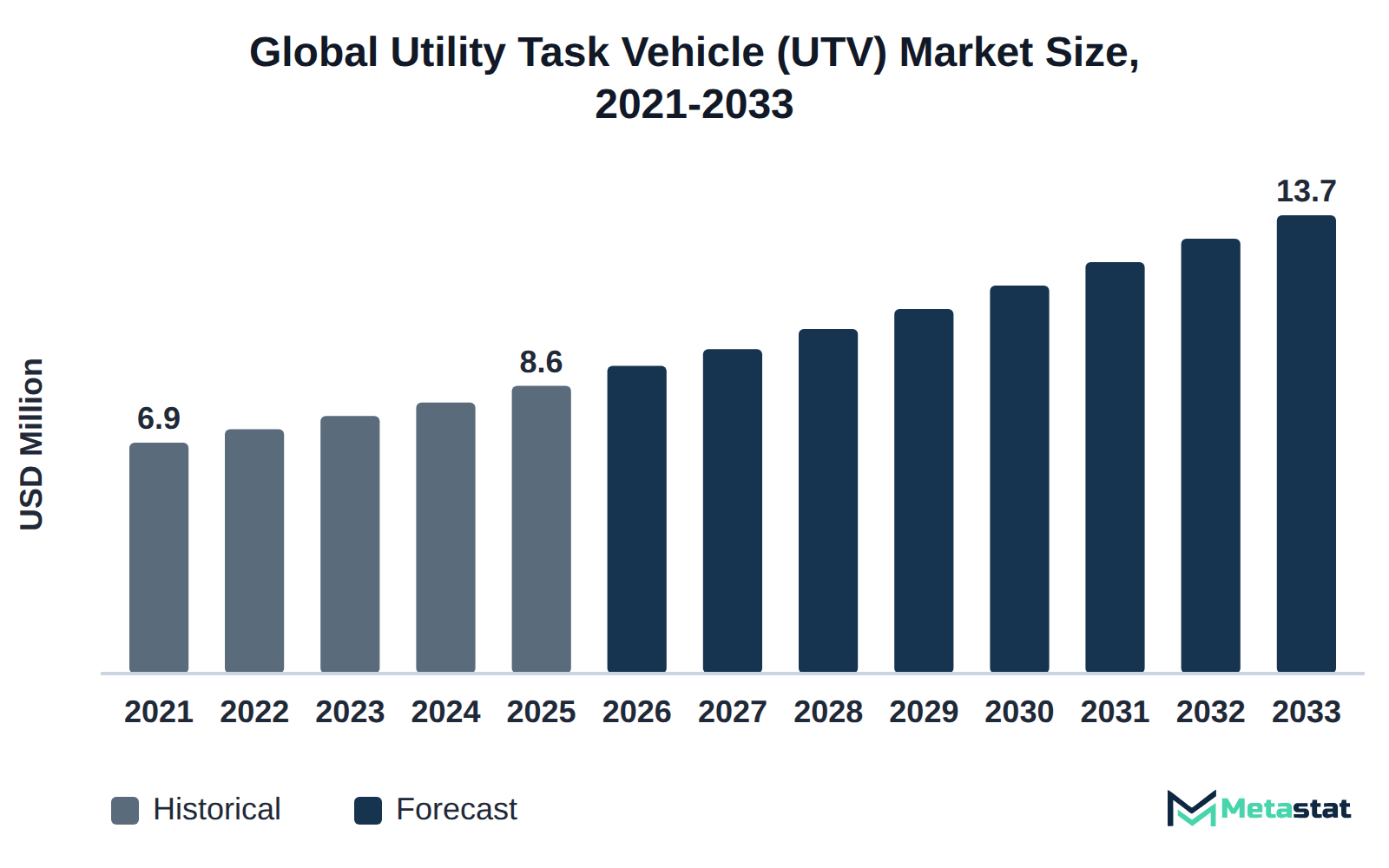
The global Utility Task Vehicle (UTV) market was valued at USD 8.6 million in 2025 and is projected to reach USD 13.7 million by 2033, growing at a CAGR of 6.0% over the forecast period.
The Utility Task Vehicle (UTV) market encompasses a range of vehicles designed for both recreational and commercial applications, appealing to buyers in sectors including agriculture, construction, and sports. Spending on UTVs is driven by the need for vehicles that can cross varied terrain and handle multiple tasks. These vehicles replace traditional utility vehicles by offering enhanced performance, improved comfort, and greater adaptability for different user requirements.
Growth in the market is primarily fueled by increasing demand within the agriculture and forestry sectors, which benefit from the operational efficiency UTVs provide. For broader context on the machinery used in these sectors, see the global agricultural machinery market. North America holds 78.8% of the market in 2025, with the US leading in 2026. The segment of gasoline-powered UTVs represents the highest value, accounting for a significant portion of overall sales, driven by reliability and familiarity among users.
Advancements in technology and design drive further expansion within the market. Demand for battery electric and hybrid electric UTVs is expected to rise, reflecting a shift toward more sustainable options. This trend aligns with growing environmental awareness among consumers and businesses, influencing purchasing decisions across all segments.
The Utility Task Vehicle (UTV) market serves various segments, including sports and recreation, agriculture, construction, and property maintenance. Buyers invest in UTVs for their versatility and capability to handle diverse tasks, ranging from leisure activities to industrial applications. Demand for these vehicles is driven by their ability to improve efficiency and productivity in varied operations, serving both individual consumers and businesses.
Growth in the UTV market is fueled by increasing consumer interest in outdoor activities and the expansion of agricultural applications. The sports and recreation segment represents the highest value, reflecting a significant trend towards leisure and adventure pursuits. This dominance highlights the region's strong infrastructure and established consumer base that supports UTV adoption.
Technological advancements that enhance vehicle performance and safety features are a major growth driver. These innovations attract buyers seeking efficient, reliable, and user-friendly options. The integration of electric and hybrid propulsion systems further aligns with global sustainability goals, appealing to environmentally conscious consumers. The market continues to evolve, adapting to shifts in preferences and operational requirements.
Electric Utility Task Vehicles (UTVs) are experiencing significant adoption within agriculture and grounds maintenance sectors, driven by the increasing need for sustainable practices. The market for battery electric UTVs is projected to reach USD 2.2 million by 2033, reflecting growing interest in eco-friendly solutions. This shift aligns with the broader trend of reducing carbon footprints across various industries.
Agricultural operations find electric UTVs particularly beneficial due to their low operational costs and reduced noise levels, which support compliance with environmental regulations and enhance worker comfort. For a wider view of electric farm equipment, see the global electric tractor market. In grounds maintenance, electric UTVs facilitate efficient operations without disturbing the surrounding environment, making them ideal for urban settings.
The Utility Task Vehicle (UTV) market's focus on electric models reflects a larger technological shift toward electrification in off-road vehicles. Readers interested in the motors that power these vehicles can review the global electric vehicle traction motor market. Growth in battery electric UTVs enhances competitive advantage for firms adopting these technologies early. This trend meets regulatory demands and appeals to environmentally conscious consumers, ultimately driving revenue growth.
Price sensitivity remains an important factor among buyers in the Utility Task Vehicle (UTV) market, particularly for those focused on work applications. For example, the average base value of UTVs reached USD 8.6 million in 2025, reflecting the financial commitment required by organizations investing in equipment that enhances productivity and efficiency. Buyers consistently evaluate payload capacity and towing capabilities to ensure the selected UTV meets specific operational demands, thereby justifying the purchase cost.
In the segment of Applications, UTVs targeting Agriculture and Forestry are projected to achieve a value of USD 3.3 million by 2033. This figure highlights the financial importance of selecting UTVs with robust payloads and towing capabilities tailored for these demanding environments. Companies prioritize UTVs equipped with comfortable cabs to improve operator satisfaction during prolonged use. Functional design and competitive pricing significantly influence purchasing decisions.
Crew-capacity side-by-sides are an important part of the Utility Task Vehicle (UTV) market, particularly for commercial fleets and trail recreation. Businesses operating in agriculture, forestry, and construction require vehicles that accommodate multiple passengers while transporting equipment and supplies. Enhanced productivity drives this demand, with crew-capacity models facilitating efficient collaboration among workers in the field.
The market for crew-capacity side-by-sides is expected to grow significantly, with the agriculture and forestry application segment projected to reach USD 3.3 million by 2033, reflecting a compound annual growth rate of 5.5%. This growth indicates a rising recognition among industrial buyers of the advantages offered by crew-capacity vehicles, which enable efficient task execution in rugged environments.
Investing in crew-capacity models offers commercial fleets the opportunity to streamline operations while ensuring that teams work effectively. Commercial operators that manage several vehicles can also review the global fleet management market. The combination of increased seating capacity and utility positions these vehicles as a favorable choice for businesses aiming to enhance operational efficiency within the UTV market.
When choosing between gasoline, diesel, and electric Utility Task Vehicles (UTVs), buyers consider their specific needs and usage scenarios. Gasoline UTVs, for example, are expected to grow from USD 6.5 million in 2026 to USD 9.1 million by 2033, demonstrating strong market demand. This segment attracts buyers seeking performance and convenience, particularly in recreational and light industrial applications.
Diesel UTVs present another option, known for their durability and fuel efficiency, particularly in heavy-duty applications including agriculture and forestry. This segment is projected to reach USD 2.2 million by 2033, appealing to buyers looking for robust vehicles capable of handling demanding tasks. Meanwhile, electric UTVs, although still emerging, offer environmental benefits and lower operational costs, making them attractive for buyers focused on sustainability and long-term savings.
Understanding the benefits and limitations of each propulsion type allows buyers to align their purchase with operational requirements, influencing their return on investment. The Utility Task Vehicle (UTV) market evolves, providing various options tailored to different applications and user preferences.
The surge in recreational usage of Utility Task Vehicles (UTVs) influences purchasing decisions among consumers, particularly outdoor enthusiasts and hobbyists. This demographic increasingly seeks versatile vehicles for activities including off-roading, hunting, and farming. The rise in disposable income and a shift towards experiential outdoor activities contribute to heightened demand, prompting buyers to invest in UTVs that enhance leisure experiences. From 2026 to 2033, the sports and recreation application segment is projected to expand from USD 3.9 million to USD 5.6 million, reflecting a compound annual growth rate of 5.3%. This growth signifies an increasing emphasis on recreational applications, positioning the market for sustained demand. Enhanced features and performance capabilities further support this trend and give buyers greater value for their investment. The market is expected to expand due to continued growth driven by evolving and diversifying recreational interests.
Technological advancements in the Utility Task Vehicle (UTV) market drive improvements in performance and efficiency. Innovations including more efficient engine designs and lightweight materials enhance fuel economy while maintaining payload capacity. Increased focus on battery technology and electric powertrains supports sustainability efforts, attracting environmentally conscious buyers. The integration of advanced electronics, including GPS, telematics, and safety features, enhances operational capabilities and provides real-time data for optimal performance. Buyers interested in connected vehicle features can review the global connected car market. This technological growth appeals primarily to commercial buyers in agriculture, construction, and property maintenance, who seek enhanced productivity and reduced operational costs. These advancements create a competitive environment, pushing manufacturers to invest in research and development to capture market share. In turn, this trend is expected to stimulate market expansion, with significant growth anticipated across various segments, including gasoline, diesel, and electric propulsion types.
Price sensitivity significantly impacts purchasing decisions within the Utility Task Vehicle (UTV) market, particularly among buyers in agriculture and recreational sectors. The high initial cost of these vehicles often leads to slower uptake, with potential buyers delaying purchases driven by tighter budget constraints. This reluctance to invest results in smaller orders and extended replacement cycles for existing equipment. Buyers weigh the benefits of UTVs against their financial outlay, prioritizing more affordable alternatives when budgets are constrained. Consequently, this limitation reduces market growth potential, with demand remaining lower in price-sensitive segments. Manufacturers face challenges in addressing these financial barriers, limiting their ability to expand market share effectively. Price sensitivity remains a critical factor in adoption rates and purchasing behavior.
The increase in raw material costs significantly impacts profitability within the Utility Task Vehicle (UTV) market. Suppliers face heightened expenses for components, driven by fluctuations in the global supply chain and rising demand for materials. These pressures hinder profit margins and challenge the financial viability of UTV production. In response, several suppliers implement cost-reduction strategies, including optimizing their supply chains and negotiating bulk purchasing agreements with manufacturers. Many companies prioritize vertical integration to control costs, ensuring price stability for vital components. Suppliers invest in research and development to enhance production efficiency, aiming to offset rising input costs. This approach helps suppliers stay competitive as economic conditions change. Addressing these input cost challenges remains essential for sustaining growth in the market, given the increasing demand for versatile and durable utility vehicles.
The hybrid electric segment within the Utility Task Vehicle (UTV) market experiences significant growth driven by rising demand for environmentally friendly alternatives. This shift occurs due to increasing awareness of sustainability and energy efficiency among consumers in various sectors. Hybrid electric UTVs provide a versatile option for buyers in agriculture, construction, and recreational activities, appealing to those seeking lower emissions while maintaining performance. The compound annual growth rate (CAGR) of 16.9% highlights a strong upward trend in this segment, encouraging manufacturers to invest in research and development for enhanced models. Adoption of hybrid electric vehicles allows companies to meet regulatory targets and improve operational efficiency, aligning with global efforts toward sustainable practices. The evolving technology in hybrid systems positions these vehicles as a compelling choice for buyers aiming to balance performance with eco-friendliness.
This growth opens new avenues for manufacturers and increases competition within the market. Suppliers that innovate in hybrid technology stand to capture a larger share of the growing customer base prioritizing sustainability. The focus on this segment supports expansion opportunities for both established players and new entrants in the Utility Task Vehicle (UTV) market.
The Global Utility Task Vehicle (UTV) market is segmented based on Propulsion Type, Application, Seating Capacity, and Drive Type.
The gasoline segment is valued at USD 6.5 million in 2026 and is projected to reach USD 9.1 million by 2033, at a CAGR of 4.8% during the forecast period. This segment primarily serves recreational and agricultural users who require reliable and powerful vehicles for various tasks. Increased demand for gasoline-powered Utility Task Vehicles (UTVs) arises from their long-established presence and familiarity among consumers, which drives preference over newer technologies. Compared to other segments, including battery electric or hybrid electric, which face challenges related to charging infrastructure and costs, the gasoline segment benefits from the widespread availability of fuel. Its growth trajectory remains steady, although it lags behind the hybrid electric segment, which has a CAGR of 16.9%. The gasoline segment remains important in the market, appealing to users seeking traditional performance and easy access.
Diesel segment is estimated to reach USD 2.2 million by 2033, at a CAGR of 4.4% during the forecast period. This segment finds extensive use in industries including agriculture, forestry, and construction where high-torque and durable vehicles operate effectively under challenging conditions. A primary force driving this segment involves increasing preference for diesel-powered vehicles due to their performance in rugged terrain and longer operational life, essential for tasks including hauling and towing. In contrast to the gasoline segment, which is projected to grow at a CAGR of 4.8%, diesel experiences slightly slower growth. Diesel's price advantage and fuel efficiency create a differentiation point, appealing to buyers focused on long-term operational costs. Regulatory pressures for reduced emissions in several regions pose challenges that impact the adoption rate for diesel vehicles, influencing the purchasing decisions of environmentally conscious buyers.
Battery Electric segment is expected to reach USD 2.2 million by 2033. This segment primarily serves applications requiring minimal environmental impact, appealing to buyers focused on sustainability within sectors including agriculture, grounds maintenance, and recreational activities. For related battery technology, see the global battery management system market. The increasing demand for eco-friendly solutions significantly influences growth, supported by regulatory pressures for reduced emissions and noise levels. Compared to gasoline and diesel options, the Battery Electric segment features a faster growth trajectory, with a CAGR of 16.9%. This rapid expansion reflects shifting preferences of consumers toward innovative, cleaner technologies, positioning electric vehicles favorably against traditional propulsion types. The growing interest in electric solutions illustrates the transformation occurring within the market, creating opportunities for manufacturers to capture a larger share of the user base seeking electric Utility Task Vehicles (UTVs).
Hybrid Electric segment is projected to grow at a CAGR of 16.9% during the forecast period. This segment finds applications primarily in agriculture, grounds maintenance, and recreational sectors where buyers require efficient, environmentally friendly vehicles. The increasing focus on sustainability drives interest in hybrid electric options due to regulatory pressures to reduce emissions. Compared to gasoline and diesel segments, the hybrid electric option typically offers a balance of performance and energy efficiency, appealing to buyers seeking reduced operational costs. The anticipated expansion in this segment highlights a shift toward advanced propulsion technologies that align with evolving consumer preferences and regulatory mandates. In contrast to other propulsion types, which exhibit slower growth rates, the hybrid electric segment captures significant attention due to promising technological advancements and growing market demand.
This segment caters to outdoor enthusiasts who engage in recreational activities including off-roading and hunting. Increasing interest in outdoor recreational activities drives demand for Utility Task Vehicles (UTVs) in this category, enhancing the segment's growth. Compared to other applications, including Agriculture and Forestry, which has a CAGR of 5.5%, the Sports and Recreation segment experiences slightly slower growth. The segment's appeal lies in its ability to provide versatile and enjoyable experiences, leading to higher price sensitivity among buyers who prioritize performance and features. This positioning sets it apart from more utilitarian segments, creating a competitive market where innovation shapes consumer preference.
This segment serves farmers and forestry operators who use Utility Task Vehicles (UTVs) for various tasks including crop management, land clearing, and transporting equipment. Operators focused on crop management may also be interested in the global digital crop farming and precision agriculture market. The demand drivers for this segment include enhancements in vehicle performance and the growing emphasis on efficient agricultural practices. Compared to the Sports and Recreation segment, which has a CAGR of 5.3%, Agriculture and Forestry shows slightly faster growth, indicating higher investment in practical applications. UTVs in this category often carry unique features tailored for rugged terrains, differing in design and function from vehicles aimed at recreational use, positioning them as essential tools for agricultural productivity.
The Construction and Industrial Operations segment is expected to reach USD 1.7 million by 2033. This segment primarily serves industries including construction and manufacturing, where utility task vehicles facilitate various tasks, including material transport and site maintenance. Buyers comparing vehicles for job sites may also consider the global construction equipment market. Increasing operational efficiency drives demand in this sector, particularly among businesses seeking reliable equipment for heavy-duty applications. Compared to other segments, this sub-segment exhibits slower growth, largely attributed to the established nature of these applications and competition from alternative machinery. Product innovation and cost-effective solutions remain essential for attracting buyers in this segment. Ongoing infrastructure projects and industrial activities support steady demand for utility task vehicles in these sectors.
Grounds and Property Maintenance segment is projected to grow at a CAGR of 6.9% during the forecast period. This segment serves various sectors, including landscaping, municipal services, and property management, providing essential support for outdoor maintenance tasks. Factors influencing demand include rising property ownership and increased focus on aesthetic appeal in both residential and commercial properties. Compared to other segments, the Grounds and Property Maintenance segment exhibits a moderate growth trajectory, reinforced by its practical applications. In contrast, segments like Sports and Recreation experience higher growth rates; however, the unique requirements of grounds maintenance create a stable demand. The need for efficient and durable utility task vehicles drives purchases in this segment, ensuring that properties are well-maintained and visually appealing. The Utility Task Vehicle (UTV) market continues to adapt to these evolving requirements, reflecting the importance of reliability in grounds management.
Military and Law Enforcement applications employ Utility Task Vehicles (UTVs) for various operational tasks, including surveillance, transport, and emergency response. Agencies in these sectors prioritize robust vehicles for challenging environments, focusing on reliability and versatility. Increased emphasis on public safety drives demand for specialized UTVs designed for military and law enforcement applications. This segment distinguishes itself from others by requiring features suited for tactical operations, including enhanced durability and off-road capabilities. The segment exhibits growth patterns driven by increasing investment in security and defense technologies. While other segments experience different consumer dynamics, Military and Law Enforcement applications emphasize a unique focus on utility and resilience, reflecting the specific needs of these buyers.
Emergency Response and Tourism applications employ Utility Task Vehicles (UTVs) for a variety of critical functions, including rapid deployment in emergencies and facilitating recreational activities. Municipalities and tourism operators primarily use these vehicles to enhance their operational efficiency in outdoor settings. Increasing demand for effective emergency response solutions drives growth in this segment, while a growing interest in outdoor tourism activities further supports expansion. Unlike other segments, including Agriculture and Forestry, which have a projected CAGR of 5.5%, this segment experiences slower growth due to varying buyer requirements and less consistent purchasing patterns. The unique nature of this application leads to different pricing structures compared to more conventional uses, reflecting the specialized features required for emergency response and tourism activities. While the UTV market continues to evolve, innovation in vehicle features is expected to play a significant role in defining the future of this segment.
The One to Two Seats segment is valued at USD 3.9 million in 2026 and is projected to reach USD 5.3 million by 2033, at a CAGR of 4.6% during the forecast period. This segment primarily serves outdoor enthusiasts and individuals engaged in recreational activities, offering efficient transportation solutions for various terrains. Key drivers include an increasing preference for compact vehicles that offer maneuverability and functionality in smaller spaces. Compared to other segments, this segment experiences slower growth, with a CAGR of 4.6%, contrasting with the Three to Four Seats segment, which shows a higher growth rate of 6.3%. The affordability of One to Two Seats models appeals to cost-conscious buyers, enhancing their market presence within the Utility Task Vehicle (UTV) market.
The Three to Four Seats segment is estimated to reach USD 5.7 million by 2033, at a CAGR of 6.3% during the forecast period. This segment serves various applications, primarily in recreational activities, agriculture, and small-scale construction. Demand stems from the need for versatile vehicles that accommodate more than two individuals while maintaining maneuverability and utility. Buyers in this segment include outdoor enthusiasts and small-scale farmers seeking reliable transportation for tasks including fieldwork or leisure activities. Growth in this segment surpasses the One to Two Seats segment, which has a CAGR of 4.6%, highlighting a shift toward vehicles that provide greater passenger capacity without sacrificing performance. Unlike the larger Five or More Seats segment, which caters to commercial and heavy-duty applications, the Three to Four Seats segment appeals to consumers prioritizing personal use and recreational versatility.
The Five or More Seats segment is expected to reach USD 2.8 million by 2033. This segment primarily serves sectors requiring transportation solutions for larger groups, including recreational and utility applications in agriculture, forestry, and property maintenance. The increasing demand for vehicles that accommodate multiple passengers drives growth in this segment, which exhibits a CAGR of 4.6% through the forecast period. While the One to Two Seats and Three to Four Seats segments cater to smaller groups, the Five or More Seats segment addresses the need for expanded capacity, attracting buyers focused on utility in various operational contexts. The ability to transport more individuals enhances its appeal, particularly for businesses engaged in collaborative tasks or recreational activities. Sustained interest in this segment is anticipated, fueled by evolving consumer preferences and operational requirements.
The Two-Wheel Drive segment is valued at USD 1.7 million in 2026 and is projected to reach USD 2.1 million by 2033, at a CAGR of 3.7% during the forecast period. This segment finds applications primarily in recreational and agricultural activities, where maneuverability on varied terrains is essential. Demand is driven by increasing consumer interest in versatile vehicles for outdoor activities, particularly in rural regions. Compared to Four-Wheel Drive and All-Wheel Drive configurations, which possess higher capabilities for challenging terrains, the Two-Wheel Drive segment offers a lower-cost alternative, appealing to budget-conscious buyers. Given its slower growth rate relative to Four-Wheel Drive segments, which exhibit a CAGR of 6.4%, the Two-Wheel Drive segment represents a stable yet less aggressive growth opportunity in the market.
Four-Wheel Drive and All-Wheel Drive segment is estimated to reach USD 11.4 million by 2033, at a CAGR of 6.4% during the forecast period. This segment primarily serves users engaged in off-road activities, agriculture, and industrial applications, where enhanced traction and stability are essential. The rising demand for robust utility vehicles drives this segment's growth, particularly among buyers requiring superior maneuverability in challenging terrains. Compared to the Two-Wheel Drive segment, which is expected to grow at a CAGR of 3.7%, the Four-Wheel Drive and All-Wheel Drive segment demonstrates a more substantial growth trajectory. This increase reflects the segment's ability to meet the needs of both recreational users and professionals in demanding sectors, which drives greater investment in these vehicle types.
Six-Wheel Drive segment is expected to reach USD 0.2 million by 2033. This segment serves specific applications, particularly in demanding terrains and specialized operations requiring enhanced traction and stability. Users typically include sectors including agriculture, construction, and emergency services, where vehicles face challenging conditions. Growth in this segment is driven by increasing demand for versatile vehicles capable of handling rugged environments. Compared to other drive types, Six-Wheel Drive presents slower growth, reflecting a more niche market focus, with limited buyers compared to broader segments like Four-Wheel Drive. The market exhibits unique positioning due to distinct operational requirements and specialized applications that differentiate it from other drive type segments.
Based on geography, the Global Utility Task Vehicle (UTV) market is divided into North America, Europe, Asia-Pacific, South America, Middle East, and Africa.
Growth in the Utility Task Vehicle (UTV) market in North America is driven by significant demand from sectors including agriculture, construction, and recreation. Increasing investments in infrastructure and land development boost the need for reliable vehicles in these industries. The market benefits from a robust dealer network and established supply chains across the United States, Canada, and Mexico. By 2033, North America is projected to reach USD 10 million. Innovations in propulsion technologies, particularly the rise of hybrid electric models, enhance operational efficiency and appeal to environmentally conscious consumers. Demand for UTVs focused on grounds maintenance, along with recreational applications, illustrates evolving use cases for this equipment in the region.
Rising interest in outdoor recreational activities fuels growth in the Utility Task Vehicle (UTV) market across Europe, particularly in countries like Germany, France, and the UK. Demand from agricultural sectors significantly influences the market, with farmers seeking versatile vehicles for various tasks. European manufacturers focus on enhancing vehicle efficiency and reducing emissions, aligning with stringent environmental regulations. The market anticipates a share of 8.5% in 2025, reflecting steady progress driven by innovation and adaptation to regional needs. Infrastructure developments in rural areas further support UTV adoption, enabling better access to remote locations. The market shows strong growth potential in the coming years as industries recognize the benefits of UTVs for both work and leisure.
The Asia-Pacific region accounts for a growing share of the Utility Task Vehicle (UTV) market. Factors driving demand include the rising adoption of UTVs in agriculture and recreational activities, particularly in countries like China and India. The increasing focus on infrastructure development, including recreational parks and agricultural projects, supports this trend. Regulatory support for sustainable transportation solutions further encourages innovation in this market. Countries within Southeast Asia demonstrate a growing interest in UTVs for tourism and emergency response applications, enhancing their market presence. This region's unique conditions position it for steady growth within the global UTV landscape.
Demand for Utility Task Vehicles (UTV) in South America arises primarily from the agriculture and forestry sectors, where these vehicles enhance operational efficiency. Brazil and Argentina stand out as key markets, driven by the need for versatile vehicles suited to varied terrains. Infrastructure development, particularly in rural areas, supports increased adoption of these vehicles for agricultural purposes. The market in South America represents a share of the global total in 2025. Challenges persist, including varying regulations across countries, which affect market penetration and growth. The Utility Task Vehicle (UTV) market in this region has opportunities tied to rising outdoor recreational activities, which further drive demand for utility vehicles tailored for sports and leisure applications.
The market for Utility Task Vehicles (UTVs) in the Middle East and Africa remains relatively small, with a limited share of the global market in 2025. Demand stems from various applications, particularly in agriculture and property maintenance, where buyers require durable and versatile vehicles for operational efficiency. Limited infrastructure and higher import costs challenge growth, impacting affordability and availability. Countries including Saudi Arabia and the UAE show increased interest in UTVs for recreational purposes, fueling growth in the Sports and Recreation segment. South Africa, with its diverse agricultural sector, drives demand for UTVs to enhance productivity and efficiency. The market is expected to evolve with rising consumer interest, particularly in eco-friendly options and innovations in electric models.
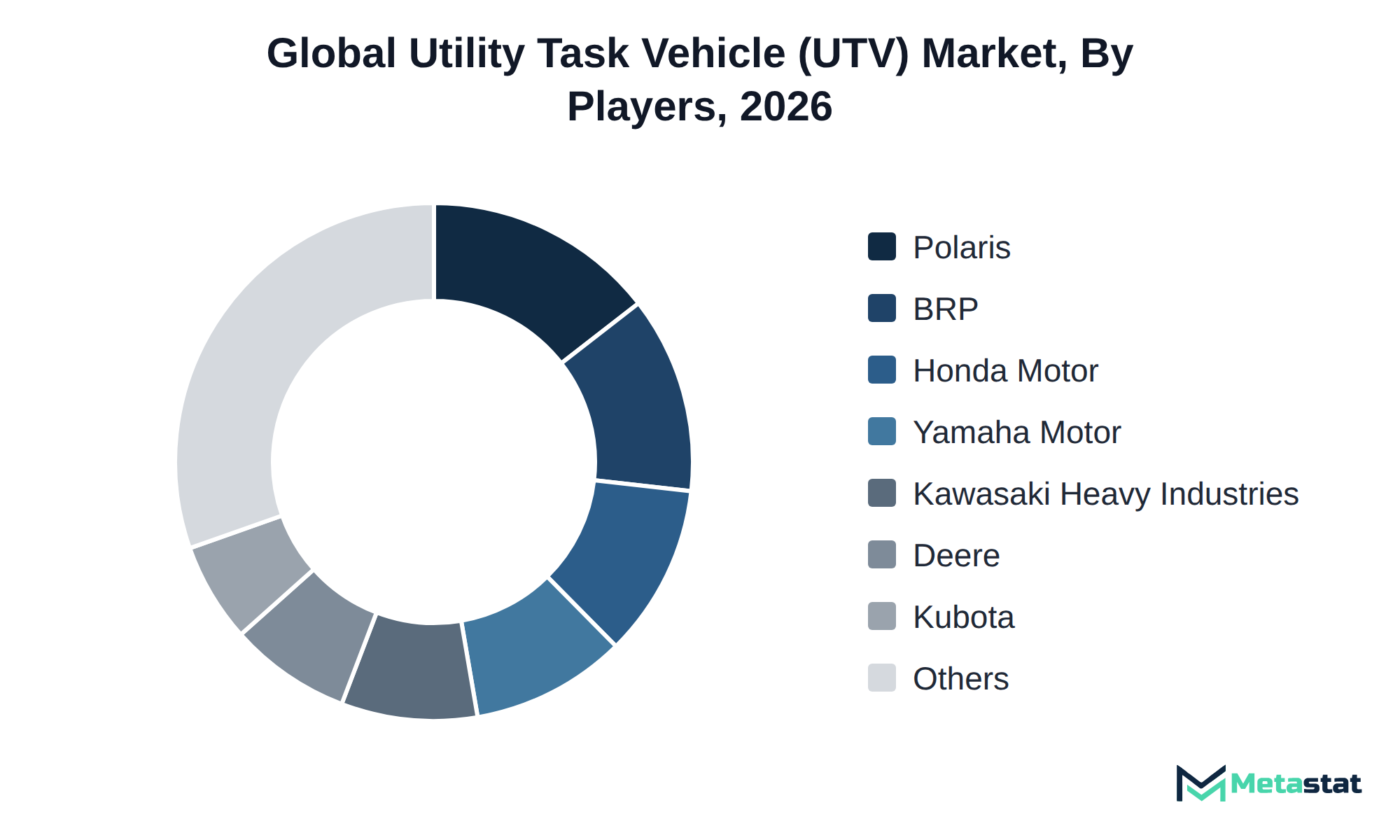
The Utility Task Vehicle (UTV) market includes a diverse range of companies, each employing unique strategies to capture market share. Key players including Polaris Inc. and BRP Inc. focus on innovation and technology to enhance their product offerings, attracting buyers seeking advanced features and improved performance. In contrast, companies like Deere & Company and Kubota Corporation emphasize robust agricultural applications, appealing to buyers in the agriculture and forestry sectors.
Buyers in the market evaluate options based on factors including price, customization, and service quality. For instance, Honda Motor Co., Ltd. and Yamaha Motor Co., Ltd. concentrate on producing competitively priced models that appeal to recreational users. Meanwhile, firms including Chongqing Huansong Industries (Group) Co., Ltd. and Segway Technology Co., Ltd. prioritize eco-friendly solutions to attract environmentally conscious consumers, particularly in the growing battery electric segment.
Achieving this growth relies on several key developments within the Utility Task Vehicle (UTV) market. However, risks exist that could hinder this expansion. The potential for economic fluctuations, particularly in North America, could dampen consumer spending on high-value utility vehicles. This region, commanding 78.8% of the market share, faces challenges from changing economic conditions that could affect both demand and investment in new product offerings. A slowdown in technological advancements, particularly in battery electric propulsion, could further impede the market's growth, limiting the competitiveness of UTVs in an evolving landscape. Overall, careful monitoring of these developments will be essential to achieving the forecasted market size.
By Propulsion Type: Gasoline, Diesel, Battery Electric, Hybrid Electric
By Application: Sports and Recreation, Agriculture and Forestry, Construction and Industrial Operations, Grounds and Property Maintenance, Military and Law Enforcement, Others (Emergency Response and Tourism)
The report strategically identifies and profiles the key market players and analyses their core competencies in each sub-segment of the Utility Task Vehicle (UTV) market.
Report Attributes | Details |
Study Period | 2021-2033 |
Base Year | 2025 |
Estimated Year | 2026 |
Forecast Period | 2026-2033 |
Historical Period | 2021-2025 |
Growth Rate | CAGR 6.0% from 2026 to 2033 |
Revenue Unit | USD million |
Segmentation | By Propulsion Type, Application, Seating Capacity, Drive Type, and Region |
By Region | North America (By Propulsion Type, Application, Seating Capacity, Drive Type, and Country)
|
Europe (By Propulsion Type, Application, Seating Capacity, Drive Type, and Country)
| |
Asia Pacific (By Propulsion Type, Application, Seating Capacity, Drive Type, and Country)
| |
South America (By Propulsion Type, Application, Seating Capacity, Drive Type, and Country)
| |
Middle East and Africa (By Propulsion Type, Application, Seating Capacity, Drive Type, and Country)
|
Find answers to common questions about this report
The Utility Task Vehicle (UTV) market size was valued at USD 8.6 million in 2025.
The market is projected to grow at a CAGR of 6.0% during the forecast period from 2026 to 2033.
The North America Utility Task Vehicle (UTV) market size is estimated to reach USD 10 million by 2033.
Gasoline propulsion leads the Utility Task Vehicle market with a value of USD 6.5 million in 2026. This segment shows significant demand compared to other propulsion types.
The surge in recreational usage influences purchasing decisions, particularly among outdoor enthusiasts and hobbyists seeking versatile vehicles. Technological advancements drive improvements in performance and efficiency, appealing mainly to commercial buyers in agriculture, construction, and property maintenance.
North America holds the dominant share of the Utility Task Vehicle market, accounting for 78.8 percent of the total market. This significant share reflects the region's strong demand and established infrastructure for UTVs.
Price sensitivity and rising raw material costs restrain growth in the Utility Task Vehicle (UTV) market. Buyers, particularly in agriculture and recreational sectors, face tighter budgets, leading to delayed purchases. Increased expenses for components hinder profitability, affecting manufacturers' ability to expand market share effectively.
The rise in demand for environmentally friendly alternatives drives adoption of hybrid electric Utility Task Vehicles (UTVs), appealing to buyers across agriculture, construction, and recreational sectors. This trend aligns with increasing consumer awareness of sustainability and energy efficiency, positioning hybrid models as attractive options for those seeking lower emissions without compromising performance.
The Utility Task Vehicle (UTV) market is estimated to reach a valuation of USD 13.7 million by 2033.
Key players operating in the Utility Task Vehicle (UTV) market include Polaris Inc., BRP Inc., Honda Motor Co., Ltd., Yamaha Motor Co., Ltd., Deere & Company, Kubota Corporation, and Shandong Odes Industry Co., Ltd.
The analysts below cover Automotive and Transportation research at Metastat Insights.
LEAD ANALYST
Utkarsh Khirodkar is a Lead Market Research Analyst at MetaStat Insight, specializing in market intelligence, technology sector assessments, and competitive strategy.

ENERGY & INFRASTRUCTURE INDUSTRY CONSULTANT
Automotive and Transportation · Electronics and Semiconductor · Energy and Power · Machinery & Equipment
Saurabh Vasant Ganvir consults for Energy & Infrastructure Industry at MetaStat Insight, specializing in renewable energy, solar EPC, and electric vehicle (EV) infrastructure markets.
Evaluating sensor fusion reliability across harsh operating environments can be tricky without field-validated data. The study on agricultural autonomous guidance systems clearly separated stereo vision setups from automotive-grade solid-state LiDAR. We appreciated the regional infrastructure analysis, specifically around RTK network density across North America and South America. During our follow-up consultation, the MetaStat Insight team walked through tier-two perception software partnerships, giving our engineering leads a practical basis for vendor shortlisting.
Analyzing the transition from natural gas to green hydrogen in iron ore reduction requires realistic infrastructure timelines. Meta stat insight supplied a detailed regional assessment of DRI plant conversion costs and scrap metal availability in North America and Western Europe. Their report carefully examined pellet quality specs and electrical grid access constraints without making oversimplified market assumptions. The research material served as a practical reference during internal technology roadmap discussions.
Integrating zero-trust access controls across legacy electronic health record systems involves complex compliance overhead. Team produced an analysis that clearly separated identity governance and administration tools from privileged access management platforms. Their evaluation of HIPAA and GDPR compliance features across cloud native solutions gave our architecture group clear baseline criteria. The custom data request regarding biometric authentication adoption in hospital networks was returned promptly with clear documentation.
Explore related market intelligence reports worth reading alongside this one.
Starting from
$2950