
LEAD ANALYST
Utkarsh Khirodkar is a Lead Market Research Analyst at MetaStat Insight, specializing in market intelligence, technology sector assessments, and competitive strategy.

Global Electric Vehicle Traction Motor Market Size, Share, By Propulsion Type (Pure Hybrid Electric Vehicles, Plug-in Hybrid Electric Vehicles and Battery Electric Vehicles), By Motor Technology (Permanent Magnet Synchronous Motors, Brushless DC Motors, Induction Motors, Wound-Rotor / Separately Excited Synchronous Motors and Switched Reluctance Motors), By Power (Less than 100kW and 100kW to 250 kW), By Vehicle Type (Passenger Vehicles, Heavy Commercial Vehicles, Light Commercial Vehicles and Two-wheelers), Industry Analysis, Growth, Trends, and Forecast, 2026-2033
Report ID
MSI-5288
Published
September, 2026
Pages
257 Pages
Format
Historical
Base year
Forecast
Forecast period
Report Details
Market Valuation: Valued at $17.9 Billion in 2025, projected to reach $190.4 Billion by 2033 at a 34.4% CAGR.
Dominant Segment: The passenger vehicles segment leads the market, driven by increasing consumer demand for environmentally friendly transportation options and advancements in battery technology.
Geographic Lead: Asia Pacific is the fastest-growing region, fueled by rapid adoption of electric vehicles and significant investments in infrastructure development.
What's Inside: The report provides comprehensive coverage of market dynamics, competitive landscape, and detailed segment analyses across propulsion types, motor technologies, and vehicle categories.
Emerging Opportunities: The market is witnessing growth opportunities from urbanization and rising disposable incomes in developing regions, enhancing demand for electric vehicles.
Choose Your License
Global Electric Vehicle Traction Motor Market
The global Electric Vehicle Traction Motor market was valued at USD 17.9 billion in 2025 and is projected to reach USD 190.4 billion by 2033, growing at a CAGR of 34.4% over the forecast period.
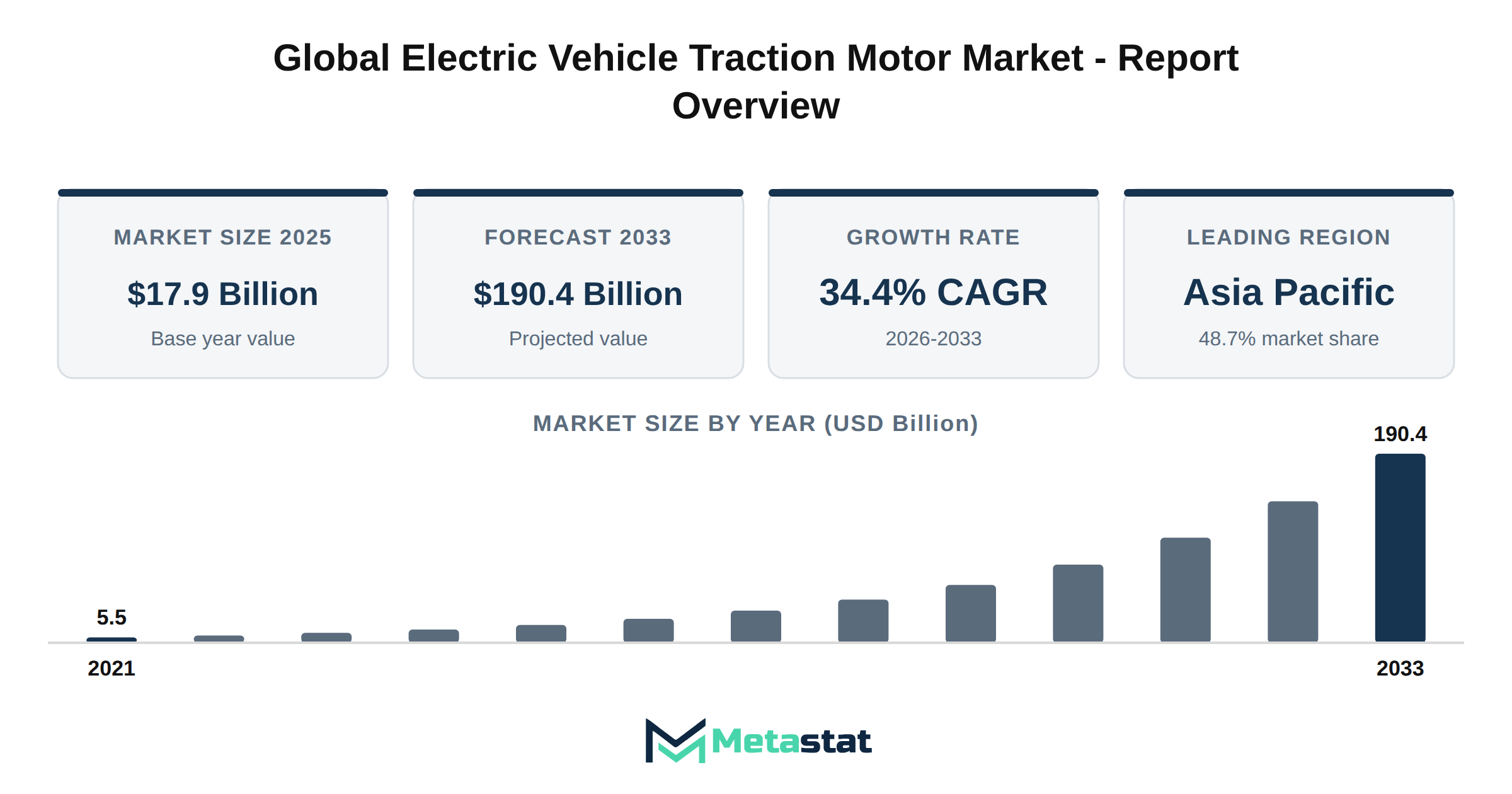
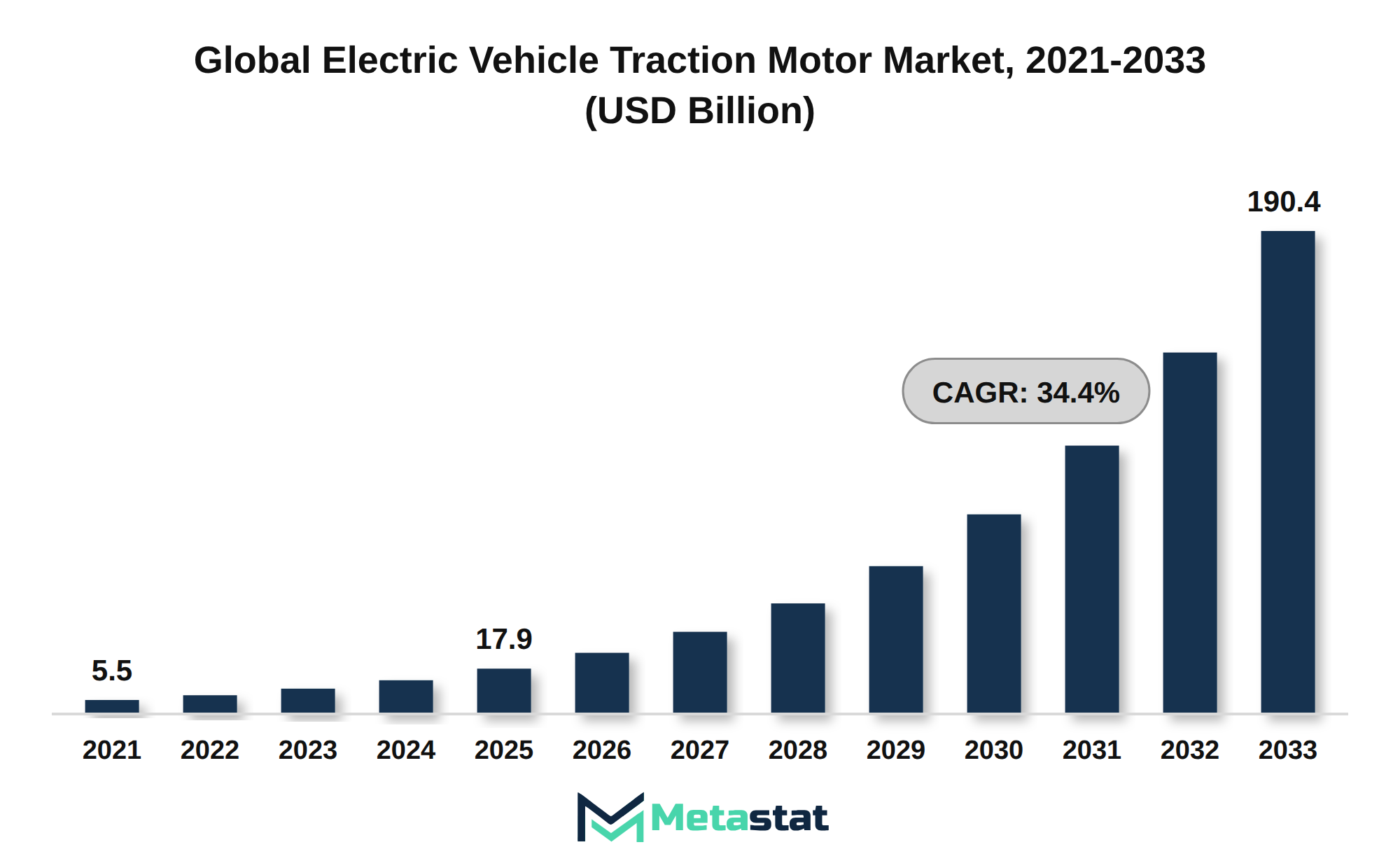
The global Electric Vehicle Traction Motor market reached a base value of USD 17.9 billion in 2025, demonstrating a significant increase from USD 5.5 billion in 2021. By 2033, the market is projected to achieve a value of USD 190.4 billion, reflecting a compound annual growth rate (CAGR) of 34.4% during the forecast period from 2026 to 2033.
Technological advancements in electric vehicle traction motors shape next-generation EV platforms. Rising production of battery electric vehicles fuels demand for efficient and high-performance traction motors, particularly in the passenger vehicle segment, which is anticipated to dominate the market. Permanent magnet synchronous motors (PMSM) lead the adoption of EV powertrains, enabling enhanced efficiency and performance.
The shift towards sustainable practices drives the growing role of induction and wound-rotor motors in reducing reliance on rare-earth materials. High-power traction motors are in demand for premium and performance electric vehicles, providing the necessary power and efficiency for advanced driving experiences. The growth of electric two-wheelers expands the need for compact traction motors, catering to a diverse range of vehicle types.
Commercial vehicle electrification creates new opportunities for traction motors, supporting the transition towards more sustainable transportation solutions. The development of 800V EV architectures accelerates the advancement of high-efficiency motors, enhancing overall vehicle performance and range. Innovations in axial flux motors transform electric vehicle power density, allowing for lighter and more compact designs.
Risks associated with rare-earth magnet supply influence technology choices in electric vehicle motors, prompting manufacturers to explore alternative materials and designs. The introduction of silicon carbide inverters significantly improves the efficiency of electric traction motors, contributing to enhanced vehicle performance. Integrated e-axle systems streamline the architecture of EV motors and drivetrains, simplifying design and manufacturing processes.
Innovations in traction motor thermal management support higher power densities, crucial for meeting the demands of modern electric vehicles. The market experiences capacity expansion and localization trends in manufacturing, particularly driven by China's leadership in EV production, which strengthens traction motor demand in the Asia Pacific region. Investments in North America enhance EV manufacturing capabilities, fortifying traction motor supply chains.
Technological advancements in the Electric Vehicle Traction Motor market focus on enhancing performance and efficiency. Innovations in battery electric vehicle production drive significant demand for traction motors, ensuring compatibility with next-generation electric vehicle platforms. The adoption of permanent magnet synchronous motors continues to dominate the powertrain landscape, fulfilling the requirements for high efficiency and compact design.
The role of induction and wound-rotor motors is growing, particularly in strategies aimed at reducing reliance on rare-earth materials. Premium and performance electric vehicles exhibit an increasing demand for high-power traction motors, pushing manufacturers to refine their offerings. The expansion of electric two-wheelers contributes to the rising need for compact traction motors, appealing to urban commuters and environmentally conscious consumers.
Commercial vehicle electrification presents new opportunities in the traction motor sector, enabling the development of robust solutions tailored to the requirements of larger vehicles. The transition to 800V electric vehicle architectures accelerates the development of high-efficiency motors, enhancing overall vehicle performance and operational efficiency.
Innovations in axial flux motor design transform the power density of electric vehicles, making them lighter and more efficient. Supply risks associated with rare-earth magnets compel manufacturers to explore alternative technologies and materials, reshaping choices within the market. Silicon carbide inverters play a crucial role in improving electric traction motor efficiency, providing better thermal performance and higher power output.
The emergence of integrated e-axle systems changes the architecture of electric motors and drivetrains, streamlining designs while maximizing efficiency. Innovations in thermal management for traction motors support higher power density and enhance overall system performance. The trend of expanding manufacturing capacity and localization within the market addresses regional supply chain dynamics, ensuring availability and reliability.
China's leadership in electric vehicle production significantly influences traction motor demand in the Asia Pacific region, driving competitive advancements. Investments in North American electric vehicle manufacturing strengthen local traction motor supply chains, driving innovation and collaboration among key players. European electrification regulations promote the adoption of advanced traction motor technologies, aligning with sustainability and energy efficiency goals.
Intensifying competition among OEMs and Tier 1 suppliers in electric drive systems drives innovation and reduces costs across the market. Strategic partnerships and acquisitions reshape the dynamics of the electric vehicle traction motor industry, enabling firms to leverage complementary strengths and enhance their market positions. Cost reduction strategies in manufacturing processes play a vital role in maintaining competitiveness and meeting rising demand.
The exploration of sustainable magnet materials and rare-earth recycling in electric vehicle motors signifies a commitment to environmental responsibility within the industry. Future growth opportunities arise in magnet-free electric traction motors, presenting innovative solutions that reduce dependency on scarce materials. Software-controlled motor optimization enhances electric vehicle range and performance, providing a critical advantage in a highly competitive market.
Passenger vehicle electrification remains the core segment driving traction motor demand, with an increasing focus on performance and efficiency. Emerging opportunities in high-torque motors cater to the needs of electric trucks and buses, expanding the market's reach into commercial applications.
Increasing emission regulations stimulate demand for electric vehicles, driving growth in the Electric Vehicle Traction Motor market. Vehicle manufacturers face pressure to comply with stricter emissions standards, which accelerates the adoption of electric propulsion technologies. The transition toward cleaner transportation is critical for complying with environmental mandates, influencing investment strategies across the automotive industry.
Investment in research and development to enhance electric vehicle performance has become a priority among vehicle manufacturers. Enhanced traction motor technologies fuel operational efficiency and improve performance metrics in electric vehicles. This shift leads to rising competition among manufacturers to innovate and deliver high-performance electric traction motors.
Growth in urbanization and changing consumer preferences toward sustainable transportation solutions further augment the market. Consumers exhibit a strong inclination toward electric vehicles due to their reduced carbon footprint compared to traditional combustion engines. This trend prompts manufacturers to prioritize electric vehicle production, increasing the demand for electric traction motors.
The Electric Vehicle Traction Motor market is projected to expand rapidly, driven by a convergence of technological advancements and regulatory pressures. The continued evolution of emission limits will reinforce investments in electric mobility, positioning the market for substantial growth in the coming years.
Increased capital investment in the Electric Vehicle Traction Motor market significantly influences technological advancement and market expansion. Economic growth enables higher venture funding, which supports research and development in electric vehicle technologies. This trend reflects a global commitment to transition towards sustainable energy solutions, enhancing the market's competitive landscape. Growth in GDP across various regions allows manufacturers to invest in advanced production facilities and innovative processes, promoting faster adoption of electric vehicles.
Technological integration becomes essential, with automation and artificial intelligence streamlining manufacturing processes. Digitizing legacy systems improves operational efficiency and reduces production costs, directly benefiting the overall market. Enhanced productivity provides a competitive advantage among suppliers, enabling them to offer advanced electric vehicle motors that meet evolving consumer demands.
Infrastructure development plays a crucial role in this context. Upgrading charging networks and production capabilities supports wider adoption of electric vehicles, driving growth in the market. Improved access to charging facilities increases consumer confidence, further propelling demand for electric vehicle traction motors.
While investments continue to flow into the sector, the market is set to experience substantial growth. With a projected compound annual growth rate of 34.4% from 2026 to 2033, the Electric Vehicle Traction Motor market demonstrates a strong correlation between capital investment, technological advancement, and market expansion.
Heightened regulatory pressures represent a significant restraint for the Electric Vehicle Traction Motor market. Compliance hurdles associated with strict environmental policies complicate the operational landscape for manufacturers. Adhering to evolving legal mandates demands substantial resources and investment, hindering smaller players from accessing necessary capital to compete effectively.
Macroeconomic headwinds contribute to market challenges, with inflationary pressures driving up the costs of raw materials and production. Escalating operating costs impact profit margins for manufacturers, creating a ripple effect throughout the supply chain. Supply chain disruptions and geopolitical instability exacerbate these issues, leading to delays and increased costs in sourcing critical components.
Technological obsolescence presents another barrier. Rapid advancements in electric vehicle technology necessitate continuous investment in research and development. Companies face substitution risks from alternative technologies, compelling them to innovate consistently or risk losing market share. Infrastructure gaps and connectivity deficits undermine the potential for widespread electric vehicle adoption, limiting the deployment of traction motors across various vehicle types.
The market experiences fragmentation, with regional adoption resistors varying significantly. Cultural barriers impede the acceptance of electric vehicles in several markets, while slowing downstream demand in mature regions poses challenges for growth in the Electric Vehicle Traction Motor market. These factors collectively influence market dynamics, necessitating strategic approaches to navigate complexities and capitalize on emerging opportunities.
Geopolitical fragmentation significantly affects the Electric Vehicle Traction Motor market by disrupting supply chains and increasing operational costs. Rising trade deficits and tariff friction create barriers for manufacturers attempting to source materials and components efficiently. Volatility in feedstock prices intensifies these challenges, leading to increased costs that suppliers absorb, which affects overall market pricing strategies.
Technological disruptions complicate research and development integrations, necessitating substantial investment in advanced technologies. This complexity delays the introduction of innovative products into the market, reducing competitiveness. Interoperability friction exacerbates these issues, making it difficult for different systems and components to work together seamlessly, which hinders adoption rates among manufacturers.
Logistics disruptions, driven by geopolitical tensions and environmental factors, create uncertainty in the supply chain. This uncertainty leads to erratic delivery schedules and increased costs for manufacturers. Tightening global regulatory standards and compliance overhead present challenges that strain resources, limiting operational flexibility and increasing the risk of penalties.
Rising input costs and margin pressures force manufacturers to evaluate their pricing models, impacting profitability. Workforce skill gaps hinder the ability to adapt to technological advancements, while talent retention pressures create obstacles in maintaining a skilled labor force. This scenario slows innovation and ultimately affects the growth trajectory of the market.
Environmental lifecycle footprints and decarbonization mandates influence product development, driven by manufacturers striving to meet sustainability demands. However, infrastructure gaps and retrofitting barriers complicate the transition to new technologies, leading to implementation bottlenecks that slow down market growth. Lastly, intellectual property protection deficits, alongside increasing cybersecurity risks, pose threats to the stability and viability of businesses within the Electric Vehicle Traction Motor market.
The Electric Vehicle Traction Motor market experiences significant opportunities stemming from emerging regional demands and infrastructure modernization efforts. Rapid adoption of electric vehicles across various regions, particularly in Asia Pacific, aligns with the growing emphasis on sustainability and green transformations. This trend encourages investments in infrastructure development, facilitating the deployment of advanced traction motor technologies.
Geographical expansion into developing markets enhances opportunities for traction motor suppliers. Increased urbanization coupled with rising disposable incomes in these regions leads to heightened demand for electric vehicles. Manufacturers focusing on local production effectively reduce supply chain complexities and improve responsiveness to market needs. Integration of localized production strategies aligns with the global push for sustainability and eco-friendly practices.
Technological disruptions significantly influence the trajectory of the electric vehicle sector. Innovations including improved motor efficiency and integration of smart technologies drive consumer interest and adoption. Players in the market explore next-generation innovations to enhance the performance of traction motors, attracting investments and creating competitive advantages.
Digital transformation within the automotive industry reshapes buying behaviors and procurement processes. Manufacturers leverage digital tools to streamline operations, optimize value chains, and enhance customer engagement. This shift, driven by evolving consumer preferences, encourages suppliers to adapt their commercial models to meet the demands of a technologically savvy customer base.
Strategic consolidation through mergers and acquisitions provides an avenue for market players to enhance their capabilities and offer comprehensive solutions. Such efforts focus on integrating diverse technologies and expanding product portfolios, enabling better competition in the evolving market. This strategic alignment supports the growth of the Electric Vehicle Traction Motor market, creating an environment where companies respond effectively to market dynamics.
Overall, the convergence of these factors creates a robust environment for growth in the Electric Vehicle Traction Motor market. Increased investments, technological advancements, and evolving regional demands position the sector for substantial expansion through 2033, with an anticipated market value reaching USD 190.4 billion.
The Global Electric Vehicle Traction Motor market is segmented based on Propulsion Type, Motor Technology, Power, and Vehicle Type.
Valued at USD 5.6 billion in 2026, the Pure Hybrid Electric Vehicles segment is projected to reach USD 35.1 billion by 2033, presenting a CAGR of 30.1% during the forecast period. This growth results from an increasing focus on fuel efficiency and environmental sustainability, which prompts consumers and manufacturers to adopt hybrid technologies. Regulatory compliance standards targeting emissions reduction further enhance market demand, driven by governments around the world implementing stricter policies aimed at curtailing greenhouse gas emissions.
Technological maturation in battery and motor systems drives adoption by improving the performance and efficiency of Pure Hybrid Electric Vehicles, enabling greater consumer acceptance. The integration of next-gen upgrades including advanced regenerative braking systems and enhanced energy management capabilities is expected to influence product evolution significantly. While manufacturers innovate their offerings, these advancements create strategic opportunity windows for market players aiming to capture emerging segments.
End-use dynamics exhibit a shift towards hybrid technology in passenger vehicles and commercial applications, enhancing the segment's attractiveness. Cost structures in the market reflect ongoing investment in R&D and production optimization, impacting pricing strategies. Increased competition among suppliers and fluctuating raw material costs create pricing volatility, which could affect profit margins. Effective supply chain resilience remains critical for manufacturers to mitigate logistics vulnerabilities and ensure steady production flows.
The increasing demand for Pure Hybrid Electric Vehicles in the Electric Vehicle Traction Motor market benefits from supportive regulatory frameworks, technological advancements, and evolving consumer preferences that prioritize sustainability and efficiency.
Growth in the Plug-in Hybrid Electric Vehicles segment arises from increasing consumer preference for versatile vehicle options that combine electric and traditional combustion technologies. This shift reflects a broader trend towards sustainable transportation solutions without sacrificing convenience and range, appealing to environmentally conscious consumers. The segment is expected to reach USD 24.2 billion by 2033, at a CAGR of 35.4% during the forecast period, demonstrating strong market confidence.
Adoption of Plug-in Hybrid Electric Vehicles is supported by advancements in battery technology, increasing efficiency, and reductions in production costs. These factors enhance vehicle performance and affordability, enabling a wider spectrum of consumers to consider electric options. Favorable government policies and incentives promote the transition to hybrid technologies, contributing to market expansion. The Electric Vehicle Traction Motor market is positioned to benefit from these dynamics.
Consumer demand shifts towards this segment reflect heightened awareness of environmental issues and a preference for energy-efficient solutions. The integration of advanced motor technologies and innovations within the Plug-in Hybrid Electric Vehicles segment leads to enhanced performance, attracting buyers from various demographics and driving competition among manufacturers. Consequently, this segment represents a key area of growth within the larger Electric Vehicle Traction Motor market.
Increased adoption of Battery Electric Vehicles (BEVs) results from consumer preferences shifting towards sustainable transportation solutions. Environmental awareness drives consumers to seek alternatives to traditional internal combustion engines, leading to significant investments in BEV technology. The segment is expected to reach USD 131.1 billion by 2033.
Technological maturation significantly influences segment growth, with advancements in battery technology enhancing energy density and reducing costs. These improvements enable manufacturers to produce more efficient and affordable BEVs, leading to a broader market adoption. Competitive pricing dynamics among manufacturers further stimulate growth within the market, ensuring that BEVs remain accessible to a wider range of consumers.
Regulatory compliance standards significantly impact the market, driven by governments worldwide implementing stringent emissions regulations to combat climate change. These policies incentivize the shift towards electric mobility, increasing demand for BEVs. Supportive infrastructure developments, including charging networks, further enhance consumer confidence in choosing electric vehicles.
Supply chain resilience becomes essential because demand escalates, with manufacturers focusing on securing raw materials for battery production. Strategic investments in lithium, cobalt, and nickel supply chains mitigate risks associated with material shortages. The ongoing evolution of battery technologies, including the emergence of solid-state batteries, poses opportunities for new entrants in the market.
Overall, the Battery Electric Vehicles segment presents significant growth opportunities within the Electric Vehicle Traction Motor market, driven by shifting consumer preferences, technological advancements, and supportive regulatory frameworks.
Significant growth in the Permanent Magnet Synchronous Motors (PMSM) segment highlights its increasing relevance in the Electric Vehicle Traction Motor market. Valued at USD 12.6 billion in 2026, this segment is projected to reach USD 105.9 billion by 2033, at a CAGR of 35.5% during the forecast period. This expansion is driven by a surge in demand for energy-efficient and high-performance electric motors, primarily used in various electric vehicle applications.
Technological maturation in PMSM technology contributes to enhanced efficiency and reliability, propelling adoption across multiple vehicle types. The transition toward advanced motor technologies aligns with the automotive industry's shift toward sustainability, incentivizing manufacturers to invest in PMSMs. Ongoing advancements in motor design and materials continue to improve performance metrics, further strengthening the segment's position within the market.
Strategic opportunity windows exist for manufacturers focusing on PMSMs, particularly in regions with high electric vehicle penetration. Increasing consumer awareness regarding environmental issues and the rising availability of electric vehicle models encourage greater end-use dynamics. Favorable regulatory compliance standards promoting electric mobility stimulate further growth within this segment.
Cost structures for PMSMs reflect the balance between raw material sourcing and manufacturing efficiencies. Fluctuations in material prices impact overall production costs, prompting manufacturers to optimize supply chain resilience. Rising demand for PMSMs emphasizes the importance of strategic sourcing and efficient logistics to maintain competitive pricing. This segment's evolution indicates an ongoing trend toward innovation and adaptation, positioning manufacturers to capitalize on the expanding Electric Vehicle Traction Motor market.
Brushless DC Motors (BLDC) have gained traction within the Electric Vehicle Traction Motor market due to various factors driving their adoption. Increased focus on energy efficiency and performance enhancements in electric vehicles increases demand for BLDC technology. This segment is characterized by its ability to offer higher efficiency compared to traditional brushed motors, resulting in lower energy consumption and reduced maintenance requirements. The trend towards electrification across various vehicle types further supports the expansion of this segment.
Technological maturation significantly influences the growth of the BLDC segment. Innovations in motor design, control systems, and materials contribute to improved performance and reliability. Manufacturers invest in research and development to refine BLDC technology, leading to next-generation upgrades that enhance capabilities. These advancements enable greater integration of BLDC motors in diverse applications, from passenger vehicles to commercial vehicles.
By 2033, the Brushless DC Motors (BLDC) segment is estimated to reach USD 32 billion, at a CAGR of 33% during the forecast period. This growth reflects the increasing acceptance of electric vehicles and the corresponding need for efficient motor solutions. The regulatory landscape further influences the market, with stricter emission standards encouraging manufacturers to adopt advanced motor technologies.
Supply chain resilience and raw material sourcing remain critical factors in the operation of the BLDC segment. Manufacturers face challenges related to sourcing high-quality materials necessary for the production of BLDC motors. Strategic opportunity windows arise because companies seek to mitigate risks associated with supply chain disruptions. Overall, the evolving dynamics within the Electric Vehicle Traction Motor market position BLDC motors because a vital component in the transition towards sustainable transportation.
Induction Motors represent a significant segment within the Electric Vehicle Traction Motor market, projected to achieve USD 21.9 billion by 2033. Primary demand drivers include the rising popularity of electric vehicles, coupled with increasing investments in sustainable technologies. These motors feature strong performance, efficiency, and adaptability across various vehicle types, enhancing their appeal among manufacturers.
Technological maturation influences the segment's growth. Advancements in induction motor designs lead to improved efficiency and performance. Innovations in manufacturing processes and materials contribute to reductions in production costs, positioning induction motors favorably within the market. The evolution of product offerings ensures that these motors meet the diverse needs of modern electric vehicles, expanding their application in passenger vehicles and commercial transportation.
Consumption shifts toward electric and hybrid vehicles fuel demand for induction motors, driven by consumer preferences for sustainable options. Regulatory compliance standards push manufacturers to adopt more efficient technologies, facilitating broader market adoption. With an increasing focus on environmental sustainability, the segment benefits from favorable policies and incentives aimed at promoting electric vehicle usage.
The Induction Motors segment experiences significant growth within the Electric Vehicle Traction Motor market, propelled by technological advancements, shifting consumer preferences, and supportive regulatory frameworks. The overall market environment creates opportunities for strategic investments, reinforcing the importance of this segment in the evolving field of electric mobility.
The Wound-Rotor / Separately Excited Synchronous Motors (WRSM/SESM) segment is projected to grow at a CAGR of 36.2% during the forecast period. This growth arises from increasing demand for high-efficiency electric motors in various electric vehicle applications. The surge in electric vehicle adoption and the transition toward sustainable energy solutions drive the need for advanced motor technologies that offer improved performance and reliability.
Investments in research and development play a crucial role in enhancing the capabilities of WRSM/SESM technologies. Manufacturers focus on product evolution to meet stringent performance standards set by regulatory bodies, ensuring compliance with environmental regulations. The segment's growth reflects a broader trend within the Electric Vehicle Traction Motor market, where technological maturation leads to enhanced operational efficiencies and reduced costs.
End-use dynamics indicate a shift toward more energy-efficient systems, with WRSM/SESM motors gaining acceptance in both passenger and commercial vehicle segments. The growing emphasis on sustainability and reduced emissions creates a favorable environment for the segment's expansion, making it an attractive area for capital investments. While market participants adapt to evolving consumer preferences, the adoption of WRSM/SESM technologies is expected to accelerate, shaping the future of the Electric Vehicle Traction Motor market.
Emerging interest in Switched Reluctance Motors (SRM) represents a notable trend within the Electric Vehicle Traction Motor market. Factors including their simple construction, cost-effectiveness, and robust performance in various conditions enhance their appeal to manufacturers. The segment attracts attention due to its potential for improved efficiency and reduced material costs compared to traditional motor technologies.
Adoption of SRM technology is influenced by advancements in control techniques and power electronics, which enable better performance management. These developments align with industry efforts to enhance driving range and energy efficiency for electric vehicles. While manufacturers increasingly focus on sustainability, adopting SRMs supports goals to reduce reliance on rare earth materials commonly used in other motor technologies.
Increased demand for electric vehicles drives the exploration of SRMs, particularly in application areas that demand lightweight and compact designs. A push for cleaner transportation options aligns with the growing interest in SRM technology, encouraging investments in research and development. Manufacturers recognize the potential of SRMs to penetrate various vehicle categories, including passenger and commercial vehicles, while seeking to meet evolving consumer preferences and regulatory requirements.
Regulatory compliance and environmental standards further increase interest in this motor technology. Governments worldwide implement stricter emissions regulations, prompting manufacturers to prioritize technologies that contribute to compliance while enhancing vehicle performance. This regulatory environment creates a strategic opportunity for SRMs to capture market share within the expanding Electric Vehicle Traction Motor market.
Interest in Brushed DC Motors arises from their simplicity and cost-effectiveness, appealing to manufacturers seeking efficient solutions for various electric vehicle applications. These motors find use in applications where precise control and low maintenance requirements are essential, making them suitable for light-duty electric vehicles and two-wheelers. The segment benefits from ongoing technological maturation; advancements enhance performance characteristics and extend operational life.
Demand for Brushed DC Motors aligns with the growing trend toward electrification in transportation, driven by sustainability goals and government incentives promoting electric vehicle adoption. The market experiences significant momentum from shifts in consumer preferences toward electric mobility, with an increasing focus on environmentally friendly options. Regulatory compliance standards demanding lower emissions support the transition to electric vehicles, further boosting demand for this technology.
Investment in next-generation upgrades for Brushed DC Motors focuses on improving energy efficiency and performance while reducing production costs. Companies operating in this segment explore strategic opportunity windows by investing in research and development initiatives that encourage innovation. The evolution of product designs prioritizes integration with advanced battery systems, enhancing overall vehicle performance and driving growth in the Electric Vehicle Traction Motor market.
Cost structures for Brushed DC Motors depend on the prices of raw materials, which experience volatility influenced by global supply chain dynamics. Manufacturers face margin pressures due to fluctuating costs, necessitating strategies to optimize production processes while maintaining product quality. Strategic sourcing of materials and resilience in supply chains become crucial for companies seeking to sustain competitive advantages.
Adoption of Brushed DC Motors continues to face challenges from disruptive alternatives including brushless motors, which offer improved efficiency and performance metrics. Nevertheless, the segment retains relevance through its established presence in smaller electric vehicles and cost-sensitive applications. Emphasis on technological advancements and product evolution will define the future dynamics of the Electric Vehicle Traction Motor market.
Growing interest in Synchronous Reluctance Motors (SRM) indicates their potential within the Electric Vehicle Traction Motor market. Their unique design offers advantages in efficiency and reliability, appealing to manufacturers seeking to enhance performance while minimizing costs. The segment benefits from increased focus on energy efficiency across various applications, aligning with the broader trend of sustainability in transportation.
Technological maturation plays a critical role in the segment's evolution. Advancements in materials and manufacturing techniques enhance the performance characteristics of synchronous reluctance motors. These developments contribute to reduced production costs and improved operational efficiency, attracting interest from vehicle manufacturers aiming to meet stringent emission regulations.
Adoption hinges on growing consumer demand for electric vehicles. This shift encourages manufacturers to explore diverse motor technologies, including synchronous reluctance types, which offer competitive advantages in specific applications. Electric vehicle sales continue to rise, driving the market for these motors, supported by an increasing number of automotive players entering the electric mobility sector.
Challenges, including supply chain vulnerabilities and raw material sourcing issues, impact the overall dynamics of the segment. Manufacturers face pressures related to the availability of critical components, which influence pricing strategies and market positioning. Strategic partnerships and investments in local sourcing initiatives provide opportunities for companies to enhance supply chain resilience.
Future investment in R&D remains vital for the next generation of synchronous reluctance motors. Ongoing innovations are expected to drive further enhancements in efficiency and performance, reinforcing the segment's role within the Electric Vehicle Traction Motor market. Manufacturers prioritize advanced motor technologies, and the potential for synchronous reluctance motors to gain market share increases significantly.
Valued at USD 12.4 billion in 2026, the segment for Less than 100kW is projected to reach USD 90.7 billion by 2033, at a CAGR of 32.9% during the forecast period. Demand for electric vehicles in urban settings drives growth in this segment, driven by consumers seeking efficient energy solutions for short-range travel. The increasing focus on reducing carbon emissions further supports the adoption of lightweight electric vehicles that feature traction motors in the less than 100kW category.
Technological advancements significantly enhance motor efficiency and performance, contributing to market expansion. Innovations in battery technology and energy management systems support the integration of less powerful motors in compact vehicles, boosting overall traction motor performance. Consumers show a preference for vehicles that offer longer ranges and faster charging. This preference leads manufacturers to invest in product evolution to meet these demands.
Regulatory compliance standards increasingly favor low-power electric vehicles, creating a conducive environment for market growth. Government incentives for electric vehicle purchases further stimulate demand, particularly in metropolitan areas where public transport systems prioritize electric mobility solutions. Manufacturers adapt their strategies to capitalize on these shifts, leading to increased competitive dynamics in the Electric Vehicle Traction Motor market.
Cost structures in the less than 100kW segment benefit from economies of scale because production volumes increase. Pricing volatility in raw materials, including rare earth metals, influences margins, prompting manufacturers to explore alternative sourcing strategies. Strategic opportunities arise from the growth of two-wheeler and small passenger vehicle markets, where traction motors under 100kW are most applicable. Capital investments in research and development allow companies to enhance their product offerings, ensuring sustained growth in this segment of the market.
Significant growth in the 100kW to 250 kW segment reflects an increasing demand for efficient energy solutions within the Electric Vehicle Traction Motor market. This growth stems from rising consumer interest in mid-range electric vehicles that require robust power systems while optimizing performance and efficiency. While manufacturers enhance their models with advanced technology, the segment is estimated to reach USD 68 billion by 2033, at a CAGR of 35% during the forecast period. The transition toward electric and hybrid vehicles pushes automakers to invest in innovative power systems, further driving competition and advancements in this segment.
Technological maturation significantly contributes to segment expansion, with ongoing developments in power electronics and battery technology improving the overall performance of electric vehicles. While charging infrastructure evolves and becomes more widespread, consumer confidence in electric vehicle adoption increases, propelling demand for this power range. The market experiences a shift resulting from traditional internal combustion engine vehicles moving toward electrification, influencing purchasing decisions and prompting further investments in electric vehicle technology.
Regulatory compliance standards increasingly influence market dynamics, with stricter emissions regulations incentivizing automakers to focus on electric vehicle production. This creates opportunities for manufacturers specializing in the 100kW to 250 kW segment, which aligns well with evolving regulatory frameworks. Companies that position themselves strategically within this segment gain a competitive edge, enhancing market presence and profitability.
Significant investment in electric vehicle technology drives the More than 250 kW segment of the Electric Vehicle Traction Motor market. This segment is projected to reach USD 31.7 billion by 2033, fueled by the increasing demand for high-performance vehicles, particularly in heavy commercial vehicles and luxury passenger cars. Technological advancements in power electronics and motor designs enhance the efficiency and performance of motors exceeding 250 kW, attracting manufacturers focused on delivering superior performance and reducing vehicle weight.
The segment experiences growth from the rising trend of electrification in various transportation modes, including buses and trucks, that require substantial power outputs. Regulatory pressures for emissions reductions significantly impact the market, pushing manufacturers to adopt more efficient traction motors. The surge in investments to develop fast-charging infrastructure aligns with the needs of higher-output vehicles, further supporting market growth.
Competition intensifies among suppliers, leading to innovations in motor technology and materials used in crafting these high-power systems. Manufacturers explore next-generation upgrades that enhance performance while managing costs effectively. The strategic opportunity for players lies in expanding product offerings tailored to meet the evolving demands of electric vehicle applications, particularly in commercial sectors. Overall, the More than 250 kW segment stands because a crucial driver of the Electric Vehicle Traction Motor market, aligning with broader trends towards sustainability and advanced mobility solutions.
Valued at USD 15.5 billion in 2026, the Passenger Vehicles segment is projected to reach USD 117.5 billion by 2033, at a CAGR of 33.6% during the forecast period. Increased focus on environmentally friendly transportation options drives demand for electric vehicles, leading to a surge in the adoption of electric vehicle traction motors in passenger vehicles. Factors including governmental incentives, advancements in battery technology, and a growing charging infrastructure enhance the appeal of electric passenger vehicles among consumers. Manufacturers invest in research and development to introduce next-generation electric vehicle models, promoting efficiency and performance, resulting in increased market penetration.
Regulations regarding emissions and sustainability drive the industry toward electric solutions, aligning with consumer preferences for greener alternatives. These regulations create a favorable environment for electric vehicle manufacturers, encouraging them to expand their offerings in passenger vehicles. Adjustments in consumer behavior toward sustainable mobility reinforce demand, influencing manufacturers to enhance electric motor technology. The transition toward electric vehicles in the passenger segment presents opportunities for manufacturers to innovate and capture a larger market share within the electric vehicle traction motor market.
Valued at USD 21.6 billion by 2033, the Heavy Commercial Vehicles segment exhibits a robust CAGR of 37.1% during the forecast period. Demand within this segment derives from increasing regulatory pressures to reduce emissions alongside the push for sustainability in transportation. Government initiatives promote the adoption of electric vehicles, particularly in the commercial sector, where heavy vehicles play a significant role in logistics and supply chain operations.
Technological advancements in battery and motor technologies drive segment expansion. Manufacturers focus on enhancing motor efficiency and battery life, resulting in more competitive and cost-effective solutions for heavy commercial vehicles. The integration of advanced electric traction motors enables these vehicles to operate with reduced energy consumption while maintaining high performance levels, appealing to fleet operators and logistics companies.
End-use dynamics reflect a shift towards electrification in heavy-duty applications, with companies increasingly recognizing the long-term operational savings associated with electric traction motors. The market experiences a notable increase in investments aimed at developing next-generation electric vehicles, further stimulating growth. Competition intensifies among manufacturers, making innovation a critical component in securing market share.
The market evolves, influenced by rising fuel prices and the need for efficient logistics solutions. Heavy commercial vehicles equipped with electric traction motors present an enticing alternative to traditional diesel models, addressing both environmental concerns and operational costs. This transition aligns with global trends towards greener transportation solutions, reinforcing the Heavy Commercial Vehicles segment's prominence in the Electric Vehicle Traction Motor market.
Projected growth in the Light Commercial Vehicles segment emphasizes its increasing role within the Electric Vehicle Traction Motor market. Valued at USD 15.5 billion in 2026, this segment is expected to reach USD 23.2 billion by 2033, reflecting a compound annual growth rate of 33.6%. Rising environmental concerns, along with stringent regulatory frameworks, drive demand for electric solutions in commercial applications. Adoption among logistics and delivery services accelerates due to companies seeking to reduce their carbon footprints and operational costs. Enhanced performance, lower maintenance requirements, and growing infrastructure for electric vehicles further support segment expansion.
Investment in advanced motor technologies, including Permanent Magnet Synchronous Motors (PMSM) and Brushless DC Motors (BLDC), leads to significant improvements in efficiency and reliability, catering to the specific needs of the Light Commercial Vehicles sector. These advancements facilitate optimal power delivery and performance in varied operating conditions. The market anticipates increased competition among manufacturers striving to innovate and offer differentiated products.
Collaboration between automotive manufacturers and technology firms creates strategic opportunities for market participants. This collaboration enables the development of next-generation electric vehicle platforms, reinforcing the commitment to sustainability. While the market evolves, attention will focus on improving supply chain resilience, addressing raw material sourcing, and navigating potential disruptions in logistics. These dynamics shape the future trajectory of the Light Commercial Vehicles segment within the broader Electric Vehicle Traction Motor market.
Growth in the Two-wheelers segment reflects a shift towards more sustainable transportation options. This segment is projected to grow at a CAGR of 34.3% during the forecast period. Increasing urbanization and the need for efficient mobility solutions drive demand for electric two-wheelers, particularly in densely populated regions. Regulatory support and incentives encourage consumers to shift from traditional fuel-powered two-wheelers to electric variants, enhancing market adoption.
Technological advancements in battery management systems and electric motor efficiency are critical factors in segment expansion. Improved performance metrics, including increased range and reduced charging times, attract a broader consumer base. Enhanced user experience through features like smart connectivity further boosts consumer interest in electric two-wheelers.
While the electric vehicle ecosystem matures, manufacturers in the Electric Vehicle Traction Motor market focus on developing lightweight and compact motors specifically designed for two-wheelers. Investments in research and development lead to innovative designs that optimize performance while minimizing material costs. This trend enhances a more competitive landscape, encouraging firms to differentiate their offerings in the market.
Growing acceptance of electric two-wheelers contributes to a shift in consumption patterns within the transportation sector. Increased focus on environmental sustainability and rising fuel prices incentivize consumers to consider electric options. These factors collectively enhance the attractiveness of the two-wheelers segment, positioning it for significant growth in the upcoming years.
Based on geography, the Global Electric Vehicle Traction Motor market is divided into North America, Europe, Asia-Pacific, South America, Middle East, and Africa.
The North America Electric Vehicle Traction Motor market is projected to expand at a CAGR of 34.4% during the forecast period, reaching a market size of USD 37 billion by the end of 2033. The regional market benefits from significant investments in electric vehicle infrastructure and a growing consumer shift towards sustainable transportation solutions. The United States, Canada, and Mexico represent key players in this market, each contributing to the overall expansion through a combination of regulatory support and technological advancements.
Factors driving growth in the market include increasing adoption of Battery Electric Vehicles (BEVs) and Plug-in Hybrid Electric Vehicles (PHEVs), supported by favorable government incentives and a shift in consumer preferences towards cleaner mobility options. The wide availability of incentives enhances buyer confidence and accelerates vehicle adoption rates across the region. Advancements in motor technology, particularly in Permanent Magnet Synchronous Motors (PMSM), support efficiency improvements and performance enhancements, reinforcing the market's growth trajectory.
Infrastructure modernization efforts significantly improve charging networks, boosting consumer acceptance and facilitating increased electric vehicle usage. Investments in localized manufacturing capacities streamline production and reduce supply chain complexities, strengthening overall market dynamics. The presence of established domestic players enhances competition, driving innovation and lowering costs for consumers.
The ongoing trend of nearshoring initiatives and regionalization of supply chains leads to enhanced local production capabilities, reducing dependency on overseas suppliers. This development strengthens market resilience and supports the growth of the Electric Vehicle Traction Motor market and its players. The focus on domestic production aligns with geopolitical shifts and evolving trade policies, creating a competitive environment that enhances regional capabilities.
Overall, the combination of increasing consumer demand, supportive government policies, and technological advancements positions the North America Electric Vehicle Traction Motor market for substantial growth through 2033. Competitive strategies will likely evolve, emphasizing innovation and localized manufacturing to meet the rising demands of this expanding market.
The Electric Vehicle Traction Motor market in Europe exhibits a robust trajectory, driven by increasing investments in electric mobility and government incentives aimed at reducing carbon emissions. Countries including Germany, France, and the UK lead this push, supported by local policies promoting the adoption of electric vehicles. The region's emphasis on sustainability and compliance with stringent environmental regulations significantly influences market dynamics.
Germany's automotive sector leads innovation in electric vehicle technologies, including advanced traction motors. France and Italy follow suit, leveraging their manufacturing capabilities and infrastructure to enhance local production of Electric Vehicle Traction Motors. This regional focus on localized manufacturing not only strengthens supply chains but supports job creation and technological advancements.
Europe is projected to capture a substantial share of the global market by 2025, reflecting the increasing demand for efficient and reliable electric propulsion systems. This expansion is anticipated to benefit from heightened consumer awareness and a shift in purchasing behaviors towards electric vehicles, resulting in incremental growth vectors throughout the region.
Supply chain regionalization, coupled with geopolitical factors, influences the competitive landscape, compelling manufacturers to consolidate operations within Europe. Domestic players enhance their market positioning through strategic partnerships and investments, driving innovation and improving product offerings in the Electric Vehicle Traction Motor market.
Incremental growth in this market correlates with the readiness of local infrastructure, which supports the deployment of electric vehicle charging stations and energy-efficient grid systems. These advancements support the broader adoption of electric vehicles across various segments, including passenger and commercial vehicles, creating a sustainable automotive future in Europe.
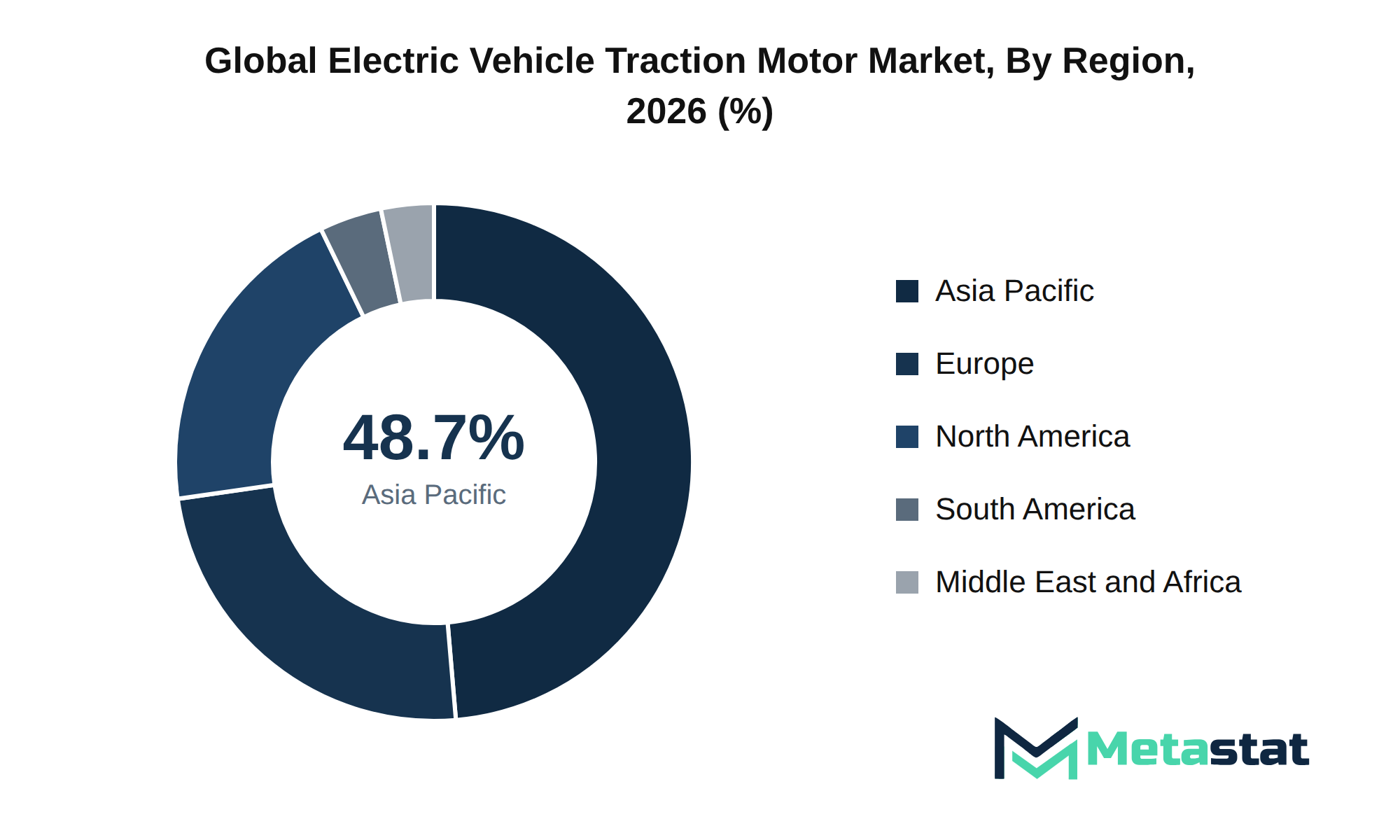
The Asia-Pacific region commands a significant share of the Electric Vehicle Traction Motor market, particularly driven by the rapid adoption of electric vehicles in countries including China, Japan, and India. This region benefits from supportive government policies and incentives aimed at promoting electric mobility, which creates a conducive environment for manufacturers and consumers alike.
China emerges because a key player in this market, demonstrating strong growth in electric vehicle production and sales. Technological advancements in motor design and efficiency, particularly in Permanent Magnet Synchronous Motors (PMSM), enhance performance and attract investments from major automotive manufacturers. Japan and South Korea follow closely, infusing substantial resources into developing innovative solutions that meet rising consumer demand.
Infrastructure modernization significantly impacts the market dynamics within Asia-Pacific. Investments in charging stations and grid enhancements facilitate increased electric vehicle adoption, addressing previous limitations in usage. The region's strong manufacturing capabilities and localized production networks contribute to lowering operational costs and enhancing supply chain efficiency.
Emerging markets within Southeast Asia offer untapped potential, with increasing urbanization and a growing middle class driving demand for electric vehicles. This presents opportunities for expansion in the Electric Vehicle Traction Motor market, compelling manufacturers to explore localized production strategies to align with regional preferences.
Competitive pressures intensify because domestic players strengthen their position while international companies seek to enter the market. The ongoing trend of vendor consolidation highlights the importance of strategic partnerships and collaboration among key industry players, enhancing innovation and market reach.
Overall, the Asia-Pacific region is poised for sustained growth in the Electric Vehicle Traction Motor market. The combination of technological advancements, government support, and expanding consumer acceptance positions this region because a critical driver of future developments and trends within the global electric vehicle ecosystem.
In South America, the Electric Vehicle Traction Motor market shows a share of 3.9% of the global market by 2025. Key markets include Brazil and Argentina, where various factors support the adoption of electric vehicle technology. Urbanization trends in these countries drive demand, driven by consumers increasingly favoring sustainable transportation options.
The region's infrastructure modernization enhances the transition towards electric vehicles. Investments in charging stations and energy grid improvements enhance accessibility and reliability for users. Local compliance mandates regarding emissions standards further drive the growth of the market.
Regional competitive landscapes feature both domestic and international players, with firms investing in localized manufacturing to enhance supply chain efficiencies. These dynamics contribute to a more stable market environment, encouraging foreign direct investment in electric vehicle technologies. This investment fosters a competitive atmosphere.
Energy availability and resiliency of the local energy grid present significant opportunities for market expansion. South American countries are actively working to enhance energy production capabilities, ensuring the necessary support for electric vehicle adoption. The confluence of these factors positions the market for continued growth and development through 2033.
The Electric Vehicle Traction Motor market in the Middle East and Africa experiences a gradual increase in adoption rates driven by growing environmental awareness and governmental incentives promoting electric vehicle usage. Countries including Saudi Arabia and the UAE focus on diversifying their energy sources and reducing dependence on fossil fuels, leading to investments in electric mobility solutions.
Infrastructure modernization is essential in the region, with investments directed towards enhancing charging networks and integrating renewable energy sources into the power grid. This effort supports the growth of electric vehicles and aligns with global sustainability goals. Local compliance mandates encourage manufacturers to develop products that meet stringent environmental standards, creating opportunities for innovation.
Supply chain regionalization has gained momentum, with a shift towards localized manufacturing and procurement practices. This strategy aims to reduce costs and increase operational efficiency, enhancing the competitive landscape. Domestic market participants emerge, focusing on innovative technologies and regional partnerships to achieve market penetration and expand product offerings.
While the market's share of the global landscape remains limited at 3.3% in 2025, the potential for high-value replacement cycles and incremental growth vectors generates optimism for future developments. Strategic entry barriers, including geopolitical fragmentation and trade policy shifts, influence market dynamics, but the commitment to electric vehicle adoption signifies a significant phase in the region.
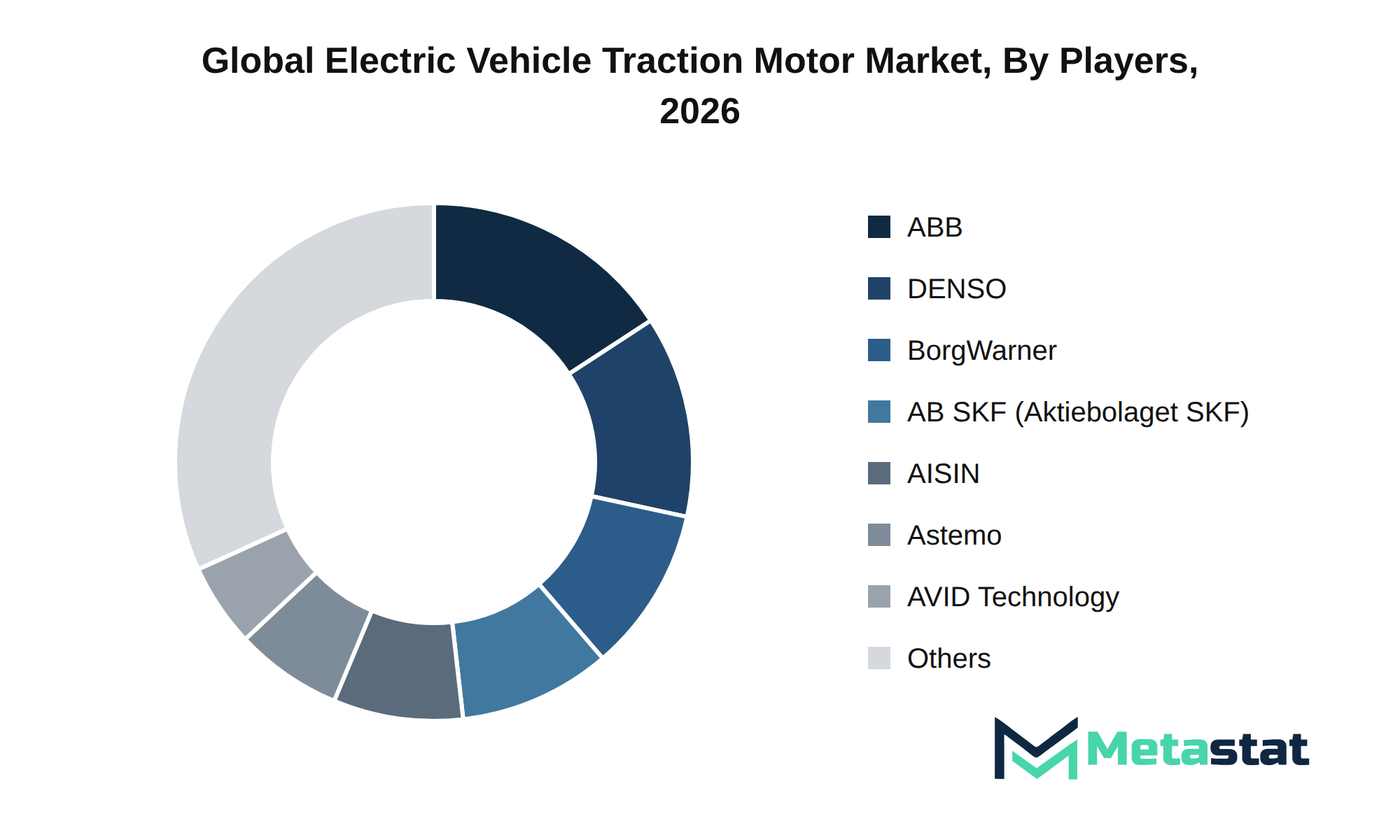
The competitive landscape of the Electric Vehicle Traction Motor market highlights strategic maneuvers by key players, focusing on mergers, acquisitions, and the establishment of strategic alliances. Companies including AB SKF (Aktiebolaget SKF), ABB Ltd., and DENSO Corporation actively pursue consolidation strategies to enhance market presence and streamline operations. The drive for product differentiation fuels investments in research and development pipelines, allowing firms like BorgWarner Inc. and Hitachi, Ltd. to innovate and maintain technological advantages.
Strategic partnerships and collaborations play a crucial role in expanding capabilities within the market. Companies including LG Magna e-Powertrain Co., Ltd and Schaeffler AG leverage cross-industry partnerships to penetrate new segments and enhance their product offerings. The focus on customer retention strategies, alongside strong brand equity dynamics, reinforces competitive positioning against emerging threats from startups and new entrants. This competitive landscape emphasizes the importance of technological defensibility and comprehensive intellectual property portfolios in ensuring long-term success.
Market size is forecast to rise from USD 17.9 billion in 2025 to over USD 190.4 billion by 2033. This trajectory reflects a compound annual growth rate (CAGR) of 34.4%, driven by multiple factors influencing the Electric Vehicle Traction Motor market.
Macroeconomic conditions and evolving economic cycles significantly impact downstream demand for electric vehicles. Increasing consumer awareness of climate change and government incentives for electric mobility strengthen demand for electric vehicles. This trend promotes the adoption of electric vehicle traction motors throughout various sectors, including passenger and commercial vehicles.
Core industry maturation contributes to a competitive landscape where manufacturers refine technologies and optimize production processes. Integration of next-generation technologies, including advanced battery management systems and improved motor efficiencies, enhances the performance of electric vehicle traction motors. Accelerated research and development timelines result in quicker commercialization of innovative solutions.
Ongoing regulatory evolution establishes compliance milestones that directly affect the market. Stringent emissions standards and policies promoting sustainable transport create a favorable environment for electric vehicles, further driving the demand for electric vehicle traction motors. Geopolitical realignments and shifts in trade corridors influence global supply chains, requiring manufacturers to adapt and innovate in response to changing market dynamics.
Strategic capital allocation directives emphasize the importance of infrastructure commitments, with increased investments in charging networks and manufacturing facilities. Capital expenditure focuses on developing scalable production capabilities to meet the rising demand for electric vehicle traction motors. Emerging white-space opportunities arise from unmet enterprise needs, generating high-growth pockets within the market.
Executive-level strategic imperatives prioritize defensibility roadmaps to navigate market fluctuations and competitive pressures. Future growth recommendations include enhancing partnerships within supply chains and investing in integrated technologies that support electric vehicle traction motor advancements, ensuring sustained progress in this evolving market.
The report strategically identifies and profiles the key market players and analyses their core competencies in each sub-segment of the Electric Vehicle Traction Motor market.
|
Report Attributes |
Details |
|
Study Period |
2021-2033 |
|
Base Year |
2025 |
|
Estimated Year |
2026 |
|
Forecast Period |
2026-2033 |
|
Historical Period |
2021-2025 |
|
Growth Rate |
CAGR 34.4% from 2026 to 2033 |
|
Revenue Unit |
USD billion |
|
Segmentation |
By Propulsion Type, Motor Technology, Power, Vehicle Type, and Region |
|
By Region |
North America (By Propulsion Type, Motor Technology, Power, Vehicle Type, and Country)
|
|
Europe (By Propulsion Type, Motor Technology, Power, Vehicle Type, and Country)
|
|
|
Asia Pacific (By Propulsion Type, Motor Technology, Power, Vehicle Type, and Country)
|
|
|
South America (By Propulsion Type, Motor Technology, Power, Vehicle Type, and Country)
|
|
|
Middle East and Africa (By Propulsion Type, Motor Technology, Power, Vehicle Type, and Country)
|
Find answers to common questions about this report
The Electric Vehicle Traction Motor market size was valued at USD 17.9 billion in 2025, according to the Metastat Insights study.
The Electric Vehicle Traction Motor market is projected to grow at a CAGR of 34.4% during the forecast period from 2026 to 2033.
The North America Electric Vehicle Traction Motor market size is estimated to reach USD 37 billion by 2033.
The Battery Electric Vehicles segment leads the Electric Vehicle Traction Motor market, with a projected value of USD 131.1 billion by 2033. This segment's dominance reflects the increasing adoption of fully electric vehicles compared to other propulsion types.
Key drivers for the Electric Vehicle Traction Motor market include increasing emission regulations that stimulate demand for electric vehicles, the transition toward cleaner transportation influencing investment strategies, and urbanization along with changing consumer preferences for sustainable solutions. Enhanced traction motor technologies improve performance metrics, increasing competition among manufacturers to innovate.
Heightened regulatory pressures represent a significant restraint for the Electric Vehicle Traction Motor market. Compliance with strict environmental policies demands substantial resources, complicating operations and hindering smaller players from accessing necessary capital. macroeconomic factors, including inflationary pressures and supply chain disruptions, further increase operational costs and impact profit margins.
Increasing emission regulations stimulate demand for electric vehicles, driving growth in the Electric Vehicle Traction Motor market. Enhanced traction motor technologies improve operational efficiency, while urbanization and changing consumer preferences for sustainable transportation solutions further augment market adoption. Improved access to charging facilities increases consumer confidence, propelling demand for electric vehicle traction motors.
The Electric Vehicle Traction Motor market is estimated to reach a valuation of USD 190.4 billion by 2033.
Key players in the Electric Vehicle Traction Motor market include AB SKF (Aktiebolaget SKF), ABB Ltd., AISIN Corporation, BorgWarner Inc., DENSO Corporation, Hitachi, Ltd., LG Magna e-Powertrain Co., Ltd., and Robert Bosch GmbH.
The Electric Vehicle Traction Motor market is projected to grow at a compound annual growth rate of 34.4% from 2026 to 2033.
The analysts below cover Automotive and Transportation research at Metastat Insights.
LEAD ANALYST
Utkarsh Khirodkar is a Lead Market Research Analyst at MetaStat Insight, specializing in market intelligence, technology sector assessments, and competitive strategy.

ENERGY & INFRASTRUCTURE INDUSTRY CONSULTANT
Automotive and Transportation · Electronics and Semiconductor · Energy and Power · Machinery & Equipment
Saurabh Vasant Ganvir consults for Energy & Infrastructure Industry at MetaStat Insight, specializing in renewable energy, solar EPC, and electric vehicle (EV) infrastructure markets.
Most industry reports on warehouse automation bundle autonomous mobile robots and fixed conveyor installations into the same top-level numbers, which complicates advisory work. This study split the market cleanly by payload tiers, navigation technology, and fleet management software layers. The regional forecast for Western Europe gave our team defensible adoption benchmarks when evaluating capital allocation for logistics clients, saving us days of secondary data scrubbing.
Analyzing the transition from natural gas to green hydrogen in iron ore reduction requires realistic infrastructure timelines. Meta stat insight supplied a detailed regional assessment of DRI plant conversion costs and scrap metal availability in North America and Western Europe. Their report carefully examined pellet quality specs and electrical grid access constraints without making oversimplified market assumptions. The research material served as a practical reference during internal technology roadmap discussions.
Integrating zero-trust access controls across legacy electronic health record systems involves complex compliance overhead. Team produced an analysis that clearly separated identity governance and administration tools from privileged access management platforms. Their evaluation of HIPAA and GDPR compliance features across cloud native solutions gave our architecture group clear baseline criteria. The custom data request regarding biometric authentication adoption in hospital networks was returned promptly with clear documentation.
Explore related market intelligence reports worth reading alongside this one.
Starting from
$2950