
LEAD ANALYST
Utkarsh Khirodkar is a Lead Market Research Analyst at MetaStat Insight, specializing in market intelligence, technology sector assessments, and competitive strategy.

Global Electric Tractor Market Size, Share, By Power Source (Battery Electric, Hybrid Electric, Plug-in Hybrid Electric), By Power Output (Less than 50 HP, 50-100 HP, 100-150 HP, More than 150 HP), By Battery Technology (Lithium Iron Phosphate (LFP), Nickel Manganese Cobalt (NMC) Lithium-Ion, Others), By Function (Agriculture & Forestry and Industrial), Industry Analysis, Growth, Trends, and Forecast, 2026-2033
Report ID
MSI-5406
Published
September, 2026
Updated
Pages
265 Pages
Format
Historical
Base year
Forecast
Forecast period
Report Details
Market Valuation: Valued at $817 Million in 2025, projected to reach $6,384.7 Million by 2033 at a 29.3% CAGR.
Dominant Segment: The Battery Electric segment leads the market, driven by increasing demand for sustainable farming solutions and technological advancements in battery efficiency.
Geographic Lead: North America is projected to be the leading region, with a market value of USD 1,584.7 million by 2033, supported by infrastructure modernization and a commitment to sustainability.
What's Inside: The report provides a comprehensive analysis of market dynamics, competitive landscape, and forecasts from 2026 to 2033, covering various segments such as power source, battery technology, and function.
Emerging Regional Demands: Significant growth opportunities are emerging in Asia Pacific and South America, driven by urbanization and the need for efficient agricultural practices.
Choose Your License
Global Electric Tractor Market
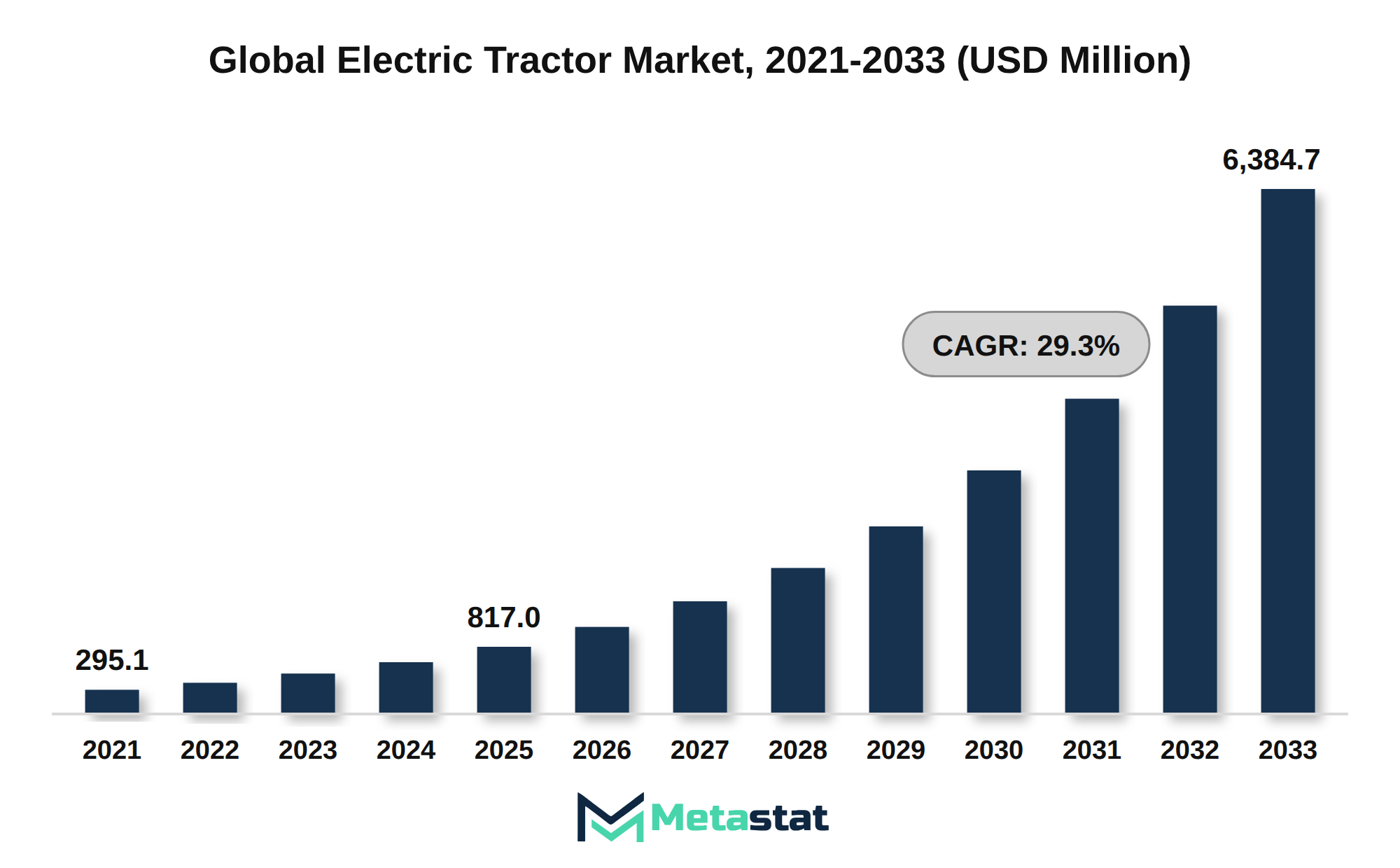
The global Electric Tractor market was valued at USD 817 million in 2025 and is projected to reach USD 6,384.7 million by 2033, growing at a CAGR of 29.3% over the forecast period.
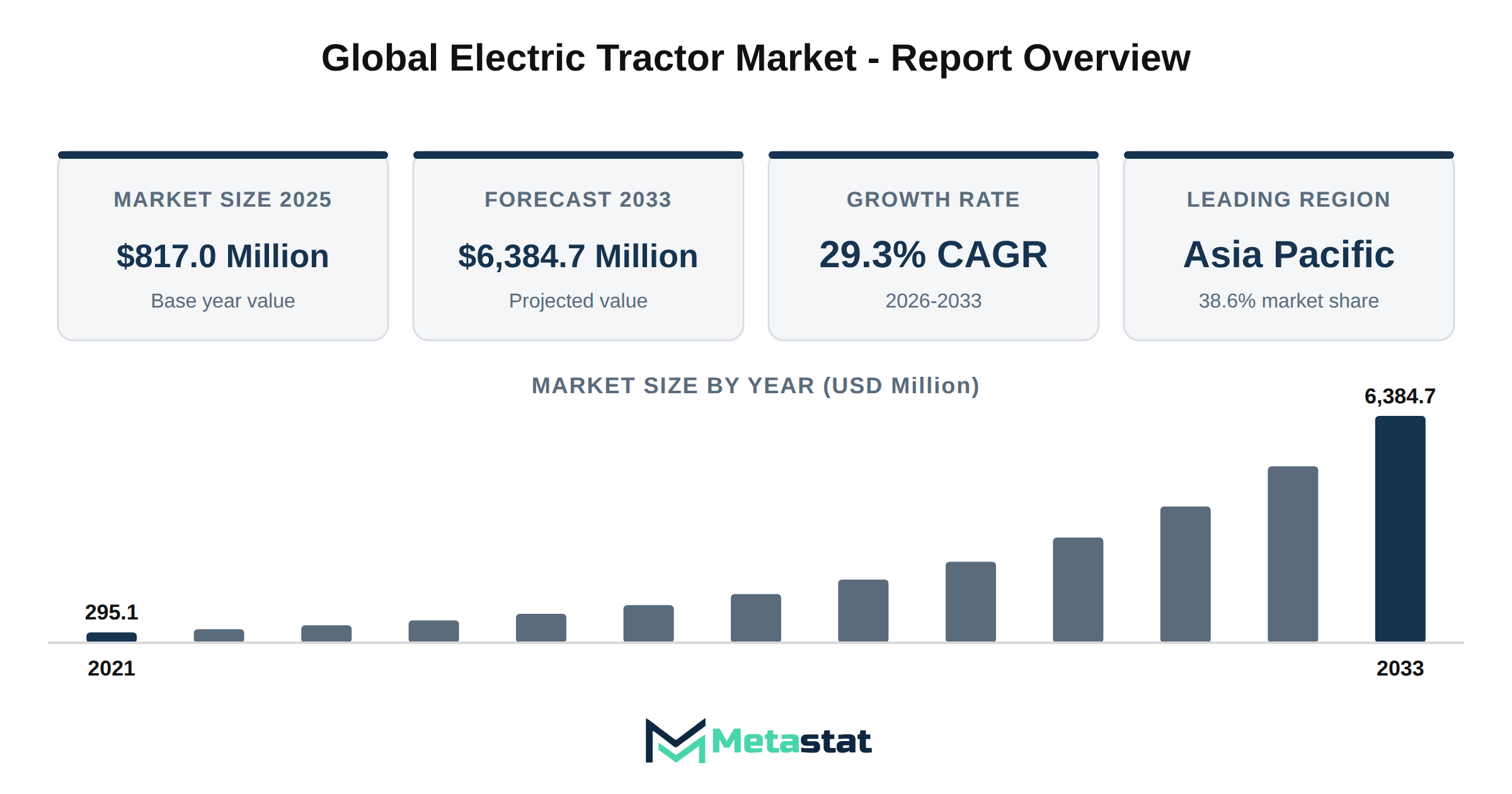
The global Electric Tractor market is experiencing significant growth, driven by advancements in battery technology and increasing demand for sustainable agricultural practices. The market reached a value of USD 817 million in 2025 and is projected to expand to USD 6,384.7 million by 2033, reflecting a strong compound annual growth rate (CAGR) of 29.3 percent. The historical growth trend from USD 295.1 million in 2021 to USD 491.4 million in 2023 demonstrates a strong upward trajectory.
Electric tractors are gaining traction due to their potential for lower operating costs and reduced emissions compared to traditional diesel-powered alternatives. The demand for these vehicles is particularly pronounced in the agriculture and utility sectors, where operational efficiencies and environmental regulations play a critical role. The integration of innovative battery technologies, including Lithium Iron Phosphate (LFP), enhances performance and extends the operational range of electric tractors.
Competitive dynamics within the Electric Tractor market intensify, driven by established manufacturers and new entrants striving to capture market share. Key players include AGCO Corporation (Fendt), CNH Industrial N.V., and Deere & Company, among others. Innovations focus on improving range, torque, and runtime, which are crucial factors for adoption in various applications.
Regional opportunities significantly influence market expansion, with North America, Europe, and Asia Pacific leading in demand. In particular, North America is projected to achieve a market value of USD 1,584.7 million by 2033. Infrastructure readiness, including charging stations and service facilities, plays a critical role in adoption rates across these regions.
Advancements in battery capacity and fast-charging technologies further extend the use cases for electric tractors. The ability to perform a range of tasks efficiently and effectively in diverse environments opens new commercial opportunities. The evolution of autonomous and smart electric tractors is transforming farm operations, enhancing productivity and efficiency.
Electric Tractor demand and adoption trends reflect a growing preference for sustainable farming practices. Increased awareness of environmental issues drives farmers towards electric solutions that offer lower emissions and operational costs. The shift towards renewable energy sources further supports this trend, creating an ecosystem conducive to electric tractor adoption.
Advancements in battery capacity, thermal management, and fast-charging technology reshape the landscape of electric tractors. Improved battery performance enhances operational efficiency, allowing for longer working hours without the need for frequent recharging. Fast-charging solutions reduce downtime, enabling farmers to maximize productivity during critical periods of operation.
Competitive product and pricing benchmarking influences market dynamics. While numerous manufacturers enter the electric tractor arena, pricing pressures intensify, prompting established players to innovate continuously. This competition fuels product differentiation, leading to unique offerings that cater to specific agricultural and industrial needs.
Regional opportunities and infrastructure readiness significantly influence electric tractor deployment. North America, Europe, and Asia Pacific exhibit varying levels of infrastructure development. Regions with robust charging networks and supportive policies encourage rapid adoption, while those lacking essential infrastructure face challenges in market penetration.
Electric tractor adoption trends across agriculture and utility applications highlight a shift in operational paradigms. Farmers increasingly recognize the benefits of electric tractors in terms of efficiency and cost savings, while utility sectors begin to explore electrification to reduce their carbon footprints.
Battery electric tractors gain momentum over hybrid alternatives due to their superior environmental performance and lower operational costs. This shift reflects broader trends in sustainability, positioning battery electric tractors because preferred options within the market.
Demand for electric tractors is driven by lower operating costs and emission reduction goals. Farmers experience significant savings on fuel and maintenance, enhancing the financial viability of electric tractors. These factors contribute to an increasing willingness to invest in electric solutions.
Advances in lithium iron phosphate (LFP) battery technology reshape electric tractor performance. LFP batteries offer enhanced safety, longer life cycles, and better thermal stability, making them suitable for demanding agricultural environments. These attributes improve overall tractor reliability and performance.
Fast charging and higher battery capacity expand electric tractor use cases, allowing for diverse applications beyond traditional farming. This flexibility opens opportunities in sectors including municipal operations and industrial applications, where electric tractors fulfill various roles.
High power electric tractors open new commercial opportunities by enabling larger-scale operations and more demanding tasks. The ability to handle heavy-duty applications positions electric tractors because viable alternatives to conventional options in the market.
Autonomous and smart electric tractors transform farm operations by integrating advanced technologies. These innovations enhance operational efficiency and reduce labor costs, appealing to modern farmers seeking to optimize their processes.
Electric tractor adoption expands beyond traditional agriculture, with industrial and municipal applications creating new demand. The versatility of electric tractors allows them to meet diverse operational requirements across multiple sectors, further driving market growth.
Competition intensifies among established OEMs and new entrants in the electric tractor market. This competitive landscape encourages innovation, leading to enhanced product offerings that cater to evolving consumer expectations.
Electric tractor product innovation focuses on range, torque, and runtime, addressing key concerns for end-users. Improvements in these areas enhance the overall user experience, contributing to increased adoption rates.
Charging infrastructure development influences electric tractor deployment significantly. Regions investing in robust charging networks facilitate the transition to electric solutions, eliminating barriers to entry for potential buyers.
Battery cost reduction improves electric tractor ownership economics, making them more accessible to a broader range of consumers. This trend supports the ongoing expansion of the market, driven by lower costs that encourage investment.
Government electrification policies support electric tractor adoption through incentives and funding. These initiatives promote cleaner technologies, influencing manufacturers and consumers to embrace electric solutions.
Electric tractor demand accelerates in Asia Pacific agricultural markets, driven by rapid urbanization and technological advancements. Farmers in this region increasingly prioritize sustainability and efficiency, aligning with global trends.
Europe emerges because a key market for low emission electric tractors. Stringent environmental regulations and a strong commitment to sustainability fuel the demand for electric solutions among European farmers.
North American farms increase interest in electric and autonomous tractors, reflecting a shift towards innovation and modernization in the agricultural sector. This trend positions the market for substantial growth.
Emerging markets present new opportunities for compact electric tractors, catering to the needs of smallholder farmers. The adaptability of electric tractors aligns with the operational requirements of these markets, supporting their growth trajectories.
Electric tractor supply chains adapt to battery and power electronics demand, ensuring manufacturers meet the needs of a changing market. This flexibility enhances supply chain resilience and supports continuous innovation.
Partnerships and technology alliances accelerate electric tractor commercialization, enhancing access to advanced technologies and expertise. This collaborative approach encourages innovation and drives market expansion.
Electric tractor fleet electrification gains traction in municipal operations, reflecting a commitment to sustainability and efficiency in public services. This trend contributes to the broader acceptance of electric solutions across various sectors.
Precision agriculture integration strengthens electric tractor value propositions by enhancing operational efficiency and decision-making. This integration positions electric tractors because integral components of modern farming practices.
Swappable battery systems address electric tractor downtime challenges by enabling quick battery exchanges. This innovation enhances operational uptime, appealing to users who prioritize efficiency.
Electric PTO and smart implement integration expand tractor functionality, allowing for greater versatility in applications. This adaptability enhances the appeal of electric tractors across diverse agricultural and industrial contexts.
The market outlook for electric tractors is shaped by battery innovation and application diversification, creating a dynamic environment for growth. Ongoing advancements will continue to reshape the potential of electric tractors in various sectors.
The Electric Tractor market experiences growth due to increasing emission limits imposed by various jurisdictions. These limits encourage agricultural and industrial sectors to transition from traditional diesel-powered tractors to electric alternatives, which produce lower emissions and align with sustainability objectives. Expanding public and private funding for clean technology supports the development of electric tractors that meet these stringent standards.
The shift towards electric tractors significantly impacts the agriculture and forestry sectors, where demand for environmentally friendly solutions continues to rise. Farmers and operators prioritize sustainability, leading to decisions that favor electric tractors over conventional models. This transition lowers carbon footprints and enhances operational efficiency, driving demand within the market.
Investment in electric tractor technology aligns with broader trends toward digital transformation and technological integration. Growing adoption of automation and precision farming techniques, driven by technological advancements, complements the introduction of electric tractors. This integration enables enhanced productivity and cost efficiencies, ultimately shaping the future of the Electric Tractor market.
The Electric Tractor market experiences notable growth due to significant investments in infrastructure development. Governments and private sectors are directing capital toward upgrading physical and digital capabilities, enhancing agricultural efficiency and productivity. This investment creates a favorable environment for electric tractors, attracting buyers seeking advanced farming solutions.
Increased spending on infrastructure translates to improved access to markets and resources, driving demand for electric tractors. Enhanced road networks and digital integration in agriculture facilitate the adoption of these vehicles, resulting in operational efficiencies. The trend toward modernization of facilities aligns with sustainability goals, encouraging farmers to invest in electric tractors that contribute to lower carbon footprints.
Technological advancements play an important role in this transformation, promoting the integration of automation and AI solutions within farming operations. The shift toward digital transformation enhances the operational capabilities of electric tractors, allowing for precision farming and optimized resource utilization. Adoption of these technologies accelerates market growth, driven by demand for innovative, efficient, and environmentally friendly agricultural solutions.
The Electric Tractor market faces significant challenges due to stringent regulatory compliance requirements. Manufacturers encounter rising costs associated with meeting these regulations, which inhibit innovation and investment. Compliance hurdles disproportionately affect smaller players, restricting their market entry and competitiveness, ultimately leading to market fragmentation.
Macroeconomic headwinds, including inflationary pressures, create a volatile environment for the market. Elevated costs for raw materials and components increase the financial burden on manufacturers, limiting their ability to invest in new technologies. This environment contributes to capital stagnation, reducing overall market dynamism.
Supply chain disruptions further complicate the landscape. Geopolitical instability and resource scarcity result in delays and increased costs for sourcing essential components. This instability creates uncertainty for manufacturers, discouraging long-term investments in capacity expansion and innovation.
High capital investment requirements present another barrier. The initial costs associated with electric tractor development and production necessitate significant financial resources, which deter potential entrants. This aspect limits competition and slows the pace of technological advancement within the market.
Infrastructure gaps, particularly in charging stations and service facilities, hinder the widespread adoption of electric tractors. Insufficient support for charging and maintenance creates challenges for end-users, who favor traditional tractors with readily available support systems. Developing the necessary infrastructure requires substantial investment, further complicating market dynamics.
Connectivity deficits are another concern. Inadequate data communication between electric tractors and management systems limits operational efficiency. Advancements in connectivity solutions are required to optimize fleet management and enhance performance metrics.
Skilled labor deficiencies exacerbate these challenges. A shortage of trained technicians capable of maintaining and servicing electric tractors presents significant barriers to market growth. Addressing this talent gap is critical for ensuring the safe and efficient operation of electric tractors.
Overall, these market restraint factors impede the growth and expansion of the Electric Tractor market, affecting the competitive landscape and limiting adoption rates among potential customers.
The Electric Tractor market confronts challenges stemming from geopolitical fragmentation, which disrupts supply chain stability and increases operational risks. Trade deficits and tariff friction complicate international transactions, affecting the cost structure and viability of sourcing components globally. This instability in global trade results in unpredictable pricing for critical inputs, forcing manufacturers to adjust their strategies and impacting overall market dynamics.
Technological disruptions present another hurdle, particularly in the integration of advanced research and development efforts across various regions. Complex R&D integrations lead to delays and increased costs, which manufacturers absorb. This scenario affects their ability to innovate and adapt to market demands effectively, limiting growth opportunities within the Electric Tractor market.
Logistics disruptions and supply chain instabilities further exacerbate these challenges. Manufacturing timelines and delivery schedules face delays due to inconsistent access to necessary components, impacting producers' ability to meet growing demand. Pricing compression and margin pressures create a challenging environment for manufacturers striving to offer competitive products while maintaining profitability.
Workforce skill gaps and talent retention pressures in the industry hinder operational efficiency. The shift toward automation in manufacturing processes calls for a workforce equipped with advanced skills to handle innovative technologies. Addressing these workforce challenges is crucial for sustaining market growth.
Finally, evolving legal liabilities and tightening global regulatory standards regarding sustainability and environmental impacts pose significant challenges. Manufacturers navigate compliance overhead while balancing demands for decarbonization and sustainability, leading to increased operational costs and complicating the market landscape.
The Electric Tractor market experiences robust opportunities stemming from emerging regional demands and infrastructure modernization. Rapid urbanization and agricultural modernization, particularly in developing regions, drive increased investment in electric tractors. Regions including Asia Pacific and South America exhibit significant growth potential, fueled by the need for sustainable agricultural practices and efficient farming solutions.
Technological disruptions and digital transformation reshape the market landscape. Advancements in battery technology and electric powertrains enhance the operational efficiency and performance of electric tractors. Manufacturers leverage these innovations to develop products that meet evolving customer expectations and sustainability imperatives.
Strategic consolidation and cross-industry mergers strengthen the competitive landscape within the Electric Tractor market. Collaborations between technology companies and tractor manufacturers facilitate the integration of advanced features and capabilities into electric tractors. This collaboration leads to enhanced product offerings and diversified applications, appealing to various industries, including agriculture and industrial sectors.
Changing buying behaviors and shifts toward digital procurement transition purchasing models in the market. Customers increasingly seek sustainable and eco-friendly solutions, pushing manufacturers to align with green transformations and ESG-driven initiatives. This shift creates opportunities for electric tractors that align with evolving demands and reflect a commitment to sustainability.
Asset life-cycle extensions and retrofitting dynamics contribute to the market's growth by allowing existing tractor owners to upgrade to electric solutions. This adaptability encourages broader adoption, driven by farmers and businesses recognizing the benefits of transitioning to electric tractors while optimizing asset utilization. The focus on value-chain optimization and operational yield maximization reinforces the attractiveness of electric tractors within the market.
The Global Electric Tractor market is segmented based on Power Source, Power Output, Battery Technology, and Function.
Valued at USD 640 million in 2026, the Battery Electric segment is projected to reach USD 4,263.1 million by 2033, with a compound annual growth rate (CAGR) of 31.1% during the forecast period. This segment's growth is driven by increasing demand for sustainable farming solutions, attributed to agricultural practices shifting towards more eco-friendly options. Technological advancements in battery efficiency and energy management further enhance the appeal of battery electric tractors, allowing for longer usage times and reduced operational costs.
Key industry players are actively investing in research and development, focusing on next-generation upgrades that improve performance and reduce charging times. Such innovations cater to the evolving needs of end-users, particularly in agriculture and forestry, where efficiency and productivity are critical. Regulatory compliance standards supporting emissions reduction significantly influence the market, compelling manufacturers to prioritize electric solutions, which ultimately boosts adoption rates across various regions.
Supply chain dynamics play a critical role in the Battery Electric segment. Ensuring a steady supply of raw materials, particularly for advanced battery technologies, is essential for maintaining production levels. Potential disruptions in logistics impact timelines and costs, necessitating robust strategies for sourcing and distribution. Overall, the segment's trajectory aligns with the broader trends observed in the electric tractor market, where sustainability and innovation drive significant growth.
Growing recognition of environmental sustainability continues to drive interest in the Hybrid Electric segment of the Electric Tractor market. This segment emphasizes reduced emissions and lower dependency on fossil fuels, appealing to environmentally conscious consumers and businesses. The agricultural sector, in particular, prioritizes efficient and sustainable solutions, aligning with global trends toward sustainable farming practices.
Innovations in battery technologies significantly enhance the performance and efficiency of hybrid electric tractors. Manufacturers invest in research and development to improve battery capacity and reduce charging times, strengthening the appeal of hybrid electric options. Technological advancements lead to more efficient and durable machines, and adoption rates increase among various end-users.
The Hybrid Electric segment is projected to reach USD 1,430.8 million by 2033, at a CAGR of 26.6% during the forecast period. This growth reflects a broader trend across the Electric Tractor market, driven by stakeholders recognizing the long-term cost benefits associated with hybrid technologies. Enhanced operational efficiency translates into lower fuel costs and less maintenance, reinforcing investment in this segment.
Regulatory support for low-emission vehicles accelerates the transition toward hybrid electric tractors. Governments implement incentives and subsidies to promote the use of environmentally friendly technologies, creating a favorable environment for market growth. Compliance with evolving regulations encourages manufacturers to prioritize hybrid electric models in their product offerings.
End-use dynamics highlight the versatility of hybrid electric tractors across various applications, including agriculture and industrial sectors. Their ability to perform effectively in diverse conditions enhances their market appeal. Operators seek equipment that balances power and efficiency, positioning the hybrid electric segment because a strategic choice for various industry players.
Expansion of the Plug-in Hybrid Electric segment within the Electric Tractor market reflects a strong inclination towards sustainable and efficient farming solutions. This segment is expected to reach USD 690.8 million by 2033, driven by growing consumer awareness regarding environmental concerns and the economic benefits associated with hybrid technologies. Increasing adoption among farmers highlights a shift towards using versatile equipment that offers fuel efficiency and reduced operational costs, leading to a significant uptick in demand.
Technological maturation serves because a catalyst for segment growth, with advancements in battery technology enhancing performance and reliability. Next-generation upgrades focus on improving charging infrastructure and optimizing hybrid systems, which further increases market appeal. Downstream applications in agriculture and forestry leverage these innovations, enabling farmers to maximize productivity while minimizing their carbon footprints.
Regulatory compliance standards push manufacturers to prioritize hybrid solutions, compelling them to invest in research and development. These investments yield products that align with governmental policies aimed at reducing emissions and promoting cleaner energy sources. Such alignment creates a competitive environment, with manufacturers striving to meet evolving consumer expectations and regulatory requirements.
Strategic opportunity windows emerge from shifts in consumer preferences and market dynamics, encouraging manufacturers to explore partnerships and collaborations. This approach enhances supply chain resilience and supports the development of innovative products tailored to meet specific agricultural needs. Overall, the Plug-in Hybrid Electric segment stands poised for significant growth, contributing meaningfully to the evolving market of Electric Tractors.
Valued at USD 485.7 million in 2026, the Less than 50 HP segment is projected to reach USD 2,710.9 million by 2033, at a CAGR of 27.8% during the forecast period. Demand for electric tractors in this category is driven by increasing interest in sustainable agricultural practices and the rising need for efficient farming equipment. Farmers prioritize lower operational costs and environmental impact, which encourages investment in electric solutions. The segment experiences significant expansion due to technological advancements in battery efficiency and power management, leading to improved performance in agricultural tasks.
Growth in the agricultural sector influences the demand for electric tractors under 50 HP, particularly in small to medium-sized farms. Regulatory compliance regarding emissions and sustainability pushes farmers toward electric alternatives. While traditional fuel prices fluctuate, the market benefits from a shift toward electric options that provide predictable operating expenses. The integration of smart technologies and automation in these tractors enhances their appeal, meeting the evolving needs of farmers. Overall, substantial growth is anticipated driven by these factors.
Growth in the 50-100 HP segment is driven by increased demand for versatile agricultural machinery, which aligns with the operational needs of mid-sized farms. This segment supports various applications, including tillage, planting, and maintenance, enhancing productivity in the agriculture sector. The adoption of advanced battery technologies contributes to performance improvements, allowing tractors to operate efficiently in diverse conditions.
Technological advancements play a critical role in segment expansion, particularly through the introduction of next-generation electric tractors that offer enhanced power and efficiency. Innovations in battery technology, including Lithium Iron Phosphate (LFP) and Nickel Manganese Cobalt (NMC) lithium-ion batteries, contribute to longer operational hours and reduced downtime, appealing to cost-conscious farmers. Regulatory compliance regarding emissions and sustainability serves because a catalyst for moving towards electric alternatives in the market.
The 50-100 HP segment is estimated to reach USD 2,222.5 million by 2033, at a CAGR of 30.3% during the forecast period. This growth reflects a shift in consumption patterns, with an increasing preference for greener solutions. While the market responds to environmental concerns, tractor manufacturers are compelled to innovate continuously, refining their offerings to meet legislative standards while maximizing operational efficiencies.
Competitive pressures encourage manufacturers to explore strategic partnerships to enhance their product lines, ensuring they remain relevant in a changing market. Companies investing in this segment are likely to see significant returns because demand for efficient, eco-friendly tractors continues to rise within the Electric Tractor market.
Increasing demand for high-performance tractors in various agricultural applications drives growth in the 100-150 HP segment of the Electric Tractor market. This segment benefits from advancements in battery technology and hybrid systems, which enhance operational efficiency and reduce emissions. The focus on sustainable farming practices reinforces the need for tractors that deliver considerable power while minimizing environmental impacts.
Demand for this segment is expected to reach USD 946.9 million by 2033, reflecting a strong market trajectory. Farmers and agricultural businesses increasingly prioritize equipment that combines power with eco-friendliness, leading to heightened adoption of electric solutions in this horsepower category. While the market evolves, manufacturers expand their offerings to meet these changing needs, further stimulating segment growth.
Technological advancements contribute significantly to the segment's expansion. Innovations in battery capacity and charging infrastructure enhance the usability of 100-150 HP electric tractors, making them more attractive to end-users. Continuous improvements in efficiency and performance are expected to support market dynamics, driving competition among key players in the Electric Tractor market.
Growing interest in high-power electric tractors drives the More than 150 HP segment's expansion within the Electric Tractor market. This segment is projected to grow at a CAGR of 30.6% during the forecast period. Increased focus on sustainable farming practices supports demand for more powerful tractors, which enhance productivity and efficiency in agricultural operations. Technological advancements in battery and electric systems contribute to improved performance and reliability of these tractors, making them attractive for large-scale farming operations. The transition from traditional diesel-powered tractors to electric alternatives aligns with the global trend toward reducing carbon emissions and enhancing energy efficiency. Adoption of electric tractors in commercial agriculture emphasizes the importance of reducing operating costs and meeting regulatory standards aimed at promoting cleaner technologies. While businesses seek to optimize operations, investment in electric tractors with higher horsepower offers significant long-term benefits in productivity and cost savings.
Lithium Iron Phosphate (LFP) segment is valued at USD 637.2 million in 2026 and is projected to reach USD 4,238.2 million by 2033, at a CAGR of 31.1% during the forecast period. The segment benefits from increasing demand for efficient and sustainable battery solutions within the Electric Tractor market. Rising emphasis on reducing carbon emissions and improving energy efficiency in agricultural practices drives this growth.
Technological advancements in battery management systems enhance performance characteristics, making Lithium Iron Phosphate batteries increasingly attractive. Safety features, coupled with longer life cycles and lower costs compared to traditional batteries, position this segment favorably for expansion. Significant adoption occurs in various downstream applications, particularly in agriculture and forestry, where efficiency and durability are prioritized.
Increased regulatory pressure to comply with environmental standards stimulates investment in Lithium Iron Phosphate technologies. Manufacturers benefit from this shift, aligning product offerings with compliance requirements that call for lower emissions and sustainable practices. Growth in the segment reflects a broader trend toward electrification and innovation in the Electric Tractor market.
Raw material sourcing and supply chain resilience improve, accelerating the segment's growth. The focus on minimizing logistical vulnerabilities and exploring alternative materials strengthens market stability. Investment in research and development aims to enhance performance and reduce costs, ensuring Lithium Iron Phosphate remains a competitive choice within the evolving battery technology landscape.
Demand for Nickel Manganese Cobalt (NMC) Lithium-Ion technology within the Electric Tractor market continues to strengthen due to advantages in energy density and efficiency. Customers increasingly prefer this battery technology for its ability to extend operational range and reduce downtime. Agricultural and industrial sectors particularly benefit from the high-performance metrics associated with NMC batteries, which support aggressive adoption rates. This segment is projected to reach USD 1,838.8 million by 2033, at a CAGR of 26.3% during the forecast period. Technological maturation plays a critical role in enhancing the capabilities of NMC Lithium-Ion batteries, resulting in ongoing product evolution that meets the demanding requirements of modern electric tractors. Increased investments in research and development focus on improving battery life, charging speed, and overall sustainability. This focus aligns with global regulatory compliance standards emphasizing emission reductions and energy efficiency. Strategic opportunity windows arise from shifting consumption patterns that favor cleaner and more efficient energy alternatives in agriculture and utility applications. The supply chain for NMC batteries remains resilient, though fluctuations in raw material sourcing introduce pricing volatility. Manufacturers address these challenges through innovative sourcing strategies that mitigate risks connected to raw material availability. Overall, this segment's growth trajectory reflects broader trends in the Electric Tractor market, characterized by demand driven by technological advancements and evolving customer preferences.
Significant growth within the Others (Sodium-Ion and Emerging Battery Chemistries) segment reflects the increasing demand for innovative battery solutions in the Electric Tractor market. This segment, valued at USD 307.7 million by 2033, highlights a shift towards alternative chemistries that enhance performance and sustainability. Technological maturation in battery development significantly influences adoption rates, driven by advancements that lead to improved energy density and reduced costs for manufacturers. Strategic opportunity windows arise from a growing emphasis on reducing carbon footprints in agriculture, prompting companies to explore and invest in emerging battery technologies that align with sustainability goals.
Government incentives and regulatory compliance further facilitate the expansion of the segment, encouraging manufacturers to adopt cleaner technologies. The segment's evolution is closely tied to end-use dynamics in agriculture, where battery performance directly impacts operational efficiency and productivity. While electric tractors become integral to modern farming practices, the market experiences shifts in consumption patterns, with buyers increasingly favoring equipment that incorporates innovative energy solutions.
Valued at USD 754.5 million in 2026, the Agriculture & Forestry segment is projected to reach USD 4,262.4 million by 2033, at a CAGR of 28.1% during the forecast period. This growth arises from increasing awareness of sustainable agricultural practices and the need for efficient farming equipment. Adoption of electric tractors enhances operational efficiency while reducing carbon emissions, appealing to farmers and agricultural enterprises focused on environmental stewardship.
Technological advancements in battery technology and electric drivetrains enhance the operational capabilities of these tractors. The transition toward battery electric models reflects a growing preference for clean energy solutions, which aligns with global sustainability goals. Equipment manufacturers are innovating and investing in electric tractor development, expanding the offerings available to agricultural markets.
End-use dynamics within the market show a shift toward integrating electric tractors in large-scale farming operations. The demand for effective, reliable machinery continues to rise, further driving adoption rates across various agricultural sectors. Regulatory compliance standards support this trend by promoting cleaner technologies and incentivizing farmers to invest in electric alternatives.
Capital investment outlook indicates heightened financial commitment from manufacturers and investors in response to emerging market opportunities. Enhanced competition among players fuels innovations, creating a robust ecosystem poised for substantial growth. Overall, the Agriculture & Forestry segment exemplifies a significant area of expansion within the Electric Tractor market, driven by evolving consumer preferences and supportive regulatory environments.
Significant growth in the Industrial segment of the Electric Tractor market stems from increased investments in sustainable and efficient equipment. The demand for electric tractors within industrial applications is expected to surge due to higher productivity requirements and operational efficiency. Innovations in battery technology and electric powertrain systems enhance the performance of these tractors, leading to reduced operational costs and environmental impact.
The Industrial segment is estimated to reach USD 1,162.7 million by 2033, at a CAGR of 31% during the forecast period. This growth reflects a broader trend towards electrification in heavy machinery, driven by regulatory policies aimed at reducing emissions. The evolving landscape of industrial applications, including logistics and construction, favors the adoption of electric tractors, which align with companies' sustainability goals and operational demands.
Technological maturation accelerates the adoption of electric tractors in the industrial sector. Advances in battery capacities and charging infrastructure enhance the practicality of electric options, making them suitable for round-the-clock operations. This shift towards electric machinery supports companies in achieving competitive advantages through improved efficiency, lower maintenance costs, and compliance with environmental regulations.
Investment in this segment is expected to increase, focusing on research and development to address challenges associated with battery life and power output. The emergence of next-generation electric tractors tailored for industrial use opens strategic opportunity windows for equipment manufacturers. Continued evolution of product offerings positions the market for robust expansion, reflecting its significance in modern industrial practices.
Utility applications for electric tractors are expected to reach USD 959.6 million by 2033. Growing emphasis on efficiency and sustainability drives demand for electric tractors in utility functions. The increasing need for reliable and cost-effective solutions in utility operations influences adoption patterns. Technological maturation in electric tractor capabilities enhances performance metrics, further encouraging uptake across various sectors.
Investment in next-generation upgrades supports significant advancements in product evolution. While electric tractors become increasingly equipped with innovative features, end-users experience improved operational efficiency and reduced environmental impact. Regulatory compliance standards related to emissions and sustainability further support market growth, with stricter regulations in industrial and utility sectors pushing stakeholders toward electric solutions.
Cost structures in the utility segment reflect ongoing shifts in raw material sourcing, leading to a focus on efficiency and longevity. Pricing volatility linked to traditional fuel sources and the potential for long-term savings from electric tractors incentivizes stakeholders to invest. Strategic opportunity windows emerge owing to companies positioning themselves to capitalize on evolving trends in utility applications.
Increased competition among manufacturers enriches the market, with various players striving to differentiate their offerings through technological advancements. This dynamic drives innovation and enhances consumer choice, which contributes positively to overall market growth in the Electric Tractor market. Consumers increasingly prioritize lower emissions and cost-effectiveness, reinforcing the transition towards electric solutions in utility applications.
Based on geography, the Global Electric Tractor market is divided into North America, Europe, Asia-Pacific, South America, Middle East, and Africa.
North America Electric Tractor Market is set to expand at a CAGR of 29.3% within the forecast period, reaching a market size (TAM) of USD 1,584.7 million by the end of 2033. The region, comprising the United States, Canada, and Mexico, accounts for 27.5% in 2025. This participation reflects a strong commitment to adopting electric tractors, driven by growing environmental concerns and the need for sustainable agricultural practices.
Investment in infrastructure modernization supports the Electric Tractor market. Enhanced energy grid resiliency and readiness of local infrastructure significantly contribute to the effective deployment of electric tractors across diverse agricultural sectors. Emerging market front-runners within this region highlight the shift towards localized manufacturing densities and supply chain regionalization, ensuring better access to advanced technologies.
The competitive landscape features several domestic market participants, each aiming to capitalize on the growing demand for electric tractors. Vendor consolidation trends further shape the market dynamics, enabling companies to streamline their operations and enhance product offerings. The focus on high-value replacement cycles and incremental growth vectors facilitates continuous improvement in the adoption of electric tractors, particularly in agricultural and utility applications.
Economic factors, including foreign direct investment (FDI) flows, continue to influence the strategic entry barriers and geographic expansion windows for electric tractor manufacturers. Collaboration among industry players and strategic partnerships are essential for addressing local compliance mandates and adapting to the unique B2B buying behaviours present in this region. Overall, North America's electric tractor market demonstrates strong potential for growth due to these combined factors.
Europe represents a substantial share of the Electric Tractor market, accounting for 25.1% of the global value in 2025. The agricultural sector within Europe increasingly emphasizes sustainability and efficiency, leading to heightened adoption rates of electric tractors. Countries like Germany, France, and the UK drive demand through comprehensive policies focused on reducing carbon emissions and enhancing agricultural productivity.
Infrastructure modernization is essential in facilitating electric tractor integration across Europe. The presence of established supply chains and localized manufacturing capabilities supports the growth of this market segment. Geopolitical factors and regional compliance mandates further influence market dynamics, promoting the transition to electric solutions.
France and Germany stand out because front-runners in this transition, investing heavily in innovation and technology. Increased competition among domestic producers creates a climate that encourages technological advancements while addressing local procurement dynamics. Adoption of electric tractors within agricultural and industrial functions continues to expand, contributing to the overall growth of the market.
The market experiences incremental growth vectors, driven by high-value replacement cycles of older machinery. This trend is expected to increase demand for newer, more efficient electric tractors over the forecast period. Cultural nuances and regional buying behaviors impact the adoption rates, resulting in varying levels of penetration across different countries.
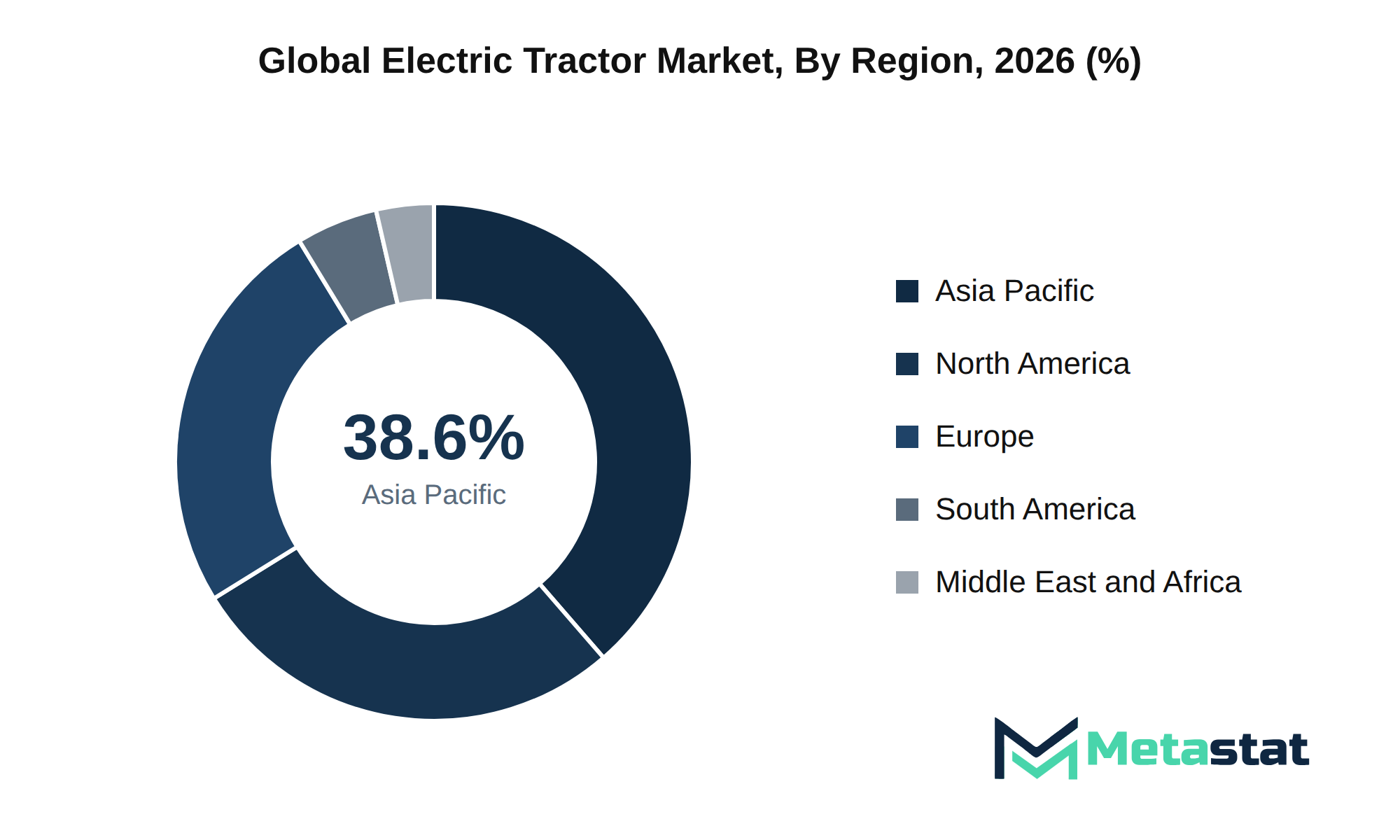
Asia-Pacific accounts for 38.6% of the global Electric Tractor market in 2025. The market benefits from rapid industrialization, urbanization, and a growing emphasis on sustainable agricultural practices. Countries including China, India, and Japan exhibit robust demand for electric tractors due to increased mechanization in agriculture and forestry. The region's diverse climatic conditions necessitate varying agricultural practices, driving the need for tailored electric tractor solutions.
Investment in infrastructure modernization plays a crucial role in enhancing the market landscape. Enhanced energy grid resiliency and local infrastructure readiness facilitate the adoption of electric tractors. Emerging market front-runners, particularly China and India, leverage localized manufacturing densities to drive down production costs, further stimulating market growth.
Geopolitical fragmentation and supply chain regionalization influence procurement dynamics within the market. Local compliance mandates encourage manufacturers to adapt to regional standards, shaping the competitive landscape. Domestic market participants emerge alongside international players, promoting vendor consolidation trends and increasing the availability of electric tractors across the region.
Energy availability and regulatory frameworks significantly impact the growth trajectory. Accessible energy sources enhance operational feasibility for electric tractor usage in agricultural and industrial applications. Cultural nuances in B2B buying behaviors reflect preferences for locally manufactured products, encouraging companies to establish a stronger foothold in the Electric Tractor market.
The Electric Tractor market in South America presents growth potential driven by rising agricultural needs in Brazil and Argentina. Increased focus on sustainable farming practices and efficiency fuels demand for electric tractors, enhancing market penetration in these territories. Regional players observe opportunities in localized manufacturing, reducing import dependencies and supporting growth within the sector.
Infrastructure modernization initiatives in Brazil and Argentina enhance readiness for electric tractor adoption, enabling efficient supply chains and improving energy access. The market benefits from favorable regulatory frameworks that promote green technologies and support local production efforts.
In Brazil, established agricultural practices and advanced technological adoption contribute to a competitive landscape. Argentina's agricultural sector seeks innovative solutions to improve operational efficiency, driving demand for electric tractors. Regional dynamics illustrate a convergence of local market participants and emerging players, supporting vendor consolidation trends and enhancing overall market competitiveness.
The market in South America holds a share of 5.1% of the global market in 2025. Continued investment in electric tractor technology aligns with the need for high-value replacement cycles, reflecting a positive growth trajectory for the Electric Tractor market across the region.
The Electric Tractor market in the Middle East and Africa faces unique challenges and opportunities that shape its growth trajectory. Key economies, including Saudi Arabia, UAE, and South Africa, are experiencing a gradual shift towards electric mobility solutions in agriculture and industrial applications. Enhanced awareness regarding sustainability and the adoption of clean technologies drive interest in electric tractors among various sectors.
Efforts towards infrastructure modernization play a vital role in market expansion. Investments in renewable energy sources and charging infrastructure in urban areas contribute to the feasibility of electric tractor adoption. Increasing agricultural mechanization in regions like South Africa highlights the potential for electric tractors to improve efficiency and reduce operational costs. The presence of local agricultural practices encourages a tailored approach to product offerings in the market.
Emerging market front-runners display a strong interest in localized manufacturing, enhancing supply chain efficiency and reducing dependency on imports. These dynamics lead to increased competition among domestic players, creating a need for innovation in product design and technology. The growing emphasis on regional procurement dynamics enables companies to adapt to local market demands effectively, ensuring a steady growth outlook for the Electric Tractor market.
The Middle East and Africa represent an underpenetrated territory for electric tractors, with significant growth opportunities. Analysis of regional competitive landscapes and compliance with local mandates will prove crucial for stakeholders aiming to capitalize on this evolving market.
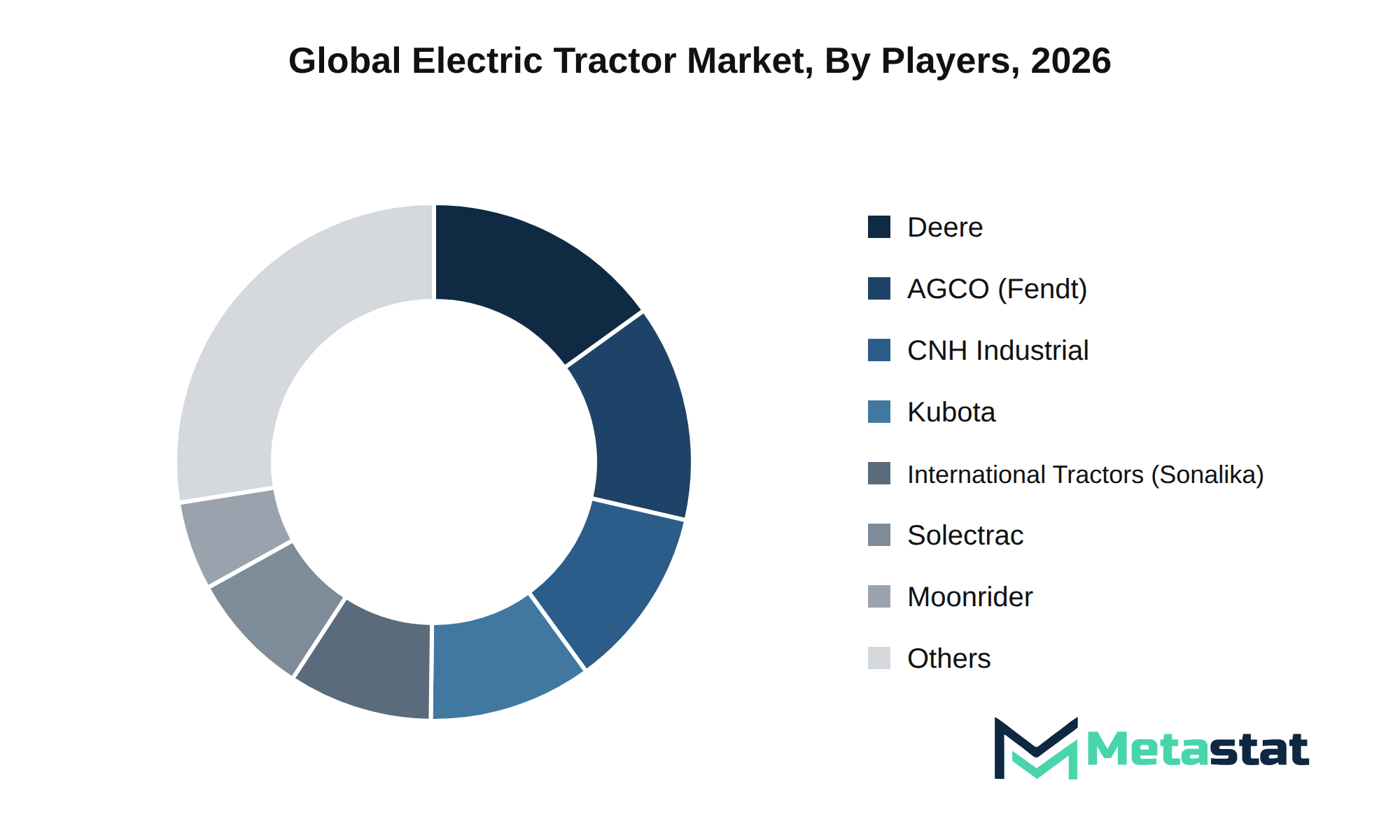
The Electric Tractor market experiences significant activity driven by mergers, acquisitions, and strategic partnerships. Companies including AGCO Corporation (Fendt), CNH Industrial N.V., and Deere & Company engage in strategic consolidation to enhance their market position. This trend reflects a broader focus on product differentiation and proprietary technologies, with firms allocating resources to R&D pipelines that support innovative electric tractor designs.
Pricing architectures within the market align with the competitive dynamics stemming from customer retention strategies and barriers to entry. Established players like Kubota Corporation and Solectrac, Inc. leverage brand equity and technological advancements to maintain competitive advantages. While new entrants emerge, the threat of disruption intensifies, prompting incumbents to strengthen value chain integration and supply chain dominance.
Strategic alliances and joint ventures further characterize the market, creating cross-industry partnerships that enhance market reach. Companies including TAFE- Tractors and Farm Equipment Limited and VST Tractors explore these avenues to diversify offerings and improve market penetration. The future competitive outlook highlights defensive imperatives and strategic growth vectors, emphasizing the necessity for companies to adapt to evolving market conditions in the Electric Tractor market.
This growth trajectory reflects a compound annual growth rate (CAGR) of 29.3%. The base case anticipates strong demand stemming from advancements in electric tractor technology and increasing adoption across various agricultural sectors.
In a bullish scenario, heightened investments in next-generation battery technologies and operational efficiencies could accelerate market penetration, driving demand beyond initial projections. Conversely, a bearish outlook arises from economic downturns or regulatory challenges that limit growth opportunities in specific regions or segments.
Factors influencing demand include ongoing maturation of core industries like agriculture and forestry, coupled with shifts in consumption patterns favoring sustainable practices. The integration of innovative technologies and the commercialization of research and development efforts are expected to enhance product capabilities, positioning the market for strong expansion.
Regulatory evolution will play a significant role in shaping the competitive landscape. Compliance with upcoming standards and policies will influence manufacturers' strategies, affecting capital allocation and investment decisions. Geopolitical shifts and evolving trade corridors are expected to impact supply chain dynamics, thereby influencing market stability and growth prospects.
Emerging opportunities exist in white-space areas, addressing unmet enterprise needs across various sectors. High-growth pockets will emerge driven by executives prioritizing strategic imperatives that align with sustainability goals and technological advancements. Future growth recommendations include focusing on infrastructure commitments and capital expenditure investments to support the expanding electric tractor market.
By Power Source: Battery Electric, Hybrid Electric, Plug-in Hybrid Electric
By Battery Technology: Lithium Iron Phosphate (LFP), Nickel Manganese Cobalt (NMC) Lithium-Ion, Others (Sodium-Ion and Emerging Battery Chemistries)
By Function: Agriculture & Forestry, Industrial, Utility
The report strategically identifies and profiles the key market players and analyses their core competencies in each sub-segment of the Electric Tractor market.
Report Attributes | Details |
Study Period | 2021-2033 |
Base Year | 2025 |
Estimated Year | 2026 |
Forecast Period | 2026-2033 |
Historical Period | 2021-2025 |
Growth Rate | CAGR 29.3% from 2026 to 2033 |
Revenue Unit | USD million |
Segmentation | |
By Region | North America (By Power Source, Power Output, Battery Technology, Function, and Country)
|
| |
Asia Pacific (By Power Source, Power Output, Battery Technology, Function, and Country)
| |
| |
Middle East and Africa (By Power Source, Power Output, Battery Technology, Function, and Country)
|
Find answers to common questions about this report
The Electric Tractor market size was valued at USD 817 million in 2025, according to the Metastat Insights study.
The Electric Tractor market is projected to grow at a CAGR of 29.3% during the forecast period from 2026 to 2033.
The North America Electric Tractor market size is estimated to reach USD 1,584.7 million by 2033.
The Battery Electric segment leads the Electric Tractor market, with a projected value of USD 4,263.1 million by 2033, representing the highest growth potential compared to other power source segments.
The Electric Tractor market experiences growth driven by increasing emission limits that encourage a shift from diesel to electric alternatives. Significant investments in infrastructure development enhance agricultural efficiency and productivity, while rising demand for sustainable solutions further supports market expansion.
Asia Pacific holds the dominant share of the Electric Tractor market, accounting for 38.6% of the total market in 2025. This region's significant share reflects strong demand and adoption rates compared to North America and Europe.
The Electric Tractor market faces significant challenges from stringent regulatory compliance requirements, rising costs for manufacturers, and supply chain disruptions. These factors inhibit innovation and investment, particularly affecting smaller players and leading to market fragmentation. high capital investment requirements and infrastructure gaps hinder widespread adoption, further restraining market growth.
Factors favoring product adoption in the Electric Tractor market include increasing emission limits that drive the transition from diesel to electric alternatives, and significant investments in infrastructure development that enhance agricultural efficiency. the rise in public and private funding for clean technology supports the development of electric tractors, aligning with sustainability objectives.
The Electric Tractor market is estimated to reach a valuation of USD 6,384.7 million by 2033.
Key players operating in the Electric Tractor market include AGCO Corporation (Fendt), CNH Industrial N.V., Solectrac, Inc., Kubota Corporation, Deere & Company, AutoNxt Automation Pvt. Ltd., and TAFE - Tractors and Farm Equipment Limited.
The analysts below cover Agriculture research at Metastat Insights.
LEAD ANALYST
Utkarsh Khirodkar is a Lead Market Research Analyst at MetaStat Insight, specializing in market intelligence, technology sector assessments, and competitive strategy.
Last Updated: October, 2026
Ambulatory surgical centers have very different purchasing cycles for robotic-assisted surgery platforms than major hospital networks. The MetaStat Insight study focused squarely on capital expenditure depreciation, procedural reimbursement pathways, and surgeon training overhead. That operational clarity made it much simpler to validate multi-year procedure growth forecasts against actual ambulatory center adoption patterns.
When planning edge sensor rollouts across refinery environments, generic IoT reports typically miss the harsh-environment certification bottlenecks. MetaStat Insight gave an objective evaluation of ATEX and Class 1 Division 2 hardware availability, along with realistic five-year maintenance cycle cost projections. The comparison of wireless mesh versus private cellular backhaul helped our team pressure-test network reliability models for remote processing facilities.
In the biological seed treatment space, registration timelines vary drastically between the European Union, Brazil, and North America. The MetaStat Insight research handled these cross-border regulatory barriers with genuine nuance, mapping commercialization pathways alongside historical field adoption rates. The segmentation between microbial strains and biochemical active ingredients was particularly well structured.
Explore related market intelligence reports worth reading alongside this one.