
LEAD ANALYST
Utkarsh Khirodkar is a Lead Market Research Analyst at MetaStat Insight, specializing in market intelligence, technology sector assessments, and competitive strategy.

Turkey Agricultural Tractor Market Size, Share, By Power Output (Less than 50 HP, 50-100 HP, 100-150 HP, and More than 150 HP), By Drive Type (2WD and 4WD), By Engine Type (Diesel, Electric, and Hybrid), By Application (Field Crops, Orchards, Vineyards, Horticulture & Greenhouses, Livestock & Dairy Farming, and Others), Industry Analysis, Growth, Trends, and Forecast, 2026-2033
Report ID
MSI-5188
Published
September, 2026
Pages
274 Pages
Format
Historical
Base year
Forecast
Forecast period
Report Details
Choose Your License
Turkey Agricultural Tractor Market
The Turkey Agricultural Tractor market was valued at USD 1,715.3 million in 2025 and is projected to reach USD 2,421.4 million by 2033, growing at a CAGR of 4.4% over the forecast period.
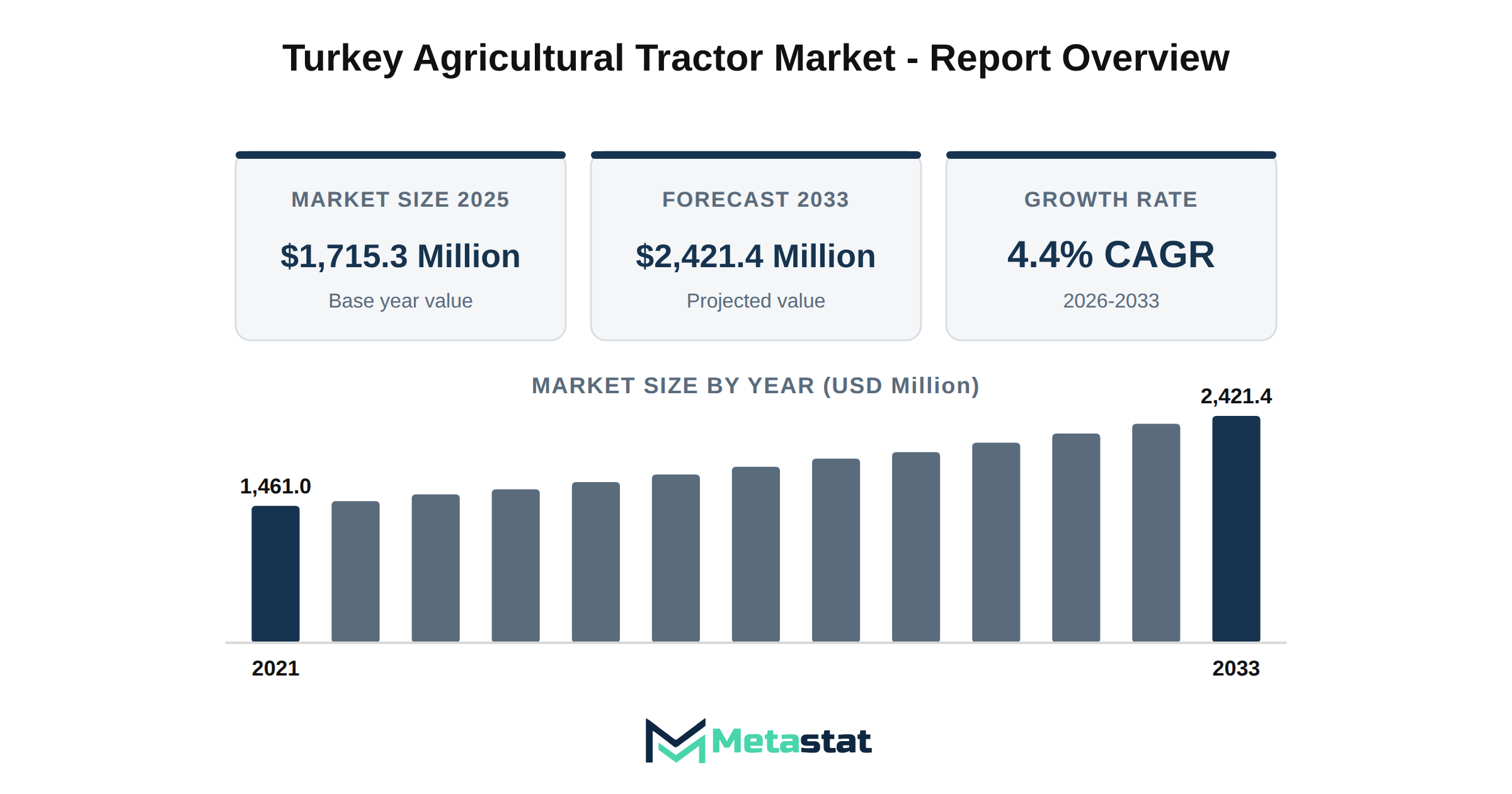
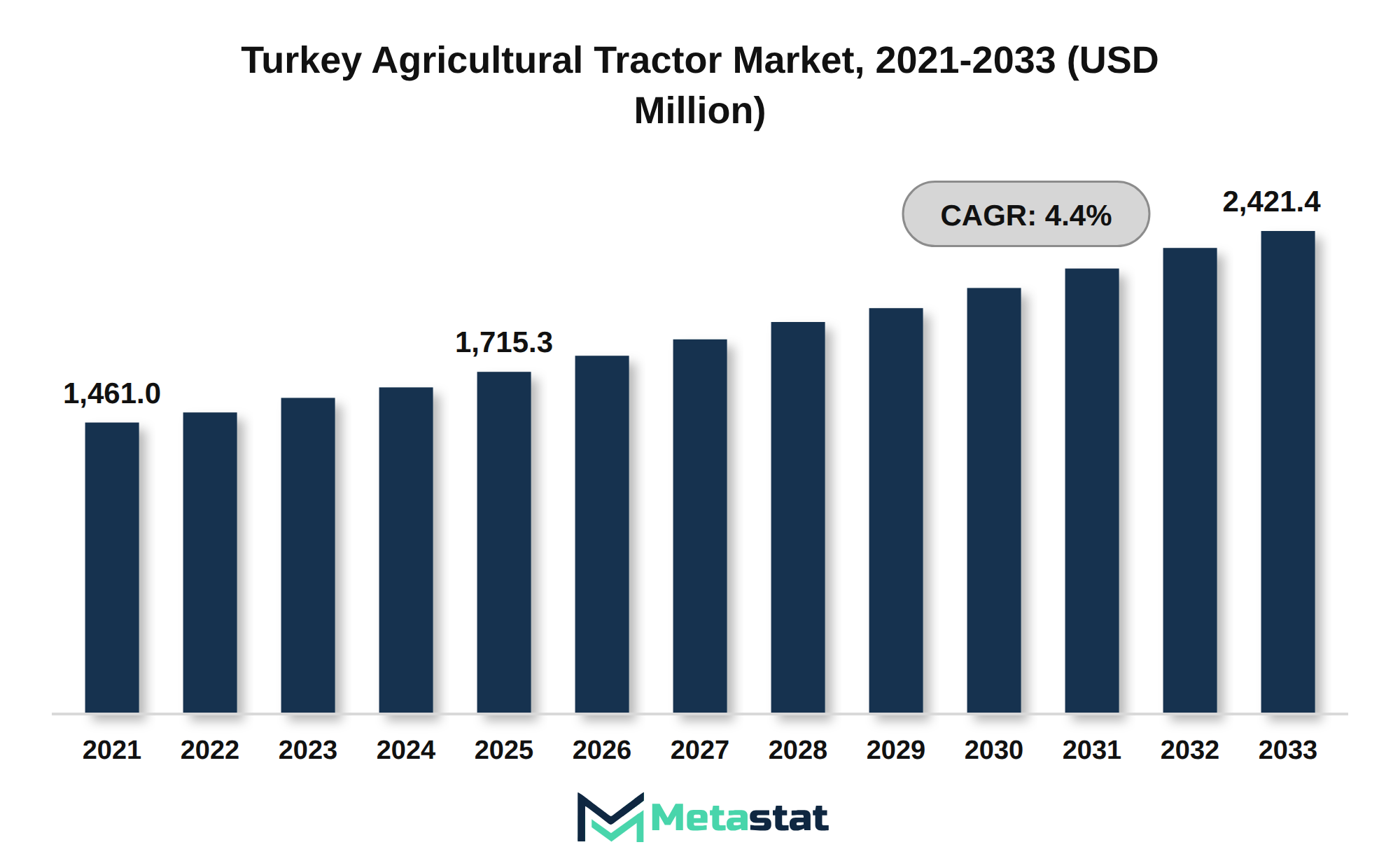
The Turkey Agricultural Tractor market reached a value of USD 1,715.3 million in 2025, reflecting a steady growth trajectory from USD 1,461 million in 2021. The market is projected to expand to USD 2,421.4 million by 2033, demonstrating a compound annual growth rate (CAGR) of 4.4% throughout the forecast period.
In the segmentation by power output, tractors with a power output of 50-100 HP dominate the market, accounting for 53.5% of the total share. Tractors with less than 50 HP contribute 21.7%, while those in the 100-150 HP category represent 19.5%. Tractors exceeding 150 HP hold a smaller share of 5.3%. This distribution highlights a preference for mid-range power tractors among buyers, driven by their versatility in various farming applications.
Growth in the Turkey Agricultural Tractor market is influenced by several factors, including advancements in technology and increasing demand for efficient agricultural practices. Rising awareness regarding sustainable farming techniques drives the adoption of modern tractors equipped with advanced features, enhancing productivity and reducing environmental impact.
Investment in research and development initiatives significantly shapes future innovation within the market. Companies focus on integrating smart technologies and alternative energy sources, aligning with global trends toward decarbonization and sustainability. Anticipated growth in electric and hybrid tractor segments signals a shift toward more environmentally friendly options.
Inflationary pressures and currency volatility continue to pose challenges for manufacturers and buyers within the market. Fluctuating costs of raw materials impact pricing strategies, necessitating effective procurement methods and value chain optimization. Companies adapt by exploring new sourcing landscapes and enhancing logistics architecture to mitigate these effects.
The Turkey Agricultural Tractor market experiences significant growth driven by various factors, including technological advancements and increasing demand for efficient farming solutions. Innovations in tractor design and functionality enhance productivity, catering to the needs of modern agriculture. The shift towards sustainable practices influences manufacturers to invest in research and development to create eco-friendly tractors, aligning with global decarbonization goals.
Supply chain dynamics impact the market landscape, with logistics architecture evolving to accommodate increased production and distribution demands. Companies adapt sourcing strategies to minimize disruptions, ensuring a stable supply of components. Inflationary pressures and currency volatility introduce challenges, affecting pricing strategies and profitability within the market.
Future strategic outlook emphasizes the importance of capital allocation towards infrastructure investments and next-generation innovations. Companies prioritize advancements in engine technology and automation, aiming to enhance operational efficiency. The market's fragmented nature presents opportunities for mergers and acquisitions, allowing firms to expand product offerings and market reach.
Corporate imperatives focus on aligning business strategies with emerging trends in sustainability and circular economy dynamics. The commitment to reducing environmental impact drives investment in renewable energy sources and sustainable manufacturing processes. High-value recommendations for stakeholders include developing partnerships, investing in innovative technologies, and adapting to changing regulatory frameworks to ensure long-term success in the Turkey Agricultural Tractor market.
The Turkey Agricultural Tractor market experiences robust demand driven by economic growth and increased capital investment. Factors including rising GDP and public-private spending power enhance purchasing capabilities among farmers and agricultural enterprises. Enhanced investment in agricultural infrastructure leads to modernized equipment acquisition, directly influencing tractor sales.
Capital investment environments characterized by favorable interest rates further promote financing options for agricultural machinery. Farmers benefit from improved access to financing, enabling them to invest in advanced machinery that enhances productivity. This shift supports the transition toward more sophisticated farming practices, which require modern tractors to meet operational demands.
Technological integration significantly influences this growth, driven by farmers adopting automation and digitization. By incorporating advanced technologies within agricultural operations, producers increase efficiency and productivity, which further drives demand within the Turkey Agricultural Tractor market. Continuous improvements in machine performance and capabilities contribute to the overall positive market outlook.
The Turkey Agricultural Tractor market experiences growth driven by technological integration, which enhances operational efficiency across various agricultural applications. The adoption of automation and artificial intelligence within agricultural practices streamlines processes, reducing labor costs and improving productivity. Farmers increasingly rely on advanced software solutions for precision farming, enabling them to optimize resource allocation and achieve higher yields.
Innovations in tractor design and functionality promote improved performance and sustainability. Electric and hybrid engines, for example, contribute to reduced emissions and lower fuel costs, appealing to environmentally conscious consumers. The market benefits from shifting demographics, particularly because younger generations enter the agricultural sector, bringing a willingness to embrace new technologies. This trend expands the customer base that prioritizes efficiency and sustainability in agricultural operations.
Investment in technology development creates a competitive environment, pushing manufacturers to innovate continuously. Companies that integrate advanced technologies into their product offerings position themselves favorably in the market, attracting customers seeking modern solutions. The ongoing digital transformation within the agricultural sector is expected to sustain market momentum, reflecting a shift toward high-tech farming practices that align with contemporary consumer behaviors and preferences.
Regulatory tightening regarding emissions and operational standards hinders the Turkey Agricultural Tractor market. Increased compliance hurdles for manufacturers raise production costs and delay market entry for new vehicles. Producers face the challenge of adhering to strict regulations while maintaining profitability, which impacts their operational capabilities.
Macroeconomic headwinds, including inflationary pressures and rising material costs, restrict investment in agricultural technology. This phenomenon limits the financial resources available for expanding product lines or enhancing production efficiency. The market experiences slower growth rates compared to previous years.
Supply chain disruptions caused by geopolitical instability affect the availability of essential components, further delaying production schedules. Limited access to critical parts results in extended lead times, which discourages investment and compromises the competitiveness of the market.
High capital investment requirements, combined with escalating operating costs, present substantial barriers to new entrants. Startups and smaller firms struggle to secure the necessary funding to compete in a market dominated by established players, leading to fragmentation.
Infrastructure gaps and connectivity deficits within rural areas hinder the adoption of advanced agricultural machinery. Limited access to reliable transportation and communication networks slows down the distribution of products and services, which impacts market penetration.
Talent gaps hinder manufacturers' ability to innovate and adopt new technologies. A shortage of skilled labor restricts operational efficiency and affects the market's ability to respond effectively to changing consumer demands.
Data security vulnerabilities and privacy concerns pose additional challenges for firms operating in the Turkey Agricultural Tractor market. Manufacturers allocate resources to ensure compliance with evolving data protection regulations, which diverts funds from development and other critical areas.
The Turkey Agricultural Tractor market faces significant challenges due to geopolitical fragmentation, creating uncertainty in trade relationships and impacting material sourcing. Increasing trade deficits and tariff friction affect import costs, leading to price volatility for key components. These conditions complicate the supply chain and restrict access to necessary machinery parts, ultimately impacting production timelines and profitability.
Technological disruptions, including rapid advancements in automation and digitalization, require substantial investment in research and development. Many manufacturers struggle with complex integrations, resulting in interoperability friction between existing systems and new technologies. This situation increases operational costs and limits the ability to leverage efficiency gains.
Rising input cost structures and margin pressures challenge the market, compelling manufacturers to balance competitive pricing with sustainable profitability. The workforce skill gap exacerbates these issues, with companies facing difficulties attracting and retaining skilled labor essential for modern agricultural operations. These factors create a challenging environment for companies operating within the Turkey Agricultural Tractor market.
Environmental sustainability demands, including decarbonization mandates, influence operational practices and require investments in cleaner technologies. Manufacturers adapt to evolving regulatory landscapes while managing costs associated with compliance overhead. The combination of these pressures leads to an increasingly competitive market, where innovation and strategic planning are vital for long-term success.
Growing consumer preferences for sustainable and efficient farming practices create substantial opportunities in the Turkey Agricultural Tractor market. The increasing focus on environmental sustainability drives demand for eco-friendly tractors, particularly electric and hybrid models. A compound annual growth rate of 22.2 percent for electric tractors is projected through 2033, enabling manufacturers to align product offerings with changing consumer expectations.
Infrastructure modernization across Turkey significantly enhances the operational capabilities of agricultural producers. Improved rural infrastructure and advanced supply chain frameworks facilitate easier access to the latest tractor technologies. These developments increase the adoption of high-performance tractors, boosting productivity in various agricultural applications.
Geographical expansion into rural areas presents further growth potential for the market. An increasing number of farmers in these regions seek modern agricultural solutions to improve output and efficiency. Consequently, targeted strategic initiatives by manufacturers effectively address the specific needs of these underserved markets.
Technological disruptions, including advancements in precision agriculture, present a compelling case for new tractor functionalities. Enhanced automation and digital integration allow for improved asset utilization and operational yield maximization. This trend positions the Turkey Agricultural Tractor market favorably within the broader agricultural technology ecosystem.
Commitments to sustainability and environmental, social, and governance (ESG) principles increasingly influence purchasing decisions among farmers. This shift requires manufacturers to adapt to eco-friendly compliance initiatives, ensuring product designs reflect these evolving standards. The convergence of sustainability and advanced technology creates fertile ground for innovation, further stimulating market growth.
The Turkey Agricultural Tractor market is segmented based on Power Output, Drive Type, Engine Type, and Application.
Valued at USD 383.1 million in 2026, the Less than 50 HP segment is projected to reach USD 433 million by 2033, achieving a CAGR of 1.8% during the forecast period. This segment appeals to smallholder farmers and those engaged in hobby farming, who require compact and affordable machinery for various agricultural tasks. Adoption of these tractors is influenced by increasing demand for mechanization in agriculture, where efficiency and productivity enhancements drive purchasing decisions.
Technological advancements in tractor design, including improved fuel efficiency and user-friendly controls, contribute to the segment's growth. Innovations including precision farming techniques enhance the appeal of these tractors by enabling farmers to optimize their operations. The market benefits from a shift towards environmentally sustainable practices, prompting manufacturers to develop tractors with lower emissions and better fuel economy.
End-use dynamics reflect a rising preference for smaller, versatile tractors that navigate diverse terrains. The market observes growing consumer interest in tractors suited for specialized applications, including vineyards and orchards, where maneuverability remains critical. Pricing volatility in raw materials impacts production costs, emphasizing the importance of strategic sourcing to maintain competitive pricing.
Capital investment outlook for the segment remains positive, driven by a commitment to enhancing technology and performance. Continued investment in research and development facilitates next-generation upgrades, ensuring that the offerings remain aligned with market needs. The Turkey Agricultural Tractor market presents opportunities for growth within this sub-segment, fueled by evolving agricultural practices and consumer expectations.
Significant growth trends characterize the 50-100 HP sub-segment within the Turkey Agricultural Tractor market, with expectations to reach USD 1,211.7 million by 2033, at a CAGR of 3.5% during the forecast period. The demand for tractors in this power output range is primarily driven by the increasing reliance on mechanization in agriculture, which enhances productivity and efficiency. Farmers adopting advanced machinery for various agricultural tasks, including planting, harvesting, and land preparation, fuel this trend. Investment in modern equipment reduces labor costs and improves yield quality, contributing to a more competitive agricultural sector.
Regional factors influence the adoption of 50-100 HP tractors. In Turkey, diverse agricultural practices, including field crops, vineyards, and orchards, necessitate versatile tractors that provide adequate power for various applications. The market benefits from technological advancements that improve fuel efficiency and reduce emissions, aligning with regulatory measures that encourage sustainable farming practices. Increased focus on effective land utilization and crop management techniques further enhances the attractiveness of tractors in this power output category.
Pricing dynamics play a crucial role in shaping market conditions. Competitive pricing strategies among manufacturers lead to affordability, ensuring that small to medium-sized farmers access advanced machinery. The balance between quality and cost influences purchasing decisions, with buyers increasingly seeking cost-effective solutions that do not compromise performance. Overall, the 50-100 HP segment remains essential in the Turkey Agricultural Tractor market, supporting growth and promoting innovation within the industry.
Demand for agricultural tractors within the 100-150 HP sub-segment remains strong, reflecting the diverse needs of farmers who require machines capable of handling a variety of tasks, including plowing and harvesting. The Turkey Agricultural Tractor market benefits from advancements in technology that enhance fuel efficiency and reduce emissions, aligning with global sustainability trends and regulations.
Increased adoption of precision farming techniques drives demand for versatile tractors that perform efficiently across different terrains. The sector experiences a significant shift towards integrated farming solutions, where tractors equipped with advanced technology optimize productivity and reduce labor costs. Investment in research and development significantly influences the evolution of these tractors, leading to enhancements that address specific agricultural challenges.
The segment is expected to reach USD 580.2 million by 2033, indicating a strong growth trajectory amid rising operational efficiencies and technological advancements. Market participants focus on strategic partnerships and innovations to enhance their product offerings, contributing to a competitive environment characterized by continuous improvement and adaptation to farmer needs.
Growing interest in electric and hybrid models presents opportunities for market expansion, allowing manufacturers to cater to environmentally conscious consumers. Shifting consumption patterns towards more sustainable practices influence buying decisions, pushing manufacturers to adapt their production strategies accordingly.
Overall, the 100-150 HP segment within the Turkey Agricultural Tractor market reflects a balanced combination of demand drivers, adoption rates, and technological maturation, leading to sustained investments and growth in the years ahead.
The More than 150 HP segment is projected to grow at a CAGR of 10.1% during the forecast period. This expansion is fueled by increasing demand from large-scale agricultural operations requiring powerful and efficient machinery to enhance productivity. Key buyers in this sector include commercial farms and agricultural cooperatives focusing on high-yield crop production. These entities prioritize tractors with robust power outputs to perform demanding tasks including plowing, tilling, and harvesting across vast fields. Product evolution towards more fuel-efficient and technologically advanced tractors enhances operational efficiency and reduces long-term costs.
Technological maturation in the agricultural sector leads to the adoption of advanced features in tractors exceeding 150 HP, including precision farming tools and automation capabilities. This innovation supports farmers in optimizing resource usage and improving yield quality. Regulatory compliance standards related to emissions and safety drive manufacturers to invest in next-gen upgrades, enhancing the attractiveness of these tractors in the market. Competitive pricing strategies among manufacturers, combined with rising production costs, influence margin pressures, compelling several players to focus on enhancing their value propositions through superior technology and customer service.
In the Turkey Agricultural Tractor market, consumption shifts reflect a growing preference for high-power tractors that meet the evolving demands of large-scale agriculture. This trend aligns with the global movement towards sustainable agricultural practices promoting efficiency and productivity. Strategic opportunity windows arise for manufacturers capable of delivering high-performance tractors equipped with energy-efficient engines and advanced agricultural technologies. Capital investment outlook remains positive, encouraging innovation and expansion in the More than 150 HP segment, contributing to overall market growth.
Valued at USD 472 million in 2026, the 2WD segment is projected to reach USD 483.3 million by 2033, at a CAGR of 0.3% during the forecast period. Demand for 2WD tractors stems from their versatility and suitability for various agricultural tasks, particularly in smaller fields and diverse farming operations. Farmers prioritize affordability and ease of maintenance, driving interest in this segment. The growing trend of precision agriculture further supports the adoption of 2WD tractors, driven by farmers seeking to enhance efficiency in their operations.
Technological advancements in 2WD tractors, including improved engine efficiency and automated features, contribute to increased operational effectiveness. These innovations align with evolving consumer preferences for modern agricultural practices. Regulatory compliance related to emissions has led manufacturers to focus on developing more environmentally friendly 2WD tractors that meet stringent standards. The market experiences a shift towards tractors that combine traditional utility with modern technological enhancements.
Investment in the Turkey Agricultural Tractor market continues to reflect confidence in the growth potential of the 2WD segment. Strategic partnerships between manufacturers and technology providers enhance product offerings, creating a competitive landscape. This collaborative approach drives product evolution, ensuring that 2WD tractors remain relevant in meeting the changing demands of the agricultural sector.
Recent trends in the Turkey Agricultural Tractor market indicate strong growth within the 4WD segment, driven by increasing demand for efficiency and productivity in agricultural operations. Rising labor costs and the need for enhanced fuel efficiency support this demand. Farmers in Turkey recognize the advantages of 4WD tractors in various terrains and weather conditions, enhancing productivity and reducing operational time.
Technological advancements in 4WD tractors contribute significantly to market growth. Enhanced features, including precision farming technology, automated systems, and improved fuel management, attract buyers seeking to modernize their operations. The 4WD segment is projected to reach USD 1,938.1 million by 2033, with a CAGR of 5.6% during the forecast period.
Economic conditions, including fluctuating commodity prices and shifts in consumer preferences towards sustainable farming practices, shape market dynamics. Farmers seek tractors that enhance productivity and adhere to environmental standards, reflecting a broader trend towards sustainability in agriculture.
The growing availability of financing options and government incentives supports the adoption of 4WD tractors among farmers. These financial instruments enable easier access to advanced agricultural machinery, contributing to the overall expansion of the market.
Valued at USD 1,745.3 million in 2026, the Diesel segment is projected to reach USD 2,225.5 million by 2033, at a CAGR of 3.5% during the forecast period. This growth is driven by increasing adoption of diesel engines due to their reliability and efficiency in agricultural applications. Farmers prioritize performance and fuel economy, which supports demand for diesel-powered tractors. Technological advancements in diesel engine design enhance fuel efficiency, reducing operational costs for end-users. The segment benefits from a well-established infrastructure for diesel supply in Turkey, facilitating easier access for farmers.
Regulatory compliance related to emissions standards influences the Diesel segment, pushing manufacturers to innovate and optimize engine designs. This evolution aligns with global trends toward cleaner technologies while maintaining the advantages of diesel engines. The market experiences shifts in consumer preferences, with farmers seeking tractors that provide robust performance in various agricultural applications. The Diesel segment remains competitive, supported by a strong supply chain and strategic investments in technology, ensuring a stable trajectory aligned with the overall growth of the Turkey Agricultural Tractor market.
Growing adoption of electric agricultural tractors plays a critical role in shaping the Turkey Agricultural Tractor market. Increasing environmental concerns and the push for sustainable farming practices have driven demand for electric models. These tractors offer lower emissions and reduced noise levels, appealing to environmentally conscious farmers and agricultural businesses. Advancements in battery technology and charging infrastructure support the expansion of this segment.
The electric segment is expected to reach USD 110.4 million by 2033, at a CAGR of 22.2% during the forecast period. This substantial growth reflects a shift in industry focus towards renewable energy solutions, aligning with global trends in agriculture. Investment in electric tractors contributes to operational efficiency and long-term cost savings for users, enhancing market competitiveness.
Regulatory compliance and government incentives promoting electric vehicle use further stimulate growth in this segment. Manufacturers and suppliers within the market prioritize the development of electric models to meet evolving standards and consumer expectations. This strategic alignment drives innovation and positions companies favorably in the rapidly changing agricultural landscape.
Growing interest in environmentally friendly farming practices drives adoption of hybrid tractors in the Turkey Agricultural Tractor market. These tractors offer improved fuel efficiency and reduced emissions compared to traditional diesel engines, appealing to farmers focused on sustainability. Innovations in hybrid technology enhance performance while maintaining lower operational costs, positioning this segment favorably in the competitive landscape.
Valued at USD 85.5 million by 2033, the hybrid segment presents significant growth opportunities. Investment in research and development supports technological advancements, stimulating further interest among stakeholders seeking modern solutions. Increased awareness of the benefits of hybrid engines among farmers contributes to the segment's expansion. Enhanced efficiency and productivity gained from hybrid tractors align with the market's evolving demands.
Government incentives promoting eco-friendly farming practices further support the adoption of hybrid tractors. Regulatory frameworks aimed at reducing carbon footprints encourage farmers to transition to more sustainable equipment, facilitating the segment's growth. While the Turkey Agricultural Tractor market continues to evolve, the hybrid segment is projected to capture a larger share of the overall market.
Valued at USD 810.6 million in 2026, the Field Crops segment is projected to reach USD 1,015.6 million by 2033, at a CAGR of 3.3% during the forecast period. This growth stems from rising demand for efficient farming equipment that enhances productivity in crop cultivation. Farmers across Turkey recognize the importance of advanced tractor technology in maximizing yields and minimizing labor costs.
Technological advancements in tractor manufacturing drive the evolution of features tailored to field crops. Innovations including precision farming capabilities and improved fuel efficiency contribute to the appeal of these tractors. Enhanced performance aligns with the expectations of farmers seeking reliable equipment that meets modern agricultural demands.
Downstream applications further reinforce the importance of tractors in field crop production. The trend towards larger-scale farming operations creates a need for tractors that handle diverse tasks, from plowing to harvesting. Significant investments in agricultural technology prompt farmers to upgrade their equipment, creating a favorable growth environment in the Turkey Agricultural Tractor market.
Consumption patterns in the agricultural sector reflect a shift towards greater mechanization. Farmers increasingly opt for tractors that offer versatility and adaptability, catering to various crop types and farming methods. These dynamics encourage manufacturers to focus on developing specialized models that suit specific agricultural needs, ensuring a competitive edge in the market.
Regulatory compliance with environmental standards influences purchasing decisions. Tractors equipped with advanced emissions reduction technologies attract farmers aiming to meet sustainability criteria while maintaining operational efficiency. This aspect aligns with the growing focus on eco-friendly farming practices, further stimulating growth in the Field Crops segment.
The segment is poised for sustained expansion, driven by a combination of technological innovations, changing consumer preferences, and regulatory influences. The Turkey Agricultural Tractor market is expected to continue experiencing significant developments, ensuring that the agricultural sector remains competitive and productive.
Growing consumer interest in orchard cultivation drives demand for agricultural tractors specifically designed for this application. Increased investment in modernizing agricultural practices enhances productivity and efficiency among farmers, ensuring that they meet the growing market demand for fruits and vegetables. The integration of advanced technologies in tractors allows for better precision in farming operations, appealing to orchard owners seeking to optimize yields.
This segment is expected to reach USD 458.6 million by 2033, at a CAGR of 5% during the forecast period. Rising labor costs and a declining workforce in agriculture prompt the adoption of mechanized solutions. While tractor technology matures, customers increasingly prefer equipment that offers greater durability and lower maintenance costs, contributing to market expansion.
Shifts in consumption patterns toward organic produce increase the demand for specialized tractors that support sustainable farming practices in orchards. Regulatory compliance regarding environmental standards influences purchasing decisions, pushing farmers toward equipment that aligns with these evolving regulations. This trend creates a strategic opportunity window for manufacturers within the Turkey Agricultural Tractor market to innovate and enhance their offerings.
Growing interest in the vineyards segment directly correlates with the increasing demand for high-quality wine production. Investments in vineyard technologies and sustainable farming practices drive this trend, prompting growers to enhance productivity and efficiency in their operations. A shift toward precision agriculture techniques allows vineyard operators to optimize planting, irrigation, and harvesting processes, significantly impacting overall yield and quality.
Market dynamics reflect a broader consumer preference for premium wines, resulting in a steady increase in vineyard acreage. This expansion necessitates enhanced tractor capabilities to manage the unique challenges associated with vineyard cultivation, including terrain variability and precision planting. The Turkey Agricultural Tractor market supports this transition with the introduction of advanced equipment tailored specifically for vineyards.
Valued at USD 254.3 million by 2033, the vineyards segment illustrates strong growth potential, driven by evolving agricultural practices and a commitment to sustainability. Innovations in tractor technology are expected to enhance efficiency and productivity, promoting further adoption across the sector. The connection between consumer preferences and technological advancements will significantly shape the future of the market.
In the Turkey Agricultural Tractor market, the Horticulture & Greenhouses segment is projected to grow at a rate of 6.8% during the forecast period. This growth stems from increasing consumer demand for fresh produce, prompting farmers to invest in modern agricultural technologies that enhance productivity. Technological advancements in tractor design contribute significantly, with innovations targeting efficiency and sustainability in horticultural applications.
The rise in urban agriculture and greenhouse farming fuels demand for specialized equipment tailored to smaller-scale operations. Adoption of advanced features in tractors, including precision farming capabilities, supports more efficient cultivation practices. Awareness of environmental sustainability drives interest in tractors with lower emissions and enhanced fuel efficiency.
Market participants are responding to these trends by introducing tractors designed specifically for horticultural tasks. Investments in next-generation upgrades and product evolution are crucial for meeting the diverse needs within this segment. The market anticipates robust expansion driven by ongoing advancements and shifts in consumer preferences.
Growing demand for livestock and dairy farming in Turkey drives the need for agricultural tractors tailored to specific operational requirements. Increasing livestock production and the expansion of dairy farms create a favorable environment for the adoption of advanced machinery. Farmers seek to enhance productivity while managing costs effectively, reflecting these dynamics in the competitive landscape within the Turkey Agricultural Tractor market.
Technological advancements shape the evolution of tractors, leading to greater efficiency and reduced environmental impact. Innovations in engine performance, automation, and precision farming technology enable farmers to optimize operations. Next-generation upgrades help operators respond to changing end-use dynamics, influencing purchasing decisions.
Regulatory compliance and sustainability standards impose additional considerations on farmers. Meeting these requirements necessitates investments in modern equipment, propelling demand for agricultural tractors in the livestock and dairy farming segment. The shift toward environmentally friendly practices aligns with regulatory expectations and addresses consumer preferences for sustainably produced goods.
Capital investment outlook for this segment remains positive. Stakeholders recognize the importance of robust machinery in maintaining competitiveness. The market's evolution is closely linked to these factors, highlighting opportunities for manufacturers focused on delivering tailored solutions that meet the specific needs of livestock and dairy farming.
Interest in specialty farming applications influences the Turkey Agricultural Tractor market, particularly in the Others segment, which includes forestry and specialty farming. Producers in these areas seek versatile equipment to address the unique demands of their operations. Increased emphasis on sustainable practices and efficient resource management drives the adoption of advanced tractor technologies. The focus on precision agriculture drives innovations in tractor design, enhancing capabilities for forestry tasks and specialty crops.
Adoption of next-generation upgrades, including advanced navigation systems and enhanced engine efficiencies, contributes to improved productivity in this sub-segment. This evolution aligns with broader market trends toward increased mechanization and automation within agriculture. Strategic opportunity windows arise from evolving consumer preferences and regulatory compliance standards, pushing manufacturers to innovate while ensuring environmental sustainability.
Market dynamics reflect ongoing challenges, including cost structures and pricing volatility. Fluctuations in raw material costs impact pricing strategies for tractors, while manufacturers focus on maintaining margins amid these pressures. Supply chain resilience remains essential, enabling timely access to components and reducing vulnerabilities in production processes. The demand for specialized tractors continues to grow, reinforcing the importance of aligning product offerings with emerging applications in forestry and specialty farming.
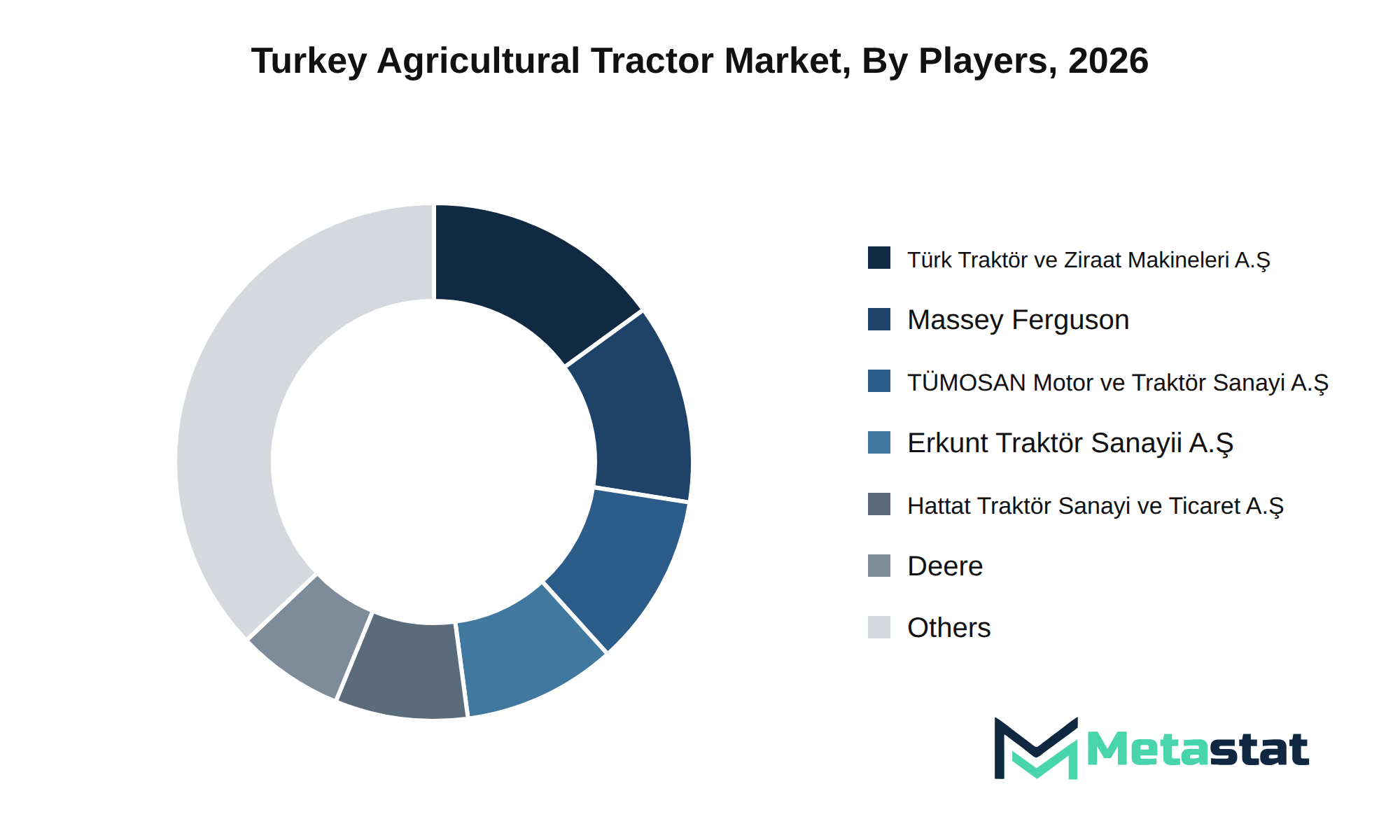
The Turkey Agricultural Tractor market features a diverse group of players that pursue various strategic initiatives to enhance their market positions. Companies including Türk Traktör ve Ziraat Makineleri A.Ş., TÜMOSAN Motor ve Traktör Sanayi A.Ş., and Erkunt Traktör Sanayii A.Ş. focus on local production capabilities, leveraging regional knowledge to meet specific customer needs effectively. Strategic alliances among manufacturers, including international firms like Massey Ferguson, CLAAS KGaA mbH, and Kubota Corporation, facilitate access to advanced technologies and broaden distribution networks.
Product differentiation remains crucial for competitiveness within the Turkey Agricultural Tractor market. Firms invest in research and development pipelines to innovate and offer unique features that cater to evolving agricultural requirements. Pricing architectures vary across segments, with companies adapting their commercial models to different market tiers, from affordable to premium offerings. Barriers to entry remain high due to established brands' strong customer loyalty and extensive intellectual property portfolios, which provide a significant advantage against potential newcomers.
Market size is forecast to rise from USD 1,715.3 million in 2025 to over USD 2,421.4 million by 2033. The base case envisions a growth trajectory reflecting a compound annual growth rate (CAGR) of 4.4%. Factors including macroeconomic conditions, emerging technologies, and regulatory frameworks shape this growth. In a bull case scenario, accelerated adoption of next-generation technologies and significant infrastructure investments could lead to higher market expansion, while a bear case scenario reflects challenges including economic downturns or geopolitical tensions affecting trade corridors.
Integration of advanced technologies drives innovation within the Turkey Agricultural Tractor market, enhancing operational efficiency and expanding applications across various agricultural sectors. Regulatory changes targeting environmental sustainability, compliance milestones, and evolving policies influence product development timelines and market entry strategies. Downsizing in core industries leads to structural shifts in consumption patterns, emphasizing the importance of strategic capital allocation to address emerging enterprise needs.
Investment in research and development (R&D) aimed at commercializing innovative tractor solutions creates high-growth pockets within the market. Infrastructure commitments and capital expenditure (CapEx) investments play critical roles in shaping future growth trajectories, enabling firms to capitalize on unmet demands. These strategic imperatives require a robust defensibility roadmap to navigate potential market volatility and ensure long-term sustainability. Insights drawn from this analysis guide stakeholders in making informed decisions that align with evolving market dynamics.
The report strategically identifies and profiles the key market players and analyses their core competencies in each sub-segment of the Agricultural Tractor market.
Report Attributes | Details |
Study Period | 2021-2033 |
Base Year | 2025 |
Estimated Year | 2026 |
Forecast Period | 2026-2033 |
Historical Period | 2021-2025 |
Growth Rate | CAGR 4.4% from 2026 to 2033 |
Revenue Unit | USD million |
Segmentation | By Power Output, Drive Type, Engine Type, Application, and Region |
Find answers to common questions about this report
The Agricultural Tractor market size in Turkey was valued at USD 1,715.3 million in 2025.
The Agricultural Tractor market is projected to grow at a CAGR of 4.4% during the forecast period from 2026 to 2033.
The segment leading the Turkey Agricultural Tractor market is the 50-100 HP category, with a projected value of USD 1,211.7 million by 2033. This segment holds the largest share compared to others in the market.
Key drivers for the Turkey Agricultural Tractor market include robust demand fueled by economic growth, increased capital investment, and technological integration. Rising GDP and public-private spending enhance farmers' purchasing capabilities, while advancements in automation and digitization improve operational efficiency, driving further demand for modern tractors.
Several factors restrain growth in the Turkey Agricultural Tractor market, including regulatory tightening that raises production costs and delays market entry. Macroeconomic challenges including inflation and rising material costs limit investment in agricultural technology, while supply chain disruptions hinder the availability of essential components, affecting production timelines and competitiveness.
Robust demand for agricultural tractors in Turkey is driven by economic growth, increased capital investment, and technological integration. Farmers benefit from improved financing options, enabling investments in advanced machinery that enhances productivity and operational efficiency, aligning with contemporary consumer preferences for sustainability.
The Agricultural Tractor market is estimated to reach a valuation of USD 2,421.4 million by 2033.
Key players in the Turkey Agricultural Tractor Market include Türk Traktör ve Ziraat Makineleri A.Ş., TÜMOSAN Motor ve Traktör Sanayi A.Ş., Erkunt Traktör Sanayii A.Ş., Massey Ferguson, Hattat Traktör Sanayi ve Ticaret A.Ş., and CLAAS KGaA mbH.
The 50-100 HP segment is projected to reach USD 1,211.7 million by 2033, growing at a CAGR of 3.5%.
The Horticulture & Greenhouses application segment is anticipated to experience a CAGR of 6.8%, reflecting strong demand for specialized equipment.
The analysts below cover Agriculture research at Metastat Insights.
LEAD ANALYST
Utkarsh Khirodkar is a Lead Market Research Analyst at MetaStat Insight, specializing in market intelligence, technology sector assessments, and competitive strategy.
Replacing petrochemical surfactants with bio-based alternatives requires realistic timelines on industrial precision fermentation scaling. The market research broke down commercialization timelines, feedstock sugar price sensitivities, and regional cosmetic ingredient regulatory approvals in Europe and East Asia. That supplier readiness mapping gave our formulations team reliable context when comparing renewable chemical sourcing roadmaps.
Tracking ceramic matrix composite adoption in high-bypass aero engines requires strict attention to material qualification cycles and FAA airworthiness testing milestones. The MetaStat Insight team provided a detailed timeline of silicon carbide fiber manufacturing capacity and commercial foundry lead times. Having clear visibility into upstream thermal barrier coating supply helped us stress-test our long-term component procurement strategy.
Transitioning ultra-class mining haul trucks to alternative power requires concrete data on remote hydrogen refueling infrastructure economics. The report evaluated megawatt-scale electrolyzer installation expenses, onsite storage safety mandates, and heavy-duty fuel cell stack degradation under continuous duty cycles. That technical rigor helped our engineers benchmark realistic total operating cost horizons for off-highway fleet decarbonization.
Explore related market intelligence reports worth reading alongside this one.