
LEAD ANALYST
Utkarsh Khirodkar is a Lead Market Research Analyst at MetaStat Insight, specializing in market intelligence, technology sector assessments, and competitive strategy.

Global Taxi Market Size, Share, By Service Type (Ride-Hailing, Ride-Sharing, Corporate & Institutional Contracts), By Vehicle Type (Sedan Taxis, Hatchback Taxis, SUV and MPV Taxis, Van Taxis, Electric Taxis, Wheelchair-Accessible Taxis, Others (Hybrid Taxis, Luxury Specialty Vehicles)), By Propulsion Type (Internal Combustion Engine (ICE), Electric, Hybrid), By Booking Channel (Mobile Application Booking, Telephone Booking, Street-Hail Booking, Taxi Rank or Stand Booking, Website Booking, Others (Third-Party Digital Booking Platforms)), Industry Analysis, Growth, Trends, and Forecast, 2026-2033
Report ID
MSI-5488
Published
October, 2026
Pages
264 Pages
Format
Historical
Base year
Forecast
Forecast period
Report Details
Market Valuation: Valued at $255.7 Billion in 2025, projected to reach $361 Billion by 2033 at a 4.4% CAGR.
Dominant Segment: Ride-hailing services lead the market, driven by increased smartphone penetration and demand for on-demand transportation solutions. This segment captures significant market value, reflecting a shift in consumer behavior towards convenient mobility options.
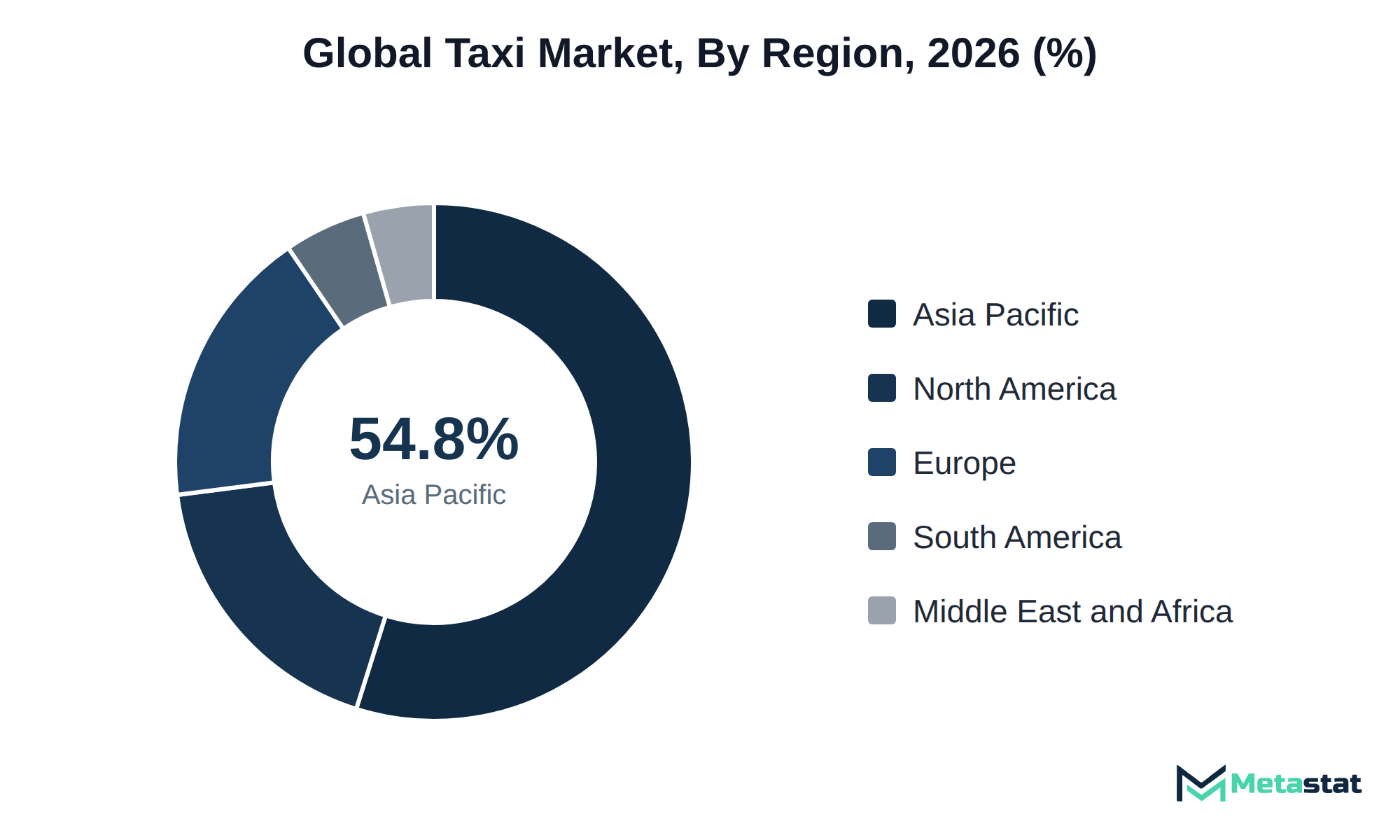
Geographic Lead: The Asia Pacific region dominates the taxi market, holding 54.8% of the market share in 2025. This leadership is fueled by high population density in urban areas and rapid adoption of technology-driven transportation solutions.
What's Inside: The report provides a comprehensive analysis of the global taxi market, including detailed segmentation by service type, vehicle type, propulsion type, and booking channel. It also includes competitive coverage and forecasts from 2026 to 2033.
Emerging Trends: The increasing adoption of electric taxis is reshaping the market, with a projected value of USD 70.6 billion by 2033. This growth is driven by rising environmental awareness and government incentives promoting sustainable transportation options.
Operational Efficiency: Investment in mobile booking technologies and dispatch automation enhances operational efficiency, with mobile application booking revenue expected to grow from USD 170.2 billion in 2026 to USD 254.3 billion by 2033.
Choose Your License
Global Taxi Market
The global Taxi market was valued at USD 255.7 billion in 2025 and is projected to reach USD 361 billion by 2033, growing at a CAGR of 4.4% over the forecast period.
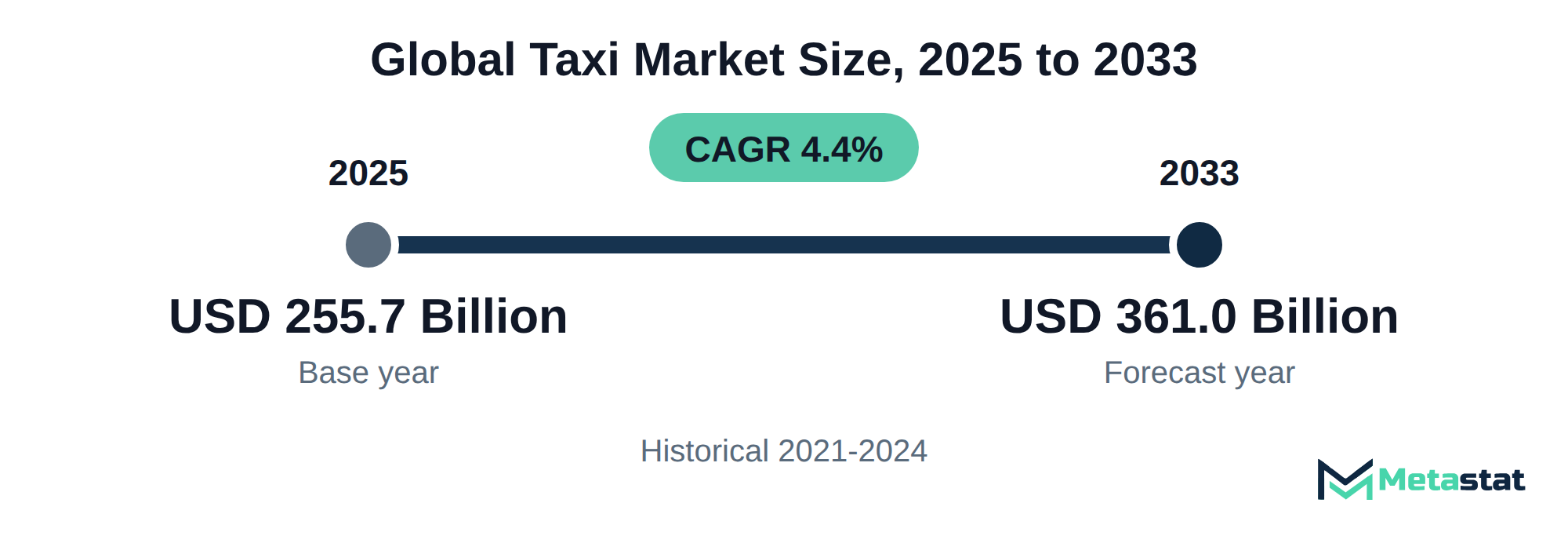
The Taxi market encompasses a variety of transportation services, primarily focusing on ride-hailing, ride-sharing, and corporate contracts. Buyers invest in these services due to the convenience and efficiency they offer, catering to individual commuters and businesses alike. This sector is essential for urban mobility, addressing the growing demand for flexible transportation options that adapt to modern lifestyle needs.
Growth in the market is driven by the increasing adoption of mobile applications for booking rides, enhancing user experience and accessibility. Ride-hailing services represent the largest segment, capturing significant market value. In terms of regional distribution, Asia Pacific holds 54.8% of the market share, significantly outperforming other regions. North America holds 18.1% of the market in 2025, with the US leading in 2026.
The ongoing transition toward electric vehicles influences market dynamics, with rising interest in sustainable transportation solutions. This shift reflects broader environmental concerns and regulatory pressures, prompting companies to invest in electric taxi fleets. The demand for eco-friendly options continues to shape consumer preferences, positioning electric taxis as a vital component of the market's future growth.
The Taxi market includes various transportation options designed to meet the mobility needs of consumers and businesses. Buyers invest in this market primarily to access convenient and efficient transportation solutions that suit their travel requirements. Factors including urbanization, increased disposable income, and changing consumer preferences significantly influence spending patterns among different user groups, including individual riders, corporate clients, and institutional organizations.
Growth in the market is propelled by the rising demand for ride-hailing services, which represent the largest segment in terms of revenue. The Asia Pacific region accounts for 54.8% of total revenue. This dominance is driven by the high population density in urban areas, coupled with the rapid adoption of technology-driven transportation solutions. The US is projected to lead the North American market in 2026.
Technological advancements in mobile applications and payment systems enhance the user experience, boosting demand for services in the Taxi market. The shift towards sustainable transportation options, including electric vehicles, further supports market growth. Increasing interest in ride-sharing and corporate contracts reflects evolving consumer behavior, positioning the market for continued expansion in the coming years.
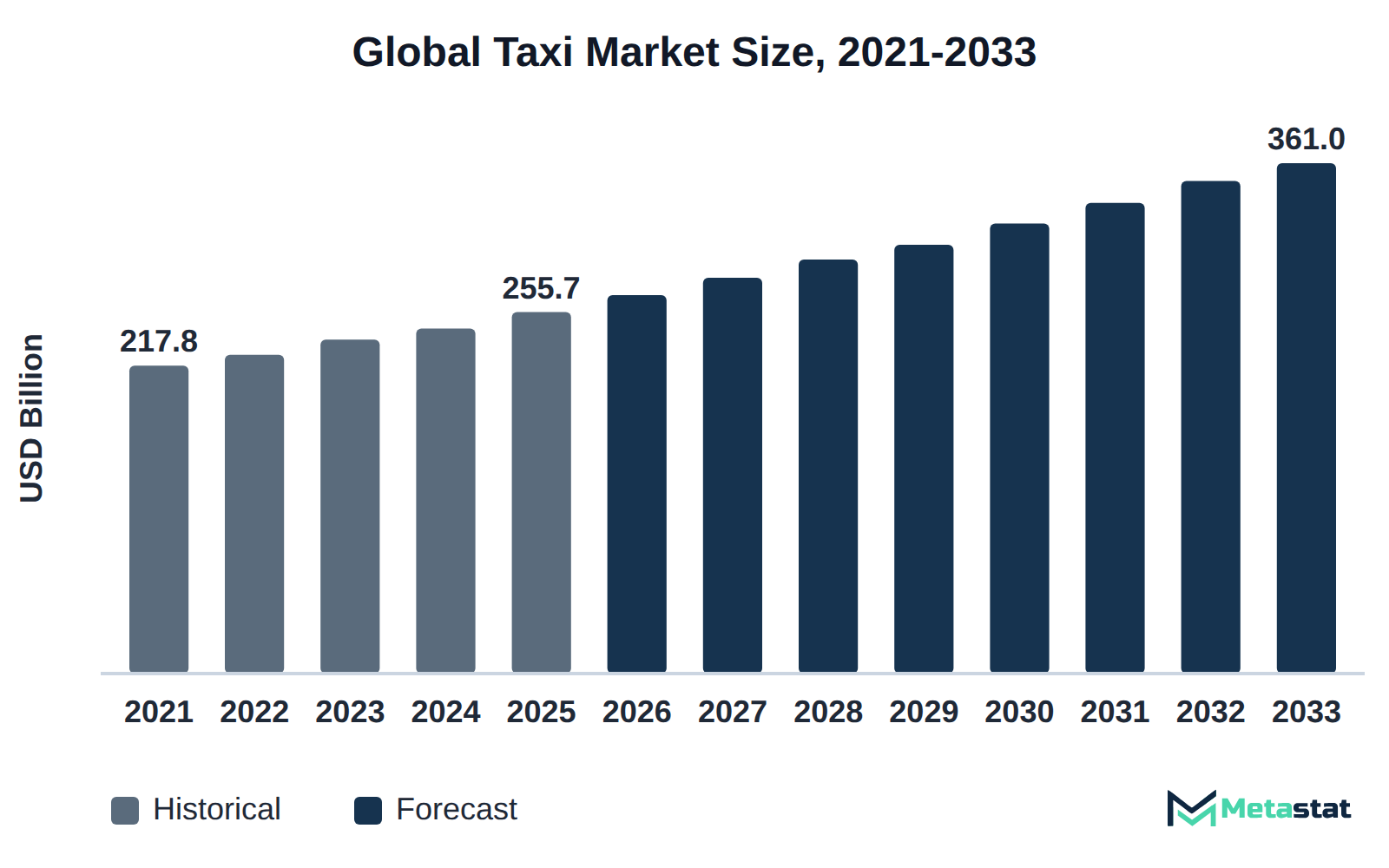
Taxi dispatch automation and mobile booking technologies significantly enhance operational efficiency in the taxi market. The increasing adoption of mobile applications enables real-time tracking and streamlined dispatch systems, improving the overall user experience. Mobile application booking revenue is projected to rise from USD 170.2 billion in 2026 to USD 254.3 billion in 2033, reflecting a compound annual growth rate (CAGR) of 5.9%. This shift ensures faster response times and optimized route management, resulting in reduced operational costs for service providers.
Incorporating automation into dispatch processes allows companies to manage larger fleets with fewer resources, leading to enhanced productivity. For instance, the ride-hailing segment, which encompasses automated booking systems, is anticipated to grow from USD 199.4 billion in 2026 to USD 264.2 billion in 2033, achieving a CAGR of 4.1%. This growth indicates strong demand from both passengers and fleet operators for efficient and user-friendly booking solutions.
Advancements in mobile booking technologies and dispatch automation create a competitive advantage in the taxi market. Companies that leverage these innovations improve customer satisfaction while reducing operational expenditures. Such technological integration is essential for maintaining market relevance in an increasingly digital landscape.
The shift towards electric taxis has reshaped purchasing and financing strategies within the taxi market. Buyers increasingly prioritize total cost of ownership and environmental sustainability when selecting electric vehicles for their fleets. In response, several companies are developing flexible financing models that facilitate the transition to electric propulsion. These models often include options for leasing vehicles, which allow operators to spread costs over time while minimizing upfront investments.
Investment in charging infrastructure emerges as a critical component of operational efficiency for electric taxi fleets. Buyers often seek locations with adequate charging facilities to ensure uninterrupted service and minimize downtime. The propulsion type segment shows a projected value of USD 70.6 billion for electric taxis by 2033, reflecting strong demand for electric vehicles within the market. This investment supports growth by enabling operators to optimize their charging schedules and improve the overall profitability of electric taxi services.
Corporate taxi contracts represent a significant component of the taxi market, catering specifically to businesses that require reliable transportation for employees. The demand for scheduled passenger services arises from the need for companies to streamline their transportation logistics and enhance employee productivity. In 2033, the revenue from corporate and institutional contracts is projected to reach USD 43.8 billion, reflecting the importance of organized transportation solutions for enterprises.
This trend is driven by the increasing necessity for companies to ensure timely travel for staff, particularly in urban areas where traffic congestion hinders productivity. Organizations prioritize taxi services that offer scheduled pickups and drop-offs, which contributes to their overall operational efficiency. Businesses typically seek partnerships with taxi service providers that offer consistent quality, safety, and customer support.
While companies invest in corporate taxi contracts, the market experiences increased competition among service providers aiming to meet these specific needs. This competitive environment encourages innovations in service delivery, enhancing overall customer satisfaction and driving growth within the market. The focus on scheduled passenger services signifies a shift toward more structured transportation solutions, indicating that the corporate sector will continually influence market dynamics.
Ride-hailing commissions significantly impact taxi operator profitability by influencing revenue margins. In the ride-hailing segment, operators face commissions averaging 20% to 30% of total fares. This deduction presents a challenge for traditional taxi operators competing with ride-hailing services, which attract customers through lower prices and promotional incentives. For instance, the ride-hailing service type is projected to reach a value of USD 264.2 billion by 2033, reflecting substantial growth potential in this segment.
The pressure from ride-hailing commissions drives taxi operators to optimize operational efficiency while exploring alternative revenue streams. Many operators adapt by incorporating technology to enhance service offerings, thereby improving customer experience and loyalty. The ongoing evolution of the taxi market reflects a shift toward digital booking channels, with mobile application bookings expected to grow from USD 170.2 billion in 2026 to USD 254.3 billion by 2033. This digital transformation enables taxi operators to increase their market share and improve profitability by attracting tech-savvy consumers.
Taxi operators facing high ride-hailing commissions have opportunities to enhance profitability through strategic initiatives. Implementing dynamic pricing models allows operators to adjust fares based on demand and competition. Offering specialized services, including corporate contracts, taps into a lucrative market segment. The corporate and institutional contracts segment is projected to reach USD 43.8 billion by 2033, indicating strong potential for revenue generation.
By diversifying their service offerings and optimizing pricing strategies, taxi operators mitigate the financial impact of ride-hailing commissions. This proactive approach enables operators to maintain competitiveness in the evolving taxi market, ultimately supporting long-term profitability and sustainability.
Increased urbanization and changing consumer preferences drive the growth of ride-hailing services, with millennials and younger demographics leading this trend. The convenience of mobile application bookings contributes to heightened adoption rates among these groups, resulting in a significant shift from traditional taxi services. This transition influences volume and pricing strategies within the market, with operators adjusting to meet rising consumer expectations for accessibility and speed. This growth supports the overall expansion of the taxi market, emphasizing the importance of adapting to evolving consumer needs and preferences.
In parallel, the emergence of electric taxis aligns with sustainability goals, appealing to environmentally conscious consumers. The market expands, and providers increasingly focus on integrating eco-friendly options into their fleets to attract this demographic.
Advancements in vehicle technology significantly influence the market by providing cost-effective solutions for operators. Adoption of efficient engines and lightweight materials enhances fuel economy, contributing to lower operational costs. Manufacturers focus on designing vehicles that meet diverse passenger needs, leading to increased interest in electric and hybrid options. The surge in electric vehicle (EV) options, driven by favorable incentives and improved battery technology, positions these vehicles as a viable choice for taxi operators. Enhanced performance and reduced maintenance costs associated with these innovations further attract investment.
Incorporating such technologies aligns with environmental sustainability efforts while addressing consumer preferences for greener transportation. The shift towards electric and hybrid taxis enhances the overall appeal of the market and supports regional goals for reducing emissions. While these technological advancements continue to evolve, they create opportunities for market growth and competitiveness, ensuring that operators remain responsive to changing demands and operational efficiencies.
Fluctuating fuel prices exert pressure on consumers and operators, resulting in a cautious approach to adopting taxi services. Higher fuel costs lead to increased operational expenses for taxi operators, affecting profitability and pricing strategies. This challenge particularly impacts ride-hailing services, where fare adjustments do not fully offset rising fuel expenses. Consequently, slower uptake occurs among price-sensitive consumers, who seek alternative transportation options to mitigate their travel costs. The taxi market experiences delayed replacement cycles for older vehicles, with operators hesitating to invest in newer models amid uncertain fuel price projections. This restraint in demand has broader implications for the market's growth trajectory, influencing both revenue generation and service offerings within the sector.
Suppliers face significant margin pressure driven by rising operational costs in the Taxi market. Factors including increased wages for drivers and growing expenses related to vehicle maintenance contribute to this challenge. The requirement for competitive compensation attracts skilled drivers while raising overall service costs. The move towards more environmentally friendly vehicle options, including electric and hybrid taxis, incurs higher initial investments and ongoing maintenance expenses. To address these financial constraints, suppliers have adjusted their pricing models and explored partnerships with technology firms for more efficient dispatch and routing systems.
Implementing cost control measures enables operators to improve profitability while balancing service quality. Innovative strategies, including using data analytics for demand forecasting, support more efficient fleet management and operational efficiency. Investment in technology continues to play a crucial role in mitigating the impacts of rising costs, ensuring that the market maintains a competitive edge while addressing evolving consumer preferences.
Electric taxis represent a significant growth opportunity within the market, with a projected value of USD 70.6 billion by 2033. The increasing adoption of electric vehicles aligns with sustainability goals and consumer demand for environmentally friendly transportation options. This shift is driven by rising awareness of climate change and the benefits of reducing carbon emissions in urban areas. The market's transition toward electric taxis is marked by a compound annual growth rate (CAGR) of 14.8%, indicating strong growth in this segment.
Regionally, the Asia Pacific area, accounting for 54.8% of the market share, presents an under-penetrated opportunity for electric taxi adoption. Rapid urbanization in countries including China and India increases the demand for efficient and sustainable transport solutions. The combination of government incentives for electric vehicle purchases and growing charging infrastructure supports the transition toward electric taxis. This segment's expansion enhances overall market growth and aligns with broader trends in transportation electrification.
The Global Taxi market is segmented based on Service Type, Vehicle Type, Propulsion Type, and Booking Channel.
This segment primarily serves individual consumers looking for convenient transportation solutions. Increased smartphone penetration and the demand for on-demand services drive adoption among users who prefer quick and flexible mobility options. Compared to the ride-sharing segment, which is expected to grow at a faster CAGR of 5.2%, ride-hailing growth is steadier due to its established market presence and well-known service providers. Competitive pricing strategies employed by various operators further enhance appeal, making ride-hailing a preferred choice for urban commuters seeking efficient transport solutions. The market reflects a significant shift in consumer behavior towards accessible and technology-driven transportation services.
Ride-Sharing segment is estimated to reach USD 53 billion by 2033, at a CAGR of 5.2% during the forecast period. This segment caters to consumers seeking shared transportation options, often through mobile applications connecting multiple passengers traveling similar routes. Demand stems from factors including increasing urbanization, which leads to a preference for cost-effective travel alternatives. Compared to ride-hailing, the ride-sharing segment shows higher growth potential, driven by a focus on affordability and environmental consciousness. The market for ride-sharing provides a unique appeal for budget-conscious consumers and those emphasizing sustainability in their transportation choices. Through 2033, demand for this segment aligns with broader trends in the market favoring shared mobility solutions.
This segment primarily serves businesses requiring reliable transportation solutions for employees and clients. Factors driving growth in this area include increased demand for reliable transportation services and the expansion of corporate travel. These contracts often feature negotiated rates and dedicated vehicles, distinguishing them from ride-hailing services that cater more to individual consumers. With a projected compound annual growth rate (CAGR) of 5.2%, this segment experiences faster growth compared to ride-hailing services, which have a CAGR of 4.1%. The preference for institutional contracts reflects a strategic shift towards organized transport solutions rather than ad-hoc ride requests, aligning with the market's need for consistent and dependable service.
Valued at USD 105.5 billion in 2026, the segment is projected to reach USD 116.1 billion by 2033, at a CAGR of 1.4% during the forecast period. Sedan taxis primarily serve individual consumers and businesses requiring convenient and reliable transportation for daily commutes and special occasions. Demand for sedan taxis is influenced by urbanization trends and increased disposable incomes, particularly in densely populated areas where public transport options are limited. This segment experiences slower growth compared to ride-hailing services, which exhibit a CAGR of 4.1%. Price sensitivity among consumers impacts the adoption of sedan taxis, with many opting for ride-hailing alternatives that often provide lower fare options. In contrast to other vehicle types, including SUVs and MPVs, which cater to larger groups or specific needs, sedan taxis focus on personal transportation, maintaining consistent demand within the market.
Hatchback Taxis segment is estimated to reach USD 45.8 billion by 2033, at a CAGR of 0.1% during the forecast period. This segment primarily serves individual passengers seeking affordable and compact transportation options, often within urban environments. Demand stems from cost-conscious consumers and those with space limitations. The relatively slower growth rate of Hatchback Taxis compared to other vehicle types, including SUVs and MPVs, reflects shifting consumer preferences towards larger vehicles for family and group travel. Hatchbacks face competition from ride-hailing services that provide more flexibility and convenience, influencing consumer choice. This segment's focus on practicality and value ensures its continued relevance in the evolving taxi market, despite facing headwinds from trends favoring larger vehicle types.
SUV and MPV Taxis segment is expected to reach USD 77.4 billion by 2033. This segment caters to consumers seeking spacious and comfortable transportation options, particularly families and groups requiring more passenger capacity. Factors including increasing urban traffic congestion drive demand for larger vehicles that provide enhanced comfort and utility. Compared to Hatchback Taxis, which have a slower growth trajectory with a CAGR of 0.1%, the SUV and MPV segment is set to experience significant growth due to a rising preference for premium services. The rising popularity of ride-hailing services encourages operators to expand their fleet with these vehicle types, enabling them to accommodate a diverse range of customer requirements. This evolution suggests that the segment will capture an increasing share of the market, reflecting changing consumer needs.
Valued at USD 70.6 billion by 2033, the Van Taxis segment is projected to grow at a CAGR of 4.6% during the forecast period. This segment is primarily used for group transport, catering to customers requiring more seating capacity than typical sedan taxis allow. Demand for van taxis increases during events, family outings, or when transporting larger groups, influencing the segment's growth trajectory. Various factors drive this segment, including the rising preference for shared travel options, appealing to budget-conscious consumers seeking cost-effective alternatives. Unlike smaller vehicle segments, the Van Taxis segment offers a unique value proposition by accommodating larger passenger groups, distinguishing it from sedan and hatchback taxis, which experience slower growth rates. The market benefits from evolving consumer preferences toward convenience and capacity, enhancing adoption rates among various user categories.
Electric taxis employ electric propulsion systems, offering a sustainable alternative to traditional vehicles. This segment targets environmentally conscious consumers and businesses seeking to reduce their carbon footprint. The demand for electric taxis is driven by increasing regulatory support for emissions reduction and changing consumer preferences toward greener transport options. Compared to other vehicle types, electric taxis experience more rapid growth due to incentives and subsidies aimed at promoting electric vehicle adoption. This sub-segment presents unique opportunities for fleet operators who invest in charging infrastructure and energy-efficient technologies, distinguishing them from traditional internal-combustion engine taxis. The growing emphasis on sustainability in the taxi market supports ongoing investments in electric taxi fleets, enhancing their appeal in urban settings.
Wheelchair-Accessible Taxis provide essential transportation services tailored for individuals with mobility challenges. This segment caters primarily to passengers who require accessible vehicles, ensuring inclusivity in urban transportation systems. Increasing awareness of disability rights and regulations supporting accessible services drives demand for this segment. Compared to other vehicle types, Wheelchair-Accessible Taxis often involve higher operational costs due to specialized vehicle modifications and maintenance requirements. However, the segment's growth potential is significant, reflecting ongoing efforts to enhance mobility for all individuals. Regulatory frameworks across many regions impose mandates for accessible transportation, further influencing the dynamics of this sub-segment. Investment in this area contributes to an overall improvement in service quality and availability, promoting a more inclusive environment in the taxi market.
Hybrid taxis and luxury specialty vehicles represent unique offerings within the vehicle type segmentation. These vehicles cater to a niche market, appealing to consumers seeking enhanced comfort, style, and features. Corporate clients often prefer luxury options for business travel, while hybrid taxis attract environmentally-conscious users. The shift towards greener transportation options drives demand for hybrid taxis, which combine both traditional and electric power sources, appealing to users seeking sustainability alongside performance. Compared to other vehicle types, this segment experiences slower growth due to higher acquisition and operational costs. Price sensitivity among several consumers impacts adoption rates, particularly when contrasted with more economical vehicle types like sedans and hatchbacks. Luxury specialty vehicles command higher fares, attracting affluent consumers, while hybrid taxis balance performance and environmental considerations, creating a unique appeal within the market.
Internal Combustion Engine (ICE) segment is valued at USD 183.9 billion in 2026 and is projected to reach USD 201.1 billion by 2033, at a CAGR of 1.3% during the forecast period. This segment primarily serves traditional taxi operators who rely on internal combustion engine vehicles for transportation services. Key drivers include the established infrastructure for fueling ICE vehicles and consumer familiarity with this vehicle type. In contrast to the Electric Taxis segment, which experiences a much faster growth rate at a CAGR of 14.8%, the ICE segment demonstrates slower growth. This difference stems from shifting consumer preferences toward greener alternatives, resulting in rising investments in electric propulsion technologies. However, internal combustion vehicles remain essential for many operators, particularly in regions where electric vehicle infrastructure is still developing. The ongoing transition toward cleaner transportation solutions presents challenges and opportunities within the market.
Electric propulsion systems will drive the market to reach USD 70.6 billion by 2033, at a CAGR of 14.8% during the forecast period. These systems are primarily used for environmentally conscious urban transportation. Growing concerns about carbon emissions and the increasing adoption of sustainable technologies increase demand for electric taxis. Consumers, particularly in urban areas, prioritize these eco-friendly options, enhancing their appeal. This segment stands out due to its rapid growth compared to others, including Internal Combustion Engine (ICE) taxis, which are projected to achieve a CAGR of 1.3%. The increasing availability of charging infrastructure and government incentives further support the expansion of electric taxis, differentiating them in the market. The shift towards electric options aligns with global efforts to reduce environmental impact while providing efficient transportation solutions.
The hybrid segment is expected to reach USD 89.2 billion by 2033. This segment serves a unique role by providing a balance between traditional fuel efficiency and the environmental benefits of electric propulsion. Buyers include environmentally conscious consumers and fleet operators looking to reduce emissions while maintaining operational flexibility. Growing concerns regarding climate change and regulatory pressures to reduce carbon footprints drive demand for hybrid vehicles. Compared to other segments, hybrid taxis exhibit slower growth, with a CAGR of 14.8% anticipated during the forecast period. This growth differs from the rapid acceleration projected for electric taxis, highlighting varying consumer preferences and infrastructure readiness. The market dynamics for hybrid vehicles emphasize a transitional phase toward greener alternatives while meeting immediate transportation needs.
This segment primarily caters to individual consumers and businesses seeking convenient and efficient transportation options through mobile platforms. Demand drivers include increasing smartphone penetration and growing preference for contactless services, enhancing user experience. Compared to other booking channels, this segment exhibits faster growth due to its alignment with digitalization trends, appealing particularly to tech-savvy users. In contrast, Telephone and Street-Hail Booking channels struggle with slower growth rates, reflecting a shift in consumer preferences in the Taxi market. The emphasis on user-friendly interfaces and effective payment options further distinguishes Mobile Application Booking, reinforcing its position as a vital component of the market evolution.
Telephone Booking segment is estimated to reach USD 28.2 billion by 2033, at a CAGR of 1% during the forecast period. This segment serves individuals who prefer traditional communication methods for securing taxi services, appealing particularly to older demographics or those without access to mobile applications. The growth of this segment is influenced by the persistence of conventional booking methods amid the increasing proliferation of digital alternatives. Unlike the faster-growing Ride-Hailing segment, which is expected to grow at a CAGR of 4.1%, the Telephone Booking segment reflects a more stable but slower trend. This segment is primarily used by users who value direct communication with service providers, distinguishing it from the more technology-driven segments that focus on mobile applications and digital platforms.
Street-Hail Booking segment is expected to reach USD 32.2 billion by 2033. This segment caters to riders seeking immediate transportation without prior arrangements, typically accessed directly on the street. Urban commuters and the general public primarily access this service, relying on the convenience of hailing a taxi in real time. Demand for this segment is driven by growing urban populations and changing lifestyles that favor on-demand services. Unlike Mobile Application Booking, which is projected to grow at a CAGR of 5.9%, Street-Hail Booking exhibits more modest growth dynamics. Its unique accessibility appeals to spontaneous travelers, distinguishing it from other booking methods in the market. The segment's slower growth trajectory reflects the shift toward digital solutions, yet it remains an integral option for those preferring traditional methods of taxi service acquisition.
Taxi Rank or Stand Booking segment is projected to grow at a CAGR of -0.7% during the forecast period. This segment primarily facilitates the boarding of passengers at designated locations, catering to those who prefer traditional methods over digital booking channels. Users typically include commuters and tourists seeking immediate transportation options. Stagnation in growth results from increasing reliance on mobile application bookings, which offer added convenience and flexibility. In contrast to the more dynamic Mobile Application Booking segment, which is valued at USD 170.2 billion in 2026 with a projected growth to USD 254.3 billion by 2033, Taxi Rank or Stand Booking struggles to attract similar interest. The shift in consumer behavior towards technology-driven solutions limits the expansion potential of this sub-segment. Overall, the market sees a transformation in consumer preferences that influences demand and impacts the growth trajectory of various booking channels.
Website Booking is a channel for customers to access taxi services through digital platforms. This method appeals to users who prefer the convenience of scheduling rides via a web interface, often integrated with various booking systems. Factors influencing growth in this segment include the increasing adoption of digital solutions within consumer behavior and the growing number of vehicles available for booking. Compared to other channels like Mobile Application Booking, which is projected to grow at a higher CAGR of 5.9%, Website Booking experiences slower growth due to a more traditional user base that prefers phone or app interactions. The trend toward mobile technology adoption among consumers drives preference away from Website Booking, impacting its overall market position and potential revenue generation.
Third-Party Digital Booking Platforms enable customers to access taxi services through various digital channels, enhancing convenience and flexibility in transportation. Users include individuals and businesses seeking efficient and reliable transportation solutions. This segment thrives on the growing trend of digitalization and the increasing preference for app-based services. Competition within this space involves leveraging technology to improve user experience and streamline operations, differentiating it from traditional booking methods. Demand for digital booking platforms is supported by the rise in mobile device usage and a shift towards contactless transactions. Unlike Ride-Hailing and Ride-Sharing, which focus on personal transportation services, this segment encompasses a broader range, appealing to diverse customer needs in the Taxi market while promoting innovative solutions and integration with other transportation services.
Based on geography, the Global Taxi market is divided into North America, Europe, Asia-Pacific, South America, Middle East, and Africa.
With a projected market value of USD 61.1 billion by the end of 2033, demand in North America is driven primarily by urban transportation needs and the rising adoption of digital mobility solutions. The United States, Canada, and Mexico are key contributors to this growth, supported by advancements in mobile application technology that facilitate ride-hailing services. Regulatory frameworks promoting electric vehicle adoption enhance the transition toward sustainable taxi services. The growing preference for ride-sharing and corporate contracts significantly shapes market dynamics. In terms of market share, North America accounted for 18.1% of the global taxi market in 2025, reflecting a robust landscape for service innovation and operational efficiencies.
Demand within Europe stems from a mix of urban transportation needs and corporate contracts. Countries including Germany, France, and the UK exhibit significant growth in ride-hailing services, driven by increasing accessibility to mobile applications. The ongoing shift towards sustainable transportation solutions influences the market, with electric and hybrid vehicles gaining traction. Regulatory frameworks in European nations aim to enhance safety and improve service quality, contributing to consumer trust. The taxi market in this region is characterized by competitive pricing and varied service offerings, catering to diverse user preferences. With a global market share of 17.5% in 2025, Europe plays a critical role in the overall growth trajectory of the market, contributing substantially to technological advancements and customer service innovations.
Asia Pacific stands out in the Taxi market, commanding a share of 54.8% in 2025. A robust rise in urbanization across countries like China, India, and Japan drives demand for ride-hailing services. The proliferation of mobile applications for booking taxis enhances accessibility and convenience for users, streamlining the overall experience. Infrastructure development projects in major urban centers support this trend by improving road networks and transport facilities. This region's preference for electric vehicles continues to grow, with a strong push towards sustainable transportation solutions. The market is expected to benefit from the increasing adoption of electric taxis, particularly in metropolitan areas keen on reducing urban pollution. Overall, the growth of the Taxi market in Asia Pacific reflects a convergence of technological advancement and evolving consumer preferences.
Brazil and Argentina lead demand within the South American taxi market, driven by increasing urbanization and a growing middle class seeking convenient transportation solutions. Infrastructure improvements, including the expansion of mobile networks, enable more consumers to access ride-hailing services effectively. The market, valued at USD 255.7 billion in 2025, accounts for 5.1% of the global share. Various players operate in this region, focusing on mobile application bookings that enhance customer convenience. The taxi market evolves, reflecting changes in consumer preferences and technological advancements.
Demand in the Middle East and Africa reflects significant growth potential, particularly in urban transportation. Countries including Saudi Arabia and the UAE are investing in infrastructure enhancements, promoting the adoption of modern taxi services. The rising population and urbanization in these regions drive increased demand for efficient mobility solutions. South Africa shows a growing interest in ride-hailing services, contributing to the overall expansion of the market. By 2025, this region's share of the global taxi market stands at 4.4%. Favorable economic conditions and technological advancements enhance the attractiveness of the taxi market in these developing areas.
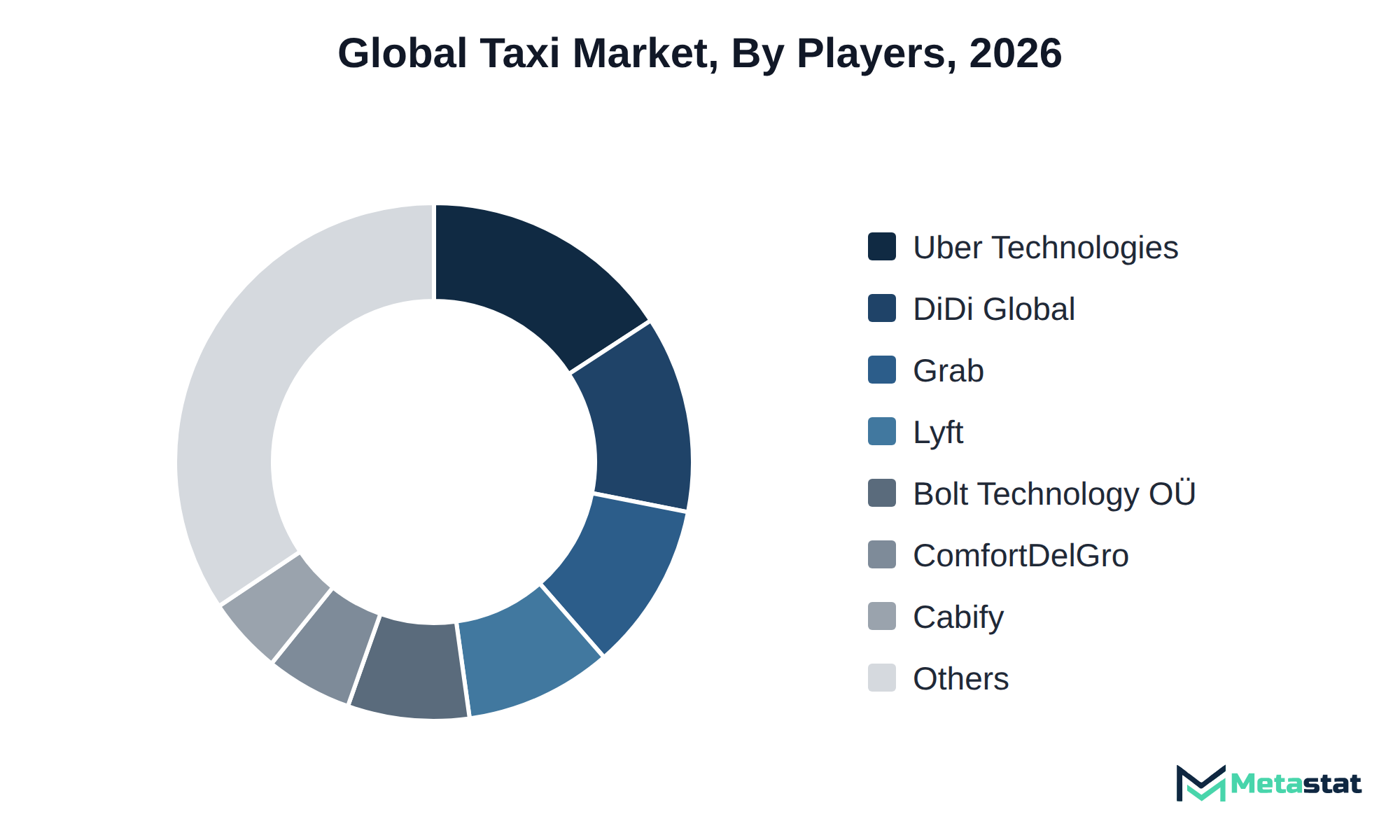
Competition within the taxi market divides primarily by service type, with players focusing on ride-hailing, ride-sharing, and corporate contracts. Ride-hailing dominates the market, featuring companies like Uber Technologies, Inc. and DiDi Global Inc., which emphasize convenience and user experience. Ride-sharing is gaining traction, with an increasing number of users favoring shared rides for cost efficiency, exemplified by Grab Holdings Limited and Lyft, Inc.
Buyers choose services based on factors including price, service quality, and availability across various platforms. Companies like Bolt Technology OÜ and ComfortDelGro Corporation Limited prioritize affordability and reliability, appealing to cost-conscious customers. Meanwhile, operators like ANI Technologies Private Limited (Ola) and Yandex Go leverage technology to enhance user experience, offering features that streamline booking processes and improve service accessibility. This competitive behavior shapes growth and investment strategies within the market.
This growth relies on several key developments, particularly in the Ride-Hailing and Electric segments. For the market to achieve this target, significant expansion in the Ride-Hailing service type is essential, with revenues expected to increase from USD 199.4 billion in 2026 to USD 264.2 billion by 2033, reflecting a CAGR of 4.1%. The transition to Electric taxis, projected to reach USD 70.6 billion by 2033, represents a substantial shift towards sustainable transportation options, driven by increasing consumer demand for eco-friendly solutions.
However, risks including regulatory challenges in various regions, especially in North America and Europe, could hinder market progress. Regulatory changes affecting service availability or operational costs could delay investment and innovation, impacting overall growth. Successful adaptation to these evolving regulations will be crucial for the market's trajectory. Overall, the forecast demonstrates promising growth potential through 2033, contingent on advancements in service offerings and the adoption of electric vehicles within the taxi market.
By Vehicle Type: Sedan Taxis, Hatchback Taxis, SUV and MPV Taxis, Van Taxis, Electric Taxis, Wheelchair-Accessible Taxis, Others (Hybrid Taxis, Luxury Specialty Vehicles)
By Propulsion Type: Internal Combustion Engine (ICE), Electric, Hybrid
By Booking Channel: Mobile Application Booking, Telephone Booking, Street-Hail Booking, Taxi Rank or Stand Booking, Website Booking, Others (Third-Party Digital Booking Platforms)
The report strategically identifies and profiles the key market players and analyses their core competencies in each sub-segment of the Taxi market.
Report Attributes | Details |
Study Period | 2021-2033 |
Base Year | 2025 |
Estimated Year | 2026 |
Forecast Period | 2026-2033 |
Historical Period | 2021-2025 |
Growth Rate | CAGR 4.4% from 2026 to 2033 |
Revenue Unit | USD billion |
Segmentation | By Service Type, Vehicle Type, Propulsion Type, Booking Channel, and Region |
By Region | North America (By Service Type, Vehicle Type, Propulsion Type, Booking Channel, and Country)
|
Europe (By Service Type, Vehicle Type, Propulsion Type, Booking Channel, and Country)
| |
Asia Pacific (By Service Type, Vehicle Type, Propulsion Type, Booking Channel, and Country)
| |
South America (By Service Type, Vehicle Type, Propulsion Type, Booking Channel, and Country)
| |
Middle East and Africa (By Service Type, Vehicle Type, Propulsion Type, Booking Channel, and Country)
|
Find answers to common questions about this report
The Taxi market size was valued at USD 255.7 billion in 2025.
The market is projected to grow at a CAGR of 4.4% during the forecast period from 2026 to 2033.
The North America Taxi market size is estimated to reach USD 61.1 billion by 2033.
Ride-Hailing leads the Taxi market with a projected value of USD 264.2 billion by 2033, representing the largest segment in terms of revenue. This segment shows a compound annual growth rate of 4.1 percent from 2026 to 2033.
Increased urbanization and changing consumer preferences drive growth in the market. The transition towards electric taxis aligns with sustainability goals, appealing to environmentally conscious consumers.
Asia Pacific holds the dominant share of the Taxi market, accounting for 54.8% in 2025. This region significantly surpasses others, including North America at 18.1% and Europe at 17.5%.
Fluctuating fuel prices exert pressure on consumers and operators, leading to increased operational expenses for taxi operators and affecting profitability. Rising wages for drivers and growing vehicle maintenance costs create significant margin pressure for suppliers, influencing overall service costs.
Increased urbanization and changing consumer preferences drive the adoption of ride-hailing services, particularly among millennials and younger demographics. The emergence of electric taxis aligns with sustainability goals, appealing to environmentally conscious consumers and enhancing overall market growth.
The Taxi market is estimated to reach a valuation of USD 361 billion by 2033.
Key players operating in the Taxi industry include Uber Technologies, Inc., DiDi Global Inc., Grab Holdings Limited, Lyft, Inc., Bolt Technology OÜ, ComfortDelGro Corporation Limited, and Via Transportation, Inc.
The analysts below cover Automotive and Transportation research at Metastat Insights.
LEAD ANALYST
Utkarsh Khirodkar is a Lead Market Research Analyst at MetaStat Insight, specializing in market intelligence, technology sector assessments, and competitive strategy.

ENERGY & INFRASTRUCTURE INDUSTRY CONSULTANT
Automotive and Transportation · Electronics and Semiconductor · Energy and Power · Machinery & Equipment
Saurabh Vasant Ganvir consults for Energy & Infrastructure Industry at MetaStat Insight, specializing in renewable energy, solar EPC, and electric vehicle (EV) infrastructure markets.
Most industry reports on warehouse automation bundle autonomous mobile robots and fixed conveyor installations into the same top-level numbers, which complicates advisory work. This study split the market cleanly by payload tiers, navigation technology, and fleet management software layers. The regional forecast for Western Europe gave our team defensible adoption benchmarks when evaluating capital allocation for logistics clients, saving us days of secondary data scrubbing.
Analyzing the transition from natural gas to green hydrogen in iron ore reduction requires realistic infrastructure timelines. Meta stat insight supplied a detailed regional assessment of DRI plant conversion costs and scrap metal availability in North America and Western Europe. Their report carefully examined pellet quality specs and electrical grid access constraints without making oversimplified market assumptions. The research material served as a practical reference during internal technology roadmap discussions.
Integrating zero-trust access controls across legacy electronic health record systems involves complex compliance overhead. Team produced an analysis that clearly separated identity governance and administration tools from privileged access management platforms. Their evaluation of HIPAA and GDPR compliance features across cloud native solutions gave our architecture group clear baseline criteria. The custom data request regarding biometric authentication adoption in hospital networks was returned promptly with clear documentation.
Explore related market intelligence reports worth reading alongside this one.