
LEAD ANALYST
Utkarsh Khirodkar is a Lead Market Research Analyst at MetaStat Insight, specializing in market intelligence, technology sector assessments, and competitive strategy.

Global EV Charging Cables Market Size, Share, By Power Supply (AC Charging Cables and DC Charging Cables), By Cooling Type (Uncooled Charging Cables and Liquid-Cooled Charging Cables), By Cable Length (Below 5 Meters, 5 to 10 Meters, and Above 10 Meters), By Application (Private Charging and Public Charging), Industry Analysis, Growth, Trends, and Forecast, 2026-2033
Report ID
MSI-3275
Published
November, 2026
Pages
303 Pages
Format
Historical
Base year
Forecast
Forecast period
Report Details
Market Valuation: Valued at $983.2 Million in 2025, projected to reach $3,401.2 Million by 2033 at a 16.7% CAGR.
Dominant Segment: DC Charging Cables lead the market, driven by a significant demand for high-speed charging solutions essential for commercial and public charging stations.
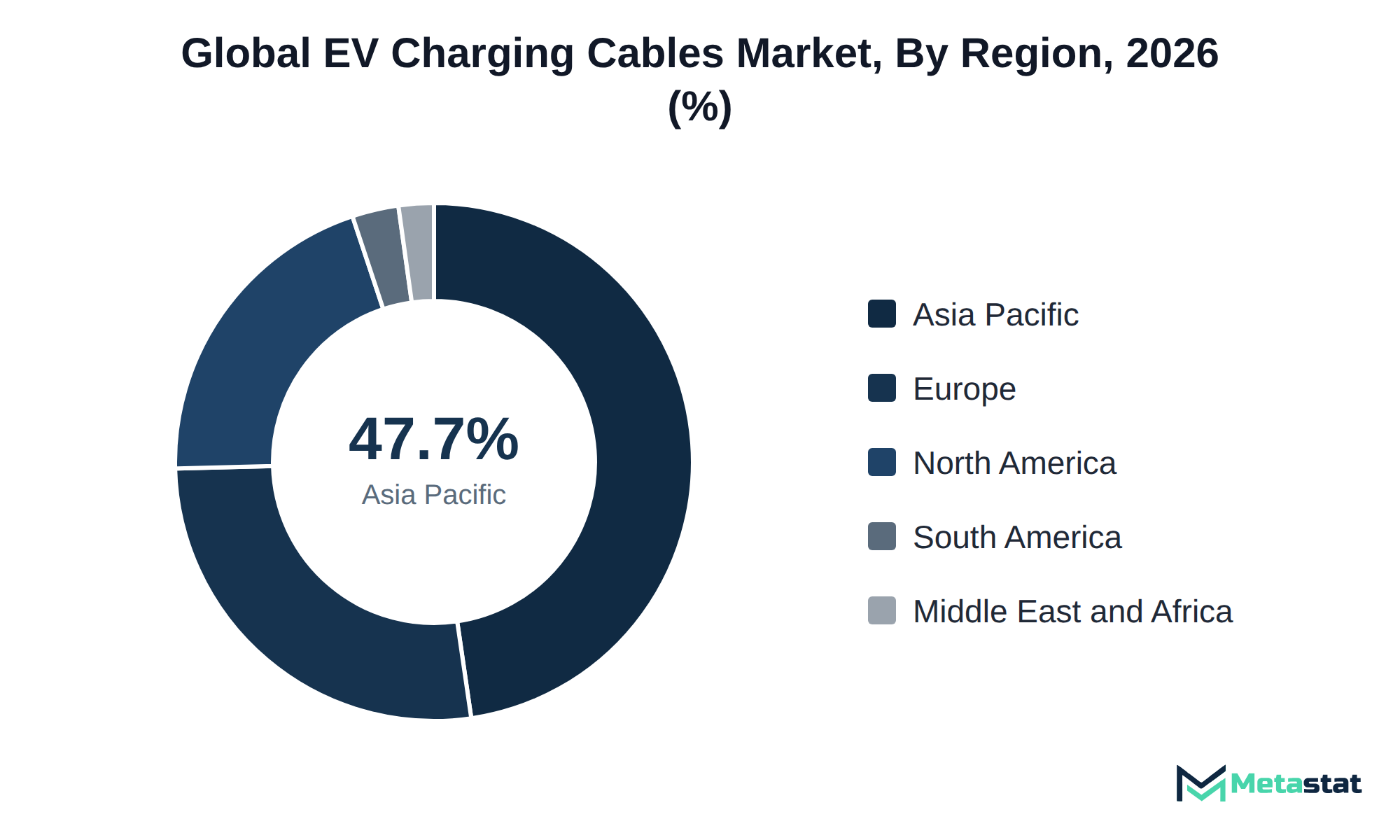
Geographic Lead: Asia Pacific holds the largest market share at 47.7%, propelled by extensive electric vehicle adoption and substantial investments in charging infrastructure.
What's Inside: The report provides a comprehensive analysis of market dynamics, competitive landscape, and forecasts for the EV Charging Cables market from 2026 to 2033.
Emerging Technologies: Advancements in cable materials and designs are enhancing performance, driving the adoption of EV Charging Cables by improving energy efficiency and heat resistance.
Price Sensitivity: High prices for EV Charging Cables are limiting adoption rates among consumers and businesses, impacting the overall growth of the market.
Choose Your License
Global EV Charging Cables Market
The global EV Charging Cables market was valued at USD 983.2 million in 2025 and is projected to reach USD 3,401.2 million by 2033, growing at a CAGR of 16.7% over the forecast period.
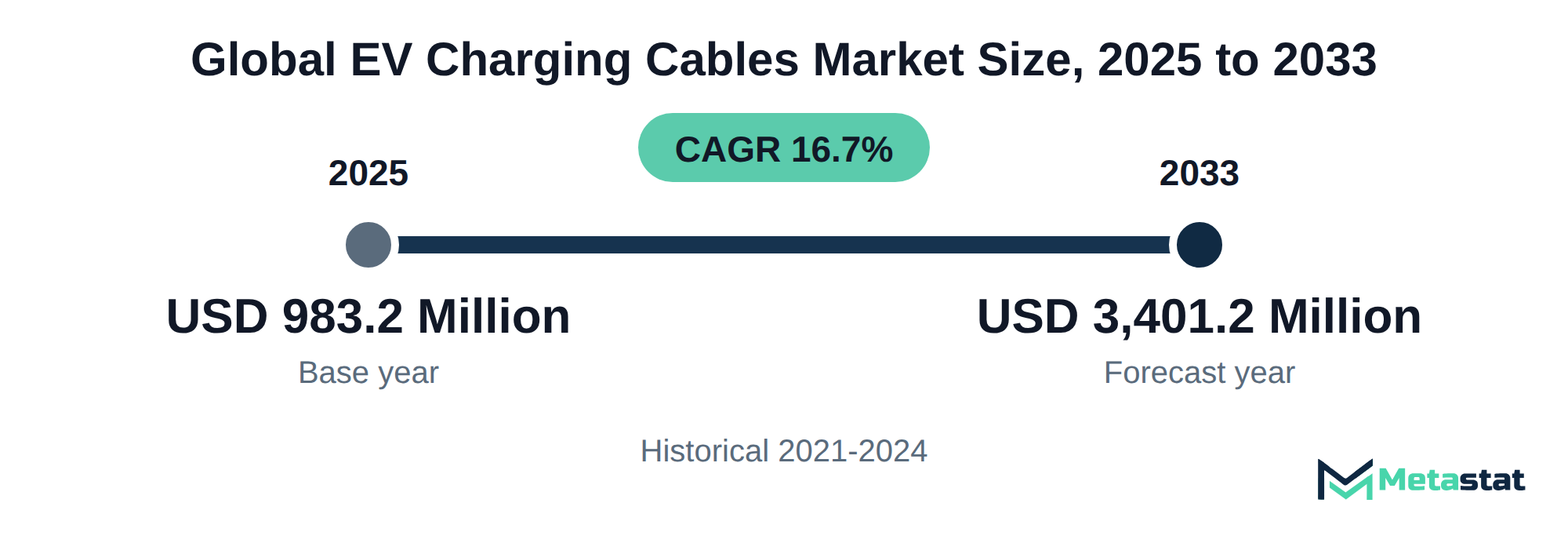
The EV Charging Cables market encompasses a range of cables designed for charging electric vehicles, including various power supply options, cooling types, and lengths. Buyers invest in this market due to the growing demand for electric vehicles and the necessity for efficient charging solutions. This investment is driven by the need for sustainable transportation and the increasing number of electric vehicles on the roads. The market features diverse applications, with private charging solutions gaining significant traction.
Technological advancements that enhance charging efficiency and speed are a key driver of growth in the EV Charging Cables market. Among the segments, DC Charging Cables represent the largest value, reflecting strong demand for high-speed charging solutions. In terms of regional shares, Asia Pacific leads the market with 47.7%, driven by extensive adoption of electric vehicles and supportive infrastructure development. North America holds 20.3% of the market in 2025, with the US leading in 2026.
Investment in the EV Charging Cables market is expected to rise significantly, influenced by a global shift toward renewable energy and electric mobility. The increase in electric vehicle sales will further augment the demand for charging infrastructure, driving revenue growth across various segments. Companies operating in this market focus on innovation, striving to meet evolving consumer needs for faster and more efficient charging solutions.
The EV Charging Cables market includes diverse segments, catering to both public and private charging applications. Buyers invest in this market primarily due to the increasing adoption of electric vehicles, which drives demand for reliable and efficient charging solutions. Factors contributing to these expenditures include the growing emphasis on sustainable transportation and government incentives promoting electric mobility.
Among the segments, DC Charging Cables stand out with the highest projected value, reflecting a significant trend towards faster charging solutions. Europe leads in market share with 26.9%, driven by robust infrastructure and policy support for electric vehicles. Rising consumer preference for electric vehicles directly influences the expansion of charging infrastructure.
Technological advancements in charging solutions significantly fuel growth in the market. A notable driver includes the increasing demand for liquid-cooled charging cables, which enhance charging efficiency and reduce heat-related issues. This demand for higher performance solutions aligns with the overall trajectory towards more effective and sustainable electric vehicle charging technology.
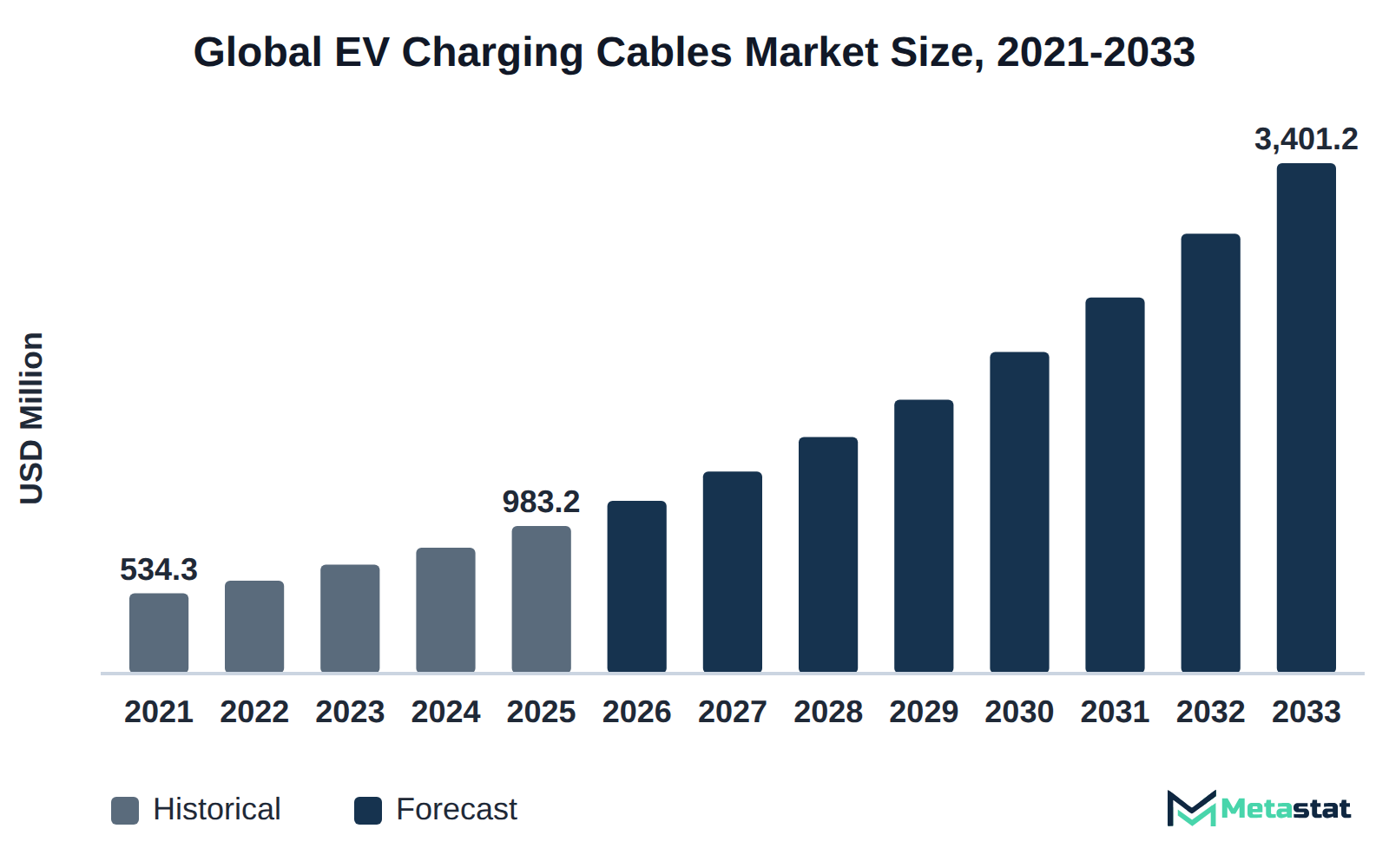
Liquid-cooled charging cables have gained traction in the EV Charging Cables market due to their ability to support higher power transfer rates necessary for megawatt charging applications. Adoption of these advanced cable designs addresses the growing demand for rapid charging solutions, particularly in commercial settings where downtime directly impacts operational efficiency.
Forecasts indicate that liquid-cooled charging cables are expected to reach a market value of USD 1,078.5 million by 2033, reflecting a compound annual growth rate (CAGR) of 24.8 percent. This rapid growth highlights the increasing focus on high-performance solutions in the charging infrastructure sector. Liquid-cooled designs enable efficient heat management during charging, which significantly enhances performance and safety compared to traditional uncooled options.
Manufacturers are prioritizing the development of liquid-cooled cable technologies, aiming to meet the needs of electric vehicle fleets and commercial charging stations. Suppliers that invest in this technology strengthen their competitive edge and support wider market expansion.
Compatibility with CCS, NACS, and GB/T power connector standards significantly influences procurement strategies within the EV Charging Cables market. Buyers increasingly prioritize these compatibility standards to ensure integration with a wider range of electric vehicles. For instance, the adoption of DC charging cables, projected to reach USD 1,919 million by 2033, emphasizes the importance of these standards in facilitating fast charging solutions that align with various regional requirements.
Procurement often involves detailed contract models focusing on pricing, quality assurance, and compliance with these standards. Suppliers who meet CCS, NACS, and GB/T specifications typically secure long-term contracts, ensuring reliability in supply chains. Buyers recognize the value of partnering with manufacturers that adhere to these compatibility requirements, enhancing market entry and operational efficiency.
These considerations simplify the purchasing process and establish a competitive edge in an evolving market. Stakeholders that align procurement strategies with prevailing compatibility standards strengthen their market positioning and capture significant growth opportunities in the expanding EV market.
The efficiency and usability of public charging stations in the EV Charging Cables market depend heavily on cable flexibility. The market demands cables that easily adapt to different vehicle types and charging situations. With the projected value of public charging cables reaching USD 1,946.9 million by 2033, requirements for cable flexibility become more pronounced. This need arises from the diverse range of electric vehicles on the market, each with specific charging port configurations and power requirements.
In the context of public charging stations, cable flexibility directly influences user experience. Cables that offer greater flexibility facilitate easier connections, reducing the time drivers spend connecting and disconnecting chargers. A flexible cable accommodates a wider variety of vehicles, enhancing the overall utility of charging stations. In contrast, rigid cables lead to compatibility issues, resulting in delayed charging sessions and customer dissatisfaction. Manufacturers focusing on flexibility within the EV Charging Cables market position themselves favorably in meeting the evolving needs of public charging infrastructure.
Replacement cycles for EV charging cables at public stations present another significant aspect of managing operational costs. Regular wear and tear from frequent use leads to a need for timely cable replacements to maintain service quality. Anticipated market growth increases the need for durable cable designs that withstand intensive use without compromising performance. The expected compound annual growth rate of 19.9% for public charging cables drives operators to consider the lifecycle of their equipment, including cables.
The decision to replace cables hinges on factors including service volume and environmental conditions. In high-traffic areas, cables experience higher stress levels, which accelerates wear. Exposure to weather elements further impacts cable longevity. Ensuring that public charging stations employ high-quality, durable cables minimizes replacement costs and enhances reliability for users. This proactive approach encourages higher adoption rates and increases consumer confidence in public charging solutions within the EV Charging Cables market.
Cable length and cooling significantly impact the efficiency and speed of electric vehicle charging. Shorter cables, particularly those below 5 meters, enhance charging performance by minimizing energy loss during transmission. This segment is projected to grow from USD 515.9 million in 2026 to USD 1,403.3 million by 2033, reflecting a compound annual growth rate (CAGR) of 15.4%. In contrast, longer cables introduce resistance, leading to slower charging times and ultimately affecting user satisfaction.
Cooling type significantly influences charging efficiency. Liquid-cooled charging cables, for example, are anticipated to reach USD 1,078.5 million by 2033, demonstrating a robust CAGR of 24.8%. This superior cooling technology allows for higher charging speeds and lower heat generation, which enhances the overall lifespan of both cables and electric vehicles. Efficient thermal management optimizes charging cycles, making it an attractive option for public charging stations aiming to serve high volumes of vehicles.
Buyers in the EV Charging Cables market need to understand how cable length and cooling technology affect charging performance. Selecting the right cable type leads to more efficient charging solutions, improving customer satisfaction and supporting broader adoption of electric vehicles.
The shift toward electric vehicles (EVs) significantly influences buyer behavior, driving demand for EV Charging Cables. Private and commercial consumers increasingly invest in EV infrastructure, reflecting a growing emphasis on sustainability and efficiency. While more individuals and businesses transition to EVs, the demand for reliable and efficient charging solutions experiences rapid growth. This increase highlights a robust trend toward enhanced charging capabilities, impacting both volume and pricing strategies within the market. Bidirectional charging for vehicle-to-grid use is a related application of the same charging infrastructure.
The public charging application segment reflects heightened interest, with anticipated demand growth fueled by expanding EV adoption among consumers and operators of commercial electric vehicle fleets. The rising number of EV models and supportive infrastructure developments contribute to increasing market dynamics.
Advancements in cable materials and designs significantly enhance the performance of EV Charging Cables. Innovations in conductors and insulation materials lead to improved energy efficiency and heat resistance, which are crucial for high-power charging applications. Suppliers increasingly invest in research and development to adopt materials that improve current-carrying capabilities while reducing weight and size. This shift attracts various buyer segments, including manufacturers of charging infrastructure and electric vehicle producers focused on optimizing charging efficiency. Enhanced performance translates into a more reliable charging experience for consumers, accelerating the adoption of electric vehicles.
The ongoing growth of the EV Charging Cables market aligns with these technological advancements. Continuous improvements in cable technology provide suppliers a competitive edge and strengthen their market presence. The integration of smart technologies and connectivity features into charging systems increases the importance of innovative cable solutions. Enhanced functionalities, including real-time monitoring and diagnostics, create additional value for users, promoting further investment in the market and driving long-term growth. These monitoring and diagnostic functions are typically delivered through EV charging management software platforms.
High prices for EV Charging Cables create barriers for both individual consumers and businesses seeking to invest in electric vehicle infrastructure. Private charging stations experience slower uptake among buyers concerned about initial costs, resulting in delayed installation and reduced order volumes. Public charging networks face similar challenges, with operators hesitant to commit to expansive charging solutions without assurance of return on investment. Price fluctuations in raw materials further complicate procurement strategies, leading to uncertainty in budgeting and forecasting. This situation contributes to a cautious approach to scaling charging infrastructure, impacting overall market growth. In the EV Charging Cables market, this price sensitivity directly affects demand and adoption rates, hindering the transition to electric mobility and limiting the potential for widespread implementation.
Rising material costs represent a significant challenge for suppliers in the EV Charging Cables market. Escalating prices of raw materials, including copper and specialized polymers, directly impact production expenses. Copper conductors are drawn from copper wire rod, so price movements at that stage carry through to cable production costs. Increased demand for these materials, driven by the growing adoption of electric vehicles, intensifies competition among suppliers and drives up costs. Margin pressures prompt suppliers to seek cost-effective sourcing strategies and alternative materials.
To address these challenges, suppliers invest in developing more efficient manufacturing processes and innovative materials to mitigate cost increases. Collaboration with raw material providers for long-term contracts or alternative sourcing options becomes a priority to stabilize input costs. These strategies improve profitability for suppliers and enhance the overall competitiveness of the market. Balancing cost management with the need for high-quality products remains essential to meet the evolving demands of consumers.
Liquid-cooled charging cables represent a significant growth opportunity within the market, driven by increasing demand for high-power charging solutions. Rising adoption of electric vehicles necessitates efficient and rapid charging infrastructures, prompting stakeholders to consider advanced cable technologies. Liquid-cooled cables facilitate faster charging speeds and are ideal for public charging stations requiring high power outputs.
Infrastructure investments in regions with a strong electric vehicle presence, including Europe and Asia Pacific, will further support this segment's growth. Expanding public charging networks and government incentives for electric vehicle adoption enhance the market's attractiveness for liquid-cooled cable solutions. The combination of technological advancement and increasing charging demands positions liquid-cooled cables as a strategic focus for suppliers in the EV Charging Cables market.
The Global EV Charging Cables market is segmented based on Power Supply, Cooling Type, Cable Length, and Application.
AC Charging Cables segment is valued at USD 704.7 million in 2026 and is projected to reach USD 1,482.3 million by 2033, at a CAGR of 11.2% during the forecast period. These cables serve primarily in residential and commercial EV charging applications, allowing users to connect electric vehicles to the power supply. Demand for AC Charging Cables is driven by the growing adoption of electric vehicles, significantly influenced by government incentives and environmental concerns. Compared to DC Charging Cables, which experience a higher growth rate of 23.2%, AC Charging Cables face slower growth due to their typically lower charging rates and longer charging times. The price point for AC Charging Cables tends to be lower, appealing to a broader segment of consumers and businesses seeking cost-effective charging solutions. Within the EV Charging Cables market, AC charging infrastructure supports the transition to electric mobility.
DC Charging Cables segment is estimated to reach USD 1,919 million by 2033, at a CAGR of 23.2% during the forecast period. These cables facilitate DC fast charging of electric vehicles, primarily used in commercial and public charging stations, appealing to fleet operators and charging network providers. The significant demand for high-speed charging solutions supports growth within this segment, reflecting the rising number of electric vehicles on the road. In comparison to AC Charging Cables, which are projected to grow at a CAGR of 11.2%, DC Charging Cables demonstrate a faster growth rate. The efficiency of DC Charging technology and increasing infrastructure investments drive this segment's expansion, setting it apart from the other segments in the broader market.
Uncooled Charging Cables segment is valued at USD 922.5 million in 2026 and is projected to reach USD 2,322.7 million by 2033, at a CAGR of 14.1% during the forecast period. This segment is primarily for private charging applications, appealing to residential consumers and businesses installing their own charging infrastructure. The demand for uncooled cables arises from lower manufacturing costs compared to liquid-cooled alternatives, making them a cost-effective solution for many users. Uncooled Charging Cables typically experience slower growth than their liquid-cooled counterparts, which are projected to expand at a CAGR of 24.8%. The preference for uncooled options reflects a balance between performance and affordability, catering to a broader range of buyers in the EV Charging Cables market.
The liquid-cooled charging cables segment is primarily used for high-power charging applications, particularly suited for commercial and public charging stations that require quick energy transfer. The growth of this segment is driven by increased adoption of electric vehicles, which significantly escalates the demand for efficient charging solutions. Liquid-cooled cables provide superior thermal management, differentiating them from uncooled options that face limitations in high-power situations. This segment's growth rate highlights its attractiveness to buyers focused on maximizing charging speed and minimizing downtime. In contrast to other segments, including AC and uncooled DC cables, liquid-cooled charging cables represent a higher investment due to advanced technology and increased performance capabilities.
The below 5 meters segment serves primarily private vehicle owners who require shorter charging cables for home installations. The increasing adoption of electric vehicles and the need for efficient charging solutions drive demand in this area. Compared to longer cable lengths, the Below 5 Meters segment experiences a slower growth rate, influenced by its lower price point and suitability for everyday domestic use. In contrast, longer cables, including those above 10 meters, cater to different needs, including public charging and larger vehicle applications, which often demand higher investment and longer cable capabilities. The focus on shorter cables aligns with the growing trend of home-based charging solutions, enhancing convenience for consumers.
5 to 10 Meters segment is estimated to reach USD 1,441.8 million by 2033, at a CAGR of 17% during the forecast period. This segment primarily serves private and public charging applications, used by electric vehicle owners and charging station operators requiring efficient energy transfer. Growing installation of charging infrastructure directly impacts this segment, driven by rising consumer demand for electric vehicles and government incentives promoting the transition to sustainable transport. The segment experiences faster growth compared to others in its group, reflecting its 17% CAGR, which outpaces the Below 5 Meters segment. This rapid expansion signifies a shift toward longer charging cables that enhance accessibility and convenience for users across various environments.
Above 10 Meters segment is expected to reach USD 556.1 million by 2033. This segment primarily serves applications requiring extended reach, including charging stations located far from power sources. Adoption in commercial settings, including fleet operations, drives demand due to the need for longer cables that accommodate various vehicle types and configurations. Electric bus charging systems at fleet depots are one example of such commercial settings. The higher price point associated with these longer cables distinguishes this segment from others, including Below 5 Meters and 5 to 10 Meters, which experience lower growth rates, at CAGRs of 15.4% and 17%, respectively. Regulatory support for electric vehicle infrastructure expansion encourages investments in longer cables, facilitating a more versatile charging network. Growth in electric vehicle ownership and the corresponding need for efficient charging solutions further enhance demand in this segment.
Private Charging segment is valued at USD 603.6 million in 2026 and is projected to reach USD 1,454.4 million by 2033, at a CAGR of 13.4% during the forecast period. This segment primarily serves residential users who require charging solutions for personal electric vehicles. The growing number of electric vehicle purchasers significantly drives demand for private charging cables, owing to consumers seeking convenient charging options at home. Compared to public charging solutions, this segment experiences slower growth due to the initial investment associated with installation. However, the increasing adoption of electric vehicles supports steady demand, differentiating it from the public charging segment, which records a higher growth rate of 19.9%. With ongoing technological advancements and increasing consumer awareness, the potential for further expansion remains optimistic in the market.
Public Charging segment is estimated to reach USD 1,946.9 million by 2033, at a CAGR of 19.9% during the forecast period. This segment fulfills the charging needs of electric vehicle (EV) owners at public locations, including parking lots and highway rest areas. The increase in urbanization and the expansion of charging infrastructure drive demand for public charging solutions, attracting both private and commercial entities investing in EV charging stations. Some of these entities outsource station operation through EV charging as a service models. The growth rate for this segment is higher than that of private charging, reflecting a shift in consumer behavior toward more accessible and convenient charging options. Regulatory incentives and government initiatives support infrastructure expansion, enhancing adoption rates. The potential of public charging to accommodate a larger volume of vehicles distinguishes it from other segments, positioning it as a vital component of the market in the coming years.
Based on geography, the Global EV Charging Cables market is divided into North America, Europe, Asia-Pacific, South America, Middle East, and Africa.
Strong growth in the EV Charging Cables market in North America is driven by increasing investments in electric vehicle (EV) infrastructure. The United States, Canada, and Mexico prioritize the development of charging networks to support rising EV adoption rates. Policy initiatives including incentives for EV purchases and funding for charging infrastructure enhance demand for cables necessary to connect various charging systems. The regional share of the global market is 20.3%, reflecting growing interest in electric mobility. North America is projected to reach USD 659.2 million by the end of 2033. This market evolution presents significant opportunities for suppliers and manufacturers, particularly in the segments focused on high-performance charging solutions.
Demand in Europe's EV Charging Cables market benefits from strong governmental support for electric vehicle (EV) adoption. Countries including Germany and the UK implement ambitious carbon reduction targets, pushing consumers and businesses towards electrification. Investments in charging infrastructure, particularly in urban regions, enhance accessibility and convenience for users. The presence of numerous automotive manufacturers within Europe creates a robust supply chain, further stimulating demand for charging cables. The market share for Europe reaches 26.9% in 2025, reflecting the region's commitment to developing EV technology and infrastructure. Regulatory frameworks promote high-power charging solutions, supporting the growth of liquid-cooled charging cables. The increasing focus on sustainability from both consumers and industries drives continued investment in the market.
Rapid growth in electric vehicle adoption fuels demand for the EV Charging Cables market across Asia-Pacific. Significant investments in charging infrastructure, particularly in countries like China and India, enhance the deployment of EV Charging Cables. The region's focus on renewable energy integration further supports this market expansion. The increasing number of public charging stations strengthens demand for various cable types, particularly liquid-cooled and DC charging cables. By 2025, Asia-Pacific commands a substantial 47.7% share of the global market, emphasizing its key role in shaping future trends. With a growing emphasis on sustainable transportation solutions, the market is projected to experience significant growth through 2033, driven by both private and commercial applications.
Activity in South America's EV Charging Cables market remains limited, with a 2.9% share of the global market in 2025. Brazil and Argentina represent the primary countries driving demand, propelled by electric vehicle adoption and infrastructure development. Investment in EV infrastructure is crucial for enhancing charging availability, influencing consumer confidence and market growth. The increasing number of electric vehicle models available in these markets supports demand for the EV Charging Cables market. Regional manufacturers focus on cost-effective charging solutions to meet local requirements, addressing both residential and commercial needs. Ongoing initiatives to expand charging networks enhance accessibility and promote the transition to electric vehicles, ultimately benefiting the market.
Growth in the Middle East and Africa EV Charging Cables market is driven by increasing investment in electric vehicle infrastructure, particularly in countries like Saudi Arabia and the UAE. The region's market share reflects a developing interest in electric mobility solutions. South Africa has made strides in adopting electric vehicles, influencing demand for EV Charging Cables. The market benefits from various initiatives aimed at enhancing charging infrastructure, promoting the use of electric vehicles, and ensuring the availability of suitable charging cables. Continuous advancements in technology, particularly in cooling systems, support the regional market's evolution. Emerging opportunities for private and public charging solutions contribute further to market dynamics. The region's unique economic and regulatory conditions differentiate its market from others globally.
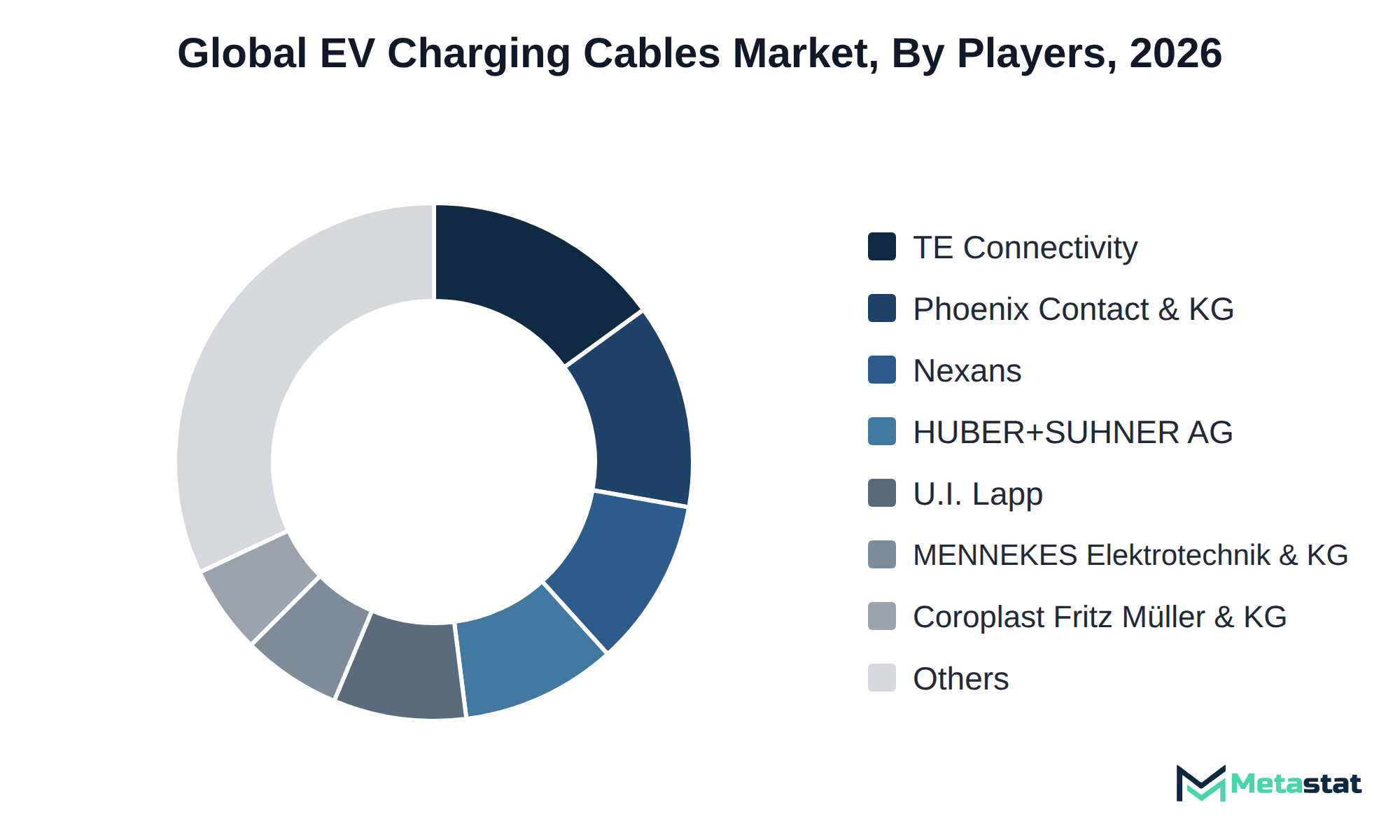
Competition within the EV Charging Cables market emphasizes distinct product offerings based on power supply, cooling type, cable length, and application. Buyers select products based on various criteria, including price, certification, service quality, customization options, and the overall ecosystem offered by manufacturers.
Companies including Phoenix Contact GmbH & Co. KG focus on advanced cable solutions and a strong service network, catering to both private and public charging applications. HUBER+SUHNER AG specializes in high-performance cables designed for demanding environments, emphasizing reliability and efficiency. TE Connectivity plc targets the market with a diverse portfolio that includes both AC and DC charging cables, ensuring adaptability to various customer needs.
The EV Charging Cables market's forecast growth relies on expanding demand for DC charging cables, projected to grow at a CAGR of 23.2% and contribute significantly to revenues. The increasing adoption of liquid-cooled charging cables, anticipated to reach USD 1,078.5 million by 2033, represents another critical factor supporting this forecast. Regions including Asia Pacific, which holds a 47.7% share, will play an essential role in driving market dynamics, supported by their growing electric vehicle infrastructure. Conversely, potential supply chain disruptions pose a risk that could impede market growth. Events impacting the availability of raw materials or production capabilities lead to cost increases and delays in deployment, affecting overall market momentum. Maintaining a balance between demand growth and supply chain stability will be crucial for the EV Charging Cables market to reach its forecasted value in the coming years.
By Power Supply: AC Charging Cables, DC Charging Cables
By Cooling Type: Uncooled Charging Cables, Liquid-Cooled Charging Cables
By Application: Private Charging, Public Charging
The report strategically identifies and profiles the key market players and analyses their core competencies in each sub-segment of the EV Charging Cables market.
|
Report Attributes |
Details |
|
Study Period |
2021-2033 |
|
Base Year |
2025 |
|
Estimated Year |
2026 |
|
Forecast Period |
2026-2033 |
|
Historical Period |
2021-2025 |
|
Growth Rate |
CAGR 16.7% from 2026 to 2033 |
|
Revenue Unit |
USD million |
|
Segmentation |
By Power Supply, Cooling Type, Cable Length, Application, and Region |
|
By Region |
North America (By Power Supply, Cooling Type, Cable Length, Application, and Country)
|
|
Europe (By Power Supply, Cooling Type, Cable Length, Application, and Country)
|
|
|
Asia Pacific (By Power Supply, Cooling Type, Cable Length, Application, and Country)
|
|
|
South America (By Power Supply, Cooling Type, Cable Length, Application, and Country)
|
|
|
Middle East and Africa (By Power Supply, Cooling Type, Cable Length, Application, and Country)
|
Find answers to common questions about this report
The EV Charging Cables market size was valued at USD 983.2 million in 2025.
The market is projected to grow at a CAGR of 16.7% during the forecast period from 2026 to 2033.
The North America EV Charging Cables market size is estimated to reach USD 659.2 million by 2033.
DC Charging Cables lead the EV Charging Cables market with a projected value of USD 1,919 million by 2033, reflecting the highest growth potential compared to other segments.
The shift toward electric vehicles significantly drives demand for EV Charging Cables. Liquid-cooled charging cables represent a significant growth opportunity, supported by increasing demand for high-power charging solutions.
High prices for EV Charging Cables create barriers for both individual consumers and businesses seeking to invest in electric vehicle infrastructure. Rising material costs, including copper and specialized polymers, impact production expenses and exert margin pressures on suppliers.
Several factors favor adoption in the EV Charging Cables industry. The rising demand for high-power charging solutions drives investments in infrastructure, while government incentives enhance market attractiveness. advancements in cable technology improve efficiency, further supporting the transition to electric vehicles.
The EV Charging Cables market is estimated to reach a valuation of USD 3,401.2 million by 2033.
Key players operating in the EV Charging Cables market include Phoenix Contact GmbH & Co. KG, HUBER+SUHNER AG, BRUGG eConnect AG, U.I. Lapp GmbH, TE Connectivity plc, Nexans S.A., MENNEKES Elektrotechnik GmbH & Co. KG, and Amphenol Corporation.
Liquid-cooled charging cables are expected to reach USD 1,078.5 million by 2033, reflecting a compound annual growth rate (CAGR) of 24.8 percent.
The analysts below cover Automotive and Transportation research at Metastat Insights.
LEAD ANALYST
Utkarsh Khirodkar is a Lead Market Research Analyst at MetaStat Insight, specializing in market intelligence, technology sector assessments, and competitive strategy.

ENERGY & INFRASTRUCTURE INDUSTRY CONSULTANT
Automotive and Transportation · Electronics and Semiconductor · Energy and Power · Machinery & Equipment
Saurabh Vasant Ganvir consults for Energy & Infrastructure Industry at MetaStat Insight, specializing in renewable energy, solar EPC, and electric vehicle (EV) infrastructure markets.
Our group needed clearer visibility into out-of-autoclave processing timelines for high-temperature thermoplastic composites. MetaStat Insight delivered an objective assessment that contrasted automated fiber placement scrap rates with traditional thermoset prepreg layup cycles. The supplier landscape mapped out primary resin suppliers and tape slitting capacity across France, Germany, and Japan with solid technical accuracy. Their analyst handled our questions on precursor supply risks during an unscheduled inquiry call, providing clear, unembellished context.
Evaluating sensor fusion reliability across harsh operating environments can be tricky without field-validated data. The study on agricultural autonomous guidance systems clearly separated stereo vision setups from automotive-grade solid-state LiDAR. We appreciated the regional infrastructure analysis, specifically around RTK network density across North America and South America. During our follow-up consultation, the MetaStat Insight team walked through tier-two perception software partnerships, giving our engineering leads a practical basis for vendor shortlisting.
Analyzing the transition from natural gas to green hydrogen in iron ore reduction requires realistic infrastructure timelines. Meta stat insight supplied a detailed regional assessment of DRI plant conversion costs and scrap metal availability in North America and Western Europe. Their report carefully examined pellet quality specs and electrical grid access constraints without making oversimplified market assumptions. The research material served as a practical reference during internal technology roadmap discussions.
Explore related market intelligence reports worth reading alongside this one.
Starting from
$2950