
LEAD ANALYST
Utkarsh Khirodkar is a Lead Market Research Analyst at MetaStat Insight, specializing in market intelligence, technology sector assessments, and competitive strategy.

Global Vehicle-To-Grid (V2G) Market Size, Share, By Solution Type (Bidirectional EV Charging Equipment, V2G Energy Management Software, V2G Aggregation and Virtual Power Plant Platforms, Grid Integration and Flexibility Services, V2G Charging and Energy Service Solutions), By Charging Infrastructure (AC Charging, DC Charging, Hybrid Systems), By Vehicle Type (Battery Electric Vehicles (BEVs), Fuel Cell Vehicles (FCVs), Plug-in Hybrid Electric Vehicles (PHEVs)), By Application (Frequency Regulation and Ancillary Services, Peak Shaving and Load Balancing, Renewable Energy Integration, Energy Arbitrage and Electricity Trading, Backup Power and Grid Resilience, Demand Response and Capacity Management), Industry Analysis, Growth, Trends, and Forecast, 2026-2033
Report ID
MSI-5574
Published
October, 2026
Pages
266 Pages
Format
Historical
Base year
Forecast
Forecast period
Report Details
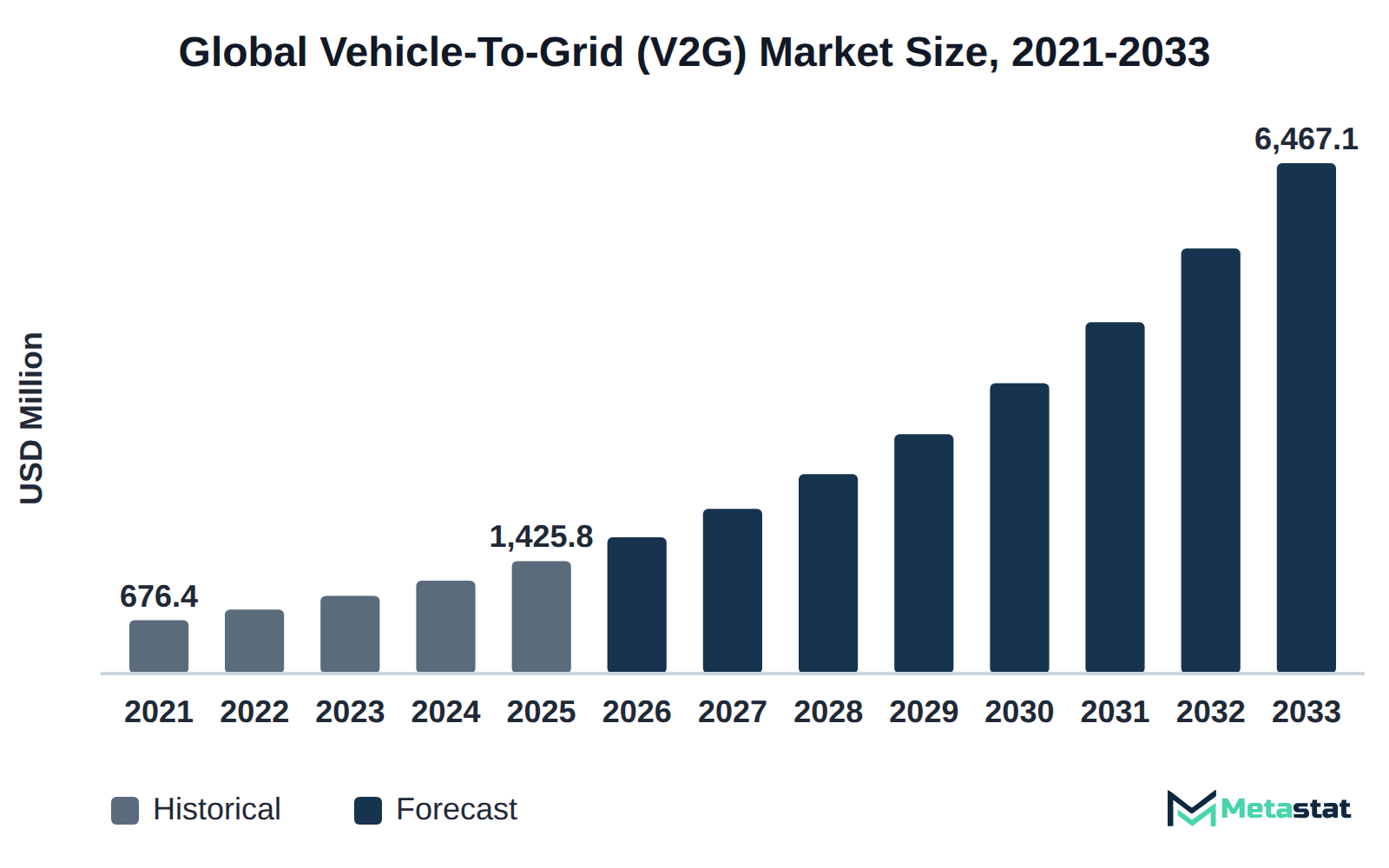
Market Valuation: Valued at $1,425.8 Million in 2025, projected to reach $6,467.1 Million by 2033 at a 20.8% CAGR.
Dominant Segment: Bidirectional EV Charging Equipment leads the market, driven by the increasing need for efficient charging infrastructure as electric vehicle adoption rises.
Geographic Lead: North America is projected to hold 34.1% of the market in 2025, with the US expected to show the fastest growth due to significant investments in electric mobility.
What's Inside: The report provides a comprehensive analysis of the Vehicle-To-Grid (V2G) market, including competitive coverage, detailed segmentations by solution type, charging infrastructure, vehicle type, and application, along with growth forecasts through 2033.
Market Dynamics: The market is significantly influenced by the growing adoption of electric vehicles and the expansion of charging infrastructure, both of which are critical for enhancing grid stability and energy management.
Growth Drivers: Technological advancements and supportive regulatory frameworks are key factors propelling the demand for V2G solutions, particularly in regions focusing on renewable energy integration.
Choose Your License
Global Vehicle-To-Grid (V2G) Market
The global Vehicle-To-Grid (V2G) market was valued at USD 1,425.8 million in 2025 and is projected to reach USD 6,467.1 million by 2033, growing at a CAGR of 20.8% over the forecast period.
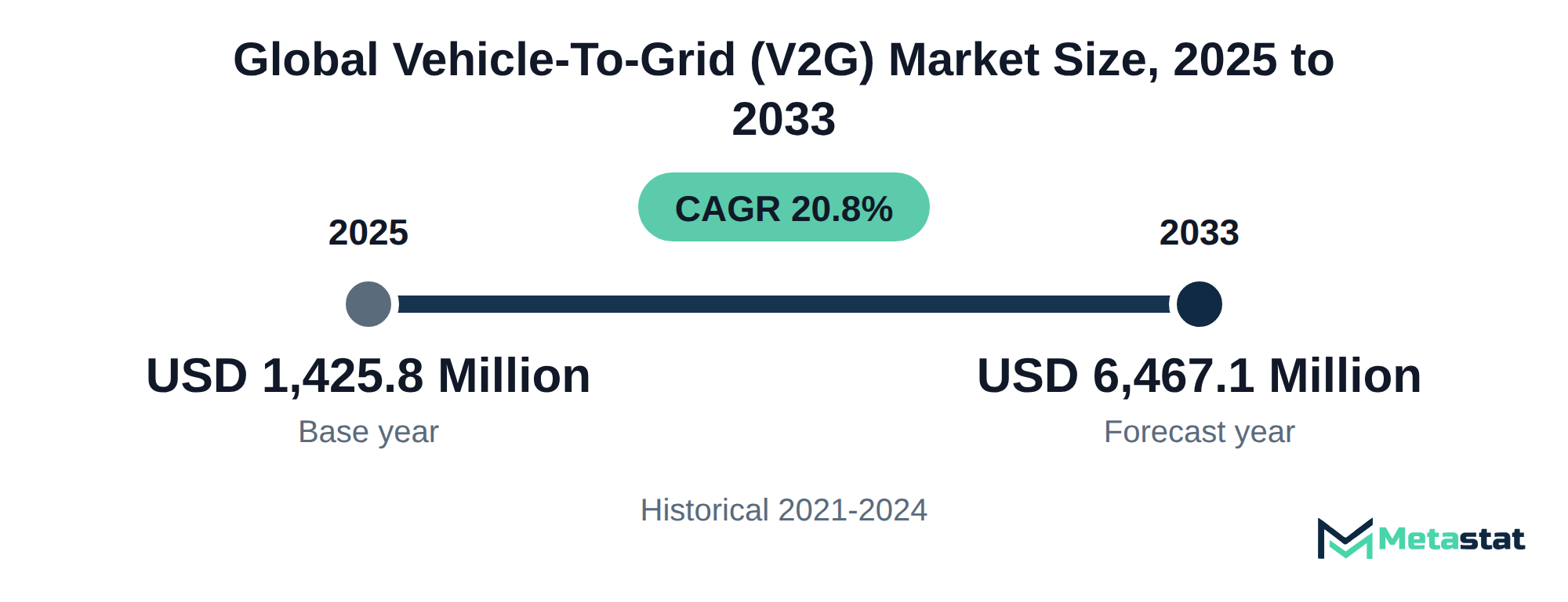
The Vehicle-To-Grid (V2G) market encompasses technologies and solutions that facilitate the exchange of energy between electric vehicles and the power grid. Buyers invest in these solutions to enhance energy management, support renewable integration, and optimize grid performance. Growth in this sector is driven by rising demand for sustainable energy solutions and the increasing prevalence of electric vehicles. Investment in V2G technologies provides significant operational efficiencies and cost savings for utility companies and consumers alike.
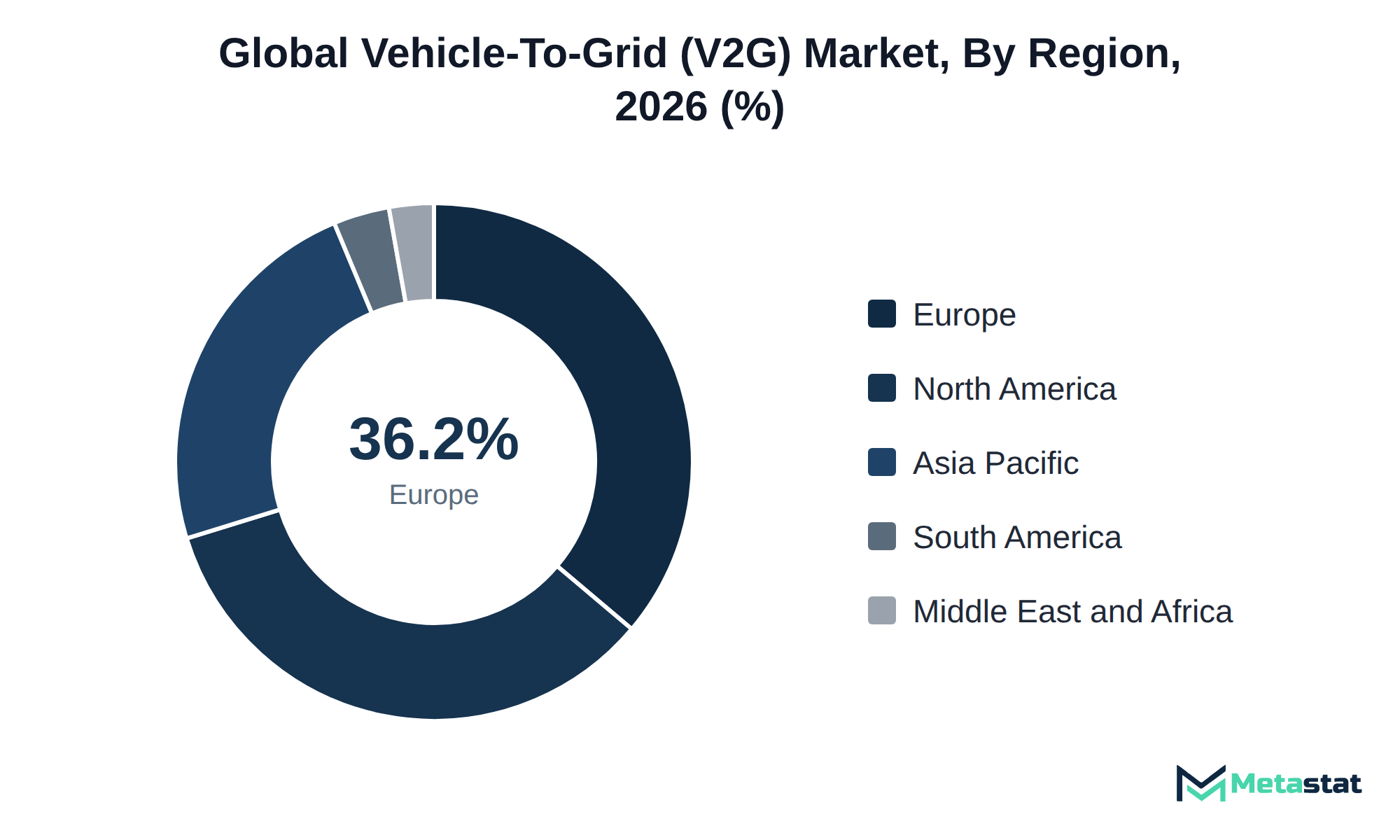
Forecasts point to strong expansion in the V2G sector, driven mainly by technological advancements and supportive regulatory frameworks. The segment of Bidirectional EV Charging Equipment emerges as the most valuable, reflecting the growing need for efficient charging infrastructure. North America holds 34.1% of the market in 2025, with the US leading in 2026. In comparison, Europe captures 36.2% of the market, while Asia Pacific accounts for 23.5%. These regions exhibit varying levels of investment and infrastructure development, with Europe showing notable initiatives in renewable energy integration.
One main growth driver includes the increasing adoption of electric vehicles, which necessitates innovative energy management solutions for grid stability and efficiency. The demand for V2G technologies is expected to rise, supporting both energy producers and consumers in optimizing their energy usage. This evolution is crucial for achieving sustainability goals and enhancing the resilience of energy systems worldwide.
The Vehicle-To-Grid (V2G) market includes various solutions that enable efficient energy management between electric vehicles and the power grid. Buyers invest in this technology to enhance grid stability, reduce energy costs, and support renewable energy integration. The primary consumer segments include utility companies, electric vehicle manufacturers, and fleet operators, each driven by the increasing demand for sustainable energy solutions and the need for improved infrastructure to facilitate electric vehicle adoption.
Significant growth in the market stems from the rapid expansion of Battery Electric Vehicles (BEVs) and the increasing integration of renewable energy sources. Bidirectional EV Charging Equipment represents the largest share of value, which reflects how much vehicle-to-grid interactions depend on charging solutions. This regional advantage reflects higher investments in electric mobility and infrastructure development compared to other regions.
Increasing regulatory support for clean energy initiatives drives market expansion, prompting stakeholders to adopt V2G technologies. The ongoing transition toward decarbonization in the energy sector influences demand for innovative solutions that optimize energy usage. Utilities and consumers focus on reducing carbon footprints, positioning the Vehicle-To-Grid (V2G) market for substantial growth in the coming years.
Bidirectional electric vehicle (EV) charging technology transforms grid flexibility and energy management. This technology enables electric vehicles to function as energy storage units, allowing bi-directional energy flow between the vehicle and the grid. In 2026, the Vehicle-To-Grid (V2G) market will have bidirectional EV charging equipment valued at USD 555.4 million, with a compound annual growth rate (CAGR) of 20.4% projected through 2033. Such advancements enhance energy management capabilities, support grid stability, and facilitate the integration of renewable energy sources.
Utility companies and grid operators increasingly adopt bidirectional charging technology to optimize energy distribution and balance supply and demand. By allowing electric vehicles to discharge energy back into the grid during peak periods, this technology significantly reduces the need for standby power plants. Operational costs decrease while reliability and sustainability increase. Widespread adoption of bidirectional EV charging technology within the Vehicle-To-Grid (V2G) market leads to increased investments in smart grid infrastructure and energy management systems, creating new revenue streams for energy providers.
Competitive pricing models have emerged for V2G aggregation platforms and virtual power plants, creating opportunities for buyers to optimize their energy resources. These platforms provide access to ancillary services and energy markets, allowing users to participate in frequency regulation and energy arbitrage. In the Vehicle-To-Grid (V2G) market, the pricing structure is often based on a subscription model or a pay-per-use system, ensuring that customers pay only for the services provided. Buyers show increasing interest in flexible contract terms that accommodate varying energy production and consumption patterns.
By 2033, V2G aggregation and virtual power plant platforms are projected to reach a value of USD 1,133 million, reflecting a growing trend in the energy sector. This anticipated growth signifies a shift towards innovative energy management solutions that support the integration of renewable energy sources. Such platforms enable users to enhance their operational efficiency while generating revenue from energy trading and ancillary services, which ultimately contributes to a more sustainable energy ecosystem.
Investments in these platforms yield strategic advantages for buyers in the market, enabling them to adapt to fluctuating energy prices and demand. Using V2G technology strengthens grid resilience, which drives adoption among energy stakeholders. This trend illustrates how the Vehicle-To-Grid (V2G) market transforms traditional energy models, opening new pathways for revenue generation and operational efficiency.
Integration of renewable energy sources significantly enhances the appeal of the Vehicle-To-Grid (V2G) market. This integration allows electric vehicles (EVs) to serve as energy storage systems, enabling the grid to draw on stored energy during peak demand periods. Dynamic electricity pricing incentivizes consumers to charge their vehicles during off-peak hours when electricity is cheaper, while selling power back to the grid during peak hours when prices are higher. This dual role benefits both consumers and grid operators.
The market anticipates substantial growth in the charging infrastructure sector, particularly with AC charging projected to rise from USD 998.6 million in 2026 to USD 3,609.9 million by 2033, reflecting a compound annual growth rate (CAGR) of 20.2%. Such developments indicate a strong shift towards electric vehicles that support individual energy needs and contribute to grid stability.
Renewable energy integration enables consumers to maximize their investments in electric vehicles and charging infrastructure, driving increased interest in the Vehicle-To-Grid (V2G) market. By aligning with renewable energy initiatives, stakeholders in the market create a more sustainable and economically viable energy landscape, positioning themselves for long-term growth.
Vehicle-To-Grid (V2G) technology generates significant revenue opportunities for electric vehicle (EV) owners and utilities by enabling bidirectional energy flow. EV owners sell excess energy stored in their vehicle batteries back to the grid, which offsets their charging costs and produces additional income. For instance, the revenue from bidirectional EV charging equipment is projected to reach USD 555.4 million by 2026, reflecting growing commercial interest in V2G technology.
Utilities benefit from V2G technology through enhanced grid stability and efficiency. The ability to draw energy from multiple EVs during peak demand allows utilities to avoid costly upgrades to electricity transmission and distribution infrastructure and reduces reliance on fossil fuel-based energy sources. This results in lower operational costs and improved service delivery. The market for V2G energy management software is anticipated to reach USD 1,303.8 million by 2033, highlighting financial incentives for utilities to implement V2G systems.
The commercial consequence of these developments extends beyond immediate revenue streams. Increased adoption of V2G technology contributes to a more resilient energy infrastructure and supports broader environmental goals through reduced greenhouse gas emissions. While the Vehicle-To-Grid (V2G) market evolves, both EV owners and utilities gain from its integration into energy systems.
Growing adoption of electric vehicles (EVs) significantly influences spending in the market. Consumers increasingly invest in battery electric vehicles (BEVs), driven by environmental consciousness and technological advancements. The shift toward electric transportation alters buyer preferences, resulting in higher demand for Vehicle-To-Grid (V2G) solutions that enhance grid stability and maximize energy efficiency. By integrating EVs with power grids, owners benefit from revenue-generating opportunities through energy trading and ancillary services. In 2026, spending on BEVs is projected to reach USD 1,193 million, increasing to USD 4,609.8 million by 2033, reflecting a compound annual growth rate (CAGR) of 21.3%. This transition boosts market revenues and encourages further investments in related infrastructure.
Investment in charging infrastructure represents a significant driver for growth in the Vehicle-To-Grid (V2G) market. Expansion of charging networks has improved accessibility for electric vehicle (EV) owners, facilitating their participation in V2G programs. Companies investing in AC and DC charging solutions contribute to a stronger charging ecosystem that V2G technologies need for successful integration. Increased deployment of bidirectional charging stations facilitates energy exchange between EVs and the grid, enhancing system reliability and efficiency. This infrastructure development responds to rising demand from energy providers seeking to optimize grid management and flexibility. By enhancing the capacity for energy transactions, the market positions itself for substantial growth through 2033. The strong focus on infrastructure aligns with the broader trend toward sustainable energy solutions, driving collaborations between energy companies and charging infrastructure developers.
With the charging infrastructure continuously evolving, the V2G market is set to experience heightened interest from manufacturers and utility companies aiming to strengthen their positions in this emerging segment. Enhanced charging capabilities support individual consumer needs and contribute to grid stability and energy resilience, creating long-term growth opportunities within the market.
Limited availability of charging infrastructure presents a significant barrier to growth within the Vehicle-To-Grid (V2G) market. Insufficient charging stations impede the widespread deployment of bidirectional charging technologies, affecting the ability of electric vehicle (EV) owners to participate effectively. The reluctance of consumers to invest in EVs stems from concerns about inadequate charging options, resulting in slower market uptake and diminishing order volumes among suppliers. This situation particularly impacts fleet operators and individual consumers, who prioritize accessibility and convenience when considering investments in V2G solutions. Consequently, the market faces challenges in achieving growth projections due to these infrastructural deficits, potentially delaying the transition toward enhanced grid flexibility and energy management strategies.
Input cost pressures challenge profitability for suppliers in the market. Rising material costs and talent acquisition expenses impact the ability to maintain competitive pricing. In response, suppliers focus on optimizing operational efficiency and investing in advanced technologies to enhance productivity and reduce expenses. Collaboration with technology partners and leveraging economies of scale present additional strategies to mitigate these pressures.
Suppliers explore innovative pricing models to improve service offerings and attract a broader customer base. These efforts contribute to maintaining market competitiveness while navigating the financial challenges associated with input costs. The commitment to improving operational processes ensures suppliers adapt to fluctuations in costs while sustaining growth in the Vehicle-To-Grid (V2G) market.The global focus on enhancing energy efficiency drives significant growth in V2G energy management software. This segment, projected to reach USD 1,303.8 million by 2033, exhibits a compound annual growth rate (CAGR) of 21.4%. Increased demand for optimized energy management solutions stems from various sectors, including utility companies and large-scale renewable energy projects. These stakeholders seek effective ways to integrate electric vehicle (EV) fleets into existing power systems, allowing for improved load balancing and energy distribution.
The market for V2G energy management software addresses the pressing requirement for advanced analytics and real-time monitoring capabilities. Such functionalities enable users to maximize energy savings and capitalize on revenue opportunities through energy trading and ancillary services. This segment's growth reflects the increasing reliance on digital solutions, including EV charging management software platforms, that enhance grid flexibility and stabilize energy markets.
The Global Vehicle-To-Grid (V2G) market is segmented based on Solution Type, Charging Infrastructure, Vehicle Type, and Application.
This equipment facilitates two-way energy exchange between electric vehicles and the grid, enabling EV owners to optimize energy usage and generate revenue. Demand for this segment is driven by the increasing prevalence of battery electric vehicles and the need for efficient energy solutions among consumers and businesses. Compared to other segments, Bidirectional EV Charging Equipment experiences faster growth, supported by technological advancements and rising environmental awareness. V2G Energy Management Software shows a slightly higher CAGR of 21.4%. However, the tangible hardware aspect of bidirectional charging equipment appeals to a broader range of users, including fleet operators and residential consumers, which contributes to strong demand in the market.
This software facilitates optimal management of energy flows between electric vehicles and the power grid, providing utilities and businesses with tools for efficient energy utilization. Key users include utility companies and energy providers, leveraging the software for services like demand response and grid stability. Factors driving this segment include the increasing need for energy efficiency and growth in electric vehicle adoption. Compared to other segments, this software shows a higher growth trajectory, outperforming solutions including bidirectional EV charging equipment, which has a CAGR of 20.4%. This difference highlights the increasing emphasis on sophisticated energy management solutions in the dynamic market.
These platforms facilitate the aggregation of distributed energy resources, allowing for enhanced grid management and energy trading. Utilities and energy service providers employ these platforms to optimize energy flow, supporting demand response strategies and renewable energy integration. The growing need for efficient energy management drives this segment, particularly in regions with high renewable penetration. The CAGR of 21.4% for this segment reflects its faster growth compared to other sub-segments, including Grid Integration and Flexibility Services, which has a CAGR of 20.4%. The increasing emphasis on virtual power plants contributes to the segment's value, providing operators with tools to manage energy supply and demand dynamically. The unique capabilities of these platforms differentiate them within the market, focusing on revenue generation through innovative energy solutions.
Grid Integration and Flexibility Services segment is projected to grow at a CAGR of 20.4% during the forecast period. This segment provides essential services that allow for better integration of renewable energy sources and enhance grid stability. Utilities and energy providers heavily rely on these services to optimize energy flow and maintain grid reliability. Demand for such services continues to rise due to increasing variability in energy generation from renewable sources. Unlike other segments, this one focuses on ensuring that generated energy is efficiently managed and balanced across the grid. The pricing structure for these services often reflects the need for advanced technology and flexible solutions, leading to higher operational costs compared to segments like AC Charging or DC Charging. Their unique nature makes these services a critical component of the V2G market.
V2G Charging and Energy Service Solutions facilitate the interaction between electric vehicles and the power grid, allowing for efficient energy exchange. This segment finds utility among electric vehicle owners, utility companies, and energy service providers, who leverage it for optimal resource management and cost savings. The growing demand for renewable energy integration drives interest in this segment, particularly for balancing power supply and demand. Regulatory support for energy flexibility enhances its appeal, encouraging stakeholders to explore innovative solutions. Compared to other segments, this offering emphasizes enhanced service integration and user experience, setting it apart from traditional charging solutions. The market for vehicle-to-grid technologies is evolving rapidly, reflecting shifts in energy consumption patterns and regulatory frameworks.
This segment facilitates the charging of electric vehicles using alternating current, primarily serving residential, commercial, and public charging applications. The growing demand for electric vehicles drives significant interest among consumers and businesses investing in charging infrastructure. The AC Charging segment experiences growth driven by the increasing focus on sustainable mobility and government incentives promoting electric vehicle adoption. Compared to other segments, including DC Charging, which offers faster charging solutions, AC Charging generally exhibits a lower initial cost, making it appealing for widespread deployment. This segment's growth trajectory indicates a strong commitment to integrating renewable energy sources into the charging infrastructure, supporting the overall objectives of the Vehicle-To-Grid (V2G) market.
DC Charging segment is estimated to reach USD 2,115.4 million by 2033, at a CAGR of 22.2% during the forecast period. This segment focuses on providing DC fast charging solutions for electric vehicles, facilitating quick energy transfers essential for efficient vehicle operation. Predominantly employed by commercial and public charging stations, DC Charging is vital for supporting the growing number of electric vehicles on the road. The increasing demand for faster charging solutions drives growth in this segment, distinguishing it from AC Charging, which typically offers slower charging rates. Enhanced energy efficiency and the shift towards renewable energy sources boost the adoption of DC Charging infrastructure, further supporting expansion in the market. These factors contribute to DC Charging’s faster growth compared to other segments in the charging infrastructure category.
Hybrid Systems segment is expected to reach USD 741.8 million by 2033. These systems integrate various charging technologies, enhancing flexibility for electric vehicle (EV) owners and utilities. Hybrid Systems serve multiple applications, including backup power and energy arbitrage, appealing to commercial and residential users. Increasing demand for efficient energy utilization and the rising penetration of renewable energy sources drive significant interest in this segment. Compared to other charging infrastructure segments, Hybrid Systems offer a unique combination of cost-effectiveness and adaptability, catering to diverse consumer preferences. While AC and DC Charging segments experience rapid growth, Hybrid Systems demonstrate steady expansion, supported by a CAGR of 20.2%. This steady growth reflects growing interest in versatile solutions that optimize energy management within the Vehicle-To-Grid (V2G) market.
This segment equips consumers and businesses with the capability to interact dynamically with energy systems, allowing EV owners to sell excess energy back to the grid or support grid stability during peak demand periods. Key drivers include the increasing focus on renewable energy sources and government incentives that promote electric vehicle adoption. Compared to Fuel Cell Vehicles (FCVs) and Plug-in Hybrid Electric Vehicles (PHEVs), BEVs experience faster growth due to their higher efficiency and lower operational costs, which make them more appealing to consumers. Battery management systems also govern how BEVs charge and discharge during grid interactions. The growing infrastructure for charging solutions further supports this segment's expansion, positioning it as a significant contributor to the market.
Fuel Cell Vehicles (FCVs) segment is estimated to reach USD 221.2 million by 2033, at a CAGR of 21.8% during the forecast period. This segment serves various applications, particularly in commercial fleets and public transportation, where low emissions are essential. The growing emphasis on sustainable mobility drives demand for FCVs, with manufacturers increasingly investing in hydrogen infrastructure to support this shift. Compared to Battery Electric Vehicles (BEVs), FCVs, which run on hydrogen fuel cells, typically feature longer ranges and quicker refueling times, appealing to certain buyers who prioritize operational efficiency. The segment's growth is reinforced by incentives and regulations promoting hydrogen adoption, further distinguishing it from other vehicle types in the market. Their unique characteristics make FCVs a critical component in the transition toward cleaner transportation solutions.
Plug-in Hybrid Electric Vehicles (PHEVs) segment is expected to reach USD 1,636.2 million by 2033. This segment serves various applications, particularly in energy management and grid services, appealing to utility companies and residential consumers who benefit from the dual-use capabilities of PHEVs, which belong to the wider hybrid vehicle category. Demand for this segment is driven by the increasing integration of renewable energy sources and the growing emphasis on energy efficiency. Compared to Battery Electric Vehicles (BEVs), which have a CAGR of 21.3%, PHEVs demonstrate a slightly lower growth trajectory. Factors influencing this segment include a strong regulatory framework that facilitates renewable energy adoption and the challenges posed by upfront costs associated with PHEV technology. The market experiences a dynamic relationship between technological advancements and regulatory incentives that shape the adoption landscape.
Frequency Regulation and Ancillary Services segment is valued at USD 415.8 million in 2026 and is projected to reach USD 1,478.4 million by 2033, at a CAGR of 19.9% during the forecast period. This segment is essential for stabilizing the grid by ensuring a balance between electricity supply and demand, primarily used by utilities and energy producers. The increasing integration of renewable energy sources drives demand, with these sources requiring effective management to maintain grid stability. Unlike other segments, this area exhibits a slightly slower growth rate compared to V2G Energy Management Software, which is projected to grow at a CAGR of 21.4%. This segment matters to the overall V2G market because grid reliability challenges call for dependable solutions.
Peak Shaving and Load Balancing segment is estimated to reach USD 1,302.5 million by 2033, at a CAGR of 20% during the forecast period. This segment serves to manage peak electricity demand and balance loads, enabling utilities and businesses to optimize energy usage during high-demand periods. Key users include utility companies and large-scale energy consumers who strive to minimize costs associated with peak power prices. Utility-scale battery energy storage systems serve a comparable purpose at the grid level by holding power for high-demand periods. The requirement for efficient energy management drives growth in this segment. Compared to others in the Application segmentation, this segment shows a slightly slower growth rate relative to Frequency Regulation and Ancillary Services, which are projected to grow at a CAGR of 19.9%. The differentiation lies in the focus on load management versus frequency stability, impacting the competitive dynamics within the Vehicle-To-Grid (V2G) market.
Renewable Energy Integration segment is expected to reach USD 1,340 million by 2033. This segment enables the connection of renewable energy sources, including solar and wind, to the grid, allowing for efficient energy management and stability. Utilities, energy providers, and consumers benefit from this capability, which supports grid reliability while enhancing the use of clean energy. Growth is driven by the increasing emphasis on sustainability and energy transition. Compared to other application segments, Renewable Energy Integration exhibits a relatively moderate growth rate, focusing on various technologies that ease the integration of renewable sources into existing infrastructures. The distinct nature of this segment highlights its importance in addressing energy storage challenges and promoting a cleaner energy landscape within the Vehicle-To-Grid (V2G) market.
Energy Arbitrage and Electricity Trading segment is projected to grow at a CAGR of 22.2% during the forecast period. This segment allows consumers and businesses to optimize electricity costs by buying energy at lower prices during off-peak hours and selling it back to the grid at higher prices during peak demand. Utilities and energy providers use this strategy to balance supply and demand effectively. Rising electricity prices and the increasing penetration of renewable energy sources drive demand for efficient electricity trading solutions. Unlike other segments, this segment focuses on financial transactions and market dynamics, leading to its faster growth compared to applications focused on ancillary services or load balancing. The expected growth in this segment reinforces the overall expansion of the market and shows how energy trading improves grid resilience and resource use.
Backup Power and Grid Resilience focuses on providing emergency power solutions and enhancing the stability of the electricity grid. This segment finds application among utilities, businesses, and residential users who require reliable backup energy sources during outages or fluctuations in grid power. The growing adoption of renewable energy sources and increasing concerns about grid reliability drive demand for this segment. Unique among its peers, this segment prioritizes safety and reliability, potentially attracting higher prices due to the critical nature of its offerings. Growth is influenced by the urgent need for resilient energy infrastructures, making it essential for sectors heavily reliant on continuous power supply. The Vehicle-To-Grid (V2G) market observes this segment gaining traction, addressing the demands of a shifting energy landscape.
Demand Response and Capacity Management optimizes energy distribution and consumption in real-time, facilitating the balance between energy supply and demand. Utilities and energy providers apply this application to enhance grid stability, reduce operational costs, and meet regulatory requirements. The demand for this segment is driven by increasing integration of renewable energy sources, which necessitates flexible energy management solutions. Compared to other applications in the market, this segment experiences slower growth rates, attributed to the complexity of implementing advanced technologies and regulatory frameworks. While Frequency Regulation and Ancillary Services is projected to grow at a CAGR of 19.9%, Demand Response and Capacity Management faces additional challenges due to its reliance on real-time data analytics and consumer participation, impacting its market penetration.
Based on geography, the Global Vehicle-To-Grid (V2G) market is divided into North America, Europe, Asia-Pacific, South America, Middle East, and Africa.
Demand for the Vehicle-To-Grid (V2G) market in North America is driven by several factors, including the growing adoption of electric vehicles and the increasing focus on renewable energy sources. The region benefits from well-established electric vehicle infrastructure, particularly in the United States, where initiatives promote the integration of V2G technologies. By 2025, North America is estimated to hold a 34.1% share of the global market, reflecting strong investment and innovation in V2G solutions. North America is projected to reach USD 2,081.1 million by the end of 2033. The focus on regulations that support grid reliability and sustainability enhances market growth opportunities.
Strong demand for the Vehicle-To-Grid (V2G) market in Europe stems from the region's commitment to renewable energy and sustainability initiatives. Countries including Germany, France, and the UK emphasize the integration of electric vehicles into the power grid, incentivizing users to adopt V2G technologies. The presence of advanced charging infrastructure, especially in urban areas, enhances accessibility for consumers and industries alike. Spain and Italy exhibit increasing investments in smart grid technologies, promoting efficient energy distribution. With a projected share of 36.2% of the global market in 2025, Europe is a key player in V2G development and deployment. Regulations aimed at reducing carbon emissions further drive the adoption of V2G solutions, ensuring alignment with the European Union's climate goals. The market is projected to experience significant growth, reflecting the region's proactive approach to energy management and electric mobility.
The Asia-Pacific region contributes 23.5% to the Vehicle-To-Grid (V2G) market in 2025. Countries including China, India, and Japan drive demand for V2G solutions, primarily due to government initiatives promoting electric vehicle adoption and renewable energy integration. These countries invest heavily in the development of charging infrastructure, enhancing the feasibility of V2G systems. South Korea and Australia enhance their energy security through V2G technologies, reflecting a commitment to sustainable energy practices. Southeast Asia's emerging economies demonstrate increasing interest in electric mobility and related technologies. This dynamic environment positions the region for accelerated growth within the market, driven by technological advancements and supportive policies.
South America accounts for 3.5% of the Vehicle-To-Grid (V2G) market in 2025, driven primarily by Brazil and Argentina. The increasing focus on renewable energy sources and the integration of electric vehicles into the power grid is driven by regional energy policies promoting sustainability. Expanding EV infrastructure, particularly in urban areas, supports the adoption of V2G technologies. Notable investments in grid flexibility and energy management solutions create opportunities for growth in this market. In addition, economic factors affecting electricity costs influence demand among consumers and businesses seeking to optimize energy use. Integration of Electric Vehicle Supply Equipment (EVSE) is critical to improving efficiency within the regional market.
Demand for the Vehicle-To-Grid (V2G) market in the Middle East and Africa remains limited, accounting for a share of 2.8% in 2025. Countries including Saudi Arabia and the UAE generate interest in integrating renewable energy sources into their energy grids, driving growth in this sector. South Africa exhibits a growing focus on energy resilience and stability, prompting an increase in investments in V2G technology. Infrastructure development in these regions enhances the potential for electric vehicles to participate in the grid, facilitating energy management and providing ancillary services. Regulatory support in the form of sustainable energy initiatives encourages further adoption of V2G solutions. The market presents significant opportunities for players looking to expand their presence in the Middle East and Africa.
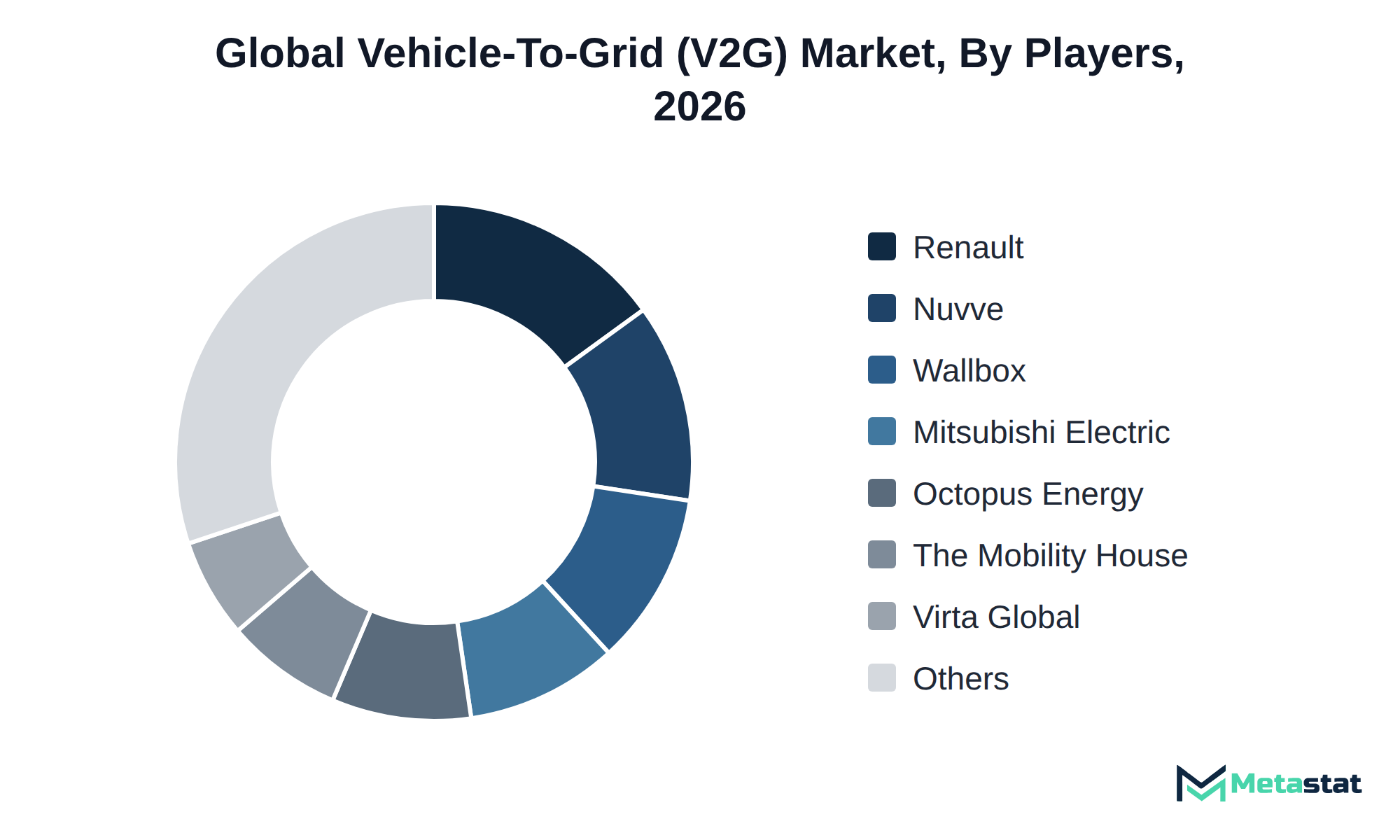
Companies in the Vehicle-To-Grid (V2G) market adopt various strategies to differentiate themselves and attract buyers. Key factors influencing buyer decisions include price, certification, customization, service quality, and the strength of the ecosystem surrounding the solutions.
Nuvve Holding Corp. emphasizes its bidirectional EV charging solutions, aligning with the growing demand for energy management and grid integration. Wallbox N.V. targets the development of advanced charging infrastructure, enhancing user accessibility and operational efficiency. Mitsubishi Electric Corporation concentrates on integrating innovative technology into its offerings, aiming to improve the flexibility and reliability of V2G systems.
Indra Renewable Technologies Limited and The Mobility House focus on software solutions that facilitate V2G functionalities, appealing to organizations seeking effective energy management. Octopus Energy Group Limited and Renault Group emphasize collaborative approaches, leveraging strengths in their respective domains to enhance service delivery and customer satisfaction. This competitive framework shapes the market environment, driving innovation and ensuring diverse offerings for buyers.
Key developments will drive growth in the V2G market, including increased adoption of Bidirectional EV Charging Equipment and V2G Energy Management Software. These segments support the integration of electric vehicles into the grid, enhancing energy management and efficiency. The growth of charging infrastructure, particularly AC Charging solutions, facilitates wider access to V2G services, making it attractive for consumers and businesses alike. However, the pace of market expansion faces challenges due to regulatory hurdles and the need for standardized protocols across regions. In regions like North America and Europe, policies that support infrastructure investment and V2G technology integration play a crucial role in shaping the market's trajectory. Absent such supportive measures, achieving the forecasted growth encounters significant impediments. The V2G market continues to evolve, and how well these factors are managed will determine its future performance.
By Solution Type: Bidirectional EV Charging Equipment, V2G Energy Management Software, V2G Aggregation and Virtual Power Plant Platforms, Grid Integration and Flexibility Services, V2G Charging and Energy Service Solutions
By Vehicle Type: Battery Electric Vehicles (BEVs), Fuel Cell Vehicles (FCVs), Plug-in Hybrid Electric Vehicles (PHEVs)
By Application: Frequency Regulation and Ancillary Services, Peak Shaving and Load Balancing, Renewable Energy Integration, Energy Arbitrage and Electricity Trading, Backup Power and Grid Resilience, Demand Response and Capacity Management
The report strategically identifies and profiles the key market players and analyses their core competencies in each sub-segment of the Vehicle-To-Grid (V2G) market.
Report Attributes | Details |
Study Period | 2021-2033 |
Base Year | 2025 |
Estimated Year | 2026 |
Forecast Period | 2026-2033 |
Historical Period | 2021-2025 |
Growth Rate | CAGR 20.8% from 2026 to 2033 |
Revenue Unit | USD million |
Segmentation | By Solution Type, Charging Infrastructure, Vehicle Type, Application, and Region |
By Region | North America (By Solution Type, Charging Infrastructure, Vehicle Type, Application, and Country)
|
Europe (By Solution Type, Charging Infrastructure, Vehicle Type, Application, and Country)
| |
Asia Pacific (By Solution Type, Charging Infrastructure, Vehicle Type, Application, and Country)
| |
South America (By Solution Type, Charging Infrastructure, Vehicle Type, Application, and Country)
| |
Middle East and Africa (By Solution Type, Charging Infrastructure, Vehicle Type, Application, and Country)
|
Find answers to common questions about this report
The Vehicle-To-Grid (V2G) market size was valued at USD 1,425.8 million in 2025.
The market is projected to grow at a CAGR of 20.8% during the forecast period from 2026 to 2033.
The North America Vehicle-To-Grid (V2G) market size is estimated to reach USD 2,081.1 million by 2033.
V2G Energy Management Software leads the market with a projected value of USD 1,303.8 million by 2033, based on its growth potential compared to other segments.
Growing adoption of electric vehicles significantly influences spending in the market. Investment in charging infrastructure represents a significant driver for growth, as expanded networks improve accessibility for electric vehicle owners and facilitate participation in V2G programs.
Europe holds the dominant share of the Vehicle-To-Grid (V2G) market, accounting for 36.2 percent. This figure reflects the regional distribution of market share among key areas.
Limited availability of charging infrastructure restrains growth in the Vehicle-To-Grid (V2G) market, impeding the widespread deployment of bidirectional charging technologies. Input cost pressures challenge profitability for suppliers, with rising material costs and talent acquisition expenses impacting competitive pricing.
Growing investments in charging infrastructure enhance accessibility for electric vehicle owners, facilitating participation in Vehicle-To-Grid programs. the increasing focus on energy efficiency and advanced energy management software supports the integration of electric vehicles into power systems, driving adoption in the industry.
The Vehicle-To-Grid (V2G) market is estimated to reach a valuation of USD 6,467.1 million by 2033.
Key players operating in the Vehicle-To-Grid (V2G) market include Nuvve Holding Corp., Wallbox N.V., Indra Renewable Technologies Limited, The Mobility House, Octopus Energy Group Limited, Renault Group, and Mitsubishi Electric Corporation.
The analysts below cover Automotive and Transportation research at Metastat Insights.
LEAD ANALYST
Utkarsh Khirodkar is a Lead Market Research Analyst at MetaStat Insight, specializing in market intelligence, technology sector assessments, and competitive strategy.

ENERGY & INFRASTRUCTURE INDUSTRY CONSULTANT
Automotive and Transportation · Electronics and Semiconductor · Energy and Power · Machinery & Equipment
Saurabh Vasant Ganvir consults for Energy & Infrastructure Industry at MetaStat Insight, specializing in renewable energy, solar EPC, and electric vehicle (EV) infrastructure markets.
In the biological seed treatment space, registration timelines vary drastically between the European Union, Brazil, and North America. The MetaStat Insight research handled these cross-border regulatory barriers with genuine nuance, mapping commercialization pathways alongside historical field adoption rates. The segmentation between microbial strains and biochemical active ingredients was particularly well structured.
Our team was tracking whether regional recycling infrastructure could realistically absorb the growing volume of lithium iron phosphate batteries over the next decade. The report did a solid job separating announced hydrometallurgical plant capacity from active, permitted operational throughput. That distinction made the feedstock availability projections and regional recovery rate models far more credible than standard commercial overviews.
Tracking capacity expansion in single-use bioprocessing requires dependable data on raw material availability and cleanroom-grade polymer supply chains. The competitive landscape chapter gave a grounded evaluation of secondary component suppliers across North America and Asia-Pacific rather than simply reprinting press releases. Having that level of supplier benchmarking helped clarify dual-sourcing considerations for our clinical pipeline planning.
Explore related market intelligence reports worth reading alongside this one.
Starting from
$2950
Starting from
$2950