
LEAD ANALYST
Utkarsh Khirodkar is a Lead Market Research Analyst at MetaStat Insight, specializing in market intelligence, technology sector assessments, and competitive strategy.

Global Wholesale Electricity Trading Market Size, Share, By Trading Horizon (Day-Ahead Trading, Intraday Trading, Real-Time & Balancing Trading, Short-Term Forward Trading, Medium-Term Forward Trading, Long-Term Forward Trading), By Application (Industrial, Commercial, Residential), By Source (Non-renewable Energy, Renewable Energy), By Channel (Exchange-Traded & Organized Markets, Voice-Brokered OTC, Electronic OTC Platforms, Direct Bilateral OTC), Industry Analysis, Growth, Trends, and Forecast, 2026-2033
Report ID
MSI-5248
Published
September, 2026
Pages
310 Pages
Format
Historical
Base year
Forecast
Forecast period
Report Details
Market Valuation: Valued at $307.3 Billion in 2025, projected to reach $516.4 Billion by 2033 at a 6.7% CAGR.
Dominant Segment: The Day-Ahead Trading segment leads the market, driven by the increasing demand for efficient scheduling and management of energy resources. This segment is projected to grow significantly, reflecting the rising investments in renewable energy and advancements in grid technologies.
Geographic Lead: Asia Pacific is expected to be the fastest-growing region, fueled by urbanization and industrialization, which drives up electricity consumption. This growth is supported by technological advancements and infrastructure modernization in the region.
What's Inside: The report provides a comprehensive analysis of the competitive landscape, market dynamics, and detailed segmentation by trading horizon, application, source, and channel. It includes forecasts for each segment through 2033, offering insights into growth drivers and challenges.
Emerging Regional Demands: Developing economies are experiencing a surge in electricity demand, necessitating efficient trading mechanisms. The report highlights how these regional demands are creating opportunities for market participants to optimize trading activities.
Choose Your License
Global Wholesale Electricity Trading Market
The global Wholesale Electricity Trading market was valued at USD 307.3 billion in 2025 and is projected to reach USD 516.4 billion by 2033, growing at a CAGR of 6.7% over the forecast period.
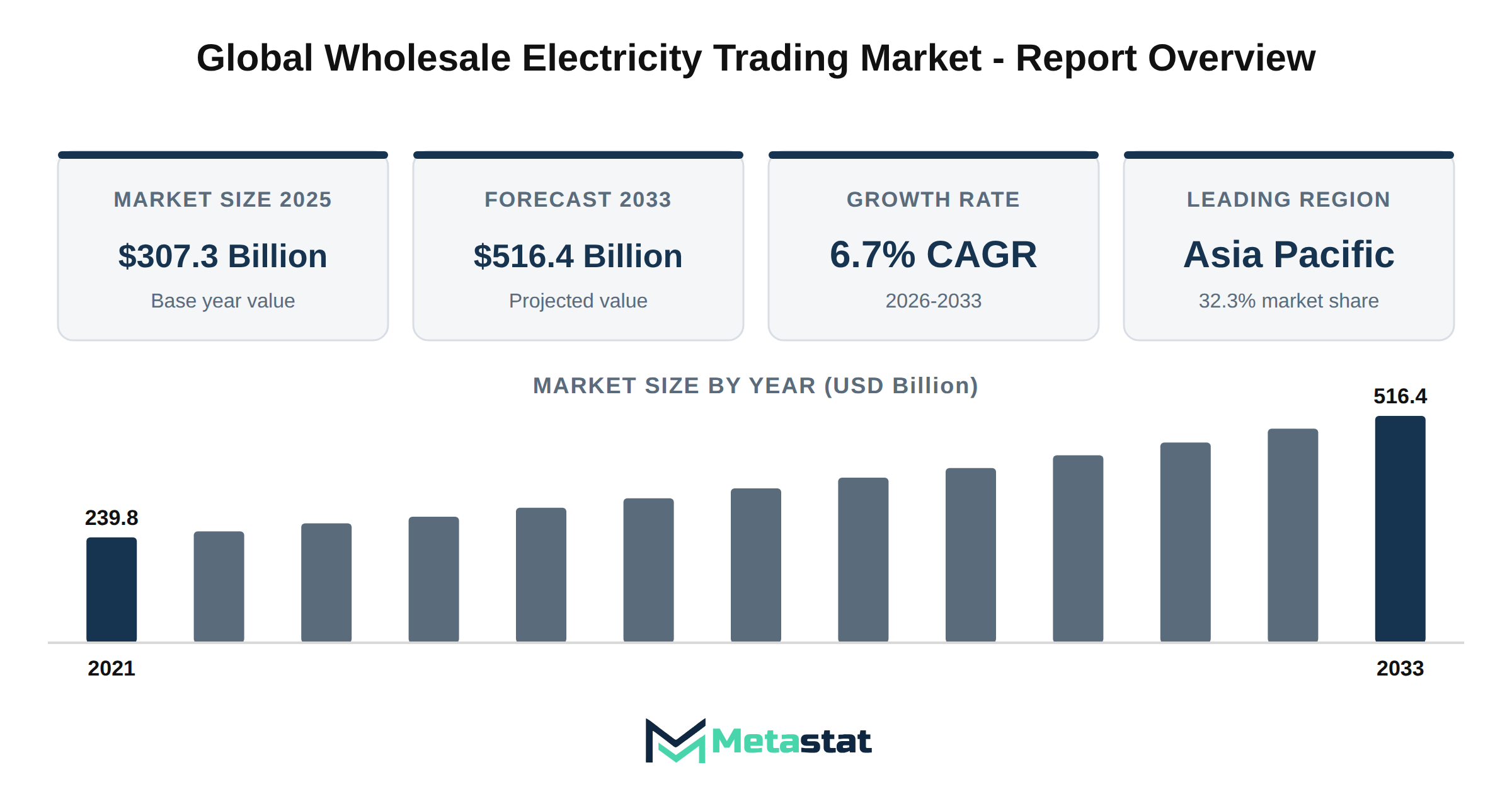
The Wholesale Electricity Trading market reached USD 307.3 billion in 2025 and is projected to grow to USD 516.4 billion by 2033, reflecting a compound annual growth rate (CAGR) of 6.7%. This growth is driven by several factors influencing the structure and dynamics of electricity trading.
Power market liberalization has significantly reshaped trading practices, enhancing competition and facilitating increased participation from various market players. Rising renewable energy integration contributes to evolving trading strategies, prompting a shift in how electricity is sourced and sold. The demand for Day-Ahead and Intraday electricity trading continues to gain momentum. Day-Ahead trading is expected to grow from USD 95.2 billion in 2026 to USD 144.6 billion by 2033, at a CAGR of 6.2%. Intraday trading is projected to reach USD 108.4 billion by 2033, benefiting from heightened market activity and the need for flexibility.
The expansion of Real-Time and Balancing markets correlates with increased grid volatility, allowing market participants to better manage supply and demand mismatches. Power price volatility has heightened the demand for hedging and risk management solutions, driving firms to adopt sophisticated strategies to mitigate financial exposure. Exchange-Traded electricity markets are gaining ground over traditional over-the-counter trading, further enhancing market liquidity and transparency.
Electronic OTC platforms are accelerating the adoption of digital power trading, streamlining transactions and improving efficiency. The rise of cross-border electricity trading across interconnected power markets presents new opportunities for market participants, enabling access to diverse energy sources and pricing mechanisms. Energy storage technologies create additional avenues for engagement within the market, facilitating the integration of intermittent renewable resources and enhancing reliability.
The Wholesale Electricity Trading market experiences significant growth driven by the liberalization of power markets. This trend encourages competition among suppliers, leading to more transparent pricing and enhanced market efficiency.
Rising integration of renewable energy sources reshapes the dynamics of wholesale power trading. Increased generation from renewable sources requires adjustments in trading strategies to accommodate variability and ensure grid reliability.
Day-ahead and intraday electricity trading segments gain market share, reflecting the growing need for flexibility and timely adjustments in energy supply and demand. This shift enhances liquidity in the market and provides opportunities for stakeholders to optimize their trading activities.
Real-time and balancing markets expand in response to grid volatility. Increased demand for immediate response to fluctuations in supply necessitates robust trading mechanisms that facilitate effective balancing of energy resources.
Power price volatility strengthens the demand for hedging and risk management strategies. Market participants increasingly adopt financial instruments to mitigate risks associated with fluctuating prices, ensuring stability in their operations.
Exchange-traded electricity markets gain ground over traditional over-the-counter (OTC) trading, driven by advancements in technology and improved regulatory frameworks. This transition enhances transparency and provides market participants with better price discovery mechanisms.
Electronic OTC platforms accelerate the adoption of digital power trading, streamlining the trading process and enhancing market accessibility. These platforms enable participants to execute trades efficiently, supporting growth in the market.
Cross-border electricity trading expands across interconnected power markets, promoting regional integration and improving resource allocation. This collaboration enhances the stability of supply and contributes to cost-effective energy solutions.
Energy storage developments create new opportunities in wholesale electricity trading. The ability to store energy enables market participants to respond to price signals more effectively, enhancing their trading strategies.
Virtual power plants and aggregators transform participation in the power market by enabling smaller producers to collectively manage and sell their generation. This innovation enhances competition and diversifies the market landscape.
Advancements in AI and algorithmic trading refine strategies within the wholesale electricity market. These technologies enhance decision-making processes, allowing market participants to optimize their trading activities based on real-time data and predictive analytics.
Renewable power purchase agreements (PPAs) significantly influence long-term electricity trading dynamics. These contracts provide stability for both producers and buyers, facilitating investment in renewable energy projects.
Grid congestion and transmission constraints shape regional power prices, influencing trading strategies across various markets. Participants navigate these challenges to optimize their positions effectively.
Electricity market regulation drives the evolution of trading models, ensuring that they adapt to changing market conditions and stakeholder needs. Regulatory frameworks play a critical role in maintaining market integrity and encouraging competition.
Carbon pricing policies increasingly influence wholesale power trading strategies, driven by market participants seeking to align their operations with sustainability goals. This shift encourages investment in low-carbon technologies and renewable energy sources.
Industrial power buyers increase direct participation in wholesale markets, reflecting a trend towards self-supply and cost reduction. This shift enables industrial users to leverage market conditions for their benefit.
Asia Pacific emerges because a high-growth electricity trading market, driven by rapid industrialization and increasing energy demand. The region's evolving regulatory landscape supports further market development.
Europe leads in electricity market coupling and cross-border trading innovation, enhancing market integration and promoting efficient resource allocation. This leadership positions Europe at the forefront of energy market evolution.
North American power markets advance real-time and locational trading capabilities, reflecting a shift towards more dynamic trading environments. This evolution enhances market responsiveness and improves operational efficiency.
Competitive dynamics intensify among power exchanges and energy traders, encouraging innovation and efficiency. This competition drives improvements across the market, enhancing the overall trading experience.
Digitalization improves electricity trading transparency and market liquidity, providing participants with better access to information and trading opportunities. Enhanced transparency builds trust and facilitates more informed trading decisions.
Renewable forecasting innovations reduce power trading imbalances, enabling market participants to align supply and demand more effectively. Accurate forecasting improves overall efficiency in the trading process.
Investment opportunities in wholesale electricity trading expand with the ongoing energy transition. Stakeholders increasingly focus on sustainable practices and technologies, positioning themselves for future growth.
Future growth of the wholesale electricity trading market through 2033 hinges on technological advancements, regulatory support, and evolving market dynamics. Continued investment in infrastructure and innovation will shape the trajectory of the market.
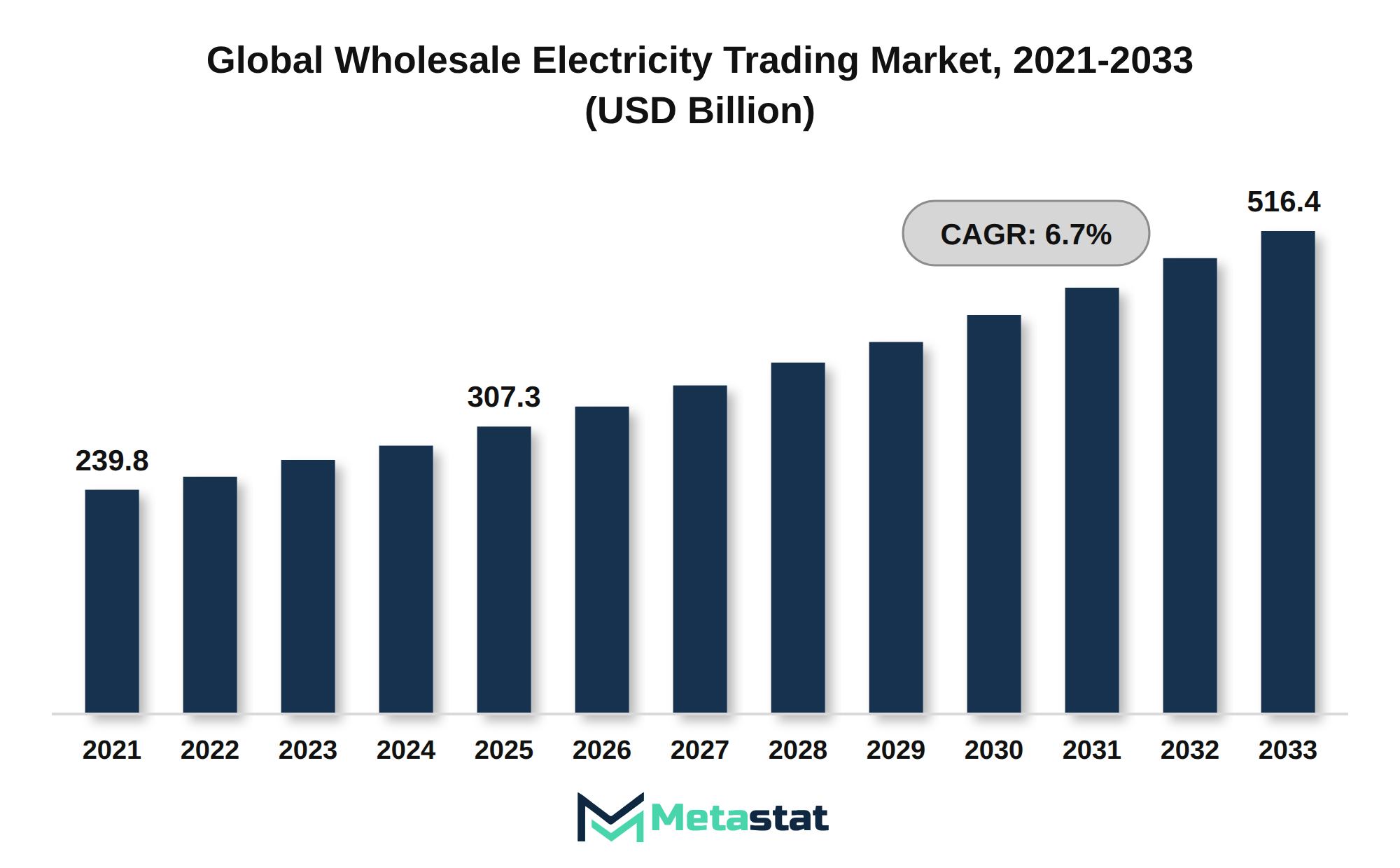
Growth in the Wholesale Electricity Trading market significantly aligns with macro-economic factors, including GDP growth and capital investments. Economic expansion in various regions creates an environment conducive to increased electricity consumption, influencing trading volumes. Enhanced investment in infrastructure and energy projects boosts the market by increasing demand for electricity trading services.
Investment environments characterized by favorable interest rates further stimulate market activity. Lower borrowing costs enable market participants to finance projects aimed at expanding trading capabilities and enhancing operational efficiency. These dynamics attract investments across regions, particularly in North America and Asia Pacific, where economic conditions support strong market performance.
Technological integration plays an important role, with automation and software adoption enhancing trading processes. The rise of digital platforms facilitates transactions, making the market more accessible and efficient. Consequently, increased operational productivity and cost-efficiency initiatives emerge, driven by companies optimizing their processes to remain competitive in a changing environment.
The interaction of these macro-economic factors with the evolving dynamics of the Wholesale Electricity Trading market is expected to drive sustained growth, with a projected market value of USD 516.4 billion by 2033. The convergence of economic growth, investment opportunities, and technological advancements creates a foundation for ongoing market development.
Investment in digital transformation significantly boosts the Wholesale Electricity Trading market by facilitating enhanced operational efficiency and improved trading practices. Technological integration, particularly automation and software adoption, streamlines processes and reduces latency in trading activities. This trend is driven by increasing demand for real-time data analytics and sophisticated trading algorithms, which enable market participants to respond promptly to market fluctuations.
The ongoing shift towards digital platforms allows traders to access diverse markets and optimize decision-making through advanced analytical tools. The rise of electronic trading platforms complements traditional trading methods, creating more opportunities for participants. Consequently, digital transformation leads to higher productivity and operational effectiveness, driving growth in the market.
While organizations invest in innovative technologies, focusing on cost-efficiency initiatives becomes critical. By digitizing legacy processes, the market reduces overhead costs and enhances margin performance. Increased investment in digital capabilities aligns with the broader trend of globalization, where market access and supply chain resilience are essential factors. The Wholesale Electricity Trading market is well-positioned to benefit from these developments, establishing a foundation for sustained growth through 2033.
The Wholesale Electricity Trading market faces significant challenges stemming from regulatory compliance hurdles. Stricter regulations and legal mandates impose stringent operational requirements on market participants, leading to increased costs and complexities in compliance. This environment discourages new entrants and limits the ability of existing players to innovate, constraining overall market expansion.
Macroeconomic headwinds, including inflationary pressures and capital stagnation, further exacerbate these challenges. Rising operational costs associated with compliance measures impact profitability, forcing companies to allocate resources away from growth initiatives. Slowing market expansion affects investment attractiveness and inhibits competitiveness.
Geopolitical instability contributes to uncertainty in the Wholesale Electricity Trading market, impacting investment decisions and operational strategies. Disruptions in energy supply chains and fluctuating geopolitical dynamics reduce market confidence, leading to decreased trading volumes and further inhibiting growth opportunities. This scenario creates a challenging environment for market players, necessitating adaptability to navigate the evolving regulatory and economic landscape.
Infrastructure gaps and connectivity deficits impede the operation of the trading ecosystem. Insufficient investments in infrastructure limit access to critical trading platforms and hinder the ability to respond to market demands efficiently. Consequently, this affects the market's operational effectiveness and growth trajectory, highlighting the need for strategic investments in infrastructure development.
Regulatory compliance challenges, macroeconomic headwinds, and infrastructure deficiencies collectively restrain the Wholesale Electricity Trading market's growth potential. Addressing these issues becomes necessary for market participants to enhance competitiveness and drive future expansion.
Geopolitical fragmentation introduces significant uncertainty into the Wholesale Electricity Trading market. Trade deficits resulting from national policies disrupt established trading relationships, complicating the flow of electricity between regions. Tariff friction further exacerbates this issue, leading to higher costs for market participants and complicating pricing strategies.
Technological disruptions, including rapid advancements in energy generation and storage, challenge traditional trading models. Interoperability issues among diverse systems used across countries and regions hinder integration of energy markets, affecting operational efficiency. These challenges result in increased costs and lower margins for suppliers and traders, impacting overall market growth.
Supply chain instability, driven by geopolitical issues and resource volatility, contributes to rising input costs. These pressures impact the ability of companies to maintain competitive pricing in the Wholesale Electricity Trading market, forcing them to reevaluate their operational strategies. Talent retention pressures stemming from skill gaps in the workforce further complicate the market landscape, limiting companies' capacity to adapt to evolving demands.
Environmental lifecycle footprints and decarbonization mandates impose additional constraints. Companies face increasing pressure to meet sustainability demands, which conflict with operational objectives. Inability to adapt to these environmental expectations limits market participation for those unable to meet stringent requirements.
Infrastructure gaps and retrofitting barriers hinder the establishment of efficient trading networks. Implementation bottlenecks in adopting new technologies slow market development, ultimately impacting growth potential. These challenges shape a complex environment that companies in the Wholesale Electricity Trading market navigate carefully to sustain profitability and ensure growth.
Growing regional demands for electricity contribute significantly to the expansion of the Wholesale Electricity Trading market. Developing economies, particularly in Asia Pacific, exhibit increasing energy consumption driven by urbanization and industrialization. This trend generates a strong need for efficient trading mechanisms that cater to varying energy sources, including both renewable and non-renewable options. The market is set to benefit from technological disruptions that enhance trading efficiency through automation and real-time data analytics.
Infrastructure modernization plays an important role in facilitating market activities. Investments in smart grids and advanced metering infrastructure enable better integration of renewable energy sources, which enhances participation in wholesale trading platforms. These developments create opportunities for trading structures that adapt to decentralized energy generation and consumption patterns. Geographical expansion into underserved regions presents avenues for growth, allowing suppliers to tap into new customer bases and diversify revenue streams.
Next-generation innovations, including digital procurement shifts and evolving buying behaviors, transform market dynamics, creating a more responsive trading environment. The rise of eco-friendly compliance and sustainability imperatives aligns with market strategies aimed at reducing carbon footprints and enhancing corporate social responsibility. Firms that successfully adapt to these trends position themselves competitively within the Wholesale Electricity Trading market.
Strategic consolidation through cross-industry mergers enhances operational capabilities, providing firms with the necessary resources to capitalize on emerging opportunities. Asset life-cycle extensions and maintenance upgrades significantly improve operational yield, ensuring that market players remain resilient in a rapidly changing environment. The confluence of these factors ultimately drives demand within the Wholesale Electricity Trading market, leading to sustained growth through 2033.
The Global Wholesale Electricity Trading market is segmented based on Trading Horizon, Application, Source, and Channel.
Day-Ahead Trading segment is valued at USD 95.2 billion in 2026 and is projected to reach USD 144.6 billion by 2033, at a CAGR of 6.2% during the forecast period. Demand for Day-Ahead Trading primarily arises from the need for efficient scheduling and management of energy resources. This demand is expected to increase owing to growing investments in renewable energy and advancements in grid technologies, which necessitate reliable forecasting and trading mechanisms.
Adoption of Day-Ahead Trading aligns with regulatory frameworks that promote market transparency and reliability in electricity pricing. Participants in this segment include utility companies and independent power producers, who leverage these platforms to optimize their operational efficiencies and enhance profitability. Regulatory compliance drives investments in technology to support real-time data analytics and predictive modeling, which enhance strategic decision-making capabilities.
Market expansion factors include the ongoing transition toward decarbonized energy systems, which encourages the integration of renewables into trading platforms. Increased penetration of distributed energy resources fuels the need for robust Day-Ahead Trading solutions that accommodate fluctuating supply and demand profiles. Enhanced trading strategies will likely emerge due to market participants prioritizing risk management amid evolving market dynamics.
Certain cost structures associated with Day-Ahead Trading exhibit sensitivity to market volatility and energy pricing fluctuations. Margin pressures arise from competition among platforms and pricing strategies, leading stakeholders to seek innovations that improve trading efficiency and reduce costs. The growing emphasis on digital solutions creates an environment ripe for investment in next-generation trading platforms.
Technological maturation in data analytics, machine learning, and artificial intelligence enables enhanced predictive capabilities within Day-Ahead Trading. These technologies drive down operational costs while increasing prediction accuracy, benefiting all market participants. With advancements in system resilience and logistics, stakeholders position themselves to capitalize on strategic opportunities that arise from the evolving landscape of the Wholesale Electricity Trading market.
Intraday Trading is significant within the Wholesale Electricity Trading market, reflecting a growing trend toward more dynamic and responsive trading strategies. This segment provides traders with the ability to adjust their positions throughout the day, capitalizing on price fluctuations and demand shifts. Factors including increased renewable energy integration and real-time data analytics drive demand for intraday trading mechanisms, enhancing efficiency and liquidity in the market.
Adoption of advanced technologies, including automated trading systems and enhanced communication networks, facilitates real-time decision-making, which significantly influences market behavior. Regulatory frameworks supporting flexible trading approaches further support this sub-segment’s growth. Companies engaging in intraday trading experience improved margin opportunities, driven by capitalizing on price variations, ultimately contributing to the segment's anticipated expansion.
Intraday Trading segment is estimated to reach USD 108.4 billion by 2033, at a CAGR of 8.5% during the forecast period. This growth signifies a strong interest in leveraging short-term trading strategies, aligning with broader market trends towards increased electricity demand and the need for adaptability in trading practices. The competitive landscape within this segment features a mix of established players and new entrants, each vying for market share through innovative solutions and services.
Significant developments in the Real-Time & Balancing Trading segment reflect growing demand for immediate electricity supply solutions. The increasing integration of renewable energy sources and the need for stability in power grids drive this demand. Industrial and commercial sectors rely heavily on real-time trading to optimize energy consumption and reduce operational costs. This approach improves efficiency and responsiveness to market changes.
Technological advancements facilitate enhanced forecasting and automation, supporting better decision-making in electricity trading. The expansion of smart grid technologies further enables real-time balancing of supply and demand, ensuring more efficient energy distribution. This segment's growth demonstrates alignment with broader trends in sustainability, where organizations seek to minimize waste and leverage clean energy solutions.
The Real-Time & Balancing Trading segment is projected to reach USD 77.5 billion by 2033. This substantial market value indicates the potential for increased investment and innovation in the sector, promoting competition among key players. Regulatory compliance around grid management and emissions standards drives entities to adopt real-time trading practices to meet evolving legal frameworks.
Ongoing shifts in consumption patterns, particularly towards increased renewable energy adoption, position the market for continued growth. The need for flexibility and adaptability in energy supply creates opportunities for stakeholders to explore new trading methods and technologies. While these dynamics unfold, the market's resilience and strategic positioning remain crucial for achieving long-term success.
Short-Term Forward Trading (Up to 1 Month) segment is projected to grow at a CAGR of 5.9% during the forecast period. Demand drivers include the increasing need for flexibility in energy procurement, allowing market participants to react swiftly to price fluctuations. The transition towards renewable energy sources increases this demand, driven by stakeholders seeking reliable methods to manage intermittent supply. Adoption trends show a growing preference among industrial and commercial sectors for short-term contracts to optimize energy costs and ensure a stable supply, particularly in regions facing volatility in energy prices.
Segment expansion drives investment in advanced trading platforms that enhance price discovery and liquidity. Technological maturation in data analytics and algorithmic trading enhances decision-making capabilities and operational efficiency. Downstream applications, particularly in industries with high energy consumption, drive interest in short-term forward trading solutions to manage operational costs effectively. Regulatory compliance standards increasingly emphasize transparency in trading practices, urging players to adopt more robust strategies for risk management and reporting.
Cost structures remain dynamic, influenced by global energy prices and market competition. Pricing volatility presents both challenges and opportunities for stakeholders, compelling them to refine their trading strategies continuously. Strategic opportunity windows emerge for companies that leverage technology to optimize trading operations and capitalize on market inefficiencies. The outlook for capital investment in this segment appears favorable, driven by the ongoing transition towards a more flexible and resilient energy market landscape.
In the Wholesale Electricity Trading market, Medium-Term Forward Trading (1-12 Months) represents a strategic opportunity for market participants seeking to hedge against price volatility and manage risk over a defined horizon. Demand drivers for this segment include increasing energy consumption alongside the necessity for energy reliability, pushing buyers to engage in longer-term contracts. Electricity generation becomes more complex and decentralized, leading market players to favor medium-term agreements to secure pricing stability and ensure supply continuity.
Adoption of medium-term trading strategies is influenced by technological advancements that enhance forecasting accuracy and improve market efficiency. The integration of sophisticated analytics and trading platforms allows participants to navigate market fluctuations effectively. This segment experiences expansion catalysts from a growing focus on renewable energy sources, requiring utilities and industrial users to align their procurement strategies with sustainability goals.
Downstream applications reflect a range of end-users, including industrial and commercial sectors, which rely on stable electricity prices to maintain operational budget predictability. Regulatory compliance standards, driven by decarbonization goals, shape the procurement landscape. Participants in the market increasingly prioritize certifications and adherence to evolving policies, ensuring transactions align with environmental regulations.
Cost structures within this segment are influenced by pricing volatility in energy markets, affecting margin pressures for both buyers and sellers. Strategic opportunities arise owing to market players seeking to streamline operations and enhance supply chain resilience. Current trends indicate a shift towards more flexible trading agreements that accommodate rapid changes in energy demand and supply dynamics.
Investment outlook for medium-term forward trading indicates strong interest in developing advanced trading systems that facilitate effective negotiation and contract management. The market continues to evolve, and participants committed to innovation in trading technologies will gain a competitive edge, positioning themselves favorably within the broader Wholesale Electricity Trading market.
Long-Term Forward Trading (More Than 12 Months) within the Wholesale Electricity Trading market experiences shifts influenced by various demand drivers. Demand arises from the necessity for long-term price stability and supply assurance among buyers, particularly in industrial and commercial sectors. Companies engage in this trading strategy to hedge against price volatility and mitigate risks associated with fluctuating energy prices.
Technological maturation influences the advancement of this segment. Enhanced forecasting models and analytics allow traders to make informed decisions, improving their ability to anticipate market shifts. This evolution supports the adoption of innovative trading strategies, which improve the competitive positioning of market participants.
Segment expansion stems from increasing investments in renewable energy sources, alongside regulatory shifts encouraging clean energy adoption. This trend attracts a diverse range of players, including traditional energy firms and new entrants prioritizing sustainable practices. Strategic collaborations and partnerships further enhance market dynamics.
Cost structures and pricing volatility challenge participants, necessitating robust risk management approaches. Firms increasingly focus on developing flexible contracts and optimizing their portfolio strategies to address margin pressures encountered in this environment. The strategic opportunity window for investments in new technologies and trading platforms remains significant.
The Wholesale Electricity Trading market adapts to changing consumption patterns, driven by evolving end-user preferences and regulatory compliance standards. This adaptability positions the segment for growth, with firms exploring avenues to enhance their service offerings and meet client expectations in a competitive environment.
Growth in industrial operations fuels demand for electricity trading within the Wholesale Electricity Trading market. Industrial applications, ranging from manufacturing to heavy industry, require consistent and reliable power sources, driving increased trading activities to balance supply and demand. The segment is valued at USD 163.3 billion in 2026 and is projected to reach USD 250.4 billion by 2033, at a CAGR of 6.3% during the forecast period. Factors including rising energy costs and the push for operational efficiency compel industries to engage actively in trading markets. Regulatory compliance standards influence trading strategies, prompting industries to adopt advanced technologies to optimize energy procurement and consumption.
Technological maturation presents opportunities for enhanced trading capabilities. The integration of smart grid technologies and advanced analytics supports real-time decision-making, enabling better alignment between energy supply and market demand. This progression encourages industries to explore innovative trading solutions, which expand the scope and efficiency of electricity trading. While competition intensifies, firms focus on strategic opportunity windows that leverage data-driven insights for improved market positioning. The adoption of renewable energy sources further reshapes trading dynamics, with industries increasingly participating in markets tailored to support green energy initiatives.
Cost structures and pricing volatility significantly impact the industrial segment. Fluctuating energy prices necessitate strategic engagement in trading to mitigate risks associated with price spikes. Manufacturers and industrial consumers prioritize long-term contracts and hedging strategies to stabilize energy expenditures. Increased focus on sustainability leads to a growing preference for renewable energy sources within contracts, which presents both opportunities and challenges in navigating market dynamics. The evolving landscape promotes resilience in supply chains, driven by players adapting to shifting regulatory environments while seeking to optimize procurement strategies within the Wholesale Electricity Trading market.
Growth in the Commercial segment of the Wholesale Electricity Trading market results from increasing electricity demand across various industries, driven by economic expansion and urbanization. Businesses prioritize cost efficiency and reliability in energy sourcing, stimulating the growth of wholesale trading platforms that offer competitive pricing and flexible purchasing options. The expansion of renewable energy sources creates opportunities for commercial entities to engage in trading activities that align with sustainability goals, enhancing their market position while reducing carbon footprints.
The Commercial segment is projected to reach USD 175.6 billion by 2033, with a CAGR of 7.4% during the forecast period. Significant technological advancements in energy trading systems facilitate real-time data analysis and predictive modeling. Such innovations enable commercial players to optimize energy procurement strategies, align with regulatory compliance standards, and respond effectively to market fluctuations.
Increased investments in energy efficiency technologies across various sectors lead to consumption shifts that favor more dynamic trading models. The emergence of new trading channels, including electronic platforms, enhances market accessibility. Evolving regulatory frameworks influence trading behavior, pushing commercial entities to adapt swiftly to changing compliance mandates aimed at promoting sustainable practices.
Cost structures within the segment experience pressure from pricing volatility influenced by market dynamics and supply chain resilience. Strategic investments in advanced trading technologies and robust supply chain management enhance operational efficiency. Growth of the Commercial segment within the Wholesale Electricity Trading market aligns with broader trends in energy consumption and trading innovations, offering substantial opportunities for players in this space.
Residential electricity consumption experiences a notable shift, with a growing emphasis on energy efficiency and sustainability among consumers. Increased awareness of environmental impacts drives the transition towards renewable energy sources, reflecting changing consumer preferences and regulatory pressures. The rising adoption of smart home technologies enhances monitoring and management of energy use, increasing demand for innovative solutions within the market.
Investment in residential energy solutions yields operational efficiencies and cost savings for consumers. This shift aligns with broader trends in energy consumption patterns, where households seek to optimize energy usage and reduce expenses. The anticipated growth in this sub-segment reflects a significant strategic opportunity for stakeholders aiming to capture market share.
The residential segment is projected to reach USD 90.4 billion by 2033. Regulatory compliance standards increasingly support the integration of renewable energy in residential settings, creating a favorable environment for market expansion. Technological maturation facilitates the development of next-generation energy products, enhancing overall accessibility and affordability, which are critical factors influencing consumer adoption.
The market experiences pressures related to pricing volatility, impacting investment strategies. Stakeholders in the residential sector confront challenges tied to cost structures and margin pressures, necessitating innovative approaches and efficient operations. Continuous investment in research and development remains crucial for addressing these challenges and enhancing competitive positioning. This ongoing commitment supports long-term growth and stability in the market.
Valued at USD 223.6 billion in 2026, the Non-renewable Energy segment is projected to reach USD 309.8 billion by 2033, at a CAGR of 4.8% during the forecast period. Demand for non-renewable energy sources remains strong owing to their reliability and established infrastructure, which supports the operational needs of various industries. The transition towards cleaner energy solutions introduces a complex dynamic, where non-renewable sources are required to complement renewable energies during the transition phase. Significant investments in technology to improve efficiency and reduce emissions contribute to shaping this segment's growth trajectory.
Market dynamics indicate that fluctuations in global oil and gas prices directly impact the profitability of non-renewable energy trading. Price volatility often leads to margin pressures for traders, necessitating robust risk management strategies. Regulatory compliance surrounding emissions and environmental standards drives innovation in cleaner extraction and production methods, further influencing operational costs and market competitiveness. This regulatory landscape creates both challenges and opportunities because companies adapt to evolving compliance standards while striving to optimize their operations.
The penetration of non-renewable energy in the Wholesale Electricity Trading market reflects its role in stabilizing energy supply during increasing electricity demand. Continued reliance on these resources, particularly in regions with limited access to renewables, highlights the importance of non-renewable energy in ensuring grid reliability. While market participants navigate these complexities, strategic investments in technology and compliance will play a crucial role in maintaining competitiveness within the sector.
Growing interest in renewable energy sources significantly drives the Renewable Energy segment within the Wholesale Electricity Trading market. Investments in solar, wind, and hydroelectric power reflect a strong commitment to sustainability and emissions reduction. Regulatory frameworks supporting clean energy adoption enhance market dynamics, creating an environment conducive to innovation and technological advancements. Adoption of renewable technologies leads to increased efficiency and lower operational costs over time. Enhanced energy storage solutions improve the reliability and dispatchability of renewable sources, thereby expanding their application across various sectors. The Renewable Energy segment is projected to reach USD 206.5 billion by 2033, reflecting a compound annual growth rate (CAGR) of 10.1% during the forecast period. Increased demand for cleaner energy alternatives from industrial and commercial buyers drives this segment's growth. Organizations prioritize sustainable practices, demanding renewable energy solutions to meet corporate social responsibility (CSR) objectives. The market responds to these shifts by developing competitive pricing strategies and innovative business models that accommodate fluctuating demand and supply dynamics associated with renewable resources. Overall, the Renewable Energy segment within the Wholesale Electricity Trading market stands poised for substantial progression, reflecting broader trends toward sustainability and energy independence.
Valued at USD 129.7 billion in 2026, the Exchange-Traded & Organized Markets segment is projected to reach USD 222 billion by 2033, at a CAGR of 8% during the forecast period. This segment benefits from the increasing adoption of standardized contracts, which enhance market liquidity and transparency. The push for digitization across trading platforms facilitates faster transactions and improved access for participants, driving overall market growth.
Regulatory compliance standards have heightened the focus on efficient trading practices, leading to investments in technology that streamline operations. Participants in the market prioritize platforms that offer robust risk management tools and real-time data analytics, enhancing decision-making capabilities. These advancements support a more dynamic trading environment and attract a wider range of participants.
Market fluctuations and pricing volatility influence trading dynamics. While participants seek to mitigate risks associated with price swings, reliance on exchange-traded and organized markets intensifies. This trend highlights the importance of developing strategies to navigate market uncertainties while maximizing opportunities for profit.
Given the technological maturation within this segment, next-gen upgrades in trading technology become essential. Innovations including artificial intelligence and machine learning enhance predictive analytics, allowing market participants to anticipate trends and optimize trading strategies. The incorporation of these technologies positions the market for sustained growth and improved operational efficiency.
Overall, the Exchange-Traded & Organized Markets segment is essential in the broader Wholesale Electricity Trading market, creating a competitive landscape that encourages innovation and adaptation to changing market conditions.
Growth in the Voice-Brokered OTC segment aligns with increasing demand for personalized trading services within the Wholesale Electricity Trading market. Traders prioritize direct communication and negotiation, enhancing transaction efficiency and adaptability in dynamic market conditions. Voice-brokered platforms facilitate real-time adjustments and build relationships between buyers and sellers, contributing to a more responsive trading environment.
This segment is projected to reach USD 67.1 billion by 2033, at a CAGR of 2.9% during the forecast period. The relatively stable growth reflects ongoing reliance on traditional trading methods alongside advances in technology. While electronic platforms gain traction, voice-brokered services maintain a significant presence, particularly in transactions requiring nuanced negotiation and tailored solutions.
Market dynamics indicate a blend of legacy practices and modern technologies. Voice-brokered trading continues to evolve. Regulatory compliance standards and market transparency drive the need for reliable and secure trading channels. The segment's resilience illustrates its ability to adapt to shifts in consumer preferences and technological advancements, ensuring sustained relevance within the broader market.
Growth in the Electronic OTC Platforms segment reflects a substantial shift towards digital solutions for wholesale electricity trading. Adoption of technology advances in trading platforms enhances access to market data and transaction efficiency, attracting a broader range of participants, including independent traders and utilities. This trend aligns with growing demand for transparency and real-time information in pricing, which is essential for strategic decision-making in the market.
Technological maturation of these platforms supports integration of advanced analytics and automated trading capabilities, enabling users to optimize their trading strategies. The projected annual growth rate of 8.0% indicates increasing confidence in electronic trading solutions, driven by enhancements in user experience and reliability. The anticipated market value of USD 149.7 billion by 2033 highlights the strategic opportunity presented by this segment, addressing the evolving needs of market participants.
Pricing volatility in the electricity sector further drives the shift towards electronic platforms, allowing users to respond rapidly to market changes. These platforms provide mechanisms for efficient risk management, which is critical in an environment characterized by fluctuating demand and supply dynamics. While regulatory compliance becomes more stringent, electronic OTC platforms offer the necessary tools for users to meet evolving standards, reinforcing their value within the wholesale electricity trading market.
Direct Bilateral OTC trading within the Wholesale Electricity Trading market presents a unique avenue for market participants to engage in tailored, direct agreements. This segment is characterized by its flexibility in contract terms and conditions, which creates stronger relationships between buyers and sellers. Increased interest in customized trading solutions, especially among medium to large enterprises, drives demand for this channel, allowing for specific risk management strategies and cost efficiencies.
Regulatory compliance standards play a significant role in shaping the dynamics of direct bilateral transactions. Market players often adjust their approaches to align with evolving regulations, which translate to enhanced operational resilience. Fluctuations in pricing and margin pressures stemming from market volatility have prompted participants to explore bilateral options because a means of securing favorable conditions and mitigating risks associated with price uncertainty.
The segment is projected to grow at a CAGR of 3.3% during the forecast period. This growth is attributed to a combination of factors, including advancements in technology that streamline trading processes and the increasing sophistication of market players. Strategic opportunity windows arise because firms seek to capitalize on the growing demand for personalized trading experiences, which further enhances the attractiveness of the direct bilateral channel within the market.
Based on geography, the Global Wholesale Electricity Trading market is divided into North America, Europe, Asia-Pacific, South America, Middle East, and Africa.
The Wholesale Electricity Trading market in North America shows a market environment marked by significant growth opportunities. The increasing demand for electricity, particularly from the industrial and commercial sectors, fuels market expansion. The region's robust infrastructure supports efficient electricity trading mechanisms, enhancing operational capabilities and encouraging competition among market players.
With a market size set to reach USD 129.1 billion by the end of 2033, North America is projected to expand at a CAGR of 6.7% within the forecast period. The share of the global market in 2025 stands at 26.8%. This growth reflects strong adoption rates driven by regional energy policies, technological advancements, and the shift towards renewable energy sources.
Key players, including those based in the United States, Canada, and Mexico, are actively investing in modernization initiatives to enhance energy grid resiliency. The focus on localized manufacturing and procurement strategies contributes to a more sustainable supply chain in the region. Domestic market participants adopt innovative trading approaches that align with evolving regulatory frameworks and compliance mandates.
While the market matures, incremental growth vectors emerge, positioning North America because a leader in the Wholesale Electricity Trading market. Cross-border trade corridors facilitate increased connectivity and efficiency, further driving competition among market participants. The evolving geopolitical situation influences trade dynamics, creating additional opportunities for market expansion.
The Wholesale Electricity Trading market in Europe exhibits strong growth potential, driven by increasing energy demands and regulatory support for sustainable practices. Countries including Germany, France, the UK, Italy, Spain, and Russia leverage their advanced infrastructure and robust energy grids to enhance trading capabilities.
Regulatory frameworks across the region promote renewable energy adoption, which impacts trading dynamics. The integration of renewable sources into the energy mix requires innovative trading solutions, thereby expanding market participation. Market maturity in several European nations drives competition, encouraging innovative approaches to trading methodologies and customer engagement.
Infrastructure modernization remains a critical factor, with investments focusing on grid resilience and technological advancements. This creates an environment conducive to cross-border electricity trading, enhancing regional collaboration and resource sharing. Demand for localized procurement influences the dynamics within the market, driven by businesses increasingly seeking suppliers that align with regional standards and expectations.
The competitive landscape in Europe features several domestic market participants, contributing to vendor consolidation trends that enhance operational efficiency. Foreign direct investment (FDI) flows into the region signal confidence in the market's growth trajectory, contributing to the overall expansion forecast through 2033. These factors collectively position Europe because a significant player in the global Wholesale Electricity Trading market.
Asia-Pacific represents a significant portion of the Wholesale Electricity Trading market. The region's growth stems from robust industrial demand, particularly in China and India, where economic development drives increased energy consumption. Modernization of energy infrastructure enhances trading capabilities and promotes greater efficiency in electricity markets.
Countries including Japan and South Korea invest heavily in advanced technologies, further strengthening their positions within the market. Southeast Asia, with its developing economies, presents emerging opportunities for electricity trading, fueled by a growing middle class and rising energy needs.
The transition to renewable energy sources significantly influences the market landscape, with countries like Australia leading initiatives in sustainable energy projects. This shift encourages investment in renewable energy trading, creating additional market dynamics that expand segment offerings.
The competitive landscape features various domestic market participants, including national utilities and private players, who consolidate their positions through strategic partnerships and investments. Regional procurement dynamics reflect local preferences and cultural nuances that shape buying behaviors.
Infrastructure readiness and energy grid resiliency are critical factors, with ongoing projects aimed at enhancing capacity and reliability in electricity supply. Geopolitical considerations and regulatory frameworks further shape the market environment, impacting trade policies and compliance mandates.
Overall, the Asia-Pacific region's Wholesale Electricity Trading market presents a blend of established participants and emerging opportunities, driven by evolving energy needs and infrastructure advancements.
The Wholesale Electricity Trading market in South America presents unique characteristics and growth potential, primarily driven by increasing energy demands in Brazil and Argentina. Economic growth in these nations creates opportunities for electricity trading, aligning with infrastructure modernization efforts that enhance energy grid resilience. This region's share of the global market is significant in 2025.
Investment in local energy projects and cross-border trade corridors supports market expansion. The presence of domestic market participants enhances competition, promoting innovation and efficiency in electricity trading practices. Cultural nuances and regional B2B buying behaviors significantly influence procurement dynamics, impacting the overall market landscape.
Challenges persist in the form of regulatory frameworks and compliance mandates, which vary across countries within South America. Addressing these factors is crucial for market participants aiming to capitalize on the potential of the Wholesale Electricity Trading market. Continued foreign direct investment (FDI) flows into the region strengthen opportunities for growth, enhancing localized manufacturing densities and contributing to supply chain regionalization.
The Wholesale Electricity Trading market in the Middle East and Africa shows promising potential, driven by rapid urbanization and rising energy demands in countries like Saudi Arabia, UAE, and South Africa. Significant investments in infrastructure modernization support the expansion of electricity trading capabilities, enhancing overall market efficiency. The region's governments actively promote initiatives aimed at diversifying energy sources, creating a competitive environment among local and international players.
Emerging market front-runners within the region focus on localized manufacturing, strengthening supply chain resilience and enhancing energy security. Collaborative efforts in cross-border trade corridors facilitate greater electricity flow and interconnectivity among countries, further improving market dynamics. Increasing foreign direct investment (FDI) into energy projects indicates confidence in the region's growth trajectory.
The regional competitive landscape features established domestic market participants and numerous international entrants. Cultural nuances and unique B2B buying behaviors shape procurement dynamics, with local companies increasingly seeking partnerships with global firms for innovative solutions. Energy grid resiliency remains a critical factor, with investments directed towards enhancing infrastructure readiness to accommodate rising electricity demand.
Valued at 5.1% of the global market share in 2025, the region's growth potential remains substantial. Strategic entry barriers, including regulatory frameworks and compliance mandates, influence operational strategies for both local and foreign entities. Overall, the Middle East and Africa presents a dynamic environment for stakeholders in the Wholesale Electricity Trading market, characterized by growth opportunities and evolving market dynamics.
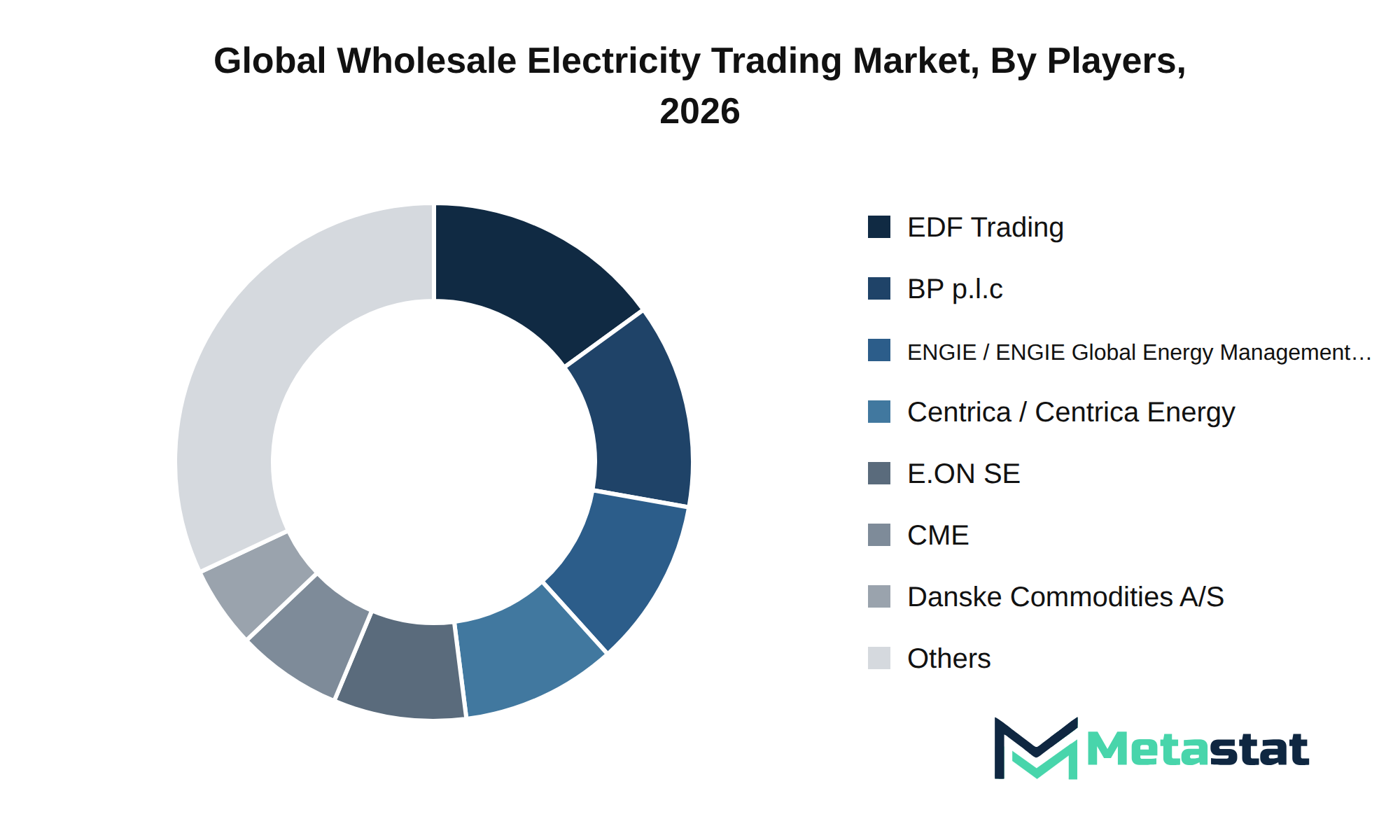
The Wholesale Electricity Trading market features a diverse array of participants, each employing various strategies to enhance competitive positioning. Many firms engage in strategic consolidation through mergers and acquisitions, enabling them to leverage synergies, expand market presence, and improve service offerings. Notable players, including BP p.l.c., ENGIE SA, and TotalEnergies SE, pursue these strategies to strengthen market positions and optimize operations.
Companies including CME Group Inc. and E.ON SE focus on go-to-market strategies that prioritize customer retention and value proposition. Implementing differentiated pricing architectures enhances competitive edge and achieves better customer loyalty. Strategic alliances and joint ventures facilitate access to new technologies, markets, and resources, driving innovation in the market.
Barriers to entry remain significant in the Wholesale Electricity Trading market, with established players enjoying advantages in brand equity and customer trust. This dynamic creates challenges for new entrants while enabling incumbent firms to maintain market dominance. Companies like Iberdrola SA and Mercuria Energy Group consistently invest in research and development to improve technological capabilities and strengthen intellectual property portfolios.
The future competitive outlook for the market indicates ongoing dynamics related to value chain integration and supply chain dominance. Companies navigate these complexities while pursuing strategic growth vectors, ensuring adaptability to changing market conditions and customer demands.
Market size is forecast to rise from USD 307.3 billion in 2025 to over USD 516.4 billion by 2033. The base case indicates a growth trajectory at a 6.7% CAGR. In a bullish scenario, heightened adoption of renewable energy sources and technological advancements could drive faster growth, accelerating market penetration and expanding the pool of participants. Conversely, a bearish outlook suggests risks stemming from economic fluctuations, regulatory challenges, or geopolitical tensions that could restrain demand and slow market growth.
The evolving dynamics of the Wholesale Electricity Trading market reflect macroeconomic factors, including downstream demand changes and industry maturation. Strategic capital allocation, infrastructure commitments, and investment vectors contribute to shaping the market. Technological integration, including next-generation solutions and commercialization timelines, necessitates continuous adaptation within the core industry. Compliance with regulatory frameworks and upcoming policy enforcement horizons will influence market operations, dictating the pace of innovation and investment.
The market anticipates structural consumption shifts driven by changing energy needs, which create white-space opportunities for new entrants and innovation. Identifying these unmet enterprise needs becomes crucial for stakeholders aiming to capture high-growth pockets. Executive-level strategic imperatives, along with defensibility roadmaps, are essential for navigating the complexities of the market, ensuring sustainable growth while addressing evolving challenges.
The report strategically identifies and profiles the key market players and analyses their core competencies in each sub-segment of the Wholesale Electricity Trading market.
Report Attributes | Details |
Study Period | 2021-2033 |
Base Year | 2025 |
Estimated Year | 2026 |
Forecast Period | 2026-2033 |
Historical Period | 2021-2025 |
Growth Rate | CAGR 6.7% from 2026 to 2033 |
Revenue Unit | USD billion |
Segmentation | By Trading Horizon, Application, Source, Channel, and Region |
By Region | North America (By Trading Horizon, Application, Source, Channel, and Country)
|
Europe (By Trading Horizon, Application, Source, Channel, and Country)
| |
Asia Pacific (By Trading Horizon, Application, Source, Channel, and Country)
| |
South America (By Trading Horizon, Application, Source, Channel, and Country)
| |
Middle East and Africa (By Trading Horizon, Application, Source, Channel, and Country)
|
Find answers to common questions about this report
The Wholesale Electricity Trading market size was valued at USD 307.3 billion in 2025, according to the Metastat Insights study.
The Wholesale Electricity Trading market is projected to grow at a CAGR of 6.7% during the forecast period from 2026 to 2033.
The North America Wholesale Electricity Trading market size is estimated to reach USD 129.1 billion by 2033.
The Industrial segment leads the Wholesale Electricity Trading market, with a value of USD 250.4 billion projected for 2033. This segment surpasses the Commercial segment, which is expected to reach USD 175.6 billion in the same year.
Key drivers for the Wholesale Electricity Trading market include economic expansion that increases electricity consumption, enhanced investment in infrastructure and energy projects, and favorable interest rates that stimulate market activity. Technological integration through automation and digital platforms improves operational efficiency and trading practices, further supporting market growth.
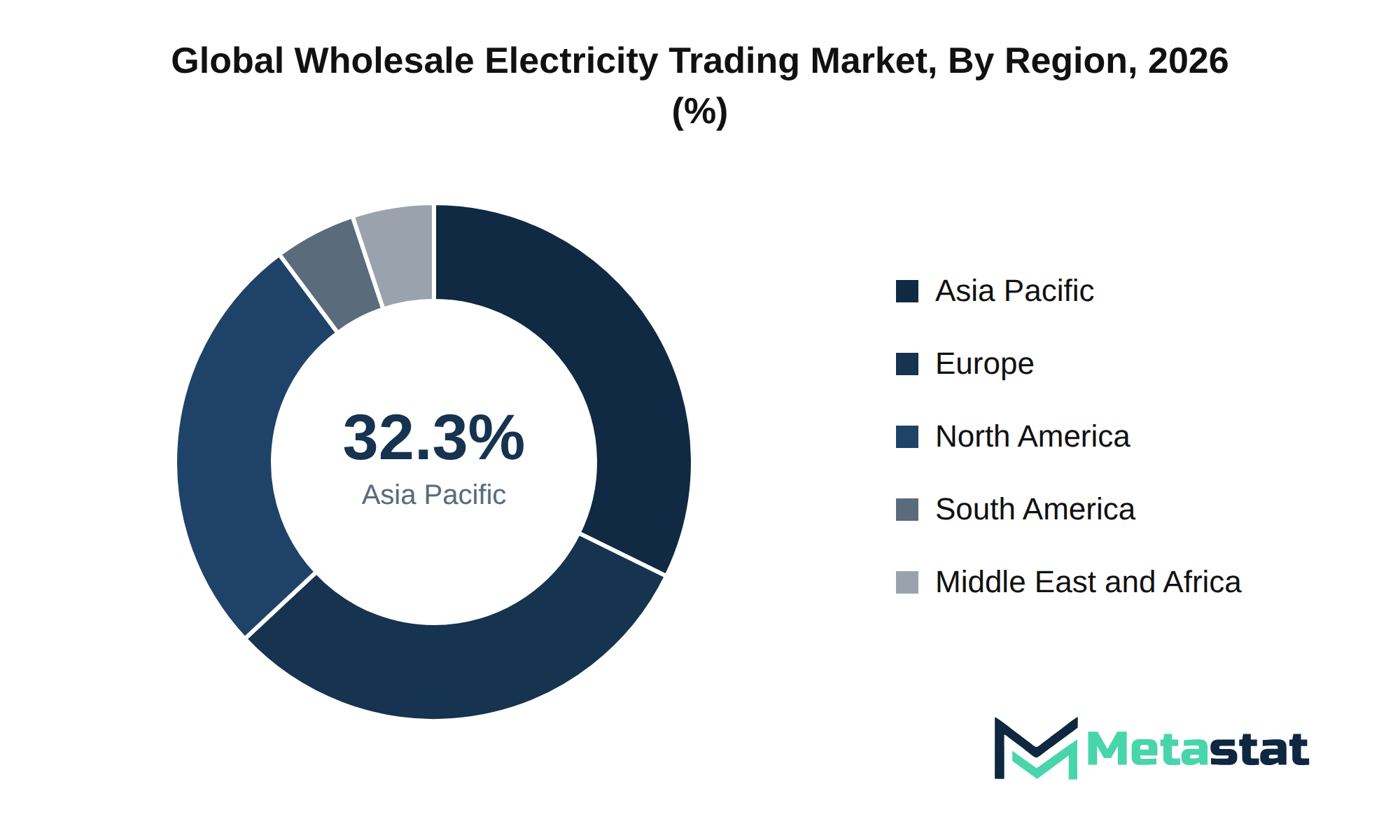
Asia Pacific holds the dominant share of the Wholesale Electricity Trading market, accounting for 32.3% in 2025. This region leads in market share compared to North America at 26.8% and Europe at 30.8%.
Regulatory compliance challenges, macroeconomic headwinds, and infrastructure deficiencies significantly restrain the Wholesale Electricity Trading market's growth potential. Stricter regulations increase operational costs and complexities, while inflation and capital stagnation further inhibit expansion. gaps in infrastructure limit access to critical trading platforms, affecting operational effectiveness and market trajectory.
Technological integration, particularly through automation and software adoption, enhances trading processes and improves operational efficiency. The rise of digital platforms facilitates transactions, making the Wholesale Electricity Trading market more accessible and efficient, driving product adoption among market participants. Economic expansion and favorable investment environments further support this growth.
The Wholesale Electricity Trading market is estimated to reach a valuation of USD 516.4 billion by 2033.
Key players operating in the Wholesale Electricity Trading market include Alpiq Holding AG, BP p.l.c., Centrica plc, CME Group Inc., E.ON SE, EDF Trading Limited, Enel Spa, and Shell plc.
The analysts below cover Energy and Power research at Metastat Insights.
LEAD ANALYST
Utkarsh Khirodkar is a Lead Market Research Analyst at MetaStat Insight, specializing in market intelligence, technology sector assessments, and competitive strategy.

PRINCIPAL CONSULTANT - ENTERPRISE AI & EMERGING TECHNOLOGIES
Banking & Finance · Electronics and Semiconductor · Energy and Power · Healthcare IT · Information & Technology · Professional Services
Vijay Gunti is a Principal Consultant at MetaStat Insight, bringing over two decades of experience across enterprise digital transformation, technology strategy, and intelligent systems.

ENERGY & INFRASTRUCTURE INDUSTRY CONSULTANT
Automotive and Transportation · Electronics and Semiconductor · Energy and Power · Machinery & Equipment
Saurabh Vasant Ganvir consults for Energy & Infrastructure Industry at MetaStat Insight, specializing in renewable energy, solar EPC, and electric vehicle (EV) infrastructure markets.
Evaluating calorific value requirements and air permit compliance across municipal waste facilities requires localized data. Metastat Insight structured their analysis around operational throughput capacity and feedstock composition variations in Latin America and Eastern Europe. Their competitive mapping of sorting equipment vendors helped clarify technology differences between optical separators and heavy media systems. The study provided an objective baseline during our capital expenditure reviews.
Decarbonizing industrial thermal processes hinges on refrigerant regulations and compressor efficiency limits. Metastat Insights delivered a thorough market analysis that evaluated natural refrigerants like CO2 and hydrocarbons against synthetic low-GWP alternatives. The breakdown of utility incentives and grid capacity constraints across key European manufacturing hubs offered valuable perspective. The follow-up conversation with their sector analysts addressed our specific questions on mechanical vapor recompression systems efficiently.
Assessing 200mm wafer transition schedules and substrate supply bottlenecks requires precise technical intelligence. MetaStat Insight supplied an actionable breakdown comparing planar and trench MOSFET architectures across automotive and industrial drive markets. The regional capacity estimates for Asia-Pacific foundries helped clarify lead-time uncertainties during our strategic planning session. When we needed additional clarification on high-purity raw material sourcing, their analyst team responded with helpful context within twenty-four hours.
Explore related market intelligence reports worth reading alongside this one.