
LEAD ANALYST
Utkarsh Khirodkar is a Lead Market Research Analyst at MetaStat Insight, specializing in market intelligence, technology sector assessments, and competitive strategy.

UK and Ireland Power Grid Electrification Market Size, Share, By Solution Type (Low-Voltage Power Distribution and Circuit Protection, Medium-Voltage Switchgear and Distribution Systems, Modular Substations and E-Houses, Protection, Control and Distribution Automation, Grid Management, SCADA and Network Software, Smart Metering, Power Monitoring and Energy Management, Microgrid, DER and Load Management Solutions, EV Charging and Electrified Transport Infrastructure, Electrification Engineering, Retrofit and Lifecycle Solutions), By Voltage Level (Low Voltage, Medium Voltage, High Voltage), By End-Use Vertical (Electricity Distribution Networks, Electricity Transmission Networks, Renewable Power and Energy Storage, Conventional and Flexible Power Generation, Data Centres and Digital Infrastructure, Industrial and Manufacturing, Commercial Buildings and Real Estate, Transport and EV Charging Infrastructure, Critical and Public Infrastructure), By Region (England, Scotland, Wales, Northern Ireland, Republic of Ireland), Industry Analysis, Growth, Trends, and Forecast, 2026-2033
Report ID
MSI-5194
Published
September, 2026
Pages
292 Pages
Format
Historical
Base year
Forecast
Forecast period
Report Details
Choose Your License
UK and Ireland Power Grid Electrification Market
The UK and Ireland Power Grid Electrification market was valued at USD 11.5 billion in 2025 and is projected to reach USD 24.8 billion by 2033, growing at a CAGR of 10.1% over the forecast period.
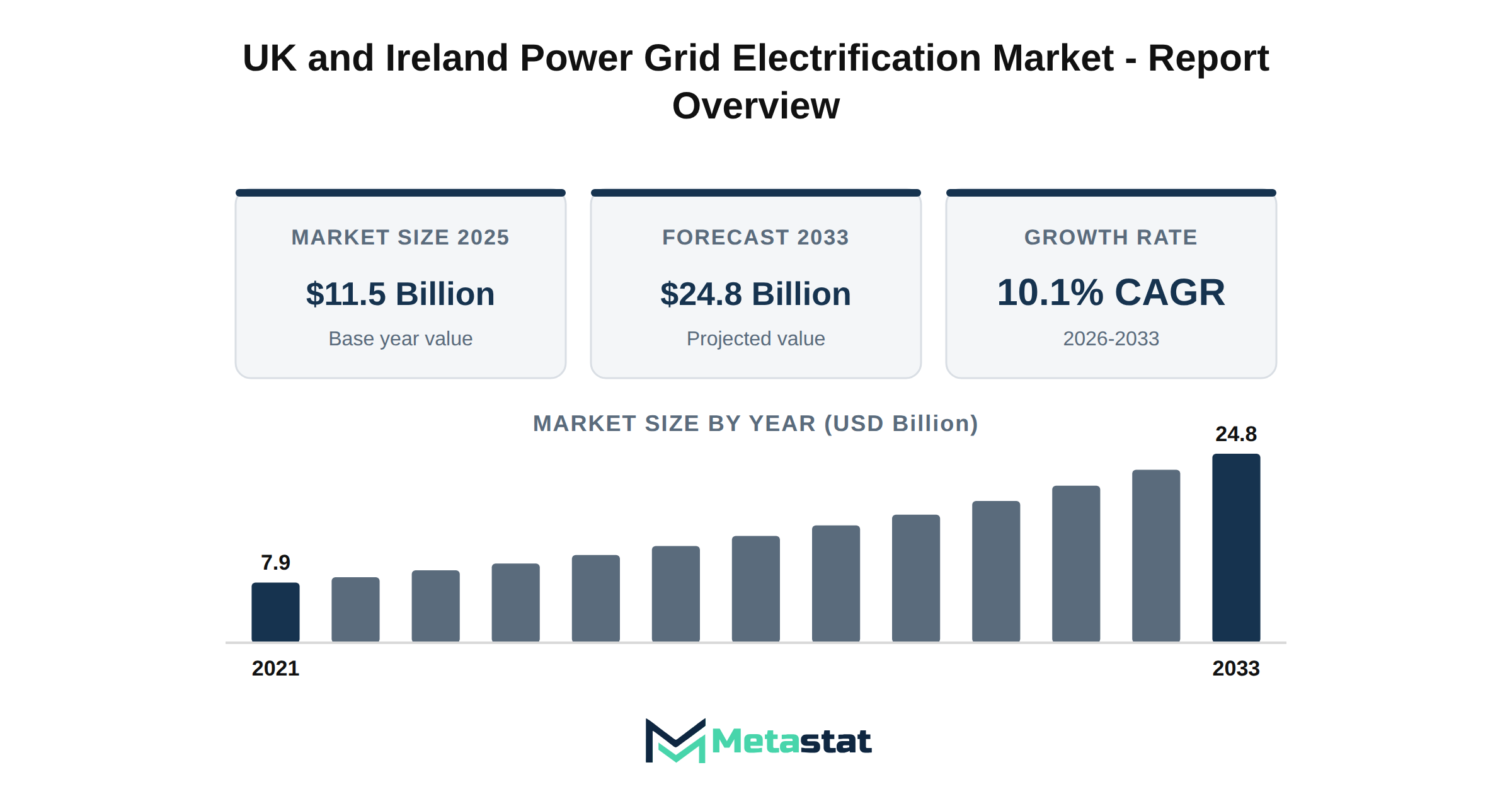
The UK and Ireland Power Grid Electrification market reached a value of USD 11.5 billion in 2025, with a projected growth to USD 24.8 billion by 2033. This growth represents a compound annual growth rate (CAGR) of 10.1% during the forecast period from 2026 to 2033. Historical figures indicate a steady increase from USD 7.9 billion in 2021 to USD 10.4 billion in 2024, reflecting ongoing investments and advancements in electrification technologies.
Growth in the market is driven by increasing demand for renewable energy integration, the need for modernization of existing infrastructure, and rising investments in electric vehicle (EV) charging infrastructure. Key regions, including England, Scotland, Wales, and Northern Ireland, contribute significantly to this expansion, with England projected to grow from USD 7.1 billion in 2026 to USD 13.4 billion by 2033, representing a CAGR of 9.4%. Scotland shows a strong CAGR of 11.3%, with anticipated growth to USD 3.8 billion by 2033.
Various segments within the market exhibit differing growth trajectories. Low-Voltage Power Distribution and Circuit Protection and Medium-Voltage Switchgear and Distribution Systems are expected to experience substantial growth, driven by the increasing need for efficient power distribution solutions. The Low-Voltage segment is projected to grow from USD 3.6 billion in 2026 to USD 6.6 billion by 2033, with a CAGR of 9%. Meanwhile, the Medium-Voltage segment is expected to reach USD 7.5 billion by 2033, with a CAGR of 9.8%. The Protection, Control and Distribution Automation segment is anticipated to grow robustly, with a CAGR of 10.5%.
The UK and Ireland Power Grid Electrification market benefits from a diverse set of players, including Siemens AG, Schneider Electric SE, ABB Ltd, and Hitachi Energy Ltd, among others. These companies invest in research and development to enhance their offerings and address the evolving needs of the market. Strategic partnerships and technological innovations play a crucial role in maintaining competitive advantages and driving growth.
The UK and Ireland Power Grid Electrification market faces various factors influencing its trajectory. Regulatory compliance and evolving standards play significant roles in shaping the operational landscape. Adherence to regulations ensures that companies remain competitive while addressing environmental concerns. Geopolitical risk frameworks affect regional investments and partnerships, prompting firms to navigate challenges that arise from shifting international relations.
Disruption within the market often stems from advancements in research and development trajectories. Innovations in technology enhance efficiency and reliability, with next-generation solutions driving the electrification process. Sustainable transformation emerges because a key focus, with decarbonization initiatives aligning with global climate goals. Circular economy dynamics further support the transition towards environmentally friendly practices, promoting resource efficiency.
The supply chain landscape remains complex, influenced by logistics architecture and sourcing strategies. Companies prioritize local sourcing to mitigate risks associated with global supply chains, ensuring consistent access to critical components. Market fragmentation results from numerous players operating across various segments, contributing to a competitive environment. M&A dynamics within the industry reflect strategic efforts to consolidate resources and enhance service offerings, allowing companies to better meet customer demands.
Understanding the value chain is essential for stakeholders in the UK and Ireland Power Grid Electrification market. Procurement processes undergo continuous refinement, with an emphasis on cost-effectiveness and quality assurance. Customer journey dynamics transform because end-users increasingly seek smart and efficient solutions. Capital allocation strategies focus on infrastructure investments to support growth objectives, with a keen eye on emerging technologies that promise increased utility and sustainability.
Inflationary pressures and currency volatility impact pricing strategies, compelling companies to adapt quickly to changing economic conditions. Future strategic outlooks emphasize resilience and agility, positioning firms to capitalize on emerging opportunities while managing potential risks. Corporate imperatives center on aligning business objectives with market demands, ensuring that high-value recommendations guide decision-making processes effectively.
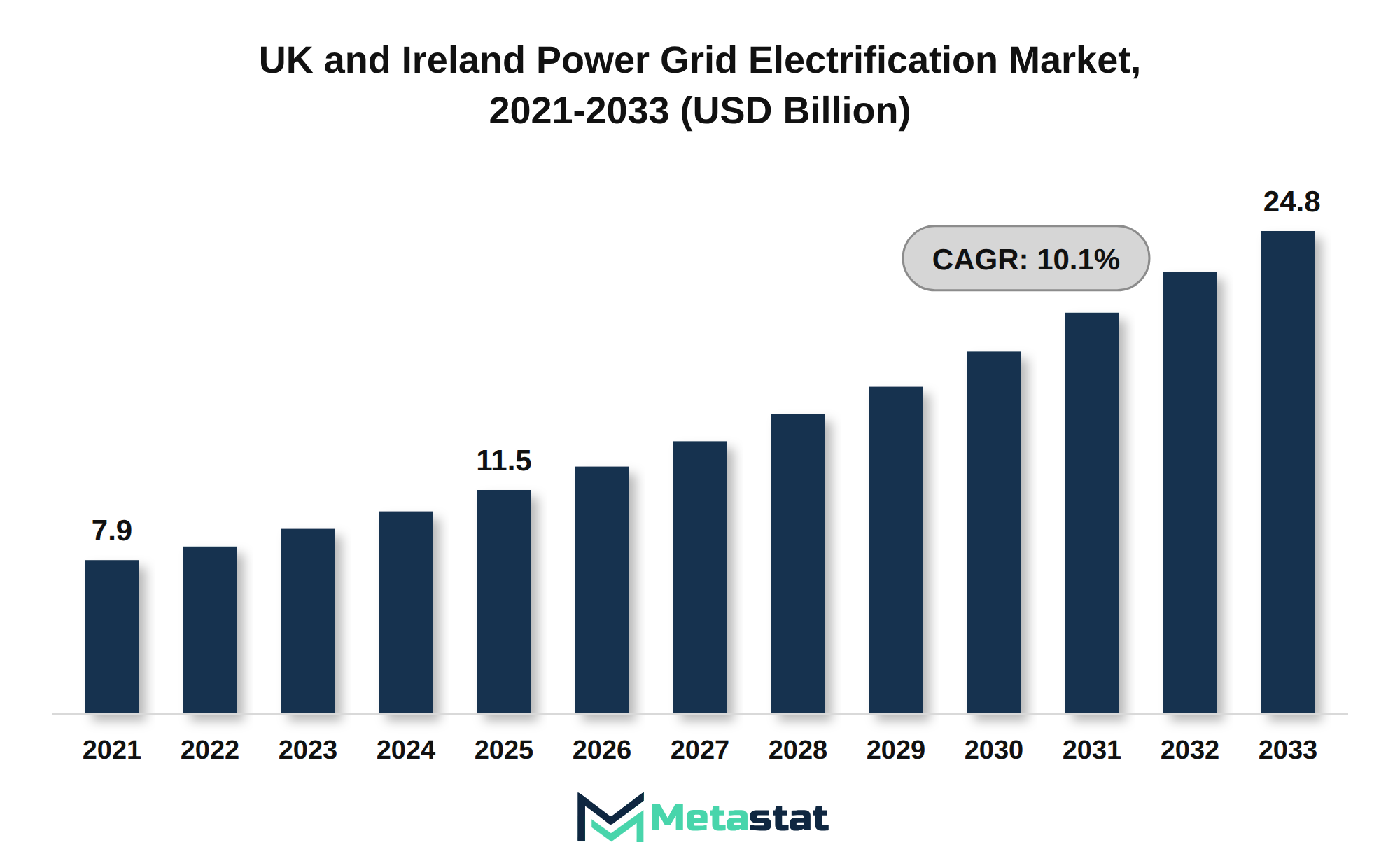
Increasing capital investment environments significantly impact the UK and Ireland Power Grid Electrification market. Factors including GDP growth and venture funding create a favorable climate for investment in power grid infrastructure. Enhanced public-private spending power encourages stakeholders to allocate resources toward upgrading and modernizing grid capabilities. This dynamic results in heightened demand for advanced electrification solutions, supporting long-term growth in the sector.
Technological integration plays an essential role in shaping investment strategies. Automation, artificial intelligence, and software adoption streamline processes and improve efficiency, further driving market growth. Stakeholders prioritize digital transformation initiatives to enhance operational productivity while reducing costs. This trend aligns with the broader industry focus on sustainability and resource stewardship, influencing the demand for innovative electrification solutions.
The market benefits from ongoing shifts in consumer behavior and demographic patterns. Urbanization and evolving lifestyle preferences create a growing appetite for reliable and efficient power distribution. The transition toward renewable energy sources compels investment in modern grid systems, thus enhancing market prospects. While the UK and Ireland Power Grid Electrification market continues to evolve, the connection of these factors ensures robust growth and development in the sector.
Investment in infrastructure development and asset modernization drives significant expansion within the UK and Ireland Power Grid Electrification market. Upgrading physical and digital capabilities enhances efficiency and ensures reliability in power distribution systems. This modernization supports the integration of advanced technologies, enabling automation and digital management of electrical networks. Rising demand for clean energy solutions and enhanced infrastructure aligns with sustainability goals and effective resource stewardship.
Government initiatives focus on improving energy efficiency and reducing carbon emissions, creating a conducive environment for private and public investments. Enhanced infrastructure directly influences operational productivity, allowing stakeholders to streamline processes while cutting costs. The combination of digital transformation and technological integration positions the market to capture emerging opportunities, including smart grids and EV charging networks. Consequently, the UK and Ireland Power Grid Electrification market is projected to expand, driven by the need for a resilient and modernized power infrastructure.
The UK and Ireland Power Grid Electrification market experiences significant constraints due to regulatory compliance hurdles and broader economic pressures. Organizations face challenges in navigating strict regulatory frameworks that dictate operational practices, leading to delays in project approvals and increased costs associated with meeting compliance requirements. These hurdles divert attention and resources away from innovation and growth initiatives.
Macroeconomic conditions, including inflationary pressures and rising operating costs, complicate investment decisions. Higher costs associated with materials and labor reduce available funding for essential electrification projects. This situation hinders the timely deployment of necessary infrastructure upgrades and technology advancements, ultimately affecting market growth.
Supply chain disruptions resulting from geopolitical instability and resource scarcity contribute to operational inefficiencies. Delays in obtaining critical components stall project timelines, leading to increased financial strain on companies within the market. These disruptions lower the market's competitive edge and impact overall adoption rates.
Challenges in attracting skilled labor exacerbate these issues. A shortage of qualified professionals limits capacity to implement and maintain the advanced systems required in the electrification process. This talent gap leads to project delays and increased operational costs, constraining the market's growth potential.
The combination of regulatory complexities and economic challenges creates a multifaceted restraint on the UK and Ireland Power Grid Electrification market. These factors highlight the need for adaptive strategies among market participants to navigate the evolving landscape effectively. Addressing these constraints is essential for sustaining growth and advancing electrification efforts across the regions.
The UK and Ireland Power Grid Electrification market confronts significant challenges stemming from geopolitical fragmentation. This fragmentation disrupts supply chains, complicating the procurement of essential components and materials. Trade deficits and tariff frictions further exacerbate these supply chain issues, leading to heightened costs and delays in project timelines. While countries impose tariffs on imported goods, local manufacturers and suppliers face increased operational expenses, influencing pricing strategies across the market.
Technological disruptions contribute to market challenges through complex research and development integrations. Rapid advancements in electrification technology necessitate continual investment and adaptation by firms striving to remain competitive. The need for interoperability between emerging technologies creates friction, hindering integration into existing infrastructures. Failure to achieve compatibility results in operational inefficiencies, delaying project implementation and increasing costs.
Throughout the electrification market, shifting downstream demands complicate dynamics. Consumers increasingly prioritize sustainability and decarbonization, prompting manufacturers to align their offerings with evolving expectations. Infrastructure gaps, retrofitting barriers, and implementation bottlenecks present additional hurdles, limiting the pace of progress in the market. While firms work to adapt to these changing demands, the interaction of pricing compression and rising input costs pressures profit margins, challenging financial viability.
Workforce skill gaps and talent retention pressures further strain market participants. A shortage of qualified personnel hinders firms’ capabilities to execute projects efficiently. Automation displacements introduce additional challenges, driven by firms navigating the balance between human labor and technological advancement. Cybersecurity risks and data vulnerabilities raise concerns surrounding intellectual property protection, complicating firms’ strategies for safeguarding innovations.
Ultimately, the UK and Ireland Power Grid Electrification market navigates an intricate landscape of challenges. Addressing these issues through strategic investment in resilient supply chains, workforce development, and technology integration will be crucial for sustained growth and competitiveness in the evolving market environment.
Changing demands for sustainable energy solutions create significant opportunities within the UK and Ireland Power Grid Electrification market. Energy transition initiatives, including electrification of transportation, implementation of renewable energy sources, and the installation of smart grid technologies, drive this growth. Stakeholders across various sectors, including utilities, commercial, and industrial entities, engage actively in infrastructure modernization efforts to enhance efficiency and reliability. The focus on reducing carbon footprints aligns with broader sustainability imperatives, encouraging investment in clean energy technologies.
Geographical expansion into underserved regions enhances market reach. Companies targeting rural and remote areas benefit from new customer bases while addressing local energy needs. Technological disruptions, including advancements in energy storage and grid management software, enhance operational efficiencies and support the integration of renewable energy resources.
The trend toward digital transformation shapes purchasing behaviors within the market. Stakeholders increasingly adopt digital procurement processes, optimizing supply chains and reducing costs. Evolving commercial models, particularly in the context of energy services, encourage innovation and diversification of offerings. This shift allows participants to offer tailored solutions that meet specific customer requirements.
Strategic consolidations and mergers within the industry enhance resilience and adaptability. Collaborations between technology providers and energy suppliers improve resource sharing, allowing companies to leverage complementary strengths. Such strategic alignment supports comprehensive service offerings, catering to the diverse needs present in the market.
Investment in value-chain optimization and process automation remains critical for maximizing operational yield. Companies focusing on asset life-cycle extensions, maintenance upgrades, and retrofitting dynamics improve infrastructure longevity and service quality. These efforts directly contribute to the market's growth trajectory, positioning stakeholders for sustained success in the evolving environment of power grid electrification.
The UK and Ireland Power Grid Electrification market is segmented based on Solution Type, Voltage Level, End-Use Vertical, and Region.
Valued at USD 2.2 billion in 2026, the Low-Voltage Power Distribution & Circuit Protection segment is projected to reach USD 4 billion by 2033, reflecting a CAGR of 8.7% during this forecast period. Primary demand drivers include the increasing need for reliable and efficient power distribution systems in residential, commercial, and industrial applications. The growing emphasis on renewable energy integration and the electrification of transport infrastructure accelerates demand in this segment.
Technological maturation within the segment enhances product offerings, focusing on improving safety, efficiency, and adaptability. Innovations in circuit protection devices and smart distribution technologies contribute to a more resilient power grid, accommodating fluctuations in energy demand. Downstream applications in electricity distribution networks create significant end-use dynamics that promote the adoption of advanced low-voltage solutions.
Regulatory compliance standards and policy frameworks related to energy efficiency and safety influence market growth. Manufacturers focus on aligning their products with evolving certifications to enhance market competitiveness. Fluctuations in raw material costs and supply chain vulnerabilities remain critical factors affecting pricing and profitability.
The UK's commitment to net-zero emissions targets and the transition towards sustainable energy sources emphasizes the importance of low-voltage solutions for modernizing existing infrastructure. The market is positioned for substantial growth opportunities through strategic investments and innovations, particularly in the context of urbanization and digitalization trends driving the demand for smarter and more efficient power distribution systems.
Significant growth for Medium-Voltage Switchgear & Distribution Systems derives from increasing demand for reliable energy distribution solutions. Investment in infrastructure modernization and the shift towards electrification of transport systems drive this expansion. Several industries, including utilities and renewable energy sectors, increasingly adopt advanced switchgear technologies to enhance grid stability and efficiency. This adoption aligns with regulatory initiatives aimed at increasing energy efficiency and integrating renewable energy sources into existing grids.
Medium-Voltage Switchgear & Distribution Systems segment is estimated to reach USD 4.2 billion by 2033, at a CAGR of 9.9% during the forecast period. Technological advancements in smart grid solutions and automation further stimulate growth within this sub-segment. Enhanced functionalities, including remote monitoring and control capabilities, contribute to increased operational efficiency and reduced maintenance costs. Energy management and regulatory compliance considerations influence purchasing decisions, prompting stakeholders to invest in state-of-the-art distribution systems that align with evolving energy policies.
Growing electricity demand alongside the proliferation of electric vehicles necessitates robust distribution frameworks, reinforcing the importance of this segment within the UK and Ireland Power Grid Electrification market. Investments in renewable energy infrastructure further support this segment's growth, establishing a foundation for long-term expansion. Overall, the Medium-Voltage Switchgear & Distribution Systems segment positions itself because a crucial component in the evolving power distribution across the UK and Ireland.
Significant developments in the Modular Substations & E-Houses segment drive the UK and Ireland Power Grid Electrification market towards growth. This segment is projected to reach USD 2.1 billion by 2033, reflecting robust demand for efficient and scalable energy solutions. Key factors fueling this growth include the increasing emphasis on modularization in infrastructure, which enhances flexibility and reduces installation time. Adoption of advanced technologies, including digital monitoring and automation, supports operational efficiencies and aligns with evolving regulatory compliance standards.
Investment in renewable energy integration influences demand for modular substations and E-houses, which facilitate the connection of distributed energy resources to existing grids. The shift towards electrification of transport and other sectors further boosts the need for efficient power distribution systems. Enhanced focus on sustainability and reduced carbon footprints drives utility companies and industrial players to adopt solutions that optimize energy management and distribution.
Cost structures in the segment reflect growing reliance on innovative design and manufacturing processes. The emphasis on lowering operational costs, alongside evolving customer expectations for speed and reliability, creates a competitive environment among suppliers. Strategic opportunities arise from the need for infrastructure upgrades, particularly in urban areas where space constraints and aging equipment necessitate modular solutions.
Overall, the Modular Substations & E-Houses segment supports the transition towards a more flexible and resilient energy landscape. Continued investment in technological advancements and infrastructure modernization positions this segment for sustained growth in the coming years.
Demand for advanced systems in the Protection, Control & Distribution Automation segment is driven by the necessity for enhanced efficiency and reliability in power grid operations. Integration of smart technologies plays a critical role in optimizing energy management, addressing growing concerns regarding grid stability and energy security. Increasing investments in smart grid infrastructure by utilities and government initiatives further support this growth trajectory.
The Protection, Control & Distribution Automation segment is projected to grow at a CAGR of 10.5% during the forecast period. This growth results from a mix of regulatory compliance requirements and the rise in renewable energy sources, necessitating the deployment of sophisticated monitoring and control systems. Enhanced automation capabilities facilitate real-time decision-making, significantly contributing to operational efficiency across various end-use sectors.
Downstream applications span multiple sectors, including electricity distribution networks and renewable energy systems. Adoption of these advanced technologies helps businesses manage energy flow, reduce operational costs, and ensure compliance with evolving standards. The UK and Ireland Power Grid Electrification market reflects a strong alignment between technological advancements and the strategic focus on sustainable energy solutions, positioning the industry for continued growth.
Investment in grid management solutions, SCADA systems, and network software drives critical enhancements within the UK and Ireland Power Grid Electrification market. Increasing demand for real-time monitoring and automation of power systems drives adoption across various sectors, including electricity generation and distribution, enhancing operational efficiency and reliability. Technological maturation supports the integration of next-generation software solutions, enabling utilities to optimize grid performance and reduce outage times.
Growing focus on renewable energy sources and the transition to smart grids necessitate sophisticated management tools for balancing supply and demand. End-use dynamics indicate a shift towards digital solutions that improve data analytics, predictive maintenance, and enhanced energy management, leading to improved decision-making capabilities for utilities. Regulatory compliance standards require modernization and innovation, further pushing investment in advanced software solutions to ensure adherence.
Cost structures surrounding the deployment of grid management and SCADA systems influence pricing strategies. Providers of these technologies face margin pressures due to competition and the need for continuous innovation. A resilient supply chain enhances the ability to source essential components, mitigating risks related to logistics and raw material availability.
Strategic opportunity windows exist owing to utilities seeking to upgrade aging infrastructure and invest in next-gen technologies. Investments in grid management solutions enable utilities to enhance resilience against disruptions, ensuring reliable energy delivery while addressing the challenges posed by a dynamic market. Overall, the segment contributes significantly to the growth trajectory of the UK and Ireland Power Grid Electrification market.
Adoption of Smart Metering, Power Monitoring & Energy Management solutions within the UK and Ireland Power Grid Electrification market reflects a strong emphasis on efficiency and transparency in energy consumption. Growing awareness of energy costs among consumers drives demand for advanced monitoring tools, facilitating informed decision-making regarding energy usage. Increased focus on sustainability and carbon reduction further fuels interest in smart metering technologies that enable users to manage their energy consumption effectively.
Emerging technologies, including Internet of Things (IoT) devices, enhance monitoring capabilities, allowing for real-time data analysis and energy management. This technological maturation supports the evolution of products that cater to both residential and commercial sectors, aligning with the shifting preferences of end-users toward more sustainable practices and smart energy solutions. Investment in these technologies reflects a strategic opportunity for suppliers to innovate and develop new offerings.
Regulatory compliance standards regarding energy efficiency and emissions targets incentivize the adoption of smarter metering systems. These regulations create a framework that encourages utility companies to invest in advanced metering infrastructure, ensuring alignment with government sustainability goals. The interaction between regulatory pressures and market dynamics drives favorable conditions for the growth of smart metering solutions.
Pressure on cost structures due to fluctuating raw material prices influences the pricing volatility of smart metering products. Strategic sourcing and supply chain resilience become critical for manufacturers aiming to maintain competitive pricing while ensuring product availability. Companies that effectively mitigate these risks position themselves advantageously within the market, enhancing their potential for sustained profitability.
Downstream applications of smart metering extend into various sectors, including renewable energy integration and electric vehicle (EV) charging infrastructure. While energy landscapes evolve, the market recognizes substantial opportunities in aligning smart metering with emerging technologies, promoting greater efficiency in energy distribution. Overall, smart metering solutions represent a vital component of the UK and Ireland Power Grid Electrification market, contributing to a more sustainable and efficient energy ecosystem.
Increasing focus on decentralized energy systems drives demand for Microgrid, DER & Load Management Solutions within the UK and Ireland Power Grid Electrification market. The emergence of distributed energy resources (DER) accelerates the adoption of advanced solutions that enhance load management capabilities and support energy independence. This shift towards localized energy generation aligns with sustainability goals and regulatory pushes for cleaner energy sources.
Technological maturation plays a critical role in segment expansion, with advancements in microgrid technology and intelligent load management systems enhancing operational efficiency. Integration of artificial intelligence and machine learning algorithms enables real-time monitoring and optimization of energy consumption, leading to greater reliability and lower operational costs. Such innovations stimulate significant investment in this segment.
End-use dynamics are shifting, with industries increasingly prioritizing energy resilience and the ability to manage fluctuating energy demands. The retail, commercial, and industrial sectors drive adoption, seeking to lower energy costs while ensuring reliable energy supply. Regulatory compliance standards regarding emissions and energy efficiency incentivize the adoption of microgrid solutions.
Supply chain resilience remains essential for sustained growth in this segment. Organizations focus on securing reliable raw material sourcing and addressing logistics vulnerabilities to mitigate risks associated with supply chain disruptions. Strategic opportunity windows emerge for suppliers that offer innovative solutions tailored to evolving market needs, enhancing competitive positioning.
Growth in the EV Charging & Electrified Transport Infrastructure segment derives from increasing adoption of electric vehicles (EVs) across the UK and Ireland. Government initiatives aimed at reducing carbon emissions drive the demand for comprehensive charging solutions, thereby enhancing the segment's relevance in the overall UK and Ireland Power Grid Electrification market. Infrastructure investments in charging stations and related technologies expand opportunities for suppliers and service providers, resulting in heightened competition and innovation.
Technological maturation plays a critical role in the segment's evolution. Advancements in charging technology, including fast chargers and smart charging systems, improve user experience and operational efficiency. This evolution supports the integration of EV charging infrastructure with renewable energy sources, strengthening sustainability efforts within the market.
End-use dynamics reflect a shift toward electrification in transport sectors. Commercial fleets and public transportation systems increasingly focus on electrification, raising the demand for robust charging infrastructure. Such shifts in consumption patterns encourage investments in scalable solutions that address the specific needs of different user segments.
Regulatory compliance standards further influence the segment's growth trajectory. Policies mandating EV adoption and the installation of charging infrastructure create a supportive environment for stakeholders. Suppliers face challenges related to cost structures and pricing volatility, impacting profit margins and market entry for new players.
Supply chain resilience remains critical, particularly regarding raw material sourcing for manufacturing charging equipment. Disruptive alternatives and technological obsolescence present ongoing challenges, necessitating strategic investments in research and development. Identifying strategic opportunity windows allows companies to maximize their positioning within the competitive landscape of the UK and Ireland Power Grid Electrification market.
Growing recognition of the importance of effective electrification engineering drives demand for innovative solutions in the UK and Ireland Power Grid Electrification market. Companies face increasing pressure to modernize aging infrastructure, enhancing efficiency and reliability. Retrofitting existing systems with advanced technologies supports integration of renewable energy sources, aligning with sustainability goals. Lifecycle solutions play a key role in optimizing equipment performance, extending operational lifespan, and reducing maintenance costs.
Technological maturation in electrification solutions promotes broader adoption across various end-use sectors, increasing operational efficiency. A shift towards digital transformation enables real-time data analytics and proactive asset management, enhancing grid resilience. Regulatory compliance standards incentivize investment in electrification engineering, driving companies to seek advanced solutions that meet evolving market demands.
Strategic opportunities for investment in electrification engineering, retrofit, and lifecycle solutions arise from the need for comprehensive upgrades. The focus on cost structures, pricing volatility, and margin pressures influences procurement decisions and shapes market dynamics. Companies seek strategic partnerships to enhance supply chain resilience, reduce raw material sourcing risks, and mitigate potential disruptions. This segment contributes significantly to the growth and evolution of the market, positioning it for sustained expansion.
Valued at USD 3.6 billion in 2026, the Low Voltage segment is projected to reach USD 6.6 billion by 2033, at a CAGR of 9% during the forecast period. Demand for low voltage solutions reflects the ongoing transition towards renewable energy and the need for upgraded infrastructure. Increased government regulations and incentives drive investment in this segment, enhancing adoption across various end-use sectors, including electricity distribution networks and renewable power systems.
The market benefits from advancements in technology, particularly in smart grids and distribution automation. Next-gen upgrades in equipment, including smart metering and grid management software, enhance operational efficiency and support a shift towards more resilient energy networks. The evolution of products aimed at integrating distributed energy resources aligns with the broader electrification strategy within the UK and Ireland Power Grid Electrification market.
End-use dynamics indicate a significant shift towards decentralized energy generation, with low voltage solutions playing a critical role in supporting microgrid applications. Regulatory compliance standards emphasize the necessity of adopting safe and reliable low voltage systems. This trend highlights strategic opportunity windows in the market, encouraging capital investments in innovative technologies that cater to emerging energy demands.
Significant investment in the Medium Voltage segment positions it because a key player in the UK and Ireland Power Grid Electrification market. This segment is estimated to reach USD 7.5 billion by 2033, at a CAGR of 9.8% during the forecast period. Demand is driven by the increasing need for reliable electricity transmission and distribution systems, particularly in urban areas where energy consumption continues to rise. Regulatory compliance standards necessitate upgrading existing infrastructure, which increases investment in medium voltage solutions.
Technological maturation enhances the appeal of medium voltage solutions through improved efficiency and reliability. Innovations in grid management and automation support the evolution of this segment, aligning with the growing emphasis on sustainable energy practices. The shift towards renewable energy sources further drives the demand for medium voltage systems, facilitating the integration of distributed energy resources into the grid.
End-use dynamics reflect a rising adoption of medium voltage systems across various sectors, including electricity distribution networks and renewable power generation. Consumption shifts indicate a transition towards smart grid technologies and energy management systems, highlighting the critical role of medium voltage infrastructure in modern energy systems. Companies operating within the market recognize the strategic opportunity windows presented by ongoing capital investments, which enhance the overall growth trajectory of the Medium Voltage segment.
Demand for the High Voltage segment demonstrates a strong upward trajectory, driven by the increasing need for robust power transmission systems. The shift towards renewable energy sources necessitates efficient high voltage infrastructure, which aligns with governmental policies advocating for clean energy transitions. This evolving environment in the UK and Ireland Power Grid Electrification market influences investments in high voltage technology and infrastructure.
Considering the anticipated growth in electricity consumption and the integration of renewable energy, the High Voltage segment is projected to reach USD 6.4 billion by 2033. The expansion of electricity transmission networks significantly influences this growth, supported by substantial investments in modernizing existing infrastructure. Enhanced capabilities in high voltage solutions facilitate improved grid reliability and operational efficiency, attracting attention from utility companies and energy producers.
Technological advancements contribute to the maturation of high voltage systems, enabling smarter and more efficient energy distribution. Innovations in materials and design create opportunities for superior performance and longer operational lifespans. Established players focus on next-generation upgrades and product evolution, ensuring alignment with emerging market demands.
The UK and Ireland Power Grid Electrification market benefits from regulatory compliance standards that emphasize safety and efficiency in high voltage installations. Certainty in policy frameworks encourages capital investment, with stakeholders recognizing the long-term benefits of modernizing power transmission capabilities. This strategic focus on high voltage systems positions the segment for continued expansion and resilience in the face of evolving energy demands.
Projected growth for Cross-Voltage / Network-Level Solutions stands at a CAGR of 10.8% during the forecast period. This segment benefits from increasing demand for enhanced grid reliability and efficiency in the UK and Ireland Power Grid Electrification market. Technological maturation and integration of advanced networking solutions drive the evolution of this segment, enabling better management of distributed energy resources and load balancing. Significant investments in infrastructure upgrades and next-generation technologies support market expansion, while regulatory compliance surrounding energy management standards influences adoption rates. End-user dynamics reflect a strong emphasis on sustainability and renewable energy integration, further propelling demand for these solutions. Overall, this segment significantly shapes the future of the market.
Growth in the Electricity Distribution Networks segment, valued at USD 2.8 billion in 2026, projects a reach of USD 5 billion by 2033, reflecting a CAGR of 8.7% during the forecast period. This expansion stems from increasing demand for reliable and efficient electricity delivery systems, driven by rising electrification rates across both residential and commercial sectors.
Technological advancements facilitate the integration of smart grid technologies, enhancing operational efficiency and reliability. Adoption of advanced metering infrastructure, real-time monitoring systems, and automated control solutions plays a critical role in optimizing electricity distribution networks. Investments in these technologies, paired with regulatory pushes towards modernization, significantly contribute to segment growth within the UK and Ireland Power Grid Electrification market.
The transition towards renewable energy sources increases the need for robust electricity distribution networks. Increased generation from distributed energy resources, including solar and wind, necessitates infrastructure upgrades to manage fluctuating power input. This shift towards renewables influences demand dynamics and encourages investment in infrastructure capable of accommodating these changes.
Cost structure considerations remain important, with price volatility in raw materials and components impacting overall project budgets. Heightened awareness of sustainability and regulatory compliance influences capital investment decisions, steering companies towards solutions that enhance energy efficiency and reduce environmental impact. The Electricity Distribution Networks segment reflects resilience in the face of these challenges, with strategic investments supporting future growth.
Electricity Transmission Networks segment is estimated to reach USD 4.5 billion by 2033, at a CAGR of 11.5% during the forecast period. The increasing demand for efficient energy transfer systems supports growth in this segment, driven by the expansion of renewable energy sources and the need for robust infrastructure to accommodate higher electricity loads. Investments in grid modernization initiatives contribute significantly to market expansion, because utilities seek to enhance the reliability and resilience of transmission networks.
Technological advancements play a crucial role in shaping the Electricity Transmission Networks segment. Innovations in automation, real-time monitoring, and data analytics improve the operational efficiency of transmission systems, leading to reduced downtime and maintenance costs. The emphasis on integrating smart grid technologies enables better management of resources and facilitates the transition towards a more sustainable energy ecosystem.
Regulatory compliance standards increasingly dictate market dynamics, with governments advocating for cleaner energy solutions and stricter emissions regulations. These policies drive investments in Electricity Transmission Networks, because operators strive to align with sustainability goals. The shift towards electrification in various sectors creates a robust demand for enhanced transmission capacities, reinforcing growth in the UK and Ireland Power Grid Electrification market.
While the industry evolves, capital investment in Electricity Transmission Networks remains vital. Stakeholders focus on developing strategic partnerships to enhance supply chain resilience and mitigate risks associated with raw material sourcing. The anticipated growth in this segment reflects the broader trends within the UK and Ireland Power Grid Electrification market, emphasizing the importance of modernizing transmission infrastructure to meet future energy demands.
Growth in renewable power and energy storage stems from increasing emphasis on sustainable energy solutions and carbon reduction targets. Regulatory frameworks in the UK and Ireland drive investment in renewable technologies, enhancing the sector's infrastructure. This segment is projected to reach USD 4.5 billion by 2033, reflecting a robust compound annual growth rate (CAGR) of 11.5 percent through the forecast period.
Adoption of innovative energy storage solutions supports grid stability and resilience, enabling the integration of intermittent renewable energy sources. The market experiences heightened interest from various stakeholders, including utilities seeking to modernize operations and enhance service reliability. This evolution highlights the growing importance of energy storage systems in managing peak demand and ensuring energy availability.
Developments in battery technology and energy management systems drive product evolution, allowing for improved efficiency and cost-effectiveness. Strategic investments in this segment promote technological maturation, enabling more advanced solutions to enter the market. Investment in renewable power and energy storage signifies a significant opportunity for growth within the UK and Ireland Power Grid Electrification market, aligning with global trends toward renewable energy adoption.
Strategic opportunity windows arise from increasing public and private sector funding aimed at enhancing energy infrastructure. Demand for renewable energy solutions remains strong, driven by policy headwinds and the need for compliance with environmental regulations. Enhanced collaboration among industry players creates a more resilient supply chain, contributing to a stable market outlook.
Investment in the Conventional & Flexible Power Generation segment reflects strong demand dynamics characterized by the ongoing transition toward cleaner energy sources while maintaining reliable energy supply. This segment ranks highly among stakeholders seeking to balance the integration of renewable energy with traditional generation methods. The sector's appeal lies in its ability to support energy security while advancing sustainability goals.
The Conventional & Flexible Power Generation segment is projected to grow at a CAGR of 5.8% during the forecast period. This growth stems from an increasing emphasis on upgrading existing infrastructure and integrating flexible solutions to accommodate fluctuating energy demands. Regulatory frameworks promoting cleaner energy sources further enhance the segment's attractiveness by incentivizing investment in next-generation technologies.
Market players actively pursue opportunities to enhance operational efficiency through technological advancements and product evolution in this segment. Incorporating advanced control systems and hybrid generation technologies positions stakeholders to respond effectively to changing energy landscapes. Rising demand for reliable power generation continues to drive the UK and Ireland Power Grid Electrification market, presenting considerable potential for innovation and growth.
Attention to cost structures and pricing volatility remains crucial for stakeholders in the segment. Intensifying competition requires companies to optimize cost management strategies while ensuring compliance with regulatory standards to achieve greater market share. Overall, the Conventional & Flexible Power Generation segment represents a vital component of the broader UK and Ireland Power Grid Electrification market, with promising prospects for sustained growth.
Investment in data centres and digital infrastructure reflects the broader trend towards increased reliance on digital services and cloud computing. The rapid expansion of online services, driven by rising consumer demand for bandwidth-intensive applications, supports this segment's growth. While organizations transition to cloud-based solutions, energy-efficient infrastructure becomes essential, prompting investments in advanced power grid electrification solutions.
Regulatory compliance standards and policies focused on sustainability further influence the market. The emphasis on reducing carbon footprints and enhancing energy efficiency encourages businesses to adopt innovative electrification technologies. This shift aligns with the broader strategy of integrating renewable energy sources into power grids, creating a more sustainable energy system.
Cost structures within data centres play a crucial role in shaping investment decisions. The growing need for reliable power sources alongside fluctuating energy prices compels operators to explore cost-effective electrification solutions. Strategic opportunity windows arise from this evolving environment, enabling companies to enhance operational efficiency while remaining competitive in the market.
The UK and Ireland Power Grid Electrification market reflects a significant shift in consumer behavior and technological advancements. Rapid advancements in technologies drive next-generation upgrades, leading to increased demand for modular substations and protective equipment. Businesses in this segment benefit from leveraging advanced solutions to maintain operational resilience and adapt to evolving market conditions.
Significant transformations within the Industrial & Manufacturing sector drive interest in the UK and Ireland Power Grid Electrification market. Strong demand stems from the increasing need for improved efficiency and reduced operational costs among manufacturers. The shift towards automation and smart manufacturing further drives the adoption of advanced electrification solutions.
The expansion of production facilities and the integration of renewable energy sources enhance the industry's requirement for reliable power distribution systems. Ongoing investments in next-generation technologies reflect a commitment to upgrading existing infrastructure, ensuring compatibility with future demands. Regulatory compliance standards regarding energy efficiency and emissions reduction shape investment strategies within this sector.
Cost structures and pricing volatility significantly influence operational decisions. Manufacturers seek solutions that offer both performance and value. Supply chain resilience becomes essential because companies navigate raw material sourcing and manage risks associated with logistics vulnerabilities. Disruptive alternatives, including emerging technologies and innovative products, challenge traditional practices and open strategic opportunity windows for industry players.
Investment in the Industrial & Manufacturing segment highlights a proactive approach toward modernization, promoting sustainability and long-term growth potential. The continuing evolution of this sector aligns with the broader objectives of the UK and Ireland Power Grid Electrification market, creating an environment conducive to increased electrification and energy management solutions.
Demand for electrification in commercial buildings and real estate stems from the urgent need for improved energy efficiency and sustainability. Building owners and developers prioritize reducing carbon footprints and operational costs through advanced energy management solutions. The integration of smart technologies, including automated lighting and HVAC systems, enhances energy conservation while improving tenant comfort.
Regulatory compliance standards increasingly influence the market, compelling stakeholders to adopt technologies that reduce energy consumption and achieve sustainability certifications. The implementation of renewable energy solutions, including solar panels, plays a critical role in meeting these regulations while enabling buildings to capitalize on energy savings and potential revenue generation from excess power sold back to the grid.
Investment in next-generation upgrades, including smart metering and energy monitoring systems, facilitates real-time data collection, allowing building managers to optimize energy usage. This shift supports a strategy aimed at enhancing operational efficiency and adapting to evolving consumer expectations for sustainable practices in the UK and Ireland Power Grid Electrification market.
A focus on product evolution drives innovations that cater to the unique demands of commercial buildings and real estate. Emerging technologies, including energy storage solutions and demand response systems, enable facilities to use energy more effectively, aligning with peak demand periods and reducing reliance on the grid. This dynamic creates strategic opportunities for stakeholders to leverage advancements that align with market trends.
Supply chain resilience becomes increasingly important owing to raw material sourcing and logistics vulnerabilities that present challenges. Stakeholders navigate these risks by establishing diversified supply chains and collaborating with local suppliers. This approach enhances reliability and reduces the potential for disruptions, positioning the market for sustained growth in the coming years.
Market participation in the commercial buildings and real estate segment emphasizes innovation and strategic investment. The focus on integrating energy-efficient solutions aligns with broader trends in sustainability and electrification within the UK and Ireland Power Grid Electrification market, driving long-term growth and facilitating the transition towards a more sustainable future.
Investment in Transport and EV Charging Infrastructure reflects a shift toward sustainable mobility solutions within the UK and Ireland Power Grid Electrification market. Increased adoption of electric vehicles (EVs) fuels the demand for comprehensive charging networks, driven by rising environmental concerns and governmental policies aimed at reducing carbon emissions. This sub-segment experiences growth propelled by advancements in charging technology, enabling faster and more efficient charging solutions.
Technological maturation influences the evolution of this segment. Innovations in battery technology and charging infrastructure enhance user experience and operational efficiency. The focus on next-generation upgrades, including smart charging systems and integration with renewable energy sources, positions this segment for substantial expansion.
Regulatory compliance standards and policy headwinds shape demand dynamics, with governments emphasizing the development of EV infrastructure through incentives and funding programs. These measures encourage investment from both public and private sectors, reinforcing the strategic opportunity windows within the market. Consumption shifts toward electrified transport solutions influence the overall structure of the power grid, necessitating adaptive strategies among stakeholders.
Supply chain resilience emerges because a priority, with manufacturers seeking reliable raw material sourcing and logistics solutions to mitigate vulnerabilities. Ongoing pressures regarding pricing volatility and margin considerations impact profitability within the segment, yet strategic partnerships and collaborations enhance competitive positioning. The evolving landscape of the UK and Ireland Power Grid Electrification market highlights the critical role of Transport and EV Charging Infrastructure in shaping future energy dynamics.
Investment in critical and public infrastructure remains essential for enhancing the resilience and reliability of energy systems within the UK and Ireland Power Grid Electrification market. The integration of advanced technologies improves efficiency and connectivity across various public services, including transportation, healthcare, and emergency services. Growing awareness of the importance of energy security drives demand for robust electrification solutions that support governmental policies aimed at sustainability and climate resilience.
Technological maturation significantly influences the adoption of innovative solutions within this segment. Developments in smart grid technologies, coupled with regulatory compliance standards, push organizations to upgrade existing infrastructures. Transitioning towards next-generation upgrades enables improved monitoring and management of energy consumption. This enhances operational efficiencies and reduces overall costs.
Increased capital investment in this sector reflects the urgency to modernize aging infrastructure and deploy sustainable energy sources. The ongoing shift from centralized energy generation to decentralized solutions, including microgrids and renewable energy integrations, demonstrates a strong alignment with environmental goals. This trend enhances the market's capacity to support future energy demands while minimizing carbon footprints.
End-use dynamics within critical and public infrastructure emphasize the significance of reliable energy supply. Consumption shifts towards electrified transport systems and renewable sources reflect a broader commitment to sustainability. These trends contribute to the ongoing expansion of electrification solutions, enhancing the overall robustness of the power grid and ensuring compliance with evolving regulatory frameworks.
The integration of telecommunications, ports, and residential developments into the UK and Ireland Power Grid Electrification market highlights a focus on improving infrastructure and meeting rising energy demands. Increasing reliance on digital communication technologies and data services drives the electrification of telecommunications networks, enhancing connectivity and operational efficiency. Investments in ports facilitate the transformation of energy supply chains, supporting renewable energy integration and electric transport solutions.
Residential developments increasingly incorporate energy-efficient technologies and sustainable practices, creating a demand for electrification solutions that align with governmental policies and consumer preferences. The growth of electric vehicle (EV) adoption necessitates the expansion of charging infrastructure within residential areas, influencing market dynamics. Regulatory compliance standards emphasize the importance of integrating renewable energy sources into these developments, encouraging innovation and investment.
Cost structures within this segment reflect the transition toward smart technologies and energy management systems, which optimize energy consumption and improve grid resilience. Pricing volatility linked to raw material sourcing impacts project feasibility, while supply chain resilience is crucial for meeting project timelines and budgets. Technological obsolescence poses challenges, requiring ongoing investment in next-generation solutions to maintain competitiveness in this evolving market.
Strategic opportunity windows exist for companies prioritizing sustainable and smart electrification solutions, aiding in the shift toward a decarbonized energy landscape. The market expands to accommodate these evolving needs, reinforcing the importance of adaptability and innovation within the sector.
Valued at USD 7.1 billion in 2026, the England segment is projected to reach USD 13.4 billion by 2033, at a CAGR of 9.4% during the forecast period. This growth is driven by increased investment in infrastructure, aiming to meet the rising demand for electrification across various sectors. Expansion in renewable energy sources, alongside heightened efforts to modernize electricity distribution networks, increases the need for advanced power grid solutions. Regulatory support for sustainability initiatives enhances the adoption of smart metering and energy management systems, further propelling growth in the UK and Ireland Power Grid Electrification market.
Technological maturation influences the market, with innovations in protection, control, and distribution automation driving efficiency and reliability. Increased emphasis on grid resilience influences capital investment strategies, driven by stakeholders seeking to mitigate risks associated with supply chain vulnerabilities and pricing volatility. The market benefits from strategic opportunities in next-gen upgrades, where digital infrastructure and smart technologies transform traditional electrification models.
End-use dynamics reflect a shift towards sustainable practices, with electricity distribution networks receiving several investments. The growing emphasis on energy efficiency and environmental sustainability positions the England segment because a key player in the ongoing transformation of the UK and Ireland Power Grid Electrification market.
Scotland's contribution to the UK and Ireland Power Grid Electrification market is estimated to reach USD 3.8 billion by 2033, at a CAGR of 11.3% during the forecast period. Robust demand for electrification in Scotland arises from increasing investments in renewable energy infrastructure and the modernization of existing electricity networks. These investments drive significant growth within the sector, enhancing grid reliability and efficiency.
Technological maturation is significant in this segment, with advancements in smart grid solutions and energy management systems facilitating improved operational performance. Adoption of next-generation upgrades, including digital monitoring and control systems, supports further expansion of the market, allowing for better integration of renewable energy sources.
Downstream applications within electricity distribution networks and electricity transmission networks significantly impact market dynamics. Growth in these end-use verticals is reflected in the rising demand for efficient energy distribution solutions, which in turn positions Scotland because a key player in the broader UK and Ireland Power Grid Electrification market.
Investment in regulatory compliance and adherence to environmental standards further enhances market activity. This aligns with Scotland’s commitment to reducing carbon emissions and increasing energy efficiency. Strategic opportunity windows arise from the upgrade of aging infrastructure while addressing the rising demand for sustainable energy solutions.
Overall, the ongoing evolution of the power grid in Scotland highlights an increasing focus on electrification, ultimately contributing to the overall growth trajectory of the market.
The Wales segment of the UK and Ireland Power Grid Electrification market is projected to reach USD 1.4 billion by 2033. Investment in the electrification infrastructure in Wales arises from the increasing need for reliable and efficient power distribution networks. Factors driving this demand include advancements in technology and a commitment to sustainability, creating a favorable environment for the adoption of modern electrification solutions. The growth rate for this segment reflects a compound annual growth rate of 9.4 percent, indicating a robust expansion trajectory.
End-use dynamics significantly shape the Wales segment, with electricity distribution networks being a primary focus. The shift towards renewable energy sources and enhanced energy storage solutions creates substantial opportunities for market participants. Regulatory compliance standards and government initiatives support the ongoing transition towards a more electrified landscape. Continuous upgrades in technology and infrastructure resilience ensure that the market remains competitive and capable of meeting the evolving demands of consumers.
Growth in Northern Ireland reflects ongoing investment in electrification infrastructure, driven by governmental initiatives aimed at enhancing energy efficiency and sustainability. This region is projected to grow at a CAGR of 9.5% during the forecast period. Increasing demand for reliable electricity distribution highlights the importance of upgrading existing networks and integrating renewable energy sources. The rise of electrified transport infrastructure further enhances growth in the market, aligning with broader trends toward decarbonization and energy transition.
Investment in electric grids emphasizes the need for technological maturation and next-gen upgrades, particularly in automation and smart metering. Adoption of innovative solutions including modular substations and energy management systems facilitates enhanced grid resilience and operational efficiency. Leveraging these advancements allows Northern Ireland to effectively address consumption shifts and regulatory compliance standards, positioning the region favorably within the UK and Ireland Power Grid Electrification market.
With an increasing focus on improving energy security, Northern Ireland's power grid electrification strategies align with national energy policies. Collaborations among key players support the development of robust infrastructure, contributing to the overall health of the market. Continued capital investment and strategic opportunity windows create a dynamic environment for growth, driving demand for electrification solutions in this emerging segment.
Electrification within the Republic of Ireland reflects significant advancements in power infrastructure, driven by rising demand for sustainable energy solutions. Efforts to modernize the power grid emphasize the integration of renewable energy sources, aligning with broader environmental goals. Investment in smart metering and energy management systems enhances grid efficiency, supporting improved consumption monitoring and management across various sectors.
Electricity distribution networks continue to evolve, driven by technological maturation and innovation in energy storage solutions. The adoption of next-generation upgrades facilitates enhanced performance and reliability in power delivery. Regulatory compliance standards focusing on sustainability and energy efficiency influence investment decisions, ensuring alignment with national and European Union energy policies.
The market for power grid electrification experiences a shift towards decentralized energy resources, enabling greater flexibility and resilience within the existing grid structure. Increased emphasis on local energy generation and management creates opportunities for microgrid solutions. While industries adapt to these changes, strategic opportunity windows arise, attracting capital investment and encouraging innovation throughout the sector.
With ongoing developments in the Republic of Ireland, the UK and Ireland Power Grid Electrification market stands poised for growth, highlighting the importance of strategic partnerships and collaborations within the energy sector. Evolving demand dynamics ensure that stakeholders remain focused on delivering reliable and sustainable power solutions that address both current and future energy needs.
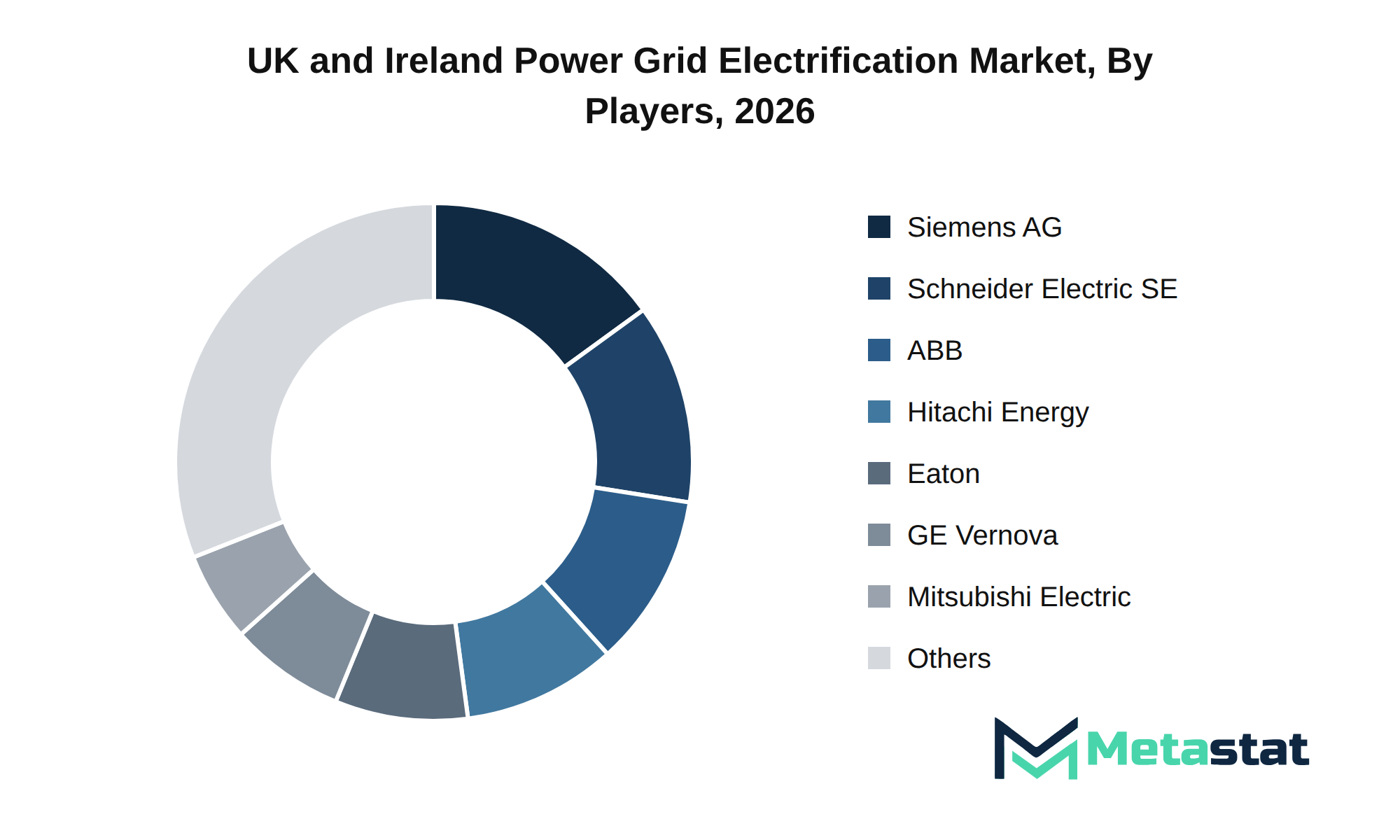
The UK and Ireland Power Grid Electrification market features a diverse range of players employing various strategies to enhance their market positions. Key players including Siemens AG, Schneider Electric SE, and ABB Ltd leverage their extensive research and development capabilities to introduce innovative solutions. These companies focus on product differentiation and technological advancements to secure a competitive edge in the evolving landscape.
Strategic collaborations and partnerships have emerged owing to significant mechanisms to drive growth and expand market reach. Companies including Hitachi Energy Ltd and Eaton Corporation plc engage in joint ventures and cross-industry alliances to enhance capabilities and access new customer segments. Such strategic moves reflect a broader trend of value chain integration aimed at improving procurement leverage and customer retention strategies.
The market experiences barriers to entry that challenge new entrants and startup disruptions. Established players like GE Vernova Inc and Mitsubishi Electric Corporation possess robust intellectual property portfolios and supply chain dominance, which fortify their positions against emerging competitors. The competitive outlook suggests ongoing consolidation and strategic growth vectors because firms adapt to shifting market dynamics.
The competitive landscape in the UK and Ireland Power Grid Electrification market continuously evolves, influenced by technological advancements and strategic initiatives aimed at long-term sustainability and profitability.
Market size is forecast to rise from USD 11.5 billion in 2025 to over USD 24.8 billion by 2033, with a compound annual growth rate (CAGR) of 10.1%. This growth trajectory reflects various macroeconomic scenarios, including fluctuations in economic cycles and downstream demand shifts within core industries. The maturation of these sectors influences electricity consumption patterns, prompting a transition towards next-generation technologies.
Integration of innovative solutions and commercialization of research and development will play essential roles in shaping future market dynamics. Regulatory evolution, including compliance milestones and policy enforcement timelines, presents additional layers of complexity that affect operational strategies. Geopolitical realignments and shifting trade corridors further impact regional supply chains, necessitating strategic capital allocation and long-term infrastructure commitments.
Emerging opportunities arise from unmet enterprise needs and high-growth pockets within the UK and Ireland Power Grid Electrification market. Executive-level strategic imperatives focus on developing defensibility roadmaps and recommendations to effectively capture these opportunities. The landscape evolves, driven by both technological advancements and regulatory frameworks that align with broader economic trends.
The report strategically identifies and profiles the key market players and analyses their core competencies in each sub-segment of the Power Grid Electrification market.
Report Attributes | Details |
Study Period | 2021-2033 |
Base Year | 2025 |
Estimated Year | 2026 |
Forecast Period | 2026-2033 |
Historical Period | 2021-2025 |
Growth Rate | CAGR 10.1% from 2026 to 2033 |
Revenue Unit | USD billion |
Segmentation | By Solution Type, Voltage Level, End-Use Vertical, Region, and Region |
Find answers to common questions about this report
The Power Grid Electrification market size in the UK and Ireland was valued at USD 11.5 billion in 2025.
The Power Grid Electrification market is projected to grow at a CAGR of 10.1% during the forecast period from 2026 to 2033.
The leading segment in the UK and Ireland Power Grid Electrification market is Low-Voltage Power Distribution & Circuit Protection, with a projected value of USD 4 billion by 2033. This segment holds a significant share of 17.9 percent in the overall market.
Increasing capital investment environments drive the UK and Ireland Power Grid Electrification market. Factors including GDP growth, venture funding, and enhanced public-private spending power encourage stakeholders to invest in upgrading grid capabilities, while the transition toward renewable energy sources increases demand for modern electrification solutions.
The UK and Ireland Power Grid Electrification market faces significant constraints from regulatory compliance hurdles and broader economic pressures. These challenges lead to delays in project approvals, increased costs, and a shortage of skilled labor, ultimately hindering timely infrastructure upgrades and technology advancements.
Increasing capital investment environments, enhanced public-private spending power, and a focus on technological integration favor product adoption in the UK and Ireland Power Grid Electrification market. The transition toward renewable energy sources and urbanization further drives demand for reliable and efficient power distribution solutions.
The Power Grid Electrification market is estimated to reach a valuation of USD 24.8 billion by 2033.
Key players in the UK and Ireland Power Grid Electrification Market include Siemens AG, Schneider Electric SE, ABB Ltd, Hitachi Energy Ltd, Eaton Corporation plc, GE Vernova Inc, and Mitsubishi Electric Corporation.
The UK and Ireland Power Grid Electrification market is projected to grow at a CAGR of 10.1% from 2026 to 2033.
Key end-use sectors include Electricity Distribution Networks and Electricity Transmission Networks, with expected growth rates of 8.7% and 11.5% CAGR, respectively.
The analysts below cover Energy and Power research at Metastat Insights.
LEAD ANALYST
Utkarsh Khirodkar is a Lead Market Research Analyst at MetaStat Insight, specializing in market intelligence, technology sector assessments, and competitive strategy.

PRINCIPAL CONSULTANT - ENTERPRISE AI & EMERGING TECHNOLOGIES
Banking & Finance · Electronics and Semiconductor · Energy and Power · Healthcare IT · Information & Technology · Professional Services
Vijay Gunti is a Principal Consultant at MetaStat Insight, bringing over two decades of experience across enterprise digital transformation, technology strategy, and intelligent systems.

ENERGY & INFRASTRUCTURE INDUSTRY CONSULTANT
Automotive and Transportation · Electronics and Semiconductor · Energy and Power · Machinery & Equipment
Saurabh Vasant Ganvir consults for Energy & Infrastructure Industry at MetaStat Insight, specializing in renewable energy, solar EPC, and electric vehicle (EV) infrastructure markets.
Assessing commercial microgrid software adoption requires looking past top-level installation numbers and examining utility interconnection queues. The research provided verifiable data on average permitting timelines, tariff structures, and battery storage integration costs across regional utility territories. That grounded perspective was valuable for our team when building five-year demand projections for industrial microgrid controllers.
Ambulatory surgical centers have very different purchasing cycles for robotic-assisted surgery platforms than major hospital networks. The MetaStat Insight study focused squarely on capital expenditure depreciation, procedural reimbursement pathways, and surgeon training overhead. That operational clarity made it much simpler to validate multi-year procedure growth forecasts against actual ambulatory center adoption patterns.
When planning edge sensor rollouts across refinery environments, generic IoT reports typically miss the harsh-environment certification bottlenecks. MetaStat Insight gave an objective evaluation of ATEX and Class 1 Division 2 hardware availability, along with realistic five-year maintenance cycle cost projections. The comparison of wireless mesh versus private cellular backhaul helped our team pressure-test network reliability models for remote processing facilities.
Explore related market intelligence reports worth reading alongside this one.