
LEAD ANALYST
Utkarsh Khirodkar is a Lead Market Research Analyst at MetaStat Insight, specializing in market intelligence, technology sector assessments, and competitive strategy.

Global Intermodal Freight Transportation Market Size, Share, By Mode Combination (Road-Rail, Road-Water, Rail-Water, Road-Air, Three or More Modes), By Trade Lane (Domestic and International), By Loading Unit (Dry Containers, Refrigerated Containers, Trailers and Swap Bodies, Tank Containers), By End-Use Industry (Retail and Consumer Goods, Industrial Manufacturing, Automotive, Food and Beverage, Chemicals and Energy, Construction and Materials, Healthcare and Pharmaceuticals), Industry Analysis, Growth, Trends, and Forecast, 2026-2033
Report ID
MSI-5826
Published
November, 2026
Pages
254 Pages
Format
Historical
Base year
Forecast
Forecast period
Report Details
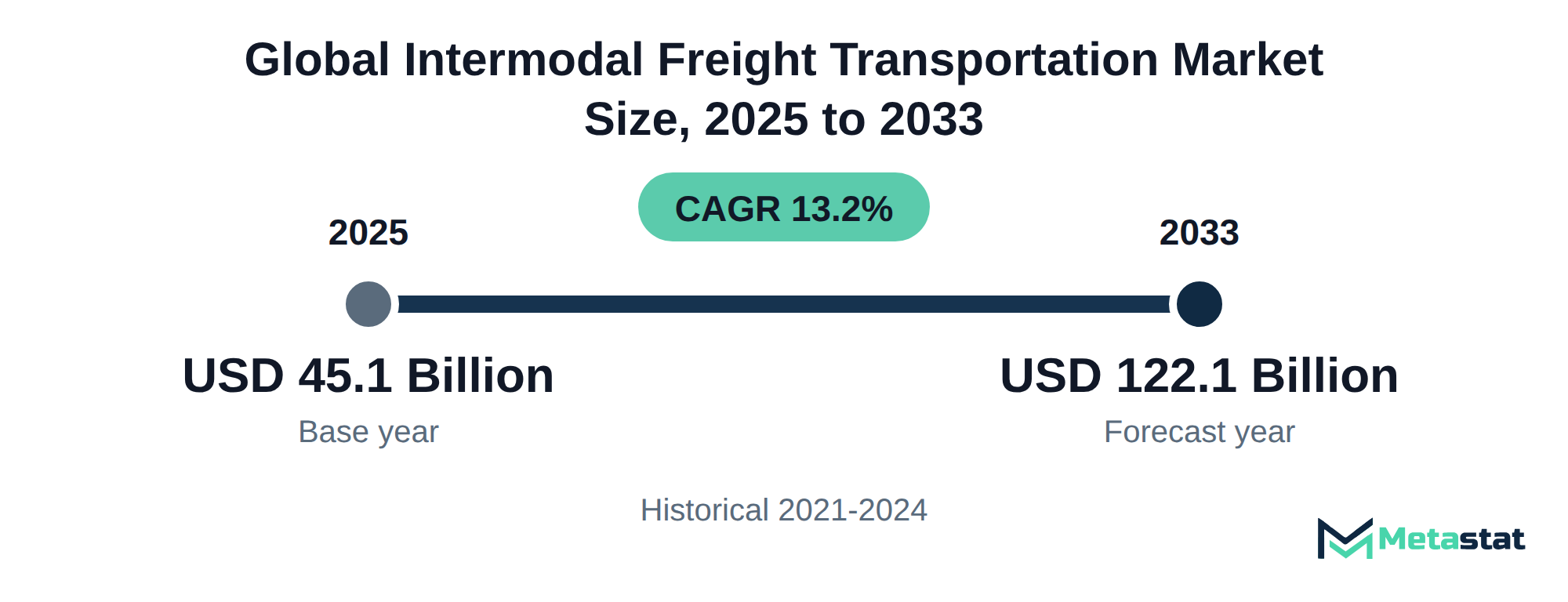
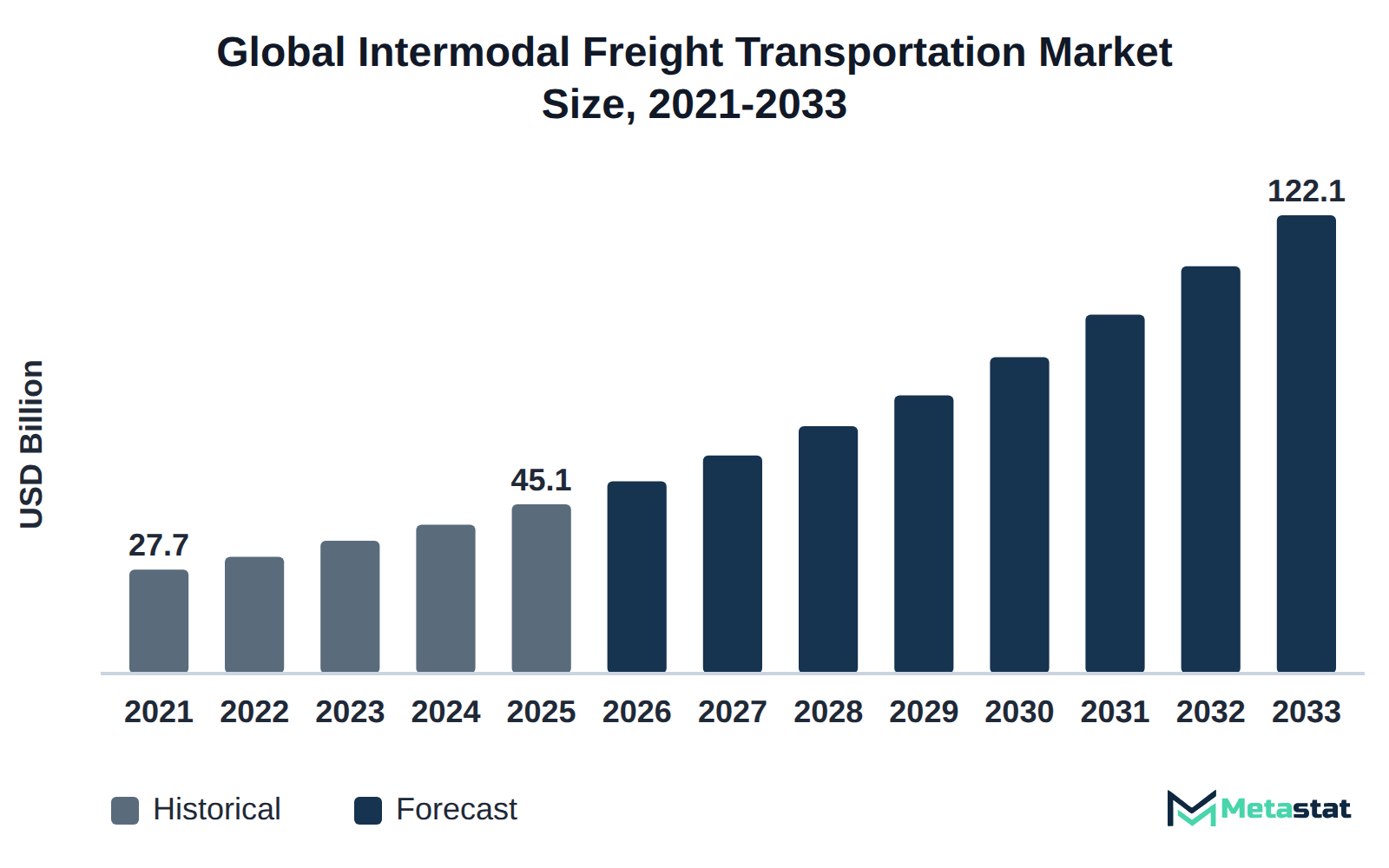
Market Valuation: Valued at $45.1 Billion in 2025, projected to reach $122.1 Billion by 2033 at a 13.2% CAGR.
Dominant Segment: The Road-Rail segment leads the Intermodal Freight Transportation market, projected to reach USD 54.5 billion by 2033, driven by its efficiency in transporting large volumes over significant distances.
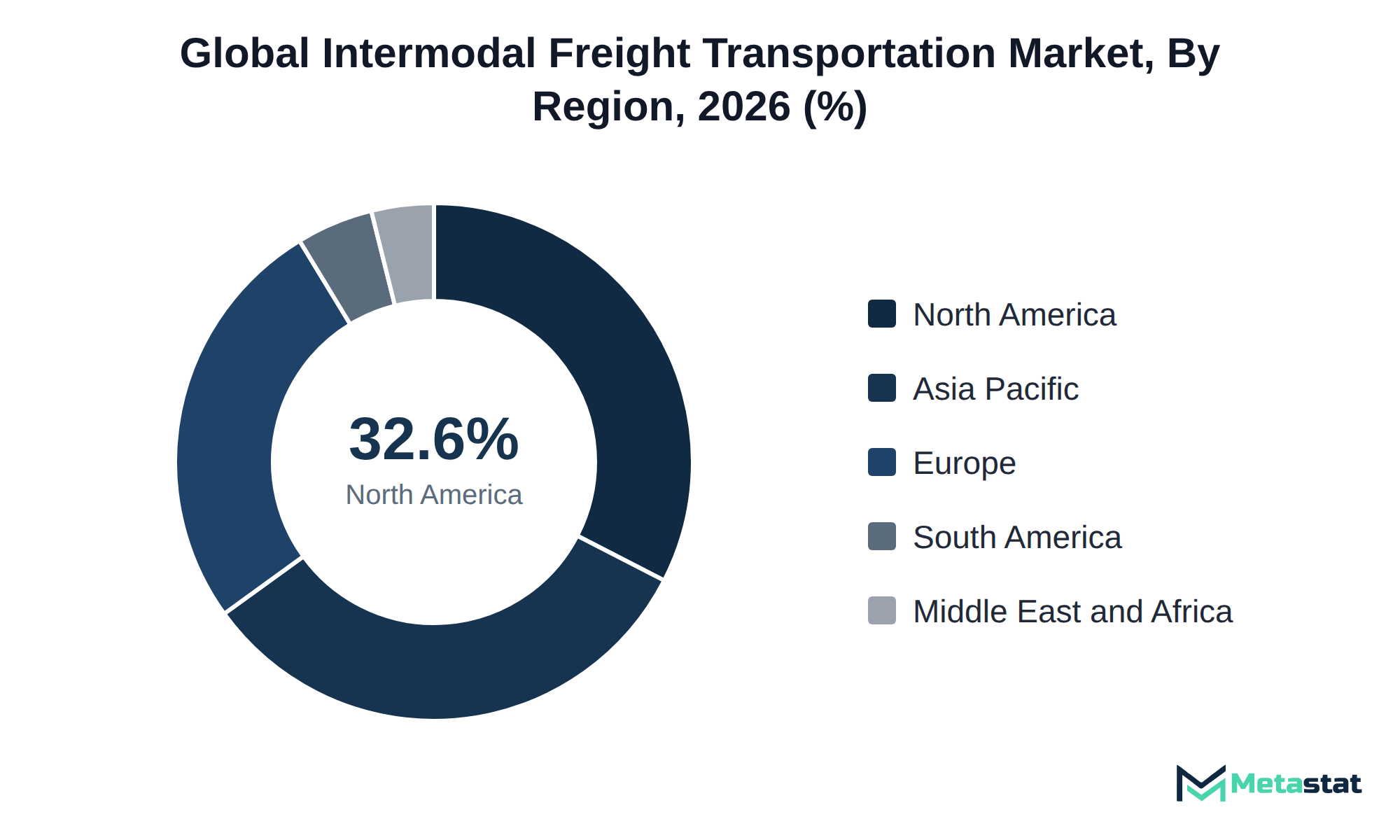
Geographic Lead: North America is the leading region in the market, holding 32.6% share in 2025, supported by its robust transportation infrastructure and high demand for freight services.
What's Inside: The report includes comprehensive competitive coverage, detailed analyses of market dynamics, and forecasts spanning from 2026 to 2033, offering insights into various segments and growth drivers.
Growing Demand: The retail and consumer goods sector is a key growth driver, with its market value expected to rise from USD 11.7 billion in 2026 to USD 28.8 billion by 2033, fueled by increasing e-commerce activities.
Emerging Trends: Investment in advanced logistics technology and infrastructure is enhancing operational efficiency, with a focus on sustainability and cost-effectiveness shaping the future of intermodal solutions.
Choose Your License
Global Intermodal Freight Transportation Market
The global Intermodal Freight Transportation market was valued at USD 45.1 billion in 2025 and is projected to reach USD 122.1 billion by 2033, growing at a CAGR of 13.2% over the forecast period.
The Intermodal Freight Transportation market encompasses the integration of various transportation modes, allowing for efficient and flexible movement of goods across regions. Buyers invest in this market due to increasing demand for logistics solutions that enhance supply chain efficiency and reduce delivery times. The growing emphasis on sustainability and cost-effectiveness drives the need for intermodal solutions, making them an attractive option for businesses seeking to optimize operations.
Intermodal freight transportation market growth is fueled by significant expansion in domestic trade and international shipping activities. The Road-Rail segment stands out, contributing substantial value to the market. North America holds 32.6% of the market in 2025, with the US leading in 2026. This region benefits from well-established transportation infrastructure and robust demand for freight services, supporting the overall growth trajectory.
One main growth driver in the market is increasing adoption of technology in logistics, which enhances visibility and tracking capabilities. Stakeholders use advanced solutions to streamline operations, resulting in improved efficiency and cost savings. This trend is evident across various industries, further strengthening the market's position in global trade and transportation systems.
The Intermodal Freight Transportation market enables efficient logistics solutions for diverse industries. Buyers invest in this market to enhance supply chain efficiency, reduce transit times, and lower transportation costs. The integration of various modes of transport, including road, rail, and water, provides flexibility in logistics that many industries rely on to meet consumer demands and maintain competitiveness.
Several factors contribute to the growth of the market, with the domestic trade lane representing the segment with the most value. The expanding e-commerce sector drives demand for intermodal solutions, prompting businesses to seek reliable and cost-effective transportation options to accommodate increasing shipment volumes.
In terms of regional dynamics, Asia Pacific closely follows North America in market share, accounting for 32.5%. Continuous development of infrastructure, alongside investments in logistics technology, supports growth in this market. Companies strive to enhance operational efficiency, and the trend toward adopting intermodal freight transportation solutions is expected to strengthen, promoting further expansion.
Enhanced rail-road capacity along Poland's port-to-inland freight corridors significantly influences the efficiency of logistics within the Intermodal Freight Transportation market. The integration of advanced technologies including automated loading systems and improved rail transportation infrastructure has streamlined operations, enabling faster transitions between modes of transport. Poland's strategic location in Central Europe positions it as a vital transit hub, facilitating trade with both Western and Eastern Europe. The capacity for rail-road interconnectivity contributes to a projected increase in domestic freight transport. It is expected to rise from USD 26.4 billion in 2026 to USD 60.3 billion by 2033, reflecting a compound annual growth rate (CAGR) of 12.5%.
This technological shift reduces delivery times and lowers operational costs for logistics providers. In Poland, the growing demand for efficient transport solutions aligns with the rapid expansion of e-commerce, creating an urgent need for reliable freight services. Businesses seeking to optimize their supply chains emphasize intermodal connections, which become increasingly critical. Advances in rail-road capacity and technology give logistics companies in Poland a competitive edge in meeting evolving demand within the Intermodal Freight Transportation market.
Container dwell and drayage costs at inland terminals significantly impact the overall expenses associated with intermodal freight transportation. Dwell time, the duration containers remain at terminals before shipment or pickup, contributes to heightened costs. In 2026, dwell time is anticipated to affect the efficiency of operations within the market, with significant implications for logistics providers and shippers.
Contract models and pricing structures help manage these costs. Logistics companies often negotiate agreements that outline specific terms for dwell time and drayage services. A competitive pricing model, reflective of market dynamics, shapes the purchasing decisions of shippers. For instance, cost projections indicate that domestic trade lanes will expand, with a value reaching USD 60.3 billion by 2033, highlighting the increasing importance of efficient terminal operations.
Efficient management of dwell and drayage costs enhances margins for logistics service providers. Companies focusing on reducing dwell times through optimized terminal operations and effective contract negotiations position themselves competitively within the intermodal freight transportation market. The ability to minimize these costs leads to increased profitability and improved service offerings for end-users.
The demand for refrigerated intermodal freight transportation is on a significant upward trajectory, driven by global trends in food safety and consumer preferences for fresh products. The intermodal freight transportation market is projected to experience strong growth, with refrigerated containers expected to reach a value of USD 14.1 billion by 2033. This substantial figure reflects an increasing need for temperature-sensitive goods across borders, particularly in the food and beverage sector.
Retailers and distributors across various regions are expanding their operations internationally, enhancing the necessity for reliable refrigerated transport and cold chain logistics solutions. The requirements for maintaining quality and compliance standards during transit create a unique challenge for logistics providers. In this context, the market for refrigerated intermodal freight is anticipated to attract considerable investment, with stakeholders seeking to improve infrastructure and technology for monitoring temperature-sensitive shipments.
Growing cross-border movement of perishable goods creates commercial opportunities for logistics firms specializing in refrigerated transportation. By addressing these specific consumer needs, companies enhance their market presence and drive revenue growth in the intermodal freight transportation market.
Intermodal freight transportation often becomes more cost-effective than traditional trucking when shipping distances increase and cargo volumes are substantial. The ability to consolidate shipments across multiple transportation modes significantly lowers average costs per unit. This growth indicates strong demand for intermodal solutions, particularly for businesses handling large volumes over long distances.
The lower operational costs of intermodal freight transportation stem from reduced trucking distance and enhanced efficiency in logistics management. Companies using intermodal solutions save on fuel and labor and face fewer of the delays typically associated with road transport. Such financial advantages drive adoption in sectors requiring reliable and cost-efficient logistics, reinforcing the intermodal freight transportation market's position in the overall shipping industry.
Retail and consumer goods industries drive significant growth in the Intermodal Freight Transportation market due to rising e-commerce activities and consumer expectations for fast delivery. Retailers increasingly rely on intermodal solutions to streamline logistics and reduce transit times associated with multimodal shipping. This shift results in higher volumes of freight transported via intermodal methods, contributing to the overall market expansion. The retail and consumer goods segment is projected to grow from USD 11.7 billion in 2026 to USD 28.8 billion by 2033, reflecting a compound annual growth rate of 13.7%. The increasing focus on sustainability and cost-effectiveness further supports the shift towards intermodal solutions, with companies seeking to optimize their supply chains while managing operational expenses. Enhanced logistics capabilities within these industries significantly influence demand dynamics in the market.
Ongoing investments in digitalization and technology adoption among retailers help optimize inventory management and route planning, reinforcing the relevance of intermodal freight transportation in meeting modern supply chain demands. Consumer behavior changes, driven by a preference for convenience and rapid fulfillment, support the transition toward more integrated freight solutions.
Investment in infrastructure significantly enhances the efficiency and capacity of intermodal freight transportation. Upgrades in rail networks, port facilities, and roadways facilitate smoother connections between different transport modes. Such advancements support the increasing volume of goods transported, particularly in regions with high trade activity. The growth of logistics hubs, strategically located near major freight corridors, influences the market's ability to handle rising demand from various industries.
Technological innovations, including real-time tracking systems and automation in loading and unloading processes, streamline operations. These technologies minimize delays and improve the overall experience for shippers and carriers. Enhanced safety measures benefit stakeholders by reducing the risk of damage to goods during transit. Investments in such technologies drive further growth and efficiency, ensuring the market meets evolving expectations from both consumers and businesses.
Regional disparities in infrastructure development affect competitive positioning within the intermodal freight transportation market. Areas with robust infrastructure attract more players seeking to optimize their supply chains. This regional focus promotes a dynamic market landscape and encourages collaboration among stakeholders, laying the groundwork for future growth.
Rising fuel prices represent a significant restraint within the market, impacting operational expenses for transportation companies. Increased fuel expenditure directly influences shipping rates, which affects buyer decisions, particularly among logistics providers and retailers. Higher costs lead to a careful evaluation of shipping options, resulting in delayed orders or smaller shipment sizes. This situation becomes evident in the retail and consumer goods sector, where tight margins compel companies to scrutinize transportation budgets closely. Logistics providers face pressure to balance cost efficiency with service levels, leading to potential service limitations or reduced competitiveness. Consequently, the overall growth of the intermodal freight transportation market is expected to experience a slowdown due to these escalating costs, which hinder broader adoption and innovation within the sector.
Increasing compliance costs present a significant challenge for suppliers within the market. Stricter regulations regarding safety, environmental standards, and operational protocols drive up expenses associated with adherence. Suppliers absorb these costs while striving to maintain competitive pricing and profitability. This financial pressure deters potential entrants into the market, reducing competition and innovation. In response, suppliers pursue operational efficiencies, investing in technology to streamline processes and reduce overhead associated with compliance. Collaboration with regulatory bodies aims to mitigate the impact of evolving standards. This proactive approach helps suppliers manage compliance requirements while sustaining growth in the Intermodal Freight Transportation market.
Maintaining profitability during compliance challenges influences strategic decisions regarding service offerings and pricing structures. Suppliers increasingly focus on enhancing transparency and accountability to build trust with clients and regulatory bodies. This focus on compliance aids in maintaining market position and promotes a more sustainable operational framework. Rising compliance costs require suppliers to adjust their strategies, which affects competition and operations.
The rail-water segment within the Intermodal Freight Transportation market presents significant growth potential, driven by evolving logistics demands. This segment moves goods efficiently across waterways and rail networks, appealing particularly to industries seeking cost-effective and environmentally friendly solutions. The projected growth rate stands at 14.6% CAGR through 2033, highlighting its increasing importance in the logistics landscape.
Market players focusing on expanding rail-water capabilities will likely capture a growing share of businesses seeking integrated shipping solutions. Strong demand emerges from sectors prioritizing sustainability and reduced carbon footprints, aligning with global trends toward greener logistics practices. The focus on combining rail and water transport methods provides a strategic advantage in handling larger volumes of goods while optimizing transportation costs. Enhanced investments in infrastructure supporting rail-water integration further stimulate market growth.
The Global Intermodal Freight Transportation market is segmented based on Mode Combination, Trade Lane, Loading Unit, and End-Use Industry.
Road-Rail segment is valued at USD 23.4 billion in 2026 and is projected to reach USD 54.5 billion by 2033, at a CAGR of 12.9% during the forecast period. This mode combines road and rail transport, enabling efficient movement of goods across significant distances. Industries including retail, automotive, and industrial manufacturing leverage this segment for its ability to transport large volumes at a lower cost compared to truck-only solutions. Rising demand for sustainable transportation methods drives growth, particularly in regions with established rail networks. Road-Rail outpaces Road-Water in growth, reflecting a higher CAGR of 12.9%, while Road-Water maintains a CAGR of 12.8%. This segment's emphasis on efficiency and reduced carbon footprint aligns with broader industry trends toward environmentally friendly logistics practices. The increasing need for integrated supply chain solutions further enhances the attractiveness of Road-Rail transportation within the Intermodal Freight Transportation market.
Road-Water segment is estimated to reach USD 29.8 billion by 2033, at a CAGR of 12.8% during the forecast period. This mode combines road and water transport, allowing for efficient shipping of goods over long distances. Industries including retail, construction, and consumer goods benefit from this segment due to its ability to handle large volumes and diverse cargo types. Increasing consumer demand for swift delivery options drives growth in this segment, while rising fuel expenses and regulatory pressures impact operational costs. Compared to other modes, Road-Water transportation offers competitive pricing and flexibility, contributing to its substantial growth trajectory.
Rail-Water segment is expected to reach USD 10.7 billion by 2033. This mode combination serves the logistics needs of various industries, including the transportation of bulk goods and commodities that require both rail and water transit. Demand for efficient shipping routes and cost-effective solutions drives growth in this segment. The segment exhibits a compound annual growth rate (CAGR) of 10.7%, positioning it for steady expansion compared to the overall market. With its unique ability to facilitate the movement of goods across inland waterways and rail networks, it provides a viable alternative to road transport. Barge transportation is one typical inland waterway option within these rail-water chains. Cost advantages and environmental considerations increasingly influence shippers’ decisions, enhancing the segment's appeal. Unlike other combinations that focus more on short-distance transport, the rail-water mode supports longer haul shipments, catering to industries that require reliable, large-volume logistics solutions.
Road-Air segment is projected to grow at a CAGR of 11.9% during the forecast period. This segment primarily facilitates the swift transportation of high-value and time-sensitive goods, catering to industries including electronics, pharmaceuticals, and luxury items. Rising demand for expedited shipping solutions drives growth in this area, with companies increasingly seeking to enhance supply chain efficiency. Compared to other segments, Road-Air typically commands higher prices due to the premium nature of air transportation, making it a vital option for businesses requiring rapid delivery. The segment's growth is supported by advancements in logistics technology and increasing globalization, positioning it uniquely within the broader market dynamics. Fewer alternatives exist for time-critical shipments, cementing the Road-Air segment's importance in the intermodal freight landscape.
Three or More Modes encompasses transportation that employs multiple modes simultaneously, enhancing flexibility and efficiency in logistics. This segment finds applications in complex supply chains where goods require diverse transportation methods to reach their destinations. The growing demand for integrated logistics solutions fuels this segment, particularly from sectors including automotive and retail, which require synchronized delivery schedules. Compared to other mode combinations, Three or More Modes experiences slower adoption due to the complexities involved in coordinating multiple modes. Operational challenges, including the need for advanced tracking systems and the integration of diverse transport regulations, act as barriers to wider acceptance. Nonetheless, ongoing digitalization of logistics processes offers opportunities for enhancing efficiency and reducing costs, creating potential growth in this segment over time.
A combination of air and water or air and rail transport caters to specialized logistics needs. Industries relying on time-sensitive deliveries, including pharmaceuticals and electronics, prefer these modes due to their speed and efficiency. Demand for this segment arises from increasing global trade, which requires swift movement of goods across continents. However, high operational costs associated with air transport limit broader adoption compared to more conventional modes, leading to a focus on premium shipments. The segment's unique attributes differentiate it from others, positioning it for niche markets that prioritize delivery speed and reliability over cost efficiency.
The domestic segment serves various industries requiring efficient intermodal logistics for moving goods within national borders. Increasing e-commerce activities and rising consumer demand for rapid deliveries drive growth in this sector. Unlike international trade lanes, the domestic segment benefits from shorter transit times and lower regulatory hurdles. Domestic freight outpaces other segments due to its adaptability to consumer trends and the continuous evolution of logistics infrastructure. This positioning contributes to its higher growth rate compared to international freight, which faces more complexities and potential delays. The market for domestic intermodal freight transportation experiences significant dynamism owing to these factors.
International segment is estimated to reach USD 61.8 billion by 2033, at a CAGR of 13.9% during the forecast period. This segment facilitates the movement of goods across borders, catering primarily to multinational corporations and businesses engaged in trade activities. Demand for international intermodal freight transportation relies heavily on globalization and the rising need for efficient supply chain solutions. Unlike domestic transport, international routes typically involve more complex logistics and regulatory compliance, including customs brokerage, which affects costs and operational timelines. Growth in e-commerce significantly boosts the need for timely deliveries, pushing companies to adopt integrated logistics solutions. The international segment expands at a faster rate compared to its domestic counterpart, with a CAGR of 13.9% compared to 12.5% for domestic trade lanes. This heightened growth signals greater investment opportunities within the market, as businesses seek to optimize cross-border logistics and enhance their global reach.
Dry Containers segment is valued at USD 36.9 billion in 2026 and is projected to reach USD 85.3 billion by 2033, at a CAGR of 12.7% during the forecast period. This segment primarily serves industries that rely on the transportation of non-perishable goods, including retail, consumer products, and industrial manufacturing. Increasing e-commerce activities drive demand for efficient shipping solutions, necessitating reliable and standardized shipping containers. Compared to other loading units, Dry Containers exhibit significant growth due to their versatility and lower cost relative to refrigerated containers, which are projected to grow at a CAGR of 15.2%. This growing preference for Dry Containers reflects the market's shift towards more cost-effective and efficient intermodal solutions, accommodating diverse logistics needs while supporting the overall expansion of the market.
Refrigerated Containers segment is estimated to reach USD 14.1 billion by 2033, at a CAGR of 15.2% during the forecast period. These containers facilitate the transportation of temperature-sensitive goods, including perishable food items and pharmaceuticals. Retail and consumer goods companies depend on refrigerated containers to ensure product quality and compliance with safety regulations. The growing demand for fresh food and pharmaceuticals drives this segment's expansion, with rising consumer preferences for quality influencing procurement strategies. Compared to other loading units, refrigerated containers exhibit a higher growth rate due to their essential function in maintaining the integrity of sensitive products throughout transportation. The segment's growth trajectory highlights its increasing importance in meeting the evolving logistics requirements in the market.
Trailers and Swap Bodies segment is expected to reach USD 14.2 billion by 2033. This segment caters to industries requiring flexible transportation solutions for their goods, particularly in retail and manufacturing. Demand arises from the need for efficient logistics and the ability to interchange trailers and swap bodies across different transport modes. The segment's growth is propelled by increasing trade activities and consumer expectations for timely deliveries. Compared to other segments, Trailers and Swap Bodies experience a moderate growth trajectory, with a CAGR of 14.6% anticipated. This growth rate reflects strong demand for adaptable loading units. Rising logistics costs influence operational strategies for stakeholders engaged in the Intermodal Freight Transportation market, further promoting the adoption of this segment.
Tank Containers segment is projected to grow at a CAGR of 14.6% during the forecast period. These containers serve primarily for the transport of liquids and gases, extensively used by industries including chemicals and food and beverage. The growing demand for safer and more efficient transportation methods fuels this segment's expansion, particularly among companies seeking to adhere to stringent safety regulations. Unlike other loading units, tank containers command higher pricing due to their specialized designs and capabilities, positioning them as a premium choice in the market. The increasing emphasis on sustainability and environmentally friendly practices among industries influences a shift toward more efficient intermodal solutions, ensuring that Tank Containers remain a preferred option.
Flat racks and open-top containers serve specialized logistics needs, accommodating oversized, heavy, or irregularly shaped cargo that traditional containers cannot manage. Industries including construction, automotive, and heavy machinery rely on these loading units for transporting large equipment and materials. The demand for flat racks and open-top containers aligns with trends in industrial manufacturing, where the need for flexibility in cargo handling influences shipping choices. Compared to standard container options, this segment experiences slower growth due to its niche application, appealing primarily to specific buyers with unique transportation requirements. Price sensitivity varies significantly, depending on cargo dimensions and weight, influencing overall shipping costs in the market. Diversification in loading options enhances operational efficiency, allowing companies to tailor logistics solutions to their specific needs.
This segment plays a critical role in facilitating the distribution of consumer products, serving retailers and wholesalers who rely on timely deliveries to meet customer demands. Growth in e-commerce fuels rising demand for efficient transportation solutions, with an increased emphasis on speed and reliability in logistics. Compared to other segments, this segment experiences faster growth, driven by evolving consumer preferences and an expanding retail market. The projected CAGR of 13.7% outpaces several other segments, highlighting the importance of effective intermodal solutions that support the rising volume of goods transported within the market.
Industrial Manufacturing segment is estimated to reach USD 23 billion by 2033, at a CAGR of 12.6% during the forecast period. This segment primarily services industries involved in the production of goods, including machinery, equipment, and materials. Growth in this segment is driven by increasing demand for efficient logistics solutions and rising complexity of supply chains. Compared to other segments in the market, Industrial Manufacturing experiences a moderate growth rate, influenced by ongoing technological advancements in production processes. The reliance on intermodal transportation methods allows manufacturers to optimize their supply chains, ensuring timely delivery of materials and finished products. This segment's focus on cost-effectiveness and reliability differentiates it from others, resulting in robust demand for intermodal services that cater specifically to the needs of industrial manufacturers.
The automotive segment is expected to reach USD 20.3 billion by 2033. This segment addresses the logistics requirements of vehicle manufacturers and parts suppliers, relying on efficient transportation for just-in-time delivery of components. Demand in this segment derives from growing global automotive production, driven by advancements in electric and autonomous vehicles. The automotive segment's growth, projected at a CAGR of 12.9%, positions it within the market as a robust contributor compared to the Industrial Manufacturing segment, which is anticipated to grow at a CAGR of 12.6%. Manufacturers prioritize intermodal solutions for their ability to minimize transportation costs while enhancing reliability. This focus on cost efficiency, combined with rising demand for quick delivery, continues to shape the dynamics of the automotive segment in the market.
The Food and Beverage segment is projected to grow at a CAGR of 13.8% during the forecast period. This segment caters to the transportation needs of products including perishables, packaged foods, and beverages, serving industries that rely on timely and efficient delivery. Key drivers for this segment include rising demand for fresh and organic food products, along with increasing consumer preferences for convenience and ready-to-eat meals. Compared to other segments, the Food and Beverage segment exhibits a significant growth rate, reflecting stronger demand dynamics. The market's focus on maintaining product integrity during transit often requires specialized containers and handling processes. This necessity for precision in temperature control and packaging differentiates it from less sensitive segments, highlighting the importance of reliability and quality in meeting consumer expectations.
In the Chemicals and Energy segment, various products including chemicals, fuel, and energy supplies require efficient transportation solutions to meet stringent delivery timelines. Companies in the petrochemical, energy, and manufacturing sectors engage intermodal freight transportation to ensure timely and safe deliveries of hazardous and non-hazardous materials. Demand for this segment is influenced by the increasing focus on sustainability and the transition toward cleaner energy solutions, which requires reliable logistics to support these initiatives. Compared to other segments, Chemicals and Energy faces higher regulatory scrutiny regarding safety and compliance, impacting transportation costs and options. Strong growth in this sector is anticipated, driven by the ongoing transition towards renewable energy sources and advancements in chemical manufacturing processes. This growth highlights the vital role the segment plays in the broader intermodal freight transportation market.
Construction and Materials focuses on transporting building materials vital for infrastructure projects, building developments, and other construction-related activities. Industries including construction, concrete production, and road building rely on this segment to ensure timely delivery of essential supplies including aggregates, cement, and steel. Growth in construction activities, driven by urbanization and increased public investment in infrastructure, supports demand within this segment. Compared to others in the end-use categories, Construction and Materials displays unique characteristics; it operates on a larger scale and involves higher logistics complexity due to the bulky nature of the materials involved. This segment experiences varying growth rates influenced by regional construction booms and regulatory standards governing transportation safety and environmental impact. The intermodal freight transportation market benefits from these dynamics, providing opportunities for companies specializing in the efficient movement of heavy and oversized goods.
Healthcare and Pharmaceuticals encompass pharmaceutical logistics and other transportation solutions specifically designed for the medical and pharmaceutical sectors, ensuring timely delivery of critical products including medications, medical devices, and healthcare supplies. This segment serves hospitals, pharmacies, and clinics that rely on precise logistics to maintain inventory levels and patient care. The increasing demand for temperature-sensitive products drives growth in this segment, necessitating compliance with stringent regulations regarding storage and transport. Compared to other segments, this one typically experiences higher costs associated with specialized equipment and services required to ensure product integrity. The market recognizes the importance of operational efficiency and regulatory compliance in maintaining supply chain reliability for healthcare providers.
This segment encompasses the transportation of aerospace and textile products, requiring specialized handling and care during transit. Aerospace products involve high-value components with strict delivery schedules, while textiles include a wide range of clothing and fabric items, impacting various sectors. Demand for this segment is influenced by advancements in production technologies and the globalization of supply chains. Manufacturers and retailers rely on efficient intermodal solutions to maintain competitive pricing and timely deliveries. Compared to other segments, this area experiences slower growth due to the niche nature of its products and specific logistical requirements. However, the need for reliability in transporting sensitive items remains a critical factor driving demand in the Intermodal Freight Transportation market, ensuring companies prioritize quality service in their logistics operations.
Based on geography, the Global Intermodal Freight Transportation market is divided into North America, Europe, Asia-Pacific, South America, Middle East, and Africa.
Demand for intermodal freight transportation in North America derives significantly from the retail and consumer goods sector, which prioritizes efficient logistics and timely delivery. This subset is projected to reach USD 28.8 billion by the end of 2033, reflecting a growing emphasis on supply chain optimization. Infrastructure in this region benefits from substantial investment in rail and road networks, facilitating freight movement across the United States, Canada, and Mexico. The market operates under various regulations aimed at enhancing environmental sustainability, influencing operational practices among players in the industry. North America is projected to reach USD 37.3 billion by the end of 2033, reinforcing its critical role in the global intermodal freight transportation market.
The European market exhibits a strong presence in the intermodal freight transportation market, driven primarily by the retail and consumer goods sector. Countries including Germany, France, and the UK exhibit significant demand, reflecting a robust consumer base. Infrastructure improvements across Europe enhance connectivity and efficiency in transportation. Investments in multimodal infrastructure facilitate smoother transitions between transport modes, with Germany leading in rail and road integration. Regulations focused on sustainability and emissions reduction influence operational practices, pushing firms to adopt greener solutions. The market share in Europe is projected to account for 26.3% of the global total in 2025, highlighting its crucial role in intermodal freight logistics.
In the Asia-Pacific region, demand for the Intermodal Freight Transportation market is driven by significant growth in the retail and automotive industries. Countries including China and India experience rapid urbanization and increasing consumer spending, creating a need for efficient logistics solutions. The expansion of infrastructure projects, including rail and road networks, enhances connectivity and supports trade. China continues to focus on improving its logistics capabilities, driving the regional market's growth. Proximity to major manufacturing hubs in Southeast Asia contributes to the demand for intermodal solutions, with companies seeking reliable transportation options for their goods. While the market evolves, the integration of advanced technologies, including automation and real-time tracking, influences operational efficiency and cost-effectiveness.
The Asia-Pacific region holds a 32.5% share of the global market in 2025, highlighting its strategic importance in the intermodal freight sector. With a projected growth trajectory, the market is expected to see investments in infrastructure and technology, further enhancing its position in the global market.
Brazil and Argentina drive demand for intermodal freight transportation, focusing primarily on retail and consumer goods and the automotive industries. The region faces unique infrastructure challenges, including limited investment in logistics and transportation networks. These constraints result in higher operational costs for transportation providers. Despite these hurdles, South America demonstrates significant growth potential. Efficient transportation solutions are essential to enhance supply chain performance. Increased urbanization and the growing e-commerce sector stimulate demand, prompting substantial interest from logistics companies seeking to enhance service offerings in the market.
In the Middle East and Africa region, the Intermodal Freight Transportation market experiences notable growth driven by increasing demand from sectors including retail and consumer goods. This demand results from a growing population and urbanization, which increases the requirement for efficient logistics solutions. Saudi Arabia and the UAE lead the region in adopting intermodal solutions, emphasizing the importance of infrastructure investments to enhance transportation networks. South Africa contributes significantly, with expanding industrial activities that necessitate reliable freight transportation. Improvements in logistics capabilities, supported by regulatory frameworks and partnerships among key players, further strengthen the market.
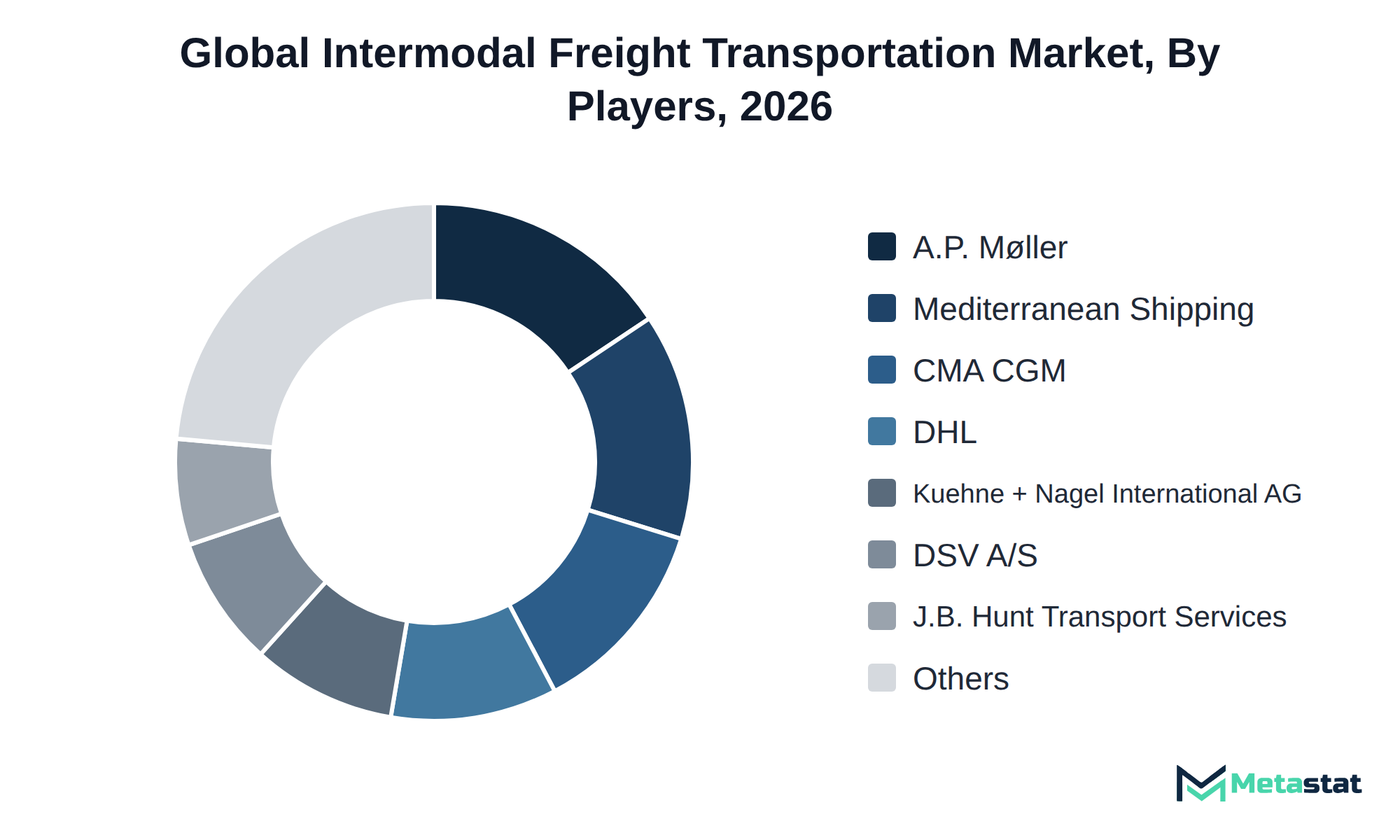
Companies operating in the Intermodal Freight Transportation market employ various strategies to differentiate themselves. Key factors influencing buyer decisions include price, service quality, and the level of customization available. Market players often focus on specific segments to leverage their strengths in this competitive environment.
For instance, A.P. Møller - Mærsk A/S emphasizes a wide-ranging service portfolio that integrates various transportation modes, appealing to clients seeking comprehensive logistics solutions. In contrast, Deutsche Bahn AG (DB Cargo) prioritizes efficient rail-based services, catering to buyers focused on sustainable and cost-effective transport options. Companies like DHL Group leverage their extensive global network, attracting customers seeking reliability and speed in delivery.
Mediterranean Shipping Company S.A. specializes in water-based transport, targeting clients who prioritize maritime logistics. C.H. Robinson Worldwide, Inc. enhances its offering with technology-driven solutions that provide clients real-time visibility and data analytics, highlighting the trend toward digitalization in the market. This competitive environment drives companies to continuously adapt and refine their offerings to meet evolving buyer expectations.
Intermodal freight transportation market growth hinges on several developments. These include expansion of the Road-Rail mode combination, which is projected to increase from USD 23.4 billion in 2026 to USD 54.5 billion by 2033, reflecting a CAGR of 12.9%. Growth of international trade lanes, targeting an increase to USD 61.8 billion by 2033 at a CAGR of 13.9%, drives demand for intermodal solutions. The Asia Pacific region, with its increasing manufacturing activities and consumer demand, significantly influences these trends, contributing to overall market performance.
Conversely, potential risks include disruptions in global supply chains, which could impede the transition between various transport modes. Such disruptions arise from geopolitical tensions or economic downturns, impacting the reliability of logistics operations. Stability in global trade dynamics is essential for the intermodal freight transportation market to achieve the projected growth. Addressing these challenges will be essential for the market to realize its potential and reach USD 122.1 billion by 2033.
By Mode Combination: Road-Rail, Road-Water, Rail-Water, Road-Air, Three or More Modes, Others (Air-Water, Air-Rail)
By Trade Lane: Domestic, International
By Loading Unit: Dry Containers, Refrigerated Containers, Trailers and Swap Bodies, Tank Containers, Others (Flat Racks, Open-Top Containers)
By End-Use Industry: Retail and Consumer Goods, Industrial Manufacturing, Automotive, Food and Beverage, Chemicals and Energy, Construction and Materials, Healthcare and Pharmaceuticals, Others (Aerospace, Textiles)
The report strategically identifies and profiles the key market players and analyses their core competencies in each sub-segment of the Intermodal Freight Transportation market.
Report Attributes | Details |
Study Period | 2021-2033 |
Base Year | 2025 |
Estimated Year | 2026 |
Forecast Period | 2026-2033 |
Historical Period | 2021-2025 |
Growth Rate | CAGR 13.2% from 2026 to 2033 |
Revenue Unit | USD billion |
Segmentation | By Mode Combination, Trade Lane, Loading Unit, End-Use Industry, and Region |
By Region | North America (By Mode Combination, Trade Lane, Loading Unit, End-Use Industry, and Country)
|
Europe (By Mode Combination, Trade Lane, Loading Unit, End-Use Industry, and Country)
| |
Asia Pacific (By Mode Combination, Trade Lane, Loading Unit, End-Use Industry, and Country)
| |
South America (By Mode Combination, Trade Lane, Loading Unit, End-Use Industry, and Country)
| |
Middle East and Africa (By Mode Combination, Trade Lane, Loading Unit, End-Use Industry, and Country)
|
Find answers to common questions about this report
The Intermodal Freight Transportation market size was valued at USD 45.1 billion in 2025.
The market is projected to grow at a CAGR of 13.2% during the forecast period from 2026 to 2033.
The North America Intermodal Freight Transportation market size is estimated to reach USD 37.3 billion by 2033.
The leading segment in the Intermodal Freight Transportation market is Domestic trade lane, with a value of USD 60.3 billion projected for 2033. This segment surpasses the International trade lane, which is expected to reach USD 61.8 billion in the same year.
Retail and consumer goods industries drive significant growth due to rising e-commerce activities and consumer expectations for fast delivery. Enhanced logistics capabilities and ongoing investments in digitalization among retailers optimize supply chains, reinforcing the relevance of intermodal freight transportation.
North America holds the dominant share of the Intermodal Freight Transportation market, with a value of USD 37.3 billion projected for 2033, representing 32.6 percent of the total market. This region leads in market share compared to others, including Europe and Asia Pacific.
Rising fuel prices represent a significant restraint, impacting operational expenses for transportation companies and leading to higher shipping rates. Increasing compliance costs present a challenge, as stricter regulations drive up expenses and deter potential market entrants.
Rising e-commerce activities and consumer expectations for fast delivery significantly favor the adoption of intermodal freight transportation. Investments in infrastructure, along with technological innovations, enhance logistics capabilities, enabling companies to optimize supply chains and meet modern demands effectively.
The Intermodal Freight Transportation market is estimated to reach a valuation of USD 122.1 billion by 2033.
Key players operating in the Intermodal Freight Transportation market include A.P. Møller - Mærsk A/S, Mediterranean Shipping Company S.A., CMA CGM S.A., Deutsche Bahn AG (DB Cargo), DSV A/S, DHL Group, and Kuehne + Nagel International AG.
The analysts below cover Automotive and Transportation research at Metastat Insights.
LEAD ANALYST
Utkarsh Khirodkar is a Lead Market Research Analyst at MetaStat Insight, specializing in market intelligence, technology sector assessments, and competitive strategy.

ENERGY & INFRASTRUCTURE INDUSTRY CONSULTANT
Automotive and Transportation · Electronics and Semiconductor · Energy and Power · Machinery & Equipment
Saurabh Vasant Ganvir consults for Energy & Infrastructure Industry at MetaStat Insight, specializing in renewable energy, solar EPC, and electric vehicle (EV) infrastructure markets.
Evaluating sensor fusion reliability across harsh operating environments can be tricky without field-validated data. The study on agricultural autonomous guidance systems clearly separated stereo vision setups from automotive-grade solid-state LiDAR. We appreciated the regional infrastructure analysis, specifically around RTK network density across North America and South America. During our follow-up consultation, the MetaStat Insight team walked through tier-two perception software partnerships, giving our engineering leads a practical basis for vendor shortlisting.
Analyzing the transition from natural gas to green hydrogen in iron ore reduction requires realistic infrastructure timelines. Meta stat insight supplied a detailed regional assessment of DRI plant conversion costs and scrap metal availability in North America and Western Europe. Their report carefully examined pellet quality specs and electrical grid access constraints without making oversimplified market assumptions. The research material served as a practical reference during internal technology roadmap discussions.
Integrating zero-trust access controls across legacy electronic health record systems involves complex compliance overhead. Team produced an analysis that clearly separated identity governance and administration tools from privileged access management platforms. Their evaluation of HIPAA and GDPR compliance features across cloud native solutions gave our architecture group clear baseline criteria. The custom data request regarding biometric authentication adoption in hospital networks was returned promptly with clear documentation.
Explore related market intelligence reports worth reading alongside this one.
Starting from
$2950
Starting from
$2950