
LEAD ANALYST
Utkarsh Khirodkar is a Lead Market Research Analyst at MetaStat Insight, specializing in market intelligence, technology sector assessments, and competitive strategy.

Global Reefer Container Market Size, Share, By Container Size (20 Feet, 40 Feet, 45 Feet), By Product Type (Standard Integral Reefer Containers, Controlled Atmosphere (CA) Reefer Containers, Super-Freezer Reefer Containers, Redundant (Dual-Unit) Reefer Containers), By Mode of Transportation (Sea, Rail, Road), By Application (Fresh Fruits and Vegetables, Meat, Poultry and Seafood, Dairy and Frozen Food, Pharmaceuticals and Healthcare, Chemicals), Industry Analysis, Growth, Trends, and Forecast, 2026-2033
Report ID
MSI-5530
Published
October, 2026
Pages
294 Pages
Format
Historical
Base year
Forecast
Forecast period
Report Details
Market Valuation: Valued at $7,904.5 Million in 2025, projected to reach $12,226.1 Million by 2033 at a 5.6% CAGR.
Dominant Segment: The Standard Integral Reefer Containers segment leads the market, driven by its broad usage for transporting various temperature-sensitive products, particularly fresh produce.
Geographic Lead: North America is the leading region, accounting for 22.2% of the market in 2025, with the US showing significant demand due to its strong logistics infrastructure.
What's Inside: The report provides comprehensive competitive coverage, detailed analyses of market dynamics, and forecasts extending from 2026 to 2033, focusing on various container sizes and product types.
Emerging Technology: Controlled Atmosphere (CA) Reefer Containers are projected to grow at a CAGR of 8.4%, reflecting increasing demand for transporting perishables that require precise atmospheric conditions.
Market Dynamics: The report highlights key trends, including the shift towards sustainable refrigerants and the impact of rising costs on reefer container adoption, shaping the market landscape.
Choose Your License
Global Reefer Container Market
The global Reefer Container market was valued at USD 7,904.5 million in 2025 and is projected to reach USD 12,226.1 million by 2033, growing at a CAGR of 5.6% over the forecast period.
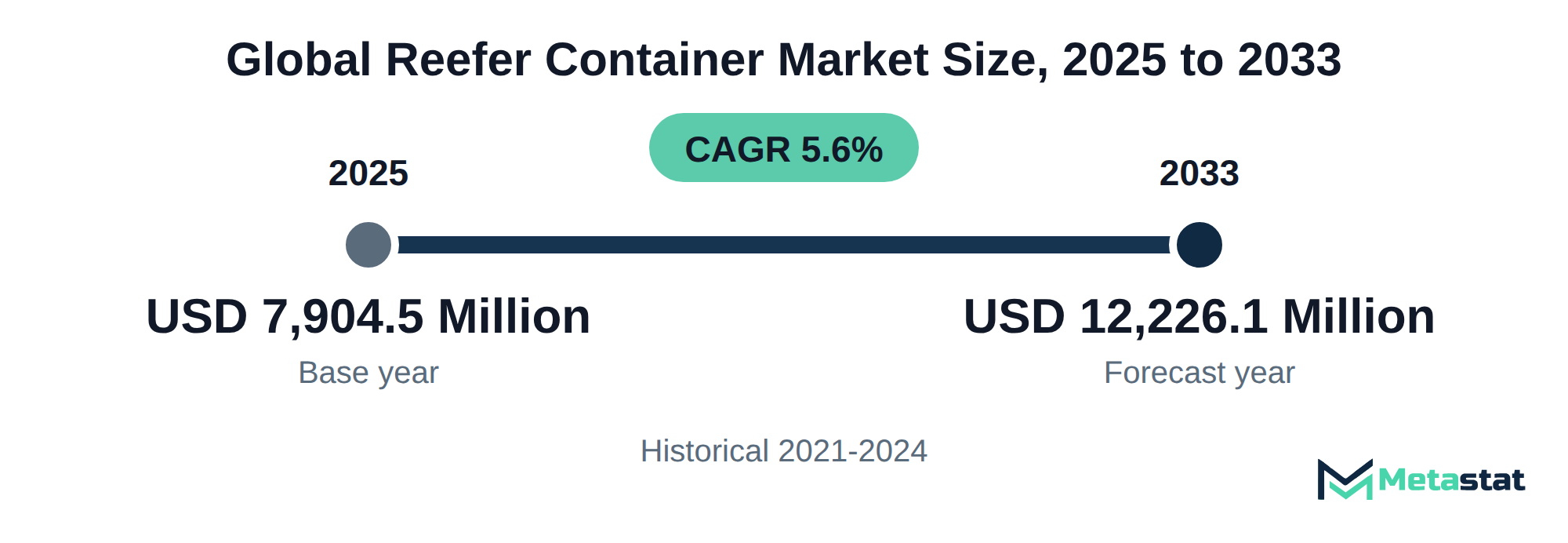
The Reefer Container market encompasses specialized containers designed to transport temperature-sensitive goods, ensuring product integrity during transit. Buyers invest in these containers due to the rising demand for perishable products across various industries, including food and pharmaceuticals. The need for reliable transportation solutions drives spending, with businesses aiming to maintain quality and safety standards while optimizing logistics operations.
Growth in the market is primarily supported by increasing global trade and the expansion of cross-border e-commerce, which necessitates efficient cold chain logistics. The segment of Standard Integral Reefer Containers commands the highest market value, reflecting broad usage in transporting a variety of temperature-sensitive products. North America holds 22.2% of the market in 2025, with the US leading in 2026, demonstrating significant regional demand for these containers.
Technological advancements, including improved transport refrigeration systems and monitoring technologies, enhance the operational efficiency of reefer containers. These innovations enable better temperature control and tracking, further stimulating demand within the industry. Growing awareness of food safety and quality assurance influences market dynamics, encouraging investment in advanced reefer solutions across the globe.
The Reefer Container market addresses the critical transportation requirements of temperature-sensitive products, including fresh produce, pharmaceuticals, and frozen goods. Buyers invest in reefer containers to ensure the integrity and quality of their shipments, thereby maintaining product value during transit. The growing emphasis on food safety and regulatory compliance drives the need for reliable temperature-controlled solutions across various industries.
Significant growth in the market stems from increasing demand for perishable goods due to changing consumer preferences and rising disposable incomes. The 40 Feet segment leads in market value, reflecting its widespread use for transporting large quantities of temperature-sensitive products. This region's strong logistics infrastructure and advanced cold chain management practices support the adoption of reefer containers.
Advancements in refrigeration technology enhance the efficiency and reliability of reefer containers. Companies focus on integrating smart technologies into their reefer fleets, allowing for real-time monitoring and control of temperature conditions. Fleet management software can extend this monitoring across large reefer fleets. These developments enable stakeholders to optimize supply chain processes while ensuring compliance with stringent regulatory standards.
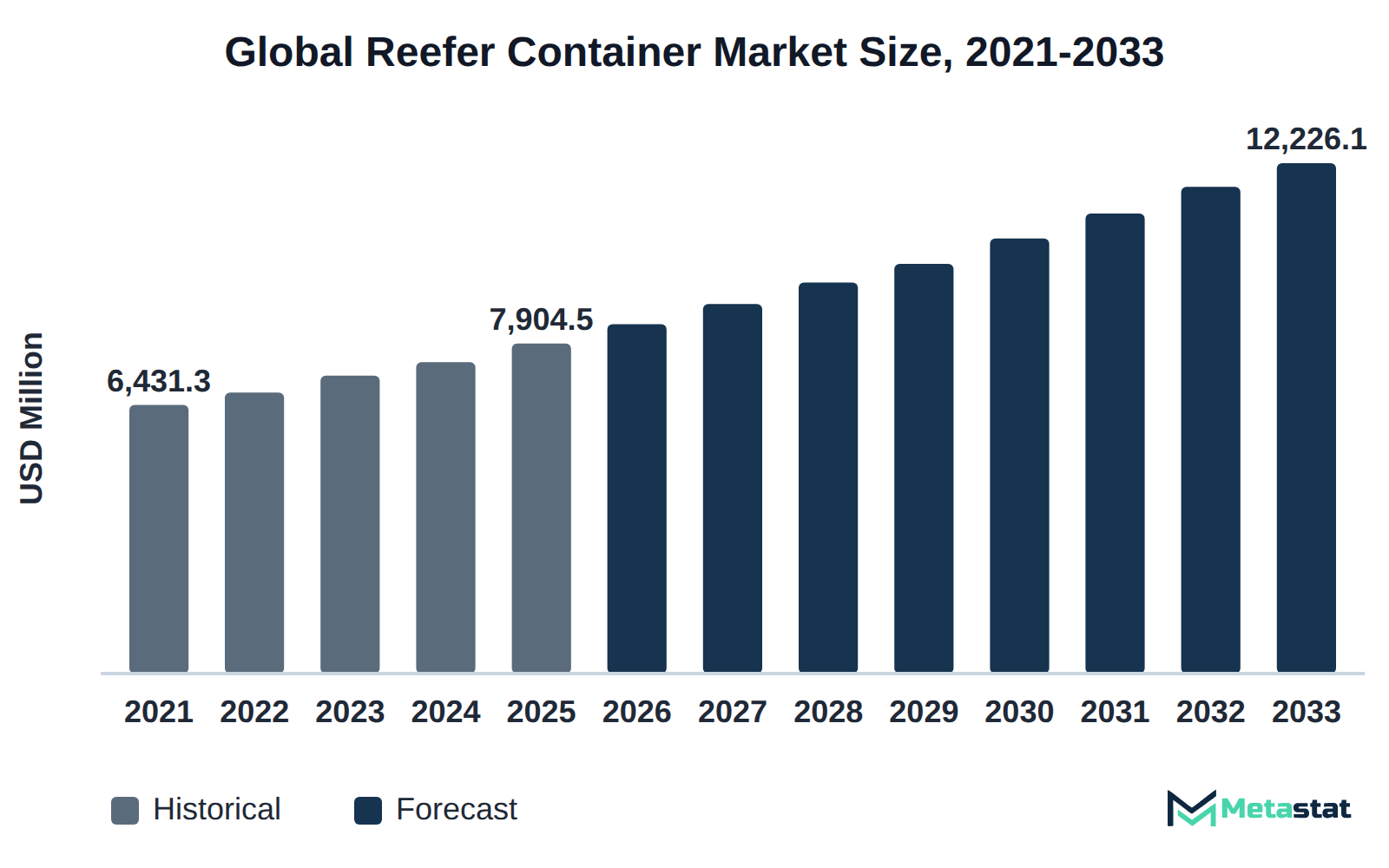
Controlled Atmosphere (CA) technology has changed the way perishable goods including avocados, berries, and bananas are transported over long distances. This innovation helps maintain the quality of these sensitive products during lengthy ocean voyages. CA reefer containers regulate the atmosphere within the shipping container, reducing the oxygen levels and increasing carbon dioxide, which significantly slows down the ripening process and extends shelf life. The segment of Controlled Atmosphere Reefer Containers is projected to reach USD 2,058.9 million by 2033, reflecting a compound annual growth rate (CAGR) of 8.4% during the forecast period.
This advancement enhances product quality and enables suppliers to access distant markets more effectively. For instance, producers in South America ship fresh avocados to North America and Europe, meeting growing consumer demand for these products even in off-seasons. The Reefer Container market benefits from this technology, supporting greater reliability and efficiency in the cold chain logistics sector. Expanding the market reach for perishable goods through Controlled Atmosphere technology contributes to increased sales opportunities and enhances competition among suppliers, ultimately driving value in the broader food supply chain.
The growing emphasis on sustainability within the reefer container market drives a shift toward low-global warming potential (GWP) refrigerants and inverter compressors. These technologies reduce environmental impacts while enhancing energy efficiency in refrigeration systems. The demand for controlled atmosphere (CA) reefer containers, with a projected market value of USD 2,058.9 million by 2033, reflects this trend toward eco-friendly practices.
Buyers increasingly prioritize these specifications when selecting equipment, influencing purchasing decisions and contract negotiations. Suppliers offering reefer containers equipped with low-GWP refrigerants and inverter compressors position themselves competitively in the market. The ability to reduce energy costs while maintaining optimal temperature control appeals to many industries, including pharmaceuticals and healthcare, where preserving product integrity is critical.
This shift in purchasing priorities impacts pricing models and contract terms, as buyers seek commitments from suppliers to provide advanced technologies that align with sustainability goals. The adoption of these specifications reflects a broader change in the reefer container market toward solutions that meet both operational and environmental standards.
The growing demand for biologics and vaccines has significantly increased orders for super-freezer and dual-unit containers within the Reefer Container market. The specific requirements for transporting temperature-sensitive products, including vaccines, necessitate advanced refrigeration technology. In this context, super-freezer reefer containers maintain the ultra-low temperatures essential for preserving the integrity of these sensitive pharmaceuticals.
The segment for super-freezer reefer containers is projected to reach a value of USD 497.6 million by 2033. This rapid growth reflects heightened investments in healthcare cold chain logistics, driven by the global focus on immunization and biologic therapies. Dual-unit containers provide added flexibility, allowing the transport of a variety of temperature-controlled products simultaneously, catering to diverse buyer needs in the pharmaceutical sector.
The demand for advanced reefer solutions directly correlates to the expansion of the healthcare supply chain. Suppliers and logistics providers investing in these specialized container types enhance their competitive edge, ensuring compliance with stringent regulatory standards while meeting the increasing expectations of biopharmaceutical clients.
Shipping lines often face a critical decision regarding whether to lease or purchase reefer containers. This choice hinges on various factors, including financial considerations and operational flexibility. Leasing offers a lower initial capital outlay, enabling companies to allocate funds elsewhere while ensuring access to state-of-the-art equipment. In contrast, purchasing reefer containers involves a significant investment upfront but yields long-term savings and asset ownership.
The reefer container market's projected value is USD 12,226.1 million by 2033, demonstrating substantial growth opportunities. With a compound annual growth rate (CAGR) of 5.6% from 2025 to 2033, shipping lines evaluate their current and future needs carefully. For instance, the segment of Standard Integral Reefer Containers is projected to grow from USD 6,509 million in 2026 to USD 9,093.8 million in 2033, reflecting increasing demand for reliable temperature-controlled shipping solutions.
Ultimately, shipping lines weigh the benefits of leasing against the advantages of ownership, particularly considering the expected growth in the reefer container market. Each decision involves assessing financial health, operational requirements, and market dynamics, influencing overall competitiveness and profitability.
Growing health-conscious consumer behavior drives increased demand for fresh fruits and vegetables, prompting retailers and distributors to seek efficient transportation solutions. The shift toward healthier food options leads to a surge in orders for Reefer Containers, with these specialized units ensuring the integrity and freshness of perishable goods during transit. Enhanced awareness of food quality and safety further influences this trend, resulting in higher volumes of fresh produce transported globally. In 2025, the Reefer Container market recorded a value of USD 7,904.5 million, reflecting the increasing emphasis on quality in food supply chains. The ongoing demand for fresh produce drives investment in advanced reefer technology, promoting further growth in the market.
The shift towards sustainable refrigerants significantly impacts the Reefer Container market. Increasing regulatory pressures promote the adoption of environmentally friendly refrigerants among manufacturers. These sustainable solutions address growing concerns regarding greenhouse gas emissions while maintaining efficient temperature control. Suppliers, including manufacturers and logistics providers, invest in developing and integrating these innovative refrigerants within their products. Enhanced energy efficiency reduces operational costs for users, translating into better margins for companies across various sectors. Compliance with environmental standards accelerates research and development efforts in this area. The market is expected to experience an upward trajectory, with increased demand for containers featuring these advanced refrigerants, enhancing competitiveness and driving growth. The expansion of available sustainable refrigerants supports a wider range of applications, ensuring the industry adapts to evolving consumer preferences and regulatory requirements. Overall, these dynamics reshape product offerings and reinforce the commitment to sustainability within the market.
Increasing prices for raw materials and energy have created challenges for buyers in the Reefer Container market. Shipping lines, distributors, and retailers face pressure due to these rising costs, leading to slower uptake of new technologies and equipment. Buyers tend to delay investments in reefer containers, opting instead to extend the lifecycle of existing assets or seek lower-cost alternatives. This behavior hinders market growth, particularly in regions where cost sensitivity is pronounced, including South America and parts of Asia Pacific. While companies navigate these financial constraints, overall demand for reefer containers experiences a decline, impacting market trajectories over the forecast period. The strain on budgets and operational expenditures influences purchasing decisions, resulting in smaller order sizes and cautious approaches to new acquisitions. Market growth is threatened by this reluctance to invest in modern reefer solutions, which are essential for meeting stringent temperature control requirements.
Rising input costs present a significant challenge in the Reefer Container market, compelling suppliers to navigate a complex pricing environment. Increased prices for key materials and components strain margins, prompting suppliers to evaluate their sourcing strategies. The competitive landscape intensifies as firms strive to maintain profitability while managing these costs. In response, many suppliers focus on optimizing production processes and enhancing supply chain efficiencies to mitigate cost impacts. Implementing advanced manufacturing technologies improves operational capabilities, allowing for better resource management and waste reduction. Suppliers explore alternative materials that provide cost benefits while meeting the market's stringent requirements. These adaptations support continued investment and growth despite higher costs, keeping the Reefer Container market competitive.
The adoption of Controlled Atmosphere (CA) Reefer Containers presents a significant opportunity within the market. This segment is projected to experience a compound annual growth rate (CAGR) of 8.4%, reflecting increasing demand for the transportation of perishables that require precise atmospheric conditions. Buyers, particularly in the pharmaceuticals and fresh produce sectors, seek these advanced containers to maintain product integrity during transit. The growing trend in health and wellness further increases demand for fresh fruits, vegetables, and temperature-sensitive pharmaceuticals, driving investment in this technology. Growth in this segment points to a market shift toward more sophisticated temperature management solutions for an increasingly quality-conscious consumer base.
The Global Reefer Container market is segmented based on Container Size, Product Type, Mode of Transportation, and Application.
Valued at USD 1,436.8 million in 2026, the 20 Feet segment is projected to reach USD 1,970.8 million by 2033, at a CAGR of 4.6% during the forecast period. This segment typically transports smaller quantities of perishable goods, including fresh fruits and vegetables, catering to retailers and distributors who require efficient and reliable shipping solutions. Demand for this segment is driven by the increasing emphasis on fresh produce in supermarkets and grocery stores, compelling suppliers to employ specialized containers for maintaining product quality. In comparison to the 40 Feet segment, which experiences a higher CAGR of 5.7%, the 20 Feet segment experiences slower growth. The smaller size of these containers suits specific buyer needs focusing on flexibility and smaller shipment volumes, distinguishing them from larger alternatives that target bulk transport.
The 40 Feet segment is estimated to reach USD 8,835.8 million by 2033, at a CAGR of 5.7% during the forecast period. These containers primarily transport perishable goods, including fresh produce and pharmaceuticals. The demand for this size container is driven by the increasing need for efficient and reliable transportation of temperature-sensitive items, particularly in sectors like agriculture and healthcare. Compared to the 20 Feet segment, which experiences a slower growth rate of 4.6%, the 40 Feet segment provides more capacity and is often preferred by logistics companies for its efficiency in transporting larger quantities. The higher volume of goods transported results in cost savings for buyers, contributing to its attractiveness. Thus, the growing emphasis on efficient supply chains significantly influences adoption rates for this size container.
USD 792.3 million is the anticipated market value for the 45 Feet segment by 2033. This container size is primarily used for transporting large volumes of temperature-sensitive goods, catering to industries including food and pharmaceuticals that demand reliable temperature control during shipping. The growth of this segment is driven by increasing consumer preferences for fresh produce and the expansion of global trade networks. The 45 Feet segment's relatively higher price point reflects its specialized nature and capacity, making it attractive to buyers requiring bulk transport solutions. Demand for this segment remains steady due to its ability to accommodate larger shipments, which appeals to major distributors and retailers aiming for efficiency in logistics.
Others (10 Feet, 30 Feet, 53 Feet Domestic) segment is projected to grow at a CAGR of 6.2% during the forecast period. This segment addresses specific transportation needs for various domestic applications, including niche markets for smaller shipments of temperature-sensitive goods. Retailers, local farmers, and specialized distributors often use these sizes for efficient logistics. Increasing demand for local produce and specialty items drives the segment's growth, enhancing its appeal over larger container sizes. Differentiation occurs through its versatility and capability to handle diverse cargo types, positioning it uniquely compared to the 20 Feet, 40 Feet, and 45 Feet segments. The projected value for this segment indicates its rising importance within the overall market, compelling suppliers to tailor their offerings to meet evolving buyer preferences.
Standard Integral Reefer Containers primarily transport temperature-sensitive goods, particularly fresh produce and perishable items, serving retailers and distributors in the food supply chain. Growing consumer demand for fresh fruits and vegetables drives this segment, compelling stakeholders to enhance distribution efficiency. Unlike Controlled Atmosphere (CA) Reefer Containers, which experience a higher projected growth rate of 8.4%, Standard Integral Reefer Containers expand steadily. The relatively stable growth reflects increasing investments in logistics infrastructure, ensuring effective temperature control throughout the shipping process. Heightened awareness of food safety standards positions the market for Standard Integral Reefer Containers as essential for maintaining product integrity during transportation.
Controlled Atmosphere (CA) reefer containers are essential for transporting sensitive products including fruits, vegetables, and pharmaceuticals that require specific atmospheric conditions to maintain freshness and efficacy. Increasing consumer demand for high-quality perishables drives growth in this segment, particularly among retailers and distributors seeking to optimize supply chains. The CA reefer technology allows for longer transport times while preserving product quality, distinguishing it from other segments, which experience slower growth rates, including Standard Integral Reefer Containers, projected at a CAGR of 4.9%. Growth in the Controlled Atmosphere segment reflects the rising priority on product integrity and efficiency in shipping processes, ultimately influencing investment and development within the market.
Super-freezer reefer containers are primarily used in the transportation of highly sensitive products, including pharmaceuticals and biologics, which require low temperatures to maintain their efficacy. Demand for this segment is driven by the increasing need for secure and reliable storage of temperature-sensitive goods, especially amid the growing pharmaceutical industry. Compared to other product types, Super-Freezer Reefer Containers exhibit a higher price point due to advanced technology and specialized insulation, leading to comparatively lower growth rates. The segment has a projected CAGR of 6.6%, distinguishing it from Standard Integral and Controlled Atmosphere containers, which are expected to grow at rates of 4.9% and 8.4% respectively. The market focus on health and safety further strengthens the role of Super-Freezer Reefer Containers in meeting stringent regulatory standards.
Redundant (Dual-Unit) Reefer Containers segment is projected to grow at a CAGR of 6.6% during the forecast period. These containers are primarily for transporting temperature-sensitive goods, ensuring optimal conditions throughout the shipping process. Their adoption is significant among logistics providers and food distributors who require reliability and efficiency. The rapid growth in demand for perishable goods, driven by expanding e-commerce and global trade, directly influences this segment. Compared to other product types, Redundant Reefer Containers typically command higher prices due to their advanced features and technology integration. The Reefer Container market adapts to evolving consumer preferences and regulatory frameworks, enhancing the potential for this segment.
Others in the Porthole, Cryogenic, and Dual-Temperature segment encompasses specialized reefer container designs tailored for unique transportation needs. These containers serve industries including pharmaceuticals and high-value perishables, where maintaining precise temperature control is crucial. The increasing demand for temperature-sensitive products drives this segment, with stakeholders prioritizing advanced solutions that ensure product integrity during transit. Compared to more conventional models, these specialty containers often command higher prices due to their advanced technology and features. The segment's growth aligns with the broader trend in the market towards sustainability and efficiency, responding to evolving consumer preferences and regulatory requirements. This focus on specialized applications distinguishes this sub-segment from others, highlighting the need for innovation and adaptation within the reefer container market.
Sea segment is valued at USD 5,990.6 million in 2026 and is projected to reach USD 8,629.2 million by 2033, at a CAGR of 5.4% during the forecast period. This segment serves primarily for transporting perishable goods, including food products and pharmaceuticals, across global waters. Key players including shipping companies and food distributors use this mode to maintain product integrity during transit. Growing global trade and the demand for fresh products significantly influence this segment. Compared to other modes of transportation like rail and road, the Sea segment offers better capacity for bulk shipments, albeit at a slower growth rate than rail, which shows a projected CAGR of 6.7%. Innovations in container technology, along with regulatory measures aimed at sustainability, are expected to enhance the efficiency of the Sea segment.
Rail segment is estimated to reach USD 1,513.6 million by 2033, at a CAGR of 6.7% during the forecast period. This segment serves primarily for transporting temperature-sensitive goods, including pharmaceuticals, perishables, and frozen foods across regions. Rail transportation appeals to suppliers due to its cost-effectiveness and ability to handle larger shipments compared to road transport. Increasing regulatory pressures for environmentally friendly logistics support a shift towards rail, enhancing market adoption. Unlike the sea segment, which is projected to reach USD 8,629.2 million by 2033 at a CAGR of 5.4%, rail offers a more rapid solution for certain goods in transit, appealing particularly to industries focused on efficiency and minimizing spoilage. Market dynamics continue to evolve, reflecting ongoing investment in rail infrastructure and technology for temperature-controlled logistics.
Road segment is expected to reach USD 2,083.3 million by 2033. This segment serves the transportation of perishable goods, primarily by food distributors and retailers who require reliable and efficient delivery systems. Demand for road transportation arises from the growing consumption of fresh produce, prompting the need for effective logistics solutions to maintain product quality. Unlike other modes including rail or sea, the road segment experiences distinct operational flexibility, enabling quicker deliveries directly to consumers. The forecasted CAGR for this segment is lower than for Controlled Atmosphere (CA) Reefer Containers, but the need for road transport remains strong because it supports the supply chain, particularly for goods requiring immediate shipment. Increased investment in road infrastructure will positively influence growth and operational capabilities.
Fresh Fruits and Vegetables segment is valued at USD 3,039.9 million in 2026 and is projected to reach USD 4,354.9 million by 2033, at a CAGR of 5.3% during the forecast period. This segment serves the agricultural sector, including farmers and distributors, who rely on reliable transportation for perishable goods. Growing consumer demand for fresh produce drives the need for efficient cold chain logistics, influencing this segment's expansion. The increasing focus on food safety and quality standards further supports demand. Compared to other segments like Dairy and Frozen Food, which have lower anticipated market values, the Fresh Fruits and Vegetables segment shows relatively faster growth, highlighting its critical role in the market. With a CAGR of 5.3%, it reflects a robust market response to evolving consumer preferences, enhancing the overall dynamics in the Reefer Container market.
Meat, Poultry and Seafood segment is estimated to reach USD 3,228.9 million by 2033, at a CAGR of 5.1% during the forecast period. This segment caters to food distributors, retailers, and food processing companies requiring proper refrigeration for transporting perishable goods. The increasing demand for high-quality meat and seafood products drives the segment's growth. Rising consumer preferences for fresh and organic food items support the need for advanced refrigeration solutions. Compared to other segments, the Meat, Poultry and Seafood segment displays relatively stable growth, influenced by health trends and dietary changes. Regulatory standards concerning food safety further shape this segment, pushing for stringent controls in transport conditions, which ultimately impacts pricing strategies within the market.
The Dairy and Frozen Food segment is expected to reach USD 1,580.8 million by 2033. This segment serves the needs of the food and beverage industry, specifically targeting producers and distributors of dairy products and frozen goods. Demand for refrigerated transport in this application is driven by the necessity to maintain product quality and safety during transportation. Compared to other segments, this sub-segment experiences a moderate growth rate, with a CAGR of 5.1% anticipated during the forecast period. The industry focuses on compliance with stringent health and safety regulations, impacting operational costs. The segment stands out due to its specific requirement for temperature-controlled transport, differentiating it from other segments that cater to different products or applications. Unique challenges in maintaining optimal conditions during transit further emphasize the significance of advanced reefer container solutions in the market.
Pharmaceuticals and Healthcare segment is projected to grow at a CAGR of 7.7% during the forecast period. This segment involves the transportation of temperature-sensitive pharmaceuticals, vaccines, and medical supplies. Manufacturers and distributors rely on reefer containers to maintain strict temperature control during transit, ensuring product efficacy and compliance with health regulations. A significant driver for this segment stems from the increasing demand for biopharmaceuticals and advanced therapies, which typically require specific temperature settings. Compared to other segments, this category demonstrates faster growth, with an anticipated market value reaching USD 2,083.3 million by 2033. The criticality of maintaining optimal conditions distinguishes this segment from others, including Fresh Fruits and Vegetables, where growth rates reflect different consumer behaviors and product characteristics. The heightened focus on healthcare logistics highlights the importance of robust cold chain solutions in this segment.
Chemicals involve the transportation of various chemical products, which require specific temperature and environmental controls to maintain their integrity during transit. Industries including pharmaceuticals, agriculture, and manufacturing use reefer containers for this purpose. Growth in this segment relies on increasing global demand for chemicals, driven by expanding sectors like agriculture and pharmaceuticals, which require reliable transport solutions. Pricing dynamics in the chemicals segment often differ from other applications due to the specialized nature of the containers, leading to higher costs. Compared to segments including Fresh Fruits and Vegetables, which experience steady growth, the chemicals segment presents unique challenges and requirements that influence market dynamics and adoption trends. Regulatory standards for chemical transport impact this segment, necessitating compliance and resulting in increased operational costs. Demand for specialized containers tailored for chemical transport continues to shape the development of the market.
Others (Floriculture, Beverages, Confectionery) focuses on transporting a variety of perishables within the reefer container market. This segment serves producers and distributors in industries that require strict temperature control for items including flowers, drinks, and sweets. Increasing consumer demand for fresh and high-quality products drives growth, with suppliers investing in advanced refrigeration technologies. Compared to other applications like Fresh Fruits and Vegetables, this segment experiences relatively slower growth, driven by the niche nature of its products and the specialized handling required. Price sensitivity remains a crucial factor, influencing purchasing decisions among buyers who prioritize cost-effective solutions while maintaining product integrity.
Based on geography, the Global Reefer Container market is divided into North America, Europe, Asia-Pacific, South America, Middle East, and Africa.
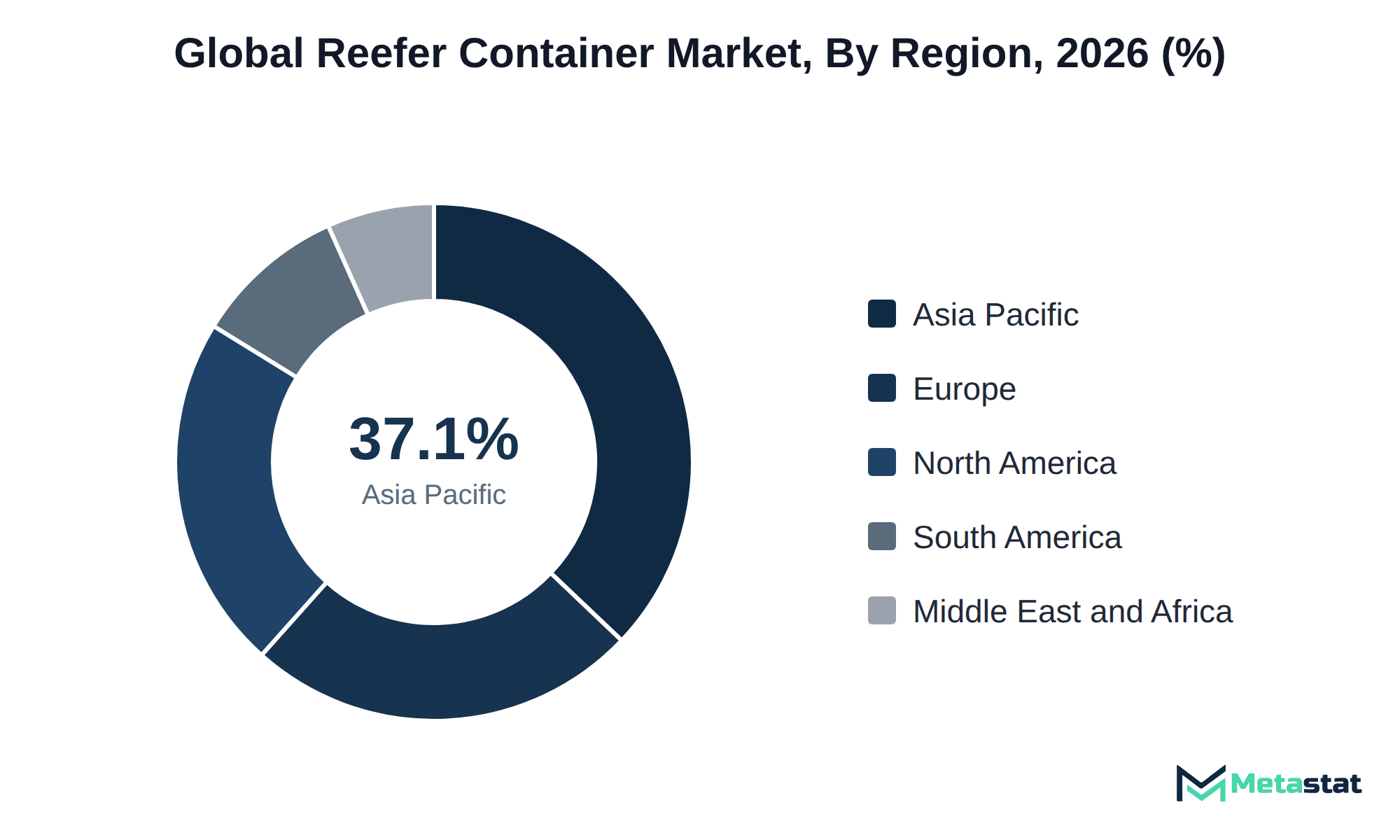
In North America, significant demand for reefer containers stems from the strong food and pharmaceutical industries. The presence of advanced logistics infrastructure enhances the ability to transport temperature-sensitive goods efficiently across the region. Key players in the market include the United States, Canada, and Mexico, all of which contribute to a projected market value of USD 2,589.5 million by the end of 2033. The market share in North America accounted for 22.2% of the global total in 2025, reflecting the importance of regulatory standards that ensure the safe transportation of perishables. Emerging trends in controlled atmosphere technology further drive innovation within the market, catering to increasing demand for high-quality food and healthcare products.
The European market for reefer containers benefits from robust demand driven by the food and pharmaceutical industries, emphasizing the need for reliable temperature-controlled transport solutions. Countries including Germany, France, and the UK play critical roles in establishing high standards for quality and compliance, which enhance operational capabilities. Significant investment in logistics infrastructure, including advanced cold chain systems, supports market growth within the region. The regulatory landscape emphasizes stringent safety standards, particularly for the transportation of pharmaceuticals and perishable goods. By 2025, Europe is expected to capture 24.5% of the global reefer container market, reflecting the region's strong commitment to maintaining quality and efficiency in cold supply chains.
Asia-Pacific represents a significant segment of the Reefer Container market, accounting for 37.1% of the global market share in 2025. Demand stems primarily from industries including fresh produce and pharmaceuticals, particularly in China, Japan, and India, where stringent quality standards drive requirements for temperature-controlled transport. The region benefits from an extensive shipping network, enhancing the efficiency of refrigerated transport. Investments in cold chain logistics infrastructure, especially in Southeast Asia, further support market growth. Enhanced distribution capabilities and rising consumer expectations for product quality will increase demand for reefer containers in this region. By 2033, the overall market value in Asia-Pacific is projected to see substantial growth, reflecting the increasing significance of temperature-sensitive goods in regional trade.
Strong demand for the reefer container market in South America arises from the agricultural sector, particularly in Brazil and Argentina, which are major producers of fresh fruits and vegetables. The market benefits from the growing exportation of perishable goods, fueling the need for efficient temperature-controlled transportation solutions. Infrastructure improvements driven by investments in logistics support this demand, enhancing distribution capabilities across the region. The market share for South America is projected at 9.5% in 2025, reflecting the importance of this area as a key player in global supply chains. Regulatory standards focusing on food safety drive the adoption of reefer containers, ensuring that products maintain quality during transit. The region's emphasis on agricultural exports continues to shape growth trajectories within the market.
The market in the Middle East and Africa reflects unique demand drivers, primarily from the food and pharmaceutical sectors. Saudi Arabia and the UAE show increasing investments in infrastructure to support temperature-controlled logistics, enhancing supply chain efficiency. South Africa stands out with a growing focus on export-oriented agriculture, which necessitates advanced refrigerated transport solutions. The region's share of the global market in 2025 is 6.7%. Companies operating in the region are adapting to local environmental regulations, prompting a shift towards more energy-efficient reefer containers. Ongoing development in transportation networks positions this market for steady growth, particularly in the controlled atmosphere segment and for applications involving fresh produce and pharmaceuticals.
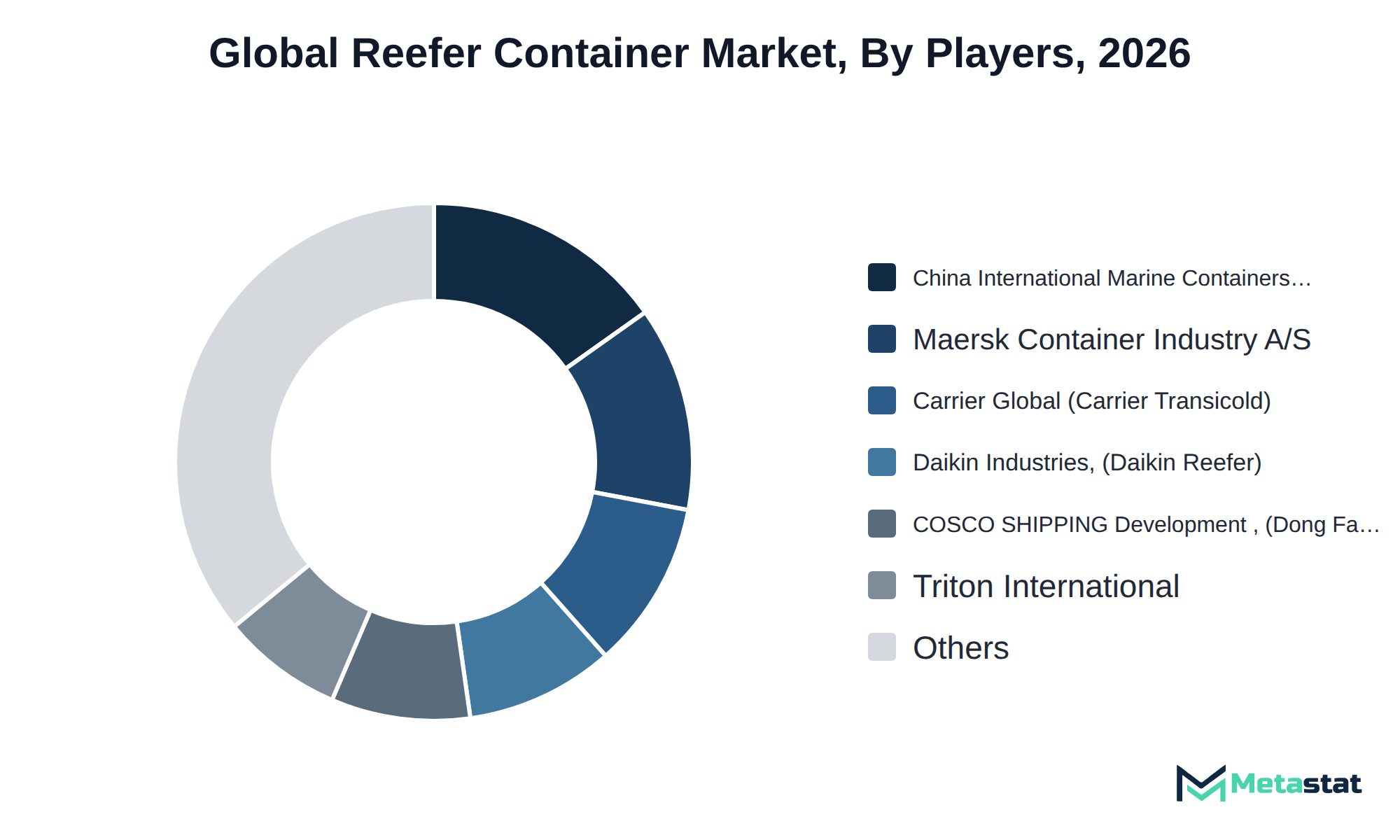
Companies in the Reefer Container market differentiate based on product type, container size, and transportation mode. The focus on customization, certification, and service levels influences buyer decisions significantly. For instance, Maersk Container Industry A/S emphasizes high-capacity 40 Feet containers to cater to large-scale shipping needs, while China International Marine Containers (Group) Co., Ltd. (CIMC) offers a diverse range of sizes, including 20 Feet and 45 Feet options, appealing to varied logistical requirements.
Firms including Carrier Global Corporation (Carrier Transicold) and Daikin Industries, Ltd. (Daikin Reefer) highlight advanced technologies in temperature control, enhancing product reliability for sensitive cargo. Trane Technologies plc (Thermo King, Klinge) focuses on energy efficiency, appealing to eco-conscious clients. This strategic positioning shapes competition, influencing market dynamics and driving innovation across the sector.
Reefer container market growth relies on several developments. These include increasing demand for controlled atmosphere (CA) reefer containers, which is projected to grow at a CAGR of 8.4%, indicating strong interest from the pharmaceuticals and healthcare sectors. The rise in demand from this segment will significantly contribute to the overall market value. The 40-foot container segment is projected to experience growth driven by the needs of the North American market, supporting the logistics of various goods, including fresh produce and meats.
A risk that could impede market advancement involves potential disruptions in global supply chains, which could be exacerbated by geopolitical tensions and natural disasters. Such disruptions could affect the transportation and delivery of reefer containers, impacting industries reliant on these containers for maintaining product quality. The growth trajectory of the reefer container market depends on managing these challenges while maintaining strong demand across key sectors.
By Product Type: Standard Integral Reefer Containers, Controlled Atmosphere (CA) Reefer Containers, Super-Freezer Reefer Containers, Redundant (Dual-Unit) Reefer Containers, Others (Porthole, Cryogenic, Dual-Temperature)
By Mode of Transportation: Sea, Rail, Road
By Application: Fresh Fruits and Vegetables, Meat, Poultry and Seafood, Dairy and Frozen Food, Pharmaceuticals and Healthcare, Chemicals, Others (Floriculture, Beverages, Confectionery)
The report strategically identifies and profiles the key market players and analyses their core competencies in each sub-segment of the Reefer Container market.
Report Attributes | Details |
Study Period | 2021-2033 |
Base Year | 2025 |
Estimated Year | 2026 |
Forecast Period | 2026-2033 |
Historical Period | 2021-2025 |
Growth Rate | CAGR 5.6% from 2026 to 2033 |
Revenue Unit | USD million |
Segmentation | By Container Size, Product Type, Mode of Transportation, Application, and Region |
By Region | North America (By Container Size, Product Type, Mode of Transportation, Application, and Country)
|
Europe (By Container Size, Product Type, Mode of Transportation, Application, and Country)
| |
Asia Pacific (By Container Size, Product Type, Mode of Transportation, Application, and Country)
| |
South America (By Container Size, Product Type, Mode of Transportation, Application, and Country)
| |
Middle East and Africa (By Container Size, Product Type, Mode of Transportation, Application, and Country)
|
Find answers to common questions about this report
The Reefer Container market size was valued at USD 7,904.5 million in 2025.
The market is projected to grow at a CAGR of 5.6% during the forecast period from 2026 to 2033.
The North America Reefer Container market size is estimated to reach USD 2,589.5 million by 2033.
The leading segment in the Reefer Container market is the 40 Feet container size, projected to reach USD 8,835.8 million by 2033. This segment surpasses others in terms of revenue generation.
Key drivers for the Reefer Container market include increasing demand for fresh fruits and vegetables, prompting retailers and distributors to seek efficient transportation solutions. Regulatory pressures drive the adoption of sustainable refrigerants, encouraging manufacturers to implement environmentally friendly solutions.
Increasing prices for raw materials and energy restrain growth in the Reefer Container market. Buyers experience challenges that lead to slower adoption of new technologies and equipment. This reluctance to invest in modern solutions essential for maintaining stringent temperature control requirements threatens overall market expansion.
The adoption of Controlled Atmosphere (CA) Reefer Containers is favored by increasing demand for transporting perishables requiring precise atmospheric conditions, particularly in the pharmaceuticals and fresh produce sectors. This segment is projected to grow at a compound annual growth rate (CAGR) of 8.4 percent, reflecting the evolving needs of a quality-conscious consumer base.
The Reefer Container market is estimated to reach a valuation of USD 12,226.1 million by 2033.
Key players operating in the Reefer Container market include China International Marine Containers (Group) Co., Ltd. (CIMC), Maersk Container Industry A/S, Carrier Global Corporation (Carrier Transicold), Daikin Industries, Ltd. (Daikin Reefer), Trane Technologies plc (Thermo King), COSCO SHIPPING Development Co., Ltd. (Dong Fang International Container), Triton International Limited, and Textainer Group Holdings Limited.
The Controlled Atmosphere (CA) Reefer Containers segment is projected to experience a compound annual growth rate (CAGR) of 8.4 percent, driven by increasing demand for transporting perishables requiring precise atmospheric conditions.
The analysts below cover Automotive and Transportation research at Metastat Insights.
LEAD ANALYST
Utkarsh Khirodkar is a Lead Market Research Analyst at MetaStat Insight, specializing in market intelligence, technology sector assessments, and competitive strategy.

ENERGY & INFRASTRUCTURE INDUSTRY CONSULTANT
Automotive and Transportation · Electronics and Semiconductor · Energy and Power · Machinery & Equipment
Saurabh Vasant Ganvir consults for Energy & Infrastructure Industry at MetaStat Insight, specializing in renewable energy, solar EPC, and electric vehicle (EV) infrastructure markets.
Transitioning ultra-class mining haul trucks to alternative power requires concrete data on remote hydrogen refueling infrastructure economics. The report evaluated megawatt-scale electrolyzer installation expenses, onsite storage safety mandates, and heavy-duty fuel cell stack degradation under continuous duty cycles. That technical rigor helped our engineers benchmark realistic total operating cost horizons for off-highway fleet decarbonization.
Enterprise zero-trust network rollouts are often slowed down by multi-cloud transit latency and proprietary hardware retirement schedules. This study provided realistic total cost of ownership models comparing cloud-delivered security edge solutions against traditional hardware refreshes. The analysis of contract renewal lengths and software maintenance fees gave us clear visibility into enterprise replacement cycles over the next three to five years.
Scaling antibody-drug conjugate manufacturing hinges on contract manufacturing availability for high-potency active ingredients. The MetaStat Insight analysis looked closely at global cleanroom slot constraints, bioconjugation batch failure rates, and supply chain redundancies between the US, Europe, and India. The supplier capability matrix proved genuinely useful for our team when mapping secondary source options across our clinical pipeline.
Explore related market intelligence reports worth reading alongside this one.
Starting from
$2950