
LEAD ANALYST
Utkarsh Khirodkar is a Lead Market Research Analyst at MetaStat Insight, specializing in market intelligence, technology sector assessments, and competitive strategy.

Global Cold Chain Logistics Market Size, Share, By Service Type (Refrigerated Warehousing, Refrigerated Transportation, Value-Added Services), By Temperature Range (Frozen, Chilled, Controlled Ambient, Deep Frozen and Cryogenic), By Application (Meat and Poultry, Fish and Seafood, Dairy and Frozen Desserts, Fruits and Vegetables, Prepared Foods, Bakery and Confectionery, Pharmaceuticals and Biologics), By Trade Flow (Domestic and Cross-Border), Industry Analysis, Growth, Trends, and Forecast, 2026-2033
Report ID
MSI-5690
Published
November, 2026
Pages
297 Pages
Format
Historical
Base year
Forecast
Forecast period
Report Details
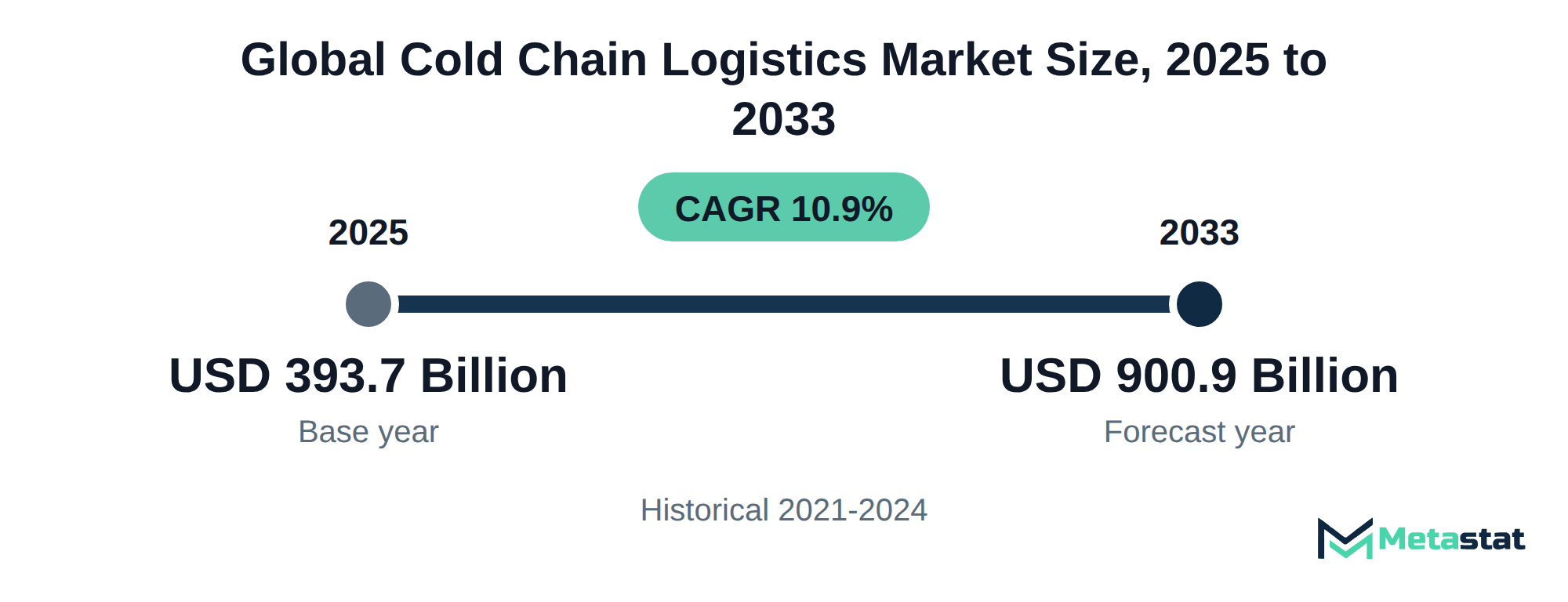
Market Valuation: Valued at $393.7 Billion in 2025, projected to reach $900.9 Billion by 2033 at a 10.9% CAGR.
Dominant Segment: Refrigerated Transportation leads the market, driven by increasing consumer demand for fresh and safe food products, with a projected value of USD 390 billion by 2033.
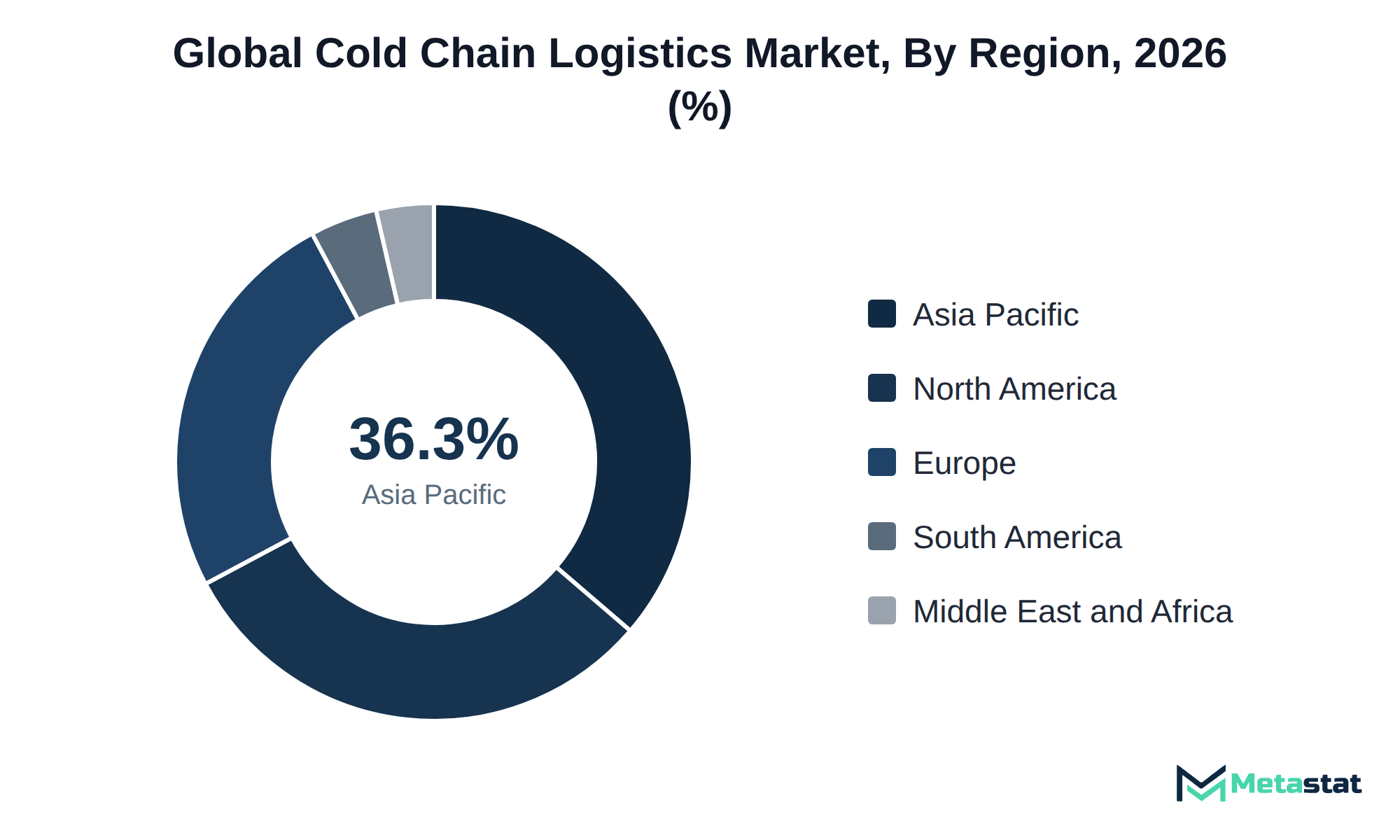
Geographic Lead: Asia Pacific is the dominant region, holding 36.3% of the market share, supported by a growing population and urbanization trends that drive demand for cold chain solutions.
What's Inside: The report provides comprehensive coverage of market dynamics, competitive analysis, and detailed forecasts from 2026 to 2033, focusing on service types, temperature ranges, and applications.
Emerging Trends: Technological advancements in temperature-controlled packaging and automation in warehouses are key drivers of innovation, enhancing operational efficiency and compliance in the cold chain logistics market.
Market Dynamics: Increased demand from food retailers and evolving consumer habits towards online grocery shopping are reshaping the cold chain logistics landscape, emphasizing the need for reliable temperature-controlled systems.
Choose Your License
Global Cold Chain Logistics Market
The global Cold Chain Logistics market was valued at USD 393.7 billion in 2025 and is projected to reach USD 900.9 billion by 2033, growing at a CAGR of 10.9% over the forecast period.
The Cold Chain Logistics market encompasses the transportation and storage of temperature-sensitive products, ensuring their safety and quality throughout the supply chain. Buyers invest in these services to maintain product integrity, comply with regulations, and meet consumer expectations for fresh and safe goods. This market includes refrigerated warehousing, refrigerated transportation, and value-added services. It serves food, pharmaceutical, and biotechnology industries.
Growth in the market is driven primarily by increasing demand for perishable goods and the expansion of global trade. The refrigerated transportation segment holds the highest value, reflecting its importance in moving goods at controlled temperatures. In terms of regional shares, Asia Pacific leads with 36.3% of the market, which reflects its large role in global supply chains. North America holds 30.9% of the market in 2025, with the US leading in 2026.
Technological advancements and rising demand for efficient logistics further support market development. Factors including increased online grocery shopping and the growing emphasis on food safety and quality standards drive the adoption of cold chain logistics. This trend highlights the importance of reliable temperature-controlled systems in maintaining product quality and compliance across various industries.
The Cold Chain Logistics market serves industries requiring precise temperature control for the storage and distribution of perishable goods. Buyers invest in these services to ensure compliance with safety regulations and maintain product integrity, which is essential for sectors including food and pharmaceuticals. The growing demand for fresh and frozen food products, along with the rising awareness of food safety, drives spending in this market.
Refrigerated Transportation emerges as the segment with the most value, supported by increasing global trade and consumer preferences for fresh products. The Asia Pacific region follows closely behind, reflecting a growing population and urbanization trends, contributing to a higher demand for cold chain solutions.
One main growth driver is the expansion of e-commerce, particularly for food delivery services, which necessitates efficient cold chain logistics solutions. The evolution of consumer habits towards online grocery shopping influences the market's trajectory, prompting investment in advanced logistics and technology to enhance service capabilities. This trend positions the market for sustained growth and adaptation to changing consumer needs.
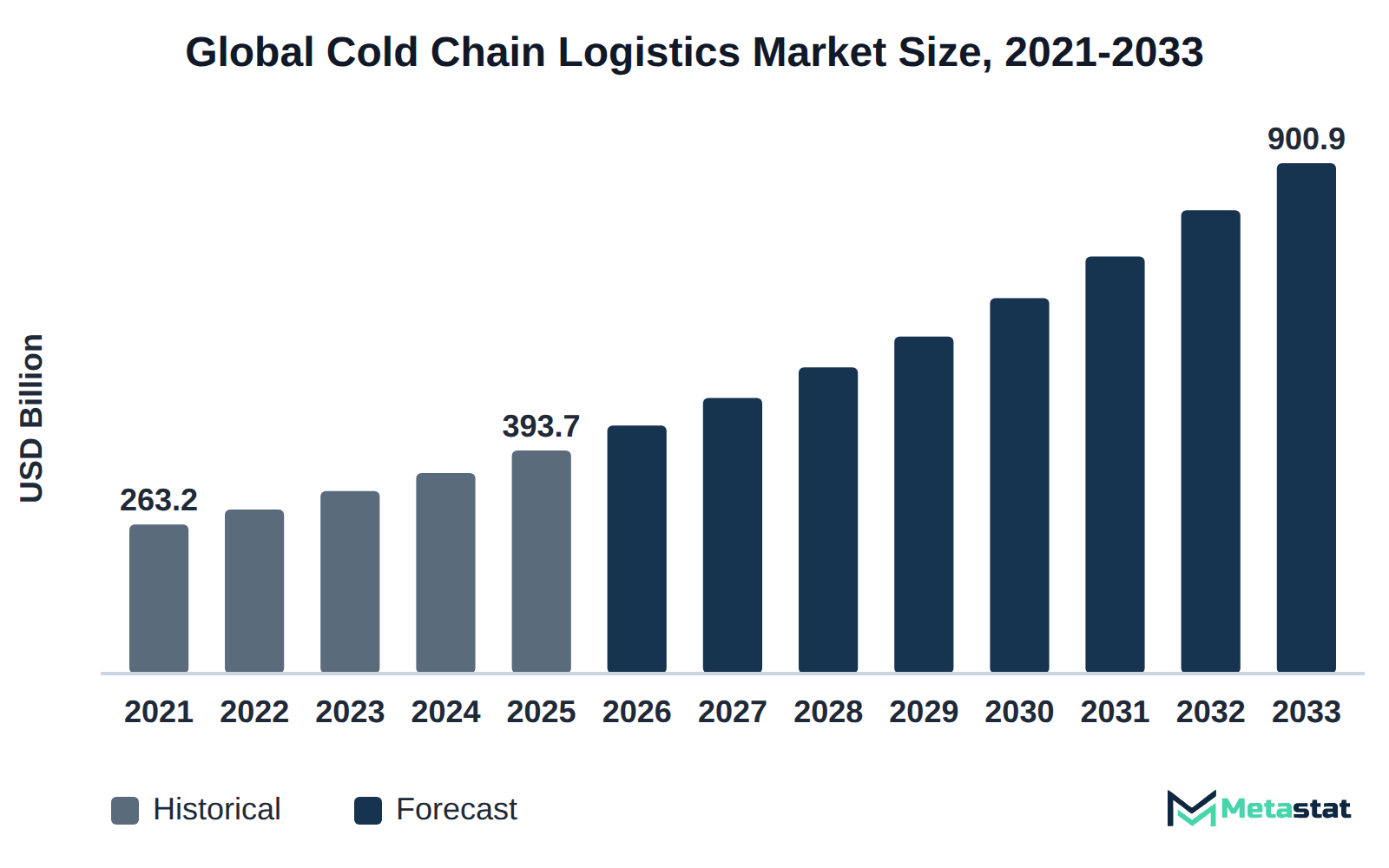
Recent advancements in refrigerated Less-than-Container Load (LCL) consolidation have transformed logistics for food exporters. This process optimizes shipping by combining multiple shipments into a single container, enhancing efficiency and reducing costs. With the Cold Chain Logistics market growing, the demand for refrigerated transportation services is projected to reach USD 390 billion by 2033, reflecting substantial investment in logistics infrastructure.
Port cold storage facilities have emerged as a critical component in this transformation. They provide food exporters with the ability to maintain product integrity and extend shelf life while waiting for further distribution. The implementation of innovative cold storage technologies enhances temperature control and monitoring, ensuring compliance with safety standards. This capability is vital for perishable goods, including meat and seafood, which rely on precise temperature management to prevent spoilage.
Investing in these advanced systems and facilities enables exporters to meet international food safety regulations effectively while minimizing logistics costs. Competition intensifies in the market, and food exporters that use improved refrigerated LCL consolidation and port cold storage options gain operational efficiency and customer satisfaction.
Investments in automated frozen warehouses significantly optimize operational efficiency within the Cold Chain Logistics market. These facilities employ advanced robotics and software systems to manage inventory, reducing labor costs and improving accuracy in order fulfillment. For instance, the segment of Refrigerated Warehousing is projected to grow from USD 223.6 billion in 2026 to USD 438 billion by 2033, reflecting a compound annual growth rate of 10.1%. This growth illustrates the shift towards automation in cold storage, driven by rising demand for efficiency and reliability.
Energy consumption represents a substantial operational cost for frozen warehouses. Implementing energy-efficient technologies, including LED lighting and high-efficiency refrigeration systems, lowers energy bills and contributes to sustainability goals. As energy costs are forecast to rise, adopting such technologies helps maintain competitive pricing. Buyers increasingly prioritize energy management when selecting service providers, making it a key factor in contract negotiations. By focusing on energy efficiency, companies secure long-term savings and enhance their market positioning, ultimately driving demand for automated solutions in the Cold Chain Logistics market.
Pharmaceutical cold chains operate under stringent requirements to ensure that temperature-sensitive products maintain efficacy and safety. The market anticipates growth driven by a rising demand for biopharmaceuticals and vaccines, which necessitate strict temperature control. The chilled and ultra-low temperature segments meet these needs. In 2026, the frozen temperature range is projected to reach USD 221.4 billion, increasing to USD 443.8 billion by 2033, reflecting a compound annual growth rate of 10.4%.
Key players in the cold chain logistics market, particularly those specializing in pharmaceuticals, focus on providing reliable solutions that adhere to regulatory standards. This adherence becomes essential for companies distributing critical medical products. The ability to offer temperature-controlled environments ensures that essential drugs and biologics remain effective throughout transportation and storage processes. Consequently, firms investing in robust cold chain solutions enhance operational efficiency, mitigate risks associated with product spoilage, and ultimately improve profitability.
Regulatory agencies enforce strict compliance regarding temperature management for pharmaceutical products, impacting supply chain logistics significantly. The growing complexity of biologics and the increasing number of temperature-sensitive products contribute to heightened scrutiny on storage and transport conditions. Cold chain logistics providers invest in technology and infrastructure to ensure compliance while providing transparent monitoring capabilities. The market adapts to these requirements, driving innovation in packaging, temperature monitoring, and transportation methods.
Investments in the cold chain logistics market address compliance and create significant growth opportunities. Enhanced capabilities in chilled and ultra-low temperature logistics lead to better service offerings, catering to the pharmaceutical industry's unique demands. Establishing a robust cold chain improves supply chain resilience and customer satisfaction, promoting long-term partnerships with pharmaceutical manufacturers and distributors.
Food exporters rely on reliable cold chain logistics partners to ensure compliance with strict quality and safety standards. The refrigerated transportation segment is projected to reach USD 390 billion by 2033, reflecting increasing demand for efficient temperature-controlled shipping solutions. This growth makes it necessary for exporters to choose logistics partners with expertise in maintaining optimal temperatures throughout the supply chain.
Exporters should emphasize the importance of real-time tracking and monitoring capabilities offered by their logistics partners. The ability to provide timely updates on shipment locations and conditions enhances transparency, allowing exporters to respond quickly to any potential issues. With this level of oversight, exporters protect their investments and maintain customer satisfaction by ensuring the integrity of their products during transit.
Selecting a logistics partner with a robust network of refrigerated warehousing facilities significantly improves operational efficiency. The refrigerated warehousing segment is expected to grow from USD 223.6 billion in 2026 to USD 438 billion by 2033, indicating a strong trend toward centralized storage solutions that support efficient distribution. By using advanced warehousing capabilities, exporters reduce lead times, optimize inventory management, and strengthen their competitive position in the cold chain logistics market.
Food retailers drive significant investment in cold chain logistics, primarily due to heightened consumer expectations for fresh and safe food products. This shift reflects a broader trend in consumer behavior, with increasing demand for perishable goods that require reliable temperature-controlled transportation and storage. Retailers seek to minimize food spoilage and ensure quality, leading to higher volumes of temperature-sensitive products within their supply chains. The market for cold chain logistics is projected to reach USD 900.9 billion by 2033, demonstrating the financial impact of this growing demand. Suppliers that adapt to these evolving needs experience increased competition and potential for revenue growth, influencing overall market dynamics.
Advancements in temperature-controlled packaging technologies significantly influence the Cold Chain Logistics market. Innovations in materials and designs enhance the preservation of perishable goods during transit, reducing spoilage rates. Enhanced insulation properties and advanced temperature monitoring systems improve the reliability of temperature control, ensuring that products remain within specified temperature ranges. This shift attracts investment from food manufacturers, pharmaceuticals, and retailers seeking to improve operational efficiency and product integrity.
Technological improvements in packaging support compliance with regulatory standards and provide competitive advantages through reduced waste and increased customer satisfaction. The ability to maintain optimal conditions throughout the supply chain builds trust between suppliers and consumers. Ultimately, these innovations contribute to growth in the market, enabling stakeholders to respond effectively to evolving consumer demands and expanding market opportunities.
Price sensitivity significantly influences the adoption of cold chain logistics, particularly among small and medium-sized enterprises (SMEs) in the food sector. Rising operational costs, including transportation and storage expenses, hinder investment in essential infrastructure and services. This limitation results in slower uptake of advanced logistics solutions, with SMEs prioritizing budget constraints when managing perishable goods. The requirement for high-quality temperature control systems becomes a tough decision due to increased financial pressure, leading to smaller order sizes and delayed upgrades or replacements for outdated systems. The market experiences diminished growth opportunities in this segment, with potential buyers remaining cautious about committing to long-term investments. Addressing price sensitivity through innovative models, including shared logistics platforms, could enhance access to cold chain solutions, facilitating broader adoption across the sector. Ultimately, the influence of pricing dynamics poses a barrier to market expansion and the overall efficiency of cold chain logistics for SMEs.
Rising operational costs challenge suppliers in the Cold Chain Logistics market, particularly in the areas of refrigerated warehousing and transportation. Increased energy prices and labor costs contribute significantly to this issue, impacting profitability. In response, suppliers seek to implement energy-efficient technologies and optimize their operational processes. These strategies focus on reducing waste and improving resource allocation, enabling suppliers to maintain competitive pricing while ensuring service quality. Investments in automation and data analytics provide enhanced visibility into supply chain operations, allowing for better demand forecasting and inventory management. The combination of these efforts supports improved margins while addressing the financial constraints faced by suppliers. Adapting to these pressures remains critical for sustaining growth and competitiveness in the evolving market.
The segment of refrigerated transportation presents significant growth potential within the Cold Chain Logistics market. This segment is projected to reach USD 390 billion by 2033, reflecting a compound annual growth rate (CAGR) of 11.2%. Increased demand for perishable products, particularly in regions with expanding consumer bases, drives the growth in refrigerated transportation services. The necessity for timely and efficient delivery of temperature-sensitive goods, including fresh produce and pharmaceuticals, encourages logistics providers to invest in advanced refrigerated transport solutions. This investment enables enhanced operational efficiency and reliability in ensuring product integrity during transit. Consequently, businesses that prioritize refrigerated transportation strengthen their competitive positioning in the market and improve overall service offerings without compromising quality.
The Global Cold Chain Logistics market is segmented based on Service Type, Temperature Range, Application, and Trade Flow.
This segment serves various industries, including food and pharmaceuticals, by providing temperature-controlled storage solutions essential for preserving product quality. The segment's growth is driven by increasing consumer demand for fresh produce and safe food products. Unlike other service types, including refrigerated transportation, which grows at a faster rate of 11.2%, refrigerated warehousing offers a stable growth trajectory, appealing to businesses focused on long-term storage needs. The segment attracts large retailers and manufacturers who prioritize reliability and quality in their supply chains. Emphasis on regulatory compliance around food safety and effective inventory management further highlights the segment's significance in the broader market.
Refrigerated Transportation is estimated to reach USD 390 billion by 2033, at a CAGR of 11.2% during the forecast period. This segment is essential in the distribution of temperature-sensitive goods, primarily serving the food and pharmaceutical industries. Stakeholders in these sectors rely on reliable transportation to maintain the quality and safety of their products during transit. Increased consumer demand for fresh and safe food products significantly drives the growth of this segment. Compared to other service types, including refrigerated warehousing, this segment experiences faster growth due to the rising emphasis on quick and efficient delivery of perishable goods. The need for advanced technology and infrastructure to ensure proper temperature control throughout the transportation process presents a barrier, yet ongoing investments in these areas indicate strong market potential. The market continues to evolve, highlighting the importance of refrigerated transportation in ensuring product integrity and accessibility.
Value-Added Services segment is expected to reach USD 72.9 billion by 2033. This segment includes services that enhance logistics offerings beyond basic refrigerated storage and transportation. Industries including food and pharmaceuticals apply these services to improve supply chain efficiency and product safety. Factors driving this segment include increased demand for tailored solutions that address specific customer needs and stringent regulatory requirements for product integrity. The growth rate for Value-Added Services is slower than other service types, at a CAGR of 10.1%. Refrigerated transportation grows faster, at a CAGR of 11.2%. The focus on customization and compliance serves to differentiate this segment, catering to clients seeking comprehensive cold chain solutions, illustrating its unique position within the market.
This segment is essential in the storage and transportation of temperature-sensitive food products, particularly meat, fish, and dairy, by retailers and food service companies. Growing demand for frozen food products drives expansion in the segment, reflecting consumer preferences for convenience and longer shelf life. Compared to other temperature range segments, the frozen segment experiences a stronger growth trajectory, evidenced by its higher CAGR of 10.4%, surpassing the chilled segment, which holds a CAGR of 10.3%. The frozen segment's pricing dynamics evolve due to operational complexities in maintaining optimal temperatures, distinguishing it from controlled ambient offerings, where less rigorous temperature management is required.
The chilled segment is estimated to reach USD 331.9 billion by 2033, at a CAGR of 10.3% during the forecast period. This segment primarily includes temperature-sensitive products including dairy items, fruits, and vegetables, which require precise temperature control during storage and transportation. Retailers and food manufacturers heavily rely on chilled logistics to maintain product quality and extend shelf life. The growing demand for fresh produce and convenient food options drives investment in this area. The focus on sustainability and eco-friendly practices within the chilled segment further differentiates it from others, attracting environmentally conscious buyers and investors, supporting overall market growth.
Controlled Ambient segment is expected to reach USD 75.9 billion by 2033. This segment provides an optimal solution for products requiring stable temperatures outside traditional frozen or chilled environments, catering to industries including pharmaceuticals, food packaging, and electronics. The growing demand for controlled ambient logistics stems from the increasing necessity to maintain product integrity during transportation. This segment experiences a distinct price point and operational complexity compared to frozen and chilled categories, attracting a different buyer demographic focused on longer shelf life and product preservation. With a projected CAGR of 16.7%, the adoption of controlled ambient logistics is expected to accelerate as companies seek to optimize their supply chains while ensuring compliance with regulations regarding product safety and efficacy. This segment handles a wide range of temperature-sensitive items and contributes to market growth.
Deep Frozen and Cryogenic segment is projected to grow at a CAGR of 16.7% during the forecast period. This segment targets industries that require ultra-low temperature storage solutions, including pharmaceuticals and specialized food products. Demand for this segment is largely driven by the increasing need for safe storage and transportation of temperature-sensitive goods, benefiting both consumers and businesses. The segment distinguishes itself from others through its higher growth rate, supported by the rising adoption of advanced technologies capable of maintaining low temperatures and enhancing product integrity. Investment in infrastructure and innovation in related technologies will shape the growth trajectory of this segment. Its unique requirements attract specific buyers who prioritize quality and safety standards over cost, setting it apart from other temperature ranges, including chilled or frozen.
The Meat and Poultry segment is valued at USD 90.6 billion in 2026 and is projected to reach USD 176.2 billion by 2033, at a CAGR of 10% during the forecast period. This segment is crucial for food processors and distributors, focusing on maintaining optimal temperatures to preserve product quality and safety throughout the supply chain. Rising consumer demand for fresh and high-quality protein sources drives growth in this segment. Regulatory pressures regarding food safety standards create a consistent need for effective cold chain solutions. Compared to other application segments, including Fish and Seafood, which has a projected growth of USD 115.8 billion by 2033, the Meat and Poultry segment exhibits a competitive CAGR, reflecting substantial investment and commitment from industry players. Such dynamics highlight the Meat and Poultry segment's unique position and significance within the Cold Chain Logistics market.
Fish and Seafood segment is estimated to reach USD 115.8 billion by 2033, at a CAGR of 10% during the forecast period. This segment caters to the transportation and storage of seafood products, ensuring freshness and quality for consumers. Key players in this segment include seafood processors and distributors, who prioritize temperature control throughout the supply chain. Increasing consumer demand for fresh and high-quality seafood products drives growth in this segment. Compared to other applications, the Fish and Seafood segment experiences robust demand, with a CAGR that aligns closely with overall market growth. However, challenges related to sustainability regulations and fluctuating prices for seafood impact profitability. This segment stands out within the Cold Chain Logistics market due to its reliance on specific temperature management techniques, highlighting the need for specialized logistics solutions.
The Dairy and Frozen Desserts segment is expected to reach USD 111.8 billion by 2033. This segment serves various players in the food industry, including manufacturers, wholesalers, and retailers, who require efficient management of perishable products. An increase in consumer demand for dairy products and frozen desserts drives growth in this area, reflecting changing dietary preferences and a rising inclination toward convenience foods. Unlike other applications, this segment features a consistent demand pattern, influenced by both seasonal trends and year-round consumption. The growth rate for this segment aligns with a CAGR of 10%, which is competitive compared to others including Meat and Poultry. Ongoing investment in technology and processes is expected to enhance the quality and extend the shelf-life of dairy and frozen dessert offerings.
The Fruits and Vegetables segment is projected to grow at a CAGR of 10.6% during the forecast period. This segment is crucial for the distribution of perishable goods, including various fruits and vegetables, which require precise temperature control to maintain quality and freshness. Retailers, wholesalers, and distributors engage in cold chain logistics to ensure these products reach consumers in optimal condition. Increased consumer demand for fresh produce drives growth in this segment, with health-conscious consumers prioritizing quality and nutritional value. Competitive pressures require suppliers to adopt advanced logistics solutions. Unlike segments including Meat and Poultry or Fish and Seafood, the Fruits and Vegetables segment experiences a moderate growth rate, reflecting both the increasing popularity of plant-based diets and the unique challenges of perishability. The market continues to adapt with innovations in tracking and temperature control technologies, enhancing efficiency in transporting these sensitive products.
Prepared Foods encompass a variety of food items that require temperature control during storage and transportation to ensure quality and safety. This segment primarily serves food manufacturers and distributors, who rely on cold chain logistics to maintain freshness and compliance with health regulations. Increasing consumer demand for ready-to-eat meals drives growth in this segment. Tightening safety standards and the growing trend toward home delivery of convenience foods further influence market dynamics. This segment experiences slower growth compared to others, including meat and poultry, reflecting a more mature market presence. While maintaining competitive pricing remains crucial, the emphasis on quality assurance in food preparation and packaging has become a distinguishing factor between this segment and those focused on raw food products. The cold chain logistics market supports the effective distribution of prepared foods, ensuring that safety and quality standards remain a priority.
Bakery and Confectionery involves products that require specific temperature control during storage and transportation to maintain freshness and quality. This segment serves bakeries and confectionery manufacturers, who rely on efficient cold chain processes to preserve goods from production to retail. Demand for these products rises due to increasing consumer preference for baked goods and artisanal confectionery items. Adaptations in production technologies further influence this segment, enhancing the ability to maintain product integrity throughout distribution. Compared to other segments, including Meat and Poultry or Dairy and Frozen Desserts, Bakery and Confectionery typically experiences slower growth rates and different buyer dynamics, reflecting diverse consumer preferences and purchasing behaviors in the market. The particular handling requirements set this segment apart, emphasizing the importance of reliable logistics solutions for preserving product quality.
Pharmaceuticals and biologics require precise temperature control during storage and transportation to maintain efficacy and safety. This segment primarily serves pharmaceutical companies, biotechnology firms, and healthcare providers who depend on temperature-sensitive products including vaccines, insulin, and biologic therapies. Growing demand for biologics and vaccines, driven by advancements in healthcare and increased focus on preventive medicine, supports this segment. Regulatory requirements for maintaining stringent temperature conditions during transport further influence growth. Compared to other applications, the pharmaceuticals and biologics segment entails higher costs due to specialized storage facilities and transportation methods, positioning it as a critical area in the market.
This segment includes specialized logistics for cut flowers, specialty chemicals, and other products requiring strict temperature control. Key users include floriculture businesses and chemical manufacturers, both of whom rely on maintaining product integrity during transport and storage. Growing consumer demand for fresh flowers and perishable specialty chemicals drives logistics needs in this area. The segment distinguishes itself from others through higher pricing structures, reflecting the increased handling and care required for these sensitive items. Due to the unique characteristics of the products involved, cold chain logistics for cut flowers and specialty chemicals involves tailored solutions that set it apart from segments catering to traditional food items. The cold chain logistics market adapts to these specific requirements, improving operational standards and enhancing service offerings.
Domestic trade flow is valued at USD 291 billion in 2026 and is projected to reach USD 569.9 billion by 2033, at a CAGR of 10.1% during the forecast period. This segment serves grocery retailers, food manufacturers, and distributors, providing essential logistics for transporting temperature-sensitive products within national borders. Key drivers for growth within this segment include increasing consumer demand for fresh produce and meat, along with rising e-commerce activity in the food sector. Compared to cross-border trade, which is primarily driven by international shipping and logistics, the domestic segment experiences a more stable growth trajectory due to lower regulatory hurdles and complexities. The market's focus on domestic trade supports faster delivery times, enhancing service levels for end consumers.
Cross-Border segment is estimated to reach USD 331 billion by 2033, at a CAGR of 12.3% during the forecast period. This segment facilitates the transportation of temperature-sensitive goods across international borders, catering to various industries including food and pharmaceuticals. Key drivers include the increasing globalization of trade and the rising demand for fresh produce and perishable goods. Unlike other segments, Cross-Border logistics experiences higher growth rates due to expanding international trade agreements and e-commerce activities. These dynamics create unique opportunities and challenges, requiring specialized handling and compliance with varying regulations across different regions. The market for Cross-Border logistics continues to evolve, driven by the integration of advanced technologies and strong supply chain strategies.
Based on geography, the Global Cold Chain Logistics market is divided into North America, Europe, Asia-Pacific, South America, Middle East, and Africa.
Projected growth in North America highlights substantial demand within the Cold Chain Logistics market, driven primarily by the food and pharmaceutical industries. Specifically, meat and poultry, dairy products, and pharmaceuticals require rigorous temperature controls to ensure product integrity and safety. The infrastructure investment in refrigerated transportation and warehousing supports the increasing demand. North America holds a 30.9% share of the global market in 2025. By the end of 2033, the region is projected to reach USD 248.9 billion, reflecting a robust expansion trajectory. The concentration of major logistics companies in the United States, Canada, and Mexico equips the market to meet escalating consumer expectations and regulatory standards, enhancing overall competitiveness.
In Europe, the Cold Chain Logistics market experiences significant demand driven by the food and beverage sector, particularly the meat, dairy, and seafood industries. Stringent regulations regarding food safety and quality standards contribute to the increasing reliance on cold chain solutions. Countries including Germany, France, and the UK emphasize advanced logistics infrastructure to meet these regulatory demands, enhancing operational efficiency. The market in this region is projected to hold a 25% share globally by 2025. Investment in innovative technologies, including IoT and automation, supports growth by improving tracking and monitoring capabilities. Rising consumer expectations for fresh and safe food products further drive the market expansion. With a focus on sustainability, the region is experiencing a shift towards eco-friendly cold chain practices, aligning with broader environmental goals.
Demand in the Asia-Pacific region for the Cold Chain Logistics market is driven by significant food production and consumption patterns, particularly in countries like China, India, and Japan. The need for efficient distribution of perishable goods, including meat, seafood, and dairy products, fuels growth in this sector. Investment in infrastructure, including cold storage facilities and transportation networks, enhances capabilities, resulting in improved efficiency. The increasing prevalence of e-commerce and online grocery shopping increases the demand for reliable cold chain services across the region. By 2025, Asia-Pacific is expected to account for 36.3% of the global market, reflecting its importance in the cold storage and logistics ecosystem. This region represents a critical focal point for advancements in temperature-controlled logistics, creating opportunities for suppliers to enhance their service offerings.
In South America, the Cold Chain Logistics market experiences growth driven by increasing demand for perishable goods, particularly in Brazil and Argentina. The region's warm climate necessitates effective temperature-controlled solutions, especially for the food and beverage sector. Brazil's robust agricultural output contributes significantly to high demand for logistics services capable of maintaining product integrity. The expansion of urban populations raises consumer expectations for fresh produce and quality perishables. Challenges include underdeveloped infrastructure in certain areas, affecting efficiency and costs. By 2025, South America holds a 4.2% share of the global market, indicating a significant opportunity for growth in the coming years. Investments in improved logistics capabilities and cold storage facilities are expected to enhance the market's potential.
Growing demand in the Middle East and Africa reflects increasing investments in food safety and quality standards. Countries including Saudi Arabia and the UAE experience a strong food service sector that drives the Cold Chain Logistics market forward. South Africa significantly contributes to regional trade, with its rich agricultural base supporting cold chain services for fresh produce. The market faces unique challenges due to varying infrastructure quality and regulatory frameworks across nations, impacting operational efficiency. This region holds a 3.60% share of the global market, highlighting the importance of robust logistics solutions tailored to local needs. The development of infrastructure and strategic partnerships in cold storage facilities further supports market growth in the region.
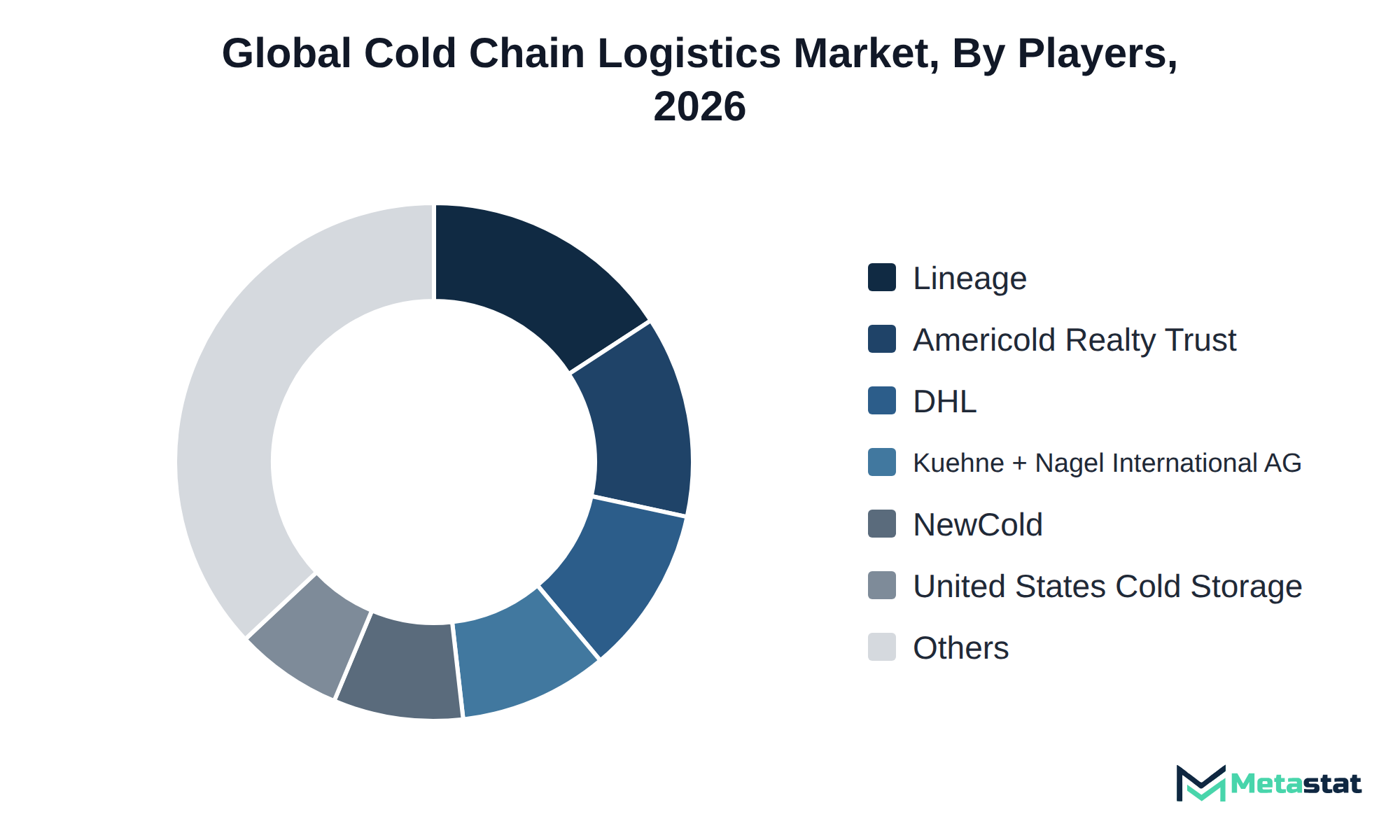
Companies in the Cold Chain Logistics market compete primarily through service specialization and operational efficiency. Refrigerated warehousing, refrigerated transportation, and value-added services emerge as key service types that shape competitive positioning. Price, service quality, and ecosystem integration influence buyer decisions. For instance, Lineage, Inc. focuses on providing comprehensive refrigerated warehousing solutions, while Americold Realty Trust, Inc. emphasizes scalable transportation services.
Several companies differentiate themselves by targeting specific applications. Nichirei Corporation primarily serves the meat and poultry sector, meeting strict regulatory standards. In contrast, DHL Group stands out in the logistics of pharmaceuticals and biologics, ensuring compliance with temperature-sensitive requirements. These strategic focuses reflect the diverse nature of the market and the tailored offerings companies provide to various buyer segments.
This growth relies on several key developments in the Cold Chain Logistics market. Second, increasing demand for refrigerated transportation, expected to reach USD 390 billion by 2033, will drive market growth, supported by enhancements in cross-border trade. Third, value-added services, which are increasingly integrated into cold chain operations, will contribute to revenue growth, targeting USD 72.9 billion by 2033.
Several risks could impede this growth trajectory. Fluctuations in regulatory standards across regions, particularly in North America and Europe, pose challenges for market players. These regions account for significant shares of the market, with North America projected to generate USD 248.9 billion by 2033. Disruptions in compliance or increased operating costs would negatively impact investment and expansion efforts. The outlook remains positive, and careful navigation of regulatory environments alongside robust infrastructure development is crucial for the Cold Chain Logistics market to achieve its forecasted growth.
By Temperature Range: Frozen, Chilled, Controlled Ambient, Deep Frozen and Cryogenic
By Application: Meat and Poultry, Fish and Seafood, Dairy and Frozen Desserts, Fruits and Vegetables, Prepared Foods, Bakery and Confectionery, Pharmaceuticals and Biologics, Others (Cut Flowers, Specialty Chemicals)
By Trade Flow: Domestic, Cross-Border
The report strategically identifies and profiles the key market players and analyses their core competencies in each sub-segment of the Cold Chain Logistics market.
Report Attributes | Details |
Study Period | 2021-2033 |
Base Year | 2025 |
Estimated Year | 2026 |
Forecast Period | 2026-2033 |
Historical Period | 2021-2025 |
Growth Rate | CAGR 10.9% from 2026 to 2033 |
Revenue Unit | USD billion |
Segmentation | By Service Type, Temperature Range, Application, Trade Flow, and Region |
By Region | North America (By Service Type, Temperature Range, Application, Trade Flow, and Country)
|
Europe (By Service Type, Temperature Range, Application, Trade Flow, and Country)
| |
Asia Pacific (By Service Type, Temperature Range, Application, Trade Flow, and Country)
| |
South America (By Service Type, Temperature Range, Application, Trade Flow, and Country)
| |
Middle East and Africa (By Service Type, Temperature Range, Application, Trade Flow, and Country)
|
Find answers to common questions about this report
The Cold Chain Logistics market size was valued at USD 393.7 billion in 2025.
The market is projected to grow at a CAGR of 10.9% during the forecast period from 2026 to 2033.
The North America Cold Chain Logistics market size is estimated to reach USD 248.9 billion by 2033.
Refrigerated Warehousing leads the Cold Chain Logistics market with a projected value of USD 438 billion by 2033, based on its significant share compared to other service types.
Food retailers drive significant investment in cold chain logistics due to heightened consumer expectations for fresh and safe food products. Price sensitivity among small and medium-sized enterprises in the food sector poses a barrier to market expansion and overall efficiency.
Price sensitivity significantly influences the adoption of cold chain logistics, particularly among small and medium-sized enterprises in the food sector. Rising operational costs, including transportation and storage expenses, hinder investment in essential infrastructure and services, leading to slower uptake of advanced logistics solutions.
Technological advancements in temperature-controlled packaging enhance the preservation of perishable goods, driving investment from food manufacturers and retailers. addressing price sensitivity through innovative logistics models could facilitate broader adoption among small and medium-sized enterprises, improving overall efficiency in the cold chain logistics market.
The Cold Chain Logistics market is estimated to reach a valuation of USD 900.9 billion by 2033.
Key players operating in the Cold Chain Logistics market include Lineage, Inc., Americold Realty Trust, Inc., NewCold, Nichirei Corporation, A.P. Moller - Maersk A/S, DHL Group, Kuehne + Nagel International AG, and United Parcel Service, Inc.
Food retailers drive significant investment in cold chain logistics due to heightened consumer expectations for fresh and safe food products. This trend reflects increasing demand for perishable goods requiring reliable temperature-controlled transportation and storage.
The analysts below cover Food and Beverages research at Metastat Insights.
LEAD ANALYST
Utkarsh Khirodkar is a Lead Market Research Analyst at MetaStat Insight, specializing in market intelligence, technology sector assessments, and competitive strategy.

LEAD PRINCIPAL ANALYST, PHARMA AND HEALTHCARE
Food and Beverages · Healthcare · Healthcare IT · Medical Devices
Ajay Devgire is the Lead Healthcare Analyst at MetaStat Insight, leading strategic research and market intelligence initiatives across the global healthcare domain.

SENIOR RESEARCH ANALYST
Biotechnology · Food and Beverages · Medical Devices · Packaging
Snehal Pasalkar is a Research Analyst at MetaStat Insight, operating at the intersection of life sciences research, competitive strategy, and market intelligence.
Our group needed clearer visibility into out-of-autoclave processing timelines for high-temperature thermoplastic composites. MetaStat Insight delivered an objective assessment that contrasted automated fiber placement scrap rates with traditional thermoset prepreg layup cycles. The supplier landscape mapped out primary resin suppliers and tape slitting capacity across France, Germany, and Japan with solid technical accuracy. Their analyst handled our questions on precursor supply risks during an unscheduled inquiry call, providing clear, unembellished context.
Evaluating sensor fusion reliability across harsh operating environments can be tricky without field-validated data. The study on agricultural autonomous guidance systems clearly separated stereo vision setups from automotive-grade solid-state LiDAR. We appreciated the regional infrastructure analysis, specifically around RTK network density across North America and South America. During our follow-up consultation, the MetaStat Insight team walked through tier-two perception software partnerships, giving our engineering leads a practical basis for vendor shortlisting.
Analyzing the transition from natural gas to green hydrogen in iron ore reduction requires realistic infrastructure timelines. Meta stat insight supplied a detailed regional assessment of DRI plant conversion costs and scrap metal availability in North America and Western Europe. Their report carefully examined pellet quality specs and electrical grid access constraints without making oversimplified market assumptions. The research material served as a practical reference during internal technology roadmap discussions.
Explore related market intelligence reports worth reading alongside this one.