
LEAD ANALYST
Utkarsh Khirodkar is a Lead Market Research Analyst at MetaStat Insight, specializing in market intelligence, technology sector assessments, and competitive strategy.

Southern Africa Automotive Lubricants Market Size, Share, By Product Type (Engine Oils, Manual Transmission and Axle Oils, Automatic Transmission Fluids, Automotive Greases, Brake Fluids and Others), By Base Fluid Type (Mineral Oil-Based, Semi-Synthetic, Fully Synthetic and Others), By Distribution Channel (Distributors and Wholesalers, Direct Fleet and Workshop Supply, Direct OEM Supply, Direct Physical Retail Supply and Others), By Country (South Africa, Botswana, Eswatini, Lesotho and Namibia), Industry Analysis, Growth, Trends, and Forecast, 2026-2033
Report ID
MSI-5747
Published
November, 2026
Pages
306 Pages
Format
Historical
Base year
Forecast
Forecast period
Report Details
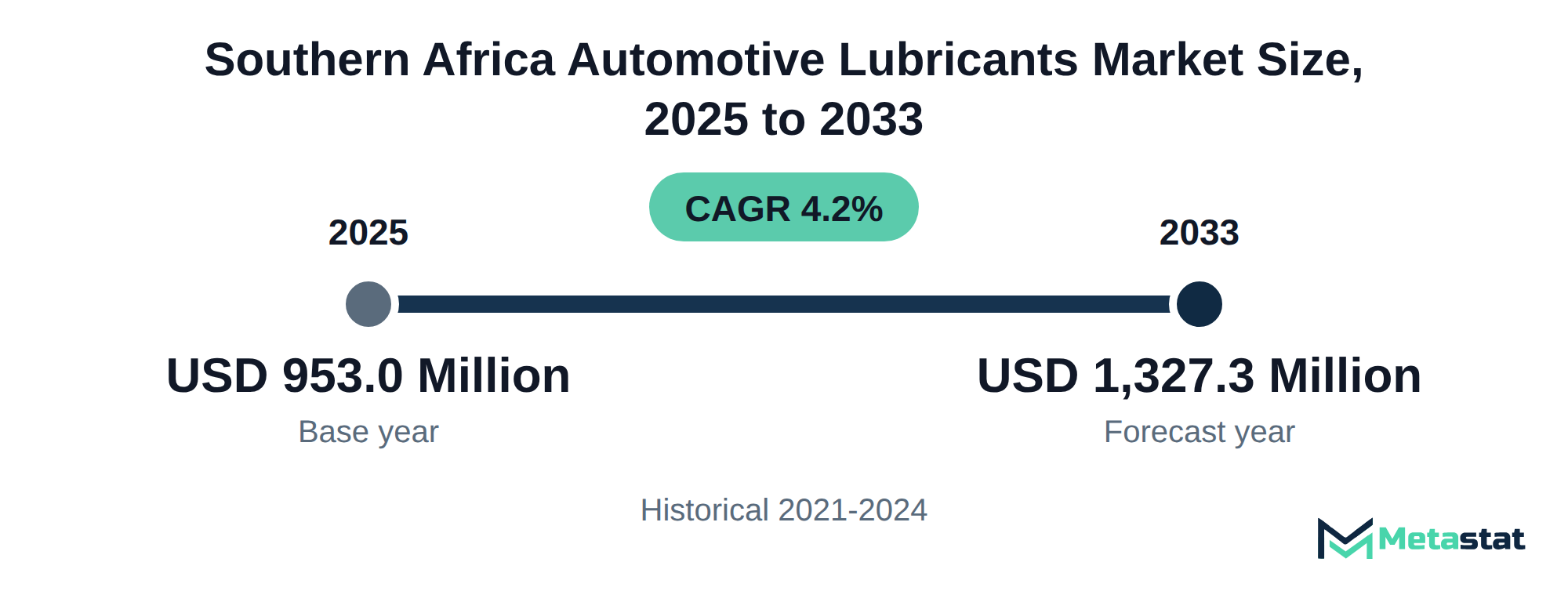
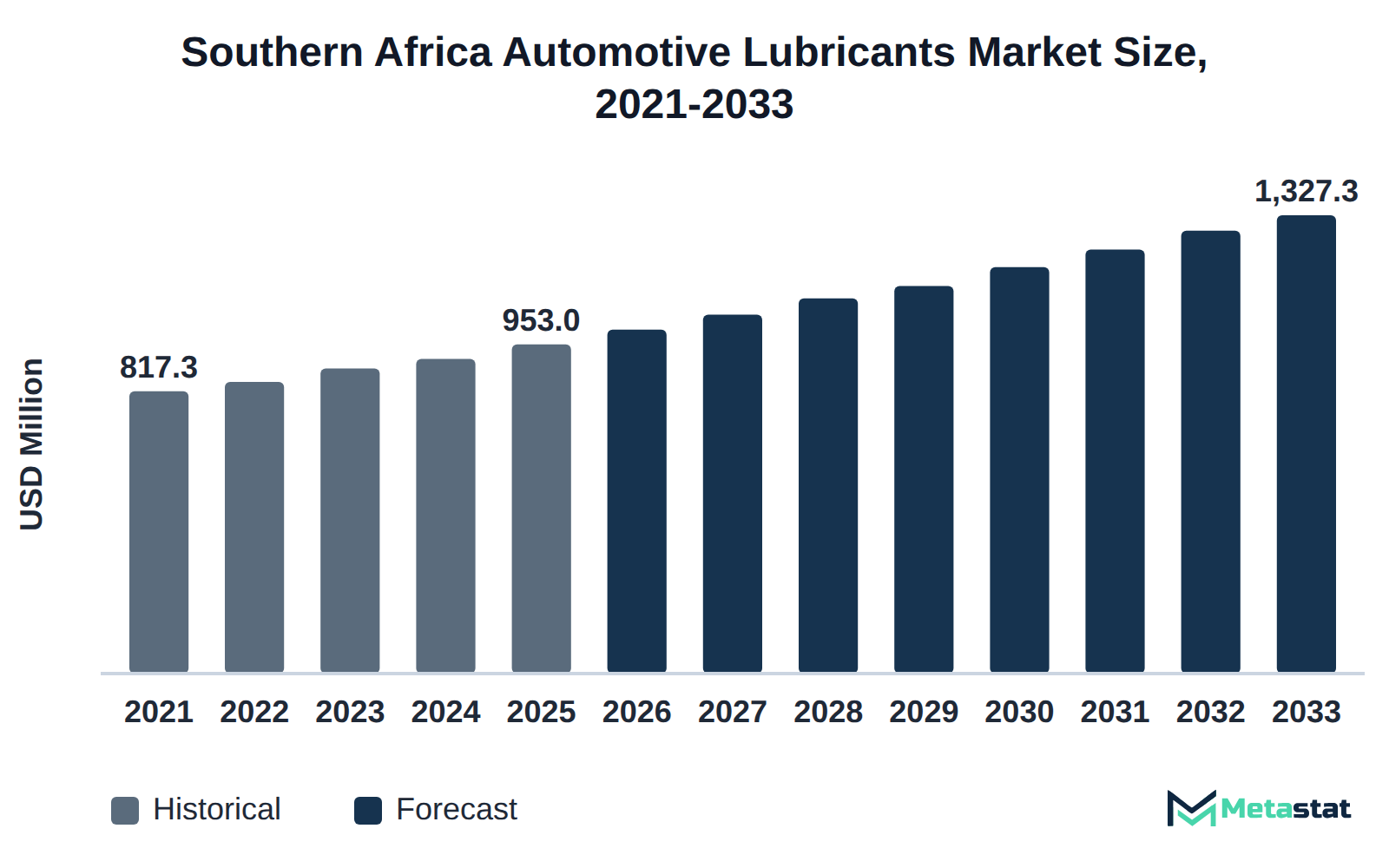
Market Valuation: Valued at $953 Million in 2025, projected to reach $1,327.3 Million by 2033 at a 4.2% CAGR.
Dominant Segment: Engine oils lead the Southern Africa Automotive Lubricants market, driven by their critical role in enhancing vehicle performance and longevity. This segment reflects a strong demand from both consumers and commercial fleets seeking high-quality lubricants.
Geographic Lead: South Africa holds the largest market share, fueled by its robust automotive industry and increasing demand for high-performance lubricants. The country's extensive vehicle ownership and maintenance culture further support market growth.
What's Inside: The report provides a comprehensive analysis of the Southern Africa Automotive Lubricants market, covering product types, base fluid types, distribution channels, and key growth trends from 2026 to 2033. It includes competitive coverage and insights into market dynamics.
Growth Drivers: The market is experiencing growth due to rising vehicle ownership, increased awareness of premium lubricants, and innovations in lubricant formulations. The shift towards synthetic and semi-synthetic oils is also a significant factor driving demand.
Emerging Trends: A notable trend is the increasing adoption of advanced lubrication technologies, which enhance product performance and environmental compliance. This shift is appealing to both consumers and regulatory bodies, contributing to market expansion.
Choose Your License
Southern Africa Automotive Lubricants Market
The Southern Africa Automotive Lubricants market was valued at USD 953 million in 2025 and is projected to reach USD 1,327.3 million by 2033, growing at a CAGR of 4.2% over the forecast period.
The Southern Africa Automotive Lubricants market encompasses a variety of products essential for vehicle performance, including engine oils, transmission fluids, and automotive greases. Buyers invest in these lubricants primarily to enhance engine efficiency, reduce wear and tear, and ensure optimal vehicle operation. The market appeals to automotive manufacturers, fleet operators, and maintenance workshops, driving sustained demand across these segments.
Growth in the market is propelled by increasing vehicle ownership and the need for regular maintenance among consumers. Engine oils are the largest segment by value, reflecting their direct effect on vehicle operation and longevity. Among the countries in the region, South Africa holds the largest market share, driven by its extensive automotive industry and a growing demand for high-quality lubricants. Vehicle sales and servicing within South African automotive retail feed into this demand.
Rising adoption of advanced lubrication technologies is a key driver of market expansion. These innovations enhance product performance and environmental compliance, appealing to both consumers and regulatory bodies. The Southern Africa Automotive Lubricants market benefits from these advancements, supporting overall revenue growth and competitive positioning.
The Southern Africa Automotive Lubricants market features products that enhance vehicle efficiency and longevity. Buyers invest in these lubricants to ensure optimal engine performance, reduce wear, and prolong vehicle life. The need for high-quality lubricants arises from the increasing number of vehicles on the road and the demand for improved fuel efficiency, driving sales across various segments.
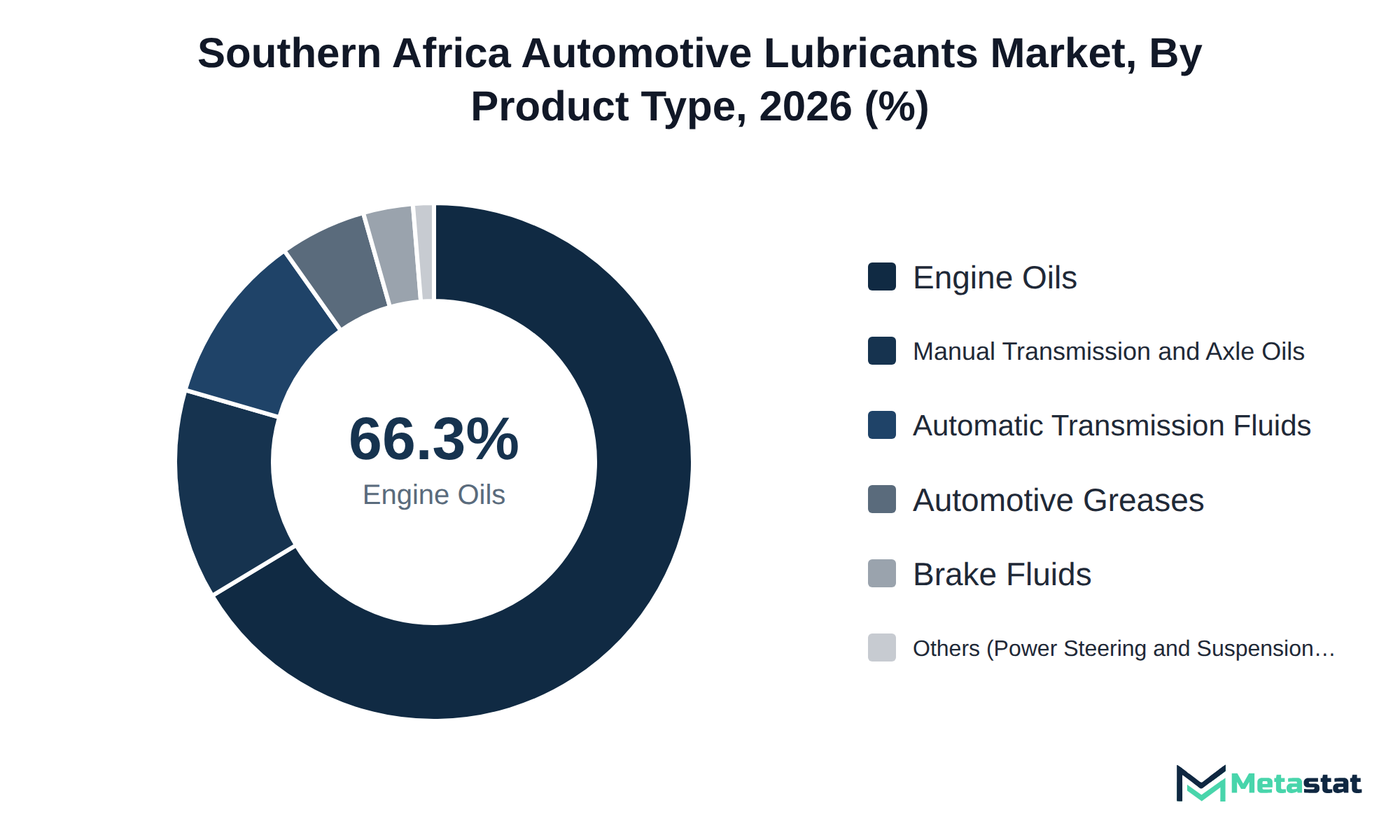
Engine oils represent the most valuable segment within the market, reflecting how much vehicle maintenance depends on them. South Africa holds the largest share of the market, supported by a robust automotive industry and a growing consumer base. Rising awareness of the benefits of advanced lubricants significantly influences growth, leading to increased adoption among both consumers and fleet operators.
Market expansion is further driven by a trend toward synthetic and semi-synthetic oils, which offer enhanced performance characteristics compared to traditional mineral oils. The Southern Africa Automotive Lubricants market is projected to experience sustained growth, fueled by innovations in lubricant formulations and a shift toward environmentally friendly products, aligning with global sustainability trends.
Innovations in heavy-duty engine oils reshape the Southern Africa Automotive Lubricants market, specifically in the heavy-duty and fleet workshop supply segments. The transition towards higher-performance engine oils results from increasing demands for efficiency and reduced emissions in commercial vehicles. A notable trend involves the shift towards semi-synthetic base fluids, which are expected to reach USD 364.5 million by 2033. This shift enhances lubricity and thermal stability, vital factors for heavy-duty engines operating under extreme conditions.
Fleet operators benefit from these advancements, with improved engine oils extending service intervals and reducing maintenance costs. Longer service intervals and lower maintenance costs also fit within wider fleet management priorities. Fleet managers who adopt these high-performance products gain operational efficiencies that improve profitability. The move towards semi-synthetic engine oils, driven by fleet requirements, supports competitive positioning in the market, catering to a growing customer base that prioritizes reliability and cost-effectiveness.
While the market evolves, suppliers focusing on high-quality heavy-duty engine oils position themselves favorably to meet the changing needs of fleet operators. These innovations support environmental compliance and add to the overall growth of the Southern Africa Automotive Lubricants market, reflecting the rising importance of performance-driven products.
Purchasing OEM-approved synthetic lubricants and automatic transmission fluids involves distinct pricing strategies that impact profitability for buyers in the Southern Africa Automotive Lubricants market. These products typically carry higher costs due to their advanced formulations and compliance with manufacturer specifications. In 2026, the market value for automatic transmission fluids is projected to reach USD 167.8 million, highlighting the growing demand for high-quality fluids that meet OEM standards.
Buyers engage in contractual agreements with suppliers to secure favorable pricing structures, which include volume discounts or long-term supply commitments. Such arrangements provide buyers with cost predictability and ensure a steady supply of essential lubricants. The relationship between buyers and suppliers is central to procurement in this market.
This emphasis on contractual models enhances operational efficiency while maintaining product quality standards. Rising demand for OEM-approved products drives suppliers that offer competitive pricing and reliable delivery to become increasingly critical partners for businesses focused on maintaining optimal vehicle performance.
Local blending operations within the Southern Africa Automotive Lubricants market have gained traction due to increasing demand for tailored lubricant solutions. These operations allow lubricant manufacturing businesses to formulate products that meet specific regional requirements while maintaining cost efficiency. For instance, South Africa's market is projected to expand from USD 888.1 million in 2026 to USD 1,169.2 million by 2033, reflecting a compound annual growth rate (CAGR) of 4%. This growth prompts local blenders to enhance production capabilities to cater to diverse consumer needs.
Private-label supply represents a significant opportunity for market participants to tap into customer loyalty and brand recognition. Many businesses use these services to offer high-quality lubricants under their own branding, which builds trust among end users. The trend toward private-label solutions continues to escalate, driven by rising consumer awareness regarding product performance and sustainability. With a projected CAGR of 4.7% for direct fleet and workshop supply, this segment highlights the potential for private-label suppliers to establish competitive advantages within the market.
Cross-border lubricant distribution has emerged as an essential component of the market landscape. The interconnectedness of Southern African countries allows for streamlined supply chains and expanded market reach. Companies capable of navigating regional regulations and freight forwarding logistics access untapped markets, significantly increasing their revenue potential. This dynamic environment encourages strategic partnerships among distributors, improving market penetration and fulfillment capabilities across the Southern Africa Automotive Lubricants market.
Establishing strong supply partnerships is a critical strategy for distributors in the Southern Africa Automotive Lubricants market. The demand for engine oils is projected to grow from USD 659.4 million in 2026 to USD 865.1 million by 2033. Distributors seeking to capitalize on this expansion align with reputable suppliers. Such alignment enhances credibility and ensures access to superior product offerings.
To successfully secure partnerships, distributors should focus on understanding the specific needs of their target markets. Engaging in market research to identify key trends, including the rising preference for semi-synthetic lubricants, is vital. This segment is expected to reach USD 364.5 million by 2033, highlighting a shift toward higher-quality products that meet modern automotive standards.
Demonstrating reliability in supply chain management increases attractiveness to potential partners. Distributors that emphasize their ability to maintain consistent stock levels and high service standards position themselves favorably in negotiations. A strong supply chain improves operational efficiency for partners and drives sales growth within the market.
Automotive maintenance has shifted toward higher-quality engine oils among consumers and commercial buyers. The increasing complexity of vehicle engines and rising awareness of the benefits of premium lubricants drive this trend. Vehicles become more sophisticated, and owners prioritize products that enhance performance and extend engine life. Data indicates that engine oils will generate revenue from USD 659.4 million in 2026 to USD 865.1 million by 2033, reflecting a compound annual growth rate of 4%. The market experiences heightened demand from fleet operators seeking reliability and efficiency, leading to increased volume sales. This focus on quality lubricants shows that product quality drives sales and customer loyalty in the market.
Innovations in formulations drive growth within the Southern Africa Automotive Lubricants market. A focus on advanced technology and sustainable materials enhances product performance and meets evolving consumer preferences. Suppliers increasingly incorporate bio-based and synthetic components, reflecting a shift towards environmentally friendly solutions. This trend attracts consumer segments prioritizing sustainability and efficiency, impacting purchasing decisions. The introduction of high-performance lubricants, designed for specific applications including extreme temperatures or high-stress conditions, further shapes the market landscape. Enhanced durability and protection against wear contribute to vehicle longevity, appealing to both personal and commercial vehicle owners. The market benefits from these advancements, leading to increased adoption rates and market share for providers embracing innovation.
Heightened competition among suppliers has resulted in more aggressive pricing strategies, impacting overall market dynamics. Cost advantages achieved through technological improvements enable vendors to offer competitive pricing while maintaining quality. This competition drives continuous improvement in product offerings, pushing suppliers to develop superior lubricants that meet the demands of diverse applications. The growth of the market reflects the necessity for businesses to adapt to these changes, enhancing their product portfolios in response to consumer expectations.
High pricing variations within the Southern Africa Automotive Lubricants market hinder consistent adoption among commercial buyers. Increased costs for premium products influence purchasing decisions, leading to smaller order sizes and delayed replacements. Businesses operating fleets or workshops opt for lower-priced alternatives, limiting their investment in higher-quality lubricants. This trend reflects a broader economic environment where cost control remains critical, impacting the willingness to transition to advanced formulations or synthetic options. The demand for cost-effective solutions creates a competitive atmosphere where price becomes a significant determining factor over product performance. Operators prioritize other maintenance expenses, further delaying lubricant upgrades, which ultimately affects market growth trajectories.
Focusing on budget constraints restricts opportunities for suppliers to promote innovative products effectively. A reliance on older lubricant formulations persists due to financial considerations, limiting the overall evolution of the market. Consequently, capturing a more extensive customer base requires addressing the balance between price and quality, ensuring that the benefits of modern lubricants are communicated effectively to potential buyers.
Profit margins faced by suppliers in the Southern Africa Automotive Lubricants market experience pressure due to rising costs of raw materials. Increasing prices for base oils and additives impact production expenses, compelling suppliers to reassess pricing strategies. Suppliers address these challenges through various approaches, including negotiating with suppliers for better rates and optimizing production processes to enhance efficiency. Strategic partnerships with raw material providers stabilize costs. Innovative sourcing methods help mitigate the effects of price fluctuations. Despite these efforts, cost management remains critical, with suppliers striving to maintain competitive pricing while ensuring product quality. Ongoing adjustments in pricing structures influence supply dynamics, shaping the market's trajectory throughout the forecast period. Maintaining profitability as costs rise requires balancing operational efficiency with market positioning.
A notable growth opportunity exists within the automotive greases segment of the Southern Africa Automotive Lubricants market. This segment is projected to expand at a compound annual growth rate (CAGR) of 3.9%, driven by increasing demand from various applications including commercial vehicles and industrial machinery. The continuous rise in the automotive and manufacturing industries directly supports this growth, promoting the need for specialized lubricants that enhance equipment performance and longevity.
Advancements in formulation technologies, including the development of bio-based lubricants and additives, align with the sustainability goals of many manufacturing and automotive companies. These innovations address environmental considerations and improve operational efficiency for users. Addressing these trends positions suppliers to capture a more substantial share of the market, particularly while regulatory pressures continue to influence purchasing decisions. Enhanced product offerings within this segment are expected to contribute significantly to overall market growth through 2033.
The Southern Africa Automotive Lubricants market is segmented based on Product Type, Base Fluid Type, Distribution Channel, and Country.
This segment primarily addresses the lubrication needs of internal combustion engines, serving a range of vehicles including passenger cars, trucks, and buses. Engine oils work alongside automotive engine oil filters, which remove contaminants from the oil as it circulates. The increasing demand for high-performance lubricants among both consumers and commercial fleets drives growth, focusing on engine protection and efficiency. Compared to other segments, Engine Oils exhibits relatively stable growth, supported by ongoing advancements in formulation technology. In contrast, segments like Automatic Transmission Fluids and Automotive Greases show different growth rates and pricing structures, highlighting the unique characteristics of each segment. Prioritizing engine efficiency, investments in better quality engine oils are expected to enhance overall market dynamics.
Manual Transmission and Axle Oils segment is estimated to reach USD 160.9 million by 2033, at a CAGR of 3.2% during the forecast period. This segment ensures the proper functioning of manual transmissions and axles in vehicles. Primarily used by automotive service providers and workshops, these oils contribute to smoother gear shifts and overall vehicle performance. Increasing demand for vehicle maintenance and the rising number of older vehicles on the road drive growth in this segment. Compared to other sub-segments, including Engine Oils, Manual Transmission and Axle Oils experiences relatively slower expansion, reflecting the specific needs of a niche market focused on transmission systems. The differences in growth rates highlight varying consumer preferences and maintenance practices across different vehicle types. The market is expected to see a shift in purchasing patterns toward quality lubricants that enhance vehicle longevity and efficiency.
Automatic Transmission Fluids segment is expected to reach USD 167.8 million by 2033. This type of fluid enables smooth gear shifting and enhances overall vehicle performance, primarily used in automatic transmission systems of passenger and commercial vehicles. Demand for this segment experiences growth driven by increasing adoption of automatic vehicles in the region, reflecting a shift in consumer preferences toward convenience and ease of use. Unlike Engine Oils, which exhibit a higher CAGR of 4.0%, the Automatic Transmission Fluids segment has a more stable growth rate, indicating steady demand rather than rapid expansion. The segment’s growth remains influenced by advancements in fluid technology, resulting in enhanced performance characteristics and compatibility with newer vehicle models. Fluid specifications also follow developments in the automotive transmission segment as newer vehicle models enter the market.
Automotive greases are essential for lubricating mechanical components, enhancing performance, and extending the service life of vehicles. They sit within the broader finished lubricants and greases category alongside engine oils and transmission fluids. Users include automotive service providers, fleet operators, and industrial applications. Demand for these products is driven by increasing vehicle maintenance and repair activities, particularly in the commercial sector. Automotive greases exhibit a projected growth rate of 3.9% during the forecast period, reflecting consistent demand patterns compared to other segments in the market. The segment's performance contrasts with fully synthetic lubricants, which exhibit different growth dynamics influenced by technology advancements. Pricing for automotive greases remains competitive, catering to diverse customer needs while ensuring reliability and effectiveness across various applications.
Brake fluids serve a critical function in hydraulic braking systems, ensuring safe and effective vehicle operation. Typically used by automotive manufacturers, repair shops, and fleet operators, these fluids prevent brake system corrosion and maintain optimal performance under various temperatures. Demand for brake fluids experiences an upward trend, driven by increasing automotive production and rising vehicle ownership rates across Southern Africa. This segment features different pricing dynamics compared to other lubricants, reflecting its specialized nature and stringent quality requirements. Growth in this segment is expected to remain steady, influenced by advancements in formulation technology aimed at enhancing performance and safety standards. Unlike engine oils, which dominate in volume and revenue, brake fluids occupy a more niche position within the Southern Africa Automotive Lubricants market, highlighting the importance of targeted marketing and distribution strategies.
Others (Power Steering and Suspension Fluids) serve essential functions within vehicles, facilitating steering control and ensuring suspension systems operate smoothly. These fluids are primarily used by automotive maintenance professionals and workshop operators focusing on vehicle performance. Demand for this segment is influenced by the growing emphasis on vehicle safety and efficiency, prompting maintenance routines that prioritize high-quality fluids. Compared to other automotive lubricants, this segment experiences slower growth due to its specialized usage in specific vehicle systems. The market's competitive pricing landscape further differentiates these fluids, which typically command lower prices than engine oils and transmission fluids while maintaining critical operational roles. Suppliers face challenges in raising awareness among consumers regarding the importance of these fluids, impacting overall adoption rates.
Mineral oil-based lubricants are valued at USD 505 million in 2026 and are projected to reach USD 577.8 million by 2033, at a CAGR of 1.9% during the forecast period. These lubricants primarily serve internal combustion engines, ensuring optimal performance and longevity. Their widespread use among personal vehicle owners and commercial fleets highlights their significance within the market. Key factors influencing this segment include steady demand from automotive maintenance services and increasing adoption of fuel-efficient vehicles that require reliable lubrication. Compared to semi-synthetic and fully synthetic lubricants, mineral oil-based products experience slower growth due to their lower price point and established market presence. While other segments demonstrate higher growth rates, including semi-synthetic lubricants at a CAGR of 4.7%, mineral oil-based products maintain a strong foothold among cost-conscious consumers who prioritize affordability without compromising essential performance features.
Semi-Synthetic segment is estimated to reach USD 364.5 million by 2033, at a CAGR of 4.7% during the forecast period. This segment serves various applications in automotive lubricants, appealing to consumers and businesses seeking enhanced performance and protection for engines. The increasing shift towards higher-quality lubricants contributes to the growth of the semi-synthetic segment, attracting buyers focused on performance longevity. Compared to other base fluid segments, including mineral oil-based fluids, semi-synthetic lubricants often command higher prices due to their superior formulation. The evolving automotive landscape, characterized by rising vehicle performance and efficiency standards, drives demand for semi-synthetic fluids, positioning this segment for sustained growth within the Southern Africa Automotive Lubricants market.
Fully Synthetic segment is expected to reach USD 329.7 million by 2033. This category of lubricants is widely used in high-performance vehicles and applications requiring advanced protection and efficiency. Consumers and businesses seeking optimal engine performance drive demand in this segment. The segment benefits from a growing trend towards enhanced vehicle care and maintenance, reflecting a shift in consumer preferences towards premium lubricants that provide better lubrication and longer intervals between oil changes. The growth rate for Fully Synthetic lubricants, at a CAGR of 4.7%, outpaces the growth rate of the Mineral Oil-Based lubricants segment, which stands at 1.9%. This differentiates Fully Synthetic lubricants through superior performance capabilities, allowing them to command a higher price point in the Southern Africa Automotive Lubricants market. Overall, the segment's expansion is driven by the increasing adoption of synthetic formulations across various vehicle types, indicating a robust trend towards premium offerings.
Others (Glycol-Based Fluids, Silicone-Based Fluids, Bio-Based Lubricants) segment is projected to grow at a CAGR of 5.1% during the forecast period. This segment is significant in various applications, including automotive cooling systems, hydraulic systems, and environmentally friendly lubricants. Glycol-based fluids used in automotive cooling systems are closely related to antifreeze coolant. Demand for bio-based lubricants is rising, driven by growing environmental concerns among consumers and regulatory pressures for sustainable products. This segment stands out due to its emphasis on eco-friendly alternatives and innovative solutions. While mineral oil-based lubricants dominate in volume, the Others segment offers competitive growth opportunities, appealing particularly to environmentally conscious buyers and industries seeking sustainable solutions. The market for bio-based lubricants is anticipated to expand further, reflecting a shift toward responsible consumption patterns and heightened awareness of sustainability in the Southern Africa Automotive Lubricants market.
Distributors and Wholesalers segment is valued at USD 653.7 million in 2026 and is projected to reach USD 864.2 million by 2033, at a CAGR of 4.1% during the forecast period. This segment supplies automotive lubricants to various end-users, including automotive repair shops, fleet operators, and retail outlets. This channel operates within the wider automotive aftermarket, which covers servicing, repair and replacement products. The increasing demand for automotive maintenance drives growth, with a significant focus on high-quality lubricants. The segment differs from others within the distribution channel due to its wider reach and established relationships with retailers and workshops, which enhance product availability. This segment experiences growth, supported by rising vehicle ownership and the need for regular maintenance. Competitive pricing among distributors offers a distinct advantage, ensuring that consumers have access to a variety of products at different price points.
Direct Fleet and Workshop Supply segment is estimated to reach USD 269.6 million by 2033, at a CAGR of 4.7% during the forecast period. This segment primarily serves commercial fleets and workshops, providing essential automotive lubricants for maintenance and repair purposes. The increasing emphasis on vehicle efficiency and performance drives demand, with fleet operators seeking reliable products to optimize operations. Compared to other distribution channels, this segment experiences faster growth due to the rising number of commercial vehicles and the trend toward preventative maintenance practices. The market's focus on higher-quality lubricants enhances reliability and extends vehicle lifespan, positioning Direct Fleet and Workshop Supply as a critical component of the Southern Africa Automotive Lubricants market.
Direct OEM Supply segment is expected to reach USD 99.3 million by 2033. This segment serves vehicle manufacturers, providing them with essential lubricants tailored for specific applications in new vehicles. Demand for high-quality lubricants reflects a trend toward enhancing vehicle performance and meeting increasingly stringent regulatory requirements. Suppliers in this segment face unique pressures, including the need for long-term contracts and consistent supply capabilities, which influence pricing strategies. In contrast to other distribution channels, the Direct OEM Supply segment experiences a cautious growth rate driven by a focus on quality and reliability rather than price competitiveness. Distributors and wholesalers are projected to grow at a CAGR of 4.1%. The Direct OEM Supply segment, however, takes a more specialized approach, catering specifically to the needs of manufacturers in the Southern Africa Automotive Lubricants market.
Direct Physical Retail Supply segment is projected to grow at a CAGR of 3.6% during the forecast period. This segment involves the sale of automotive lubricants directly to consumers through retail outlets, serving individual vehicle owners and fleet operators. Increased consumer awareness regarding vehicle maintenance creates significant demand for lubricants, influencing the growth of this segment. Unlike other distribution channels, the retail supply approach relies heavily on consumer preference and shopping habits, leading to a unique pricing strategy that aligns with local market conditions. The segment offers competitive prices for end-users but faces challenges from evolving consumer preferences for convenience and online shopping. The Southern Africa Automotive Lubricants market benefits from this segment, adapting to the changing landscape of retail consumption and providing essential products directly to customers.
Direct Online Sales involve the distribution of automotive lubricants through e-commerce platforms, enabling consumers and businesses to purchase products conveniently. This channel appeals primarily to individual buyers, small businesses, and larger fleets seeking easy access to a wide variety of lubricants without the need for physical retail locations. The growing trend of online shopping supports this segment, driven by consumer preference for convenience and competitive pricing. Unlike traditional distribution methods, this channel offers lower overhead costs, leading to more favorable pricing for end-users. In comparison to Distributors and Wholesalers, projected to reach USD 864.2 million by 2033, Direct Online Sales represents a different approach to market access, aligning with the ongoing shift toward digital purchasing in the Southern Africa Automotive Lubricants market.
The South Africa segment serves applications from personal vehicles to commercial fleets, with demand driven predominantly by the automotive sector. Growth within this segment is influenced by rising vehicle ownership and maintenance practices that emphasize high-quality lubrication. Unlike other segments, the South Africa segment demonstrates a stronger growth trajectory compared to Manual Transmission and Axle Oils, which experience a CAGR of 3.2%. Investment in technology advancements and improved product formulations further enhances the operational efficiency of lubricants, making them more appealing to both end-users and manufacturers in the Southern Africa Automotive Lubricants market.
Botswana segment is estimated to reach USD 62.2 million by 2033, at a CAGR of 5.5% during the forecast period. This segment caters primarily to the automotive industry, providing essential lubricants required for vehicle maintenance and performance. Growth in this segment is significantly driven by an expanding vehicle fleet and increasing awareness of the importance of regular vehicle servicing among consumers. In comparison to other segments, Botswana's automotive lubricants exhibit a strong growth trajectory. The focus on enhancing vehicle longevity and efficiency positions this segment favorably against others with lower growth rates. The market benefits from rising disposable income, which encourages consumers to invest in higher-quality lubricants, further supporting the segment's growth in the Southern Africa Automotive Lubricants market.
Eswatini segment is expected to reach USD 18.7 million by 2033. This segment primarily serves the local automotive market, focusing on the lubrication needs of vehicles operated in Eswatini. Demand in this segment is driven by the increasing number of vehicles requiring regular maintenance and growing awareness of the importance of using quality lubricants. Compared to neighboring countries, the segment experiences slower growth, reflecting a more limited automotive market and lower purchasing power. The anticipated CAGR for Eswatini highlights the potential for gradual expansion, contrasting with faster-growing segments like South Africa, where engine oils exhibit a CAGR of 4%. The market remains competitive, with various suppliers striving to capture market share through pricing strategies and product offerings that cater to local consumers.
Lesotho segment is projected to grow at a CAGR of 5.4% during the forecast period. This segment primarily serves the local automotive market, supplying lubricants essential for vehicle maintenance and performance. The demand arises from both personal vehicle owners and commercial fleets that require reliable lubricants for optimal operation. Increased vehicle ownership and rising awareness of maintenance practices drive growth in this segment. Compared to other segments, Lesotho's accelerated growth reflects a developing market that embraces modern automotive standards while facing challenges, including limited access to high-quality products. The higher CAGR in Lesotho contrasts with more mature markets, highlighting the potential for investment and expansion in the Southern Africa Automotive Lubricants market.
Namibia's automotive lubricants segment encompasses various lubricating fluids critical for vehicle performance and maintenance. Typical users include automotive workshops and fleet operators, relying on these lubricants to ensure efficient vehicle operation and longevity. The segment experiences influences from demand for reliable automotive maintenance solutions, emphasizing reduced vehicle downtime and enhanced performance. Namibia experiences slower growth due to lower vehicle ownership rates and limited infrastructure compared to larger markets like South Africa. The market presents unique opportunities for targeted product development tailored to local needs, aligning with broader trends across the Southern Africa Automotive Lubricants market.
The Southern Africa Automotive Lubricants market exhibits a diverse range of products and applications, highlighting the significance of automotive lubricants in maintaining vehicle performance. End-users across various sectors increasingly focus on efficient lubrication solutions to ensure optimal operation and longevity of their vehicles.
Demand for engine oils continues to drive market growth, reflecting ongoing developments in automotive technology and the rising emphasis on vehicle maintenance. This trend underscores the importance of high-quality lubricants in prolonging engine life and enhancing performance metrics.
Regional dynamics influence market strategies, with various distribution channels adapting to meet the specific needs of consumers and businesses. The efficient supply chain and availability of automotive lubricants remain essential in supporting the overall growth trajectory of the market.
The Southern Africa Automotive Lubricants market exhibits unique characteristics due to varying regional dynamics. Factors influencing this market include local demand patterns, regulatory frameworks, and infrastructure development. The automotive sector heavily impacts lubricant sales, driven by vehicle maintenance requirements and evolving industry standards. The market experiences growth through the introduction of advanced lubricants that enhance vehicle performance and efficiency. While competitive pressures exist, companies focus on innovation and sustainability to differentiate their offerings. The market is expected to expand steadily, supported by increasing vehicle ownership and maintenance needs across the region.
Investment in local production facilities and supply chain optimization enhances the market's resilience against external shocks. Companies actively seek to improve distribution channels, ensuring efficient delivery of products to consumers. The integration of technology in lubricant formulations further contributes to market growth by addressing specific customer needs. Emerging trends including electric vehicle adoption are expected to influence lubricant formulations, such as electric vehicle fluids, in the coming years. Overall, the Southern Africa Automotive Lubricants market combines established products with new formulations and is positioned for continued development.
The Southern Africa Automotive Lubricants market reflects significant growth opportunities driven by increasing automotive production and consumer awareness regarding vehicle maintenance. Demand for various lubricant types rises due to the expanding automotive sector and regulatory focus on enhancing vehicle performance and efficiency. Automotive manufacturers and aftermarket service providers benefit from advancements in lubricant formulations that improve engine efficiency and reduce emissions.
Adoption of high-quality lubricants is crucial for both passenger and commercial vehicles to enhance operational lifespan and performance. The market's growth trajectory positions it favorably for investment as more players seek to innovate and cater to evolving consumer preferences. Developing a comprehensive portfolio of products to meet diverse customer needs contributes to competitive advantages within the market.
The Southern Africa Automotive Lubricants market demonstrates distinct characteristics influenced by local automotive industry dynamics. Consumer demand for high-quality lubricants reflects the increasing focus on vehicle maintenance and performance enhancement. Investments in automotive infrastructure and manufacturing capabilities drive the demand for advanced lubricants, highlighting the critical role of this market in supporting the region's automotive sector. Competition among key players intensifies as they strive to offer innovative products tailored to meet evolving consumer preferences. Growth potential remains substantial, driven by rising awareness of the importance of lubrication in vehicle longevity and efficiency.
The Southern Africa Automotive Lubricants market benefits from a growing automotive sector that emphasizes the importance of high-quality lubricants for vehicle efficiency and longevity. Demand arises from various applications, including engine oils, transmission fluids, and greases, driven by an expanding vehicle fleet across the region. The automotive lubricants industry experiences increasing investments in product development and distribution infrastructure, which further enhances market accessibility and consumer awareness regarding maintenance requirements.
Manufacturers emphasize product innovation to address evolving consumer preferences, contributing to the overall market dynamics. The trend toward synthetic and semi-synthetic lubricants reflects a shift toward higher performance products, appealing to both individual consumers and commercial fleets. This transition aligns with environmental regulations and sustainability goals, influencing product offerings in the market.
Strategic partnerships among suppliers, distributors, and retailers facilitate enhanced distribution channels, allowing for improved market penetration and customer reach. The Southern Africa Automotive Lubricants market continues to evolve, characterized by competitive pricing, diverse product offerings, and a robust supply chain that supports the growing demand for automotive maintenance solutions.
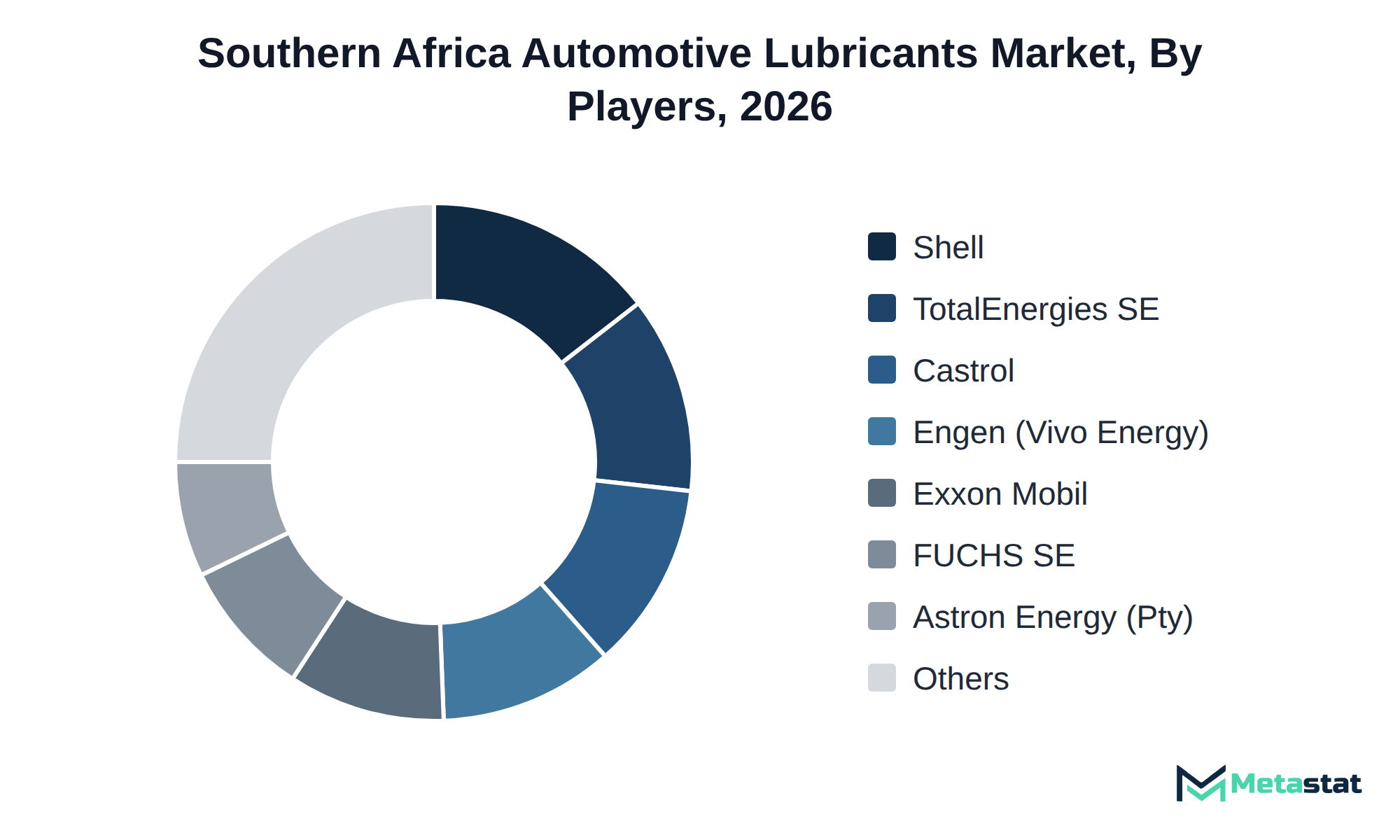
Companies in the Southern Africa Automotive Lubricants market adopt various strategies to differentiate their offerings. Producers focus on aspects including price, certification, customization, and service quality to meet the diverse needs of buyers. The market features a mix of established players and regional formulators, enhancing competition and driving innovation.
Shell plc and TotalEnergies SE emphasize premium product offerings, leveraging extensive research and development capabilities to enhance product performance. Engen Limited (Vivo Energy) and Sasol Limited concentrate on local market demands, providing tailored solutions that address specific buyer requirements. Companies including FUCHS SE and LIQUI MOLY GmbH focus on niche segments, delivering specialized lubricants that cater to unique applications within the automotive sector, thereby strengthening their market presence.
This growth relies on several factors, including increasing demand for engine oils, particularly in South Africa, which represents the largest share of the market. The transition towards higher quality lubricants, including fully synthetic and semi-synthetic variants, drives revenue growth. Expansion of distribution channels, especially through distributors and wholesalers, facilitates market accessibility and boosts sales. The market's ability to adapt to evolving regulatory standards, including environmental rules, will shape its future. Potential risks exist that inhibit growth. Economic fluctuations or supply chain disruptions hinder the production and distribution of automotive lubricants, particularly in the context of the current global economic climate. The Southern Africa Automotive Lubricants market faces challenges from rising operational costs, which impact profit margins across various segments. Maintaining competitive pricing while ensuring product quality remains essential for suppliers navigating these uncertainties.
By Product Type: Engine Oils, Manual Transmission and Axle Oils, Automatic Transmission Fluids, Automotive Greases, Brake Fluids, Others (Power Steering and Suspension Fluids)
By Base Fluid Type: Mineral Oil-Based, Semi-Synthetic, Fully Synthetic, Others (Glycol-Based Fluids, Silicone-Based Fluids, Bio-Based Lubricants)
By Distribution Channel: Distributors and Wholesalers, Direct Fleet and Workshop Supply, Direct OEM Supply, Direct Physical Retail Supply, Others (Direct Online Sales)
By Country: South Africa, Botswana, Eswatini, Lesotho, Namibia
By Region: North America, Europe, Asia-Pacific, South America, Middle East and Africa
The report strategically identifies and profiles the key market players and analyses their core competencies in each sub-segment of the Automotive Lubricants market.
Report Attributes | Details |
Study Period | 2021-2033 |
Base Year | 2025 |
Estimated Year | 2026 |
Forecast Period | 2026-2033 |
Historical Period | 2021-2025 |
Growth Rate | CAGR 4.2% from 2026 to 2033 |
Revenue Unit | USD million |
Segmentation | By Product Type, Base Fluid Type, Distribution Channel, Country, and Region |
Find answers to common questions about this report
The Automotive Lubricants market size was valued at USD 953 million in 2025.
The market is projected to grow at a CAGR of 4.2% during the forecast period from 2026 to 2033.
Engine Oils lead the Automotive Lubricants market with a value of USD 659.4 million in 2026. This segment represents the largest share compared to other product types.
Increasing complexity of vehicle engines and rising awareness of the benefits of premium lubricants drive demand. Heightened competition among suppliers leads to aggressive pricing strategies, influencing market dynamics.
High pricing variations within the Automotive Lubricants market hinder consistent adoption among commercial buyers. Increased costs for premium products influence purchasing decisions, while rising raw material costs pressure profit margins for suppliers, compelling reassessment of pricing strategies.
The automotive greases segment is projected to expand at a compound annual growth rate of 3.9%, driven by increasing demand from commercial vehicles and industrial machinery. Advancements in formulation technologies, including bio-based lubricants, align with sustainability goals, enhancing operational efficiency and supporting market adoption.
The Automotive Lubricants market is estimated to reach a valuation of USD 1,327.3 million by 2033.
Key players operating in the Automotive Lubricants industry include Shell plc, TotalEnergies SE, Castrol Limited, Engen Limited (Vivo Energy), Exxon Mobil Corporation, and FUCHS SE.
Engine oils are projected to grow from USD 659.4 million in 2026 to USD 865.1 million by 2033, reflecting a compound annual growth rate of 4 percent.
The automotive greases segment is expected to expand at a compound annual growth rate of 3.9%, driven by increasing demand from commercial vehicles and industrial machinery.
The analysts below cover Automotive and Transportation research at Metastat Insights.
LEAD ANALYST
Utkarsh Khirodkar is a Lead Market Research Analyst at MetaStat Insight, specializing in market intelligence, technology sector assessments, and competitive strategy.

ENERGY & INFRASTRUCTURE INDUSTRY CONSULTANT
Automotive and Transportation · Electronics and Semiconductor · Energy and Power · Machinery & Equipment
Saurabh Vasant Ganvir consults for Energy & Infrastructure Industry at MetaStat Insight, specializing in renewable energy, solar EPC, and electric vehicle (EV) infrastructure markets.
Evaluating sensor fusion reliability across harsh operating environments can be tricky without field-validated data. The study on agricultural autonomous guidance systems clearly separated stereo vision setups from automotive-grade solid-state LiDAR. We appreciated the regional infrastructure analysis, specifically around RTK network density across North America and South America. During our follow-up consultation, the MetaStat Insight team walked through tier-two perception software partnerships, giving our engineering leads a practical basis for vendor shortlisting.
Analyzing the transition from natural gas to green hydrogen in iron ore reduction requires realistic infrastructure timelines. Meta stat insight supplied a detailed regional assessment of DRI plant conversion costs and scrap metal availability in North America and Western Europe. Their report carefully examined pellet quality specs and electrical grid access constraints without making oversimplified market assumptions. The research material served as a practical reference during internal technology roadmap discussions.
Integrating zero-trust access controls across legacy electronic health record systems involves complex compliance overhead. Team produced an analysis that clearly separated identity governance and administration tools from privileged access management platforms. Their evaluation of HIPAA and GDPR compliance features across cloud native solutions gave our architecture group clear baseline criteria. The custom data request regarding biometric authentication adoption in hospital networks was returned promptly with clear documentation.
Explore related market intelligence reports worth reading alongside this one.