
LEAD ANALYST
Utkarsh Khirodkar is a Lead Market Research Analyst at MetaStat Insight, specializing in market intelligence, technology sector assessments, and competitive strategy.

Automotive Engine Oil Filter Market By Filter Type (Fuel Filter, Engine Oil Filter, Hydraulic Oil Filter, and Others), By Filter Media (Cellulose, Synthetic, and Micro), By Sales Channel (OEMs and Aftermarket), By Vehicle Type (Passenger Cars, Light Commercial Vehicles, Heavy Duty Trucks, Buses, Coaches, and Off-road Vehicles), Industry Analysis, Size, Share, Growth, Trends, and Forecast, 2024-2031
Report ID
MSI-2668
Published
February, 2026
Pages
251 Pages
Format
Report Details
Choose Your License
Automotive Engine Oil Filter Market
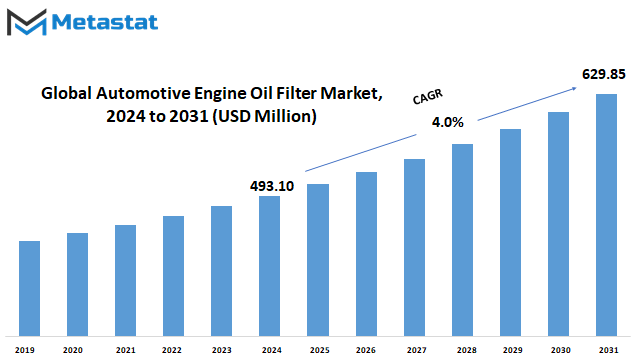
The Global Automotive Engine Oil Filter market is estimated to reach $629.85 Million by 2031; growing at a CAGR of 4.0% from 2024 to 2031.
The Global Automotive Engine Oil Filter market encapsulates a dynamic industry catering to the needs of automobiles worldwide. Engine oil filters serve as crucial components within vehicles, safeguarding engines against contaminants and ensuring optimal performance. This market is a testament to the intricate network of suppliers, manufacturers, distributors, and consumers interconnected in the automotive ecosystem.
The Global Automotive Engine Oil Filter market revolves around the production and distribution of filters designed to maintain engine health. These filters play a pivotal role in preserving engine longevity and efficiency by trapping impurities that could otherwise degrade engine performance.
The industry is characterized by a diverse array of players ranging from large multinational corporations to smaller regional manufacturers, each vying for their share of the market. This diversity not only fosters healthy competition but also ensures a wide range of options for consumers, catering to various vehicle types and performance requirements.
In recent years, technological advancements have spurred innovation within the market, leading to the development of more efficient and durable filters. Manufacturers are continually investing in research and development to enhance filter designs, improve filtration capabilities, and meet increasingly stringent regulatory standards.
Moreover, the Global Automotive Engine Oil Filter market is influenced by various macroeconomic factors, including automotive production trends, consumer preferences, and regulatory policies. Fluctuations in these factors can significantly impact market dynamics, leading to shifts in demand and supply patterns.
Globalization has further shaped the landscape of the automotive filter industry, facilitating the expansion of market reach and the exchange of technologies and best practices across borders. This interconnectedness has led to collaborations and partnerships among industry players, fostering innovation and driving market growth.
In addition to serving the automotive aftermarket, the Global Automotive Engine Oil Filter market also caters to original equipment manufacturers (OEMs), supplying filters for new vehicles during production. This segment of the market is influenced by factors such as vehicle sales, production volumes, and OEM specifications, which can vary regionally and globally.
As environmental awareness continues to rise, there is a growing emphasis on sustainability within the automotive industry, including the development of eco-friendly filter materials and recycling initiatives. Manufacturers are increasingly exploring alternative materials and production processes to reduce the environmental footprint of engine oil filters.
The Global Automotive Engine Oil Filter market is a multifaceted industry driven by innovation, technological advancements, and changing consumer preferences. It reflects the interconnected nature of the automotive sector and the constant evolution required to meet the demands of modern vehicles and environmental standards.
The automotive engine oil filter market is experiencing significant transformation driven by technological advancements and changing consumer preferences. One of the most notable trends is the increasing adoption of synthetic media filters, which offer superior filtration efficiency and longer service intervals compared to traditional cellulose filters. This shift is particularly relevant as automakers are increasingly adopting turbocharged engines that require higher dust-holding capacity and reduced flow restrictions.
Another emerging trend is the growing emphasis on sustainability within the industry. Manufacturers are exploring eco-friendly materials and production processes, including the development of reusable filters and filters made from recyclable materials. This aligns with the broader automotive industry's commitment to reducing its environmental footprint and meeting stringent regulatory standards.
Technological innovations, such as the integration of activated carbon layers in filters, are also gaining traction. These advancements not only enhance filtration performance but also improve cabin air quality, catering to consumer demands for comfort and health. As the market continues to evolve, staying abreast of these trends will be crucial for manufacturers and stakeholders looking to maintain a competitive edge.
Increasing automotive production globally. and Growing awareness about the importance of regular engine maintenance. are key driving factors of the market. However, Fluctuating raw material prices impacting manufacturing costs. and Rising adoption of electric vehicles reducing the demand for traditional engine oil filters. might hamper the market growth. Expansion into emerging markets with increasing vehicle ownership rates. would provide lucrative opportunities for the market in coming years.
In the expansive world of automobiles, the importance of engine oil filters cannot be overstated. These components play a crucial role in maintaining the health and longevity of a vehicle's engine by filtering out impurities and contaminants from the oil that lubricates its moving parts. The global automotive engine oil filter market offers a variety of options, with different types catering to specific needs.
The market segmentates engine oil filters into various categories, with filter types like fuel filters, engine oil filters, hydraulic oil filters, and others. Each of these serves a distinct purpose in ensuring the smooth operation of an automobile's engine. Fuel filters, for instance, prevent contaminants from entering the engine through the fuel system, safeguarding its components from damage and ensuring efficient combustion.
Engine oil filters, perhaps the most well-known type, are responsible for removing particles, dirt, and other debris from the engine oil, which could otherwise cause wear and tear on engine components. By keeping the oil clean, these filters contribute significantly to the engine's performance and longevity, making them indispensable in the automotive industry.
Hydraulic oil filters, on the other hand, are designed to maintain the cleanliness of hydraulic systems, which are crucial for various functions in vehicles, such as power steering and braking systems. By filtering out impurities from the hydraulic fluid, these filters help prevent malfunctions and ensure the proper functioning of these systems.
The category labeled Others encompasses a range of specialized filters that serve specific purposes within the automotive industry. These may include transmission filters, which are responsible for keeping the transmission fluid clean, or cabin air filters, which improve the air quality within the vehicle's interior by trapping dust, pollen, and other airborne particles.
In recent years, technological advancements and increasing awareness regarding the importance of regular maintenance have driven the demand for high-quality engine oil filters. Manufacturers in the global automotive engine oil filter market are continually innovating to develop filters that offer superior performance, efficiency, and durability.
Furthermore, stringent regulations regarding emissions and fuel efficiency have prompted automakers to prioritize the use of advanced filtration systems to optimize engine performance and minimize environmental impact. As a result, the automotive engine oil filter market is witnessing a shift towards eco-friendly and sustainable solutions, such as reusable filters and filter materials made from recyclable materials.
Engine oil filters play a vital role in maintaining the health and efficiency of automotive engines. With various types available in the global market, catering to different filtration needs, these components continue to evolve to meet the demands of modern vehicles and stringent regulatory requirements.
In the expansive world of automobiles, the importance of engine oil filters cannot be overstated. These components play a crucial role in maintaining the health and longevity of a vehicle's engine by filtering out impurities and contaminants from the oil that lubricates its moving parts. The global automotive engine oil filter market offers a variety of options, with different types catering to specific needs.
The market segmentates engine oil filters into various categories, with filter types like fuel filters, engine oil filters, hydraulic oil filters, and others. Each of these serves a distinct purpose in ensuring the smooth operation of an automobile's engine. Fuel filters, for instance, prevent contaminants from entering the engine through the fuel system, safeguarding its components from damage and ensuring efficient combustion.
Engine oil filters, perhaps the most well-known type, are responsible for removing particles, dirt, and other debris from the engine oil, which could otherwise cause wear and tear on engine components. By keeping the oil clean, these filters contribute significantly to the engine's performance and longevity, making them indispensable in the automotive industry.
Hydraulic oil filters, on the other hand, are designed to maintain the cleanliness of hydraulic systems, which are crucial for various functions in vehicles, such as power steering and braking systems. By filtering out impurities from the hydraulic fluid, these filters help prevent malfunctions and ensure the proper functioning of these systems.
In recent years, technological advancements and increasing awareness regarding the importance of regular maintenance have driven the demand for high-quality engine oil filters. Manufacturers in the global automotive engine oil filter market are continually innovating to develop filters that offer superior performance, efficiency, and durability.
Furthermore, stringent regulations regarding emissions and fuel efficiency have prompted automakers to prioritize the use of advanced filtration systems to optimize engine performance and minimize environmental impact. As a result, the automotive engine oil filter market is witnessing a shift towards eco-friendly and sustainable solutions, such as reusable filters and filter materials made from recyclable materials.
In conclusion, engine oil filters play a vital role in maintaining the health and efficiency of automotive engines. With various types available in the global market, catering to different filtration needs, these components continue to evolve to meet the demands of modern vehicles and stringent regulatory requirements.

The automotive engine oil filter market is a dynamic sector with diverse sales channels, catering to both original equipment manufacturers (OEMs) and the aftermarket. This market revolves around ensuring the proper functioning of engines by filtering out impurities from the oil, thereby extending the lifespan of the engine and improving its performance.
OEMs refer to the original manufacturers of vehicles who supply engine oil filters as part of the vehicles they produce. These filters are integrated into the vehicles during manufacturing and are often purchased by consumers when they buy a new vehicle or during routine maintenance at authorized service centers.
On the other hand, the aftermarket segment caters to the needs of consumers who seek engine oil filters separately from the OEMs. These consumers might require replacement filters due to wear and tear or as part of regular maintenance of their vehicles. The aftermarket provides a wide range of options for consumers to choose from, including various brands and specifications tailored to different vehicle models.
The OEM segment holds a significant share of the automotive engine oil filter market due to the direct association with vehicle manufacturing. Customers often prefer OEM filters for their reliability and compatibility with their vehicles. Additionally, many vehicle warranties require the use of OEM parts to maintain coverage, further driving sales in this segment.
However, the aftermarket segment also plays a crucial role in the market landscape. It offers consumers a competitive market where they can explore different options based on factors such as price, quality, and specific requirements. Aftermarket filters are widely available through various distribution channels, including auto parts stores, online retailers, and independent service centers.
The global automotive engine oil filter market is segmented based on vehicle types, which include passenger cars, light commercial vehicles, heavy-duty trucks, buses and coaches, and off-road vehicles. This segmentation allows for a comprehensive understanding of the diverse needs and demands within the automotive industry.
Passenger cars, being one of the most common modes of transportation worldwide, hold a significant share in the automotive engine oil filter market. These filters play a crucial role in maintaining the performance and longevity of passenger car engines by effectively removing contaminants and ensuring the smooth operation of the engine components.
Light commercial vehicles, which include pickup trucks, vans, and SUVs used for commercial purposes or personal transportation, also contribute significantly to the demand for automotive engine oil filters. With the increasing number of light commercial vehicles on the roads, there is a growing need for reliable filtration systems to protect their engines from wear and tear caused by pollutants and debris.
Heavy-duty trucks, designed for transporting goods over long distances and across challenging terrains, rely heavily on robust engine systems to withstand rigorous operating conditions. Automotive engine oil filters tailored for heavy-duty trucks are engineered to withstand higher pressure and temperature levels, ensuring optimal engine performance and durability under demanding circumstances.
Buses and coaches, utilized for public transportation and long-distance travel, require efficient engine oil filtration systems to maintain reliability and safety for passengers. The proper functioning of these vehicles is essential for the smooth operation of public transportation networks, making high-quality engine oil filters indispensable in this segment of the market.
Off-road vehicles, including SUVs, ATVs, and utility vehicles designed for off-road adventures and recreational activities, encounter harsh environmental conditions that expose their engines to a wide range of contaminants such as dust, mud, and debris. Engine oil filters specifically designed for off-road applications are essential for protecting the engine from damage and ensuring optimal performance during off-road excursions.
The global automotive engine oil filter market encompasses a diverse range of vehicle types, each with its specific requirements and challenges. By understanding the unique needs of passenger cars, light commercial vehicles, heavy-duty trucks, buses and coaches, and off-road vehicles, manufacturers can develop tailored filtration solutions to meet the evolving demands of the automotive industry.
The global market for automotive engine oil filters can be analyzed by looking at different regions. These regions include North America, Europe, Asia-Pacific, Latin America, and the Middle East & Africa. Each region has its own unique characteristics and factors that influence the demand for automotive engine oil filters.
North America is one of the prominent markets for automotive engine oil filters. This can be attributed to the significant presence of automotive manufacturers and a large automotive fleet in countries like the United States and Canada. Moreover, strict regulations regarding vehicle emissions and environmental concerns have led to an increased demand for high-quality engine oil filters in this region.
Europe is another key region in the global automotive engine oil filter market. Countries in Europe such as Germany, France, and the United Kingdom have a well-established automotive industry. Additionally, stringent regulations related to vehicle emissions and engine performance have compelled automotive manufacturers to focus on the quality of engine oil filters, thereby driving the market growth in this region.
Asia-Pacific is witnessing rapid growth in the automotive engine oil filter market. This can be attributed to the increasing production and sales of vehicles in countries like China, India, Japan, and South Korea. Rising disposable incomes, urbanization, and infrastructural developments have fueled the demand for automobiles in this region, consequently boosting the demand for engine oil filters.
Latin America and the Middle East & Africa regions are also experiencing growth in the automotive engine oil filter market, albeit at a slower pace compared to other regions. Factors such as improving economic conditions, increasing vehicle sales, and infrastructure developments contribute to the market growth in these regions.
In each of these regions, factors such as vehicle sales, automotive production, government regulations, and consumer preferences play a significant role in shaping the demand for automotive engine oil filters. Manufacturers in the automotive engine oil filter market need to understand the specific requirements and preferences of consumers in different regions to effectively cater to their needs and gain a competitive edge in the market.
The global automotive engine oil filter market is influenced by various geographical factors. Understanding the dynamics of different regions is essential for manufacturers to capitalize on market opportunities and sustain growth in the highly competitive automotive industry.
The global market for automotive engine oil filters is a competitive space with several key players vying for market share. Among these players are AL Group LTD, ALCO Filters Ltd., Baldwin Filters, Bosch, Cummins Inc., DENSO CORPORATION, Donaldson Company, Inc., and Fildex Filters Canada.
These companies are significant contributors to the automotive engine oil filter market, each bringing its own expertise and products to the table. AL Group LTD, for instance, is known for its innovative solutions and high-quality filters. ALCO Filters Ltd. also stands out with its range of filtration products designed to meet various automotive needs.
Baldwin Filters, Bosch, and Cummins Inc. are other notable players in the market, each with its own strengths and areas of specialization. Bosch, for example, is recognized for its cutting-edge technology and reliable performance, while Cummins Inc. is known for its durable and efficient filtration systems.
DENSO CORPORATION is another key player, renowned for its commitment to innovation and sustainability. The company's oil filters are designed to meet stringent industry standards while minimizing environmental impact.
Donaldson Company, Inc. is a prominent player in the automotive engine oil filter market, offering a diverse portfolio of filtration solutions for different applications. The company's filters are known for their durability and reliability, making them a popular choice among consumers.
Fildex Filters Canada rounds out the list of major players in the industry, with a reputation for producing high-quality filters that deliver superior performance and longevity.
In this competitive landscape, each player strives to differentiate itself through product innovation, quality, and customer service. These companies invest heavily in research and development to stay ahead of the curve and address evolving market demands.
Moreover, they continuously seek opportunities for strategic partnerships and collaborations to expand their market presence and reach new customers. By leveraging their strengths and expertise, these key players are poised to maintain their competitive edge in the global automotive engine oil filter market.
The automotive engine oil filter market is fiercely competitive, with key players such as AL Group LTD, ALCO Filters Ltd., Baldwin Filters, Bosch, Cummins Inc., DENSO CORPORATION, Donaldson Company, Inc., and Fildex Filters Canada driving innovation and excellence in filtration technology.
Through their dedication to quality and customer satisfaction, these companies play a vital role in shaping the future of the automotive industry.
Find answers to common questions about this report
Global Automotive Engine Oil Filter market is valued at $493.10 million in 2024.
Global Automotive Engine Oil Filter market is estimated to grow with a CAGR of 4.0% from 2024 to 2031.
Global Automotive Engine Oil Filter market is estimated to reach $629.85 million by 2031.
Top players operating in the Automotive Engine Oil Filter industry includes AL Group LTD, ALCO Filters Ltd., Baldwin Filters, Bosch, Cummins Inc., DENSO CORPORATION, and others.
Fram oil filters are facing significant challenges as their parent company, First Brands Group, has filed for Chapter 11 bankruptcy. This situation has led to the closure of facilities and layoffs, causing concerns about the availability of Fram products in the market. The bankruptcy process is expected to be lengthy and complicated, with creditors preparing to take legal action, which may further impact the company's operations and product availability.
While specific oil filter brands and models for hybrid vehicles are not detailed, it's generally understood that high-quality oil filters designed for hybrids can provide enhanced filtration and longer service life compared to standard filters. Many hybrid owners prefer filters that are compatible with their vehicle's unique engine and hybrid systems, focusing on those that offer superior dirt-holding capacity and durability. Longevity can vary based on driving conditions and maintenance practices, but premium filters typically last longer due to their construction and materials.
When considering oil filters for extended oil change intervals, high-efficiency filters that utilize synthetic media are often recommended. These filters can trap smaller particles and contaminants more effectively, leading to better engine protection over longer periods. However, they may come at a higher cost compared to standard filters, and it's essential to ensure compatibility with your vehicle's engine and oil type. Always check manufacturer guidelines to avoid potential issues with warranty coverage or engine performance.
An automotive transmission oil filter is a crucial component that helps maintain the cleanliness and efficiency of the transmission fluid in a vehicle. It removes contaminants and debris from the fluid, ensuring smooth operation and prolonging the life of the transmission system. By filtering out impurities, it contributes to better performance and reliability of the vehicle's transmission. Regular maintenance and replacement of the filter are essential for optimal functioning.
The US oil filter is a component used in vehicles to remove contaminants from engine oil, ensuring the engine runs smoothly and efficiently. It plays a crucial role in maintaining engine health by preventing dirt and debris from circulating, which can lead to wear and damage over time. The automotive engine oil filter market is influenced by factors such as vehicle maintenance practices, regulatory standards, and advancements in filter technology. As a result, the demand for high-quality oil filters continues to grow in the US automotive sector.
The analysts below cover Automotive and Transportation research at Metastat Insights.
LEAD ANALYST
Utkarsh Khirodkar is a Lead Market Research Analyst at MetaStat Insight, specializing in market intelligence, technology sector assessments, and competitive strategy.

ENERGY & INFRASTRUCTURE INDUSTRY CONSULTANT
Automotive and Transportation · Electronics and Semiconductor · Energy and Power · Machinery & Equipment
Saurabh Vasant Ganvir consults for Energy & Infrastructure Industry at MetaStat Insight, specializing in renewable energy, solar EPC, and electric vehicle (EV) infrastructure markets.
Our team was tracking whether regional recycling infrastructure could realistically absorb the growing volume of lithium iron phosphate batteries over the next decade. The report did a solid job separating announced hydrometallurgical plant capacity from active, permitted operational throughput. That distinction made the feedstock availability projections and regional recovery rate models far more credible than standard commercial overviews.
Tracking capacity expansion in single-use bioprocessing requires dependable data on raw material availability and cleanroom-grade polymer supply chains. The competitive landscape chapter gave a grounded evaluation of secondary component suppliers across North America and Asia-Pacific rather than simply reprinting press releases. Having that level of supplier benchmarking helped clarify dual-sourcing considerations for our clinical pipeline planning.
When evaluating distributed energy resource management systems, standard research summaries tend to gloss over the operational differences between front-of-the-meter utility deployments and behind-the-meter industrial sites. The MetaStat Insight report addressed those distinctions directly, especially regarding software interoperability standards and grid interconnection backlogs. The five-year market sizing across regional transmission organizations provided actionable context for our grid modernization strategy.
Explore related market intelligence reports worth reading alongside this one.