
LEAD ANALYST
Utkarsh Khirodkar is a Lead Market Research Analyst at MetaStat Insight, specializing in market intelligence, technology sector assessments, and competitive strategy.

Global Electric Vehicle Fluids Market Size, Share, By Product Type (Hybrid Engine Oils, Coolants & Thermal Management Fluids, Transmission & E-Drive Fluids, Greases, and Brake Fluids), By Propulsion Type (Battery Electric Vehicles (BEVs), Plug-in Hybrid Electric Vehicles (PHEVs), and Hybrid Electric Vehicles (HEVs)), By Vehicle Type (Passenger Cars, Light Commercial Vehicles, Medium & Heavy Commercial Vehicles, and Others (Two- & Three-Wheelers, Off-Highway Vehicles)), By Fill Type (Factory Fill and Service Fill), Industry Analysis, Growth, Trends, and Forecast, 2026-2033
Report ID
MSI-5567
Published
October, 2026
Pages
282 Pages
Format
Historical
Base year
Forecast
Forecast period
Report Details
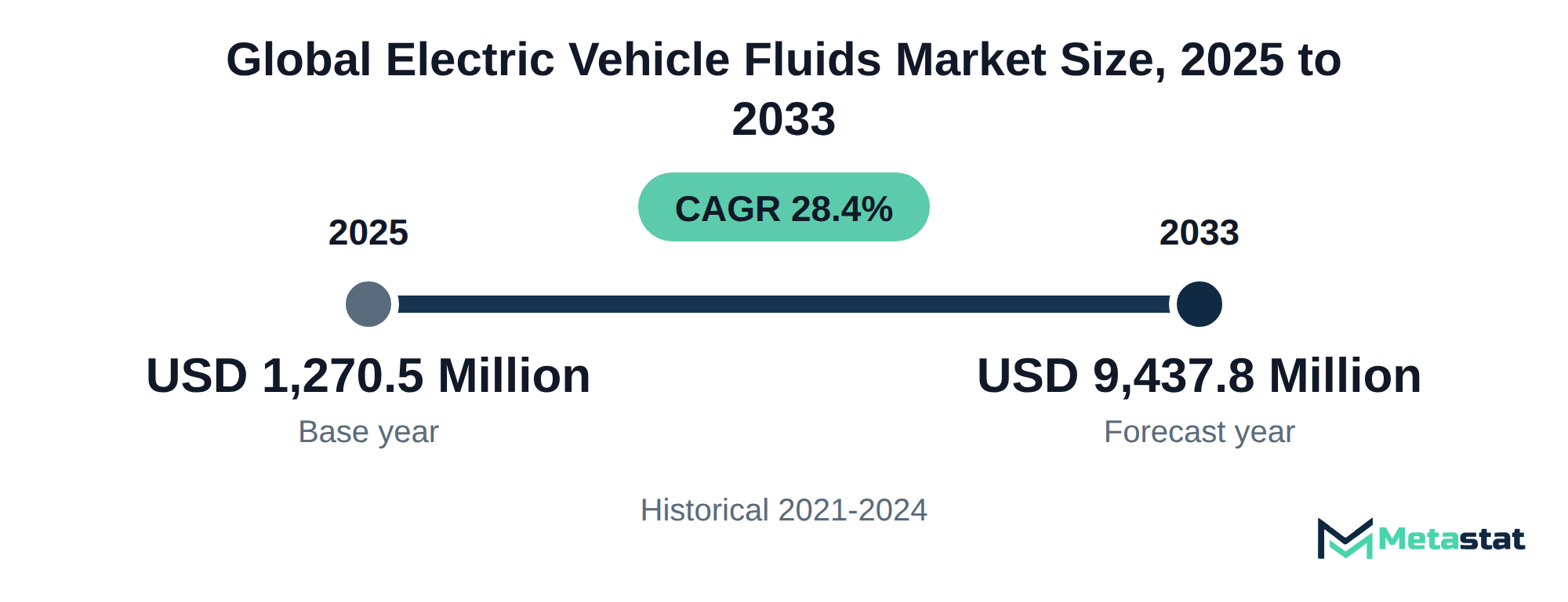
Market Valuation: Valued at $1,270.5 Million in 2025, projected to reach $9,437.8 Million by 2033 at a 28.4% CAGR.
Dominant Segment: Coolants & Thermal Management Fluids lead the market, driven by the increasing need for effective thermal regulation in electric vehicles, with a projected value of USD 3,475.9 million by 2033.
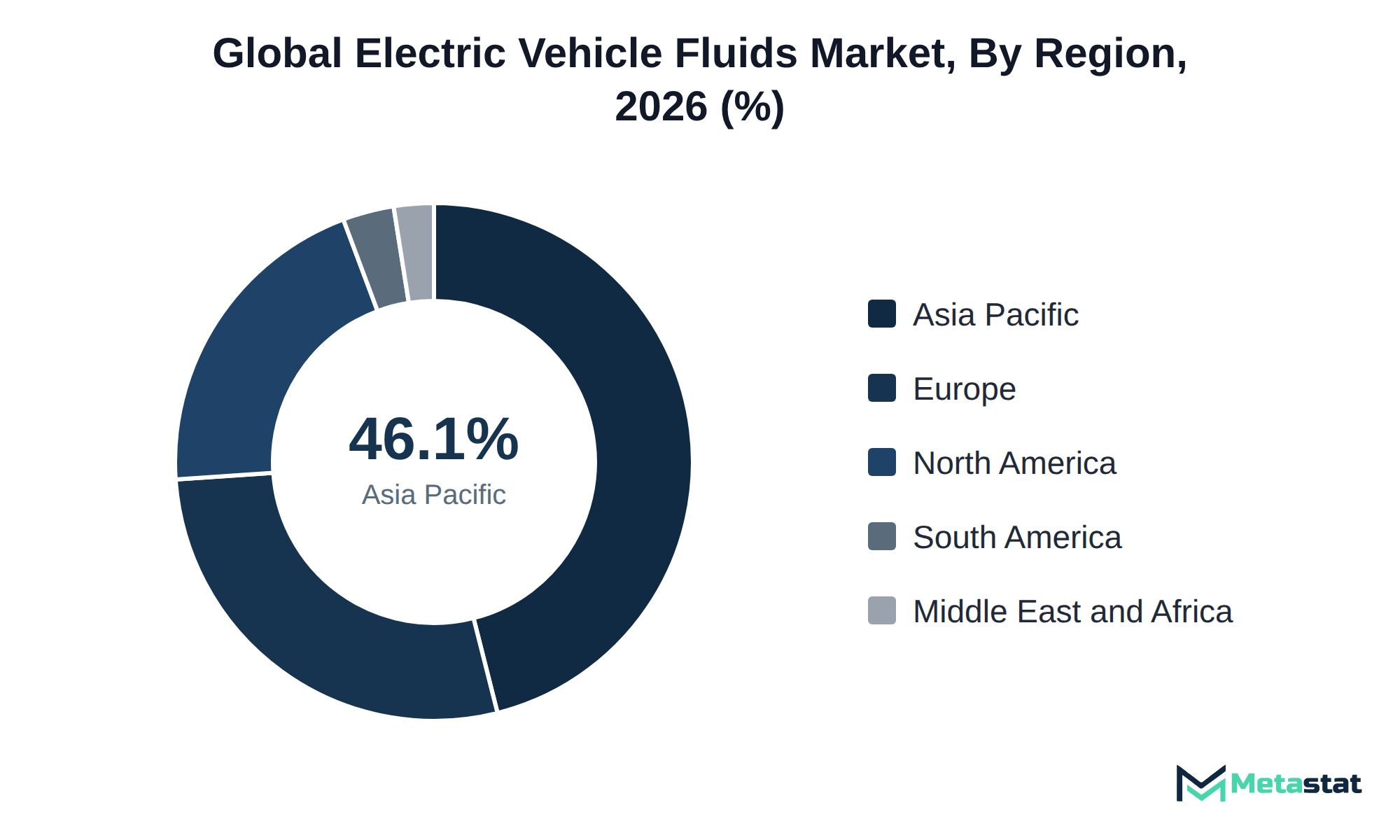
Geographic Lead: Asia Pacific holds the largest market share at 46.1%, fueled by rapid electric vehicle adoption and supportive government policies, particularly in countries like China and Japan.
What's Inside: The report provides a comprehensive analysis of the Electric Vehicle Fluids market, covering product types, propulsion types, and vehicle types, along with competitive landscape insights and strategic positioning.
Growth Drivers: The market is significantly driven by the rising demand for Battery Electric Vehicles (BEVs), projected to reach USD 4,368.8 million by 2033, reflecting a strong consumer shift towards sustainable transportation.
Emerging Trends: Advancements in fluid formulations are reshaping the market, resulting in improved performance and energy efficiency, crucial for meeting the demands of modern electric vehicles.
Choose Your License
Global Electric Vehicle Fluids Market
The global Electric Vehicle Fluids market was valued at USD 1,270.5 million in 2025 and is projected to reach USD 9,437.8 million by 2033, growing at a CAGR of 28.4% over the forecast period.
The Electric Vehicle Fluids market covers products essential for the operation and maintenance of electric vehicles. Buyers invest in these fluids to ensure optimal performance, efficiency, and longevity of their vehicles. The increasing adoption of electric vehicles across various segments significantly drives demand within the market. Key buyer groups include automotive manufacturers, fleet operators, and individual consumers, all of whom prioritize reliable performance and sustainability in their vehicle choices.
Growth in the market is primarily fueled by the rising demand for Battery Electric Vehicles (BEVs), which represent a substantial segment. Among the various regions, Asia Pacific holds the largest share of the market at 46.1%, driven by rapid technological advancements and supportive government policies promoting electric mobility. North America holds 20.4% of the market in 2025, with the US leading in 2026. The emphasis on reducing carbon emissions is a critical factor influencing growth in this sector.
In terms of product type, Coolants & Thermal Management Fluids account for the highest value within the market, reflecting the growing need for effective thermal regulation in electric vehicles. This segment is expected to experience significant growth due to advancements in fluid formulations that enhance performance and safety. The ongoing energy transition toward sustainable sources further increases the demand for specialized electric vehicle fluids.
The Electric Vehicle Fluids market includes essential products that enhance the performance and longevity of electric vehicles. Buyers invest in these fluids to ensure optimal vehicle efficiency, improve environmental performance, and reduce maintenance costs. The adoption of electric vehicles, driven by regulatory support and consumer demand for sustainable transportation solutions, fuels spending in this sector.
Growth in the market is primarily attributed to the increasing production and sales of battery electric vehicles (BEVs), which represent the largest segment by value. Coolants and thermal management fluids stand out, contributing significantly to market expansion, projected to reach USD 3,475.9 million by 2033. In terms of regional distribution, Asia Pacific leads with a share of 46.1%, driven by rapid electric vehicle adoption, particularly in countries like China and Japan.
North America holds 20.4% of the market in 2025, with the US expected to lead in 2026. The rising focus on reducing carbon emissions and enhancing energy efficiency drives demand for electric vehicle fluids. This trend highlights the ongoing shift towards greener technologies, affecting manufacturers and suppliers alike, reshaping the competitive dynamics within the industry.
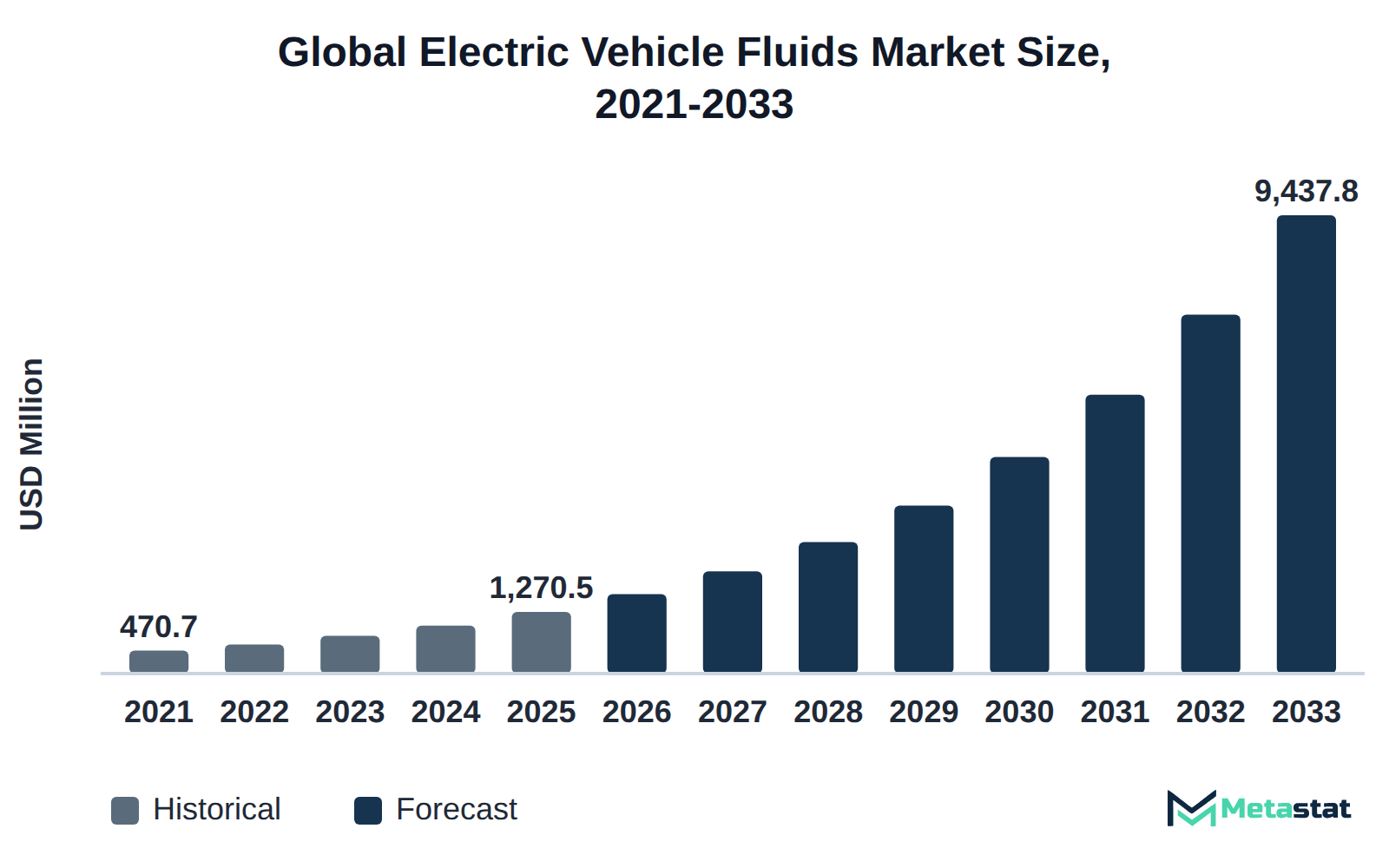
Adoption of battery immersion cooling technology and low-conductivity coolants represents a significant shift within the Electric Vehicle Fluids market. This approach enhances thermal management of electric vehicles by efficiently dissipating heat generated during battery operation. Using fluids with lower thermal conductivity supports optimized performance while improving energy efficiency. The segment of coolants and thermal management fluids is projected to reach USD 3,475.9 million by 2033, reflecting a compound annual growth rate (CAGR) of 34.3%. The growth reflects an increasing focus on thermal management solutions in electric vehicles.
Battery immersion cooling systems employ dielectric fluids, which insulate electrical components while efficiently transferring heat away from the battery cells. Consequently, this technology reduces the risk of thermal runaway, ensuring safer operation and longer battery life. The adoption of low-conductivity coolants aligns with the industry's push for improved energy efficiency and performance, driving demand among manufacturers and consumers alike. More effective thermal management solutions advance the electric vehicle sector and give companies that invest in them a stronger competitive position. Continuous improvement of battery thermal management capabilities will be vital for meeting the growing demand for electric vehicles.
Recent developments in electric vehicle technology, particularly the integration of e-axles, drive an increased demand for low-viscosity transmission fluids. This shift stems from the need for enhanced electrical compatibility and efficient performance in hybrid and electric vehicles. In 2025, the Electric Vehicle Fluids market is projected to reach USD 1,270.5 million, reflecting significant growth opportunities that arise from these advancements.
Low-viscosity transmission fluids provide superior performance under varying temperature conditions, essential for e-axles operating in diverse climate environments. A notable segment within this category, Transmission & E-Drive Fluids, is anticipated to generate USD 1,660.1 million by 2033. Optimized fuel economy and reduced emissions align with the goals of manufacturers and consumers focused on sustainability.
Buyers in the market increasingly seek pricing models that reflect the performance benefits of these specialized fluids. Instead of traditional bulk purchasing, several companies explore long-term supply contracts that ensure consistent quality and availability. Such arrangements facilitate reliable supply chains while allowing manufacturers to manage costs effectively. This trend indicates that the market evolves toward more strategic partnerships focused on innovation and performance enhancement.
Demand for hybrid engine oils within the Electric Vehicle Fluids market is projected to reach USD 3,370.2 million by 2033, reflecting a compound annual growth rate (CAGR) of 22%. This growth results from an increasing number of hybrid vehicles on the road, which require specific lubrication solutions to optimize performance and extend engine life. Customers purchasing hybrid engine oils are typically automotive manufacturers and service providers focusing on the maintenance needs of hybrid vehicles. These buyers prioritize products that enhance fuel efficiency and reduce emissions while delivering superior protection.
On the other hand, service fills for electric vehicles are anticipated to reach USD 4,231 million by 2033, supported by a CAGR of 29.5%. This segment attracts a different buyer group, primarily independent service stations and dealerships catering to electric vehicle owners. These buyers seek fluid solutions that support battery health and thermal management, crucial for electric vehicle performance. The divergence in demand across these segments creates varied revenue paths for suppliers. Companies focusing on hybrid engine oils concentrate on traditional automotive partnerships, while those investing in service fills could capitalize on the growing electric vehicle maintenance market.
Electric vehicles require specific fluids to maintain optimal performance and efficiency. These fluids include hybrid engine oils, coolants and thermal management fluids, transmission and e-drive fluids, and greases. This growth indicates significant demand for advanced cooling solutions to manage the thermal properties of electric vehicles effectively.
Replacement intervals for electric vehicle fluids depend on the type of fluid and the specific vehicle model. For hybrid engine oils, manufacturers often recommend changing the oil at regular intervals based on mileage. Regularly monitoring fluid levels and conditions prevents performance issues and extends vehicle lifespan. As the market expands, following these maintenance schedules matters more for owners who want their electric vehicles to operate efficiently, which also supports overall customer satisfaction and loyalty.
Growth in the battery electric vehicle (BEV) segment drives increased demand for electric vehicle fluids. Consumers shifting toward BEVs, prompted by environmental concerns and advancements in electric vehicle technology, influence this shift. Higher production volumes of BEVs require specialized fluids designed to optimize their performance. The market for electric vehicle fluids is expected to see significant growth, with BEV-related fluids projected to reach USD 4,368.8 million by 2033, reflecting a compound annual growth rate of 35.3%. This trend emphasizes the importance of tailored products that support the distinctive operational requirements of electric vehicles, resulting in rising consumption and investment in the sector.
Manufacturers respond to increasing consumer preferences for sustainability and efficiency. This consumer behavior change leads to heightened competition among suppliers, pushing them to innovate and improve fluid formulations. Demand for specialized electric vehicle fluids correlates directly with the substantial rise in BEV production and usage, which supports market expansion.
Innovations in fluid formulations drive growth in the Electric Vehicle Fluids market. Suppliers develop advanced coolants and thermal management fluids that enhance heat dissipation and efficiency in electric vehicles. These fluids incorporate advanced additives that improve thermal stability and reduce wear, resulting in better performance and longevity. Enhancements in base oil technology contribute to lower viscosity and improved flow characteristics, which further optimize the operation of electric vehicles under various conditions.
Investments in research and development support the creation of specialized fluids tailored for battery electric vehicles and hybrids, catering to the unique requirements of these vehicles. This evolution in product offerings responds to increasing consumer expectations for performance and efficiency, enabling suppliers to differentiate themselves in the competitive environment. The demand for such advanced solutions positions the market for strong growth, attracting new entrants and encouraging innovation within the industry.
Price sensitivity constitutes a significant barrier to the adoption of Electric Vehicle Fluids. High costs associated with specialized fluids impact buyers, particularly fleet operators and commercial vehicle manufacturers. This segment experiences slower uptake of advanced fluid solutions, resulting in smaller orders and delayed replacement cycles for existing fluids. Increased fluid costs deter investment in more effective products aimed at enhancing vehicle performance and longevity. Budget constraints lead to reduced demand for premium fluid formulations, affecting overall market growth. Cost-conscious buyers prioritize less expensive alternatives, which do not always meet the performance requirements of modern electric vehicles. This trend limits the ability of suppliers to penetrate the market and expand their offerings, thereby hindering potential revenue growth within the Electric Vehicle Fluids market.
Suppliers face significant challenges related to rising input costs in the Electric Vehicle Fluids market. Escalating prices for raw materials, including advanced additives and base oils, have tightened profit margins across the industry. This situation forces suppliers to seek ways to manage costs while maintaining product quality. In response, many suppliers invest in more efficient manufacturing processes and explore alternative materials that provide similar performance at reduced costs. Collaboration with raw material providers allows suppliers to negotiate more favorable terms and enhance supply chain resilience. Strategic partnerships and long-term contracts with key suppliers enable better forecasting of material costs, helping to stabilize pricing strategies in a volatile market. These initiatives strengthen the overall competitiveness of suppliers while addressing input cost pressures faced across the market.
Coolants and thermal management fluids present a significant growth opportunity within the Electric Vehicle Fluids market, projected to reach USD 3,475.9 million by 2033. This segment exhibits a compound annual growth rate of 34.3%, driven by increasing efficiency requirements in electric vehicle thermal management systems. Manufacturers and suppliers targeting this segment benefit from rising demand for advanced cooling solutions that enhance vehicle performance and battery longevity.
With the global transition towards electrification, the need for effective thermal management increases in importance. Coolants maintain optimal operating temperatures, especially in battery electric vehicles. This heightened focus on cooling solutions aligns with industry trends prioritizing performance and energy efficiency, ensuring that this segment is well positioned for future growth.
The Global Electric Vehicle Fluids market is segmented based on Product Type, Propulsion Type, Vehicle Type, and Fill Type.
This segment is primarily used in hybrid electric vehicles to enhance engine performance and efficiency. Driven by the increasing adoption of hybrid vehicles, demand for these oils is expected to rise significantly. Compared to other fluid segments, including Coolants & Thermal Management Fluids, which sees a higher CAGR of 34.3%, Hybrid Engine Oils experience comparatively slower growth. However, hybrid vehicle manufacturers prioritize high-quality engine oils, leading to higher pricing structures. The ongoing transition towards electrified transportation fuels sustains interest in this segment, making it a critical focus for suppliers aiming to meet evolving vehicle requirements and performance standards.
These fluids are essential for regulating temperatures in electric vehicles, ensuring optimal performance and durability. Automotive manufacturers increasingly adopt coolants and thermal management fluids to enhance the efficiency of electric systems in battery electric vehicles (BEVs) and plug-in hybrid electric vehicles (PHEVs). The rapid growth of the BEV segment significantly influences demand for these fluids, driven by technological advancements and a focus on energy efficiency. Unlike other segments, including hybrid engine oils, this segment experiences faster expansion, reflecting the urgent need for improved thermal management solutions amid rising production of electric vehicles. Investment in innovative fluid formulations enhances competitive positioning in the market, aligning with evolving regulatory standards surrounding vehicle performance and emissions.
Transmission & E-Drive Fluids segment is expected to reach USD 1,660.1 million by 2033. These fluids play a critical role in the functioning of electric vehicles, specifically in managing the operation of automotive transmission systems and e-drives. Manufacturers of battery electric vehicles (BEVs) and hybrid electric vehicles (HEVs) primarily use these fluids to ensure optimal performance and efficiency. The demand for Transmission & E-Drive Fluids is driven by the increasing adoption of electric vehicles, with a notable CAGR of 35.3% for BEVs. This segment exhibits a faster growth trajectory compared to others, reflecting the dynamic transformations taking place in the electric vehicle landscape. Factors including technological advancements in transmission systems and the growing focus on improving vehicle efficiency significantly contribute to this growth. The rising complexity of electric drivetrains necessitates higher quality fluids, setting this segment apart from others including Hybrid Engine Oils and Coolants.
Greases are projected to grow at a CAGR of 31.3% during the forecast period. This segment, part of the wider finished lubricants and greases industry, is primarily used in electric vehicles for lubrication and protection of key components, enhancing performance and longevity. Manufacturers of passenger cars and light commercial vehicles use greases to ensure smooth operation and prevent wear. The increasing use of electric and hybrid vehicles drives demand for high-performance greases that withstand higher operational temperatures. In comparison to other fluid segments, greases experience faster growth due to the rising emphasis on vehicle efficiency and performance, with the market for greases distinguished by a relatively higher price point aligned with specialized formulations. Advancements in grease technology contribute to improved performance characteristics, further enhancing this segment's position in the Electric Vehicle Fluids market.
Brake fluids support the performance and safety of electric vehicles by ensuring optimal brake function under various conditions. These fluids are essential for both passenger cars and commercial vehicles, serving as a hydraulic medium for the braking system. The demand for brake fluids is strongly influenced by the increasing adoption of electric vehicles, driven by a focus on safety standards and regulatory compliance. Compared to other segments, this one experiences more moderate growth rates, reflecting the established nature of brake fluid formulations in the automotive sector. Unlike innovative segments like coolants, brake fluids require less frequent reformulation, resulting in relatively stable pricing structures. This consistency allows manufacturers to maintain supply chains effectively while addressing shifting regulatory requirements across different regions.
The Battery Electric Vehicles (BEVs) segment is valued at USD 525.8 million in 2026 and is projected to reach USD 4,368.8 million by 2033, at a CAGR of 35.3% during the forecast period. This segment primarily serves the growing demand for fully electric vehicles powered by batteries, appealing to environmentally-conscious consumers seeking sustainable transportation options. The rapid expansion of charging infrastructure and government incentives fuel adoption, driving significant growth in this category. Compared to other propulsion types, BEVs exhibit a faster growth trajectory, with a CAGR of 35.3%, reflecting heightened consumer preference for electric mobility. In contrast, Plug-in Hybrid Electric Vehicles (PHEVs) and Hybrid Electric Vehicles (HEVs) show lower CAGRs of 31% and a different market focus, targeting consumers who prefer hybrid solutions. This dynamic positioning highlights the BEV segment's important role in shaping the future of the Electric Vehicle Fluids market.
Plug-in Hybrid Electric Vehicles (PHEVs) segment is estimated to reach USD 2,522.7 million by 2033, at a CAGR of 31% during the forecast period. This segment is for vehicles that operate on both electric and gasoline power, providing flexibility for users who require longer ranges than fully electric options. Demand for PHEVs is driven by increasing consumer interest in reducing emissions while maintaining access to conventional fuel sources. Compared to other propulsion types, this segment experiences faster growth due to its appeal in diverse markets. The PHEV segment's adoption benefits from supportive government policies aimed at reducing carbon footprints. The growth trajectory of this segment distinctly sets it apart from Battery Electric Vehicles (BEVs), which have a different market focus and adoption drivers, with PHEVs appealing to a broader audience.
Hybrid Electric Vehicles (HEVs) segment is expected to reach USD 2,546.3 million by 2033. This segment drives the adoption of hybrid vehicles, combining internal combustion engines with electric drive systems. Users of HEVs include environmentally conscious consumers and fleet operators seeking fuel efficiency. The segment experiences significant growth driven by increasing demand for sustainable transportation solutions. The average CAGR for HEVs stands at 31%. Compared to other propulsion types, this segment targets buyers focused on lowering emissions while retaining conventional driving experiences. The shift towards stricter emissions regulations and the expansion of charging infrastructure further supports the segment's development, distinguishing it from Battery Electric Vehicles (BEVs), which prioritize full electric operation. The Electric Vehicle Fluids market is expected to see continued investment in this segment, particularly in high-performance fluids that enhance efficiency and longevity.
Passenger Cars segment is valued at USD 1,078.7 million in 2026 and is projected to reach USD 6,118.5 million by 2033, at a CAGR of 28.1% during the forecast period. This segment caters primarily to individual consumers and fleet operators who prioritize efficiency and sustainability in their vehicle choices. The growing emphasis on electric mobility significantly fuels demand for electric vehicle fluids in this segment. A notable driver includes the increasing adoption of battery electric vehicles (BEVs), which require specialized fluids to maintain performance and efficiency. Compared to other vehicle types, the Passenger Cars segment exhibits faster growth, driven by rising consumer preference for cleaner transportation alternatives. Suppliers targeting this segment have opportunities to innovate and enhance product offerings, ensuring alignment with evolving customer expectations and regulatory standards. The Electric Vehicle Fluids market reflects this dynamic, emphasizing the importance of tailored solutions in meeting diverse consumer needs.
Light Commercial Vehicles segment is estimated to reach USD 1,271.3 million by 2033, at a CAGR of 29.3% during the forecast period. This segment serves various commercial purposes, including delivery and transportation, appealing to businesses that require efficient logistics solutions. Increasing demand for electric light commercial vehicles (eLCVs) fuels growth in this segment, driven by the shift towards sustainable transportation. The segment shows faster growth compared to others due to rising environmental regulations and incentives promoting electric vehicle adoption. Unlike heavier commercial vehicles, this segment attracts a different buyer demographic, characterized by small to medium-sized enterprises that prioritize cost-effectiveness and operational efficiency. The Electric Vehicle Fluids market benefits from these dynamics, reflecting evolving consumer preferences and regulatory support for electrification.
Medium & Heavy Commercial Vehicles segment is expected to reach USD 1,723.3 million by 2033. This segment primarily serves fleet operators and transport companies that require robust fluids to ensure optimal vehicle performance and efficiency. Demand for electric vehicle fluids in this segment is driven by the increasing shift towards electrification in heavy-duty transportation. The transition from traditional combustion engines to electric systems enhances the need for specialized fluids that support electric drivetrains. Compared to other segments, including Light Commercial Vehicles, this segment experiences a moderate growth rate due to higher upfront costs associated with electrifying larger vehicles. The segment is projected to grow at a compound annual growth rate of 28.5% during the forecast period. In the market, suppliers focusing on this segment emphasize fluid formulations that meet the unique operational demands of medium and heavy commercial vehicles.
Others (Two- & Three-Wheelers, Off-Highway Vehicles) segment is projected to grow at a CAGR of 28.5% during the forecast period. This segment caters to a diverse range of vehicles for various purposes, including personal transportation and specialized applications. Demand for these fluids arises from manufacturers and operators of two-wheelers, three-wheelers, and off-highway vehicles, focusing on performance and reliability. Adoption of electric vehicles in these categories is driven by environmental concerns and advancements in battery technology. Compared to other segments, including Passenger Vehicles and Light Commercial Vehicles, this segment exhibits solid growth potential due to increasing urbanization and the rising popularity of electric two-wheelers in markets like Asia Pacific. The projected value shows the segment's significance in the Electric Vehicle Fluids market and reflects consumer commitment to more sustainable transportation options.
Factory Fill segment is valued at USD 944.5 million in 2026 and is projected to reach USD 5,206.8 million by 2033, at a CAGR of 27.6% during the forecast period. This segment involves the initial filling of fluids in electric vehicles at the manufacturing stage, primarily performed by automotive manufacturers. The increasing demand for electric vehicles drives this segment, supported by consumer preference for factory-fitted components that ensure optimal performance and reliability. Compared to other segments, Factory Fill exhibits a moderate growth rate, influenced by significant investments in production facilities and technology upgrades needed to support electric vehicle production. The segment’s consistent demand contrasts with service fill fluids, which typically experience fluctuations based on vehicle maintenance cycles and consumer behavior. The strong upward trajectory of the factory fill segment signals significant growth potential in the Electric Vehicle Fluids market.
This segment serves primarily for maintaining and replenishing fluids in electric vehicles, often by service stations and automotive repair facilities operating in the automotive aftermarket. The growing adoption of electric vehicles drives demand for service fill fluids, with regular maintenance becoming essential to ensure optimal vehicle performance. This segment distinguishes itself from Factory Fill, which benefits from a slower growth rate, reflecting its application at the time of vehicle assembly rather than throughout the vehicle's lifecycle. The emphasis on electric vehicle performance and longevity drives the demand for effective service fill solutions, ensuring that vehicles operate efficiently over time. In this context, the market supports evolving consumer needs and service providers while enhancing profitability for suppliers.
Based on geography, the Global Electric Vehicle Fluids market is divided into North America, Europe, Asia-Pacific, South America, Middle East, and Africa.
Growth in the Electric Vehicle Fluids market in North America is driven primarily by the increasing adoption of electric vehicles, particularly in the United States and Canada. Significant investments in charging infrastructure and government incentives support this trend, enhancing consumer interest in electric mobility. The region's projected revenue of USD 1,852.6 million by the end of 2033 reflects a strong commitment to sustainable transportation. Key buyer groups include automotive manufacturers and fleet operators focused on transitioning to electric vehicles. With a market share of 20.4% in 2025, North America significantly influences the overall dynamics of the global electric vehicle fluids market. Demand for specific product segments, including coolants and thermal management fluids, is expected to rise, creating competitive opportunities among suppliers.
Consumer demand in the Electric Vehicle Fluids market grows steadily across Europe, driven by rising electric vehicle adoption and supportive regulatory frameworks. Countries including Germany, France, and the UK exhibit rising investments in electric mobility, enhancing infrastructure for electric vehicle support. Upcoming initiatives to improve charging networks and promote sustainability contribute significantly to this growth. The market's presence in Italy and Spain reflects the emphasis on reducing carbon emissions and transitioning to renewable energy sources. By 2025, Europe holds a share of 27.9% in the global market. The combination of governmental incentives and a growing focus on sustainability positions Europe as a prominent player in the electric vehicle fluids market.
Asia-Pacific accounts for 46.1% of the Electric Vehicle Fluids market in 2025. The rapid rise in demand for electric vehicles drives substantial growth, particularly in countries including China, Japan, India, South Korea, and Australia. The region benefits from strong manufacturing capabilities and expanding charging infrastructure, which support wider adoption of electric vehicles. Southeast Asia shows growing interest in electric mobility, further contributing to market expansion. Local regulations promoting sustainability and reducing carbon emissions further enhance the demand for electric vehicle fluids. The market's growth trajectory reflects the strong emphasis on innovation and investment within the region.
Growth in the Electric Vehicle Fluids market in South America reflects increasing electric vehicle adoption, particularly in Brazil and Argentina. Government initiatives focused on sustainability drive this trend, creating a favorable environment for market expansion. Brazil, with its substantial automotive industry, emphasizes electric mobility, enhancing demand for electric vehicle fluids. Argentina's efforts to develop electric vehicle infrastructure further strengthen the market. Together, these countries contribute to the region's market share of 3.2% in 2025. The need for advanced fluids to support vehicle performance and efficiency remains a critical factor influencing purchasing decisions. South America's unique combination of emerging markets and regulatory support creates opportunities for growth in the electric vehicle fluids sector.
The Electric Vehicle Fluids market in the Middle East and Africa faces distinct challenges and opportunities driven by a growing emphasis on sustainable energy solutions. Saudi Arabia and the UAE exhibit a notable push towards enhancing electric vehicle infrastructure, which drives demand for high-quality fluids. Specific investments in electric vehicle charging infrastructure contribute to increased adoption rates among consumers and businesses. South Africa shows a rising interest in electric vehicles supported by governmental initiatives promoting cleaner transportation options. The combined share of this region in the global market reached 2.5% in 2025. This developing landscape signals significant growth potential, with demand for electric vehicle fluids expected to increase due to evolving infrastructure and consumer acceptance.
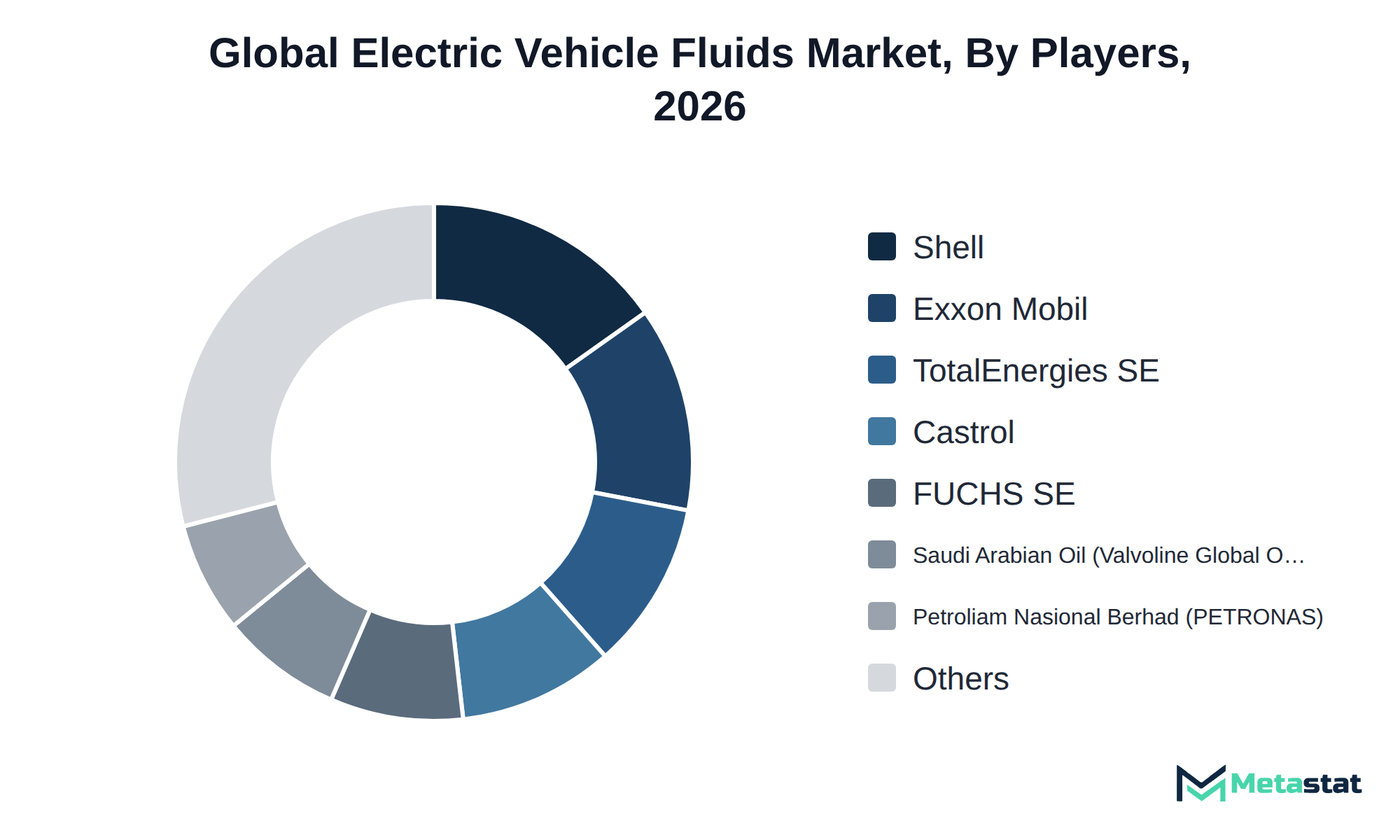
Competition in the Electric Vehicle Fluids market revolves around product innovation, pricing strategies, and customer service. Companies focus on differentiating their offerings through enhanced performance characteristics and specialized formulations to meet evolving consumer demands.
Major players, including Shell plc and Exxon Mobil Corporation, emphasize high-performance automotive lubricants and fluid solutions tailored for various vehicle types. Shell plc prioritizes advanced formulations for passenger cars and light commercial vehicles, while Exxon Mobil Corporation highlights thermal management fluids.
Specialty formulators like FUCHS SE and TOTALENERGIES SE draw on their expertise in niche applications to provide customized products that address specific operational environments. This strategy appeals to manufacturers and fleet operators seeking tailored solutions that optimize vehicle performance.
Buyers in the market choose products based on performance attributes, certification standards, and customization options. Companies including MOTUL and BASF SE cater to these preferences by offering products certified for high performance and environmental compliance, enhancing their appeal to environmentally conscious consumers.
Pricing strategies play a significant role, especially among regional players like Petroliam Nasional Berhad (PETRONAS) and Jiangsu Lopal Tech. Co., Ltd. These companies target cost-sensitive customers through competitive pricing while maintaining quality. The diverse array of offerings within the market enables buyers to select products that align with their specific operational needs.
Achieving this growth relies on several key developments in the Electric Vehicle Fluids market. First, the increasing adoption of Battery Electric Vehicles (BEVs) significantly drives demand for fluids specifically formulated for electric drivetrains. The market benefits from advancements in Coolants and Thermal Management Fluids, vital for maintaining optimal performance in electric vehicles.
However, potential risks include supply chain disruptions that could hinder the production of these fluids. Geopolitical tensions and fluctuations in raw material costs could create obstacles. If these challenges arise, they impact the overall growth trajectory of the market, limiting the ability to meet the projected USD 9,437.8 million target. Continuous investment in the development of innovative products and reliable supply chains will be essential for assuring growth in the Electric Vehicle Fluids market.
By Product Type: Hybrid Engine Oils, Coolants & Thermal Management Fluids, Transmission & E-Drive Fluids, Greases, Brake Fluids
By Propulsion Type: Battery Electric Vehicles (BEVs), Plug-in Hybrid Electric Vehicles (PHEVs), Hybrid Electric Vehicles (HEVs)
By Vehicle Type: Passenger Cars, Light Commercial Vehicles, Medium & Heavy Commercial Vehicles, Others (Two- & Three-Wheelers, Off-Highway Vehicles)
By Fill Type: Factory Fill, Service Fill
The report strategically identifies and profiles the key market players and analyses their core competencies in each sub-segment of the Electric Vehicle Fluids market.
Report Attributes | Details |
Study Period | 2021-2033 |
Base Year | 2025 |
Estimated Year | 2026 |
Forecast Period | 2026-2033 |
Historical Period | 2021-2025 |
Growth Rate | CAGR 28.4% from 2026 to 2033 |
Revenue Unit | USD million |
Segmentation | By Product Type, Propulsion Type, Vehicle Type, Fill Type, and Region |
By Region | North America (By Product Type, Propulsion Type, Vehicle Type, Fill Type, and Country)
|
Europe (By Product Type, Propulsion Type, Vehicle Type, Fill Type, and Country)
| |
Asia Pacific (By Product Type, Propulsion Type, Vehicle Type, Fill Type, and Country)
| |
South America (By Product Type, Propulsion Type, Vehicle Type, Fill Type, and Country)
| |
Middle East and Africa (By Product Type, Propulsion Type, Vehicle Type, Fill Type, and Country)
|
Find answers to common questions about this report
The Electric Vehicle Fluids market size was valued at USD 1,270.5 million in 2025.
The market is projected to grow at a CAGR of 28.4% during the forecast period from 2026 to 2033.
The North America Electric Vehicle Fluids market size is estimated to reach USD 1,852.6 million by 2033.
Coolants & Thermal Management Fluids lead the Electric Vehicle Fluids market with a projected value of USD 3,475.9 million by 2033. This segment's growth reflects a compound annual growth rate of 34.3 percent.
Growth in the battery electric vehicle segment drives increased demand for electric vehicle fluids. Rising consumer preferences for sustainability and efficiency lead to heightened competition among suppliers, pushing them to innovate and improve fluid formulations.
Price sensitivity constitutes a significant barrier to adoption, as high costs associated with specialized fluids impact buyers, particularly fleet operators and commercial vehicle manufacturers. Rising input costs for raw materials have tightened profit margins, forcing suppliers to seek ways to manage costs while maintaining product quality.
Several factors favor adoption in the Electric Vehicle Fluids industry. The growth of battery electric vehicles (BEVs) drives demand for specialized fluids, while advancements in fluid formulations enhance performance and efficiency. increasing consumer preferences for sustainability and efficiency further support the industry's expansion.
The Electric Vehicle Fluids market is estimated to reach a valuation of USD 9,437.8 million by 2033.
Key players operating in the Electric Vehicle Fluids market include Shell plc, Exxon Mobil Corporation, TotalEnergies SE, FUCHS SE, Petroliam Nasional Berhad (PETRONAS), and MOL Hungarian Oil and Gas Plc.
Coolants and thermal management fluids are projected to reach USD 3,475.9 million by 2033, reflecting a compound annual growth rate of 34.3 percent.
The analysts below cover Automotive and Transportation research at Metastat Insights.
LEAD ANALYST
Utkarsh Khirodkar is a Lead Market Research Analyst at MetaStat Insight, specializing in market intelligence, technology sector assessments, and competitive strategy.

ENERGY & INFRASTRUCTURE INDUSTRY CONSULTANT
Automotive and Transportation · Electronics and Semiconductor · Energy and Power · Machinery & Equipment
Saurabh Vasant Ganvir consults for Energy & Infrastructure Industry at MetaStat Insight, specializing in renewable energy, solar EPC, and electric vehicle (EV) infrastructure markets.
Tracking ceramic matrix composite adoption in high-bypass aero engines requires strict attention to material qualification cycles and FAA airworthiness testing milestones. The MetaStat Insight team provided a detailed timeline of silicon carbide fiber manufacturing capacity and commercial foundry lead times. Having clear visibility into upstream thermal barrier coating supply helped us stress-test our long-term component procurement strategy.
Transitioning ultra-class mining haul trucks to alternative power requires concrete data on remote hydrogen refueling infrastructure economics. The report evaluated megawatt-scale electrolyzer installation expenses, onsite storage safety mandates, and heavy-duty fuel cell stack degradation under continuous duty cycles. That technical rigor helped our engineers benchmark realistic total operating cost horizons for off-highway fleet decarbonization.
Enterprise zero-trust network rollouts are often slowed down by multi-cloud transit latency and proprietary hardware retirement schedules. This study provided realistic total cost of ownership models comparing cloud-delivered security edge solutions against traditional hardware refreshes. The analysis of contract renewal lengths and software maintenance fees gave us clear visibility into enterprise replacement cycles over the next three to five years.
Explore related market intelligence reports worth reading alongside this one.
Starting from
$2950