
LEAD ANALYST
Utkarsh Khirodkar is a Lead Market Research Analyst at MetaStat Insight, specializing in market intelligence, technology sector assessments, and competitive strategy.

Global Transportation Fuels Market Size, Share, By Fuel Type (Gasoline, Diesel and Gasoil, Aviation Turbine Fuel, Marine Fuel Oil, Biofuels, LPG and Autogas, Natural Gas Fuels, Others), By Transportation Mode (Road Transportation, Aviation, Marine Transportation, Rail Transportation), By Distribution Channel (Retail Fuel Stations, Commercial and Bulk Supply, Airport into-Plane Supply, Marine Bunkering, Terminal and Wholesale Supply), By End User (Individual Motorists, Freight and Logistics Companies, Airlines and Aviation Operators, Shipping Companies, Public Transit Operators, Rail Operators, Government and Military), Industry Analysis, Growth, Trends, and Forecast, 2026-2033
Report ID
MSI-5755
Published
November, 2026
Pages
279 Pages
Format
Historical
Base year
Forecast
Forecast period
Report Details
Market Valuation: Valued at $2,334.6 Billion in 2025, projected to reach $3,012.2 Billion by 2033 at a 3.2% CAGR.
Dominant Segment: Gasoline leads the market, driven by rising demand from individual motorists and the expanding middle class in Asia Pacific, particularly in China and India.
Geographic Lead: Asia Pacific captures the largest market share at 40.1%, fueled by rapid industrialization and urbanization, which significantly increases transportation fuel demand.
What's Inside: The report provides comprehensive competitive coverage, detailed analyses of market dynamics, and forecasts extending from 2026 to 2033, focusing on various fuel types and transportation modes.
Aviation Fuel Growth: The aviation turbine fuel segment is projected to reach USD 326.5 billion by 2033, with a CAGR of 6.1%, driven by increasing air travel demand and a shift towards sustainable aviation practices.
Urbanization Impact: Urbanization trends are expected to escalate fuel consumption, particularly among individual motorists, contributing to a projected growth from USD 1,125.4 billion in 2026 to USD 1,285.3 billion by 2033.
Choose Your License
Global Transportation Fuels Market
The global Transportation Fuels market was valued at USD 2,334.6 billion in 2025 and is projected to reach USD 3,012.2 billion by 2033, growing at a CAGR of 3.2% over the forecast period.
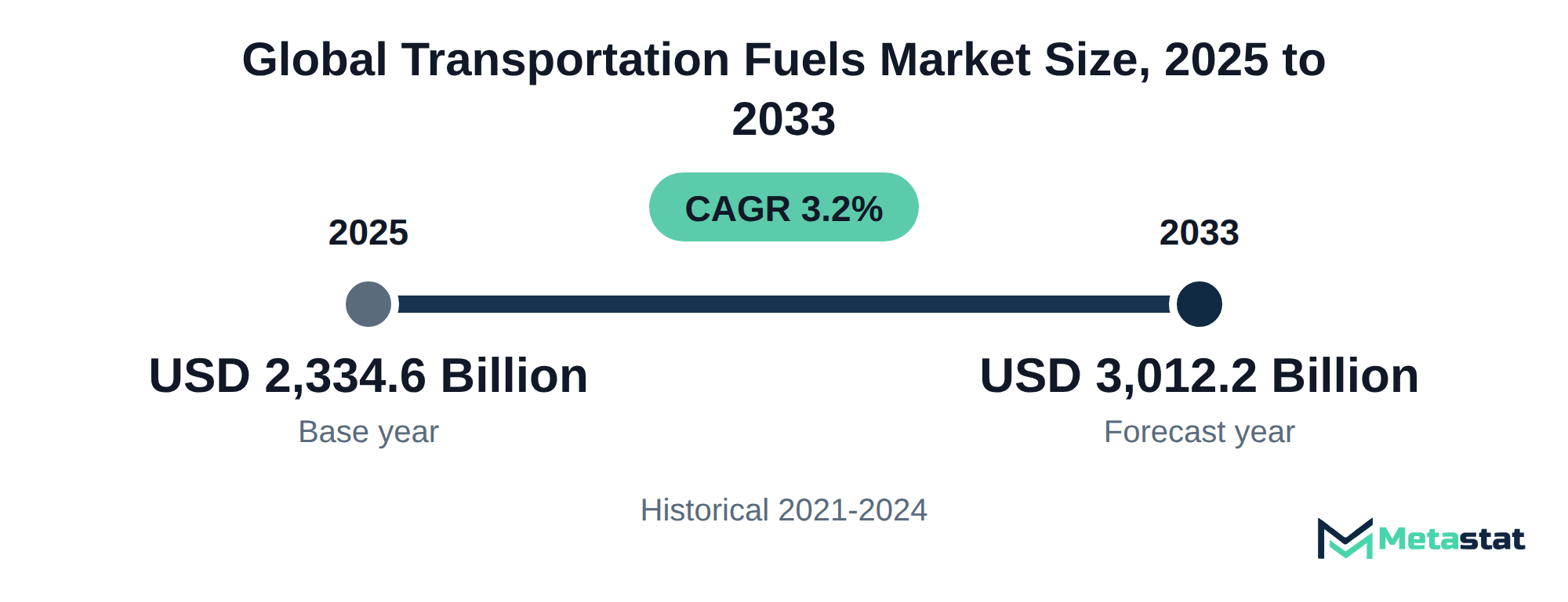
The Transportation Fuels market encompasses various fuel types, including gasoline, diesel, and aviation turbine fuel, which serve essential roles across multiple transportation modes. Buyers invest in this market driven by the need for efficient and reliable energy sources, crucial for personal and commercial transportation. Individual motorists, freight and logistics companies, and aviation operators represent the primary customer groups, each requiring specific fuel solutions to meet operational demands.
Growth in the market is influenced by rising demand for road transportation fuels, which holds the largest value among segments. North America holds 27.3% of the market in 2025, with the US leading in 2026. Growing interest in sustainable transport and regulatory changes that support cleaner fuels also drive this growth, reflecting a shift towards more environmentally friendly fuel options.
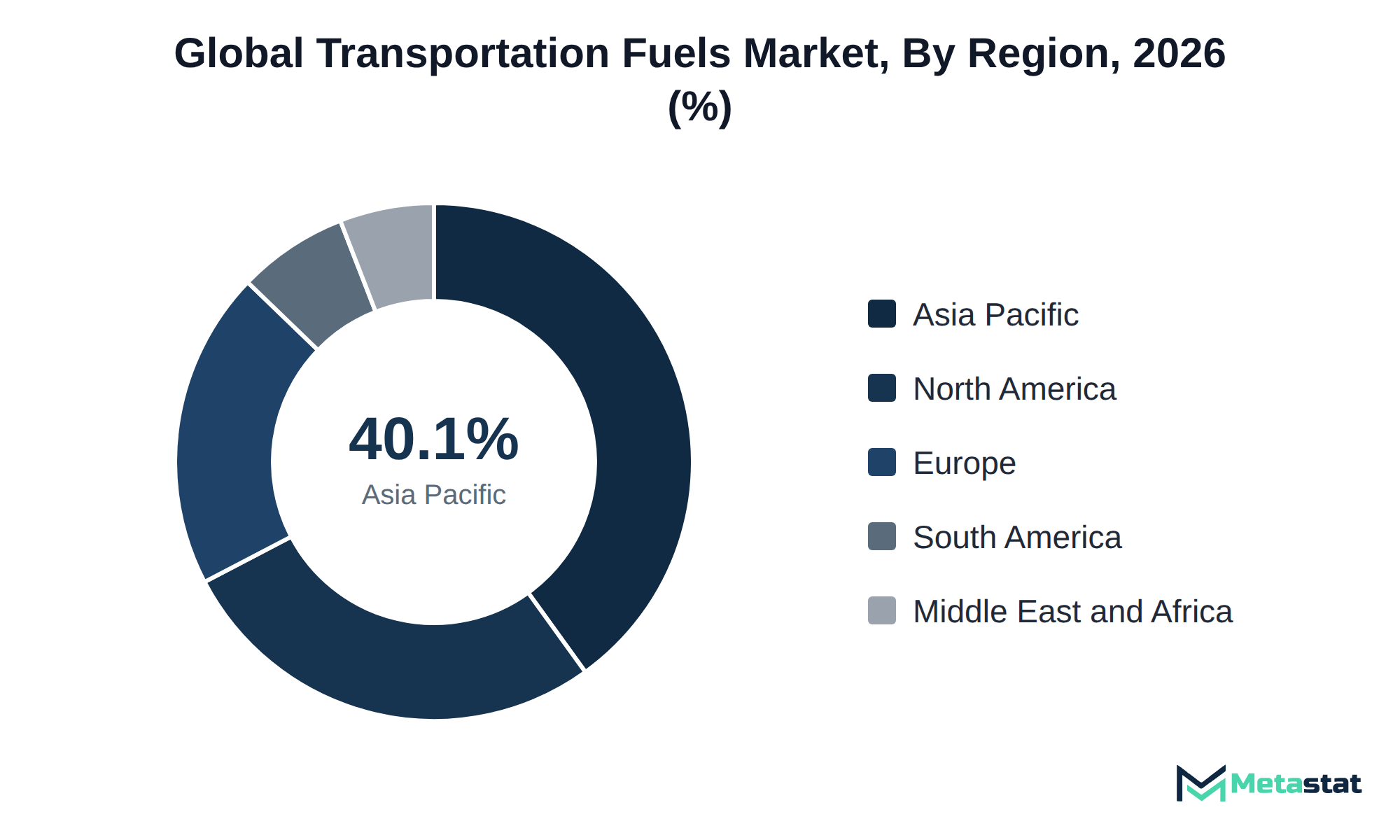
Regionally, the market displays diverse dynamics, with Asia Pacific capturing the largest share at 40.1%. This region's rapid industrialization and urbanization create substantial demand for transportation fuels. Continuous investment in infrastructure and expansion of transportation networks further enhance market opportunities, increasing competitiveness among suppliers and driving innovation in fuel technologies.
The Transportation Fuels market includes many fuel types that serve different transportation modes, driving considerable spending from buyers. Individual motorists, freight and logistics companies, and airlines represent key end users, each requiring reliable fuel sources to maintain operations. Demand for transportation fuels stems from the necessity for mobility and the delivery of goods across regions, emphasizing the importance of this market in everyday life and global trade.
Growth in the market is propelled by increasing demand for gasoline, which generates the highest revenue among fuel types. The region's strong automotive industry and consumer reliance on personal vehicles contribute significantly to gasoline consumption, reinforcing market stability and expansion.
Aviation is another critical segment experiencing rapid growth, driven by the expanding air travel industry. Rising disposable incomes and a growing global population fuel demand for air travel, leading to greater consumption of aviation turbine fuel. The Transportation Fuels market continues to adapt to shifts in consumer preferences and technological advancements.
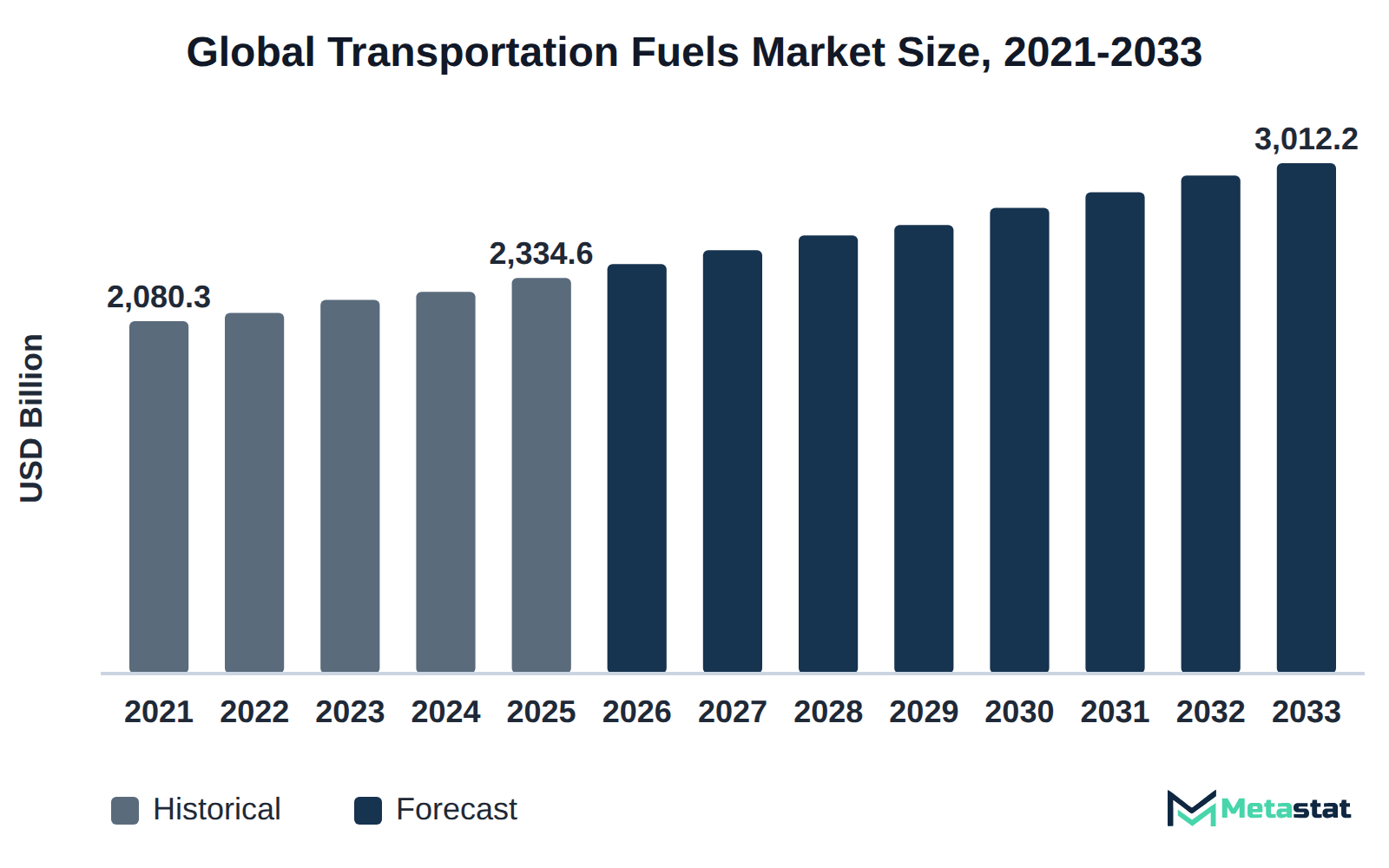
Investment in low-carbon transportation fuels, part of broader energy transition investment, significantly influences refining and distribution sectors. The projection of the Transportation Fuels market indicates that the shift towards more sustainable fuel options reshapes operational strategies. For instance, the market for Aviation Turbine Fuel is set to reach USD 326.5 billion by 2033. This growth is driven by increasing regulatory pressures and evolving consumer preferences for cleaner fuels.
Technological innovations support the transition toward low-carbon solutions. Refining processes that incorporate biofuels, hydrogen, and synthetic e-fuels enhance operational efficiency while aligning with global sustainability goals. Companies involved in the Transportation Fuels market invest heavily in upgrading facilities to produce these advanced fuels, improving their market positioning and meeting the competitive demands of environmentally conscious consumers.
The emerging focus on low-carbon fuels affects both production methods and distribution logistics. A clear shift in infrastructure investment prioritizes the development of supply chains that support renewable fuels. With retail fuel stations adapting to accommodate biofuels and other low-carbon options, companies reallocate resources to capture new revenue streams in response to evolving market dynamics.
Aviation and marine fuel sectors experience a shift towards renewable blending, driven by increasing regulatory requirements and consumer demand for sustainable options, including sustainable aviation fuel. The Transportation Fuels market reflects this trend with aviation turbine fuel projected to reach USD 326.5 billion by 2033. This increase illustrates the industry's commitment to incorporating renewable sources into traditional fuel mixes.
Buyers prioritize pricing models that incorporate renewable energy credits or blending mandates. Contract structures typically include long-term agreements that guarantee fuel supply while offering flexibility in pricing to accommodate fluctuations in renewable fuel availability. Such arrangements help companies operate in the renewable energy market while ensuring compliance with environmental mandates.
In the marine fuel segment, the growing emphasis on low-sulfur fuel regulations drives demand for blended fuels. Marine bunkering contracts focus on quality specifications, fueling requirements, and the inclusion of sustainability clauses, which reflect the operational shift towards cleaner energy sources and broader maritime decarbonization. Consequently, companies within this market face pressures to adapt their supply chains in response to evolving buyer expectations and compliance standards.
Renewable blending in the aviation and marine fuel sectors addresses consumer preferences and enhances competitiveness among suppliers. By aligning pricing strategies and contract models with sustainable practices, companies capitalize on emerging opportunities within the Transportation Fuels market, ultimately driving innovation and sector growth.
Individual motorists in the Asia Pacific region significantly influence gasoline and diesel consumption, driven by increasing vehicle ownership and urbanization. The demand for gasoline is projected to rise from USD 1,252.7 billion in 2026 to USD 1,434.7 billion by 2033, reflecting a compound annual growth rate of 2%. This growth primarily stems from the expanding middle class, particularly in countries including China and India, where economic development fuels personal transportation needs.
The rise in consumer preferences for personal vehicles over public transport enhances this trend, contributing to the overall growth in the market. This shift highlights the need for fuel providers to align their supply strategies with the evolving preferences of individual motorists, ensuring availability and accessibility of gasoline and diesel. The anticipated growth in this demographic's fuel consumption gives suppliers an opportunity to expand their offerings and strengthen their market presence in the region.
Sustainable fuel mandates significantly influence the supply dynamics within the Transportation Fuels market. These mandates push suppliers to transition towards more environmentally friendly fuel options, prompting an increase in the availability of biofuels and alternative energy sources. For instance, the Biofuels segment, which includes advanced transportation biofuels, is expanding in response to regulatory frameworks aimed at reducing carbon emissions. This segment's growth aligns with the significant trend toward sustainability in the fuel sector.
While regulations tighten, suppliers face both challenges and opportunities. Companies that adapt swiftly capitalize on the rising demand for cleaner fuels. The anticipated growth in the Biofuels segment presents a commercial opportunity, with a projected compound annual growth rate (CAGR) supporting increased investments in biofuel production capabilities. As a result, suppliers investing in these areas are expected to gain a competitive edge in a changing market.
Urbanization trends contribute significantly to rising fuel consumption, particularly among individual motorists and freight logistics companies. Greater population density in urban areas leads to increased vehicle ownership and higher transportation demand, resulting in escalated fuel usage. The shift in consumer behavior towards more frequent travel and delivery services further drives this demand. For instance, individual motorists are expected to drive consumption from USD 1,125.4 billion in 2026 to USD 1,285.3 billion by 2033, reflecting a compound annual growth rate of 1.9%. Expanding urban populations exert upward pressure on volumes and prices, showing how strongly urbanization shapes market dynamics. This growth trajectory presents opportunities for suppliers to adapt and innovate fuel offerings to meet the changing needs of urban consumers.
Innovation in fuel technologies significantly streamlines fuel production processes and improves overall efficiency, propelling growth in the Transportation Fuels market. Sophisticated refining techniques reduce energy consumption and emissions during fuel production, aligning with growing environmental standards. These advancements lower operational costs for suppliers, enhancing profit margins while attracting investment into research and development. Enhanced fuel efficiency appeals to both individual motorists and freight logistics companies seeking reduced fuel expenses. Consequently, this trend spurs demand for fuels that meet stringent efficiency requirements. The market's capacity to adapt to technological changes facilitates broader acceptance of new fuel types, subsequently increasing overall penetration. Continuous improvement in fuel formulations further enables compatibility with existing engines, thus minimizing transition costs for consumers. Such developments show a shift in market dynamics, with technological progress shaping future fuel demand.
Fluctuating prices for transportation fuels significantly impact buyer behavior, particularly among individual motorists and freight logistics companies. Price volatility results in hesitation toward purchasing, leading to smaller orders or delayed fuel replacements. The rising cost of fuel, driven by geopolitical tensions and supply chain disruptions, creates uncertainty for consumers, affecting their willingness to invest in transportation fuels. In the Transportation Fuels market, inconsistency in pricing contributes to operational challenges, making several buyers reluctant to commit to long-term contracts or shifts in their fuel consumption patterns. Consequently, this restraint hampers the overall growth potential of the market, with buyers prioritizing budget stability over immediate fuel needs.
Freight and logistics companies particularly feel the effects of these price changes, with operational costs closely tied to fuel expenses. Heightened operational costs limit their capacity to absorb fluctuations, driving a focus on cost efficiency. The overall result restricts demand, delaying necessary investments in fuel types and alternative solutions. This dynamic shows that stable pricing supports a stronger demand environment within the market.
The Transportation Fuels market faces notable challenges stemming from input cost pressures, particularly with raw materials and production processes. Rising prices for crude oil and feedstock impact the overall profitability of fuel suppliers, compelling them to explore cost-effective alternatives and more efficient production methods. Crude oil costs in turn reflect conditions across the oil and gas industry. Suppliers adopt strategies including streamlining operations and investing in technologies that enhance efficiency, which ultimately reduces costs without compromising quality. Suppliers invest in research and development to integrate alternative fuels into their offerings, diversifying their portfolios and mitigating reliance on traditional fuels. This shift not only addresses input cost challenges but aligns with the growing consumer demand for sustainable fuel options. The response to input cost pressures significantly influences market competitiveness, driving suppliers to innovate and adapt to changing economic conditions while maintaining market share and profitability.
The aviation sector shows significant growth potential within the Transportation Fuels market, anticipated to reach USD 381.6 billion by 2033. This segment has a compound annual growth rate (CAGR) of 6.1%, driven by increasing air travel demand and a shift towards more efficient aviation turbine fuels. Airlines and aviation operators prioritize sustainable fuel options, seeking to meet consumer preferences and regulatory demands for lower emissions. This trend emphasizes the need for innovative fuel technologies that facilitate the transition to biofuels and synthetic fuels in aviation. The rising focus on sustainability and efficiency in air travel creates a conducive environment for investments in this segment, enhancing overall market dynamics. Stakeholders that meet these evolving needs are better placed to grow in a marketplace that values environmental responsibility and operational efficiency.
The Global Transportation Fuels market is segmented based on Fuel Type, Transportation Mode, Distribution Channel, and End User.
This fuel type primarily serves individual motorists and is essential for personal and commercial vehicles. Demand for gasoline experiences significant influence from urbanization and population growth, particularly in emerging markets. This segment stands out due to its established infrastructure and widespread availability compared to alternative fuels including biofuels and natural gas. While gasoline continues to dominate the market, its growth remains slower compared to aviation turbine fuel, which exhibits a higher CAGR of 6.1%. The segment's performance shapes the overall dynamics of the transportation fuels market and reflects broader trends in consumer behavior and regulatory landscapes.
Diesel and Gasoil segment is estimated to reach USD 810.9 billion by 2033, at a CAGR of 2.8% during the forecast period. This segment primarily fuels heavy-duty vehicles, freight transport, and industrial machinery, catering to freight and logistics companies and individual motorists. Demand derives from the essential role of diesel in long-haul transportation and construction activities. Regulatory pressures for emissions reduction drive innovation in cleaner diesel technologies, including renewable diesel, influencing demand dynamics. Compared to gasoline, the Diesel and Gasoil segment experiences slower growth, reflecting a more mature market with established infrastructure. The segment's pricing remains competitive, attracting buyers seeking efficient fuel solutions while balancing operational costs associated with the transition to alternative fuels. The market continues to adapt to evolving standards and environmental considerations, shaping the future of fuel consumption.
Aviation Turbine Fuel segment is expected to reach USD 326.5 billion by 2033. This fuel type serves primarily airlines and aviation operators, enabling efficient air travel. Key drivers for this segment include increasing air traffic and the push for more sustainable aviation practices, influencing demand in the aviation sector. The segment exhibits a higher growth trajectory compared to other fuel types, evidenced by its CAGR of 6.1%. Unlike gasoline and diesel, which cater primarily to road transportation, aviation turbine fuel faces unique regulatory pressures aimed at reducing carbon emissions, driving innovation in sustainable fuel alternatives. With the aviation industry's ongoing expansion, particularly in emerging markets, demand for aviation turbine fuel continues to strengthen, aligning with broader trends toward fuel efficiency and sustainability in the market.
Marine Fuel Oil is anticipated to grow at a CAGR of 1.6% during the forecast period. This fuel type primarily serves marine transportation, powering various vessels, including cargo ships and tankers. Demand for Marine Fuel Oil is driven by the shipping industry's efforts to comply with international regulations regarding sulfur content in fuels, resulting in a shift toward cleaner alternatives, including marine methanol. Unlike gasoline and diesel, which cater to individual motorists and freight logistics, Marine Fuel Oil faces unique challenges due to regulatory pressures and the high cost of transitioning to more sustainable options. The segment's growth is relatively slower compared to other fuel types, reflecting the complexities of the marine transport sector and the need for significant infrastructure adjustments. The market for Marine Fuel Oil is characterized by a distinct buyer base, primarily shipping companies that require large volumes to operate efficiently.
Biofuels represent an alternative energy source derived from renewable biological materials. This segment is significant in reducing greenhouse gas emissions and supporting energy independence, primarily serving individual motorists and freight and logistics companies. Demand for biofuels escalates due to regulatory pressures aimed at lowering carbon footprints, alongside an increasing consumer preference for sustainable options. This segment differs from others within the fuel type category due to its potential for faster growth, influenced by favorable policies and technological advancements in production processes. Companies engaged in the biofuels sector focus on innovation to enhance fuel efficiency and reduce costs, establishing a competitive edge that distinguishes biofuels from traditional fossil fuels. The Transportation Fuels market benefits from the expanding adoption of biofuels, aligning with global sustainability goals while addressing the evolving needs of diverse end users.
LPG and Autogas are versatile fuel options widely used in transportation, particularly for light-duty vehicles. Individual motorists, freight carriers, and public transit operators frequently rely on this fuel type due to its affordability and lower emissions compared to traditional gasoline and diesel. The push for cleaner options drives a growing interest in LPG and Autogas, with many regions implementing incentives for adoption. This segment distinguishes itself from others through its competitive pricing and lower carbon footprint, appealing to environmentally conscious consumers and businesses. While gasoline and diesel dominate in volume, increasing regulatory pressure for sustainable practices positions LPG and Autogas as a viable alternative, supporting the broader trend towards decarbonization in the transportation sector. Adoption rates in urban areas reflect a shift in consumer preferences, highlighting the segment's role in the evolving dynamics of the market.
Natural Gas Fuels consist of gaseous hydrocarbons used primarily for transportation applications. This fuel type serves various sectors, including freight logistics and public transit, where operational efficiency and emissions reductions are prioritized. Demand for natural gas fuels is driven by the increasing emphasis on environmental sustainability and regulatory pressures aimed at reducing carbon footprints. In comparison to other fuel types, including gasoline and diesel, natural gas fuels typically present a lower price point, attracting a different buyer demographic, particularly those operating fleets seeking cost-effective alternatives. Adoption barriers exist, including the need for adequate refueling infrastructure, which impacts growth potential. However, the market shows promise due to ongoing developments in technology that enhance the viability and efficiency of natural gas fuels.
Hydrogen, methanol, ammonia, and synthetic e-fuels represent innovative alternatives within the fuel landscape. These fuels have various applications, including transportation and industrial processes, appealing to sectors aiming to reduce carbon footprints. A growing emphasis on environmental sustainability drives interest in these fuels, especially from government and regulatory bodies advocating for cleaner energy sources. Low-carbon ammonia is one example of a fuel in this group that supports those aims. The transition towards sustainable fuels positions this segment as a crucial part of future energy strategies.
Compared to traditional fuels, this segment experiences different dynamics, with typically higher production costs due to the advanced technologies required for synthesis. Buyers in this segment include commercial fleets and industries seeking to comply with stringent emissions regulations, which sets them apart from mainstream fuel users. The Transportation Fuels market shows an increasing trend towards integrating these fuels, supporting the shift towards greener alternatives.
Road Transportation segment is valued at USD 1,873.6 billion in 2026 and is projected to reach USD 2,223.6 billion by 2033, at a CAGR of 2.5% during the forecast period. This segment primarily caters to individual motorists and freight logistics companies, serving as a critical driver of fuel consumption. Increased urbanization and rising demand for consumer goods fuel the growth of this segment, leading to higher fuel usage in road transport. Compared to other segments, including Aviation, which experiences a higher CAGR of 6.1%, Road Transportation demonstrates more moderate growth. The focus on cost-effective fuel options influences decisions made by buyers in this space, differentiating it from segments reliant on more specialized fuels, including Aviation Turbine Fuel, which is projected to reach USD 326.5 billion by 2033. Overall, the Road Transportation segment significantly influences the overall dynamics of the Transportation Fuels market.
Aviation is projected to reach USD 381.6 billion by 2033, at a CAGR of 6.1% during the forecast period. This segment serves airlines and aviation operators, facilitating air travel and cargo transport. The rising demand for air travel, driven by increasing global connectivity and tourism, drives growth in this segment. Aviation growth outpaces other transportation modes, reflecting a distinct buyer profile focused on efficiency and operational costs. Innovative technologies, including advancements in aircraft fuel efficiency, contribute to reducing emissions, aligning with regulatory pressures for sustainability. The aviation segment stands apart due to its rapid expansion relative to road transportation, which is projected to grow at a CAGR of 2.5%. Overall, investment in cleaner aviation fuels and improved operational efficiencies supports growth in the market.
Marine Transportation segment is expected to reach USD 306.6 billion by 2033. This segment primarily supports shipping operations, catering to companies involved in the transportation of goods across the globe. The sector experiences growth driven by increased international trade and rising demand for efficient shipping solutions among freight and logistics companies. Compared to other segments, Marine Transportation exhibits slower growth, largely due to regulatory pressures surrounding emissions standards and slower adoption of alternative fuels. The segment operates under unique operational requirements, differing from sectors including Road Transportation, which benefits from higher growth rates due to urbanization and infrastructure development. The market's evolution reflects the ongoing transformation in shipping practices and fuel utilization, highlighting the importance of sustainable practices in meeting future demand.
Rail Transportation segment is projected to grow at a CAGR of 6.7% during the forecast period. This segment primarily serves freight and logistics companies, facilitating the movement of goods across vast distances efficiently. Increasing demand for sustainable transportation solutions drives growth in this segment, with investments in rail infrastructure and technology upgrades enhancing operational efficiency. Compared to other transportation modes, Rail Transportation exhibits a faster growth trajectory, attributed to its lower emissions profile and higher fuel efficiency relative to road transportation. By 2033, Rail Transportation is expected to capture USD 1,004.1 million of the market, reflecting the ongoing transition towards greener fuel alternatives.
Retail Fuel Stations segment is valued at USD 1,520.6 billion in 2026 and is projected to reach USD 1,802.5 billion by 2033, at a CAGR of 2.5% during the forecast period. This segment serves individual motorists seeking convenient access to fuel for personal and commercial vehicles. Demand for this segment is driven by the increasing number of vehicles on the road and the necessity for easy refueling options. In comparison to other distribution channels, Retail Fuel Stations exhibit slower growth, particularly when contrasted with the Commercial and Bulk Supply segment, which is projected to reach USD 641.9 billion by 2033, reflecting a CAGR of 3.7%. The requirement for consistent and convenient access to fuel for individual motorists distinguishes this segment from others.
This segment serves freight and logistics companies, ensuring a steady flow of fuel for commercial vehicles and transportation operations. One significant factor driving this segment involves increasing demand for efficient supply chains and logistics solutions, particularly in e-commerce and retail. Unlike Retail Fuel Stations, which cater directly to individual motorists, this segment focuses on bulk deliveries to businesses that require large quantities of fuel. This channel typically experiences growth at a slower pace compared to Retail Fuel Stations, which are projected to grow at a CAGR of 2.5%. Such differences highlight the unique needs and purchasing behaviors of businesses, which prioritize reliability and cost-effectiveness over convenience.
Airport into-Plane Supply segment is expected to reach USD 322.9 billion by 2033. This supply channel is critical for fueling aircraft directly at airports, serving airlines and aviation operators. The need for efficient fueling processes and adherence to safety regulations drives growth in this segment. Increased air travel and a surge in demand for air cargo fuel the rise in this segment, distinguishing it from others within the distribution channel. The CAGR for this segment reflects a more rapid expansion compared to traditional retail fuel stations, where growth is projected at 2.5%. The market's focus on optimizing fueling operations contributes to its competitive edge, highlighting its strategic importance in the overall Transportation Fuels market.
Marine Bunkering is projected to grow at a CAGR of 4% during the forecast period. This segment provides fuels specifically for marine vessels, including cargo ships and tankers, which are critical for global trade and transportation. Key players in this segment include shipping companies that require reliable fuel sources to ensure operational efficiency. The demand for marine bunkering is driven by an increase in global shipping activities and stricter regulations on emissions, compelling shipping companies to adopt cleaner fuel alternatives. Unlike other distribution channels, marine bunkering faces unique challenges, including fluctuating fuel prices and compliance with international maritime regulations. This segment offers distinct pricing dynamics compared to retail fuel stations, where individual motorists access fuel. The segment’s growth trajectory underscores the importance of marine fuels in the broader Transportation Fuels market.
Terminal and Wholesale Supply involves the distribution of fuels in large quantities to commercial entities, including fuel retailers and industrial consumers. This segment is critical for ensuring consistent and reliable supply to various end users, particularly those operating in logistics and transportation sectors. Demand for this segment is driven by the growing need for efficient supply chains and the requirement for uninterrupted fuel access in high-volume operations. Unlike Retail Fuel Stations, which cater primarily to individual motorists, Terminal and Wholesale Supply targets larger buyers, reflecting a distinct market dynamic. While the Transportation Fuels market continues to expand, fluctuating fuel prices and regulatory changes present ongoing challenges that influence purchasing decisions in this segment.
This segment primarily includes consumers who operate personal vehicles and rely on gasoline and diesel fuels for daily transportation needs. Demand in this area is driven by urbanization and increased vehicle ownership, particularly in emerging economies. The growth rate for Individual Motorists remains slower compared to segments including Freight and Logistics Companies, which exhibit a CAGR of 3.8%. While fuel prices influence purchasing decisions, the Individual Motorists segment tends to be less sensitive to fluctuations in fuel costs than commercial sectors that have more stringent operational budgets. Understanding these dynamics is crucial for stakeholders navigating the Transportation Fuels market effectively.
Freight and Logistics Companies segment is estimated to reach USD 818.1 billion by 2033, at a CAGR of 3.8% during the forecast period. This segment encompasses businesses responsible for the transportation and delivery of goods, employing various modes, including road, rail, and air. The increasing demand for e-commerce and the need for timely deliveries drive growth in this segment. Companies in this sector face rising fuel costs, impacting operational expenses and pricing strategies. Compared to Individual Motorists, this segment exhibits a higher growth rate while businesses prioritize efficient supply chains and logistics. The market responds to technological advancements, adopting more fuel-efficient vehicles and exploring alternative fuels to mitigate costs and enhance competitiveness.
Airlines and Aviation Operators segment is expected to reach USD 373.2 billion by 2033. This segment serves airlines and aviation operators that require fuel for aircraft operations, encompassing commercial and cargo flights. A significant factor influencing this segment involves the increasing demand for air travel, driven by a recovering global economy and rising consumer preference for air transport. In contrast, the Individual Motorists segment, which caters to personal vehicle users, exhibits a lower growth rate with a CAGR of 1.9%. The Aviation segment experiences a higher growth rate of 6.1% compared to other transportation modes, highlighting the rapid expansion of the aviation industry and its unique fuel requirements. The reliance on specific fuel types and the dynamics in pricing driven by geopolitical factors further differentiate this segment from others in the market.
Shipping Companies segment is projected to grow at a CAGR of 4.3% during the forecast period. This segment primarily includes businesses engaged in the transportation of goods via marine routes, using various types of fuels. The demand for this segment is driven by global trade activities, which require efficient and reliable shipping solutions. Shipping companies face fluctuating fuel prices, impacting their operating costs and profitability. Compared to other end user segments, including Individual Motorists, this segment operates on a larger scale and involves different fuel requirements. The market for Shipping Companies relies heavily on overall trends in international trade and shipping logistics, making it sensitive to economic conditions and regulatory changes affecting maritime operations.
Public Transit Operators rely on transportation fuels to provide essential services across urban and rural areas. This segment caters primarily to government agencies and private companies responsible for bus and rail systems. Several factors influence this segment, including the growing emphasis on sustainable public transportation solutions. Increased investment in electric and hybrid buses drives the shift toward lower-emission options, reflecting a broader trend within the market. Compared to other end users, Public Transit Operators typically experience slower growth rates, largely due to regulatory hurdles and funding limitations. While fuel costs present challenges, ongoing government initiatives to promote public transport adoption enhance the operational landscape for this segment. The Transportation Fuels market plays a critical role in supporting the operational efficiency of Public Transit Operators, as they seek to balance costs and sustainability in their fuel choices.
Rail Operators employ transportation fuels primarily for moving goods and passengers via rail networks. This segment involves various stakeholders, including freight companies and public transit authorities, driven by the ongoing demand for efficient and sustainable logistics solutions. Factors including growing investments in rail infrastructure and increasing environmental regulations promote the adoption of cleaner fuel options within this segment. Compared to other end-user segments, Rail Operators experience relatively stable growth patterns, influenced by the efficiency of rail transit and the global transition towards reducing carbon emissions. The focus on electrification and alternative fuels distinguishes this segment from others, which rely more heavily on traditional fossil fuels. While the Transportation Fuels market evolves, Rail Operators are positioned to adapt by integrating advanced technologies and fuel solutions that align with broader sustainability goals.
Government and Military rely on a variety of fuel types for operations, including logistical missions, transportation of personnel, and other critical functions. This segment serves various governmental organizations and military agencies, necessitating high-quality fuels for reliable performance. Factors influencing this segment include a focus on energy security and defense spending, which supports consistent demand for fuels. Unlike other end-user categories, including Individual Motorists or Freight and Logistics Companies, Government and Military prioritizes specialized fuel types and strategic partnerships over price. A heightened emphasis on sustainability and alternative fuels within military operations shapes future procurement strategies, distinguishing this segment from others in the market.
Based on geography, the Global Transportation Fuels market is divided into North America, Europe, Asia-Pacific, South America, Middle East, and Africa.
North America presents a significant market for transportation fuels, projected to reach USD 775.9 billion by the end of 2033. The United States, Canada, and Mexico drive demand through vast transportation networks and consumer preferences for various fuel types. Implementation of environmentally focused regulations encourages adoption of cleaner fuels, enhancing sustainability in the industry. Retail fuel stations represent a crucial distribution channel, facilitating access for individual motorists and logistics companies. The market reflects a steady growth pattern, supported by ongoing investments in infrastructure and technology. The aviation sector contributes significantly, with airlines and aviation operators seeking efficient fuel options. Overall, the transportation fuels market in North America is positioned for strong growth, driven by changing consumer demands and regulatory frameworks.
Significant demand for the Transportation Fuels market in Europe arises from several sectors, including individual motorists and freight and logistics companies. Germany, France, the UK, Italy, Spain, and Russia contribute to this demand through their established transportation infrastructure and strong automotive industries. The market benefits from regulatory support aimed at reducing emissions, which drives the adoption of alternative fuel sources within the region. By 2025, Europe is expected to account for 19.9% of the global market, with growth anticipated in segments including Diesel and Gasoil, reflecting increased usage in both commercial and personal transportation. The market evolves, driven by a combination of technological advancements and shifting consumer preferences toward sustainable fuel options.
Asia-Pacific represents 40.1% of the Transportation Fuels market in 2025. Demand is driven by robust industrial activity and a growing transportation sector across countries like China, India, and Japan. Infrastructure investments in road networks and aviation facilities enhance fuel accessibility and distribution. The increase in urbanization, particularly in India and Southeast Asia, intensifies the requirement for gasoline and diesel fuels among individual motorists and freight companies. Regulatory measures promoting cleaner fuels influence the transition towards more sustainable alternatives in the region. Aviation, with a projected value of USD 381.6 billion by 2033, highlights the region's focus on enhancing air travel capabilities, contributing to the overall market growth.
Brazil and Argentina drive significant demand in the Transportation Fuels market, supported by their expanding economies and increasing vehicle ownership rates. The market experiences a unique cost structure influenced by local production capabilities and import dependencies. Infrastructure developments, particularly in urban areas, enhance accessibility to fuel sources, influencing consumer behavior positively. In 2025, South America holds a market share of 6.9%, indicating a growing contribution to global fuel consumption patterns. The need for sustainable fuel alternatives is increasing, leading to heightened interest in biofuels and renewable energy sources. Overall, the trends in South America reflect a responsive market adapting to both local consumer needs and broader environmental considerations in the Transportation Fuels market.
Growing demand in the Middle East and Africa stems from countries including Saudi Arabia, UAE, and South Africa, where energy needs significantly drive the market. The region's investment in refining capacity supports the production of various fuel types, particularly diesel and gasoil, which are crucial for the transportation sector. Major players in the market focus on expanding their supply chains and enhancing operational efficiency to meet rising fuel consumption. With a market share of 5.9% in 2025, the Middle East and Africa face challenges related to fluctuating crude oil prices, impacting operational costs for suppliers. The Transportation Fuels market in this region demonstrates a steady trajectory, driven by both individual motorists and commercial entities, reflecting the growing reliance on diverse fuel solutions.
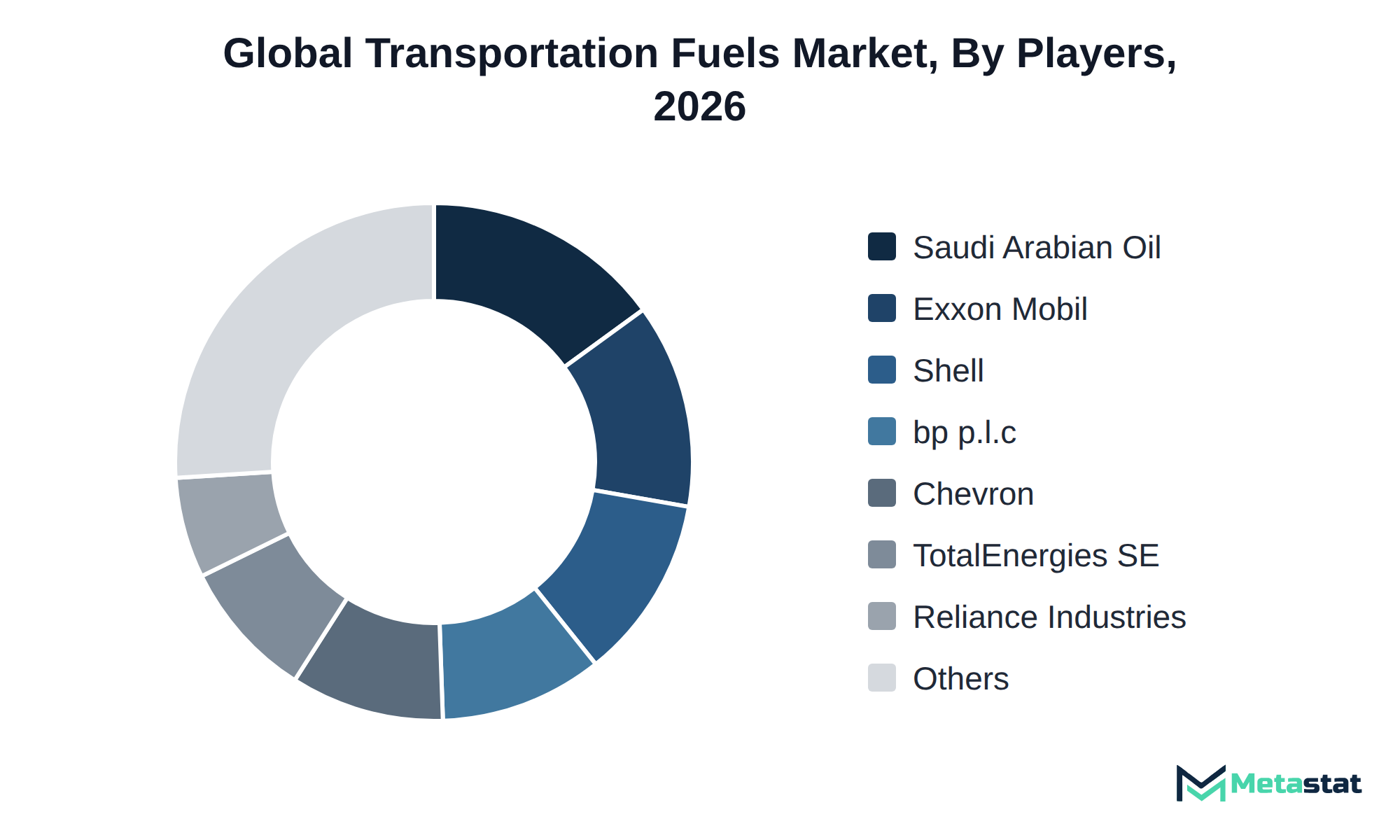
Companies in the Transportation Fuels market compete through various strategies, focusing on price, certification, customization, and service. Major players include Shell plc and Exxon Mobil Corporation, which emphasize extensive distribution networks and strong brand recognition to attract customers.
Buyers prioritize competitive pricing and reliable supply chains when selecting fuel suppliers. For instance, TotalEnergies SE focuses on sustainable practices and low-carbon options, while bp p.l.c. enhances customer loyalty through diverse product offerings. The emphasis on operational efficiency by companies like Chevron Corporation supports overall demand within the market.
To achieve this growth, several developments require attention. First, the expansion of road transportation fuels, driven by increasing demand from individual motorists, is essential. Second, the aviation segment plays a critical role, with anticipated growth at a 6.1% CAGR, reaching USD 381.6 billion by 2033. Regulatory support and investment in infrastructure will enhance this segment's potential. On the downside, fluctuations in global oil prices present a significant risk that hinders growth. Price volatility affects the costs associated with diesel and gasoil, a segment projected to reach USD 810.9 billion by 2033, which could limit investment and operational capabilities across regions. The Transportation Fuels market's trajectory will depend on these developments and how stakeholders address the associated risks.
By Fuel Type: Gasoline, Diesel and Gasoil, Aviation Turbine Fuel, Marine Fuel Oil, Biofuels, LPG and Autogas, Natural Gas Fuels, Others (Hydrogen, Methanol, Ammonia, Synthetic E-Fuels)
By Transportation Mode: Road Transportation, Aviation, Marine Transportation, Rail Transportation
By Distribution Channel: Retail Fuel Stations, Commercial and Bulk Supply, Airport into-Plane Supply, Marine Bunkering, Terminal and Wholesale Supply
By End User: Individual Motorists, Freight and Logistics Companies, Airlines and Aviation Operators, Shipping Companies, Public Transit Operators, Rail Operators, Government and Military
The report strategically identifies and profiles the key market players and analyses their core competencies in each sub-segment of the Transportation Fuels market.
Report Attributes | Details |
Study Period | 2021-2033 |
Base Year | 2025 |
Estimated Year | 2026 |
Forecast Period | 2026-2033 |
Historical Period | 2021-2025 |
Growth Rate | CAGR 3.2% from 2026 to 2033 |
Revenue Unit | USD billion |
Segmentation | By Fuel Type, Transportation Mode, Distribution Channel, End User, and Region |
By Region | North America (By Fuel Type, Transportation Mode, Distribution Channel, End User, and Country)
|
Europe (By Fuel Type, Transportation Mode, Distribution Channel, End User, and Country)
| |
Asia Pacific (By Fuel Type, Transportation Mode, Distribution Channel, End User, and Country)
| |
South America (By Fuel Type, Transportation Mode, Distribution Channel, End User, and Country)
| |
Middle East and Africa (By Fuel Type, Transportation Mode, Distribution Channel, End User, and Country)
|
Find answers to common questions about this report
The Transportation Fuels market size was valued at USD 2,334.6 billion in 2025.
The market is projected to grow at a CAGR of 3.2% during the forecast period from 2026 to 2033.
The North America Transportation Fuels market size is estimated to reach USD 775.9 billion by 2033.
Gasoline leads the Transportation Fuels market with a projected value of USD 1,434.7 billion in 2033, based on its significant share compared to other fuel types.
Urbanization trends significantly increase fuel consumption due to higher vehicle ownership and transportation demand among individual motorists and freight logistics companies. Technological advancements in fuel efficiency streamline production processes and enhance profit margins, driving growth in the market.
Fluctuating prices for transportation fuels and input cost pressures significantly restrain market growth. Price volatility leads to buyer hesitation and smaller orders, while rising raw material costs compel suppliers to seek cost-effective alternatives, impacting overall profitability.
Several factors favor adoption in the Transportation Fuels market. Innovation in fuel technologies enhances production efficiency, while increasing demand for sustainable fuel options aligns with consumer preferences. growth in urbanization drives higher fuel consumption among individual motorists and freight logistics companies, further supporting market expansion.
The Transportation Fuels market is estimated to reach a valuation of USD 3,012.2 billion by 2033.
Key players operating in the Transportation Fuels market include Shell plc, Exxon Mobil Corporation, bp p.l.c., Chevron Corporation, TotalEnergies SE, and Saudi Arabian Oil Company. Other notable companies are China Petroleum & Chemical Corporation, PetroChina Company Limited, Reliance Industries Limited, and Indian Oil Corporation Limited.
The aviation segment is projected to reach USD 381.6 billion by 2033, reflecting a compound annual growth rate of 6.1%. This growth stems from increasing air travel demand and a shift towards more efficient aviation turbine fuels.
The analysts below cover Automotive and Transportation research at Metastat Insights.
LEAD ANALYST
Utkarsh Khirodkar is a Lead Market Research Analyst at MetaStat Insight, specializing in market intelligence, technology sector assessments, and competitive strategy.

ENERGY & INFRASTRUCTURE INDUSTRY CONSULTANT
Automotive and Transportation · Electronics and Semiconductor · Energy and Power · Machinery & Equipment
Saurabh Vasant Ganvir consults for Energy & Infrastructure Industry at MetaStat Insight, specializing in renewable energy, solar EPC, and electric vehicle (EV) infrastructure markets.
Ambulatory surgical centers have very different purchasing cycles for robotic-assisted surgery platforms than major hospital networks. The MetaStat Insight study focused squarely on capital expenditure depreciation, procedural reimbursement pathways, and surgeon training overhead. That operational clarity made it much simpler to validate multi-year procedure growth forecasts against actual ambulatory center adoption patterns.
When planning edge sensor rollouts across refinery environments, generic IoT reports typically miss the harsh-environment certification bottlenecks. MetaStat Insight gave an objective evaluation of ATEX and Class 1 Division 2 hardware availability, along with realistic five-year maintenance cycle cost projections. The comparison of wireless mesh versus private cellular backhaul helped our team pressure-test network reliability models for remote processing facilities.
In the biological seed treatment space, registration timelines vary drastically between the European Union, Brazil, and North America. The MetaStat Insight research handled these cross-border regulatory barriers with genuine nuance, mapping commercialization pathways alongside historical field adoption rates. The segmentation between microbial strains and biochemical active ingredients was particularly well structured.
Explore related market intelligence reports worth reading alongside this one.
Starting from
$2950