
LEAD ANALYST
Utkarsh Khirodkar is a Lead Market Research Analyst at MetaStat Insight, specializing in market intelligence, technology sector assessments, and competitive strategy.

Global Motorcycle Accessories Market Size, Share, By Product Type (Rider Protective Gear, Luggage and Storage Systems, Communication, Navigation and Device Mounts, Protection and Performance Components, Lighting and Electrical Accessories, Comfort and Convenience Accessories, Security and Anti-Theft Accessories, Maintenance, Cleaning and Workshop Accessories), By Sales Channel (OEM and Authorized Dealer Channels, Specialty Motorcycle Retailers, Online Retail Stores, Independent Repair and Service Workshops), By Motorcycle Type (Standard and Commuter Motorcycles, Sport Motorcycles, Cruiser Motorcycles, Touring and Adventure Motorcycles, Off-Road, Enduro and Motocross Motorcycles, Scooters and Maxi-Scooters, Electric Motorcycles), By Price Tier (Economy, Mid-Range, Premium, Performance and Racing), Industry Analysis, Growth, Trends, and Forecast, 2026-2033
Report ID
MSI-5729
Published
November, 2026
Pages
282 Pages
Format
Historical
Base year
Forecast
Forecast period
Report Details
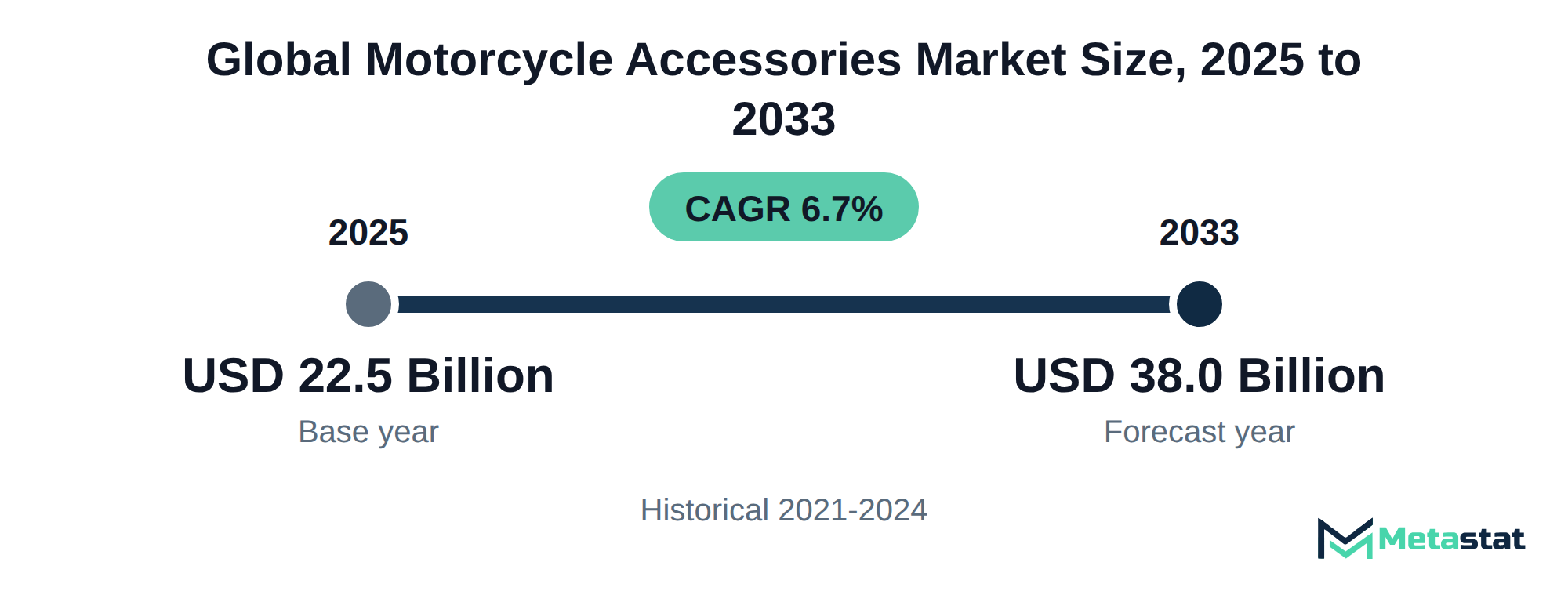
Market Valuation: Valued at $22.5 Billion in 2025, projected to reach $38 Billion by 2033 at a 6.7% CAGR.
Dominant Segment: Rider Protective Gear leads the market, driven by heightened safety awareness among consumers and the increasing number of motorcycle riders prioritizing protective equipment.
Geographic Lead: North America holds the largest market share at 25.2% in 2025, with the US contributing significantly due to its robust motorcycle culture and rising disposable income.
What's Inside: The report provides comprehensive coverage of market dynamics, competitive analysis, and a detailed forecast from 2026 to 2033, focusing on various product types and sales channels.
Emerging Trends: The demand for premium accessories, particularly in luggage and storage systems, reflects a shift towards high-quality products that enhance touring experiences.
Technological Advancements: Innovations in connected accessories are reshaping the riding experience, with a growing focus on smart technology that enhances safety and convenience.
Choose Your License
Global Motorcycle Accessories Market
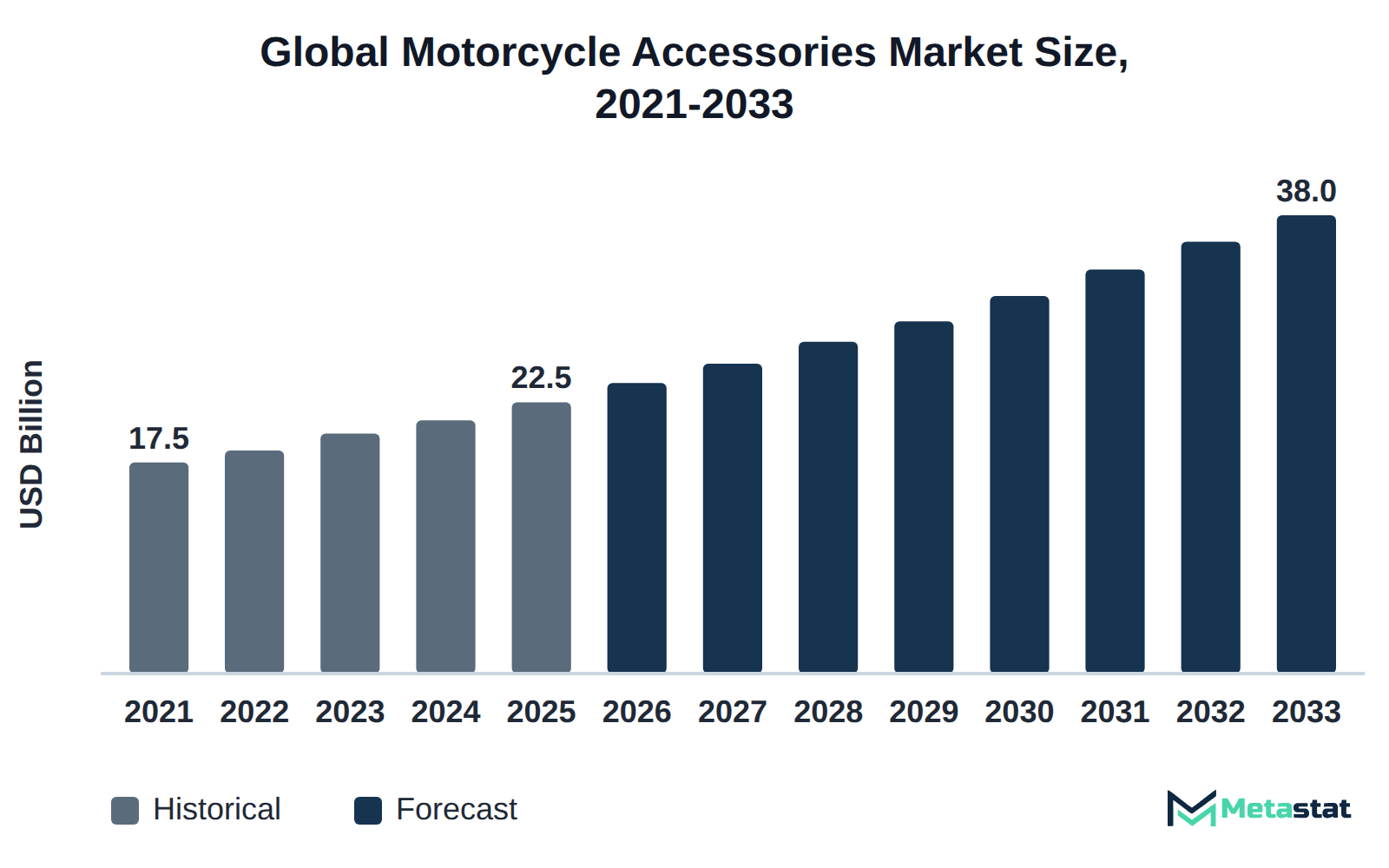
The global Motorcycle Accessories market was valued at USD 22.5 billion in 2025 and is projected to reach USD 38 billion by 2033, growing at a CAGR of 6.7% over the forecast period.
The Motorcycle Accessories market covers products designed to enhance the motorcycle riding experience, including protective gear, luggage systems, and communication devices. Buyers invest in these accessories to ensure safety, improve convenience, and enhance performance during rides. Factors influencing purchasing decisions include the desire for enhanced safety features and technological advancements that offer better connectivity and navigation while riding.
Growth in the market is driven by increasing motorcycle ownership and rising interest in outdoor recreational activities. Among the various segments, Rider Protective Gear holds the largest value, reflecting the critical emphasis on safety. North America holds 25.2% of the market in 2025, with the US leading in 2026. This region's robust motorcycle culture and increasing disposable income contribute significantly to its market share.
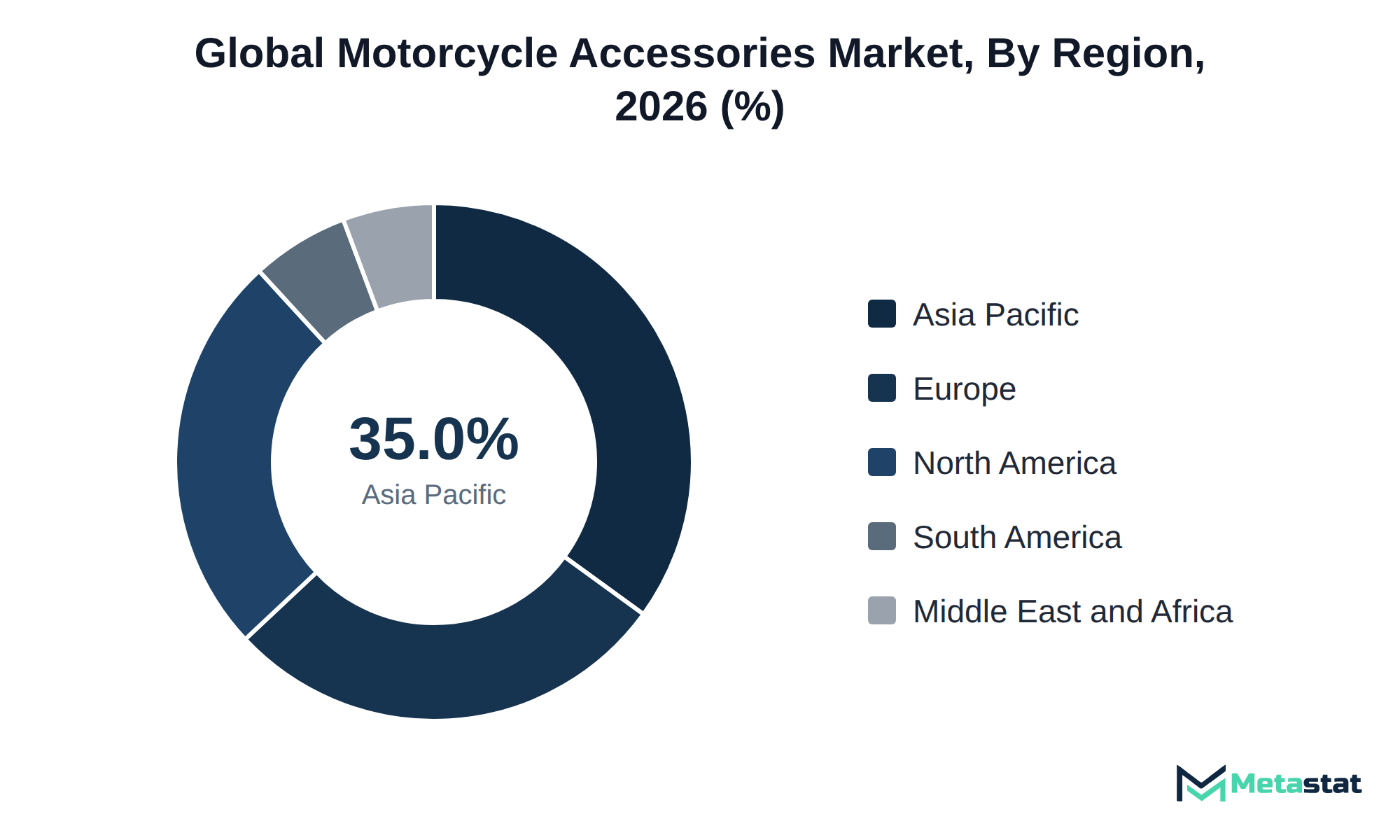
Technological advancements propel market growth, with innovations in safety and performance accessories capturing consumer attention. The Asia Pacific region stands out with a 35% market share, driven by a surge in motorcycle adoption in countries like India and China. This dynamic environment encourages competition and investment in new product development and improved supply chains.
The Motorcycle Accessories market includes a variety of products aimed at enhancing safety, convenience, and functionality for motorcycle users. Key buyers include individual riders, OEMs, and specialized retailers, all of whom invest in accessories to improve their riding experience, ensure safety, and maintain vehicle performance. This market encompasses segments including rider protective gear, luggage systems, and communication tools, reflecting the diverse needs of motorcycle enthusiasts.
Growth in the market arises from several factors, including increased motorcycle ownership and a rising focus on rider safety. The segment generating the highest revenue is rider protective gear, which addresses the critical concern of safety while riding. The Asia Pacific region demonstrates significant potential due to growing urbanization and a younger demographic embracing motorcycle culture.
Investment in advanced technology, including smart helmets and integrated navigation systems, drives innovation within the Motorcycle Accessories market. Enhanced features and improved performance attract consumers willing to spend on premium products. Retail strategies leveraging online sales channels expand market reach, enabling access to a broader audience while catering to changing purchasing behaviors.
The integration of connected technology into motorcycle accessories transforms the riding experience, enhancing safety, convenience, and navigation. Significant advancements in communication and navigation devices emerge, facilitating connectivity between riders and their motorcycles. In 2023, the market for communication, navigation, and device mounts is projected to reach USD 5.1 billion by 2033, reflecting growing interest in this segment.
Riders increasingly demand smart accessories that provide real-time data on performance metrics, navigation updates, and communication capabilities. This shift prompts manufacturers to innovate, introducing advanced features like Bluetooth connectivity, smartphone integration, and GPS tracking systems within their product lines. Consequently, riders experience increased situational awareness and improved safety, creating a more informed and enjoyable journey.
The Motorcycle Accessories market responds to this trend by expanding offerings in connected devices. Companies focusing on communication and navigation solutions enhance competitiveness, driving revenue growth through the introduction of innovative features that appeal to tech-savvy riders. The ongoing evolution of connected accessories positions the market for strong expansion, as modern consumers prioritize advanced functionality and connectivity.
Premium luggage, protection gear, and navigation systems significantly shape purchasing behavior within the Motorcycle Accessories market. With an expected value of USD 6.9 billion for luggage and storage systems by 2033, buyers increasingly prioritize high-quality options that enhance their touring experiences. This growing demand for premium accessories reflects a broader trend where consumers invest in advanced features and durable materials that improve comfort and safety during long rides.
Pricing strategies shape this segment, with manufacturers and retailers adopting tiered pricing models to cater to diverse customer preferences. Premium products often come with higher price tags, yet many buyers perceive these costs as justified due to increased functionality and quality. The presence of OEM and authorized dealer channels, projected to reach USD 9.4 billion by 2033, further supports this tiered pricing structure, enabling customers to access specialized offerings that align with their expectations.
This trend reinforces a competitive environment that encourages manufacturers to innovate, focusing on advanced designs and features. Buyers benefit from a wider array of high-quality products, ultimately promoting growth and investment in the market.
The demand for model-specific components in the Motorcycle Accessories market reflects a growing trend among motorcycle enthusiasts seeking enhanced performance and personalization. Customization options tailored to specific motorcycle models cater to riders desiring unique modifications that enhance both functionality and aesthetics. The market for rider protective gear, which includes tailored components, is projected to reach USD 11.5 billion by 2033, with a compound annual growth rate of 6.4%. This growth highlights the increasing willingness of riders to invest in specialized accessories that align with their preferences and riding styles.
Riders of standard and commuter motorcycles prioritize components that fit their specific models, enhancing safety and performance. The integration of model-specific features boosts rider confidence, ultimately leading to an increase in aftermarket sales. The emphasis on personalized upgrades strengthens brand loyalty among consumers, encouraging repeat purchases within the market. Manufacturers focusing on model-specific components capture a lucrative segment of the Motorcycle Accessories market and position themselves for sustained growth and competitive advantage.
Online retail for motorcycle accessories experiences notable growth, especially in the segment of rider protective gear. The increasing emphasis on safety among riders drives this demand, with more consumers prioritizing protective gear when purchasing accessories. Enhanced awareness regarding safety standards and regulations contributes to this trend, prompting buyers to invest in high-quality protective equipment.
The market for rider protective gear thrives in online channels, where consumers benefit from easy access to a wider range of products and competitive pricing. Online retail stores are expected to reach USD 12.9 billion by 2033, providing a substantial platform for the sale of protective gear and other motorcycle accessories. This shift toward digital purchasing channels supports the expansion of the motorcycle accessories market, responding to evolving consumer preferences for convenience and variety in shopping experiences.
Growth in the demand for rider protective gear results from heightened awareness of safety among motorcycle enthusiasts. This buyer group, particularly younger riders, increasingly prioritizes safety features due to rising accident rates and a culture focused on risk mitigation. Changing perceptions around safety gear, combined with a growing number of motorcycle riders, supports this increasing demand. The Motorcycle Accessories market benefits from this shift, with greater emphasis on protective equipment driving overall market expansion.
Rising participation in motorcycling from diverse demographics strengthens the market and supports strong demand for various accessories. Enhanced comfort and convenience in riding gear influence consumer choices, further pushing the market toward innovative solutions.
Innovations in materials and manufacturing processes significantly increase the appeal of motorcycle accessories. Lightweight yet durable materials improve product performance while meeting the aesthetic preferences of consumers. Enhanced manufacturing techniques allow for the production of tailored accessories that cater to specific motorcycle models, driving greater consumer interest and investment in the market.
The integration of advanced safety features into accessories, including impact-resistant materials and built-in protective systems, attracts safety-conscious riders. This focus on safety aligns with the growing consumer awareness surrounding protective gear. Market players that prioritize these advancements strengthen their competitive positioning, enabling them to capture a larger share of the market.
The emergence of smart accessories equipped with connectivity features appeals to tech-savvy riders. Enhanced communication and navigation functionalities create a deeper engagement with the riding experience. This trend shows how technological advancements meet consumer demands and open new revenue streams, contributing to overall market growth.
Price sensitivity among buyers significantly restricts demand for motorcycle accessories. Riders, particularly those in the mid-range and economy price tiers, exhibit cautious purchasing behavior due to high costs associated with premium accessories. This restraint manifests in smaller orders and delayed replacements, influencing overall market dynamics. In the motorcycle accessories market, the emphasis on affordability leads to a preference for lower-cost options, often at the expense of advanced features and performance. Specialty motorcycle retailers and independent service workshops experience this limitation as customers opt for budget-friendly products rather than investing in higher-value alternatives. Consequently, the market faces challenges related to growth potential in segments that rely on premium pricing strategies. Buyers prioritize essential components over premium offerings, affecting revenue streams for manufacturers targeting higher-end markets.
Rising input costs present a significant challenge for suppliers in the Motorcycle Accessories market. Increased prices of raw materials directly impact manufacturing costs, constraining margins. This situation forces suppliers to explore alternative sourcing strategies and optimize production processes to maintain profitability. Many manufacturers invest in technology to enhance operational efficiency, focusing on automation and improved supply chain management. Such investments support cost control while allowing for the introduction of innovative products that attract consumers. Consequently, suppliers are positioned to respond effectively to market demands while navigating the challenges posed by fluctuating input costs. Maintaining competitiveness in this environment requires continuous review of sourcing strategies and production efficiency.
Touring and adventure motorcycles represent a significant growth opportunity within the market, driven by increasing consumer interest in long-distance travel and exploration. This segment is projected to experience a compound annual growth rate (CAGR) of 8% through 2033. Factors contributing to this trend include a rise in recreational motorcycling and the desire for versatile, high-performance vehicles that cater to both on-road and off-road conditions. Accessories tailored for these motorcycles, including luggage systems and protective gear, improve rider experience and safety. The market's ability to address this demand with innovative products is expected to result in expanded market share and revenue growth for suppliers. This opportunity highlights the need for manufacturers to focus on developing specialized accessories that align with the evolving needs of touring and adventure motorcycle enthusiasts.
The Global Motorcycle Accessories market is segmented based on Product Type, Sales Channel, Motorcycle Type, and Price Tier.
This segment includes essential items including helmets, gloves, jackets, and other protective riding apparel, primarily used by motorcycle riders to enhance safety and reduce injury risks. The growing emphasis on safety standards drives demand, particularly among recreational and professional riders who prioritize protection during their activities. Compared to other segments, Rider Protective Gear exhibits a strong growth trajectory, driven by increasing awareness of safety among consumers. This segment distinguishes itself with specific buyer preferences for high-quality, technologically advanced gear, contributing to its growth relative to other product categories that experience slower expansion.
Luggage and Storage Systems is estimated to reach USD 6.9 billion by 2033, at a CAGR of 6.6% during the forecast period. This segment primarily serves motorcycle riders by providing essential solutions for transporting belongings safely and conveniently. The demand for these systems is driven by increasing motorcycle usage for commuting and recreational purposes. Riders prioritize storage solutions for both everyday items and long-distance travel gear, enhancing the overall riding experience. Unlike other product types, Luggage and Storage Systems show significant growth, reflecting a distinct consumer preference for versatile and durable storage options. In comparison to Rider Protective Gear, which has a slightly slower CAGR of 6.4%, this segment captures a unique buyer demographic focused on functionality and practicality, contributing to its anticipated growth trajectory within the Motorcycle Accessories market.
This segment serves riders by offering essential tools for navigation and communication while on the road. Its growth stems from the increasing reliance on technology for navigation among motorcycle users, particularly in urban environments. Riders of sport and touring motorcycles benefit significantly from these devices, which enhance safety and convenience. With a compound annual growth rate (CAGR) of 6.6%, this segment expands faster than several others in the product type classification, including Rider Protective Gear, which has a CAGR of 6.4%. The increasing integration of smartphones and connected devices into riding experiences further drives demand, distinguishing this segment through its focus on technology-driven solutions. While the Motorcycle Accessories market evolves, demand for these mounts reflects a broader trend of digitization in the riding experience.
Protection and Performance Components segment is projected to grow at a CAGR of 6% during the forecast period. This segment focuses on enhancing the safety and efficiency of motorcycles through various components, appealing primarily to serious riders and performance enthusiasts. Factors driving this segment include increasing emphasis on safety features and performance enhancement among consumers. Unlike other segments, including Rider Protective Gear, which grows at a CAGR of 6.4%, Protection and Performance Components targets a niche market dedicated to optimizing motorcycle capabilities. This specialization results in a distinct pricing structure, appealing to buyers willing to invest in high-quality performance-enhancing products, unlike the broader appeal found in luggage systems or navigation mounts. The growth trajectory for this segment reflects strong commitment to safety and performance among motorcycle enthusiasts.
Lighting and Electrical Accessories encompass a diverse range of products that enhance visibility and functionality for motorcycle riders. This segment includes components including headlights, tail lights, turn signals, and various electrical devices that improve communication and navigation. Enthusiasts and daily riders adopt these accessories to ensure safe riding conditions, especially in low-light situations. Demand for these products often increases due to heightened safety awareness among users and advancements in LED technology, which offer improved efficiency and longevity. Motorcycle lighting benefits directly from these LED advances. Compared to other product types, this segment experiences moderate growth, driven by varying consumer preferences for customization and the increasing popularity of electric motorcycles, leading to distinct buyer profiles that prioritize innovative features over cost.
Comfort and Convenience Accessories enhance the riding experience by providing features that increase rider comfort and streamline daily motorcycle use. This segment primarily appeals to everyday riders seeking to improve their motorcycle's usability and enjoyment during both short trips and long journeys. Key drivers influencing growth in this segment include the rising consumer preference for extended riding experiences and the increasing focus on ergonomics and functionality. Unlike Rider Protective Gear, which emphasizes safety, Comfort and Convenience Accessories emphasize usability, positioning them differently within the product type spectrum. This segment presents opportunities for innovation, particularly in developing new ergonomic designs and multifunctional add-ons, reflecting a shift in consumer expectations within the Motorcycle Accessories market.
Security and Anti-Theft Accessories focus on protecting motorcycles from theft and unauthorized access. Riders depend on these accessories to enhance the safety and security of their vehicles, which is critical in urban environments with high theft rates. Growing concerns regarding motorcycle theft and increasing awareness among consumers regarding the value of security features drive demand in this segment. Unlike other segments, including Rider Protective Gear, which emphasize safety during operation, Security and Anti-Theft Accessories prioritize safeguarding the motorcycle when parked. This distinction influences purchasing patterns, with buyers often seeking advanced locking mechanisms or tracking devices to ensure their investment is secure. The drive for improved technology in security solutions positions this segment as essential for those prioritizing motorcycle protection, contributing to growth in the market.
Maintenance, Cleaning and Workshop Accessories include various products essential for the upkeep of motorcycles. These accessories cater to motorcycle enthusiasts and professional mechanics who prioritize vehicle performance and longevity. Helmet cleaner spray is one example of such upkeep products. Demand for this segment stems from the increasing number of motorcycles on the roads and the growing awareness of regular maintenance's importance. This segment experiences unique dynamics compared to others in the Product Type category, focusing on operational efficiency and lower price points, appealing to a broader range of consumers. Unlike higher-priced protective gear, this segment emphasizes practicality and affordability, driving consistent demand. Adoption of sustainable practices and innovative cleaning solutions further enhances market growth, reflecting changing consumer preferences toward environmentally friendly products. Maintenance, cleaning, and workshop accessories support the overall health of the Motorcycle Accessories market.
Reflective accessories, covers, and decals enhance the aesthetic appeal and functionality of motorcycles. Riders apply these products to personalize their motorcycles while increasing visibility and safety on the road. The demand for such accessories is driven by consumer desire for customization and improved safety features. Unlike other segments, this sub-segment does not experience rapid growth due to its niche positioning compared to more essential items like protective gear. Competitive pricing strategies allow budget-conscious consumers access to attractive options for enhancing their motorcycles. The focus on safety and style differentiates this sub-segment, appealing primarily to younger riders and motorcycle enthusiasts who prioritize self-expression.
OEM and Authorized Dealer Channels segment is valued at USD 6.4 billion in 2026 and is projected to reach USD 9.4 billion by 2033, at a CAGR of 5.8% during the forecast period. This segment focuses on the distribution and sales of motorcycle accessories through original equipment manufacturers (OEMs) and authorized dealerships, providing consumers with certified products and services. Demand in this segment is driven by the increasing preference for genuine parts among motorcycle owners, ensuring quality and compatibility. In comparison to other sales channels, including online retail stores, OEM and Authorized Dealer Channels experience slower growth due to limited reach and higher prices associated with these outlets. However, the trust factor and assurance of product authenticity enhance consumer spending, distinguishing this segment from others in the market.
Specialty Motorcycle Retailers segment is estimated to reach USD 11 billion by 2033, at a CAGR of 5.6% during the forecast period. This segment caters to motorcycle enthusiasts seeking specialized products and accessories, providing a curated selection of items that enhance the riding experience. Demand for high-quality gear and accessories, driven by consumer interest in performance and style, supports growth in this segment. Specialty retailers distinguish themselves by offering personalized services and expert advice, appealing to buyers who value expertise over convenience. This segment is projected to grow at a slower rate compared to online retail stores, which are expected to reach USD 12.9 billion by 2033. Competitive pricing and unique product offerings differentiate specialty retailers from other sales channels, positioning them as essential players in the market for Motorcycle Accessories.
This channel serves motorcycle enthusiasts seeking convenience and a wide selection of accessories. The segment experiences growth driven by increasing internet penetration and consumer preference for online shopping, which allows easier access to diverse products. Compared to traditional sales channels, online retail provides competitive pricing and a broader inventory, appealing to a wider variety of buyers. The forecasted CAGR for this segment is indicative of a faster growth trajectory relative to other sales channels like Specialty Motorcycle Retailers, which are projected to reach USD 11 billion by 2033. Online platforms make it easier to buy motorcycle accessories, which supports overall market performance.
Independent Repair and Service Workshops segment is projected to grow at a CAGR of 5% during the forecast period. This segment provides essential maintenance and repair services for motorcycles, catering to individual riders and fleet operators. The demand for this segment is driven by the increasing number of motorcycle users seeking reliable services to maintain their vehicles. Unlike other sales channels, this segment focuses primarily on personalized service and local expertise, offering a unique proposition that appeals to riders prioritizing trust and community connections. The segment faces challenges related to competition from online retail stores, which offer convenience and potentially lower prices. Balancing service quality with pricing influences consumer choice, impacting overall growth in this channel while motorcycle ownership continues to rise. The market reflects a shift toward specialized services, highlighting the importance of skilled technicians and quality customer interactions.
This segment includes mass merchandisers and events, providing an alternative sales channel for motorcycle accessories. Retailers in this category cater to a broad audience, including both casual and dedicated motorcyclists, offering a variety of products at competitive prices. Demand for this segment is driven by the increasing popularity of motorcycles and associated accessories, with consumers seeking convenience in purchasing. The segment differs from others by targeting buyers who prefer impulse purchases or bulk buying during events and promotions rather than specialized shopping experiences. This approach contrasts with specialty motorcycle retailers, which focus more on customer service and expert advice. The integration of mass merchandisers into the market expands distribution channels, providing greater accessibility for consumers and enhancing overall market growth. Trends in motorcycle culture and events influence purchasing behavior, making this segment a vital component of the market.
Standard and Commuter Motorcycles segment is valued at USD 7.3 billion in 2026 and is projected to reach USD 10.9 billion by 2033, at a CAGR of 5.8% during the forecast period. This segment primarily serves daily commuters and riders seeking reliable transportation. Increased urbanization drives demand, with more individuals opting for motorcycles to navigate congested city environments. Compared to other motorcycle types, this segment experiences steady growth due to its affordability and practicality, attracting several cost-conscious consumers. In contrast, sport and touring motorcycles cater to more niche markets, driving different purchasing decisions. Riders prioritize efficiency and versatility, leading to expansion in the market for Standard and Commuter Motorcycles, reflecting shifting preferences of consumers in the Motorcycle Accessories market.
Sport Motorcycles segment is estimated to reach USD 5.8 billion by 2033, at a CAGR of 5.8% during the forecast period. This segment attracts enthusiasts and casual riders who prioritize speed and performance in their motorcycles. A growing interest in motorsports and recreational riding drives demand, particularly among younger demographics seeking thrilling experiences. The segment distinguishes itself through a focus on advanced technology and higher price points compared to Standard and Commuter Motorcycles, appealing to consumers willing to invest for enhanced performance. Product innovation, including lightweight materials and improved aerodynamics, contributes to accelerated growth. The Motorcycle Accessories market reflects a shift toward customization and personalization, with sport riders seeking accessories that enhance both functionality and aesthetics.
Cruiser Motorcycles segment is expected to reach USD 4.4 billion by 2033. This segment includes a variety of motorcycles designed for long-distance cruising, appealing to enthusiasts who prioritize comfort and style. Riders seek accessories that enhance the overall cruising experience, including luggage systems and ergonomic seating. Rising demand for leisure riding stimulates growth in this segment, with a CAGR of 6.0% projected during the forecast period. Compared to other motorcycle types, including sport motorcycles, cruiser motorcycles typically cater to a different demographic, focusing more on leisurely rides than on performance. The Cruiser Motorcycles segment differentiates itself through its emphasis on comfort and aesthetic appeal, which results in higher price points for accessories tailored specifically for this style. Market expansion is driven by increasing disposable incomes and a growing interest in motorcycle tourism.
Touring and Adventure Motorcycles segment is projected to grow at a CAGR of 8% during the forecast period. This segment caters to riders seeking versatility and comfort for long-distance journeys. Enthusiasts of touring and adventure motorcycles prioritize accessories that enhance comfort, performance, and safety during extended rides. The increasing popularity of adventure tourism and long-distance motorcycle travel drives demand for this segment. Advancements in technology and product innovation offer solutions that meet riders' growing expectations for durability and performance. Compared to other segments, the growth rate for Touring and Adventure Motorcycles stands out, reflecting strong interest in this category. The market sees a higher average price tier for accessories tailored to this segment, with riders investing in quality and specialized products.
Off-Road, Enduro and Motocross Motorcycles feature equipment specifically designed for off-road riding experiences. This segment attracts enthusiasts who value performance and durability when tackling challenging terrains. Riders require accessories that enhance safety and overall performance, driving demand in this specific area. The growing popularity of motocross events and off-road riding activities contributes to increasing interest in relevant accessories, influencing market dynamics. Motocross gear and clothing is a closely related category for these riders. This segment typically features higher price points compared to other types, reflecting the specialized nature of the products available. While it caters to a niche audience, the segment’s unique requirements differentiate it from more mainstream motorcycle categories, positioning it for steady growth within the Motorcycle Accessories market.
Scooters and Maxi-Scooters represent a growing segment within the Motorcycle Accessories market. These vehicles cater to urban commuters and individuals seeking a convenient mode of transportation for short to medium distances. Demand for this segment is driven by the need for efficient and eco-friendly alternatives to traditional cars, particularly in densely populated areas. Rising interest in sustainable transport solutions highlights the segment's appeal among environmentally conscious consumers. Compared to other motorcycle types, Scooters and Maxi-Scooters feature lower price points, attracting budget-conscious buyers. The market is characterized by a diverse range of accessories tailored to enhance the performance and safety of these vehicles, differentiating it from the more performance-oriented segments. Ongoing trends toward urbanization continue to shape the dynamics of the market.
Electric motorcycles represent an innovative segment characterized by their reliance on electric powertrains, appealing to environmentally conscious consumers and urban riders seeking efficient transportation solutions. This segment attracts a demographic that prioritizes sustainability and lower operating costs. Growth drivers include increasing environmental regulations and a global push toward reducing carbon emissions, which significantly influence consumer preferences. Compared to traditional motorcycle types, electric motorcycles often command higher initial purchase prices due to advanced technology and battery costs, though they provide long-term savings through reduced fuel and maintenance expenses. The segment stands out with a unique buyer profile focused on sustainability, differentiating it from gasoline-powered motorcycles that cater to more traditional riders. Overall, the electric motorcycles segment contributes to the evolving dynamics of the Motorcycle Accessories market, reflecting shifting consumer attitudes toward mobility and environmental responsibility.
Others (Mopeds and Mini Bikes) include smaller motorcycles designed primarily for urban commuting and recreational use. This sub-segment appeals to a diverse range of riders, including younger consumers and those seeking economical transportation solutions. Growing environmental awareness drives demand for mopeds and mini bikes, which offer fuel-efficient alternatives to traditional vehicles. Affordability attracts cost-conscious buyers seeking budget-friendly options. Compared to larger motorcycle segments, this sub-segment typically features lower price points, making it accessible to a wider audience. However, growth rates differ, reflecting varying consumer preferences and regional market dynamics. The unique positioning of mopeds and mini bikes creates distinct opportunities within the Motorcycle Accessories market, focusing on accessories that enhance safety, comfort, and convenience for urban mobility.
Economy segment is valued at USD 5.2 billion in 2026 and is projected to reach USD 7.5 billion by 2033, at a CAGR of 5.5% during the forecast period. This segment caters to cost-conscious consumers seeking affordable accessories, encompassing basic rider gear, storage solutions, and essential components. The affordability of products drives demand, particularly among new motorcycle owners and budget-sensitive riders. Competition within the price tier remains intense, with various manufacturers aiming to capture a larger share of the cost-sensitive consumer base. The growth rate of this segment is lower than that of the performance and racing category, which benefits from higher consumer spending and trends toward premium products. While the market for economy accessories expands steadily, evolving consumer preferences toward higher quality and durability will likely influence future purchasing behavior.
Mid-Range segment is estimated to reach USD 16.2 billion by 2033, at a CAGR of 6.3% during the forecast period. This segment caters to recreational and practical riders who seek a balance between quality and affordability in their motorcycle accessories. Increasing consumer awareness of safety and performance drives demand, particularly for products like helmets, protective gear, and luggage systems. The Mid-Range segment distinguishes itself from the Economy tier through higher-quality offerings while maintaining competitive pricing compared to the Premium tier. Growth in this segment reflects a trend among riders who prefer reliable yet stylish options, enhancing their riding experience without the higher costs associated with premium products. This segment supports the overall expansion of the market, appealing to a broad demographic of motorcycle enthusiasts.
Premium segment is expected to reach USD 10.6 billion by 2033. This segment includes high-quality accessories that appeal to consumers seeking enhanced performance, durability, and style. Enthusiasts and serious riders prioritize these products, which often feature advanced materials and technologies. Demand for premium accessories is driven by the growth of the motorcycle culture and an increasing number of riders investing in their motorcycles. This segment experiences a compound annual growth rate (CAGR) of 8.9%, positioning it as a faster-growing segment compared to others in the Price Tier classification. While segments like Economy and Mid-Range cater to budget-conscious consumers, the Premium segment attracts buyers willing to invest significantly for superior quality and performance. The Motorcycle Accessories market continues to see a shift toward premium offerings, propelled by rising disposable incomes and a growing appreciation for high-end motorcycle gear.
Performance and Racing segment is projected to grow at a CAGR of 8.9% during the forecast period. This segment focuses on high-performance accessories designed for competitive riding and racing enthusiasts, including specialized gear and components that enhance speed and safety. Key drivers include the increasing popularity of motorsports and events that fuel demand from racing motorcycle riders and serious hobbyists. Compared to other price tiers, Performance and Racing accessories command a higher price point due to advanced materials and technology used in their development. This segment attracts buyers pursuing superior performance, distinguishing it from Economy and Mid-Range segments, which cater to more casual riders. The Motorcycle Accessories market reflects this trend, with consumers willing to invest in quality gear that enhances their riding experience.
Based on geography, the Global Motorcycle Accessories market is divided into North America, Europe, Asia-Pacific, South America, Middle East, and Africa.
North America demonstrates a significant contribution to the Motorcycle Accessories market, with a projected value of USD 9.3 billion by the end of 2033. Key drivers of demand include increasing interest in motorcycle tourism and leisure riding, particularly in the United States and Canada, where consumers prioritize safety and comfort. Regulatory measures promoting safety standards for protective gear enhance market growth. Infrastructure improvements, including expanded highway systems and dedicated motorcycle lanes, facilitate easier access to riding experiences, benefiting both recreational and commuting riders. The region's share of the global market was 25.2% in 2025, reflecting its importance in the overall Motorcycle Accessories market.
Europe holds a significant position in the Motorcycle Accessories market, accounting for 28.0% of the global share in 2025. The demand for motorcycle accessories in this region is driven largely by a strong culture of motorcycling and touring, particularly in countries including Germany, France, and Italy. Regulatory frameworks that promote safety and environmental considerations contribute to the growth of rider protective gear, influencing purchase decisions among consumers. Infrastructure improvements across major highways and urban areas enhance accessibility for motorcycle riders, reinforcing the market's expansion. The ongoing trend toward lifestyle-oriented motorcycling in Spain and the UK emphasizes the importance of accessories, including luggage systems and performance components, highlighting the diverse preferences of European consumers. Growing interest in touring and adventure riding further supports the market's upward trajectory.
Asia Pacific represents a significant market for motorcycle accessories, accounting for 35.0% of the global share in 2025. This region features a diverse range of buyer groups, including individual riders and commercial entities, which drive demand through a combination of increasing motorcycle ownership and rising disposable income. Countries including China and India exhibit strong growth due to expanding urban populations and a shift toward two-wheeled transportation. Infrastructure developments, including improved road conditions and the expansion of retail networks, facilitate easier access to motorcycle accessories. The market experiences heightened competition among local and international brands, prompting innovation in product offerings. By 2033, the motorcycle accessories market in Asia Pacific is projected to continue its upward trajectory, reflecting the region's dynamic growth potential.
Brazil and Argentina are significant contributors to the Motorcycle Accessories market in South America, driven by a growing interest in motorcycle culture and an increasing number of riders seeking safety gear and performance enhancements. The rise in disposable income among consumers in these countries supports higher spending on accessories, particularly in the Rider Protective Gear and Luggage and Storage Systems segments. The market's share of 6.1% in 2025 indicates a focused opportunity for growth, especially in online retail channels where purchasing convenience is essential. Infrastructure improvements and investments in road safety create a conducive environment for motorcycle adoption, increasing demand for accessories. By 2033, the market in South America is projected to expand, reflecting the increasing engagement of riders and their pursuit of enhanced riding experiences.
In the Middle East and Africa, the Motorcycle Accessories market reflects unique characteristics influenced by regional trends and consumer preferences. The market experiences notable demand from countries including Saudi Arabia, UAE, and South Africa, driven by increasing interest in motorcycle culture and recreational riding. Infrastructure development in urban areas, including enhanced road networks and vehicle regulations supporting motorcycling, contributes to rising adoption rates among consumers. The region's share of the global market stands at 5.7% in 2025. Specific buyer groups focus on rider protective gear and communication accessories, aligning with safety and connectivity priorities. Growth in the motorcycle accessories sector in these countries supports overall market expansion through 2033.
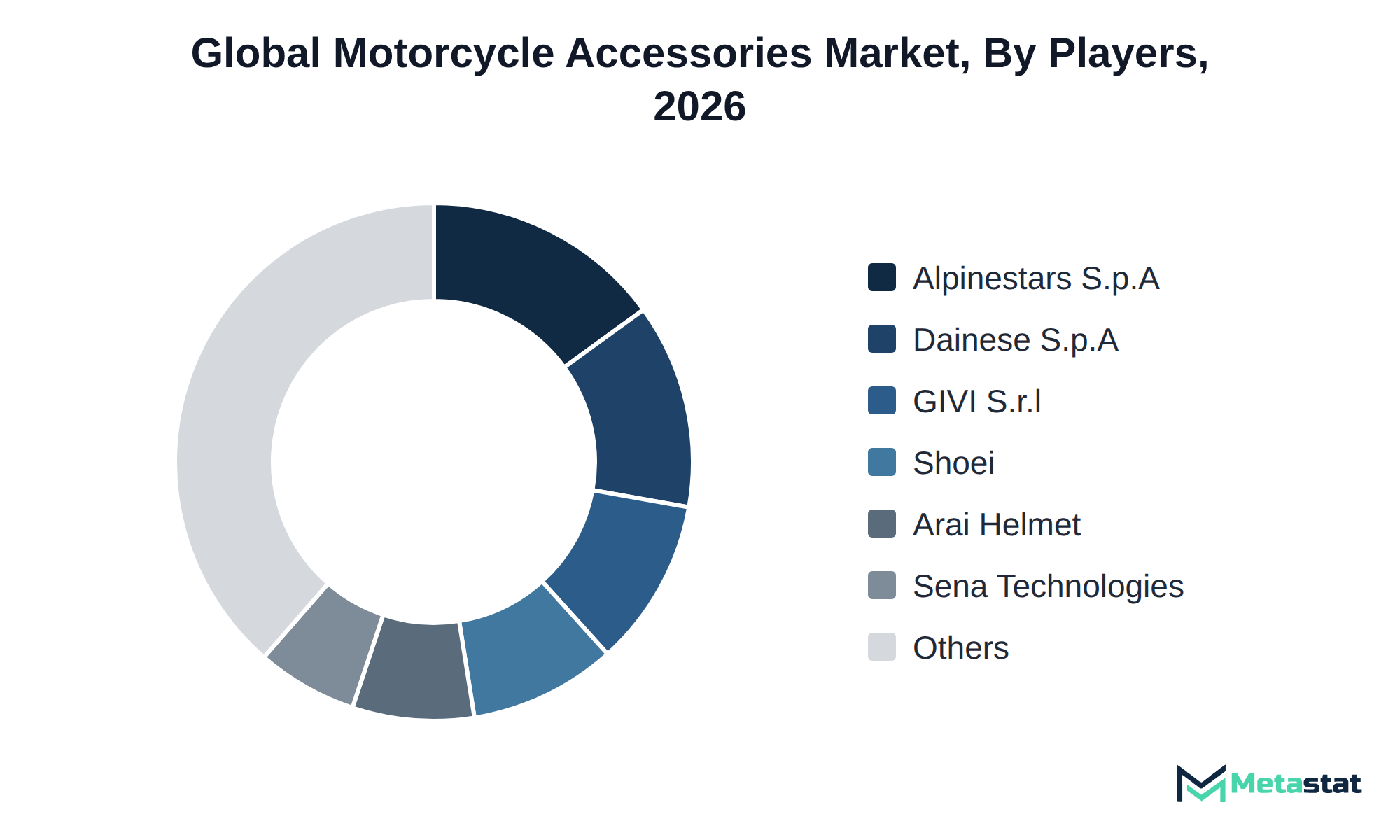
The Motorcycle Accessories market features a diverse competitive environment where companies differentiate through product categories, pricing strategies, and customer engagement practices. Key players include Feridax (1957) Limited, Dainese S.p.A., and Alpinestars S.p.A., each focusing on specific segments of customer needs and preferences.
Companies emphasize product differentiation through specialized offerings, including protective gear, luggage systems, and performance components. Price sensitivity influences buyer decisions, prompting firms to develop products across multiple price tiers, including economy and premium options. For instance, Shoei Co., Ltd. and Arai Helmet, Ltd. concentrate on high-quality helmets, ensuring that safety certifications appeal to demanding customers.
Service quality and ecosystem integration shape buyer choices. Companies like Garmin Ltd. and Sena Technologies, Inc. focus on creating cohesive user experiences through integrated navigation and communication systems. This approach enhances customer loyalty, driving repeat purchases within the Motorcycle Accessories market.
This growth relies on several key developments within the Motorcycle Accessories market. The first is the increasing demand for rider protective gear, projected to grow from USD 7.4 billion in 2026 to USD 11.5 billion by 2033, driven by heightened safety awareness among consumers. The second development involves the ongoing expansion of online retail channels, which are anticipated to reach USD 12.9 billion by 2033, facilitating easier access to various motorcycle accessories. A third critical factor is the growth in touring and adventure motorcycles, with an expected CAGR of 8%, stimulating further demand for related accessories.
However, potential economic downturns pose a risk to achieving the forecasted growth. A constrained consumer spending environment could hinder purchases of premium motorcycle accessories. This situation particularly impacts regions with higher price sensitivity, including South America and parts of Europe, where consumers prioritize affordability over premium offerings. Addressing these challenges while capitalizing on the identified growth segments will be essential for market stakeholders over the coming years.
By Product Type: Rider Protective Gear, Luggage and Storage Systems, Communication, Navigation and Device Mounts, Protection and Performance Components, Lighting and Electrical Accessories, Comfort and Convenience Accessories, Security and Anti-Theft Accessories, Maintenance, Cleaning and Workshop Accessories, Others (Covers, Decals and Reflective Accessories)
By Sales Channel: OEM and Authorized Dealer Channels, Specialty Motorcycle Retailers, Online Retail Stores, Independent Repair and Service Workshops, Others (Mass Merchandisers and Events)
By Motorcycle Type: Standard and Commuter Motorcycles, Sport Motorcycles, Cruiser Motorcycles, Touring and Adventure Motorcycles, Off-Road, Enduro and Motocross Motorcycles, Scooters and Maxi-Scooters, Electric Motorcycles, Others (Mopeds and Mini Bikes)
By Price Tier: Economy, Mid-Range, Premium, Performance and Racing
The report strategically identifies and profiles the key market players and analyses their core competencies in each sub-segment of the Motorcycle Accessories market.
Report Attributes | Details |
Study Period | 2021-2033 |
Base Year | 2025 |
Estimated Year | 2026 |
Forecast Period | 2026-2033 |
Historical Period | 2021-2025 |
Growth Rate | CAGR 6.7% from 2026 to 2033 |
Revenue Unit | USD billion |
Segmentation | By Product Type, Sales Channel, Motorcycle Type, Price Tier, and Region |
By Region | North America (By Product Type, Sales Channel, Motorcycle Type, Price Tier, and Country)
|
Europe (By Product Type, Sales Channel, Motorcycle Type, Price Tier, and Country)
| |
Asia Pacific (By Product Type, Sales Channel, Motorcycle Type, Price Tier, and Country)
| |
South America (By Product Type, Sales Channel, Motorcycle Type, Price Tier, and Country)
| |
Middle East and Africa (By Product Type, Sales Channel, Motorcycle Type, Price Tier, and Country)
|
Find answers to common questions about this report
The Motorcycle Accessories market size was valued at USD 22.5 billion in 2025.
The market is projected to grow at a CAGR of 6.7% during the forecast period from 2026 to 2033.
The North America Motorcycle Accessories market size is estimated to reach USD 9.3 billion by 2033.
Rider Protective Gear leads the Motorcycle Accessories market with a projected value of USD 11.5 billion by 2033, based on its growth trajectory compared to other segments.
Growth in demand results from heightened awareness of safety among motorcycle enthusiasts, particularly younger riders prioritizing safety features. Rising participation in motorcycling from diverse demographics strengthens the market, contributing to robust demand for various accessories.
Price sensitivity among buyers significantly restricts demand for motorcycle accessories. Rising input costs present a significant challenge for suppliers, impacting manufacturing costs and constraining margins.
Rising consumer interest in long-distance travel and exploration significantly favors the adoption of touring and adventure motorcycles. This segment is projected to grow at a compound annual growth rate (CAGR) of 8 percent through 2033, driven by the demand for versatile, high-performance accessories that enhance rider experience and safety.
The Motorcycle Accessories market is estimated to reach a valuation of USD 38 billion by 2033.
Key players operating in the Motorcycle Accessories market include Feridax (1957) Limited, GIVI S.r.l., Alpinestars S.p.A., Dainese S.p.A., Shoei Co., Ltd., and Fox Racing.
The rider protective gear segment is projected to experience a compound annual growth rate (CAGR) of 6.4 percent, reaching USD 11.5 billion by 2033.
The analysts below cover Automotive and Transportation research at Metastat Insights.
LEAD ANALYST
Utkarsh Khirodkar is a Lead Market Research Analyst at MetaStat Insight, specializing in market intelligence, technology sector assessments, and competitive strategy.

ENERGY & INFRASTRUCTURE INDUSTRY CONSULTANT
Automotive and Transportation · Electronics and Semiconductor · Energy and Power · Machinery & Equipment
Saurabh Vasant Ganvir consults for Energy & Infrastructure Industry at MetaStat Insight, specializing in renewable energy, solar EPC, and electric vehicle (EV) infrastructure markets.
Analyzing the transition from natural gas to green hydrogen in iron ore reduction requires realistic infrastructure timelines. Meta stat insight supplied a detailed regional assessment of DRI plant conversion costs and scrap metal availability in North America and Western Europe. Their report carefully examined pellet quality specs and electrical grid access constraints without making oversimplified market assumptions. The research material served as a practical reference during internal technology roadmap discussions.
Integrating zero-trust access controls across legacy electronic health record systems involves complex compliance overhead. Team produced an analysis that clearly separated identity governance and administration tools from privileged access management platforms. Their evaluation of HIPAA and GDPR compliance features across cloud native solutions gave our architecture group clear baseline criteria. The custom data request regarding biometric authentication adoption in hospital networks was returned promptly with clear documentation.
Evaluating calorific value requirements and air permit compliance across municipal waste facilities requires localized data. Metastat Insight structured their analysis around operational throughput capacity and feedstock composition variations in Latin America and Eastern Europe. Their competitive mapping of sorting equipment vendors helped clarify technology differences between optical separators and heavy media systems. The study provided an objective baseline during our capital expenditure reviews.
Explore related market intelligence reports worth reading alongside this one.