
LEAD ANALYST
Utkarsh Khirodkar is a Lead Market Research Analyst at MetaStat Insight, specializing in market intelligence, technology sector assessments, and competitive strategy.

Global Motorcycle Protective Riding Apparel Market Size, Share, By Product Type (Motorcycle Jackets, Motorcycle Pants and Trousers, Racing Suits, Protective Base Layers and Armored Undergarments, Motorcycle Gloves, Protective Riding Footwear), By Material (Leather, Polyester-Based Technical Textiles, Polyamide/Nylon-Based Technical Textiles, Aramid-Reinforced Fabrics, UHMWPE-Reinforced Fabrics), By Riding Style (Sport and Racing, Adventure, Touring, Urban and Commuting, Off-Road, Motocross and Enduro), By Distribution Channel (Specialty Motorcycle Gear Retailers, Motorcycle OEM and Dealer Networks, Brand-Owned Stores and Websites, Specialist Motorcycle E-commerce, General E-commerce Marketplaces), Industry Analysis, Growth, Trends, and Forecast, 2026-2033
Report ID
MSI-4878
Published
August, 2026
Pages
292 Pages
Format
Historical
Base year
Forecast
Forecast period
Report Details
Choose Your License
Global Motorcycle Protective Riding Apparel Market
The global Motorcycle Protective Riding Apparel market was valued at USD 8.8 billion in 2025 and is projected to reach USD 13.6 billion by 2033, growing at a CAGR of 5.6% over the forecast period.
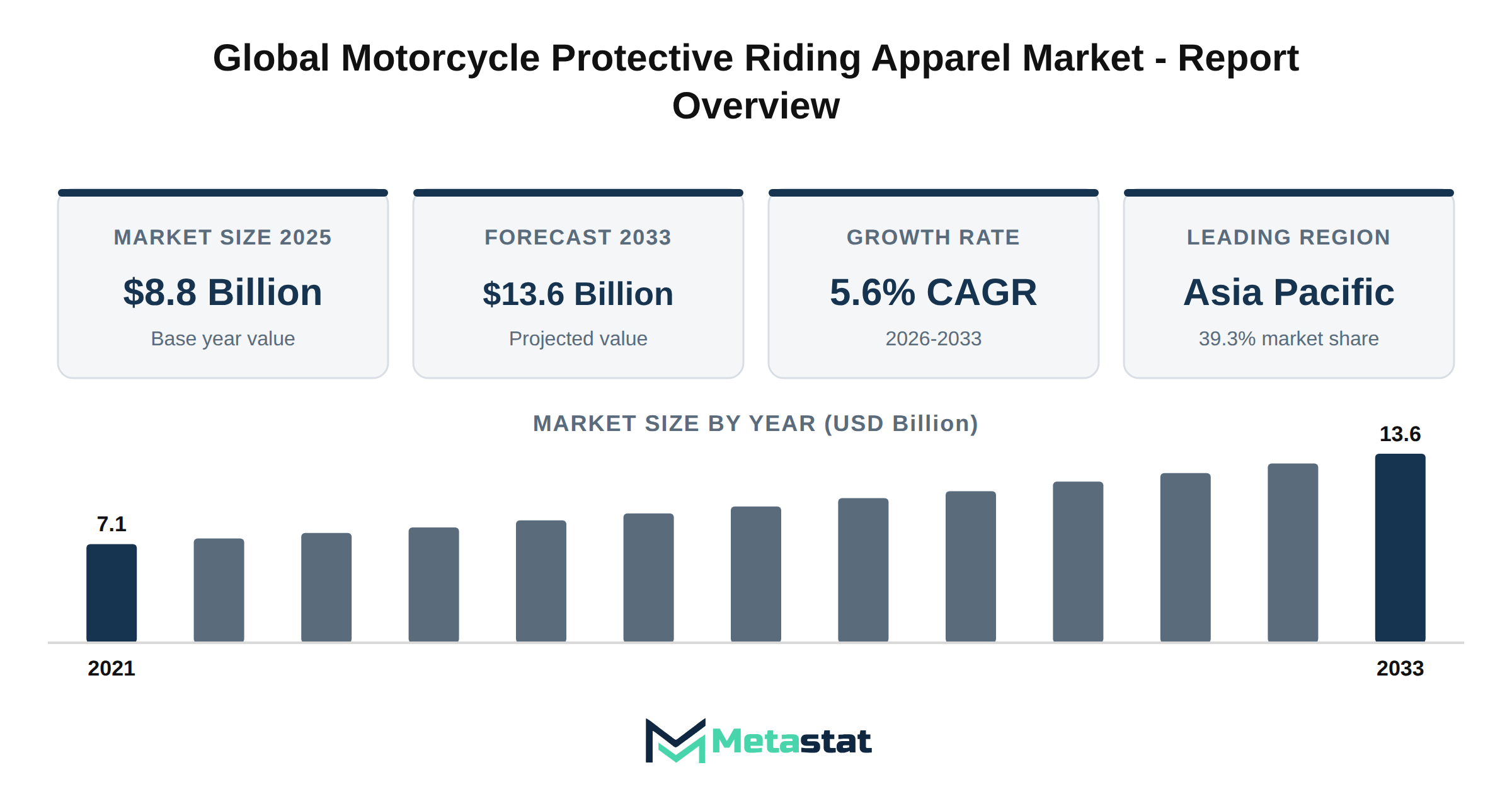
The Motorcycle Protective Riding Apparel market reached a value of USD 8.8 billion in 2025, and it is projected to expand to USD 13.6 billion by 2033, reflecting a compound annual growth rate (CAGR) of 5.6%. This growth is driven by increasing rider safety trends and heightened demand for premium protective gear. Innovations in product design and materials significantly enhance safety and comfort for riders, influencing purchasing decisions.
Regulatory compliance and adherence to safety standards play crucial roles in shaping market dynamics. Manufacturers invest in research and development to ensure their products meet evolving safety requirements. Geopolitical risk frameworks and supply chain disruptions impact the procurement strategies of key players, necessitating robust logistics architecture to navigate challenges effectively.
Market fragmentation presents both challenges and opportunities for companies operating in this space. Mergers and acquisitions (M&A) dynamics contribute to reshaping competitive landscapes, allowing firms to consolidate resources and enhance their value chains. Key players, including Dainese, Alpinestars, and REV'IT!, strategically position themselves to capture market share through innovative offerings and strategic partnerships.
The Motorcycle Protective Riding Apparel market experiences significant growth driven by rising rider safety trends. Increased awareness of safety measures among motorcyclists has led to heightened demand for premium protective gear. This surge is evident in the growing preference for high-quality materials that enhance rider protection, influencing manufacturers to innovate product offerings continuously.
Product innovation remains a crucial factor, with companies investing heavily in research and development (R&D) to create next-generation apparel. This focus on R&D trajectories facilitates the introduction of advanced protective features, including improved impact resistance and enhanced comfort, which cater to evolving consumer preferences.
Regulatory compliance and standards impact the market’s operational framework. Stringent regulations regarding safety standards for motorcycle apparel compel manufacturers to align their products with these requirements, promoting higher quality and safer options for riders.
Geopolitical risk frameworks contribute to the supply chain landscape, affecting logistics architecture and sourcing dynamics. Companies evaluate their supply chains to mitigate risks associated with political instability, ensuring consistent product availability and maintaining competitive pricing structures.
The market fragmentation presents both challenges and opportunities. A diverse array of manufacturers operates within the Motorcycle Protective Riding Apparel market, leading to intense competition. Mergers and acquisitions (M&A) dynamics shape market structure, enabling companies to consolidate resources, enhance product portfolios, and improve market reach.
Capital allocation strategies reflect the industry's response to macroeconomic headwinds, including inflationary pressures and currency volatility. Companies prioritize investments in infrastructure and innovation to sustain growth and maintain market positioning amid external challenges.
Future strategic outlooks emphasize the importance of sustainable transformation within the market. The shift towards decarbonization and circular economy dynamics influences production processes, prompting companies to adopt eco-friendly materials and practices that align with environmentally conscious consumers.
High-value recommendations for stakeholders include focusing on customer journey dynamics, enhancing procurement strategies, and aligning product offerings with market demand trends. These strategies will facilitate sustained growth and competitive advantage within the Motorcycle Protective Riding Apparel market.
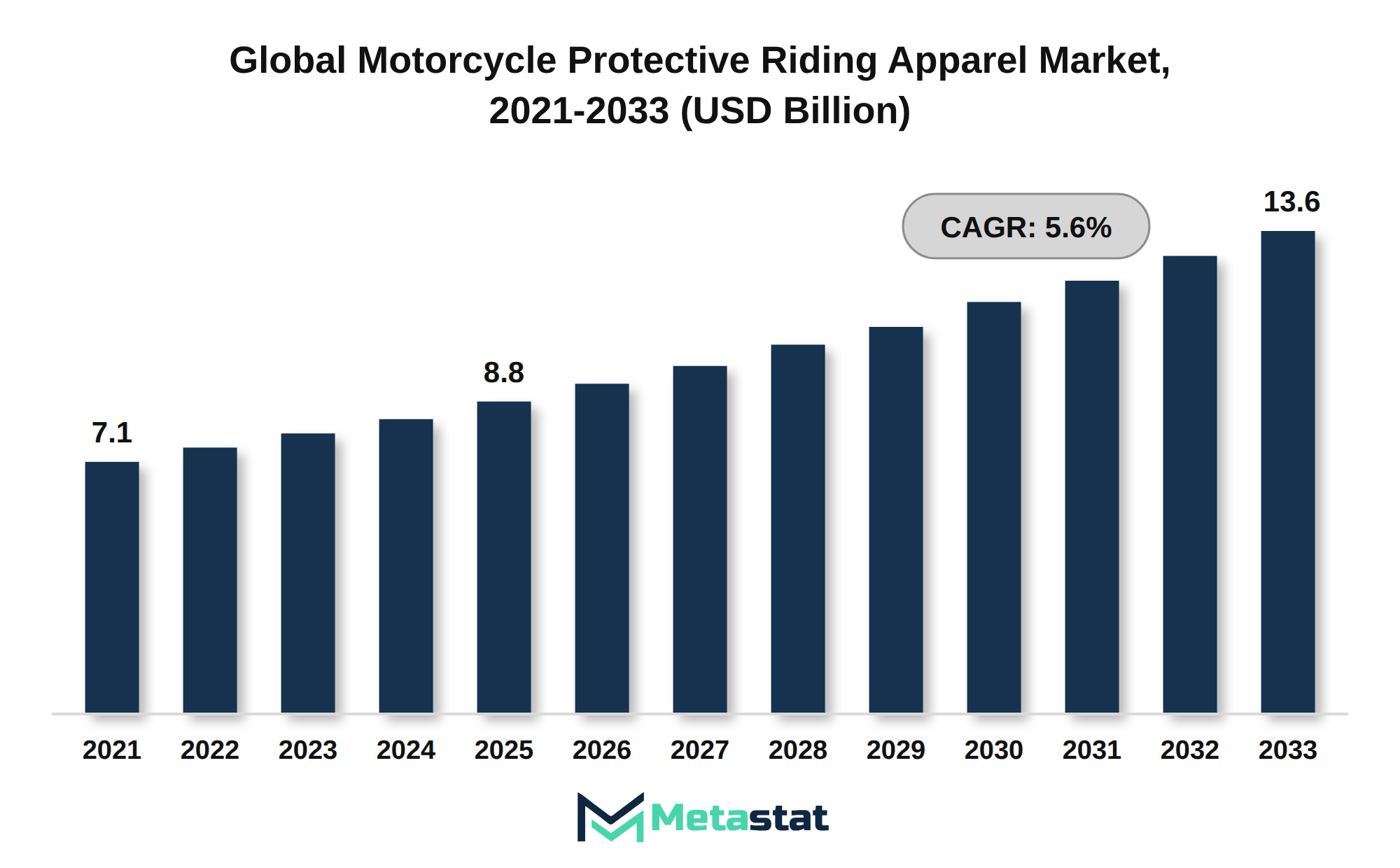
Investment in infrastructure development significantly influences the Motorcycle Protective Riding Apparel market. Increasing demand for enhanced safety and comfort among motorcyclists promotes the need for better-designed protective apparel. Enhanced infrastructure, including improved roadways and established riding venues, encourages higher motorcycle usage, driving market growth.
Technological advancements in infrastructure, including smart traffic management systems and safer road designs, contribute to a favorable riding environment. These developments reassure consumers about their safety while riding, driving interest in high-quality protective apparel. The result is a strong growth trajectory for the market, projected to reach USD 13.6 billion by 2033, reflecting a compound annual growth rate (CAGR) of 5.6% from 2026 to 2033.
Regulatory compliance challenges significantly influence the Motorcycle Protective Riding Apparel market. Strict regulations regarding safety standards and product certifications create barriers for manufacturers, complicating the development and approval processes. Compliance hurdles absorb substantial resources, diverting attention from innovation and product enhancements. This situation limits the introduction of new technologies and materials that enhance safety features and functionality in riding apparel.
Macroeconomic headwinds, including inflationary pressures, impact both manufacturers and consumers. Rising costs of raw materials and labor increase operational expenditure, leading to higher pricing of end products. Higher prices deter potential buyers, resulting in reduced demand for protective riding apparel. This relationship between costs and consumer purchasing power threatens revenue growth and market penetration.
Supply chain disruptions further exacerbate these challenges. Ongoing geopolitical instability has resulted in resource scarcity, affecting the availability of essential materials used in protective riding apparel. Manufacturers face difficulties in sourcing high-quality materials, resulting in delays in product availability and a subsequent decline in sales. This creates a ripple effect across various stakeholders in the market.
Technological obsolescence presents another significant restraint. Rapid advancements in materials and manufacturing processes shift consumer expectations towards high-performance and innovative riding apparel. Brands that fail to adapt quickly risk losing market share to competitors that leverage advanced technologies. Ongoing investment in research and development remains critical to maintaining relevance in the dynamic market.
Market fragmentation poses competitive challenges within the Motorcycle Protective Riding Apparel market. Numerous small and medium-sized enterprises operate alongside established brands, complicating the competitive environment. These smaller players often struggle with brand recognition and consumer trust compared to their larger counterparts. This fragmentation results in a lack of uniformity in product quality and safety standards, complicating the market dynamics.
Geopolitical fragmentation introduces significant instability within the Motorcycle Protective Riding Apparel market. Factors including trade deficits, tariff friction, and fluctuating political relations create challenges for manufacturers and suppliers. Companies face increased costs and uncertainties while sourcing materials and components globally, impacting operational efficiency and profit margins.
Technological disruptions further complicate the market. Rapid advancements in materials and manufacturing processes necessitate complex research and development integrations. Companies investing in innovation encounter hurdles related to interoperability, raising the overall cost of compliance and production. This situation pressures businesses to allocate resources effectively to remain competitive.
Supply chain instability emerges from logistics disruptions and fluctuating feedstock availability. Such volatility leads to unpredictable pricing and delayed product deliveries, threatening the market’s ability to meet evolving consumer demands. Rising input costs contribute to margin pressures, forcing manufacturers to reconsider pricing strategies.
Environmental lifecycle footprints and sustainability demands create additional challenges. Companies face increasing scrutiny regarding the environmental impact of their products and operations. Adhering to stringent sustainability mandates requires investment in new technologies and processes, straining financial resources. Consequently, the Motorcycle Protective Riding Apparel market navigates these multifaceted challenges to sustain growth and meet market expectations.
Technological disruptions significantly influence the Motorcycle Protective Riding Apparel market, creating opportunities for innovation and product differentiation. Advancements in materials and manufacturing techniques enhance product performance, particularly regarding safety and comfort. The introduction of aramid-reinforced fabrics and polyester-based technical textiles offers improved protection and durability, appealing to safety-conscious consumers.
Digital transformation reshapes customer engagement and purchasing behaviors, altering sales channels and marketing strategies. The rise of specialist motorcycle e-commerce platforms facilitates broader access to diverse product offerings, enabling consumers to easily compare features and prices. Adapting to these shifts allows manufacturers to reach new customer segments and enhance brand loyalty within the market.
Geographical expansion remains a crucial element for growth, particularly in emerging markets across Asia Pacific and South America. Increased disposable incomes and a growing enthusiasm for motorcycle riding contribute to rising demand for protective riding apparel. This trend urges manufacturers to invest in localized production and distribution strategies, optimizing supply chains and enhancing responsiveness to market dynamics.
Sustainability imperatives gain traction, with consumers increasingly prioritizing eco-friendly products. Manufacturers embrace green transformations, focusing on sustainable materials and ethical production practices. Establishing a strong sustainability narrative aligns well with environmentally conscious buyers, creating an additional competitive edge in the Motorcycle Protective Riding Apparel market.
Strategic consolidation through mergers and acquisitions presents additional opportunities for growth. Collaborative ventures expand product portfolios and enhance market reach, allowing companies to leverage synergies and optimize operational efficiencies. While the market evolves, aligning business strategies with emerging trends and consumer preferences remains essential for capturing new opportunities.
The Global Motorcycle Protective Riding Apparel market is segmented based on Product Type, Material, Riding Style, and Distribution Channel.
Valued at USD 2.6 billion in 2026, the Motorcycle Jackets segment is projected to reach USD 3.7 billion by 2033, achieving a CAGR of 5.2% during the forecast period. Increased motorcycle ownership and a growing focus on rider safety drive demand for advanced protective riding apparel. Rising awareness of safety features among consumers enhances the adoption of motorcycle jackets, particularly those incorporating innovative materials and technologies. End-users prioritize comfort, durability, and style, leading manufacturers to invest in product evolution.
Technological maturation contributes to the segment's expansion, driven by manufacturers integrating smart features into motorcycle jackets. Wearable technology, including built-in communication systems and health monitoring devices, enhances the functionality of jackets, attracting tech-savvy consumers. The evolution of materials, including lighter and more breathable fabrics, positively impacts the segment, facilitating improved performance and comfort. This integration of technology and material advancement is expected to drive further interest in motorcycle jackets.
Regulatory compliance standards influence product design and manufacturing processes within the Motorcycle Protective Riding Apparel market. Meeting safety certifications becomes crucial for manufacturers aiming to establish credibility and trust. Consequently, investments in research and development strengthen competitive positioning and support market growth. In addition, rising concerns regarding the environmental impact of raw materials prompt a shift towards sustainable sourcing practices, further shaping product offerings.
Pricing volatility poses challenges, affecting profitability margins within the segment. Fluctuations in the cost of raw materials, particularly leather and technical textiles, necessitate strategic pricing strategies. Increased competition among key players, including Dainese, Alpinestars, and REV'IT!, intensifies price competition, impacting overall market dynamics. Despite these challenges, the strategic opportunity window for innovative products remains substantial, presenting avenues for growth and investment.
Growth in the Motorcycle Pants & Trousers segment aligns with increasing consumer awareness surrounding safety and comfort while riding. Enhanced focus on protective gear and rising motorcycle riding activities contribute to this demand. Manufacturers invest in innovative materials and designs, aiming to improve functionality and style, which attracts a broader customer base. Evolving fashion trends influence consumer preferences, driving the need for stylish yet protective options in riding apparel.
The segment is estimated to reach USD 1.8 billion by 2033, at a CAGR of 6% during the forecast period. Regulatory compliance surrounding safety standards further drives market growth, pressuring manufacturers to enhance product features while remaining competitive. Supply chain resilience plays a critical role, particularly in raw material sourcing and logistics management, which affect production timelines and cost structures.
Investment in next-generation upgrades, including smart textiles and enhanced impact protection technologies, is anticipated to reshape the segment. Strategic opportunity windows exist for brands to innovate, focusing on consumer shifts towards more functional and aesthetically pleasing designs. Increased competition among key players, including Dainese, Alpinestars, and REV'IT!, drives further advancements in product offerings within the Motorcycle Protective Riding Apparel market.
Growth in the Racing Suits segment of the Motorcycle Protective Riding Apparel market stems from rising participation in motorsports and increased consumer focus on safety. Demand for high-performance racing suits is driven by professional racers and amateur enthusiasts seeking advanced protection and comfort during competition. Innovations in materials and design enhance the performance of racing suits, contributing to their adoption across various rider demographics.
Technological advancements play a significant role in the evolution of this segment. Integration of smart textiles and lightweight materials provides improved safety features without compromising mobility. These developments cater to the evolving needs of consumers who prioritize both protection and comfort, influencing purchasing decisions.
By 2033, the Racing Suits segment is expected to reach USD 1.3 billion. This growth reflects the increasing willingness of consumers to invest in specialized gear that enhances their riding experience. Regulatory compliance standards surrounding safety gear in competitive racing events further drive demand for high-quality racing suits, resulting in sustained investment in this product category.
A combination of increased participation in motorsports, technological maturation, and evolving consumer preferences positions the Racing Suits segment for significant expansion within the Motorcycle Protective Riding Apparel market.
Growth in the Protective Base Layers & Armored Undergarments segment aligns with heightened consumer awareness surrounding safety and comfort in motorcycle riding. This awareness drives demand from both recreational and professional riders seeking enhanced protective solutions. The projected CAGR of 7.4% during the forecast period indicates strong interest in advanced materials and designs that offer improved protection without compromising flexibility. Innovations in fabric technology, including moisture-wicking and temperature-regulating capabilities, support this growth by appealing to a broader range of riders.
Increased focus on regulatory compliance and safety standards contributes to the adoption of these products. Manufacturers align offerings with certification requirements, ensuring products meet or exceed safety benchmarks. Consumers exhibit a preference for brands demonstrating compliance with industry regulations, further boosting market demand.
The segment's expansion closely ties to the evolution of motorcycle riding styles. While the popularity of adventure and touring motorcycles grows, riders seek protective base layers and armored undergarments that provide comfort during extended rides. This shift in riding dynamics influences product development strategies and encourages manufacturers to diversify offerings to meet changing consumer needs.
Pricing pressures originating from raw material sourcing and supply chain challenges impact cost structures within the segment. Fluctuations in the prices of technical textiles lead to increased production costs, affecting overall pricing strategy. Manufacturers navigate these pressures while maintaining competitive pricing to capture market share.
Strategic opportunities arise from the growing e-commerce landscape, enabling brands to reach a wider audience. The emergence of specialized online retailers focused on motorcycle gear facilitates access to diverse product offerings, enhancing consumer choice and convenience. Capital investment in next-generation upgrades and marketing initiatives positions players within the Motorcycle Protective Riding Apparel market for sustained growth.
Expansion in the motorcycle gloves segment aligns with increasing awareness of rider safety and comfort. Consumers prioritize protective gear that enhances grip and control, particularly in high-performance riding scenarios. The segment attracts attention owing to manufacturers introducing innovative materials and ergonomic designs that improve user experience and safety. Integration of advanced protective technologies, including impact-resistant padding and weather-resistant materials, supports sustained demand across diverse riding styles.
Adoption of motorcycle gloves is influenced by regulations emphasizing rider safety and compliance with industry standards. While regulatory requirements tighten, manufacturers invest in meeting certification benchmarks, which enhances product credibility and consumer trust. Growth in sales channels, including e-commerce platforms and specialty retailers, expands market access for manufacturers, allowing for increased visibility and customer engagement.
Technological maturation in manufacturing processes facilitates the production of lighter, more durable gloves, promoting user comfort during extended rides. Brands leverage strategic opportunities through targeted marketing campaigns that highlight these advancements, appealing to both seasoned riders and newcomers. Customization trends rise, with options including personalized fit and aesthetic choices contributing to consumer satisfaction and driving repeat purchases.
Pricing dynamics reflect fluctuating costs of raw materials, including leather and synthetic textiles, impacting profit margins within the segment. Manufacturers navigate these challenges by optimizing supply chain operations, ensuring efficient procurement and distribution. The global motorcycle protective riding apparel market is projected to expand, with investments in innovation and strategic collaborations anticipated to enhance competitive positioning within the motorcycle gloves segment.
Growth in the protective riding footwear segment aligns with increasing consumer demand for safety and comfort while riding motorcycles. A rise in motorcycle ownership and participation in riding activities boosts the necessity for protective gear, including footwear designed for impact resistance and durability. Evolving fashion trends within the motorcycle culture further drive consumer interest, leading to an expansion of product offerings that blend style with safety features.
Technological maturation enhances the advancement of protective riding footwear. Innovations in materials and manufacturing processes improve the performance of these products, contributing to their appeal among riders. The integration of features including waterproofing, breathability, and improved grip addresses specific needs, increasing overall customer satisfaction and loyalty. Enhanced functionality directly influences purchasing decisions, reinforcing the segment's growth trajectory.
Downstream application dynamics highlight the importance of protective riding footwear in various riding styles, including sport, touring, and adventure. Different consumer segments prioritize distinct features, including lightweight design for sport riders and increased ankle support for touring enthusiasts. This diversification in consumer preferences necessitates tailored marketing approaches and product development strategies, allowing brands to capture a broader audience.
Regulatory compliance standards and certification processes significantly impact the protective riding footwear segment. Manufacturers adhere to safety regulations that dictate the level of protection footwear provides in case of accidents. These standards ensure consumer safety and create a competitive edge for brands that exceed minimum requirements, enhancing their reputation and market position.
Pricing volatility influences the purchasing behavior of consumers within the market. Fluctuations in raw material costs and supply chain challenges lead to inconsistent pricing strategies, affecting overall sales performance. Brands that navigate these challenges effectively through strategic sourcing and inventory management position themselves favorably in the competitive environment.
Investment in product evolution and next-gen upgrades remains vital for maintaining consumer interest in protective riding footwear. Continuous innovation in design, materials, and technology enhances brand differentiation, allowing companies to attract discerning customers seeking the latest advancements in protective gear. This focus on innovation enhances market share and creates opportunities for strategic partnerships and collaborations within the motorcycle protective riding apparel market.
Growth in the Others segment, which includes vests, body armor garments, shirts, and hoodies, is influenced by a rising focus on safety and comfort among motorcycle riders. Increased awareness of the importance of protective gear drives consumer interest, enhancing the segment's contribution to the overall Motorcycle Protective Riding Apparel market. Technological advancements in materials and designs further support this growth, driven by manufacturers introducing innovative products that offer enhanced protection and comfort. Adoption of versatile apparel for various riding styles caters to a broader audience, appealing to both casual riders and enthusiasts.
End-use dynamics reflect a shift towards multifunctional apparel that combines style with safety. This trend aligns with changing consumer preferences, where aesthetic considerations alongside protective features become crucial in purchasing decisions. Regulatory compliance standards and certifications play a significant role, ensuring that products meet safety requirements while building consumer confidence. The ability to leverage emerging technologies in textiles enhances product evolution, driving demand for next-gen upgrades in design and functionality.
Cost structures within this sub-segment experience fluctuations influenced by raw material sourcing and production processes. Pricing volatility poses challenges but presents opportunities for companies to differentiate through premium offerings. The market benefits from a resilient supply chain that mitigates potential vulnerabilities while addressing substitution risks with alternative materials. Strategic opportunity windows emerge owing to manufacturers innovating and exploring white-space analysis to capture untapped segments. Overall, the Others segment holds potential for continued growth, supported by its adaptation to evolving consumer demands within the Motorcycle Protective Riding Apparel market.
Valued at USD 2.9 billion in 2026, the leather segment is projected to reach USD 3.9 billion by 2033, achieving a CAGR of 4.4% during the forecast period. Increased demand for durable and protective riding gear drives consumer preference towards leather products, supported by their enhanced safety features and longevity. The segment benefits from consumer trends favoring high-quality materials that provide both comfort and protection during rides.
Innovations in leather processing and treatments contribute to the segment's growth, enabling manufacturers to produce lighter and more breathable products. This evolution aligns with shifting consumer preferences towards stylish yet functional motorcycle apparel. The expansion of electric and hybrid motorcycle markets influences leather adoption, driven by these vehicles appealing to environmentally conscious riders seeking premium protective gear.
Regulatory compliance surrounding safety standards further promotes leather usage in protective gear. While manufacturers adapt their products to meet stringent safety certifications, leather maintains its position because a preferred material among riders. The cost structures within the leather segment reflect fluctuations in raw material prices, impacting overall pricing strategies. Manufacturers face margin pressures due to rising costs associated with sourcing quality leather, yet strategic partnerships with suppliers enhance supply chain resilience.
Investment in the leather segment remains robust, driven by opportunities for next-gen upgrades and product evolution. Established brands and newcomers in the market continually seek innovative solutions to meet consumer demands. This competitive environment creates a situation where advancements in design, aesthetics, and functionality play a critical role in capturing market share.
The Motorcycle Protective Riding Apparel market continues to evolve, with the leather segment positioned for sustained growth. Strategic opportunity windows arise from changing consumer behaviors and preferences, alongside the ongoing evolution of riding styles. By capitalizing on these trends, stakeholders effectively navigate the market and drive future advancements.
Growing interest in high-performance and durable materials drives the Polyester-Based Technical Textiles segment within the Motorcycle Protective Riding Apparel market. Enhanced protective features, coupled with lightweight and moisture-wicking properties, position polyester-based textiles because a favorable choice among manufacturers and consumers. The demand for comfort and safety during rides influences adoption among various riding styles, including sport and adventure. Innovations in fabric technology, including improved abrasion resistance and breathability, offer competitive advantages, prompting brands to invest in research and development. The segment is estimated to reach USD 3.3 billion by 2033, at a CAGR of 5.8% during the forecast period. Brand differentiation through innovative designs and performance characteristics supports market expansion, appealing to a broader audience seeking both functionality and style.
Demand for polyamide/nylon-based technical textiles in the Motorcycle Protective Riding Apparel market stems from their strength, durability, and lightweight properties. These materials enhance the safety and comfort of riders, leading to increased adoption among various consumer segments. The growing preference for high-performance protective gear, particularly within the sport and racing segments, drives market expansion.
Technological advancements in textile manufacturing enable improved properties, including abrasion resistance and moisture wicking, further attracting consumers. Innovations in material engineering present opportunities for next-generation upgrades, enhancing product appeal. Manufacturers invest in research and development to innovate product offerings, aligning with consumer expectations for both performance and safety. This investment supports the ongoing evolution of the market.
Regulatory compliance standards increasingly prioritize rider safety, encouraging manufacturers to adopt advanced materials. Certifications related to protective gear enhance consumer trust, influencing purchasing decisions. Price volatility in raw materials affects cost structures, prompting manufacturers to optimize sourcing strategies while maintaining product quality.
Market players report a strong focus on supply chain resilience to mitigate disruptions. The polyamide/nylon segment is projected to reach USD 2.4 billion by 2033, reflecting a strategic opportunity window for manufacturers. Overall, the segment's growth aligns with evolving consumer needs and regulatory trends within the Motorcycle Protective Riding Apparel market.
Growth in the Aramid-Reinforced Fabrics segment reflects an increasing demand for high-performance materials in the Motorcycle Protective Riding Apparel market. Factors driving this trend include heightened awareness surrounding rider safety, advancements in material technology, and rising demand from both recreational and professional riders. Manufacturers continue to innovate, integrating aramid-reinforced fabrics into a range of protective gear, enhancing durability and resistance to abrasions.
The segment is projected to grow at a CAGR of 6.5% during the forecast period. This expansion results from ongoing technological maturation and a focus on next-generation upgrades, which aim to improve the performance and comfort of protective apparel. End-use dynamics indicate a growing preference among consumers for products that offer superior protection while remaining lightweight and comfortable.
Regulatory compliance standards for safety equipment contribute to the segment's growth. Manufacturers face pressure to meet stringent certifications, pushing them to invest in advanced materials like aramid-reinforced fabrics. This investment results in improved safety features in motorcycle apparel, appealing to a broader consumer base.
Cost structures and pricing volatility within the segment affect manufacturers operationally. Producers continue to seek ways to optimize raw material sourcing and mitigate margin pressures, ensuring competitive pricing without sacrificing quality. The resilience of the supply chain is crucial in maintaining steady production levels of aramid-reinforced fabrics, reducing vulnerabilities and risks associated with sourcing.
Strategic opportunity windows emerge owing to the market evolution. Companies that successfully navigate regulatory challenges and focus on innovative product evolution position themselves favorably to capture market share. The continued adoption of aramid-reinforced fabrics across various motorcycle protective clothing segments promises to enhance safety and performance for riders, further propelling growth within the market.
Increasing demand for lightweight and high-strength materials significantly influences the adoption of UHMWPE-reinforced fabrics in the Motorcycle Protective Riding Apparel market. This material offers strong resistance to abrasion, cuts, and impacts, appealing to manufacturers focused on enhancing safety and performance. The growing popularity of motorcycle racing and off-road riding styles promotes the need for robust protective gear, thereby driving the integration of advanced materials like UHMWPE.
Technological advancements in manufacturing processes contribute to segment expansion, allowing for the development of UHMWPE fabrics that maintain flexibility while enhancing protective features. This evolution in material technology aligns with consumer preferences for comfort and mobility, crucial for long-distance riding experiences. The shift toward next-gen upgrades, including smart textiles that offer moisture-wicking and thermal regulation, supports the demand for innovative fabric solutions in the market.
End-use dynamics reflect a transition among riders prioritizing safety without compromising comfort. Increased awareness of safety standards and certifications influences purchasing decisions, making UHMWPE-reinforced fabrics an attractive option for consumers looking for reliable protection. Regulatory compliance standards regarding safety gear encourage manufacturers to adopt advanced materials to meet or exceed these requirements, enhancing market competitiveness.
Price volatility in raw materials impacts the overall cost structures for manufacturers integrating UHMWPE into their products. Fluctuations in supply chain dynamics and sourcing challenges affect pricing strategies, prompting companies to seek alternative suppliers or adjust product offerings accordingly. The long-term benefits of using high-performance materials like UHMWPE often justify the investment, contributing to improved margins and brand reputation.
Strategic opportunity windows arise owing to manufacturers exploring partnerships with technology firms to develop next-generation protective apparel. By investing in research and development, companies enhance their product offerings and capture emerging market trends. This strategic focus enables the introduction of innovative designs that cater to evolving consumer preferences in the Motorcycle Protective Riding Apparel market.
In the Motorcycle Protective Riding Apparel market, the Others sub-segment, which includes materials including denim, cotton, and hybrid/multi-materials, experiences diverse demand driven by evolving consumer preferences for both style and functionality. Increasing interest in casual riding gear contributes to a shift towards more versatile materials that provide adequate protection while maintaining comfort.
The adoption of alternatives like denim and cotton gains traction, particularly among recreational riders who prioritize aesthetics alongside safety. Hybrid materials that combine traditional textiles with advanced protective features appeal to a broader audience seeking innovation in design.
Segment expansion occurs through collaborations between traditional apparel manufacturers and motorcycle gear companies, leading to innovative product development. These partnerships enable the introduction of stylish yet protective garments, allowing consumers to transition seamlessly from riding to everyday activities.
Regulatory compliance standards influence the market, ensuring that apparel meets safety requirements while accommodating the trend toward more casual looks. Increasing awareness of safety standards drives manufacturers to invest in R&D, enhancing product performance while maintaining the desired aesthetic.
Pricing volatility in raw materials impacts production costs, compelling manufacturers to optimize sourcing strategies. This dynamic environment requires agility in responding to material price fluctuations, which in turn affects overall profitability within the sub-segment.
Capital investment in technology for fabric innovation provides a competitive edge among key players. The focus on next-generation upgrades emphasizes not only protective functionality but comfort and style, addressing the need for appealing designs in the Motorcycle Protective Riding Apparel market.
Valued at USD 2.3 billion in 2026, the Sport & Racing segment within the Motorcycle Protective Riding Apparel market is projected to reach USD 3.3 billion by 2033, achieving a CAGR of 5.1% during the forecast period. This growth results from heightened interest in motorsports and competitive racing activities, which drive demand for specialized apparel designed to enhance performance and safety. Increasing awareness of rider safety and the enforcement of stringent safety regulations further fuel the adoption of protective gear in this segment.
Technological advancements in materials and design significantly contribute to market expansion. Innovations in lightweight, breathable fabrics provide enhanced comfort and mobility without compromising protection. The integration of next-generation upgrades, including impact-absorbing materials and aerodynamic designs, positions products in this segment because essential for serious riders. Consumer preferences lean towards high-performance, durable apparel that meets rigorous safety standards.
The competitive landscape remains dynamic, with established players and new entrants continuously innovating to capture market share. Strategic opportunities exist for brands that focus on developing specialized products tailored to the unique needs of sport and racing enthusiasts. Partnerships with racing teams and events enhance brand visibility and credibility, further driving growth.
Considering the overall market dynamics, the Sport & Racing segment is expected to benefit from rising disposable incomes and a growing interest in recreational motorsport activities worldwide. This segment's focus on performance-oriented products aligns with broader trends in the Motorcycle Protective Riding Apparel market, where demand for advanced protective gear continues to increase.
Rapid growth in the Adventure segment reflects increasing interest in off-road and touring activities among motorcyclists. This segment attracts consumers seeking versatile apparel that combines protection with comfort and functionality for diverse riding conditions. The segment is projected to reach USD 2.8 billion by 2033, at a CAGR of 7.4% during the forecast period. Development of advanced materials, including breathable and waterproof textiles, significantly enhances the appeal of adventure apparel, driving adoption among enthusiasts.
Technological maturation in fabric innovations supports the demand for lightweight yet durable protective clothing. Enhanced safety features, including armor and abrasion-resistant materials, cater to the expectations of adventure riders who prioritize safety during extended journeys. Consumer preferences shift towards multifunctional gear. Manufacturers evolve their product offerings and integrate next-gen upgrades that improve performance and comfort.
Regulatory compliance standards increasingly influence product design and manufacturing processes, necessitating certifications that affirm quality and safety. This trend aligns with the growing awareness of the importance of protective gear among consumers. Manufacturers face pricing volatility and margin pressures linked to raw material sourcing and labor costs. Pricing volatility and margin pressures linked to raw material sourcing and labor costs impact overall profitability.
Strategic opportunity windows arise from the increasing popularity of adventure riding, particularly in regions with expanding motorcycle tourism. Investments in marketing and distribution channels, including specialty retailers and online platforms, enhance market reach and customer engagement. The Adventure segment contributes significantly to the Motorcycle Protective Riding Apparel market through a combination of innovation, consumer demand, and strategic positioning.
Increased interest in long-distance riding among enthusiasts drives demand in the touring segment of the Motorcycle Protective Riding Apparel market. Consumers prioritize comfort, protection, and functionality during extended rides, influencing purchasing decisions. Major brands invest in innovations that enhance the performance and comfort of touring gear, catering to these specific rider requirements. Investment in advanced materials, including breathable and weather-resistant textiles, supports product evolution, appealing to those seeking durability and style. The segment is projected to reach USD 2.3 billion by 2033, reflecting solid growth dynamics. Regulatory compliance standards regarding safety and protection continue to shape product offerings, with brands adapting to meet evolving consumer expectations and legal requirements. Investment in marketing and distribution channels ensures that touring apparel reaches targeted consumers effectively, promoting brand awareness and customer loyalty. Rising disposable income, particularly in emerging markets, contributes to greater spending on quality motorcycle gear. Consumers increasingly view protective riding apparel because essential gear for safe and enjoyable touring experiences, impacting overall market growth. Strategic partnerships between manufacturers and retailers enhance supply chain resilience, allowing brands to respond effectively to shifts in consumer preferences and market trends. Overall, the touring segment significantly contributes to the expansion of the Motorcycle Protective Riding Apparel market.
Demand for the Urban & Commuting segment in the Motorcycle Protective Riding Apparel market reflects the increasing number of urban riders seeking safety and comfort. Growing urbanization and an expanding population of motorcycle commuters drive this demand. Riders prioritize products that offer both protection and style, aligning with daily commuting needs. Technological advancements in materials enhance the appeal of urban and commuting gear, leading to the introduction of lightweight and breathable options that maintain safety standards.
Market participants focus on developing apparel that caters specifically to the preferences of urban riders, incorporating features including reflective materials and integrated ventilation. Regulatory compliance for safety standards significantly influences product development, ensuring that manufacturers adhere to stringent guidelines. The Urban & Commuting segment is projected to grow at a CAGR of 5.5% during the forecast period, signifying strong potential for investment and innovation in this area.
While demand shifts toward eco-friendly materials, manufacturers explore sustainable sourcing options, responding to consumer preferences for environmentally conscious products. This trend highlights a strategic opportunity for brands to differentiate themselves in a competitive market. The Urban & Commuting segment's growth is anticipated to strengthen alongside ongoing advancements in product evolution, leading to enhanced consumer satisfaction and loyalty.
Increasing enthusiasm for off-road activities and motocross racing drives demand for protective riding apparel within this segment. Enthusiasts prioritize safety and performance, leading to greater investments in high-quality gear designed specifically for rugged terrains. Manufacturers respond by enhancing product offerings with advanced materials and innovative designs tailored to meet the specific challenges faced by riders. The focus on safety and performance encourages a culture of participation in competitive motocross events, contributing to the overall growth of the market.
Technological advancements in materials and design support the evolution of riding apparel for off-road, motocross, and enduro styles. Lightweight, durable fabrics that offer superior protection against abrasion and impact attract riders seeking enhanced safety. This segment benefits from continual upgrades, including improved ventilation and moisture-wicking capabilities, which enhance rider comfort during strenuous activities. The combination of these enhancements positions the segment favorably within the broader motorcycle protective riding apparel market.
Regulatory compliance and certification standards significantly influence purchasing decisions in this segment. Riders increasingly seek gear that meets established safety regulations, and manufacturers strive to obtain necessary certifications to assure consumers of product reliability. This alignment with safety standards builds trust among customers, further driving growth in this segment. While consumer awareness around safety features continues to rise, the expectation for compliant products will likely lead to increased investments in certified protective apparel.
Supply chain resilience is essential for maintaining product availability and quality. Raw material sourcing remains a key consideration, owing to manufacturers' aim to balance cost with the need for high-performance materials. Strategic partnerships with raw material suppliers enhance reliability while mitigating potential disruptions. Such dynamics contribute to a stable pricing environment, allowing manufacturers to focus on innovation and improved product offerings. The relationship between these factors drives consistent growth within the market.
Demand in the Others (Cruiser, Heritage) sub-segment reflects a preference for comfort and classic styles among motorcycle enthusiasts. This segment targets riders who prioritize relaxed cruising experiences and heritage aesthetics over high-performance racing features. The growing popularity of cruiser motorcycles, combined with an increasing lifestyle appeal, enhances demand for protective apparel that aligns with these preferences.
Adoption of advanced materials and safety features influences segment expansion. Manufacturers increasingly focus on integrating lightweight and flexible materials into apparel design while ensuring compliance with safety standards. This technological maturation supports the development of products that provide both comfort and protection, catering to evolving consumer expectations.
Next-generation upgrades incorporate smart textiles and enhanced ergonomic designs, which attract a broader consumer base. These innovations facilitate the integration of connectivity features within apparel, offering added convenience and safety to riders. Consumer interest shifts towards multifunctional riding gear, and brands focusing on these advancements experience competitive advantages in the market.
End-use dynamics demonstrate a shift in consumer behavior towards personalization and style. Riders express a desire for apparel that not only provides protection but reflects their individual tastes and lifestyles. This trend encourages manufacturers to offer customizable options, thereby enhancing brand loyalty and overall market appeal.
Regulatory compliance standards increasingly shape product offerings within the market. Apparel that aligns with safety regulations and certifications becomes a significant purchasing criterion for consumers. Compliance enhances brand credibility and reliability in the eyes of safety-conscious riders, contributing to market growth.
Strategic opportunity windows arise from the rising trend of urban motorcycling and lifestyle riding. Companies targeting this demographic leverage marketing strategies that emphasize the blend of heritage style with modern safety features. By capturing this niche market, businesses position themselves for successful long-term growth in the Motorcycle Protective Riding Apparel market.
Valued at USD 2.8 billion in 2026, the Specialty Motorcycle Gear Retailers segment is projected to reach USD 3.7 billion by 2033, reflecting a CAGR of 3.9% during the forecast period. Increasing consumer awareness regarding safety gear and protective riding apparel drives demand for specialized retailers. Customers seeking high-quality, durable products frequently turn to these retailers, which supports the segment's growth. Investment in customer experience, product variety, and expert guidance enhances conversion rates at these outlets, making them vital in the Motorcycle Protective Riding Apparel market.
Technological advancements in apparel manufacturing play a significant role in shaping this segment. Innovations in materials and design lead to the introduction of next-generation products, which attract enthusiasts and casual riders alike. Consumers gravitate towards retailers that offer the latest gear, ensuring a steady stream of new offerings in the market. The evolving motorcycle culture increases engagement, resulting in heightened demand for protective riding apparel across various demographics.
Regulatory compliance standards related to safety gear contribute to the appeal of specialty motorcycle gear retailers. These retailers often provide products that meet or exceed legal requirements, instilling consumer confidence in their purchases. This focus on compliance enhances brand loyalty and encourages repeat purchases, creating a stable revenue stream for retailers within the segment.
Pricing volatility stemming from shifts in raw material costs impacts margin pressures for specialty retailers. Maintaining competitive pricing while ensuring product quality presents a challenge. Retailers that adopt effective pricing strategies navigate these fluctuations, positioning themselves favorably in the market. Overall, the Specialty Motorcycle Gear Retailers segment continues to thrive in the Motorcycle Protective Riding Apparel market, supported by robust demand drivers and strategic opportunities.
Projected growth in the Motorcycle OEM & Dealer Networks segment reflects increasing demand for motorcycle protective riding apparel. This segment is estimated to reach USD 2 billion by 2033, at a CAGR of 4.1% during the forecast period. Factors driving demand include the expansion of motorcycle ownership and heightened awareness of safety standards among riders. OEMs and dealer networks play a critical role in distributing high-quality protective gear, aligning their offerings with evolving consumer preferences.
Adoption of advanced materials and technologies significantly influences market dynamics. Innovations in protective textiles enhance rider safety while reducing weight and increasing comfort, attracting a broader customer base. Collaborations between manufacturers and OEMs enable the integration of next-gen upgrades, ensuring product evolution meets consumer expectations. Regulatory compliance regarding safety standards further increases demand for certified protective riding apparel in this segment.
The presence of established brands within the motorcycle OEM & dealer networks contributes to market stability. Notable players including Dainese, Alpinestars, and REV'IT! operate in the market, leveraging their reputation to capture market share. Competitive pricing strategies and promotional efforts by dealerships enhance consumer engagement, facilitating growth opportunities. This segment's resilience against pricing volatility and margin pressures reinforces its significance within the broader motorcycle protective riding apparel market.
Valued at USD 2.7 billion by 2033, the Brand-Owned Stores and Websites segment experiences growth driven by increasing consumer preference for direct purchasing channels. Shifts in shopping behavior toward e-commerce platforms influence this segment, allowing brands to engage directly with customers and control the retail experience. Enhanced digital marketing strategies and personalized shopping experiences strengthen brand loyalty and consumer engagement, resulting in increased sales through these channels.
Rising investment in robust online platforms supports the expansion of this segment, with brands focusing on technological maturation to improve user experience. Enhanced logistics, efficient payment processes, and effective supply chain management contribute to an efficient shopping experience. These advancements attract customers who prioritize convenience and value-added services.
Brand-Owned Stores and Websites represent a strategic opportunity for manufacturers, allowing for greater margin retention and reduced reliance on third-party retailers. Direct sales through brand platforms facilitate a more targeted marketing approach, enabling brands to build a stronger connection with their consumer base. This segment is projected to play a significant role in the Motorcycle Protective Riding Apparel market, aligning with broader trends in consumer purchasing preferences and technological advancements.
Growth in the Specialist Motorcycle E-commerce segment reflects increasing consumer preference for online shopping platforms tailored specifically for motorcycle protective riding apparel. Rising penetration of smartphones and expansion of internet connectivity greatly enhance access to e-commerce platforms, facilitating purchasing decisions. Shifting consumer behavior toward convenience and a broader selection of products drives demand in the market. Competitive pricing strategies and promotional offers provided by online retailers attract a larger customer base, influencing the buying choices of enthusiasts and casual riders alike.
Technological advancements in digital marketing and personalized shopping experiences contribute significantly to segment growth. Enhanced user interfaces, augmented reality features, and tailored recommendations allow consumers to make informed decisions when selecting protective gear. This innovation builds trust and satisfaction among buyers, further promoting market expansion. The segment is projected to grow at a CAGR of 7.2% during the forecast period, highlighting its importance within the overall motorcycle protective riding apparel market.
Investment in supply chain resilience enhances the efficiency of e-commerce operations. Robust logistics systems ensure timely delivery, which influences customer satisfaction and repeat purchases. The segment's ability to adapt to changing market dynamics positions it favorably among competitors. Overall, the continued evolution of online shopping experiences and strategic capital investments is expected to drive the growth trajectory of the Specialist Motorcycle E-commerce segment.
Growth in general e-commerce marketplaces significantly influences the Motorcycle Protective Riding Apparel market. The increasing preference for online shopping among consumers drives demand for accessible and diverse product offerings. This distribution channel appeals to a wide demographic, facilitating the purchase of various riding apparel from the comfort of home, enhancing market reach and customer convenience.
Technological advancements support the smooth operation of general e-commerce platforms, improving user experience through enhanced search capabilities and secure payment options. Regulatory compliance, particularly regarding online transactions and data protection, shapes operational practices within this segment. Companies that adapt to these regulations strengthen their position in the market by ensuring consumer trust and confidence.
Price sensitivity among consumers remains a significant factor, with competitive pricing influencing purchasing decisions. The presence of numerous brands and products within general e-commerce marketplaces leads to pricing volatility, impacting profit margins for retailers. Strategic pricing alongside effective marketing campaigns enhances visibility and drives sales in this segment.
Investment in digital marketing strategies, including social media promotion and targeted advertising, increases brand awareness and customer engagement. With preferences shifting towards online shopping, retailers focusing on general e-commerce marketplaces gain a competitive advantage, positioning themselves favorably for anticipated growth in the Motorcycle Protective Riding Apparel market.
Demand for the Others (Stores and Sporting Goods Retailers) segment experiences notable contributions from the growing trend of outdoor activities and recreational motorcycling. This increase in leisure activity encourages consumers to seek protective riding apparel through a variety of retail channels. Accessibility of motorcycle protective gear in physical stores and sporting goods retailers enhances consumer engagement, creating a direct relationship between buyers and products.
The segment benefits from consumer preference for hands-on shopping experiences, where individuals assess the fit and quality of riding apparel before purchase. This tactile engagement contrasts with online shopping, creating a distinctive value proposition for physical retailers. Promotional events, in-store demonstrations, and partnerships with local motorcycle events augment the appeal of these retail channels, driving foot traffic and facilitating sales growth.
Technological advancements in the retail space enhance the shopping experience. Retailers increasingly adopt inventory management systems and customer relationship management tools that streamline operations. These innovations support personalized shopping experiences and efficient inventory turnover, ultimately benefiting the market for motorcycle protective riding apparel. Retailers that embrace next-gen upgrades in their operational frameworks are well positioned to capture a larger share of consumer spending in this expanding segment.
Regulatory compliance standards play a critical role in shaping the offerings within this market. Stores and sporting goods retailers align products with safety certifications and industry standards, which influences the selection of available merchandise. This focus on compliance reassures consumers regarding the safety of their purchases and drives brand integrity and market competitiveness.
Pricing volatility in raw materials impacts retail pricing strategies, affecting profit margins within the segment. Retailers that optimize their supply chain resilience through strategic sourcing and robust relationships with suppliers mitigate these effects. By maintaining agility in response to market fluctuations, stores and sporting goods retailers enhance their competitive positioning and ensure sustained growth in the motorcycle protective riding apparel market.
Based on geography, the Global Motorcycle Protective Riding Apparel market is divided into North America, Europe, Asia-Pacific, South America, Middle East, and Africa.
North America Motorcycle Protective Riding Apparel market is set to expand at a CAGR of 5.6% within the forecast period, reaching a market size (TAM) of USD 3.1 billion by the end of 2033. The region holds a considerable share of the global market in 2025, highlighting its importance within the industry.
Primary demand drivers in North America include a growing emphasis on safety and performance by riders, leading to increased adoption of high-quality protective gear. The market experiences robust demand from both recreational and professional riders, resulting in strong sales across various product types. Infrastructure modernization and improved road safety measures contribute positively to the market dynamics, creating a favorable environment for the growth of Motorcycle Protective Riding Apparel.
Emerging market front-runners include the United States, Canada, and Mexico, with distinct regional characteristics influencing purchasing behavior. The cultural nuances of motorcycle riding in these countries shape consumer preferences, affecting the types of apparel in demand. The United States dominates the regional market, driven by a large population of motorcycle enthusiasts and a well-established retail infrastructure.
High-value replacement cycles emerge, driven by another factor influencing market growth, with riders investing in advanced protective gear that offers superior safety features and technological innovations. The trend towards localized manufacturing densities and supply chain regionalization enhances product availability and supports competitive pricing strategies. Domestic market participants play a crucial role in shaping the competitive landscape, driving innovation, and improving market penetration.
Regional compliance mandates and trade policy shifts influence operational dynamics within the market, necessitating adaptation by manufacturers and retailers. Increased foreign direct investment (FDI) flows into the region further enhance market prospects, promoting the development of new products tailored to consumer preferences. The North American Motorcycle Protective Riding Apparel market is poised for significant growth, driven by a combination of consumer demand, regional characteristics, and evolving market dynamics.
Europe accounts for a substantial share of the global Motorcycle Protective Riding Apparel market. This region experiences growth driven by increasing motorcycle ownership and rising safety awareness among riders. Countries including Germany, France, and the UK lead in demand, supported by a robust motorcycle culture and established retail networks.
In Italy and Spain, the popularity of motorcycle tourism contributes to market expansion, while Russia's growing interest in recreational riding enhances adoption rates. Mature market dynamics in Western Europe present high-value replacement cycles, encouraging consumers to invest in advanced protective apparel. Factors like localized manufacturing densities and strategic entry barriers shape the competitive landscape, creating opportunities for both established players and new entrants.
The market benefits from extensive distribution channels, including specialty retailers and e-commerce platforms, which streamline access for consumers. Regional resource availability, including skilled labor and material sources, supports production capabilities. With forecasts indicating steady growth, the European market for Motorcycle Protective Riding Apparel is projected to thrive, driven by evolving consumer preferences and increasing regulatory compliance regarding safety standards.
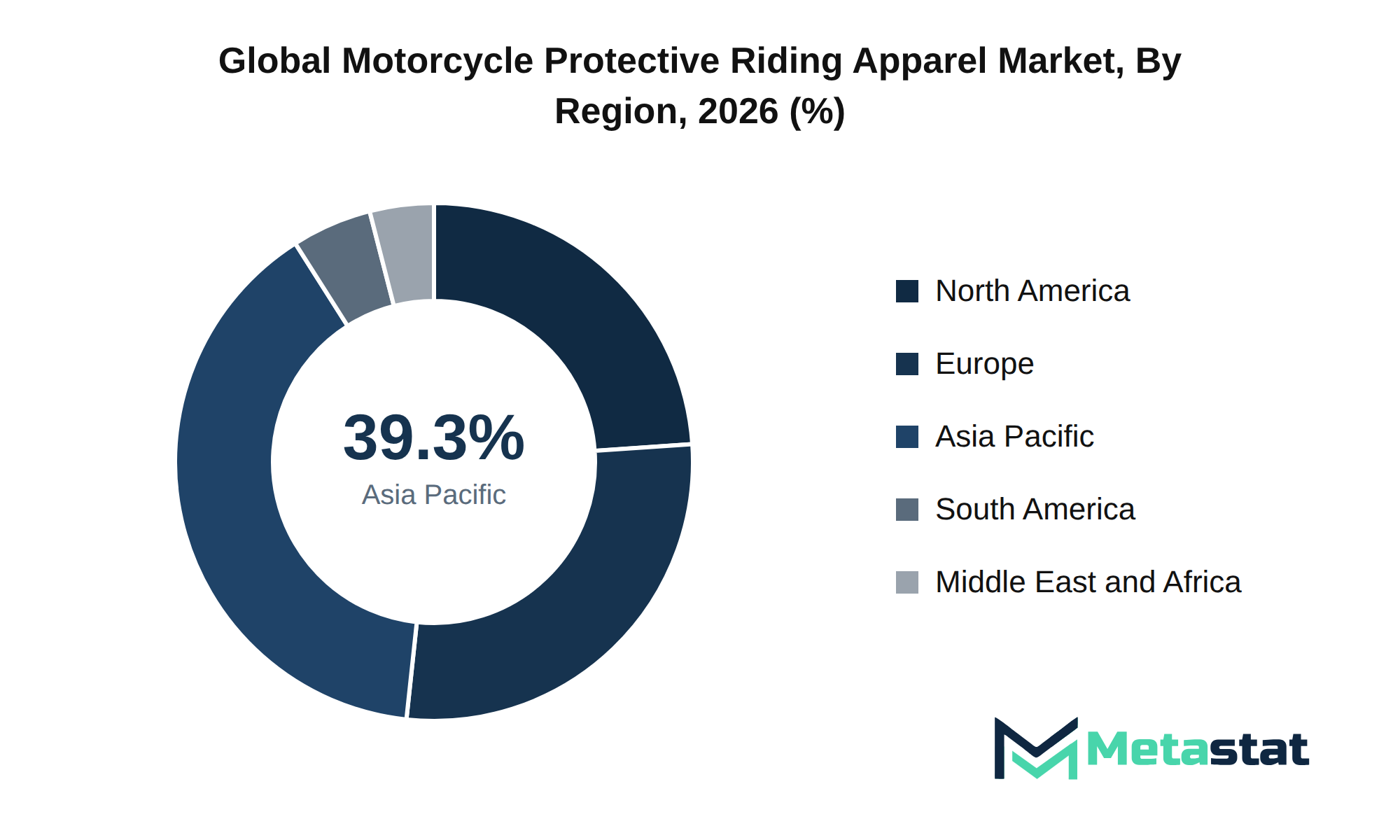
The Asia-Pacific region accounts for 39.3% of the global Motorcycle Protective Riding Apparel market in 2025. Countries including China, Japan, India, South Korea, and Australia contribute prominently to this growth, driven by increasing motorcycle ownership and a rising culture of motorcycling. Urbanization and infrastructural development in Southeast Asia further enhance demand, with motorcycle riding being a popular mode of transportation across densely populated areas.
Infrastructure modernization across the region supports the adoption of protective riding apparel, with improved road conditions leading to increased confidence among riders. Growing concerns regarding safety in the motorcycle community encourage consumers to invest in quality protective gear. The motorcycle industry in these countries is characterized by a blend of domestic and international players, creating a competitive landscape that promotes innovation in product offerings.
Emerging market front-runners including India and Southeast Asia exhibit substantial growth potential. These regions remain underpenetrated markets for protective riding apparel. Increased awareness about safety gear, coupled with the rising popularity of recreational riding, creates opportunities for manufacturers to expand their presence. Cultural nuances influence purchasing behaviors, with a notable shift towards online retail channels among younger consumers, who prioritize convenience and variety in product selection.
Investment in localized manufacturing capabilities enhances supply chain efficiencies, with regional players increasingly focusing on nearshoring initiatives. This strategy not only reduces operational costs but enables companies to respond swiftly to changing consumer preferences. The Asia-Pacific region, with its diverse demographic profiles and evolving market dynamics, presents a promising opportunity for the Motorcycle Protective Riding Apparel market.
The Motorcycle Protective Riding Apparel market in South America demonstrates distinct characteristics shaped by regional demand drivers and market dynamics. Brazil and Argentina serve because the primary markets, with Brazil accounting for the largest share of consumption owing to its large population and growing motorcycle culture. Increased urbanization, rising disposable incomes, and a growing interest in recreational motorcycling contribute to the rising adoption of protective riding apparel in these countries.
Infrastructure modernization supports the growth of the market, particularly in urban areas where motorcycle commuting becomes more common. The expansion of road networks and improved safety regulations drive consumer awareness regarding protective gear. This increased awareness encourages higher spending on quality riding apparel, reflecting a shift towards premium products.
The emergence of localized manufacturing capabilities enhances the market landscape, with several companies establishing production facilities to meet regional demand effectively. This strategic move reduces lead times and transportation costs, making protective apparel more accessible to consumers. A focus on local procurement enhances competition among vendors, resulting in a diverse range of products tailored to meet the specific needs of South American riders.
Cultural nuances significantly influence purchasing behaviors, with consumers displaying a preference for products that reflect their lifestyle and riding preferences. The growing trend of adventure and touring motorcycling drives demand for specialized apparel designed for these riding styles. Vendors that offer a comprehensive product range catering to various riding styles position themselves favorably in the market.
While the market is currently valued at a share of 5.00% of the global market in 2025, it is projected to experience steady growth through 2033. The increasing emphasis on safety, coupled with changing consumer attitudes towards riding apparel, positions South America because an important market for future investment and expansion in the Motorcycle Protective Riding Apparel sector.
The Motorcycle Protective Riding Apparel market in the Middle East and Africa represents 4.00% of the global market in 2025. Saudi Arabia and the UAE exhibit growing interest in protective riding apparel due to the increasing popularity of motorcycle culture and outdoor activities. South Africa shows a similar trend, with rising participation in leisure and sport riding. Emerging markets within the region display underpenetrated territories, presenting opportunities for significant growth in segment expansion.
Infrastructure modernization contributes to improved access to retail channels, enhancing industry competitiveness. Localized manufacturing densities and supply chain regionalization strategies enable companies to respond promptly to consumer demand. Cultural nuances in purchasing behavior, particularly in the UAE and Saudi Arabia, influence preferences for specific product types, including motorcycle jackets and protective base layers.
Domestic market participants engage in strategic partnerships with international brands to strengthen their market positions. The market reflects a mixture of local vendors and global players, driving competition and encouraging innovation. Foreign direct investment flows into the region further expand the market by enhancing product offerings and distribution networks.
Overall, the Motorcycle Protective Riding Apparel market in the Middle East and Africa is projected to experience incremental growth driven by evolving consumer preferences, regional resource availability, and strategic entry barriers that shape the competitive environment.
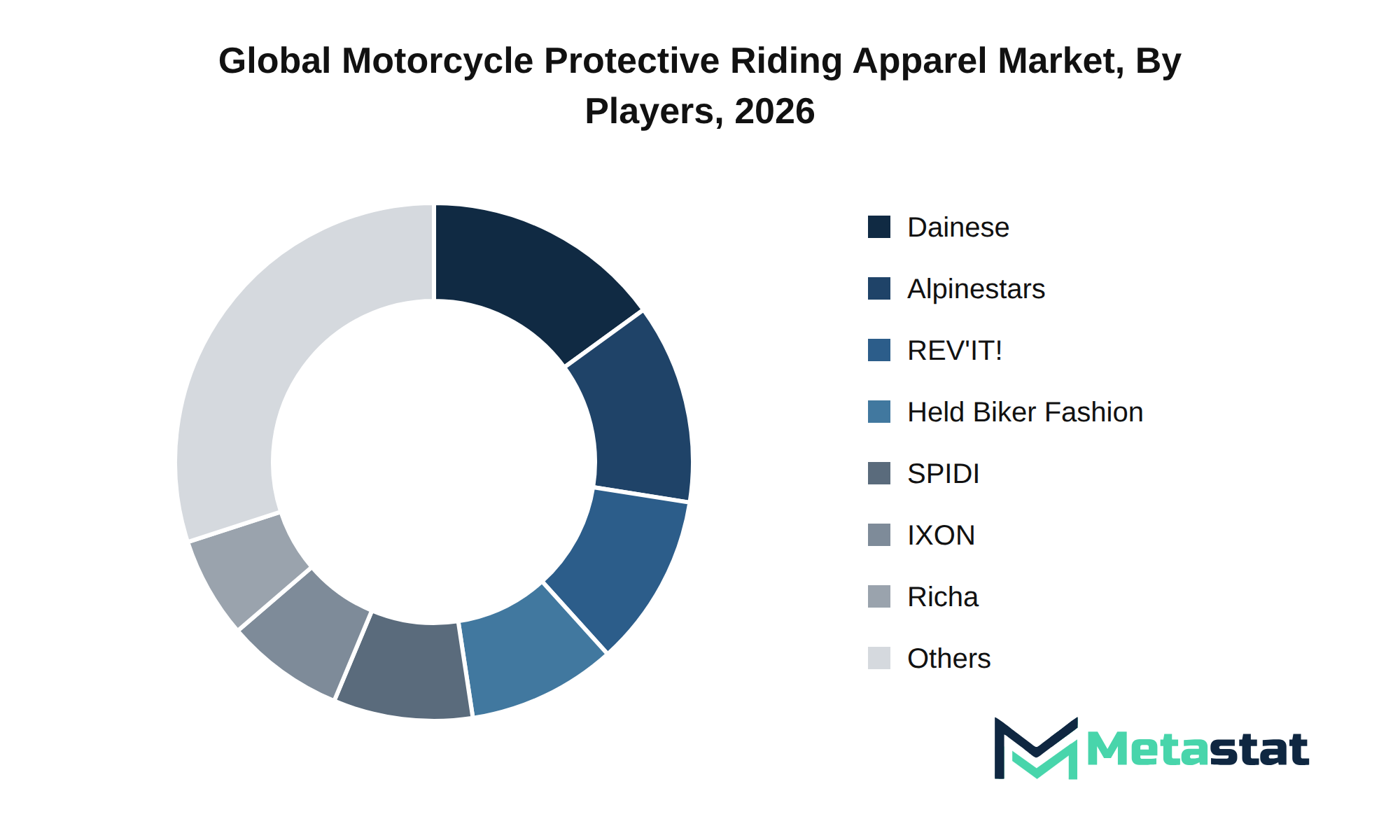
The competitive landscape of the Motorcycle Protective Riding Apparel market exhibits a diverse array of players employing various strategies to capture market share. Companies including Dainese and Alpinestars focus on product differentiation through advanced materials and innovative designs, catering to specific riding styles. This strategic focus enhances brand equity and customer loyalty, enabling these companies to maintain a competitive edge in the market.
Joint ventures and strategic alliances have become prominent, with firms like Ducati Motor Holding S.p.A. and Triumph Motorcycles integrating their motorcycle offerings with protective apparel. Such partnerships enhance value chain integration, offering consumers a comprehensive solution while boosting sales for both manufacturers and distributors. Emerging e-commerce channels, including specialist motorcycle e-commerce platforms, enable brands like Richa and Furygan to reach wider audiences and facilitate growth in untapped markets.
Pricing architectures remain a key consideration, with companies adopting competitive pricing strategies to attract cost-sensitive consumers while balancing quality and performance. The presence of established brands, including KLIM and SPIDI, creates barriers to entry for new entrants, ensuring that innovation and technological advancements remain critical for sustained growth in the Motorcycle Protective Riding Apparel market.
Intellectual property portfolios play a significant role in shaping the competitive outlook. Players invest in R&D pipelines to develop proprietary technologies. This emphasis on innovation leads to enhanced product performance, contributing to a more robust market environment. Overall, competitive dynamics present opportunities for strategic growth vectors while highlighting the importance of adaptability in response to shifting consumer preferences and trends.
Market size is forecast to rise from USD 8.8 billion in 2025 to over USD 13.6 billion by 2033, reflecting a compound annual growth rate (CAGR) of 5.6%. This expansion will occur against a backdrop of evolving consumer preferences, increasing safety awareness, and advancements in riding technology. Economic cycles will influence downstream demand, while core industries experience maturation, shaping consumption patterns and driving innovation.
The bull case anticipates strong growth in segments including Protective Base Layers & Armored Undergarments, which exhibit a CAGR of 7.4%, driven by heightened safety regulations and consumer demand for enhanced protective features. In contrast, the bear case highlights potential challenges, including economic downturns that could affect discretionary spending on premium Motorcycle Protective Riding Apparel. Regulatory evolution will outline compliance milestones, impacting market dynamics.
Geopolitical realignments and shifting trade corridors will affect supply chains and sourcing strategies, influencing costs and availability. Strategic capital allocation will direct investments toward next-generation technology integration and R&D commercialization timelines, enhancing product life cycles. Emerging white-space opportunities exist in markets with unmet enterprise needs, providing avenues for growth within high-demand segments.
Executive-level strategic imperatives will play a significant role in defining the future of the Motorcycle Protective Riding Apparel market. Companies will prioritize defensibility roadmaps that address evolving consumer trends and regulatory requirements, ensuring alignment with market demands. Infrastructure commitments and capital expenditure investment vectors will further support the market's trajectory, creating conditions for sustained expansion.
The report strategically identifies and profiles the key market players and analyses their core competencies in each sub-segment of the Motorcycle Protective Riding Apparel market.
|
Report Attributes |
Details |
|
Study Period |
2021-2033 |
|
Base Year |
2025 |
|
Estimated Year |
2026 |
|
Forecast Period |
2026-2033 |
|
Historical Period |
2021-2025 |
|
Growth Rate |
CAGR 5.6% from 2026 to 2033 |
|
Revenue Unit |
USD billion |
|
Segmentation |
By Product Type, Material, Riding Style, Distribution Channel, and Region |
|
By Region |
North America (By Product Type, Material, Riding Style, Distribution Channel, and Country)
|
|
Europe (By Product Type, Material, Riding Style, Distribution Channel, and Country)
|
|
|
Asia Pacific (By Product Type, Material, Riding Style, Distribution Channel, and Country)
|
|
|
South America (By Product Type, Material, Riding Style, Distribution Channel, and Country)
|
|
|
Middle East and Africa (By Product Type, Material, Riding Style, Distribution Channel, and Country)
|
Find answers to common questions about this report
The Metastat Insights study reveals that the Motorcycle Protective Riding Apparel market size was valued at USD 8.8 billion in 2025.
The Motorcycle Protective Riding Apparel market is projected to grow at a CAGR of 5.6% during the forecast period from 2026 to 2033.
The North America Motorcycle Protective Riding Apparel market size is estimated to reach USD 3.1 billion by 2033.
Motorcycle Jackets lead the Motorcycle Protective Riding Apparel market, with a projected value of USD 3.7 billion by 2033. This segment's growth reflects a compound annual growth rate of 5.2 percent from 2026 to 2033.
Growing consumer awareness regarding safety features significantly influences the Motorcycle Protective Riding Apparel market. Enhanced knowledge about protective gear, rising accident rates, and increased media coverage surrounding motorcycle safety drive demand for high-quality products, particularly among younger riders engaged in safety discussions online. This trend translates into increased sales for manufacturers offering innovative protective apparel solutions.
Regulatory compliance challenges and macroeconomic headwinds significantly restrain the Motorcycle Protective Riding Apparel market growth. Strict safety regulations create barriers for manufacturers, while rising costs of raw materials and labor reduce consumer purchasing power, leading to decreased demand for protective gear. Supply chain disruptions further complicate the market dynamics, impacting product availability and sales.
Growing consumer awareness regarding safety features and the rising demand for high-quality protective gear significantly favor product adoption in the Motorcycle Protective Riding Apparel market. Enhanced infrastructure and technological advancements further promote safety and comfort, driving interest in innovative protective solutions among motorcyclists.
The Motorcycle Protective Riding Apparel market is estimated to reach a valuation of USD 13.6 billion by 2033.
Key players in the Motorcycle Protective Riding Apparel market include Dainese, Alpinestars, REV'IT!, Held Biker Fashion, SPIDI, and IXON.
Motorcycle Pants & Trousers are projected to grow at a compound annual growth rate of 6%.
The analysts below cover Automotive and Transportation research at Metastat Insights.
LEAD ANALYST
Utkarsh Khirodkar is a Lead Market Research Analyst at MetaStat Insight, specializing in market intelligence, technology sector assessments, and competitive strategy.

ENERGY & INFRASTRUCTURE INDUSTRY CONSULTANT
Automotive and Transportation · Electronics and Semiconductor · Energy and Power · Machinery & Equipment
Saurabh Vasant Ganvir consults for Energy & Infrastructure Industry at MetaStat Insight, specializing in renewable energy, solar EPC, and electric vehicle (EV) infrastructure markets.
Replacing petrochemical surfactants with bio-based alternatives requires realistic timelines on industrial precision fermentation scaling. The market research broke down commercialization timelines, feedstock sugar price sensitivities, and regional cosmetic ingredient regulatory approvals in Europe and East Asia. That supplier readiness mapping gave our formulations team reliable context when comparing renewable chemical sourcing roadmaps.
Tracking ceramic matrix composite adoption in high-bypass aero engines requires strict attention to material qualification cycles and FAA airworthiness testing milestones. The MetaStat Insight team provided a detailed timeline of silicon carbide fiber manufacturing capacity and commercial foundry lead times. Having clear visibility into upstream thermal barrier coating supply helped us stress-test our long-term component procurement strategy.
Transitioning ultra-class mining haul trucks to alternative power requires concrete data on remote hydrogen refueling infrastructure economics. The report evaluated megawatt-scale electrolyzer installation expenses, onsite storage safety mandates, and heavy-duty fuel cell stack degradation under continuous duty cycles. That technical rigor helped our engineers benchmark realistic total operating cost horizons for off-highway fleet decarbonization.
Explore related market intelligence reports worth reading alongside this one.