
LEAD ANALYST
Utkarsh Khirodkar is a Lead Market Research Analyst at MetaStat Insight, specializing in market intelligence, technology sector assessments, and competitive strategy.

Youth Sports Market By Type (Equipment, Apparel, Protective Gear, Training Aids, and Accessories), By Application (Soccer, Basketball, Baseball, Football, Volleyball, and Other Sports), By Sales Channel (Online and Offline), Industry Analysis, Size, Share, Growth, Trends, and Forecast, 2033
Report ID
MSI-3014
Published
February, 2026
Pages
254 Pages
Format
Report Details
Choose Your License
Youth Sports Market
The Global Youth Sports market is estimated to reach $113.6 billion by 2033 with a CAGR of 9.8% from 2026 to 2033.
The Global Youth Sports market is an extensive industry that, in recent years, has been generating a great deal of interest owing to its far-reaching implications on children and teenagers from around the globe. It is vast with a wide array of sports activities and team sports like football, basketball, and rugby, as well as individual sports including swimming, athletics, and tennis. It plays a critical role in the physical, mental, and social development of young people. It offers organised environments where young people enjoy a positive competitive environment; they learn team building skills and a lifelong appreciation for physical activity. During recent times, the Global Youth Sports market has undergone a shift in regime with growth in participation rate from the developed as well as developing regions.
People with increasing pressure on fitness and wellbeing in schools and communities have driven parent, coaches, and politicians to create an environment that showcases the benefit of sports. More attention to developing talent at an early age will naturally lead to better-coordinated programs, often linked with national sports organizations or private institutions; these will provide competitive opportunities for young athletes at the regional and national levels and even internationally. In fact, technology is increasingly driving the Global Youth Sports market.
From wearables tracking performance to video analytics used to hone one’s technique, the digital revolution is changing the way youth sports are practiced, taught, and experienced. Already, this trend will see digital tools further integrated into training programs to make the sport more accessible and attractive to a younger generation. These new technologies provide both better training options and global connectivity for teams and programmes of youth sports. A single all-encompassing trend in the Global Youth Sports market is inclusion.
Programs are emerging that make sports accessible to children and teens who may be “just like everyone else,” but there also are programs that address the needs of children and teens who have varying abilities, focusing on adaptive sports, which means that every young athlete has a chance to be involved actively regardless of his/her disabilities. This sense of community and belonging allows for youth sports to expand in scope so that everybody in every demographic group can participate.
While competition is, and will continue to be, a hallmark of the Global Youth Sports market, the need for balance is starting to be recognized and valued. With millions of youths competing in sport, concerns exist that there are issues with burnout and pressures from early specialization in a single sport. Because of this, experts in this field recommend multi-sport participation with children being given the freedom to participate in various activities to acquire a broad portfolio of skills. This will eventually help athletes in future for progression and development of their overall personality.
The Global Youth Sports market is yet another area which is constantly evolving with a response to the changing social scenario. Grass root youth sports programs that use professional athletes and organizations are creating new avenues for young hopefuls to further hone their potential. These programs often address values like fair play, discipline, and respect, indicating the role of sports in character development.
The Global Youth Sports market will remain on an expansion curve as both driven by technology and inclusiveness, not to mention the competitive as well as developmental characteristics of sporting young people. As long as the industry will respond to the needs and interests of a new generation, it will always be an important part of shaping the future of sport around the world in pursuing healthy lifestyles and possible young athletes everywhere. 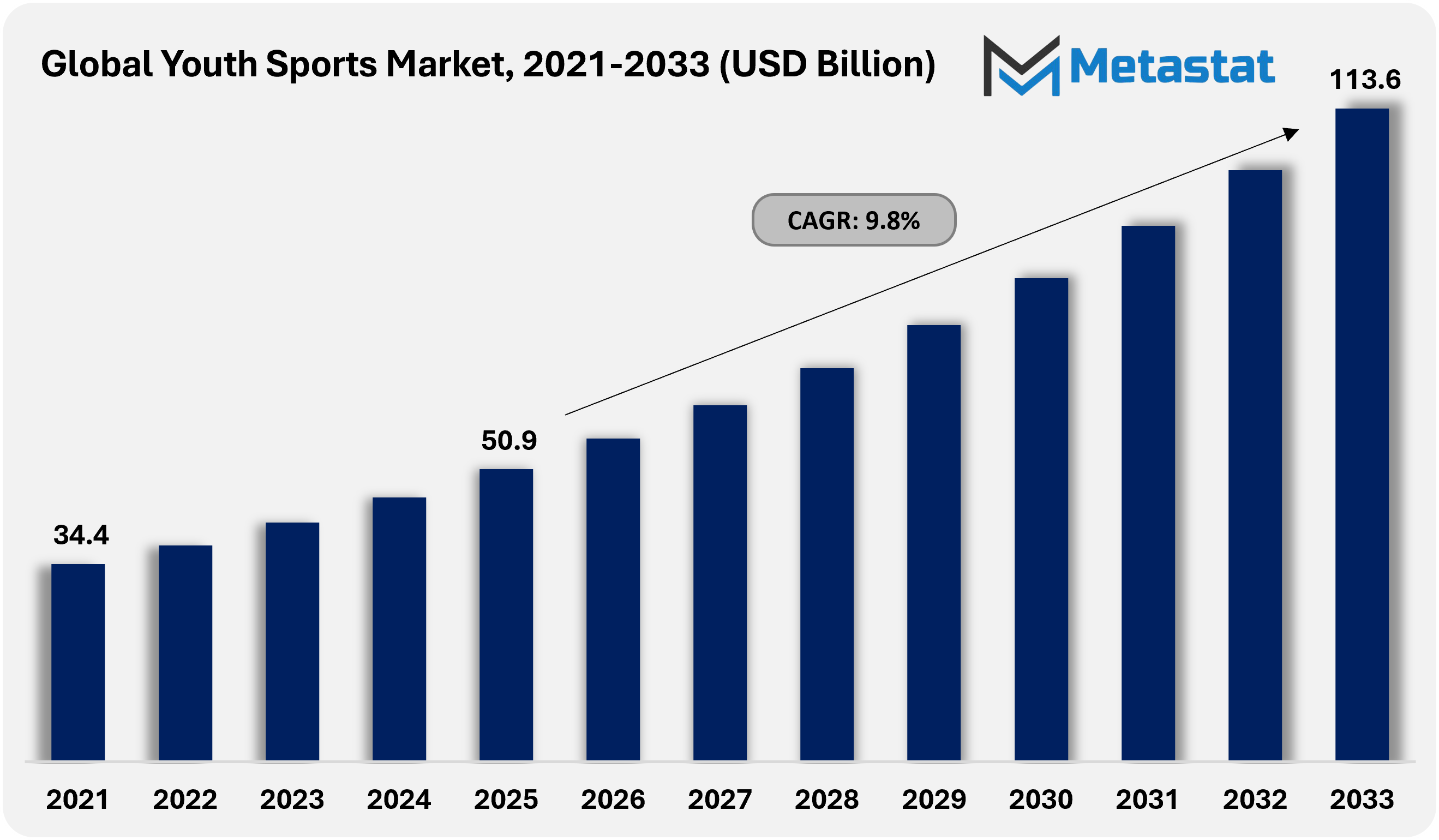
GROWTH FACTORS
The Global Youth Sports market, it is expected to grow significantly in the coming years, driven by several important factors. One of the major contributors to this growth is an increase in awareness about the importance of physical activity and sports activities among the young. As more parents and educators of various nations influence the significance of sports for health, teamwork, and personal development, participation in organized sports remains on the rise. Not least, governments and institutions continue encouraging participation in youth sports; this further establishes a base for development at the individual level as well as professionally later on.
The other area where expansion is contributed by technology is in Global Youth Sports. Advanced sports equipment and wearable devices better the tracking of performance and better injury prevention. The innovations encourage young athletes and their families to invest in sports gear, hence helping make the overall experience a rich one. Digital platforms have also simplified the opportunity for young athletes to access online coaching and training programs-actually taking professional levels of instruction to many young athletes worldwide.
However, even so, there are challenges that might hinder the growth of the Global Youth Sports market. One is the rising cost associated with participation in sports. The costs of equipment, training, travel, and competitions could be prohibitive and discourage some families from enrolling their children in organized sports. Further, parents may be concerned about the risk of injuries in contact sports and avoid having their children involved in some activities.
Conversely, there are very bright trends that are going to catapult the Global Youth Sports market to great heights. One such trend is emerging towards inclusiveness and diversity in the sports aspect. Determining that the doors should be opened to other underrepresented groups, such as girls or young athletes with disabilities, would significantly expand the market and attract a greater, diversified population of participants. Lastly, the increasing global popularity of esports provides a new outlet for youth sports engagement, integrating traditional physical activity with digital experiences.
With technology advancing further, the emphasis laid upon the benefits offered by the participation of youth in sports for society and the right focus laid upon accessibility and safety, this market is bound to climb further to try and improve the global youth sports market in the future.
The youth sports market has seen a flurry of mergers and acquisitions as companies seek to enhance their offerings and expand their reach. For instance, in March 2026, Ascent Sports Group acquired LiveBarn Inc., aiming to build a connected digital ecosystem in youth sports. This acquisition highlights the trend of integrating technology into youth sports, enhancing livestreaming, analytics, and fan engagement capabilities. Such strategic moves are indicative of the growing importance of digital platforms in the youth sports landscape.
The drivers identified will significantly impact the growth of the youth sports market. Increased participation rates in organized sports are expected to create a higher demand for coaching, training facilities, and competitive leagues. As awareness of physical fitness rises, schools and community organizations are likely to expand their sports programs, promoting holistic development through teamwork and discipline. Furthermore, the growing investment in youth talent development academies will enhance the quality of training and competition, ensuring a robust pipeline of future athletes.
The youth sports market is poised for significant growth, with several key segments expected to drive revenue. Opportunities include:
Identifying these opportunities will be crucial for stakeholders aiming to capitalize on the growing youth sports market.
Despite the positive drivers, several restraints could hinder growth in the youth sports market. High costs associated with sports equipment and participation fees may deter families, particularly in lower-income demographics. Additionally, socioeconomic barriers can limit access to organized sports programs, affecting overall participation rates. The shortage of qualified coaches and trainers may also compromise the quality of youth sports programs, leading to dissatisfaction among participants and parents, which could ultimately impact enrollment and retention rates.
The youth sports market is primarily driven by the increasing focus on health and fitness among children and teenagers. Rising awareness of the importance of physical activity is prompting parents and educators to encourage participation in organized sports. Additionally, government initiatives promoting youth sports are enhancing infrastructure and accessibility, further fueling growth. The integration of technology, such as AI-driven performance analytics and wearable fitness trackers, is also transforming training methods, making sports more engaging and effective for young athletes.
The Global Youth Sports market is expected to show profoundly growth in the coming years. It is linked with the increased interest among young people in sport, leading to the demand for corresponding products. A potentially vast market can be described as broadly focused on all those products catered to the needs of young athletes, ranging from necessary tools and equipment for sport activities, clothing and apparel, safety gear, training devices, and accessories.
The increased focus on sport activities that more and more young individuals have been channeling into their lives would increase the demand for specialized products targeting this age and skill level. The biggest driving force behind this market is health and fitness.
There is also a growing demand from parents to encourage their children to participate in sports, both to enhance their physical fitness and to develop life skills such as teamwork, discipline, and perseverance. As this spread continues to advance globally, it will generate a greater need for products that will help young athletes succeed in their endeavors.
The companies in this market are focused on innovation and designing products that might offer better safety and performance to young sports enthusiasts. In the long term, there is likely going to be an increase in high-quality equipment made specifically for youth, both in terms of supply and demand.
Parents want products that can improve performance and safety for their children. This will lead to much greater strides in the form of protection, as manufacturers will strive to create products that offer maximum protection without impacting mobility. The youth market in sports will continue to innovate with gear that gives players functionality and comfort. Apparel and accessories are also a big part of this market.
As the sport becomes more competitive, young athletes need appropriate clothing and gear to perform their best. Future trends might involve the ability to develop clothes made of advanced materials that enhance performance and longevity. The training aids market will also likely grow since more young athletes would demand tools that help improve their skills. Many products-the area of personal training experience and better practice by youth-will be highly in demand.
Overall, the Global Youth Sports market is expected to grow as participation of young people in sports continues to rise. As equipment, apparel, and training aids continue to develop, so will the markets, staying up-to-date and meeting evolving needs of youths around the world.
The global youth sports market is growing in leaps and bounds, stirred by a boom in interest and participation across various sports. Rising participation by the youths for soccer, basketball, baseball, football, volleyball, and other sporting events have ensured ever-increasing demand for related products and services. And it is expected that this trend will continue because the market will continue to evolve and adapt to new opportunities and challenges.
Years ahead, soccer will be anticipated to maintain a tremendous lead in the world youth sports market. The game is universal and easy access for young players. The passion that inspires the next generations will spur an increase in the participation of young players in youth soccer programs. Another upside from sports technology advancements – better coaching tools and performance analytics – will enhance the play experience of young players and teams.
Other major segmentals like basketball are also expected to grow steadily. The professional leagues are indeed highly responsible for its popularity among developing young players, and the impact of notable stars is still a big deal. More youth programs come up to develop talent, so sport stays in the market. Even the promotion toward physical fitness and healthy lifestyles contributes to more youth participating in sports such as basketball.
Baseball, though it has traditionally been more potent in a few regions, is fast returning to the mainstream. The youth baseball market will pick up pace as the sport gains popularity in more regions and, accordingly, skill-based and training-based programs begin to emerge. Football would remain one of the dominant youth sports, especially in the United States. The competitive nature of football along with full support systems and coaching infrastructure will guarantee its all-round growth.
Volleyball, while not nearly as universally popular as soccer or basketball, is slowly but surely growing, especially in areas where more children engage in indoor activities. The developing number of youth volleyball leagues and tournaments will undoubtedly drive participation levels. Other sports, such as e-sports and other forms of athletic activity, are starting to fill in the rest of the global youth sports space, leaving kids with even more athletic options.
Not only will it open up new opportunities for young athletes, coaches, and related industries, but the expanding global youth sports market will in itself be fueled both by traditional sports and emerging trends, reminding us of the future in which sports will remain an important tool for developing youths worldwide.
The global market of youth sports is booming and has very spectacular expansion in terms of sales of sports products and services. In this regard, this is a worthwhile market because it involves the provision of sports equipment, apparel, and services to young athletes all over the globe. With more youths taking part in sports, either recreationally or competitively, the demand for the products will be higher.
The primary driving factor of this market is the establishment of access mechanisms through both online and offline channels, thereby making products easily accessible to consumers.
Online sales channels are picking up at a frantic pace. Indeed, comfort shopping from home coupled with enormous stocks of products offered online made this alternative popular among both parents and young athletes. Thus, it is expected that the trend will only grow over time with technology and streamlined shopping online.
Most of the companies are now competing in making user-friendly platforms through which young athletes can browse through various products, compare their prices, and eventually read reviews before purchase. Online shopping channels also facilitate a personalized experience in the form of recommendations tailored to previous searches or purchases.
In contrast, the offline channels of sales, such as physical stores, are still one of the important parts of the Global Youth Sports market. Shopping allows many consumers the opportunity to try on sportswear, inspect equipment personally, and receive on-site advice from knowledgeable staff.
Some impulse buys are also possible in physical stores, such as when consumers find new products they didn’t intend to buy. In addition, these types of retail outlets usually strongly bind with the local communities, offer sponsorships to the youth sports teams, and host events that help connect them to their customers.
The Global Youth Sports market is likely to shift toward more hybrid models of online/offline sales in the near future. Retailers may, for example, expand their range by offering online ordering with collection in a store, or improve the in-store experience and complement this by the digital world-for example with virtual reality tools to look at products before buying and check out the inventory. As youth participation in sports is growing dramatically around the globe, companies should be prepared to continue their growth through innovation in each of the sales channels to meet the changing needs of young athletes and their families.
Most regions are going to observe an upward trend in the global youth sports market. From here, we can understand these geographies and make further inferences about regions that are contributing positively toward the increase as a whole and how things are eventually going to be. In particular, North America has stood strong with countries like the U.S., Canada, and Mexico. With increasing participation in youth sports and with an emphasis on physical education, this region should remain the leader in the field. The U.S., with a solid infrastructure and funding for sport, will likely lead the growth, and Canada and Mexico will likely continue to gain ground as interest and investment in youth athletics increases.
The UK, Germany, France, and Italy are strong contributors in Europe. Europe has a strong sports legacy; youth programs are well developed in the region. While both school-based and community-level sport initiatives are on an increase, all these trends are expected to continue pushing the growth curve in the market steadily. Rest of Europe Emerging economies and increasing sports opportunities here also hold significant potential for growth, especially with increased attention on youth sports in less-developed regions of the continent.
Asia-Pacific is another region with great potential for the future. India, China, Japan, and South Korea emerge as markets with huge potential for growth. Large populations and growing government initiatives around the promotion of youth sports can expect significant growth in the region. China and India are particularly gearing up to develop sports infrastructure and participate in promoting involvement, likely to lead to substantial increases in market demand. Japan and South Korea, already strong in some areas, would likely continue to develop their youth programs, thus fueling this market further.
South America, and more specifically the countries of Brazil and Argentina, promise a lot. The two countries have strong sporting cultures, in particular football and its grassroots development. The said passion is reflected in high youth participation rates. As such, through growing economies, the region could witness investment in youth sports, thus growing the general market.
The region of Middle East & Africa, although still developing in this area, is of interest, particularly in GCC countries, Egypt, and South Africa. Governments in this region are investing in sports infrastructure and youth programs as part of a comprehensive health and education agenda. This increasing interest, combined with the enhancements being made in the accessibility of sports, is likely to yield positive results for the expansion of the market in the near future across the region. But each of these regions, though at a different stage of development, holds prime importance for ascertaining the future of youth sports markets throughout the world.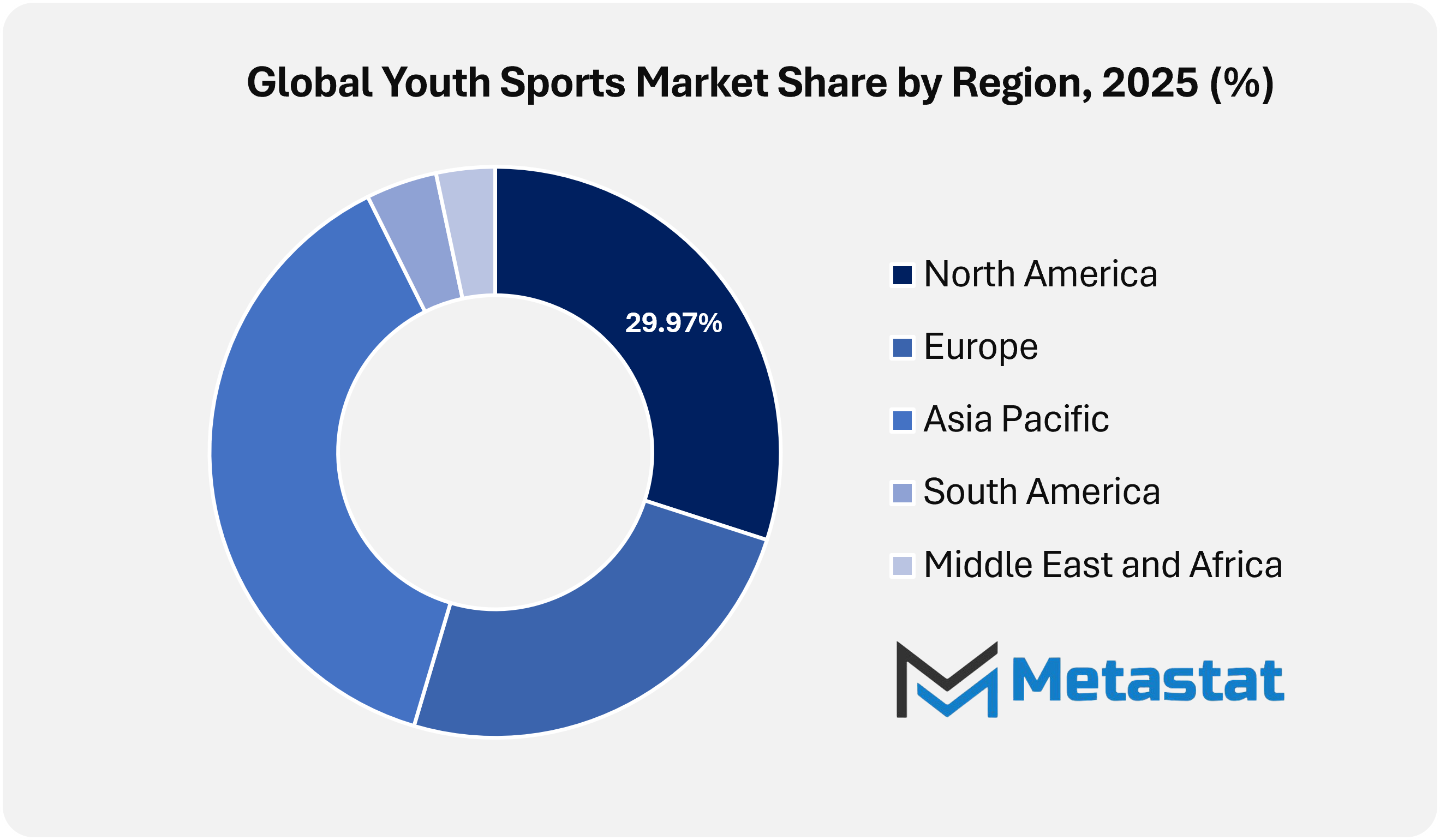
|
Report Coverage |
Details |
|
Forecast Period |
2026-2033 |
|
Market Size in 2025 |
$50.9 Billion |
|
Market Size by 2033 |
$113.6 Billion |
|
Growth Rate from 2026 to 2033 |
9.8% |
|
Base Year |
2025 |
|
Regions Covered |
North America, Europe, Asia-Pacific Green, South America, Middle East & Africa |
This is bound to shine with competitive players shaping the landscape through their innovative approaches and strategies. Companies such as Decathlon S.A., Nike, Inc., Adidas AG, to name a few, have established themselves as key figures in the industry and constantly do so with new product development and methods of engaging customers. These companies, otherwise focused on the conventional gear for sports, explore new opportunities and ways to reach a new, younger generation of consumers by introducing technology into their products and supporting sustainability.
More countries and youths continue to participate in and take up sports, and these market giants can anticipate that competition will begin to build up with diversification in product lines as well as entry into newly opened markets. This focus on youth sports is more than a simple sale of the equipment but also aid in the promotion of an active lifestyle and sportsmanship of young people. Under Armour, Inc. and Puma SE are actively engaged with young athletes through sponsorship and partnership with schools, sports academies, and community programs. Long-term brand loyalty for these companies is built while helping shape future athletes.
The increasing investment by countries in youth sports development may also contribute to an increase in demand for top-class sports equipment and clothing. Countries start to realize the importance of young participation in sports because it helps them not only to maintain physical fitness but also social and psychological benefits. This may well witness players in the market turning into more opportunities, especially in areas where youth sports infrastructure is still developing.
Technology will continue to be a key driving force behind the growth of the global youth sports market in the years to come. Companies like Yonex Co., Ltd and Callaway Golf Co. will continue to innovate products using the latest materials and design for young athletes to achieve better performance and safety.
However, what is more important is the way data analytics and wearable tech are going to change how young players train and strive to get better at the game. This trend is simultaneously challenging and an opportunity for more traditional sports brands, as they have to keep up with the changed expectations of more tech-savvy young consumers.
Global youth sports market: competitive by innovation and partnership between key players. New brands will emerge, and changing existing brands will make it dynamic enough to serve diverse needs and preferences of young athletes around the world.
Find answers to common questions about this report
Global Youth Sports market is valued at $50.9 billion in 2025.
Global Youth Sports market is estimated to grow with a CAGR of 9.8% from 2026 to 2033.
Global Youth Sports market is estimated to reach $113.6 billion by 2033.
Top players operating in the Youth Sports industry includes Decathlon S.A., Kingswood Leisure Services Ltd, Puma, and Others.
While specific investment figures are not provided, major athletic brands like Nike, Adidas, and Under Armour are known for their significant involvement in youth and grassroots sports programs. These companies often support local initiatives, sponsor teams, and provide resources aimed at developing young athletes. Their commitment typically includes funding for equipment, apparel, and community programs that promote participation in sports among youth.
Reebok's involvement in youth sports development is influenced by its heritage and brand recognition, which can resonate with younger athletes. The company aims to revitalize its basketball segment and expand its athlete roster, focusing on collaborations that engage youth. However, challenges such as reduced visibility in elite sports and a fragmented licensing model may impact its effectiveness in directly supporting youth sports initiatives. Overall, Reebok's strategies suggest a commitment to fostering youth athleticism while navigating industry complexities.
Popular youth sports apparel collections typically include a variety of items designed for comfort and performance, such as shorts, jerseys, and protective gear. Brands often focus on high-quality materials that allow for breathability and flexibility, catering to active young athletes. Collections may also feature officially licensed gear from major sports leagues, appealing to young fans who want to represent their favorite teams. Overall, the emphasis is on stylish designs that enhance both performance and safety in various sports activities.
The Global Youth Sports market is estimated to reach $113.6 billion by 2033. This growth reflects the increasing interest in youth sports and the various products and services associated with it. The market is expected to experience a compound annual growth rate (CAGR) of 9.8% from 2026 to 2033.
When selecting a youth sports equipment provider for growing recreational leagues, it's important to consider those that offer a wide range of products tailored for various sports, ensuring they can meet the diverse needs of young athletes. Providers that emphasize quality, safety, and durability in their equipment are also crucial. Additionally, companies that provide excellent customer service and support for leagues can help facilitate growth and enhance the overall experience for both players and coaches.
The analysts below cover Consumer Goods research at Metastat Insights.
LEAD ANALYST
Utkarsh Khirodkar is a Lead Market Research Analyst at MetaStat Insight, specializing in market intelligence, technology sector assessments, and competitive strategy.
Replacing petrochemical surfactants with bio-based alternatives requires realistic timelines on industrial precision fermentation scaling. The market research broke down commercialization timelines, feedstock sugar price sensitivities, and regional cosmetic ingredient regulatory approvals in Europe and East Asia. That supplier readiness mapping gave our formulations team reliable context when comparing renewable chemical sourcing roadmaps.
Tracking ceramic matrix composite adoption in high-bypass aero engines requires strict attention to material qualification cycles and FAA airworthiness testing milestones. The MetaStat Insight team provided a detailed timeline of silicon carbide fiber manufacturing capacity and commercial foundry lead times. Having clear visibility into upstream thermal barrier coating supply helped us stress-test our long-term component procurement strategy.
Transitioning ultra-class mining haul trucks to alternative power requires concrete data on remote hydrogen refueling infrastructure economics. The report evaluated megawatt-scale electrolyzer installation expenses, onsite storage safety mandates, and heavy-duty fuel cell stack degradation under continuous duty cycles. That technical rigor helped our engineers benchmark realistic total operating cost horizons for off-highway fleet decarbonization.
Explore related market intelligence reports worth reading alongside this one.